Podcast rankings and dealership stories set up a bigger point: selling is everywhere, and real success comes from how you connect, listen, and follow up—not from tricks. The host recounts a service customer who became a Bronco buyer, then contrasts ethical advising with tactics like hiding paperwork or steering customers toward the highest commission. He emphasizes long-term thinking, trust, curiosity, and disciplined lead tracking, including staying in touch through the ownership cycle.
"just all over a Ford Bronco that we have out there.
And, you know, I said, well, okay, is anybody waiting on her?
So I went over to one of my salespeople."
A Ford Bronco is a Ford SUV that’s known for being tough and good for rough roads. Here, it’s the car the customer is looking at while she’s already coming to the dealership for service.
The Ford Bronco is Ford’s modern SUV built around off-road capability and a rugged, truck-based feel. In this story, it’s the specific vehicle the customer is interested in while she’s also using the dealership’s service department.
"He said, oh yeah, she's in service.
I said, hmm, so to prove a point, I went over and talked to her.
And we had the best conversation."
A “service customer” is a person who mainly comes to the dealership to get their car fixed or serviced. The host is saying salespeople shouldn’t ignore them—if they’re interested in a car, it could turn into a sale.
A “service customer” is someone who primarily visits a dealership’s service department for maintenance or repairs rather than shopping for a new car. The host’s point is that these customers can still be strong sales leads if the salesperson engages them when they show interest in a vehicle on the lot.
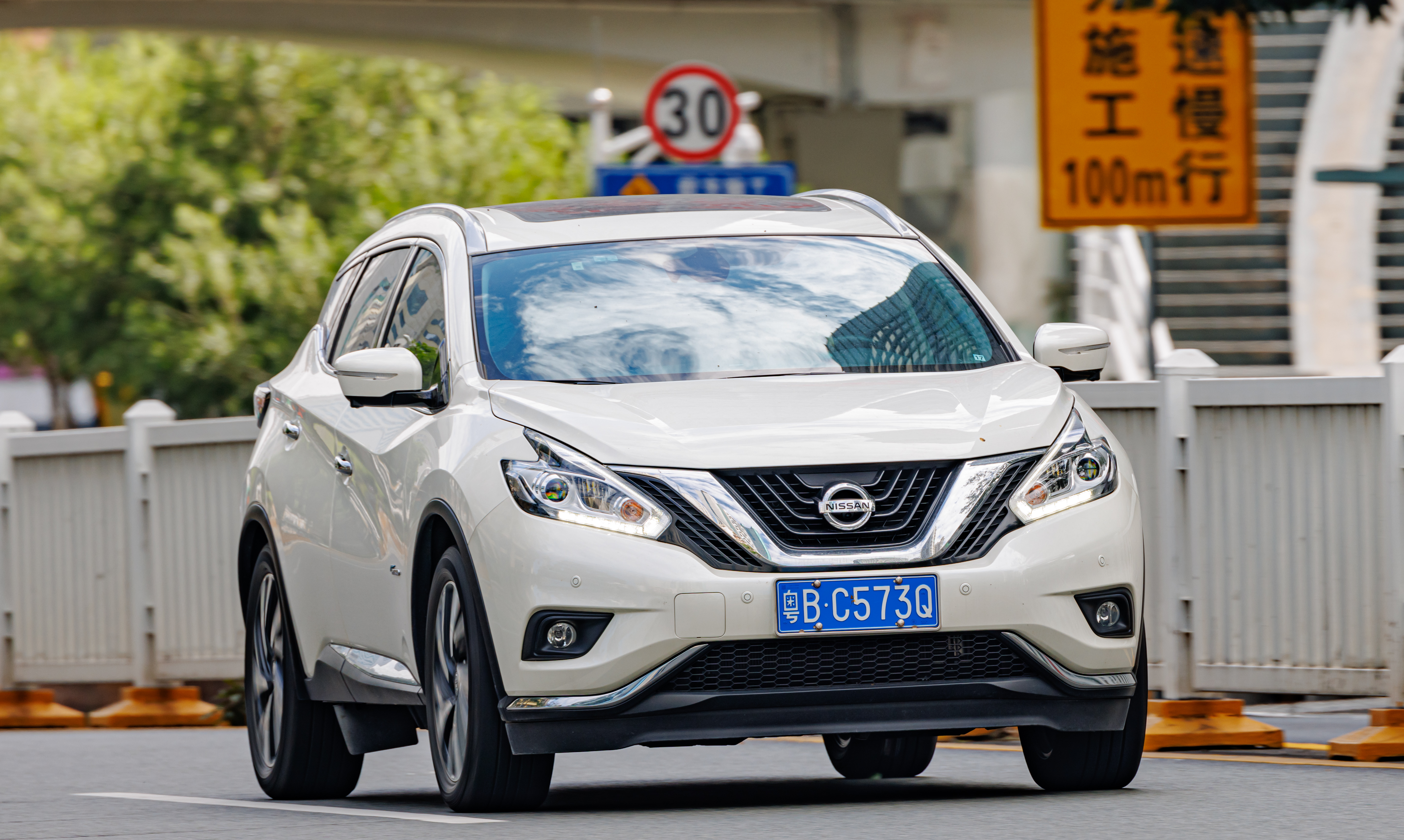
"Oh, I have an Nissan Murano.
Oh, really?
Has that been a good car for you?"
The Nissan Murano is a Nissan SUV that’s more about everyday comfort than hardcore off-roading. The host brings it up because it’s her current car, and that helps figure out how likely she is to buy something else.
The Nissan Murano is a mid-size crossover SUV known for comfort-focused styling and a smooth ride. In the segment, it’s the customer’s current vehicle, which the host uses to gauge her satisfaction and buying readiness.
"since they bought a car from me, I'm just off the radar and they see an ad for a new Mazda CX-9
[1059.9s] and they like that better than the Ford Explorer."
The Mazda CX-9 is a family SUV with three rows of seats. The host is using it as an example of how someone might see an ad, try the car, and decide to buy it instead of another SUV.
The Mazda CX-9 is a three-row midsize SUV from Mazda, aimed at families who need extra seating without going to a full-size SUV. In this segment, it’s used as an example of a customer seeing an ad, test-driving, and then choosing it over a competitor.
"and they like that better than the Ford Explorer.
[1062.2s] Then they go drive it and fall in love with it."
The Ford Explorer is a common family SUV. In this story, it’s the SUV the customer originally preferred before deciding they liked the Mazda CX-9 better.
The Ford Explorer is a popular midsize SUV known for being a mainstream family choice with lots of trim and powertrain options. Here it’s mentioned as the alternative the customer compares against before switching to the Mazda CX-9.
Select text to request an explanation
Hey, folks, this is Lenny Lawson, the car guru.
I just got an email this morning, kind of interesting.
And what it does is it ranks your podcasts in the, and of course I take this radio show
that you're listening to now and I push it to my podcast app, which is called Buzz Sprout.
And then it pushes the podcasts to Apple Podcasts, Google, and so forth.
So if you listen to podcasts, you know what I'm talking about.
So anyway, this company tells you how you rank in your particular category of podcasts.
Mine is automotive, that makes sense, doesn't it?
And how you rank in certain countries around the world.
Well, for example, I'm the 28th ranked automotive podcast in Qatar or Qatar.
Q-A-T-R. I know that's in the Middle East, some were.
I'm number 46 in Greece, 46 in Austria.
In other words, I'm not killing it.
76 in New Zealand, 92 in the Los Estados Unidos, which would be the United States.
And I didn't pronounce that right, probably.
144 in Canada, 190 in Australia, 232 in Netherlands, 237 in South Africa.
You know, and I get quite a few emails out of South Africa.
So needless to say, this is not going to go to my head.
When you're ranked number 237 in the golfing world, you don't win a lot of tournaments.
But maybe when you're number 237 in South Africa in the automotive world,
then there are at least a few people listening and getting the message about improving their car life.
And that's what this show is usually about.
So speaking of that, I was, let's see when was this, this was Friday.
I came in unshaven baseball hat, t-shirt, blue jeans, dirty feet.
I've been at home mowing and doing all different kinds of things at the house.
So anyway, I came into the dealership and I see this lady in a dress,
just all over a Ford Bronco that we have out there.
And, you know, I said, well, okay, is anybody waiting on her?
So I went over to one of my salespeople.
I found him and he was just kind of staring out the lot.
And I said, have you talked this lady over here?
She's interested in that Bronco.
He said, oh yeah, she's in service.
I said, hmm, so to prove a point, I went over and talked to her.
And we had the best conversation.
She even ended up sitting in a Bronco and talking about whether she would like one or not.
She is interested, very interested in buying a Bronco.
Oh, but she's just a service customer.
You know, when I went and told the salesperson afterwards,
I didn't chew him out or anything.
It was a learning opportunity.
I said, you know, when somebody comes into your business and they're showing a lot of interest
in something that you sell, wouldn't it be prudent to just kind of go up to them
and ask them some questions, see if you could help them in some way?
You know, she's probably just going to say, I'm just looking at, you know, this Bronco,
I've got a car in service.
Really, what kind of car are you having service?
Oh, I have an Nissan Murano.
Oh, really?
Has that been a good car for you?
Yeah, it's been a great car.
Do you have any other cars that you bring to Gateway for service?
Well, no, but I do have other cars, you know, and you never know how that conversation is going to go.
See, this is the salesperson in me coming out.
I'm not trying to sell her Bronco yet until she shows interest in maybe moving forward
with a decision to buy a Bronco.
No, I'm not going to pressure her.
I'm going to have a conversation.
I'm going to make sure she knows who I am.
If I'm a salesperson, I'm going to give her a couple business cards and demonstrate to her how interested I am in customers
and what a nice guy I am and how, you know, I actually listen more than I talk.
Of course, that's not always the case with me.
But it used to be, I know, you know, when I first started selling cars, I scared to death.
I'd go out there and wait on a customer and I'd be sweating bullets.
And I was just waiting to get shot down.
I mean, I didn't have the right kind of mindset because my mindset was I need to go out there and sell them a car
where I'm going to get chewed out.
No, that's not the correct mindset.
The correct mindset is go out there and make a friend, give them information that they want,
maybe surprise them a little bit with your hospitality, offering some water,
come inside and sit in our air conditioned showroom, kind of get you something to read.
I don't know, just interact as a human.
There's too many young people out there and a lot of our salespeople are young.
They are so used to interacting with other people in a nonverbal way through texting and messaging.
And I don't even know if they use emails anymore.
It's TikTok and I don't even know the names of Snapchat, you know.
But I think we've lost that human touch and the ability to walk up to a stranger and start a conversation
because they don't want to talk to a stranger.
It's too much work.
But for a long time, I mean a lot of my customers, I guess, you know, I don't know the names of all my customers.
We sell way too many cars.
We've sold hundreds of thousands of cars in 55 years.
I recognize a lot of people, but I don't remember all of their names.
I remember a lot of their names.
I hardly ever forget a face, though.
You know, when I go to the grocery store, people walk up to me and say, hey, Lenny, how's it going?
And I really want to remember who they are, but I just don't.
I act like I do and I'm glad to see that.
I hate it when they say, do you remember my name?
And, you know, if somebody asked me that question, I say, you know, I really want to, but I just don't because I'm old.
See, being old and having gray hair does have its advantages.
You can deflect responsibility in many cases.
Okay, I'll be back in just one minute.
Okay, I am back.
You know, my mom used to say that everybody's a salesman.
And when I first heard that, I kind of resisted it.
I said, well, no, I mean, you know, engineer, you know, somebody that works at a gas station,
maybe a seven 11, are they a salesman?
She said, everybody's a salesperson.
You take the average young male teenager, some point he's going to go on a date.
He has to sell some pretty little girl on some on the idea of going on a date with him.
I had to do that once or was it the other way around?
I don't remember.
There's a lot of selling going on in life.
You have to sell somebody yourself to get a job.
You have to sell ideas.
You have to sell solutions.
Sometimes we use a little bit more force in our salesmanship, like pick up your
clothes, you know, because you have to sell them on what the consequences are.
Everybody's a salesperson.
Do you believe it now?
Oh, but I could never be a car salesperson.
Why not?
Well, because number one, they're all crooks and number 23 and four, they
will lie, cheat and steal.
Well, I would have to agree that some salespeople are that way.
Their moral compass does not point in the same direction as mine does or a lot of
other people.
They can justify somehow in their mind to close somebody on a car deal at a certain
monthly payment and never disclose to that customer what they're actually paying
for the car and the fact that they are actually paying way too much.
And by a sleight of hand, somehow they make it out of the dealership without ever
seeing the paperwork.
And some of them never realized they paid way too much.
And others finally get to the point where, you know, these payments are just ridiculous.
They see an ad where you can buy one for a whole lot less.
So they get out all their paperwork.
Why didn't know we bought a warranty?
You know, that kind of stuff.
No, there are some essential attributes that a person has to have to be successful
in sales.
What are they?
Well, I'm going to tell you number one.
Now I'm talking about to be longterm successful, not short term.
A lot of salespeople are out there just for the short term.
Make a quick buck.
That's not who I'm talking about.
These are the attributes of the good ones.
They genuinely care for people.
You know, most customers are human and they can tell the difference between someone who
wants to help them and someone who just wants to make a commission.
They can sense the pressure.
Others don't.
Others just go along for the ride.
The best salespeople actually see themselves as advisors, not persuaders.
Another important attribute is listening.
Being able to listen more and talk less.
They ask questions.
They listen carefully.
They uncover the needs and the wants and the priorities of the customer before they
go out and try to sell them something because they're trying to match everything up.
Now the dishonest salesperson is just going to push you towards the vehicle that they
can make the most money on.
The one that the boss just this morning in the sales meeting said, we're putting a
thousand dollar bonus on this vehicle and it may not match up one bit with what you're
interested in or what your needs and wants are.
That is irrelevant to that salesperson.
He wants to move that car so that he can get a commission.
Trustworthiness has a lot to do with that.
That's another attribute.
Trust is the foundation of every sale.
I mean, would you buy a car from somebody that you didn't trust?
I wouldn't.
What if you trusted them, but you just didn't like them?
You know, I'm going to have a hard time with that.
I think they have to trust you and they have to like you.
And those are two different battles that you have to, as a salesperson, you have to
win the battle of trust and the battle of like, likability.
I think another essential ingredient is product knowledge.
You have to know a lot about your vehicle, but you can't just spew all that out.
You have to be able to deliver it based on what the priorities are of the customer
and basically what they are willing to absorb after talking to them.
I mean, typically certain car buyers, they don't care anything about horsepower, torque.
They like a car that accelerates well, but you don't have to get into the numbers
and four valves per cylinder and twin turbochargers and how much boost the turbocharger puts out.
All that knowledge is great, but it is worthless to most people.
You have to talk about how this vehicle will make their life better.
And it does that by addressing their needs and wants.
A good salesperson has to be persistent.
You're going to lose 75% of the time.
When I say lose, the customer is going to walk either not by or by someplace else.
So if you sell a fourth of the people that you talk to, you're going to be very successful in automobile sales.
Now that may not work in other types of sales fields, but when it comes to cars, you know, if a salesperson
sells 33% a third of everybody that they talk to, they're elite.
They are the cream of the crop.
Now you'll have, you'll find some salespeople that says I sell 50%.
I still said no, they don't.
They're blowing smoke.
They don't log all of the people that they talk to.
Only if the people were supremely interested and they worked the deal for a long time,
they'll count those people, but they will not count the service customer that's out there looking at a Bronco.
That they just encounter supposed to count everybody that they talk to as a potential sale.
You compare that number to how many cars they sell.
And if they're 25%, they're doing really good.
You also have to have discipline.
I mean, successful salespeople do the fundamentals every day.
They make phone calls, they send follow ups, they ask for referrals, they keep accurate notes and they stay organized.
And it's a challenge because a lot of these people, they've never been organized.
They've never had that kind of discipline that's required to be successful.
That's why there's so much turnover in the auto industry.
And that's why one day you walk into a dealership and see the salesperson, maybe you buy a car from him.
And then you go five years later to buy a car at a different dealership and there he is.
And you ask him, when did you leave the other store?
He says, oh, I've been at three other dealerships since then and they all have bad managers.
You know, bad salespeople always blame management.
It's always their fault.
But you know, the average salesperson actually at a car dealership is an independent businessman.
Yeah, they get their check from the dealership, their commission check, but most of them are straight commission
and they get rewarded based on how many cars they sell, how many customers they have in their portfolio, how many people they follow up with.
And stay in touch with through the ownership cycle, because that's where you get repeat and referral customers.
I mean, don't you think it would be valuable to you to have a person that works at a dealership?
You like the dealership, you get your car serviced there.
Anytime you have a question about cars, you call Bob.
Bob is the man who sold you the car.
You call Bob to get anything done to make a service appointment, whatever.
You always can trust Bob.
Somebody says they're interested in buying a car.
Oh, you got to go see Bob.
Really?
Where's Bob work?
Oh, he works down at Gateway Ford.
I don't want to afford.
Well, go see Bob anyway, because he can get you just about anything.
He's such a great guy and you really love the buying experience.
Okay, well, I'll go talk to Bob.
See, that's the advantage of staying up with your customers.
And if you have a Bob in your life, he's valuable, kind of like a plumber, electrician, somebody fixed the washer and dryer.
And then there's Bob.
The car salesperson, he just kind of greases the skids for you.
He gets things done for you.
And if you have a good relationship with him, you can trust him.
Maybe someday you do want to buy a Mercedes or something else.
But you'll probably talk to Bob first, because he might be able to help you get a
better deal because of somebody that he knows at the Mercedes store.
So this is where the discipline pays off.
But another thing you have to have is you have to have resilience.
You've got to be able to handle the word no without becoming discouraged.
A salesperson who survives setbacks often outperforms a more talented person that doesn't.
And it's disappointing when you sell a car to somebody, you think you have a great relationship with them.
You drive by their house every day and then one day you drive by and you see that they've
traded cars somewhere else and they never let you know about it.
It hurts.
It does.
It's happened to me many times, more times than I'd like to admit.
Why didn't they call me?
Why didn't they check with me?
Well, sometimes people just don't, you know, they're going to buy what they want to buy
and they don't need to involve you in it.
Or they didn't need a car salesperson in their life.
They've got enough friends and, you know, you're just somebody that that sells cars.
So we don't have any obligation to you.
Now I've got a lot of customers, many, many that before they go do anything with regard to a car,
they're going to call me just out of, I don't know, respect, loyalty, friendship, a lot of reasons.
But if there's no connection, if there's, if I haven't done anything for them in the last five to ten years
since they bought a car from me, I'm just off the radar and they see an ad for a new Mazda CX-9
and they like that better than the Ford Explorer.
Then they go drive it and fall in love with it.
They're going to buy it.
Is that okay?
Yeah, that's okay.
Like I said, a good salesperson is only going to sell like 25% of the time or 33% of the time.
There's a lot of leakage.
That's why you have to have emotional resilience to be able to survive this.
Curiosity pays off.
You know, curious salespeople learn about customers.
They learn about products.
They learn about competitors.
They become SOBs and that's not what you think it is.
It's students of the business.
If you're not a student of your business, then you're not going to last there.
You have to buy in.
You have to be committed to it to learn the fundamentals of product knowledge, selling skills, business development, and personal financial management.
If you master those four things, then you'll be successful in just about any sales endeavor, but specifically in the car business.
I'll be back in just one minute.
Okay, I am back.
You know, I have owned, at one time, I either owned all or the majority of five different new car dealerships.
And quite frankly, that was a problem for me.
Not only because of the amount of capital that it took to keep them all going, but also, I just wasn't good at that.
I'm not a corporate guy.
I'm not the guy that likes to have Zoom meetings all day and go to different dealerships because every dealership had a different culture.
And so you had to tiptoe around and what worked at one dealership would not work at another.
We were selling different brands and it just became unmanageable and not fun.
And so I felt better off just consolidating my efforts into one place.
And so that's what I do now.
I have a four dealership and a Nissan dealership, but they're both connected.
And I have another business that's an outdoor business where we sell tractors and all that stuff.
That's different and that's pretty easy, although it does suck a lot of money.
The car business, though, is way better for me when I can actually come face to face with the people that are buying my cars.
I don't meet everybody, but I meet a lot of them.
And I'm directly involved with those frontline employees and not as much as I used to be because now I'm kind of semi...
I hate to even use the word...
Okay, let's instead of saying retired, semi-involved, I am still training, still educating, still trying to improve everybody.
I have to watch the facilities. I have to watch the inventories.
And all of this stuff, if I don't watch it, it tends to kind of drift because a lot of the people that work for me, they're so involved in the day-to-day execution of their tasks that they're responsible for that a lot of things slide.
I mean, I notice when the windows are dirty or when the bathroom is not clean enough or when there's weeds growing up in the landscaping.
When there's a leak in the building, you know, they all look to me to solve those kind of things now because before, I mean, I'm working at the sales desk.
I'm out there working with customers, solving service problems. I've got people that do that now unless it gets really serious and then I have to get involved.
But I think I've earned that. How many people do you know that have worked at the same job for 48 years?
Most people retire at 30, but I want to take those 48 years and make them account for something in my old age and to be able to help people make good decisions buying, selling, trading, servicing cars, whatever, through this radio broadcast and podcast,
and also do it for my people that work for me, the people that are the closest to me to make our business thrive long after I'm gone.
Well, thank you for listening to this edition of My Car Guru. If you have any questions that you want to pose to me, just send me a text 423-552-2020.
If you want to copy the My Car Guru guidebook or the team driving experience guidebook or both, send me your email address and I'll make sure you get a PDF of that pronto.
Well, I'll see you on the next edition of My Car Guru.
You
Request an explanation for:
4 cars
4 cars featured
Request an Explanation
Heard something you'd like explained? We'll add it to this episode.
Sign in to request explanations for terms you heard.
Want to learn more?
Browse our glossary for plain-English explanations of automotive terms, jargon, and concepts.
See something that's not quite right? Our annotations are AI-generated and can sometimes miss the mark.
Click the flag icon on any annotation to suggest a correction.