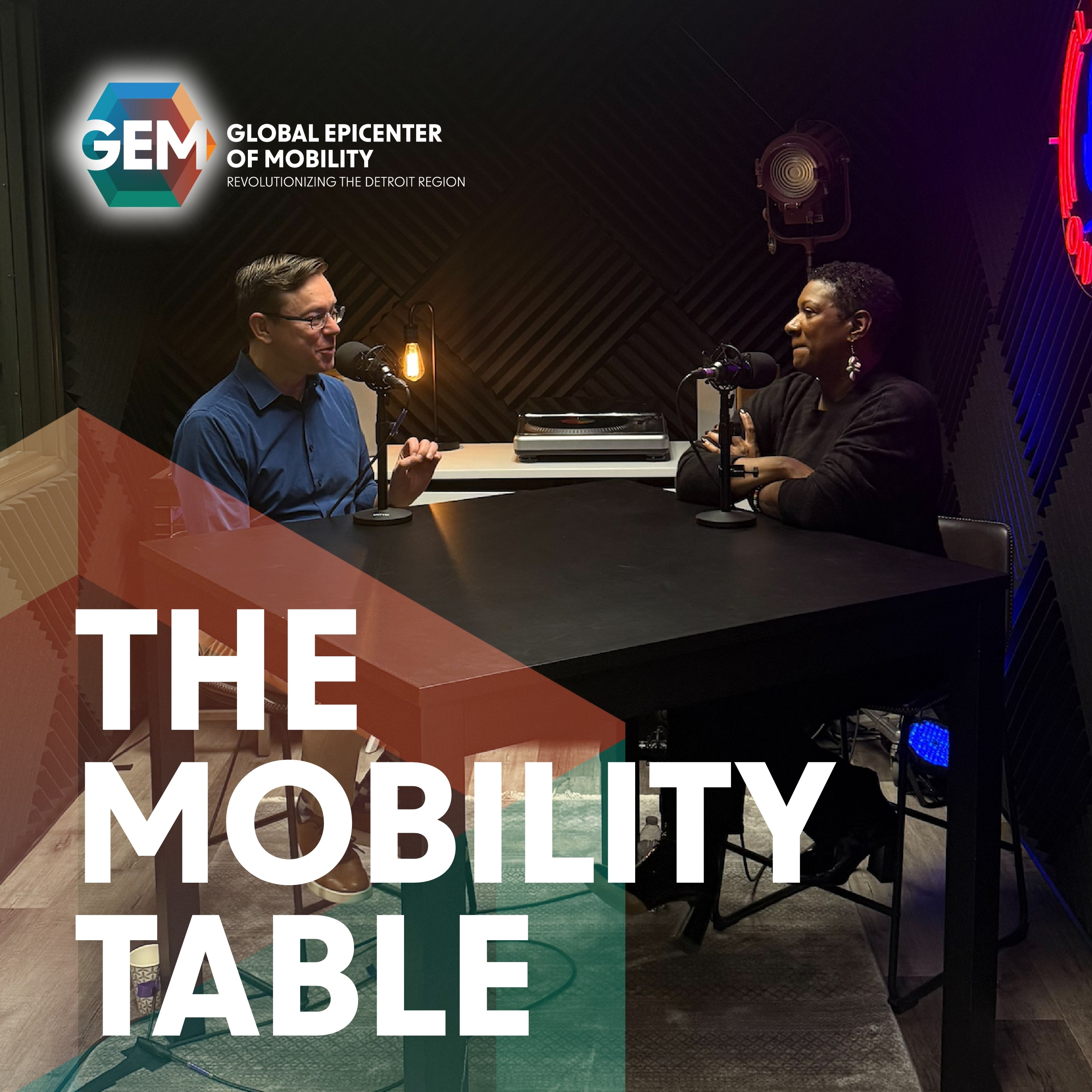
EVNoire is an organization working to help more people get involved with electric vehicles. In this conversation, it’s connected to efforts to electrify Michigan.
Electrification is the move from gas cars to electric cars. It’s not just the car itself—it also involves charging and helping people feel comfortable using EVs.
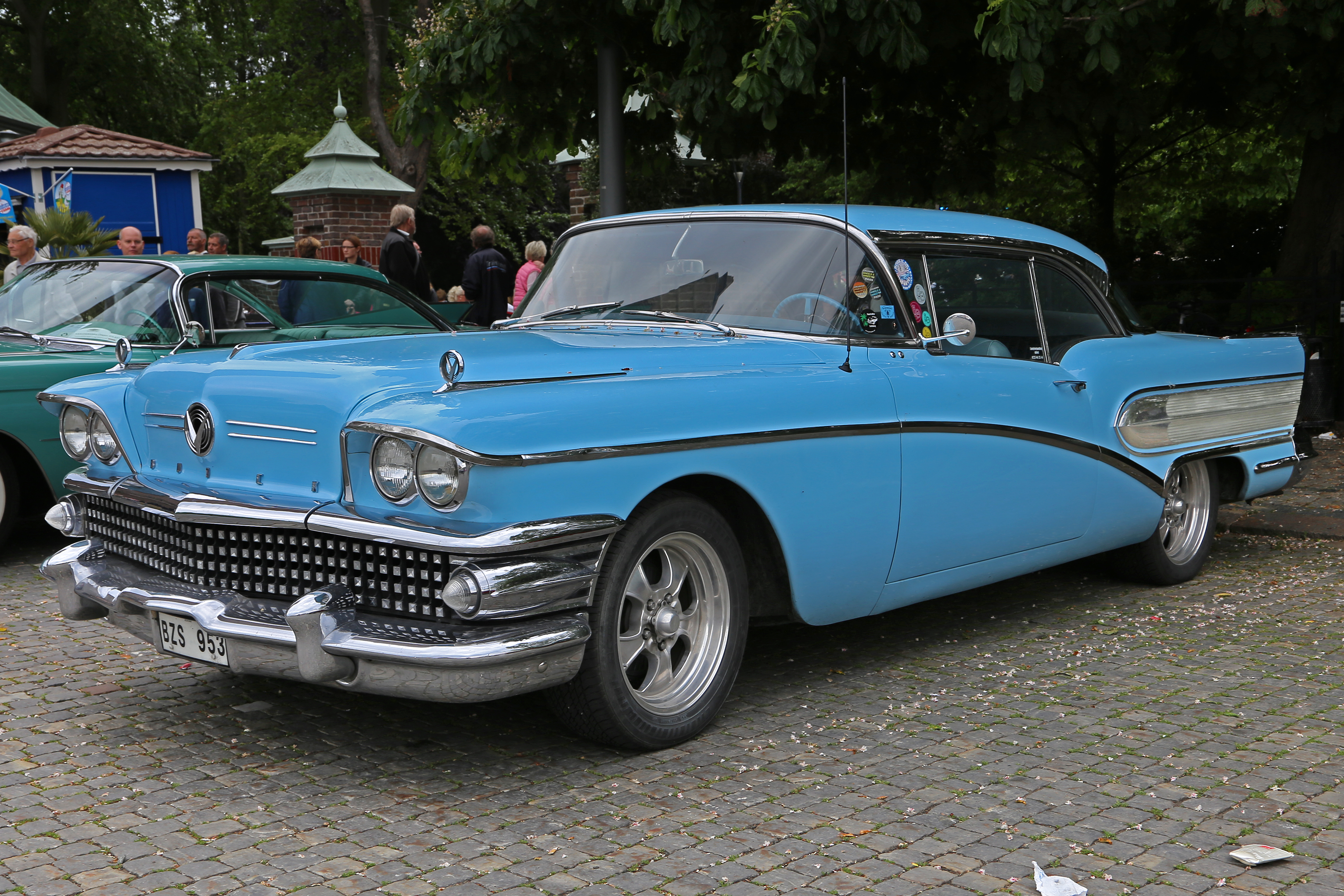
The Buick Century is a car model that Buick made for a long time. It was designed to be a comfortable, everyday sedan for regular driving. People mention it when talking about how car designs and buying habits changed over the years.
Consumer understanding means making sure regular drivers really get how the new tech works. For EVs, that includes things like charging and what to expect compared to gas cars.
Autonomous vehicles are cars that can drive with varying levels of automation, from driver-assist features to full self-driving (depending on the system). In adoption conversations, they raise questions about safety, trust, regulations, and how the technology fits into everyday driving.
Range anxiety means worrying your EV battery won’t last long enough for your trip. People fear they’ll get stuck because they’re not sure where they can charge.
Electric vehicles (EVs) run on electricity stored in a battery. The big idea here is that many people don’t know how EVs work yet, so they need clear information to feel comfortable.
Mass adoption means more and more people start buying and using EVs, not just a small group. The point is that people need help understanding EVs so they feel confident switching.
Mass market just means the regular, everyday customers—not the enthusiasts who are excited about new tech. For EVs, it means making charging and using the car feel easy and predictable for most people.
Early adopters are people who try new technology first, even if it’s not perfect yet. They’re usually more patient and willing to figure things out, while most people want things to work with minimal hassle.
Workforce development means training people so they can get good jobs in a growing field. For EVs, it’s about making sure there are skilled workers to support charging and vehicle maintenance.
GM is General Motors, one of the biggest car companies in the U.S. They’re investing in electric vehicles and trying to help people learn how EVs work.
The Hummer EV SUV is a large SUV that runs on electricity instead of gasoline. It’s meant to feel powerful and capable, and it’s the electric version of the Hummer name. The podcast mention likely focuses on what it’s like to drive and how it matches (or doesn’t match) expectations.
Charging is the main difference between an EV and a gas car. New owners often need help learning how to plug in, what to expect, and how charging fits into their daily routine.
The “EV ecosystem” is everything around owning an electric car, not just the car itself. It includes charging places, how you pay for charging, and support that helps people feel comfortable using the system.
This is basically saying the EV “system” only works if people actually want to buy and use EVs. Without buyers, the rest of the infrastructure and plans don’t really take hold.
They’re pointing out that where you live affects whether you can charge an EV. A garage or driveway makes charging easier than charging in many apartment situations.
Combustible engines are the traditional gas/diesel engines that burn fuel. The episode is saying they create pollution, which is one reason people are moving toward EVs.
This means whether someone can plug in their EV at home. If they can, it’s easier to live with the car day to day, which makes people more likely to buy an EV.
EV means electric vehicle. It’s a car that runs on electricity stored in a battery, and people often need help learning how charging and ownership work.
An emerging ecosystem means a whole community that’s growing around a new technology. For EVs, that includes companies building parts, and people helping others learn how to use electric vehicles.
Electrifying Michigan is a group in Michigan focused on helping people learn about electric cars. They aim to make it easier for consumers to understand how EVs work and what to consider before buying.
The battery is what stores the electricity that makes the car move. In many EVs, it takes up space where a gas engine would normally be, so the hood area can look simpler.
This is about what makes regular people actually want to buy and use an EV. Things like where you can charge, how much it costs upfront, and whether it feels convenient matter a lot.
“Brand agnostic” means they’re not pushing one specific car company. “Multimodal” means they’re thinking about more than just personal cars—how people move around in general.
A mobility ecosystem is the whole “system” behind transportation, not just the vehicles. It includes utilities, companies, and government working together so electric transportation can actually function.
OEMs are the companies that make the vehicles or big parts of them. When they invest in EVs, it affects how many electric cars show up and how fast they improve.
Shore power infrastructure is when a dock provides electricity to a ship so it doesn’t have to run its own engine while parked. It helps cut pollution and uses cleaner power if the grid is cleaner.
Unmanned aerial systems are drones or other aircraft that fly without a pilot inside. They often rely on batteries and advanced power systems, so electrification affects them too.
Workforce synergies means workers can use similar skills in different electrification-related jobs. If training and hiring are coordinated, it’s easier to staff all the new projects.
Multi-modality means thinking about transportation in more than one form. Instead of only focusing on cars, it also includes buses, trains, bikes, and e-scooters, and even things like delivery drones or self-driving vehicles. The goal is to plan for all these different ways people and goods move.
E-scooters are small electric vehicles you can ride for short trips. They matter in electrification because they can replace some very short car rides. Whether they help depends on things like safe riding rules and where people can charge them.
Electric boats are boats that run on electricity instead of traditional fuel. They’re included in electrification because they can reduce pollution where boats operate, like harbors. The big question is whether batteries can provide enough range and whether charging is available.
This is about where the electricity comes from and how it’s used. Electrifying transportation means you need power for all those vehicles and devices, not just the vehicles themselves. The environmental impact depends on how that electricity is produced.
A misconception is a wrong belief. The hosts are saying a lot of people’s fears about electric tech come from misunderstandings, and better communication can help fix that.
Allies are people or groups that support the cause and help spread the message. Here, they’re talking about working with trusted communicators so more people feel informed and supported.
It means getting the same message out through several people, not just one. When different trusted voices say it, people are more likely to pay attention and believe it.
Shoreline infrastructure is the equipment and electrical setup on land at docks. For electric boats, it’s what makes it possible to charge safely while the boat is tied up.
Company
Torquito
Torquito sounds like a name of a company or project mentioned in the electric boat space. The segment doesn’t explain what they make or how they’re involved.
This is basically how organizations get people excited about EVs and other electrification efforts. They try to make more people want the technology so it actually gets used, not just talked about.
A ride-and-drive is when people get to sit in and drive a vehicle themselves. It helps them understand what it’s like to own and use an EV before they decide anything.
Uber is a ridesharing company. When Uber partners on EV events, it can help show EVs in real life—like how they work for people who rely on rides every day.
The hosts are discussing EV adoption among ride-sharing drivers, a group that often cares about operating costs and day-to-day usability. This matters because frequent driving can make fuel/charging economics and real-world experience especially influential.
“Demystifying” just means making something feel less scary or confusing. They’re trying to help people understand EVs by letting them try one instead of relying on rumors or fear.
“Exposure” here refers to getting people physically into an EV (or hybrid) so they can form opinions based on experience rather than criticism from outsiders. The hosts connect exposure to reducing skepticism and improving acceptance.
Concept
EVs being sold at a higher clip
It means more electric cars are being bought than before. When people see them more often, they’re more likely to think, “Maybe I’d consider one too.”
An autonomous underwater vehicle is like a robot submarine. It can do its job underwater on its own, and the point here is that sharing these kinds of projects helps people learn about new technology.
It means you don’t just tell people once—you explain the same idea in different ways. Using different trusted voices helps more people understand and feel included.
It means using people in your community who are already trusted. Instead of sending EV info from strangers, you share it through the folks people listen to.
They mention Global Epicenter Mobility as the group behind this outreach effort. Here, it’s helping share EV-related information through people and organizations communities already trust.
“Demystify” just means explain it in a way that’s easy to understand. Instead of confusing details, the focus is on helping people feel comfortable—especially about things like charging.
Jargon is “tech talk” that can sound confusing. If you remove it, people can focus on the questions that matter to them, like whether charging will be easy.
Peer-to-peer charging means people can share their chargers with other EV drivers. Instead of only relying on big public charging companies, you can sometimes book access through an app.
“Plug P2P” sounds like a company that helps EV drivers find places to charge by sharing access between people. The host compares it to Airbnb to explain the idea of sharing resources through an app.
“Home chargers” are EV charging stations you can use at your house. If you can charge at home, it’s usually easier to own an EV because you don’t have to find a public charger every time.
They’re comparing the service to Airbnb because it works like booking a time and place. EV drivers can use an app to find a charger and schedule when they’ll plug in.
This is about charging stations you can use when you’re out and about. Having chargers nearby and being able to schedule them makes it easier to drive an EV on trips.
A supply chain is basically how parts and materials get made and delivered. Electrifying cars changes what parts you need, so companies need special experience to keep everything flowing smoothly.
“Electrified future” means more vehicles will run on electricity instead of gasoline. That usually requires not just cars, but also charging and the factories that make batteries.
The speaker is saying big industries can’t just switch directions overnight. Factories and supply chains are set up to do one thing, so changing to EVs takes planning and time.
“Transformation” means the whole system has to change, not just a single part. It’s about retooling factories and building new skills so the region can compete as EVs grow.
Energy resilient means the power system can keep working even when something goes wrong. With more EVs, the grid has to be ready for extra electricity demand.
The shift towards EVs means more cars are powered by electricity instead of gas. That affects how and where electricity is generated and delivered, especially for charging.
Connected mobility means vehicles and transportation systems can “talk” to networks and each other. That can help EV charging and traffic work more efficiently.
Grid modernization means updating the power network so it can handle more electricity use. EV charging adds new demand, so the grid often needs upgrades to stay reliable.
Demand management is about using electricity more wisely so the grid isn’t overloaded. For EVs, it can mean charging at times when power demand is lower.
It means EVs become so popular that it’s no longer just a few people driving them. Once many people switch, it’s easier to build charging and make EVs practical for everyone.
A “fleet” is a group of vehicles used by an organization. If cities and states switch their fleets to electric, it can make EVs more common and help build charging where people live.
They’re talking about switching more than just private cars—like city and school vehicles—to electric. Fleets can be easier to convert because they usually drive similar routes and can plan charging.
LIVE
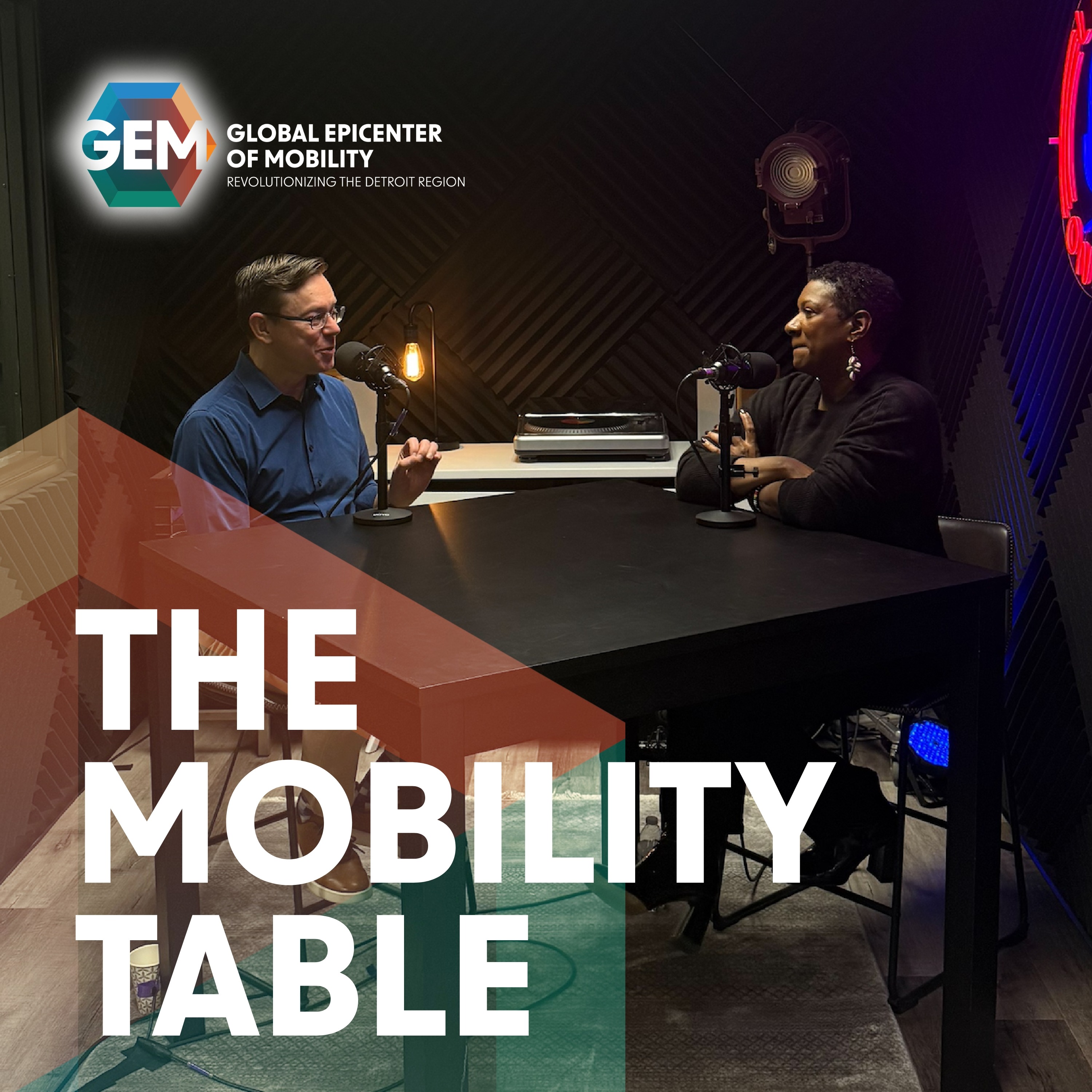
Welcome back to the mobility table, brought to you by Gem.
I'm Bernard Swicky, VP of Mobility and Research at Gem and the Detroit Regional Partnership.
And I am Janine Gantt, the Mobility Engagement Officer for the Global Epicenter of Mobility,
also known as Gem.
Absolutely.
And Janine, as we were preparing for this episode, you know, one of the things we talked
about is needing allies for adoption of new mobility paradigms, new mobility approaches,
and you know, an expression that came up, the allies we didn't know we needed.
Absolutely.
And when it comes to electrification, you know, it's a new issue for all of mobility, but
particularly automotive, right?
Drones are kind of accepted to be electrical.
But something like a car, we've got, you know, a lifelong relationship with it and
also with the way that we use it.
And they've kind of worked the same way for decades now, almost a century.
But they don't anymore, right?
No, they don't.
We need that consumer understanding.
Yeah, we sure do.
And especially like the whole idea of EVs and autonomous vehicles and electric vehicles,
I mean, even just hearing you talk, I'm like, I want to make sure that we are always
at our mobility table, talking in a way that is amenable for everyone, meaning I
want everyone to see themselves as a part of this advanced mobility ecosystem and
electrification and to get excited about it.
But, you know, sometimes new technologies can make people nervous, frankly, because
they just don't know, right?
There's, as you think about electrification, it's range anxiety, right?
It's, I don't know where I'm going to charge my car.
I don't know how to do that, you know?
I mean, remember when cell phones first came out?
Well, they were called car phones at the time, right?
I mean, you know, people are always afraid of something new because there's
just a lot of uncertainty around it.
I've been fortunate to, as you know, Bernard, go around to and speak at
different conferences and panels.
And, you know, one of the things I remember going to an event in D.C.
a couple of years ago, and I realized that there is truly a lack of
education about electric vehicles.
Like people really don't understand what it is.
And so I think one of the challenges with this kind of mass adoption is because
it feels like it's something that's niche for a small group of people.
You know, it's not for me, but I really think that there's an opportunity
for us to continue to create awareness so that people can see themselves
driving in an EV, right?
Or understanding what that is.
I just, you know, I feel like that's so important for folks.
Yeah, you know, and it's also a necessary part of kind of the journey
of EVs to become mainstream because, you know, in the early days, when it's
just, you know, the really hardcore techie early adopters, they're willing
to put in the homework to learn how to use a vehicle differently, how to
plan their trips differently and so on.
You know, and they're also willing to suffer some inconvenience, you know,
but now, OK, we've satisfied that part of the market.
We need to go to mass market, you know, we need the family down the street.
And that's a very different consumer to approach.
You need a different level of understanding and they are not nearly
as tolerant of, you know, I can't get to work.
I can't get to school because the car's not charged.
You know, you're not going to get the same amount of tolerance,
of inconvenience, as you will with the early adopters
who are kind of embracing this with open arms.
But they're the ones who are going to read the manual.
I'm saying your people, like you, like, you know, the folks that are,
you know, you're going to read the manual.
I might not read the manual.
Frankly, I just want to be able to get in my car and go to wherever I'm going.
Right. So it has to be something that is simple for people to get.
And it's not just about driving the vehicle, but it's also working in the
industry too. Right.
So I mean, I know we encounter this quite a bit in some of the work
we do with our partners through workforce development and the
Southeast Michigan groups that work on workforce.
It's even the idea of getting people to step into the workforce
as it relates to advanced mobility electrification
because people don't understand it.
You know, this idea of you you really need to get in the vehicle
and then actually try it and see.
I'll tell you GM, I know we're naming a brand, whatever.
It's Detroit. GM is a big player in the market.
And they had a EV experience that I went on and I had actually
truthfully had never driven an electric vehicle up until like two years ago.
And I was I'm one of those people, I'll be honest with you.
I was I was nervous.
I was like, I'm reminded of my mother who recently got a car
and had a key fob and she was like, I don't know what to do with this.
Like, where's the key?
I'm like, oh, just push the button. Right.
So she didn't understand that and that's exactly how I felt
getting into this EV Hummer because it was the EV Hummer that I test drove.
And it was pretty amazing.
But once I settled in there and there was actually someone that sat with me
and kind of talked to me about the technology, I felt a lot more comfortable.
So, you know, identifying ways for people to have an experience
with the vehicle, to be able to get inside of it, to be able to
see how you charge it and all those things.
I think there are a lot of different strategies
that we can use to help people become more comfortable
and begin to adapt, you know, this new way of creating clean energy
while driving. Yeah, absolutely.
You know, because when we talk about the ecosystem, you know,
the ecosystem needs a purpose to exist.
And there is no purpose if the consumer is not buying the product.
That's right. Right.
We're kind of used to assuming that there's an outlet
that eventually these things we design and engineer and produce,
you know, that they just kind of leave the plant and ego somewhere.
But there needs to be a somewhere.
And that is someone's garage or apartment, you name it.
And it won't be there unless there's a willingness
and an openness on the part of that buyer to buy that vehicle.
You know, and this mobility table is really about everyone.
And I've said this, right, that we wanted this mobility table
to be for everyone.
We wanted everyone to be able to see themselves here
as a part of this revolution of EVs and other types of advanced mobility.
And, you know, I had gone to a conference a couple of years ago
and, you know, one of the things that we talked about
was really kind of environmental pollution that comes from, you know, combustible engines.
And, you know, what ends up happening is, you know, those folks
who have the ability to be able to adapt, you know, they're they're reading the manual.
They're excited about getting into EVs.
They can, you know, they have the charging ability at their home
and that kind of stuff are then going to sell their car.
And that car is going to go over to a particular community
where you have issues around environmental pollution. Right.
So, again, as we think about how we get folks to adapt this,
it needs to be something across the board
because we want everyone to be able to benefit from clean energy, right,
from electrification.
So I just think, you know, as you talked earlier about allies,
so identifying those people in the ecosystem
that are helping to educate folks about adapting advanced mobility
technologies, EV specifically, right.
But like, who's doing that work?
And as you and I talked about, when you have an emerging ecosystem
like we have in Detroit, there are lots of people in the sandbox,
like lots of folks that are doing different kinds of things
from developing new technologies to supplier,
which we've talked about, to advanced mobility,
but also folks that are coming in to educate people about the use of technology.
So I'm excited about some folks we're going to have on with us.
Electrifying Michigan. Let's get into it.
Because this is a group that is helping people to understand
the benefits of EV and other types of mobility and technologies
that can really help our region forward.
So looking forward to having a conversation with them in just a little while.
Yeah, I don't know. We need a market.
And that market is people who are open to buying that product.
And hence, we need allies partially because, you know,
it's a very valuable and worthwhile thing that they're doing.
But secondly, because particularly when it comes to automotive,
this is a problem we're not used to having, you know,
we are used to people, you know, at the very least understanding,
you know, what a vehicle does and how to structure my usage of it.
And we haven't had to make these explanations before, but we do now.
And so, you know, let's talk about electrifying Michigan.
Absolutely. And the work that they do in that regard.
Absolutely. I'm looking forward to it.
And, you know, I was thinking about
I have a cousin that recently bought an electric vehicle
and he wanted me to look under his hood like, OK, I'll look under the hood.
He was all excited about it and lifted up the hood.
And I was like, oh, my God, like there's nothing there.
Like there literally was just there was just like, you know, a battery there.
There was nothing else there.
He was actually packing his suitcases and put them in the front of his vehicle.
I was like, wow, again, things are a little different,
but that can be a good thing.
So I'm excited.
Let's bring on electrifying Michigan
and hear what they're doing in the region to help educate consumers
about opportunities with electrification.
All right, so to talk about some of these critical adoption and ownership issues,
let's bring up one of those allies electrifying Michigan.
And we've got Brandon Bordenkircher joining us at the table.
Great.
Hey, Brandon, welcome to the mobility table.
Hello, thanks for having me.
So he didn't put your last name to bad.
No, you did all right.
You did all right.
He's got a Polish background.
I'm used to long words and lots of consonants.
I love it. I love it.
So, you know, we were having this conversation, as you know, about,
you know, consumer adoption of EVs.
And, you know, I became aware of electrifying Michigan
as a new entity here in the state
that really is focusing in on how do we get consumers
to have more awareness about electrification
and EVs and other mobility opportunities.
So tell us a little bit about electrifying Michigan
and how you came to this moment here in Michigan.
Of course, of course.
So I serve as the program manager
for the electrifying Michigan partnership.
It's a brand agnostic, multimodal,
statewide campaign and partnership dedicated to advancing
multimodal transportation across the state,
land, air, lakes.
We're a 501C3 organization
that serves statewide convening,
that serves as a statewide convening platform
to bring together the full mobility ecosystem, OEMs,
utilities, government agencies,
community-based organizations and more.
And what brought us to this moment is simple.
Michigan stands at the crossroads of a new wave of mobility
across land, water and air.
So as you know, it's a really exciting time here in Michigan.
And, you know, we're still at the historic
heart of America's auto manufacturing,
but the mobility landscape is expanding.
So we have EVs, battery production, electric boats,
shore power infrastructure and unmanned aerial systems,
all accelerating at the same time.
So these sectors share a deep technological
and workforce synergies.
Electrifying Michigan in our partnership
was created to help connect these pieces.
You know, a lot of moving parts,
a lot of different sectors and a lot of different people
who need to be at the table.
Hello. This is why we have the mobility table.
But this is why we have the mobility table,
because of everything that you just mentioned, right?
Like all these different opportunities across
across this advanced mobility ecosystem, right?
You said multi-modality, right?
Yeah.
So I think that's a term that people may not necessarily understand.
So when you say that, what do you mean?
Yeah, multi-modality.
That means we're not just talking about cars.
We're talking about transit.
We're talking about trains.
We're talking about buses.
We're talking about e-scooters.
We're talking about bikes.
We're talking about things that that move objects and not people.
We're talking about drones, moving packages.
We're talking about autonomous vehicles,
electric boats.
We're talking about the energy utilized to power these things.
So that is a lot of sectors, a lot of moving parts.
And especially here in Michigan,
a lot of different people with very specific expertise
that you don't find in any other state, to be honest.
Yeah, yeah, for sure.
So, you know, I know that there's something called
like electrifying Virginia too, right?
So is that like the same?
Yeah, yeah.
So we were started by the same organization.
Now we aren't here to come in
and tell people what they need or anything like that.
Michigan already has strong players
in the mobility space.
You know, I'm talking with two of them here.
So it's more about complimenting what is already there
and making sure things are connected.
You know, one of our core principles
is that electrifying Michigan is not meant to replace
or overlap with existing work being done
because there is a lot of work being done here.
Which by the way, we understand
because that was one of the tenants of GEM also
is there's so many great players.
We wanna help align.
We wanna help inform, convene and so on,
but no toe-stubbing.
And I really like hearing that you're about that too.
Exactly, yeah.
We're here to champion all the players in this ecosystem
and make sure that Michiganders all over the state
are educated and whatever questions they have are answered.
I know there are a lot of concerns with EVs
or drones or electric boats,
a lot of misconceptions with all those.
And I think partnering with all our different partners,
those are some of the best communicators in the state.
So it's, how do we help you amplify your message?
What can we do on our end?
And yeah, that's how we see ourselves.
That goes back to what you were saying,
Bernard, about allies, right?
Yeah.
Allies helping, what you just said for me
was the idea of amplifying the voice, right?
Like multiple, sometimes it takes messages
to come from multiple directions
for people to finally get it and hear it.
Like, as a mother, I remember telling my children
to do something and they wouldn't hear it from me.
You know what I mean?
Like they wouldn't hear it from me,
but they would hear it from their friend's mother.
Or they'd hear it from someone else
and then they would accept it as truth, right?
Exactly.
So it's the same kind of thing,
like there are lots of different folks in this ecosystem
who are sharing message, talking about workforce,
talking about supply, talking about opportunities.
And sometimes you need to hear it
in multiple different ways
in order for it to kind of resonate
that this is where we're going.
Absolutely.
And I think what we really need,
and I think so many organizations here in Michigan
are already doing this,
we need empathy and we need to listen.
We need to find out from our partners, what do you need?
I'm not here to tell you what you need,
or how I can help you.
Tell me what you need.
Tell me how I can help.
Who can we connect you with?
How can we make sure that people know
about what you're doing?
There's so many things happening in the state,
so many different universities working on new technologies
pertaining to shoreline infrastructure
and charging electric boats, Torquito,
like that's a company here in Michigan
who is installing electric motors for e-boats.
It's making sure that everyone is connected,
we're all on the same page
and we need to meet people where they are,
have empathy, don't just shut them down.
If they have legitimate questions,
try to answer them in their language.
So, Brandon, can you give us an example?
For example, what you just said
about that particular engagement approach with people.
When Electrify Michigan does its work,
can you come up with an example
of how does that engagement take place?
How do you get that message out?
Yeah, yeah, many different ways.
I think number one,
I think there are three ways
that we compliment our partners specifically in that way.
Number one, public awareness and demand generation.
So, ride and drives with consumers,
we just did one in Denver with our partners at Uber
and that went great.
It's really great.
Was that an autonomous vehicle?
No, it was just electric vehicles.
But these were ride sharing drivers
who had never tried an electric vehicle
or a hybrid vehicle before.
So, getting them into the vehicle, understanding,
this is how you can save money.
This is a way to save money.
This is a way to, we don't tell them,
we ask them, why are you interested to find out,
okay, this is why you're interested.
Let me answer this question for you
pertaining to whatever you have questions about.
But it's really about demystifying
and just getting people to open up and try something new.
It can be scary trying new things,
but I have yet to meet a person who tries an EV
who is no big deal.
It's like, these things have kick.
Yeah, you're cool, this is so cool, I had no idea.
Exactly, yeah.
And it does seem to be the critical thing
is the exposure, right?
Because so much of the criticism
is from people that have never been in a vehicle like that.
Yes, exactly.
And I think people are obviously getting
a lot more exposure now because EVs are being sold
at a higher clip than they have before.
So the more people see them,
the more they have a neighbor who gets an EV
or a family member who gets an EV,
the likelier they are to say, you know what?
I like EVs, I would consider that.
But it's not even for people buying vehicles.
There's also electric buses.
Like all you need to do is take transit
and you're utilizing an electric bus.
That's when people realize it's a lot quieter,
it's a lot smoother.
I didn't even realize there was a bus behind me.
Usually I can-
Exactly, you can smell it coming a while away.
You're absolutely right, yeah.
Exactly, so there's a lot of that.
And number two, I would say marketing and communications,
just creating visibility for our partner's wins
if they have had a pilot that they've been testing.
Let's say like an autonomous underwater vehicle
that one of the universities here is working on.
We wanna share those things.
I do not think there's enough people shouting
from the rooftops, all the incredible things
we have here in Michigan, cause there's so many.
Yeah, I agree, I mean that goes back to people
need to hear the message from lots of different angles
and different people until they receive it.
One of the things that we're working on
at the Global Epicenter Mobility
is arming trusted connectors with information.
So people who are trusted within particular communities
to have information about opportunities that are available
around EVs or other types of mobility opportunities
because that's who I'm gonna go to.
I trust you, I trust my church.
I trust my local community-based organization.
I trust these people,
so making sure that we are giving them information.
I think we said this earlier,
this isn't about hoarding information,
it's two things, it's not about hoarding information
and it's also not about technical jargon
that prevents people from understanding
and seeing the opportunity and knowing that,
yes, this is for you as well.
It's not just for us small folks, it's for everyone.
So how do we demystify it
and eliminate some of the jargon
that make it difficult for people
to see themselves as a part of it?
Absolutely, I think that's one of the main things.
Coming from, I have a wide range of experiences
I've had for jobs, but one thing I learned
in the academic space, writing academic papers is,
you write academic papers for the academics,
but if you are talking to your average consumer,
they don't need to know about this fact or this statistic.
That's not going to change minds,
they just wanna understand, they wanna feel comfortable
with what they're purchasing, what they're writing in,
they don't wanna feel nervous about,
am I gonna be able to get a charge?
I've heard this, so it's a lot more of that
than putting on my mustache and twirling it.
As my mother would say, putting on airs.
Exactly, there you go.
So that's why I feel like I'm connected to it.
And I would say this about Electrifying Michigan,
I actually went to an event that you all did
a couple of months ago, and maybe the last month,
actually, and it was a networking opportunity.
And as I mentioned earlier,
this is an emerging ecosystem.
And there are new players and people coming in constantly,
and you don't always have an opportunity to meet them
if you stay in your little bubble, right?
And so you all created an event, a networking event,
I met so many people.
I met so many new people that were in this
advanced mobility space in this region,
that shared passing cards and understanding
what you're doing, and in my mind,
I'm thinking are there opportunities
to create partnerships, right?
So that again, we grow bigger together
versus trying to do things in silos.
So that's one of the things I really value
about Electrifying Michigan.
There's just so much opportunity, you know?
And I've said to people in the past,
it's like this industry is like buying Amazon as a penny stock.
I'm saying it is, we are ground level,
like it is time to get involved and get excited,
find your place in it, whether it's driving a vehicle,
driving the vehicle and working in the space,
driving the vehicle, and as you're driving the vehicle,
thinking boy, it would be really nice
if I had this in the vehicle.
We're in a position now where you can create that.
Like, you know, you've got a piece of paper,
you've got an idea, we've got spaces for startups
and folks that have ideas to innovate and create, so.
That's a really good point.
So one of our advisory board members,
plug P2P is actually a startup just like that.
So they realize that there's a lack of home chargers
so they started a company that is kind of like Airbnb
but for chargers, for electric vehicle chargers.
So you sign onto the app, you find a charger nearest to you,
say you're from out of town or something like that,
you can plug in for two, three, four hours,
however long you just schedule it.
So there are so many different jobs being brought on
by these new technologies that we have, look it,
we're here, we're doing a podcast,
more jobs created by this.
So there are so many different opportunities
across the state.
I think, you know, electrifying Michigan
can help strengthen a few of those.
Right now, you know, Michigan stands at
the biggest transportation transformation
the industry has seen in a century.
It's so crazy to be alive right now.
We have more EV and battery plants under construction
than any other state.
And we're home to robust engineering talent, you know,
preaching to the choir now.
Supply chain expertise, we have manufacturing,
a manufacturing backbone that will power
our electrified future.
Right, but it's all here though,
but it has to work differently now, right?
It's that question of, you know,
we have this incredible,
and we keep calling it an ecosystem, which is true,
but it's kind of like a giant machine
and it's been doing one thing.
And it's like a train on rails.
You don't just change direction easily.
You've got to kind of will it to get that change to happen.
Yeah, we have to stay competitive, I think.
And you know, I think number one-
That's true, it's not happening in a vacuum, right?
Because other states, other countries are doing it.
So it's also, you need a certain amount of transformation
just to keep pace, you know,
and then build on that innovation
to actually be a differentiator.
It's a two-step thing. Absolutely.
Absolutely, you know, I think, you know,
staying competitive with our workforce opportunities,
economic opportunities,
and then just making sure that, you know,
we stay energy resilient, you know,
shift towards EVs, electric boats, drones,
connected mobility just creates a lot of opportunities
for grid modernization, demand management,
so many opportunities,
but we need, you know, the consumers to buy the vehicles.
Yeah, the consumers to show some interest, right?
Exactly.
And why it makes a difference, right?
Yeah.
And EV, why engaging in this space
really makes a difference for everyone.
Yeah.
I think we've really moved beyond,
I think we have to move beyond this idea
that this is just for, you know,
a one consumer to have in their garage, right?
Frankly, right?
It really is, if we can get massive adoption,
it truly can change how we all live our lives.
Absolutely, and that's a very good point.
You know, one person getting an EV on their block,
another person, another person, that's great.
We want to see that,
but we have a lot of fleets in local government,
whether it's the county, municipality,
or the state, we should electrify all of these,
you know, be electrifying all these vehicles.
I think that's a huge opportunity,
and we're seeing so many different like school districts
across Michigan.
Yeah, I heard that.
There were some like in Dearborn that had electric buses.
So I know we've got to wrap up,
but this thing that you said, you know,
this idea of electrifying everything,
like, you know what I mean?
Like, just that's like electrifying Michigan.
Like, that's what we're talking about.
So we're excited to have you all here
in the Detroit region and being an ally
and, you know, amplifying the work
that we're all collectively doing together
to make Michigan the best place possible for all citizens.
And so I look forward to seeing you.
We both look forward to seeing you around
in the ecosystem at different events
and maybe even, you know, honking
as we're driving by, you know, in our car.
So thank you so much for being here with us, Brandon.
And this kind of wraps up our episode of The Mobility Table
and we're looking forward to the next episode.
Thank you very much.
Thank you, folks.
About this episode
Brandon Bordenkircher of Electrifying Michigan joins Bernard Swicky and Janine Gantt on The Mobility Table to argue that EV adoption needs “allies” who educate, demystify, and amplify messages across the mobility ecosystem. The discussion tackles why mainstream buyers struggle with uncertainty like charging and range anxiety, and how exposure (ride-and-drives, transit with electric buses) plus clear, non-jargony communication can build comfort. Electrifying Michigan is presented as a brand-agnostic, multimodal statewide convenor supporting partners without duplicating their work—connecting EVs, charging, workforce, and even electric boats and drones.
Brandon Bordenkircher joined Jeannine and Bernard at The Mobility Table to discuss the Detroit region’s multimodal capabilities. The conversation explored the role of allies, including trusted connectors, organizations, and individuals who advocate for electrification, as well as the importance of consumers in supporting its growth.
Brandon’s work at EVNoire is focused on an organization called Electrifying Michigan. Prior to his position at EVNoire he has inhabited roles across advocacy, public policy, and operations including Deputy Program Director for Midwest Government Affairs at Airbnb and a Lobbyist at Daimler. He also co-founded 12 Tone Matrix, pioneering AI-driven text analysis.