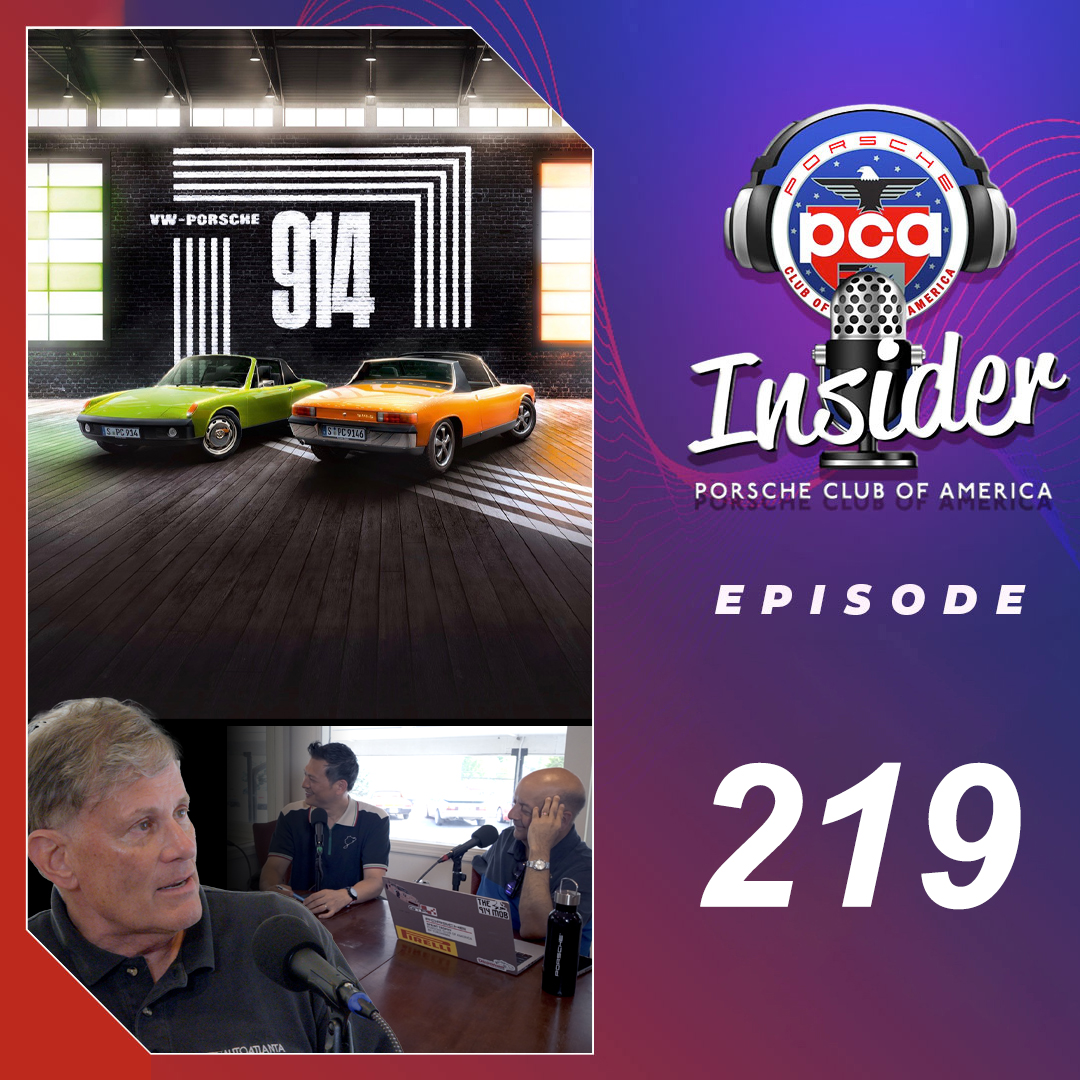
The Porsche 914 is an older Porsche sports car with its engine placed in the middle of the car. When the hosts say “914 Nirvana,” they mean they’re seeing a huge collection of these 914s in one place.
Pirelli is a well-known tire company. Tires matter because they affect how well the car sticks to the road, how safe it feels, and even how loud it is while driving.
They’re telling listeners about the Porsche Club of America and where to find information online. It’s more about joining and events than car mechanics.
The Volkswagen Beetle is a very famous, long-running car. In this story, it’s the first car that set the guest on the path that eventually connected to the Porsche 914.
Tailfins are the big fin-like shapes that some older cars had on the back. They were a styling trend in the late 1950s, and the guest is using that to describe the year.
The Porsche 356 is an early Porsche sports car. It’s famous for being light and fun to drive, and it’s the kind of car that can really hook someone on Porsche.
The Porsche 912 is a classic Porsche from the 911 era. It’s a sports car that many people see as a more approachable way to get into the Porsche experience, and in this story it completely won the host over.
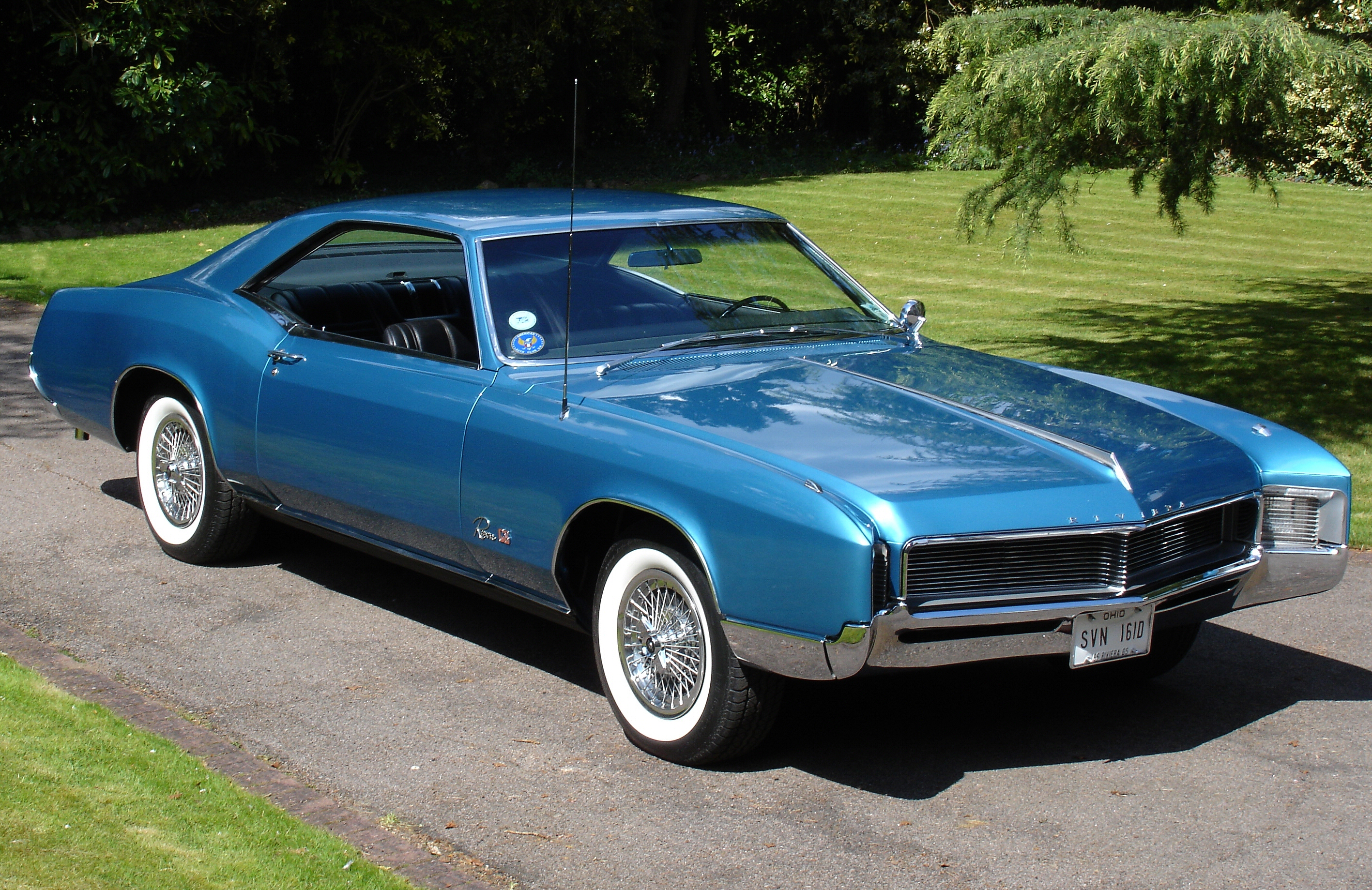
The Buick Riviera is a classic American car line known for a comfortable ride and big-engine feel. In the story, it’s the standout car his dad finally managed to buy.
Valve adjustment is the periodic setting of the clearance (or “lash”) between the camshaft and the valve train components. If it’s not done on engines that require it, the valves may not open/close correctly, which can contribute to overheating, loss of compression, and in severe cases catastrophic engine damage.
“Throwing a rod” is when the engine’s internal parts fail badly. A rod can break and damage the engine block, usually meaning the engine needs a rebuild or replacement.
“Rockers” are the lower side panels of a car’s body, running along the bottom edge near the doors. Rust holes there are a serious structural and safety concern because they can indicate corrosion that has spread into the body’s load-bearing areas.
A “rebuilt engine” is supposed to be an engine that’s been taken apart and repaired so it runs right again. The speaker is saying this one may have been more cosmetic than genuinely fixed.
The valve cover is a visible part on top of the engine that covers the valve mechanism. It can be repainted to look good even if the engine still has problems.
The transmission is what helps the engine’s power get to the wheels through different gears. The story says the car had a transmission problem that needed fixing.
Overdrive is a gear that helps the engine spin slower when you’re driving at steady highway speeds. That usually makes the car feel calmer and can help with fuel use.
Road & Track is an automotive magazine. The speaker is saying he first learned about the 914 through that magazine and it influenced how he felt about the car.
“Totaled” means the car was judged too badly damaged to be worth repairing. The speaker is saying that back then, a car could be written off, but a skilled builder could still repair it without it costing as much as you’d expect.
Suspension is what connects the wheels to the car and helps the car ride and handle properly. If it’s “buckled,” the car can sit wrong and drive unsafely until it’s repaired.
“Fender sections” refers to the body panels that form the wheel-arch area. In collision repairs, damaged fender sections may be cut out and replaced or welded in to restore the car’s shape and alignment.
Here, “rebuilt” means they took broken 914s and fixed them up so they could be sold again. It’s more than simple cleaning—it involves real repairs to get the car back on the road.
Kemper Insurance Company is the insurance company the speaker worked for. Insurance claims can sometimes lead to damaged cars being sold off, which is how project cars like these can show up.
The Mercury Capri is a compact car line from Mercury (a Ford brand). In the transcript, it’s mentioned as a short-lived “run” of cars they were rebuilding, which gives context for what kinds of vehicles were common in their shop work at the time.
The Ford Capri is a sporty-looking car that was made for everyday driving but with a more fun, performance-oriented style. The podcast mentions people rebuilding them and that there was a period when many were being worked on. That usually means parts and restoration interest were strong.
“Low mile” means the car has been driven fewer miles than average. The speaker is saying the rebuild made the cars feel like they had less wear.
Concept
buying and selling rebuilt cars
The speaker is describing how they’d fix up cars, then buy them after the work was done, and sell them for more than they paid. It’s like running a small car business without being a big dealership.
A trade-in is when you bring your old car to the dealer and they apply it toward the price of the next car. The speaker is saying that helped him keep his business going.
Higher interest rates make loans cost more. That can slow down car buying, which is why the speaker says fewer people were purchasing cars during the downturn.
“Cornering the market” means one person effectively controls the supply so buyers have to come to them. The speaker is saying he became the main source for 914 cars and parts back then.
Company
performance products
The speaker mentions another business that he says wasn’t really selling the right stuff for the 914 crowd. It’s used to explain why his own 914 parts business grew.
Company
Stotters Auto-motion
This is another business the speaker says wasn’t doing much for the 914 market. He’s naming competitors to explain how he got ahead.
This part is about how the speaker built a Porsche parts business using catalogs and ads. They explain how customer interest changed over time and how they adjusted their marketing.
The Porsche 924 is an older Porsche model with the engine in the front. The speaker didn’t like it much and explains that it felt different from what they expected from Porsche.
CIS fuel injection is an older style of fuel system that delivers gasoline to the engine using mechanical pressure and parts. If it’s not working right, the car can run poorly, which is what the speaker is complaining about.
The Porsche 944 is an older Porsche model that became really popular. The speaker says the 944 boom helped their parts and catalog business grow a lot.
The speaker is talking about how he used printed catalogs and mailing lists to sell car parts. Then the internet changed the game, because customers could find things online instead of waiting for catalogs.
A key fob is the small remote you use to control your car—like locking and unlocking it. In this story, the speaker used a Porsche key fob in the catalog because Porsche wouldn’t allow the car’s image.
Concept
internet-era shift from catalogs to websites
This is about how selling parts moved from paper catalogs to websites. Online listings are easier for customers to search, so the business could grow faster once the internet took over.
Pelican Parts is a well-known Porsche parts seller and online shop. The speaker is saying that Pelican’s website helped customers find parts more easily than the old catalog method.
Stripping a car means taking it apart to save the parts that still work. The shop did this because older Porsches were getting wrecked or rusting out, and they needed those parts to sell or use for repairs.
A “wreck” is a car that’s been badly damaged. The speaker is saying it costs money to move cars like that, and the shop can’t always justify it if they already have the parts they need.
Company
DC
“DC” sounds like the name of the shop or business location the speaker is talking about. Robert is doing work there to manage space and parts for Porsches.
In an automotive context, salvage refers to acquiring damaged or end-of-life vehicles to recover parts or materials. The speaker credits Robert at DC with building a business by buying “old tobacco sheds” (storage space) and getting into salvage to create a large parts operation.
The Porsche 356 is an early Porsche sports car. People care about it because it’s an important classic, and some of its original parts are rare. The episode mentions specific 356 parts, which shows how collectors and restorers track down exact pieces.
A Solex carb set is a set of carburetors from the Solex brand. Carburetors help mix fuel and air for the engine, and the guest is proud because theirs were rebuilt and kept in great condition.
Part
GT factory fiberglass valance
A fiberglass valance is a body panel that helps shape the car’s front end. Here, they’re talking about a factory GT version—something Porsche made and sold as an original part.
A mechanical injection pump is a part that delivers fuel to the engine in older mechanical fuel-injection setups. The key point here is that it’s a rare, correct-for-the-model component, not a generic replacement.
“Old stock” parts are brand-new, unused parts that were made long ago and stored away. People like them because they can be original and still look/fit correctly when you restore a classic car.
The Porsche 928 is a Porsche coupe designed for comfortable, fast driving over longer distances. It’s talked about because it was a big and expensive project for Porsche. The episode’s point is that it was so important that it nearly caused serious financial trouble for the company.
Brake rotors are the metal discs your brake pads squeeze to create stopping power. The speaker is saying customers often want them, but the shop tries to sell rotor-and-related parts together instead of one-off items.
Brake discs are the discs the brakes clamp onto to slow the car. In this conversation, it’s mentioned alongside rotors as a common part people shop for online.
Factory parts drawings are official diagrams that show what the part looks like and how it fits. The point here is that the website shows the real Porsche drawings so people can order the right parts for their specific car.
A registered trademark is legal protection for a company’s brand or identity. The speaker is saying Porsche’s diagrams aren’t just generic images—they’re protected, so the shop needs permission to use them.
A seat height adjuster is the part that moves your seat up or down. If it’s annoying or not working right, people will order a replacement to make the seat behave the way they want.
They’re saying newer cars are harder to work on yourself because they’re more computerized and less “open” for basic DIY repairs. Instead of tinkering at home, owners often rely on repair shops for the real work.
Concept
parts inventory scale (675,000 parts)
The hosts emphasize the breadth of their parts catalog by citing a large inventory count (“675,000 parts”). This is meant to illustrate why their supplier network can cover both enthusiasts and everyday owners—especially when shops need many small, specific components to complete a repair.
R&R is shorthand for “remove and replace,” meaning taking a component out and installing a replacement. The speaker uses it to describe hands-on restoration work they do in their repair shop, including tasks that lead into welding and fabrication on the Porsche 914.
That phrase means they had to fix rusted metal around the spot where the battery mounts. It’s a common kind of restoration work on older cars when corrosion has eaten through the body metal.
To fabricate means they made the part themselves, usually by cutting and shaping metal to fit. They did it when the exact replacement wasn’t available or would have required buying a much bigger, expensive assembly.
The door latch cam is a small internal part that helps the door handle actually move the latch to open and close the door. They made one because the outside door wouldn’t open unless you replaced the whole latch assembly.
A bottom spoiler is a shape on the lower part of the car that helps with airflow. It also affects how the car looks, so restoring it correctly matters.
Bumper tops are the outer parts you can see on the front or rear bumper. On older cars, the original ones can be hard to find or get damaged, so good replacements help the car look correct again.
Stainless steel is corrosion-resistant metal, commonly used when a part needs to survive moisture and road exposure for decades. Here it’s mentioned as the material used for the 914 bumper-top replacements, aiming to prevent rust and keep the parts looking good for long-term restorations.
Concours is a high-end car show where cars are judged on how correct and well-finished they are. They’re saying their parts are made to look right for that kind of judging.
A distributor cap is part of the ignition system that helps send the spark to the right spark plug. If it’s worn or made poorly, the engine can misfire or run poorly.
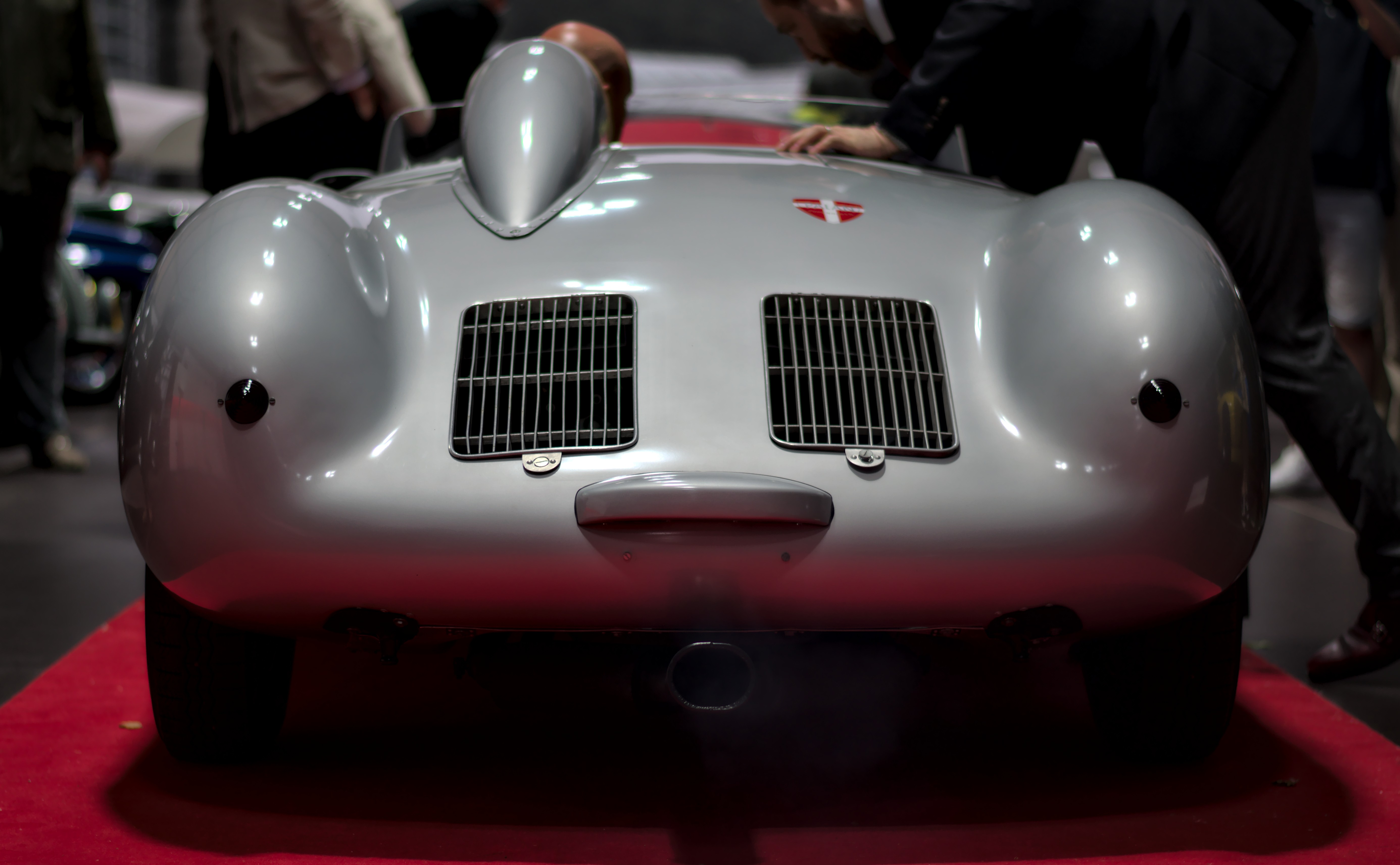
The Porsche 550 Spyder is an old Porsche sports car built for racing. It’s known for being light and fast, and it has a strong motorsport history. The episode brings it up while talking about a set of historic race cars from different brands.
The Porsche Panamera is a Porsche sedan with four doors. It’s meant to be a comfortable car you can use daily, but still feel sporty to drive. The episode brings it up when talking about which Porsche someone would want.
“Peterson” here refers to a major car museum. The point is that this rare prototype was shown there for people to see.
Car
Porsche 916
The Porsche 916 is a very rare Porsche variant. The key idea mentioned here is that it was built in small numbers and strengthened with a welded-on roof and other upgraded parts.
This is a way to make the car’s body stiffer. If the car is open-top, it can flex more, and welding the roof helps it stay rigid—though it can change the open-car experience.
Term
mechanically injected s engine 2.4s
This is about how the engine gets fuel. Mechanical injection meters fuel using mechanical parts, which can feel different and needs different tuning/maintenance than newer electronic systems.
Air conditioning is the system that cools the cabin. The hosts are pointing out that they expected American buyers to want it, so they shipped a car over with that in mind.
An oil cooler helps keep the engine oil from getting too hot. In this story, the host says the prototype’s air-conditioning and cooling parts were arranged so the same airflow helped both. It’s basically about managing heat in a clever-but-crude way.
Term
double engine grill
A double engine grille is basically a set of openings/grilles meant to let air flow into the engine area for cooling. The host says the prototype used chicken wire to make it, which shows how early builds can be rough. The goal was airflow, even if the materials weren’t final.
“Crash standard bumpers” are bumpers designed to meet government safety rules for crashes. The host is saying those rules began around 1973, and that later cars used different bumper designs than earlier prototypes. It’s about how safety requirements shaped the hardware.
Bumper shocks are parts behind the bumper that help it move and absorb impact in a crash. The host is saying later cars had this setup, while the prototype used different bumpers. It’s a safety-and-design detail, not just styling.
Brumos is a well-known Porsche-related name. Here, it’s mentioned as the source of the car’s history, which helps explain why this rare Porsche has an interesting background. For collectors, that kind of provenance can be a big deal.
“Locked up” means the brake caliper didn’t release like it should. When that happens, the brakes can keep rubbing even when you’re not pressing the pedal. That can overheat the brakes and cause extra wear.
Calipers are the brake components that clamp brake pads against the rotor to slow the car. When the speaker says the calipers “locked up,” it implies the caliper piston or slide mechanism likely stuck, causing the brakes to drag or stay applied. Replacing “rear calipers” is a direct fix for a rear-brake sticking problem.
Chassis feedback is how the car “talks back” to you through the steering wheel and pedals. The hosts say that feel is important because it helps you understand how the car is behaving.
A manual is a car where you change gears yourself. The speaker is saying some people enjoy that hands-on feel, even when Porsche offers other powertrain types.
A powertrain is what makes the car move—gas, hybrid, or electric. The point here is that the fun should still be there no matter which type of power the car uses.
An automatic top is a convertible roof that moves by itself with a button. The point they’re making is that customers want it to be easier and more usable in real situations.
The communication cycle is the schedule for when and how Porsche shares information about a new car. They’re balancing secrecy (so details don’t leak) with controlled reveals (so people get excited).
A world premiere video is a coordinated launch asset used to debut a new car to the public globally at the same time. Here, Porsche’s communications team is describing how they produce and distribute that content while managing timing and confidentiality.
TAG is mentioned as a partner Porsche works with on launch materials. The key idea is that Porsche coordinates with other companies when unveiling new cars.
Lightweighting means making the car lighter using special parts or materials. A lighter car usually feels quicker and handles better, especially on track.
They talk about how car companies used to plan when to reveal new cars based on big auto show schedules. Now, the process is different because auto shows aren’t as dominant as they used to be.
They talk about how Porsche introduces new cars to the world using online videos and virtual events. They also explain why they involve outside journalists and experts to make the message feel more trustworthy.
A configurator is a website tool where you can pick options for a car—like color and packages—and see what you’re building. Porsche uses it so people can explore the car online before buying.
LIVE
Welcome everyone to episode 218 and I feel as though many I've landed in 914 Nirvana.
Before we get into it, I want to thank our presenting sponsor, Pirelli. Pirelli tires have to
achieve the highest levels of performance, safety, noiselessness, and grip on the road surface.
Innovative tires that can satisfy even the most specific mobility needs of the end consumer.
Thank you all for listening. If you aren't currently a PCA member and own a Porsche,
what are you waiting for? Grab that VIN and head over to PCA.org. If you don't currently own a Porsche,
check out our Test Drive program. Again, you can find all that information at PCA.org.
We are not at PCA National Headquarters. We're outside of Atlanta. As I said earlier,
I feel like I'm in 914 Nirvana. I believe this is probably the most 914s I've seen together.
Have you gotten the motivation to get your car back on the road?
Let's talk about that. Because you know there's all the parts. We saw the tour.
I do. I know it's possible. I definitely know it's possible. Of course, I have Manny here.
Damon won't be on the show per se, but Damon's behind the scenes making everything happen.
George Hussie, this name, Dr. 914, synonymous with 914, founder of Automobile Atlanta, sir.
Thank you for welcoming us in your house. Thanks very much for coming down to see us.
We spent a little bit of time this morning getting a tour of the facility. I've seen
pictures. I've seen certain angles of some of these cars in view. But as we pulled up,
Manny, what did you think seeing this for the first time?
I was not expecting it to look the way it did in photos. I figured maybe the photos is when they
had a bunch of 914s here and they took a picture. But when we pulled in, I was like, wow, this is
exactly the way the photos were from the showroom to the whole front. And it was surprising that
they're not for sale for customer cars. That's the thing is when we pulled up. It's like the
ultimate tease. I thought these are all for sale. Exactly. I'm like, wow, I didn't know he had these
many cars for sale. That was my first impression. It looks like not a Porsche dealership. It looks
like a Porsche 914 dealership with so many cars in front. But as Manny said, we learned that those
are actually customer cars. 98% of them are customer cars. And sprinkled amongst them,
there's a few non Porsches. And we'll talk about that too. But sir, founded in 1978,
I want to rewind a little bit. How did you become Dr. 914? You want the long story or the short story?
Because this is a one hour podcast, we're going to have to do abbreviated version. But give us
all the sweet stuff. Born on a mountain top in Tennessee, green estate in the land of the free,
raised in the woods where I knew every tree. And then I fell in love with the 914. But that didn't
rhyme, did it? Sounded pretty good. Like you rehearsed it. Oh my God. I always
think about that. That Davey Crockett from Walt Disney and how I started and the like. But thank
you for asking. I would say that I started in 1960, when my granny bought my parents for the 10th
wedding anniversary of VW Beetle. And back then 1960 was the second highest year of the tailfins.
And we had a 60 saver, a black one when we were living in Bound Brook, New Jersey.
And lo and behold, I think it was November, this little car showed up in our driveway. And me being
eight years old, there was a car that was my size. And I ran out there and it looked totally
different than any other car I'd ever seen. And it was so perfectly built. And the engine was in
the back and I could sit in there and I could actually see over the steering wheel and I thought,
oh my God, what a perfect little car. And it was a Volkswagen Beetle. And it was very inexpensive.
And my mother used it back then. The housewives were at home raising the children. We had five
and never got out much. So having a car gave my mother, this woman, freedom to go here and
to go there in this little tiny Beetle. Didn't go that fast. And it wasn't as anywhere near as big
as any of the other cars in the road. So you sort of had to watch it. But I loved it. And it had no
luxury items on it, no power windows, no power steering, no power brakes, but it didn't need them.
So we're driving around in this car and the first thing we did is we went over and we got a
Dachshund. Gretchen the Dachshund. Yes, exactly right. We had to get that. So we started this
conversion into the 914. I mean, eventually into the 914, but this Volkswagen. And then
what happened next is my father's prep school chum, Jim Bain, showed up, now we're in Connecticut,
showed up with this Fjord green 356, 59 model. Remember it like it's yesterday. And I thought,
oh, that's a squashed Volkswagen sports car. And I thought, this is just beautiful. So now I knew
about 356s. Then we moved to Atlanta. My dad worked for Equifax, so we can constantly moved.
We moved to Atlanta and across the street, neighbor Warren Budd had an Albert Blue 912.
And he was a little bit of a slob. And I was so enamored to be able to go over there and clean
that car up and wash it and wax it. Then he let me drive it. It was over. It was over for me.
Oh my God, that car drove just so great that I just totally fell in love. And of course,
I was always sort of a car guy. My dad was a car guy all his life, but he could never afford anything.
The best thing he ever bought was a 64 Buick Riviera. Later on, we had a Ford station wagon,
and on Saturday I would wash and wax the Ford station wagon, then I'd wash and wax the Buick,
then I could run over and do Warren Budd's 912, which I love to do.
The story sounds very familiar. Oh boy. And before we got the Ford station wagon,
my dad was driving this Beetle when he got transferred from New Jersey to
Connecticut back and forth and on the interstate.
And he was an American car guy. He didn't know about adjusting the valves.
Oh, you just keep driving it. Oh my God. So one day this Beetle threw the rod because,
you know, it threw a valve or whatever it did. And my dad was kicking the tire and I was kicking
the tire and not really, but said, oh, this thing didn't even last 30 something thousand miles.
And years later, he said, yes, George, I know I never got the valves adjusted. So we sold that.
We bought the Ford station wagon. So that was my experience with those cars. And
with Warren Budd's car, I was totally sold on Porsche. And I got into college
and I was happy to go to a school in Virginia where you had to run up and over the mountain to
go to the girls' schools or up and down 81. So the guys up and down 81 had the muscle cars and
the guys over the mountain had the sports cars. And I had a friend of mine in the fraternity's
name was Tom Hobbs, brilliant piano player. And he was sort of goggle eyed and pot mark face,
but the nicest, sweetest guy you could ever imagine. And when he would sing and play that piano,
he was unbelievably talented. It was like a Beatles concert. So we'd show up to the girls'
schools, they'd all run down and we'd have this concert going. And I was the face man,
I could stand up there and yeah, and I washed his hands and I learned to play the piano too.
But every place we went, we drove in his MG, BGT67 model. And to me, Tom Berger had,
his dad was a high priced Washington attorney, bought him a nice 911, orange 911 in the fraternity.
And that little MG, and I put them out there so you could see the comparison sort of reminded me
a little bit of a 911 or especially an Albert blue or that 912 that Warren Budd had. So
it came time to where his dad said, you've got to get rid of this MG. And I, and he said, George,
you know, you can buy this MG for 800. And I'd already had such great experiences with Tom,
or I can take it up to Charlotte and sell it to the wholesaler. It's only 800 bucks.
I called my dad and I said, Dad, I've got to have this car. I've got to have this car. And I was
just imagining driving the sports car over the mountain to the girls' schools and shifting
through the gears and wow, wow, wow. And my dad said, George, you know nothing about cars. You
don't need to buy this car without me seeing it. And I said, Dad, please, please. And my dad,
let me make my own decision. He sent me my 800 bucks that I've been saving since third grade.
And I bought this car and I was the happiest guy in the world. Well, if Tom had taken that car up
to the wholesaler, the wholesaler said, I'll give you 200 bucks to haul it off, buddy. I didn't see
the rust. I had all the rust waxed and around the rust holes in the rockers. I had that all waxed
because I was good at cleanup. And I didn't see the thing, the rebuilt so-called rebuilt engine
that they rebuilt it by painting the valve cover because it was a used engine already burning
oil. And by the time I got it back down to Atlanta, it had a little bit, something wrong with the
gear. So my dad spent 500 bucks of his vacation money back then. This was maybe 72 to fix the
transmission. And like Punch's pilot, he said, George, this is your baby. I want to have nothing
to do all on you. So I learned the hard way to fix this car, even though I am not very talented.
I may have good, five good fingers, five good thumbs, but I was working on that car. The kid
next door was pretty good at it. And by senior year, I was repairing everybody's car. And if I
didn't know how to do it, I'd buy a repair manual and I was living the life of a king. I was making
great money repairing these cars. And I was into MGB GTs. But of course, always loved
Porsches, always, but I couldn't afford them. No way. So I got out of college and I thought,
I'm going to fix this MG up like a fool. And one day I looked in the paper and there was this MGB
engine and transmission for sale, 600 miles on it for 300 bucks with overdrive. And I thought,
oh my God, I'll put a modern, late model power plant on my MG and I'll be on my way.
I called them up and the lady answered and she said, well, he's already sold this and the guy's
still here. And it was the guy I was buying my MG parts from MG. You're buying the same stuff.
Yes. He was buying it to resell it for a lot more money. And I said, how can you sell this
so cheaply? Well, he rebuilds. Well, can I come and see what he's doing? Sure. Come on over. They
were very nice. A couple from Alabama that he was teaching at Atlanta Vocational Technical
School and they were living in a rental, in a really nice area of Bucket. So I drove over there,
my old MG, which was running pretty well. I drove that car 50,000 miles, went up this long driveway
into a wooded area. And my God, there were 12 914s, brand new 914s all cut in half in the driveway.
I was thinking, oh my God, I didn't, I didn't like the 914. I'm telling God and country that
because when I first saw that thing in Road and Track, being the 911, 912 lover.
You were one of those. The first thing I said was, where are the headlights and how in the
hell could they put dog pan hubcaps on this car? Oh, so bad looking. So,
I saw these cars and I was flabbergasted that this guy was so talented that he could take
two pieces and weld them back together or take a fender section off and weld them back together.
No frame, no nothing. And I didn't know much. But these are still newish cars. Brand new. Yeah.
Brand new. He bought from the junk sale. Brand new. And a brand new car doesn't take much damage
to be totaled back then. It's my brand new car. I don't want it to cost 2000 to fix it. So a lot
of them and I'm exaggerating, meaning everyone was cut in half. They weren't. But he was putting
fender sections in them and maybe suspensions that were buckled up under. So I said, yeah,
I work with you. He said, sure, for free. I would work for you, Phil. So the first day,
Saturday, I remember it like it was yesterday. He rolled me up under a 74 white light ivory 1.8
with a suspension buckled up under right rear. And I looked and I thought, oh my God,
because I was so used to looking at an MG. To see the technology.
It was incredible. It was just incredible. And I knew that that did it for me. I was converted.
So that was the start of your 914? Yes. And so I worked with him and I had some measly little
job. I'd already graduated. I had that sheepskin. That was the most important thing for me to hang
that sheepskin. I graduated from college, but so I wanted to ease back as that was a four-year
grind. So I had some meanie, a little job at the Springfield Rug company that I had had sometimes
in summers and I worked with him like every night. I went over there and worked with him and rebuilt
a lot of these 914s. He said, Georgia, should you get a job in the insurance company? A claims
adjuster. And then we can find out right away when the cars are going and I'll go down to the
sale and buy them. I'll have advanced noticed. That's pretty smart actually. So you're basically
like his eagle-eye cars that are coming in that might be junked. He was using you. Do you realize
that? No, he wasn't. He wasn't. Because what had happened is he would get the, I'd find him the
cars. He would buy the cars. I'd help him fix them and then he'd sell them to me at a discounted
price. Oh. It worked great. So it was a good system. Yes. It was really, really great. And this guy
was the dearest and most honest guy you could ever imagine. I still know him. He's like 80-something
now. But what would happen is he would fix this car and then he would sell it to me and I would
instantly turn around. I'd cleaned up a little bit more and I'd sell it. And of course you tell
him it's been damaged, but the car was so much cheaper than you could buy one that had no miles
on it. No miles at all. These were like brand new cars. So I had this little job with Kemper and
these were, I didn't, I mean I did my best, don't get me wrong, at Kemper Insurance Company.
That's back when insurance companies were honest above board and they made fair settlements. So
we made a lot of good fair settlements and we caught some frauds too. I was making 10 grand.
10 grand. Oh boy. That was in 19-
That's solid money right there.
75. Sure. Yeah.
I bought this first 914 from Phil. I had a job so now I could get a loan. I borrowed the money
and maybe it was 5,000 he sold it to me for. I instantly sold the car for 6,600 bucks.
Like overnight. But I was making 10 grand all year and I made 1,600 bucks just like that.
And the next one I bought was a 72 and on on. I was buying these cars while I was
working for Kemper and then I really wanted to work for an automobile company. So I got a job
with Chrysler Corporation. And I was doing the best. I was, I went to all the sales things first.
I got all the awards because I was a go getter kid and the big zone manager, they had a nice
zone manager that I got along with well. But then they imported one from New York who was going to
stir it up. You know, he was in South Africa and he had this broad he'd married down in South
Africa. South Africa, wonderful woman that really liked me. And I would go pick her up at the various
events when the couple came down. But this was the Southern zone manager. The Southern zone
manager Roy Webster. Big deal. So they called me and Mike, the sales manager called me and
said, Georgia, we just don't think you're cut out for the automobile business.
And I was always very respectful. And for the first time I said, Mike, you know, that's bullshit.
And that was it. They took my car away and they left me on the street and I'd already
transmitted for me to Clemson. So I went back up there and I borrowed one of my dealer's vans from
Anderson, one of his vans. He was a Dodge dealership, put all my stuff in there and drove it all the
way back. And I, Phil, let me move into his house with him. And I then worked for Phil. We were off
of the Bankhead Highway, which is a bad section of town, rebuilding these cars. And so I was, we
were rebuilding these cars. We had a run on Mercury Capris for one time. They were great little cars.
And we'd throw the parts back so we could rebuild the cars inexpensively. And we were
painting them and making them look great. And they were all low mile again.
Yes. And we had Johnny, his brother-in-law too. Johnny helped as well.
Yes. So we were rebuilding these cars and then I would buy them after they were all set. I'd put
my free labor into them and I'd buy them at a discounted rate. I'd advertise them at Atlanta
Journal of Constitution. I'd sell them and I was making some pretty good money, but I didn't have
a real steady job, meaning I had no job really because Phil wasn't paying me. And I was sort of
worried when Phil said, you know, you got to get out of here. And I got my wife and me and, you
we love you to death, but you got to get your own place. And I was sort of scared to get my own
place because I didn't have a job. But he kicked me out and I moved over to the young singles area
that I had been before Chrysler over off of acres mill and was Palisades. And I got an apartment
with a Southern exposure. It was $200 a month. And one day this kid came by who drove up in a 914
identical to mine, Malaga 76. His was a 75, mine was a 76. And his name was Frank. And he went to
the University of Virginia. That was a much lesser school in Washington only, of course. But we had
so much in common. He ran the peach tree. He was Irish Catholic. He was from New Jersey. I sort of
lived in New Jersey. We got along really, really well. And finally, I had enough cars sold to open
a little place. And I said, Phil, let's open a little place. Because it was great. That was
probably one of my best years. I had total freedom selling these cars out of my apartment and dating
a whole bunch of different girls and the whole thing. So a good month would be how many cars?
I probably sold maybe six a month. And they virtually made 2000 each. And it was pretty
damn great. But yet I didn't feel legitimate. I wanted a legitimate business. Because you were
making in one month. In one month, you were making basically your year salary of your first job.
Absolutely. And so I was buying and selling these cars. Phil didn't want to open a little
dealership. So the snap on tool guy kept coming by coming by. So I opened it with him. He was a
little older than I, we went and opened on 41 our old location. And he never came up with any money.
And he was sort of bossing me around. He really didn't know anything about the car business.
So within that month, when we officially incorporated Ible the first, I said, Ron,
you got to go. But this is my place too. We're going to have it for our children.
And I said, no, it's not going to happen. You got to get out of here. And he's been pushing me around.
And I finally had to call the cops and have them escorted off the property. Oh, I got bad.
And so me at 25 years old, and didn't know anything really, just a babe, I was on my own.
And I really didn't know much of what I was doing. But I still had those 914s coming in
that I would buy from Phil. And then I would go to the sale, get some and I hired a body man.
I had him fix some too. But mostly then I would the wholesalers would come by and I'd buy some
sports car stuff that wasn't damaged or anything like that. I would buy BMWs and Porsche 911s
and 914s, mainly the German stuff. And I'd have a nice selection always. And I took trade ins
and it was going great. Really, really great. And I had some 914 parts in the back that people
would come by and buy. But then Jimmy Carter took over. The economy went to hell. The interest
rates were astronomical, astronomical. And I didn't know what to do because nobody was buying
any cars except they kept coming by and buying the 914 parts. So I thought, you know, and nobody
liked the 914 except for the 116,000 people that bought them. Yeah. Then those Porsche snobs
looked down on the 914. Oh, that's just a VW to hell with you, Porsche people. And the Volkswagen
people, you're just a highfalutin Volkswagen owner. We don't want to have anything to do.
Porsche want to be. You're stuck in the middle. So I became the king of the 914s and I love those
cars and I loved every single person who bought one. And I had the market cornered back then
because performance products wasn't doing it. Stotters Auto-motion wasn't
doing it. Tweaks weren't even doing it. They did a few little here and there. So I moved here.
I took a loan out. I had to get a loan of over $8,000 because I was pretty starving.
And I moved to this old beat up warehouse and within I moved here in 81 and by 84 I had enough
money to buy a brand new 84. This building? Yes. I moved here to this building. It was beat up.
It was an old porcelain factory and it was in horrible shape. I lost two guys working for me
because they said, I'm not working in this dungeon, but I saw the potential. I had like five old
356 parts cars that I put in there. Then I had all my 914s that I put in here and I went home and
I put an ad in Rodentrack that said 914 specialist catalog $3. They came out of the woodwork.
I sold enough catalogs to live on, but I pasted it all. I made it out of newsprint and
I was in the catalog parts business and selling the hell out of 914 parts and all my catalogs had
little tech tips because I had known about the 914 and that was really great. So I did the 914.
We did. We were doing really well with the 914, but I knew that we had to do other cars. So we
instantly then jumped into the 924. I bought a 924 that had a little damage on it. This was actually
when I was still over at Phil's and I started to fix on it a little bit and I thought, well,
this is the new modern Porsche. The economy won the bottom line. I guess I'm supposed to like this.
I didn't like it at all. This wasn't a Porsche to me. The front engine water cooled Audi thing
with CIS fuel injection that hardly ran. It looked like a space bubble with no front end on it.
Four speed clunky. I didn't even get it finished and I sold it to somebody and never looked back,
but there were a lot of them out there. They made them. So we made a catalog for 924
and that worked pretty well for a while until the 944 came out and then forget it. Nobody wanted
a 924 anymore. By that time, Ronald Reagan was here. The 944s had really taken off and everybody
said, well, I'm going to buy me a Porsche and the Nuvos came in to buy these 944s and they sold,
of course, they sold the hell out of them and we made a 944 catalog and I had a designer from New
York come down by now, laid out this beautiful catalog with stonewashed Porsche shirts. Back
then we could do it before Porsche clamped down. That catalog, back then in 1990, we were doing
$20,000 days of 944 and we put some 924 parts in there also. I was riding high on the hog,
so to speak, and took every single penny and used it to buy rental property and I lived a frugal
life and the 944 catalog was really, really great. We were riding high, everything was,
I finally got in and I thought, well, we need to do a generic catalog like performance products.
Oh my God, that was a mistake. I mass mailed. We could buy the mailing list for bona fide
registrations back then. So I bought a general mailing list for Porsche that was maybe $50,000.
You couldn't get every state, but you could get most of them and I put this beautiful thick,
thick, thick catalog together. Porsche wouldn't let us put a Porsche on the catalog,
so I put one of their key fobs in the catalog. They didn't like that either, but it was their
key fob and I had it for sale on the next page. Mass mailed $50,000 of those catalogs and I got
maybe, I don't know, a couple 100000 dollars worth of business and then boom, no more
out of that catalog. It was too generic. I had known better. Stay in your lane. Right. Have a
single catalog for each model, which worked great. So that was the first disaster and then
by that time the internet came out and me, 74 years old now, I was too old to even know about
computers or catalog or anything like that and I, the kids from Pelican parts were buying from me
all the time and then they started this website and just did fabulously successful because they
were right there. There were those techie kids and I was just an old catalog mail order guy and
George catalog mail order is over. So I had to rapidly catch up, but the 914 still hung in there
and we still had good sales and we always had our repair shop and things went pretty damn great for
the most part, but we never had the sales we had in the early 90s and never have. But the fact that
I invested everything in real estate, now my wife keeps telling me you should just stop this business
George and it's making decent money. But I can tell the tour that we took earlier today, it's
more than just about making the sale. You have collections of items here that we were joking
around that you know will never sell, but you are proud that you have this part, that part.
In the early days, how was collecting parts? There was access to new original stock,
which I think you bought a lot of to be able to resell later, but then you started to somehow cars
end up here. You started having a system to take them all apart and catalog them and put them in
somewhat of an order so that you can reference them and sell them today. Like how did that change
over the years for you? As the cars got older, fewer and fewer people would buy used parts. They
wanted new parts and the collision shops wouldn't be repairing the cars anymore. So all the big,
heavy sales from the collision parts, they all stopped also. So it got more and more new, new,
and that was our focus. Plus we ran out of room. We've stripped over 100, I mean 1114s.
And I'd never stripped a good one, only the smashed ones or the things were hopelessly
rusted. And then we put them up the street and at one time I had 145 of them just sitting up there
because I stopped stripping them because we ran out of room. And we did the 944s and we stripped
those and we did the 924s and we stripped those. But again, we just totally ran out of room. So
more and with the catalog mail order business as these cars got older, they bought
new, new. So our new thing was to make parts for the cars. So that's what we did
instead. And we put the cars out to pasture. The best way to get a good employee was to bring the
car in and there you go, strip it and file all the parts. And we had a great filing system.
Some kids fell flat on their face. Other cars got better and better guys and we then we would put
them in as a mechanic because now they'd know the cars pretty well. And obviously if they were that
ambidextrous, using both hands to strip the car, they could probably repair it. It's like my son
Alex, that kid is left-handed and he's amazing, but he doesn't want to do it. He's this typical new
kid. I don't want to get my hands dirty. He can fix anything. Typical these days. So it's hard to
get hands also. Are you less and less today dismantling cars and just making new parts?
We're not doing any dismantling of any cars. If somebody brings a car by, we can't afford to pick
them up either because 500 minimum to get a car transport and it's a wreck when you're going to
sell a part because people don't buy the old parts on the old cars. You already probably have a dozen
of whatever it is already on the shelf. Right. Right. Robert at DC has done a fabulous job with
the new Porsches up there. He bought a bunch of old tobacco sheds. So he had plenty of room,
sort of like me in this place, but massive. And he got into that salvage and has made
tremendous life for himself, but he has sacrificed his life. He said,
can I think a boy moved to the sticks of North Carolina? Oh my God. Why Robert?
Man, I knew we were not going to have enough time to talk about everything, but
aren't those iPods like episode one, episode two, episode three? We could do that.
I am curious. What are some of the rare parts that you have here that you're kind of proud
that you do have? I probably sold them on eBay because I don't know. You already sold them all.
I don't want to hold these rare parts like 356 Carrera steering wheels. We would buy some
old 356s and you look at that. It's a Carrera wood wheel. In fact, I had one at one time and I,
the car was a chopped half speedster, half T5 front end and it had this Carrera wheel on it.
I don't know how much that car would be worth these days, but I framed it for a while and then
finally put it on one of my 356s. Or this, I was telling Manny about the Solex carb set.
It was just so perfect and all of mine were rebuilt. I didn't need these, but they were so
beautiful that I just kept them in the original sponge boxes from Solex on the shelf and I could
take those out and show them to somebody. 9146 front GT factory fiberglass valance.
A lot of that stuff like that was just incredibly beautiful. 911S factory brand new mechanical
injection pump. Not 911E, not 911T, 911S mechanical injection pump. Stuff like that that just,
you look at it and you say, wow, brand new molly, stovetop, gas burner wheels, brand new. Brand new.
Brand new, yes. Stuff like that over the years that you just never know. I can't think of all
the parts that have passed through here, but I don't want to hoard it. I want to make somebody
the proud owner because they really want it. I thought what was pretty cool was all the new
old stock parts, especially like that nobody wants. As you articulated to us, yes, like it's
the right side, the left side, but that it's authentic Porsche parts that Porsche sold at one
time because when, as you say, they were paying to have them repaired in an accident or whatnot,
that they're still up there in perfect shape. In the 80s, the Japanese came and Porsche was
really hurting as we all know. They came out of that 928, which almost bankrupted them,
and they had to do something. The Japanese came in and said, you need to get rid of all these
parts. Are you a manufacturer or a parts hoarder? Porsche said, and they streamline the assembly
line. Porsche dumped all these brand new vintage parts that we would have loved to have had in
the ocean. Howard Adams, the old system parts manager to Brad, said, yes, they took big containers
of parts and sunk them in the Atlantic, got rid of them, just clean down all these warehouses,
really, really, really bad to get more efficient, which they did and they pulled themselves out.
Rewind back to when you were talking about the internet age coming about and your business
model had to change and people folks like Pelican parts and of course you modernize as well.
Talk about the volumes you do today versus back then. I would assume you have the world
able to access what you have available. Once you got assimilated to the new way of selling,
I've got to think that the business today is healthier. Well, everybody in their mother is
a Porsche parts seller now. Even down the street, oh Riley, oh yeah, we can get that part for you.
The internet has brought them all out. Some kid in his garage is selling Porsche parts.
So before they were three main players, it was four. Tweaks, Auto Atlanta, performance products
and auto motion and it really worked well because we all supported each other. It was great.
But now with everybody in their mother on the internet professing put a big website up that I
have this and I have that, it's extremely competitive out there and now the rotors and the
brake discs and all of that people want to make one percent on them. So we don't sell that many
brake rotors in that. We try to sell a package to people on the order of the internet, but we're
blessed because we have a very, very good contractual agreement with Porsche to use all their parts
diagrams. Critically important because that's registered trademark stuff. But if you look at
our site, those are all factory Porsche parts drawings. So they can look at the drawings,
they see exactly what they want for their car and then the orders come in. So we don't do as much on
the phone, but really we know what we're talking about for some of the older cars, especially this
kid Sean Trey wake up front. I hired him when he was 18 and he came back much later and we can still
give somebody tech advice and a good package of parts that they want to buy. But the funny thing
is since Cayenne parts are a best seller now, we come in. That's right folks. He said Cayenne parts.
Yes, Cayenne parts. Those are our best seller. We have opened up with Cayenne
to a whole bunch of new people that aren't the Porsche enthusiasts we know. So what happens is
we come in in the morning and we see this Cayenne parts sale for a green seat height adjuster,
whether they have green or not, I don't know, but whatever, you know, color coordinating
matching and they're ordering this off our website obviously and we look and see who's ordering it
and the thing has come in at like 12 o'clock or 12 a.m. in the morning. Yes, and we see a woman's
name. So what has happened is this is her favorite Cayenne and she's all dressed up, gets in her
Cayenne and her high heel hits the little bracket here and it makes her mad and she keeps getting
more and madder and by the she can't sleep so at 12 o'clock
she's ordering to fix that. Yes, so that's exactly right. That's the kind of parts sales we get now.
No, not so much the enthusiasts but the users of these cars and thank God the Cayenne came out
at Save Porsche and it's a great car. I drive a Cayenne now and then again. So do you see
how long will this go? We ask this question or we hear this question quite a bit in our club
about people working on their own cars. As newer cars are more complicated they're kind of locked
down with computer systems. What you're doing here is I want to say it's at some point going to be a
lost art but the newer cars I don't think will lend themselves or maybe they will. Maybe they'll
tell me differently or can the new cars fall into this sort of process? What is happening is of
course the cars are sealed up and nobody works on them anymore. No home hobbyists used to be you'd
get a Chevy or something and take it home or a Porsche and your dad and you would work on it.
You'd learn how to work on it. They're all sealed. Nobody works on their cars anymore. They may put
some hot rod gizmos on it or they may need a gizmo here and there so that's still good but we don't
get any of the heavy. I'm going to do this car myself but we do sell to shops. A lot of shops
that are repairing these cars for the people and the shops may get the rotors from one of the
wholesalers but then they get down to the nitty gritty with us all the nuts and the bolts and the
crap and that's where we make our money because we offer everything. We have 675,000 parts on our
website and we try hard and especially because of our deep reach to get everything you need. If you
need an Allen bolt for the headlight pivot that's a short head we can get that for you and if you
need some kind of a green seat cover we'll go into Europe to get this stuff. I'll call some of our
people out there to try hard to get you the part you need rather than just a generic limited number
of parts and that's all we sell and that's the more efficient thing to do but that's not our game.
Our game is every part for every Porsche like Peter Schultz said at one time what a great guy he was
was President of Porsche. We all felt great about him and then he retired. Now you expanded your
game as well because in addition to selling parts you have a bay over there where if someone
doesn't know how to work we saw that beautiful green 914 that someone really didn't take care of it
themselves it was sort of a museum piece but now it's here sort of being refurbished you are also
working and repairing on full cars not just selling parts. No we always have had a repair shop and
that was great for R&R because if we wanted we saw what happened in our repair shop and think well
you know we need that. For example when we were doing all the welding in the battery area of a
914 the rusted battery area. I know he's sorry not to say yes don't say that word. HH. Yes
anybody that says that I instantly dislike or anybody that puts carburetors on a 914 I
instantly dislike instantly dislike but we would do a lot of R&R tech and we can do some nice videos
and the like show you how to do it now we're doing more of these YouTube videos but for example we
were rusting we were rusting yeah right we were welding in the battery area all the time all the
time all the time and there was this one shelf piece that we had to fabricate and put a seat
channel it was a hassle so you know we make this everybody else needs it anyway the first
metal piece my famous quote is you have no body car so those were the pieces I made
to begin with and that really we had a monopoly on some of that stuff because nobody was crazy
enough to make something like that because it cost a lot and one by one we added all kinds of parts
the first plastic part I made was the door latch cam the door wouldn't open from the outside you'd
have to buy the whole door latch from Porsche well I made this little door latch cam and I made it
out of nylon 11 and a guarantee for life and it would never break and so we sold that in that
fixture door latch but one by because of the R&R in the shop taking these things apart
putting it back together and tech we were able from our shop to develop a lot of neat parts a lot
of neat parts like we make a new bottom spoiler for the 944 out of polyurethane that's a beautiful
piece but I don't think that many people buy those front pieces now because there's so many
used ones out there but it was used ones but the ones that aren't banged up are very hard to find
now but we have beautiful beautiful perfect spot on pieces we make over 375 parts for Porsche
and you're still doing it because I know when I was looking for parts when I started my journey
with the 914 the bumper tops that I ended up buying versus the one that I should have bought
I just bought these sort of plastic replica looking things that are still in the box because
obviously the car is not done but since then you've kind of perfected a replacement OEM looking
bumper top for 914 and the reason price and they look fantastic and instead of metal they're made
of stainless and instead of a waterproof less rubber the waterproof special compound that they
use in Toyotas and that will be here forever you can drop it at the bottom of the Atlantic ocean
it won't even rust it's that good a piece but it looks perfect for concourse and are you are you
making these based on customers demand and lack of availability yes now I'm
going to interject one thing which is really bad with the internet and the
like anybody is out to make a buck and too many are duplicating what somebody else has
already been making for years and I don't think that's fair when there's so many parts that need
to be made Porsche is a family to me still is and I cannot believe anybody that would be so
down and dirty just a copy right like my Morelli distributor caps but people out there do that
and it's a limited market so why divide the market into minuscule to where nobody makes
any money find your lane right it's it's really it's I highly protest anybody
doing that and I don't feel very good about those well can we talk about one car I think
man you'll probably want to talk about this car he considers it the holy grail car before we go on
to the next segment of the podcast of course in 916 916 you know when we were when I was a president
of the club we were in Germany uh let's guess the Porsche and they were going to have a uh
not because I was there it was the anniversary of the automobile and they had Mercedes I think uh
maybe Audi and Porsche 50 cars from every manufacturer and the S is that we wanted to
to be in a parade and drive a Porsche and I forget to give us a Cayenne or Panamera
and they said if you could have any car in the museum to drive which one would you have
they didn't finish that sentence and I said the 914 they made the preferred name P.S. that's on the
level of your museum right now and it threw them us back a little bit they were like oh well
any car except that one I said it's not that one that I'll take the one that was made for Ferdinand
Porsche but 914 and they were still really confused so I never got my car they gave us the 9159
instead but which was my dream car but also in that same level of course in 916 maybe you can
tell the listeners what a 916 is and then we'll talk about how you got yours the 916 was a failed
adventure the 914 was a great great great car once you get over the looks I love the look of the
914 by the way now I really do but it was um essentially wise though the 914 was actually
very deep it sold wonderfully but it still had the guys of being a Volkswagen and Porsche wasn't
making enough money on it because of the failed deal with Norpov for whatever's name died anyway
that's everybody who knows that history so they were going to plan this new 9146 supercar
which would out accelerate the 911 out handle the 911 they would make it creature comfortable
and a little luxurious and then be able to race it as well fabulous but by that time the 9146
had not sold well at all because for 500 more you could get a 911T but they planned this way ahead
of time so they had to make at least a couple prototypes so they made first they made the
prototype which was called Brutus it was a black 9146 conversion we had that in our shop
about three years ago and we put it all back together that the one Richard Griot had that's
when we saw it at um the Peterson um yeah we took that to Paris and it sold an auction for like 900
thousand euros and then the guy bought it and he totally tore it apart because he wanted to put
an elephant hide or something like that I don't think we do elephants that was the one that was I
think I believe when it was made it was given to Ferdinand PX daughter Karina Karina Karina yes
and she would come to the factory like I don't know I would say every month
asking them to change the interior right and they got so bad that the guys at the factory
asked Ferdinand PX I think somebody to tell Ferdinand PX can tell your daughter not to come in
because we have other work to do but now we have to stop once a month to put a new interior
because she was just you know like a fashion very fashion had to match your latest outfit
and she was known as a hot rodder around Stuttgart and wrecked that car a million times
it was so bad we had in our body shop it was not my body shop it's an independent but he did a
lot of work it was the right window post was into the middle of the dash at one time the left rear
quarter section if you cut the thing right through the middle through the robot while you couldn't
avoid the top and then go right down through the middle of the trunk that section was put in there
from one of our parts cars it was up there the one of the 145 it was that badly wrecked wow and
it was made up anyway because it was made from a 9146 and the car was just so cobbled that it was
almost like it was hopeless because it was a prototype to begin with you never get it back
just like Manny said it had so many different interiors you never knew what's what we put a
Porsche cloth interior and up at the guy later did something else but then they made
um 10 others because they made 11 that were actually serial numbered as 916s and they
welded on the roof which gave a tremendous rigidity but sort of ruined the whole idea of an open sports
car they put a mechanically injected s engine 2.4s they had but many were retrofitted later
they chassis stiffened it you saw those quarter panels that I showed you that without the stiffening
they stiffened the hell out of it they put 911s front suspension with aluminum calipers
915 transmission that they made into a 916 transmission and leathered up the interior
and actually they sent one to the united states because they figured a car that expensive would
have to have air conditioning in it so they sent it to peter greg and rodentrack did a magazine
article on it by um who's the guy the bill warner wrote the article peter greg was driving it
cover car one of a kind for america 72 february rodentrack magazine with peter greg at the seat
and this car did everything right for a 914 i always say that when you go over a bump with
the 914 it was bump bump this 916 goes bump because it's that rigid and that car you drive it and
it's incredible and it's all one off these were all 914 four cylinder white cars that probably
fell off the assembly line so they took the body shell they sent it over the Porsche racing shop
and said make a 916 out of this so they were pretty crude they color changed them from white to this
one the peter greg car happened to be silver when i took it apart i could see all the white
paint in the tub that was still there they blacked out the engine compartment because they didn't
want to get into color changing that too with a spray bomb they took some german chicken wire to
make a double engine grill out of it it's a real flimsy if you looked at it say my god this is home
and then the peter greg car they put the air conditioning condenser right behind the oil
cooler so all the air comes into the oil cooler gets nice and hot goes down and then goes into
the condenser so you have some nice air conditioning i mean what sense does that make
and they rooted the air conditioning lines through the middle up underneath the car oh boy
talk about crude and then they put fiberglass bumpers because it was a prototype they had planned
on crash standard bumpers which started in 73 the 916 would have had polyurethane crash bumpers on
it with bumper shocks which you can see later in the 75 76s but these were a little more aerodynamic
and they called it a 916 they sold it had an antenna in the windshield also back then
with that was fashionable because taking the antenna out there made it more aerodynamic
but they were they were damned fabulous cars there were no rear top holders because you couldn't
take the top off and the trunks were heavily carpeted with pearl on sort of like the 911s were
and yours came from where mine came from brumos from brumos yes they sold it the brumos who sold
it and peter greg's best friend's father had it bill william should know but you know i'm old now
uh and i was doing a brett johnson i were doing a an ad i mean a story for excellence magazine so
i was assigned to call around to the 916 owners because i knew most of them and get a little
history so mr hall that was it william hall i called mr hall and said uh mr hall can you
tell me about the 916 and i was talking to him about it i said boy i'd love to have one and he
said george i'll sell it to you oh oh my god i opened my damn trap i'd love to have it yeah right
you didn't have a pot to piss in man for a 916 yeah but he said i'll make it affordable to you
i'll sell it to you for 116 000 and i'll tell you what just so i won't have to have uh the uh
yeah why 116 i don't know why it was 116 000 and he wanted me to buy some cars
because i was a dealer for some of his uh uh children so i'd buy the car and i'd send it down
there and i'd buy another car and send it down there and that way it was like a trade so he wouldn't
have to get capital gains tax back then so i anticipated i anticipated anticipated he kept
the car there and finally on my birthday april the 25th 1990 i flew down there i jumped in that car
and i drove it back to marietta georgia and it was just the most thrilling thing i stayed at the
ritz in jacksonville there on amelia island yeah and i knew the little girl that ran the whole
hotel so i got the premier room on the ritz on the ocean my mother drove up and we had dinner and
i had a little girlfriend there and it was just thrilling to drive that 916 up to atlanta really
and i've had it ever since i think it's where i saw it was one of the amelia island's
concourse well we have to get to the second part of our segment and i want you to make sure you
stay in comment i'm going to ask those of you that are listening to be sure to head over to pca.org
and sign up for pca's newsletters performance news e-brake news and mart fresh it's all free
thank you so much for keeping all of this available i have a car that needs your help in fact
my very first part that i bought for my 72 914 because the calipers locked up when i was driving
it home from oklahoma were the calipers and i bought a brand new set of rear calipers from you
put them on drove about a hundred miles and it's been at the uh the body shop ever since they're
probably locked up again they probably i probably need to buy another set worse thing oh man yes
it's very cool to be here and see all these wonderfully beautiful cars and see all your
customer cars but deep down inside i'm crying a little bit because i don't have my 914 but my
day will come my car's day which i already said about carbury just early on i know i know so anyways
we're atop the angeles crest at the good vibes breakfast club on a friday and look who i ran into
frank feaseman manager of product communications at Porsche of course we know we all love Porsche and
you know it's nice to know that there are true car people inserted into the ecosystem at Porsche cars
north america he's certainly one of them thank you for being on the podcast thank you thank you very
much so i'll have to be here we've known each other for quite some time and you school you'll
school me on many of models because that's what you do uh how did you land here
land at Porsche yeah well i was um i was always into cars and i was working for car magazines
writing reviews and testing them um and i uh through the years got to know another colleague
who you also know calvin kim yes um shout out to calvin yep calvin our spokesperson for all of
our fordore cars on the communications or prt and calvin was working at rodent track at the time
but then transitioned over to becoming a spokesperson for Porsche and we're talking
probably almost 15 years ago okay yeah um but we had stayed in touch through our joint kind of
magazine work and interest and at one point i'm from germany originally so i speak german and at
one point calvin said you know it'd be really beneficial if we had someone like you on the
team that was bilingual and could translate things and you know also maybe had a bit of a german
mindset of yes because yeah sometimes that is valuable yes absolutely um and yeah one thing led
to another so i uh just he didn't have to twist your arm too hard no no no i mean as an independent
journalist um there were certain cars that i've trusted in particular in terms of them over
delivering on performance and you know just being enjoyable to drive and as a communications uh
spokesperson or member of the team you don't want to have to lie to people you want to give them
an authentic opinion um or information on the car and i felt that Porsche was one of the few
brands where i could credibly do that i wouldn't have to twist the story i wouldn't have to invent
things i wouldn't have to exaggerate i just tell you like we always do in our conversations
straight out what i know yeah or you know if you're interested in it what my opinion is but
generally why why is the company doing what it does and it's something that you believe in right
so it makes it so much simpler much like sports cars or uh sports cars that are meant to be like
sports cars that are fun to drive whether it's a lecan a cayenne and 9-11 um our customers and i
think particularly the ca members yeah with many of them i think probably here today actually i think
80 percent of the cars are all unfortunate sure yeah i'm sure and and probably a lot of them are
our members yes absolutely people care about driving they care about it as an art as a as a
skill to uh be better at um as a craft as something they enjoy doing not just as a necessity but as
a past time as a passion and that's who our cars speak to we think yeah um and it's it's an honor
to represent them and you know work with people like you that are interested in getting to know
the details and the iterations and how they develop going forward so is it confidence inspiring to know
that the brand still honors its traditions and as it moves into modern technology there's still that
magical recipe that they've been doing for decades yeah has to be part of that bill yes the the
driver and the kind of sensory through the steering wheel through the brake pedal through the seat
even the chassis feedback you get i think is crucial to our drivers i think this day and age
there's perhaps a little bit more of a diversity in terms of um how you engage with the car is it
a manual is it a combustion engine is it a hybrid is it an ev we believe that a car can
be exciting with any of those power treats but obviously that's different for everybody yeah
some people want a gt3 or a 911 with a manual other people think a tycon is very engaging yeah
and they're looking for an electric car so we want to be able to offer everything
for as long as we can that's performance version of that whatever the sports car segment right the
sports car no matter the powertrain so we want to offer the choice we think that should be up to the
customer to decide what they want and we have customers that have one of each right they have
a tycon and a manual sure absolutely example or a cayenne and a nut eleven or a mcconn and a
caiman or boxter so we think the diversity of offering in terms of the body styles the different
segments that make sense for us to be in different powertrains um is is a benefit to the Porsche
customer is something that they're looking for um and then it's up to us to infuse those cars
whatever they may be with the soul and the excitement of what people expect from Porsche
and yeah that is it's inspiring to uh work for the company in that capacity to help people understand
more um and but also listen um it's great to be in an environment like this to get feedback
right um you know we have Andy Pornier here with us director of the GT model line today he's doing
the same thing he has a lot of good relationships and contacts or customers because they're always
looking for feedback you know what do you like about the car what maybe do you not like so much
about the car it's probably not much right but there's always room for improvement and you know
with the sc now with the automatic top that was feedback from customers like I love the speedster
I love the spider but it's like didn't have to get out didn't maybe I do it on the fly with a button
right that would be great I'd enjoy it more be more useful to me um so why
not so you talk about the GT3 SC that's what we're here for this weekend um but from your sort of
perspective on the communication side it's been in the works for I would say a few years and
how does that the communication cycle work for you like what from from you've heard about it
yes how do you plan and then the rollout obviously right so Annie will speak more about the car
right um and I think it's an idea they've had for a long time perhaps since the 997 and there
have been different 997 open top variants but not a car quite like this right um but for us
we we learn about the car honestly fairly shortly before it actually goes on sale we're not at all
like okay here's an advance yeah maybe we hear some rubblings but it's nothing we can speak about
officially right right um but we we get kind of more information as the reveal draws closer
so that we can put out the press release perhaps we're involved in making a world premiere video
like we did this time for our colleagues of TAG who we work with and then and we distribute that
to our contacts like like yourself um we're finding a delicate balance between um because we
don't want to leak the car early right so sharing a little bit of information up front but that has
to be a a measured approach and an engagement of trust right that relationship that's built on
trust which we certainly have with with you guys yes so that's kind of our part in it obviously
we're not developing the car we're not selling the car in that sense but we want people to be
informed about it and offer insights for example um nuke who's my colleague who's on the two door
side he went through um the details of the car with michael tam he also that he's here and we found
that because of all the light weighting options on the car that are standard compared to a regular
gt3 it actually represents a value if you are all of those options to a gt3 or gt3 touring
the it's about a 10 value you know yes they're very expensive cars but you are getting a lot within
that had a generation to the open top driving experience but you have to share that information
right people to know that right so that is where we come in to offer context and um more information
on what you may not know or beyond what you might see or think at first glance yeah um not to
influence your opinion because i can't tell you what to write right but just to say hey vu like
i'd love for you to know this because i think it would sure broaden your perspective or inform
your whatever you are going to write with additional points that may not have been in the
regular press release or something else it's like going to a museum with and without a docent
right right like i could look at the pretty picture and you know oh it's pretty
but if you have the docent there that can tell you and help you appreciate
what you're looking at the emotion that went into it how it came about that's what you guys
provide yeah yeah and how does you know with with social media how does it get decided where the car
will be are you part of that or you manage a communication would agree yes so it really depends
it used to be um when we were at auto shows a lot more when auto shows were more of a
central thing globally to premiere cars at you would look at the calendar because of course
there's a calendar right internally where you plan for a premiere cycle of shows and then if it was
if it was conveniently located around an auto show you said okay that means we can set the
release date for that day because that's the first press day at say la auto shoot nowadays
days uh i think covid certainly transformed a lot of that with the realization that a lot of
that could be done virtually maybe not maybe it's not the same experience of being there
but it's certainly informative to a broad global audience because they can watch it online
and during covid it was obviously a necessity to do that but even now the latest gt3 sc video
that was something that our colleagues in germany put together and had the idea to launch the car
in that way and also include third party journalists or experts in that case to lend more credibility
to the car uh in terms of their perspective so not just portion of talking about the right
someone like yourself or a third party that reviews cars for a living or as an expert and
in his own right their own right talk about the car so that's always a conversation between us
but also our marketing colleagues because they have a very big influence in marketing the car on
their site or all the Porsche's own social media channels what the car looks like on the website
the configurator that's where michael comes in and his colleagues so it's a a network of different
departments at pcna but also globally to put a car out there it seems like oh yeah it's you know
maybe we've teased it maybe not but it comes out maybe you knew about it ahead of time but
it comes out and you're like oh it came out but there's a lot of people involved there's a lot
of orchestrating right there's a lot of decision-making right down to a press release right because the
german specs are different than ours just based on metrics and pricing so we have to edit all of that
in advance so there's detailed work it's you know not that exciting for you probably but no it goes
into it so my background is logistic so when i know you drop information or a video like i know it
was not a random time it wasn't a random day but i know that's all orchestrated so that
communicates what you want it to communicate what i'm very impressed with is you know back in the
day where it was like really getting people to write about it in print media but today you have
so many different communication platforms that you have to not only prepare for but you also have
to monitor so maybe share a little bit about on that it seems like it's a big tap it is it is so
yes traditional i think automotive reviews up until say 30 20 30 years ago were magazines right
now the world is digital most of the coverage happens online you still have print magazines
such as panorama yep um but i think those are more for the used more because of the cadence and and
just the up to the minuteness of digital information those are more for long form stories
where you can really deep dive deep into a 356 restoration or driving a new gt3 and talk a lot
more about your experience maybe beyond just the information but how does the car making feel what
did i notice on this particular road compared to highway um whereas the digital aspect of it
is the websites the social media channels instagram tick tock facebook what have you
where the information is out you know the second embargo lifts you can program it and it's out there
and um that that there are always new players in that segment so you really have to keep an
eye on oh is this is there a new person that we probably should be working with because they've
become quite popular and they're interested in sharing that information um it's not always the
same people how do you because that landscape evolves just like just like cars evolve or you
know the world evolves in terms of different experts and different interests so yeah that's to
keep you have to keep a close eye on exactly and that's what i was gonna get to is how do you balance
between inviting someone to experience it because maybe not necessarily their experience but their
social media reach like you know if you get the information out to them but they may or may not
be a car people like how do you balance that it's i think it comes down to and you know this
because you're a storyteller and a planner of stories it depends on a number of factors one
what story are you wanting to tell is it a is it more of a let's say a hardcore drive review with
technical information and drive impressions is it more of a philosophical story is it a road
trip story a lifestyle a lifestyle story where the car is a part of it but not necessarily centric
or the sole centric part and then what format does that outlet have are they digital are they
print are they both is a youtube is a long form is a short form who's their audience and is is
that an audience that is important for them to know about the car so that could be different
between a cayenne and a gt greed uh or a tycom right that some of them will overlap but some
of them will also be different depending on what car it is what message you want to support getting
across and where that uh coverage is going to be placed yeah so it's you have to think about it and
you and then you also have to think about the experience i would say for the more traditional
automotive focused reviewers and journalists that we work with the driving is centric to what they do
so we try to find environments like here where maybe the road isn't that great in terms of the
pavement condition the car is moving around a little more but it's authentic right it's where
right where it's where a driver would take his car has it's more challenging and it's not just a
polished surface right you can't even tell what the suspension's doing is it comfortable or not
can i live with it or not we like as much drive time as we can possibly give them to the point
where we want people to even maybe be a little bit tired or say i'm going back early but i don't
want people to not have had enough time behind the wheel because i think our cars usually get
better and the more time you spend with them from a driving perspective and from
a understanding why they drive and feel the way they do so we try to fit that all in and you know
hopefully for you for example it's it's beneficial and and you can get the story you want to tell
your readers and your members out of it absolutely and thank you so much for always you know we've
known each other for a long time you've always been an ambassador for PCA internally as well
included us on events such as this i think the queue is cars are starting there's roads to be
driven and can i tell you frank uh it's in his dna he's talked about being from germany he's one
heck of a driver as well thank you i look forward to following your path over the next couple of
miles thank you yeah well i think the when we moved into the experience center our first story was
with the pca as we were shooting the 60th yeah that is the first story i did in the building in
january of 2015 so good memories working with you guys i know you can't talk about future products
but can you make a statement for members that are listening because let's be honest there are some
difficult decisions being made back at pa g but i hope that you is it safe to say i hope that you
are preparing for still some incredible communications in the future absolutely
absolutely it's like we talked about with the media landscape with the world in general
it's an exciting time there's a lot of challenges but within them also lie a lot of opportunities
and Porsche as you know has always been a company throughout its history that has taken a hard look
at the status quo and said what do we carry on with and what do we need to change and you have
to do that to kind of stay who you are you can't just be doing the same thing otherwise we probably
wouldn't have been around for 75 and if we look into Porsche's history times of hardship is really
what shaped where they are shaped the company correct so i think we're evaluating a lot of
opportunities right now and once we have made decisions you'll obviously hear about them but
i think it's safe to say they will be exciting driver focused and we we still want to
deliver the best sports cars that we possibly can in the spirit and soul of the cars that
we're lucky enough to be surrounded by today well that's a perfect way to close it thank you sir for
joining us thank you all thank you for listening be sure to like comment subscribe consider sharing
our show with fellow portion enthusiasts until next time stay safe and we'll catch you down the road
About this episode
A visit to “914 Nirvana” kicks off the episode, then the conversation follows how a lifelong Porsche obsession formed—through a neighbor’s 912, a Beetle engine failure, and eventually a “Dr. 914” conversion story. The show pivots to a real-world 914 rescue and parts pipeline: cutting damaged cars in half, rebuilding, and flipping them, then scaling into catalogs and replacement parts. The back half shifts to Porsche’s modern launch and media strategy—controlled reveals, digital distribution, and reviewer drives designed for authentic feel.
In this episode, The Insider crew hits the road to Marietta, Georgia, to visit a 914 legend: George Hussey, founder of Automobile Atlanta. Known globally as the go-to source for rare parts, George opens up about building his Porsche empire, surviving the shift to internet commerce, and the story behind his iconic ex-Brumos/Peter Gregg Porsche 916.
Plus, we sit down with Frank Wiesmann, Manager of Product Communications at Porsche Cars North America. Frank shares how a childhood car obsession led to a career at Porsche, the secrets behind how Porsche plans new model launches, and what it takes to get on the invite list.