
The most common problems with modern cars and trucks
About this episode
Grayish dust on a new Bronco, chalky wheel residue on a fresh pickup, and contamination worries that lead to dealer escalation set the tone for modern reliability headaches. The host then zooms out to explain why today’s biggest complaints skew electronic: infotainment glitches, OTA software bugs, and calibration issues. He also covers practical fixes and prevention—12-volt battery problems, careful jump-starting, CVT and coolant intervals, and checking oil level after service—plus how to verify safety tech on the window sticker.
Email Lennie at [email protected]

2026 Ford Bronco
"I bought a 2026 Ford Bronco. Don't get me wrong, I love the Ford Bronco."
The Ford Bronco is a rugged SUV meant for off-road driving, and it’s built to handle rough terrain with four-wheel drive. Here, the host is talking about his brand-new 2026 Bronco and how it showed up with a problem right away.
The Ford Bronco is a modern off-road SUV built around a rugged, four-wheel-drive layout. In this episode, the host specifically mentions a 2026 Ford Bronco, which frames the story around how a brand-new vehicle can still arrive with issues before it even hits the customer.
four-wheel drive
"Don't get me wrong, I love the Ford Bronco. It's kind of like a four-wheel drive that drives like a sports car."
Four-wheel drive means the car can send power to all four wheels. That helps it grip better on slippery or rough roads like snow, dirt, or mud.
Four-wheel drive (4WD) is a drivetrain setup where power can be sent to all four wheels for better traction. It’s especially useful on loose surfaces like dirt, snow, or mud, and it can help a vehicle feel more stable when conditions get slippery.
pre-delivery inspection
"So they washed it, pulled it around after they did the pre-delivery inspection and all that. I saw it out there and I said, I'm going to drive it home."
A pre-delivery inspection is the step where the dealership checks the car before you get it. It’s meant to make sure everything is in good shape and the car is ready to drive home.
A pre-delivery inspection (PDI) is the checklist process a dealership or delivery team performs after the vehicle arrives, before it’s handed to the customer. It typically includes verifying basic condition, checking fluids, and confirming the vehicle is ready to be sold.

Ford F150
"I've been driving an F-150. I told everybody I was going to buy a Maverick, but I backed out of that."
The Ford F-150 is a popular big pickup truck. Because it’s often driven on dirtier roads, you can end up with a lot of grime and dust around the wheels and bumpers.
The Ford F-150 is a full-size pickup truck known for being one of the best-selling vehicles in the U.S. It’s commonly used for work and towing, so wheel and underbody contamination can be especially noticeable after driving through dusty or muddy conditions.
white chalky dust
"Well, here I am two weeks later after buying this thing and the wheels keep spitting out this white chalky dust. So I looked inside the spokes of the wheel and the inside of the wheels are just covered with this stuff."
“White chalky dust” is just a powdery residue left on the car. The concern is that if it’s something like concrete dust, it could be harsh and potentially cause corrosion over time.
“White chalky dust” is a descriptive term for a powdery residue that can come from road debris, brake dust, or other contaminants. The speaker worries it might be concrete dust, which matters because some contaminants can be corrosive if they get trapped around wheels, bumpers, and wiring areas.
wiring harnesses
"The inside of the bumpers, the wiring harnesses around the wheel wells. And I said, my goodness, what is this stuff?"
A wiring harness is the car’s bundle of electrical wires. If dirty, powdery stuff gets into the area around it, it can potentially cause problems later, especially if it holds moisture.
A wiring harness is the bundled set of wires and connectors that power and connect a vehicle’s electrical systems. Dust and moisture getting into areas near harnesses—like around wheel wells—can contribute to corrosion or electrical issues if contaminants aren’t cleaned out.
wheel wells
"The inside of the bumpers, the wiring harnesses around the wheel wells. And I said, my goodness, what is this stuff?"
Wheel wells are the spaces around the tires inside the fender area. If dust or debris gets in there, it can stick around and reach other parts underneath.
Wheel wells are the areas of the bodywork and liners around the tires. Contaminants that get into wheel wells can cling to surfaces and reach components like wiring and suspension parts, which is why the speaker mentions dust around that area.

Ford Get Ford
"...parts. So I guess worst case scenario is I try to get Ford to buy the thing back. But it's just weird to hav..."
EPA restrictions
"And the entire industry was struggling under the weight of EPA restrictions on vehicles. And they had to figure out a way to cut the emissions coming out the exhaust pipe."
The EPA is a U.S. agency that sets limits on what cars can put into the air. When those rules get tighter, carmakers have to add systems that reduce exhaust pollution.
EPA restrictions refer to U.S. Environmental Protection Agency rules that limit how much pollution vehicles can emit. To comply, automakers add emissions-control hardware and strategies that reduce exhaust pollutants.
catalytic converters
"So they came up with all kinds of electronic controls, smog pumps, catalytic converters, and all they did was smother the power of engines."
A catalytic converter is a part in the exhaust that helps clean up the car’s fumes. It turns some of the harmful gases into less harmful ones before they leave the tailpipe.
Catalytic converters are emissions devices in the exhaust that use catalysts to convert harmful gases into less harmful ones. They’re a core part of modern exhaust aftertreatment systems.
smog pumps
"So they came up with all kinds of electronic controls, smog pumps, catalytic converters, and all they did was smother the power of engines."
Smog pumps (often called secondary air injection systems) add fresh air to the exhaust to help oxidize certain pollutants. They were more common on older emissions setups and are less prominent on many newer vehicles.

Chevrolet Corvette
"At one point, a Chevrolet Corvette had 180 horsepower. I mean, not too long before that, it had had 400 plus horsepower."
The Chevrolet Corvette is a famous American sports car. The host is using it as an example to show how emissions rules can reduce engine power compared with earlier, less-restricted times.
The Chevrolet Corvette is a performance sports car whose horsepower figures are often used to illustrate how emissions rules changed engine output. The host contrasts an earlier 180-hp era with a later 400+ hp era to show the impact of emissions controls.
differentials
"But really today, engines, transmissions, drive trains, you know, when I say drive train, I mean, you know, the differentials and the transfer case on a four-wheel drive, they're really reliable."
A differential is a part that lets wheels turn at different speeds when you go around a corner. That helps the car move smoothly instead of binding up.
Differentials are drivetrain components that allow wheels on the same axle to rotate at different speeds, especially when turning. In 4WD vehicles, they’re key to smooth handling and traction.
transfer case
"But really today, engines, transmissions, drive trains, you know, when I say drive train, I mean, you know, the differentials and the transfer case on a four-wheel drive, they're really reliable."
A transfer case is a drivetrain part used in many four-wheel-drive cars. It helps send power to both the front and rear wheels.
A transfer case is the gearbox component in many four-wheel-drive vehicles that splits power between the front and rear axles. It’s part of the drivetrain architecture that enables 4WD operation.
cylinder walls
"Therefore, it is destroying the rings and the cylinders or cylinder walls and causing engine failures."
Cylinder walls are the inside surfaces of the engine where the pistons slide. If they’re damaged, the rings can’t seal properly, and the engine may not run correctly.
Cylinder walls are the internal surfaces of the engine block where the pistons move. Damage or excessive wear to the cylinder walls can prevent proper sealing with piston rings, contributing to engine failure.
rings
"Therefore, it is destroying the rings and the cylinders or cylinder walls and causing engine failures."
Piston rings are small metal rings inside the engine that help seal the combustion area. If they get damaged, the engine can lose compression and fail.
In an engine, piston rings seal the combustion chamber and help control oil consumption. If debris or contamination damages the rings and cylinder walls, it can lead to loss of compression and engine failure.
infotainment system glitches
"Number one complaint, as a matter of fact, are those infotainment system glitches, frozen screens, random reboots. You're going down the road and all of a sudden your screen goes blank, Bluetooth connectivity issues, Apple CarPlay, and Android Auto failures."
Infotainment is the car’s screen system for things like music, maps, and settings. A glitch means the software acts up—like freezing, restarting, or going blank.
Infotainment system glitches are software or hardware malfunctions in the car’s media/navigation interface. They can show up as frozen screens, blank displays, or random reboots while driving.
Apple CarPlay
"You're going down the road and all of a sudden your screen goes blank, Bluetooth connectivity issues, Apple CarPlay, and Android Auto failures. Probably the single biggest complaint on new vehicles today."
Apple CarPlay is how an iPhone can connect to your car’s screen. If it fails, you may lose access to apps like maps or music through the car.
Apple CarPlay is a smartphone-to-car interface that lets you use compatible iPhone apps through the vehicle’s infotainment screen. Failures can be caused by software bugs, connection issues, or compatibility problems.
Android Auto
"You're going down the road and all of a sudden your screen goes blank, Bluetooth connectivity issues, Apple CarPlay, and Android Auto failures. Probably the single biggest complaint on new vehicles today."
Android Auto is how an Android phone connects to your car’s screen. If it doesn’t work, you can lose access to apps like maps and music in the car.
Android Auto is a smartphone-to-car interface that mirrors compatible Android phone functions onto the vehicle’s infotainment display. When it fails, you can lose navigation, music, and other app features.
over-the-air update issues
"Second are software bugs, warning lights appearing with no actual failure, features not functioning correctly, the frequent over-the-air update issues that happen without us knowing about it or our approval or being alerted to it."
Over-the-air updates are software updates your car downloads wirelessly. Sometimes those updates can cause new problems or make features act weird.
Over-the-air (OTA) updates are software updates delivered wirelessly to a vehicle. The host is pointing out that OTA updates can introduce bugs, trigger warning lights, or change how features behave.
calibration problems
"And then calibration problems after those updates. Modern vehicles often contain hundreds and hundreds of computers and computer modules."
Calibration is the car’s settings for how its sensors and systems should behave. After an update, those settings can be off, which can cause odd behavior or warning messages.
Calibration problems happen when the vehicle’s software parameters for sensors and control systems aren’t set correctly after an update. That can lead to drivability or feature behavior issues even if no mechanical part is actually broken.
12 volt battery
"You know, usually, well, used to if you had a 12 volt battery, it'll last 36 months to maybe 48 months if you were lucky."
Cars usually run on a 12-volt battery that powers the electronics. If that battery gets weak, the car’s computers can start acting weird because they don’t get steady power.
Most modern cars use a 12-volt electrical system to power things like lights, sensors, and the engine’s control modules. When the 12-volt battery weakens, the car’s computers can behave unpredictably because they need stable voltage to operate correctly.
jumper cables
"Or if our battery goes completely dead and then we unknowingly connect the jumper cables the wrong way and we fry a computer system."
Jumper cables are the cables you use to start a car with a dead battery by borrowing power from another car. If you hook them up the wrong way, you can damage the car’s electronics.
Jumper cables are used to temporarily connect a dead battery to another vehicle’s battery so the car can start. Connecting them backward can cause a surge of incorrect current that can damage or “fry” sensitive computer systems.

Ford Maverick
"We had a guy buy a Ford Maverick from us and bless his heart. He was backing it out of a parking place and ran right into somebody."
The Ford Maverick is a small pickup truck from Ford. In this segment, it’s the truck the guest bought, and the discussion turns to what happened when it was backing out.
The Ford Maverick is a compact pickup from Ford that’s often used for everyday driving and errands. In this story, it’s the specific vehicle involved in a real-world incident where the driver believed the car would stop in time.
Gateway Ford
"Well, he was mad at us, Gateway Ford, because he thought his car would stop before it hit anybody else."
Gateway Ford is the dealership mentioned in the story. The customer was mad at them because he thought the car should have stopped sooner.
Gateway Ford is referenced as the dealership the customer was upset with. The point is the customer blamed the dealership rather than the driver’s actions.
pedestrian detection
"It wasn't equipped with pedestrian detection or cross traffic alert. [613.7s] Didn't have those features."
This is a safety system that tries to spot people walking near your car. If it thinks you might hit them, it can alert you and sometimes brake automatically to help prevent or lessen the crash.
Pedestrian detection is an advanced driver-assistance feature that uses sensors and cameras to recognize people walking near the vehicle. When it detects a likely collision, it can warn the driver and may apply automatic braking to reduce impact severity.
cross traffic alert
"It wasn't equipped with pedestrian detection or cross traffic alert. [613.7s] Didn't have those features."
This feature warns you if a car is coming from the side when you’re backing up. It helps you avoid accidents in parking lots where visibility is limited.
Cross traffic alert is a driver-assistance feature that warns you when vehicles are approaching from the side while you’re backing out of a parking spot. It’s designed to reduce blind-side accidents where you can’t easily see oncoming traffic.
blind spot monitoring
"Cross traffic alert, blind spot monitoring, rear traffic alert, pedestrian alert, automatic braking. [645.1s] All of those things are standard on an Nissan."
This system watches the areas next to your car that are hard to see. If another vehicle is there and you try to change lanes, it warns you.
Blind spot monitoring uses sensors to detect vehicles in areas you can’t see in your mirrors. It typically alerts you with a light or chime when you signal a lane change while something is in that blind zone.
automatic braking
"Cross traffic alert, blind spot monitoring, rear traffic alert, pedestrian alert, automatic braking. [645.1s] All of those things are standard on an Nissan."
This is a safety feature that can brake for you if the car thinks you’re about to hit something. It’s meant to reduce the severity of a crash.
Automatic braking (often part of forward-collision or collision-mitigation systems) can apply the brakes if the car determines a crash is imminent. The goal is to reduce speed at impact or avoid the collision altogether.

Toyota RAV4
"So if you bought a Honda Accord or a Toyota RAV4 or BMW, I don't know, three series, [674.4s] you should make sure that your vehicle has it."
The Toyota RAV4 is mentioned because safety tech isn’t always included the same way on every version. You should confirm what your specific RAV4 has.
The Toyota RAV4 is used as an example of a popular model where advanced safety features can vary by trim and option package. The host’s takeaway is to check your window sticker or spec sheet rather than assuming.
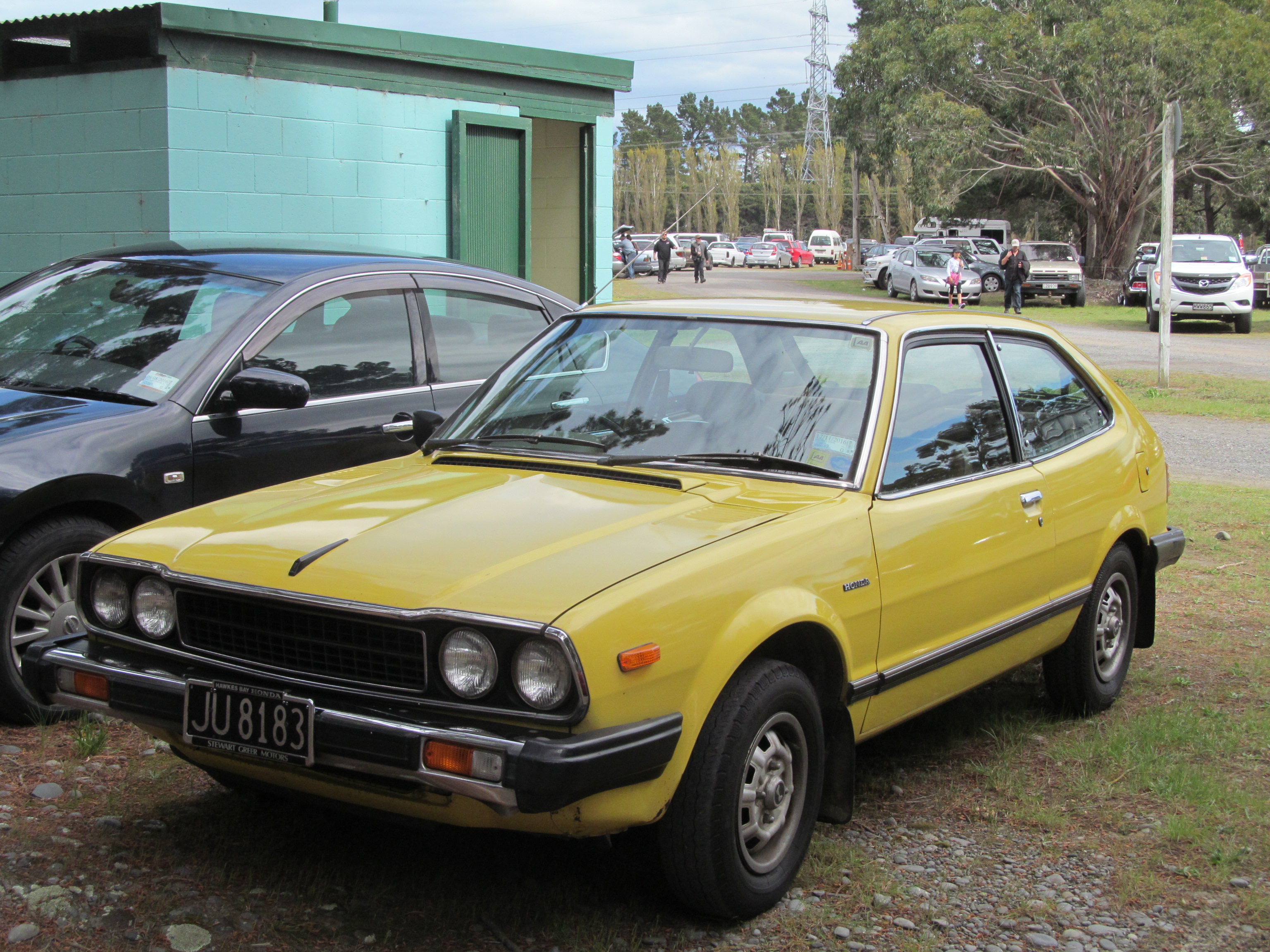
Honda Accord
"So if you bought a Honda Accord or a Toyota RAV4 or BMW, I don't know, three series, [674.4s] you should make sure that your vehicle has it."
The host brings up the Honda Accord to make a point: different versions of the same model can have different safety features. You should verify what your exact car includes.
The Honda Accord is referenced as an example of a mainstream car where safety features may be standard on some trims or optional on others. The key point is that you can’t assume every Accord has the same driver-assistance suite.
subscribe to a software package
"With BMW, it might be something you have to subscribe to. [681.0s] You know, that's a big thing right now."
This means the car may have the hardware for a feature, but you have to pay (often monthly or yearly) to unlock it. The feature is controlled by software, not just what’s physically installed.
This refers to feature activation via software subscriptions, where the hardware is present but the function is locked until you pay. It’s part of the broader trend of “software-defined” vehicles where capabilities can be enabled or disabled remotely.
software will be downloaded off the worldwide web
"And then the software will be downloaded off the worldwide web to your computer, [697.5s] to the computer on your vehicle, and then you'll have it."
This is when the car gets software updates over the internet. You don’t always need to go to a shop—your car can receive the changes electronically.
This describes over-the-air software delivery, where updates or feature unlocks are sent to the car via an internet connection. Instead of visiting a dealer, the car receives the software package electronically.
heated seats
"BMW got in trouble with their customers because the customers had a button that said they had heated seats, [707.7s] but they didn't work."
Heated seats warm up the seats for cold weather. The host is saying that sometimes the car can show a button for it, but the heat won’t work if the feature isn’t actually enabled.
Heated seats are a comfort feature that can be affected by software activation. The host’s example is that a customer may have a button indicating heated seats, but the function doesn’t work because it wasn’t enabled/unlocked.
window sticker
"And it should say it on the window sticker. [723.9s] And if you are not sure whether it has it or not, ask."
The window sticker is the official paper on a new car that lists what the car actually includes. If you want to know whether it has certain safety features, that sticker is where you can verify it.
A window sticker (often called the Monroney label) is the official label on a new car that lists key details like trim, equipment, and pricing. If you’re trying to confirm whether a vehicle includes specific safety features, the window sticker is the most reliable place to check.
backup camera
"It does have a backup camera. [800.3s] It has all of the required stuff, but you have to pay extra."
A backup camera shows you what’s behind the car on the screen when you go into reverse. It helps you avoid hitting things you can’t easily see.
A backup camera is a rear-facing camera that displays what’s behind the vehicle when you shift into reverse. It’s designed to reduce backing accidents by giving the driver a clearer view of obstacles and pedestrians.
option package
"It has all of the required stuff, but you have to pay extra. [804.4s] It's a different option package to have all the other stuff."
An option package is a bundled set of features a manufacturer sells together, often for an extra cost. In this context, the host is saying some safety tech is only included if you buy the specific package.
required by the government
"Blind spot monitoring, I think, is standard. [812.7s] I think that's required by the government and the backup camera and all that stuff."
The host is saying some safety features are mandated by law for new cars. That’s why they show up on many vehicles without paying extra.
When the host says a feature is “required by the government,” they mean regulations mandate certain safety equipment on new vehicles. That’s why some items (like backup cameras and certain driver-assist features) may be standard on many models.
360 surround camera
"But we have a lot of vehicles that have the 360 surround camera where you can see. [823.8s] It's like there's a satellite floating above you with a camera or a drone,"
A 360 surround camera uses cameras around the car to help you see near the vehicle from multiple angles. It’s especially useful for parking and tight spots.
A 360 surround camera system uses multiple cameras around the vehicle to create a top-down or wide-angle view. This helps drivers judge clearance when parking or maneuvering in tight spaces, beyond what a single backup camera can show.
driver assistance systems
"Okay, so driver assistance systems, are they problematic? Usually not. Occasionally there are adaptive cruise control faults."
These are tech features in modern cars that help you drive more safely. They can nudge or warn you when they think you’re about to do something risky.
Driver assistance systems are automated features that help the driver avoid mistakes or reduce workload, using sensors like cameras and radar. In this segment, the host is specifically discussing how these systems can misbehave in real-world driving situations.
adaptive cruise control
"Usually not. Occasionally there are adaptive cruise control faults. There are a lot of complaints from different manufacturers about lane keeping assist."
Adaptive cruise control is like regular cruise control, but it also slows down or speeds up to keep a safe distance from the car in front. If it has a fault, it may not control speed correctly.
Adaptive cruise control is a cruise-control system that automatically adjusts your speed to maintain a set following distance from the car ahead. The host notes that it can develop faults, which can make the system unreliable or behave unexpectedly.
lane keeping assist
"There are a lot of complaints from different manufacturers about lane keeping assist. I don't like that feature, especially around town. You know, if you're driving through town and you happen to get too close to the side of the road..."
Lane keeping assist watches the lane lines and tries to keep you from drifting. It can feel weird if it “corrects” your steering when you’re already driving carefully.
Lane keeping assist is a driver assistance feature that monitors lane markings and can steer or apply steering corrections to keep the car centered. The host describes it as disconcerting in town when the system reacts to being too close to the road edge or the center line.

Chevrolet Nova
"...he 90s. One time we had this customer had a Chevy Nova and it was new. This was in the 70s and they had ..."
The Chevrolet Nova is an older compact car made by Chevrolet. The podcast brings it up because someone had one that was new in the 1970s. It’s the kind of car people talk about when discussing older vehicles from that time period.
The Chevrolet Nova is a classic American compact car that was produced across multiple generations, including the 1970s. It’s mentioned in the podcast due to a customer’s new Nova in that era, which highlights how common and notable the model was at the time. The Nova often comes up in discussions of older cars because many examples are tied to specific model years and condition matters a lot.
computer calibration
"[1110.5s] Okay. [1111.0s] And then the final issue that we see a lot of, unfortunately, are transmission issues. [1117.5s] And most of them are, well, involve computer calibration. [1122.6s] No repairs necessary. [1124.9s] But I know GM has had a lot of problems with their automatics."
Modern cars use computers to control how the transmission and engine behave. Sometimes the problem is fixed by updating the car’s settings in software instead of replacing parts.
Computer calibration refers to updating or adjusting the vehicle’s control software so sensors and drivability logic behave correctly. In many modern-car “transmission issues,” the fix can be a software calibration rather than replacing hardware.
CVT transmissions
"[1117.5s] And most of them are, well, involve computer calibration. [1122.6s] No repairs necessary. [1124.9s] But I know GM has had a lot of problems with their automatics. [1128.1s] Anybody that sells CVT transmissions have had issues, continuously variable transmission. [1134.3s] If your car has one of those, then the key to survivability is maintenance."
A CVT is a type of automatic transmission that can change ratios smoothly instead of using fixed gears. The big takeaway here is that it needs regular fluid service to stay healthy.
A continuously variable transmission (CVT) uses a belt-and-pulley system to smoothly change gear ratios instead of fixed “gears.” Because of that design, CVTs are sensitive to maintenance—especially keeping the correct transmission fluid clean and at the right intervals.
transmission fluid
"[1141.5s] They told you when you bought it, you never had to change the transmission fluid. [1147.1s] But please do. [1149.1s] Do it every 30,000 miles. [1151.2s] More than likely that CVT will be just fine."
Transmission fluid is the “oil” that keeps the transmission working smoothly. If you don’t change it, the transmission can wear out faster or start acting up.
Transmission fluid is the lubricant and hydraulic fluid that keeps an automatic or continuously variable transmission operating correctly. It helps cool the transmission and enables smooth shifting/ratio changes, so neglecting it can contribute to transmission problems.
coolant
"[1162.0s] Don't wait that long. [1163.8s] You know, don't wait that long to change your coolant either. "
Coolant is the fluid that keeps the engine from getting too hot. The host is saying not to wait too long to service it.
Coolant is the liquid that carries heat away from the engine and helps maintain proper operating temperature. The host’s point is that delaying coolant service can increase the risk of overheating or corrosion-related cooling-system problems.
Request an Explanation
Heard something you'd like explained? We'll add it to this episode.
Sign in to request explanations for terms you heard.
Want to learn more?
Browse our glossary for plain-English explanations of automotive terms, jargon, and concepts.
Help improve this episode
See something that's not quite right? Our annotations are AI-generated and can sometimes miss the mark. Click the flag icon on any annotation to suggest a correction.