In racing, the paddock is like the busy backstage area near the track. Teams get ready there, and media and guests hang around to watch what’s going on.
GT4 is a type of race series for sports cars that are closer to regular road cars than the top-level race cars. The rules help different brands race against each other more fairly.
Aston Martin is a car company that also competes in Formula One. In this story, it’s mentioned because someone the speaker worked with later moved to that team.
Junior categories are the lower-level racing series that come before the top tier like Formula One. Drivers usually start there to gain experience and get noticed.
Car
Michael Schumacher
Michael Schumacher was one of the most famous race car drivers in Formula One history. People still talk about him because he dominated the sport for years.
A typhoon is a very strong storm. If it hits a race weekend, it can cause delays or cancellations and make the track conditions much harder for drivers.
Formula 1 is the highest level of open-wheel race car racing. It’s not just about driving fast—there’s also a lot of behind-the-scenes politics and decision-making.
F1 can be political because who gets opportunities and what teams do isn’t only about speed on track. Contracts, relationships, and strategy behind the scenes matter a lot.
Mid-season driver changes are when F1 teams replace or swap drivers during the racing calendar rather than waiting for the next season. These moves often reflect performance, sponsorship/contract issues, or team strategy—and they can dramatically affect results.
Doom-scrolling means getting stuck endlessly reading stressful or negative stuff online. Here, it’s described as something drivers were doing that could hurt their focus and mood.
Contract negotiations are the business process of securing a driver’s seat, role, and terms with a team. In F1, these talks can strongly influence a driver’s mindset and how they’re treated within the team.
Yeti is a consumer brand that appears in the F1 sponsor ecosystem discussed here. The point is that sponsors can align with teams on themes like sustainability and shared marketing, creating value for both sides.
A “world championship” in F1 refers to the season-long title decided by points across races. Drivers accumulate points based on finishing positions, and the highest total at season end wins the championship.
LIVE
Welcome to the Motorsport Brief, a bonus set during a period of unexpected downtime
for Formula One.
You know, everybody, Rusty here with the cancellation of the next two races on the Canada.
We have a month with no F1s, so today I thought we'd chat to Stuart Bell, someone who's been
a regular in the paddock since the late 90s, covering it for print media, digital, social
and television. His clients have included the Associated Press, Sky Sports UK, publications
in Hong Kong, India for News Corp, Top Gear, GQ and more. Just before we launch into the
chat, we've released two terrific episodes in recent days around Easter, so quick plug
for those, shortcuts that don't stick strictly to that definition, one with Tabitha Ambrose,
Marcus' daughter on her own motor racing journey, and Brad Johnson, AFL legend, Hall
of Famer, whose son isn't pulling on the footy boots and following in Dad's footsteps.
Jack is racing a McLaren in GT4 in Australia and he really turned heads at the opening
round with his performance. Both Epps look at the blessing and pressure, the kind of
immediate spotlight that comes with a famous surname and how professional athletes like
Marcus and Brad are sharing some of that knowledge, the learnings they had with their
children as they embark on their own careers and how Brad is finding it in a very different
landscape. The Johnsons are loving their motor racing, check those out, both are really
nice conversations. Now Stuart Bell has a fantastic new book out called Formula One,
the world's most brutal sport. Gunter Steiner actually wrote the forward and he reminds
us straight away that brutality can mean many things. It's a game with huge public
interest now so there's no hiding when it comes to failure or things going wrong. It
means immense pressure in all facets of the business. Sure, for the drivers there's huge
physical forces that come from racing the fastest cars, there's danger, insane cockpit
working temps and so on. It is cutthroat this business, not to mention the grueling
schedule that demands on the team's 24-7. This is good subject matter. The book is published
by Penguin so look out for it in all the usual places and the proud author is with us in
the garage studio.
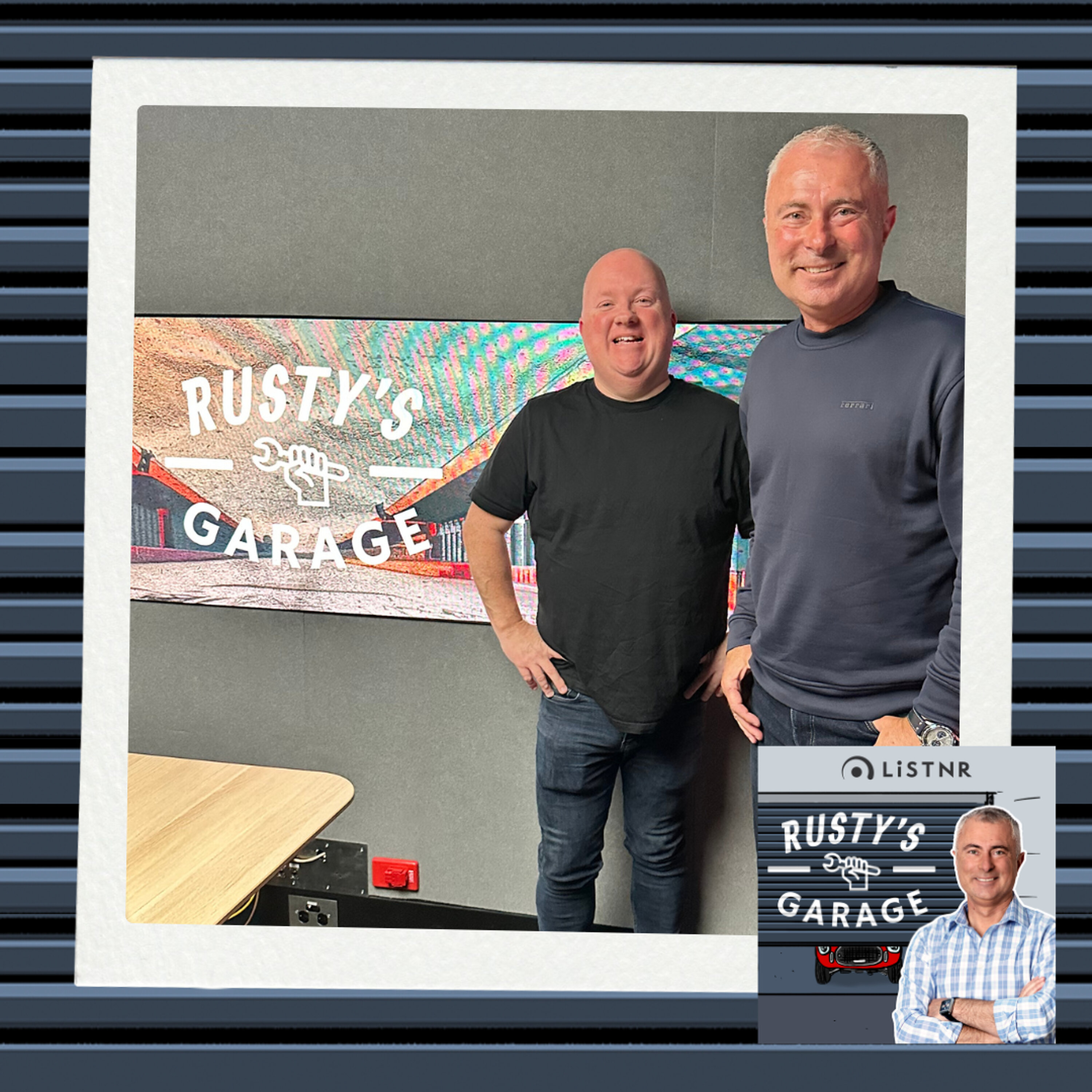
You and I keep running into each other and have done for many, many years in the paddocks.
I firstly welcome to the podcast but in telling a bit of the story around this fabulous new
book of yours and the brutality of Formula One it's worth sharing a bit of your own
journey and how it all sort of started for you. How did you end up around motorsport,
around Formula One?
I mean there's no history of racing or cars or journalism in my family at all.
Really?
Yeah, so I've sort of pursued this not all on my own because I've had lots of mentors
but I went to the 97 Australian Grand Prix, was absolutely transfixed and I was doing
economics at uni and basically I started writing for the local Monash Uni newspaper
and then it just started dovetailing into that. I moved to Japan in 2004, went to that
year's Japanese Grand Prix with the huge typhoon that was there and then went back to Tokyo
and just downloaded all that sort of information and then got in contact with F1 Racing. That
was my sort of Bible that I was reading at that stage.
Legendary magazine, legendary.
Absolutely, glossy, beautiful, just those double page spreads and then yeah, contacted
Steve Cooper who was the news editor, he's now at Aston Martin and he, I sent him a huge
5,000 word essay and he was just like, it needs to be cut down completely and gave me all that
sort of feedback and then basically yeah, from there I contacted papers and got it in the paper
and I knew the system worked at that point and I was like okay, I can get published.
Obviously a long way to go but yeah, from there I just, he suggests I do all the junior categories
and I did the state racing for motorsport news and it was hard yards, you know it's like
coming up through the categories and trying to establish yourself and my eyes were always
on Formula One so that was where I wanted to be and yeah, from there just sort of pitched
voraciously to everywhere in the world to try and get some sort of like a foothold in.
There were a couple of people that helped along the way, maybe in a, I don't know how
big a sense but I mean, I think there's a bit of a yarn around Michael Schumacher,
maybe Mark Webber, tell us about that. Absolutely, so you know, I've been pitching
and doing a little bit of work here and there but basically one of the people I pitched to was
Noel Prentice at the South China Morning Post and he said, look, if you can get me a quote from
Michael Schumacher who then was the, you know, the biggest sports star in the world, that was
2006's last year with Ferrari, then I'll publish you and so I thought, well, this is either the
bullet in the career or I can take that challenge on so I can contact Sabine Cam and pleaded the
case and they gave me a quote and then so that got published, that got me into the past, into the
Grand Prix and then from there, I mean, at that stage Formula One wasn't a sexy sport, you know,
it was to us, to us it was sexy but to the, you know, mainstream, it was still very much a
sport so I was selling articles hard into, you know, all the lifestyle mags and Neil and Mark
Webber were very supportive of getting my coverage out there, obviously that helped them with sponsorship
and whatnot but, you know, they really sort of gave me that sort of foot up to interview a Formula
One star and to sort of expand my coverage from there so it was sort of, I've been in the shadows
and continued to be in the shadows and that's where I love to be because it just keeps me able
to do my job and I'm not a presenter but I absolutely love Formula One and, you know, it's
these mentors, these people who've given me a help along the way that have allowed me to
sort of establish myself. Come back a step, two things here. Firstly, we're talking a day after
the Japanese Grand Prix, I mean, that the fans up there, the energy around it, a legendary track,
I mean, what was that like in those early days for you going to that place? It was unbelievable,
you know, I'd seen Albert Park and, you know, that international atmosphere that, you know,
you know so well, you know, it's just, it's gigantic but when you go to an iconic track
like Suzuka, you know, you're just blown away by the, you know, the elevation change, by the fans,
by the, you know, the passion that they have. Absolutely, and we, you know, it was a typhoon
coming through so one of the days was cancelled but, you know, we were still there just, you know,
I was just as a fan, you know, so we were there with the tarpaulin over us and trying to stay dry,
the Japanese fans were all doing that along with you and that really sort of cemented my
love of the sport. I mean, I'd obviously been to, you know, many Grand Prix before that but,
you know, it just really showed me that, wow, this is a global sport and I want to be, I want to be
part of it some way, you know. Before we come to the book, I want to touch on a couple of things
that you've brought up here in the conversation. Firstly, when you talked about China there a
moment ago, they have, you know, percentage terms of love or connection for the sport now,
that has exploded up there but back then it was very new to them. Motor racing generally, I think,
was very new to them. Quite a funny story on a personal note where at the very first race
ever there for F1 in Shanghai, I went and we were lucky enough to go and cover it and in the bullpen
interviews post qualifying, you know, you know what it's like, there is a like a pecking order
kind of thing. I can't remember who was in the queue there but Louise Goodman probably was in
front of me and a few others and I was down the chain and Schumacher came out and as he walked
down the line everyone tended to ask the standard quality question, how it had gone or whatever else
and two or three down for me was a young Chinese journalist and what you and I would probably
refer to now as like an auto journalist, you know, had his own camera and microphone and he's asking
the questions and while the rest of us were in the now about what had happened in qualifying,
he opened the batting with Michael, why is your car red and Michael kind of ever the pro
was a bit wide eyed obviously by the question but gave a beautiful answer about, you know,
Ferraris, the best Ferraris are read or something along those lines, you know,
but it was just a reminder of how green how new it was for China at that stage and it has become
massive for them, mate, hasn't it? Absolutely, go there, I went there last year with the double
header and the amount of local interest is huge. I mean they used to fill the stands with military
and school kids and now, no, absolutely, they're sort of the area behind the main pit straighties
absolutely awash with people, everyone knows about Formula One, there's a station inside the
circuit, it's all very well connected and it's so easy to get around in China, I was amazed but
yeah, all of these nations that have taken on Formula One are just building their support
bases and it's just, it's awesome to see them and even just going back to Australia, I mean seeing
the young, the next generation of fans, the young girls and boys coming in and circling groups,
it just, you know, it fills my heart with joy, you know, because we love the sport so much
and to see that next generation come through which, you know, previously it was, you know,
older sort of middle-aged guys who love Formula One but to see that next gen coming through is
just awesome. I love how you've embraced that too, right, because sometimes we get a bit of this,
oh, they're a drive to survivor or we're a purist, we've been around for whatever,
it is great for the game, full stop, the saying of probably overused is that it is box office at
the moment, it is absolutely massive, so to think in that period where you really started to get
in boots in all in the late 90s to what it is now, you've witnessed quite a bit of change, mate,
haven't you? Massive change and it's great, it's great for Formula One because there was, you know,
plenty of talk, you know, 10, 15, 20 years ago that the Formula One was going to sort of
die a death but stay in each sport and it's certainly come in front of the mainstream and,
you know, I mean even 10 years ago people at the cafe, you know, you would say to them,
oh, they'd say, why are you so tired? You say, I've been up watching the Canadian Grand Prix
and now they're saying, hey, you know. This happened in the Canadian Grand Prix.
Absolutely, so that's the real change is that people are chatting about it, friends are asking
about it and they have no prior Formula One knowledge, so it's great, you know, the sport
has grown to such a behemoth that it has. The book invariably takes up a lot of time to compile
but you have a multitude over 20 plus years of quotes and things that you can rely on.
What does, before we dive into that, what does sort of Monday to Friday look like for you
beyond this now? Because there's been sort of, I think, an involvement in the background around
television shows and all sorts, hasn't there? Yeah, I produce the Inside Lime which is a weekly TV
show on F1, goes out to 30 broadcasters around the world, we've got 167,000 subscribers on YouTube
and so that's a full-time job in itself but to write the book was a very, very compressed deadline
so 5,000 words a week every week for four straight months. Which started when, mate?
May, May and then through to August, the end of August into September. So, I mean, but that's
always been what I've had to do, you know, when I was pitching stuff to magazines back when I first
started, I had a full-time job, you know, and I was writing 128-page magazines and so it's just
the grind, you know what it's like. That is what this book is all about. Formula 1 is glamorous,
love it, you know, it does draw the best from people that are going to involve with it but I
think it's, you know, I'm trying to show that, hey, there's a real sort of intensity and super
hard work behind everyone who's in the paddock and that's what this book is all about. It is,
I think, the world's most brutal sport but not just for what happens necessarily in the competition
or in the cockpit. It is an intensely political game and so on. Trying to come up with just the
concept of a book when there are many in that space. Was this theme the brutality that resonated with
you for a long time? What made you sort of go with that style of theme? Well, I think last year we
saw a lot of, you know, huge mid-season driver changes. We saw Liam Lawson, Jettison from the
Red Bull Drive, the two races, so the Christian Hornifuro come to a head and, you know, I thought,
really, it is the time to look at how the alternative view of Formula 1, not to demonise
the sport but simply to give it more of a reality sort of check of what is actually going on
behind the scenes. It is a hustler's lifestyle, you know, for all of us who push, push, push from
dated to dusk and beyond. And so really, with all that was going on in Formula 1, it really
seemed like the perfect time to sort of tie it all together. Look at, you know, it's cutting to two
halves. So the first half looks at sort of the life cycle of a driver right from when they get the
bug all the way through to retirement. And the second half really is about the teams, you know,
sort of the mechanics and engineers, the tech side of it, but also the commercial side in terms of,
you know, these commercial teams have to pull down $100 million deals. So it is an intense
ride for everyone. Was there along the way, as you started to bolt this together and to ride all
those words, were there things that even opened your eyes around the brutality that you perhaps
hadn't maybe thought about as deeply or whatever over the, you know, that period from the late 90s
to now? I guess, you know, the advent of social media, you know, there was a conversation in
there that I had with one of the ex-team member about, you know, the effect of social media on
the drivers and one driver in particular. In a good end bad way? In a bad way. They were basically
encouraged to get off social media to remove the apps from their phone because they were basically
doom-scrolling in their driver room to, you know, understand what's being said about them and that
sort of thing. So I think that's, that surprised me a lot. That was a conversation I had last year
and it's fascinating, you know, that because of, I mean, the drivers already in front of the media
and the cameras every time they're at the track, but, you know, you don't really think about the
sort of the drawbacks of that fame or what they're doing in their private lives. Yeah, that's
actually a really good one that I can't stand the whole social hate thing. I realise that people
passionate about it, but I'm a huge believer in, okay, passionately where the colours support
your favourite driver, no problem at all, but also be open to alternate views. You and I can
sit here across the desk and have a podcast chat today. We might agree to disagree on something,
but that's a great passionate discussion. I don't have to get nasty to you about that. There's
absolutely no need for that. In talking brutality, not everybody that is a newcomer to the sport
appreciates the physicalities of it. Just how the volume of weight a driver might lose during the
race, the fluid they'll consume in the race and so on. The brutality of actually just being one
of those 22 players, that is a brutal climb in itself to get that, isn't it? To even be
considered to get one of those spots. That's tough. Absolutely. I mean, in the book we go through,
sort of, if you're not picked up by a driver academy of which all the teams have one or most
of them have one, you are spending eight million US dollars to get from carting all the way through
to F2. That's top drives and that's assuming that they win each of the championships and it's a
logical progression. It's an incredible push and these kids, they're so young, they're not,
they're focused on their racing and they're not allowed to sort of mentally develop as
perhaps as broadly as we are, so they're sort of a bit socially maladjusted, they get into this
cockpit, the pressure is on them, they're pushed to their limits from a physical point of view.
I spoke with Phil Young, who was Jensen Button's physio and he talks about all sorts of bringing
them up to speed in terms of their physical preparation and that is super, super intense.
And then you've got the mental pressure, the media, there's secrets, you want to hold back,
there's things you shouldn't be telling, the global spotlight is upon you.
The art in that is tough, mate. That is really hard sometimes because they fosic
in unbelievable ways to find things out and how you authentically shield that is not easily done
at times, is it? Let's see it. And I think even in the book we talk about Danny Riccardo, who I
covered very, very closely all the way through his career and we talked about sort of contract
negotiations through there and there is a lot of pressures on them and even when he went to
McLaren, seeing him change from the happy sort of larrick and the boy next door to a very pressured
sort of, if I can just work hard enough, I can get through this, but it was a sort of a futile
operation and speaking with people on the team afterwards, they absolutely adored him because
he was so positive. No matter what was going on in the car, he would come in and just be like,
let's do this. And he really, he even showed Lando Norris how to go about it because
Lando would come in quite grumpy and sort of not understand why the team was lined up behind
Daniel and sort of that really showed him, hey, if you come in here positive reader to
just go for it, then you're going to get the team's full force behind you.
What you ooze in that regard is so powerful, mate, isn't it? But I mean, that's tough because you're
drawing from a cup that isn't bottomless. It must be enormously hard for the drivers in that sense.
You talk teams there a moment ago too. I mean, I know we've lost two rounds this year, obviously,
but fundamentally 24 races every year, the brutality on the teams, the taxing nature of
moving the business all the way around the globe is huge. Absolutely. It is monumental. I mean,
it's a well old machine from the logistics point of view, but you see after three, four, five rounds,
everyone in the paddock sick. That's just from being run down. It's a natural occurrence of
pushing yourself to the absolute limit and regardless of you may not be a driver, but you
are working long hours of the track in all different conditions. I've seen press officers
look like they're sedated. They're so extremely tired. I actually asked, are you okay? He just
had a massive build up to the Australian Grand Prix at that time in terms of having a relationship
even. It makes it very, very difficult. A lot of people just have a relationship within Formula
1, a partner there. It's so hard to have a normal life there. And the proliferance of double and
triple headers mean you're away for longer. And especially if you're not an engineer or team boss
who's going back to base first class or business class, it makes it very difficult. So it is a
nonstop fight. We'll squeeze an F1 spec pit stop in here, more in a moment with F1 journalist
Stuart Bell here on Rusty's Garage. For this bonus edition of the Motorsport Brief, we're talking
about the unrelenting, unforgiving business of Formula 1 in every area and aspect. It is the
subject of Stuart Bell's new book. Let's get back to the chat with him now. Just around the commercial
brutality of it, I mean, it's not uncommon across motor racing generally to sometimes see
sponsors switch from teams, you know, people poaching and so on. That's quite normal.
But you rattled off a couple of numbers there before. I mean, we're talking massive numbers
now, not just the value of the team and what they are now worth from COVID to now, I mean,
billions of dollars, teams are worth billions of dollars, but the cost of space on the cars,
on the apparel, on whatever is massive now. Yeah. I mean, Oracle signed with Red Bull Racing,
I think it was 22, five year deal, 500 million US dollars. So it's just astronomical figures.
And the way they keep them, you know, used to be just logos on the car and some hospitality,
but now it's, no, exactly. You see, you know, staying with Red Bull, if you look at Yeti,
they look at how they can sort of benefit from this, from a sustainability point of view,
there's a lot closer interaction between the brands and the teams and how they can sort of
maximize that. Absolutely. So it's, you know, it is a shifting world in terms of, you know,
way everyone goes about business, but especially about Formula 1, it's about, you know, how they
can share data, the synergies that they can work, how, you know, sponsors can work together
to maximize their business outcomes. So it's, it is, it is just an entire ecosystem that is
built on that paddock. I won't have over time the list of people that you've been able to talk to,
mate. I'm envious in that regard. I have a little thing that I'm proud of. I went to France
some time ago now and to an ice racing event of all things. And Alain Prost was there back then,
and I was very fortunate to sit down with him for, I don't know, a good, good half hour,
40 minutes or thereabouts. He was in a great space in that stage of his life and just had a
wonderful conversation with him. He's contributed to this book. You've got quotes from your archive,
hasn't he, that you've included it? Absolutely. I mean, you know, the fact that I've done stuff
across the mainstream has allowed me sort of to cover a lot of ground just as you have.
And yeah, Alain Prost, what an absolute legend. And the way that he converses with you, you know,
he's very engaging, mate, isn't he? Absolutely. He's sort of tapping you
instead of your shoulders as he chats with you. And he just oozes charisma. And his career is
just legendary. But we were speaking about team building, you know, how you sort of
build all those synergies between departments. And yeah, he's, I mean, he has his own team there.
And he's obviously been an advisor to Renault and Alpine and whatnot, and McLaren. But yeah,
what an absolute legend. But it is just a treat to speak to these people. I think the hard thing
is when you start is just you see people on television and you, it is terrifying, but you've
got to strip that away to be able to connect. And, you know, I think that's a natural evolution of
the journalist, but it's yeah, what an ability to speak to, you know, heroes. But what was that
great old line about they still put their genes on one leg at a time like us, mate, you know,
I think that there are moments there if you can crack it with them, they must get
over all those conversations, but where they just enjoy a normal chat. Yes, it's a journalist
talking to you at the end of the day, but if you can spark a bit of something in them that
they really enjoy. I mean, in terms of brutality too, that that period of he and Senna kind of going
head to head and then him being a paul bear, you know, it is funeral stuff. I mean, unreal goods.
Fantastic that you've had, you know, a contribution, if you will, from him in into this book. My lovely
mum is in her eighties. And for whatever reason, I don't know why, I mean, she knows what a son
does, obviously, but she's taken to Formula One in the last little while, right? So I'll get
message, oh, do you think Oscar's going to be okay tonight and all this sort of stuff? She's an Oscar
fan, which I love, right? And you've had a contribution from him in this too, haven't you?
Oh, absolutely. I mean, he's just such an unbelievable talent, very serious, you know,
very different to Danny Ricciardo in terms of the way he approaches things. But yeah, he's just a
phenomenal talent. And, you know, obviously, last year was tough. He sort of seemed to run
out of steam a little and sort of, you know, he's the momentum left from him through the US rounds.
But yeah, what an amazing guy. And, you know, he is also very engaging in terms of just a very
dry sense of humor. And yeah, just an amazing guy. And we wish him well in season 2026.
I think there are a lot of learnings that will come out of there. There were some very tough
moments for him. And the car, as you and I chat here, has shown glimpses of looking like it's
going to be better than what we first thought at the season opener. Can we finish with just
a maybe a thought on season 2026 from you? I mean, they've obviously gone to fairly significant
regulation change. Everyone is talking about that. Some are happy, some are not. Just your
thoughts so far on this year? Well, I mean, I think we sort of, we saw that Mercedes was going to be
a, you know, a real protagonist this year. And it's been difficult, I think, for the general
fan to see sort of the energy deployment, the differences, the difference in speeds,
the closing speeds and whatnot. That's been difficult, I think, for a lot of fans. But we've
seen some great racing. I mean, look at Ferrari being able to, you know, and even, you know,
look at Piastro, the McLarens at the Japanese Grand Prix able to sort of just jump the Mercedes
and put the fight in. So it's been, you know, some very close racing, despite the concerns around
closing speeds and all the harvesting and drivers being able to properly attack and qualifying.
But I think it's been, it's been a fantastic season so far. And, you know, obviously there's a big
break until Miami. But, you know, if these races continue to be as exciting as they are, then
the regulations, you know, have largely been a success. Finally, is there a zenith moment for
you? Maybe a season, maybe a thing that you've done, maybe it was just a little interview that
you walked away from where you have this very vivid memory from a career that's spanned decades,
mate, so far. Oh, I mean, look, you know, the big, the big memories for me are the projects that
I've been involved in, whether it's being editing the Australian Grand Prix programs,
whether it's working for Formula One. So I did the history of Formula One at the 1000th Grand Prix.
Excellent. The script for that. I did a script for when Lewis Hamilton won his seventh world
championship for F1. So it's those moments. But really, I mean, I followed David Coulthard growing
up. He was my idol. I just loved how, you know, put together he was, you know, super professional,
smooth on track. And just to, you know, I had half an hour with him. It was a very impromptu
interview for the Herald Sun. And just to sit there with him at the conservatory at Crankasino.
Excellent. And have half an hour with him. He is just an unbelievable intellect. He's super charming.
And, you know, people say you shouldn't meet your heroes. But I mean, he is a legend of the game.
He didn't win a world championship, but he is a superstar as far as I'm concerned.
And he's absolutely for the younger ones listening. A great example of how you
give longevity, how you maximize your brand. I don't know whether he necessarily thinks of
it like that. But I mean, when you see him even now at the Grand Prix in Melbourne,
he is a machine mate from broadcast to turning up to a corporate suite to MCing something or
being a guest speaker at Crown or wherever it might be. He is busy, mate, even now, isn't he?
Absolutely. And just, you know, yeah, he does the PR. He does broadcasting. He has a good word
for everyone. And that's really a model for all of us. Our guest today has been Stuart Bell.
The book is called Formula One, the world's most brutal sport. People can find that courtesy of
Penguin in all good bookstores now. A little something that could be a Mother's Day present,
if it's someone like my mum who is in love with, or a big fan, I should say, of Oscar Piazzari.
And a little bit further down the track, Father's Day too, mate. It's been lovely
to we pass each other in the paddock all the damn time. But I don't often stop to appreciate the
career and the journey and where you've come from. And I love the fact that all these years later,
you still love the sport immensely. Congratulations. Thank you very much.
I could talk about that stuff for hours. You know it's brutal in every way when you
get involved. And when it kicks you down, the real test is how you get back into it,
how you get back up, adapt, and show that thicker skin that it invariably gives you.
That is it for today. Kevin McGee, 1988 Spanish Grand Prix winner, is our most recent feature
app. He talks about frightening crashes, wins in super bikes, and a whole lot more, and breaking
a blindfolded riding world record with a vision impaired star, Ben Felton. And much more. Check
it out if you haven't already. Bye for now.
About this episode
With F1 on pause after cancelled races, Rusty’s Garage brings Stuart Bell—longtime F1 journalist and author of Formula One: the World’s Most Brutal Sport—for a deep look at what “brutal” really means. They cover the physical strain on drivers, the relentless team workload and logistics, and the political/commercial pressure behind massive sponsor deals. Bell also shares his own path into the paddock, from early Grand Prix inspiration to landing quotes from Schumacher, plus stories on F1’s global growth in places like Japan and China, and how social media can worsen driver stress.
That’s the title of a new book by respected writer Stewart Bell and he’s in the Garage studio to talk about it in a special bonus shortcast in our feed this week. Bell has been a regular in the Formula One paddock since the late 90’s covering it for print media, digital, social and television for Associated Press, Sky Sports UK, publications in Hong Kong, India, Top Gear, GQ & more.
Gunter Steiner wrote the foreword for the book and he reminds us that the ‘brutality’ can mean many things. It’s a game with huge public interest now so there is no hiding when it comes to failure or things going wrong….it means immense pressure in all facets of the business.
Sure for the drivers there’s huge physical forces that come from racing the fastest cars, there’s danger including reflections on the death of the great Ayrton Senna….not to mention the cutthroat politics, the grueling schedule as well as the demands on the team 24/7.
While we can’t talk about every chapter in the book (that’s for you to enjoy) it does include quotes from everyone from Oscar Piastri to Alain Prost, and it leans heavily on Stewart’s impressive 20 year interview archive. The now-retired Daniel Ricciardo is a prominent feature. Bell was there during the anguish at McLaren and how he shaped Lando Norris' future (in a positive way).