Bernie Ecclestone was a powerful person behind Formula One, especially on the business and management side. He influenced how the sport was organized and run.
Formula 1 (F1) is the top tier of open-wheel single-seater racing, run as a global championship. In this segment it’s used to frame Tim Schenken’s career path—he reached F1, but also had a major sports-car chapter.
Sports car racing is racing with cars that are built for endurance and track competition. It’s different from open-wheel racing because the cars are more like sports cars you’d see on the road—just modified for racing.
Monza is a world-famous race track in Italy. It’s the kind of place where big racing events happen, so it’s a natural setting for a motorsport career story.
Peter Shetty is the Ferrari team manager Tim Schenken was told to meet. He’s important in the story because he’s the person who could help Tim get a chance to drive for Ferrari.
Maranello is where Ferrari is based in Italy. It’s basically Ferrari’s home base, so talking about being there “at the factory” means it was an inside, brand-focused visit.
The Nürburgring is a famous race track in Germany. It’s known for being tough on cars and drivers, so it’s a good place to see how well a car really works.
“Set up skills” means knowing how to adjust the car so it feels right. It’s about getting the handling and response to match the driver, not just driving fast.
In racing, tires aren’t just rubber—they’re the main contact with the road. If the car is set up well, the tires last longer and the car is easier to drive hard.
A monocoque chassis means the car’s body acts like the main structure, instead of using a separate heavy frame. That can make the car stiffer and better able to handle racing forces.
Aerodynamics is how the shape of the car interacts with the air. Better aerodynamics can help the car stay stable and go faster, especially at high speed.
A flat-12 is a type of engine with 12 cylinders arranged in two flat rows that sit opposite each other. Here, they’re saying the race car used a 3-liter version of that engine design, tuned down for long-distance racing.
Detuned means the engine is set up to make a bit less power on purpose. The trade-off is usually better durability and steadier performance for long races.
A tube chassis is a car built around a metal tube frame. In this case, combined with a short wheelbase, it made the car harder to handle at high speed in corners.
Hewland is a company that makes race-car gearboxes. Here, they’re saying the Hewland gearbox felt heavier and harder to shift than the Ferrari gearbox.
Car
Ferrari 312b
Ferrari 312b is the name of a well-known Ferrari race car from the early 1970s. In this discussion, they’re clarifying what “312b” refers to and why people sometimes mix it up with another Ferrari from the same time period.
The Nürburgring is a legendary race track in Germany. It’s known for being really challenging, so people use it to judge how good a car is at handling and staying fast.
That’s an endurance race for touring cars that lasts for days. The goal is to keep the car running and stay consistent for a long time, not just go fast for a few laps.
Le Mans refers to the 24 Hours of Le Mans, one of the world’s most important endurance races held in France. Finishing “second in class” means the car was ranked within its specific category (like prototype vs. production-based entries).
Place
Lakeside
Lakeside is a race track location mentioned as a place where touring cars raced. Different tracks can make the same car behave differently.
Toyota is the car brand being talked about here. They’re saying Toyota did really well in touring-car races at those tracks.
LIVE
Welcome to the Motorsport Brief, a little something from our back catalogue heading
into a fantastic fortnight of racing.
G'day everyone, Rusty here and I thought with the Monaco Grand Prix this week, the 24 hours
of Le Mans the week after, it might be cool to take you back to series one of the pod
and a little slice from a feature episode that you might not even realise we have in
our library. Tim Schenken is part of a small club of Aussies to stand on the podium in Formula
One and that includes the likes of Sir Jack Brabham and Alan Jones, the legends, as well
as Mark Webber, Daniel Ricciardo, we're all hoping that Oscar Piastri has a great weekend
in Monaco and Tim has raced there too.
He also went on to have a decorated sports car career driving for Ferrari. We recorded
this chat in the build up to the Australian Grand Prix back in 2018, we're outside the
paddock gates before the event proper even got underway, sitting having a coffee in the
beautiful autumn sunshine. I've always had a great relationship with Tim, dating back
to his time as race director for the Australian Touring Car Championship and supercars, he's
still to this day greets me the same way. Hello young man, after racing he went on to have
a significant chapter on the other side of the pit wall with what was known as cams,
now motor sport Australia and as Clark of the course there at Albert Park. We pick up
the convo as he's about to break into Formula One during the early 70s, a very cool but
also dangerous era for the sport. Well at the end of 69 I then progressed to the European
Formula 2 Championship, again with sports motors Manchester, that was a lot more competitive
in those days you had Grand Prix drivers also competing in that so although I didn't have
a I had reliability issues but I had some good results and I could run towards the front
and then during the year there was that terrible accident of P.S. Courage who was killed at
Zandvoort driving Frank Williams D. Tomasso car, Formula One car and I knew, I'm sort
of new or Frank, I knew Frank I guess just to say hello but I took a deep breath after
that and went to see him and to ask if he'd consider me driving after Piers and he said
yes so that was the start of it and I have to tell you that was a deep breath to have
to go and make an approach like that but as I say he agreed and I think I did the last
four or five Grands Prix in 1970. I don't think I finished anything, the car broke every
time but that was the way it was. It was to come back to your point about the dangers
that Formula One is its safety record now super impressive, there's always a constant
naval gaze and constant way to improve the sport. It was enormously dangerous back then
were you ever, you know, how aware of that were you, did you just compartmentalize that
and park it out of your mind, what did you do?
Well I suppose I might have been a bit naive or you believed in yourself, I don't really
know what the answer is, it was horrendous because there were some terrible tragedies
and you went to, you lost a driver at a race meeting, you might have gone to a funeral
or might have been a lot of publicity about it in the newspapers because at that time
the newspapers only interested in those, in Formula One in crashes and fatalities but
then you'd be at another race meeting the following weekend and it was if nothing had
happened so I think it was just a belief it wouldn't happen to you and in this, in
sort of my situation I think a lot of sportsmen are the same, you're so passionate about something
you don't see the downside, you don't see that in certain motor racing I didn't see
the tragedy.
The flip side of course is that the chance to drive a Formula One car is, I would imagine
just this intoxicating thing, what did it feel like to drive, what are your memories
of those first experiences in Formula One?
I suppose the first experiences but it seemed very odd to me because I used to stand behind
the fence, look over the fence at places like Sand Down and watch the Tasman series and
there was Stuart and Brabham and Holm and McLaren and Sirties and these people racing
there and then some years later I was on the grid with them so that was sort of an odd
sort of feeling but in a way you very quickly weren't intimidated by, maybe initially a
bit but then once you got racing it was just another race car, another drive you were trying
to beat.
From the Formula One side of things there's some great old pictures of you with very suave
looking, Tim Schenken with sideburns with the likes of Graham Hill with Ronnie Peterson
who you mentioned before, it was an incredible era for the sport and some legendary names
that came through, it must have been amazing to be a part of.
Yes it is but well it was shall I say and I look back at that now to be honest and it's
almost as if it was another life, it's hard to believe you know I was up there doing Formula
One so many years ago but you were never very close to the drivers because of course they
were the enemy I don't know another word for it because they were the people you were
passionate about beating so I never, apart from Ronnie Peterson I didn't really have
a close relationship with any of the other drivers, you just kept your distance.
The record shows a podium there over 34 starts in the game but it probably didn't yield you
it's fair to say the kind of success that you'd enjoyed in the Formula just beneath
it.
Timing is a big thing in Formula One it really depends on the car that you get in I mean
it's not a question of your ability it's also about the wheels beneath you isn't it?
Yes that's true and I mean I had that year with Brabham's end of the year Ron Turinac
told me that he'd sold the company to Bernie Eccleston I sort of knew Bernie a little bit
he would have been looking after York and Renton I think giving his advice to Emerson
for the Pali but Ron actually said well I'm not sure how this champ's going to run the
business maybe you should look somewhere else so I went off to Sirties and he could say
that was an error perhaps I should have said with Eccleston he certainly knew how to run
a race team and it didn't work out with Sirties I mean I had great relationship problems with
John Sirties as many of the drivers I drove for him did but when I look back now look
I'm here today so and you spoke about different tragedies and whatever and I look at a grid
in one of the races I've driven in the 70s and I look who's around today I mean it's
quite a moment when you do that because so few of them are around today you mentioned
Ron Turinac there a moment ago legendary Australian engineer in many respects with Sir
Jack Brabham and working with him you also got to work with a very young Ron Dennis didn't
you with what was Ron Dell racing back then before he went on and become a very significant
figure in the sport with McLaren and very successful in the in the sport as a team
owner. Well that's right I met Ron and his partner Neil Trundle that's how Ron Dell was
formed the name Ron Dell was formed because they were mechanics for Jack's team so when
I was doing Formula 3 and Formula 2 I was down at the factory so I knew those two lads but
in 70 must have been 71 Ron had bigger plans and he had found someone who'd be prepared
to back him and I think Ron Turinac lent him a couple of cars just the engine without the
engine for the year to go and campaign the European Formula 2 championship so with Graham
Hill who also agreed to drive with Ron we went and started with with Ron then and I think
your next question is going to be did you see where Ron was going well sort of now when
I look back I did because Ron's cars were beautifully prepared his truck was always
very clean people you know he had a dream and a presentation was part of that and if you're
going to find sponsors you you've obviously got to have the presentation is so important
and some people sort of they called him team dream or they called him team briefcase he
was one of the first Formula 1 or first team managers or team owners should I say not necessarily
Formula 1 with a briefcase so they were perhaps a bit unkind to him but you know they were
great times actually great times when we come back some wonderful memories of his time in
sports cars with Ferrari and brushing Enzo Tim will explain why and how it all worked out
in just a few moments this is a special edition of the Rusty's garage short cast with a flashback
to an app in our first season that you might even realize is in our library of feature with Tim
Schenken the Aussie who made it to Formula 1 and as you're about to hear ahead of the Lamar 24
hour had a successful career in sports cars too let's get back to the chat now I want to touch
on your sports car career now it's wonderful to see Ferrari embrace you I think as part of
their 70th anniversary celebrations you had a great chapter in your career with them sports
car racing how did that I mean you always seem to drivers back then seem to do so much racing
whether it was open-wheelers or sports cars whatever it may have been but how did the
entrain to sports car racing come about well that started 1971 at Monza and during I was
driving for Babins it was the Grand Prix and a girl came up to a woman came up to me and said
that I should come to the Ferrari track after practice to meet their team manager Peter Shetty
talk about sports car racing the following year with Ferrari that already been an announcement
Ferrari was going to enter some cars I think was the world championship of makes I think this
championship was called then and to be honest I thought it was someone having a land of me so
I ignored that and then later after the next practice the woman came out of being the following
they came up and again I said oh yeah when I've got time I'll pop down so and then eventually
she came again and said look Mr. Schenken if you don't come with me now there won't be an
opportunity for you to drive for Ferrari and I thought oh maybe I should just follow her so I
still had my overalls on and I followed I sort of kept a few steps behind her just down to the
Ferrari transporter or truck as it was in those days and thinking or any moment someone's going
to say you idiot Schenken but we got all the way to the truck into the truck Peter Shetty there he
was in a hell of a state because Enzo Ferrari had come up the night before to meet me it had to
stay overnight you brushed Enzo Ferrari well I didn't know I brushed him off until that moment
and so still with my overalls on they took me immediately to a village just near Monza and
into the dining room there in the back corner was Enzo Ferrari so with an interpreter I did my deal
there so they probably thought I was super cool but frankly I thought I was being tricked what was he
like I mean he's just a remarkable figure in the history of anything automotive what was he
like to to work with and to talk to and deal with well yeah I didn't really work with him because
apart from signing a contract and then later on when we were racing we do a test session at
with the sports cars maybe at Monza he would turn up or the following year Firano opened and he
would always come there if the cars were running there have lunch with him as well at the factory
in Maranello but the thing about Enzo was that you could tell he was a special person there was
something about him it was the same with Aet and Senna they they're sort of special people you can't
put your finger on it but when you're talking to them you know you're with someone who's different
from everyone else kind of aura I guess you could say yes yes so you enjoyed success in
endurance races with them from the 1000k race in Buenos Aires also at the at the Nürburgring
why did it work so well for you was it cars was the combo of people I mean that's a pretty special
chapter well at first of all the first year I was driving with Ronnie Peterson and Ronnie
Peterson was the quickest thing in motor racing in those days they used to say about Ronnie he only
had two speeds either flat out or at home in the garage so that was a great driving with Ronnie but
Ronnie was such a natural driver he didn't have any set up skills so quite often he'd may run the car
first I'd got in and drive the car and I had trouble driving then quickly and adjust the car got the
car right when that first happened I thought my god he's going to be blitz me in times he never
actually went any faster it just made the car easy to drive and it took less out on the car and the
tires and the brakes and whatever else but um I mean they were they were great times and we had
some pretty formidable teammates had X and Andretti and Redmond there as well they had the
token Italian driver Turo Masario but they were you know they're pretty formidable and we had the
best cars in in 72 was a 72 yes 72 in 73 was a different story Ferrari pulled back a bit on their
sports car program to concentrate on Formula 1 my teammate was Carlos Reutemann and I got on well
with Carlos so with same size like Ronnie we like the car set up the same but the competition was
the Matra team who came with a monocoque chassis and because Matra was involved in the aircraft
industry the car was the aerodynamics of the car were probably just properly designed to find
and they were much better cars so we weren't we weren't king of the kids uh in king of the mountain
in 73 describe for us the 72 car because you know we're talking uh open top sports car what kind of
engine how much horsepower what was it like to steer well they had the flat 12 3-liter Formula
1 engine detuned slightly because they were 1000 kilometer races I guess it had 450 brake horsepower
was a tube chassis short short wheelbase so they were quite difficult to drive on through fast
corners the following year they had better aerodynamics than a longer a longer wheelbase but
so was your typical sports car of the time lovely gearbox in the Ferrari very different from the
Hewland gearbox was heavy and clunky the Ferrari gearbox you could just change with your two fingers
it was a lovely gearbox you had an opportunity if I'm right here to buy one at some stage
why didn't you do you regret that and tell us about that story
well yes at the end of 72 it must have been Enzo Ferrari offered the
drivers you could buy one of those cars and you offered them for 12 500 pounds which today is about
25 000 and you'd say today well Tim why didn't you buy them all well 12 500 pounds was a lot of
money and just to sort of put it into context I had a house in Maidenhead which was a nice area
just outside of London which I bought for 7 000 pounds and I had a mortgage on it to to pay it off
so when you look today at the value of that house and maybe the Ferrari has to be with a fair bit
more but that sort of puts it in context you could buy a house standing on its own three bedrooms
for 7 000 pounds or a Ferrari race car which was no good to me because well you know what was I
go people paid me to drive their cars I didn't think ahead of what the value of this could be
I don't think anybody did in those days for nearly double the amount crazy was the 312b
what was which car was it well I think they call it 312 pb because a bit of confusion because they
also refer to the Formula 1 car of the time as a 312b so I think they put pb in front of it
prototype boxed a box was the type of engine some great circuits you got to drive at during your
your career people listening will be very interested in Nurburgring or norwich life I mean it's still
looked upon as this daunting yet you know it's a must see a must do place if you can what was it
like to drive some of those cars in that period around that place well you know I quite enjoyed
the Nurburgring I don't know why a lot of people talk about as being the green hell and this that
and the other but for some reason I just seem to suit my style but I started first at Nurburgring
in 1969 it must have been driving for Ford Germany in a 72 hour touring car race
with three drivers on the north and south circuit so the total lap distance was 30 kilometers
that's incredible could you could you ever properly familiarize this I know that's a long
race so maybe you could but did you ever feel like you've absolutely mastered that well you never
quite mastered the Nurburgring it's funny because when you race against if you're racing
against another driver you find that in some parts you're sort of you're better than he is
and other bits he's better than you are but I've always sort of had a knack of learning roads
learning tracks so we didn't do that we didn't finish the 72 hour race but once
once I'd practiced and started the race you know I mean I was there a couple of years ago
and I could drive around on you which every way which way the corners went so over blind crests
and whatever not that I was driving the same speed as in a race car but he just remember these things
he went on to drive a Porsche to second in class at Le Mans in 1976 and he even worked as a
constructor too which we talked about in that full episode including his fabulous early days
of his career sneaking out the family car to contest events he rightly has gone on to earn
an OAM and is in the Australian Motorsport Hall of Fame too I'll put that link in the
F description for you some good stuff in the pod pipeline coming up including Michael Dawson
a legend on two wheels who was good enough many believe for MotoGP and went on to do some things
on the international stage he played an important part in helping to open doors for McDoan as you'll
hear plus wowing Toyota in touring cars at places like Lakeside and Bathurst we'll release that in
the next week so keep an eye out for it bye for now
About this episode
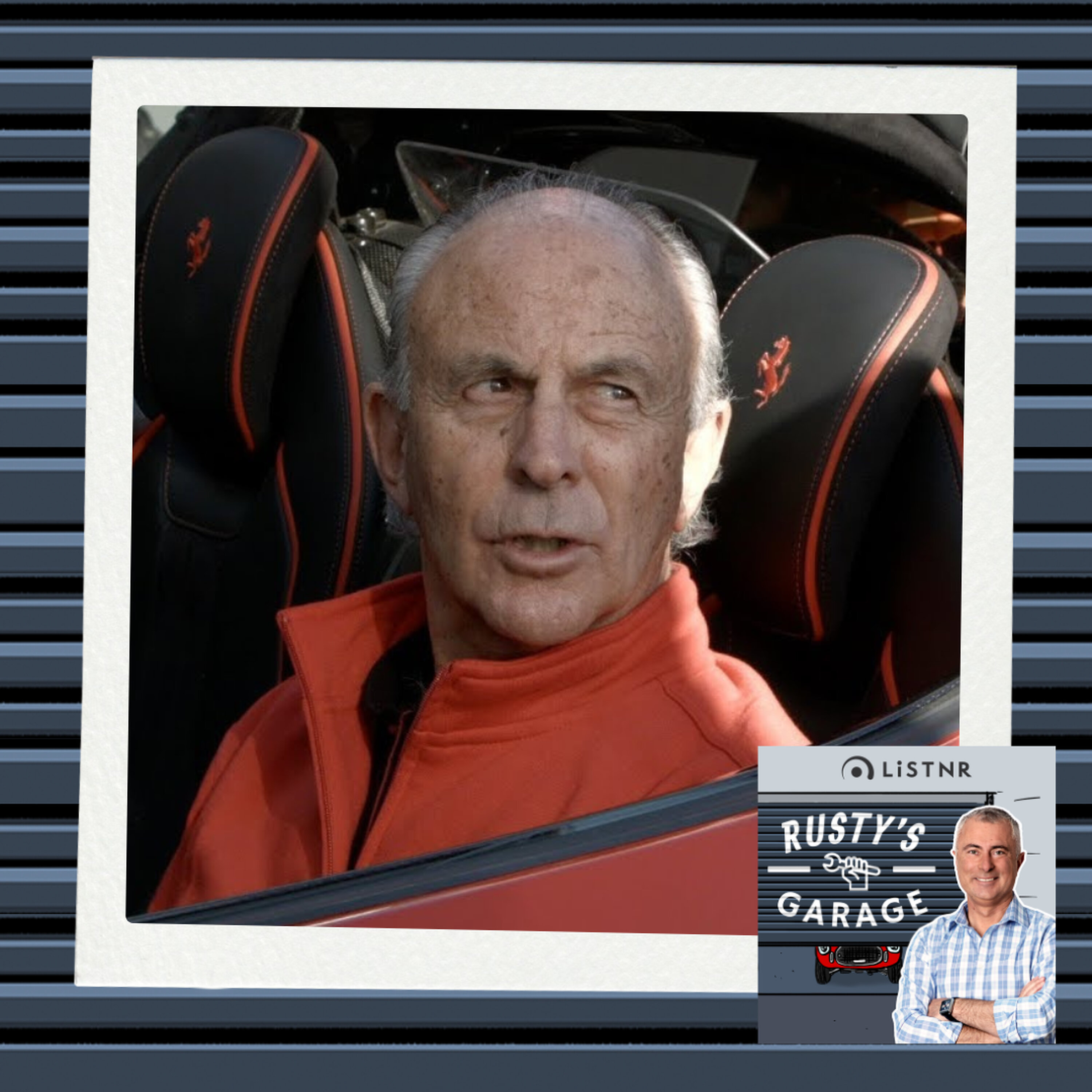
Tim Schenken joins Rusty’s Garage for a back-catalogue chat that traces his early-70s push toward Formula One and the era’s real dangers. Recorded ahead of the 2018 Australian Grand Prix, the conversation moves from safety and driver mindset to what podiums and pace really depend on—timing, the car, and team support. Along the way, Schenken recalls Ferrari encounters at Monza, endurance stints at the Nürburgring, and the engineering feel of classic open-top machinery.
The next two weeks are some of the best on the annual Motorsport calendar with the Monaco Grand Prix and the 24 hours of Le Mans.
For this episode of the Brief we have gone right back to season 1 (2018) to bring you a slice of an episode you may not have heard before - Tim Schenken.
Tim is one of only a handful of Aussie’s to race Formula 1 at Monaco and he went on to race sportscars for Ferrari. Working with an emerging Ron Dennis and memories of Bernie Ecclestone, a then relatively new player in F1. Thinking he was being pranked when Enzo Ferrari asked to meet him and the priceless car he turned down the chance to own. Tim went on to have an incredible career working for the Governing Body in Australia then called CAMS and now Motorsport Australia. A respected Clerk of the Course at the Australian Grand Prix who has been awarded and OAM for his services and rightly inducted into the Hall of Fame.