
The Pit Straight: Bye Bye, Barcelona
About this episode
The hosts kick off with Barcelona’s swan song on the F1 calendar, noting “the Barcelona, Catalonia, Catalonia grand prix” name and the plan to rotate it with Spa starting next year. They debate odd/even scheduling and talk about construction delays around the track. From there, they look back at Barcelona’s early-90s roots and key incidents, then pivot to what replaces it: a Spanish street circuit. They also weigh Alonso’s possible last Barcelona race, FIA engine testing/appeals, and how electronics, energy harvesting, and power splits could shape outcomes.
Barcelona
"to the media now that this is very possibly his last Formula One race at Barcelona."
Barcelona is a famous race track in Spain where Formula One races. It has a blend of fast sections and twisty corners, so the car has to handle well and keep its tires working.
Barcelona refers to the Circuit de Barcelona-Catalunya, a major Formula One venue in Spain. It’s known for a mix of long straights and technical corners, which makes car balance and tire management especially important.
Formula One
"to the media now that this is very possibly his last Formula One race at Barcelona."
Formula One is the highest level of open-wheel racing. Drivers race for a championship over many events, and teams keep improving the cars during the season.
Formula One (F1) is the top level of open-wheel motorsport, run as a season-long championship across multiple races. Cars are highly engineered and teams constantly update them, so driver decisions and team development both matter a lot.
development process
"go through the development process with Aston Martin and try to get himself into a championship winning car one more time."
In Formula One, the development process is the ongoing cycle of designing, testing, and updating the car throughout the season. Teams use race data and simulation to decide what to improve next, aiming to close performance gaps step by step.
unload
"Last week, he said, he said last week, it's like every time they unload now, they find something new that's wrong with the call."
Here “unload” means the team brings new parts or updates to the track. The point is that after installing them, they keep finding more issues instead of improvements working as expected.
In racing team context, “unload” usually means bringing parts or updates to the track (or taking them out of transport) for installation and testing. The idea here is that after each update, they discover new problems, which highlights reliability and integration issues.
Pierre Gasly
"we can touch a bit on Pierre Gasly and what happened without being this past weekend."
Pierre Gasly is a Formula 1 race driver. When people mention him in a race conversation, they’re usually talking about what happened to him in that weekend’s event.
Pierre Gasly is a Formula 1 driver known for strong performances and for switching teams during his career. In F1 discussions, his name usually signals a specific race incident or performance swing that affects the championship picture.
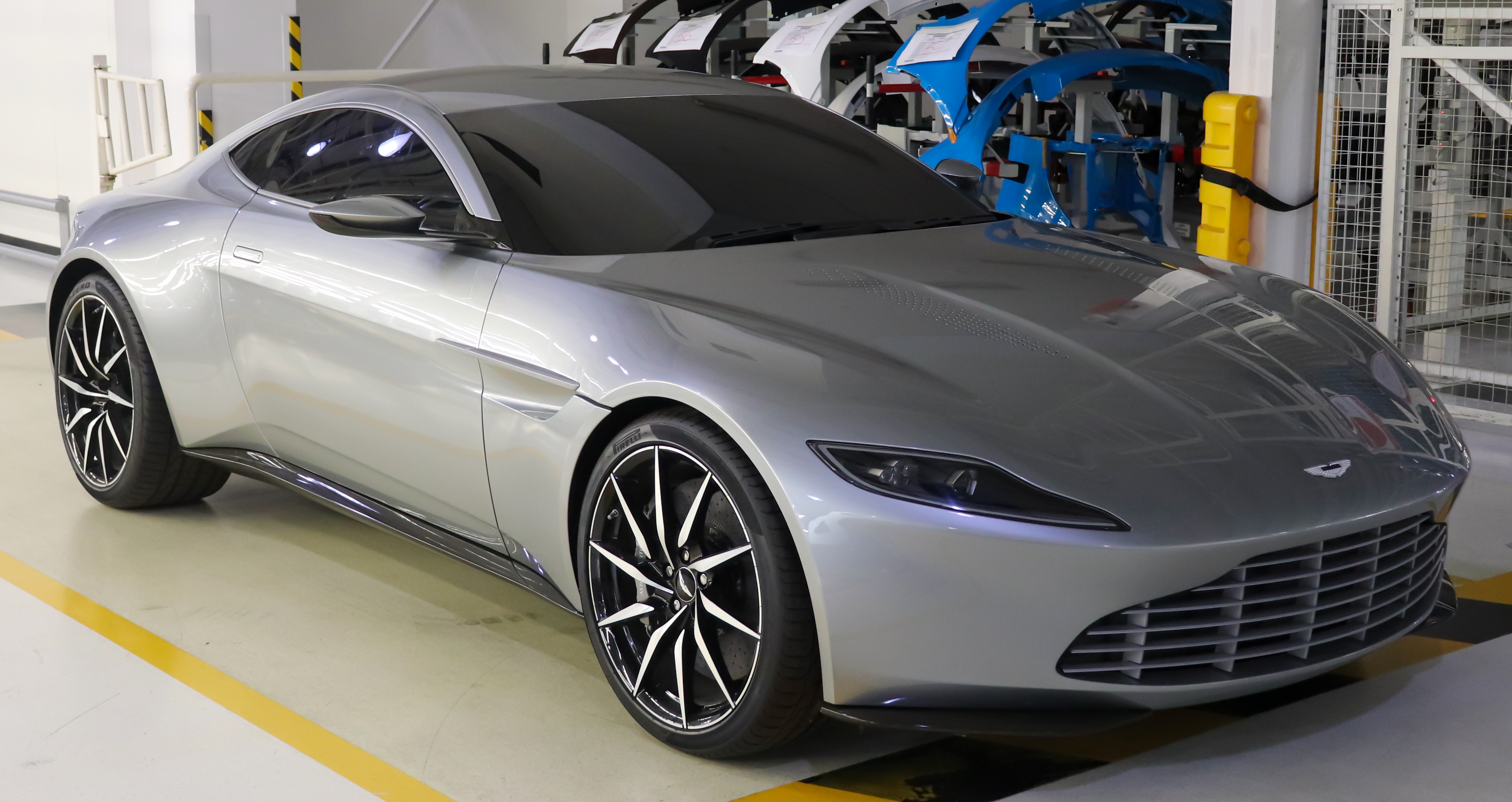
Aston Martin
"it's better than the Aston Martin. That's a very low bar to clear."
Aston Martin is a racing team in Formula 1. Here it’s being used as a comparison for how the cars look.
Aston Martin is a Formula 1 team and car brand. In this segment, the host compares another car’s looks to Aston Martin, using it as a reference point for how “good” the design is perceived to be.
Alonso
"It's not clear to me that that's a car that Alonso could wind up in next year... It's got a better engine."
Alonso is a long-time Formula 1 driver. The hosts are talking about whether he can still fight near the front next season, depending on how good the car becomes.
Fernando Alonso is a veteran Formula 1 driver whose career longevity is often discussed in terms of whether he can still contend for podiums. In this segment, the host is speculating about Alonso’s next-year competitiveness based on the car’s development and engine situation.
engine
"It's got a better engine. I mean, supposedly it's only got the second best engine. It's a huge improvement on the Honda."
In an F1 car, the engine is the power source that helps the car go fast. The hosts are saying one car’s engine is an improvement over another team’s.
In Formula 1, the engine is a major performance component that affects power output, drivability, and how quickly the car can accelerate out of corners. The host is specifically talking about which engine is “better” and how that translates into competitiveness.
Honda
"It's a huge improvement on the Honda."
Honda here means the engine brand used in F1. The host is comparing how strong one engine is versus Honda’s engine.
Honda refers to the engine supplier/brand in Formula 1 contexts, where different teams run different power units. The host is comparing engine competitiveness, saying the current setup is a big step up from Honda’s.
red flag
"he wouldn't have even gone to point this week if President screw up on the red flag we stole?"
A red flag is when the race is stopped for safety. The host is saying a red-flag moment helped someone get points they might not have otherwise.
A red flag in racing means the session is stopped for safety reasons, and cars must slow down and follow instructions. The host is implying that a red-flag situation changed the race outcome, giving someone an unexpected opportunity.
Daytona 500
"Like well, he still has an open invitation to the Daytona 500 [632.1s] standing from 2019 if I recall correctly as well."
The Daytona 500 is a huge NASCAR race in the U.S. at Daytona. Winning or even getting invited is a big deal in stock-car racing.
The Daytona 500 is NASCAR’s most famous race, held at Daytona International Speedway in Daytona Beach, Florida. It’s a high-profile event that many top drivers and fans treat like a major career milestone.
Monaco Grand Prix
"and going into the Monaco Grand Prix last weekend, [664.0s] our colleague Peter was on here and he was explaining to us his reason"
The Monaco Grand Prix is an F1 race on a street circuit in Monaco. It’s notoriously hard to overtake, so track position and strategy are huge.
The Monaco Grand Prix is a Formula One race run on the streets of Monte Carlo, famous for tight corners and limited overtaking. Because it’s so difficult to pass, qualifying and race strategy often matter as much as outright speed.
Ferrari
"[664.0s] our colleague Peter was on here and he was explaining to us his reason [667.4s] as to why Ferrari kind of looked like the team to beat for that race."
Ferrari is one of the most famous teams in Formula 1. In this discussion, they’re being talked about as the strongest team going into Monaco.
Ferrari is the Italian Formula One team and car brand known for its long history in F1 and its distinctive red cars. In this segment, they’re discussed as the team to beat heading into Monaco, based on recent performance.
Charles Leclerc
"And they were on for a damn good finish [675.6s] until the thing happened with Charlotte Claire [679.3s] in the final corner with his break issues."
Charles Leclerc is an F1 driver who races for Ferrari. The hosts mention that something went wrong for him late in the race.
Charles Leclerc is a Formula One driver for Ferrari, known for his speed and for being one of the team’s key drivers. The segment references an incident involving him in the final corner that affected the race outcome.
break issues
"[679.3s] in the final corner with his break issues. [681.8s] Lewis Hamilton still brought it home in second place"
“Break issues” means the car’s brakes weren’t working right. If your brakes act up, you can’t slow down properly for turns.
“Break issues” here refers to brake problems—something malfunctioning or not working correctly with the car’s braking system. In racing, brake issues can ruin lap time and make it hard to slow down for corners.
Lewis Hamilton
"[681.8s] Lewis Hamilton still brought it home in second place [685.8s] behind Kimmy Antonelli,"
Lewis Hamilton is a top Formula 1 driver and a multiple-time world champion. Here, they’re saying he still finished near the front despite trouble for others.
Lewis Hamilton is a multiple-time Formula One World Champion, widely regarded as one of the sport’s greatest drivers. The segment highlights his ability to finish strongly even when the Ferrari result was compromised.
Kimmy Antonelli
"[685.8s] behind Kimmy Antonelli, [689.9s] Is there any reason for us to think that Ferrari can keep up this pace"
Kimmy Antonelli is an F1 driver mentioned as finishing ahead of Hamilton. The hosts are treating him like a rising star who’s getting harder to beat.
Kimmy Antonelli is referenced as the driver who finished ahead of Hamilton in the race result being discussed. The segment frames him as an emerging, increasingly dominant presence.
medium speed corners
"But at the same point, you know, Barcelona is completely different from Monaco as far as just just a lot of like medium speed corners. So this track, there's not a whole lot of passing that happens usually,"
Medium-speed corners are turns you take fairly quickly, but not at the very slow “hairpin” pace. They matter because they affect how hot the tires get and how stable the car feels through the turn.
Medium-speed corners are bends where the car stays at a moderate cornering speed—typically neither a slow hairpin nor a high-speed sweep. They strongly influence tire temperature, aerodynamic balance, and how much the driver can carry momentum without overheating or losing grip.
power delivery
"you still need multiple master's degrees and a couple PhDs to understand the electronics and the power delivery and the active arrow and the super clipping and all of this stuff."
Power delivery is how the car feeds engine power to the wheels. If it’s too aggressive, the tires can lose grip; if it’s too gentle, you don’t accelerate as quickly out of the turn.
Power delivery is how the engine’s torque is released to the wheels over time—shaped by throttle mapping, traction control, and drivetrain settings. In racing, small changes in power delivery can dramatically affect traction exiting corners and overall lap time.
active arrow
"to understand the electronics and the power delivery and the active arrow and the super clipping and all of this stuff. Being a track full of medium corners, there's that one breaking point."
“Active arrow” is an adjustable wing on the race car. It can change to give more grip in corners or less drag for faster running on straights.
“Active arrow” refers to an adjustable aerodynamic element (an active rear wing/wing system) that can change its angle or configuration to manage downforce. By altering downforce, teams can balance grip in corners versus speed on straights.
super clipping
"to understand the electronics and the power delivery and the active arrow and the super clipping and all of this stuff. Being a track full of medium corners, there's that one breaking point."
“Super clipping” sounds like a special racing technique the team uses to keep the car working in the best way. The exact meaning isn’t fully explained in this clip, but it’s tied to how the car’s aero and control systems behave.
“Super clipping” appears to describe a high-performance aerodynamic or control strategy related to how the car is kept “clipped” to the track’s optimal airflow/behavior. Because the term is used as a specific racing jargon phrase without further definition in the excerpt, the exact mechanism is ambiguous.
breaking point
"Being a track full of medium corners, there's that one breaking point. It's heading out of turn 1234"
The “breaking point” is the moment you start slowing down for a corner. Hit it at the right time and the car stays stable as you turn.
A “breaking point” is the reference spot where the driver transitions from braking to turning-in for a corner. On tracks with medium-speed corners, getting this point right is crucial for maintaining balance and carrying speed without locking up or upsetting the car.

Volkswagen Jetta
"...s not going to be as bad as it would have been if Jetta won the schedule still, because that would have b..."
The Volkswagen Jetta is a small car (a sedan) made for everyday driving. It’s meant to be comfortable and efficient, and it’s been sold for many years. People talk about it a lot because it’s a common, easy-to-understand option in the sedan category.
The Volkswagen Jetta is a compact sedan known for being a practical daily driver with a focus on comfort and efficiency. It often comes up in discussions because it’s a long-running model line with many different generations and trim levels, making it a common reference point for what people expect from a mainstream sedan. In a podcast, it may be mentioned in the context of comparisons, scheduling, or how certain outcomes affect what vehicles are discussed or driven.
horsepower
"The FIA will, you know, they just tested the engines to see which is producing, you know, where they are as far as horsepower produced."
Horsepower is a number that tells you how strong the engine is. More horsepower usually means the car can accelerate harder and go faster.
Horsepower is a measure of how much power an engine produces. In racing discussions, it’s often used as a shorthand for overall engine output, which affects acceleration and top speed.
FIA
"The FIA will, you know, they just tested the engines to see which is producing, you know, where they are as far as horsepower produced."
The FIA is the organization that governs major motorsport rules. In this discussion, they’re described as testing engines to see how much power they make.
The FIA (Fédération Internationale de l’Automobile) is motorsport’s governing body that sets rules and oversees technical compliance. In this segment, the host says the FIA tested engines to evaluate their output.
tier one
"So that's tier two, essentially. So we've got tier one is Red Bull, tier two is Mercedes."
“Tier one” means the top group in a ranking. In this case, it’s based on which team’s engine makes the most power.
“Tier one” here is a performance grouping based on engine output. The host is describing a hierarchy where Red Bull’s engine is fastest (tier one), with other teams placed below it by how much less horsepower they make.
tier two
"So that's tier two, essentially. So we've got tier one is Red Bull, tier two is Mercedes."
“Tier two” is the second-best group in the ranking. Here, it means Mercedes’ engine is behind Red Bull, but ahead of the teams in lower tiers.
“Tier two” is the second performance bracket in the host’s engine-output ranking. The segment places Mercedes in tier two because it’s producing less horsepower than Red Bull, but more than the teams below it.
tier three
"Tier three is Ferrari and Audi because they're producing between 24 to 36 less horsepower than Red Bull."
“Tier three” is a middle group in the ranking. In this segment, Ferrari and Audi are placed there because their engines make less power than Red Bull, but more than the lowest tier.
“Tier three” is the next performance bracket in the host’s horsepower-based comparison. The segment groups Ferrari and Audi together because they’re described as producing a middle range of horsepower deficit versus Red Bull.
final tier
"And then the final tier is Honda, which is producing 36 to 48 less horsepower."
“Final tier” means the lowest group in the ranking. Here, Honda is placed last because its engine is described as making the least power compared with Red Bull.
“Final tier” is the bottom performance bracket in the host’s engine-output ranking. The segment assigns Honda to this tier because it’s described as producing the largest horsepower deficit relative to Red Bull.
cost cap
"And it's also going to get more, they're going to weigh some of the cost cap for engines and development, you know, time."
A cost cap is a rule that limits how much racing teams are allowed to spend. The idea is to keep the sport more competitive and prevent the biggest teams from outspending everyone else.
A cost cap is a spending limit that Formula 1 teams must follow. It’s designed to control budgets so smaller teams can compete more fairly, and it can affect how much a team can spend on engine development and other upgrades.
Red Bull
"Meanwhile, Red Bull is just they're not developing anything right now because they have the best engine."
Red Bull is the Formula 1 team in this conversation. The host is saying Red Bull’s engine is strong, but other parts of the car (like the chassis) and testing details are affecting results.
Red Bull is a Formula 1 team/brand discussed as having a strong engine advantage but not developing much right now. The speaker contrasts Red Bull’s current dominance with issues attributed to chassis and the way FIA testing evaluates engine components.
chassis
"One is the chassis. And the other part is, and this is kind of the confusing thing."
The chassis is the main frame/structure of the race car. It affects how the car handles and how well the suspension can do its job.
In race-car context, the chassis is the car’s structural platform that supports suspension, steering, and overall stiffness. The speaker says one of the teams’ current problems is the chassis, implying it’s limiting performance even if the engine side is strong.
ICE
"When the FIA tested the engines, the only check, they are only checking the ice being total combustion engine."
ICE is the “regular” engine that burns fuel. In this context, the testing is mainly looking at how the fuel-burning part performs.
ICE means internal combustion engine—an engine that burns fuel to create power. The speaker is saying the FIA tests focus on the combustion engine portion, rather than fully evaluating the car’s electronics.
electronics
"They're not checking the electronics. And that's why Mercedes has the best engine in reality."
In modern hybrid race cars, “electronics” includes the control systems that manage power delivery—how the engine, motor, and energy systems work together. The speaker claims the FIA tests aren’t checking these electronics as part of the engine evaluation, which can change how “best engine” is interpreted.
Mercedes
"And that's why Mercedes has the best engine in reality. But in these tests, they don't, because they have a better electric program."
Mercedes is the other Formula 1 team/engine program being discussed. The point here is that the testing method may not fully reflect how Mercedes’s engine and control systems work together.
Mercedes is referenced as having the best engine “in reality,” based on how FIA testing is performed. The speaker argues that because the FIA checks only the combustion-engine portion and not the electronics, Mercedes’s overall package can look different than the test results suggest.
aerodynamics
"…the difference of the chassis, the aerodynamics, everything except this engine on paper…"
Aerodynamics is how the car cuts through air. In racing, it affects grip (downforce) and how much the car slows down (drag).
Aerodynamics is how air flows around the car and how that affects downforce and drag. In racing, it’s a major performance lever alongside the engine and hybrid power strategy, and the speaker is treating it as an equal factor in the hypothetical comparison.
power ratio
"withstand a potential shift of the power ratio in a team like Red Bull's favor?"
They’re talking about how the car’s total energy comes from two places. One part comes from the fuel-burning engine, and the other part comes from the electric system, and the percentages are expected to shift with new rules.
In Formula 1, “power ratio” here is a way of describing how the total available energy/power is split between different sources. The host uses it as a simplified percentage breakdown to explain how much comes from the combustion side versus the electric side under upcoming rules.
electricity
"And this is how much the ice is producing. And this is how much the electricity is responsible for, right?"
They’re splitting the car’s power into two sources: fuel-burning and electric. “Electricity” means the energy from the hybrid/electric parts that help the engine make power.
In the host’s model, “electricity” represents the portion of the car’s power/energy coming from the hybrid electric system (the ERS portion of an F1 power unit). This is contrasted with the combustion side (“ice”), and the percentages are expected to change under new regulations.
fuel cells
"Now, part of that as well is that teams have already designed fuel cells for these cars."
A fuel cell is a device that makes electricity from fuel using chemistry, not by burning it like a normal engine. The host is saying teams are preparing their energy systems around this for the new rules.
A fuel cell is an energy-conversion device that turns chemical energy into electricity, typically using an electrochemical process rather than combustion. The host claims teams have already designed “fuel cells” for these cars, implying the hybrid/energy strategy is being reshaped by upcoming rules.
burning about 5% more fuel
"The cars are going to be burning about 5% more fuel next year."
They’re saying the car will use more fuel under the new rules—about 5% more next year. That matters because it can change how teams plan their race strategy.
This refers to the expected increase in fuel consumption under the next set of engine rules. The host ties it to the energy/power split changes and notes that teams may not be able to increase fuel tank size to match, which can affect strategy and total race energy management.
fuel tanks
"Now, what that means too is if you do that and you can't make the fuel tanks bigger for regulation and ball agreement with the teams, then you're"
Fuel tanks are how much fuel the car can carry. If the rules don’t let teams increase tank size while the car uses more fuel, they have less flexibility during the race.
“Fuel tanks” are the onboard storage capacity for the race fuel, which is constrained by regulations. The host suggests that if tank size can’t be increased under the rules, then higher fuel burn rates could force teams to adjust strategy and energy usage.
Monaco pit lane
"So, basically, there was a measurement issue with the Monaco pit lane. I don't know how because they've been racing in Monaco for 100 years now."
The pit lane in Monaco is the area where teams pull in to change tires and make adjustments during the race. If the track measurements for that lane are wrong, it can affect how officials judge whether a car was speeding.
Monaco’s pit lane is the narrow lane beside the track where teams enter for pit stops and where speed limits are enforced. In this discussion, a measurement issue with that pit lane affected how speed was calculated, which can influence penalties and final classification.
hearing
"Basically, what happened today is the FIA said, yes, you've presented us new information. We will now have a hearing about this."
A “hearing” is like an official review meeting. Teams show evidence, and the FIA decides whether the earlier ruling should be changed. Until that’s done, the final results can be uncertain.
In F1, a “hearing” is a formal process where teams present evidence and stewards decide whether a decision (like penalties or classifications) should change. Here, the FIA is saying that because new information was presented, the case will be reviewed, putting the results “in question.”
results are kind of in question
"So, because of that, the results are kind of in question for now. Officially, Pia is not on the podium."
This means the race standings might not be final yet. If the FIA hearing finds the earlier decision was based on bad information, the positions on the podium could change.
When stewards say the results are “in question,” it means the official classification may change after the FIA hearing. That can happen if new evidence shows the original timing/penalty decision was based on incorrect measurements.
podium
"Officially, Pia is not on the podium. And not only that, but I mean, the FIA could do a number of things."
The podium is the top-three spot in a race. If penalties change after an official review, a driver’s finishing position can move into or out of those top three places.
In Formula 1, the “podium” refers to the top three finishers (1st, 2nd, 3rd) who are awarded trophies and stand on the podium at the end of the race. If penalties are adjusted after a hearing, a driver can move into or out of podium positions.
penalties
"I don't think it's going to we send any penalties besides maybe Pia's. In part because other teams didn't protest it in part and other."
Penalties are official punishments for breaking the rules in a race. They can be things like adding time or requiring a drive-through, and they can change the final finishing order.
In F1, “penalties” are official punishments for rule violations, such as time penalties, grid penalties, or in-race penalties like drive-throughs. This segment discusses whether additional penalties will be applied after the FIA hearing and how that could change the podium result.
drive through
"Because you figure are you going to we send all of George's penalties? Because he had to drive through. How do you we send that?"
A “drive-through” penalty means the driver has to go through the pit lane as a punishment, usually without stopping. It costs time, so it affects where they finish.
A “drive-through” penalty is a type of in-race punishment where the driver must pass through the pit lane at the required speed without stopping. Because it costs time, it’s used when stewards believe a driver violated the rules, and the penalty can be reflected in the final classification.
Sao Paulo 2024
"seventh was where he was scored after the penalties to third on the podium. His first since Sao Paulo 2024."
This is a reference to the Formula 1 race in São Paulo in 2024. The speaker is saying this would be the driver’s first podium since that earlier race.
“Sao Paulo 2024” refers to the Formula 1 race held in São Paulo during the 2024 season. The host uses it as a reference point for when the driver last achieved a podium/strong result before the current discussion.
Request an Explanation
Heard something you'd like explained? We'll add it to this episode.
Sign in to request explanations for terms you heard.
Want to learn more?
Browse our glossary for plain-English explanations of automotive terms, jargon, and concepts.
Help improve this episode
See something that's not quite right? Our annotations are AI-generated and can sometimes miss the mark. Click the flag icon on any annotation to suggest a correction.