The Toyota RAV4 is a compact SUV. It’s made for normal daily driving but can also handle weekend trips. The podcast mentions it while describing a trip to hot springs.
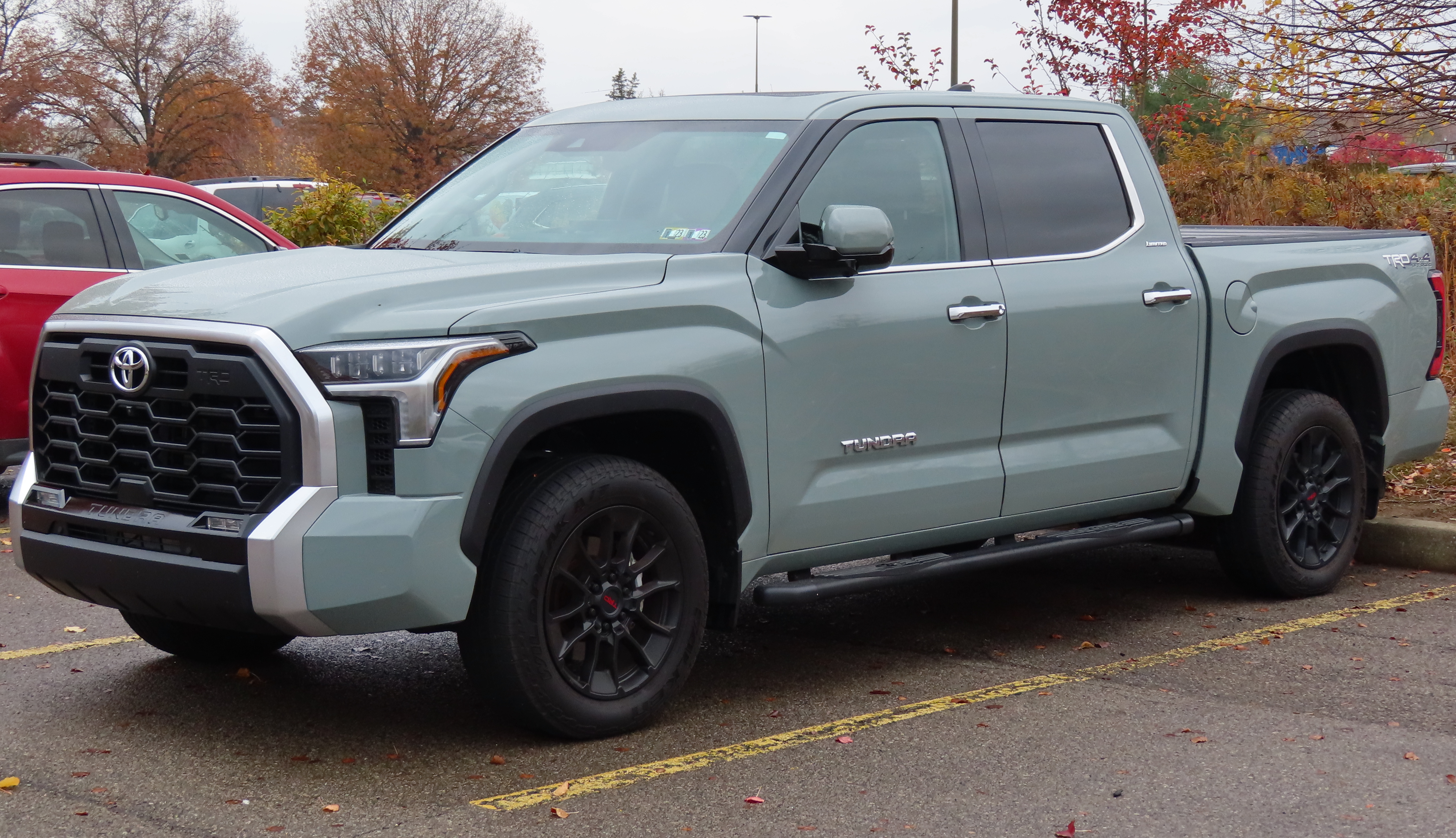
The Toyota Tundra is a large pickup truck. People use it for carrying things and towing, and it’s built to handle rougher trips. The podcast mentions it because it’s the kind of truck you might bring on an outdoor weekend.
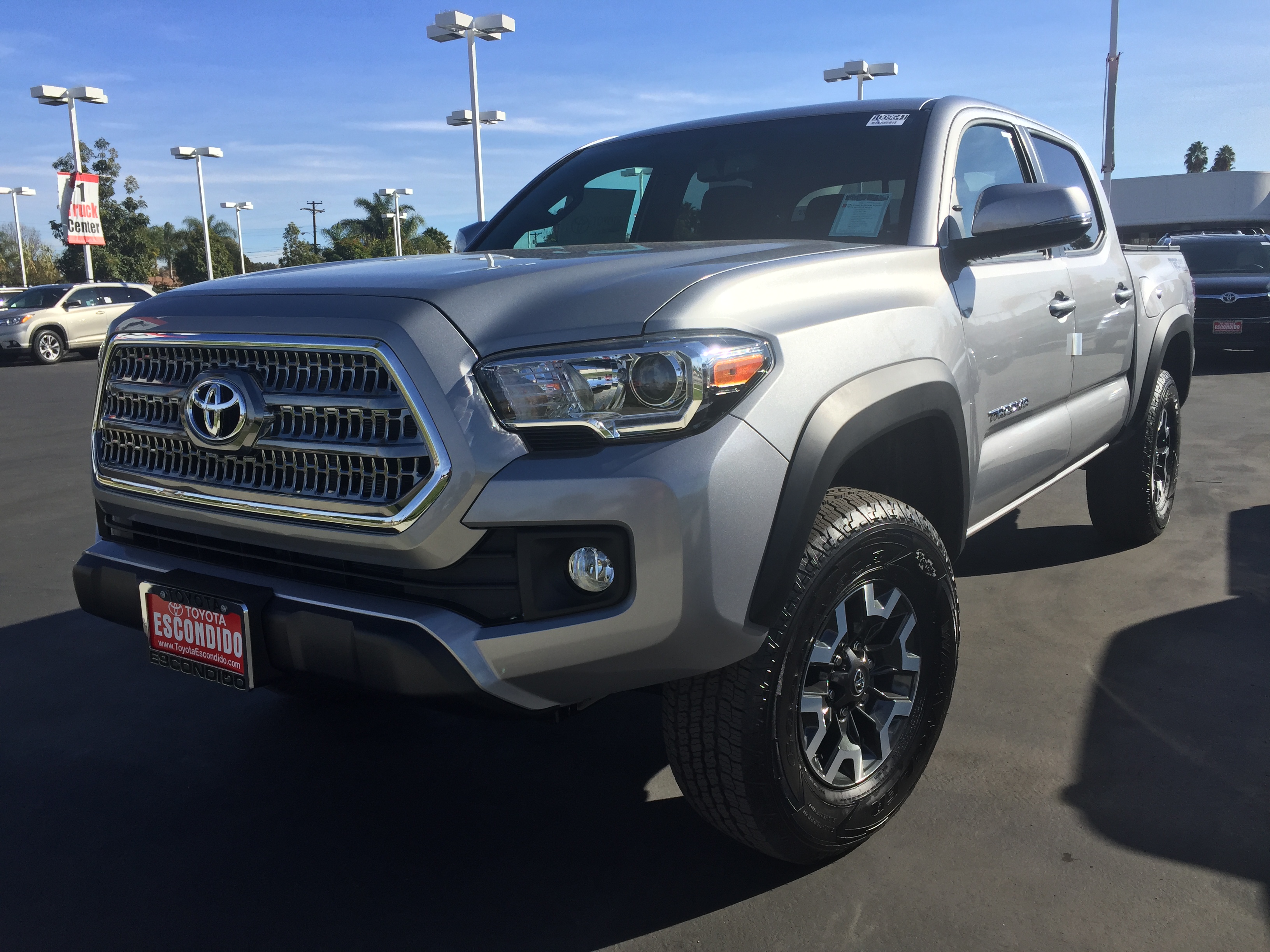
The Toyota Tacoma is a medium-size pickup truck. It’s designed to help you carry stuff and handle trips that go beyond normal city driving. The podcast brings it up as one of the trucks people might bring for camping.
A destination charge is money added to a new car’s price to pay for getting the car from the factory to the dealership. It’s a line item you’ll often see when you’re shopping for a new car.
Consumer Reports is a group that evaluates products and publishes results to help people make better buying decisions. Here, they’re cited as the source of data for the discussion.
Datsun was an older car brand from Japan that eventually became part of Nissan. The speaker is using it to talk about what destination charges were like back in the 1970s.
The window sticker is the paper on the car that lists the price and what’s included. It’s meant to be the same information no matter which dealer you buy from.
On the sticker, the destination fee may show up as “destination and handling.” It’s basically the cost to get the car to the dealer plus some extra processing costs.
An inland freight charge is extra money for shipping the car within the country. The point here is that it can show up as a separate line item, not just one simple “destination” fee.
A handling charge is an extra fee someone adds during the buying process, usually for paperwork or processing. The hosts are saying it can be tacked on separately from the official sticker price. So the final price can be higher than you’d think.
The Acura MDX is a family SUV with room for passengers and cargo. In this discussion, it’s mentioned because the hosts compare an older MDX window-sticker price to a newer one to show how destination fees have increased. It’s a real-world example of how costs add up.
A destination fee is money added to the car price for shipping it from the factory to the dealer. Even though dealers are sometimes close to the factory and sometimes far away, the fee is often treated like a standard charge.
Term
trucking industry
The “trucking industry” refers to commercial freight carriers that move vehicles from factories to ports, railheads, and dealerships. In the segment, it’s used to frame how shipping costs should scale with volume and negotiated rates.
In this context, the “invoice” is the dealer’s paperwork showing what the dealer is charged by the manufacturer for the car, including line items like destination. The host’s point is that dealers may be billed the same destination charge as the end customer, even when the real shipping cost is lower.
Concept
manufacturer year over year increases
“Year over year increases” means comparing a metric (like fees or pricing) from one year to the next to see how much it has risen. The host uses it to suggest destination-related charges have been creeping upward over time.
The out-the-door price is the final price you’ll actually pay for the car. It includes the extra fees and taxes, not just the sticker price. This is why you should check that destination fees aren’t added more than once.
Mercedes-Benz is the brand the host says has one of the lowest destination fees right now. They’re using it as an example of how these fees can change your final price. The takeaway is to compare what each brand charges for getting the car to the dealer.
BMW is mentioned as another brand the hosts are comparing for destination fees. Even though the exact number isn’t given here, it’s part of the same message: check the final price breakdown. Different brands can charge different transport fees.
The Honda Civic is a small, everyday car. It’s made for commuting and general driving, and it’s available in different versions. The podcast mentions it because it’s being compared on price with a few other models.
The Honda Prelude is a sporty two-door car. It’s generally aimed at drivers who want a more fun driving feel than a basic commuter car. In the podcast, it’s mentioned because it’s included in a price comparison list.
The Acura Integra is a compact luxury car. It’s meant for drivers who want a nicer interior and a more engaging driving feel than a basic car. The podcast brings it up because it’s included in a price comparison list.
The Hummer EV is a big electric vehicle from GMC. Because it’s so heavy, it costs more to move around, but the hosts argue the added “destination charge” is still being marked up too much.
The GMC Sierra 1500 is a big pickup truck. In this segment, it’s part of a list showing how much extra money the host says GMC adds for shipping to the dealer.
The GMC Yukon is a large SUV. The hosts mention it because they’re comparing how much extra shipping/destination fees add across different GMC vehicles.
The Chevrolet Suburban is a large SUV that can fit more people than a typical car. It’s meant for family trips and everyday use, and it can also tow. The podcast brings it up because it’s included in a price comparison.
The Chevrolet Tahoe is a big SUV made to carry passengers comfortably. It’s useful for family trips and can handle towing when equipped for it. The podcast mentions it because it’s part of a list of vehicles with specific pricing.
The Chevrolet Silverado 1500 is a large pickup truck. It’s built to carry loads and tow trailers, and it’s also used for regular driving. The podcast mentions it because it’s part of a list of vehicles with a quoted price.
The Cadillac Escalade is a large luxury SUV. The host brings it up because they’re comparing destination charges across different brands and price tiers.
Sticker price is the number you see on the car’s price tag/window sticker. The host is saying the final cost can jump a lot once extra fees like destination charges are added.
The Chevy Silverado 1500 is a popular full-size pickup. In this segment, it’s just the example truck they use to explain how dealer pricing works, especially the destination fee.
Incentives are deals from the automaker or dealer that can lower what you pay. The hosts say you can use incentives, but the destination fee is still included in the sticker price.
The window sticker is the paper/label on a new car that shows the official price breakdown. They’re saying the destination fee is listed there and taxes are calculated on it too.
Factory installed options are features the car is built with. The hosts’ point is that these are already part of the sticker price, so you usually negotiate the overall price instead of each option separately.
Tariffs are taxes the government adds to imported products. If car parts are imported, those taxes can raise costs, and companies may try to pass some of that cost to buyers.
The Ford Maverick is used to show how the advertised “starting price” can be misleading. The hosts point out that the destination fee gets added on top, so what you actually pay is higher than the headline number.
The Ford F-150 Lightning is an electric truck. The hosts use it to show that automakers sometimes promise a price like “under $40,000,” but the final real-world cost often ends up higher once fees and costs change.
A rebound means EV sales start improving again after a slowdown. The discussion here is about what could bring buyers back—like fuel prices and incentives.
Government subsidies are discounts or credits from the government that make EVs cheaper to buy. The point here is that if those incentives go away, fewer people may buy EVs.
Residual value is what the car is expected to be worth later—often at the end of a lease. If the car’s “official price” is higher because of fees, that expected future value can go up too, which can ripple into used-car prices.
0% financing means you borrow the car money without paying interest. That can make the deal cheaper overall, and it can also change what discounts and prices you see at dealerships.
The Dodge Charger Scat Pack is a higher-performance version of the Charger. The hosts mention it as an example of a car people might wait to buy later in the year to try to get a discount.
MSRP is the “sticker price” the manufacturer lists for the car. The actual price you pay can be higher or lower once dealers and incentives get involved.
The “best time to buy” is when deals are strongest—usually when dealers have lots of cars to sell or manufacturers are offering bigger incentives. That’s when you’re more likely to get a lower price.
Depreciation rankings compare how quickly different vehicles lose value over time. They help shoppers estimate future resale value and total cost of ownership, since faster depreciation generally means a bigger hit when you sell later.
Maintenance costs are what you’ll likely spend to keep the car running over the years. It’s more than just the initial price—things like service visits and wear items add up.
Term
insurance estimator
An insurance estimator helps you guess what your insurance might cost for a specific car. Since different cars can cost more or less to insure, it’s a useful comparison tool.
“Vehicle’s worth” means what the car is likely worth in today’s market. Knowing that helps you judge whether the price you’re being offered is actually a good deal.
LIVE
Hallmark Cards presents, Mother's Day at Walgreens.
Celebrate every mother figure in your life with a Hallmark card at Walgreens.
Show how much she means to you and how deeply she's loved.
A Hallmark card is the perfect way to say thank you for all she does.
Don't forget, Mother's Day is Sunday, May 10th.
Visit Walgreens today to find the perfect Hallmark Mother's Day card and make her feel truly special.
Mother's Day means Hallmark cards at Walgreens.
Hey campers, it's Jan from Toyota.
This summer we're headed to Camp Toyota and the fun starts now!
We're kicking things off by kicking up mud.
Jump in campers, we're going off-roading in a forerunner.
Next, we're heading to the hot springs in a RAV4.
And finally, park your tundras and Tacomas around the campfire because we're roasting marshmallows.
Your summer start here!
Dealer in between may vary so you're participating Toyota Dealer for details event and stream first.
Toyota, let's go places.
It's noon here in Ventner City, New Jersey and our nation's capital, Washington, D.C.
and this is Carage Live for Friday, May 8th with your hosts, me, Ray here in my condo in Ventner City
and Zach hanging out with a life-wring in Washington, D.C.
because God knows you always need one of those in D.C.
How are you today, handsome?
And why did you look poignant on that WUSA story about moms?
Yes, thank you, Dad.
I'm doing well, yes.
It's Mother's Day this weekend.
I was walking through the park here the other day and WUSA, the local CVS affiliate,
did a story on what does your mom mean to you?
And so I stopped and I did an interview for that and it was really sweet and I was so grateful for it.
Thanks for watching that.
Today's show is brought to you by CarEdge.com.
If me, my dad, and our incredible team can help you save money when you buy a car,
sell a car, protect a car, do anything with your car that's car-related.
Deal cars back at CarEdge.com.
We'd be thrilled to help you out.
As a friendly reminder, folks, we offer a car buying service.
We've helped over 100,000 paying customers since 2019.
It's incredible and we have an awesome team of experts that have saved.
Wow, Nick is up to $1.2 million saved for his concierge.
Customers steward over 100,000, Josh over 706,000 on 167 deals closed.
Learn more.
Get a free consultation call with our team back at CarEdge.com.
Now, Dad, the big story I want to talk about this morning is a secret in the auto industry
that we are going to turn on its head.
We're going to be talking about today, Dad, destination charges.
We're going to review the latest data from Consumer Reports.
Destination charges are the secret way automakers are screwing car shoppers in the United States
of America. When you started in the business, Dad, two things.
One, explain to us what a destination charge is on a new car, and two,
what was the destination charge on the cars you were selling back at Datsun,
whatever the heck you were selling in the 1970s?
12 cents.
What was the destination fee?
Destination charge is what the manufacturer charges on the Monroney label.
Which is a Windows sticker.
The Windows sticker, and it's the same for every dealer, whether they're
two minutes from the factory or 3,000 miles from the factory.
But the destination charge is, it'll say, destination and handling.
And when I started, what was it? 1200 dollars, maybe?
And today, in some cases, especially on cars nobody wants,
the destination charge can be, well, in excess of 3000 dollars.
And it's hard to imagine that those destination charges are not inflated to allow the manufacturer
to make some additional profit that they may not even be entitled to.
It's supposed to foreshadow, Dad. It's an amount that you will have never thought of
that may be above 3000 dollars. Let's just hone in on this for a second.
Here's an example of a Windows sticker. I know it's a little small there,
but it says destination charge 1300 and 45 dollars.
Let me see if I can find another one here. That's too small.
Let's find another one, another one. Come on, come on, come on.
Windows sticker, Windows sticker. Here we go, Dad.
Destination and handling 500 and seventy dollars.
So these Windows stickers, occasionally,
Wait a second. That was in 2005 on an MDX? 500 and 75 bucks?
Occasionally, I've seen even on Kia, Dad inland freight charge.
So just to be clear here, these have different names.
Yes, they show up. They show up on the Windows sticker.
Now that is different than if when you request an Alpedore price quote from a car dealership,
if they add their own destination fee, destination charge, handling charge,
that is separate from what's shown up on the manufacturer's Windows sticker.
Now, to your point, Dad, some of these fees have gotten outrageous.
We have seen destination charge inflation like crazy.
And this is a bit of a secret way that automakers are hurting customers,
because instead of saying they've raised the price of vehicles,
they can keep the price of vehicles the same,
but they can increase the destination fee significantly, which to be clear here.
Yes.
Does increase the overall MSRP of the vehicle,
but the manufacturer can say we didn't change the base price of the vehicle.
The base price stayed the same, base this, base that.
These destination fees, to your point, Dad, in some cases,
can get upwards of $3,000.
Yeah, yeah.
There is now no longer a destination fee below $1,000.
We're going to run through the list here in just a second,
but it is in ASS...
Yeah, ASSININE is the word I was going to say.
This is gouging. I completely agree.
When you showed that Windows sticker for a 2005 MDX,
okay, and it was $575, that was, excuse me, 21 years ago, 21 years.
And today, on an Alfa Romeo, it's $3,250.
That is just taking advantage of the situation.
Be honest. Let's guess. Let's just guess. Let's play a guessing game.
What do you think it really costs to get the vehicle to the dealer once it enters the country?
What do you think it really costs?
Well, Dad, $1,000?
Yeah, there's an even worse part of this. Some vehicles are manufactured and produced here.
You don't even have to get it into the country.
You and I have done the analysis. We can do it on today's show.
Some vehicles that are produced in the United States get a $2,500 or more destination fee,
and they only travel 15 miles from the final assembly plant to the local dealer.
Yeah, but the concept was supposed to make it fair and be an equal charge for all dealers,
regardless of where the dealer was located, whether they were located a mile from the
final assembly plant or whether they were located 3,000 miles away.
So that was the concept. But even on average, what could it cost? $1,000 a car?
Oh, let's say you're working with the trucking industry and you say, oh, we're expecting to
produce 1.2 million vehicles in the United States that need to get shipped.
With that type of volume, what type of savings could we have?
So I'm guessing it's somewhere around $1,000 today.
So if you need to charge on the Windows sticker $2,895,
why don't you tell the truth and say it's really $1,000 and just raise the damn price
of the car by $1,895 because that's what you've done. Now, the difference is that this extra
profit goes directly to the manufacturer and the dealer doesn't participate in that at all because,
well, on the invoice, the dealer gets charged the same destination charge as the ultimate customer.
So this is just a way for the manufacturers to make extra profit. No wonder sales can be down
and profits can be up. Yeah, I love this. This is from Jerry. Love to see you here, Jerry.
Manufacturer year over year increases were typically $50 to $100 at most for the destination
charge. These increases started to mask tariff price increases. I think that is absolutely spot on.
So let's spend a moment here, Deb. Let's go through the vehicles that have the lowest
destination charges right now. So again, to be clear here, destination charge is charged by the
manufacturer to get the vehicle onto the dealer's lap. The dealer does not participate in the profit
of that at all unless they mislead you and charge you a second destination fee. So this is legitimately
something that people need to watch out for on out-the-door price quotes. You need to watch out
for two destination charges. One, wow, we've got a helicopter going by. That's always exciting here
in DC. One is the destination fee that's actually on the manufacturer's window sticker. The other,
they could be misleading you and putting that on the out-the-door price sheet.
But dad, the dealers that have the, excuse me, the manufacturers that have the lowest
destination charges, it's actually Mercedes-Benz. Wow. Mercedes-Benz only, you cannot
believe I'm saying only, only charges $1,150 for a destination charge. Toyota's destination
charge, dad, is now $1,160 on most of their vehicles. That Mercedes-Benz number is exactly
double what it was for a 2005 Acura MDX. Think about that. We're in crazy town, kids.
I mean, just nuts. So how much is BMW? Do you think that that is a world war about the start?
I just need to know, since you're where they're going to bomb first, damn it.
No, I don't think there's a war going to start, but I definitely think someone important is flying
over. That is crazy. Wow. Perks of Liberty, Washington, DC. So are you surprised or actually
surprised because it has increased so much or so little that Mercedes-Benz is twice what the Acura
was in 2005? 20 years and double the price for the destination charge feels pretty reasonable.
That's immediately below inflation, right? Well, yeah. I mean, if you look at
costs, fuel costs, and it's obviously more expensive today than it probably was in 2005.
Obviously, the cost of purchasing the trailers and maintaining trailers was less than than it is
today. Insurance costs were probably less than than they are today. So yeah, I mean, everything
goes up in price, but does it go up in price so much that, say, a 2026 Afro Romeo of some kind?
Well, we'll get back. We'll get back to the... It should be more than six times what it cost to
get a 2005 Acura MDX to a dealer. Here we go. So yeah, inflation calculator. $595 in 2005 would be
$1,006 in 2026. So there you go. That's pretty close. Pretty close. All right, but let's keep
going on because the point of this is not to compare a 2005 Acura destination charge to a
2026 Mercedes-Benz destination charge BMW debt. Yeah. There's only $1,175 on all their cars and
SUVs. Acura is now at $1,195 on the Integra, same for Honda with the Civic and Prelude,
Kia with the K4 and K5, $1,195 Nissan, $1,195 Subaru, $1,195 Volvo, $1,195 Mazda, $1,235.
So these are your least. So these are the manufacturers that are screwing you the least
on the destination charge. Or maybe not screwing you at all in relation to what you're about to show.
Because how can there be such an incredibly large difference if Mercedes is at $1,150?
How can an Alfa Romeo be $3,250? How can it be almost three times what it is for Mercedes-Benz?
Let's look at the other brands because Alfa is so, they're so niche.
Doesn't sell anyway so hardly anybody's paying for it.
Let's look at the other brands. Okay.
You want a Ford F-Series pickup truck, Dad? $2,595.
Yes. Crazy. Okay. More than double what Mercedes is. All of these are going to be more than double
than what Mercedes is. And what we're about to embark on more than likely, I'm guessing,
is that these are American brands that are sticking it to their American customers more
so than some of those foreign brands. Yeah. That's why I actually think, I mean,
it is egregious that Alfa is over $3,000. And that's just a crazy milestone.
Yes. But to a ceiling to burst through. But that's actually not the story here. The story is,
Ford charging $2,600 as a destination fee on the F-Series pickup trucks. GMC charging $2,600 on
the Sierra EV. Lincoln charging $2,600 on the Navigator. Jeep charging $2,600 on the Grand Wagony
or Ram charging $2,600 on their 1,500 pickup trucks. So there you go. Just the bottom of the list of
those that have the highest destination charges. So far, Dad, and you can already see the peak on
the GMC up there at $2,700 for the Hummer EV. This is just price and essential.
And I can almost understand why it would cost close to that on a Hummer EV, since if you're
hauling a truckload of them, and each one of these bad boys weighs like 9,000 pounds,
so if you're hauling a truckload of eight, yeah, you're going to go through a lot of fuel
to get them wherever it is they're going to go. But it's still, I mean, even that $2,700 is
ridiculous. It's just ridiculous. It's price gouging, Dad. This is instead of saying we're
increasing, what's the average F-Series so far? $60,000. So what would a $2,600 price increase
on a $65,000 vehicle be? I'm doing the math and I had, what is that, 4% price increase? So instead
of coming out and saying, hey, we're doing a 4% price increase, they're just tacking on a 4% tax
in the name of a destination charge. That's really clear here. The dealer doesn't participate in
only the manufacturer profits on this. That's crazy. And there is no way at those numbers
that any of those manufacturers can suggest with a straight face that those destination
charges aren't inflated and making them an additional boatload of money.
Well, last time I checked Mercedes-Benz still makes a profit and they charge $1,100 instead
of $2,600. Different vehicles they're moving around. That doesn't matter. I mean, it's got
some nuance to it, but I don't think that much nuance. All right, so you've got $2,700 for the
Hummer EV. We've got $2,795, $2,800 debt from GMC for the Sierra 1,500, $2,500,
and $3,500 Yukon and Yukon XL. Yeah, sure. Yeah. But they probably didn't raise the
sticker price 4%. Okay. Like Chevy, $2,800 for the Silverado 1500, $2,500, $3,500 suburban in Tahoe,
Cadillac, you are up to $2,895 on the Escalade and Escalade IQ.
Yeah. Yeah. It's as if these American manufacturers have said,
how far can we push the American consumer before will push back
and say, no more. I'm mad as hell and I'm not paying a $2,900 destination charge to get that
vehicle from wherever you build it to my local dealership. Just not doing it.
So let's talk about this for a second because we've got some questions. Do we have to pay for
the destination fee? So how does this work in a negotiation? Dad, do I have to pay if I'm in the
market? Yes. If I'm in the market for a Chevy Silverado 1500 and I want to buy a new one from
a Chevy dealer, do I have to pay the $2,795 destination charge? It's part of the MSRP.
Now, you could say, okay, well, what if I could get an extra $2,795 off
above and beyond what I could already get off? Well, I don't think there's going to be that kind
of room to be able to do that between incentives and what dealers are typically willing to negotiate
price-wise off of the MSRP of a vehicle. The $2,795 is baked in. It's not going anywhere.
Okay, it's just baked in. And so it's not a separate line item that you get to negotiate off
of the price. It would almost be like for factory extras options that you think you're going to
negotiate every line item on the MSRP, on the window sticker. You don't. You negotiate the
bottom line number of the MSRP and that includes all the factory installed options and the destination
charge. That's baked in. We're doing this wrong. We should give stuff away for free and then charge
people like a connection fee. It is interesting, Dad, because essentially what it does is just
raises the floor of the price because you can negotiate this stuff, but you're negotiating
it out of the selling price of the vehicle, but it just raises the floor. The floor just went
up 4% higher whether you wanted it or not. Well, it's a way to say, well, we didn't really raise
our prices this year. The base MSRP of the vehicle really didn't go up this year. No, it's just a
the key is to look back a few years and what is $2,895 today. How much was that four years ago
or three years ago? Give me a second here. I'll pull up some of the data. We did some analysis
on that. Before I do, Dad, we've got these questions coming through from Robert. If destination
charges are not taxed, is that charge non-negotiable? They are taxed.
It's part of the MSRP. It's part of the total window sticker price. It is the last line item
on a Monroni label on the window sticker. The last line item typically is destination,
transportation, destination and handling. Whatever you want to call it, that's usually there. That's
the last one and that's before the total. Yeah, you're paying taxes on it. Yeah.
Push your paying taxes on the vehicle. From David, our manufacturer is trying to recoup
tariffs in their destination charge. Of course. Of course.
Dad, I pulled this up. Give me a second here. I pulled this up. We wrote this. I wrote this in
2021. The non-negotiable destination charge is rapidly increasing. Here is the table.
This is from 2021. Okay. In 2021, BMW was charging 973. Wow. Look at that, Dad.
Okay. And forwards up to like 2,600? 2,500, 2,600?
For the F-Series, yeah. Yeah. This is a blended average. Yeah.
Yeah. And this is showing you the price change from 2017 to 2021. So I was doing an analysis
back in 2021, y'all, showing how the non-negotiable destination fee was increasing rapidly. Ford
already had increased it from 2017 to 2021 by 29% on average.
And look at Mercedes-Benz. Mercedes-Benz was at $1,097. It has gone up $53 in five years.
Ford was at $1,393. And since they don't make cars anymore,
you know, it's on the F-Series and this and that, but it's $2,600. It's doubled.
One's gone up $53. double. Yeah. Like to hear Jim Farley explain that one.
Oh, that's how we can cover the cost of recalls.
Remembering the launch of the Maverick Advertise as below $20,000 starting price
before the destination fee of $1,500. Yes. Yes. Well, everything's always
before the destination fee. And don't forget, whenever, and Ford has said it this year,
they want to bring back more affordable offerings in the Ford lineup. And they're hoping to be able
to offer four new type vehicles at $40,000 or below starting in 2030. Well, the $40,000 and below
is based on costs today, which won't be costs in 2030, which is the same reason when they first
announced the Lightning, they said that was going to be $39,995 because it's under $40,000.
That's got a nice ring to it. None of them have ever been that. So take everything with a grain
of salt when they said the Maverick was going to be under $20,000. It is. You just can't find one
or buy one. No, I don't think it really ever was. And again, I think the point, I just want to be
clear, make sure we're not confusing folks. It's not about parts costs. It's just about inflation
of the destination charge. Yes. We've got here from Barron. Good to see you, Barron. Thanks,
Barron. Thank you, Barron. We appreciate it. Is there a destination fee on a one-year-old used
car? No destination fees on used cars, correct? No. Well, some dealers will try. Some dealers who
buy cars at auctions, and then you have to get the car from the auction to the dealership.
So this is where things get confusing for customers, but it's important to understand.
This is a different destination fee. That's the dealer trying to mislead you.
Yes, because the dealer, when they buy a used car like that, all the costs associated with
getting it from the auction to the dealership and all the reconditioning costs and everything,
should already be factored into the selling price or the asking price.
None of this stuff should be a separate line item. There should not be on a used car a separate
line item for destination fee or a separate line item for reconditioning. No. All that's
built into the asking price, at least at legitimate dealerships. We also have this from Joe,
Negotiate the total out-the-door price, not the MSRP, just like you were saying there with the
selling price of a used car as well. Then we've got here from Jason. Thank you for
this, Jason. We appreciate it. Thank you.
How long does demand in the new car market take to adjust to higher gas prices? Do you think the
EV market will rebound based on current events? I think, me personally, in my opinion, I think
short term, used EVs might see a slight uptick in price and values. I think long term, depending upon
how long the Iran situation lasts, that will determine whether or not we will... I don't
know that without the government subsidies, I don't know that gas prices can get high enough
just yet to really substantially move the needle on EV sales just yet. I just don't see that happen.
That's just... You can see it based on sales once those incentives went away,
to where some of these EVs, they're selling in the hundreds a month as opposed to in the
thousands a month. I don't think most Americans would look at it and say to themselves,
there's going to be enough cost savings in the fuel to warrant spending all the extra money to
get the EV in the first place. That's for the new car side of things, which is Jason's question.
But on the used car side of things, I think we are starting to see used EVs start to increase in
value a little bit because, obviously, people are looking for more affordable options than they don't
want to pay that hefty gas bill. We've got from Matthew. Thank you for this, Matthew. We appreciate.
Even with terrible residuals, some of the bounced original destination fee makes it to the used
price. Hello, Silverado. Is Ray ready for swim race season? It is interesting to think that because
the MSRP gets inflated with a higher destination fee, but it does increase the perceived used
car price value too. It has this trickle effect on values of vehicles.
Yes, because the residual value is based off the total MSRP, not the base MSRP.
Yeah, it impacts used car values as well. It's just not a separate line item on a used car,
but there's probably greater impact on a used car value based on the inflated destination
fee than, say, on the inflated price of a navigation system.
Last question here pops for today's show from Mohamed. Hello, everyone. What is a good time
to buy a new car? End of this year or right now? Mohamed, the best time to buy any car is when
you don't need one. That's my snarky answer, but that's the real answer. The best time to buy
any car new or used is when you don't need one and you stumble upon a value that you just can't
walk away from. Typically, the absolute best time to buy a new car is the last weeks of the year,
the last couple of weeks of December, or typically, historically, the best time to get deals.
But if there's price increases between now and then, who's to say?
Yeah, also, I would just say we saw in the beginning of this year more manufacturers,
0% financing offers than we did in December of last year. I know dealers that are sitting on
inventory want to get rid of it. We even saw yesterday on the show with Jared, for example.
If you were thinking to yourself, I'm going to wait for a leftover Dodge Charger Scat Pack.
Yeah. I'm going to wait till the end of this year to pick that up. Well, that thing got,
what was it, 30% off MSRP overnight because the manufacturer just decided that they were done.
They just need to get rid of it at this point. When's the best time to buy a new car? I think
you need to watch the market. I think that's critical. Yeah. If you can stumble upon a good
value, whenever that may be, whenever you find a dealer that just might be desperate to let
something go, that's the best time. Yeah. Dale's reminded me. It was almost 50% off of MSRP.
So again, that's the time to take advantage of something like that.
Who knows? Yeah. I mean, the fact that we actually have new cars selling at half of their original
MSRP is, indeed, crazy stuff. Other crazy stuff, caredge.com. I mean, my dad and our incredible
team can help you out. We would love the opportunity to do so. We work for you, not car dealers,
to learn more. Back at caredge.com. You can use the car search. You can use our car buying service.
We have all sorts of research tools like depreciation rankings, maintenance costs,
insurance estimator, check what your vehicle's worth, and so much more.
Dealer reviews as well, dad. This has been such an incredible program that we've built out.
Over the past couple of months, we've now graded almost 12,000 car dealers nationwide,
56,000 verified out-the-door price quotes, allowing us to grade dealers on how transparent
they are, giving them either an A grade, a B grade, C grade, D grade, or, unfortunately,
occasionally, even an F grade. Learn more back at caredge.com.
Those Ds and Fs are bringing back not so fond memories of my report cards in grade school,
and middle school, and high school, and unfortunately, in college as well.
Exactly. Exactly. All right, folks. We're back on Monday with more car edge lives. We look forward
to seeing you then. Enjoy Mother's Day this weekend, and dad, enjoy the nice weather at the
beach. Excuse me. Well, thank you. It's slightly warmer than it has been,
so looking forward to it. Hope everybody has a great weekend. If your mother's still with you,
give her a call. Tell her how much you love her and appreciate her,
and don't ever forget, you wouldn't be here without her.
Hey, campers. It's Jan from Toyota. This summer, we're headed to Camp Toyota,
and the fun starts now. We're kicking things off by kicking up mud. Jump in, campers.
We're going off-roading in a four-runner. Next, we're heading to the hot springs in a
Rad 4. And finally, park your tundras and Tacomas around the campfire because we're
roasting marshmallows. Your summer start here.
And subscribe. It really does help the show to grow. Thank you for listening.
About this episode
Destination charges take center stage as CarEdge Live argues automakers quietly inflate the price of new cars through fees that show up on the Monroney label. The hosts explain what “destination and handling” means, how line items can be renamed or duplicated in out-the-door quotes, and why these charges can be thousands of dollars. They compare brand examples (Mercedes-Benz vs. Alfa Romeo, plus Ford/GMC/Lincoln figures), discuss negotiation and taxes, and connect destination fees to residual value and deal timing.
Today on CarEdge Live, Ray and Zach discuss the latest info on destination charges. Tune in to learn more! Hosted by Simplecast, an AdsWizz company. See https://pcm.adswizz.com
for information about our collection and use of personal data for
advertising.