
About this episode
Horacio Pagani’s “spider” obsession becomes the episode’s through-line, as the hosts describe how Zondas are kept “perfect” and even claim “a hundred percent survival rate of Zondas.” Along the way, they bounce between supercar lore (Codalunga rarity, roof-off stiffness) and real-world car talk: prototype development at Jaguar with camouflage engineering, plus classic Toyota/JDM details like a 1984 Celica Supra and Mark III Supra digital dashes. The episode also includes EV noise humor, fuel-scare troubleshooting, and live-show promos.
Jonny and Richard have noticed something about Horacio Pagani. Also in this episode, news of an American live show, Richard has bought a bicycle, Jonny gets taunted by EV warning sounds, imagining Christian von Koenigsegg with hair, fun times at the Goodwood Festival of Speed, a deep dive into the complicated camouflage used to conceal the new Jag, an evening at the MG Zed cars 25th anniversary event, and another cracking pick from the classifieds at Car & Classic.
For early, ad-free episodes and extra content go to patreon.com/smithandsniff
To buy merch and tickets to live shows go to smithandsniff.com
FOTU info here: https://www.hagerty.co.uk/official-events/hagerty-festival-of-the-unexceptional/
Smoking Tire live show tickets here: https://improv.com/irvine/event/the+smoking+tire+live+feat.+smith+and+sniff+with+matt+farah%2C+zack+klapman%2C+richard+porter%2C+and+jonny+smith/14213624/
This episode is sponsored by Car & Classic https://candc.li/uc1yqz
This episode is sponsored by Heatable. Use codes SSG150 or SSG300 to get up to £300 off https://short.do/ByX2-Y
Hosted on Acast. See acast.com/privacy for more information.
pop up lamps
"So yes it is pop up lamps. Those sort of slightly not squared off but a little bit squared off big arch extensions."
“Pop-up lamps” are headlights that flip up from the car’s front when you turn them on. It’s a styling feature that also helps the car look sleeker when the lights are off.
Pop-up lamps are headlights that are hidden behind the front bodywork and then lift up when you turn them on. They were popular on many 1970s–1990s sports cars because they let designers keep a cleaner, lower front profile when the lights are off.
big arch extensions
"Those sort of slightly not squared off but a little bit squared off big arch extensions. Those wheels as well which Toyota put on Celicas and Supras..."
Arch extensions are the flared pieces around the wheel openings. They make the car look wider and more aggressive, and they can also help fit bigger wheels or tires.
Big arch extensions are flared additions around the wheel arches that visually widen the car. Enthusiasts associate them with a more aggressive stance and, on some cars, they can also help fit wider wheels/tires by providing extra clearance.
quite dished
"I really like them. They're quite dished. They're a good design of Allo."
“Dished” wheels have a concave shape where the wheel face curves inward toward the center. This look was especially common on certain classic JDM and European fitments because it emphasizes a low, wide stance and can visually enhance how the wheel sits in the arch.
Auto
"Gosh this looks immaculate. It's an auto. I don't know if I'm marking it down for being an auto or not..."
“Auto” means the car changes gears by itself. Some enthusiasts prefer manual gearboxes for more involvement, so they’re joking about whether the automatic version is a downside.
“Auto” here refers to an automatic transmission, meaning the car shifts gears without the driver operating a clutch or gear lever. In enthusiast circles, some buyers prefer manuals for engagement, so the hosts are debating whether the automatic hurts or helps the car’s “GT” appeal.
cobra head
"Oh my gosh Richard you could mark it down for being an auto but you need to mark it up for the majesty of the cobra head. Wow. This is part of the attraction."
“Cobra head” is a nickname for how the car’s front end looks—like a cobra about to strike. The hosts are describing the aggressive, predatory look of the front styling.
“Cobra head” is a nickname for a front-end styling theme where the nose and headlights create a predatory, upward “rearing” look. The hosts use it to describe the car’s aggressive front fascia and how it “spits” on the road—an enthusiast shorthand for that visual identity.
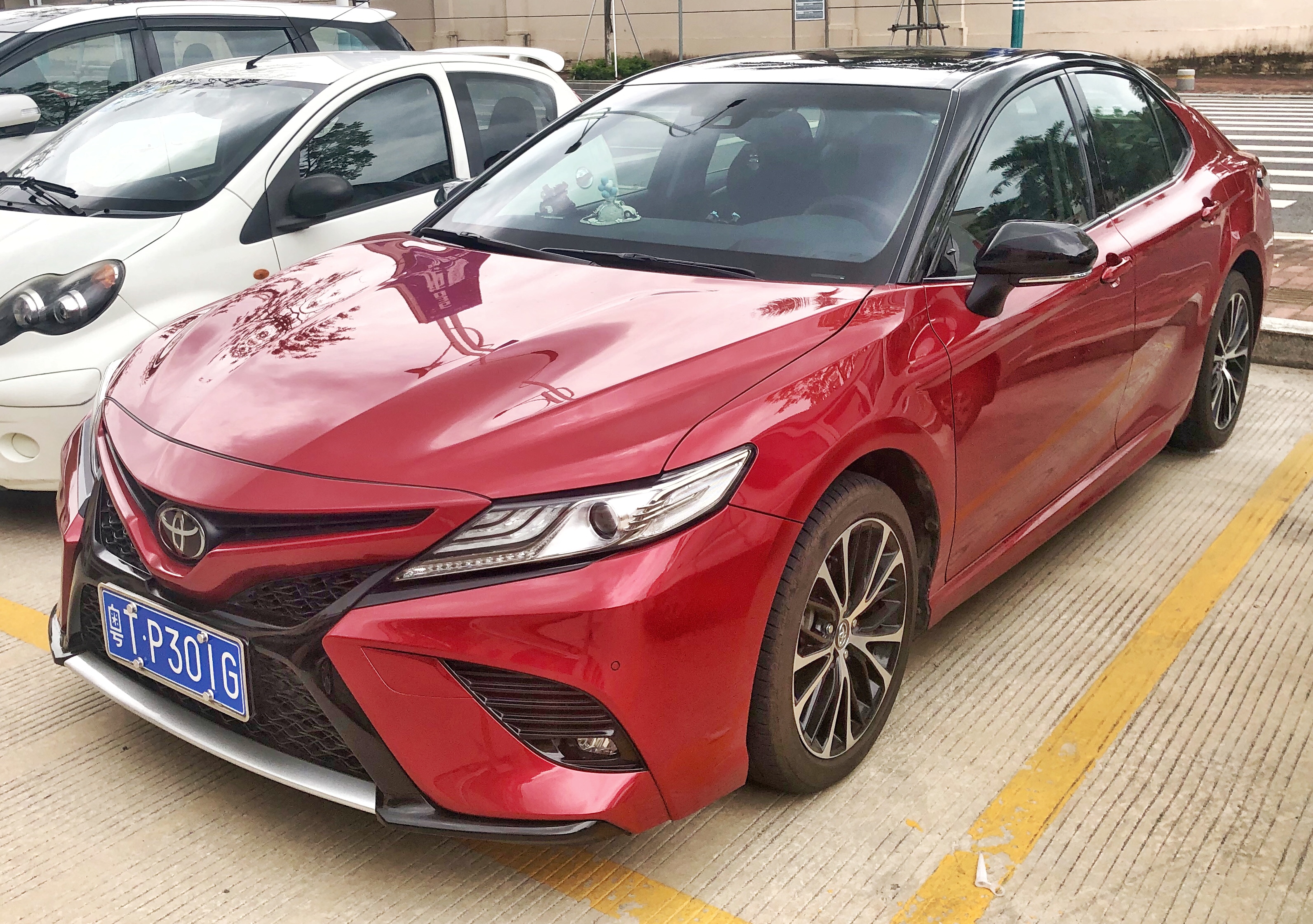
Toyota Camry
"They wouldn't compromise. It was most striking when you see like sort of American spec Camry's and they would have maroon seats but then a maroon fully maroon dashboard. Yeah."
The Toyota Camry is a regular passenger car (a sedan) that many people use for everyday driving. The podcast is pointing out that some versions sold in the U.S. could have matching interior colors, like maroon seats and a maroon dashboard. It’s basically about how the inside of the car can be set up differently depending on the version.
The Toyota Camry is a mainstream midsize sedan known for being practical and widely sold. In the podcast context, it’s being discussed in terms of how certain “American spec” examples could have coordinated interior colors, like matching maroon seats and dashboard. That kind of detail often comes up when people talk about how specific markets and trims were configured.
340,000 miles
"Yeah. [1201.7s] The amazing thing about this car is that it only has about 34,000 miles on it. [1207.2s] Gosh that is amazing. [1210.5s] That cobra head has got an overdrive switch on it."
Mileage is how far the car has been driven. Lower mileage usually means less wear on things over time, especially on a car that’s meant to be kept in good condition.
Mileage is the total distance a car has been driven, and low mileage can matter for wear items like suspension bushings, seals, and interior components. In collector-car discussions, a figure like ~34,000 miles often signals the car has had less time to accumulate fatigue.
overdrive switch
"Gosh that is amazing. [1210.5s] That cobra head has got an overdrive switch on it. [1212.8s] Stone the crow."
Overdrive is a higher gear that helps the engine spin slower when you’re cruising. The switch is how you turn that feature on or off.
An overdrive switch controls an overdrive gear or mode that lets the engine run at lower RPM at cruising speeds. That typically improves fuel economy and reduces engine noise on the highway.
BC racing coilovers
"And look at the seats. [1220.1s] Seats are good. [1221.0s] Wow. [1222.8s] It's been lightly and sympathetically adjusted so it has BC racing coilovers which the seller says significantly improved the drive. [1233.7s] And it's had various other bits and pieces."
Coilovers are aftermarket suspension parts that can be adjusted to change how the car sits and how it rides. BC Racing is a well-known brand of these parts, and the seller claims they made the car drive better.
BC Racing coilovers are adjustable aftermarket suspension units that combine a shock absorber with a threaded spring perch. They let you fine-tune ride height and damping, which can improve handling and ride quality compared with worn or non-adjustable factory suspension.
fuel pump
"New fuel pump, new fuel filter, new battery, new fuel, full stainless steel exhaust, bespoke sound sign system."
The fuel pump is what sends gas from the tank to the engine. If it’s old or weak, the car may run poorly or not start reliably.
A fuel pump is the component that moves fuel from the tank to the engine at the correct pressure. When people refresh a fuel pump, they’re usually trying to restore consistent fuel delivery and avoid drivability issues.
fuel filter
"New fuel pump, new fuel filter, new battery, new fuel, full stainless steel exhaust, bespoke sound sign system."
The fuel filter cleans the gas before it gets to the engine. A clogged filter can cause rough running or starting problems.
A fuel filter traps dirt and debris before the fuel reaches the engine. Replacing it helps prevent clogged injectors or fuel-system wear caused by contaminated fuel.
stainless steel exhaust
"New fuel pump, new fuel filter, new battery, new fuel, full stainless steel exhaust, bespoke sound sign system."
An exhaust made from stainless steel resists rust better than cheaper steel. It can also change the sound the car makes.
A stainless steel exhaust uses corrosion-resistant material for the exhaust pipes and mufflers. Enthusiasts often choose it for longer service life and a particular sound character compared with cheaper mild-steel systems.
overdrive cruise control
"Overdrive cruise control and air conditioning on what's this 1984 you say?"
It’s cruise control that helps the engine run at lower revs on the highway. That can make the car quieter and sometimes more efficient.
Overdrive cruise control refers to a cruise-control setup that uses an overdrive gear (or overdrive mode) to keep engine revs lower during steady highway driving. Lower RPM generally improves efficiency and reduces engine noise.

Mark III Supra
"What's quite sad is most of the these that I see these days that you know the Mark III Supra is around the banger track."
The Mark III Supra is a classic Toyota Supra from the early 1980s. The host is saying most surviving examples are being raced hard instead of being kept in great condition.
The Toyota Supra (Mark III) is a late-1970s/early-1980s generation of the Supra line, known for its straight-six character and strong enthusiast following. In this segment, the host is contrasting how many of these cars are now used for rougher “banger” racing rather than being kept pristine.
banger track
"What's quite sad is most of the these that I see these days that you know the Mark III Supra is around the banger track."
A “banger track” is a place where old cars get raced in a rough, knockabout way. The host means the cars aren’t being treated gently.
A “banger track” is slang for a demolition-derby-style racing venue where older, cheaper cars are raced and often intentionally beaten up. It’s used here to emphasize that many Mark III Supras are being used hard rather than preserved.
LCD
"It's got real airwolf style grid in the background of the LCD LCD."
LCD is a type of display screen that shows information using liquid crystals. It’s the screen technology behind the digital dash graphics.
LCD stands for Liquid Crystal Display, a screen technology used to show information. Here it’s describing the digital dash’s screen type and the “Airwolf-style” grid graphics shown on it.
rev counter
"You notice it has digital speedo, digital bars for temp and fuel and then this brilliant sort of arc of a rev counter that's also digital."
A rev counter tells you how fast the engine is spinning (RPM). In this segment they’re talking about a digital-style rev counter display.
A rev counter (tachometer) shows engine speed in revolutions per minute (RPM). The hosts describe an 80s-style digital arc display for the rev counter, which is a common way to visualize RPM changes quickly.
analog odometer
"But the odometer is still analog."
An analog odometer is the mileage counter that shows the number using traditional mechanical-style digits. Here it’s mentioned because the rest of the dashboard could be digital, but the mileage display stayed analog.
An analog odometer uses a mechanical/electromechanical counter to display mileage, typically via rotating digits. In this segment it’s contrasted with digital gauges, highlighting the era’s “hybrid” instrument clusters where only some functions were allowed to be digital.
digital dash
"Which looks slightly incongruous and it was the same on Montego's and things with digital dash."
A digital dash is the dashboard display that uses a screen to show things like speed and fuel. Back in the 1980s, it looked very futuristic, but some places had rules about what could be used.
A digital dash is an instrument cluster where key gauges (like speed, temperature, and fuel) are shown on screens instead of traditional analog dials. In the 1980s, this was often a futuristic styling choice, but it also raised legal/approval questions in some countries.

Citroen Bx
"There's a really nice chap who came to our live show in Belfast who brought his Citroen BX with the digital dash."
The Citroën BX is a classic French car from the 1980s. Here it’s mentioned because its dashboard used digital displays, but it still kept an analog odometer for legal reasons.
The Citroën BX is a late-1970s/1980s French hatchback/saloon that’s notable here for its digital instrument cluster. In this segment, it’s used as an example of a car that had a digital dash while still using an analog odometer due to legal authorization differences between countries.
digital odometers
"And he explained to me that the reason is because at that point the authorities in many countries had not authorised the use of digital odometers."
An odometer is what shows how many miles (or kilometers) the car has traveled. A digital odometer shows that number electronically, and the hosts say some countries didn’t allow it yet, so cars kept an analog one.
A digital odometer is an odometer reading displayed electronically (on a screen) rather than via a mechanical/analog counter. The hosts mention that some countries hadn’t authorized digital odometers at the time, which is why certain cars used analog odometers even when other gauges were digital.
cruise control dials
"But then there's also got a digital clock as well within the instrument pack on this Toyota. It's mega. I mean there's a lot to like. The cruise control dials are to behold."
Cruise control dials are the knobs/buttons you use to set a steady speed while driving. The hosts are just pointing out that the design of those controls looks especially good.
Cruise control dials are the physical controls used to set and adjust the vehicle’s cruising speed. The hosts call out the “dials” as a design detail worth appreciating in the instrument pack.
3.0-litre straight six
"And also let's not forget it's got a 2.8-litre straight six. It's a lovely engine."
This means the car has a six-cylinder engine where all the cylinders line up in a row. The “2.8-litre” part is the engine’s size, and engines like this are often known for smooth running.
A 2.8-litre straight six is an inline (single bank) six-cylinder engine with a total displacement of 2.8 liters. Inline-six engines are often praised for smooth power delivery and mechanical balance compared with many other layouts.

Ford Capri
"... engine. This is like a sort of thinking person's Capri really isn't it? Oh gosh this should be so much b..."
The Ford Capri is a sporty coupe, known for its classic look. The podcast is using it as a personality-style comparison—basically saying it’s a Capri with a more thoughtful vibe. The focus is on what kind of car it feels like, not just the specs.
The Ford Capri is a classic sporty coupe that’s often remembered for its styling and driving character. In the podcast, it’s described as a “thinking person’s Capri,” suggesting a more considered or understated take on what the Capri represents. That kind of comment usually comes up when people discuss the car’s identity and appeal beyond just performance numbers.

Toyota Celica lift backs
"I'm now in and I'm now looking at Bloody's Toyota Celica lift backs and there's [1529.8s] an incredible bloody Cressida estate."
The Toyota Celica is a sporty Toyota from Japan. A “liftback” means the back door opens upward like a hatch, not like a traditional trunk lid.
The Toyota Celica is a Japanese coupe that became popular for its sporty styling and variety of engines over the years. In this segment, the host specifically calls out the liftback body style, which is a fastback-like shape with a rear hatch that lifts upward for access to the trunk area.

Cressida estate
"I'm now in and I'm now looking at Bloody's Toyota Celica lift backs and there's [1529.8s] an incredible bloody Cressida estate. [1533.5s] Oh I love those Cressidas."
The Toyota Cressida is a Toyota model from Japan. An “estate” is basically a station wagon version with more room for cargo.
The Toyota Cressida (spelled “Cressida” here) was a mid-size Japanese sedan/estate that’s especially interesting to enthusiasts because it represents the era when Toyota was building more upmarket, performance-oriented models. The “estate” body style here refers to a wagon configuration, typically with a longer rear section for cargo space.
semi trailing
"it's not some the suspension on that's that [1550.8s] it's not just a is it a solid ax on there or it's I just according to this [1556.8s] it's no semi trailing. [1558.3s] Yeah I was going to say thought it would be but like a like a BM or something"
This refers to how the rear wheels are connected to the car. Different suspension designs move the wheel differently, which changes how the car feels and handles.
“Semi trailing” is shorthand for a semi-trailing-arm rear suspension layout, where the wheel is carried by an arm that pivots in a way that helps control wheel movement under braking and cornering. It’s a specific suspension geometry choice that affects ride, traction, and how the car behaves as grip changes.
solid ax
"it's not some the suspension on that's that [1550.8s] it's not just a is it a solid ax on there or it's I just according to this [1556.8s] it's no semi trailing."
A solid axle means the two rear wheels are connected by one rigid bar. That can make the car feel different over bumps and affects how the wheels keep grip.
“Solid ax” is almost certainly referring to a solid axle rear suspension, where both wheels are connected by a single rigid beam. Solid axles tend to be simpler and can be very durable, but they also influence ride comfort and wheel control compared with independent suspension designs.
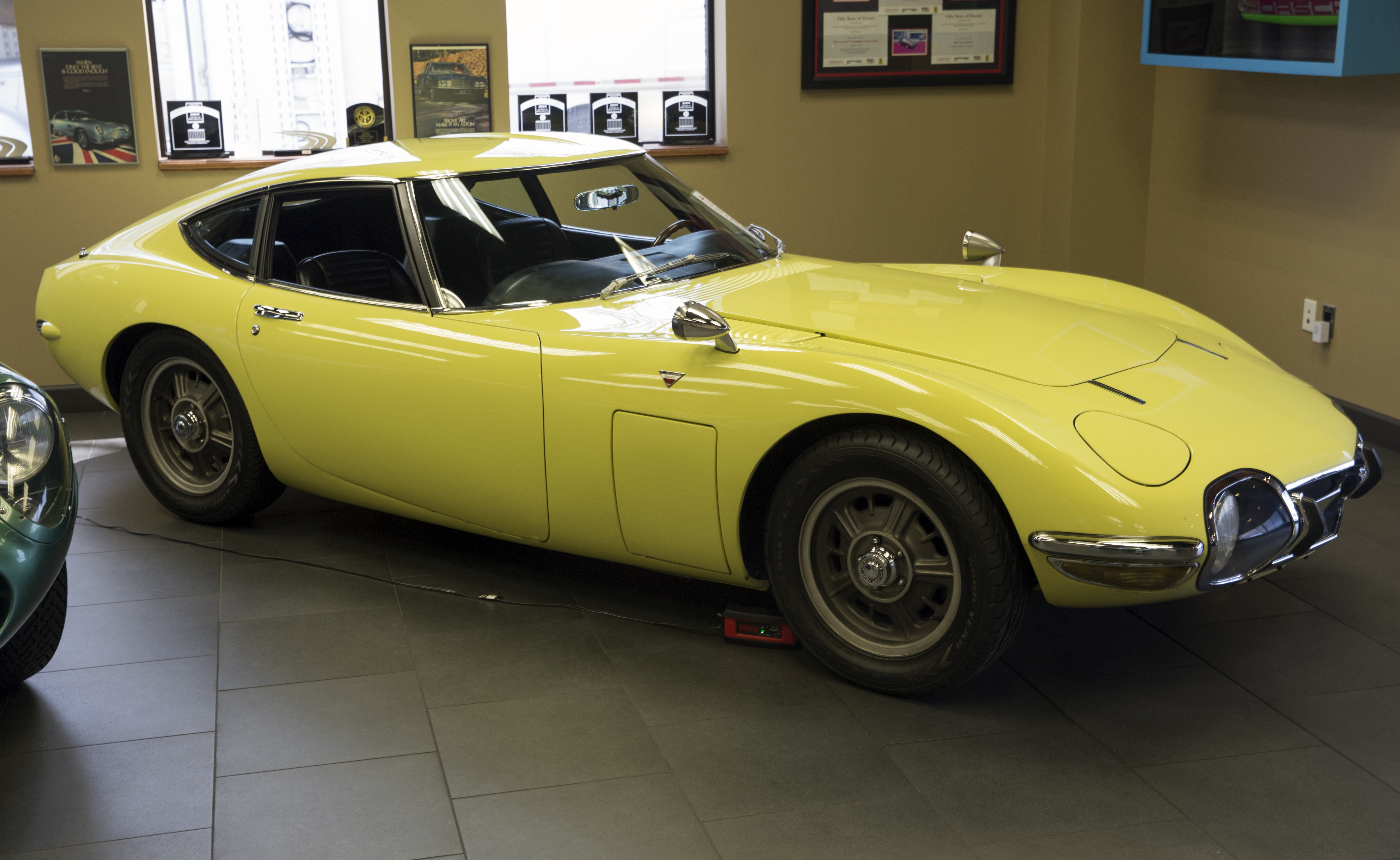
2000 GT
"it's expensive on the [1571.1s] other hand you could say it's the thinking man's 2000 GT couldn't you. [1576.8s] Oh yes the thinking that the 2000 GT you could use every day."
The Toyota 2000 GT is a famous classic Toyota sports car. It’s considered special because it’s genuinely fast and rare, and the hosts are talking about how expensive and collectible it is now.
The Toyota 2000 GT is a classic Japanese sports car known for its high-revving performance and its reputation as a serious “supercar” contender in its era. In this segment, the hosts compare the Cressida idea to the “thinking man’s 2000 GT,” and then discuss how valuable 2000 GTs have become over time.
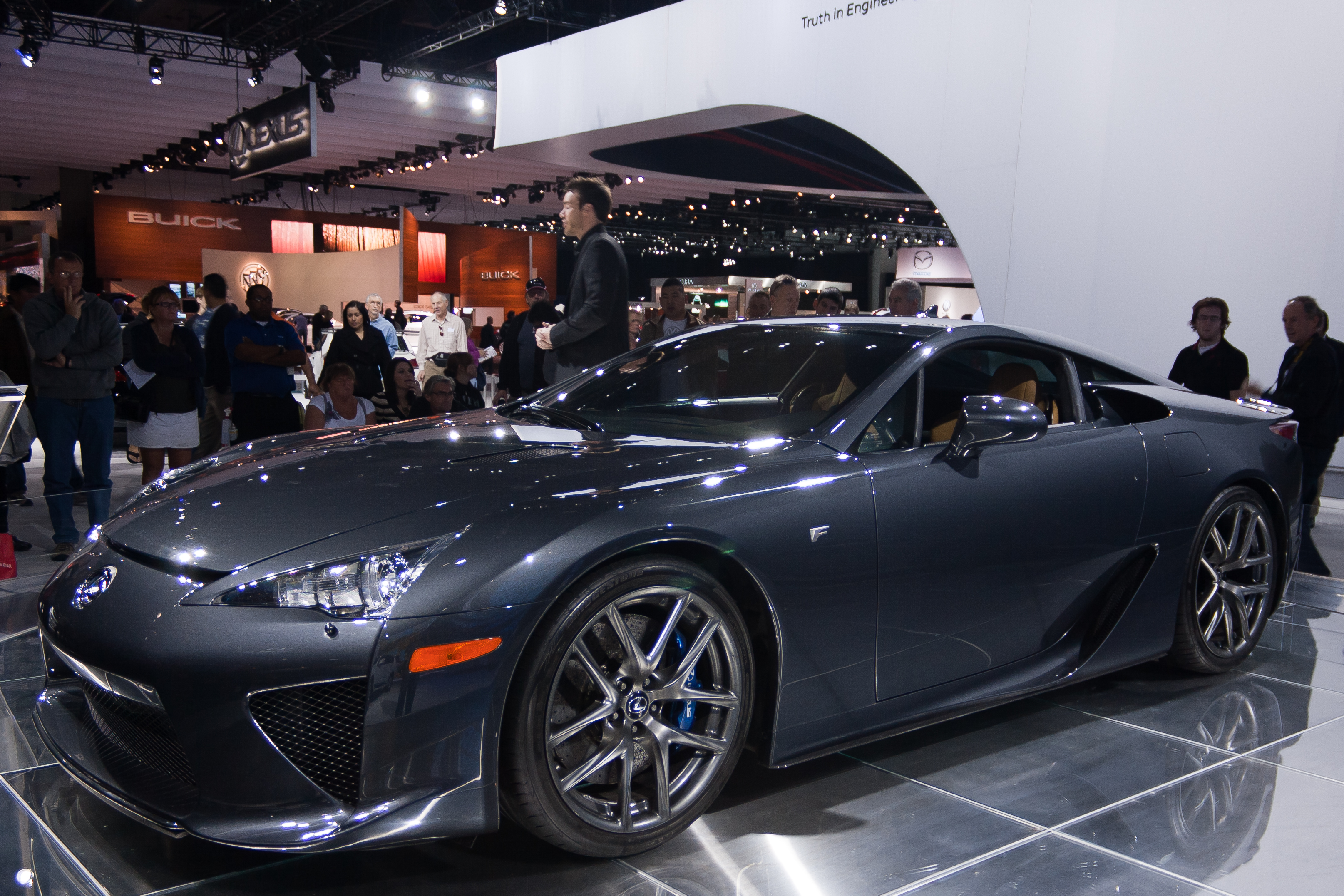
Lexus LFA
"I think I'm right in saying they became the first million dollar Japanese car or million pound Japanese car that probably similar money to Lexus LFA's. I would want to say."
The Lexus LFA is a special, high-performance sports car made by Lexus. It’s known for being very expensive and limited, which is why it gets mentioned in car history and value discussions. The podcast is mainly pointing out how it reached extremely high pricing for a Japanese car.
The Lexus LFA is a high-performance sports car produced by Lexus, notable for being a rare, halo model. The podcast highlights its price level—describing it as reaching “million dollar” territory for a Japanese car—showing why it stands out historically and financially. It’s often discussed as a benchmark for what Lexus was willing to build when chasing top-tier performance and exclusivity.

E type
"Well I don't know because the thing is they came out around the time of the E type [1623.18s]"
The “E-Type” is the Jaguar E-Type, a famous classic British sports car. They’re using it as a historical comparison for when the Toyota 2000 GT came out.
The “E type” refers to the Jaguar E-Type, one of the most iconic British sports cars ever made. The hosts mention it as a timing reference for when the Toyota 2000 GT arrived, highlighting how these Japanese cars were emerging around the same era as legendary European supercars.
triple carbs
"I bet you a 2000 GT engine on triple carbs with the 5 speed gearbox."
“Triple carbs” means the engine uses three carburetors to mix fuel and air. More carburetors can help a performance engine feel sharper and breathe better at higher revs.
“Triple carbs” means the engine uses three carburetors to meter fuel and air into the cylinders. On a performance engine like the Toyota 2000GT, multiple carburetors can improve throttle response and high-RPM breathing compared with a single carb setup.
5-speed gearbox
"I bet you a 2000 GT engine on triple carbs with the 5 speed gearbox."
A “5-speed gearbox” is a manual transmission with five gears. It can make the car easier to drive fast because you can pick the right gear for the engine’s sweet spot.
A “5-speed gearbox” is a manual transmission with five forward gears. More gears can help keep the engine in its best power band across different speeds, which matters for how a car feels when accelerating and cruising.
cubes
"There ain't no substitute for cubes if you're going against a 3.8 litre Jag."
“Cubes” is slang for engine size. The saying means bigger engines usually have an easier time making power and feeling smooth.
In car talk, “cubes” is slang for engine displacement (the engine’s volume, often in cubic inches in older American usage). The phrase “no substitute for cubes” is the idea that bigger displacement generally provides more effortless power and smoothness.
two litre six
"Two litre. [1652.0s] I mean I bet it's lovely that all two litre six was developed with Yamaha."
“Two litre six” means an engine that’s about 2.0 liters and has six cylinders in a straight line. Six-cylinder engines are often praised for being smooth.
“Two litre six” refers to a 2.0-liter inline-six engine. Inline-six engines are known for smoothness because of their firing order and inherent balance, and the displacement is often a key part of how enthusiasts compare performance.
Yamaha
"I mean I bet it's lovely that all two litre six was developed with Yamaha. [1658.8s] There is one on car and classic."
Yamaha is a well-known Japanese company, famous for motorcycles. Here it’s mentioned because they helped develop the engine design being discussed.
Yamaha is a Japanese brand best known for motorcycles and engines, and it’s also associated with engineering work on certain performance powertrains. In this segment, Yamaha is credited with development of the “two litre six,” tying the engine’s pedigree to a specialist.
price on application
"How much? [1662.5s] It says price on application. [1664.6s] It's an offline auction."
“Price on application” means the price isn’t shown publicly. You have to ask the seller or auction house to find out what it costs.
“Price on application” means the seller doesn’t list a specific price publicly; you must contact them to get the number. For rare cars, this often reflects negotiation, auction timing, or the need to confirm details before quoting.
offline auction
"It says price on application. [1664.6s] It's an offline auction. [1665.7s] Oh for God's sake."
An “offline auction” means the bidding happens in person or not just on a website. You usually have to do more direct checking before you bid.
An “offline auction” is a sale conducted in person or through non-web channels rather than purely online bidding. That can affect how you verify the car’s condition, paperwork, and provenance before bidding.
337 were made
"Yeah they didn't make many. [1680.3s] 337 were made. [1681.9s] Was it?"
“337 were made” means only a few of that car were built. When a car is that rare, it usually becomes more valuable to collectors.
“337 were made” is a production-count claim used to establish rarity. For collectors, low build numbers can strongly influence desirability and pricing, especially for historically significant models like the 2000GT.
Joint development
"Okay well. Joint development with Toyota and Yamaha. You are right."
“Joint development” just means two companies team up to work on the same project. Here, Toyota and Yamaha are working together on an engine idea or design.
“Joint development” means two companies collaborate to design and build something together instead of working independently. In this context, it’s describing Toyota and Yamaha working together on an engine or related technology.

Ford Puma
"...that and then that lovely little 1.74 in the Ford Puma. Oh yeah."
The Ford Puma is a smaller crossover-type car meant for everyday driving. The podcast mentions a “1.74,” which is likely referring to the engine size of a particular version. They’re basically highlighting a specific, smaller setup of the car.
The Ford Puma is a compact crossover-style car, typically positioned for efficient everyday driving and easy city use. The podcast calls out a “lovely little 1.74,” which likely refers to an engine size or variant being discussed. It’s the sort of car people mention when talking about small, practical performance or specific engine options.
V8
"There was a Yamaha Colab and then that V8 the Volvo used for a bit was a Yamaha effort as well."
A “V8” is an engine with eight cylinders. The cylinders are arranged in a V shape, which is part of why V8s often feel smooth and sound distinctive.
A “V8” is an engine with eight cylinders arranged in a V shape. The layout affects how the engine balances, how it sounds, and how smooth it can feel compared with other cylinder counts.
4.4
"Try to remember if I've ever driven anything with that engine in it. 4.4 wasn't it but quite compact. 4.4 yes. Yes. Which 4.4 of course is twice 2.2 so it's quite insane."
“4.4” is the engine size, measured in liters. Bigger numbers usually mean more total engine capacity, and the host is doing quick math to relate it to a smaller 2.2-liter figure.
“4.4” here refers to engine displacement—4.4 liters total. The host connects it to “2.2” by saying 4.4 is twice 2.2, which is a quick way of reasoning about how the cylinder count or configuration scales.
torsionally stiff
"If it didn't do we thought maybe not incredibly torsionally stiff but never mind."
It means the car’s body doesn’t twist much when you drive over bumps or corner hard. If you remove the roof, the car can become less rigid, so builders often add extra metal to keep it sturdy.
“Torsionally stiff” describes how resistant a car’s body/chassis is to twisting under load. When a car is “top chopped” (like converting to a convertible), removing roof structure can reduce torsional stiffness unless reinforcement is added.

Pagani Codalunga
"Fool how dare you think you can beat me in my Codalunga speedster. Oh. Pagani Codalunga."
Pagani is a boutique supercar maker, and the Codalunga is one of their very special, limited cars. It’s the kind of car people talk about because it’s rare and built for serious speed and drama.
The Pagani Codalunga is a rare, track-focused Pagani supercar variant known for its long, low, aerodynamic shape and extreme performance orientation. In this segment, it’s brought up as a “speedster” character in a playful comparison, but it’s still a real Pagani model name that enthusiasts recognize.
limited production
"I like the fact that it just says limited production of five all sold with prices starting from. Why doesn't it just say with prices starting from not going to tell you because all sold?"
Limited production means the manufacturer builds only a small number of units, usually to keep exclusivity and manage demand. For supercars, it often drives higher prices and makes the car harder to buy new.

Zonda
"Except if we look at Pagani's past and the fact that they seemingly couldn't stop making the Zonda. In fact they may still be making it today."
The Pagani Zonda is one of Pagani’s most famous supercars. The hosts are saying Pagani kept building it for a long time because it was still in demand.
The Pagani Zonda is the brand’s iconic early supercar, famous for its dramatic styling and high-performance engineering. The hosts mention it as a model Pagani “couldn’t stop making,” highlighting its long production life and enduring demand.
Pagani's past
"Except if we look at Pagani's past and the fact that they seemingly couldn't stop making the Zonda. In fact they may still be making it today."
They’re talking about Pagani’s history—how the company kept making the Zonda for a long time. The idea is that if people still want a car badly enough, the company may keep it going.
The hosts are referencing Pagani’s history of continuing to build the Zonda for a long time, even as newer models emerged. That’s a common supercar-industry pattern: a flagship model can stay in production because demand remains strong.
Horatio Pagani
"Did you know that it's because Horatio is a huge admirer of spiders? ... [2085.6s] That's what Horatio does with all of his products. ... [2112.2s] He's a cool guy Horatio Pagani but his name particularly when we've been saying it quite a bit just in this section of the podcast."
Horacio Pagani is the person who started Pagani and helps design and build their supercars. In this bit, they compare his attention to detail to a spider carefully repairing its web.
Horacio Pagani is the founder and creative force behind Pagani, the Italian supercar maker. The hosts use him as the “spider” analogy—suggesting he personally oversees details and keeps Pagani cars in top condition.
cobweb
"And the reason for that is because if you walk past a spider's cobweb and you just bat it away with your hand. [2076.7s] You know the next morning it's back and perfect."
They’re using “cobweb” as a metaphor. The point is that if you knock a spider’s web down, the spider can rebuild it so it looks perfect again the next day.
“Cobweb” here is used as a metaphor for a spider’s web—something delicate that can be knocked down but is quickly rebuilt. The hosts use it to explain the “repair overnight” idea behind their spider analogy.
radiator problem
"I'm not a prepper, but I took a spare battery, a jump pack, and I took three gallons of water just in case I had a radiator problem."
The radiator helps keep the engine cool by moving hot coolant through the car. If something goes wrong there, the engine can overheat, which can be serious on a long trip.
The radiator is part of the car’s cooling system that removes heat from the engine coolant. A radiator problem can lead to overheating, which is why it’s a common “worst case” scenario on long drives.
jump pack
"I'm not a prepper, but I took a spare battery, a jump pack, and I took three gallons of water just in case I had a radiator problem."
A jump pack is a small portable battery you can use to start your car if the battery is dead. You hook it up to the battery terminals and it gives the engine enough power to crank.
A jump pack is a portable battery used to start a car with a dead or weak battery. Instead of relying on another vehicle’s battery, you connect the jump pack to the car’s battery terminals to provide a quick burst of power.
spare gallon can of petrol
"And I also, as we brimmed it, I took a spare gallon can of petrol because I usually do brim the gallon can put it in the boot."
A spare petrol can is just an emergency container of gas. People carry it on trips in case they run low, but you have to be careful it doesn’t leak or smell up the car.
A spare fuel can is an emergency container for gasoline (petrol) in case you run out or need to top up. Storing it in the boot is a practical long-distance habit, but it also increases the importance of ventilation and spill prevention.
overfilled it
"It's like, what, what's happened if I like overfilled it or something? [2473.2s] It's a bit odd."
If you put too much fuel in, it can spill or leak through the tank’s vent system. That can cause a strong petrol smell and wet messes where you wouldn’t expect them.
Overfilling a fuel tank can cause fuel to enter the tank’s venting system or overflow into areas that aren’t meant to hold liquid fuel. That can lead to strong petrol fumes and wet spots in the surrounding storage areas, like the boot carpeting described here.
fuel lines
"I checked all the fuel lines in the engine because I was quite paranoid. [2497.9s] Got down there, still stank of petrol. [2500.7s] And we were distracted because we, we were, we had, we were the guests of Gunther Works."
Fuel lines are the hoses or metal pipes that carry gasoline from the tank to the engine. If they leak, you can smell petrol and create a fire risk, so checking them is a sensible troubleshooting step. In this segment, the host checks the fuel lines because the car still smells like fuel.
pinhole
"The fairly new spare gallon can that I put in the back had a pinhole in the bottom of it. [2522.1s] And it was constantly leaking. [2524.5s] That's not good."
A pinhole is a tiny hole that can leak fuel even when the container looks intact. Because it’s small, the leak can be easy to miss at first, but it can still create a persistent petrol smell and potentially dangerous fumes. The host uses it to explain why the spare fuel can was “constantly leaking.”
battery storage
"Rich, just recently I've been looking into battery storage from Heatable. Just recently I've been claiming to own a bear. I've already got an EV tariff at home so I can charge a battery overnight when electricity is as its cheapest."
Battery storage is a home battery that saves electricity for later. Instead of using power from the grid all day, you can charge the battery overnight and use it during the day when electricity costs more.
Battery storage is an energy system that stores electricity (usually from the grid and/or solar) in a battery for later use. In a home setup, it lets you shift when you use electricity—using stored energy during the day instead of drawing from the grid at expensive times.
Heatable
"Rich, just recently I've been looking into battery storage from Heatable. Just recently I've been claiming to own a bear. I've already got an EV tariff at home so I can charge a battery overnight when electricity is as its cheapest."
Heatable is the company the host is talking about. They sell home energy upgrades like batteries, solar, and EV charging so you can lower your energy bills.
Heatable is the company being discussed for home energy products like battery storage, solar, and EV charging. The host frames it as an easy, quote-driven way to install energy upgrades that can reduce electricity costs.
EV Tariff
"I've already got an EV tariff at home so I can charge a battery overnight when electricity is as its cheapest. Then use that stored energy during the day instead of paying peak rates. It's really like having a big dog."
An EV tariff is an electricity pricing plan that usually makes charging cheaper at certain times. It helps you charge your car (or a home battery) when electricity is less expensive.
An EV tariff is a special electricity pricing plan for charging electric vehicles, typically with cheaper rates during off-peak hours. The idea is to encourage charging when demand is lower, which can also make home battery charging cheaper.
peak rate
"Then use that stored energy during the day instead of paying peak rates. It's really like having a big dog. Battery storage can feel like a big investment upfront, but Heatable offered 0% finance options to make it more affordable while you start to benefit from the savings."
Peak rates are the times when electricity costs more. The speaker is saying they use their stored energy during those expensive hours instead of buying electricity at the higher price.
Peak rates are higher electricity prices charged during times of highest demand (often daytime/evening). Pairing battery storage with an EV tariff can reduce how much you rely on the grid during these expensive periods.
0% finance options
"Battery storage can feel like a big investment upfront, but Heatable offered 0% finance options to make it more affordable while you start to benefit from the savings. It mostly just eats salmon."
0% finance options mean you can pay for the system over time without extra interest. That can make the initial cost feel less painful.
0% finance options are payment plans where the lender charges no interest, reducing the total cost of borrowing for a purchase. For energy upgrades like home battery systems, this can make the upfront price easier to manage.
official spy photos
"Jaguar released some sort of official spy photos of a prototype and then released a concept and really sucked the wind out of my sails."
Spy photos are pictures of a car prototype taken while it’s out testing. If they’re “official,” the company itself released them to tease the new model.
“Spy photos” are pictures taken of a car prototype while it’s being tested, often showing the body shape and disguise details. When the photos are described as “official,” it means the automaker released them as part of the marketing/teaser process rather than an independent leak.
Gaiden
"I've been up to Gaiden and actually driven briefly while the prototypes... last week I actually went up to their Gaiden R&D place and they got three test cars."
Gaiden is referenced as the location the speaker visited to drive Jaguar prototypes and to see how the car is camouflaged. In this context it functions as a named facility/area tied to Jaguar’s development and testing activities.
camouflage this car
"the Jag people went, do you want to come up and talk about how we camouflage this car because it's actually more complicated than you might think."
Camouflage means hiding what the final car will really look like while it’s being tested. They use wraps and other tricks so people can’t easily tell the real design.
“Camouflage” refers to disguising a prototype’s true shape using wraps, panels, and visual tricks so competitors and the public can’t easily judge the final design. The speaker notes it’s more complicated than it sounds, implying engineering and aerodynamics can be affected by the disguise.
test cars
"last week I actually went up to their Gaiden R&D place and they got three test cars... the one that was going up the hill."
Test cars are early versions of a vehicle used for development work. They’re used to check how the car behaves before it’s finalized.
“Test cars” are prototype or pre-production vehicles used for development validation—driving, durability, and performance testing—before the final production spec is locked. The speaker mentions Jaguar had multiple test cars with different setups.
1000 horsepower
"I saw some people online going, it was really quick. It was 1000 horsepower."
Horsepower is a way to describe how much power the car makes. Here, people online were claiming the prototype had around 1,000 horsepower.
“Horsepower” is a measure of engine power output. In this segment it’s mentioned as an online claim about the prototype’s performance level, which the speaker later contextualizes with how the car behaves under load.
suspension
"It's like a bloody oil tank because it, you know, it moves around quite a lot on a suspension... having driven it, that is part of what actually made it quite nice is that they have engineered into it a certain amount of movement."
Suspension is what helps the car absorb bumps and stay controlled. It also affects how the car’s front and rear move when you accelerate.
Suspension is the system that connects the wheels to the car and controls how the body moves over bumps and during acceleration/braking. The speaker describes the prototype as moving around on its suspension, and later explains how the nose rises when the car is “clogged” on the straight.
nose rears up
"But when you clog it on the straight, the nose rears up like a speedboat just a little bit."
“Nose rears up” means the front of the car lifts up. It can happen when you accelerate hard and the weight shifts.
“Nose rears up” describes pitch movement where the front of the car lifts under strong acceleration or load transfer. The speaker compares it to a speedboat, implying noticeable front-end rise when the car is loaded on the straight.
four wheel steering
"It's got, you know, high voltage electrics with all sorts of other trickery and four wheel steering and things like that."
Most cars steer with the front wheels only. Four-wheel steering lets the back wheels help too, which can make turning easier and the car feel more stable at speed.
Four-wheel steering is a system where not only the front wheels steer, but the rear wheels also steer. That can improve low-speed maneuverability and high-speed stability, making the car feel more agile.
high voltage electronics
"It's on their suspension. [2776.0s] It's got, you know, high voltage electrics with all sorts of other trickery and four wheel steering and things like that."
This means the car is using a high-voltage electrical system, like the battery and electronics that run an electric motor. It’s different from normal 12-volt car wiring and needs special safety systems.
High voltage electrics refers to the high-voltage components used in an electric or electrified powertrain, such as the battery and inverter system. These systems enable electric drive and require specialized safety and control electronics.
prototype
"So I saw that car before it went off to Goodwin. [2797.1s] But then they had a sort of mid-stage prototype, which had got the camo that was in that official, those, you know, the official photos that came out,"
A prototype is an early build of a car. It’s used to test ideas and make sure everything fits and works before the final version is ready.
A prototype is an early version of a car built to test design, packaging, and engineering solutions before production. In this context, the speaker contrasts different prototype stages and how complex the final design is compared to what photos suggest.
mule
"Normally you'd do a lot of development testing with a mule, so you'd get, you know, whatever it would be, [2832.1s] get an old XJ or something and graft the under parts of the new car within the body shell of the old car."
A mule is basically a test car. Engineers use an existing car as a stand-in so they can try new parts and setups without waiting for the final prototype.
A development mule is a test vehicle built to evaluate new parts or systems before the final car exists. Engineers often combine an older car’s body and underpinnings with newer components to reduce risk and speed up learning.
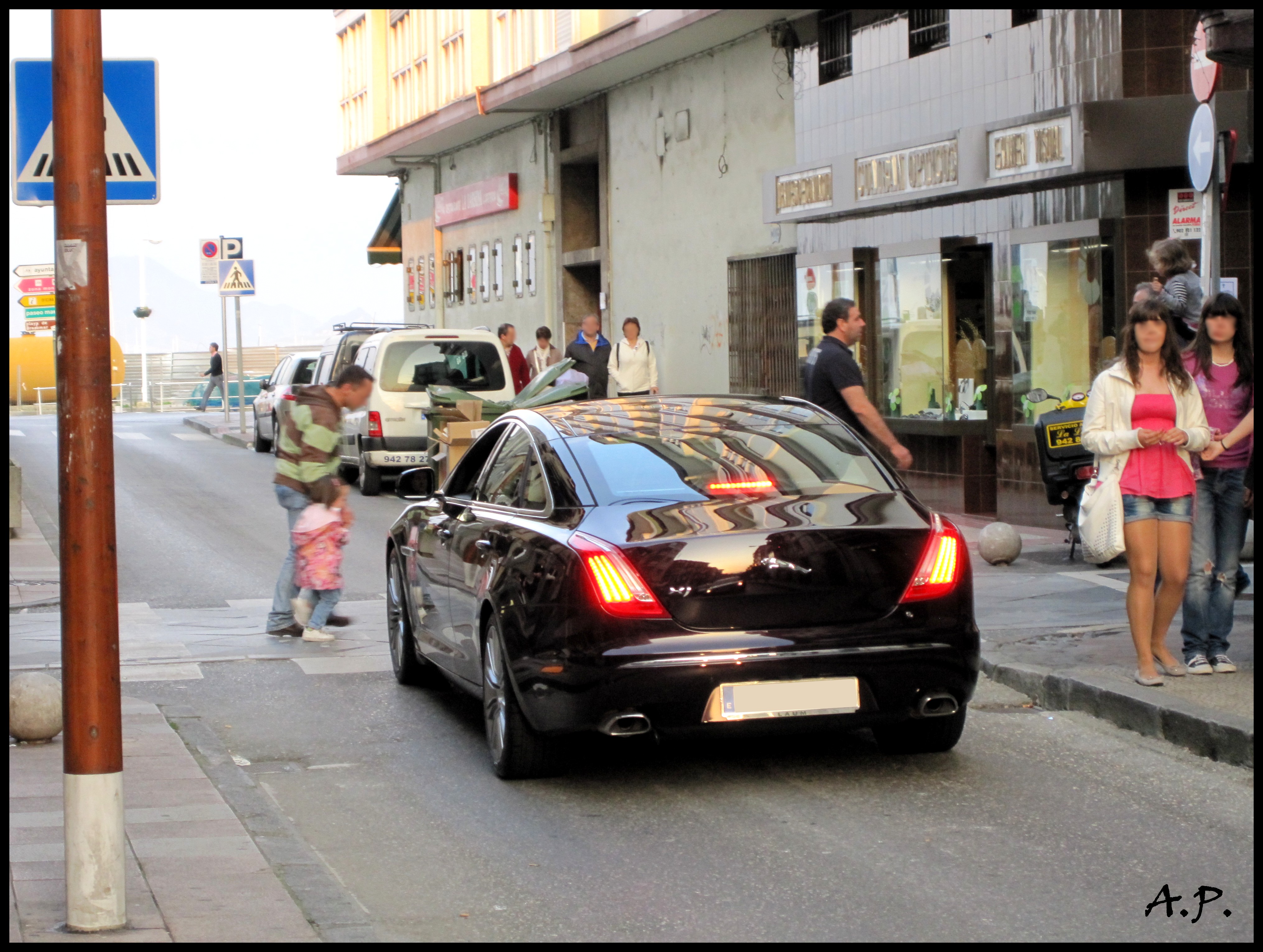
XJ
"Normally you'd do a lot of development testing with a mule, so you'd get, you know, whatever it would be, [2832.1s] get an old XJ or something and graft the under parts of the new car within the body shell of the old car."
They’re talking about using an older Jaguar XJ as a “donor” test car. The goal is to mount new parts onto an existing body so engineers can test them sooner.
The Jaguar XJ is being referenced as an example of an older donor car used for development testing. In prototype work, engineers might graft the new car’s underbody components into an older XJ body shell to create a test mule.
crash tested
"So those early, they did a batch of nine fully hand-built cars and some were crash tested. [2881.3s] The ones that were doing development on test tracks, they had this whole thing."
Crash testing is when engineers deliberately crash a prototype in a controlled way. It helps them understand how the car behaves in an accident and whether the structure is safe.
Crash testing is controlled testing where a vehicle or prototype is subjected to impact conditions to evaluate safety performance. Here, some of the early hand-built cars were crash tested as part of development before the design was finalized.
blown molded plastic
"They had this whole, it's blown molded plastic. [2892.6s] It's not fiberglass. [2894.1s] These two panels, one on either side that create this estate profile and then an infill panel in the middle."
Blown molded plastic is a way of making lightweight plastic parts by shaping heated plastic inside a mold. They’re saying the disguise panels are made this way, not out of fiberglass.
Blown molded plastic is a manufacturing process where plastic is formed by inflating it inside a mold, producing lightweight panels. The speaker contrasts it with fiberglass, implying these early “estate-looking” disguise panels are plastic rather than traditional composite bodywork.
CFD modeling
"and it's all bolted on with anchor points drilled through the bodywork so that because they do CFD modeling with the panels on the car, [2912.9s] all in the, you know, in the computer to make sure it won't blow off."
CFD modeling is a computer simulation of how air moves around the car. They use it to check that the extra panels they add for disguise won’t fly off while the car is being tested.
CFD modeling means using computer simulations to predict how air flows around a car body. In this context, they model the car with the camouflage panels installed to ensure the added pieces stay attached and don’t come loose at speed.
anchor point
"And it's all bolted on with anchor points drilled through the bodywork so that because they do CFD modeling with the panels on the car, [2912.9s] all in the, you know, in the computer to make sure it won't blow off."
Anchor points are strong spots on the car body where you can bolt something down securely. Here, they’re used to attach the disguise panels firmly so they don’t fall off during testing.
Anchor points are fixed attachment locations used to secure parts to the underlying body structure. In this case, the camouflage panels are bolted on through drilled anchor points so the added pieces can withstand testing loads without coming loose.
camouflage just
"So it's like actual engineering has to go on just to do this bloody camouflage just so that someone, you know, doesn't get a cheeky photo of the car [2925.7s] and is able to tell the shape because at this point the shape was a total surprise."
They’re talking about hiding the real design during testing. The goal is to make it harder for people to figure out what the car actually looks like from spy photos.
This refers to the engineering effort spent on disguise so the car’s true shape can’t be easily identified in photos. The speaker describes using physical panels and wrap to obscure the design while development is still secret.
VAT
"But if you've been them, you know, you can then claim the VAT back and stuff. So it's like, they just get thrown away."
VAT is a tax added to purchases. Sometimes businesses can get some of it back, depending on how the vehicle or project is set up.
VAT (Value-Added Tax) is a consumption tax charged on goods and services in many countries, including the UK. Businesses involved in certain activities may be able to reclaim VAT, which is why the speaker mentions “claim the VAT back.”
useful life
"He said that we got quite attached to this car. So when it had come to the end of its useful life, we tucked it away somewhere."
It just means how long the car is expected to be worth using for testing. After that, the team stops using it as a test car and may store it or keep it as a museum piece.
In automotive development, “useful life” is the period a test vehicle is expected to remain productive and safe for its intended role. After that window, teams often retire the car from active testing and either store it, sell it, or preserve it.
fleet list
"And the auditors were emailing going, I can't help noticing that the PT-101 is still on your fleet list. Why is that?"
A “fleet list” is basically the company’s official list of cars they own or manage. Auditors look at it to make sure the vehicles are accounted for correctly.
A “fleet list” is the official roster of vehicles a company tracks for operational, financial, and compliance purposes. In testing programs, keeping an old prototype on the fleet list can trigger questions from auditors.
PT-101
"And the auditors were emailing going, I can't help noticing that the PT-101 is still on your fleet list. Why is that?"
PT-101 is likely a project or test-car code name. It helps the team track a specific prototype within their testing and paperwork.
PT-101 sounds like an internal prototype/test vehicle identifier used by an engineering team. It’s referenced as being on a company fleet list, implying it’s part of a structured testing program rather than a customer car.
Gayden
"So it'll be in the Museum at Gayden. It'll be on display in its camo."
They’re saying the car will end up at a museum location called “Gayden.” It’s where people can go see it.
“Gayden” is mentioned as the location where the preserved vehicle will be displayed. It’s presented as a museum setting, tying into the idea of long-term preservation of a test/prototype car.

Ford Falcon
"But it's mega. It's just like the Millennium Falcon. It's this brilliantly, they were pointing out th..."
The Ford Falcon is a Ford car model name that has been used for different versions over time. In the podcast, they’re describing it as big and memorable, comparing it to the Millennium Falcon. The point is that it’s a standout-looking car.
The Ford Falcon is a car name used by Ford for a range of models over the years, commonly associated with large, traditional body styles. In the podcast, it’s described as “mega” and compared to the Millennium Falcon, emphasizing its standout presence and character. That kind of reference usually comes up when discussing iconic or memorable vehicles rather than just specs.
winter testing on frozen lakes
"It's just like the Millennium Falcon. It's this brilliantly, they were pointing out the bits where it had various accidents with crash barriers and spun off during winter testing on frozen lakes and stuff like that."
Winter testing on frozen lakes is a specialized proving method where cars are evaluated on low-grip surfaces. Frozen ice allows engineers to study traction limits, stability control behavior, and handling in conditions that would be hard to reproduce safely on normal roads.
crash barriers
"It's this brilliantly, they were pointing out the bits where it had various accidents with crash barriers and spun off during winter testing on frozen lakes and stuff like that."
Crash barriers are safety walls used at test tracks. They’re there to protect people and equipment when a car hits something during testing.
Crash barriers are engineered safety structures designed to absorb impact and reduce the severity of collisions during testing. In track or proving-ground work, they’re used to contain vehicles when they lose control, especially during high-risk maneuvers.
pre-prod cars
"It still feels like the car we know now as engineers working on the very late stage prototypes of pre-prod cars."
Pre-prod cars are early versions of a new model made for testing. They’re not fully “finished,” so some systems might not work perfectly yet. That’s normal during development.
Pre-production (pre-prod) cars are early builds made to validate design and engineering before full-scale production. They often have incomplete systems or calibration differences, which is why the speaker notes the HVAC and other functions may not behave properly.
powertrain
"Because it was mainly powertrain, the aircon and stuff didn't really work properly."
The powertrain is the “stuff that makes the car move.” It includes the engine or electric motor and the parts that send power to the wheels. If it’s not working right, the car won’t drive the way it should.
The powertrain is the set of components that create and deliver driving force—typically the engine (or motor), transmission, driveshaft, differential, and related controls. In prototype testing, powertrain issues are often the most important because they directly affect how the car moves.
HVAC systems
"Apparently, because obviously it's all digital, modern HVAC systems are really sophisticated and sort of moisture sensors and all sorts."
HVAC systems are the car’s heating and air-conditioning controls. They manage things like temperature and airflow inside the cabin. On early prototypes, the system can act weird if it hasn’t been tuned yet.
HVAC systems are the heating, ventilation, and air-conditioning systems that control cabin climate. The speaker highlights that modern HVAC uses sensors and control software, which can be sophisticated—but prototypes may not be calibrated, leading to unstable temperature behavior.
moisture sensors
"modern HVAC systems are really sophisticated and sort of moisture sensors and all sorts."
Moisture sensors detect how humid the air is. The climate system uses that info to decide how hard to cool or dehumidify. If the prototype isn’t calibrated, it can overcorrect instead of fine-tuning.
Moisture sensors measure humidity or moisture levels in the cabin or air stream so the HVAC controller can adjust dehumidification and airflow. This helps keep temperature and comfort stable, but if prototype calibration is off, the system may not respond smoothly.
target temperature
"So they were saying that some of those prototypes, they just had a target temperature, which was like 21 degrees or something."
A target temperature is the “desired” cabin temperature the climate system is trying to reach. If the prototype control isn’t tuned, it may not gently adjust—it may just blast heat or cooling all the time.
A target temperature is the setpoint the HVAC controller tries to maintain. The speaker describes early prototypes that used a single setpoint without nuance, so the system would drive to maximum heating or cooling whenever the cabin deviated from that number.
electric seat control
"once Alex Hall was doing brake testing and the strap for the seat cover was hooked around the electric seat control. So when he hit the brakes, it tugged the opposite way somehow on the seat control."
Electric seat controls are the buttons/switches that move a power-adjustable seat. If something like a cover strap gets caught on the mechanism, it can make the seat move when you don’t want it to.
An electric seat control is the switch/module that moves power seats using electric motors. If a seat cover strap gets hooked around that control, it can interfere with seat movement during driving or testing.
G-forces
"So when he hit the brakes, it tugged the opposite way somehow on the seat control. So as the G-forces were throwing it forward, the seat was moving backwards away from the steering wheel and pedals."
G-forces are a way to describe how hard the car is accelerating or slowing down, compared to normal gravity. During strong braking, the forces can be big enough to make things move or tug in unexpected ways.
G-forces describe acceleration forces measured in multiples of Earth’s gravity (1G). During hard braking, the car experiences high G-loads, which can shift loads and cause unintended movement of parts or attachments.
John Darlington
"And the other guy, John Darlington, who is the chief engineer of the whole project, [3235.3s] he said, you know, we understand there's no point us developing a car if no one then hears about it."
John Darlington is the top engineer on the project. That usually means he helps make sure all the engineering work comes together to meet the car’s targets.
John Darlington is described as the chief engineer for the project. In car development, a chief engineer typically coordinates engineering decisions across powertrain, chassis, and packaging to hit the design goals.
marketing and sales
"So we get it that marketing PR sales all want the big ta-da moment. [3246.9s] So we live with this, this sort of charade of making cars look like something they're not."
This is talking about the people who handle marketing, press, and selling the car. They often want a dramatic reveal that grabs attention.
“Marketing PR sales” refers to the combined influence of marketing, public relations, and sales teams. In automotive launches, these groups often push for a big “ta-da” moment, which can affect how the car is presented to the public.
wraps
"So even the later phase ones, the wrap is just the start underneath the wrap. [3258.0s] You can poke at all these bits and they're squishy because there's bits of foam."
A “wrap” here means a covering put on a prototype car. It helps hide the real shape so people can’t easily tell what the final design will look like.
A “wrap” in this context is the camouflage-style covering used on test cars. It’s meant to hide the car’s true body shape and panel lines while engineers evaluate fit, aerodynamics, and packaging.
foam
"You can poke at all these bits and they're squishy because there's bits of foam. [3262.6s] And they sit down with design and go, right, what are the key bits we need to hide?"
The “foam” is temporary padding on a test car. It’s used to change the car’s shape just enough to hide what the final body will look like.
Here, “foam” refers to added, squishy padding used on prototype cars under the camouflage wrap. Engineers use it to create temporary contours that disguise the final panel geometry and body lines.
Lord Charlie March's Hill
"And I think that Jag, when it was doing the hot lap up, up Lord Charlie March's Hill, it is really reminiscent of the Mark 789 Jags, [3324.6s] which are the lesser known, lesser talked about these days, lesser remembered predecessors of the XJ."
This is a hill-climb location connected to Lord Charlie March. They’re talking about a fast run (“hot lap”) up that hill to show off the car.
“Lord Charlie March's Hill” refers to a hill-climb location associated with Lord Charlie March. The segment mentions a “hot lap” up the hill, using it as a stage to showcase how the Jaguar prototype looks and performs.
second hand cars
"Certainly a younger demographic of carenthesiast are now sniffing out second hand Jaguars and talking about Jaguars. I haven't heard more older Jaguars."
“Second hand Jaguars” just means used Jaguars you can buy from someone else. The hosts are saying younger car fans are now paying attention to them.
“Second hand Jaguars” means used Jaguar cars being discussed and shopped by enthusiasts. The hosts are pointing out a shift in who’s buying and talking about Jaguars—especially younger enthusiasts looking at pre-owned examples.

Jaguar Fpace
"You know, we'd probably be sort of approaching like the second generation F-Pace now. And like that F-Pace is a perfectly fine car."
The Jaguar F-Pace is Jaguar’s SUV model. They’re saying that, like the F-Pace, newer versions tend to feel more normal and accepted as the next generation approaches.
The Jaguar F-Pace is Jaguar’s compact luxury SUV, and it’s used here as an example of how a model can settle into acceptance over time. The hosts mention “approaching like the second generation F-Pace,” implying the next major update cycle is where opinions may improve.
Request an Explanation
Heard something you'd like explained? We'll add it to this episode.
Sign in to request explanations for terms you heard.
Want to learn more?
Browse our glossary for plain-English explanations of automotive terms, jargon, and concepts.
Help improve this episode
See something that's not quite right? Our annotations are AI-generated and can sometimes miss the mark. Click the flag icon on any annotation to suggest a correction.