" The System is Stacked...But Not The Way You Think"
About this episode
The host starts with local weather and rain totals before shifting into a blunt critique of how the auto industry treats buyers. He argues that planned obsolescence, weak parts, and a shortage of technicians push people toward shorter ownership cycles and expensive repairs. Personal stories about GM, Cadillac, Toyota, and older vehicles reinforce his case for buying selectively, keeping cars longer, and using consumer choice to push back.
Today's conversation dives into a topic that's been gaining traction online-vehicle quality, long-term reliability, and whether the system is truly working in the consumer's favour.
After hearing from multiple engineers who stepped away from major manufacturers, one phrase stood out: " the system is stacked." Not necessarily through conspiracy, but through design priorities, cost constraints, and business models that don't always align with long- term ownership.
So where does that leave you as a driver?
Do you stay loyal to a product that keeps letting you down...or do you step back, reassess, and make a change?
In this episode, we break down:
1) Why some vehicles struggle with long - term reliability
2) How manufacturers priorities can influence what you experience as an owner.
3) The real cost of constantly cycling through vehicles
4) And why switching brands might be the smartest move you make
If a product consistently doesn't deliver, it may not be about fixing it anymore - it may be about moving on.
Because at the end of the day, your vehicle should work for you....not the other way around.
#CaReliability #AutoIndustry #VehicleOwnership.
Merch Available:: in our online store @ ccbusnet.com order safely online with proceed from goods sold go directly to Total Freedom Addiction Campuses Canada & USA, Helping those ready to receive a New Life.. Thank You Friends❤️ Skippy & Motormouth.
More Episodes and .....project Details & Links are available at Car Connection Business Network.com (ccbusnet.com) you'll find everything on our home page if you'd like to follow the build & Repair work & connect our program partners, click their logo to meet them, Thank You for supporting them👍 Nile Motormouth Jenkins.
Like, Share, Subscribe, Comment your thoughts below, and ring the bell so you don't miss the next rescue project, maintenance tips, and real-world car ownership advice. Thank You Friends, Skippy❤️
Happy Healthy Motoring Friends, Peace Patience Kindness Always, NMJ
E-Mail Anytime: [email protected] or motormouth.jenkins@gmail .com
see you in the next one❤️ Skippy & Motormouth
this system is stacked
"this morning's program I've entitled this system the system is stacked okay now what we're gonna jump into that in just a few moments so hang in there we have our daily weather report coming up this morning"
They’re setting up a theme for the show: “the system is stacked.” It’s basically a promise that the car-related explanation will connect several things together in a surprising way.
The hosts are framing the episode around a theme they call “the system is stacked.” In car terms, that usually points to how multiple parts of a vehicle (or multiple systems around it) interact in a way that isn’t obvious at first glance.
Subaru Uncharted
"...can help us navigate through some of those tough uncharted waters and you need people in those areas of life..."
I can’t identify a specific Subaru model called “Uncharted.” In the podcast, it may be used as a general phrase about dealing with difficult situations, not a particular car. If you can share more context or the exact model name, I can explain that vehicle.
“Subaru Uncharted” doesn’t match a specific, widely recognized Subaru model name. In the podcast context, it sounds like a phrase used metaphorically about navigating “uncharted waters,” rather than a particular vehicle. Because of that, there isn’t a clear car to explain based on the name alone.
pre-owned automobiles
"...thank [643.7s] you to the City Auto Sales and Leasing or Louise Grant doing a great job out [647.6s] there in the Greater Toronto area providing premier pre-owned automobiles [652.8s] low mileage quality vehicles at fair prices..."
Pre-owned automobiles are used cars that have been owned before and are being sold again. The host is saying the dealership focuses on nicer, lower-mileage examples.
Pre-owned automobiles are used vehicles sold by dealers rather than bought new from the manufacturer. The host frames the dealership as offering “premier” pre-owned cars with low mileage and fair pricing.
City Auto Sales and Leasing
"...thank [643.7s] you to the City Auto Sales and Leasing or Louise Grant doing a great job out [647.6s] there in the Greater Toronto area providing premier pre-owned automobiles..."
City Auto Sales and Leasing is a dealership the host is mentioning as a place to look for used cars.
City Auto Sales and Leasing is referenced as a local dealership in the Greater Toronto area. The host credits them with providing pre-owned vehicles.
aftermarket parts
"...get something older that's in great shape [700.5s] keep really good care of it and keep it going with aftermarket parts because you [707.9s] won't need to go to the dealer for the parts..."
Aftermarket parts are replacement parts made by other companies, not the car brand itself. People use them to fix or upgrade cars—often for better availability or cost than dealer parts.
Aftermarket parts are components made by companies other than the original vehicle manufacturer. In the segment, the host suggests using them to keep an older car running without relying on the dealer for every replacement part.
genuine parts
"...there's certain things on certain vehicles that I will buy the genuine [719.1s] parts especially on European cars they don't like aftermarket parts they will [725.8s] bite you when you try to put it on..."
Genuine parts (often called OEM parts) are made by the original manufacturer or its approved suppliers. The host claims they prefer genuine parts on certain vehicles—especially European cars—because fitment or compatibility can be better than with some aftermarket options.
pattern failures
"aftermarket parts development make correction to their pattern failures and produce an aftermarket part with correction already made"
A pattern failure is when the same problem keeps happening again and again. Here, the idea is that aftermarket companies notice the repeating issue and build a fix.
Pattern failures are recurring failure modes that show up repeatedly across many vehicles or over time. The speaker’s point is that if a failure pattern is known, aftermarket developers can design parts to address it.
OEM (original equipment manufacturer)
"made so in other words better than OEM original equipment manufacturer is that the way it's supposed to be"
OEM parts are the factory-made parts that came with the vehicle. The speaker is comparing those to replacement parts from other companies.
OEM stands for original equipment manufacturer, meaning the company that made the vehicle’s original parts. The speaker contrasts OEM parts with aftermarket parts, claiming aftermarket can be “better” when it corrects known issues.
planned obsolescence
"fellas people are waking up to the fact that there is planned obsolescence and I have I'm not just the I'm not just saying it"
Planned obsolescence means the product is designed so it won’t last as long as it could. The goal (according to the theory) is to push you to buy or repair sooner.
Planned obsolescence is the idea that products are designed to wear out or fail on purpose after a certain time or mileage. In cars, the claim is that manufacturers structure parts and systems so owners need repairs or replacements sooner than they otherwise would.
automotive service tech shortage
"that's happening all over North America right now is we have such a shortage of automotive service techs it's gonna be a tough next five years I'll tell you that getting your vehicle fixed"
A service tech shortage means there aren’t enough mechanics available. If that’s true, repairs can take longer and it’s harder to get your car fixed.
An automotive service tech shortage means there aren’t enough trained mechanics to handle the volume of repairs and maintenance. The speaker argues this can make it harder to get vehicles fixed promptly, especially when parts and systems keep needing attention.
Ford Motor Company
"just ask Ford Motor Company they they don't have any techs right now yeah they're they're just a handful short"
Ford Motor Company is the car company mentioned. The speaker says even big automakers are struggling to find enough mechanics to fix cars.
Ford Motor Company is the automaker referenced as lacking enough automotive service technicians. The speaker uses it as an example of how staffing shortages can affect how quickly vehicles get repaired.
deferred maintenance
"vehicles that'll be sitting for probably the next six to twelve months people are making payments on they have no technicians to fix them there you go ... in the meantime you don't have a vehicle but you're making payments"
They’re talking about cars that aren’t being fixed or maintained for a long time. When you wait to do repairs, the problem can grow and become more expensive later.
The hosts are describing a situation where vehicles sit for months and don’t get properly serviced, which can turn small issues into bigger failures. In car terms, that’s essentially deferred maintenance—repairs and upkeep that get postponed until they become harder and more expensive to address.
service backlog
"making payments on they have no technicians to fix them there you go ... the automotive trade is dying ... in the meantime you don't have a vehicle but you're making payments"
They’re saying there aren’t enough mechanics, so repairs can’t happen fast. That causes a pile-up of cars waiting to be fixed.
The segment implies a shortage of technicians and the resulting inability to quickly repair cars, which creates a service backlog. A backlog means repair work piles up, so customers wait longer and some cars may be out of service for extended periods.
lemon problem (repeated defects)
"about 10% of all the vehicles that they make ... are probably going to be problematic right out of the gate one thing after another let me know if you've had one of those vehicles right from the factory where it's been this thing that thing back to this thing"
They’re describing cars that keep having the same problem over and over, even after repairs. That’s often what people mean by a “lemon” car.
The hosts describe a pattern where a portion of new vehicles are problematic right away and keep cycling through issues (“this thing back to this thing”). That’s the classic “lemon” scenario—repeated defects that aren’t resolved with initial repair attempts.
out-of-warranty repair wait (technology-dependent fixes)
"oh we're back to that thing again ... they don't know how to fix it they're waiting for technology to change it but in the meantime you don't have a vehicle"
They’re saying sometimes the shop can’t fix the problem right now and has to wait for a better solution—like new software or updated parts. So the car stays broken longer.
They mention that shops may not know how to fix certain problems and are “waiting for technology to change it,” implying repairs can be delayed until updated parts, software, or diagnostic approaches exist. That’s a common modern issue when fixes depend on new technical information rather than immediate mechanical work.
Toyota
"...people are walking away that have been loyal to the brands and you know Toyota's in this one too they got they've got some issues with vendors creating products for them that are just not working..."
They bring up Toyota as an example of a big car brand that can still get hurt by bad parts from suppliers. If those parts don’t work, the car ends up needing attention.
Toyota is mentioned as a brand that’s also dealing with supplier/vendor issues—parts or systems that “aren’t working” as intended. The point is that even major automakers can be affected when upstream suppliers deliver problematic components.
vendors
"...Toyota's in this one too they got they've got some issues with vendors creating products for them that are just not working..."
They mean outside companies that make parts for the car maker. If those parts are wrong or low quality, the car maker has to deal with the fallout.
“Vendors” here refers to supplier companies that manufacture components for automakers. When vendors provide defective or poorly matched parts, it can lead to widespread quality problems across a brand’s vehicles.
debris metal particles filings
"...Toyota has its own problems they've got debris debris metal particles filings and I've seen it actually just yesterday I"
The speaker is describing contamination—debris such as metal particles, filings, and other particulate matter. In cars, that kind of material often indicates internal wear or a failure that sheds particles into a system (commonly in lubricated components), which can then accelerate damage.
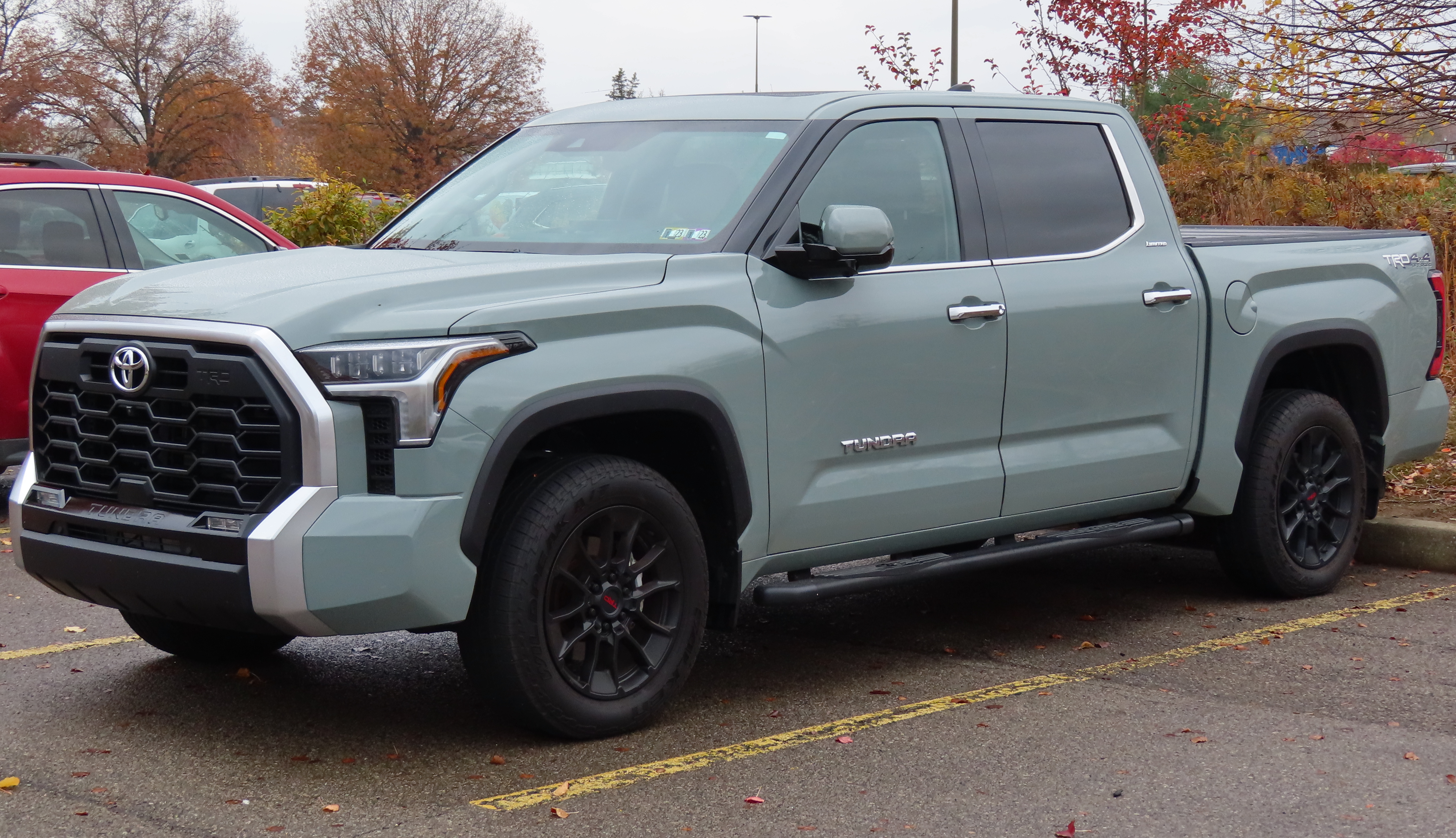
Toyota Tundra
"many many years and he was walking you through his own Tacoma or Tundra that he bought and he finds you know steel shavings in the differential in the gear oil in the rear end"
The Toyota Tundra is a big pickup truck. They mention it as another example of a truck where you might find signs of drivetrain trouble.
The Toyota Tundra is a full-size pickup built for towing and heavy-duty everyday use. The segment uses it alongside the Tacoma to talk about inspecting drivetrain fluids and metal debris.
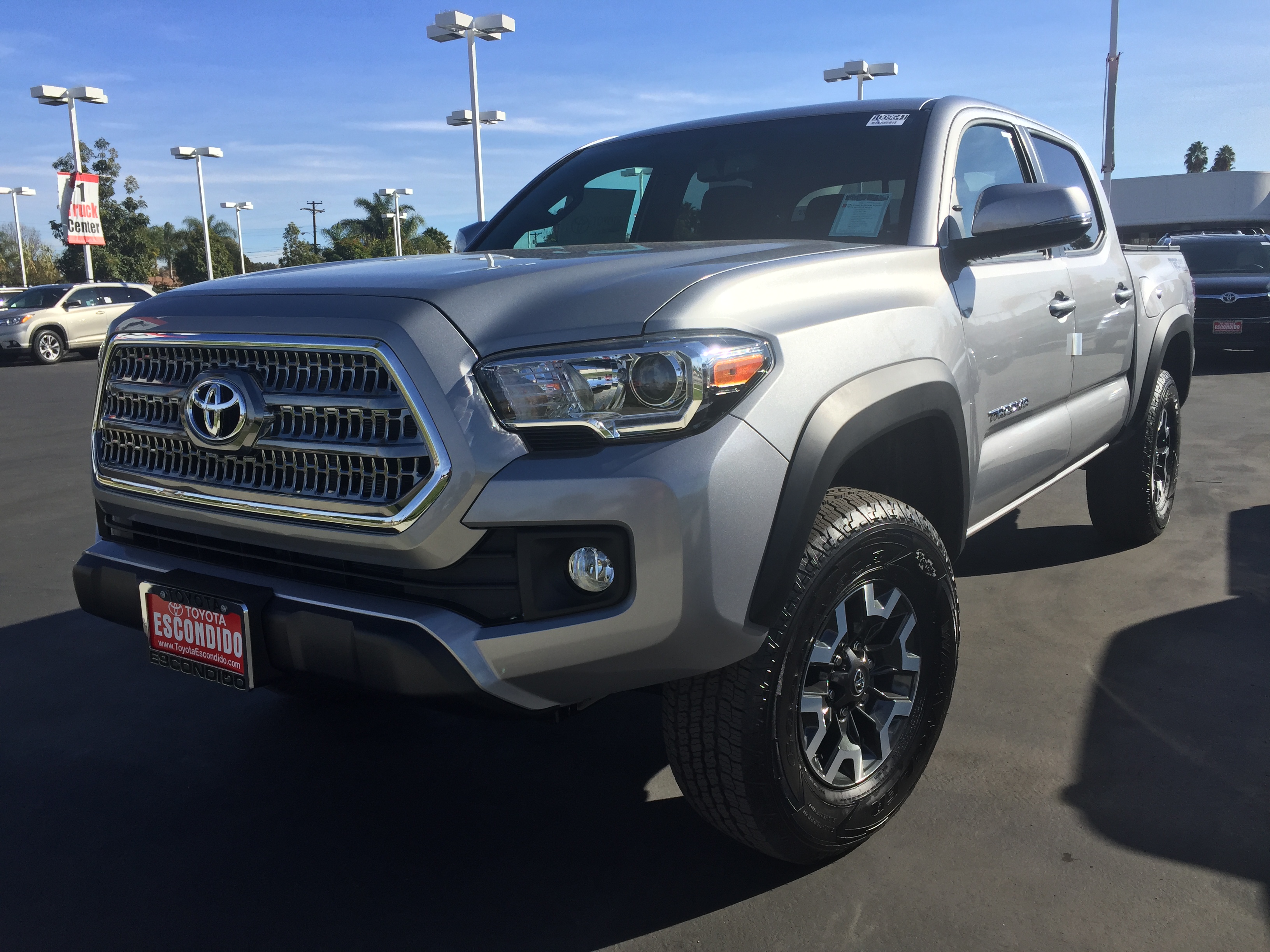
Toyota Tacoma
"many many years and he was walking you through his own Tacoma or Tundra that he bought and he finds you know steel shavings in the differential in the gear oil in the rear end"
The Toyota Tacoma is a popular pickup truck. Here, it’s mentioned as a real example of a truck someone has owned and checked for problems.
The Toyota Tacoma is a midsize pickup known for durability and widespread use as a work truck. In this segment, it’s referenced as an example of a vehicle a Toyota technician/enthusiast personally owns and inspects.
differential
"he finds you know steel shavings in the differential in the gear oil in the rear end you can if he hadn't found that that's gonna chew up definitely and cause problems in the differential housing"
The differential is part of the drivetrain that helps the wheels turn at different speeds, especially in corners. If you see metal bits in the fluid, it can mean the inside is wearing out and could lead to bigger damage.
A differential is the drivetrain component that lets the left and right wheels rotate at different speeds while turning. Metal shavings in the differential’s fluid can indicate internal wear, which can escalate into housing damage and expensive repairs.
gear oil in the rear end
"steel shavings in the differential in the gear oil in the rear end you can if he hadn't found that that's gonna chew up definitely and cause problems in the differential housing"
Gear oil is the fluid that lubricates the rear drivetrain parts. If it has metal shavings, that usually means something inside is wearing badly and needs attention.
Gear oil is the lubricant used in the rear axle/differential to reduce friction and carry away heat. If the gear oil contains metal shavings, it’s a strong sign of abnormal wear inside the rear drivetrain.

Toyota FJ Cruiser
"my neighbor has an 07 Toyota FJ Cruiser on the back door of 400,000 kilometers hello did I get a good one maybe"
The Toyota FJ Cruiser is a tough-looking off-road SUV. They bring it up to show an example of one that’s lasted a very long time.
The Toyota FJ Cruiser is a rugged, off-road-styled SUV known for its simple, durable design and long-running enthusiast appeal. In this segment, it’s used as an example of a high-mileage vehicle still running well.

1972 Toyota Celica
"I've owned probably almost every year of Toyota Celica starting with 1972 and I made the first five-speed set 1972 Toyota Celica on the face of the planet"
The 1972 Toyota Celica is an older Celica from the early 1970s. The host is saying they helped put together a five-speed manual setup, which is a common enthusiast upgrade for older cars.
The 1972 Toyota Celica is an early-generation Celica that’s notable in enthusiast circles for how people swapped and upgraded drivetrains. The host’s mention of creating a “five-speed set” highlights how manual-transmission options were a key part of making these cars more fun to drive.
five-speed
"I made the first five-speed set 1972 Toyota Celica on the face of the planet"
“Five-speed” means the car has a manual gearbox with five forward gears. That usually helps the engine stay in the right range as you drive at different speeds.
A “five-speed” refers to a manual transmission with five forward gears. More gears can help keep the engine in its best power/efficiency range and make the car feel smoother across different speeds.

Toyota Corona
"I got a transmission out of a Toyota Corona and there's a name you don't hear anymore I wish they'd bring back the Corona that was a nice car"
The Toyota Corona is an older Toyota model line. In this story, the host used a transmission from a Corona for another project.
The Toyota Corona is a mid-size Toyota sedan/coupe line that was especially common in earlier decades. Here it’s mentioned because the host sourced a transmission from a Toyota Corona, showing how parts were often cross-compatible across Toyota models.
22R engine
"the SR5 two-door 22R engine you couldn't kill those things so you know"
The “22R” is a specific Toyota engine used in older models. The host is praising it as very tough and hard to break.
The “22R” is Toyota’s 2.4-liter inline-four engine family (often associated with the classic R-series). Enthusiasts often mention the 22R for its durability and straightforward design, which is why the host says “you couldn't kill those things.”
SR5
"the SR5 two-door 22R engine you couldn't kill those things so you know"
SR5 is a Toyota trim name, meaning a particular version of the car with certain features. Here it’s mentioned as part of the host’s description of a specific older Celica.
SR5 is a Toyota trim designation used on some models to indicate a specific equipment level. In this segment, the host ties SR5 to the “two-door” Celica and highlights the engine’s reputation.
prosumer
"it comes down to the system is stacked it's stacked against the consumer so that's where I like to talk about you've got to become a prosumer not a conned consumer"
“Prosumer” means a consumer who doesn’t just buy things and move on—they pay attention, speak up, and influence what happens next. The host is using it as a mindset for being more active about car quality.
“Prosumer” is a mashup of “producer” and “consumer,” used here to mean a buyer who actively engages with products and the market rather than passively accepting them. The host frames it as taking control—watching what’s offered and responding to quality issues.
General Motors
"there was a time when I drove General Motors products all the time I got sick of it it was caught I was the last one in the shop every night what am I working on my own General Motors product"
General Motors is a big car company that makes cars under several different brand names. The host is talking about their experience with GM cars and how they felt about the different brands.
General Motors (GM) is a major automaker that owns multiple brands, including Chevrolet, Cadillac, and historically Oldsmobile. The host’s point is that they spent a period working on and driving GM products, then got frustrated with their experience and how different GM brands were positioned.
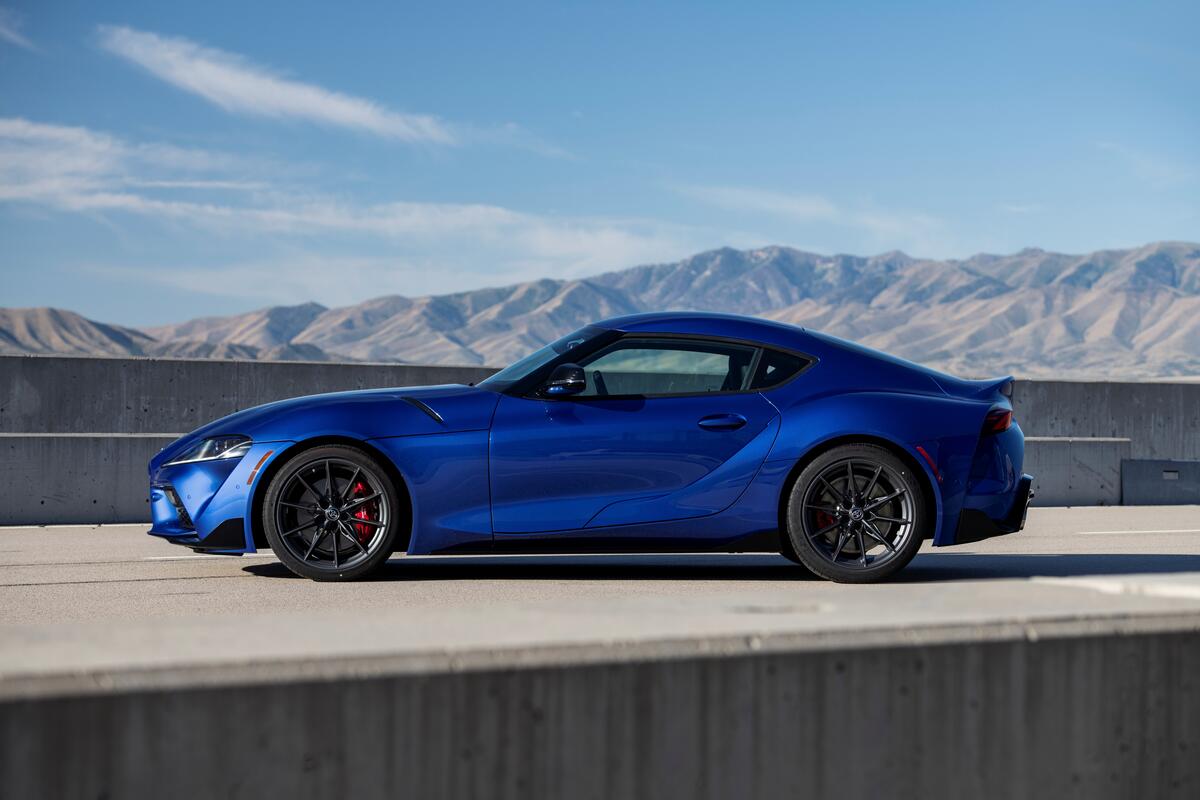
Toyota Supra
"...d against the cinder block I sold my 1982 silica Supra black-on-black she was a beauty I sold that to b..."
The Toyota Supra is a sporty Toyota car made for performance and driving enjoyment. People talk about it a lot because it’s a well-known model with a strong fan base. In the podcast, it’s brought up as a classic car the speaker owned.
The Toyota Supra is a performance sports coupe known for its strong engine options and enthusiast following. In the podcast context, it’s mentioned as a personal “1982” Supra, highlighting its classic appeal and the kind of car people keep or trade up from. It’s a common topic in car discussions because it represents Toyota’s sports-car heritage.

Cadillac Fleetwood
"...was a beauty I sold that to buy a 1982 Floridian Fleetwood Brom limo style Cadillac it was the car from hel..."
The Cadillac Fleetwood is a large luxury car designed to feel comfortable and upscale. The podcast mentions a limo-style version, which is often used for events because it has extra space. People talk about it as a classic, big comfort car.
The Cadillac Fleetwood is a full-size luxury car known for its long-wheelbase comfort and classic styling. In the podcast, it’s mentioned as a “Fleetwood Brom limo style Cadillac,” tying it to the idea of a big, upscale vehicle used for special occasions. It’s discussed because it represents an era of American luxury and large-car comfort.
Oldsmobile
"and at that time we still had Oldsmobile and here's what he told me again... don't buy the Cadillacs you buy the Oldsmobile's because all the stuff that they test they put on Cadillacs and the stuff that's good goes into building the Oldsmobile"
Oldsmobile was GM’s brand that, according to the host’s engineer source, received the better parts and testing outcomes from Cadillac programs. The segment frames Oldsmobile as the “better buy” within GM’s family of brands, based on where the engineering and test results supposedly ended up.
auction lane
"go through the auction lane in Stratford and say goodbye and I lost my stinking shirt on it when it went through the lanes it went through the lanes three times"
At a car auction, the auction lane is the path where cars are driven through so they can be sold. It’s basically the “official” line for the bidding process.
An auction lane is the designated track/route where vehicles are driven through during an auto auction for bidding and sale. Being “in the lane” usually means the car is officially being processed for sale, not just being inspected.
service light
"and the service light came on and the thing wouldn't even go over 40 kilometers an hour and it's belching black smoke the service lights on"
The service light is a warning on the dashboard that something is wrong. If it comes on and the car won’t drive normally, it usually means the engine computer found a fault.
A service light is a dashboard warning that indicates the vehicle’s onboard diagnostics have detected a problem. When it’s on along with poor drivability, it often points to an engine or emissions-related fault that needs scanning and repair.
black smoke
"and it's belching black smoke the service lights on and my passengers are screaming we're gonna die"
Black smoke usually means the engine is running “rich,” burning too much fuel for the amount of air. It often shows there’s a problem that should be checked.
Black smoke from the exhaust typically indicates the engine is burning too much fuel or not enough air, often due to a misfire, fuel/air metering issue, or a sensor problem. It’s a strong clue that the engine management isn’t controlling combustion correctly.
ignition off
"I got to shut the car off count to 30 seconds and then restart and the light goes out and I can hammer it"
The speaker turns the ignition off, waits, and then restarts the car. This can sometimes clear a temporary warning or glitch so the engine runs better again.
Turning the ignition off and waiting before restarting is a common “reset” technique to clear certain temporary fault states. Some vehicles will re-check sensors and allow the engine to run normally again if the underlying issue was transient.
crank and start
"turn just went right to crank and start and put my foot to the floor the light went out"
To “crank and start” means the starter spins the engine and then the engine actually fires up and runs. A quick restart after turning things off can mean the problem wasn’t fully permanent.
“Crank and start” refers to the starter motor turning the engine over (cranking) and then the engine catching and running. If the engine restarts immediately after a reset, it suggests the fault may have been intermittent rather than a permanently broken component.
cylinders
"put my foot to the floor the light went out and all the cylinders came back on"
Cylinders are the engine’s combustion chambers. If some aren’t firing, the car can run rough or lose power—so “all the cylinders came back on” means the engine started running normally again.
Cylinders are the individual combustion chambers in an engine; each cylinder can fire (combust) and contribute power. The speaker saying “all the cylinders came back on” implies the engine had been misfiring or shutting down some cylinders before the restart.
motor and transmission
"and that night when I got home from Cleveland I changed out of my business clothes put my coveralls on and I had the motor and transmission on the floor by morning"
The motor is the engine, and the transmission is what sends power to the wheels. Putting both on the floor usually means the car needed more than a simple repair.
The motor (engine) and transmission are the two major powertrain components that convert combustion power into wheel motion. Having both “on the floor” suggests a substantial repair or teardown rather than a quick fix.
four and a quarter transmission
"...a 350 Olds rocket engine and a four and a quarter transmission in there and I pulled all the computer system out of this thing..."
This sounds like the host is talking about the car’s gearing—how the drivetrain multiplies engine power. Different gear ratios can make the car feel much quicker off the line.
“Four and a quarter transmission” is a colloquial way of referring to a transmission with a 4.25 gear ratio (often discussed as a rear-axle/gear setup in muscle-car talk). The key point is that gearing strongly affects how hard the car accelerates and how it feels when you’re trying to make tires spin.
computer system
"...I pulled all the computer system out of this thing and stuff that motor and transmission in the next night..."
The “computer system” is the car’s factory electronics that help manage the engine. The host is saying he removed that setup while doing his engine/transmission swap.
In older cars, the “computer system” typically means the factory engine management electronics that control fuel, spark, and other functions. The host says he removed it, which implies he was bypassing or simplifying the car’s electronic controls to make the swap and tuning more straightforward.
abandon ship
"...so now what do we abandon ship that's what they want us to do that's exactly what they want you to do..."
“Abandon ship” is a figure of speech meaning “give up.” In this context, it means people get fed up and stop repairing their car.
“Abandon ship” is a metaphor for giving up on a situation when it becomes frustrating or too costly. Here, it’s used to describe the idea that people stop fixing their current car and instead replace it.
warranty-driven failure timing
"this is their idea for the consumer that it the fix under warranty lasts just long enough to get you outside the warranty perimeter because when it goes down again it becomes your dime"
The idea here is that something might break right after the warranty runs out, so you end up paying for the repair yourself. The host is arguing that this pattern is showing up more often.
The host is describing a practice where repairs are expected to fail just after warranty coverage ends, forcing the owner to pay out of pocket. Whether or not this is literally engineered, the concept is that warranty limits can shape when problems surface.
warranty perimeter
"all over again they want that vehicle the if they got to put more warranty in into it this is their idea for the consumer that it the fix under warranty lasts just long enough to get you outside the warranty perimeter because when it goes down again it becomes your dime"
A warranty has a cutoff—usually a certain time or mileage. The speaker is saying the problem is designed to show up after that cutoff so the owner pays.
The “warranty perimeter” is the time/mileage (or other limits) covered by a vehicle’s warranty. The point being made is that failures may be timed to happen just after coverage ends, shifting repair costs to the owner.
transmission valve bodies
"don't get me started on transmission valve bodies because the engineers built them we're told to build them to have a very cheap part inside the valve body on the automatic transmission that's like dollars dollars so that the transmission will fail it's not actually a transmission itself it's the valve body that controls the transmission inside"
In an automatic transmission, the valve body is like the control center for sending fluid to the right parts. If it’s defective, the transmission can shift wrong or fail repeatedly.
A transmission valve body is the hydraulic control unit inside many automatic transmissions. It routes fluid to different clutches and bands, so a faulty valve body can cause harsh shifting, slipping, or repeated transmission problems.
automatic transmission
"automatic transmission that's like dollars dollars so that the transmission will fail it's not actually a transmission itself it's the valve body that controls the transmission inside"
An automatic transmission shifts gears for you. It uses controls inside the transmission to decide when to change gears, and that’s what the host is talking about.
An automatic transmission changes gears without the driver using a clutch pedal, using hydraulic pressure and electronic control. In this segment, the host is specifically discussing how the valve body inside an automatic transmission can drive the failure behavior.
check ball
"they're all built the same to do the same thing tiny little check ball that's it in a seal tiny little check ball in a seal causes the transmission problem"
A check ball is a tiny piece inside a fluid system that helps control which way fluid can go. If it doesn’t seal or move correctly, the transmission can act up.
A check ball is a small valve element used in hydraulic circuits to control fluid flow and pressure. The speaker claims a tiny check ball in a seal can trigger transmission problems, implying a small internal component can have outsized effects.

Toyota 100
"... bath on it and I moved off and I I went back to Toyota 100% that's what I did and 400,000 almost 400,000 ki..."
The Toyota T100 is a pickup truck made for everyday driving and work tasks. The podcast mentions one with close to 400,000 kilometers, which suggests it can last a long time. People talk about it because it’s known for being tough and practical.
The Toyota T100 is a full-size pickup truck known for being a straightforward, work-oriented vehicle. The podcast mentions a Toyota T100 with nearly 400,000 kilometers, which highlights its durability and long service life. It’s discussed because high-mileage examples reinforce the idea of dependable, practical truck ownership.
kilometers
"off and I I went back to Toyota 100% that's what I did and 400,000 almost [2160.0s] 400,000 kilometers later here we are yeah and it's still going"
They’re talking about how far the car has been driven using kilometers. It’s just the distance unit on the odometer.
The speaker uses kilometers to describe vehicle mileage over time, saying the car has covered “400,000 kilometers.” For many regions outside the U.S., kilometers are the standard unit for odometer readings.
depreciation
"[2411.4s] is no we're not going to take that no we're not going to purchase your product anymore [2419.5s] it's obviously got problems and it's uh it's not worthy of my time the depreciation the cost"
Depreciation means a car’s value goes down as it gets older. If a car has problems, it can lose value faster and cost you more overall.
Depreciation is how much a vehicle’s value drops over time. When the host says “the depreciation,” they’re pointing out that buying a problematic car can lose money quickly even before you factor in repairs.

GMC Safari
"...s do it my pops went from buying the uh the astro safari van disasters those things ate money like smarti..."
The GMC Safari is a van made to carry passengers and cargo. The podcast talks about it in the context of ownership costs, meaning it may have needed more money spent on it than expected. It’s a vehicle people choose when they need lots of space.
The GMC Safari is a full-size van that was built for carrying people and cargo, similar in purpose to other family-oriented vans. The podcast mentions the speaker’s father having an “astro safari van” and describes it as financially costly, which is why it comes up—ownership experience and repair costs are often part of the conversation. It’s discussed as a practical, older-generation van that some people remember fondly but also evaluate for running costs.

Dodge Grand
"...then i watched my pops go over to christler yet a dodge grand caravan i think they call it grand for reason i'..."
The Dodge Grand Caravan is a minivan, which is a family-focused vehicle with lots of seats. It’s meant to carry people and everyday stuff easily. The podcast brings it up as a practical vehicle choice.
The Dodge Grand Caravan is a minivan built for family use, emphasizing passenger space and practical everyday driving. The podcast references it as a vehicle the speaker’s father looked at, which fits how these vans are often discussed—by their usefulness and role in daily life. It’s a common topic because minivans are typically chosen for hauling people and cargo efficiently.
consumer becomes a consumer
"when they win that's when you the consumer become a consumer and you allow them to win as long as they're making stuff and we're buying their stuff they're happy"
They’re saying the company’s strategy is designed so the buyer ends up paying anyway. The host believes the manufacturer still makes money even if some cars have problems.
This phrase is used to describe the moment a buyer stops being an informed shopper and instead becomes a repeat customer who “allows them to win.” The host’s point is that pricing and incentives are structured so the manufacturer still profits even when some vehicles have known issues.
bottom line
"because you then affect their bottom line and that's when you'll get their attention that's when all of us will get their attention period"
“Bottom line” just means whether a company is making money. The host is saying that if buyers stop spending, the company will notice.
“Bottom line” is business jargon for a company’s overall profit or financial result. The host uses it to argue that consumer action (stopping purchases) is what affects profitability and gets attention from manufacturers.
never never plan
"because when you surrender to the manufacturer that continues to put out the same problem product here's what happens you sign up for the never never plan and this is what they want you to do"
The host is talking about a “never-ending” cycle where the car (or the deal around it) pushes you to replace it soon. The goal, as they frame it, is that you keep buying the next one instead of sticking with the same vehicle.
The “never never plan” is the idea of a planned cycle of repeat buying: a product is expected to wear out or disappoint quickly so you feel pressured to replace it. In the context of the host’s argument, it’s about manufacturers benefiting when customers churn into the next vehicle rather than keeping the same one long-term.
wear and tear
"just basic maintenance wear and tear items things that are going to wear out and you got to replace them because of time and mileage"
“Wear and tear” means the normal stuff that gets worn out as you drive—like tires and brake components. It’s different from major problems that show up unexpectedly.
“Wear and tear” refers to parts that naturally degrade over time and use, like tires, brakes, belts, and other consumables. The host contrasts these normal replacements with more serious, “hairy” failures.
insurance paid to fix it
"[3084.9s] probably five six thousand dollars as it stood it didn't need a dime of money spent on it for any [3092.4s] repairs period and a car got damaged in hail a big hail storm that came through and I had it [3100.0s] outside my shop at home and that was real sheet metal then 22 gauge in it it dented the car and [3107.0s] it shredded the limo roof and the insurance paid to fix it and it looked amazing"
They’re saying the car was damaged by hail and the insurance company covered the repair costs. That’s why the car could look good again after the damage.
The speaker describes a hail-damage claim where insurance pays for repairs. This matters because it affects what the car looks like afterward (they say it “looked amazing”) and how much money they ultimately lost or recovered.
22 gauge
"[3092.4s] repairs period and a car got damaged in hail a big hail storm that came through and I had it [3100.0s] outside my shop at home and that was real sheet metal then 22 gauge in it it dented the car and [3107.0s] it shredded the limo roof and the insurance paid to fix it"
“22 gauge” is a way of describing how thick the car’s metal panels are. The speaker is saying the metal was thin enough that hail dents it badly.
“22 gauge” refers to the thickness of sheet metal, with higher gauge numbers generally meaning thinner metal. The speaker uses it to emphasize how the Cadillac’s body panels were dented by hail and how serious the damage was.
limo roof
"[3100.0s] outside my shop at home and that was real sheet metal then 22 gauge in it it dented the car and [3107.0s] it shredded the limo roof and the insurance paid to fix it and it looked amazing the car looked [3114.3s] amazing the original paint was faded blue"
A “limo roof” is an extended roof section used on limousine-style conversions. The speaker is saying the hail damage was bad enough to ruin that extended roof.
A “limo roof” is a longer, extended roof section associated with stretch-limousine conversions. Here, the speaker says hail damage “shredded the limo roof,” highlighting that the car had been modified and that the roof structure was vulnerable.
Stratford auto auction
"[3127.3s] looking it was just lousy and then I turned it into an Osobel and I get $1800 for it and take a bus home [3135.0s] from the Stratford auto auction so anyhow that's where we'll leave this"
An auto auction is a marketplace where vehicles are sold to dealers or buyers through bidding lanes. The speaker references the Stratford auto auction as the place where they sold the hail-damaged Cadillac for $1,800.
market share
"[3172.5s] and with regards to Toyota they're learning their lesson right now and uh [3178.1s] you know what I think they're they they're gonna they're gonna fix their end of things because [3183.4s] you know they've worked hard to get market share and these stupid things that have been going on"
Market share means how much of the total car sales a company gets compared to competitors. The speaker is saying Toyota has been trying to grow that share, and that may push them to change.
Market share is the portion of total sales in a market that a brand captures. In the segment, the speaker argues Toyota has worked hard to gain market share, and that this pressure is part of why they’ll change their practices.
Request an Explanation
Heard something you'd like explained? We'll add it to this episode.
Sign in to request explanations for terms you heard.
Want to learn more?
Browse our glossary for plain-English explanations of automotive terms, jargon, and concepts.
Help improve this episode
See something that's not quite right? Our annotations are AI-generated and can sometimes miss the mark. Click the flag icon on any annotation to suggest a correction.