The Honda NSX is a high-performance sports car made by Honda. It is famous for its speed and handling, and it was one of the first cars to use an all-aluminum body.
Le Mans is a famous car race in France where cars race for 24 hours. It's known for being very challenging and is one of the biggest events in motorsport.
Pike's Peak is a mountain in Colorado where a famous car race takes place. It's known for being very steep and challenging for drivers.
Car
Husqvarna Svartpilen 401
The Husqvarna Svartpilen 401 is a stylish motorcycle designed for city riding. It's known for its lightweight and modern look, making it popular among riders.
The Mini Clubman is a small car that's fun to drive and has a quirky design. It's great for city driving and can fit a good amount of stuff inside, making it practical for everyday use.
The Toyota Sequoia is a big family car that can carry a lot of people and their stuff. It's great for road trips and can pull heavy things like trailers, making it popular for those who love the outdoors.
The Toyota MR2 is a small sports car that has its engine in the middle, which helps it handle well on the road. It was made by Toyota and is loved by many car fans.
The Alpina B10 is a special version of a BMW that is faster and has more luxury features. It's not as common as regular BMWs, making it a unique choice for those who want something special.
The Nissan Skyline is a well-known car, especially famous for its fast versions that are used in racing. It's popular among car fans for its cool design and powerful performance.
Car
Nissan R380
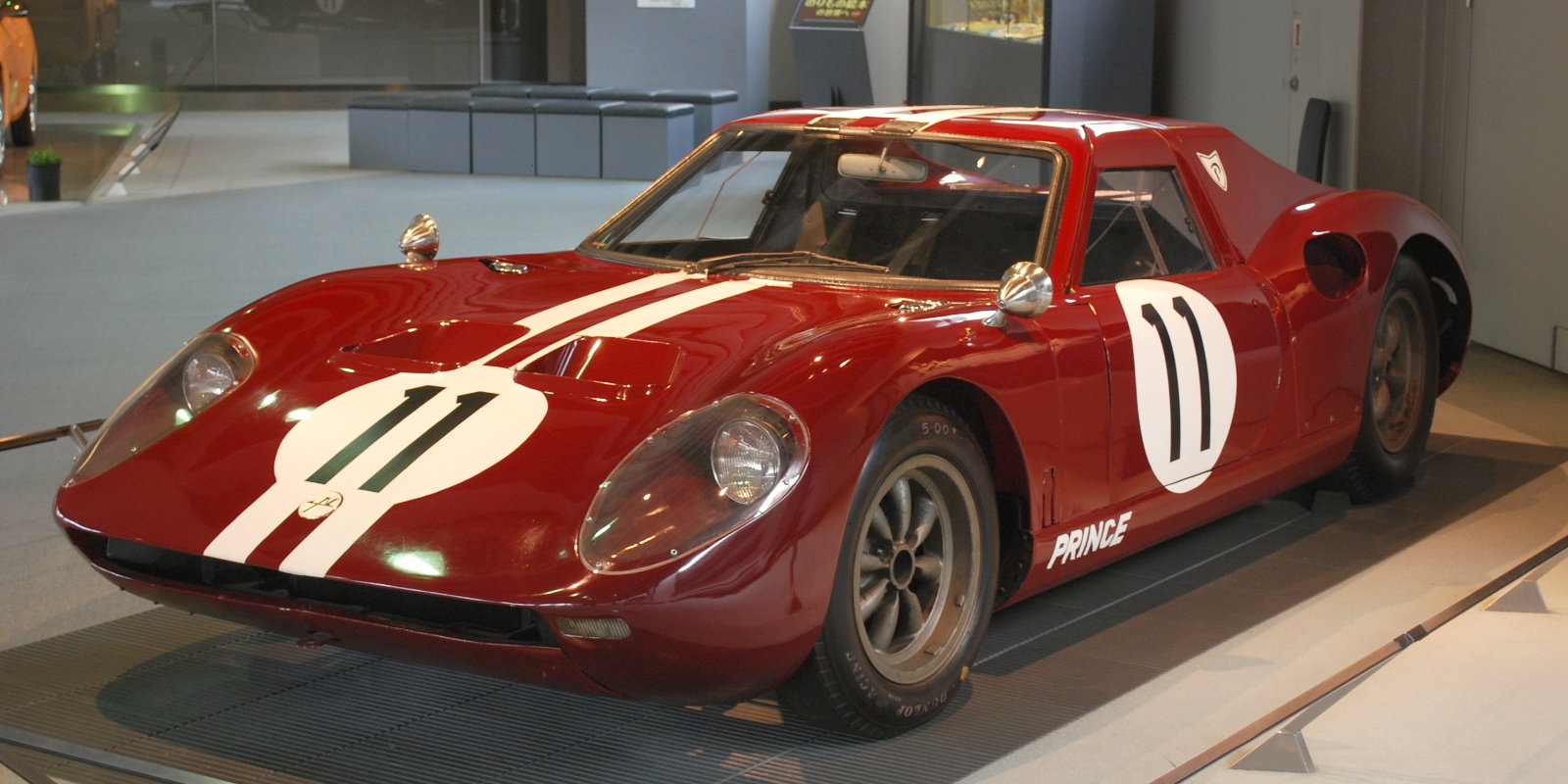
The Nissan R380 is a sports car that has its engine located in the middle, which helps with balance and handling, making it good for racing.
The Ford GT is a fast and stylish sports car made by Ford. It's famous for its racing history and unique look, making it a favorite among car enthusiasts.
The Nissan Skyline GT-R is a super fast version of the Skyline that races really well. It's loved by car fans for its cool features and success in racing competitions.
Hakosuka is a nickname for a specific version of the Nissan Skyline GT-R that has a boxy shape. The name comes from Japanese words that mean 'box' and 'skyline'.
The Nissan GT-R is a fast sports car that is famous for winning many races. It's known for its powerful engine and advanced features that help it perform well on the track.
The Fuji Grand Champion 300km race is a famous car race in Japan that highlights the skills of drivers and the performance of cars. It was important for Japanese racing history.
Japanese motorsport is the world of car racing in Japan, where many skilled drivers and advanced cars come together. The 1970s was an important time for racing in Japan.
Pole position means starting at the front of the race because you had the fastest qualifying time. This gives you a better chance to win since you're ahead of everyone else at the start.
Drag slicks are special tires used in drag racing that help cars grip the road better. They are made from a soft material that sticks to the track, making it easier to go fast without slipping.
Oversteer happens when the back of the car slides out during a turn, making the car turn more than the driver expects. It can be tricky to handle but can also be used intentionally for racing.
Exit speed is how fast a car is going when it comes out of a turn. Going faster out of a corner helps the car gain more speed on the straight parts of the track.
Power sliding is when a driver makes the back of the car slide out while still controlling it. It's a way to take sharp turns quickly and is often seen in racing and drifting.
The Toyota Corolla is a small car that many people buy because it's easy to drive and doesn't use much gas. It's a good choice for anyone looking for a reliable and affordable vehicle.
The Toyota AE86 GTV-11 is a small, sporty car that is well-known for its ability to drift, which is a driving technique where the car is intentionally oversteered. It's popular in car culture, especially in Japan.
The D1 Grand Prix is a big drifting competition that started in Japan. It helps drivers show off their drifting skills and has made drifting more popular around the world.
The Acura NSX is a super cool sports car that goes really fast and handles well on the road. It's special because it combines high performance with comfort, so you can drive it every day if you want.
The Chevrolet Corvette is a classic American sports car that looks great and drives really fast. It's famous for being powerful and is loved by car enthusiasts for its style and performance.
The Ferrari F40 is an extremely fast and powerful sports car that many people dream of owning. It's famous for its sleek look and is considered one of the best cars ever made.
The BMW 3 Series is a small luxury car that is fun to drive and has a lot of nice features. It's popular because it combines comfort with sporty performance, making it a favorite among many drivers.
The Shelby GT500 is a really powerful version of the Ford Mustang that can go super fast. It's famous for its strong engine and sporty look, making it a favorite among car lovers.
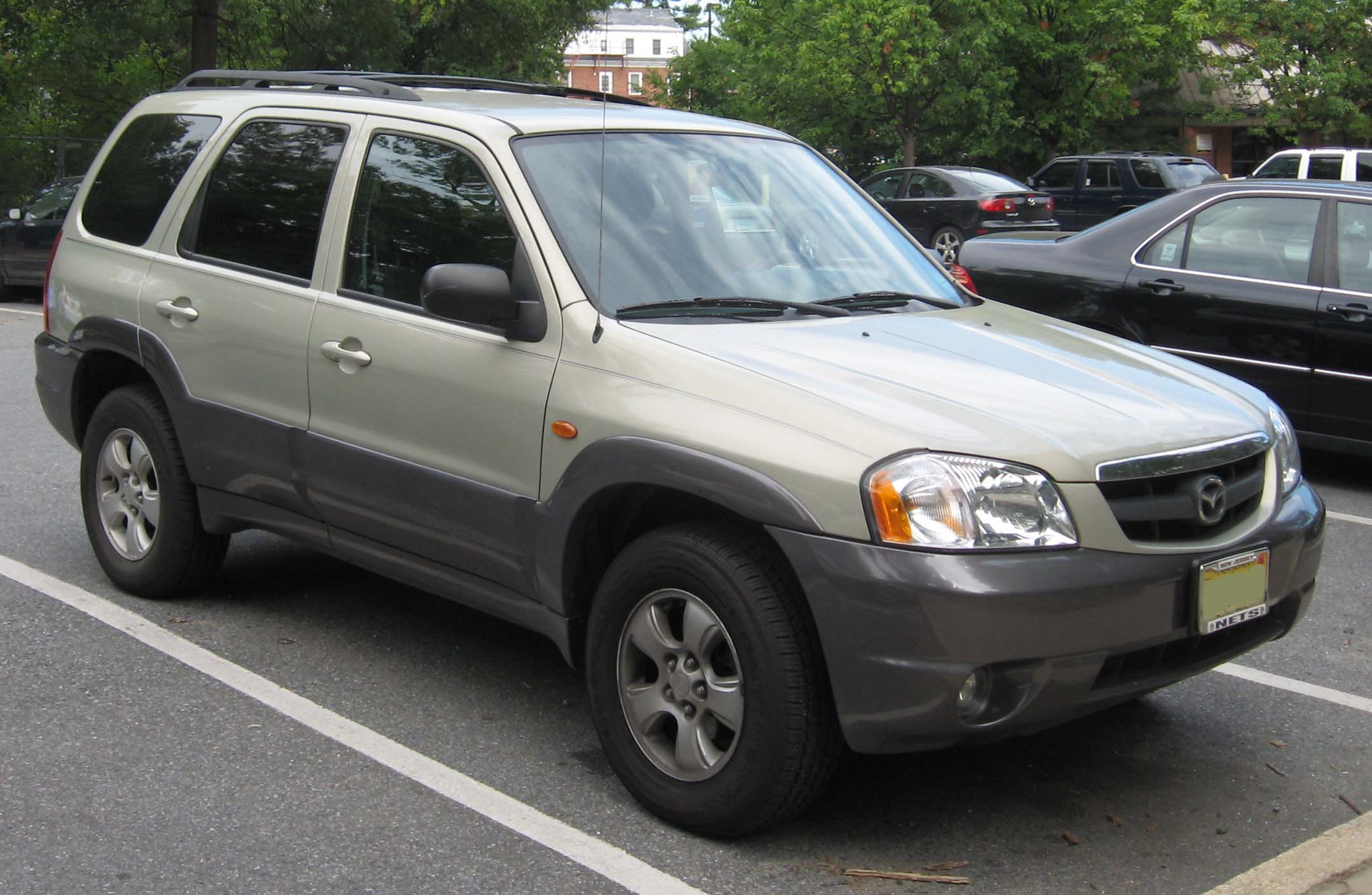
The Mazda Tribute is a small SUV that's good for families because it has plenty of space and can handle different types of driving. It's a practical choice for those who need a reliable vehicle.
LIVE
This podcast is sponsored by Aura Frames.
If you're a last-minute shopper like me, you know the feeling.
Shelves are empty and the ideas are running low.
Aura Frames is the solution with a gift that feels personal.
For a limited time, save on the perfect gift by visiting AuraFrames.com to get $35 off
Aura's best-selling Carver Matte Frames, named number one by Wirecutter, by using promo code
GAS at checkout.
That's A-U-R-A Frames dot com promo code GAS.
This deal is exclusive to listeners and Frames sell out fast, so order yours now to get it
in time for the holidays.
Support the show by mentioning us at checkout.
Terms and conditions apply.
Toast the holidays in a new way and raise a glass of rumchata, a delicious creamy blend
of horchata with rum.
Enjoy it over ice or in your coffee.
Rumchata, your holiday cocktails just got sweeter.
Tap or click the banner for more.
Drink responsibly.
Caribbean rum with real dairy cream, natural and artificial flavors.
Alcohol 13.75% by volume, 27.5 proof.
Copyright 2025 Agave Logo Brands, Milwaukee, Wisconsin.
All rights reserved.
With Black Friday savings at the Home Depot, you can get up to $1,400 off, plus get free
delivery on select appliances, like LG, America's most reliable line of appliances.
Check out the newest LG refrigerator with new mini craft ice, straight from the dispenser.
Get Black Friday savings on select LG appliances, plus get free delivery now at the Home Depot.
Free delivery on appliance purchases of $396 or more.
Offer valid 11-5-12-3.
U.S. only.
See store online for details.
Hey, what's up, everybody?
You probably like drifting, right?
Did you know that it was invented by a guy who was tired of his crummy tires slowing
him down?
He's like, hey, I got to slide this car to go faster.
That man's name is Kinamitsu Takahashi, and that's who we're talking about today.
The godfather of drift, but also like, it's kind of crazy, but that nickname almost like
sells his legacy short a little bit.
Like this dude was so involved in so many other aspects of motorsport, worked with manufacturers
like Porsche, Nissan, Honda.
He won his class at Le Mans in a Honda NSX.
We're going to talk about that.
Let's get to it.
In 1958, a group of motorcycle riders stood next to their small Japanese bikes at the
base of one of the most active volcanoes on the Japanese islands.
All of the bikes sported tuned 350cc motors hidden underneath sleek fiberglass shells
tucked underneath bulging gas tanks.
This was year one of Kinamitsu Takahashi's journey to become one of the most important
men in street racing history.
The bikes rumbled as racers crowded the starting line.
Takahashi kept a close eye on other racers as he mounted his bike, pushing off the line.
They raced up Mount Asuma, which was basically the Pike's Peak of early Japanese racing.
Takahashi ripped his little Honda up the 8,425-foot volcano, cranking on the throttle and keeping
his balance around the corners.
It had only been a few months since Asuma had erupted, and loose soot still covered
parts of the road.
But slippery roads and the possibility of flowing lava weren't enough to scare off Takahashi.
This was only his third race, and he had something to prove.
And prove he did.
How did one man who started his career riding small motorcycles revolutionize street racing?
How did a serious injury sideline a racer and create a new style of driving?
And how did his unique driving style, coupled with not-quite-there tire technology, lead
to one of the most innovative cornering techniques that had ever been seen?
Today on Pass Gas, it's the legendary Kinamitsu Takahashi, the godfather of drifting.
Welcome back to Pass Gas, everybody.
My name is Nolan Sykes.
Joining me, as always, across the table, Joe Weber.
I might do a spit take during this.
Really?
I'm not going to tell you when or what it's going to be about.
I'm glad I wore a jacket.
I got my water bottle out.
I'm going to keep my mouth cavity full of water.
Yeah, we're all in the splash zone today.
And to my left, joining us for a couple of episodes here, sporting a Team Kinamitsu hat,
it's Jimmy Hilton.
Hey, how's it going?
How are you doing?
Doing good.
I'm so excited for today.
This is a...
I pitched this one.
You did?
Yeah.
And I didn't know that Jimmy had access to this doc, but at some point in the last month,
Jimmy was like, wait, you're doing Kinamitsu?
I've got to be on that episode.
I was like, all right, this dude's got moxie.
He's so cool.
He's one of the coolest Japanese racing car drivers of all time, I think.
Clearly, you have the hat, and you're also rocking a Team Williams Sonic shirt.
That's very fun.
You're in the mindset.
I'm in the motorsport mood today.
Yes, you are.
Have you ever heard about the Sonic F1 trophy from the 90s?
I want to get a 3D print of that.
That'd be awesome.
I'll put it in my next house.
I think that'd be sick.
Yeah, you should just get a ceramics artist on Fiverr to make you one.
Can you find ceramics artists?
You can find a lot of people on Fiverr.
Really?
A lot of talent.
Yeah.
Do it, man.
Okay.
You're a ceramics guy, then.
Yeah, 100%.
You guys ever thrown clay?
Have I ever thrown clay?
You ever throw down clay?
No.
I've never thrown down any clay.
I've shot clay with a gun.
I love shooting clay pigeon.
Yeah.
That does seem fun.
You've never done it?
No, I've never done it.
We've got to do it.
It's a good time.
Yeah.
It looks fun.
Going back to the intro of this.
Yes.
We were talking about small motorcycles, and then we mentioned a 350.
I don't see 350 as being a small motorcycle.
I don't see 350 as being a small motorcycle.
I don't see 350 as being a small motorcycle.
I don't see 350 as being a small motorcycle.
I mean...
What's like a cafe racer, right?
Yeah, but for me...
For the time, it probably was midsize.
These days, like a 600 would be like a decent starter size, I think, like 600cc.
I don't think I could control a 600cc.
You could.
You can't handle that hog?
I would not trust myself.
Have you seen my track record?
I have.
I have.
I have.
I have.
I have.
I have.
I have.
I have.
I have.
I have.
I have.
I have.
I have.
I have.
I have.
I have.
I have.
I have.
I have.
I have.
I have.
I have.
I have.
I have.
I have.
I have.
I have.
I have.
I've...
I have.
I have.
I have.
I have.
I have.
I have.
I have.
I have.
Don't worry, Derek.
I don't know if y'all have seen my track record for motorcycles.
I...
fall off every time.
Yeah, probably not a great idea.
Do you...
No.
I mean, dude, do you go on like the motorcycle subreddit and like people...
I think you know, you have two camps.
You have people that are like, is a leader bike a good first bike?
And you're like, you gotta start on the 300cc, like, you need to have all the highlighter
yellow safety gear, all that kind of stuff.
And you're like, dude, like...
I'm just trying to have a good time.
A couple of years ago, like Ducati lent us like a Monster and it was at the office here.
I think that's a 600cc bike.
I'm not sure to be honest.
What size was it?
You rode it for the first time.
Yeah.
I mean, I know the basics of riding a bike.
So I hopped on it and rode around our neighborhood and was like, okay.
It was scary.
I pinned the throttle going down this Tamarack here.
And yeah, for like a second, just to like feel it.
And that scared the shit out of me.
It was really fast.
You got that whiskey throttle, huh?
Well, no, I was in control.
Okay.
And also a lot of these modern bikes have like a lot of safety systems on board to help
newer riders.
Gotcha.
Yeah.
Okay.
Like, I think a 500 or 600cc would be fine to start on.
Yeah.
I wish Joe was here when we had the pocket bike.
Oh yeah.
My buddy Alex bought a pocket bike to the office and it was like super tiny.
It looked so funny on it.
And then my buddy Alex was riding around the eight shit on it.
That's neat.
That's that would have been, but I was like, Oh, thank God Joe isn't here today.
Cause he would have fallen off at the end.
So it turns out the Ducati monster is a 890cc bike.
So that would explain why it was pretty fast.
Not 600.
Not 600.
Probably not wise for me to hop on that thing and pin it around our neighborhood, but, uh,
still a fun bike.
So we're not mostly, we're not going to be talking about exclusively motorcycles today,
but I think my perfect motorcycle that has, I've had a tab open for eight years.
Um, my wife won't let me get a motorcycle, but, uh, is a Husqvarna Svartpilen 401.
I think it looks...
What did you just say?
Husqvarna.
Um, Nolan, will you pull it up?
I don't eat that stuff, dude.
Oh, is that, is that the fermented shark?
No, I don't eat that.
Svartpilen 401, is that the one?
Yeah, it just, it looks, it's the coolest motorcycle you'll ever see.
It's just perfect.
I don't eat that kind of stuff, dude.
Well you don't eat a lot of stuff.
I tried to give you...
I have gotten better.
I tried to give you a burger one time and you're like, um, can you take the lettuce
and tomato off?
All right, now I'm just a take the tomato off kind of guy.
Oh, so you leave the lettuce?
Yeah, I like the lettuce.
That's what you say at the, when you order at the Habit, you're like, leave the lettuce.
Yeah, leave the lettuce.
That's what I say at In-N-Out every time.
Leave the lettuce.
I like a good crunch on there.
I like a good lettuce.
Burger.
Lettuce on.
Yeah.
Okay.
We should probably talk about...
Yeah, we should probably talk about this Japanese racing guy.
We probably should since you really want to.
Yeah, I do.
Okay.
Let's do it.
So, Kunimitsu Takahashi's journey into the annals of motorsport began in Kagane City,
Tokyo, where he was born on January 29th, 1940.
His passion for speed began when he was old enough to vote, leading him to make his competitive
debut at just 18 years old in the inaugural All Japan Clubman Race in 1958.
His ascent in Japanese motorcycle racing was remarkably swift.
Takahashi dominated the scene, securing victory in the 350cc class of the All Japan Motorcycle
Endurance Race, famously known as the Mount Asuma Volcano Race in his debut year of 1958.
That's so badass.
We need to bring that back.
It's not...
They're not running it anymore?
Probably not.
Dude.
I, last weekend, was up in Sequoia.
Me and my wife and some friends rented like the Airbnb, but anyway, the road...
In my head, I...
Because we're talking about Japanese stuff, I thought it was like S-A-K-O-Y-A.
Sequoia.
Sequoia.
You're talking about the national park, Sequoia.
The national park outside Fresno.
And Highway 90 going up into that is...
Highway 190, excuse me, is like the curviest road I've ever driven on.
It was like constantly just driving, like turning the wheel back and forth for like
40 minutes.
And honestly, it got kind of annoying after a while.
But I was thinking like, dude, they...
Great hill climb road.
Yes.
They should close it down and do, close a section of it down and do some hill climb
up there.
There's a ton of roads like that in the United States.
There's just stuff on these random highways and we should be doing way more hill climbs.
Yeah.
I agree.
We should sponsor a hill climb.
We were talking about that a while ago.
I agree.
Wholeheartedly.
Yeah.
That'd be so sick.
Was it 190 or 180?
It was 190, I thought.
You did a 180.
I just did a 180.
It was so curvy.
But dude, yeah.
Like, look how...
Okay.
I can't even...
Like, look how curvy that thing...
That looks like a varicose vein.
Yeah.
At night, like we arrived at night, the sun was down and you couldn't even see like where
the next turn was.
So, it felt like it just took forever to get up because you're just like constantly turning.
Anyway, hill climbs.
And then this...
Highway 190, outside Springville.
You need to make it happen.
And this car came up behind you and you were like, is that an MR2 or a 180?
Yeah.
Yeah.
Okay.
The next year in 1959, Takahashi followed with another triumph at the event in the 500cc
class this time and solidified his reputation as a rising star.
His undeniable talent did not go unnoticed.
In 1960, he was invited to join the Honda R&D team, which at the time was called the
Honda Speed Club.
Whoa.
Hell yeah.
That's cool.
You gotta find that shirt that says that.
Yeah.
That's a sick shirt.
This was a pivotal moment that solidified his association with one of Japan's leading
motorcycle manufacturers and gave him a launch pad for his incredible career.
In 1961, Takahashi became the first Japanese rider to win a world Grand Prix when he secured
first place in the 250cc class at the Hockenheim Ring in Germany.
This was also an important moment for Japan.
It marked the first time the Japanese flag had been raised at a world championship motorsport
event and served as a powerful symbol of Japan's emerging capabilities on the international
stage.
That's a big moment.
Pretty cool.
Takahashi's international success continued beyond his first historic win.
He added another victory at the 125cc Ulster Grand Prix in 1961, and in 62, he secured
two more 125 class victories in Spain and France, bringing his total of world level
Grand Prix wins to four by the age of 22.
That's cool.
Yeah.
Very cool.
His consistent performance also earned him impressive overall rankings in the world Grand
Prix series, where he finished fourth in the 1961 250cc championship and fourth in
the 62 125cc championship.
So he's a rising star.
He's doing the thing.
He's doing the thing.
Yeah.
At a really young age, too.
And he's only started at 18, which is pretty impressive.
Like no prior training, no go-karting or any of that.
I feel like before you're 18 is when you have to start motorcycle shit because you don't
have a frontal lobe yet.
You don't have like judgment to do it.
This is dangerous as hell.
That's very true.
It's that like that's why they conscript people for a war at that age, too.
They're like, oh, oh, yeah, war.
That sounds tight.
It's just like Fortnite, right?
Yeah.
Can I get some kill streaks?
I hope I get that Marge Simpson skin.
The trajectory of Kunimitsu Takahashi's promising motorcycle career took a dramatic and unfortunate
turn in 1962 at the one and only Isle of Man TT.
While competing in the 125 cc lightweight event, he suffered a violent near fatal crash
just two and a half miles from the starting line.
The accident was severe, causing serious head injuries, and Takahashi barely escaped with
his life.
His debilitating injuries altered the course of his motorcycle racing career.
He ultimately returned to the sport and competed through 1964.
But despite his own resilience and determination, he was unable to secure another victory after
this crash.
It's probably like.
Yeah, he probably traumatized a little bit, like, oh, I don't know if I want to go flying
off a motorcycle.
Yeah, probably.
Also, that British food, he's probably traumatized by that mushy peas, beans on toast.
I think it actually baked beans on bread.
I'll take it.
That's so much starch.
Why don't you add like a croissant to the top of that?
A croissant to the top?
Yeah.
Make it triple.
What about I ever heard of a tiger?
Tiger pie.
Oh, that Australian.
That's kind of more Australian, I think.
Yeah.
Is it a Tasmanian tiger pie?
It's like mushy peas on a pie.
That's normally when you go to Britain, there's like the pie and then they slap the mashed
potato on the side.
Yeah.
And there's the liquor, which is like a stewed eel gravy.
I think it's just like a form of that, basically.
Yeah.
It's in the same grouping.
Eel.
Not very appetizing.
Eel.
Yeah.
It's supposed to be kind of bland and there's a bunch of parsley in it.
Where do they even get eel in England?
The rivers.
That's a lot of eel.
Take what you can get, I guess.
Kinamitsu's severe injuries and inability to control the bike the way he once did marked
the end of his two-wheeled racing career.
A plethora of other racers who sustained the same injuries vanished into the archives of
racing history.
But for Takahashi, this was just the end of that chapter.
Takahashi's transition from two wheels to four marked an all-new and just as successful
chapter in his racing career.
He quickly established himself as a highly skilled and formidable master behind the wheel
of a Skyline KPG B10, which looks so cool.
Like that?
Oh, yeah.
Oh, yeah.
Oh.
So it's like a...
It's like a...
The Hakko.
Hakko Tsuka.
What a cool car.
Takahashi wasted no time in making an impact.
By 1970, he was again dominating the competition.
He won all five rounds of the All Japan Drivers' Championship T2 class, securing the overall
championship title behind the wheel of a Nissan Skyline 2000 GT-R.
These are such cool race cars at the time, and it's like sick because they had like the
oil coolers exposed and everything, like what a cool car.
Yeah, very cool.
So this is followed by another significant victory in the Japanese Grand Prix TB class
in 1971, while also driving a Skyline GT-R.
His versatility behind the wheel was remarkable.
He skillfully piloted a wide range of vehicles, from advanced prototype cars like the Nissan
R380, which is like the mid-engine car.
I saw that car at the Nissan Museum a couple of years ago.
At the sea?
No, in Yokohama.
Oh, that one.
Yeah, the big one.
That's a cool car.
Yeah, it is.
Very cool.
He just drove that.
It's the Ford GT of Nissan.
It's so sick.
And then he won that championship where you're just inside a big wheel, rolling down a hill.
A defining period in Takahashi's four-wheeled career was joining the Japanese dream team
that saw him racing alongside the history-forging driver's license.
Takahashi was the first Japanese driver to win a championship.
He was the first Japanese driver to win a championship.
Takahashi was the first Japanese driver to win a championship.
Takahashi was joining the Japanese dream team that saw him racing alongside the history-forging
drivers like Motokitano and Motoharu Kurosawa.
Together, they created a legendary trio known as the Opoma Works Mitagurasu, or Three Crowns,
and became synonymous with their overwhelming dominance in Japanese touring car racing.
Is it crowns or crows?
It's crows.
Yeah, crows.
Three crows, not crowns.
Excuse me.
These three crows, who called Nissan's Opoma factory home, spearheaded the legendary Nissan Skyline GT-R's
absolutely incredible dominance of the racing scene.
The car, affectionately known as Hakosuka, a portmanteau of box and skyline in Japanese,
became an icon of speed and engineering prowess thanks to these highly skilled drivers.
They all went,
Every time you pass someone on the racetrack.
Ah, you damn crows.
These crows are all over the place.
Get out of here.
In all the post-race interviews.
There's a bunch of crows outside of my house, and I have this fantasy of training them to
go pick up loose dollars and bring them to me.
Go get the loose dollars.
Yeah.
How come Joe's like a millionaire all of a sudden?
I just go like this, and they all land on my shoulders.
Dude, that'd be sick.
Yeah.
With Takahashi and his teammates.
Sorry.
You probably could train them.
That's a real thing that people do.
Yeah.
It'll take years.
You should do it.
But yeah.
And then your kids are going to be like, when they're teenagers, they're like, yeah, you
know.
Yeah, you can come over.
Just like, I just want to tell you, my dad has like a, he trains birds.
He's a little weird.
There's also a story I read where I think it was Harvard or something.
A student at Harvard during the summer wore a black and white striped shirt and would
terrorize all the crows on campus and blow a whistle.
And so then when the football season started, the refs started getting attacked by crows.
That's smart.
Yeah.
That's genius.
That's the type of student you get at Harvard.
Yeah, that guy's going places.
That kid was Henry Kissinger.
I was going to say Ted Kaczynski.
We'll be right back after these messages.
This podcast is sponsored by Aura Frames.
Here's my holiday pattern.
Tell myself I'll be thoughtful, panic at the last minute, buy a gift card.
This year, I skipped the panic and gave an Aura Frame.
These Aura digital picture frames are awesome.
There's unlimited free photos and videos.
All you have to do is just download the Aura app and connect to Wi-Fi and you can populate
it with whatever pictures or videos you want.
You can even preload photos before they ship, which means that if you're shipping it to
maybe an older person that doesn't know how to work tech, you can already load it up with
pictures of the grandkids and send it to them.
They don't even have to do anything.
I really like the Carver Matte Aura Frame.
The clarity is awesome.
The resolution is awesome.
It really does look great.
For a limited time, save on the perfect gift by visiting AuraFrames.com to get $35 off
Aura's best-selling Carver Matte Frames.
Named number one by Wirecutter by using promo code GAS at checkout.
That's A-U-R-A-Frames.com promo code GAS.
This deal is exclusive to listeners and frames sell out fast, so order yours now to get it
in time for the holidays.
Support the show by mentioning us at checkout.
Terms and conditions apply.
Some people just know they could save hundreds on car insurance by checking Allstate first.
Like you know to check the restaurant location first before agreeing to go to lunch with a friend.
Day of, you're getting ready to leave.
You put it in your map and bam, lunch is an hour away?
Bad on your friend for not mentioning it, but bad on you for trusting your friend.
Now you've got to book it across town to get to the best burger in town?
Sure, it's worth it.
Checking first is smart, so check Allstate first for a quote that could save you hundreds.
You're in good hands with Allstate.
Potential savings vary subject to terms, conditions, and availability.
Allstate North American Insurance Company and affiliates, Northbrook, Illinois.
At Sierra, discover joyous deals on great gifts for everyone on your list.
Like cozy slippers, ski gear, fishing poles, bikes, large kayaks, even larger canoes.
Whew, which might lead to another discovery.
Grabbing gifts is the only sport you need to stay fit this season.
Tis the season to discover great gifts at unexpectedly low prices.
Sierra, let's get moving.
Now back to the show.
With Takahashi and his teammates at the wheel, the GTR achieved an extraordinary record,
racking up an incredible 50 consecutive wins.
Kinomitsu Takahashi himself secured a landmark 50th victory at the Fuji Grand Champion 300km race in March of 1972,
an achievement that immortalized both the car and Takahashi in automotive racing history.
This period was no doubt a golden era in Japanese motorsport.
Takahashi was the first Japanese driver to win a gold medal at the Fuji Grand Champion 300km race.
This period was no doubt a golden era in Japanese motorsport.
Takahashi was the first Japanese driver to win a gold medal at the Fuji Grand Champion 300km race.
where the synergy between exceptional driving talent, robust manufacturer backing,
and cutting-edge engineering created an unstoppable force.
The competitive dominance was not merely the result of individual brilliance,
but perhaps a holistic team effort where every component,
from the driver to the factory research and development,
every department was perfectly aligned, cementing Nissan's racing pedigree
and establishing the GTR as an automotive icon that would still show up today in almost every racing video game.
This created a division known as Opamaworks, which eventually morphed into the well-known Nismo Racing.
Did you know that?
I actually didn't.
Opamna.
Learning something new every day.
Thanks, Opamna.
Takahashi rolled onto the track with a driving style that was so unique it had never been seen on any track before.
He was highly aggressive and yet extremely skillful.
While his career was adorned with numerous victories and pole positions,
it was also punctuated by instances of mechanical issues and plain bad luck
that occasionally prevented him from securing even more triumphs.
That's racing.
That's racing.
Yeah.
Shite happens.
A critical element in understanding Takahashi's driving technique and its long-term impact
lies in the tires used in the early 1970s.
Touring cars of that era, including the Hakosuka GTR, predominantly ran on bias ply tires.
Unlike modern radial tires, bias plies were constructed with cords running diagonally from bead to bead,
which overlapped in a crisscross pattern.
They wore their jeans backwards.
This design resulted in significantly less lateral grip
and a tendency to grab onto road imperfections,
creating a bit of a wandering sensation for the person gripping the wheel.
You talk about that.
You caught float when you were drag racing.
Yeah, like, uh, actually, I think that the slicks that are on high car are,
I think like slicks, drag slicks are still like bias ply.
Yes.
Like that car at speed feels a little, it feels weird compared to.
Is it unsettling when you're going that fast to be like, yeah, it felt pretty unsettling.
Super interesting.
Yeah.
I actually haven't driven high staying yet.
You know that?
Really?
Yeah.
It's our nicest high car.
Yeah.
Yeah.
So anyway, this limitation made precise control when you're at the braking point,
a bit of a challenge to say the least.
Takahashi developed seemingly by accident, though, a technique to deal with the bias ply limitations.
Behind the wheel of his GTR, he began to intentionally induced oversteer,
a maneuver where he would throw his GTR into turns in a way that broke traction on all four wheels.
And he was doing it on purpose.
This was not an uncontrolled spin.
It was a highly calculated move done by someone with decades of experience who had become annoyed at the limitations of his production tires.
For Takahashi, this technique was the only way to maintain optimal speed through corners with suboptimal tires.
It was a creative solution to compensate for the lack of mechanical grip.
He would start the slide before the apex of the corner, then apply power to maximize his exit speed, a strategy that gave him a serious competitive edge.
So sick.
I want to know that like light bulb moment for him.
Whoa.
Wait, you can actually get through these corners a lot faster.
And other race car drivers had been doing this for decades before, but kind of on the exit angle.
Yeah.
And there's always been like four wheel drifting in racing, like especially in, you know, like when tires were even worse than this and skinnier and just slipped more.
The slip angle or whatever, where it's like basically you're like super at the limit.
Yeah.
And it's literally just like all four wheels.
Yeah.
You're gliding.
You're preparing.
You're keeping the same angle that you're going to exit on, but you're going laterally instead of forward.
But he was like very much.
He did it before the turn.
That was his signature move.
Yeah.
Takahashi always looked like he was about to smear a few hundred thousand dollars worth of top of the line Nissan technology across a barrier.
But in reality, he was in complete control of his race car.
Takahashi's unique power sliding technique awed countless fans and drew significant attention.
It was dubbed power sliding because up to that point, no one had initiated a slide going into the apex of a curve only after coming out of the apex.
But the visual spectacle of the technique born from a performance necessity inadvertently laid the groundwork for an entire cultural phenomenon.
Crucially, his power slides influenced a young Kaiichi Tsuchiya, who would later earn the moniker of Drift King.
Jimmy is drooling right now.
This is the best story ever.
I'm so enthralled right now.
Tsuchiya observed and most importantly, internalized this technique.
He took Takahashi's technique and ran with it, filming videos and releasing VHS tapes full of him drifting his Toyota AE86 GTV-11 down the Usui Toge.
Tsuchiya also showed up on popular Japanese car shows like Best Motoring and Hot Version.
He was also instrumental in establishing the world's first sanctioned drifting league, the D1 Grand Prix.
He built all of this success on the back of Takahashi's style.
I feel like the nicknames kind of don't make sense though, because you got Drift King and you got the Godfather of Drift.
I mean, is the Godfather pulling the strings behind the scenes with the King?
He's slicing garlics really fast.
I hate that scene.
I think we get into it later, but they did race together and I think Kunimitsu was kind of like a mentor to Keiichi at some point.
Yeah, I mean, look, it's like Philips is the Godfather of French dip sandwiches, but they're not the Kings of French dip sandwiches.
Oh, Coles. We all know Coles.
I was going to say the Hofbrau in Morro Bay, California, near my parents' house.
No one even thinks it's...
I'm going to take you up there, Joe. We're going to get...
You get it. You're from Central California, dude.
Morro Bay creeps me out a little bit.
Why is that?
It seems haunted.
Have you been there?
The rock, the big rock is so ominous and kind of weird. I don't like underwater...
There's like energy coming from it.
Yes, and there's also energy coming from the power plant, which is in plain view of the whole city, and that creeps me out too.
That's like a Stranger Things season waiting to happen.
It is such a Stranger Things place.
I never thought of it that way.
Also, everything's abandoned there. There's no stores open.
There's plenty of stores open.
When I went there, there was nothing.
Well, you went there on Christmas.
No, I went there in October.
Clearly, this place has a special place in your heart.
It does.
I want to be convinced that it is a cool place.
I offer a counterpoint.
Finding Dory takes place there in Morro Bay.
What?
Actually, this probably lends more credence to you guys.
Do you know where Night City is in Cyberpunk 2049?
Morro Bay.
It's f***ing Morro Bay.
Really?
In the board game that it's based off of, the game is f***ing based in Morro Bay.
Sorry, you played the Cyberpunk board game?
No, but I found that factoid, and I was like, holy shit, that's awesome.
And then you went and bought Cyberpunk.
Yeah, I still haven't finished it, though.
I'm stuck in that fight where you're fighting the guy who can turn invisible in that apartment.
Yeah, that's a tough one.
Yeah, so I think maybe you guys are right.
If Night City...
I can't wait for the next Scooby-Doo movie that's going to take place in Morro Bay.
Zoinks!
Zoinks, Scoob!
Yeah, we got to get...
We got to get this clam chowder.
And that French dip, buddy.
Okay.
What a digression.
Beyond his touring car triumphs and his accidental invention of drifting, Kunimitsu Takahashi
carved out a reputation for himself as a highly skilled driver for Japanese prototype racing.
I thought it was going to say, like, as a wonderful baker or something like that.
He demonstrated his mastery by winning the All Japan Endurance Championship for three
consecutive years in a row at the ripe age of 45 in 1985.
Then he moved on to secure the All Japan Sports Prototype Car Championship title in 1989.
A significant factor in his dominance during this era was his frequent and highly successful
use of the iconic Advan Porsche 962C.
One of the coolest race cars of all time.
Yeah, dude.
Oh my god.
Wowie wowie.
So sick.
That's a nice car.
If you wonder why I wear my Advan hat, it's because of that car.
You wear it every day, pretty much.
It's a lucky hat.
Yeah.
Yeah.
Because it's from that era.
Do you ever wash it?
No, I've never washed it.
The Porsche 962C was a Group C prototype monster that was renowned for its speed and reliability.
Takahashi partnered with skilled co-drivers like Hideki Okada and masterfully piloted
the slick black Porsche in endurance events, including multiple appearances at the prestigious
24 Hours of Le Mans.
So cool.
His ability to consistently perform at the highest level in these demanding long distance
races from 86 to 96 underscored his versatility and enduring competitive spirit.
Show me a picture of that car again.
There's something that's super interesting about it that I don't think a lot of people
realize.
I think it's...
So on the side of it...
Oh, there's a dick butt drawn on there.
On the side it says Alpha.
That's a windsurfing company.
Wow.
Made windsurfing gear.
Whoa.
Isn't that weird as heck?
That's sick.
Is windsurfing big in Japan?
It was huge in the 90s and 80s.
Wow.
Yeah.
Well, there was like a huge like renaissance of like adventure equipment.
Yeah.
This is because of the Pajero.
With the SUVs and all that camping, off-roading, windsurfing.
So like windsurfing was huge.
Whoa.
And so they were a sponsor of that car.
Very cool.
Which is...
Do you have any of their gear?
No, I don't.
My dad might've had some though.
He probably had some windsurfing stuff.
He used to windsurf.
We'll be right back after these messages.
Coca-Cola.
For the big.
For the small.
The short.
And the tall.
Peacemakers.
Risk-takers.
For the optimists.
Pessimists.
For long-distance love.
For introverts.
And extroverts.
The thinkers.
And the doers.
For old friends.
And new.
Coca-Cola.
For everyone.
Pick up some Coca-Cola at a store near you.
And Doug.
Here we have the Limu Emu in its natural habitat,
helping people customize their car insurance
and save hundreds with Liberty Mutual.
Fascinating.
It's accompanied by his natural ally, Doug.
Uh, Limu?
Is that guy with the binoculars watching us?
Cut the camera.
They see us.
Only pay for what you need at libertymutual.com.
Liberty, liberty, liberty, liberty.
Savings vary.
Underwritten by Liberty Mutual Insurance Company.
Affiliates excludes Massachusetts.
Now back to the show.
The defining moment of his Le Mans career
and a landmark achievement for Honda
occurred at the 1995 24 Hours of Le Mans.
Team Kunimitsu, Jimmy's hat,
entered number 84,
which was a Honda NSX GT2.
For this monumental mid-90s race,
Takahashi curated a highly skilled driver lineup
co-driving with the now legendary
Keiichi Tsuchiya and Akira Lida.
Full circle.
He started racing Honda bikes.
Now he's racing the NSX.
That is probably one of the best stacked
like team of drivers.
So you've got, yeah,
Kunimitsu, Takahashi, Godfather,
Keiichi, the Drift King,
and then you've got Akira.
He's like so cool.
He had a show on Option Video
Oh, nice.
where he basically built an AE86.
Okay.
And I think it is quite literally
with the first like money pit build
ever.
Like they buy this AE86
and they turn it into a monster.
Oh my God.
Through like teaching you budget stuff,
how to use the specific tools.
It's a really cool series.
So if you ever have the chance to check it out,
look it up.
Is it on YouTube?
It's on YouTube.
The whole series is on YouTube.
Hell yeah.
It's really cool.
It's like one of my best refs.
This NSX is so cool.
And it's like one of the coolest cars.
That's a great livery.
Yeah.
It's a red car, black top,
but on the side it's got black text,
Team Kunimitsu.
Yeah.
There's like video too
of them like traveling to the Le Mans race
on like I think it's video option.
And it's like so vlog style.
It's like really cool.
So it's such a cool era.
So the 1995 race proved to be notoriously challenging.
Etched into Le Mans history
as one of the wettest and sloppiest races in history.
With approximately 17 of the 24 hours
bringing continuous rain.
Damn, that is a lot of rain.
That sucks.
These atrocious weather conditions
served as a significant equalizer,
throttling the raw power advantage
of the more potent prototype and GT1 cars
and shifting the emphasis towards reliability,
strategic management, and driver skill.
Despite facing early setbacks,
including an engine fire during warmup
and losing six laps in the second hour of the race,
Team Kunimitsu NSX persevered.
Their strategic approach,
coupled with the superior fuel economy
of the Honda NSX
and the consistent strong driving
from all three drivers,
allowed them to overcome the challenges.
The Honda NSX GT2 engaged in a long tussle
throughout Sunday
against the powerful Callaway Corvettes,
ultimately prevailing as a testament
to its endurance and team's driving.
Callaway Corvettes, those,
I forgot they were racing there.
Sledgehammers.
And 95, I believe is the year of the GTR
as well going to Le Mans.
Or it might've been 96.
The 33?
The 33 that competed as well.
So that was a stacked year.
Damn.
Oh, and you know, Mazdas.
Or was that earlier?
That was earlier, 97.
77?
Yeah.
That was like 91 or 92.
Yeah, you're right.
Team Kunimitsu completed 275 laps,
securing a hard-fought victory in the GT2 class.
Hell yeah.
This triumph was huge
as it marked Honda's first ever victory
at the Le Mans event,
a monumental achievement for the Japanese manufacturer.
The team's impressive performance
also saw them finish an outstanding eighth overall.
That's great.
A remarkable feat for a GT2 class car.
That is really cool.
So they're beating some prototype cars
at that point, GT1.
The victory was not just a personal triumph for Takahashi,
but a landmark achievement for Honda,
validating their extremely long range
engineering capabilities
in a highly competitive international endurance setting.
While Honda had stacked a few F1 wins in at this point,
doing it over extreme lengths during endurance races
was a very different form of engineering victory.
This was even more outstanding
because Takahashi was not only managing the whole team,
but he was behind the wheel
for a significant amount of the race.
Takahashi, through his team,
played a crucial role
in bringing this inaugural success to Honda at Le Mans,
further solidifying his status as a key figure
in the company's motorsport history
and demonstrating his ability
to foster successful manufacturer partnerships
beyond his driving career.
This success also foreshadowed Honda's continued commitment
and achievements in top tier GT racing.
Beyond Le Mans,
Team Kunimitsu under Takahashi's leadership
and with his co-drivers,
Keiichi Tsuchiya and Akira Iida,
achieved further successes in endurance racing.
In 1994, they secured GT2 class wins
at both the Suzuka 1000 kilometer
and the Takachi 24 hours.
They repeated this impressive feat in 1995,
taking another class win at the Suzuka 1000 kilometers
and an overall victory at the Takachi 24,
underscoring their capabilities in long distance events.
The team continued its presence at Le Mans,
returning in 96,
and secured a commendable third place in the GT2 class.
If you guys could take any of these cars
that we've mentioned
and race in any of the races that we've mentioned,
what would be your combo,
your dream combo?
Ooh, probably the NSX.
I think the Porsche.
The 962.
Porsche 962 is just so iconic.
Yeah, that's a good pick too.
But something about that NSX I'd like a lot.
Yeah.
At what circuit though?
Oh, Le Mans.
Le Mans? You would do the NSX at Le Mans?
Yeah.
962 at Le Mans.
I think I would do like,
I really love Suzuka.
So I'd probably do like the 1000 kilometer.
That's cool.
Just because I want to savor it,
I think I'd pick a slower car.
I'm not racing against anyone.
I'd probably want to do either the NSX or,
I mean the NSX is still very fast.
Like the Hakusuka.
Yeah, that was my second pick.
Just to be like,
oh, I'm in it.
I want this to last as long as possible.
Oh, such cool cars.
As his driving career began to wind down,
Takahashi embarked on a new influential chapter in motorsport,
team ownership and management.
Initially, the team participated in the Japanese Touring Car Championship,
JTCC.
JGTC.
JGTC.
In partnership with Team Taisan,
fielding a Group A Nissan Skyline GTR R32, baby.
So cool.
In this early phase,
Takahashi himself continued to drive along Kaichi Tsuchiya,
securing four podium finishes in the JTC1 class during the 92 season,
and an overall victory at Autopolis the following year.
I think there's a very famous clip.
I think it's the last JTCC Group A race,
and it's Kaichi Tsuchiya,
and I believe it's Kunimitsu Takahashi,
and they like cry together.
Like they finished the race and they just like cry.
That's awesome.
He's like the Forrest Gump of,
like if you,
if you consider these cars,
like Richard Nixon,
that's,
that's bad quotes.
Where are you going with that?
He's like the Forrest Gump.
He gets to like meet all of his heroes,
but the heroes are all the sickest cars in the world.
Yeah.
I get it.
I get it.
Team Kunimitsu then expanded its focus,
beginning participation in the All Japan GT Championship.
So the JGTC in 1994 with a Porsche 911 RSR Turbo in the GT1 class.
Oh my god,
cool.
Sponsored by,
I think BP Oil sponsored that one.
BP Oil.
Yeah,
it's cool livery.
I have a couple of the team stickers from 1994 in my collection.
It's sick.
Team Kunimitsu.
Yes.
Yeah,
it is BP.
Nice pull,
Jimmy.
You know,
you know your race cars.
There's also a Advan.
Yeah.
So there was,
I think that's the next year.
Okay.
That's 94.
Yeah.
So the team strategic move in 1996 saw them become the first team in the JGTC Super GT series to enter a Honda vehicle,
the NSX GT2.
This marked a further continuation of Takahashi's long and fruitful partnership with Honda.
But like you said,
like so many different manufacturers he's working with.
Porsche,
Honda,
Nissan.
Tyson had,
I think some of the most insane cars of this era.
They had an F40,
they had BMW E36s,
E30,
Porsches,
GTRs.
Like they,
they fielded a ton of cars and like that's the all-star championship.
Like that is the team,
you know.
That Tyson F40.
Very cool.
Yeah.
These are grailed.
Yeah.
For sure.
And it's not even F40 Evo.
That's a street car.
That's just a regular F40.
Wow.
Wow.
So that has a VIN plate on it.
Wow.
That's crazy.
Yeah.
So yeah,
so this,
the NSX marked a further continuation of Takahashi's long and fruitful partnership with Honda.
With Team Kunimitsu becoming an integral part of Honda's factory program in the series from its inception in 1997.
Under Takahashi's astute leadership,
Team Kunimitsu achieved numerous successes.
They secured their first victory in Ray Brig Colors at the Mine Circuit in 1998.
Very cool car.
Earning three pole positions that year.
I gotta look this up.
This is one of the,
I think one of the coolest JGTC liveries of all time.
Oh mama.
Oh mama mia.
Spicy meatball.
Whoa.
You sound hungry.
Takahashi's final victory as a driver came in 1999 at the Golden Week race at Fuji Speedway,
where he and Akira Iida won by over 40 seconds,
making him the oldest winner in the series at 59 years old.
This win also marked Honda's sixth consecutive victory,
setting a winning streak record for manufacturers.
Even after his retirement from driving in 1999,
Takahashi continued to lead Team Kunimitsu as its supervisor and general manager.
The team continued its success,
returning to the top of the podium in 2005 in the renamed Super GT Series.
A crowning achievement came in 2018 when Team Kunimitsu,
with drivers Naoki Yamamoto and former F1 world champion Jensen Button,
won their first Super GT GT500 class title.
That dude's done a lot.
Jensen's done a lot.
That's the year I went to Japan and I watched the Super GT race.
Oh, wow. Nice.
They repeated this feat in 2020 with Yamamoto and Tadashiki Makino,
securing another GT500 championship in a dramatic final corner victory where the rival ran out of fuel.
Wow.
Beyond his direct involvement with Team Kunimitsu,
he also played a crucial administrative role in shaping Japanese GT racing as a whole.
He served as the chairman of the GT Association,
the organizing body behind the Super GT Series,
which was formerly the All Japan GT Championship or JGTC from 93 to 2007.
This position allowed him to influence the direction and growth of the series,
contributing to its professionalization and popularity.
His leadership in this capacity further cemented his status as a foundational figure in Japanese motorsport,
demonstrating his commitment to the sports development both on and off the track.
Kunimitsu Takahashi's career was a masterclass in adaptation,
resilience, and the relentless pursuit of excellence.
He overcame what should have been a career-ending motorcycle accident
and forged an even more impactful path in car racing, which speaks volumes about his character.
His multiple inductions into halls of fame and national awards are fitting tributes
to a man whose legacy extends far beyond race results.
He profoundly shaped the landscape of global motorsport
and inspired generations of drivers and enthusiasts.
He is the unseen architect of speed and style,
a legend whose influence continues to resonate throughout the motorsport world,
across mountain roads, and at track days and drift events all around the world.
And that's the story of Kunimitsu Takahashi.
Is he still alive?
He passed away in March of 2022 at 82 years old.
Wow. What a life lived.
Yeah. Seriously, man.
Wow.
And I love the full circle, like I said, going from racing Honda bikes to racing Acuras
and also the 962 Porsche to 911.
That's such a cool career.
And then also the R380 that he's racing with Nissan.
So he's able to, usually when drivers, they'll occasionally switch manufacturers,
but this guy was able to maintain and flourish with three different manufacturers.
And it's so funny that the first part of his career was marked by bad luck
because then he got the best luck for 40 years after that.
Yeah.
Pretty cool.
Yeah. He's so cool.
And he was a team manager and he's driving at the same time.
That is so cool that he can wear all these hats and talk to all these manufacturers,
lead a team through an endurance race, and then drive the hell out of a racetrack.
Very well rounded.
Well said.
Really cool dude.
All right. So that's our story. That's our episode this week.
Thank you guys so much for listening or watching.
If you're watching on YouTube, follow Joe at Joe G Weber on Instagram.
Follow Jimmy. Follow Jimmy at rustledjimmy.jp.
Yeah.
And let him know that you liked hearing his voice and seeing his face on the podcast.
Let him know past guests sent you.
Follow me at Nolan J. Sykes.
Big thanks to our writer this week, Jacob DeJarlais.
Great job.
And our crew, Audrey and Edgar behind the camera there setting up the board and everything like that.
Woo. I'm tired.
All right. We'll see you next time.
Bye.
About this episode
Kunimitsu Takahashi, known as the godfather of drifting, revolutionized motorsport with his unique driving style born from necessity. After a near-fatal motorcycle crash, he transitioned to car racing, dominating the Japanese scene with the Nissan Skyline GT-R. His innovative power sliding technique laid the groundwork for drifting, influencing future legends like Keiichi Tsuchiya. The episode chronicles Takahashi's remarkable journey, including his historic win at Le Mans with the Honda NSX, and his lasting impact on motorsport and car culture.
Thanks to Allstate for sponsoring today’s episode! Click here [https://bit.ly/4mVSVPj] to check Allstate first and see how much you could save on car insurance.
And thanks to Aura Frames for sponsoring this episode. Exclusive $35 off Carver Mat at https://on.auraframes.com/GAS. Promo Code GAS
This week on Past Gas, we’re telling the story of Kunimitsu Takahashi — the motorcycle phenom who survived a near-fatal Isle of Man crash and came back to dominate Japanese touring cars in the Skyline GT-R. His aggressive, controlled power-slides, born from the limits of bias-ply tires, helped shape the driving style that inspired Keiichi Tsuchiya and drifting as we know it. From volcanic hillclimbs to Nissan’s “Three Crows” era to delivering Honda a GT2-class win at Le Mans, Takahashi’s career defined multiple eras of motorsport and left a legacy that still echoes across racing and drift culture today.
Learn more about your ad choices. Visit podcastchoices.com/adchoices