The timing belt helps the engine’s moving parts stay in sync. If it breaks, the engine can be badly damaged, so replacing it is a big (and costly) job.
The alternator charges the battery and powers the car’s electronics when the engine is on. If it’s bad, the battery can run down and the car may not start.
Term
spool valve
A spool valve is a precision valve that controls fluid flow in an engine or transmission system. When a specific spool valve is described as a “common problem,” it usually means a known failure mode or sticking/flow issue that affects drivability or shifting.
The Fiat 500 is a small, easy-to-drive Fiat that’s popular for city driving. Here, the hosts talk about a special Fiat 500 that was built for SEMA and was in great shape, including being free of rust.
SEMA is a big auto show where people build special cars to show off aftermarket parts. If a car is called a “SEMA car,” it usually means it was made or modified for that kind of show, not just as a normal production car.
The Sports 800 is a classic sports car. It’s the kind of car people choose for a fun, lightweight driving feel. The podcast mentions it because they traded for it as part of their car story.
It’s a feature where you can open the back hatch by kicking your foot under the bumper. A sensor detects the motion and the trunk/tailgate pops open without touching the handle.
The Polestar 4 is an electric SUV made by Polestar. The podcast mentions that on one version, the key fob doesn’t have buttons. That means you interact with the car using other controls instead of pressing buttons on the key.
The Polestar 1 is a car made by Polestar that uses both electricity and gasoline. It’s designed to be a more stylish, performance-oriented grand tourer. The podcast is basically reacting to why this particular model exists or how it makes sense.
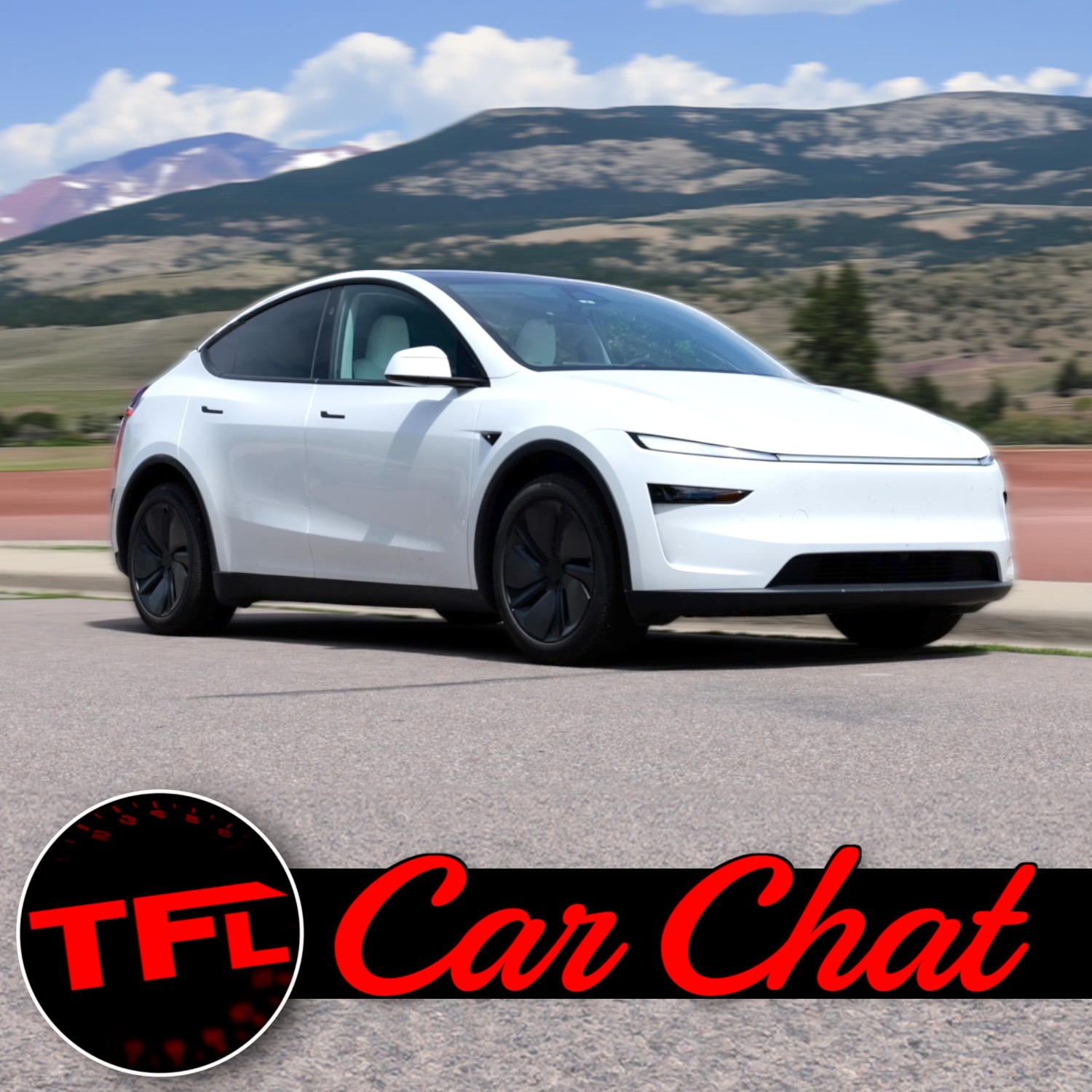
The Tesla Model Y is an electric SUV. Here, they’re talking about a “credit card” style key and how it works with the car.
Term
credit card version
They’re talking about a thin card key instead of a normal key fob. It can be handy for valet parking, but you still have to put it in the right spot on the car to work.
Term
valets
Valets are people who park your car for you. The point here is that a card-style key can make that easier.
The B-pillar is the metal post between the front and back doors. Some keyless systems only work if you hold the key card/fob in the right spot on that post.
The Tesla Model X is an electric SUV made by Tesla. It’s built to carry people comfortably and uses electricity instead of gasoline. The podcast mentions it because its key fob design is similar to the Model S.
The Tesla Model S is an electric car made by Tesla. It’s a larger sedan meant for comfortable daily driving, with lots of features inside. The podcast mentions it because the key fob design is similar to other Tesla models.
Instead of a normal key, the car can use your phone to unlock and start it. If the phone connection has problems, the car may not recognize you and you can’t use it normally.
Over-the-air updates are software updates that get sent to the car automatically, like updating your phone. They can fix issues, but sometimes they can also cause new bugs.
Concept
resets everything
A system “reset” in a modern car usually means the infotainment and/or vehicle control software restarts, which can temporarily disable features. If it happens without the driver noticing, it can make keyless access or other functions unreliable until the system recovers.
A dual purpose window switch means one button is used for multiple window actions. The hosts don’t like it because it replaces simple, separate buttons with a more confusing “toggle” style control.
Instead of having separate buttons for each action, the car makes you switch between actions using one control. The hosts say that’s annoying in practice, especially when you’re trying to do things quickly.
The Volkswagen Golf is a compact car made by Volkswagen. It’s designed to be practical for everyday driving. The podcast mentions it because they’re talking about a newer performance version of the Golf.
A digital rear view mirror is a screen that shows a live camera view instead of reflecting what’s behind you. It’s especially important when the car doesn’t have a normal rear window.
A rear-view camera is a small camera that shows what’s behind you on a screen. The point here is that if the camera stops working, you might not have any easy backup way to check behind you.
Concept
backup visibility
“Backup visibility” refers to having an alternate way to see what’s behind you if a primary system (like a camera feed) isn’t available. This segment argues that removing or limiting physical windows/mirrors reduces redundancy, so a camera failure can leave the driver with little or no rear sight.
The Tesla Cybertruck is a very unusual-looking Tesla pickup. Here, the hosts say its rear visibility is awkward because the window is tiny, and they think a camera-based rear view would make more sense.
Here, “electric doors” means the doors/handles aren’t just moved by simple mechanical parts. Instead, an electrical system controls how they open and close, which can be more prone to problems.
Retractable door handles are handles that pop out when you need them and slide back in afterward. The episode’s complaint is that this extra moving/electronic mechanism can cause reliability headaches.
Microswitches are tiny sensors/switches that tell the car when something is in the right position. The hosts say Tesla added them to make the door-handle system work a bit better.
A physical pivot is a real mechanical hinge that helps the handle move. The hosts are saying this design change makes the handle less dependent on electronics, which can help avoid the earlier problems.
Some cars use door handles that work electronically instead of with a direct mechanical cable/linkage. If that system fails, the car may need another way to open the door so you’re not totally stuck.
The Tesla Model 3 is an electric sedan made by Tesla. It’s designed for everyday driving and uses electricity instead of gasoline. The podcast is talking about a detail on the door area and how the key-related setup is arranged.
The EX60 is a car model being discussed for how it handles a certain problem. The speaker says it solved the issue in a way that worked well. They’re comparing that approach to how Tesla does something similar.
The DC battery is the big high-voltage battery in an EV. They’re saying the door handle can get power from it as a backup, not just from the small 12-volt battery.
The 12-volt battery is the small battery that runs the car’s basic electronics. In this case, it’s used so the door handle still has power even if the main high-voltage system has issues.
The idea is: the car tries an electric door opening first, but if that doesn’t work, there’s a backup mechanical way. The goal is to make sure you can still get out in an emergency.
An electronic door handle is a door release system that uses electronics to unlatch the door. Some cars also include a manual backup so you can still open the door if the electronics fail.
A mechanical release is the “manual” way to open the door latch without relying on electronics. It’s meant to keep working in emergencies, like when the car is underwater.
Term
door handle failing
They’re talking about the door handle breaking or not working correctly. On newer cars, the handle often has electronics inside, so when it fails it can be more complicated (and more expensive) to fix than you’d expect.
They’re complaining about car functions being controlled through the touchscreen instead of physical buttons. If the screen or its software acts up, it can make everyday driving tasks annoying or costly to fix.
The C8 Corvette is a Corvette where the engine is moved to the middle of the car. Because of that, the inside layout is different, and even where a phone charger is placed can be weird to reach.
The Rolls-Royce Phantom is a very expensive luxury car. It’s built to be extremely comfortable and quiet. The podcast mentions that the car uses its battery to help with cooling systems.
Term
ID bus
“ID bus” sounds like a Volkswagen electric-car platform/electronics system. It’s basically about how the car’s computers talk to each other.
A "sunroof delete" just means the car doesn’t have a sunroof. People do it to save a little weight and avoid extra parts that can cause problems later.
Instead of using simple buttons to adjust your mirrors, the car uses a knob/dial. The point here is that it can be slower and more confusing when you need to adjust the mirrors fast.
Rivian makes electric vehicles. In this segment, they’re mentioned because their mirror controls use rotary dials, and the hosts think that makes them harder to use quickly.
Unintuitive controls are things that don’t feel natural to use while driving. If you have to hunt through the screen to adjust something like mirrors, it’s harder to do quickly.
This is about cars where lots of features are controlled through the touchscreen instead of buttons. The host thinks it’s annoying because it can be harder to find what you need quickly while driving.
Physical buttons are real knobs or buttons you can feel and press without hunting through the screen. The host wants them for temperature controls so you can change the heat or A/C quickly.
Temperature controls are the settings for the car’s heating and air conditioning. The host is saying those should have easy-to-reach controls instead of being buried in the screen.
Natural speech means the car can understand normal spoken directions, not just one exact command. So you can talk like you would to a person and the car tries to do the right thing.
Gemini is an AI system from Google. The point here is that some cars can use Gemini, but it may not control as many car functions as smoothly as Tesla’s system yet.
They’re saying the AI only works well when it’s properly connected to the car’s real controls. If it’s not connected deeply enough, your voice command won’t actually change things like volume.
They mention the Volvo EX60 as an example of a car with Google’s AI. The takeaway is that the AI might not be able to control every car setting by voice yet.
The Jeep Grand Wagoneer is a big SUV meant to feel like a luxury vehicle. It was designed with a lot of screens and modern features inside. The podcast brings it up because the speaker felt the cabin didn’t age well and didn’t feel as high-quality as expected.
The Range Rover is a luxury SUV made by Land Rover. It’s meant to be comfortable on regular roads and capable on rougher terrain. The podcast mentions a 2006 Range Rover Sport because it had screens built into the headrests.
This is a 2006 Land Rover Range Rover Sport. The hosts are talking about its built-in screens in the headrests, and whether that kind of tech is actually useful day-to-day.
Headrest screens are little displays built into the top of the seat. They’re usually for passengers in the back, but the hosts question whether people actually use them much.
A passenger screen is a screen meant for the front passenger to see. The hosts are basically saying it might not get used as much as you’d think, and the driver may still end up using the main screen.
They’re saying that for simple things—like checking the weather—people will probably just use their phone instead of the car’s screens. The idea is that the fancy built-in tech may not actually get used much.
A driver profile is like a saved “you” setting in the car. When you use your key or phone, the car can automatically move things like the seat and mirrors to match your preferences.
A key fob is the small remote you carry to control the car. Besides locking and unlocking, it can also help the car recognize you and set things like your seat position.
In this context, “tracking the information” refers to the car collecting usage and behavior data while you drive and/or while you’re logged into the vehicle. That data can then be shared or sold to third parties, which is why the hosts criticize the need to log in.
Company
insurance companies
Insurance companies are the businesses that sell car insurance. If they get data from your car, they may use it to set your rates based on how you drive or how you use the vehicle.
This is when a car feature is locked behind an ongoing monthly or yearly payment. The hosts dislike it because it turns basic conveniences or capabilities into something you keep paying for.
They’re talking about BMW using subscriptions to unlock features in the car. Instead of paying once for the feature, you pay repeatedly, and the hosts think that’s annoying.
They mention Mercedes as an example of charging for extra power through software. The idea is you don’t just get the car’s full capability—you may have to pay to unlock more.
“Full self-driving” is a software upgrade that’s supposed to make the car handle more driving tasks. Here, the host is saying it behaves differently than the simpler autopilot mode, and that the difference can be frustrating.
Autopilot is a feature that helps the car drive by itself in certain situations, like staying in the lane and controlling speed. The point here is that it can act in a frustrating way when you try to do something like passing.
“Detuned” here means a software update changed the calibration and decision-making of the driver-assistance system, making it less aggressive or less helpful in certain scenarios. The host argues the result is worse usability—autopilot becomes annoying because it disengages at the wrong times.
Term
enhanced traffic mitigation
This is a setting that changes how the car tries to handle tricky traffic situations. The host’s point is that it can make the car stop its automated driving and force you to take over when you signal.
Auto start-stop turns the engine off when you’re stopped, then turns it back on when you’re ready to move again. It’s mainly there to save fuel and reduce emissions, but some people don’t like how often it restarts.
A drive cycle just means “one trip” from when you start the car until you turn it off. The host is saying the start-stop setting doesn’t stay the same between trips.
The host mentions their Land Rover Discovery 5 and complains that auto start-stop keeps turning back on. They have to manually enable it again each time they drive.
CAFE credits were a government system that rewarded car companies for building more fuel-efficient vehicles. The host says start-stop was used because it could help cars look better on fuel-economy tests, which mattered for those credits.
Fleet average is basically the “average” fuel economy a company has across all the cars it sells. The host is saying start-stop helped automakers improve that average to meet rules.
In some cars, when the engine shuts off for start-stop, the heating or air conditioning may shut off too. That can make the cabin uncomfortable right when you’re stopped.
A hybrid uses both a gas engine and an electric motor. The host is saying that because of the electric system, start-stop can be less noticeable on a hybrid than on a regular gas engine.
The starter is the electric motor that cranks the engine to get it running. In cars that frequently turn the engine on and off (common in hybrids and stop-start systems), people worry the starter will wear out faster, but manufacturers often design and upgrade starters for that duty cycle.
A cold start is when you start the engine after it’s been off for a while. The oil hasn’t fully circulated yet, so the engine can wear more during the first seconds until everything warms up.
Some cars shut the engine off when you’re stopped and restart it when you’re about to go. The claim here is that this isn’t as hard on the engine as starting it from a cold, un-warmed state.
These are car features that try to help you drive more safely. They use sensors to watch what’s happening and may warn you or even step in, like nudging the steering or alerting you to danger.
That “tugging” is the car trying to steer you back into the lane. If it’s too sensitive or thinks you’re drifting when you aren’t, it can feel like it’s fighting you.
They’re talking about General Motors cars. In some GM vehicles, the seat can vibrate to get your attention when the car thinks something needs your focus.
Some cars watch for signs you might be getting tired, like yawning. If it thinks you’re fatigued, it will warn you—sometimes even when you’re just yawning for other reasons.
These are the car’s “help” systems—things that warn you or sometimes even step in to help you drive more safely. Some people find them annoying if they trigger too often.
Emergency stopping is when the car automatically brakes strongly to help prevent a crash. It happens when the system thinks a collision is about to occur.
Lane keeping is a driver-assist system that tries to keep the car from drifting out of its lane. It does this by steering for you, so if it reacts at the wrong time it can feel sudden or scary.
Emergency braking is the car’s automatic “stop now” feature if it thinks a crash is about to happen. If it triggers at the wrong time, it can brake too hard and create danger for the cars around you.
LIVE
The new WeGovie Pill is now available through Weight Watchers.
Powerful GLP-1 results in a simple pill at the lowest price available,
and with Weight Watchers, you can get doctor support and personalized nutrition programs.
See if you qualify at WeightWatchers.com. Add our review to our approved by Novo Nordisk.
It's time to bust out the tongs and enjoy USDA certified tender steaks, juicy burgers,
and more from Omaha Steaks. And you can get 50% off site-wide at OmahaSteaks.com.
Plus, you get an extra $35 off with promo code YUM at checkout.
Terms apply. See site for details.
There's nothing like firing up that grill for the first cookout of the summer.
And with so many protein options, you're bound to be able to make something for anybody.
What better way to honor the Memorial Day holiday than with a meal from America's original butcher?
Every entree is flash-frozen, vacuum-sealed, and ready for when you want to grill.
Omaha Steaks removes the guesswork by delivering expert-crafted beef with guaranteed quality and
consistency. Start your summer off right with Omaha Steaks.
Visit OmahaSteaks.com right now for 50% off site-wide during the Memorial Day sale.
And for an extra $35 off, use promo code YUM at checkout.
That's OmahaSteaks.com with promo code YUM at checkout. Terms apply. See site for details.
Hey guys, welcome to this week's episode of TFL Car Chat.
And you'll notice that next to me is not Nathan, is not Andre?
Not Tommy.
It's not Tommy.
It's Jen.
Great to have you on board, Jen. You're here because, well, I wanted you here, but mainly
because it's fun having somebody from our very popular Car-ish podcast join the Car Chat team.
Thank you very much. Good to be here.
Yeah, so if you guys haven't had a chance to check out Car-ish, I think it's the best podcast we do.
You, Tommy, and Kate have a great time, and it's fun to have you on this one.
So we're kind of doing a collab, I guess.
Okay, I like it. I like it a lot.
And today we're going to be talking about, what did I call this thing?
Well, I mean, I have a good name for this.
Worst new car tech.
Yeah, yeah, it is.
We're going to give you the top 10 worst new car tech that we have stumbled across.
And I've got my list and you've got your list.
I've got a couple on there too.
Okay, good, good.
But before we get to that, I've had a freaking crazy 24 hours with the craziest things that I
never thought were actually possible.
So as you know, a couple months ago now, maybe longer, we bought a 2006 Honda Ridgeline.
And we did a bunch of things with it.
We kind of put a soft top around it.
We compared it to the new Ridgeline.
And now it's time to sell it.
So I put it up on Facebook and I put it up on Craigslist.
And if you're interested in it, shoot us an email at info at TFL car.
And I'll send you a link to the Facebook page.
But you would not believe like the crazy stuff that people have been doing trying to either,
I don't know, let me give you an example.
Yeah, yeah, yeah, yeah.
This just came in right before this podcast.
Okay, so this was off of Craigslist.
Okay, I don't know who this is.
Don't know this person.
Just get a chat because they do chats.
And the chat is, hey there, I'm interested in your Honda pickup.
Would you be able to deliver it to Louisville, Colorado per chance I have cash?
Oh, he has what?
Per chance, not that he has cash, per chance I have cash.
Per chance.
So he's basically, or she's basically asking me to bring the truck to her town if she has cash.
That doesn't even make sense.
Or she just said everything very incorrectly.
Yeah, but okay, let's say you say that correctly.
Basically what they're asking is, can you bring this car to a stranger you've never met?
Somewhere in town which could be sketchy.
And maybe I have cash to pay for it.
Maybe, I mean that sounds all Craigslist to me.
Like it sounds like a typical Craigslist exchange.
But it gets even crazier.
So yesterday, I'm doing my grocery shopping and I get into this conversation with another purchaser.
Once again, don't know who this person is, don't know what their background is.
So they chat and they say, you're asking retail based on KBB, which isn't true.
We're asking basically $7,000 for the vehicle, but it's completely sorted.
Yeah, of course it is.
It's completely, so we've done a lot of things to it.
We've added a soft hopper to it and taken it into our local Honda place.
And they've looked it over and made sure that it was in good shape.
It's a legit truck.
Yeah, we fixed the alternator.
It had the timing belt change, which is like a $2,000 repair.
We changed the spool valve, which is a common problem with it anyway.
So we did all this work.
It's got new tires.
I believe it's close to a 100 cars you can get.
There are some issues with it, mainly cosmetic.
So there's a dent.
There's some hail damage, but you know, it's a $7,000 car.
Yeah, exactly.
Anyway, so anyway, they say, is there any reason you're asking 7K?
So now this person is asking me to justify why I'm asking 7K.
This one is retail at a dealer full leather package with 70K fewer miles.
It's $1,800 more.
And he sends me a link to a Honda Ridgeline.
I'm not making this up.
You can see it, right?
That's for sale at some dealer.
So the car replies.
What did I say?
Thanks for the note.
I appreciate it.
I would kindly suggest you buy the black one.
If you think this one is too expensive.
They go buy that?
What are you trying to negotiate down right now?
He hasn't made an offer and he's asking me to justify why I'm asking 7K for it.
Some people be wild, Roman.
Then it gets better, right?
So then actually I justified it.
I basically said, you know, we've done all this stuff to it.
And we basically spent, you know, at least 7K on this thing.
And I said that, you know, we spent, we put this brand new soft hopper on it.
And I said we spent 1500, which we didn't.
Soft hopper gave us the thing.
But it's still worth it.
It's still worth 1500.
But I didn't know how much it was.
So then he comes back, right?
And he sends me that.
Another different, oh, the soft hop itself.
And how much it cost?
A little over $1,000.
Yes.
So he's like correcting me.
Oh my God, dude.
Give up.
Go find something else.
First of all, I didn't try.
I was, I honestly thought it was $1,500.
Because the bigger trucks, they are $1,500.
That's how much, you know, usually if you have a full size truck,
those soft hoppers are.
So I just assumed that.
So excuse me, I didn't know.
I wasn't trying.
But then to send me a link to the ad that it's $1,100, like to correct me.
It's like he's looking for an argument.
Yeah, yeah, yeah.
And then I'm thinking, like, once I got that, I'm thinking to myself,
if I sell this car to this person, if I saw, and something is wrong with it.
Oh, no, you can't.
People are like, this is a 196,000 mile car.
And there will be something wrong with it.
Because that's what 196,000 mile cars are, right?
I actually sincerely believe, and I was at Pebble Beach this year,
that even a concourse winning Pebble Beach car
probably has like seven things wrong with it.
This is the thing when you buy classic or used cars, they all have issues.
If you want a perfect car, get a new car with a three-year warranty.
Yes.
For him to send you links to other vehicles and the other soft app,
like, dude, just go find something else.
Yeah, so that's on Craig's list.
And then I love, like, I'll show you the ones,
Facebook ones are even more hilarious, believe it or not.
I don't know why I'm doing this at this point.
I am just very tired of this.
So the most common thing you get is, hey, is this thing still for sale?
Mm-hmm, of course.
And then they ghost you.
Yeah, and then they ghost you.
But I always love this.
So I've been offered this now.
Read that one.
I have 5,000 cash on my person.
If I were to come today, would we be able to sort a deal?
So first of all, are you going to take out a loan on a $7,000 truck?
What else are you going to buy this thing with?
You going to give me traveler's checks?
Somehow they feel like they're going to work the deal
because they're bringing in cash.
Yeah.
What else are you going to buy with, dude?
No, it's not like it used to be in the bag where cash was king.
Yeah, and then there's a rule of thumb that maybe a lot of people don't know.
But for instance, if you're putting something up,
usually the rule of thumb is that you'll take 10% less.
So at $7,000, you would more likely or not on Craigslist or Facebook
take like 500 to 700 off the price, right?
But when they're offering 5,000, they're basically subtracting like 30%.
That's quite a low ball.
He wants to go a back and forth quite a few times.
Not even that.
I think he just wants to give me 5,000 and then flip the car.
That's a little rude.
Yeah.
So look at this one.
So this one came in this morning.
So can you read that?
Excuse me.
At what price are you selling the car?
I'm interested.
Well, what does it say here?
It literally says right there.
6,995.
Some people just don't open their papers.
It's unbelievable.
So we've been selling a lot of cars.
We just sold our old Fiat Cinquecento, the 1971.
Sweet little babe.
And the guy who bought it was incredible.
So these are idiots, obviously, or at least they're very much flippers
who want to buy the car.
Because if you look on Facebook,
the nearest comp to the car that we're selling is $2,000 more.
There's one car that's less, but it's got a rebuild title, which is always.
A whole more issues.
So we're at like $1,000 to $2,000 under.
And what people are trying to do is buy it at $5,000 and then go back and flip it.
And you can see in there, if you go look at their profile,
you can see that they've got like 10 other hondas for sale.
So it's obvious that they're buying this thing to try to flip it,
which is fine if that's your business.
Don't try to low ball everybody.
So anyway, we just sold this and the guy who bought it was incredible.
The nicest guy in the world.
So it also goes the other way.
He was sweet.
He understood the car.
He came.
He took it for a drive.
And one of the things I try to do when we sell cars is be completely
transparent about it.
Yeah, of course.
So this thing had like this like plank.
There's the car like a plank in it when you drove it.
So I showed it to him.
And in typical TFL fashion, we buy high and so low.
So we bought that car for like $15,000 and we ended up selling it for $11,000.
Wow.
And it also has a little bit to do with the market.
The market on the Cinquecentos has come down over the like the three to four years.
But our business isn't flipping cars, right?
Our business is we buy these cars.
We do a video series with them.
Hopefully we make our money on the videos.
And then if we can kind of sort of get what we paid for it.
And to be fair, the reason we bought this Fiat 500,
which by the way, it was a SEMA car.
Oh, it was.
I didn't know that.
It was like a Fiat parts imported, built as a SEMA car.
Oh, cool.
So it was, you know, rust free.
Yeah.
And cosmetically, it was beautiful.
Oh, it was.
It is beautiful.
I remember.
I loved that little guy.
And the reason we bought it was we, you know,
we have a very small double door opening to our office.
It was one of the only kinds.
Because a few years ago, I was watching, I had a friend at Edmunds.
And Edmunds actually has a Corvette stuck to the wall
when you walk into their office.
So we're not quite at Edmunds level of.
But still, you know, I remember the first time I walked into the office
and I was kind of blown away by seeing the little Fiat inside.
Yeah.
It was really cool.
It was like office furniture.
And it was one of the cars that could fit between the double doors.
Office furniture.
And we have another piece of office furniture.
I know.
Yeah, that thing is cool.
Yeah.
We exchanged it for the Sports 800.
And so, you know, even though we lost 4,000 over like three years,
it did have value beyond just, you know, as a car.
Right.
More than if just a regular person owned it.
You know, we actually used it for work.
So it worked out in the end.
Yeah.
And so this guy, Gary, who bought it, thank you, Gary.
I think, you know, he was wonderful.
We actually delivered it to his house.
Oh, nice.
So we will deliver a car.
I mean, yeah.
If you're not a weirdo, you know.
The thing does like 45 downhill with the wind.
And I didn't want him driving across Denver.
I remember.
I took it on foothills.
Yeah.
It barely made it.
Yeah.
Yeah.
I think I like 18 horsepower.
Yeah, he's crazy.
So when he said, hey, you know, I don't have a trailer
and I have to rent one from you.
I was like, don't worry about it.
We've got, you know, trailers everywhere.
So and trucks will be happy to deliver to you.
And then we went out to lunch.
We went to the bank transferred money.
It was just a wonderful process.
And I'm so, so grateful when you actually find somebody who
understands the car and you find a good home for the car,
and it makes so much better.
Yeah.
Yeah.
I couldn't agree more.
All right.
So let me get to the list.
So as you know, we go on a lot of new car unveilings, first drives.
And I think we've done versions of this list before.
But some of these things are kind of good when you first see them,
but then in real life, they're kind of silly.
And some of them are never any good.
But let's talk about the worst new car tech that we've experienced.
And I've got a list of top 10 in a TFL fashion,
and we'll do it starting at number 10.
And that is number 10 for me.
And I remember seeing this for the first time,
like almost 10 years ago now at the Chicago Auto Show,
that kick to open tailgate.
In other words, you got to do the river dance.
Yes, exactly.
So I remember on my 335, I had the kick open tailgate.
And I swear, I would look like an insane person in the parking lot,
waving my feet underneath, trying to get it to activate.
And half the time, it wouldn't even work.
Exactly.
Like it does, it only works sometimes.
And you don't know why it doesn't work.
Like there's some connection.
Is it covered?
Or I don't know.
Yeah.
Yeah.
And the idea is like your hands are full of groceries,
or babies, or groceries and babies.
And so this is an easy way.
But it never turns out that way.
You end up struggling to find the key in your wallet,
or in your pocket, or your purse,
and you're still holding whatever you're holding.
It's a great idea, theoretically.
But it just hasn't really been brought to fruition too well,
I feel.
Yeah.
And I think it also might be one of these insidious things
where it's, in a way, perhaps cheaper to do that
than to actually put a physical button on the key fob.
Yeah.
OK.
So they're trying to market it to be fancy,
but it's actually just cost cutting.
It might be cost cutting.
Kind of like screens.
Yeah.
Yeah.
It might be.
A lot of these things are cost cutting.
It's time to bust out the tongs and enjoy USDA certified tender
steaks, juicy burgers, and more from Omaha Steaks.
And you can get 50% off site-wide at OmahaSteaks.com.
Plus, you get an extra $35 off with promo code YUM at checkout.
Terms apply.
See site for details.
There's nothing like firing up that grill
for the first cookout of the summer.
And with so many protein options,
you're bound to be able to make something for anybody.
What better way to honor the Memorial Day holiday
than with a meal from America's original butcher?
Every entree is flash-frozen, vacuum-sealed,
and ready for when you want to grill.
Omaha Steaks removes the guesswork by delivering
expert-crafted beef with guaranteed quality and consistency.
Start your summer off right with Omaha Steaks.
Visit OmahaSteaks.com right now for 50% off site-wide
during the Memorial Day sale.
And for an extra $35 off,
use promo code YUM at checkout.
That's OmahaSteaks.com with promo code YUM at checkout.
Terms apply.
See site for details.
Support designed to help you navigate what comes next.
With trusted experts who guide you,
food plans that work with your body,
support to help manage side effects,
plus access to GLP-1 medication.
Weight Watchers MedPlus is designed
to help you lose more weight.
Watch it work.
Get started today at WeightWatchers.com.
All medical services are provided
through our affiliated medical group, Weight Watchers Clinic.
Medications require eligibility and prescription.
Individual results may vary.
See site for more details.
Let's go to number nine.
This is the one I absolutely hate.
And there's two versions of this.
There's the one like the Polestar 4,
which has no buttons on the key fob.
Drives me crazy.
Or the one that a lot of the manufacturers
do like Genesis,
where they put the buttons on the side of the key fob.
Yeah, masses too.
Yeah.
Yeah, they do it on the side.
Yeah, you've got this giant bit of real estate.
And then teeny tiny little buttons on the side
that you can't see.
And you're like, wait, is that one of those
do not pee on my lawn, dog signs?
I feel like it's harder to push those buttons too
when it's on the side.
You really have to, you know,
if it was just on the front,
like 95% of the other key fobs,
it just makes more sense.
I don't know.
Yeah.
And then this Polestar 1, it's just...
Why?
Why even have it?
Why not just have it on your phone at that point?
It's just so silly.
I do have to say that a lot of this was pioneered by Tesla.
So Tesla did this.
I'll get...
We have that Model Y right now.
So they did the credit card version of that, right?
Which is also problemat...
No, that's not it.
Or is it?
I'm getting it out of my wallet here.
It's good for valets.
Yeah, so it's good for valets,
or if your phone dies or anything like that.
But also, you've got to put it in the right place on the car.
And I don't know if that's the right place.
Sorry.
Where does that go?
Where do you go?
So it goes on the B-pillar, about halfway up the B-pillar.
And that's the thing is a lot of people don't know that.
Yeah.
So they're waving it all over their car,
and it's not doing anything.
And then don't you have to put it someplace special
once you're in the car?
Yeah, so I remember...
This is a Tesla credit card, yeah.
Yeah, I remember back in the day, it had to go...
So I believe right below where the chargers are
and the cup holders.
I think that's changed.
I think now it goes on one of the phone charging pads.
I could be wrong.
I think you're right.
Yeah.
So it's not as simple as just having it in your pocket
and walking up to the car.
Now, I will give Tesla a little bit of credit.
Early on, they had key fobs that looked like the car.
Yeah, I remember those are cool.
You know, the Model X key fob and the Model S key fob
actually kind of resembled those models.
I think Porsche did it first.
Okay, yes, fair.
But there weren't any real indications on there
that there were buttons.
So just like on the screen here,
if you double click the top, it would unlock it.
If you clicked it once, it would unlock it.
Same with the front, same with the trunk.
But there weren't any symbols on there
to indicate that it would do anything.
So sometimes people didn't even realize that it had buttons.
Yeah, you know, I do have to give Tesla credit.
I mean, it's one of these things where it's both good and bad.
I have to give Tesla credit for pioneering a lot of the thing.
There's two things that I love on Teslas
or loved on Teslas.
Number one is your phone is a key.
Yes.
When it works, it's great.
There's times when it doesn't work,
which is a bad thing if you don't have the credit card.
Exactly.
And that was something I ran into a lot
when I worked at Tesla Service.
You know, a lot of times, you know,
like over-the-air updates are great,
but not when they give you a bug.
And then now something in your car
or your phone is key doesn't work
or it resets everything and you don't even realize.
And the upside to that, of course,
is if you haven't owned a Tesla,
you can give access to people to the car.
So you can go in the app and you can like give access
to your friends or your parents.
And then they can just use their phone.
Right.
And I don't know if that access expires
or if it can do like temporary access to like a valet
or is it just what you do with it?
I doubt they would do it for a valet.
I think the whole reason they have the key card
was initially for valets.
So, you know, I do love that.
And the other thing I love, which the Model X had,
and now it's not another car,
and I can't think about the car,
but I love that feature where you would just push the brake
and the door would close.
Oh, I did love that.
That was so nice.
I loved that so much.
I don't know why more manufacturers don't do it.
It's not soft clothes.
It's a full clothes.
It's a full clothes,
and then it cinches at the end.
So I really, really liked that feature.
And number eight has to be one of the most insidious things.
This is a Volkswagen thing,
the dual purpose window switch,
where they got rid of two buttons.
Oh, I hate it.
I hate it so much, you know.
We had it on the ID buzz.
And I think I don't know what problem they were trying to solve
by removing two simple switches.
I'm guessing they ran out of switches at Volkswagen.
They're like, now you have to toggle.
It just absolutely made no sense,
and it was kind of infuriating over time.
There was never a time where I was like,
this is a good idea.
Well, the problem with it was,
a lot of these things, as a concept, are good,
but then in practice are horrible.
So in concept, you just toggle between switching the two switches
from the front to the back,
and that should be relatively straightforward.
But in practice, let's say you're pulling up to the toll gate,
and you've got 15 people behind you,
like at the airport,
and you're already feeling stressed out,
because you want to let that person get out of the airport
as fast as possible.
Or let's say it's a regular toll gate,
and you're just on the highway,
and you've got to switch to the rear windows,
and you don't realize you switch to the rear windows.
So you pull up, and you close,
and you open the window,
and instead of opening the front window,
where the toll gate is,
you're opening the rear window,
where nobody's at.
And you're getting flustered.
Yeah, and you look like an idiot,
because people think you don't know how to open it.
So now you're already upset that someone's waiting,
and now you look stupid,
because you just opened the wrong window.
Nothing that's too excruciating.
Of course, you could figure it out.
It's just like you said, in practice,
it's not exactly the best.
Yeah, and so like I said,
I think Volkswagen just ran out of window switches,
so this was their solution to the problem.
And I think that's something
that people have really learned to hate,
and so I think Volkswagen is backing off of that.
Yeah, I noticed that in the new GLI that we have,
so that's good.
So the Polestar 4.
Polestar 4 doesn't have a rear window.
Is this a problem?
In need of a solution?
Again, a solution that was never a problem to begin with.
Yeah, it's a hedge scratcher.
Yeah, so the Polestar 4 doesn't have a rear window,
so you're forced to use the digital rear view mirror.
And then if you look on the video
that we're showing right here,
thank you, Cole, for showing that,
you can kind of see the cutout where it would be.
Why just not have it?
Yeah, and you just, I asked about that.
They said that there's electronics in there,
and the reason the rationale they gave for that is if you don't,
and I don't know if this is real or not,
I'll just repeat what they said,
is if you get rid of the rear window,
it gives the rear passenger more headroom.
Whether that's true or not, I don't know,
but it makes the car darker,
and it makes you completely reliant on the camera
instead of the window, and it just feels silly.
You know, having worked in the service industry
for a tech-focused car company,
I've seen plenty of times where cameras go out,
and when you don't have a window to fall back on,
now you have zero way to see behind you.
Yeah, I mean, first of all, let's say you're getting a vehicle,
I don't know, like a truck with a camper on it,
where you can't see out the back.
Yeah.
It's annoying, right?
Of course.
There's like muscle memory where you,
automatically in an emergency or something happening,
you look at the rear mirror to see what's going on behind you,
and when you don't have that, it's weird.
Now you can solve that by putting a camera back there,
and then making the mirror a camera,
which by the way, Tesla should have done in the Cybertruck,
because a little tiny window in the Cybertruck is ridiculous.
And then they instead of putting the screen
into the rear view mirror, they put it in the screen.
The screen for the camera is in the screen,
and so when you go look at the rear view mirror,
you see nothing, and then you got to look down.
It's a stupid solution.
But what ends up happening is it's hard for a lot of people
to focus.
Yeah.
Because your eyes are focused kind of out onto the road,
and then when you put the camera screen in the rear view mirror,
it's not natural.
It's a different focal point.
I usually turn it off.
I can't get used to it.
You know, that's kind of a theme that runs throughout
all of these things, and that is that half the people like it,
and the other half don't.
Yeah.
But the problem with that solution is,
have you ever had a bunch of friends sitting around,
and somebody said, you know what?
What we need to do is get rid of the rear window of a car.
Wouldn't that make my life a lot better?
Why did that even come in?
Okay, yes.
It's going to give your rear passengers more room.
Why don't you just design the car to be a Scotch bigger in the back?
Yeah.
Why do we have to go so far as to remove an entire window?
I don't know.
That doesn't make sense to me.
All right.
Number six is, I think, the thing that a lot of people really hate,
and that's, you know, electric doors, and then, of course,
as part of that are the door handles that retract or come in and out.
Tell me, how many of those have you replaced on Teslas?
Oh my gosh, door handles?
Yeah.
How many of those do the retractable go ahead?
I could not count.
The Model S is horrible, and back in the day,
it used to be $1,000 to replace it.
Now they have, like, microswitches and everything like that,
and it becomes a little cheaper.
Would you say that that was one of the most common things that people brought?
1,000 percent.
Now, they did mitigate that a little bit with the 3 and the Y,
and that they have a physical pivot for the door handle,
so it's not electronically popping out,
but I feel like that's just another solution we never really had a problem to.
And the other problem is, of course, when you do that,
then there's issues with ice, reliability,
and I've had a car where the door fails on the driver's side.
It is one of the most, the door lock or the door handle.
It is one of the most annoying things that can happen.
Oh, yeah.
It doesn't make the car undrivable,
but have you ever tried crawling into the car from the passenger side?
I've had two number of times.
We had one customer that tied a string to the door handle
and then looped it through the back door
so that he could just pull the string.
It was ridiculous.
You shouldn't have to do that on a $100,000 car, you know?
Yeah, and then the other thing that happens,
when you have the electric door handles, right,
the ones where they're not mechanical,
but they're electrically activated,
you have to have a secondary backup.
And Volvo, and I think Tesla does this now too,
the way they've solved that problem is in the past,
you had the electric door handle and then that would fail,
and then somewhere in the door, you had a mechanical door handle.
And in the Tesla, I remember, especially,
I think it was either the Model Y or the Model 3.
On the back door, it was hidden in the door pocket underneath,
like a little, you know, whatever sat in the bottom of the door pocket,
you lifted that up and then there was like a physical control.
Kind of like if you were stuck in the trunk.
Right, sometimes it's so hidden,
you don't even realize it's there.
And people, there is a story where an elderly gentleman died
in the Tesla because the door handles failed,
he couldn't get out and he didn't know
that there was a secondary way of opening the door.
And it's also, I'm sure, a nightmare for emergency responders.
Oh, of course, there's just supposed to know
how all of these, you know, instances work as well.
And so the way the Volvo EX60 solved it,
and I think Tesla has done this too,
that's at least what the comments said,
I don't know, is that they have the electric door handle
and it runs off both the 12 volt and the DC battery.
So it runs off both the small battery and the big battery.
So in case one goes bad, you still have power to it.
But then, in case both go bad, the first time you lift it up,
you're doing the electric opening,
but if you keep going, you do the mechanical one.
Okay, that makes more sense.
Yeah, so you can almost imagine a scenario,
you know, the car goes flying into the river or a lake.
And you're trying to break the window,
which won't break, is there hard to break?
Yep.
And then, you know, now with this Volvo,
I think it's also too, if you reach the door handle
and you lift it up all the way,
you'll mechanically open the door and swim out the safe.
You know, Lexus has a pretty similar interior door handle
where if you push it, the electronic door handle will release.
But if you pull the same little lever,
then it's the mechanical release for it.
Yeah, but that's not intuitive.
No, but it is.
You gotta pull instead of push.
That's true.
Yeah, but at least it's the same.
It's not a separate door handle that you gotta go.
Right, well, I mean, in a typical fashion,
when you open a regular door handle,
you usually pull it open.
But intuitively, yeah.
But why?
Why are you, why are you, it's like...
Why do we have to do that?
Why are we solving problems that we've created?
And it's just making the car more expensive to repair
once it's out of warranty as well.
Yeah, yeah, and I gotta be honest,
one of the things that I was super worried about
when we had that 100,000 mile Tesla
was the door handle failing.
Surprise, it didn't.
Yeah, I think it did.
I think it actually did.
Oh, it did?
And the previous owner fixed it.
That makes sense.
But you know, the thing about that is when one goes...
Oh, it's not long until the other follows.
It's the same mechanism.
It's so bad.
Yeah, it's always the same, right?
Same thing with Windows.
Nightmares about door handles on Teslas.
All right, let me look at the next one.
Oh, this is the one that also is maddening.
Event controls in the screen.
So there are two kinds of people, right?
I think in this world.
There are people who set their events and forget them,
and then there are people like me who always mess with them.
Do you set and forget or do you mess?
Okay, I will say.
I typically set and forget.
That auto button is beautiful.
It usually just, very minimally,
do I ever have to actually adjust my temperature gauges?
But when I do want to move the vents,
I don't want it to be a difficult thing
where I have to go through the screen
and a million different things.
I just want to be able to grab something physically
and move it around and be done.
Yeah, once again, it's a problem that didn't need a solution.
And this is also pioneered by Tesla,
or maybe somebody else did it before, I don't know,
but Tesla certainly popularized it.
Oh, yeah.
And the issue for me is if you're one of those people
who constantly adjust the vents
because all of a sudden the sun came out
and the clouds went away...
Then you got to keep going into the screen,
which wouldn't be that horrible,
except that little pictograph you get,
never seems to actually correspond to where the thing is blowing.
I mean, okay, I think I've got a blowing right into my chest.
And then I'm like, I can't feel anything.
And then you're like...
Oh, then you have to do this to make it wider or yes.
Or this to make it like, you pinch to make it.
I'm like, oh, now it's blowing into my hair.
Yeah, it's just a little crazy.
Again, another solution to a problem we didn't have.
And I guess there are advantages to that.
So you could have it be automated.
You know what I'm saying?
So you could have a setting like those old fans
where it sweeps across.
That's true.
Yes.
Oh yeah, the oscillating fan.
You could have an oscillating fan.
So there are things you could do
that would make it more interesting.
But it seems just added complexity.
When I found out I was going to be a parent,
I immediately felt a lot of anxiety and worry.
So I went on to BetterHelp
to try to look for a therapist to help me with that.
My relationship with my family and with my boyfriend
and with myself were suffering.
I really needed help.
I was ruminating a lot,
really getting those thoughts out to a therapist
and getting feedback was just life changing.
Discover what BetterHelp online therapy can do for you.
and even up to $5 million in identity theft insurance.
All backed by 24-7 US-based fraud support,
other companies might sell just credit monitoring
or just a VPN.
Aura gives you all of it,
together at the same price competitors charge
for just one service.
Start your free trial today
at aura.com slash remove.
Protect yourself now at aura.com slash remove.
Okay, number, I was number five.
Oh, this is another one that drives me crazy.
And I know I kind of get the reason for it,
but hidden phone chargers.
In other words, you've got the wireless charging
and especially the Germans love to put it
either in the armrest.
So you have to like put your arm on top of it.
And I know that I shouldn't be checking my phone,
but let's face it,
we are kind of addicted to these things.
Yeah.
All right, and it's nice in the Tesla
where you just put it up on the charger
and you see the phone.
So if you get a message or if something dings,
it's there as opposed to like hiding in a cubby
or hiding it underneath your armrest.
Right, I see where they're coming from.
I personally try to just keep my phone in my purse
because I don't have wireless charging in my car.
So it's not really an issue I seem to face on the daily.
But I get why, you know, they could decide
we're just going to hide it
because you shouldn't be on your phone anyways.
But I agree, you know, sometimes it's nice
to just be able to see it
if there is a phone call coming in or anything like that.
Yeah, I mean, there is what is right
and what the rules are.
And then there's the way that people are.
You're going to do it still.
Yeah.
And so I think there has to be like some kind of
understanding that people are going to do it.
So by making it harder,
you're not actually solving anything.
You just you're just not going to complain.
You know what the crazed the hardest one is?
We have this car.
Have you sat in the C8 Corvette?
You know where the phone charger is?
I have no.
Yeah.
So the phone charger is behind your right elbow.
So there's a there's like a little, you know,
wall behind you.
And there's a little like it's back here.
It's back here behind your right elbow.
So if you like your elbow very quickly, you would hit it.
So you have to like dislocate your shoulder in order to.
There's no way and if you did want to get it
while you're sitting in traffic,
you would have to you'd have to reach over
unless you're left handed.
And somehow you see what I'm doing?
It's like it seems so ridiculous to even just
set it there to begin with.
Yeah.
I think it was ergonomically they they did that
like that waterfall of HBC controls.
And then they put the push button transmission
and there was no room in that.
They're like, oops.
Oops.
So now where do we put it?
At that point, you just don't do one, I guess.
I've used it exactly once.
And that's why because it's so hard to put.
Yeah, it's ridiculous.
And I haven't seen the new one.
This is the upgrade to the cabin in 2026.
We have the 2025.
So maybe they fixed that.
Okay.
But but in the 2026 is behind there.
All right.
Another another stupid one and no screen on the roof window,
you know, nothing to block the solar radiation.
Yes.
So especially with Teslas,
they have that huge roof wide panoramic sunroof.
And when you don't have any type of sunshade to go in there,
the cabin gets hot.
And then the car has to turn on, right?
You get the old message on your app saying
heat mitigation or whatever the heck it says.
And now you're using battery to cool the car off.
There's that phantom draining happening right before your eyes.
But not only that, I mean, just the cabin itself,
as soon as you get into the car, it is just like an oven.
It's so bad.
So to not even offer some sort of shade from factory,
you know, as standard,
I think I think they offer it as an accessory.
Right.
But just as a standard, you know, option.
And of course, the Tesla ones, I'm sure like 200 bucks,
whereas I just got one on Amazon for like 40 bucks.
Yeah.
And that was a nice one.
I just I just yeah, I just noticed it the other day.
I did like that a lot.
Yeah, it was much cooler.
Yeah.
And then like the Volvo and a lot of the cars are solving it
with those electromagnetic electrostatic.
I don't know, you know, the roof that actually switches to opaque.
Yeah, yeah.
Yeah, I think the ID bus had that too.
But it's like a $2,500 option, I want to say on some cars.
It's not cheap.
My gosh.
You know, Porsche had it on their cars as well.
It's expensive.
I could see it on a Porsche,
but does it have to be on everything?
Yeah, and I haven't talked to a designer,
but it seems like having just a shade that you could pull.
It's so much better.
It would be so much better.
Yeah.
And I'm kind of of two minds when it comes to those roofs.
There is, I think for the rear passengers,
they're very nice because it does make the car more airy.
It does make it a little bit more less cave-like in the back,
but I'll give you an example in a truck.
I hate sunroofs in a truck.
I'm like, why?
Interesting.
To me, that's like a utility vehicle,
and I'm not out there sticking my head out.
Well, that's how I feel about sport cars.
Usually you want a sunroof delete because that's weight savings.
Usually if there's a sunroof in a fancy quick car,
you know that they don't mean business.
All right.
Number two on my list, rotary dials for the mirror controls.
Tesla Pioneer, that Rivian does it.
I think one of the easiest and cleverest,
most intuitive ways to do the mirrors
is when you have that little switch that's on the door.
Left button, right button.
Or switch it, rotate it, and then up, down, left, right.
Button to fold them in.
Yep.
And then the second you put it into the rotary dials,
it just becomes very unintuitive.
And then you get a search for it in the screen.
It's the same thing,
like you're pulling up to the toll booth with one set of switches.
You know, when you do need to move the mirrors in a quick fashion,
you're not going to do it quickly.
I remember when we got our first Rivian,
I literally, maybe it's just me.
And look, I'm getting old.
So once upon a time, this stuff came naturally to me.
Now I got to think hard about it.
But I spent like 10 minutes, my drive home,
trying to figure out how to adjust my Rivian mirrors.
Oh, no.
Because I knew it was in the steering wheel,
but I couldn't find, and I think now they're doing shortcuts to it.
But still, there's so much going on in the screen.
It's a lot.
It's a lot.
It's everything.
Everything is in the screens now.
Yeah.
Yeah.
And that's my number one, by the way.
Everything in the screen.
Yeah.
Oh, exactly.
In the screen is everything.
Yeah.
It drives me nuts.
My biggest thing that I will ding a car for
is not having at least physical buttons for the temperature controls.
That is something, if you want to put your music and phone
and everything else in the screen, fine.
But let me keep my ding temperature controls.
You know?
Yeah.
And they're solving that not the right way,
the half-assed way, by displaying the temperature controls
in the bottom of the screen where it's always there.
But that doesn't necessarily solve the problem.
It just makes it a little bit easier to navigate to them.
But if you're driving and you still have to push the thing and you're like.
That's the whole point is if you're not
supposed to be looking at your phone while you're driving,
apparently a giant screen is better.
Because if I had physical controls,
I could still keep my eyes on the road and adjust a dial.
But I can't do that in a car.
Yes, there is voice control.
So you can use that to mitigate that issue.
But I don't want to have to talk to my car all the time.
What if I'm in the middle of singing a banger song?
I don't want to have to, you know,
stop that and talk to my car to say make it cooler in here.
You know what I mean?
I want to just be able to turn it down real quick.
I also think some of this will get mitigated with AI.
Because for 20 years now, manufacturers have been trying to add voice controls to cars.
And for 20 years, they have failed miserably.
So bad.
So bad.
Like it never works to the point now where you don't even try it.
Yeah, I've never used mine.
Because unless you say it exactly the way they want you to say it,
and then you have to remember, it's just not worth it.
But now with AI and natural speech, with like rock, with the Tesla, right?
Rock, yeah.
You just go in and you say, hey, navigate to the Best Buy and it'll be okay.
Yeah, you got it.
I think I once said my butt is too warm.
And it turned on the ventilated seats for me.
So I, you know, you could really be pretty layman with it and it'll understand you.
Yeah, so I think that will help.
But it's not there quite yet.
Because obviously the latest cars have only started to creep in with AI.
And it's mainly Tesla that's doing it.
Gemini, which is Google's AI, is now being incorporated into,
but oftentimes, unlike Tesla, because it's not integrated with the manual.
It's integrated in the car, but the rock is owned by Moskright.
And so he can completely integrate the AI into the car.
But Gemini is owned by Google.
So if you put in a Volvo, like in the EX60, you can't go to the AI and say,
hey, turn up the volume.
It doesn't do that because that amount of integration isn't there yet.
So you can say like navigate to and it'll do that.
In due time.
In due time, but it doesn't have direct control of the features in the car.
I'm sure we'll get there.
And I'm sure, you know, screen everything will get a little better when voice control.
But again, you know, if you're jamming to that song, now you got to stop.
The other thing I think that people are starting to realize,
and the first time I actually realized this was when the new Tourbillon Bugatti came out.
And this has been happening in the watch world.
I'm beginning in the watches recently.
This is happening in the watch world for a long time.
But, you know, people look at luxury as something that is mechanical,
something that is analog, crafted by human hands and isn't digital.
And so like when Mercedes went to this hyper screen, the sense I get is it doesn't
feel expensive.
It doesn't feel like this is something that is going to be, you know,
around 50 years from now.
It just feels cheap and of the moment.
And it's really going to date the car very quickly.
Maybe 15 years ago, if you saw a hyper screen, you'd think, wow, that is crazy.
But now screens are everywhere and it's not a big deal.
And I think you're absolutely right.
It's going to feel very dated and it feels cheap.
I remember when the Grand Wagoneer came out and they said it had like seven screens.
And I was like, oh, that's like six too many.
First of all, you got those.
You know, we just bought this 2006 Range Rover Sport.
It's got the two screens in the headrest.
And I'm like, I think technology is moving beyond that.
I think the kiddos are going to have their own little device.
They're going to have an iPad strapped over the screen in the headrest.
Yeah.
And I think that's going to happen.
And the other one that I also don't get the first time I saw it was the passenger screen.
Yeah, I remember that in the RHO.
Yeah, I think the Ferrari had it.
And so if your husband were sitting there and you were driving rapidly, as you might.
Sometimes.
He might see exactly how fast you're going, which is probably okay or not,
depending on how fast you really are going.
I mean, how often are those screens actually being utilized versus just
reaching over and using the center screen?
Let's say you want to use it for something like checking the weather.
That would not be my go-to.
No, you're going to pull out your phone.
Exactly.
Yeah, you're going to pull out your phone.
And I know there are creative solutions on some of them where the passenger
has a screen where they could watch a movie and then the driver can't see it.
They can't see it.
Yes, I remember seeing that with Andre, but it's just no one's going to use it.
First, I'm not going to be watching a movie in my car.
And if I am, it's still going to be on my phone because I've got all my apps on my phone.
Do you really need to like, let's say you've got Netflix and you've got to log into Netflix
in the car.
It's just a pain in the butt.
I think, again, it was a great idea.
But on a daily basis, people aren't really going to be using it.
And then I didn't share this one with you, but I thought of it as we were talking.
It's my bonus.
And that is like, when you got to log into your car.
Oh, it is so.
I know I could have been doing this.
Got to log into your car.
Mercedes does it right where, and the pitch is, hey, if you can log into your car,
it knows like your seat position.
It knows, you know, how comfortable you want to be.
So it retains all your.
We used to just have that with driver possession or driver profiles with your key fob.
That's how it could have been mitigated.
That's how it was for so long.
But you know, the reason they're making you log into your car is because they're tracking
the information.
And then, then, hey, I'm talking to UGM, selling it to insurance companies and whoever,
you know, the highest bidder.
So I don't need my car to know that I'm driving it.
Right.
I don't actually want that.
That kind of leads me into one of my bonuses is subscription based services.
That drives me crazy.
Wasn't it BMW that was like, oh, you want heated seats?
Subscription.
Okay, so that's, that's one that drives me crazy because they did that only in China,
but it's gotten to the point where everybody thinks they did it in like the rest of the
world.
So it was a China thing only.
It wasn't, they didn't, the problem with that is twofold.
First, the news, me, I got it wrong.
So it, you know, they didn't really try to do it in Europe or in America.
And the second problem with it is it really makes BMW seem cheap.
It does.
You know, it really cheapens the brand.
A hundred percent.
Even if you just do it in China, really, are you that desperate for money?
I was embarrassed to own a BMW when I heard about that.
I've seen that kind of subscription model used for horsepower where I think Mercedes
does this where if you want 50 more horsepower, the one that's really annoying now, and it
just happened, the latest news is they just did this in Europe is Tesla where they basically
turned off autopilot and gave you whatever the hell that thing's called enhanced auto
driving, which is basically a really, really bad version of autopilot.
So autopilot was not full self-driving, but on the highway, it was really good.
Yeah, I remember.
But now, and I'm guessing at this, but I think I'm not off to make it so that you pay the $99
subscription fee for full self-driving.
They've detuned autopilot to the point where it's freaking annoying.
It's not just, it not just doesn't work well.
It's annoying to use.
I'll give you an example.
Let's say you're using autopilot in the past, right?
You would like want to pass somebody.
So you'd want to get in the fast lane, you'd signal and the car would move over.
Now it would be, now it turns off autopilot.
What?
Yeah, yeah.
So if you signal using enhanced traffic mitigation, whatever.
It's like, oh, you're taking over.
Yeah, you're done.
Whoa.
And then you got to turn it back on.
Yeah, yeah.
Wow, that's.
And it doesn't do that when you have full self-driving.
No, no, it does everything for you.
Oh, that's, that's pretty frustrating.
And they just did that.
They did it in America.
Now they did the same thing in Europe.
And it just, once again, it's when you treat your customers like their
pawns and some or, or like, like, like their marks, you know, you know what I mean?
Yeah.
These guys are just money bags and let's see how much money we can drain out of them.
And so we'll make, we'll, we'll make something that, that used to be free,
expensive, or we'll make it so that something that was functional now isn't
functional so that you're forcing them.
It just, it just, it just means that you're treating the people that are
making the company work as if they're just cattle.
And you just, you know what I mean?
Yeah.
No, it doesn't make me feel proud to be, you know.
A Tesla owner.
Exactly.
Yeah.
Yeah.
So I always think when companies do that,
and because subscription models have become such a revenue generator,
it's not just in the car industry.
It's also in every place else, right?
Do a streaming or anything.
Anything, yeah.
So anyway, what do you got?
Well, I've also got the auto start stop.
Yes.
Well, so I didn't mind that in my 335 because I could turn it off and I never had to deal with it again.
But on my disco five, every drive cycle, I have to decide if I want that auto start stop on again.
So it's just not a big deal.
But if I don't want it on, I have to push a little button every single drive cycle.
I think you've hit a, you've hit two things.
First, I think that is the one feature that most people absolutely hate.
And there is a subtlety to it.
The reason for it is actually real.
And that is once upon a time when you had cafe credits before the current administration
and you had to buy or sell credits.
This was a big business model.
By having auto stop start, you could actually get up to one MPG better.
So it was a big deal from car manufacturers.
So that's why they, they did it because from a cafe, you know, credit point of view,
it actually increased their fleet average by a lot.
But there's two versions of that, right?
There's actually, there's yeah, two versions.
So there's a version where the air conditioner goes off, the heater goes off, which is super annoying.
And then especially if you have like a big old V8, the whole car shakes.
My diesel shakes.
Yeah.
But if you have a hybrid, it can be almost seamless.
Yeah, because it's like a 1.5 liter and you don't know when that thing is running anyway.
And then the air conditioner is running off the battery.
So is the heater.
So it's, it's kind of invisible.
And I think under those circumstances, I think people don't care about it because it does save fuel.
And it does not make it inconvenient or uncomfortable.
Right.
You wouldn't even notice, especially in a hybrid, because a lot of times when you're going low speeds, it's off anyways.
And then the other thing about it is, what was I going to say, there was one more thing.
Oh, the other thing that I think really kind of worried people and genuinely so is that they feel like this.
I've heard this so many times that it like destroys the starter.
It's not good for the engine.
And that's also another one of those kind of fallacies where what's not good for the engine is a cold start.
When you get up in the morning and you start your car, there's no lubrication in the engine.
And so when you start that car the first time, you are doing damage, right?
Until the oil starts circulating, right?
So you're lubricating it.
But when you think about it, by the time you're actually driving and you're using it at a stop light,
the oil is already there.
And so you're not doing a cold start.
You're just turning the engine on and off.
And then the other issue that then people worry about is the starter.
That was my thing.
Yeah, but just like a golf cart, the manufacturers engineers know that so they upgrade the starters.
So if you do, there have been studies done and there's no
denigration of life of the engine or life of the starter when you have it.
And that's a thing that most people I don't think are aware of.
So it doesn't shorten the life of the engine.
It doesn't shorten the life of the starter.
The engineers have thought of that.
At least that's what they will tell you.
And so the starter has been beefed up.
So it does have more starts and stops doing.
It does make me feel better.
And I know a lot of this is unrealistic,
but there's a tiny scotch of anxiety of what if it doesn't start?
No, I think you put your finger on it.
There's a lot of that in a lot of different ways.
It's the psychology of people.
The other one I have is kind of a twofold, but overly aggressive driver assistance systems.
Oh my God.
What a great one.
There's nothing worse than, okay, we get in a lot of cars and most people,
when you buy a car, will at some point customize them.
But there is nothing more annoying than when the steering wheel starts tugging at your hands
because it thinks you're about to go creaning off a cliff and you're just like
scooching on to the yellow high.
Oh yeah, it's like whoop.
Yeah, or the seat vibrates if you're in a GM product or the steering wheel vibrates.
Or it yells at you if you yawn.
That was the other thing is excessive warning chimes.
You look up a window for a second.
Yeah, and it just freaks out.
It's too much.
It makes me not want to have any of these additional driver assist features selected.
And you know, I don't just make you feel better,
but we're very lucky in that in Europe, they're mandating this stuff.
Oh, so like, you know, the speed limit chime is you have to have it.
So every time you go over the speed limit, not only does it don't get you three every time,
and then to make it even more insidious, I think in your legislation and correct me if
I'm wrong, I don't think I am wrong in Europe is in order to turn it off.
You have to go through like a three step process.
I remember it did that to me in the new X five.
It was chiming at me for speeding.
Maybe I was going a little fast, but it was quite a few selections that I had to dig for
in the screen in order to turn it off.
Yeah, you can't just do like one button.
Even though the Volvo that I was just driving in Europe,
there was a button that you could set to actually turn it off.
It was on the steering wheel and it was a little star and you could like mitigate that off.
But I remember BMW used to do this thing where it had like different circles,
right? And you could turn off the different levels of eight ass.
Yeah.
But yeah, that is that is so annoying.
I think Tesla has once again, solve that with their full self driving because it
the problem is all these things are basically leading to full self driving
right emergency stopping, laying keep, but they're just right now just nanny and annoying
helicopter moms.
Yeah, and they're just correcting you instead of actually doing what it should do,
which is steer the car for you.
Right, right. And I think Tommy was having issues with the Model Y with lane keep,
where it would really jerk the car over if he was trying to like make some room for a cyclist.
It's very aggressive.
Yeah, that's almost dangerous because then you're going to over correct.
I think the one that most people find almost dangerous is that emergency braking
where it like goes into full emergency braking and it doesn't take into account
if there's a car behind you.
Exactly, 100%.
And most cars now you could like you can like change how how early it does that.
So you could have a do it earlier later, but that's still, you know, once again in the screen
and you got to go in there and fix it.
Yeah, that's a little much.
So yeah, so the ADAS stuff is super annoying until you get to level three full self driving
where you don't care, you know, either let me drive the car or you drive.
Yeah, one or the other.
Yeah, either let me drive the car and enjoy myself and do what I do or let me let me sit here
and get on my phone and answer emails.
No, I'm serious.
Right.
If you level three, you could do that.
That's that's wild to me.
At level three, that's Waymo and that's that's cyber cab.
Yeah.
So pick one, but don't be in this like weird middle ground where you're just you're just nagging me.
It's wild.
And I remember we were towing and GM's the only one that actually lets you
use super cruise when towing.
Oh, right, right, right.
So blue cruise doesn't allow you to you're towing.
And the thing you said was so true.
I would like look over to change the TV event to change the radio and it would be like keep
your eyes on the road.
And you do like three times like, you know what, just let me drive.
Yeah, am I not allowed to change the station?
I'm grabbing a drink.
I'm not sleepy.
Yeah, I remember I literally yawned once and it dinked at me like maybe you should pull over.
I'm like, are you serious?
I think that sleepy thing is the most annoying one of them all because it never gets it right.
No.
You know, it's never like, like I've been actually very tired coming back from like Spain and
very quiet.
I'm like this.
I'm holding my eyes open.
But I get up in the morning and I've driven five miles and the things,
do you need to take a rest?
Yeah.
No, I don't.
Okay, the last one I have fake engine noises.
Now this can go twofold because I know you've got a car that does produce some fake engine noises,
but sometimes it goes a little crazy.
So I'm of two minds.
It depends.
Okay, let's let's take electric cars off the off the main board.
That was the big one for me.
For a second.
Okay, so let's talk about the way that it's been done in the past where like either you're
enhancing the engine note.
Fair.
Are you good with that?
Uh-huh.
Yes.
And there's two ways to enhance it.
You could like BMW to this.
They ran actually like a tube from the engine into the compartment.
Or they're actually using the speakers to enhance it.
Does fake enhanced noise bother you or does real noise that's been enhanced not electronically
but mechanically bother you?
No, the absolute fake.
Like, wasn't it the new charger?
Yes, that's electric car.
It was, oh, so yeah, that's the super fake that I'm talking about.
But enhanced real noise, not too big of a deal.
But fake like put out through speakers is a little much.
So we had the Ranger Raptor and that did that a lot.
And you can actually change the engine note based on, you know, the screen how you wanted it.
And the purist in me says, you know, I just want to hear whatever engine note it is.
Yeah, right.
But then, you know, it can get annoying.
It can get droney.
There's a real art to this.
To get it right.
Right.
Because like, I remember our Hellcat was glorious when it was on the racetrack.
But if you take that thing across country, and especially if you tune it and do a separate
exhaust on it on the highway, it just gets old after a while.
It's a lot.
It's a lot.
So how do you like it on your i8?
I like it on the i8.
The way that one works is it's got the three cylinder, which isn't exactly, you know,
most people's most people's idea of the best sounding engine.
And when you flick it into sport, that's when you get the enhanced.
And that seems like a good solution.
Yeah.
So if you want to hear it, flick it into sport, and then it does its own thing.
Or if you don't want to hear it, then just keep it in regular.
That's fair.
I think that works.
Now, electric cars, so I think the catch word there is authentic, right?
How do you make an electric car authentic?
And I've actually had an epiphany.
Can I show you my epiphany?
Yeah.
So I think we're returning to an era and everybody gives me crap for this.
So I'll take crap in the comments.
Feel free.
Are there any comments we should be reading here, by the way?
I haven't.
Can you read them?
Because I don't have my glasses on.
Oh, um, yeah.
I hate Tesla opening glove boxes via the button in a touchscreen.
Versus it being normal button or handle.
I could not agree more than that for this.
You're absolutely right.
100%.
I don't want to have to turn my car on in order to grab something from the glove box.
And another one from Don is also modern tech question.
Why when you are testing vehicles off road on roads, etc.
Does turning off traction control help?
Doesn't that seem logically wrong?
What is actually doing?
What is it actually doing other than cutting power?
So I think you just put your finger on it.
Yeah.
You don't want thing to cut power.
Right.
Off road, if you're like most of us, I think you just want to get the most traction and you
want the vehicle to do what you wanted to do and not what the vehicle wants to do.
So more often than not, what ends up happening is the reason it's cutting power.
Subaru's do this, especially the old ones that I haven't tested new ones, obviously,
but the old ones would cut power to preserve the CVT.
And that's not going to get you unstuck.
No, no, it's not.
So you want it to do what you want it to do and not what it wants to do.
Kind of like us in the GLI yesterday.
Yeah, exactly.
We wanted to lay down some rubber, so we had to turn traction control off.
Yeah, you wanted to do what you wanted to do.
By the way, last week, we were talking about blended braking
and how that works in electric cars.
And Sam, our friend from Wheel Bearings emailed us,
and he basically said that the new brake pedals are, in fact, just rheostats,
kind of like you have on your thermostat,
where there's no longer any physical connection between you and the brakes.
So all you're doing is giving the computer suggestions,
and so it's like, I want you to brake, and then the computer interprets that
and does what it thinks you want it to do, or does what it wants to do.
That's just so weird.
Again, working in the service industry, I've seen car computers and everything fail so often
that it makes me a little worried that we're relying so heavily on computers rather than
physical, mechanical functions.
Bosch this week just introduced new electric braking that doesn't use any fluid.
So you know, current brakes, and this is when you could actually get like pedal feel, right?
So you would push it, then you would push fluid to the brake calipers,
which would then clamp onto the disc.
And you could actually feel what the brakes were doing.
The new Bosch ones are completely electric, so it's like brake by wire.
So there is no fluid in the brake itself.
It's actually electrically clamping down onto the disc.
And so you don't have that feedback from that fluid.
Yeah.
Also means there's nothing to drip on your floor.
Okay, fine.
But that's coming now, too.
So basically, we're getting completely computer control.
But let me let me give you the epiphany I had.
Yes.
You tell me or you guys tell me in the comments if you think this is true.
Do you remember the Tri-Five Chevy's?
No.
Tri-Five Chevy's were like, they had three Chevy's, I think it's 57, 58, 59,
where GM changed the, it's the most popular Chevy's.
They changed the completely, they changed the car around every year.
Oh, okay.
So it's the one that people want.
One of those.
Yeah, like the old Bel Air's.
Yeah, yeah, exactly.
And really, the cars themselves were pretty shitty, but it was all about the style.
Yeah, yeah, yeah.
So it was all about like what the thing looked like.
Of course.
And GM used to change cars every, I think we're going back to that.
I think the problem with trying to do all these things like enhanced engine note is it's not
authentic.
So if you ask me what it's an electric car drive like, the answer is the same as,
if you ask me, what does a truck drive like?
A truck drives like a truck.
It's not about how it drives, it's how much it tows, it's how much it hauls.
All electric cars kind of drive the same.
Would you agree?
Well, I mean, okay, quiet.
Okay, a leaf is different from a Rivian.
There's different amounts of power.
So of course, yes.
But in terms of the feel.
The feel is kind of lackluster.
So I would agree with it.
Yeah, it's like that where you step on it, it pushes you back.
When you, when you brake, it's this blended braking where, you know, some of its region
and some of its brakes, it's very artificial.
There's like no authenticity to it because there's no mechanical stuff that's actually moving.
No.
Fluid now isn't moving.
None of that's happening.
It's just a computer doing whatever the computer wants to do.
Exactly.
You know, I know many tries to do some, a lot of artificial noises, but they're more like
on the end of like spaceship noises, like they sound crazy.
Whereas the Ioniq 5n sounds pretty cool, you know, but for the most part, it's just feels
kind of soulless.
And China has taken that to the next level.
So one of the ways that the Chinese manufacturers are able to build cars so
inexpensively is that they do part sharing.
So basically in a Chinese car, I've learned everything that you don't see is common.
So for instance, the motor that works to windshield wipers, right?
In America, there might be different suppliers that supply that motor, but in China, you just
grab that.
Say one.
Yeah, it's cheaper because you're building it now for every car.
Interesting.
And so what distinguishes the car, if the driving experience is the same, and if the parts are
pretty much the same, then what really distinguishes the car is styling.
Just the body.
Yeah.
So if you want an authentic experience with an electric car, I think it has to be about style.
I think it can't be about the driving experience.
It can't be about the technology.
Because at some point that's going to be all the same and talking about it.
It's really about style.
So we got it.
We're kind of going back, I think, to those days where you picked it based on what it looked like.
And that was what you determined made the car unique and not what was underneath or how it drove.
I mean, it's too bad the style for EVs couldn't be more like a Bel Air, though.
I'm hoping that's going to change.
Because right now, the problem is all the EVs kind of look the same.
Yeah, eggs are way too futuristic.
There's one shape that's the most efficient.
Yeah, I get it.
But imagine going back to those days where it's about, I like the look of that thing,
you know, it's kind of cool.
That one's ugly.
Cars back in the day were just moving sculptures of art, you know, and it's just,
I feel not really like that anymore.
So that's the one authentic part, I think, that you can actually add to an electric car that is real.
Whereas you're not basically trying to build an electric car that drives
sounds, feels like an internal combustion engine car.
You're building one that looks different from the competitors.
I think that would be something I could get on board with.
Yeah, yeah, different levels of luxury or if it's different levels of tech,
but essentially the driving experience is going to be kind of one within the same.
Yeah, well, there we go.
I think we've spent an hour ranting or I have, you have it.
Ranting about things we hate.
Well, guys, let us know in the comments below.
Thank you to our Patreon supporters.
You guys make this possible.
We really appreciate it.
And if you want to watch some more videos, where do they go?
Altiefl.com.
Exactly, altiefl.com.
We'll see you next time.
Ciao.
About this episode
The hosts kick off their countdown of “Worst new car tech” with examples like “that kick to open tailgate” and keyless features that “half the time, it wouldn't even work.” They then dig into modern usability failures: key fobs with “no buttons,” camera-only rear visibility, touchscreen “event controls in the screen,” and retractable door handles that can be expensive or even trap occupants. The episode keeps circling back to the same theme—convenience tech that’s really cost-cutting, glitch-prone, and harder to live with than advertised.
( https://www.alltfl.com/ ) Check out our new spot to find ALL our content, from news to videos and our podcasts! In this episode of TFL Car Chat, Roman is joined by Jen as they dive into the frustrations of modern automotive technology. Before getting to their "Top Ten" list, Roman shares the absolute chaos of trying to sell the TFL Honda Ridgeline on Craigslist and Facebook Marketplace. From "perchance" cash offers to buyers trying to lecture him on Kelley Blue Book values, Roman breaks down why the used car market is more exhausting than ever. They also reminisce about the office "furniture"—the 1971 Fiat 500—and the relief of finding a buyer who actually understands the charm of a classic car.
The main event focuses on the technology that feels more like cost-cutting than innovation. Jen and Roman debate everything from the "river dance" required to trigger kick-to-open tailgates to the infuriating trend of moving basic air vent controls into touchscreens. They also touch on the reliability nightmares of retractable door handles and the questionable decision to remove the rear window entirely on the Polestar 4. Whether it's the lack of physical buttons or "phantom draining" panoramic roofs without sunshades, the duo asks one simple question: Why are manufacturers solving problems that didn't exist?
( http://www.patreon.com/tflcar ) Visit our Patreon page to support the TFL team!