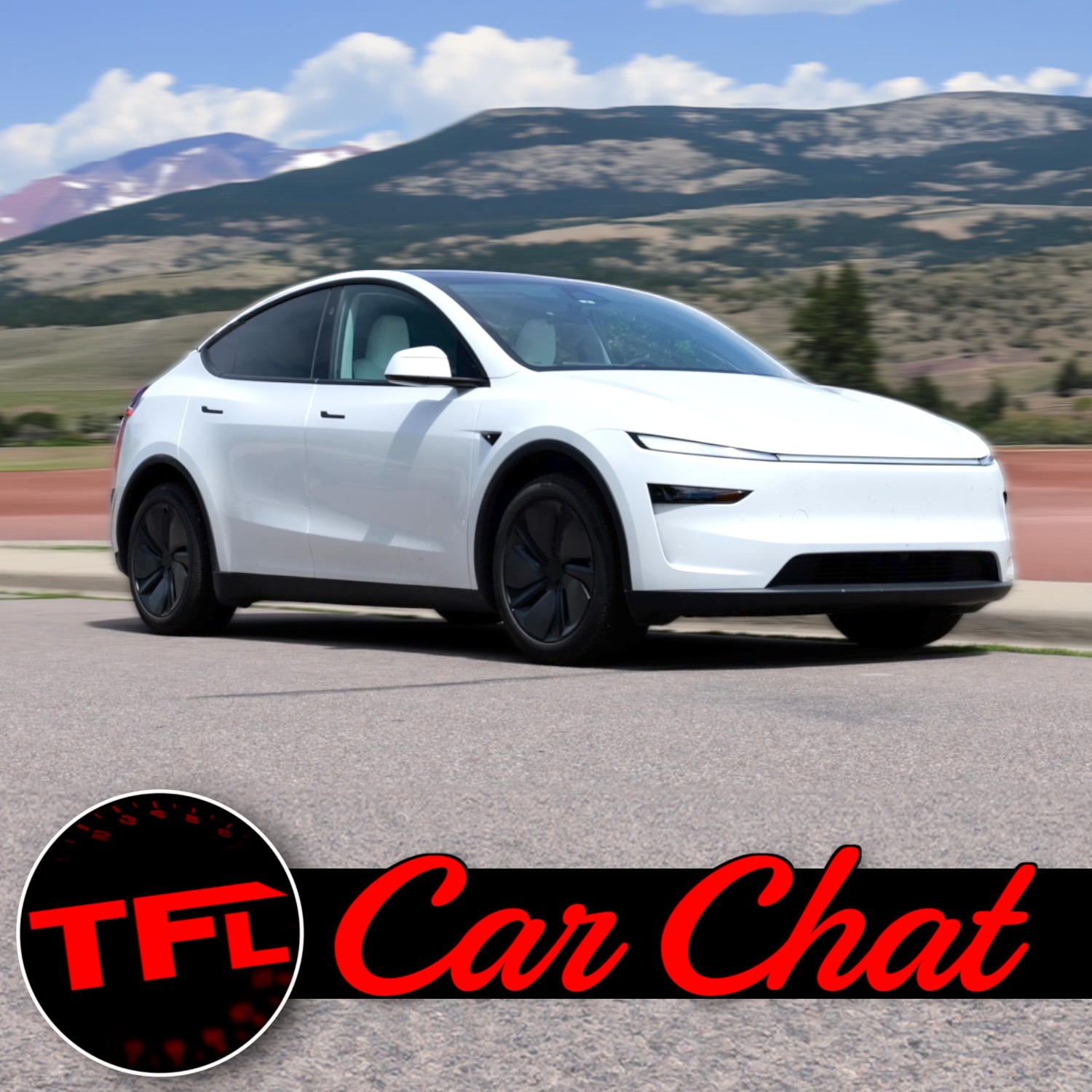
The Top Ten WORST New Car Tech That We Didn't Ask For! | Ep. 338
About this episode
The hosts kick off their countdown of “Worst new car tech” with examples like “that kick to open tailgate” and keyless features that “half the time, it wouldn't even work.” They then dig into modern usability failures: key fobs with “no buttons,” camera-only rear visibility, touchscreen “event controls in the screen,” and retractable door handles that can be expensive or even trap occupants. The episode keeps circling back to the same theme—convenience tech that’s really cost-cutting, glitch-prone, and harder to live with than advertised.
( https://www.alltfl.com/ ) Check out our new spot to find ALL our content, from news to videos and our podcasts! In this episode of TFL Car Chat, Roman is joined by Jen as they dive into the frustrations of modern automotive technology. Before getting to their "Top Ten" list, Roman shares the absolute chaos of trying to sell the TFL Honda Ridgeline on Craigslist and Facebook Marketplace. From "perchance" cash offers to buyers trying to lecture him on Kelley Blue Book values, Roman breaks down why the used car market is more exhausting than ever. They also reminisce about the office "furniture"—the 1971 Fiat 500—and the relief of finding a buyer who actually understands the charm of a classic car.
The main event focuses on the technology that feels more like cost-cutting than innovation. Jen and Roman debate everything from the "river dance" required to trigger kick-to-open tailgates to the infuriating trend of moving basic air vent controls into touchscreens. They also touch on the reliability nightmares of retractable door handles and the questionable decision to remove the rear window entirely on the Polestar 4. Whether it's the lack of physical buttons or "phantom draining" panoramic roofs without sunshades, the duo asks one simple question: Why are manufacturers solving problems that didn't exist?
( http://www.patreon.com/tflcar ) Visit our Patreon page to support the TFL team!
Advertising Inquiries: https://redcircle.com/brands
Privacy & Opt-Out: https://redcircle.com/privacy
timing belt
"Yeah, we fixed the alternator. It had the timing belt change, which is like a $2,000 repair."
The timing belt helps the engine’s moving parts stay in sync. If it breaks, the engine can be badly damaged, so replacing it is a big (and costly) job.
A timing belt synchronizes the crankshaft and camshaft so the engine’s valves open at the correct time. If it fails, the engine can suffer major internal damage, which is why timing-belt service is often expensive.
alternator
"Yeah, we fixed the alternator. It had the timing belt change, which is like a $2,000 repair."
The alternator charges the battery and powers the car’s electronics when the engine is on. If it’s bad, the battery can run down and the car may not start.
The alternator generates electricity to power the vehicle’s electrical systems and recharge the battery while the engine is running. A failing alternator can cause warning lights, battery drain, and eventual no-start conditions.
spool valve
"We changed the spool valve, which is a common problem with it anyway. So we did all this work."
A spool valve is a precision valve that controls fluid flow in an engine or transmission system. When a specific spool valve is described as a “common problem,” it usually means a known failure mode or sticking/flow issue that affects drivability or shifting.
hail damage
"So there's a dent. There's some hail damage, but you know, it's a $7,000 car."
Hail can hit the car hard and leave dents and paint damage. Even if it doesn’t affect how the car runs, it can lower what buyers will pay.
Hail damage is impact damage from hailstones, often leaving dents, chipped paint, and sometimes compromised body panels. Even when it’s mostly cosmetic, it can affect resale value and may require paintless dent repair or bodywork.
full leather package
"This one is retail at a dealer full leather package with 70K fewer miles. It's $1,800 more."
A full leather package means the interior uses leather instead of cloth. Dealers often charge more for that kind of upgrade.
A full leather package is a trim option that typically replaces cloth seats and some interior surfaces with leather. It’s used here as part of the pricing justification because it changes the vehicle’s equipment level and buyer appeal.

Honda Ridgeline
"This one is retail at a dealer full leather package with 70K fewer miles. It's $1,800 more. And he sends me a link to a Honda Ridgeline."
The Honda Ridgeline is a pickup truck from Honda. Here, it’s mentioned because someone is comparing prices between similar trucks at dealers.
The Honda Ridgeline is a midsize pickup known for its car-like ride and unibody construction. In this segment, it’s used as a retail comparison point for pricing and equipment/mileage differences.

Fiat 500
"And to be fair, the reason we bought this Fiat 500, [692.4s] which by the way, it was a SEMA car. [693.9s] Oh, it was. [700.3s] So it was, you know, rust free."
The Fiat 500 is a small, easy-to-drive Fiat that’s popular for city driving. Here, the hosts talk about a special Fiat 500 that was built for SEMA and was in great shape, including being free of rust.
The Fiat 500 is a compact, city-focused car from Fiat, known for its small size and classic “retro” styling. In this segment, it’s specifically discussed as a SEMA-built example that was rust-free and cosmetically well kept.
SEMA car
"And to be fair, the reason we bought this Fiat 500, [692.4s] which by the way, it was a SEMA car. [695.6s] It was like a Fiat parts imported, built as a SEMA car."
SEMA is a big auto show where people build special cars to show off aftermarket parts. If a car is called a “SEMA car,” it usually means it was made or modified for that kind of show, not just as a normal production car.
SEMA refers to the Specialty Equipment Market Association, which hosts an annual show where automakers and aftermarket companies build special vehicles to showcase parts and styling. Calling it a “SEMA car” usually means it was built or imported specifically for that show, often with unique components and presentation.

Sports 800
"Yeah. We exchanged it for the Sports 800. And so, you know, even though we lost 4,000 over..."
The Sports 800 is a classic sports car. It’s the kind of car people choose for a fun, lightweight driving feel. The podcast mentions it because they traded for it as part of their car story.
The Sports 800 refers to the classic sports car known for its small size and lightweight, enthusiast-focused character. In the podcast, it’s mentioned as a swap/exchange after losing money on another deal, which suggests it was part of a car-ownership story or collection. That makes it relevant as a classic model tied to personal experience rather than modern tech.
kick to open tailgate
"And that is number 10 for me. And I remember seeing this for the first time, like almost 10 years ago now at the Chicago Auto Show, that kick to open tailgate. In other words, you got to do the river dance."
It’s a feature where you can open the back hatch by kicking your foot under the bumper. A sensor detects the motion and the trunk/tailgate pops open without touching the handle.
“Kick to open tailgate” is a hands-free liftgate feature that uses a motion sensor to detect a foot kick under the rear bumper. When it senses the kick, it unlocks and raises the tailgate, which can be handy when your hands are full.

Polestar 4
"...'s two versions of this. There's the one like the Polestar 4, which has no buttons on the key fob."
The Polestar 4 is an electric SUV made by Polestar. The podcast mentions that on one version, the key fob doesn’t have buttons. That means you interact with the car using other controls instead of pressing buttons on the key.
The Polestar 4 is an all-electric crossover designed with a strong focus on driver experience and a clean, modern interior. The podcast specifically notes that one version has no buttons on the key fob, which highlights Polestar’s push toward simplified, touch-based or app-based controls. That’s a detail that affects how you interact with the car day to day.

Polestar 1
"Yeah. And then this Polestar 1, it's just... Why?"
The Polestar 1 is a car made by Polestar that uses both electricity and gasoline. It’s designed to be a more stylish, performance-oriented grand tourer. The podcast is basically reacting to why this particular model exists or how it makes sense.
The Polestar 1 is a plug-in hybrid grand tourer from Polestar, combining electric drive with a gasoline engine. The podcast questions it with a “why?” reaction, which often reflects confusion about its role, value, or how it fits into the broader EV and hybrid market. It’s mentioned as a specific model that didn’t land the way the speaker expected.

Tesla Model Y
"I'll get... We have that Model Y right now. So they did the credit card version of that, right?"
The Tesla Model Y is an electric SUV. Here, they’re talking about a “credit card” style key and how it works with the car.
The Tesla Model Y is an electric crossover that’s known for using phone-based access and keyless entry features. In this segment, it’s referenced as the car they currently have, specifically in the context of using a credit-card-style key for valet or backup access.
credit card version
"So they did the credit card version of that, right? Which is also problemat... No, that's not it. Or is it? I'm getting it out of my wallet here. It's good for valets."
They’re talking about a thin card key instead of a normal key fob. It can be handy for valet parking, but you still have to put it in the right spot on the car to work.
A “credit card version” refers to a thin, card-shaped key that can be used for vehicle access instead of a traditional key fob. It’s meant to be convenient—especially for situations like valet parking or when your phone isn’t available—but it still requires correct placement on the car for the antenna to read it.
valets
"It's good for valets. Yeah, so it's good for valets, or if your phone dies or anything like that."
Valets are people who park your car for you. The point here is that a card-style key can make that easier.
Valets are parking attendants who drive and park your car for you. This segment highlights why a card-style key can be useful for valets—so you can leave the car with them without handing over a phone or traditional key.
B-pillar
"So it goes on the B-pillar, about halfway up the B-pillar. And that's the thing is a lot of people don't know that."
The B-pillar is the metal post between the front and back doors. Some keyless systems only work if you hold the key card/fob in the right spot on that post.
The B-pillar is the vertical structural support between the front and rear doors. For keyless entry systems that use a card or fob, the car often needs the key placed near a specific antenna location—here, roughly halfway up the B-pillar—so the car can detect it.

Tesla Model X
"Yeah, I remember those are cool. You know, the Model X key fob and the Model S key fob actually kind of ..."
The Tesla Model X is an electric SUV made by Tesla. It’s built to carry people comfortably and uses electricity instead of gasoline. The podcast mentions it because its key fob design is similar to the Model S.
The Tesla Model X is an all-electric SUV from Tesla, designed to combine family-friendly space with electric performance. It’s referenced in the podcast alongside the Model S key fob, pointing to how Tesla’s key design and access features can feel similar across models. That makes it relevant when discussing day-to-day interaction with the car.

Tesla Model S
"...e are cool. You know, the Model X key fob and the Model S key fob actually kind of resembled those models."
The Tesla Model S is an electric car made by Tesla. It’s a larger sedan meant for comfortable daily driving, with lots of features inside. The podcast mentions it because the key fob design is similar to other Tesla models.
The Tesla Model S is an all-electric luxury sedan from Tesla, known for its tech-heavy interior and performance-oriented driving. It comes up in conversations about key fobs and user experience because Tesla’s design language is consistent across models. In this podcast, it’s referenced alongside the Model X to compare how the key fobs look and feel.
phone is a key
"Number one is your phone is a key. Yes. When it works, it's great. There's times when it doesn't work, which is a bad thing if you don't have the credit card."
Instead of a normal key, the car can use your phone to unlock and start it. If the phone connection has problems, the car may not recognize you and you can’t use it normally.
Using a phone as a key means the car unlocks and starts via a smartphone connection (typically Bluetooth and/or NFC) instead of a traditional metal key fob. The downside is that if the phone connection fails or the system glitches, you can be locked out or lose access to functions until it’s fixed.
over-the-air updates
"a lot of times, you know, like over-the-air updates are great, but not when they give you a bug."
Over-the-air updates are software updates that get sent to the car automatically, like updating your phone. They can fix issues, but sometimes they can also cause new bugs.
Over-the-air (OTA) updates are software downloads sent directly to the car without visiting a dealership. They can improve features or fix bugs, but they can also introduce new problems if an update behaves unexpectedly.
resets everything
"or it resets everything and you don't even realize."
A system “reset” in a modern car usually means the infotainment and/or vehicle control software restarts, which can temporarily disable features. If it happens without the driver noticing, it can make keyless access or other functions unreliable until the system recovers.
dual purpose window switch
"This is a Volkswagen thing, the dual purpose window switch, where they got rid of two buttons."
A dual purpose window switch means one button is used for multiple window actions. The hosts don’t like it because it replaces simple, separate buttons with a more confusing “toggle” style control.
A dual purpose window switch is a control that’s designed to do more than one job—here, combining functions that used to be handled by separate buttons. The complaint is that it forces drivers to “toggle” instead of using dedicated switches, which can be slower and more error-prone in real-world situations.

Volkswagen ID Buzz
"We had it on the ID buzz. And I think I don't know what problem they were trying to solve by removing two simple switches."
The Volkswagen ID Buzz is an electric van from Volkswagen. Here, they’re saying the ID Buzz had a frustrating change to the window switch controls.
The Volkswagen ID Buzz is an electric, retro-styled van based on Volkswagen’s ID electric platform. In this segment, TFL Car Chat calls out a specific usability issue they experienced on the ID Buzz related to the vehicle’s window controls.
toggle controls instead of dedicated buttons
"So in concept, you just toggle between switching the two switches from the front to the back, and that should be relatively straightforward."
Instead of having separate buttons for each action, the car makes you switch between actions using one control. The hosts say that’s annoying in practice, especially when you’re trying to do things quickly.
This refers to a user-interface design where you switch between functions using a single control (toggle) rather than having separate, dedicated buttons. The hosts argue that while it can sound logical in theory, it can become frustrating or unsafe in busy driving moments because you have to think and confirm what mode you’re in.
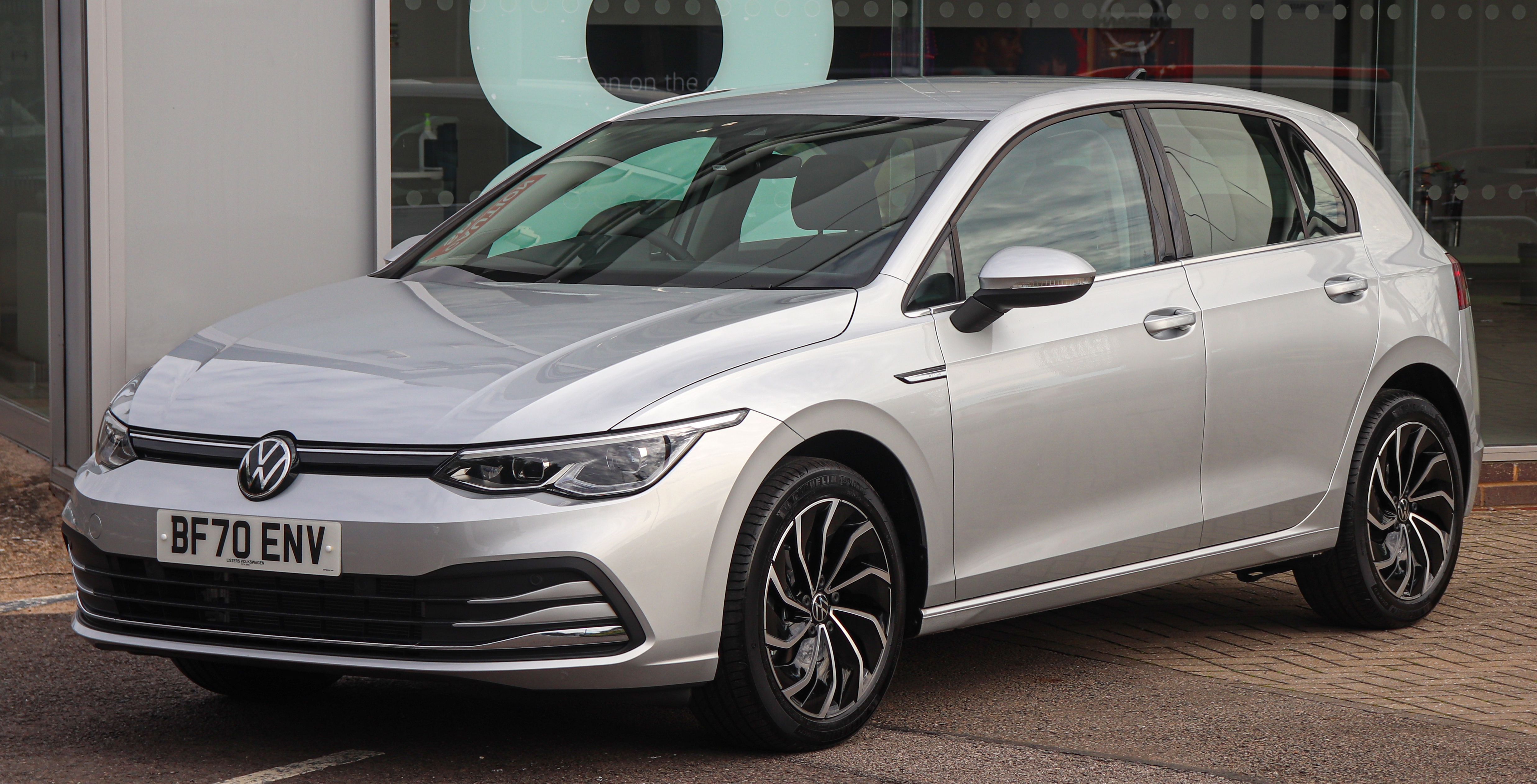
Volkswagen Gli
"...king off of that. Yeah, I noticed that in the new GLI that we have, so that's good."
The Volkswagen Golf is a compact car made by Volkswagen. It’s designed to be practical for everyday driving. The podcast mentions it because they’re talking about a newer performance version of the Golf.
The Volkswagen Golf is a compact car line known for practicality, strong driving dynamics, and broad availability of trims. In the podcast, it’s referenced through the context of a “new GLI” they have, which is a performance-oriented Golf variant. That makes the Golf relevant as a familiar platform where enthusiasts often discuss updates and features.
digital rear view mirror
"Yeah, so the Polestar 4 doesn't have a rear window, so you're forced to use the digital rear view mirror. And then if you look on the video"
A digital rear view mirror is a screen that shows a live camera view instead of reflecting what’s behind you. It’s especially important when the car doesn’t have a normal rear window.
A digital rear view mirror replaces the traditional mirror-and-glass setup with a camera feed displayed in the mirror housing. In cars like the Polestar 4 (which lacks a rear window), it becomes the primary way to see traffic behind you.
camera
"and it makes you completely reliant on the camera instead of the window, and it just feels silly. You know, having worked in the service industry for a tech-focused car company, I've seen plenty of times where cameras go out"
A rear-view camera is a small camera that shows what’s behind you on a screen. The point here is that if the camera stops working, you might not have any easy backup way to check behind you.
In modern vehicles, rear-view cameras replace or supplement traditional mirrors and windows by showing a live video feed. The concern raised here is that if the camera system fails, the driver may lose the ability to see behind the vehicle.
backup visibility
"I've seen plenty of times where cameras go out, and when you don't have a window to fall back on, now you have zero way to see behind you."
“Backup visibility” refers to having an alternate way to see what’s behind you if a primary system (like a camera feed) isn’t available. This segment argues that removing or limiting physical windows/mirrors reduces redundancy, so a camera failure can leave the driver with little or no rear sight.

Tesla Cybertruck
"Now you can solve that by putting a camera back there, and then making the mirror a camera, which by the way, Tesla should have done in the Cybertruck, because a little tiny window in the Cybertruck is ridiculous. And then they instead of putting the screen"
The Tesla Cybertruck is a very unusual-looking Tesla pickup. Here, the hosts say its rear visibility is awkward because the window is tiny, and they think a camera-based rear view would make more sense.
The Tesla Cybertruck is known for its angular, futuristic design and its unconventional visibility choices. In this segment, the hosts criticize the small rear window and argue Tesla should have used a camera-driven rear view instead of relying on limited glass.
electric doors
"Number six is, I think, the thing that a lot of people really hate, and that's, you know, electric doors, and then, of course, as part of that are the door handles that retract or come in and out."
Here, “electric doors” means the doors/handles aren’t just moved by simple mechanical parts. Instead, an electrical system controls how they open and close, which can be more prone to problems.
In this context, “electric doors” refers to door operation that relies on electrical actuation rather than purely mechanical linkages. The hosts are criticizing how this design can introduce new failure points, especially when paired with retracting door handles.
retractable door handles
"Number six is, I think, the thing that a lot of people really hate, and that's, you know, electric doors, and then, of course, as part of that are the door handles that retract or come in and out."
Retractable door handles are handles that pop out when you need them and slide back in afterward. The episode’s complaint is that this extra moving/electronic mechanism can cause reliability headaches.
Retractable door handles are door handles that slide in and out of the body using an actuator. The hosts argue this is “new car tech” that can be annoying or costly when the mechanism wears out or fails.
microswitches
"Now they have, like, microswitches and everything like that, and it becomes a little cheaper."
Microswitches are tiny sensors/switches that tell the car when something is in the right position. The hosts say Tesla added them to make the door-handle system work a bit better.
Microswitches are small, sensitive electrical switches used to detect a specific position or trigger an action. The hosts mention microswitches as part of Tesla’s later refinement to the retracting handle system, implying improved sensing/control.
physical pivot for the door handle
"Now, they did mitigate that a little bit with the 3 and the Y, and that they have a physical pivot for the door handle, so it's not electronically popping out, but I feel like that's just another solution we never really had a problem to."
A physical pivot is a real mechanical hinge that helps the handle move. The hosts are saying this design change makes the handle less dependent on electronics, which can help avoid the earlier problems.
A physical pivot for the door handle means the handle movement is guided by a mechanical hinge-like linkage rather than relying entirely on electronic pop-out actuation. The hosts credit this as a mitigation because it reduces how much the handle must “electronically pop out.”
electric door handles
"Yeah, and then the other thing that happens, [1639.1s] when you have the electric door handles, right, [1640.7s] the ones where they're not mechanical, [1642.2s] but they're electrically activated, [1643.9s] you have to have a secondary backup."
Some cars use door handles that work electronically instead of with a direct mechanical cable/linkage. If that system fails, the car may need another way to open the door so you’re not totally stuck.
Electric door handles replace the usual mechanical linkage with an electronically actuated latch/handle. Because there’s no purely mechanical backup path, a failure can leave you unable to open the door normally, so manufacturers often add a secondary backup method.

Tesla Model 3
"...ecially, I think it was either the Model Y or the Model 3. On the back door, it was hidden in the door pock..."
The Tesla Model 3 is an electric sedan made by Tesla. It’s designed for everyday driving and uses electricity instead of gasoline. The podcast is talking about a detail on the door area and how the key-related setup is arranged.
The Tesla Model 3 is Tesla’s mainstream electric sedan, built to deliver electric driving with a more accessible size and price than the Model S. It’s discussed here in the context of physical details like how keys and door areas are designed. That kind of mention usually points to how Tesla’s packaging and controls differ from traditional cars.

EX60
"... instances work as well. And so the way the Volvo EX60 solved it, and I think Tesla has done this too,"
The EX60 is a car model being discussed for how it handles a certain problem. The speaker says it solved the issue in a way that worked well. They’re comparing that approach to how Tesla does something similar.
The EX60 is referenced in the context of solving a specific problem with how the car operates, and the speaker compares that approach to Tesla’s solutions. While the transcript doesn’t spell out the exact issue, the key point is that the EX60 handled it in a way that worked well for the speaker. It’s being used as an example of a design/engineering choice that improves real-world behavior.
DC battery
" ... they have the electric door handle and it runs off both the 12 volt and the DC battery. So it runs off both the small battery and the big battery."
The DC battery is the big high-voltage battery in an EV. They’re saying the door handle can get power from it as a backup, not just from the small 12-volt battery.
The DC battery refers to the high-voltage battery pack in an EV, which stores energy as direct current. The hosts say the electric door handle can draw power from both the 12V system and the high-voltage DC battery to improve reliability.
12 volt
" ... they have the electric door handle and it runs off both the 12 volt and the DC battery. So it runs off both the small battery and the big battery."
The 12-volt battery is the small battery that runs the car’s basic electronics. In this case, it’s used so the door handle still has power even if the main high-voltage system has issues.
In EVs, the 12-volt battery is the low-voltage system that powers many conventional car electronics (like control modules and actuators). The hosts describe using the 12V battery as part of the power redundancy for the electric door handle.
electric-to-mechanical fallback for door opening
"So in case one goes bad, you still have power to it. But then, in case both go bad, the first time you lift it up, you're doing the electric opening, but if you keep going, you do the mechanical one."
The idea is: the car tries an electric door opening first, but if that doesn’t work, there’s a backup mechanical way. The goal is to make sure you can still get out in an emergency.
This describes a design where the car first attempts to open the door using an electric mechanism, then switches to a mechanical method if you keep actuating the handle. It’s meant to reduce the chance of being trapped if the electric system fails.
electronic door handle
"You know, Lexus has a pretty similar interior door handle where if you push it, the electronic door handle will release."
An electronic door handle is a door release system that uses electronics to unlatch the door. Some cars also include a manual backup so you can still open the door if the electronics fail.
An electronic door handle uses sensors and actuators to release the latch, rather than relying purely on a direct mechanical linkage. In an emergency, that can be a problem if the electronics are affected—so some cars add a mechanical backup release.
mechanical release
"But if you pull the same little lever, then it's the mechanical release for it. Yeah, but that's not intuitive."
A mechanical release is the “manual” way to open the door latch without relying on electronics. It’s meant to keep working in emergencies, like when the car is underwater.
A mechanical release is a direct, non-electronic way to unlatch a door. The hosts are highlighting that this backup can work even when the car’s electronics are compromised, such as during an escape from a submerged vehicle.
door handle failing
"when we had that 100,000 mile Tesla was the door handle failing. Surprise, it didn't. Yeah, I think it did."
They’re talking about the door handle breaking or not working correctly. On newer cars, the handle often has electronics inside, so when it fails it can be more complicated (and more expensive) to fix than you’d expect.
“Door handle failing” here refers to a mechanical/electronic actuation problem with the door handle mechanism. On many modern cars (including Teslas), the handle is integrated with sensors and actuators, so a failure can require more than just a simple mechanical fix.
Event controls in the screen
"Oh, this is the one that also is maddening. Event controls in the screen. So there are two kinds of people, right?"
They’re complaining about car functions being controlled through the touchscreen instead of physical buttons. If the screen or its software acts up, it can make everyday driving tasks annoying or costly to fix.
“Event controls in the screen” points to infotainment/UI controls where functions are triggered via the touchscreen rather than dedicated physical buttons. This can be frustrating because touchscreen interfaces can be less intuitive, slower to operate while driving, and more expensive to repair if the screen or control logic has issues.

C8 Corvette
"We have this car. Have you sat in the C8 Corvette? You know where the phone charger is?"
The C8 Corvette is a Corvette where the engine is moved to the middle of the car. Because of that, the inside layout is different, and even where a phone charger is placed can be weird to reach.
The C8 Corvette is Chevrolet’s mid-engine Corvette generation, meaning the engine sits behind the driver instead of up front. That packaging choice reshapes the cabin layout, which is why small usability items like the phone charger location can feel awkward for some drivers.
push button transmission
"And then they put the push button transmission and there was no room in that. [2148.2s] They're like, oops. [2148.9s] Oops."
Instead of moving a gear lever, you pick your gear with buttons. The downside is it can take up space in awkward places, making it harder to use.
A push-button transmission uses electronic buttons to select gears (like Park, Reverse, Neutral, Drive) instead of a traditional gear shifter. It’s often paired with a compact electronic shifter module, which can create packaging and ergonomics compromises in the cabin.
panoramic sunroof
"So especially with Teslas, they have that huge roof wide panoramic sunroof. [2184.9s] And when you don't have any type of sunshade to go in there,"
A panoramic sunroof is a big glass roof panel that lets in lots of light. If there’s no shade, the sun can heat up the cabin quickly.
A panoramic sunroof is a large glass roof opening that spans much of the roof area, often including both front and rear sections. Because it lets in a lot of sunlight, many cars rely on sunshades or other heat-management features to keep the cabin from getting too hot.
Teslas
"So especially with Teslas, they have that huge roof wide panoramic sunroof. [2184.9s] And when you don't have any type of sunshade to go in there,"
Tesla is an electric car brand. Here they’re talking about Tesla’s big glass roof and how it can be uncomfortable if there isn’t a good shade.
Tesla is an electric-vehicle brand known for minimalist interiors and large glass roof designs on many models. In this context, the hosts are criticizing how Tesla’s roof-wide panoramic sunroof can feel impractical without effective sunshading.

Rolls-Royce Phantom
"...e using battery to cool the car off. There's that phantom draining happening right before your eyes. But no..."
The Rolls-Royce Phantom is a very expensive luxury car. It’s built to be extremely comfortable and quiet. The podcast mentions that the car uses its battery to help with cooling systems.
The Rolls-Royce Phantom is a flagship luxury sedan known for extreme comfort, quiet operation, and high-end craftsmanship. The podcast mentions battery use for cooling, which points to how even luxury cars manage energy and thermal systems behind the scenes. It’s brought up to illustrate a specific moment where systems are actively drawing power.
ID bus
"Yeah, yeah. Yeah, I think the ID bus had that too. But it's like a $2,500 option, I want to say on some cars."
“ID bus” sounds like a Volkswagen electric-car platform/electronics system. It’s basically about how the car’s computers talk to each other.
“ID bus” is likely referring to Volkswagen Group’s ID-family electric-vehicle platform and its internal vehicle network architecture. In practice, listeners should treat it as a brand/platform reference tied to how the car’s electronics communicate.
sunroof delete
"Usually you want a sunroof delete because that's weight savings. Usually if there's a sunroof in a fancy quick car,"
A "sunroof delete" just means the car doesn’t have a sunroof. People do it to save a little weight and avoid extra parts that can cause problems later.
A "sunroof delete" means removing the sunroof option from a car (or choosing a version without it). Enthusiasts do it for weight savings and to simplify the roof structure and potential leak points.
rotary dials for the mirror controls
"Number two on my list, rotary dials for the mirror controls. Tesla Pioneer, that Rivian does it. I think one of the easiest and cleverest,"
Instead of using simple buttons to adjust your mirrors, the car uses a knob/dial. The point here is that it can be slower and more confusing when you need to adjust the mirrors fast.
Rotary dials for mirror controls mean you adjust mirror position using a knob or dial rather than dedicated left/right buttons or a directional pad. The hosts argue that this adds extra steps and makes it harder to move the mirrors quickly and accurately.
Rivian
"Tesla Pioneer, that Rivian does it. I think one of the easiest and cleverest,"
Rivian makes electric vehicles. In this segment, they’re mentioned because their mirror controls use rotary dials, and the hosts think that makes them harder to use quickly.
Rivian is an EV brand whose vehicles often emphasize modern, screen-and-control-heavy interfaces. In this episode, they’re specifically tied to the idea of using rotary dials for mirror controls, which the hosts find unintuitive.
unintuitive controls
"And then the second you put it into the rotary dials, it just becomes very unintuitive. And then you get a search for it in the screen."
Unintuitive controls are things that don’t feel natural to use while driving. If you have to hunt through the screen to adjust something like mirrors, it’s harder to do quickly.
In car design, "unintuitive controls" are interfaces that don’t match how drivers naturally expect to operate them. When mirror adjustments require extra navigation (like searching in a screen), it can slow down quick corrections and increase the chance of mistakes.
everything in the screens now
"But still, there's so much going on in the screen... Everything is in the screens now... It's everything. And that's my number one, by the way. Everything in the screen."
This is about cars where lots of features are controlled through the touchscreen instead of buttons. The host thinks it’s annoying because it can be harder to find what you need quickly while driving.
This refers to the trend of moving vehicle functions into touchscreen interfaces instead of using dedicated hardware controls. The host’s complaint is usability-related: when too much is controlled through menus and screens, tasks like mirror adjustment or climate changes can take longer and feel distracting.
physical buttons
"My biggest thing that I will ding a car for is not having at least physical buttons for the temperature controls. That is something, if you want to put your music and phone and everything else in the screen, fine."
Physical buttons are real knobs or buttons you can feel and press without hunting through the screen. The host wants them for temperature controls so you can change the heat or A/C quickly.
Physical buttons are dedicated, tactile controls on the dashboard (or steering wheel) that let you operate functions without navigating menus. The host specifically argues for physical buttons for temperature controls so you can adjust climate quickly and reliably while driving.
temperature controls
"My biggest thing that I will ding a car for is not having at least physical buttons for the temperature controls. That is something... But let me keep my ding temperature controls."
Temperature controls are the settings for the car’s heating and air conditioning. The host is saying those should have easy-to-reach controls instead of being buried in the screen.
Temperature controls are the climate system settings that regulate cabin heating and cooling. In modern cars, these are often integrated into touchscreen menus, but the host criticizes that approach and prefers dedicated controls for quick adjustments.
natural speech
"But now with AI and natural speech, with like rock, with the Tesla, right? [2478.5s] Rock, yeah."
Natural speech means the car can understand normal spoken directions, not just one exact command. So you can talk like you would to a person and the car tries to do the right thing.
“Natural speech” refers to voice interfaces that try to understand everyday spoken commands instead of requiring strict button presses or exact phrases. In cars, it’s part of the AI/voice system that interprets what you say and maps it to actions like navigation or climate/seat controls.
Gemini
"[2509.8s] Gemini, which is Google's AI, is now being incorporated into, [2515.1s] but oftentimes, unlike Tesla, because it's not integrated with the manual."
Gemini is an AI system from Google. The point here is that some cars can use Gemini, but it may not control as many car functions as smoothly as Tesla’s system yet.
Gemini is Google’s AI system. The hosts discuss it as an AI option that can be built into cars, but they note that the level of integration with car functions (like volume or other controls) can differ from Tesla’s approach.
integrated with the manual
"Gemini, which is Google's AI, is now being incorporated into, [2515.1s] but oftentimes, unlike Tesla, because it's not integrated with the manual."
They’re saying the AI only works well when it’s properly connected to the car’s real controls. If it’s not connected deeply enough, your voice command won’t actually change things like volume.
“Integrated with the manual” here means the AI voice system is connected to the car’s underlying control logic for specific functions, not just able to answer or do limited tasks. If that integration isn’t there, commands like “turn up the volume” won’t reliably trigger the actual vehicle settings.
Volvo EX60
"So if you put in a Volvo, like in the EX60, you can't go to the AI and say, [2534.5s] hey, turn up the volume. [2536.0s] It doesn't do that because that amount of integration isn't there yet."
They mention the Volvo EX60 as an example of a car with Google’s AI. The takeaway is that the AI might not be able to control every car setting by voice yet.
Volvo EX60 is referenced as an example of a car that can use Google’s Gemini AI. The hosts use it to illustrate a limitation: even if the AI is present, it may not be integrated deeply enough to control certain functions via voice (like turning up volume).

Jeep Grand Wagoneer
"...ery dated and it feels cheap. I remember when the Grand Wagoneer came out and they said it had like seven screens...."
The Jeep Grand Wagoneer is a big SUV meant to feel like a luxury vehicle. It was designed with a lot of screens and modern features inside. The podcast brings it up because the speaker felt the cabin didn’t age well and didn’t feel as high-quality as expected.
The Jeep Grand Wagoneer is a large luxury SUV positioned as a premium, feature-rich alternative to more traditional luxury models. The podcast references its launch messaging about having many screens, which speaks to how it was marketed as a tech-forward cabin. It’s also mentioned as feeling dated and cheap, which highlights how interior materials and technology can age over time.

Land Rover Range Rover
"...you got those. You know, we just bought this 2006 Range Rover Sport. It's got the two screens in the headrest."
The Range Rover is a luxury SUV made by Land Rover. It’s meant to be comfortable on regular roads and capable on rougher terrain. The podcast mentions a 2006 Range Rover Sport because it had screens built into the headrests.
The Land Rover Range Rover is a luxury SUV known for comfort, off-road capability, and a high-end interior. The podcast specifically references a 2006 Range Rover Sport with two screens in the headrests, which highlights how the cabin tech and features can be a big part of ownership. It’s mentioned because that kind of interior setup stands out and affects daily usability.

2006 Range Rover Sport
"You know, we just bought this 2006 Range Rover Sport. It's got the two screens in the headrest."
This is a 2006 Land Rover Range Rover Sport. The hosts are talking about its built-in screens in the headrests, and whether that kind of tech is actually useful day-to-day.
The Range Rover Sport is a luxury SUV from Land Rover, and this 2006 model is notable here for its rear-seat/occupant entertainment tech. In this segment, the hosts specifically point out that it has two screens built into the headrests, which they see as “new car tech” that may be outdated or impractical.
headrest screens
"It's got the two screens in the headrest. And I'm like, I think technology is moving beyond that."
Headrest screens are little displays built into the top of the seat. They’re usually for passengers in the back, but the hosts question whether people actually use them much.
Headrest screens are displays integrated into the seat headrests, typically for rear-seat passengers. They’re meant to provide entertainment or information without needing a separate tablet, but they can be awkward to use and may distract or be underutilized compared with simpler options like a phone or center display.
passenger screen
"And the other one that I also don't get the first time I saw it was the passenger screen. Yeah, I remember that in the RHO."
A passenger screen is a screen meant for the front passenger to see. The hosts are basically saying it might not get used as much as you’d think, and the driver may still end up using the main screen.
A passenger screen is a display placed in front of the front passenger—often in the dashboard or center area—so the passenger can view content independently of the driver. The concern raised here is usability and safety: the driver may still need to interact with the center screen, and the passenger’s view can become distracting or redundant.
using a phone instead of built-in screens
"Let's say you want to use it for something like checking the weather. That would not be my go-to. No, you're going to pull out your phone."
They’re saying that for simple things—like checking the weather—people will probably just use their phone instead of the car’s screens. The idea is that the fancy built-in tech may not actually get used much.
The hosts argue that, for everyday tasks like checking the weather, built-in screens in the car are often less convenient than using a smartphone. This highlights a common “tech adoption” problem: even if the hardware is impressive, drivers and passengers may default to the device they already use and understand.
driver profiles
"We used to just have that with driver possession or driver profiles with your key fob. That's how it could have been mitigated."
A driver profile is like a saved “you” setting in the car. When you use your key or phone, the car can automatically move things like the seat and mirrors to match your preferences.
Driver profiles are saved settings tied to a specific user, often stored in the car and recalled automatically. They commonly include seat position, mirror positions, climate preferences, and sometimes steering wheel settings.
key fob
"We used to just have that with driver possession or driver profiles with your key fob. That's how it could have been mitigated."
A key fob is the small remote you carry to control the car. Besides locking and unlocking, it can also help the car recognize you and set things like your seat position.
A key fob is the wireless remote used to lock/unlock a car and often to start it. Many cars also use the key fob identity to load personalized settings like seat position via driver profiles.
tracking the information
"But you know, the reason they're making you log into your car is because they're tracking the information. And then, then, hey, I'm talking to UGM, selling it to insurance companies and whoever,"
In this context, “tracking the information” refers to the car collecting usage and behavior data while you drive and/or while you’re logged into the vehicle. That data can then be shared or sold to third parties, which is why the hosts criticize the need to log in.
insurance companies
"And then, then, hey, I'm talking to UGM, selling it to insurance companies and whoever, you know, the highest bidder."
Insurance companies are the businesses that sell car insurance. If they get data from your car, they may use it to set your rates based on how you drive or how you use the vehicle.
Insurance companies are businesses that underwrite policies and set premiums based on risk. When connected-car data is shared with insurers, it can influence pricing or eligibility through usage-based or behavior-based assessment.
subscription based services
"That drives me crazy. Wasn't it BMW that was like, oh, you want heated seats? Subscription."
This is when a car feature is locked behind an ongoing monthly or yearly payment. The hosts dislike it because it turns basic conveniences or capabilities into something you keep paying for.
Subscription-based services in cars are recurring payments to enable features that could otherwise be included at purchase. In this segment, the hosts criticize subscriptions for functions like heated seats and for performance-related software unlocks.
BMW
"Wasn't it BMW that was like, oh, you want heated seats? Subscription. Okay, so that's, that's one that drives me crazy..."
They’re talking about BMW using subscriptions to unlock features in the car. Instead of paying once for the feature, you pay repeatedly, and the hosts think that’s annoying.
BMW is mentioned in the context of selling features like heated seats through a subscription model rather than bundling them with the car. The hosts argue this kind of paywalling of convenience features can make the brand feel “cheap” or less trustworthy.
Mercedes
"I've seen that kind of subscription model used for horsepower where I think Mercedes does this where if you want 50 more horsepower..."
They mention Mercedes as an example of charging for extra power through software. The idea is you don’t just get the car’s full capability—you may have to pay to unlock more.
Mercedes is referenced as using a subscription-style approach to unlock additional power (the hosts mention “horsepower”). This is part of the broader trend of monetizing software capabilities after purchase.
enhanced auto driving
"turned off autopilot and gave you whatever the hell that thing's called enhanced auto driving, which is basically a really, really bad version of autopilot."
They’re referring to a different driver-assist mode than Autopilot. In their view, it’s not as good and doesn’t help as much.
“Enhanced auto driving” is described here as a driver-assistance mode that replaces or modifies Autopilot behavior. The hosts characterize it as a worse version of Autopilot, implying reduced capability or performance.
full self-driving
"I think I'm not off to make it so that you pay the $99 subscription fee for full self-driving. ... And it doesn't do that when you have full self-driving."
“Full self-driving” is a software upgrade that’s supposed to make the car handle more driving tasks. Here, the host is saying it behaves differently than the simpler autopilot mode, and that the difference can be frustrating.
“Full self-driving” (often abbreviated as FSD) is a marketing name for a Tesla software package that adds more advanced driver-assistance and automation features beyond basic autopilot. The host claims the behavior differs between autopilot and full self-driving—especially around passing maneuvers and when the system disengages.
autopilot
"They've detuned autopilot to the point where it's freaking annoying. ... Let's say you're using autopilot in the past, right? You would like want to pass somebody."
Autopilot is a feature that helps the car drive by itself in certain situations, like staying in the lane and controlling speed. The point here is that it can act in a frustrating way when you try to do something like passing.
Autopilot is a driver-assistance system that uses cameras and sensors to automate parts of driving, like lane keeping and adaptive cruise control. In this segment, the host is criticizing how autopilot behavior changed—specifically how it disengages when you try to pass.
detuned driver-assistance behavior
"They've detuned autopilot to the point where it's freaking annoying. It's not just, it not just doesn't work well. It's annoying to use."
“Detuned” here means a software update changed the calibration and decision-making of the driver-assistance system, making it less aggressive or less helpful in certain scenarios. The host argues the result is worse usability—autopilot becomes annoying because it disengages at the wrong times.
enhanced traffic mitigation
"So if you signal using enhanced traffic mitigation, whatever. It's like, oh, you're taking over. Yeah, you're done."
This is a setting that changes how the car tries to handle tricky traffic situations. The host’s point is that it can make the car stop its automated driving and force you to take over when you signal.
Enhanced traffic mitigation is a safety/automation setting that changes how the car responds to traffic situations—often by prompting driver takeover or adjusting automated behavior. In the segment, the host suggests that using this setting triggers a takeover/disengagement flow when the driver signals to pass.
auto start stop
"[2933.4s] So anyway, what do you got? [2935.5s] Well, I've also got the auto start stop."
Auto start-stop turns the engine off when you’re stopped, then turns it back on when you’re ready to move again. It’s mainly there to save fuel and reduce emissions, but some people don’t like how often it restarts.
Auto start-stop is a system that automatically shuts the engine off when the car is stopped (like at a red light) and restarts it when you lift off the brake or press the accelerator. It’s meant to reduce fuel use and emissions in stop-and-go traffic, but it can feel intrusive to some drivers and can add wear to components like the starter/12V battery depending on the implementation.
drive cycle
"But on my disco five, every drive cycle, I have to decide if I want that auto start stop on again... if I don't want it on, I have to push a little button every single drive cycle."
A drive cycle just means “one trip” from when you start the car until you turn it off. The host is saying the start-stop setting doesn’t stay the same between trips.
A drive cycle is one continuous period of driving that starts when you begin a trip and ends when you shut the car off. The host’s point is that auto start-stop resets each drive cycle, so they have to manually re-enable it every time they start the car.

Land Rover Discovery 5
"But on my disco five, every drive cycle, I have to decide if I want that auto start stop on again."
The host mentions their Land Rover Discovery 5 and complains that auto start-stop keeps turning back on. They have to manually enable it again each time they drive.
The Land Rover Discovery 5 is a large SUV where the host says auto start-stop forces them to re-enable it every drive cycle. That’s important here because it highlights how this “worst new tech” can be more annoying on certain vehicles and powertrains.
CAFE credits
"once upon a time when you had cafe credits before the current administration and you had to buy or sell credits... By having auto stop start, you could actually get up to one MPG better."
CAFE credits were a government system that rewarded car companies for building more fuel-efficient vehicles. The host says start-stop was used because it could help cars look better on fuel-economy tests, which mattered for those credits.
CAFE credits were part of U.S. fuel-economy regulation that allowed automakers to earn credits for meeting efficiency goals and trade them under certain rules. The host argues that auto start-stop was adopted because it could improve measured fuel economy enough to generate or preserve those credits.
MPG
"By having auto stop start, you could actually get up to one MPG better."
MPG means how many miles you can drive on one gallon of gas. The host is saying start-stop could improve that number on paper.
MPG (miles per gallon) is a measure of fuel economy—how far a vehicle can travel on one gallon of fuel. The host uses it to quantify the claimed benefit of auto start-stop on test results.
fleet average
"So that's why they, they did it because from a cafe, you know, credit point of view, it actually increased their fleet average by a lot."
Fleet average is basically the “average” fuel economy a company has across all the cars it sells. The host is saying start-stop helped automakers improve that average to meet rules.
Fleet average refers to the overall fuel-economy (or emissions) performance across a manufacturer’s lineup, averaged over many vehicles. The host claims auto start-stop helped manufacturers raise that fleet average enough to meet regulatory targets.
air conditioner goes off
"There's actually, there's yeah, two versions... There's a version where the air conditioner goes off, the heater goes off, which is super annoying."
In some cars, when the engine shuts off for start-stop, the heating or air conditioning may shut off too. That can make the cabin uncomfortable right when you’re stopped.
Some auto start-stop systems also shut down HVAC components like the air conditioner and heater when the engine turns off. That can be especially noticeable in hot or cold weather, and it’s part of why the feature can feel “super annoying.”
hybrid
"But if you have a hybrid, it can be almost seamless... And then the air conditioner is running off the battery."
A hybrid uses both a gas engine and an electric motor. The host is saying that because of the electric system, start-stop can be less noticeable on a hybrid than on a regular gas engine.
A hybrid uses an electric motor alongside an internal-combustion engine, which can allow certain systems to keep running smoothly when the engine would otherwise shut off. The host suggests that on hybrids, auto start-stop can feel “almost seamless” because the car can manage power without the same noticeable interruption.
starter
"I've heard this so many times that it like destroys the starter. It's not good for the engine. And that's also another one of those kind of fallacies where what's not good for the engine is a cold start. ... And then the other issue that then people worry about is the starter."
The starter is the electric motor that cranks the engine to get it running. In cars that frequently turn the engine on and off (common in hybrids and stop-start systems), people worry the starter will wear out faster, but manufacturers often design and upgrade starters for that duty cycle.
cold start
"It's not good for the engine. And that's also another one of those kind of fallacies where what's not good for the engine is a cold start. When you get up in the morning and you start your car, there's no lubrication in the engine."
A cold start is when you start the engine after it’s been off for a while. The oil hasn’t fully circulated yet, so the engine can wear more during the first seconds until everything warms up.
A cold start is when you start an engine after it has been sitting and the oil is not yet fully warmed or circulated. The concern is that lack of lubrication can increase wear during the first moments, but once oil pressure builds and oil circulates, normal lubrication resumes.
engine on and off at stop lights
"But when you think about it, by the time you're actually driving and you're using it at a stop light, the oil is already there. And so you're not doing a cold start. You're just turning the engine on and off."
Some cars shut the engine off when you’re stopped and restart it when you’re about to go. The claim here is that this isn’t as hard on the engine as starting it from a cold, un-warmed state.
Frequent engine start/stop events happen when the car shuts the engine down at idle (like at stop lights) and restarts it when you’re ready to move. The key point in the discussion is that this is not the same as a morning cold start, because the engine and oil are already warm and lubricated.
driver assistance systems
"The other one I have is kind of a twofold, but overly aggressive driver assistance systems. Oh my God."
These are car features that try to help you drive more safely. They use sensors to watch what’s happening and may warn you or even step in, like nudging the steering or alerting you to danger.
Driver assistance systems are electronic features that help prevent crashes or reduce driver workload, often by monitoring the road and the driver. They can include things like lane-keeping, collision warnings, and automated braking—sometimes with steering or braking interventions.
steering wheel starts tugging at your hands
"there is nothing more annoying than when the steering wheel starts tugging at your hands because it thinks you're about to go creaning off a cliff"
That “tugging” is the car trying to steer you back into the lane. If it’s too sensitive or thinks you’re drifting when you aren’t, it can feel like it’s fighting you.
When a steering wheel “tugs” at your hands, it’s usually the car’s lane-keeping or lane-centering function applying steering torque to keep you in the lane. If it’s overly sensitive or misreads the road, it can feel intrusive and annoying.
GM product
"Yeah, or the seat vibrates if you're in a GM product or the steering wheel vibrates. Or it yells at you if you yawn."
They’re talking about General Motors cars. In some GM vehicles, the seat can vibrate to get your attention when the car thinks something needs your focus.
“GM product” refers to vehicles from General Motors, where the speaker says the seat can vibrate as part of the car’s driver-assistance or alerting strategy. Different automakers tune these haptic alerts differently, which can affect how intrusive they feel.
yawn
"Or it yells at you if you yawn. That was the other thing is excessive warning chimes."
Some cars watch for signs you might be getting tired, like yawning. If it thinks you’re fatigued, it will warn you—sometimes even when you’re just yawning for other reasons.
A system that “yells at you if you yawn” is typically using driver monitoring (often a camera) to detect signs of fatigue or inattentiveness. It then triggers alerts to encourage breaks, but false positives can be irritating.
warning chimes
"Or it yells at you if you yawn. That was the other thing is excessive warning chimes."
Warning chimes are the beeps and tones a car makes to get your attention. If they happen too often, they can become annoying and make you ignore them.
Warning chimes are the audible alerts cars use to notify you of detected risks or driver behaviors, such as lane departure, forward collision risk, or fatigue-related prompts. Excessive chimes can become distracting and reduce driver trust in the system.
driver assist features
"It makes me not want to have any of these additional driver assist features selected. And you know, I don't just make you feel better,"
These are the car’s “help” systems—things that warn you or sometimes even step in to help you drive more safely. Some people find them annoying if they trigger too often.
Driver assist features are systems that help the driver with tasks like warning, steering support, or braking interventions. They can include alerts (like speed warnings) as well as active safety actions, which is why they can feel intrusive when they’re overly sensitive.
speed limit chime
"Oh, so like, you know, the speed limit chime is you have to have it. So every time you go over the speed limit, not only does it don't get you three every time,"
It’s the beep or chime the car makes when it thinks you’re going faster than the speed limit. It’s meant to warn you so you slow down.
A speed limit chime is an audible alert that triggers when the car detects you’re exceeding the posted speed limit. It’s part of driver-assistance and infotainment systems that try to keep you within legal limits.

BMW X5
"I remember it did that to me in the new X five. It was chiming at me for speeding. Maybe I was going a little fast, but it was quite a few selections that I had to dig for"
The BMW X5 is a luxury SUV from BMW. Here, the point is that its safety/driver-assist alerts can be annoying, and turning them off isn’t always quick.
The BMW X5 is BMW’s popular midsize luxury SUV, and it’s known for offering lots of driver-assistance and infotainment options. In this segment, the speaker specifically mentions the X5’s speed-related chimes and the hassle of turning them off.
emergency stopping
"because it the problem is all these things are basically leading to full self driving right emergency stopping, laying keep, but they're just right now just nanny and annoying"
Emergency stopping is when the car automatically brakes strongly to help prevent a crash. It happens when the system thinks a collision is about to occur.
Emergency stopping is an active safety function where the car automatically brakes hard to avoid or reduce a collision when it detects an imminent danger. It’s typically part of forward-collision warning or automatic emergency braking systems.
lane keep
"Tommy was having issues with the Model Y with lane keep, where it would really jerk the car over if he was trying to like make some room for a cyclist."
Lane keeping is a driver-assist system that tries to keep the car from drifting out of its lane. It does this by steering for you, so if it reacts at the wrong time it can feel sudden or scary.
Lane keeping is an ADAS feature that uses cameras and/or sensors to help keep the car centered in its lane. When it detects lane markings, it can apply steering corrections, which can feel jerky or even unsafe if the system misreads the situation.
emergency braking
"the one that most people find almost dangerous is that emergency braking where it like goes into full emergency braking and it doesn't take into account if there's a car behind you."
Emergency braking is the car’s automatic “stop now” feature if it thinks a crash is about to happen. If it triggers at the wrong time, it can brake too hard and create danger for the cars around you.
Emergency braking is an ADAS function that detects a potential collision and automatically applies the brakes to reduce speed or avoid impact. The concern here is false positives or overly aggressive activation—like braking hard without considering traffic behind you.
Request an Explanation
Heard something you'd like explained? We'll add it to this episode.
Sign in to request explanations for terms you heard.
Want to learn more?
Browse our glossary for plain-English explanations of automotive terms, jargon, and concepts.
Help improve this episode
See something that's not quite right? Our annotations are AI-generated and can sometimes miss the mark. Click the flag icon on any annotation to suggest a correction.