
The TRUTH About Car Shows & The INSANE Cost’s Of YouTubers To Attend Them!
About this episode
Car shows aren’t just two days of shiny cars—they’re a year-round, high-stakes business built on ticket targets, hand-selected entries, and expensive venue logistics. Creators can be quoted “North of 200 grand” for a two-day package that includes ad usage and promotion, while exhibition space at the NEC can run from £250 per square meter. Between crowd control, weather risk, and cash-flow gaps, organizers balance passion with profit—while keeping the culture focused on modified cars.
Grab your tickets to Gravity here! - https://gravityshow.co.uk/?utm_source=Youtube&utm_medium=YouTube&utm_campaign=Ben+fowler+
This episode features Jordan Clarke the founder and CEO of the UK's largest indoor car show Gravity! Jordan started out selling stickers out his car at his car events hosted in local car parks over 10 years ago and now is expecting around 40,000 people through the doors to his event now hosted at the NEC!
Don’t forget to subscribe to our channel for more exciting content about your favourite shows and celebrities. Hit the bell icon to stay updated on all our latest episodes
👍 Like, Comment, and Share this episode. Join our discussion in the comments section
Check out Tweak: https://www.tweakuk.com/
🔗 Follow Us:
Instagram: @Roadtosuccessofficialpodcast
@benedictfowler
Timestamps:
Contact: [email protected]
car show
"And it was never the intention to start a car show, which I think is probably why it happened."
A car show is an event where people bring cars to display them and meet other car fans. This part is talking about how hard and expensive it can be to put one together.
A car show is an event where car owners, brands, and creators gather to display vehicles and generate attention. The segment focuses on the logistics and costs of running or attending one.
gravity
"Surely you've got to go to America and Asia and Europe and do gravity. Japan."
“Gravity” sounds like a name for a car event or tour, but the clip doesn’t explain it. It seems to be part of a plan to do events in different regions.
In car-creator circles, “Gravity” is likely shorthand for a specific event or tour concept, but the transcript doesn’t provide enough detail to confirm what it refers to. It’s mentioned alongside “America and Asia and Europe,” suggesting a multi-region plan for meeting audiences and creators.
walk of fame
"But the busyness and the quantity, it was just insane. The walk of fame."
“Walk of fame” refers to a celebrity recognition walkway, typically associated with Los Angeles. In this context it’s used as a cultural reference while discussing creator travel and event experiences.
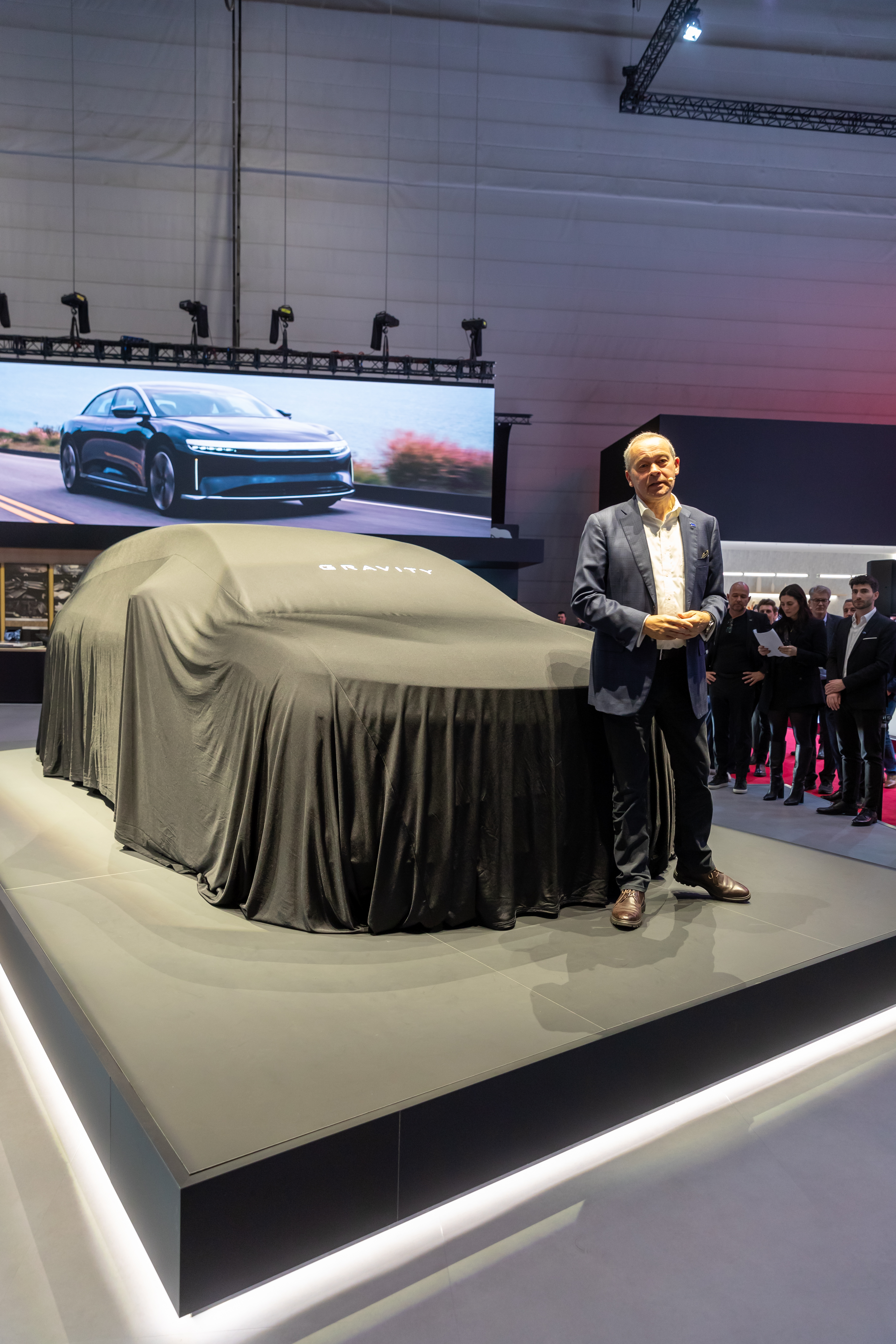
Lucid Gravity
"...hree years ago, we sat down in this very van when gravity hadn't even gone into the NEC. It's in a complete..."
The Lucid Gravity is an electric SUV, meaning it runs on electricity instead of gasoline. It’s built to be a bigger, family-style vehicle while still using an electric motor. The podcast mentions it as something that was still in an early stage at the time.
The Lucid Gravity is Lucid’s electric SUV, designed to combine space and comfort with an all-electric powertrain. It’s discussed in the context of an early meeting before the vehicle was widely known, which makes it a notable “future” product in the conversation. That’s why it comes up—people are tracking how an EV program progresses from early reveal to real-world presence.
SEMA
"I think with regards to something like SEMA, very difficult for people to gauge the size and the scale of that without going. Insane."
SEMA is a huge car show focused on aftermarket parts and custom cars. It’s so big that even people who think they’ve seen everything usually find more sections they missed.
SEMA is the Specialty Equipment Market Association’s annual show in Las Vegas, known for aftermarket parts, custom builds, and industry displays. It’s famous for its massive scale, so people often underestimate how much there is to see until they attend.
Goodwood
"As you see, there's a lot of events like Goodwood. We've both just come back from Goodwood."
Goodwood is a famous UK car event. It’s known for drawing huge crowds, and the hosts use it to show that people really want to attend car shows.
Goodwood refers to a major UK motorsport and car-event venue/brand known for large public gatherings. In this segment, it’s used as an example of how big car shows can get in the UK.
Festival of Speed
"We've both just come back from Goodwood. Festival of Speed, 250,000 people there over four days."
The Festival of Speed is a big car show at Goodwood. It’s known for lots of cars and racing energy, and the hosts mention how many people attend to prove car events are popular.
The Festival of Speed is Goodwood’s flagship annual hillclimb-style car event, famous for showcasing performance cars and motorsport culture. The hosts cite attendance numbers to argue there’s strong demand for car events in the UK.
old autosport day
"And the old autosport day is 90 to 100,000 people in its heyday when it was peak autosport."
The hosts are talking about an earlier version of an autosport event that used to attract huge crowds. They bring it up to show that big attendance has happened before.
“Autosport day” refers to a past, peak-era autosport event that drew very large crowds. The hosts use its historical attendance to compare what car-show demand looked like at its height.
NEC
"And that's in the NEC. So do you want to give people a rundown of, we mentioned earlier, you've been in the NEC for three years."
The NEC is a big UK venue where large events and exhibitions are held. The hosts are saying the event moved from a small start to being hosted at a major venue.
The NEC is a large exhibition and convention center in the UK that hosts major events. Here, the hosts contrast it with earlier, smaller beginnings to explain how an event grew over time.
Tumble Drolls
"So we started in a car park in Tumble Drolls. Few people might remember."
Tumble Drolls is where the event started out before it got bigger. The hosts mention it to explain how the show grew over time.
Tumble Drolls is mentioned as the original location where the event started, before moving to larger venues. It’s included here because it helps explain the event’s growth story from a small beginning.
torrential storms and thunderstorms
"or there's torrential storms and thunderstorms and there's nothing you can do about it."
They’re talking about really bad weather—heavy rain and lightning—that can make outdoor events unsafe. That’s why organizers sometimes have to pause or close the event.
This phrase describes severe weather conditions that can disrupt outdoor car events. While not a technical automotive term, it’s used here to explain why organizers may need to close events for safety.
stock
"If it's stock, you don't really want it, [1159.2s] has always been the saying."
“Stock” means the car is basically as the factory made it—no big upgrades or changes. Some car shows prefer modified cars because they want to see what owners have changed and built.
In car culture, “stock” means the vehicle is in factory configuration, without aftermarket modifications. Many car shows and enthusiast events prioritize modified cars because they showcase personal builds and engineering changes rather than the baseline factory setup.
BYD
"How hard is it to keep that philosophy [1163.9s] and those key principles when someone like a BYD [1167.8s] comes knocking with an infallent budget"
BYD is a car company that makes a lot of electric vehicles. Here it’s being mentioned as an EV brand trying to get more attention at car events that usually focus on modified gas cars.
BYD is a major Chinese automaker known for producing large volumes of battery-electric vehicles and plug-in hybrids. In the context of the segment, the host is contrasting traditional modified-car show values with the push from an EV-focused brand to put electric cars “front and center.”

D9 Denzer
"...ut. It's interesting that because I drove the new Denzer Z on track on Goodwood Motor Circuit."
The D9 is a car the speaker drove on a race track. Driving on a track usually means they were testing how it handles and how it performs. The podcast brings it up in that performance context.
The D9 is referenced in the podcast as a vehicle the speaker drove on the Goodwood Motor Circuit, implying it’s a performance-oriented model. The mention is brief, but track driving suggests the car is being evaluated for handling and real-world dynamics rather than just comfort or styling. That’s why it fits the conversation about cars that can actually perform.
main straight
"and all the rest of it, I had that in that car going down the main straight."
A main straight is the long straight part of a race track where cars build up speed. The host is describing what happened right after that high-speed run—especially how the brakes felt.
A “main straight” is the longest straight section of a race track, where cars accelerate to top speed before braking for the next corner. It’s a common reference point because braking performance and stability often get tested immediately after the straight.
stepping on the brakes
"And I genuinely felt fearful when stepping on the brakes because it's really that fast."
This just means pressing the brake pedal hard and quickly. The host is saying that when they did it, the car reacted so strongly that it felt intimidating at first.
“Stepping on the brakes” describes a firm, decisive brake application, often used in racing to mean late, aggressive braking into a corner. In this segment, the host says they felt fear because the car was so fast and the braking response was intense.

Porsche 918S
"It was that fast. I've been in 918s, Charons, and in a lot of fast things, never have..."
The Porsche 918 Spyder is a very fast, high-end sports car that uses a mix of electricity and gasoline. It’s designed for extreme performance rather than everyday commuting. The podcast mentions it because the speaker is talking about how quick it feels.
The Porsche 918 Spyder is a high-performance plug-in hybrid supercar known for combining electric drive with a powerful petrol engine. It’s brought up because the speaker is describing how fast and impressive it feels, comparing it to other very quick cars they’ve experienced. That makes it a “benchmark” type of car in enthusiast conversations.
hit them late
"Jensen Button was there and he said the brakes are unbelievable in that thing, hit them late."
“Hit them late” means brake later than usual, right before the corner. It’s a driving technique that can make the car feel more intense because you’re asking for strong grip at the last moment.
“Hit them late” is racing shorthand for braking as late as possible before a corner to maximize speed through the turn. It increases the challenge because the tires must generate enough grip quickly, and any instability can show up immediately.
squirreled a bit at the back
"We hit them late and it squirreled a bit at the back and I thought, please don't come round on me and hit the grass."
That phrase means the back of the car started to slide or wiggle a little. The host was worried because it can make the car harder to control right when you’re braking into a corner.
“Squirreled a bit at the back” describes rear-end instability during braking, where the rear tires lose grip and the car starts to wiggle or rotate slightly. It’s a common enthusiast way to describe traction loss without using technical tire-surface terms.

5 Renault 5
"...ent I've had with an electric car, other than the Renault 5, which I thought was quite cool and good."
The 5 E-Tech Electric is an electric car based on the Renault 5 name. It runs on electricity instead of gasoline, and the speaker says they liked it. In the podcast, it’s mentioned as a positive electric-car experience.
The 5 E-Tech Electric is an electric version of the Renault 5, designed to bring a classic-inspired look into an EV format. The podcast mentions it as an electric-car experience that stood out as “cool and good,” which is why it’s included—people are comparing what EVs feel like day to day. It’s a relevant topic because it represents an accessible, everyday approach to electric motoring.
EV
"I don't think I'll ever be converted to an electric car, but I'm all for trying new things."
An electric car runs on electricity stored in a battery. Instead of burning gasoline to make power, it uses electric motors.
An electric car is a vehicle powered primarily by one or more electric motors, drawing energy from a rechargeable battery pack. Unlike a gasoline car, it doesn’t rely on an internal-combustion engine for propulsion.
Yangwang
"One of them is, I think that's the Yang Wang. Ah, yeah. Same thing."
Yang Wang is a car brand from China that makes electric performance cars. The hosts are talking about it as an example of a very fast EV.
Yang Wang is a Chinese automotive brand under the Huawei-backed ecosystem, known for high-performance electric vehicles. In this segment, it’s mentioned in the context of “fastest production car” claims.
V8
"I just don't think you can ever replace the sound of a V8, a V10, a V12, whatever it might be, an RB26."
A V8 is a type of engine with eight cylinders. It’s known for a distinctive sound and feel compared with smaller or different engine designs.
A V8 is an internal-combustion engine with eight cylinders arranged in a “V” shape. The cylinder layout strongly influences the engine’s sound, vibration, and how it delivers power.
V10
"I just don't think you can ever replace the sound of a V8, a V10, a V12, whatever it might be, an RB26."
A V10 is an engine with ten cylinders in a V shape. People often associate it with a higher-revving, more exotic sound.
A V10 is an internal-combustion engine with ten cylinders arranged in a “V” configuration. Because it has more cylinders than a V8, it typically revs differently and has a different exhaust note.
V12
"I just don't think you can ever replace the sound of a V8, a V10, a V12, whatever it might be, an RB26."
A V12 is an engine with twelve cylinders arranged in a V. It’s famous for a smooth feel and a very characteristic sound.
A V12 is an internal-combustion engine with twelve cylinders arranged in a “V” shape. It’s often associated with smoothness and a distinctive, multi-cylinder exhaust sound.
RB26
"I just don't think you can ever replace the sound of a V8, a V10, a V12, whatever it might be, an RB26."
RB26 is a nickname for a specific Nissan turbo engine used in the Skyline GT-R. Car fans love it because it’s built for high performance and tuning.
RB26 refers to Nissan’s RB26DETT engine family, best known for powering the Nissan Skyline GT-R (especially the R32 generation). It’s famous in enthusiast circles for its strong aftermarket support and turbocharged performance.

Mini Classic Mini
"And it could be anything. It could be a classic mini that's been fully restored or it could be a bagge..."
A Mini Classic is a Mini that’s been restored or made to look like the older, original Mini. The podcast mentions it to show that the cars being discussed can be either restored classics or other variations. It’s basically a classic-style small car.
A Mini Classic refers to a classic Mini-style car that’s been restored or built to match the original look and character. In the podcast, it’s used as an example of the variety of cars people might bring or talk about—ranging from fully restored classics to other modified versions. That makes it a good “catch-all” reference for the classic Mini community.
bagged
"It could be a classic mini that's been fully restored or it could be a bagged Lambo."
“Bagged” usually means the car has air suspension. That lets the owner lower it a lot for looks at car shows.
“Bagged” refers to fitting air suspension components (often called “air bags”) so the car’s ride height can be lowered or raised on demand. It’s popular in car-show and “stance” culture because it can make the wheels sit tucked or flush with the fenders.
variety
"That doesn't mean that you're going to be in the show every year forever because we have to think about variety. And the people that are coming to the show"
Here, “variety” just means they try to show different kinds of cars instead of the same ones every year.
In the show-selection context, “variety” means not repeating the same types of cars year after year. The host is describing a curation strategy: balancing different makes/styles so the audience sees a broader range of vehicles.

Honda Civic
"because I was just selling some stickers with my Civic in a car park. And now we've got this big HQ and ..."
The Honda Civic is a common everyday car made by Honda. It’s usually chosen because it’s practical for daily driving and easy to own. In the podcast, it’s used to set the scene for the speaker’s early days.
The Honda Civic is a widely sold compact car known for being practical and easy to live with. In the podcast context, it’s mentioned as the speaker’s car while doing something small-scale (selling stickers), which highlights how common and accessible the Civic can be. That kind of story often comes up because the Civic is a recognizable “everyday” car rather than a niche performance model.
Gumball 3000
"I saw he went on a Gumball 3000 recently, well about three years ago, that I wish I booked on."
Gumball 3000 is a big celebrity car road trip/rally. People pay to join and drive together while it gets lots of attention online and in the media.
Gumball 3000 is an annual, high-profile road rally where celebrities and car enthusiasts drive across countries in a convoy. It’s known for flashy participation, social media visibility, and expensive logistics rather than pure racing.
Mantai bits
"And he got out and he saw some of the Mantai bits on mine and the fact he was a bit loud."
“Mantai bits” sounds like custom parts or add-ons on the car. The exact type depends on what “Mantai” refers to, but it’s not a standard factory term.
“Mantai bits” appears to refer to aftermarket or custom parts associated with a brand or specific kit named “Mantai.” Without more context, it’s unclear whether this is a tuning shop, a parts manufacturer, or a particular body/trim package.
G-Wagon
"Ed Sheeran's ice cream trucks and pink G-Wagon and all the rest of it."
“G-Wagon” is a nickname for a Mercedes-Benz G-Class SUV. People like it because it looks tough and has lots of customization options.
“G-Wagon” is the enthusiast nickname for the Mercedes-Benz G-Class, a boxy, off-road-capable SUV. It’s popular with celebrities and has a strong aftermarket scene, including custom paint and wheels.

G-Class Gwagon
"getting into cars, Ed Sheeran's ice cream trucks and pink G-Wagon and all the rest of it. 100%."
The G-Class is a luxury SUV that’s also built to handle rough roads. It’s known for its very recognizable, boxy shape. The podcast mentions it because it’s a standout car people immediately recognize.
The G-Class is a luxury off-road SUV known for its distinctive boxy design and strong capability. In the podcast, it’s mentioned in a playful way alongside specific examples (like a “pink G-Wagon”), emphasizing how recognizable and popular it is. That kind of reference often comes up because the G-Class stands out visually and has a strong identity in car culture.
Liberty Walk
"and obviously everyone will remember the Slambo [2471.5s] built that Liberty Walk Kit, Air Ride, Wheels [2474.9s] all that kind of stuff"
A Liberty Walk kit is an aftermarket body kit that makes a car look wider and more aggressive. It’s a common choice for modified “show” Lamborghinis.
A “Liberty Walk Kit” refers to aftermarket widebody bodywork produced by Liberty Walk, a Japanese tuner known for aggressive, flared fender styling. These kits are popular for show cars because they dramatically change the car’s stance and wheel coverage.
air ride
"and obviously everyone will remember the Slambo [2471.5s] built that Liberty Walk Kit, Air Ride, Wheels [2474.9s] all that kind of stuff"
Air ride is a suspension setup that lets you change how high or low the car sits using air. People use it to lower the car for looks, and sometimes raise it again to drive.
“Air Ride” is a suspension system that uses air springs (instead of traditional coil springs) to adjust ride height. It’s commonly used in show cars because it can “slam” the car low for photos and then raise it for driving.
Widebody Lambo
"which is why now we're building a Super Touring Car [2485.1s] so we've done the Race Car [2486.0s] done the Widebody Lambo"
A “widebody” conversion adds fender flares and wider bodywork to fit larger wheels and tires. When the host says “Widebody Lambo,” they’re describing a Lamborghini build with that widened stance, usually for show-car aesthetics and sometimes for more grip.

R8
"got the R8, we've got the GTR"
The Audi R8 is a high-performance supercar from Audi. It’s the kind of car people bring to events to show off serious speed and engineering.
The Audi R8 is a mid-engine supercar known for its sharp handling and performance-focused layout. When someone name-drops it at a car event, it usually signals a high-end, enthusiast-level crowd and a serious performance car presence.
super touring cars
"now we're doing a Super Touring Car"
A Super Touring Car is a kind of race car category based on regular cars, but built and regulated for competition. Mentioning it suggests the event isn’t only about parked cars—it has a racing angle too.
A Super Touring Car is a specific style of touring-car racing that was popular in the 1990s, with production-based rules and performance limits. The term helps listeners understand the event’s motorsport flavor—more like racing-derived cars than just static show cars.
Bugatti
"the only other car we've never had at the show as in brand-wise is a Bugatti so Bugatti would be cool"
Bugatti is a famous car brand that makes some of the most expensive, high-performance supercars in the world. If a car show has a Bugatti, it’s a big deal because those cars are rare and hard to get for events.
Bugatti is a luxury and performance car brand best known for ultra-high-end supercars. When someone says they’ve never had a Bugatti at a show, it usually signals a very rare, high-profile display because Bugatti cars are expensive and not commonly shown outside major events.

Lamborghini Huracan
"yeah [3214.5s] is a Lamborghini Huracan [3216.3s] not just any Lamborghini Huracan [3217.8s] because this was your Lamborghini Huracan"
The Lamborghini Huracán is a high-end supercar made by Lamborghini. It’s the kind of car people buy when they want something fast and special, and here the guest is talking about owning and using one themselves.
The Lamborghini Huracán is a modern Lamborghini supercar known for its mid-engine layout and aggressive, track-focused handling. In this segment, the host specifically calls out that it’s “your Lamborghini Huracan,” tying it to the guest’s personal experience with owning and operating the car.

Lamborghini Gallardo
"and my mum bought me a yellow Gallardo little 118 model and I remember it like it was ye..."
The Lamborghini Gallardo is a supercar made by Lamborghini, known for its strong engine and sporty design. In the podcast, it’s mentioned because it left a lasting impression through a model the speaker remembers. It’s being used to show how iconic the car is to fans.
The Lamborghini Gallardo is a V10-powered supercar that became one of the brand’s most recognizable models. In the podcast, it’s mentioned through a personal memory—someone’s mother buying a small model—showing how iconic the Gallardo is to enthusiasts even at a young age. That kind of reference helps explain why the car is memorable beyond just performance.
118 model
"and my mum bought me a yellow Gallardo little 118 model and I remember it like it was yesterday"
The “118” is the size scale of the model car. A 1:18 model is fairly large and usually has more detail than smaller toy scales.
“118” refers to the scale of a model car—1:18 scale means the model is 18 times smaller than the real vehicle. It’s a common size for detailed die-cast or display models.

Lambo
"for me the aim and the goal of life was always to buy a Lambo rightly or wrongly all through my childhood"
“Lambo” is just a nickname people use for Lamborghini. Here, it means the speaker wanted to own a Lamborghini someday.
“Lambo” is a nickname for Lamborghini, the Italian supercar brand. In this context, the speaker is expressing a long-term goal of owning a Lamborghini, using the brand shorthand rather than a specific model.
Spa
"and drive that round Europe [3347.0s] drive it to Spa [3347.7s] drive it all around France"
Spa refers to Spa-Francorchamps, a famous motorsport circuit in Belgium. It’s a common destination for car enthusiasts and track-focused events, so driving there is a notable “car culture” milestone.
Coventry
"why is anyone going to go to a hall in Coventry because you tell them to"
Coventry is a city in the UK. Here, it’s just the place where the car show hall is located that the host went to see how it would do.
Coventry is a city in the UK that’s known for its automotive and manufacturing history. In this segment, it’s mentioned as the location of a car show hall the host decided to try attending.
car meets
"especially from a media perspective quite negative about car culture at the minute car meets stuff that happens"
A “car meet” is when car fans get together to show their cars and hang out. It’s the kind of event the host is talking about when discussing car culture in the UK.
“Car meets” are informal gatherings where car owners and enthusiasts show vehicles, socialize, and sometimes cruise or talk about builds. The host uses it as part of a broader discussion about how UK media coverage can be negative toward car culture.
Ferrari
"that doesn't even know what a Lambo or Ferrari is"
Ferrari is a well-known Italian supercar brand. The host is using it as an example of a car brand that many people recognize even if they don’t know much else about cars.
Ferrari is the Italian supercar and sports-car brand known for high-performance road cars and Formula 1 racing. Here, the host contrasts people who don’t know car brands in detail with those who still recognize Ferrari as a stereotypical “boy racer” type of car.
boy racer
"yeah would be known as those boy racer"
“Boy racer” is slang for the stereotype of a young driver who’s into fast, flashy cars and driving in a more aggressive way. The host is saying people might use that label for cars they see at meets.
“Boy racer” is a slang term for a stereotype of younger drivers who are associated with aggressive driving, loud cars, and street-style car culture. The host is pointing out that the average person may label enthusiast cars as “boy racer” vehicles even if they’re just at a meet.
OEM
"a lot more performance [3565.6s] a lot more OEMs like Tesla"
OEMs are the companies that make the cars in the first place. When OEMs show up at car events, it often means more factory-built cars and less purely DIY modification culture.
OEMs means original equipment manufacturers—companies that build cars and major components as part of the production process. In car-show context, more OEM participation usually means more mainstream, factory-backed vehicles rather than only privately modified cars.
Tesla
"a lot more OEMs like Tesla [3568.6s] there's a lot more mainstream"
Tesla is a car brand best known for electric vehicles. The host is using it as an example of a big manufacturer showing up more at car shows.
Tesla is an EV brand known for electric powertrains and software-driven vehicle features. Mentioned here as an example of an OEM bringing more mainstream angles into car events.
modified cars
"but also not lose [3577.1s] where we came from with the modified cars [3579.2s] and the stickers in the car park"
Modified cars are cars that have been changed from how they came from the factory. People do it for looks, sound, or driving feel, and the host is saying the event has to balance that culture with bigger mainstream involvement.
Modified cars are vehicles altered from factory specification—commonly for appearance, sound, handling, or performance. The host contrasts them with more mainstream participation, emphasizing the challenge of keeping the event’s roots while expanding its audience.
Formula E
" [3632.9s] Formula E [3634.6s] no and I'm sure Formula One do as well"
Formula E is a racing series where the cars are fully electric. They don’t use gasoline engines—everything is powered by electric motors.
Formula E is an all-electric open-wheel racing series. Instead of gasoline engines, the cars use electric powertrains and energy management strategies to race and recharge during events.
Formula One
"[3634.6s] no and I'm sure Formula One do as well [3636.3s] I mean any and all"
Formula One is the most famous kind of professional race car series in the world. The cars are very advanced and built specifically for racing.
Formula One (often shortened to F1) is the top tier of international open-wheel motorsport. It’s known for highly engineered, race-focused cars that primarily use combustion engines (in the traditional sense) and strict technical regulations.
combustion
" [3650.0s] and go through the halls and [3652.9s] they can do that [3653.9s] because they're not combustion [3655.4s] so"
“Combustion” means the car makes power by burning fuel. Electric cars don’t burn fuel, so they can change how an event is set up.
In this context, “combustion” refers to engines that create power by burning fuel (like gasoline or diesel) inside the engine. The speaker contrasts combustion cars with electric racing cars, implying different safety and event logistics.
health and safety
"[3656.0s] oh wow [3656.9s] there's a lot less health and safety [3658.5s] and that kind of stuff [3659.7s] so how you make it live"
They’re talking about safety rules that decide what kinds of cars and racing setups are allowed in public venues. Those rules can be stricter for fuel-burning cars.
The hosts discuss how “health and safety” requirements affect whether race cars can be staged inside large venues. This includes rules about barriers, ventilation, fire risk, and crowd movement.
hill climb
" [3659.7s] so how you make it live [3660.6s] how you essentially put the good wood hill climb [3662.5s] through your event [3663.2s] yeah"
A hill climb is a motorsport format where cars race up an incline over a short course, emphasizing traction, acceleration, and control. The speaker is using it as an analogy for how to route a course through an event space.
Request an Explanation
Heard something you'd like explained? We'll add it to this episode.
Sign in to request explanations for terms you heard.
Want to learn more?
Browse our glossary for plain-English explanations of automotive terms, jargon, and concepts.
Help improve this episode
See something that's not quite right? Our annotations are AI-generated and can sometimes miss the mark. Click the flag icon on any annotation to suggest a correction.