They’re talking about the process of asking car companies for cars to film with. Sometimes the request gets stuck or takes too long, so they end up using whatever they can get.
General Motors is a big car company in the U.S. The point here is that the speaker could connect with GM people in China, but it was much harder to get approval and car access from the U.S. side.
It means the people on one side of a company weren’t talking to the people on the other side. So even if they knew the right contacts, the process still didn’t move fast enough.
Concept
intensive language training program
This is a fast, focused way to learn a language by using it a lot every day. The guest is describing how they trained to be able to communicate in China.
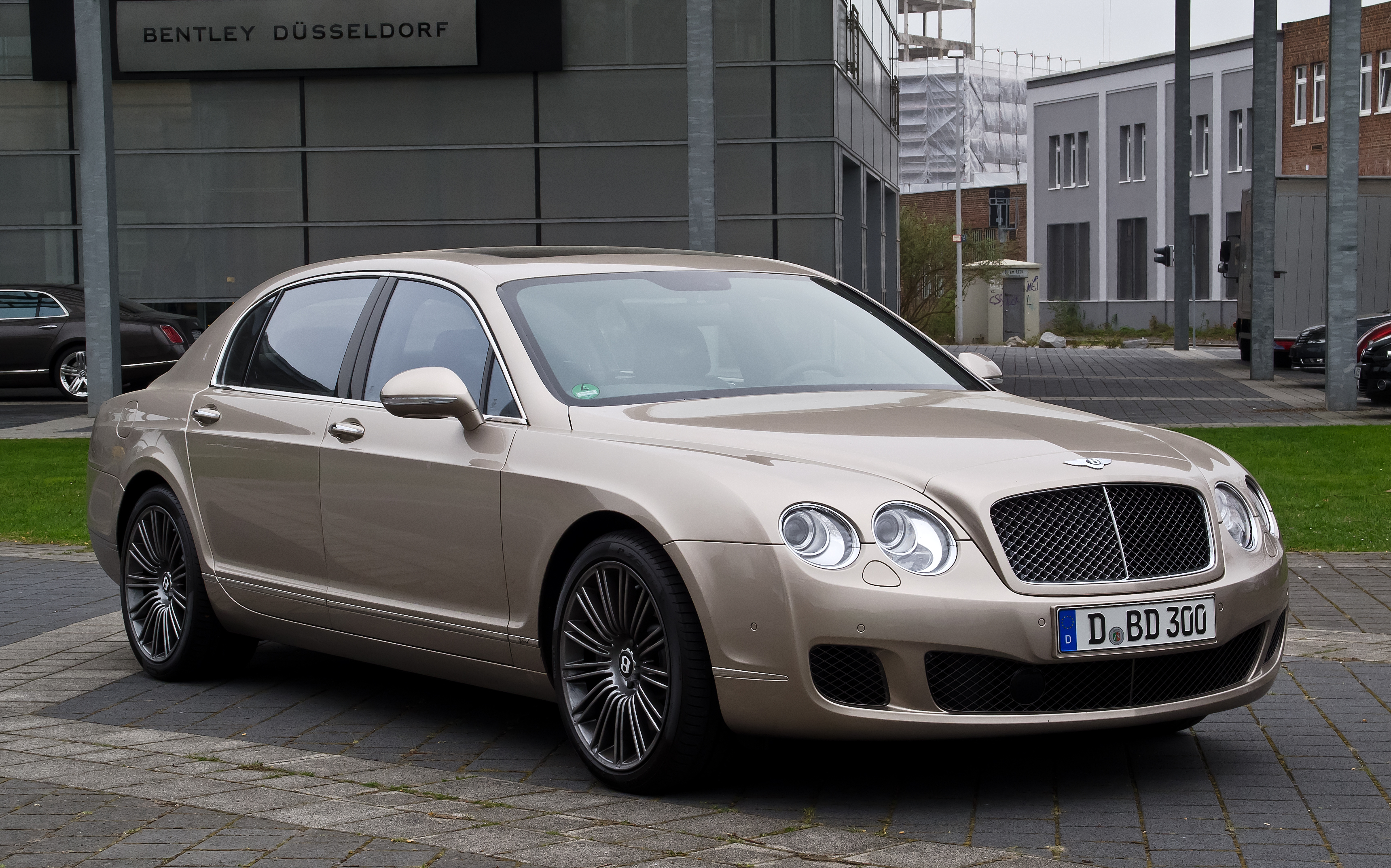
The Bentley Continental Flying Spur is a very expensive luxury sedan. It’s the sort of car people buy when they want maximum comfort and prestige, not practicality.
“PR” means public relations—how a company talks to the press and the public. In cars, it affects what stories you hear about a brand and how people judge their cars.
“Automotive landscape” just means the overall car industry—who’s winning and who’s growing. With EVs, it’s usually about which companies are getting more popular and more powerful.
Bentley’s Flying Spur is a very upscale sedan meant for long, comfortable drives. The “2014” part just tells you which model year it is, which matters because the car’s features and engine options can change over time.
Brand
Cherry Jaguar Land Rover
This is a China-based partnership connected to Jaguar Land Rover. The guest is just saying their PR agency had clients tied to that business.
Concept
joint venture in China
A joint venture is when two companies team up. In China, it often means a foreign brand works with a local company to make and sell cars there.
Wheelsboy is the automotive media group the guest is part of. They’re talking about how they met the people who run it while they were living and working in China.
Topic
testing vehicles
They’re describing a trip where they went to a place built for evaluating cars. The idea is to drive and assess vehicles in a controlled setting before talking about them.
Topic
Wuhan testing facility
They’re talking about a car testing location in Wuhan. The guest suggests it’s fairly new, and that’s where they went to evaluate vehicles.
They’re explaining where their viewers live. That matters because different countries buy different cars, so the channel’s content can shift depending on which market is watching.
They’re talking about the China market—how selling and talking about cars works differently there than in other countries. For EVs, it often means you have to connect with local buyers in the way they expect.
They’re saying that when a foreigner talks about cars to Chinese viewers, it can feel novel—but it also helps a lot if the person can speak Chinese well. That makes the message feel more trustworthy and easier to follow.
They’re basically asking: are Chinese EVs getting more hype than they deserve, or are they genuinely good? The conversation is about what’s real after driving them.
Concept
quality and innovation takeoff during the pandemic
The segment suggests a “takeoff point” in Chinese EV quality and innovation during the pandemic era. That’s a useful concept because it implies rapid iteration—manufacturers improved designs, manufacturing processes, and software faster than before.
Topic
Shanghai Grand Prix
The Shanghai Grand Prix is a major racing event in Shanghai. The host brings it up to explain he’s been around China’s car culture for years.
Concept
"knockoff looking" cars
The host’s “knockoff looking” comment reflects an early perception that some Chinese cars resembled Western designs too closely. It’s a perception that later shifted as Chinese brands developed more original styling and engineering credibility.
When China shut its borders during the pandemic, it created a multi-year gap where international observers couldn’t easily see what was happening in the market. That “information lag” helped delay the global EV industry’s perception of how fast Chinese brands were improving.
The Shanghai Auto Show is a huge car event in China where companies show off their newest cars. The host is using it to talk about when Chinese carmakers started impressing people internationally.
The BYD Han is one of BYD’s earlier electric sedans. In the conversation, it’s used as an example of an early BYD car that already showed promise.
Company
GAC or Guangxi Automotive
GAC, also called Guangxi Automotive, is a Chinese company that makes cars. The host is using it to explain the ownership/brand structure behind some EV products.
Build quality is how solid and well-made the car feels—like how tight the parts are and how refined everything seems. The host is saying Chinese EVs were getting better at this, but earlier ones didn’t always feel as fun to drive.
“Drives very well” is about more than acceleration—it includes steering response, suspension tuning, braking feel, and overall chassis balance. The host’s point is that early Chinese EVs were often “soft,” meaning the ride and handling didn’t deliver the same driver engagement as more established brands.
In driving terms, “soft” usually describes suspension tuning that prioritizes comfort over sharp control—more body movement, less immediate response, and a less “connected” feel. The host uses it to explain why earlier Chinese EVs could be impressive in tech and comfort but still lack driver enjoyment.
Steering feel is how the steering wheel tells you what the tires are doing. If it’s missing, the car can feel vague or disconnected even when it’s comfortable.
A car’s suspension has two big settings: how stiff it is (spring rate) and how it controls movement (damping). Good tuning makes the car feel stable and responsive instead of floaty or bouncy.
Concept
counter-rotating wheels demo
This is a trick where the wheels turn in opposite directions to make the car move in a very controlled, dramatic way. It’s meant to show how well the car can control torque and traction at low speeds.
Usually, foreign automakers in China had to team up with a local company and share ownership. The big deal in this story is that Tesla was allowed to run its China business with full foreign ownership, which made it faster and easier to bring its own approach to the market.
A 50/50 joint venture is a business structure where a foreign automaker and a Chinese partner share ownership and control. The segment highlights how this was the prior requirement in China, and why Tesla’s ability to bypass it (via full foreign ownership) gave it a competitive advantage in speed and strategy.
SAIC is a major Chinese automaker group that commonly partners with foreign brands in joint ventures. The host’s aside about the correct ordering/name is emphasizing how these joint-venture partner names are presented in China’s corporate structure.
The host is talking about how government policy can shape competition. The claim is that China wanted Tesla to come in so local companies could learn faster and build better electric cars.
“Killer” is internet/marketing talk meaning “this car will beat the Tesla.” The host is saying that even though lots of Chinese EVs are advertised as challengers, Tesla’s Model Y and Model 3 are still winning in the real world.
The Tesla Model Y is an all-electric SUV from Tesla. Calling something a “Model Y killer” means it’s trying to be better and/or cheaper enough to pull buyers away from the Model Y.
The Tesla Model 3 is an all-electric car from Tesla. When someone says another EV is a “Model 3 killer,” they mean it could be so good and affordable that it would steal Model 3 buyers.
VW Group (Volkswagen Group) is a large multinational automaker that includes brands like Volkswagen, Audi, Porsche, and others. The speaker is arguing that VW’s China market position has weakened because earlier-generation cars were seen as low-quality or overly cheap, hurting long-term demand.
Declining market share means a brand is losing sales compared to competitors. It’s a sign that buyers are choosing other options more often.
Concept
cash aid
“Cash aid” means money support that can help a company sell cars more easily. It can make a brand look more competitive, even if the cars themselves aren’t the best.
Car
NIO E.T.9
The NIO E.T.9 is NIO’s big, top-tier electric car. In EV discussions, it’s treated like a showcase model—something the company uses to prove it can build a premium vehicle.
Car
Tesla
Tesla is the best-known EV company, and people often use it as the “safe choice.” In this story, buyers are choosing Tesla because they believe the company will still be around and supported in the future.
When lots of new EV brands are competing, buyers worry about whether the company will still exist later. If it doesn’t, it can be harder to get repairs, parts, and software support.
A value proposition is the overall “what you get for what you pay” argument—features, range, software, and experience relative to price. The segment contrasts Tesla’s perceived quality with Chinese EVs offering more features and range for less money.
“Highly considered” refers to how often a vehicle shows up on shoppers’ shortlists during the buying process. It’s a measure of brand strength and perceived value, not just sales volume.
The Tesla Model S is Tesla’s more upscale electric sedan. The hosts are basically saying it’s not the main focus for most buyers in the categories they’re talking about.
The Tesla Model X is Tesla’s bigger electric SUV. In this conversation, it’s mentioned as not being as important to most shoppers as the Model 3 and Model Y.
“Pure EV” means a car that’s fully electric and doesn’t use gas or a hybrid system. The speaker is saying that if you only count fully electric cars, the comparison changes.
“Exponential” here means growth that speeds up over time, not just steady increases. The host is saying Chinese EV brands can start small, then grow really fast once more people can buy them.
Geely Group is a big Chinese company that owns several car brands. The host says they often buy other companies to get new tech faster, like better in-car screens and software.
The “buy the company” approach is an acquisition-led strategy: instead of developing every capability internally, a group purchases existing firms to gain technology, talent, and products quickly. In this segment, it’s used to explain how Geely can move faster on areas like infotainment and user interface design.
In-car infotainment is the car’s touchscreen and software for things like music, maps, and phone features. The host is saying Geely tried to make that experience better by using outside tech expertise.
Lotus is a car brand that’s known for making sporty cars and focusing on engineering. The host brings it up to show Geely owns brands with different strengths, not just one type of car.
Volvo is a famous car brand from Sweden. The host mentions it to show that Geely owns more than just Chinese brands—it also has well-known international ones.
Zeekr is a Chinese EV brand under the Geely umbrella, positioned as a more premium, tech-forward alternative within the group. The host says they’re bullish on Zeekr specifically and highlights that their driving experience has been consistently competitive.
Car
Nio 9X
The host refers to Nio’s CES-reviewed vehicle called the 9X, describing it as having a suspension tuning and overall feel that can compete with premium German brands. The discussion frames it as a tech-forward EV with standout interior infotainment and materials.
Mercedes-Benz is being used as the “premium standard.” The host is saying the suspension and overall driving feel are comparable to what you’d expect from Mercedes.
“X9” here is connected to Xpeng, which is a company that makes electric cars. The podcast is grouping it with other EV makers and saying they’re producing impressive vehicles. The discussion is more about the company’s presence than about one specific feature.
Concept
technological tour de force
This phrase means “a big impressive tech achievement.” The host is saying the Nio 89 is meant to show off what the company can do technically.
This is a suspension system that can actively change how the car rides. Instead of just soaking up bumps passively, it uses controls to keep the car more stable and comfortable.
They’re using the Porsche Panamera as an example of a luxury car with advanced suspension. The point is that the Nio’s suspension tech is in that same high-end class.
Steer-by-wire means the steering wheel isn’t directly connected to the wheels with a traditional mechanical linkage. The car uses sensors and electronics to turn the wheels based on what you command.
They’re comparing the steering tech to Tesla’s Cybertruck. The idea is that both cars use electronic steering control instead of a traditional direct mechanical connection.
They’re talking about very large screens inside the car—around 17 inches. The point is that some EVs are designed so most of the experience happens through big displays.
“Foreign outreach” here means how effectively a brand engages with international media, partners, or customers outside its home market. The host contrasts brands that do well with outreach versus BYD, which they say they can’t get to respond—highlighting how visibility and communication can affect perception.
“Neo” is actually NIO, a Chinese electric-car company. The host is saying NIO is doing a really polished job with its customer experience—almost like an Apple Store vibe.
Cash burn rate means how fast a company is running through its money. If an EV company is spending a lot—like building charging or swapping networks—it can look risky if it isn’t earning enough yet.
A battery swap system lets you trade your low battery for a charged one at a station. It’s meant to be faster than charging, but it only works well if there are lots of swap stations and the batteries are set up to fit.
Fixed costs are bills a company has to pay no matter how many cars it sells. If those costs are big, the company needs lots of sales to avoid losing money.
A cash infusion means a company gets extra money to stay afloat. It’s often needed when sales aren’t covering costs yet, or when the company is spending a lot to grow.
A price war is when companies lower prices to try to sell more cars than everyone else. It can make it harder for some brands to stay profitable, especially if they’re still trying to grow.
“Cage match” just means the competition is really fierce. Companies are pushing hard against each other to stay in business.
Concept
companies are eating each other
“Companies are eating each other” is a metaphor for intense competition and consolidation in the EV market. The episode uses it to frame why some EV/AI startups win attention briefly, then disappear as pricing pressure and scale advantages favor a smaller set of survivors.
GDU is a company mentioned in the episode that made EV-related tech. The hosts say it got attention for its AI features, but then it shut down—showing how competitive and unstable the market can be.
They’re talking about the car’s AI assistant—software that can understand commands and help control the car. In this case, it’s used for convenience features like remotely opening doors.
Baidu is a major Chinese tech company. The hosts say Baidu pulled support, and that change is tied to what happened to the EV/AI company they were talking about.
Concept
three or five really strong Chinese companies
They’re predicting that only a few Chinese EV companies will end up dominating. The idea is that the market will thin out, and the strongest brands will survive long-term.
The Mercedes-Benz AMG GT is a sports car made for performance. It’s built to be fast and fun to drive, not just for commuting. The podcast mentions it while talking about major companies that make world-class cars.
Some EV companies show the car first and only announce the price later. The idea is to keep competitors from copying their pricing and to avoid surprises if costs or strategy change.
An NDA is a legal promise not to share certain information. In car launches, it’s used so journalists can’t leak details before the company is ready to announce them.
The G9 is a more premium electric SUV from XPeng. The point here is that once XPeng announces a new “top” model, other companies quickly adjust their own offers to stay competitive.
The Porsche Cayenne is a luxury SUV that many people see as a premium benchmark. Mentioning it means the Chinese EV is being marketed as “high-end,” not budget-focused.
LIVE
Hi there and welcome to another episode of the inevitable Johnny's not here.
So I did a terrible impersonation of him.
This is Motor Trends podcast or podcast on the future of Billy.
Where are we going?
Where are we going?
How are we going to get there?
And does it go through China?
That is the topic of today's episode.
I'll just tell you that we are not sponsored.
So if you want to sponsor us, you're welcome.
Just shoot me a note at word.loh at Hearst.com.
Love to receive your support.
Today's guest, very special, very interesting.
Got to give a shout out to our man Kyle Connor from Out of Speck.
He said, Hey, you got some time?
You know who Wills Boy is?
This guy, he's on Instagram.
He's got a YouTube channel.
They're rolling into town, coming your way.
You should have them on.
In this case, we have Ethan Robertson from Wills Boy.
This is a big YouTube channel.
They cover Chinese vehicles, mostly Chinese EVs.
They are a dual language channel.
So they do content in English, but also in Chinese for the China market.
So we have a fascinating conversation coming about all about Chinese EVs.
So if you want to know anything about where the China market is currently,
this is the episode for you.
It is a long one to we went away over time
because we had a lot of things to talk about.
So let's just get right to it.
Ethan Robertson from Wills Boy.
Let's bring him on.
Welcome to The Inevitable, a podcast by Motor Trend.
All right, so.
Ni hao.
Ni hao.
Ethan Robertson of Wills Boy.
Yes, sir.
Thanks for crossing the Pacific and then the country
to come on to the podcast.
Let's just start there.
So what were you doing?
You were driving across the U.S.
Yeah.
So right now I am on a road trip from New York to L.A.
Obviously we're at the last stop.
We're at the last stage of it here for my Chinese language channels.
So something that a lot of my subscribers on YouTube,
those people listening or watching that have heard of me,
probably know me from YouTube and they don't realize
that a majority of my content is actually in Chinese
because I speak Chinese pretty fluently.
And so it's largely similar to what I do.
Well, I say that it's similar in that it's automotive content.
And so for this trip, we were just showing my Chinese audience America
started in New York, went to, you know,
Detroit for a few days, Chicago,
burned across the Midwest because there's not a lot of car-related stuff there
that we could do.
And then now we're in L.A.
And what did you drive?
We drove from Enterprise.
Originally, I'll tell you this.
Originally, we wanted a Chevy Malibu.
The reason being that one of the differences
between my Chinese content and my English content
is on YouTube, all they want to hear me talk about is Chinese EVs.
Not even hybrids.
People get annoyed when I talk about hybrids.
Whereas in my Chinese language content from audiences in China,
they want to hear me talk about American cars,
an American car culture.
And so we really wanted to get a Malibu.
They didn't have any Malibus.
So we ended up in a 2026 Toyota Camry,
which honestly has been fantastic.
You didn't reach out,
or I guess you don't have a relationship with U.S. car companies
to borrow vehicles?
So that's a great question.
We actually...
So I'll tell you, when I knew I was going to Detroit,
we have a good relationship with, say, General Motors, Ford in China.
We've worked with them before in terms of getting cars from them and everything.
But when you reach out to the American side,
the left hand does not speak to the right.
They're like, who?
Yeah, they're like, who's this guy?
I reached out to, luckily, through the stuff I've done there,
I have some pretty high-up friends at General Motors in China.
But even those people were unable to convince anyone here
that we should be given access to cars.
And so I really wanted to film with Celestic, for example.
And I had people working in the background.
I tried going in the front door to say, look, just let me...
I really want to show it off to my Chinese audience
because I can't see it in China.
And unfortunately, they just couldn't get their stuff together fast enough
to get me into one.
Next time call us, we have an office in Detroit,
and we could have gotten a car and probably just...
You could have come out of the office and probably just driven it around.
Well, I'll see you on my next road trip.
Okay, great.
All right, so you did a road trip.
You're here now, and then you're going to fly back to Shanghai.
Correct.
In a few days?
Yes, right.
Yeah, okay.
All right, so let's start with you.
And then I want to talk about Wheels Boy, obviously.
But you're fluent in Chinese.
You seem like a young man.
What's your story?
So you grew up...
We were talking before we started recording, North Carolina.
Yes.
Around outside of the Raleigh-Durham area.
Correct.
Burlington.
Burlington.
Shout out to it.
Okay.
And...
Well, education...
UNC, Chapel Hill.
Yes, yes.
Okay, degree in...
My degree, my undergraduate was in public relations, actually.
Oh, okay.
Yeah.
Did you study Chinese at UNC?
I did.
We'll just start there.
Okay.
It goes back a little farther than that.
Essentially, when I was in...
Going into high school, I started to get interested in Chinese.
I was somewhat of a weird kid in that, you know, you go with your mom when she goes to
the salon, there's magazines there, right?
If there weren't any car magazines, Motor Trend, of course, number one.
Sure.
Thank you.
It's good to peer.
And then I would find like Forbes or The Economist or something like that.
I'm not saying I was some sort of incredibly intelligent whiz kid, but it was what I was
interested in.
And when you are interested in those topics, China is incredibly important, right?
Obviously economically, politically.
So I started to get interested in it, started to read books about it, and my father had the
foresight to say to me, hey, why don't you study Chinese?
And so when I went to university at UNC Chapel Hill, starting my sophomore year, I wish I'd
started my freshman year, honestly, I started doing Chinese language.
And I did it for three semesters before I ended up getting a fellowship which sent me to China
for the very first time in 2013.
So six months, four months in Beijing, it was an intensive language training program where
I literally signed a contract with the program that said if you speak, we catch you speaking
English three times, three strikes, you're out.
You ain't got to go back to America, but you can't stay in our school.
So luckily I got no strikes because I only spoke English in the bars with my friends.
But it was actually during that program on the Great Wall of China, but I met your co-host,
Mr. Johnny Lieberman.
Really?
Really.
So I'll try to tell this quickly, and I do, I love Johnny, I'm truly, I'm disappointed
he's not here because I would have loved to meet him.
He and you are both people, it's not, it doesn't make a good podcast when the, when the guest
sends the entire time, sucking up to the host, but really quickly, no, seriously, it's very
exciting.
Not really happy Johnny isn't here.
There you go.
Mrs. Holing.
I'll give you all the attention.
This is great.
I mean, truly, I mean, to be participating in anything related to Motor Trend for me is
like a childhood dream because I grew up, I grew up reading The Big Three, right?
The Carn Driver Motor Trend wrote and track, and every month, religiously, I was the kid,
I didn't hide a dirty magazine behind my textbook.
I hit a Motor Trend so I could read it in the back of class when the teacher wasn't
paying attention.
So seeing your name on so many articles that I've read and then being able to be here is,
is very exciting for me.
So we'll cut it off there, but 2013, I'm in this study abroad program.
I'm on the Great Wall of China because we're there to visit.
I am walking and I see in the distance a parking lot and there are a rainbow of Bentley Continental
like flying spurs, right?
Hmm.
And I think to myself, in China, these cars only come in black and dark blue.
There's no one that buys a red or green Continental flying spur, right?
So I think there's something up.
Not for three, four minutes later, I'm walking on the wall.
I hear a voice that I've heard in a hundred different videos.
It's Johnny Lieberman.
He's with his producer or videographer, whoever was there with him.
And I immediately introduced myself.
He was very nice, very generous with his time.
We chatted for a bit.
I was very worried that I mentioned that language pledge before.
I risked getting a strike so that I could talk to him.
And he gave me his email and I sent him an email telling about myself saying,
I want to be an automotive PR, right?
He sent me back an email.
His email said, Hey, I'm more than happy to introduce you to the PR from different companies.
But my honest advice to you is don't learn Chinese.
Because there's 100 million Chinese people that are willing to work for less money
that are also learning English.
So the happiest people I know in automotive PR learning are German company ones.
So you should learn German.
And I said, thank you, Mr. Lieberman, for the advice.
I appreciate it.
And so this this story, now we look at the way the automotive landscape is.
Right. Right. And, you know, we'll get into this.
One of these companies, one of these countries,
companies is on the Ascendants.
Sure. It ain't Germany. Right. Right.
So the even the language, the German language is dying out
because it is such a complicated, all the words are super long.
And all every German you meet speaks fluent English. Correct.
Like, and if you speak even if you speak passively good German,
they'll still speak in English because it's because they do.
They don't deign to speak to you in their native tongue.
That's hilarious.
The I was like, I don't think Johnny's ever been no.
And in fact, he is.
He did. He went there for season six, episode 12 of Ignition.
To to evaluate the 2014 Bentley Flying Spur.
There you go. I didn't make it out.
That's wild.
So the moral of this story is don't take advice from Johnny Lieberman.
Exactly. I follow that all the time.
And that's that is great advice.
And this is this episode is getting off to a great start
because we're just slacking Johnny in absentia.
I figured you'd like that. Yes.
No. OK. That's hilarious.
And good on you, A, for having the you and your dad
for having the foresight to study Chinese and not pick up German
and don't follow Johnny's advice.
It is something that, frankly, everybody's been saying
since like 2000, like, hey, China's China's coming up.
Of course, my Chinese is terrible.
We won't get into that.
So you you graduated university about 2014, then 2014, 2015.
That's correct. OK.
And then.
Immediately moved to China or have.
Yeah. So I came back from that six months in China
and I knew that I wanted to go back.
You know, it was the test for me.
Like, I like the language. I was willing to sit.
I mean, to this day, when it comes to the Chinese language,
I'm so willing to spend as much of my time as possible
thinking about and focusing on it.
I still have a habit from when I started learning Chinese.
I walk down the street alone and speak Chinese to myself
and practice my tones.
So I'm like, ma, ma, ma, ma, ma, you know, I mean.
And people think I'm crazy, obviously, but it's stuck with me.
So I knew I wanted to go back.
I knew I didn't want to teach English,
which is the number one thing that people do. Right.
And I have no I have no problem with people who do English English English.
It's very important.
But my sister is a teacher in the US.
And I think if you're going to be a teacher,
you should really care about it.
You have a passion for it and you should want to do it
not because you want to have a cool summer in China,
but because you want to help kids.
So I instead enrolled in a master's program
for international relations at Wuhan University. OK.
So from 14 to 18, I was in Wuhan.
And then when I graduated, we'll skip right to the next part,
which is where we get to the wheels, boy thing.
In 2018, I moved to Shanghai to work
for a small public relations agency who had clients,
including Cherry Jaguar Land Rover, so the joint venture in China.
I think we had some stuff with Ford or something at the time.
And it was while I was working there and being very bored working there
that I met my now current partners for Wheelsboy.
OK. OK. Interesting.
So you were in Wuhan.
Yes, I was. I left as I was very funny.
So people, there's a lag time when you live abroad,
which is when people people don't really recognize where you live.
Right. So in 2019, end of 2019,
being of 2020, when everything starts to go down,
I had a lot of friends reaching out to me being like, hey, you're so in Wuhan.
Right. And I'm like, no, no, no, no, I've been gone for a year and a half.
Don't worry. That's funny, because when we we took a bunch,
we took some colleagues to China to test vehicles.
We did it with D car and we ended up at the Wuhan,
this big testing facility there. But that's pretty new.
I don't think that was that likely was not built.
But when you were there, I think that's like only a couple of years old.
Most things in China are pretty new, so I believe it.
OK. Yeah. It's a brand new spot. OK.
So OK, great.
I'll probably come back to certain elements of your of your journey.
But tell me about Wheelsboy.
I know it's two hundred and eleven thousand followers on YouTube.
That's the primary platform, right?
There's you guys aren't like somehow bigger on like TikTok or something.
No, I wish I wish I've had a hard time with TikTok.
I'm not a short video guy.
I prefer to have time to sit and really talk about something.
OK, so it's a little bit on Instagram,
but mostly your audience on YouTube,
which is English, the English speaking, right?
I'm assuming you're not bigger and like Spanish YouTube or just Chinese.
I'm way bigger in China. OK.
So OK, so.
And the audience for Wheelsboy is who exactly?
Great question. I mean, you can break it down a few ways, right?
If you want to think about it geographically,
our largest audience is America consistently,
but that still may be 15 percent max.
After that, it's a lot of other, you know,
English speaking countries such as, you know, Britain
and those European countries in there.
But oftentimes we have it depends on the car.
So if we have a car that's just gone on sale in Southeast Asia,
we'll have a lot of views from Southeast Asian countries.
But in general, the top five are, you know, the US, Great Britain,
Australia, Germany, Canada, India is in there a lot.
So it's pretty diverse that way.
But I think that if you think of it more of a in an abstract sense,
it's people who are really interested in learning
what's happening in the Chinese car market, looking for a window into it.
And luckily for them and for us,
they've been able to find our channel
because we're one of the few that are able to do it.
OK. And then you said you're bigger in China.
Yeah, so on like a Xiaohongshu.
Xiaohongshu, yeah.
So Little Red Book and Chinese TikTok.
So my TikTok here in the US has four or five thousand subscribers
or followers or whatever.
My one in China has like six hundred and fifty thousand.
OK. My Billy Billy, which is the closest
equivalent to YouTube, I guess, is about the same as YouTube,
about two hundred and ten, two fifteen or something like that.
That's you personally or or the wheels, wheels, boy.
I don't have any personal channels.
It's funny. I get asked.
I've been asked by especially other media and they say like,
so you've got a personal channel, right?
And I go, listen, bud,
unlike you, I've got to do everything twice.
I've got to do it in English and Chinese.
So any energy I would have had to do the Ethan Robertson talks
about Chinese cars channel has been used up doing the Chinese.
OK. Interesting.
All right. So.
Well, wait.
It's sort of which is the platform that's much bigger?
Wheels, boy, on which platform in China is bigger than the YouTube?
I would say that in total, in total, in total.
I mean, in total on Chinese platforms, we have about two million subscribers
because the thing about the thing you have to understand about Chinese media
landscapes, it's very different than the US.
The US has a few monopolies, right?
If you want to do long form videos, YouTube, right?
In China, there's a bunch of platforms.
It's especially true when it comes to short form video.
So US, it's, you know, TikTok and Instagram and a few others.
YouTube now, when we publish a Chinese video,
we publish it, a short video, for example, we publish it on like ten different websites
because it's so scattered across all of these.
And they all have different types of audiences.
Some are more rural, some are more city, you know, some are more female.
So you do the same video.
Do you version one version, one like a vertical 60 second?
Or do you have to actually cut for the for the platform?
We definitely the the some short videos.
You want to tailor content as much as possible
and we won't get off into the weeds into this stuff.
Also to natively within the app, usually, right?
You get you get a bump for that.
I heard TikTok rewards you if you shoot.
That very well may be true.
That very well may be true.
I'm not aware of it being on the Chinese side,
but you do want to tailor the content as much as possible.
But, you know, for, for honest and practical reasons,
there's not that much tailoring you can do because time is limited.
Right, right, right. OK.
All right, so then.
Aside from reading the big three or the big four, whatever,
motor trend, car and driver, what was your what was it like
starting out as a car viewer?
You had a lot of experience.
So you just kind of jumped in or there's some early videos
I can look at. Don't I beg you.
Do not go to my YouTube channel and then put like reverse order on the dates
because if you go back and watch my original videos.
Well, first of all, my first videos were actually in Chinese.
So in 2019, it was like spring or late winter of 2019
that I met my two partners.
So Justin Chun, who's here in the room with me
and he drove across the country and then Seaman Xiang.
So Justin and Seaman were they'd been an automotive media at that point
almost a decade already.
They'd actually worked on behalf of German publications in China.
They had been basically the the German branch or sorry.
The Chinese auto bill, the auto bill, the automotive sport.
Yes, exactly. Yeah.
And so but during that, during that time,
they they kind of broke off and made their own company late in 2018.
And they were smart enough to realize even then they were late entering the game.
So they couldn't come and bring the same kind of this is a your average
Chinese car reviewer guy talking about a Chinese car.
They needed something to separate themselves.
And from their experience, filming with the Germans,
they knew that Chinese people love to hear foreigners talk about Chinese cars
and cars in general.
And so they were looking for a foreigner that spoke Chinese
that knew a little bit about cars and they luckily through friend of a friend
of a friend type thing, they got introduced to me.
And so as is so often the case in my life, pure luck, pure luck.
And so we started filming videos in Chinese in April of 2020.
I'm sorry, April of 2019.
And then we didn't really start doing YouTube videos full time until
I think 2020, we started doing them.
So at that point, the metaphor I make is when it came time for me
to start doing videos in English, it was like you ran the first half
of a marathon with a weighted vest and then all of a sudden you take the weighted
vest off and you're like, well, this is a lot easier.
So having said that, though, you can still go back and see how bad I was.
You know, it's I won't.
I did look I did look you up.
I actually did the proper thing, which is to look at the most recent videos,
but also most popular.
So which will which we'll talk about some of those some of those vehicles.
Oh, I just had a question that now escapes me.
Was related to how I got started, maybe.
No, it's OK.
Well, I'm sure it'll come back to me.
So.
Let's talk about let's talk about the China market.
So that's what you're what you cover.
Oh, here's a question.
They come back to me.
What is the novelty about having a for the Chinese audience to have a foreigner?
I'm my parents from a Guiluo, right?
My white guy talk about the car and it has to be in Chinese, right?
Is it is the novelty that you that you speak fluently?
That's that's part of it.
But also your impressions of it, like what tell me what's the.
So the first one is absolutely true.
I think there's a novelty of having someone step on camera
that looks like I do and come out with pretty fluent Chinese.
You know, people are impressed by that.
I always say that learning Chinese, I really encourage people to do it for obvious.
There's a lot of advantages to it.
There's a lot of opportunities to come with it.
But it's also one of the easiest countries to learn the language in the environment
in that people are so kind and encouraging to you.
Unfortunately, in the US, I feel like, you know, me, you,
there are nice people that if you meet someone who doesn't speak English fluently,
you're not going to disrespect them or belittle them because of that.
But it's not always it's not necessarily always true.
In China, if you come out and say one word in Chinese,
the person's going to be like, whoa, right, because they are
they're much more of a they see themselves as more of an underdog.
And they see now the global attention that they're getting for these things.
And it's a real source of pride for them.
So to know that an American is going there to learn Chinese means that China is important
and learning Chinese is important.
So that obviously brings them a lot of a lot of pride,
which I think is a great thing.
And that's the same reason I told them to talking about cars as well.
So originally, I talked a lot more about Chinese cars.
And so that's because people were like, you know, some Chinese people to this day
have a lot of doubts about Chinese cars.
You have to you have to I've often had conversations,
especially with older generations, where they don't believe that Chinese cars
are as good as people like me, say they are.
And so they like hearing the opinion of someone who comes
from what we would call a country with real automotive history like the US.
They take that as having a lot of value and that perspective.
And when it comes to me talking about American cars and my Chinese content,
that's why they also love it, because it feels authentic and people online.
This is said all the time, but it's true.
Authenticity is very important.
OK, OK, I get it.
OK, good. You open the door for it.
So let's let's just jump in.
Let's talk about the hype around Chinese vehicles.
Like, is it hype like you've driven?
How many how many Chinese vehicles would you say you've now driven
in the last what is it, eight years of my cars?
Hundreds. OK.
Yeah, from pretty much every single brand that they have.
OK, and in the early years, I would say, is it true that
it seems to be the real sort of
the real takeoff point for the quality and the innovation
kind of happened during the pandemic?
Like because I I've been in this industry for a while now.
I think I first went to first went to China for work.
I've been to Hong Kong since I was a little kid,
but first going to like the Beijing show, it might have been like 2008 or nine.
I went to the Shanghai Grand Prix in 2012.
And I still remember like the pollution is really bad
and all the cars were like super knockoff looking.
And then I didn't go for a long time.
And I kept hearing from my relatives who live in Hong Kong
and we're going to Shenzhen for like vacation or go to eat because it's cheaper.
They're like, the cars here are really good.
You know, you got to come check it out.
And I went there and I was like, yeah, holy crap.
Like it first of all, there's a lot of American looks new.
But is that is that like when you started in 2018, 2019?
What what what were the cars you were you were viewing like?
And when would you say you had like an aha moment
about Chinese cars arriving or being like world class?
So I think you nailed the time period.
There was a slow build up until around 2019, 2020.
And then due to the pandemic, China basically shut its borders, right?
And so that made a three year period or so where these Chinese, these outsiders,
you know, they didn't know what was happening in China.
So I would say that the 2023 Shanghai Auto Show was I remember going around
is really entertaining to see all the German executives
and Japanese executive, American executives walking around absolutely
like jaws on the floor because they could not believe
that they last came to a show in 2019.
And this is what the Chinese cars looked like now.
The change was was tremendous.
So early on I was driving.
Oh, I mean, B Y D's for sure.
B Y D Han was an early one, you know, stuff from Ion,
which is a sub brand from GAC or Guangxi Automotive.
I would say that the real turning point for me, because those cars were like
they're pretty good, they're pretty impressive.
The first Chinese car, one of the first Chinese cars
that I really went like, oh, this is this is really nice.
It was the B Y D seal.
So that was 2021, I believe.
And the B Y D seal was B Y D's competitor to the Model Three, basically.
They're they're kind of compact or midsize or whatever sedan.
And the thing that really blew me away was at that point,
I already knew that Chinese cars could be very affordable.
I knew that they could have really good in like smart technology or whatever.
I knew their build quality could be pretty good,
but they couldn't make a car as far as I could tell.
They didn't make any cars that drove very well.
They just didn't have any kind of enjoyment from behind the wheel.
They were very soft.
They could be comfortable, but there's no steering feel.
There's the front end is just heavy and dead.
Driving a B Y D seal through the mountains outside of Shenzhen.
I actually got chastised by my one of my co founders,
because he's like, you got to slow down.
But that was what that's what made me want to do was drive it fast
and actually enjoy it.
The suspension and the way it was tuned to the damping and the spring rate.
And it was great. It felt very, very good.
It felt like a car you'd actually want to drive.
So that was a real turning point.
And then after that, more and more companies started to make cars
that weren't just super high value, super techy, soft things.
They actually were pretty good from behind the wheel.
OK, yeah, that that 2023 show you reference.
Is that is that the one that the Yang Wang U8 came out?
Or was that the year after?
When did it come out and it was doing like the
all the thing when it's using the counter rotating wheels to go across the stage?
I feel like that was the jaw drop. Like, holy, I believe it would have been 2023.
OK, you know, somebody can correct me.
But I believe it was around 2023, 2024, beginning of 2024.
And then had you gone?
Had you been going to the Chinese auto shows like while you were there?
Just like in general.
Yeah, from the from starting in 2019, I'm sorry.
It was either 2019 or 2020 was my first one.
It was Beijing.
It was Beijing that is an even year, excuse me.
Then it would have been it would have been 2020.
And so I was going every year.
So for me, I was, you know, I was the proverbial, you know, frog in the water
that's going to get into boiling water or whatever.
And so I saw it coming.
But everyone else, for them, it was a instant that it happened.
Well, I think for a lot of people,
especially some of the seasoned veterans, the execs who had been going to China
and then had to take a break for three years, which are correct.
Like I was, I tell my staff all the time, you understand.
The last time I went to China, we would walk around and you'd get the press
materials and you would laugh because they had booth.
They had booth models in like really short, like vinyl skirts.
And you're like, yes, America.
We stopped doing this, like, like 15 years ago.
You get in trouble for this.
If you do this in the U.S., all the press handout stuff was misspelled.
Pictures were terrible.
If you if you lifted the curtain or looked behind one of the stages,
there's exposed wiring, you'd be like, this is feels a little still a bit
like a second, second world kind of show.
And then going back recently, first of all, all the PRs are like Western train.
I mean, I think the Neo, I knew the overseas Neo PR rep.
She's like Stanford grad, worked at BMW, China,
worked at Mercedes, China, and I should work for Neo.
Same for same for the lady at X-Peng.
They're all super polished.
All the any time we get for us for press materials, like it's all incredible.
And then it's showing up in the product as well.
So OK, so we are sympatico.
Let me let me pivot here just a little bit.
You because you mentioned China and you mentioned the B.O.I.D.
seal being a model like a model three, their version of the model three.
So this is a good fact check moment for me.
So what is what has been the impact of Tesla on the on the China market?
It's hard to overstate the impact that Tesla had, you know, it the Chinese
government, Tesla was the first foreign automotive company to be allowed to have
a wholly foreign owned, self owned company there.
Previously, you needed to have a joint venture, your 50 50 joint venture
between a Chinese company and a foreign company.
And just for the record, the Chinese company's name always comes first.
It's not SAI.
It's I'm sorry, it's not G.M.S.A.I.C.
It's S.A.I.S.
S.A.I.C. General Motors, right?
And so they were the first one to do that.
And I think that was a very strategic and pivotal move by the Chinese government
because they wanted to encourage Tesla to come in because they knew Tesla was
making the best electric cars in the world at the time.
And they wanted to create competition for their local automakers, for them to
be able to learn from Tesla.
And so that's exactly what happened.
Tesla came and they all these automakers kind of sat up and went like, oh,
oh, this is how well you can make an electric car.
And so I think that they they took it a lot more seriously after that.
And that was the result is cars now that are, frankly, better than whatever Tesla's making.
OK, I want to dive in on that.
But let me let me just keep going to that one particular thread.
Is is it true?
Because I say this a lot on the on the on the pod previously that basically all
the major Chinese players, all the big Chinese OEMs have a vehicle
that's within one to two millimeters of either the Model Y or the Model 3.
Is that is that accurate?
Relatively? Yeah. Oh, yeah.
For sure. People say it's funny.
It's kind of a joke now.
I mean, it's a joke in on on on YouTube and in English, too.
But the Model Y killer, the Model 3 killer.
Like you said, there's a dozen or two dozen Model Y killers and Model 3 killers.
None of them have managed to kill the Model Y or the Model 3 just for the record.
I am one of the YouTubers who's made the title of the thumbnail and the thumbnail
that says Model 3, Model Y killer and everything.
Because, unfortunately, on YouTube, that's what works.
Right. But no one's quite been able to do that.
The last killing blow on either of those cars.
Tesla might do it if I never updating them.
But right. OK. Yeah.
I want to talk about that, too.
So then it.
What is Tesla's status currently, right?
Is it is it far and away?
I mean, I know, historically,
China's had a soft spot for Buick as the American brand, right?
There was a lot of history behind Buick, presidential limousine
or just just the most successful American brand.
Also, VW Group has had a long and huge footprint.
And it's funny to watch the declining market share.
It's basically fell off a cliff for VW Group
because they were for so long able to sell very,
honestly, cheaply made last generation VWs.
Kind of crap. Kind of crap.
Made locally at huge margins.
And I think the Chinese buyer would buy it
because VW is a world renowned, recognized symbol as a German car.
So it's going to have some cash aid to it.
But where does where does Tesla currently
stand within the gamut of Chinese of brands,
automotive brands within China, inclusive of Chinese brands?
Is it still is it near the top?
I would still say it's near the top.
So just to give you an anecdotally,
I had a friend who works for Neo, right?
I'm not had.
I still have a friend who works for.
He used to work for Neo, but he went.
He was the head of the E.T.9 program.
We'll talk about the Neo E.T.9 later, I think.
And he bought himself an E.T.9
and to celebrate the car coming out.
And he went to the dealer to the.
I'm sorry, to basically the Chinese DMV, right?
And where they registered the cars.
And he saw so many Tesla's.
And so, you know, he's in the he's in the industry
and we started asking people there, like, why are you buying Tesla?
And a lot of them basically said, for one,
I think Tesla's still going to be around in five years, right?
There are so many Chinese companies.
And there are many of them are making quality products,
but in such a competitive environment, it's not hard to believe
that a lot of them aren't going to last another two or three years.
Interesting. Yeah.
And so there's still a trust and a faith in Tesla
that they're making a higher quality product.
They're not going to go anywhere.
Now, I would say that the there are plenty of chinks in the armor,
so to speak.
There are plenty of an increasing number of Chinese consumers
who are going, why would I spend 20 percent more on a Model 3
when I can get this Chinese car that has more features, more range,
more in like interior infotainment stuff
that's designed specifically for Chinese tastes.
Right.
And I think so.
Those people are a growing group, you know.
But right now, I would say Tesla is still pretty highly considered.
Top three.
Top three. Well.
Top five.
In their in their respective competitive categories,
I would say probably top three.
Yeah. You know, if you're looking for a compact or whatever,
you want to call it, you know, small, mid-sized, compact crossover
or sedan or sedan. Yeah. Right.
Then the Model 3 and the Model Y are still very, very high up in
considering S and X or no, not players at all. Right.
No, they're they're long gone.
I mean, not because there's a reason they stop making them,
because they weren't selling very many.
Yeah. OK.
And it's great that you mentioned the competitiveness of the Chinese
market, because I do want to dive into that, but we'll get there.
OK. So and I keep looking at the time
because I have a ton of questions to ask you when I knock them out.
We can do a speed run at the end.
Right. So the hype is real.
Who, who in particular, who's top of your list?
Who's who is better than Tesla?
Who is better? Who's at the top of?
And you can answer this as the China auto industry writ large,
inclusive of, and I love to use the term NEVs, right?
Like everything hybrid, gas, hydrogen, whatever you want, full electric.
Or if you wanted to say pure from a pure EV perspective,
who are the best brands currently?
So the way I'm going to approach that question is,
who are the brands that I think are going to make the biggest impact
globally over the course of the next 10 years or so?
Right. We can go middle, model by model and everything.
But, you know, top three, it had number one has got to be BYD.
OK.
There's a reason that BYD has the amount of
awareness globally that they have now.
They're selling in how many?
Almost 100 countries.
It's still definitely early days.
A lot of those countries, they don't sell very many cars, but they're in there.
And their market share, as we've seen in places like the UK,
is growing exponentially, like Mexico.
You guys have done a great documentary about the number of Chinese cars in Mexico
and the number of brands and how quickly it's gone up.
That's going to happen in more and more countries.
And I think BYD is going to be one of the leaders in that.
Besides BYD, I would say Geely, Geely Group in general.
So Geely Group, as you well know, is expansive.
So Geely's kind of approach to things is,
well, if we want to do something, we'll just buy the company.
So, you know, Geely's have satellite connection phones in them
because they have a satellite company.
You know, they wanted to make better in-car infotainment.
So they bought a phone company and just had them design their UI and UX and stuff.
So they've obviously got everything from Volvo and Lotus to Geely,
the brand itself, to Zeekr, which is, I would say, all of the Geely Group.
Right now, I think they've all got some very strong brands.
The one I am bullish on is Zeekr.
I have not driven a Zeekr that I didn't think was a pretty darn competitive
or maybe the best car in its class.
Specifically, last year, I believe it was last year, or early this year,
we reviewed the 9X, which was at CES.
Boy, howdy, what a car.
Looks like a Cullinan, you know, has a suspension tuning
that I would put up against something from a Mercedes Benz or an Audi or something.
Interior infotainment and tech that makes the Germans look like they're from the 1995,
you know, interior material quality that is truly impressive,
insane name audio system that normally only came in Bentley's.
And that's a story that repeats across a lot of other brands.
When it comes to maybe smaller, say, pure EV brands,
smaller brands, a startup group, right?
So Wei Xiao Li, Wei Xiao Li means Nio, which is Wei Lai, and then Xiao Peng,
which is X-Pong, and then Li Auto, right?
Those three, I also think, are making impressive products.
They have varying degrees of financial health, you know, and that changes month to month.
But, you know, last year, for example, I drove, as I mentioned earlier,
one of the most impressive cars.
I gave it an award in our Wheelies Award video, was the Nio 89, which was a,
as I call it, as a technological tour, like it's a technological tour de force,
it's a warning shot across the bow of the my box, right?
Because it's got fully active hydraulic suspension,
like you find in the most high end, like Porsche, Panameras and stuff.
It has a steer by wire, like a Cybertruck.
It's got an incredibly well designed and put together interior.
It's like very thoughtfully built and everything.
The material qualities are beautiful.
It was one of the most impressive,
left the biggest impression on me driving experiences last year, one of them.
And then, obviously, Li Auto and X-Pong and stuff,
they're making their own things.
If you ask me, okay, test the model,
what are you taking over a Model 3, right?
There's so many options.
Xiaomi SU7, which I know you guys drove in China.
My co-host on the channel, Jonathan is currently
headed to Beijing to drive the updated version of that car.
And that'll be coming out of the channel, sneak peek.
And I still wouldn't pick that one, though, even though I really like it.
I would pick the X-Pong P7.
The new one that came out that looks like it came from Cyberpunk 2077, the video game.
The P7 is so beautiful in my eyes.
The interior is fantastic.
The interior technology is awesome.
The driving experience is good.
It's fun to drive for a big, heavy EV, right?
It's not a Cayman.
And so that's another one.
They showed X-Pong P7 at IAA.
I think I was there.
I believe so.
And they had a booth showing it.
Okay.
All right.
Because you could go on all day because there's so many...
I could, yes.
So you're going to have to cut me off.
You're going to have to cut me off.
But I think that's a good list.
So I didn't have no real surprises there, right?
BYD, the volume leader at the top.
I want to circle back to it, though.
Zeekr, which I've...
And that's great because I've driven at least one vehicle
from each of the ones you mentioned.
So I feel slightly validated that I have a good editorial sense there.
Happy to do that for you.
Right. Thank you.
And then interesting that you mentioned the three sort of startup-y ones,
Neo, X-Pong, and Lyoto because I was super impressed with Lyoto.
I think it was the L6, the one that had like the crazy screen.
I was watching a movie when I could drive.
The two big 17-inch screens or whatever.
So that one, X-Pong and Neo have been, I think,
the best at sort of foreign outreach to us.
We can't get BYD to pick up the phone.
And I actually just found Stella's business card she gave me like six years ago.
And I'm like, I've been looking for the things.
I actually want to email her directly and say,
would you please call me back?
Like, we'd like to drive some of your cars.
But it's funny because as good as I hear...
And I've driven Neo and I've driven...
I don't know if I can remember if I've driven X-Pong.
But I've definitely had a lot of interaction with both those brands.
The stuff does look fantastic.
Neo in particular, I visited their...
Neo house.
The Neo house in Shenzhen.
Got to walk through.
Had a matcha there.
They had pretty good coffee.
Saw them stitching little hats for the assistant.
Nomi.
Nomi.
And I was like, this stuff is great.
These guys are literally...
If anybody out of China is like the Apple store or it's Neo.
But then I also hear they're one of the ones people think might not be around.
Because they're the cash burn rate and they're doing incredibly expensive things.
Like the battery swap system and the whole network.
Like the Neo houses that you mentioned.
And the Neo houses.
Huge fixed costs.
Huge fixed costs.
Great look.
Everything looks insane.
But are they going to be around?
Are they going to...
I heard those talk of a big American car manufacturer maybe sniffing around to buy them.
And will you really encouraging that?
Because they need some cash infusion.
So I want to come back to the discussion of awesome Chinese cars.
But let's talk a little bit about this.
What's going on right now in terms of the competition, right?
Because in the prep for this, I did listen to...
I watched a couple of your videos and I listed actually the podcast.
Which you keep doing.
I don't know why you stopped.
Time.
Time.
Oh, there's not enough time in the day.
But there was a whole discussion about the price war that's going on and been going on, right?
But also, correct me if I'm wrong, there's a ton of...
The market is so competitive in China that a lot of these car companies are going out of business.
And it's like, it's sort of like a cage match.
It feels like an octagon that the government has set up.
Where companies are eating each other.
I mean, we get...
We felt so stupid.
We gave GDU an award like two years ago.
And in the time it took for us to say, hey, their AI system in their car seems really cool.
It's like an early AI assistant.
And the fact that you can command the car from outside and open the doors and all stuff.
And then by the time we were polishing the award, they announced they went out of business.
Like they're gone.
And in between, they changed their name from GDU to GUA because Baidu backed out.
Oh boy.
That's why.
Okay, I missed that part of the press release.
So the competition is real.
The price for is real.
And he's nodding his head for those of you who are listening.
It's brutal.
It's brutal.
I'll go less visual.
It's brutal.
So then what's going to happen, do you think?
What...
Like I tell people, I think in 10 years, maybe less, you're going to end up with like
three or five really strong Chinese companies that are like legit world-class,
legit, going up big toe-to-toe, VW, AG, Mercedes-Benz, GM.
Like, yeah.
And that seems to be like puppet masters from in the Chinese government trying to make that
engineer that.
Yeah.
I think that the Chinese government has been very clear about the fact that their goal
is to create their own, for lack of a better term, big three.
They want to create an environment.
They have created an incredibly competitive environment.
A cutthroat, we've got everything from these days, Chinese car companies and anyone operating
in China, they have these big press conferences, big press release events where they reveal the
car and they always wait until then to reveal the price.
It's frustrating for media because even though you sign a NDA where I'll be charged millions
of dollars if I break the contract and talk about the space of the trunk, they won't tell
me the price.
And the reason is they don't know what it is yet.
They wait until, I kid you not, I have this straight from the horse's mouth.
They wait until an hour before, sometimes, they're changing the PowerPoint to make sure
that the price, they don't get surprised by something.
So, for example, this has happened on multiple occasions where X-Pone comes out with what
was going to be their first higher end car, the G9, which they compared to the Porsche Cayenne
and everything, almost immediately after that came out, they got undermined by Li Auto with
their L8 and L7.
Li Auto basically just came out and said, well, we're undercutting your price by this much.
Or if they were to announce it days beforehand, in between that time and the press conference,
you could have two other competitors come out and just completely steal your thunder by
undercutting you by 10%.
So, that's why that's just an example of how competitive it is.
But this is exactly what the Chinese government wanted to happen.
They've said that.
Now, the question is, at this point, what's going to happen?
How many of these brands are going to survive?
Realistically, you don't need, you do not need dozens of brands.
You can't have that many brands if you're going to have big, strong international competitors
that go up against, as you said, VW and Toyota and GM.
So, it's going to be a question of how they're able to winnow it down without having it be a real economic
impact because, so it's interesting, if you look at it historically, for decades now,
even before the huge growth in what we call the NEVs, which by the way, I also love that term.
I think it's a very useful term.
New energy vehicles.
New energy vehicles.
And as you said, it encompasses everything.
So, even before that huge growth in the number of brands because of that trend,
you had too many Chinese brands.
Geely was, even 15 years ago, had too many brands and ended up having to close some.
And so, there has been a conversation in the Chinese automotive industry about
conglomeration and whatever.
Consolidation.
Consolidation.
Thank you.
Consolidation.
That's why he's the expert, folks.
Consolidation within the Chinese automotive industry for way before this thing started.
And it hadn't really happened because what has happened and happened then is that you have these
local provincial heroes.
You have, it's not just the central Chinese government giving money to these manufacturers.
It's the provincial level and the city level.
Big mega cities like Shanghai and Shenzhen in Beijing have their own champion
that they want to be General Motors or Chrysler or Ford.
Maybe they don't want to be Chrysler.
Well, they want to be Tesla.
They want it.
They do.
They're investing in a startup like a new early auto with the hopes that it will take off.
And this early investment that they've, the seed money that they've given,
will mint a bunch of billionaires within the investor class, which could be a two-year point
of city or regional government, like whatever.
And make factories and employ people and everything.
And so because you've got the investment, it's important to understand that the Chinese
government, just like we have in the US, where we have a federal system in which
states have a certain amount of independence from the central government,
that's true in China as well.
The provinces and the major cities, such as Beijing, Shanghai, and Shenzhen, as I mentioned
before, they do have a certain level of independence and they get to make up their own
policies and stuff until the central government tells them, you better stop.
But that's kind of how they use it.
And they're experimenting all the time with things.
And so that's why they are very unwilling to stop giving money to these brands because
they're hoping that it's a war of attrition right now.
And so they're hoping to just outlast each other.
And if I can last outlast you by just one month and you're gone and I'm still around,
then I win.
Right, because they'll also probably end up taking their share, their customers and
buy them out.
Yeah, and for the record, this is how it works in almost every industry in China.
Because whether it is ride share, like bikes, like shared bikes, what happened is that starting
about 10, 15 years ago, every Chinese city was inundated with these companies dumping bikes on
the sidewalks.
And a few of those brands were able to, because they had a big enough war chest,
outlast the other ones.
And then now there's only three basically.
Same thing with coffee shops and stuff.
Luckin Coffee is the huge brand that came in and they've spent so much money
marketing and building locations everywhere just to choke the life out of anybody else
that might come in.
Luckin is the Starbucks of China, right?
Again, it's like everything, one of the six Starbucks's of China.
And they just bought Blue Bottle, which made a lot of news here because Blue Bottle used
to be like this sort of artisanal, one of the earliest artisanal bespoke sort of third wave
coffee shops and now it's like the Chinese mega conglomerate just bought them out.
Okay, while it's still fresh in my head, just another question about Tesla.
So Tesla's a brand is still well-respected, well-regarded in China.
What Elon?
Has any of the backlash, Elon is a very polarizing figure here for all the stuff he said,
some of the hand gestures, some of the potentially anti-Semitic stuff.
Did that resonate at all in China?
Or is he still the demigod?
The dude's launching and landing rockets on their butts and he has
this car company and whatever, Starlink and and and and.
Right?
Is there any issues with Elon in China?
Well, I can't speak for all of China, but I will say that...
Please do, please do.
No, okay.
Well, as a young white man from North Carolina, allow me to represent the people of China.
So I will just say that anecdotally, in my experience, the people I know around me and
everything, I mean, Shanghai is Tesla City.
Okay, I live in Shanghai.
Shanghai Giga, right?
Shanghai Giga.
You know, I'm telling you, when I say that every third car on the street in Shanghai
is a Model 3 or a Model Y, it is absolutely unbelievable.
I've got a video I did on Instagram where I was in a parking garage and I looked around.
It was like I was in some sort of like, like a Twilight Zone.
Tesla warehouse.
Yeah, it was like a Tesla warehouse.
I just went Model Y, Model Y, Model Y, Model Y.
Point being, he's very popular still.
I would say that his reputation in China, because, you know, I mean, Chinese people,
when America, what America does affects China, of course.
So they're paying attention to American politics, but they don't have the same context or
same level of involvement or frankly stakes that a lot of people like myself and I think
you as well have in the things that Elon Musk is doing and saying in America.
And so I would say that his reputation in China is more similar to his reputation a
few four or five years ago, when he was more of like a, I want to buy his autobiography
because I want to know how he became the real world Tony Stark, Tony Stark.
So that hasn't really caught up yet.
Okay. All right. So let's get back to some of these, the mythology, the hype.
The hype is real about Chinese cars.
You listed off a number of brands and a couple of key models.
Let's get into a couple of specifics.
Are there any, this is Ethan Robertson's, your own money here and you had the ability,
I don't know where you'd be living to make this happen, but you could decide between
this awesome Chinese car and sort of the well-known in America, well-established category
killer, right? So let's say it's the G-Wagon and it's either the electric or the gas G-Wagon.
Are you buying like the Yang Wang U8 or something else or the tank over that or is there, are there
any examples of, hey man, that Taycan cross Turismo is really awesome, but I'm taking an ET9.
Give me some examples that will rile people up.
Sure. Okay. So I already mentioned one, X-Pung P7. Honestly, over model three,
X-Pung P7, Xiaomi Su7, the Su7, there's a bunch that I would take over the model three.
Okay. When it comes to the example of the ET9 I've already talked about, if you said to me,
Mercedes Benz EQS or ET9, I have driven both of them. I want the ET9. I find the ET9 to be a
much more impressive piece of technology and as an electric car, it's simply better than the EQS
and the interior and all this stuff. You mentioned the Yang Wang U8, right? It swims,
it's got 1,200 horsepower. It's an EREV, right? EREV. And then it goes up against in China,
your Range Rovers, your G-Wagons, your GLSes and stuff like that. And in most cases, it's cheaper
than them and yet it is this absolutely ridiculous combination of different features and performance
and stuff. So, yeah, I would take a Yang Wang U8 over a Range Rover.
Let's see. Here's a good one. Okay. There's a category in China that essentially doesn't exist
in America, right? Small, affordable electric cars like the BYU Segal. So, if you said to me,
what American car or American market car would you take over a BYU Segal?
Chevy Bolt?
I would say it doesn't exist. There's nothing. There's nothing. The Chevy Bolt is the closest thing,
but there's a hundred different Chinese cars that are cheaper than the Bolt. They are more
feature-packed in the Bolt. They have better range than the Bolt. And not just a little bit cheaper.
Like, we're talking, Chevy Bolt is like, it's a blessing. It's amazing that it's under $30,000,
but you're talking about Chinese EVs that are like just $10,000. $10,000 and are similar size.
And so, that's the real problem I think we're looking at, is that especially on the lower end
of the car market, there is nothing. We've got Ford who's got to make this, and I really want
that program to work, right? The Skunkworks they've got going on in California, right?
The Universal EV. The Ford FUEV.
The Ford FUEV. It's not FUEV. It's Ford Universal EV, but I call it FUEV.
I like that. I like that. I want that program to work because God knows that not just for the
American market, but for the Chinese market, these foreign brands need affordable electric cars to
go up against the Chinese, because honestly, I do believe that there are plenty of Chinese buyers
that have already mentioned who would love to be able to go and buy a Ford or a Volkswagen or
something over a Chinese car. But there's no option for them. It's too expensive. It's just,
it would be monetarily and value-wise a very poor decision to not buy the Chinese car.
So I want them to succeed in that respect, but they simply don't have a dog in the race.
Okay, well, I want to go down that path, which is to pivot back to
the foreign brands, the legacy Western brands in China. First of all, this is a question I
asked Jim Farley, CEO of Ford, which is, do brands matter in China? Do legacy brands,
so let's start at the, I'm going to go three levels. Let's start at the base consumer level.
Chevrolet brand, does the Ford brand, does VW, does straight up Toyota Honda,
do these still resonate in China? With genuine respect to the normal people at General Motors
and Chevrolet, Chevrolet's never mattered in China because Chevrolet, it's always been this way,
right? In the U.S., the difference between a Chevrolet and a Buick was always very clear.
Buick is more luxurious, it's more expensive, it's farther upmarket. Chevrolet, because they
sell Buicks for so cheap in China and because Buick has such a good reputation, Chevrolet never took
off. Not to pick on that one example, but just to say, when it comes to, let's say Ford or
Toyota and stuff like that, American companies wise, I do think it still has some value.
Does the American brand, do the American brands, apart from Buick maybe, have a lot of value?
Not as much as we all wish that they did. In China. In China, of course. Okay.
And I say that knowing, I mean, my audience in China knows that I am biased and that I want
American car companies to succeed. Now the people on YouTube that see me review Chinese cars all
assume that I am a card-carrying member of the Communist Party who's obviously paid by them
and Chinese companies and I'm making all of this up. Are you? No. Thank you for the opportunity to
refute these salacious accusations. Okay. And so the, but the truth of the matter is, I desperately
want to see a world in which Ford, General Motors, Heck, even Chrysler, they can make
competitive products and continue to be a major part of the automotive industry in places like
China. I would say when it comes to like Japanese brands, the Toyota and Honda, they still have
good, I mean, their brand still matters for sure. Really? Yeah. There's still plenty of people in
China that will be very happy to buy a Toyota, even though it doesn't have, even though it,
you know, if they're, for example, someone who's doing rideshare, and they, there are people,
like if you, if you're getting, and this is changing, unfortunately, but for a long time,
if you wanted to get more of a premium kind of, it's DD there, right, that Uber, you want to eat
a premium, we'll say Uber, a premium Uber, you wouldn't get, it was usually like a Toyota Avalon
or a Camry, right? Because it's more leg space, they have a longer, they have a stretch wheelbase
in China. And so there are plenty of people, drivers that will still choose to get the Camry,
even though the BYD Han, which is the direct competitor, is cheaper, you know, has a plug-in
hybrid powertrain and everything. But because they believe that that Toyota badge means that
if they drive 400,000 kilometers or whatever, that thing is going to last, you know, and it's not
going to fall apart. So when it comes to those people who are really looking for that specific
thing, it's very easy to see that, you know, that there's still some cachet to that when it comes
to mainstream cars. Okay. Interesting. It's surprising. I thought there was, especially now,
I thought there was some national, this sentiment between China and Japan.
Oh, there's always that. I will tell you, I was there in 2013 when I arrived, it was the
Daoyusan Kaku Island thing, and I will not pretend that I didn't see signs on Chinese establishments
and on back of, you know, more working class peoples' vans and stuff that said no Japanese or
dogs allowed. Right. And, you know, I will say this, in modern-day China, nowadays I don't see that.
Right. And I think I'm very happy to say that that relationship has cooled. It's not so,
not so as bad as it was, but it's interesting, right? I do think that there, so it speaks to the
reputation that these brands have. Now, I'll tell you something that you probably already know,
but your audience might not realize, especially if they're listening from places like the US,
where Kia and Hyundai are in ascendance, right? They're doing so great. They've got, they're
leading, come to the leaders when it comes to electric cars here in China.
Nowhere. Nowhere. Not with their gas cars, not with their electric cars. I drove an EV6 GT in
China. I loved it. Drove great for what it was. It was 400 plus thousand RMB, so over $60,000 there,
right? The starting price is a little more than it is here in the US. It goes up against the Neoet7.
The Neoet7 is bigger. The Union 7 is faster. The Neoet7 has heated, cooled the massaging front
and second row seats. It's got screens in the front, screens in the back. It's got air suspension.
It's got everything. Right. And the only thing the EV6 GT had was that it drove better. And I don't
have to tell you, you were ready for an automotive enthusiast publication. Enthusiasts are a very
small minority. Right. So they really are something of an also ran at this point in the
Chinese market. And they're like, just like the legacy automakers from the US, they're trying to
make a comeback. Okay. So great. I mean, that lines up with, Jim was much quicker to say,
absolutely not. The brands don't matter in China. They don't care. Well, take it. Listen to him,
not me. If you're going to listen to somebody. But it was fascinating to hear that Toyota and
Honda still have a chance. But I'm hearing that it's primarily, a lot of it's the value play,
right? It's a Chinese consumer is like, I got this one from America. I got this one from China.
And this one is like 30 to 40% less. And it looks like it has more features, more range. So I'm going
to go with this one. It's pretty clear. Okay. Let's go level up. So the premium, not full luxury
or exotic, but Mercedes-Benz, Audi, BMW, Lexus. Sure. Do those brands still hold,
have value, have cachet, are attractive to the Chinese consumer?
Less and less. You just got to look at the sales. You just got to look at the sales,
all the way up to Porsche. Porsche sales are dropping in China. Now, obviously,
that part of that is economic reasons, the economy slowing down over there, just like it is over
here. People got less money to spend on Porsches. But the same value proposition that the person
who's a working class or middle class person who's looking between a BYD and a Toyota,
someone who is upper middle class and could buy a BMW or Mercedes, a BBA there, right?
Beamer, Benz and Audi. They have to be realistic and say, okay, I could spend a million RMB or
more than that, actually. It's about 165,000 USD over there.
I would get a BMW, right? It's going to drive really well. It's going to be pretty well built,
you know, German car reliability, but whatever. Or for literally half as much almost,
less than half, actually, you could get a Liado L9, which has more space,
more interior technology, a frankly more luxurious interior in terms of the soft touch
materials and the leather and everything, an E-rev powertrain, right? So it's more fuel-efficient
and everything. And I literally did this exact comparison for my channel. I did an L9 versus
X7 video. And I can understand why even somebody who cares about, so in Chinese culture, face is
very important, right? Reputation and everything. I think there's, because of the ascendance of
the Chinese automotive industry, it's less of an issue now. Driving a Liado to pick up your kid
in the carpool and to pick up your kid at the high-end school, you're not going to look bad,
you know? And if you get a Liado Mega, the crazy space marine troop carrier looking electric MPV,
then you're going to look cool. And people are going to say, oh, he likes China, too.
So it is no longer a, it's become, people are, again, it's the value proposition.
So the Rondell, the badge on the nose, the history, the motorsports,
the brand ambassador, whoever celebrity they have, talking their way, that does not, China,
doesn't matter, doesn't resonate. Less and less, less and less, you know? And it's true for Mercedes,
for Audi, for BMW, for Porsche, you know, for all of them.
Well, let's go up even one level higher. So same story for Rolls-Royce Bentley, Ferrari, Lamborghini,
or is there still some, there has to be some cachet in pulling up, you know, in a Lamborghini
in the doors pop. But you also have the Yang-Wang U9, right? Like you have some of these crazy
that can hop and accelerate and lift one wheel or whatever. Drive with three wheels.
Right. So, but is it the same? Or actually, or the other end, which is like, I looked at one of
your, on the Hong Chi, the, what do you call it, the Goya or the L1, I believe? Yes. And that,
which kind of looks like a Bentley. Yes. Like you got, I mean, there has to be some
cachet over the spirit of ecstasy, or the winged B, right? Or no.
Oh, a hundred percent there is. I would say, look, it started from the bottom
and is working its way up. 10 years ago, 15 years ago, nobody in China will look at
you with a straight face and say, oh, I definitely want that G. Lee over that Toyota.
Now they will. Then it became, people can't look at you with a straight face and say,
I want this Lee Auto or X-Pung over that BMW. Now they will. Now you've got brands like,
you know, which call it Neo with the ET9 and their upcoming ES9, SUV and everything,
going toe-to-toe with these higher end, the more premium segment as you call it.
And then now we've got BYD with Yang Wang. So one point. So interestingly, you probably know this.
Yang Wang is that brand name in Chinese. What it means is to look up as if to look up to the sky
or to God or to some God for inspiration or whatever. I say this only because so many times
when I do videos about those cars, one of the most common comments like, why did they call it a
Yang Wang? You know, in Chinese, it makes a lot of sense. And also BYD, I think smartly,
has decided in a lot of cases, we're not changing the name. We're embracing. We're making a super
high end vehicle. It's a Chinese name. Suck it up. Get used to it. And that is a sign of confidence
that they have. So a week later, they're going to change the name. A week after this comes out,
the 24 hours are going to change it. But the point is, now they're going to the higher end
segments like the Yang Wang U8, which is going up against your G wagons and your bentegas and
everything like that. And then also, as you mentioned, the Yang Wang U9. Now, does a Yang
Wang U9, here's what I would say, the week the Yang Wang U9 came out, if you rolled up to the
club, so to speak, in a Yang Wang U9, whoa, everybody's going to be like, oh my God, it's the
Yang Wang U9. A month afterwards, not so much. I got to tell you, they're not moving a lot of
units of the Yang Wang U9 these days. I think it's like single digit sales or something for the last
month. Because up until this point, there's only so many Chinese consumers that are willing to say,
I'll spend the $250,000 on the Yang Wang U9, instead of spending the $350,000 or $500,000
that it takes to get the $296,000 or something. But do I think that's going to be changing as
more and more Chinese companies make higher and higher end cars? Absolutely.
Interesting. The more interesting thing you said about, really,
explaining the brand of Yang Wang and what it means and that BOID is going to stick with it.
Many ideas, many thoughts. One thing I've been looking at for 20 plus years is, with the rise of
China, I'm ethnically Chinese, parents from Hong Kong. Hong Kong is a fantastically materialistic
society. I was there a month ago, you're right. Arguably more so than, I think it's probably,
maybe Shanghai now beats it, pretty close. But everybody's there, fascinated by status.
Everyone wears a Rolex. Your taxi driver has a Rolex. My uncle had a Porsche there and it's like,
you know, everything, you can gray market anything into lots of really cool cars in Hong Kong.
I love it. But it's sort of, and it was sort of the exemplar for the longest time of Asia,
which is the consumer is status-obsessed and where they look has always been west.
It's always been fashion houses on down. So everything was Chanel, Prada, Gucci, right?
All the cars are Porsche, Lamborghini, Ferrari, Mercedes-Benz, like these are the signs that
you've arrived. And I've been asking my cousins over there, especially those who are sort of
in or paying attention to the fashion industry, like, when is China going to develop their own
native luxury brands? They can't be looking west forever, right? There's, first of all, there's,
and there's been some huge scandals too with some of these, especially Italians can never seem to
get around. Italians, they just step on their own, they step on their own. They're doing the thing,
they're doing the chopsticks and they're picking up the food and like, yes, making fun of like this
enormous country that loves your product. At some point, somebody is going to say,
hey, we should be developing our own Chinese luxury brands. And I know they're trying,
they've been trying to do the alcohol side, like Maotai, right?
Maotai, yeah. Gasoline. Gasoline and grapes, that's a lot.
White lightning. Cause of blindness. I come from the South too, I know white lightning.
But the problem is China unfortunately stamped out, they don't have, they have very few extant
brands that you could turn into a luxury brand. There's no native story, like Toyota likes to
lean on this heritage where they were a loom work way, way, way back in the day. They were making
textile looms and the textile loom is now would make the LFA, the carbon, carbon fiber, right?
And then, oh, it's the spindle grill. How are you going to do that in China? A lot of the Chinese
car manufacturers either come from mobile phones or they're battery, they're originally battery
makers. I think there's some, there might be some cool story there, especially as an EV.
But I think you, what you landed on is that BYD, again, they're leading from a sales
perspective, they have some visionaries, they hold the line. They can be China's first, like, real
luxury, have their first real luxury brand that's authentic. Yes.
Okay, that's fascinating. There was no question there. That was just me thinking out loud.
Well, I would just say, I agree with you. And I think that's a good point. And I do think that
there is much more of a turning inward when it comes to everything. And just like with cars,
it started from the bottom up. It became a thing where when it came to, like, sport fashion brands,
you know, Nike is still very popular. Don't get me wrong. But our color, whatever, whatever,
these, these, these Chinese brands are leaning, leaning. Yeah, I was just reading about Anta.
Yeah, Anta, they're making real strides in market share. They're taking it away from Adidas and
from Nike and from Reebok and everything. Leaning was the first, I think, Chinese brand
that had an NBA player. And I just read up about this Anta brand, which, if you didn't know,
they bought Fila. They bought Solomon. They bought the Sente. And they just bought Puma.
And that's probably why I suddenly saw a ton of Solomon ads in China.
Right. It's because they were like, oh, we bought this thing. We probably should start
making some money off of it. They're like the Geely of the sports side. They're just buying all of
these brands and building up this, this army and taking over the world. Okay, so we're over time,
but I want to keep going and just, and just bring it home, which is let's, let's talk a little bit
about, as you mentioned, we, our man Miguel did a documentary a few years back on, he noticed that,
hey, like eight Chinese carcass, he was just sitting up shopping in Mexico. And those factories are
now, I think there's over a dozen now. They're up and running. They're building cars, selling
them locally in Mexico, but also through South America. More recently, Canada's prime minister
laid a smack down on Donald Trump and said, tell you what, whatever you want to do with your
tariff stuff is fine. We're going to invite Chinese manufacturers into Canada, which I think is going
to be a real shock, especially when they start landing in Windsor, Canada, which is right across
from Detroit. I was looking at Windsor, not but a week and a half ago from Detroit. Right. Yeah,
when people can look across the river, you know, or the lake, I'm sorry, and, and see people driving,
tell me why you seven SUVs go, what is that thing? And they can drive across the, they got
Canada plates, they can drive across the border, right? Exactly. So you're going to start, as you
said, you're going to start seeing in, in the Niagara Falls and stuff and all those areas,
you're going to start seeing Chinese cars. And if you got people already seeing Chinese cars in
these two countries where Chinese cars are ascendant is where I keep using. We're the meat in
the bow. We're the meat in the balls. Yeah, that's exactly. And so it's going to be, it's not going
to take very long, I think, for American consumers to go, why can't I buy this car? Look at what they
can get, you know, some at least. And then that's all it takes. I think that's just going to be the
first thing. So you think, I think it is going to be a very interesting predicament for Chinese
cars when they land in Canada. Canada is, I think it's, it's same, same distance from us to Mexico,
but I think culturally a little more similar. Yes. And I think that a lot of folks, you know,
they're going to be like, um, what's this? But again, I listened to your, your episode about
BYD and the price war, and you mentioned something which I hadn't considered, which is foreign markets
are very attractive to Chinese car manufacturers because they can charge more, right? Absolutely.
Okay. So then what is it, what do you think it's going to look like for, for these, I mean,
they're not going to sell Chinese cars in Canada. They can, the first of all, they can't. There's
going to be some tariff. There's going to be some cost to import. Yes. Right. But they're,
they will, you think they will undercut the Mazdos and the Toyotas and the Fords and the
Chevy's that are being sold in Canada. They would have to. I think that they're going to
undercut them on value. And what I mean is maybe a, let's move away from the YU7. I mean,
maybe if X-Pung sends the P7 over there or something and okay, the X-Pung P7 costs a couple
thousand dollars more than a Model 3, but it's got everything you could ever want in a car in terms
of features. So it's value wise going to me. So I'm not necessarily sure that they're going to
always undercut them in price, um, raw price, but in terms of value, I think it's definitely
going to happen. You know, and even though a lot of the brand, the versions of cars they
could sold in foreign markets for them, China, a lot of the decontented for technical reasons,
like the driver assistance systems aren't really, can't be supported or whatever. But
I do think that, yeah, you're going to see, in a value perspective, they're going to undercut them
a lot. Okay. All right. I want, I have a couple of last questions, but I want to go back to
something I forgot to ask you, which is an important one, because I don't want people to
think that I'm just going to sit here, that we're sitting here just hyping up the Chinese car
industry and that all Chinese cars are great. Um, I, we did work with, we were doing a little bit
of a content, uh, sharing content generation of relationship with this, this brand called Decar.
Yeah. Uh, last summer, didn't work out. It's fine. They were, they were great. They hosted us. We did
a bunch of vehicle testing in Wuhan. We instrumented to test a lot of vehicles. We found this stuff
we liked. Like, I think we drove the MG, the roadster with the cool cyber stir, cyber stir,
sorry, with the cyber stir. That's when I drove the young one UA and did the whole 360
and I drove the Xiaomi, uh, Su seven and was frankly amazed at a mobile phone manufacturer.
In three years? Yes. Can bring this car out so quickly and it's looked really good. It had
some very unique features inside. Um, colleagues, friends at Decar went on to, they're pretty serious
about vehicle testing. I don't know how they've seen that endless money to burn. They got
VC money. Okay. I, for the record, we worked with them too. Okay. So they're Don Chadi is the
Chinese name for them. Right. Don Chadi. Same thing. We were one of their, like, Don Chadi exclusive
studios. So we had a content agreement with him where last year, for about a year and a half,
each month we were given a budget, which we were able to use to make, uh, to like rent cars, for
example. Right. So that's how I was able to get my hands on, um, a lot of the cars that had just
come out and I had to spend thousands of dollars or a thousand dollars to rent one. So I was,
wouldn't, excuse me, I wouldn't have been able to do that without, without that. So yeah. And
they stopped that program too. So. Okay. So they must, I think the, the realization is
hitting that it's not as easy, uh, in the US to at least take, you know, take this content to the
next level. Awful hard. Yeah. Right. But they have done some very interesting testing, including a
crash testing, which blew my mind. Um, was that the safety systems test? Yes. But also I want to
talk a little bit, one of those in particular was an ADAS test where they were putting all of the
leading systems, including Tesla, up against some very tricky scenarios. And I, and I, in
please correct me if I got it wrong, but I feel like a lot of the Chinese manufacturers got exposed
a little bit. Like Tesla ended up coming out ahead with a vision only system. And cause I remember
looking at your, your Young Wang U8 video and saying, Oh yeah, I totally forgot. This thing has
like three light ours on it. Yeah. Side-end, side-end windshield. And I, and I know Chinese
manufacturers are very happy to brag about, Hey, we got four Nvidia processors. We have
2,500 tops of computing power. We have all this computing power. We have three light ours. We got
five radars. We got 19 cameras. Yep. Right. And then a lot of the stuff kind of doesn't work
in some cases. So there is a little bit of the mythology, the hype, the build, quite looks great,
the styling, a little derivative, but the execution, the touch and feel, the surfaces,
definitely the screens. They're killing it on the screen. So many screens, so much stuff.
They got karaoke on board. They got all this stuff, right? But in your view, does it always,
does the rubber always hit the road? Is it always like it's, it's real all the way through or you
see some gaps? There's, I mean, there's some gaps. I mean, I think that, so I made a video for YouTube.
I thought that was such an important test that I actually made. I made a video that I've never
really made before, which is a video where I sat down and two camera essentially tried to
translate the results of that test to a foreign audience because I felt like it was important
to talk about it because I am someone who is known for being among the first people to show,
especially these driver assistance systems from Chinese cars. I am a skeptic of driver
assistance systems. Not that I think that I don't believe that human beings are very good at monitoring
or task monitoring, like this is talked about all the time. And I think that these systems
are just good enough to allow people to get into real serious trouble. I have used all of them,
you know, and I think they're really impressive right up until they're not, you know, right up
until all of a sudden you're driving towards the median and you're like, oh no. And so it was
really important for me to, I think, get to get that message out there. Not because I think that
the Chinese manufacturers are full of it, but because I think every manufacturer on earth at
this point is full of it. And so I will say that the results of that test surprised me for add-in
context. And I talked about this in my video, I should have talked more about it. There was a
real pushback unsurprisingly from a lot of people when it came to that test, because as you said,
essentially Tesla came out on top. Now, one piece of context is the fact that I mentioned that D car
who did that test has VC money. That VC also met in Tesla. Do I think that that is evidence that
the test was rigged? No, I do not. It's just some added context. The results, a lot of people said,
well, of course, the vision system works well. You did it on the sunniest, clearest possible day
with nothing that would have aided any of the other systems that have redundancy in the forms of
radar and LIDAR. There was also people that made claims about the fact that you can see in the
video that they say the test, for example, where you had the, basically they had the test where
the test car driving down the lane, the car in front of it moves to the side to reveal a much
more car that's moving much more slowly. So the system had to respond very quickly then and break.
They insisted that the Tesla cars, they, the car that was blocking the slow car moved
much when the car was much farther away. Oh, I'm sorry, I just hit the mic.
It moved when the car was much farther away. So basically they rigged it. Again, I didn't really
see that, but that was the contention from a lot of people, a lot of Huawei people.
I got to tell you, if you think, do you think Tesla stands are kind of a pain in the butt?
Neo stands, Huawei stands, they're all out there. Xiaomi stands. It's the same thing over there.
You got, you say one thing about one of these brands, and all of a sudden you are going to get
inundated with people who are telling you that you're a liar, you're paid by another company
or whatever. You must get it if you say something nice about a Tesla. Like, oh, of course you'd
say that. They're an American company. Well, that's, I mean, I would, yeah, I mean, there's
definitely some of that. There's definitely some of that, but I would say it's more on the other
side. I'm sorry, you can't, if you can't tell, I have been, I've had a cold that started before
my two week long road trip, and it has not left me. But there's, I think it's probably more coming
from the other side. Maybe, maybe as you write, and maybe people just expect me to be more biased
towards Tesla. What they don't realize is that I have my own reasons. I genuinely, I'm objective,
right? I try to, as my inspirations such as Mr. Ed Lowe and Mr. Johnny Lieberman would do,
I try my best to be objective as a car journalist. I am that I keep my own personal opinions about
a company to the side. Have you spent much time driving Tesla FSD? The last time I drove FSD,
so my most popular video last year on Chinese social media, or Chinese video platforms,
Billy Billy, as I said, more like YouTube, was my review of this Cybertruck in which,
essentially, a Cybertruck in China was like, everybody was like, this is the greatest thing
that's ever been made. It's so good. I want one. It's awesome. And then I went and I was like,
here's what it's like. I cut my hand on the door. I literally cut my finger on the door.
It was rusting. The, like, actual practicality of it, the interior for $100,000 car is like,
this is $100,000? There's nothing. There's nothing in here. You know? And so that was because it was
kind of against the flow. And it's not like I genuinely felt that was a very popular video
because it was controversial. Contrarian. Contrarian, yeah.
You took that stance at probably a peak, that peak side of my car.
Beginning of last year, during my visit home last year. So I think that, you know...
But FSD, you drove... I used it there. So that would have been 13 or 12. Not great.
It was, yes, it was 12 points something, or 13 points something. It was in February of last
year, whatever the latest one at that time would have been. And I will say that if I had been
in China where there were a lot of cameras, I would have had multiple violations. Okay.
It repeatedly turned right from a straight, from a lane that was for going straight and left.
At one point, I was trying, it was trying to navigate me to a Tesla supercharger in a Walmart
parking lot and it blew through a light in a turn lane. I was not impressed. I know that the
newest system has been vastly improved, apparently. Next time you come and do a cross-country road
trip, you should link up with Cal Connor, borrow one of his cars with FSD 14 and just,
you can go coast-to-coast hands-free, I think. I think so. That's what they just did it, right?
Alex Roy did it. Yeah. Okay. All right, we got a wrap. So let me ask you my last,
my last few questions, just they're all the same iteration of the same question. So
we have the bell because it's, my shtick is, anytime somebody says- I've been waiting,
I'm so sorry, I've been trying to find- You don't have to, it's not, it's not like-
Can I say it? Can I say it and then you hit it? Well, I'm gonna ask you, are EVs in your mind
inevitable? I've been waiting this whole time for that. Yes, 100%. 100%. I think that's,
and I say this as someone who, I love gas cars. Can I tell you, I'm here in LA,
I'm gonna pick up a car from Turro. You want to guess what it is? I'm picking it up tonight in
Long Beach. Long Beach, Turro. Mustang. 74Vet, baby. Okay. C3Vet. I am convertible. I couldn't be more
excited to put my foot down in here. I love EVs. I love, you know, ice cars. I want to see a world
in which a majority of people who don't care about car enthusiasts that don't care about
any of their car, apart from it being a tool for transportation, are able to drive more
environmentally friendly and efficient vehicles like electric vehicles. And then I hope to God
that there's a world in which people like me and you and a lot of your listeners and my fans
are also going to be able to have an old Mustang or have a Porsche and be able to drive it. You
know, gas will probably be pretty expensive, you know, but they'll be able to still drive it and
enjoy it. Because if you said to me, my ideal garage is an electric car for daily transport,
getting around the city. And then, I mean, I want a 911 like anybody else.
Okay. But are Chinese EVs inevitable ding for the world, for the US? Do you think they're
eventually going to land here? I find it hard to believe it won't happen. I truly find it hard to
believe that there won't be a point at which the American consumer is looking at the leadership
of the country and going, what are we waiting for? You know what I mean? Why are we doing this?
And I think the way it's going to work is, I think, a lot of, put it this way. Let's say you've got a
Chinese company that wants to come. They're going to go to some right to work state in the south,
Alabama or whatever, and they're going to say, hello, Governor of Alabama, who is a
big Trump supporter, I would like to give your state billions of dollars of investment,
right? And tens of thousands of jobs or whatever. You think that governor's going to go, nah.
As long as there's not a big federal impediment, such as the fact that all the Chinese tech is banned,
once the loosening begins, you can't go back. I don't think it's going to happen this
exact same way that it happened with a Toyota or a Kia Hyundai. I think it will be a different
longer process, but I do find it hard to believe that we're not going to see Chinese cars in
considerable numbers within the next decade. Do you want to put a poly market or a Colchee
bet on the timeframe? You have five, 10 years, five, 10 years?
Let's say, okay, so let's put it, oh, five years. I think we could see Chinese cars
for sale, not like they've got 10% market share, but I think that we could see a world
within the next five years where there's a Chinese company who's building a factory on U.S. soil
who's getting ready to sell cars here. And I want to make sure that we're not
talking just about Volvo, which is technically... No, no, no, sure, sure. I mean a Chinese brand.
So then which... You think your leading contender would be... They're already making electric buses
here? Right. Actually, you know what's funny? You know who really is the ones that are
break the ground when it comes to newer markets? It's not BYDE or Geely. It's Cherry. It's Great Wall.
These are lesser known... But they had the state money, right?
Great Wall is technically a privately owned company, but Cherry is a state owned company.
And it's kind of funny. With respect to all of my friends who work for Cherry,
they don't make great cars. But unfortunately, for better or worse, they are really willing to go
to foreign markets. And actually, Great Wall Motor, for example, half of the million plus
cars that they sell over a year are sold outside of China. And so I think it's a blessing and a
curse because I think the second candidate opened their borders to Chinese cars. Cherry was the
first one to step up to the mic and go, we're coming, we're coming, we're coming. And I think
they're going to be among the first. And they're going to put some cars that, frankly, are not
especially competitive in China into the hands of foreign consumers. And I think that a lot of
reviewers are going to go, this thing's not that great. This is too soft. This is rides,
not that great. The handling is bad. The engine is loud. Consumers are going to go, this thing's
cheap. I like it. And then it's going to be, it's going to take the higher end brands, the higher
end in terms of the mainstream. So your BYDs and your Geelys. And then after that, your X-Pungs
and your Zickers and stuff like that to come and really prove that they can be more than just cheap.
Well, I think you kind of nailed my view on this is, man, and I have a column I'm supposed to
write about this, but I'll just, I'll just rephrase it, which is, you know, the reason Chinese cars
aren't already in the US is I'm going to stare right in the camera is you, the consumer, because
all of the American car manufacturers, they know and they've talked to their congressmen and they've
lobbied, keep China, keep these Chinese brands out. Because we know the consumer, once they get here,
to what Jim Farley said, to what you said, the brand's ultimately not going to matter that much.
To the enthusiast, I love that Ford has this, has, has the history. I love the Porsche's got the,
all the racing credentials, all that stuff is a great story. But just go to Costco and go look at
the, the big screen TVs at the front of the store and look at what's on sale now versus what was
on sale five, 10 years ago. Five, 10 years ago, it was Sony Bravia, it was Panasonic, it was some,
it was some, and they were crazy expensive. Now you got TCL, you got Hisense, and these are like
85 inch TVs for like 350 bucks or something ridiculous, right? Go look at the refrigerator,
hire, used to be Whirlpool, now it's a Chinese brand, right? This story's already been told,
the minute we let these car companies in and they sell a product that is competitive, doesn't
have to be better, but they will be better in some cases for a price that's 30, 40, 50% less,
this game over. So. I couldn't have put it better myself. I can't wait to read your
column. Oh, shoot. He's got to write it. Now he's thinking, I got to write this.
All right, we're over time. I can talk to you all day. Yeah, I honestly, I am impressed that you
were able to keep me to this short. Usually it's very hard. Okay. Ethan Robertson,
Wheelsboy, I'm going to go back and watch your split screen on that D car review. I think I
actually saw, but I didn't, I didn't watch the whole thing, but I'm fascinated to go back and
take a look at it. We got to feel like almost all of my questions. Good. Any quick, any quick,
quick ones? I can, I can be fast. No, I mean, just, I, no, you can, you kind of nailed it.
I asked you, like, which cars? Oh, yeah, let's do, I asked you this, I kind of prepped you on
this one. The Mercedes Benz VLE just was announced. I have a soft box. I went on the launch and this
vehicle, they call it Grand Limo. It's a van. It's not a mini van. It's like a big van. Right.
The big one that's coming here is going to be about three inches longer than a
Cadillac Escalade. It's going to be like $80,000 or $90,000 to start. Super luxurious.
Captain shares the whole thing. The real deal is that it is a competitor to, like, the Zeekr.
009. 009 and the Denza. The Denza D9. D9. The Auto Mega. Yes. Buick, GL8.
Yes. Glate. The car that nobody in America knows exists.
Luxury MPV. Yeah. Huge segment. Huge segment. I want this to be successful in the US because
I love it. I love dual sliding doors. I think they make a lot of sense for my older parents
or just, like, I want a pimping van. Yeah. Do you think the VLE is going to be successful in China?
It's got a star on the nose. Probably comes down to price, right?
Yeah. I mean, it's funny. In preparation for this, I had a conversation with my Chinese
colleague Justin, who I said here in the room, and we agreed it's going to really come down to
the price. And that's true for every car, obviously. But in the Chinese market, if they can put that
car between, say, five to 600,000 RMB, which, I mean, it's a bit boring. It's like $75,000 to $90,000,
then I think that they have something that could be competitive against a, again, the
Le Auto Mega. Remind me of the powertrain in that car. They have a...
Is it a plug-in hybrid or anything? No, no. It's for the initial launch would be an EV.
Right. I don't have the nose right here. It's a full EV, front-wheel drive and all-wheel drive.
The VLE 400 4Matic is something like a... I don't want to say.
If it's electric, it would be dual motor then. It's a dual motor. I'm trying to get you the battery size.
That's okay. Well, I would say this. If they can put it between 500 to 600,000 RMB,
like I said, $75,000 to $90,000 just off the top of my head, I would say that,
yes, they could have a vehicle that could go up against something like the Mega.
Here's what I think is going to happen. I think they're going to price it at 7,
8, 900,000 RMB, maybe even a million, and a lot of Chinese consumers are going to go,
okay, why would I spend that much money on this? Right.
Because the Germans and a lot of other car companies just can't come to grips with the fact
that they're, as we talked about, the brand cachet, the margins they are so used to having
are a thing of the past, and they are not coming back.
This would be 305 kilowatt for the VLE 400 with 4Matic all-wheel drive, 200 kilowatt
output for the front-wheel drive, 300, and the maximum range would be 700 kilometers on WLTP.
That is a great range, even in comparison to something like a Mega.
800 volt architecture.
That's good. Finally, they're getting to 800 volt.
Now they have to actually find, in America, you've got to find somewhere to charge it with
800 volt. But just off the top of my head, a 200 kilowatt front-wheel drive,
gigantic MPV like that for whatever the price they're going to charge.
Chinese people don't drive that fast, right?
Yeah, but they also can look and see that the Mega has 400 kilowatts, right?
A 600, 500-some horsepower or whatever, and they don't need it to be incredibly fast.
And this is something I've always talked about, Li Auto.
Li Auto has always been pretty smart in that they, especially with their L-series SUVs,
their E-Rabs in the beginning, they were like the ideal zero to 100 kilometer per hour timer,
zero to 62, for a family SUV is 5.6 seconds, and we ain't going to go any faster than that.
And guess what? Consumers went, you're right.
We don't need to do zero to 60 in 3.8 seconds in my family SUV.
So I think that there will be a certain segment of higher end ride share drivers,
you know, and maybe higher consumers that want to have the face of the Mercedes badge,
and they're like, I'll snatch one of these up. But if they price it the way I think they are,
I don't expect it to be very competitive, frankly.
All right. Well, we shall see.
And the next time you're in town, please give us a shout. We can help arrange some cars.
Thank you.
Maybe come by and check out how we test cars. And, oh, you're going to go to,
is it the Beijing show that's coming up? Yes, sir.
Okay. So we're going to be sending a guy, Mr. Mike Floyd, I think will be out there.
Give him my number.
Okay. He's going to be, he'll be on a Geely trip.
Okay.
So Geely, yeah, all the Chinese manufacturers, I'll forward to hear them from them.
They see if I can find some time to talk to them because the Chinese manufacturers,
they'll basically, you arrive and then everything until that point until you leave,
they have figured out for you.
Yes, by the millisecond.
By the millisecond.
Okay. We'll connect you to and then look forward to chatting with you again.
Ethan Robertson, Wheelsboy. Check them out on YouTube. Just, just, just search Wheelsboy.
Wheelsboy.
A lot of content if you're interested. And then on Instagram, wheelsboy underscore auto.
Yeah. Any other platforms to shout out?
Um, I mean, you can look for me on TikTok. I'm on there.
You know, one thing I would like to mention for those people who have hung in there and
listened to my voice for this long, they may be someone who would be interested in the
Wheelsboy EV tour. So, Wheelsboy EV tour, yeah. So, Wheelsboy EV tour is a thing we started a
couple of years ago where basically we came to the realization that we had so many subscribers
and fans living abroad who were very interested in Chinese cars, but they had no way to drive them.
They weren't in their markets.
And so, we figured out a way to invite those people to China to join us for a EV experience,
we'll call it. So, previously and in previous events, you know, there's, there's, um,
well, I'll just talk about Beijing this year. I think we're actually, it's closed at this point,
but maybe if you, this comes out fast, you might be able to sneak in, but we are bringing our
subscribers to, to, and fans to join us in Beijing for a very small fee. It's like 100,
200, $300 or something. You come, I will take you personally on a guided tour of the Beijing
Auto Show on the 26th of April. And then on the 27th, we're touring the Xiaomi factory to see
where they make the SU7 and the YU7. So, people that are interested can go to, can either email
tour at wheelsboy.cn, not .com, but .cn, or they can go to wheelsboyselect.com.
And so, we previously, and maybe, maybe later in this year or next year, we do events where we
don't just do, we basically put together a fleet of cars and then allow you to drive them on a
road trip. You know, so we had last year for the, around the Shanghai Auto Show, we had a group come,
we had an SU7, we had a Avatar 1, 2, which is a car I didn't mention before, but I really
like what they're doing. Yeah, avatars are wild. You know, we had an IML, L7 and stuff,
or LS7, all these, all these different cars. So, do you, the person who's interested in going on
a wheelsboy tour, they have to get themselves to China. This is, this is not like an all-inclusive
like tour package. No, that would be, that, you know, that, because honestly, a lot of the people
that end up coming are people that are flying first class. Okay. And we invite people of all
economic statuses, but honestly, when you have someone to say to them, hey, do you have a week,
a week or so, it's been the middle of the year to come to China, you end up with people who are
older, who have, you know, a sustainable income and they like to travel in comfort. But do you
help them get a visa, or is it, they can come in, or do you like go to Korea and then fly over?
So, we have a tour company with like 20 years of experience, inviting and hosting foreigners in
China, who we work with and partner with. And so, they can handle pretty much everything for you,
for a fee on top of, of course, what we're, what we're giving you in part of the tour.
What visa do they get? They would get a tourist visa.
Can I get an M visa? I would send my staff on this to get a visa.
M visa would be a journalist visa, or? No, it's just business to business.
Business to business. Like, have you guys invited us?
Every, hey, listen, you can, you can talk, which means in Chinese, we can talk, anything can be
discussed. Okay. Um, and so, um, I would say that, um, yeah, yeah. So, anybody that,
anything wants to come in, that wants to get hands on with these cars and see them in person,
at least for Beijing and seeing them and maybe we're, and writing in them,
you know, reach out. Okay. All right. Well, we'll do, because I was, I'm glad you mentioned it,
because I was curious about the, how the tour works. I might be reaching out. But, uh, Ethan
Robertson, Wheelsboy, thank you for coming. Thank you, uh, and best of luck in your travel
home. Thank you very much. All right.
About this episode
Ethan Robertson of Wheelsboy (dual-language Chinese EV coverage) joins MotorTrend’s podcast to break down what’s really driving China’s EV boom. He traces the quality jump from early BYD and GAC-era cars to the “turning point” around 2021–2023, when Chinese EVs finally felt fun and well-sorted to drive. Tesla remains highly considered in China, but price/value pressure is growing. The conversation also tackles China’s brutal price war, likely consolidation into a “big three,” brand cachet fading, ADAS hype vs real-world performance, and why Chinese EVs will likely reach the U.S. within five years.
China’s auto industry is evolving faster than anyone expected—and it might already be ahead of the West. In this episode of The InEVitable, MotorTrend's Ed Loh sits down with Ethan Robertson of Wheelsboy to break down what’s really happening inside the Chinese EV market.
From BYD and NIO to XPeng and Xiaomi, we dive into the companies reshaping the future of cars—and why Tesla may no longer be the benchmark. Ethan shares firsthand insights after driving hundreds of Chinese vehicles, revealing how quality, technology, and value have skyrocketed in just a few years. We also explore the brutal price wars, why legacy automakers are struggling, and whether Chinese EVs are coming to the U.S. sooner than expected.
If you want to understand the future of the global auto industry, this is a must-watch.