The Truth About Chinese EVs: BYD, NIO, XPeng vs Tesla | Wheelsboy Interview
About this episode
Ethan Robertson of Wheelsboy (dual-language Chinese EV coverage) joins MotorTrend’s podcast to break down what’s really driving China’s EV boom. He traces the quality jump from early BYD and GAC-era cars to the “turning point” around 2021–2023, when Chinese EVs finally felt fun and well-sorted to drive. Tesla remains highly considered in China, but price/value pressure is growing. The conversation also tackles China’s brutal price war, likely consolidation into a “big three,” brand cachet fading, ADAS hype vs real-world performance, and why Chinese EVs will likely reach the U.S. within five years.
China’s auto industry is evolving faster than anyone expected—and it might already be ahead of the West. In this episode of The InEVitable, MotorTrend's Ed Loh sits down with Ethan Robertson of Wheelsboy to break down what’s really happening inside the Chinese EV market.
From BYD and NIO to XPeng and Xiaomi, we dive into the companies reshaping the future of cars—and why Tesla may no longer be the benchmark. Ethan shares firsthand insights after driving hundreds of Chinese vehicles, revealing how quality, technology, and value have skyrocketed in just a few years. We also explore the brutal price wars, why legacy automakers are struggling, and whether Chinese EVs are coming to the U.S. sooner than expected.
If you want to understand the future of the global auto industry, this is a must-watch.
Chinese EVs: BYD, NIO, XPeng vs Tesla
"Podcast: The InEVitable Episode: The Truth About Chinese EVs: BYD, NIO, XPeng vs Tesla | Wheelsboy Interview"
The show is basically about comparing Chinese electric car brands to Tesla. They’re trying to explain how they stack up and why people should care.
The episode framing is a comparison of major Chinese EV makers (BYD, NIO, XPeng) against Tesla. That kind of head-to-head discussion typically covers product strategy, technology choices, pricing, and market positioning.
Wills Boy
"Ethan Robertson from Wills Boy. Let's bring him on. Welcome to The Inevitable, a podcast by Motor Trend."
Wills Boy is the name of Ethan Robertson’s channel/brand. It’s the platform he uses to talk about cars and EVs.
“Wills Boy” appears to be the host/creator Ethan Robertson is associated with. In EV discussions, creator channels often influence what models get attention and how buyers interpret real-world driving and ownership.
Motor Trend
"Welcome to The Inevitable, a podcast by Motor Trend. All right, so. Ni hao."
Motor Trend is a car media company. This podcast is being produced by them, so it’s part of their broader coverage of cars and technology.
Motor Trend is a well-known automotive media company that produces reviews and news, and it also runs podcasts like The Inevitable. Listeners may want to know the source because editorial standards and audience expectations can shape how EV comparisons are presented.
Trip route: New York to Detroit to Chicago to L.A.
"For this trip, we were just showing my Chinese audience America started in New York, went to, you know, Detroit for a few days, Chicago, burned across the Midwest... And then now we're in L.A."
They’re describing where they drove in the U.S. This is mainly background for the trip and why certain car options may have been limited.
The hosts describe a cross-country driving route across major U.S. cities. While not a technical automotive topic, it sets the context for what cars they could realistically rent and film along the way.
Enterprise
"We drove from Enterprise. Originally, I'll tell you this. Originally, we wanted a Chevy Malibu."
Enterprise is a company that rents cars. The hosts got their rental from Enterprise for this trip.
Enterprise is a major car-rental company. Here, it’s where the group picked up the vehicle for their trip, which matters because rental availability can affect what car they can film or review.
Chevrolet Malibu
"Originally, we wanted a Chevy Malibu. The reason being that one of the differences between my Chinese content and my English content is on YouTube, all they want to hear me talk about is Chinese EVs... And so we really wanted to get a Malibu. They didn't have any Malibus."
The Chevrolet Malibu is a common, everyday car from Chevrolet. They wanted to rent one for the trip, but it wasn’t available.
The Chevrolet Malibu is a mainstream midsize sedan from Chevrolet. In this segment, it’s mentioned as the rental car the hosts wanted to use to showcase American car culture to a Chinese audience.
hybrids
"Not even hybrids. People get annoyed when I talk about hybrids. Whereas in my Chinese language content from audiences in China, they want to hear me talk about American cars..."
A hybrid is a car that uses gas and electricity together. The host is saying some people get frustrated when he talks about hybrids instead of EVs.
A hybrid vehicle uses both an internal-combustion engine and an electric motor/battery system to improve efficiency. In the segment, the host notes that some viewers prefer pure EV topics over hybrids.
vehicle access / media car loan requests
"So that's a great question... to borrow vehicles? ... And unfortunately, they just couldn't get their stuff together fast enough to get me into one."
They’re talking about the process of asking car companies for cars to film with. Sometimes the request gets stuck or takes too long, so they end up using whatever they can get.
The segment focuses on how media creators request vehicle access from automakers and how approvals can fail due to internal coordination delays. It’s a behind-the-scenes look at why a planned filming car may not materialize in time.
General Motors
"we have a good relationship with, say, General Motors, Ford in China... But when you reach out to the American side, the left hand does not speak to the right."
General Motors is a big car company in the U.S. The point here is that the speaker could connect with GM people in China, but it was much harder to get approval and car access from the U.S. side.
General Motors (GM) is a major U.S. automaker with global operations, including partnerships and production in China. The speaker is describing how GM’s China-side contacts didn’t translate into access to vehicles on the U.S. side for filming.
left hand does not speak to the right
"But when you reach out to the American side, the left hand does not speak to the right. They're like, who?"
It means the people on one side of a company weren’t talking to the people on the other side. So even if they knew the right contacts, the process still didn’t move fast enough.
This phrase describes organizational silos—when different parts of a company or organization don’t communicate effectively with each other. In this context, it explains why the speaker’s China-side contacts couldn’t quickly secure vehicle access from the U.S. side.
intensive language training program
"...for six months, four months in Beijing, it was an intensive language training program where I literally signed a contract..."
This is a fast, focused way to learn a language by using it a lot every day. The guest is describing how they trained to be able to communicate in China.
An intensive language program is designed to accelerate fluency by immersing students in daily speaking and structured rules. In this context, it’s used to explain how the guest prepared for work or research related to China.
Bentley Continental Flying Spur
"I am walking and I see in the distance a parking lot and there are a rainbow of Bentley Continental like flying spurs, right?"
The Bentley Continental Flying Spur is a very expensive luxury sedan. It’s the sort of car people buy when they want maximum comfort and prestige, not practicality.
The Bentley Continental Flying Spur is Bentley’s luxury four-door sedan. It’s known for a big, comfortable ride and a very upscale interior, and it’s the kind of car that signals “ultra-premium” status in markets where it’s common.
automotive PR
"His email said, Hey, I'm more than happy to introduce you to the PR from different companies. But my honest advice to you is don't learn Chinese."
“PR” means public relations—how a company talks to the press and the public. In cars, it affects what stories you hear about a brand and how people judge their cars.
Automotive PR (public relations) is how car companies manage media coverage, influencer relationships, and public messaging. In the EV world, PR can shape how brands like Tesla and Chinese EV makers are perceived—especially around claims of quality, safety, and technology.
automotive landscape
"And so this this story, now we look at the way the automotive landscape is. Right. Right. And, you know, we'll get into this."
“Automotive landscape” just means the overall car industry—who’s winning and who’s growing. With EVs, it’s usually about which companies are getting more popular and more powerful.
“Automotive landscape” refers to the competitive map of who’s gaining market share, influence, and momentum in the industry. In EV discussions, this often means comparing established players (like Tesla) against fast-rising Chinese brands (BYD, NIO, XPeng).
Ignition
"He did. He went there for season six, episode 12 of Ignition. [585.0s] To to evaluate the 2014 Bentley Flying Spur."
“Ignition” here is the name of a show/series. They’re talking about going there to evaluate a car, not describing a car feature.
In this context, “Ignition” refers to a TV/podcast episode series the host mentioned visiting for an evaluation segment. It’s not an automotive technology term—more like the show format where the car was reviewed.
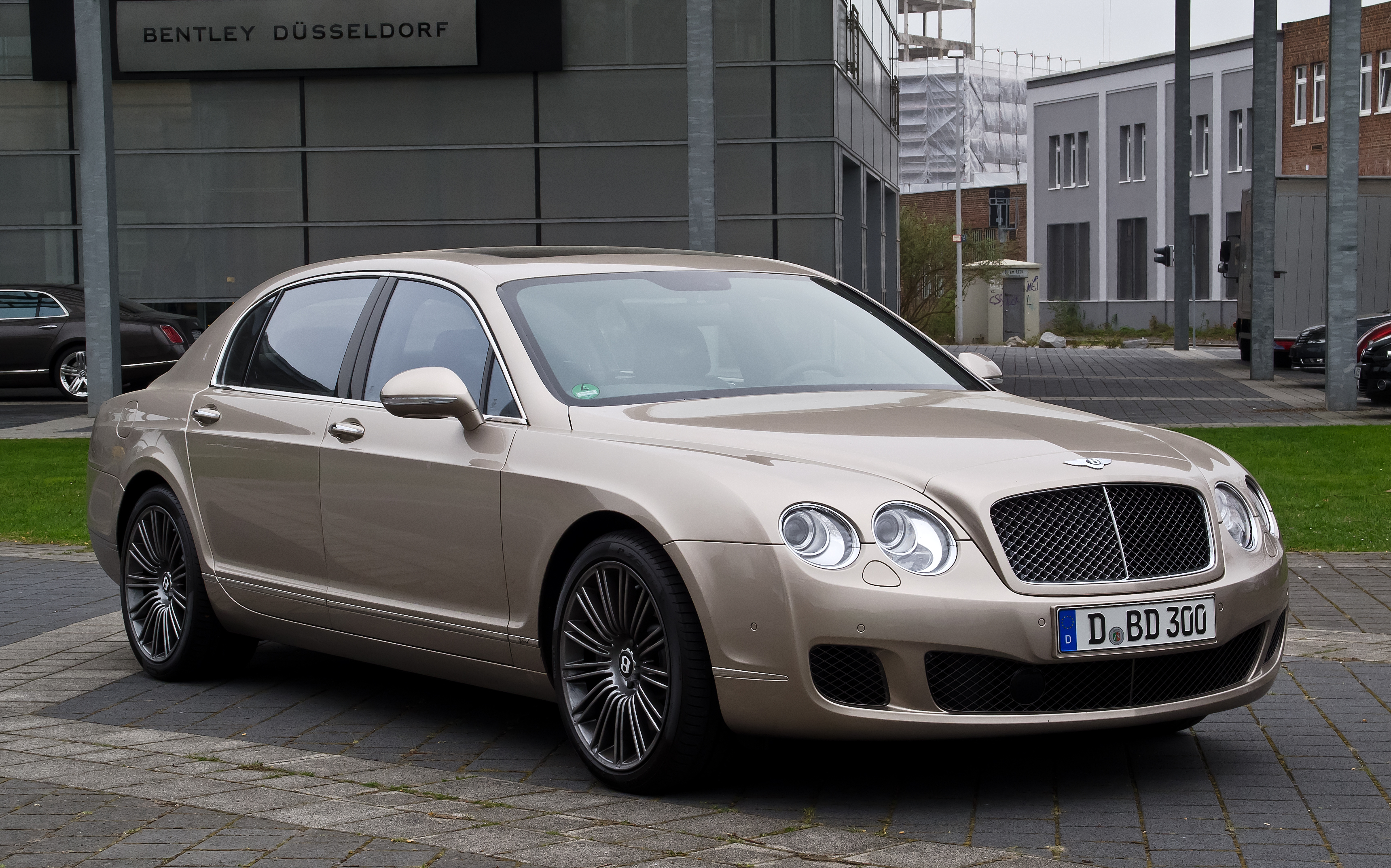
2014 Bentley Flying Spur
"To to evaluate the 2014 Bentley Flying Spur. [588.0s] There you go. I didn't make it out."
Bentley’s Flying Spur is a very upscale sedan meant for long, comfortable drives. The “2014” part just tells you which model year it is, which matters because the car’s features and engine options can change over time.
The Bentley Flying Spur is Bentley’s luxury grand tourer sedan, and the 2014 model is part of the Flying Spur’s first-generation run (introduced in the late 2000s). It’s known for a heavy, comfort-focused ride and a powerful engine lineup, making it a common “benchmark” car when discussing luxury performance and refinement.
joint venture in China
"including Cherry Jaguar Land Rover, so the joint venture in China. [709.9s] I think we had some stuff with Ford or something at the time."
A joint venture is when two companies team up. In China, it often means a foreign brand works with a local company to make and sell cars there.
A joint venture in China usually means a foreign automaker partners with a local company to build and sell vehicles. This structure has historically shaped how cars are developed and produced for the Chinese market.
Cherry Jaguar Land Rover
"including Cherry Jaguar Land Rover, so the joint venture in China. [709.9s] I think we had some stuff with Ford or something at the time."
This is a China-based partnership connected to Jaguar Land Rover. The guest is just saying their PR agency had clients tied to that business.
“Cherry Jaguar Land Rover” refers to the Chinese partnership behind Jaguar Land Rover vehicles in China. It’s mentioned here as an example of a client the guest’s PR agency worked with.
Wheelsboy
"And it was while I was working there and being very bored working there [718.7s] that I met my now current partners for Wheelsboy. [722.0s] OK. OK. Interesting."
Wheelsboy is the automotive media group the guest is part of. They’re talking about how they met the people who run it while they were living and working in China.
Wheelsboy is the podcast/brand the guest is associated with. In this segment, it’s used to explain how the interviewee met their partners while working in China.
testing vehicles
"Don't worry. That's funny, because when we we took a bunch, [746.3s] we took some colleagues to China to test vehicles. [752.0s] We did it with D car and we ended up at the Wuhan, [754.6s] this big testing facility there."
They’re describing a trip where they went to a place built for evaluating cars. The idea is to drive and assess vehicles in a controlled setting before talking about them.
The hosts mention taking colleagues to China to test vehicles at a dedicated facility. This is a common step in evaluating new cars—especially EVs—before publishing impressions or making comparisons.
Wuhan testing facility
"We did it with D car and we ended up at the Wuhan, [754.6s] this big testing facility there. But that's pretty new. [758.8s] But when you were there, I think that's like only a couple of years old."
They’re talking about a car testing location in Wuhan. The guest suggests it’s fairly new, and that’s where they went to evaluate vehicles.
The segment mentions ending up at a “Wuhan” testing facility used for evaluating vehicles. For listeners, it highlights that the guest’s experience included hands-on testing in China, likely in a relatively new facility.
audience geography
"If you want to think about it geographically, our largest audience is America consistently, but that still may be 15 percent max. After that, it's a lot of other, you know, English speaking countries such as, you know, Britain"
They’re explaining where their viewers live. That matters because different countries buy different cars, so the channel’s content can shift depending on which market is watching.
The interview breaks down viewership by region (America, Britain, Europe, and Southeast Asia). In automotive media, audience geography matters because it influences which markets’ cars are relevant and which models get the most coverage.
late entering the game
"And they were smart enough to realize even then they were late entering the game. So they couldn't come and bring the same kind of this is a your average Chinese car reviewer guy talking about a Chinese car."
It means they started later than other people. When you’re late, you have to work harder to stand out because customers already know other brands.
“Late entering the game” refers to a company or team starting its EV/media push after competitors have already built audience, partnerships, and momentum. In fast-moving EV markets, timing affects brand awareness and how quickly you can earn trust with buyers.
YouTube
"And so we started filming videos in Chinese in April of 2020. I'm sorry, April of 2019. And then we didn't really start doing YouTube videos full time until"
YouTube is where car channels post videos. If you post regularly, more people learn about the cars and start trusting the channel.
YouTube is the platform where many automotive reviewers build audiences and credibility. For EV brands and media, consistent video publishing can strongly influence consumer awareness and purchase consideration.
China market
"Let's talk about let's talk about the China market. So that's what you're what you cover."
They’re talking about the China market—how selling and talking about cars works differently there than in other countries. For EVs, it often means you have to connect with local buyers in the way they expect.
The hosts shift into how the China market differs from other regions in terms of audience expectations, media style, and what buyers respond to. For EVs, that can include how quickly new models arrive and how important local language and cultural context are to marketing.
Chinese audience
"What is the novelty about having a for the Chinese audience to have a foreigner? ... Is it is the novelty that you that you speak fluently? That's that's part of it."
They’re saying that when a foreigner talks about cars to Chinese viewers, it can feel novel—but it also helps a lot if the person can speak Chinese well. That makes the message feel more trustworthy and easier to follow.
The discussion highlights the “novelty” factor of a foreigner presenting cars to a Chinese audience, and how fluency in Chinese can affect credibility and engagement. In automotive media, language and cultural fit can be as important as the technical content.
Authenticity
"This is said all the time, but it's true. Authenticity is very important. OK, OK, I get it."
“Authenticity” here means the person isn’t just repeating ads—they’ve actually experienced the cars. That makes their opinions feel more believable.
In car media, “authenticity” means the opinion comes from real-world experience rather than marketing claims. When someone has driven many cars, their impressions tend to feel more trustworthy to viewers.
hype around Chinese vehicles
"So let's let's just jump in. Let's talk about the hype around Chinese vehicles. Like, is it hype like you've driven?"
They’re basically asking: are Chinese EVs getting more hype than they deserve, or are they genuinely good? The conversation is about what’s real after driving them.
The hosts shift into a discussion about whether Chinese EVs are being overhyped versus what owners and drivers actually experience. This frames the episode’s core comparison between perception and real driving/quality.
quality and innovation takeoff during the pandemic
"OK, and in the early years, I would say, is it true that it seems to be the real sort of the real takeoff point for the quality and the innovation kind of happened during the pandemic?"
The segment suggests a “takeoff point” in Chinese EV quality and innovation during the pandemic era. That’s a useful concept because it implies rapid iteration—manufacturers improved designs, manufacturing processes, and software faster than before.
Shanghai Grand Prix
"I went to the Shanghai Grand Prix in 2012. And I still remember like the pollution is really bad"
The Shanghai Grand Prix is a major racing event in Shanghai. The host brings it up to explain he’s been around China’s car culture for years.
The Shanghai Grand Prix refers to Formula 1’s event in Shanghai, which is a high-profile motorsport stop. Mentioning it helps set context for the host’s long-term exposure to China’s automotive scene, not just consumer cars.
"knockoff looking" cars
"And I still remember like the pollution is really bad and all the cars were like super knockoff looking. And then I didn't go for a long time."
The host’s “knockoff looking” comment reflects an early perception that some Chinese cars resembled Western designs too closely. It’s a perception that later shifted as Chinese brands developed more original styling and engineering credibility.
pandemic-era border shutdown
"And then due to the pandemic, China basically shut its borders, right? And so that made a three year period or so where these Chinese, these outsiders, you know, they didn't know what was happening in China."
When China shut its borders during the pandemic, it created a multi-year gap where international observers couldn’t easily see what was happening in the market. That “information lag” helped delay the global EV industry’s perception of how fast Chinese brands were improving.
Shanghai Auto Show
"So I would say that the 2023 Shanghai Auto Show was I remember going around is really entertaining to see all the German executives"
The Shanghai Auto Show is a huge car event in China where companies show off their newest cars. The host is using it to talk about when Chinese carmakers started impressing people internationally.
The Shanghai Auto Show is one of the biggest auto events in the world, and it’s often where automakers debut new models and technologies. In this segment, it’s used as a reference point for when Chinese EVs and automakers started feeling more “world class” to outsiders.
BYD Han
"Oh, I mean, B Y D's for sure. B Y D Han was an early one, you know, stuff from Ion, which is a sub brand from GAC or Guangxi Automotive."
The BYD Han is one of BYD’s earlier electric sedans. In the conversation, it’s used as an example of an early BYD car that already showed promise.
The BYD Han is a BYD mid-size EV sedan that helped establish BYD’s reputation early in the Chinese EV boom. The host mentions it as an early example of the quality and technology that were starting to impress people.
GAC or Guangxi Automotive
"B Y D Han was an early one, you know, stuff from Ion, which is a sub brand from GAC or Guangxi Automotive."
GAC, also called Guangxi Automotive, is a Chinese company that makes cars. The host is using it to explain the ownership/brand structure behind some EV products.
GAC (Guangxi Automotive) is a Chinese automaker group that operates multiple brands and sub-brands. The host mentions it to clarify where the “Ion” EV lineup fits within the broader corporate structure.
build quality
"I knew that their build quality could be pretty good, but they couldn't make a car as far as I could tell."
Build quality is how solid and well-made the car feels—like how tight the parts are and how refined everything seems. The host is saying Chinese EVs were getting better at this, but earlier ones didn’t always feel as fun to drive.
“Build quality” refers to how well a car is put together—panel fit, materials, switchgear feel, and overall refinement. The host is contrasting build quality improvements with earlier shortcomings in driving feel and enjoyment.
drives very well
"but they couldn't make a car as far as I could tell. They didn't make any cars that drove very well. They just didn't have any kind of enjoyment from behind the wheel. They were very soft."
“Drives very well” is about more than acceleration—it includes steering response, suspension tuning, braking feel, and overall chassis balance. The host’s point is that early Chinese EVs were often “soft,” meaning the ride and handling didn’t deliver the same driver engagement as more established brands.
soft
"They just didn't have any kind of enjoyment from behind the wheel. They were very soft."
In driving terms, “soft” usually describes suspension tuning that prioritizes comfort over sharp control—more body movement, less immediate response, and a less “connected” feel. The host uses it to explain why earlier Chinese EVs could be impressive in tech and comfort but still lack driver enjoyment.
steering feel
"They could be comfortable, but there's no steering feel. There's the front end is just heavy and dead."
Steering feel is how the steering wheel tells you what the tires are doing. If it’s missing, the car can feel vague or disconnected even when it’s comfortable.
“Steering feel” is the driver’s sense of how the front tires are responding—how much effort changes with speed, and how accurately the car communicates grip and road texture. Many EVs (especially with certain electric power steering setups) can feel lighter or less communicative than traditional hydraulic systems, even if performance is good.
BYD Seal
"Driving a B Y D seal through the mountains outside of Shenzhen. I actually got chastised by my one of my co founders, because he's like, you got to slow down."
BYD Seal is an all-electric car from BYD. The speaker is saying it drives in a way that feels more fun and connected, not numb or lifeless.
The BYD Seal is a Chinese battery-electric sedan from BYD. In this segment, the host is describing how its chassis tuning (suspension behavior) can feel more engaging than some other EVs that lack steering “feel.”
suspension tuned to damping and spring rate
"The suspension and the way it was tuned to the damping and the spring rate. And it was great. It felt very, very good."
A car’s suspension has two big settings: how stiff it is (spring rate) and how it controls movement (damping). Good tuning makes the car feel stable and responsive instead of floaty or bouncy.
Damping and spring rate are key suspension tuning parameters. Spring rate controls how stiff the car is, while damping controls how quickly the suspension compresses and rebounds—together they determine ride control, body motion, and how “alive” the car feels in corners.
counter-rotating wheels demo
"When did it come out and it was doing like the all the thing when it's using the counter rotating wheels to go across the stage? I feel like that was the jaw drop."
This is a trick where the wheels turn in opposite directions to make the car move in a very controlled, dramatic way. It’s meant to show how well the car can control torque and traction at low speeds.
Counter-rotating wheels refers to a vehicle motion technique where wheels on opposite sides rotate in opposite directions to enable very tight maneuvering or dramatic low-speed movement. In EV show demos, it’s often used to highlight control, traction management, and torque vectoring capabilities.
wholly foreign owned, self owned company
"...the Chinese government, Tesla was the first foreign automotive company to be allowed to have a wholly foreign owned, self owned company there. Previously, you needed to have a joint venture, your 50 50 joint venture between a Chinese company and a foreign company."
Usually, foreign automakers in China had to team up with a local company and share ownership. The big deal in this story is that Tesla was allowed to run its China business with full foreign ownership, which made it faster and easier to bring its own approach to the market.
This refers to China’s regulatory shift that allowed Tesla to operate as a wholly foreign-owned automaker rather than being forced into a joint venture. That policy change mattered because joint ventures typically require shared control with a local partner, which can slow decision-making and limit technology transfer.
50/50 joint venture
"Previously, you needed to have a joint venture, your 50 50 joint venture between a Chinese company and a foreign company."
A 50/50 joint venture is a business structure where a foreign automaker and a Chinese partner share ownership and control. The segment highlights how this was the prior requirement in China, and why Tesla’s ability to bypass it (via full foreign ownership) gave it a competitive advantage in speed and strategy.
SAIC
"It's not SAI. It's I'm sorry, it's not G.M.S.A.I.C. It's S.A.I.C. General Motors, right?"
SAIC is a major Chinese automaker group that commonly partners with foreign brands in joint ventures. The host’s aside about the correct ordering/name is emphasizing how these joint-venture partner names are presented in China’s corporate structure.
Chinese government strategic move to encourage Tesla
"...very strategic and pivotal move by the Chinese government because they wanted to encourage Tesla to come in... they wanted to create competition for their local automakers, for them to be able to learn from Tesla..."
The host is talking about how government policy can shape competition. The claim is that China wanted Tesla to come in so local companies could learn faster and build better electric cars.
The segment describes a policy approach where the Chinese government encouraged Tesla’s entry to spur learning and competition among local automakers. The idea is that exposure to Tesla’s manufacturing and EV know-how would accelerate improvements across China’s domestic EV industry.
Model Y killer / Model 3 killer
"...But the Model Y killer, the Model 3 killer. Like you said, there's a dozen or two dozen Model Y killers and Model 3 killers. None of them have managed to kill the Model Y or the Model 3..."
“Killer” is internet/marketing talk meaning “this car will beat the Tesla.” The host is saying that even though lots of Chinese EVs are advertised as challengers, Tesla’s Model Y and Model 3 are still winning in the real world.
“Model Y killer” and “Model 3 killer” are marketing-style phrases used to claim a competitor EV will outperform Tesla’s best-sellers. The host pushes back by noting that, despite many challengers, none have actually “killed” Tesla’s sales dominance.
Model 3
"that says Model 3, Model Y killer and everything. Because, unfortunately, on YouTube, that's what works."
The Tesla Model 3 is an all-electric car from Tesla. When someone says another EV is a “Model 3 killer,” they mean it could be so good and affordable that it would steal Model 3 buyers.
The Tesla Model 3 is an electric sedan that became one of the most important EVs globally. When people call other EVs a “Model 3 killer,” they’re usually arguing the challenger can match or beat Tesla on price, range, charging, and software experience.
Model Y
"that says Model 3, Model Y killer and everything. Because, unfortunately, on YouTube, that's what works."
The Tesla Model Y is an all-electric SUV from Tesla. Calling something a “Model Y killer” means it’s trying to be better and/or cheaper enough to pull buyers away from the Model Y.
The Tesla Model Y is an electric crossover/SUV that has been a major volume driver for Tesla. In EV debates, “Model Y killer” is shorthand for a rival that could outperform Tesla’s best-selling model in key areas like cost, charging access, and day-to-day usability.
VW Group
"Also, VW Group has had a long and huge footprint. And it's funny to watch the declining market share."
VW Group (Volkswagen Group) is a large multinational automaker that includes brands like Volkswagen, Audi, Porsche, and others. The speaker is arguing that VW’s China market position has weakened because earlier-generation cars were seen as low-quality or overly cheap, hurting long-term demand.
declining market share
"And it's funny to watch the declining market share. It's basically fell off a cliff for VW Group"
Declining market share means a brand is losing sales compared to competitors. It’s a sign that buyers are choosing other options more often.
“Declining market share” means a company is selling a smaller percentage of total sales in a market over time. In the EV context, it often reflects product competitiveness, pricing pressure, and changing consumer preferences—especially when newer rivals offer better value or technology.
cash aid
"So it's going to have some cash aid to it. But where does where does Tesla currently"
“Cash aid” means money support that can help a company sell cars more easily. It can make a brand look more competitive, even if the cars themselves aren’t the best.
“Cash aid” here refers to financial support that can help a brand’s pricing or competitiveness in a market. In automotive, subsidies or incentives can temporarily boost sales, but they can also mask underlying product weaknesses if the cars aren’t genuinely compelling.
NIO E.T.9
"He was the head of the E.T.9 program... We'll talk about the Neo E.T.9 later... And he bought himself an E.T.9"
The NIO E.T.9 is NIO’s big, top-tier electric car. In EV discussions, it’s treated like a showcase model—something the company uses to prove it can build a premium vehicle.
NIO E.T.9 is a flagship electric sedan from NIO, a major Chinese EV maker. It’s notable because NIO positions its higher-end models around premium comfort and advanced tech, and the E.T.9 is often discussed as a “halo” product for the brand.
Tesla
"And he saw so many Tesla's... asking people there, like, why are you buying Tesla?... Tesla's still going to be around in five years"
Tesla is the best-known EV company, and people often use it as the “safe choice.” In this story, buyers are choosing Tesla because they believe the company will still be around and supported in the future.
Tesla is the benchmark EV brand in many markets, and the episode uses it as a reference point for buyer confidence. The discussion highlights a common rationale: even if many Chinese EV brands are growing fast, Tesla is perceived as more likely to still be around in the medium term.
brand longevity / will the company still be around
"...a lot of them basically said, for one, I think Tesla's still going to be around in five years... it's not hard to believe that a lot of them aren't going to last another two or three years."
When lots of new EV brands are competing, buyers worry about whether the company will still exist later. If it doesn’t, it can be harder to get repairs, parts, and software support.
In fast-moving EV markets, “brand longevity” matters because it affects long-term support like software updates, service, parts availability, and warranty fulfillment. The episode frames buyer behavior as a bet on which companies can survive intense competition over the next few years.
value proposition
"...why would I spend 20 percent more on a Model 3 when I can get this Chinese car that has more features, more range..."
A value proposition is the overall “what you get for what you pay” argument—features, range, software, and experience relative to price. The segment contrasts Tesla’s perceived quality with Chinese EVs offering more features and range for less money.
highly considered
"But right now, I would say Tesla is still pretty highly considered... Then the Model 3 and the Model Y are still very, very high up in considering..."
“Highly considered” refers to how often a vehicle shows up on shoppers’ shortlists during the buying process. It’s a measure of brand strength and perceived value, not just sales volume.
Tesla Model X
"...considering S and X or no, not players at all. Right."
The Tesla Model X is Tesla’s bigger electric SUV. In this conversation, it’s mentioned as not being as important to most shoppers as the Model 3 and Model Y.
The Tesla Model X is Tesla’s larger electric SUV. The hosts group it with Model S as less relevant to the mainstream “top consideration” discussion compared with Model 3 and Model Y.
Tesla Model S
"...considering S and X or no, not players at all. Right."
The Tesla Model S is Tesla’s more upscale electric sedan. The hosts are basically saying it’s not the main focus for most buyers in the categories they’re talking about.
The Tesla Model S is Tesla’s larger, more premium electric sedan. In this segment, it’s mentioned as not being a major player compared with Model 3/Model Y in the mainstream categories being discussed.
pure EV perspective
"Or if you wanted to say pure from a pure EV perspective, who are the best brands currently?"
“Pure EV” means a car that’s fully electric and doesn’t use gas or a hybrid system. The speaker is saying that if you only count fully electric cars, the comparison changes.
“Pure EV” means vehicles that run only on electricity from a battery, not hybrids or hydrogen. The speaker contrasts this with the broader NEV definition that can include multiple powertrain types.
market share growing exponentially
"And their market share, as we've seen in places like the UK, is growing exponentially, like Mexico. You guys have done a great documentary about the number of Chinese cars in Mexico"
“Exponential” here means growth that speeds up over time, not just steady increases. The host is saying Chinese EV brands can start small, then grow really fast once more people can buy them.
“Exponential” market-share growth describes a rapid acceleration in sales relative to the overall market, often seen when a new set of products suddenly becomes widely available. The host uses examples like the UK and Mexico to argue that Chinese EV adoption can accelerate quickly once it reaches a tipping point.
Geely Group
"Besides BYD, I would say Geely, Geely Group in general. So Geely Group, as you well know, is expansive. So Geely's kind of approach to things is, well, if we want to do something, we'll just buy the company."
Geely Group is a big Chinese company that owns several car brands. The host says they often buy other companies to get new tech faster, like better in-car screens and software.
Geely Group is a Chinese automotive conglomerate that owns multiple brands and invests across technology. The host describes Geely’s strategy as buying companies to accelerate capabilities—like infotainment—rather than building everything from scratch.
buy the company strategy
"So Geely's kind of approach to things is, well, if we want to do something, we'll just buy the company. So, you know, Geely's have satellite connection phones in them"
The “buy the company” approach is an acquisition-led strategy: instead of developing every capability internally, a group purchases existing firms to gain technology, talent, and products quickly. In this segment, it’s used to explain how Geely can move faster on areas like infotainment and user interface design.
in-car infotainment
"You know, they wanted to make better in-car infotainment. So they bought a phone company and just had them design their UI and UX and stuff."
In-car infotainment is the car’s touchscreen and software for things like music, maps, and phone features. The host is saying Geely tried to make that experience better by using outside tech expertise.
In-car infotainment is the vehicle’s integrated system for media, navigation, connectivity, and the user interface (screens, menus, and controls). The host ties Geely’s acquisitions to improving infotainment by having a phone company help design the UI/UX.
Volvo
"So they've obviously got everything from Volvo and Lotus to Geely, the brand itself, to Zeekr, which is, I would say, all of the Geely Group."
Volvo is a famous car brand from Sweden. The host mentions it to show that Geely owns more than just Chinese brands—it also has well-known international ones.
Volvo is a well-known Swedish automaker that Geely owns as part of its broader group. Mentioning Volvo helps illustrate Geely’s reach into established global brands and engineering know-how.
Lotus
"So they've obviously got everything from Volvo and Lotus to Geely, the brand itself, to Zeekr, which is, I would say, all of the Geely Group."
Lotus is a car brand that’s known for making sporty cars and focusing on engineering. The host brings it up to show Geely owns brands with different strengths, not just one type of car.
Lotus is a British sports-car and engineering brand known for lightweight design and performance development. In this segment, Lotus is mentioned as part of Geely Group’s portfolio, reinforcing the idea that Geely can draw on performance and engineering expertise.
Zeekr
"The one I am bullish on is Zeekr. I have not driven a Zeekr that I didn't think was a pretty darn competitive or maybe the best car in its class."
Zeekr is a Chinese EV brand under the Geely umbrella, positioned as a more premium, tech-forward alternative within the group. The host says they’re bullish on Zeekr specifically and highlights that their driving experience has been consistently competitive.
Nio 9X
"we reviewed the 9X, which was at CES. Boy, howdy, what a car. Looks like a Cullinan, you know, has a suspension tuning..."
The host refers to Nio’s CES-reviewed vehicle called the 9X, describing it as having a suspension tuning and overall feel that can compete with premium German brands. The discussion frames it as a tech-forward EV with standout interior infotainment and materials.
Rolls-Royce Cullinan
"Looks like a Cullinan, you know, has a suspension tuning that I would put up against..."
They’re comparing the car’s look to the Rolls-Royce Cullinan. The point is that it has that big, ultra-luxury SUV vibe.
The host compares the Nio 9X’s styling to the Rolls-Royce Cullinan, a luxury SUV known for its imposing presence and upscale design language. This is a visual/positioning comparison, not a technical one.
Mercedes-Benz
"has a suspension tuning that I would put up against something from a Mercedes Benz or an Audi or something."
Mercedes-Benz is being used as the “premium standard.” The host is saying the suspension and overall driving feel are comparable to what you’d expect from Mercedes.
Mercedes-Benz is used here as a benchmark for ride quality and overall premium engineering. The host claims the suspension tuning and general feel can stand up to what you’d expect from Mercedes-Benz.
X9 Xpong
"So Wei Xiao Li, Wei Xiao Li means Nio, which is Wei Lai, and then Xiao Peng, which is X-Pong, and then Li Auto, right? Those three, I also think, are making impressive products."
“X9” here is connected to Xpeng, which is a company that makes electric cars. The podcast is grouping it with other EV makers and saying they’re producing impressive vehicles. The discussion is more about the company’s presence than about one specific feature.
In the podcast context, “X9” refers to the Xpeng (XPeng) brand’s model naming, discussed alongside NIO and Li Auto as major Chinese EV makers. It’s brought up as part of a group of companies the speaker considers impressive and capable of producing competitive products. The key point here is brand/model recognition within the EV landscape rather than specific technical specs.
technological tour de force
"I gave it an award in our Wheelies Award video, was the Nio 89, which was a, as I call it, as a technological tour, like it's a technological tour de force, it's a warning shot across the bow..."
This phrase means “a big impressive tech achievement.” The host is saying the Nio 89 is meant to show off what the company can do technically.
“Technological tour de force” is a phrase used to describe a product that demonstrates impressive engineering and advanced features. In this context, it frames the Nio 89 as a showcase of multiple cutting-edge systems working together.
fully active hydraulic suspension
"Because it's got fully active hydraulic suspension, like you find in the most high end, like Porsche, Panameras and stuff."
This is a suspension system that can actively change how the car rides. Instead of just soaking up bumps passively, it uses controls to keep the car more stable and comfortable.
Fully active hydraulic suspension uses electronically controlled hydraulic actuators to adjust the suspension in real time, rather than relying only on passive springs and dampers. This can improve ride comfort and handling simultaneously, especially on uneven roads or during dynamic driving.
Porsche Panamera
"like you find in the most high end, like Porsche, Panameras and stuff."
They’re using the Porsche Panamera as an example of a luxury car with advanced suspension. The point is that the Nio’s suspension tech is in that same high-end class.
The host cites the Porsche Panamera as an example of a high-end car that uses advanced suspension technology. The comparison is meant to communicate that the Nio’s suspension tech is “top tier,” similar to what you’d find on a luxury Porsche.
steer by wire
"It has a steer by wire, like a Cybertruck."
Steer-by-wire means the steering wheel isn’t directly connected to the wheels with a traditional mechanical linkage. The car uses sensors and electronics to turn the wheels based on what you command.
Steer-by-wire replaces the mechanical connection between the steering wheel and the wheels with electronic controls. Instead of a direct linkage, sensors and actuators coordinate steering input, which can enable features like variable steering ratios and potentially improved packaging.
Tesla Cybertruck
"It has a steer by wire, like a Cybertruck."
They’re comparing the steering tech to Tesla’s Cybertruck. The idea is that both cars use electronic steering control instead of a traditional direct mechanical connection.
The host compares the Nio’s steer-by-wire system to Tesla’s Cybertruck, which is known for using electronic steering control rather than a conventional mechanical setup. This is a technology reference to help listeners visualize what steer-by-wire feels like conceptually.
Xiaomi SU7
"“Xiaomi SU7, which I know you guys drove in China… Jonathan is currently headed to Beijing to drive the updated version of that car.”"
Xiaomi is a tech company, and the SU7 is its electric car. The host is talking about trying the car and how an updated version is coming.
The Xiaomi SU7 is a Chinese electric sedan from the tech company Xiaomi, positioned as a direct challenger to established EVs. The host mentions it as something they drove in China and that an updated version is being prepared for review.
big, heavy EV
"“It's fun to drive for a big, heavy EV, right? It's not a Cayman.”"
Electric cars usually weigh more because of the battery. The host is saying this one still drives in a fun way even though it’s heavy.
EVs often come with heavy battery packs, which can affect handling feel—especially turn-in and how the car responds to steering inputs. The host is pointing out that even with that typical EV weight, the P7 still feels engaging to drive.
Porsche Cayman
"“It's fun to drive for a big, heavy EV, right? It's not a Cayman.”"
The Porsche Cayman is a sports car known for feeling sharp and agile. The host is saying the EV can be fun, but it won’t drive like a true sports car.
The Porsche Cayman is a sports car benchmark for balance, steering feel, and “driver’s car” handling. By saying the EV isn’t a Cayman, the host is tempering expectations: it may be fun, but it won’t match a purpose-built lightweight sports car’s dynamics.
IAA
"“They showed X-Pong P7 at IAA. I think I was there.”"
IAA is a big car show where companies bring out new cars to show the public. The host is saying the XPeng P7 was displayed there.
IAA is a major international auto show where manufacturers reveal new vehicles and technologies. Mentioning that XPeng P7 was shown at IAA frames it as a recent, publicly showcased model rather than a private or early prototype.
Lyoto
"[2371.1s] And then interesting that you mentioned the three sort of startup-y ones, [2374.9s] Neo, X-Pong, and Lyoto because I was super impressed with Lyoto."
“Lyoto” sounds like it’s meant to be Li Auto, a Chinese electric-car company. The host is saying they were really impressed with one of its cars.
“Lyoto” is likely a transcription error for Li Auto (Li Auto is a Chinese EV maker). The host says they were “super impressed” with a specific Li Auto model, indicating this brand is central to their impressions of Chinese EVs.
17-inch screens
"[2384.5s] I was watching a movie when I could drive. [2386.2s] The two big 17-inch screens or whatever. [2389.7s] So that one, X-Pong and Neo have been, I think,"
They’re talking about very large screens inside the car—around 17 inches. The point is that some EVs are designed so most of the experience happens through big displays.
Large “17-inch” class screens refer to the big infotainment and/or driver-display panels used in some modern EVs. The host uses this as an example of how Chinese EVs emphasize a screen-heavy cockpit experience, including features that can support media playback while driving (depending on region and vehicle software).
foreign outreach
"[2389.7s] So that one, X-Pong and Neo have been, I think, [2394.8s] the best at sort of foreign outreach to us. [2397.4s] We can't get BYD to pick up the phone."
“Foreign outreach” here means how effectively a brand engages with international media, partners, or customers outside its home market. The host contrasts brands that do well with outreach versus BYD, which they say they can’t get to respond—highlighting how visibility and communication can affect perception.
Neo
"But it's funny because as good as I hear... I've driven Neo and I've driven... I don't know if I can remember if I've driven X-Pong. ... If anybody out of China is like the Apple store or it's Neo."
“Neo” is actually NIO, a Chinese electric-car company. The host is saying NIO is doing a really polished job with its customer experience—almost like an Apple Store vibe.
“Neo” here refers to NIO, the Chinese EV maker known for premium features and a strong brand presence. The host compares NIO’s retail experience to Apple Stores, highlighting how NIO builds customer-facing spaces and community around its cars.
cash burn rate
"But then I also hear they're one of the ones people think might not be around. Because they're the cash burn rate and they're doing incredibly expensive things."
Cash burn rate means how fast a company is running through its money. If an EV company is spending a lot—like building charging or swapping networks—it can look risky if it isn’t earning enough yet.
Cash burn rate is how quickly a company is spending cash relative to how much it has coming in, often measured as monthly or quarterly net cash outflow. In EV startups, heavy spending on factories, R&D, and infrastructure (like battery swapping) can drive high burn rates, which can raise concerns about long-term survival.
battery swap system
"...they're one of the ones people think might not be around. Because they're the cash burn rate and they're doing incredibly expensive things. Like the battery swap system and the whole network."
A battery swap system lets you trade your low battery for a charged one at a station. It’s meant to be faster than charging, but it only works well if there are lots of swap stations and the batteries are set up to fit.
A battery swap system is an EV infrastructure approach where a driver exchanges a depleted battery for a fully charged one at a station, instead of waiting for charging. The idea can reduce downtime and standardize energy access, but it requires a large, coordinated network and compatible battery designs.
fixed costs
"And the Neo houses. Huge fixed costs."
Fixed costs are bills a company has to pay no matter how many cars it sells. If those costs are big, the company needs lots of sales to avoid losing money.
Fixed costs are expenses that don’t change much with how many cars you sell—think manufacturing overhead, staffing, and long-term commitments. When fixed costs are “huge,” companies need strong sales volume to spread those costs out, which becomes difficult during downturns or price wars.
cash infusion
"Because they need some cash infusion."
A cash infusion means a company gets extra money to stay afloat. It’s often needed when sales aren’t covering costs yet, or when the company is spending a lot to grow.
A “cash infusion” is additional funding injected into a company to keep operations going—often needed when margins shrink due to price cuts or when companies are investing heavily in new models and capacity. In fast-moving EV markets, cash can determine whether a brand can survive long enough to reach profitability.
price war
"But there was a whole discussion about the price war that's going on and been going on, right?"
A price war is when companies lower prices to try to sell more cars than everyone else. It can make it harder for some brands to stay profitable, especially if they’re still trying to grow.
A “price war” happens when automakers aggressively cut prices to win market share, often to keep factories running and sales volume up. In EV markets, it can quickly compress margins and force weaker companies to seek funding or exit.
cage match
"And it's like, it's sort of like a cage match."
“Cage match” just means the competition is really fierce. Companies are pushing hard against each other to stay in business.
“Cage match” is a metaphor for extremely intense competition where companies fight aggressively for survival and market share. In the context of Chinese EVs, it points to rapid escalation—price cuts, heavy marketing, and fast product cycles.
companies are eating each other
"Where companies are eating each other. I mean, we get..."
“Companies are eating each other” is a metaphor for intense competition and consolidation in the EV market. The episode uses it to frame why some EV/AI startups win attention briefly, then disappear as pricing pressure and scale advantages favor a smaller set of survivors.
GDU
"We gave GDU an award like two years ago. And in the time it took for us to say, hey, their AI system in their car seems really cool... and then by the time we were polishing the award, they announced they went out of business."
GDU is a company mentioned in the episode that made EV-related tech. The hosts say it got attention for its AI features, but then it shut down—showing how competitive and unstable the market can be.
GDU is referenced as a Chinese automotive tech company that received an award, then later went out of business. The discussion highlights how fast the EV/AI ecosystem can change when companies lose funding or strategic backing.
AI system
"And in the time it took for us to say, hey, their AI system in their car seems really cool. It's like an early AI assistant. And the fact that you can command the car from outside and open the doors and all stuff."
They’re talking about the car’s AI assistant—software that can understand commands and help control the car. In this case, it’s used for convenience features like remotely opening doors.
The “AI system” is described as an early AI assistant inside the car. The hosts also mention voice/command-style interaction that can trigger actions like opening doors from outside, which is a key differentiator in some connected-EV features.
Baidu
"And in between, they changed their name from GDU to GUA because Baidu backed out. Oh boy."
Baidu is a major Chinese tech company. The hosts say Baidu pulled support, and that change is tied to what happened to the EV/AI company they were talking about.
Baidu is mentioned as the tech partner that “backed out,” which the hosts connect to the company’s rebranding from GDU to GUA. In the EV context, this points to how Chinese automakers and tech firms often rely on large AI/platform providers.
three or five really strong Chinese companies
"Like I tell people, I think in 10 years, maybe less, you're going to end up with like three or five really strong Chinese companies that are like legit world-class,"
They’re predicting that only a few Chinese EV companies will end up dominating. The idea is that the market will thin out, and the strongest brands will survive long-term.
The hosts predict market consolidation into a small number of “really strong” Chinese EV companies. This is a common industry thesis: as technology and manufacturing scale matter, weaker players get absorbed or go out of business, leaving a handful of global-capable brands.
Mercedes-Benz Ag Mercedesbenz
"three or five really strong Chinese companies that are like legit world-class, legit, going up big toe-to-toe, VW, AG, Mercedes-Benz, GM. Like, yeah."
The Mercedes-Benz AMG GT is a sports car made for performance. It’s built to be fast and fun to drive, not just for commuting. The podcast mentions it while talking about major companies that make world-class cars.
The Mercedes-Benz AMG GT is a performance-focused sports car from Mercedes-AMG, built for strong acceleration and a driver-oriented feel. It’s often discussed as part of the broader conversation about serious performance brands and who can compete at the high end. In the podcast, it’s mentioned in a general lineup-style context about major automakers and their credibility in performance.
big press conferences, big press release events where they reveal the car and they always wait until then to reveal the price
"A cutthroat, we've got everything from these days, Chinese car companies and anyone operating in China, they have these big press conferences, big press release events where they reveal the car and they always wait until then to reveal the price."
Some EV companies show the car first and only announce the price later. The idea is to keep competitors from copying their pricing and to avoid surprises if costs or strategy change.
This describes a launch strategy where Chinese EV makers stage major reveal events and delay pricing announcements. The timing can be used to avoid being undercut, manage supply/cost uncertainty, and keep competitors from reacting too early.
NDA
"even though you sign a NDA where I'll be charged millions of dollars if I break the contract and talk about the space of the trunk, they won't tell me the price."
An NDA is a legal promise not to share certain information. In car launches, it’s used so journalists can’t leak details before the company is ready to announce them.
An NDA (non-disclosure agreement) is a legal contract that restricts people from sharing information publicly. In auto launches, NDAs are often used to control what journalists can report before a company’s official reveal—especially details like pricing or even specific specs.
X-Pone comes out with what was going to be their first higher end car, the G9
"So, for example, this has happened on multiple occasions where X-Pone comes out with what was going to be their first higher end car, the G9, which they compared to the Porsche Cayenne and everything, almost immediately after that came out, they got undermined by Li Auto with their L8 and L7."
The G9 is a more premium electric SUV from XPeng. The point here is that once XPeng announces a new “top” model, other companies quickly adjust their own offers to stay competitive.
The speaker is referring to XPeng’s G9, a higher-end SUV positioned as a premium alternative in the Chinese EV market. The context is competitive pricing and how quickly rivals respond after a major reveal.
Porsche Cayenne
"where X-Pone comes out with what was going to be their first higher end car, the G9, which they compared to the Porsche Cayenne and everything, almost immediately after that came out, they got undermined by Li Auto with their L8 and L7."
The Porsche Cayenne is a luxury SUV that many people see as a premium benchmark. Mentioning it means the Chinese EV is being marketed as “high-end,” not budget-focused.
The Porsche Cayenne is a well-known luxury performance SUV used as a benchmark for premium positioning. Comparing an upcoming Chinese EV to the Cayenne signals an attempt to compete in the same “upmarket” buyer mindset, not just on range or specs.
Li Auto with their L8 and L7
"almost immediately after that came out, they got undermined by Li Auto with their L8 and L7. Li Auto basically just came out and said, well, we're undercutting your price by this much."
Li Auto’s L8 and L7 are popular larger electric vehicles aimed at families. The takeaway is that when one company announces a new premium model, competitors may respond immediately with lower prices.
Li Auto’s L8 and L7 are flagship family-focused EVs/extended-range vehicles that compete directly with other premium Chinese EV SUVs. In the transcript, they’re used as an example of how quickly a rival can undercut pricing right after another company’s big reveal.
Toyota
"that go up against, as you said, VW and Toyota and GM. [2712.9s] So, it's going to be a question of how they're able to winnow it down without having it be a real economic [2719.8s] impact"
Toyota is a major global automaker known for large production volumes and hybrid technology leadership. The transcript mentions it to illustrate the level of competition Chinese brands face from established international manufacturers.
VW
"that go up against, as you said, VW and Toyota and GM. [2712.9s] So, it's going to be a question of how they're able to winnow it down without having it be a real economic [2719.8s] impact"
“VW” is short for Volkswagen. They’re a huge, well-established car company, and the point here is that Chinese EV brands have to compete against companies like that.
VW refers to Volkswagen, a major global automaker with large-scale manufacturing and strong presence in Europe and beyond. In the context of the transcript, it’s used as an example of an established international competitor Chinese EV makers face.
GM
"that go up against, as you said, VW and Toyota and GM. [2712.9s] So, it's going to be a question of how they're able to winnow it down without having it be a real economic [2719.8s] impact"
“GM” stands for General Motors. It’s a very big, established automaker, and the point is that Chinese EV brands aren’t competing in a vacuum—they’re up against companies like GM.
GM refers to General Motors, a large legacy automaker with global scale and extensive dealer and manufacturing networks. Here it’s cited as another example of a powerful international competitor that Chinese brands must overcome.
winnow it down
"So, it's going to be a question of how they're able to winnow it down without having it be a real economic [2719.8s] impact because, so it's interesting, if you look at it historically, for decades now,"
“Winnow it down” means to reduce the number of participants until only the strongest remain. In an auto-industry context, it describes how intense competition can eliminate weaker brands and concentrate market share among fewer survivors.
NEVs
"even before the huge growth in what we call the NEVs, which by the way, I also love that term. [2731.7s] I think it's a very useful term. [2734.2s] New energy vehicles."
“NEVs” is a Chinese term that means “new energy vehicles.” It’s basically a catch-all for cars that aren’t purely gas-powered—often including electric cars and plug-in hybrids.
NEVs stands for “new energy vehicles,” a broad umbrella term used in China for vehicles that use alternative energy beyond conventional gasoline. In practice, it can include battery-electric cars, plug-in hybrids, and other electrified drivetrains, so it’s wider than just “EV.”
New energy vehicles
"[2726.9s] even before the huge growth in what we call the NEVs, which by the way, I also love that term. [2731.7s] I think it's a very useful term. [2734.2s] New energy vehicles."
“New energy vehicles” is the full phrase behind NEVs. It generally means cars that use cleaner energy than regular gas, but it can include different kinds of electrified cars.
“New energy vehicles” is the spelled-out meaning of NEVs and is used to group electrified vehicles under one category. Because it can include multiple powertrain types, it’s important not to assume every NEV is a pure battery-electric car.
conglomeration
"And so, there has been a conversation in the Chinese automotive industry about [2756.7s] conglomeration and whatever. [2757.6s] Consolidation."
“Conglomeration” means companies combining into bigger groups. In car markets, that often happens when there are too many brands and the industry needs to consolidate to survive.
“Conglomeration” here refers to the idea of large companies merging or grouping together in the auto industry. In a competitive market, this can lead to fewer brands but more resources per brand for engineering, manufacturing, and marketing.
Consolidation
"[2751.2s] And so, there has been a conversation in the Chinese automotive industry about [2756.7s] conglomeration and whatever. [2757.6s] Consolidation. [2758.4s] Consolidation."
“Consolidation” means the industry shrinks—some brands disappear while others merge or get stronger. It usually happens when competition gets so intense that not everyone can keep operating.
Consolidation is the process of reducing the number of companies or brands through mergers, closures, or restructuring. The transcript frames it as a likely outcome when too many Chinese automakers compete for limited demand, especially against global giants.
local provincial heroes
"And it hadn't really happened because what has happened and happened then is that you have these local provincial heroes. You have, it's not just the central Chinese government giving money to these manufacturers."
In China, different regions often try to promote their own local companies. The goal is to make them big enough to compete nationally and bring jobs and investment to the area.
This refers to the way Chinese provinces and cities back specific “homegrown” companies or champions to build local jobs and prestige. It’s a policy-and-economics dynamic where regional governments try to create or accelerate national-scale automakers.
seed money
"They're investing in a startup like a new early auto with the hopes that it will take off. And this early investment that they've, the seed money that they've given, will mint a bunch of billionaires within the investor class..."
Seed money is the early funding that helps a new company start and grow. The idea is that early support can help a startup become successful and create jobs.
“Seed money” is early-stage funding meant to help a startup get off the ground before it has proven products or revenue. The speaker ties it to government-backed investment that can accelerate EV companies and create wealthy investors and jobs.
federal system in which states have a certain amount of independence from the central government
"And so because you've got the investment, it's important to understand that the Chinese government, just like we have in the US, where we have a federal system in which states have a certain amount of independence from the central government, that's true in China as well."
They’re saying China isn’t run like one single, fully centralized decision-maker. Provinces and big cities can make their own rules to some extent, which can change how EV companies get supported.
The speaker compares China’s governance structure to a federal system, emphasizing that provinces and major cities can set policies within limits. In practice, that independence affects EV adoption, subsidies, and how local governments support manufacturers.
war of attrition
"And so they're hoping that it's a war of attrition right now. ... And if I can last outlast you by just one month and you're gone and I'm still around, then I win."
It’s like a competition where nobody wins quickly. Instead, everyone keeps pushing and spending until one side gets too broke to continue, and the other side takes over.
A “war of attrition” is a strategy where companies keep spending and competing long enough to outlast rivals financially. In the context of Chinese EV brands, it means betting that weaker competitors will run out of cash first, leaving the survivors to gain customers or buy others out.
Luckin Coffee
"Luckin Coffee is the huge brand that came in and they've spent so much money marketing and building locations everywhere just to choke the life out of anybody else that might come in."
They’re using Luckin Coffee as a real-world example of a company that spent a lot to grow fast and make it hard for smaller rivals to survive.
Luckin Coffee is used as an example of a Chinese brand that scaled aggressively through marketing and physical locations. The comparison is meant to illustrate how a well-funded company can “choke out” competitors and then consolidate the market.
Starbucks
"Luckin is the Starbucks of China, right? Again, it's like everything, one of the six Starbucks's of China."
They compare Luckin to Starbucks so you can quickly understand its role in the market. It’s basically saying Luckin is the “big name” in China’s coffee scene.
Starbucks is referenced as a familiar benchmark for what Luckin Coffee represents in China. The point is market positioning—Luckin is framed as the dominant coffee brand in China, analogous to how Starbucks is dominant in the U.S.
Blue Bottle
"And they just bought Blue Bottle, which made a lot of news here because Blue Bottle used to be like this sort of artisanal... third wave coffee shops and now it's like the Chinese mega conglomerate just bought them out."
They bring up Blue Bottle to show how big companies can buy smaller, more specialized brands. It’s an example of consolidation after a brand becomes valuable.
Blue Bottle is mentioned as an example of a smaller, more “artisanal” brand that was acquired. The hosts use it to show how consolidation can happen when a larger conglomerate buys a niche brand after it becomes a mainstream target.
Giga
"Okay, I live in Shanghai. Shanghai Giga, right? Shanghai Giga. You know, I'm telling you, when I say that every third car on the street in Shanghai is a Model 3 or a Model Y..."
“Giga” is short for Tesla’s huge factories. A gigafactory in Shanghai helps Tesla build cars locally, which makes them show up everywhere on the road.
“Giga” refers to Tesla’s gigafactories—large-scale manufacturing plants that produce vehicles and batteries. The Shanghai gigafactory is a key reason Tesla is so visible in local markets, because it enables high-volume production closer to customers.
Mercedes-Benz G-Wagon
"So let's say it's the G-Wagon and it's either the electric or the gas G-Wagon."
The Mercedes-Benz G-Wagon is a famous luxury SUV with a rugged, off-road reputation. The discussion is basically asking: if you could choose between that and a Chinese EV, what would you pick?
The Mercedes-Benz G-Wagon is a boxy, body-on-frame luxury SUV known for off-road capability and a strong brand identity. The host frames a hypothetical choice between a G-Wagon (electric or gas) and Chinese EVs, using it as a familiar “well-known” benchmark in the U.S. market.
Yangwang U8
"Are you buying like the Yang Wang U8 or something else or the tank over that or is there, are there any examples of, hey man, that Taycan cross Turismo is really awesome, but I'm taking an ET9."
The Yangwang U8 is a Chinese electric SUV meant to feel like a premium, rugged luxury vehicle. The host is using it as an example of a Chinese EV that could compete with something like a G-Wagon.
The Yangwang U8 is a premium Chinese electric SUV positioned against luxury off-roaders. In the segment, it’s mentioned as a specific alternative to the G-Wagon, highlighting how Chinese brands are targeting the same “aspirational” buyer mindset.
G-Class Gwagon
"this awesome Chinese car and sort of the well-known in America, well-established category killer, right? So let's say it's the G-Wagon and it's either the electric or the gas G-Wagon. Are you buying like the Yang Wang U8 or something else or the tank over that or is there, are there"
The G-Class is a luxury SUV with a very recognizable, boxy shape. It’s known for being tough and capable, not just for city driving. The podcast asks whether people would buy it in an electric version or a gas version.
The Mercedes-Benz G-Class (often called the G-Wagon) is a rugged, boxy luxury SUV known for its distinctive styling and off-road capability. In the podcast, it’s used as a reference point for a “well-established category” and the idea of buying either an electric or gas version. The speaker is essentially asking whether someone would choose the electric or traditional powertrain in that iconic segment.
Porsche Taycan
"...are there any examples of, hey man, that Taycan cross Turismo is really awesome, but I'm taking an ET9."
The Porsche Taycan Cross Turismo is an all-electric wagon-style variant of the Taycan, combining Porsche performance with a more practical, crossover-like shape. The host uses it as an example of a “really awesome” well-known EV to set up the question of whether he’d still pick a Chinese EV instead.
Mercedes-Benz EQS
"Okay. When it comes to the example of the ET9 I've already talked about, if you said to me, Mercedes Benz EQS or ET9, I have driven both of them. I want the ET9. I find the ET9 to be a much more impressive piece of technology and as an electric car, it's simply better than the EQS"
The Mercedes-Benz EQS is a luxury electric car from Mercedes. It’s meant to feel very high-end and comfortable, and the host is comparing it to another electric car they think is better.
The Mercedes-Benz EQS is a flagship full-size electric sedan built around a luxury-focused interior and long-distance comfort. In the segment, it’s used as a benchmark for comparing technology and overall “feel” against the newer Chinese EV being discussed.
EREV
"You mentioned the Yang Wang U8, right? It swims, it's got 1,200 horsepower. It's an EREV, right? EREV. And then it goes up against in China, your Range Rovers, your G-Wagons, your GLSes and stuff like that."
EREV means the car is mostly electric, but it can make extra electricity on the go to extend its range. So you don’t have to plug it in as often as a fully battery-electric car.
EREV stands for “Extended-Range Electric Vehicle.” It’s an EV that primarily runs on electric motors, but uses a generator (often from an engine) to recharge the battery when needed, extending range without requiring frequent charging like a pure battery-electric car.
GLSes
"your Range Rovers, your G-Wagons, your GLSes and stuff like that. And in most cases, it's cheaper than them"
The GLS is a large, upscale Mercedes SUV. The host mentions it as one of the expensive luxury options the Chinese U8 is compared against.
The Mercedes-Benz GLS is a full-size luxury SUV positioned above the smaller GLE. In the transcript, “GLSes” is shorthand for GLS models and is used as another Western premium SUV benchmark.
G-Wagons
"And then it goes up against in China, your Range Rovers, your G-Wagons, your GLSes and stuff like that. And in most cases, it's cheaper than them"
A “G-Wagon” is a Mercedes-Benz luxury SUV that’s known for being tough and capable. The host brings it up because they’re comparing expensive premium SUVs to the cheaper Chinese alternative.
“G-Wagon” is the common nickname for the Mercedes-Benz G-Class, a boxy luxury SUV famous for rugged off-road ability. Here it’s part of the comparison set for the Yangwang U8’s value and feature/performance mix in China.
Land Range Rovers
"And then it goes up against in China, your Range Rovers, your G-Wagons, your GLSes and stuff like that. And in most cases, it's cheaper than them"
Range Rover is a luxury SUV brand/model line from Land Rover. The host mentions it because they think the Chinese U8 offers similar “big luxury SUV” appeal for less money.
The Range Rover is Land Rover’s flagship luxury SUV line, known for comfort and off-road capability. In this segment, it’s used as a reference point for what the Yangwang U8 competes against in China.
Chevy Bolt
"So, if you said to me, what American car or American market car would you take over a BYU Segal? Chevy Bolt? I would say it doesn't exist. There's nothing. There's nothing. The Chevy Bolt is the closest thing, but there's a hundred different Chinese cars that are cheaper than the Bolt."
The Chevy Bolt is one of the more affordable electric cars you can buy in the U.S. The host says it’s the closest thing to China’s budget EVs, but Chinese cars are even cheaper and can be better equipped.
The Chevrolet Bolt is a mainstream, affordable battery-electric hatchback/sedan platform that has historically been one of the few lower-priced EV options in the U.S. The host calls it the closest match to China’s cheaper small EVs, but argues Chinese models undercut it on price and often offer more features or range.
lower end of the car market
"And so, that's the real problem I think we're looking at, is that especially on the lower end of the car market, there is nothing. We've got Ford who's got to make this, and I really want that program to work, right?"
“Lower end of the car market” means the cheaper cars people buy on a budget. The host’s point is that China has lots of affordable EVs, but the U.S. doesn’t have as many, so competition is tougher.
The “lower end” refers to the budget segment where buyers prioritize price and basic practicality over luxury. The host argues that China has many more affordable EV options in this tier, while the U.S. lacks comparable offerings—making it harder for foreign brands to compete without a low-cost EV strategy.
Ford Got Ford
"...r end of the car market, there is nothing. We've got Ford who's got to make this, and I really want that p..."
The Ford GT is a very special, high-performance supercar from Ford. It’s made in limited numbers and is meant to be extremely fast and exciting. The podcast mentions it as a car the speaker really wants.
The Ford GT is a limited-production, high-performance supercar built by Ford, known for its advanced engineering and motorsport-inspired design. It’s significant because it’s not a mass-market model—its rarity and performance make it a standout in the lineup. In the podcast, it’s referenced as something Ford has to build, with the speaker expressing strong desire for it.
Skunkworks they've got going on in California
"We've got Ford who's got to make this, and I really want that program to work, right? The Skunkworks they've got going on in California, right? The Universal EV. The Ford FUEV."
A “skunkworks” is a special team inside a company that moves quickly to build new ideas. The host is saying Ford has a similar effort in California to try to make affordable electric cars.
“Skunkworks” refers to a small, fast-moving internal team that builds prototypes and new technology with more freedom than a traditional corporate structure. The host is describing Ford’s effort as a special program aimed at creating an affordable EV to compete in the mass market.
Volkswagen
"...who would love to be able to go and buy a Ford or a Volkswagen or something over a Chinese car. But there's no option for them. It's too expensive..."
Volkswagen is a well-known European car brand. The point here is that even if some people like VW, Chinese EVs may offer better value for the money, making VW harder to choose.
Volkswagen (VW) is one of the major legacy European automakers with a long presence in China. The segment frames VW as an example of a brand people might prefer, but can’t easily justify buying due to price/value versus Chinese EVs.
legacy Western brands
"...pivot back to the foreign brands, the legacy Western brands in China..."
“Legacy Western brands” refers to established automakers from North America and Europe/Japan that have long histories and global reputations. The segment uses this idea to structure a discussion about whether those reputations still translate into sales in China’s fast-changing EV market.
brand equity
"...do brands matter in China? Do legacy brands, so let's start at the, I'm going to go three levels..."
Brand equity is basically how much people trust a brand name. If a brand has strong brand equity, buyers may choose it even if another option is cheaper or has more features.
Brand equity is the value a brand name adds to a product—how much trust, reputation, and recognition influence buying decisions. The segment asks whether legacy Western brands still have enough brand equity in China to compete against Chinese EVs that may offer better pricing and features.
Buick
"In the U.S., the difference between a Chevrolet and a Buick was always very clear. Buick is more luxurious... Chevrolet... because Buick has such a good reputation, Chevrolet never took off."
Buick is a brand under General Motors. The host is saying that in China, Buick’s image was stronger and more expensive, while Chevrolet didn’t stand out as much, so Chevrolet never really took off.
Buick is used as a specific example of how brand positioning can differ within the same parent company. The speaker argues that in China, Buick’s reputation and pricing made it more “upmarket,” while Chevrolet didn’t clearly separate enough to gain similar traction.
Chrysler
"...I desperately want to see a world in which Ford, General Motors, Heck, even Chrysler, they can make competitive products..."
Chrysler is an older U.S. car brand. The host is saying he wants companies like Chrysler to still be competitive in China, not just Chinese brands.
Chrysler is mentioned as another legacy Western automaker the speaker hopes can remain competitive in markets like China. It’s part of the broader “legacy brands vs. Chinese EV makers” framing.
Toyota Avalon
"...you want to eat a premium, we'll say Uber, a premium Uber, you wouldn't get, it was usually like a Toyota Avalon or a Camry, right? Because it's more leg space..."
The Toyota Avalon is a bigger Toyota sedan. The point here is that some people choose it for rideshare because they trust the brand to be reliable over time.
The Toyota Avalon is a full-size sedan that’s often used as a “premium” rideshare choice because it’s roomier than smaller sedans. In this segment, it’s used to illustrate how brand reputation can outweigh a cheaper alternative.
Toyota Camry
"...it was usually like a Toyota Avalon or a Camry, right? Because it's more leg space, they have a longer, they have a stretch wheelbase in China."
The Toyota Camry is a very common, comfortable Toyota sedan. The hosts are saying some Chinese rideshare drivers still pick it because it’s trusted to last.
The Toyota Camry is a mainstream midsize sedan known for comfort and long-term ownership reputation. Here, it’s mentioned as a rideshare “premium” option in China due to more interior space and a longer wheelbase.
stretch wheelbase
"...Because it's more leg space, they have a longer, they have a stretch wheelbase in China. And so there are plenty of people, drivers that will still choose to get the Camry..."
Wheelbase is how far apart the front and back wheels are. A longer wheelbase usually means more room for passengers in the back seat.
A “stretch wheelbase” means the distance between the front and rear axles is increased, usually to create more rear-seat legroom. In markets like China, some models are offered with longer wheelbases to better fit chauffeur and rideshare use.
plug-in hybrid powertrain
"...even though the BYD Han... is cheaper, you know, has a plug-in hybrid powertrain and everything."
A plug-in hybrid is a car that can run on electricity, but it also has a gas engine. You can charge it like a phone, and it still has gas for when you need it.
A plug-in hybrid powertrain combines an internal combustion engine with an electric motor and a battery you can charge from an outlet. It lets drivers use electricity for shorter trips while still having gas backup for longer drives.
brand cachet
"...because they believe that that Toyota badge means that if they drive 400,000 kilometers or whatever, that thing is going to last... So when it comes to those people who are really looking for that specific thing, it's very easy to see that, you know, that there's still some cachet to that when it comes to mainstream cars."
“Brand cachet” refers to the social and psychological value people assign to a badge—often tied to perceived reliability, resale value, and status. The segment argues that even when a competitor offers better price or tech, some buyers still pay for the Toyota badge because they believe it will last.
Kia EV6
"Nowhere. Not with their gas cars, not with their electric cars. I drove an EV6 GT in China. I loved it. Drove great for what it was."
The Kia EV6 GT is a faster, sportier EV version of the EV6. In this segment, the host is basically saying it drives well, but some Chinese EVs offer more features for similar money.
The Kia EV6 GT is a performance-oriented version of the EV6 electric crossover, and the host is using it as a benchmark for what you get for the money in China. They mention it as an enthusiast-friendly drive, but argue it’s outgunned on features versus some Chinese models in the same price tier.
NIO ET7
"It goes up against the Neoet7. The Neoet7 is bigger."
The NIO ET7 is a big, more upscale electric car. The host brings it up to show that Chinese EVs are competing hard on what you get for the price.
The NIO ET7 is a large, premium electric sedan that the host positions as a direct competitor in China’s EV market. The comparison is used to highlight how Chinese brands are stacking up features and value against established automakers.
heated, cooled, massaging front and second row seats
"The Neoet7 has heated, cooled the massaging front and second row seats. It's got screens in the front, screens in the back."
These seats can warm up, cool down, and even massage you. It’s the kind of comfort tech that can make one car feel like a better deal than another.
This describes multi-function seat comfort features: heating warms the seats, cooling helps prevent overheating, and massaging adds vibration/pressure for relaxation. When buyers compare EVs, these kinds of cabin features can be a major part of the “value” argument.
air suspension
"It's got everything. Right. And the only thing the EV6 GT had was that it drove better. And I don't have to tell you... It's got air suspension."
Air suspension uses air instead of metal springs. It can make the ride smoother and helps the car adjust how high it sits.
Air suspension uses air-filled bags instead of traditional steel springs, allowing the car to adjust ride height and damping characteristics. It’s often associated with a smoother ride and better comfort, especially on larger premium vehicles.
value play
"But I'm hearing that it's primarily, a lot of it's the value play, right? It's a Chinese consumer is like, I got this one from America. I got this one from China."
“Value play” here means buyers choose based on the total package—price versus features versus range—rather than brand prestige. The host describes Chinese consumers comparing American vs Chinese EVs and picking the one that’s cheaper while offering more.
Lexus
"So the premium... but Mercedes-Benz, Audi, BMW, Lexus."
Lexus is mentioned as a luxury brand that may be losing some of its pull. The host’s point is that buyers are increasingly shopping for value and features.
Lexus is grouped with other premium brands in the segment’s question about whether traditional luxury badges still matter in China. The host suggests that as Chinese EVs offer more for less, luxury brands have to justify themselves beyond reputation.
BMW
"So the premium... but Mercedes-Benz, Audi, BMW, Lexus. Sure."
BMW is one of the premium brands mentioned as losing some appeal. The host says Chinese EVs are making the decision more about features and price than the badge.
BMW is cited as a premium brand facing declining cachet in China as Chinese EVs improve quickly. The host’s argument is that buyers are comparing specs and value more directly than they used to.
Li Auto L9
"Or for literally half as much almost, less than half, actually, you could get a Liado L9, which has more space, more interior technology, a frankly more luxurious interior in terms of the soft touch materials and the leather and everything, an E-rev powertrain, right? So it's more fuel-efficient and everything."
The host compares a BMW to the Li Auto L9, emphasizing that the L9 offers more space, more interior technology, and a more luxurious feel for roughly half the price. They also highlight its “E-rev powertrain,” framing it as more fuel-efficient than a traditional gas car while still delivering EV-like comfort.
L9 versus X7 video
"And I literally did this exact comparison for my channel. I did an L9 versus X7 video. And I can understand why even somebody who cares about, so in Chinese culture, face is very important, right?"
The host references a specific comparison video they made: Li Auto L9 versus a BMW X7. This is a useful “consideration set” style comparison because it frames the Chinese EV/extended-range SUV against a mainstream premium European alternative.
face
"...I can understand why even somebody who cares about, so in Chinese culture, face is very important, right? Reputation and everything."
“Face” here means reputation—how people think of you. The host is saying that buying a certain brand used to be a way to look successful, but now people care more about what the car gives you for the money.
“Face” is a cultural concept referring to social reputation and status—how others perceive you. The host argues that in Chinese car buying, brand prestige historically mattered because it signaled status, but that the importance of “face” is changing as Chinese EVs improve and offer better value.
Li Auto Mega
"And if you get a Liado Mega, the crazy space marine troop carrier looking electric MPV, then you're going to look cool. And people are going to say, oh, he likes China, too."
The host mentions the Li Auto Mega as a very large, MPV-style electric vehicle, describing it as a “space marine troop carrier.” The point is that some buyers in China want a distinctive, attention-grabbing EV that signals modern tech and status.
badge on the nose
"So the Rondell, the badge on the nose, the history, the motorsports, the brand ambassador, whoever celebrity they have, talking their way, that does not, China, doesn't matter, doesn't resonate."
“Badge on the nose” is a metaphor for brand prestige—how the logo and name alone can influence buyers. The host argues that in China, traditional brand cues (history, motorsports, celebrity ambassadors) are mattering less as Chinese EVs deliver better real-world value.
Yangwang U9
"But you also have the Yang-Wang U9, right? Like you have some of these crazy that can hop and accelerate and lift one wheel or whatever. Drive with three wheels."
The Yangwang U9 is a high-end Chinese supercar. The host is using it as an example of how some Chinese EVs can do wild, attention-grabbing moves thanks to advanced control systems.
The host brings up the Yangwang U9 to illustrate how some Chinese brands are building “halo” vehicles with extreme capabilities. They specifically describe features like lifting wheels and driving with three wheels, which points to advanced chassis control and torque vectoring for dramatic performance.
Yang Wang U8
""...now they're going to the higher end segments like the Yang Wang U8, which is going up against your G wagons and your bentegas...""
The Yang Wang U8 is BYD’s luxury SUV. The hosts are saying it’s meant to feel “premium” enough to take on expensive luxury SUVs you’d normally see from European brands.
The Yang Wang U8 is a high-end vehicle under BYD’s Yang Wang brand. In the discussion, it’s positioned as a flagship-style luxury SUV meant to compete with premium German luxury off-roaders like the Mercedes-Benz G-Class and Bentley Bentayga.
Bentley Bentayga
""...going up against your G wagons and your bentegas...""
The Bentley Bentayga is Bentley’s luxury SUV. The hosts bring it up as an example of the kind of expensive, high-status SUV that the Chinese luxury model is trying to match.
The Bentley Bentayga is Bentley’s luxury SUV, positioned at the high end of the market. Here it’s referenced alongside the Mercedes-Benz G-Class to illustrate the premium “target set” that BYD’s Yang Wang U8 is being compared to.
single digit sales
""...they're not moving a lot of units of the Yang Wang U9 these days. I think it's like single digit sales or something for the last month...""
“Single digit sales” means only a handful of cars are being sold. The host is using it to show that excitement at launch doesn’t always turn into steady sales.
“Single digit sales” is used to describe extremely low monthly unit volume, implying limited demand after the initial launch buzz. The host uses this to illustrate how hype around a new halo EV can fade quickly, especially when the buyer pool is small.
Yang Wang U9
"I'll spend the $250,000 on the Yang Wang U9, instead of spending the $350,000 or $500,000 that it takes to get the $296,000 or something."
The Yang Wang U9 is a very expensive, luxury electric car from a Chinese brand. The host is basically saying they’d rather buy this top-tier Chinese EV than pay even more for certain Western luxury cars. It’s also a sign that Chinese companies are aiming higher in price and prestige.
Yang Wang U9 is a flagship luxury electric car from the Yang Wang brand (BYD’s premium sub-brand). It’s positioned as a high-end, status-focused EV meant to compete with ultra-luxury performance cars. The discussion is about pricing and whether Chinese brands can move upmarket over time.
gray market
"My uncle had a Porsche there and it's like, you know, everything, you can gray market anything into lots of really cool cars in Hong Kong."
A gray market is when a product is sold through unofficial importers instead of the normal dealer network. In cars, it can mean you can get a brand or model that isn’t officially sold locally. The point here is that people can still buy “fancy” cars even before local luxury brands exist.
A “gray market” refers to vehicles sold through unofficial or non-authorized channels, often bypassing a brand’s standard distribution. In places like Hong Kong, this can make it easier to import or source cars that aren’t officially sold there. The host uses it to explain how status brands become accessible even when local brands aren’t established.
Lamborghini
"So everything was Chanel, Prada, Gucci, right? All the cars are Porsche, Lamborghini, Ferrari, Mercedes-Benz, like these are the signs that you've arrived."
Lamborghini is a famous Italian supercar brand. Here it’s brought up as an example of the kind of Western luxury people associate with success. The bigger idea is that Chinese luxury brands may want to build their own reputation instead of copying Western ones.
Lamborghini is mentioned alongside other European supercar brands as part of the “status” lineup in Hong Kong. The host’s point is that luxury car identity has historically been tied to Western brands. This sets up the question of when Chinese brands will create their own native luxury image.
Ferrari
"All the cars are Porsche, Lamborghini, Ferrari, Mercedes-Benz, like these are the signs that you've arrived."
Ferrari is a famous luxury sports-car brand. In this segment, it’s mentioned as part of the Western brands people associate with wealth and success. The host is using it to explain why Chinese luxury brands may eventually need to stand on their own.
Ferrari is included in the list of Western luxury brands used as status markers in Hong Kong. The host uses these examples to argue that consumer aspiration has long “looked west.” That framing supports the broader concept of Chinese luxury brands needing to establish their own identity.
native luxury brands
"when is China going to develop their own native luxury brands? They can't be looking west forever, right? There's, first of all, there's, and there's been some huge scandals too with some of these..."
“Native luxury brands” refers to homegrown brands that create prestige and desirability within their own culture and market, rather than leaning on Western luxury cues. The host connects this to the rise of China and asks when Chinese brands will stop looking west for identity. It’s a market-evolution concept tied to how luxury status is built.
Maotai
"And I know they're trying, they've been trying to do the alcohol side, like Maotai, right? Maotai, yeah. Gasoline. Gasoline and grapes, that's a lot."
Maotai is referenced as an example of a Chinese luxury product category (in this case, liquor) that China has tried to build prestige around. The host uses it as an analogy for how Chinese companies may develop luxury identity in other areas, including automotive. It’s not a car brand discussion, but it supports the “native luxury” theme.
native story
"But the problem is China unfortunately stamped out, they don't have, they have very few extant brands that you could turn into a luxury brand. There's no native story, like Toyota likes to lean on this heritage where they were a loom work way, way, way back in the day."
“Native story” refers to a brand’s authentic origin and heritage that customers can connect with. The hosts contrast this with Chinese automakers that may lack a long-established luxury narrative compared with legacy brands.
brand heritage
"There's no native story, like Toyota likes to lean on this heritage where they were a loom work way, way, way back in the day. They were making textile looms and the textile loom is now would make the LFA, the carbon, carbon fiber, right?"
Brand heritage is the idea that a company’s history and origins can be leveraged to build trust and desirability—especially for luxury positioning. The hosts argue that Chinese EV makers often don’t have the same kind of deep, widely recognized luxury lineage.
Lexus LFA
"... looms and the textile loom is now would make the LFA, the carbon, carbon fiber, right? And then, oh, ..."
The Lexus LFA is a very rare, high-performance supercar made by Lexus. It’s designed for maximum excitement and special engineering rather than everyday use. The podcast brings it up while talking about its materials and build.
The Lexus LFA is a high-performance supercar produced in limited numbers, built to deliver a dramatic driving experience and showcase engineering. It’s significant because it’s one of Lexus’s most exclusive, track-capable halo cars. In the podcast, it’s mentioned in a discussion that includes materials and construction details, tying into why the LFA is so distinctive.
battery makers
"A lot of the Chinese car manufacturers either come from mobile phones or they're battery, they're originally battery makers. I think there's some, there might be some cool story there, especially as an EV."
The idea is that some companies started out making batteries first, not cars. That can shape how they design and market electric vehicles because they already know the battery side deeply.
The hosts describe some Chinese automakers as originating from battery manufacturing rather than traditional car-making. That background can influence how they build EV expertise, supply chains, and product narratives around electrification.
Anta
"Okay, so we're over time, ... you know, Nike is still very popular. Don't get me wrong. But our color, whatever, whatever, these, these, these Chinese brands are leaning, leaning. Yeah, I was just reading about Anta."
Anta is a Chinese sportswear company that’s been growing fast. The hosts say part of its growth comes from buying other sports brands and then promoting them more aggressively.
Anta is discussed as a Chinese sportswear brand gaining market share and using celebrity/athlete presence to grow. The hosts also describe its acquisition strategy, which helps explain why certain brand ads (like Solomon) became more common.
Fila
"And I just read up about this Anta brand, which, if you didn't know, they bought Fila. They bought Solomon. They bought the Sente. And they just bought Puma."
Fila is mentioned as one of the brands Anta acquired. This is part of the broader point about how Chinese consumer brands expand by purchasing established Western labels to accelerate recognition and sales.
Puma
"They bought Solomon. They bought the Sente. And they just bought Puma. And that's probably why I suddenly saw a ton of Solomon ads in China."
Puma is a sportswear brand. It’s mentioned here because Anta bought it, which is part of the story about how Anta is expanding quickly.
Puma is mentioned as another brand Anta acquired, reinforcing the idea that Anta is building a portfolio through acquisitions. The hosts connect this to increased advertising visibility in China.
Solomon
"And that's probably why I suddenly saw a ton of Solomon ads in China. Right. It's because they were like, oh, we bought this thing."
Solomon is a sports brand mentioned as part of Anta’s acquisition list. The hosts say that because Anta bought it, you start seeing more ads for it.
Solomon is referenced as a brand Anta acquired, and the hosts connect that acquisition to seeing more Solomon ads in China. This supports their argument that acquisitions can rapidly change brand visibility and consumer mindshare.
factories are up and running
"...those factories are now, I think there's over a dozen now. They're up and running. They're building cars, selling them locally in Mexico..."
The segment describes Chinese automakers building and operating manufacturing facilities in Mexico, then expanding distribution across regions like South America. This is a key concept because local production can reduce costs, improve supply, and accelerate market penetration.
tariff stuff
"More recently, Canada's prime minister laid a smack down on Donald Trump and said, tell you what, whatever you want to do with your tariff stuff is fine. We're going to invite Chinese manufacturers into Canada..."
Tariffs are taxes on imported goods. If the rules change, it can become easier for Chinese car companies to sell in places like Canada, which can affect what cars cost and which brands you see on the road.
The discussion is about how tariffs and trade policy affect where cars can be built and sold. Lower barriers can make it easier for Chinese automakers to enter markets like Canada, which changes pricing and competition for local brands.
landing in Windsor, Canada
"...especially when they start landing in Windsor, Canada, which is right across from Detroit. I was looking at Windsor..."
Windsor is right across the border from Detroit, so people can easily see what’s being driven there. That makes it more likely U.S. shoppers will notice the cars and ask why they can’t buy them.
Windsor, Ontario is highlighted because it’s geographically close to Detroit, making cross-border visibility and consumer awareness more immediate. When new Chinese EVs arrive there, they can quickly spread into nearby U.S. markets through normal shopping and import behavior.
foreign markets are very attractive to Chinese car manufacturers because they can charge more
"...you mentioned something which I hadn't considered, which is foreign markets are very attractive to Chinese car manufacturers because they can charge more, right? Absolutely."
The idea is that selling in other countries can sometimes let companies charge higher prices than they can at home. That can make it easier for them to keep making and improving electric cars.
The hosts are describing a market strategy: Chinese automakers may find higher-margin opportunities abroad than in their home market. If they can sell at higher prices internationally, it can help offset losses from domestic competition and support continued investment in EV development.
Chinese EVs pricing vs Canadian market
"...they're not going to sell Chinese cars in Canada... There's going to be some tariff... I think that they're going to undercut them on value..."
This portion of the episode focuses on whether Chinese EVs can compete in Canada on price and value once tariffs and import costs are considered. It also discusses how feature content can change the “value” equation versus traditional automakers.
X-Peng P7
"...maybe if X-Pung sends the P7 over there or something and okay, the X-Pung P7 costs a couple thousand dollars more than a Model 3, but it's got everything you could ever want in a car in terms of features."
The Xpeng P7 is an electric car from the Chinese EV maker Xpeng. The point here is that even if it costs a bit more than a Tesla Model 3, it may feel like a better deal because it includes lots of features.
The Xpeng P7 is an electric sedan from Xpeng (often stylized as XPeng). In this discussion, it’s used as an example of how a Chinese EV can cost slightly more than a Tesla Model 3 but still offer strong “value” because of included features.
value vs price
"...I'm not necessarily sure that they're going to always undercut them in price, um, raw price, but in terms of value, I think it's definitely going to happen."
“Value” means whether the car feels like a good deal for what you get. The idea here is that even if a Chinese EV isn’t always the lowest-priced, it may still be a better buy because it includes more features.
“Value” in car-buying usually means what you get for the money—features, equipment, and overall package—rather than just the sticker price. The speaker’s argument is that Chinese EVs may not always be the cheapest on raw price, but they can undercut competitors by offering more equipment for the cost.
driver assistance systems decontented for technical reasons
"...a lot of the brand, the versions of cars they could sold in foreign markets for them, China, a lot of the decontented for technical reasons, like the driver assistance systems aren't really, can't be supported..."
“Decontented” means removing or downgrading features from a product for a specific market. The speaker claims some Chinese-market versions can’t support certain driver-assistance functions abroad (for technical reasons), so the exported cars may have less advanced equipment.
Decar
"...we were doing a little bit of a content, uh, sharing content generation of relationship with this, this brand called Decar... They were, they were great. They hosted us."
Decar is the company the host says they partnered with to do vehicle testing. It’s mentioned to explain where the testing and impressions came from.
Decar is the company/brand the hosts mention working with for content and vehicle testing. In this segment, it’s part of the credibility context: they tested vehicles in Wuhan and found some they liked.
VC money
"about vehicle testing. I don't know how they've seen that endless money to burn. They got VC money."
VC money is money from investors who bet that a company will grow a lot. It can help EV companies pay for big projects like testing and software while they’re still building the business.
“VC money” means venture capital funding—investors putting money into companies they expect to grow quickly. In the EV world, it often helps startups fund testing, software development, and marketing before they’re profitable.
crash testing
"But they have done some very interesting testing, including a crash testing, which blew my mind. Um, was that the safety systems test?"
Crash testing is when a car is tested in controlled crashes to see how safe it is. The goal is to measure how well the car protects people during an accident.
Crash testing is how automakers and independent testers evaluate how well a vehicle protects occupants in collisions. It’s often paired with safety-system evaluation to see whether the car reduces injury risk and how it behaves in real-world-like impacts.
ADAS test
"But also I want to talk a little bit, one of those in particular was an ADAS test where they were putting all of the leading systems, including Tesla, up against some very tricky scenarios."
An ADAS test checks how a car’s safety tech works, like automatic braking and lane assistance. They run it through difficult situations to see which cars actually perform well, not just which ones advertise the most features.
An ADAS test evaluates advanced driver-assistance systems—like collision avoidance, lane keeping, and adaptive cruise—under challenging driving scenarios. The key point here is that the test compares multiple manufacturers’ “leading systems” in the same tricky situations, rather than judging them on marketing claims.
vision only system
"Like Tesla ended up coming out ahead with a vision only system. And cause I remember looking at your, your Young Wang U8 video and saying, Oh yeah, I totally forgot."
“Vision only” means the car mainly uses cameras to understand what’s around it. The episode is basically saying that more sensors doesn’t automatically mean better results.
A “vision only” system is an ADAS/driver-assistance setup that relies primarily on cameras to perceive the road, objects, and lane markings. The discussion contrasts this with sensor-heavy designs (radars and many cameras), arguing that real-world performance doesn’t always track with the number of sensors.
light ours
"This thing has like three light ours on it. Yeah. Side-end, side-end windshield."
They’re likely talking about LiDAR, a sensor that uses lasers to measure distances and build a 3D picture of what’s around the car. The host’s point is that even with LiDAR, the software has to work well to deliver good results.
“Light ours” is almost certainly a mis-transcription of “LiDAR,” a laser-based sensor used for detailed 3D mapping of the environment. LiDAR can improve perception in some conditions, but the episode argues that the overall system execution still matters.
Nvidia processors
"Chinese manufacturers are very happy to brag about, Hey, we got four Nvidia processors. We have 2,500 tops of computing power."
They’re talking about the computer chips inside the car (from Nvidia) that run the driving-assist software. Bigger compute claims sound impressive, but the real test is whether the system actually works well on the road.
The episode mentions Chinese EVs bragging about using multiple Nvidia processors for the vehicle’s AI compute. More compute can help run perception and driving-assistance algorithms, but it doesn’t guarantee the software is tuned well or that the system performs reliably.
2,500 tops of computing power
"We have all this computing power. We have three light ours. We got five radars. We got 19 cameras."
TOPS is a way to describe how powerful the car’s AI computer is. The host’s point is that a high number alone doesn’t mean the driving-assist system will be better.
“TOPS” (tera operations per second) is a measure of AI/compute performance. The episode treats “more TOPS” as part of the marketing hype, implying that raw compute numbers don’t automatically translate into better ADAS behavior without strong software and system integration.
radars
"We got five radars. We got 19 cameras. Yep. Right. And then a lot of the stuff kind of doesn't work in some cases."
Radars are sensors that “see” using radio waves. They can help the car detect distance and speed, but the episode argues that the software still has to use the data correctly.
Radars are sensors that detect objects using radio waves, often performing well in rain, fog, and at longer ranges. The episode contrasts radar-heavy sensor stacks with camera/vision-only approaches, suggesting that sensor quantity doesn’t guarantee correct behavior.
19 cameras
"We got five radars. We got 19 cameras. Yep. Right. And then a lot of the stuff kind of doesn't work in some cases."
They’re talking about a car with a lot of cameras. The point is that having many cameras doesn’t automatically mean the driving-assist system will be great.
The transcript highlights a “19 cameras” sensor stack as an example of how Chinese EVs market their hardware. The discussion emphasizes that more cameras and features don’t necessarily mean the ADAS system performs better in real-world edge cases.
mythology, the hype
"And then a lot of the stuff kind of doesn't work in some cases. So there is a little bit of the mythology, the hype, the build, quite looks great, the styling, a little derivative, but the execution, the touch and feel, the surfaces, definitely the screens."
They’re calling out marketing hype—when a car sounds amazing on paper, but the real driving-assist results don’t live up to it. The episode is pushing listeners to trust testing and real behavior over big numbers.
This is a critique of “spec-sheet” marketing—where companies emphasize impressive hardware specs (processors, sensors, compute) and flashy features, but the real-world system performance may not match. It’s essentially about the gap between advertised capabilities and validated results.
karaoke on board
"They're killing it on the screen. So many screens, so much stuff. They got karaoke on board. They got all this stuff, right?"
They’re talking about fun entertainment features inside the car, like karaoke. The host brings it up to show how some brands focus on flashy extras while the driving-assist tech is still being judged.
“Karaoke on board” refers to in-car entertainment features that turn the vehicle into a multimedia hub. It’s mentioned as part of the broader “screens and features” strategy, contrasting infotainment flash with the more important question of ADAS execution.
vision system
"...well, of course, the vision system works well. You did it on the sunniest, clearest possible day..."
This is the car using cameras to “see” what’s around it. The argument here is that the test conditions might have made camera-based systems look better than they would in worse weather or lighting.
A “vision system” in this context means the car’s perception relying primarily on cameras to detect lanes, vehicles, and obstacles. The segment notes criticism that the test conditions (sunniest, clearest day) may favor camera-based performance, potentially disadvantaging other sensor configurations.
LIDAR
"...redundancy in the forms of radar and LIDAR."
LIDAR is a sensor that shoots laser beams to measure distances very precisely. It helps the car understand the environment in 3D, which can make driver-assist safer when conditions are tricky.
LIDAR (Light Detection and Ranging) uses laser pulses to build a detailed 3D map of the surroundings. The segment argues that some systems have redundancy via radar and LIDAR, which can improve detection robustness compared with camera-only setups in certain scenarios.
FSD driving behavior in traffic
"more car that's moving much more slowly. So the system had to respond very quickly then and break... It moved when the car was much farther away..."
They’re talking about how an automated driving system reacts to other cars in traffic. The key idea is whether it notices how far away the car is and brakes in time.
The speaker describes a traffic scenario where an automated system needs to react quickly and brake appropriately when another vehicle is moving slowly. This kind of discussion is about how driver-assistance systems interpret relative distance and motion, and whether their responses are safe and consistent.
Huawei
"...but that was the contention from a lot of people, a lot of Huawei people. I got to tell you, if you think, do you think Tesla stands are kind of a pain in the butt?"
Huawei is a big Chinese tech company. In cars, they’re known for working on advanced driving/assistance tech, and the speaker is bringing them up in a debate about who’s right in a Tesla-related controversy.
Huawei is a major Chinese tech company that has been involved in automotive technology, especially driver-assistance and connectivity systems. Here, the speaker mentions “Huawei people” in the context of claims/controversy around how Tesla’s systems behaved in a traffic scenario.
hands-free
"Next time you come and do a cross-country road trip, you should link up with Cal Connor, borrow one of his cars with FSD 14 and just, you can go coast-to-coast hands-free..."
“Hands-free” means the car can do the driving tasks without you constantly gripping the steering wheel. Even when it’s advertised that way, you still need to be ready to take over if the system gets confused.
“Hands-free” refers to driver-assistance systems that can steer and manage driving tasks without the driver actively holding the wheel. The hosts mention a coast-to-coast hands-free claim tied to newer FSD versions, which is a useful concept for listeners to understand when evaluating marketing vs real-world capability.
Turro
"...I’m here in LA, I’m gonna pick up a car from Turro. You want to guess what it is? I’m picking it up tonight in Long Beach..."
Turo is a peer-to-peer car rental marketplace where owners rent out their vehicles to other drivers. The host mentions picking up a car from Turo in Long Beach, which frames the segment’s “EVs in the real world” angle rather than a dealership purchase.
electric vehicles
"...are able to drive more environmentally friendly and efficient vehicles like electric vehicles. And then I hope to God..."
Electric vehicles use electricity stored in a battery to move the car. They can be more efficient than gas cars, and they produce no tailpipe emissions while driving.
Electric vehicles (EVs) run on electric motors powered by batteries instead of gasoline engines. They’re often described as more efficient because they convert more of the energy from the grid into motion, and they can be “cleaner” depending on how electricity is generated.
Ford Mustang
"...my fans are also going to be able to have an old Mustang or have a Porsche and be able to drive it. You k..."
The Ford Mustang is a sports car from Ford. It’s known for being fun to drive and for having different performance versions. The podcast mentions it as a car people could get to drive, alongside other high-end cars.
The Ford Mustang is an iconic American sports car line known for its performance options and strong enthusiast following. It’s often discussed because it represents a long-running formula—style, power, and driver engagement—that many people associate with “classic” muscle-era heritage. In the podcast, it’s referenced as an example of a car people might be able to drive through a program or access model.
Porsche 911
"...my ideal garage is an electric car for daily transport, getting around the city. And then, I mean, I want a 911 like anybody else."
The Porsche 911 is one of the most famous sports cars in the world. People love it because it’s fun to drive and has a long history, so it’s a common “dream car” pick.
The Porsche 911 is the brand’s iconic rear-engine sports car, known for its distinctive silhouette and handling balance. In enthusiast circles, it’s often seen as a “forever car,” so it comes up a lot when people talk about keeping fun cars even as daily driving electrifies.
Chinese EVs inevitable
"...Okay. But are Chinese EVs inevitable ding for the world, for the US? Do you think they're eventually going to land here? I find it hard to believe it won't happen."
They’re talking about whether Chinese EVs will eventually show up in big numbers in the U.S. The idea is that it won’t be instant, but it’s likely to happen as rules and business incentives change.
This segment is about whether Chinese electric vehicles will become a major presence in the U.S. market. The discussion frames “inevitable” as a combination of market forces, investment, and policy changes rather than a single event.
right-to-work state
"...Let's say you've got a Chinese company that wants to come. They're going to go to some right to work state in the south, Alabama or whatever..."
A “right-to-work” state is a place where union rules work differently. Some companies look at these states when deciding where to invest and build factories.
A “right-to-work” state is a U.S. labor policy environment where workers are generally not required to pay union dues as a condition of employment. Companies sometimes consider these states when planning where to build factories because labor costs and union dynamics can differ from other states.
federal impediment
"...You think that governor's going to go, nah. As long as there's not a big federal impediment, such as the fact that all the Chinese tech is banned..."
They mean big U.S. government rules that can make it harder for companies to sell or operate. The idea is that if those rules change, it becomes much harder to stop the process afterward.
“Federal impediment” here refers to national-level barriers—like bans or restrictions—that can block or slow market entry. The speaker suggests that once those restrictions loosen, companies can’t easily reverse the momentum, so entry becomes more likely.
Great Wall
"It's not BYDE or Geely. It's Cherry. It's Great Wall. These are lesser known... But they had the state money, right? Great Wall is technically a privately owned company, but Cherry is a state owned company."
Great Wall Motor is a Chinese car company that sells a lot of vehicles outside of China already. The host brings it up to show that some Chinese brands aren’t starting from zero when it comes to international markets.
Great Wall Motor is a Chinese automaker highlighted for its export focus, with a large share of sales going outside China. The transcript uses Great Wall as an example of how some Chinese companies already operate globally before U.S. entry.
Chinese cars into the hands of foreign consumers
"...Cherry was the first one to step up to the mic and go, we're coming, we're coming, we're coming. And I think they're going to be among the first. And they're going to put some cars that, frankly, are not especially competitive in China into the hands of foreign consumers."
The host is basically saying Chinese brands may start selling in other countries with cars that are cheaper first. Some people will complain about things like ride comfort or handling, but others will like the value—and that can open the door for better, more premium models later.
The speaker describes a “wave” strategy: Chinese automakers may enter foreign markets with models that aren’t immediately competitive in every category. The idea is that early consumer reactions—price appeal versus perceived shortcomings like ride comfort or handling—will determine how quickly higher-end offerings follow.
X-Pungs
"...So your BYDs and your Geelys. And then after that, your X-Pungs and your Zickers and stuff like that to come and really prove that they can be more than just cheap."
This likely refers to XPeng, a Chinese electric-car company. The host is saying that after the cheaper, mass-market brands arrive, companies like XPeng will have to show they can compete on quality and driving feel too.
The transcript refers to “X-Pungs,” which appears to be a mishearing of Xpeng (XPeng), another major Chinese EV maker. The speaker groups it as a later wave after BYD and Geely, implying it needs to prove it can compete beyond budget positioning.
Zickers
"...And then after that, your X-Pungs and your Zickers and stuff like that to come and really prove that they can be more than just cheap."
The speaker mentions another Chinese EV brand after XPeng, but the name is unclear in the transcript. It sounds like they’re listing additional companies that will need to prove they’re more than just low-cost cars.
“Zickers” is likely a mishearing of a Chinese EV brand name, but the exact brand is unclear from this excerpt. Because the transcript doesn’t provide enough context to confidently identify the company, this annotation is low-confidence.
American car manufacturers ... talked to their congressmen
"...the reason Chinese cars aren't already in the US is I'm going to stare right in the camera is you, the consumer, because all of the American car manufacturers, they know and they've talked to their congressmen and they've"
The speaker is suggesting that U.S. companies may lobby politicians to slow down or control how Chinese EVs enter the U.S. market. That means the timing isn’t just about product readiness—it’s also about politics and rules.
This is a discussion of how U.S. market access for Chinese EVs may be influenced by political pressure from domestic automakers. The underlying concept is that trade policy, regulation, or lobbying can delay or shape when foreign brands can sell at scale.
brand ultimately not going to matter that much
"to what Jim Farley said, to what you said, the brand's ultimately not going to matter that much. To the enthusiast, I love that Ford has this, has, has the history."
The idea is that the car brand name won’t matter as much if the newer cars are just as good—or better—and cost less. When people shop around, price and value start to beat reputation.
The speaker argues that brand matters less once consumers have access to competitive products at lower prices. In practice, this is about how value and features can outweigh heritage or racing credibility when buyers compare options.
competitive products at 30, 40, 50% less
"the minute we let these car companies in and they sell a product that is competitive, doesn't have to be better, but they will be better in some cases for a price that's 30, 40, 50% less, this game over."
The argument is that some Chinese EVs can cost a lot less—like 30 to 50% less—while still being competitive. When that happens, buyers start focusing more on value than on which brand they recognize.
The speaker claims Chinese EVs can be priced 30–50% less while still being competitive, sometimes even better in certain areas. This is a market-dynamics concept: aggressive pricing can force incumbents to respond and can shift consumer attention away from brand prestige.
Cadillac Escalade
"The big one that's coming here is going to be about three inches longer than a Cadillac Escalade. It's going to be like $80,000 or $90,000 to start."
The Escalade is a big, luxury SUV from Cadillac. They’re using it as a measuring stick to explain that the new van will be nearly as long—so it’s meant to feel very large.
The Cadillac Escalade is used as a size benchmark for the upcoming Mercedes-Benz van, with the new vehicle expected to be about three inches longer. That comparison helps listeners understand the target footprint and how “full-size” the new luxury van is.
Buick GL8
"009. 009 and the Denza. The Denza D9. D9. The Auto Mega. Yes. Buick, GL8. Yes. Glate. The car that nobody in America knows exists. Luxury MPV. Yeah. Huge segment. Huge segment."
The Buick GL8 is a popular luxury minivan/people-mover in China. It’s the kind of vehicle that other Chinese luxury vans are trying to compete with.
The Buick GL8 is a well-known Chinese-market luxury MPV, often used as a benchmark for other premium vans. When the hosts mention it alongside the Denza D9 and “Auto Mega,” they’re comparing how these new entrants stack up against an established MPV formula.
D9
"009. 009 and the Denza. The Denza D9. D9. The Auto Mega. Yes. Buick, GL8. Yes. Glate. The car that nobody in America knows exists. Luxury MPV. Yeah. Huge segment. Huge segment."
The Denza D9 is a big, fancy van from a Chinese brand. It’s meant for comfort and carrying people, not racing or performance. The “MPV” idea is basically a luxury people-carrier.
The Denza D9 is a Chinese luxury MPV (multi-purpose vehicle) from Denza, a brand associated with BYD. MPVs like this are built around comfort and space, and the D9 is positioned as a premium family/people-mover option rather than a sporty vehicle.
dual sliding doors
"Luxury MPV. Yeah. Huge segment. Huge segment. I want this to be successful in the US because I love it. I love dual sliding doors. I think they make a lot of sense for my older parents"
Dual sliding doors are the sliding side doors you see on many minivans. They’re easier to open in tight spaces and make it simpler for passengers to get in and out.
Dual sliding doors are side doors that slide open on tracks, typically used on minivans and MPVs for easier access. They’re especially convenient for families and older passengers because you don’t have to swing doors outward into tight parking spaces.
price sensitivity in the Chinese market
"...it's funny. In preparation for this, I had a conversation with my Chinese colleague Justin, who I said here in the room, and we agreed it's going to really come down to the price. ...if they can put that car between, say, five to 600,000 RMB..."
The hosts argue that Chinese EV buyers are highly price-sensitive, and that success depends on landing in a competitive price band. They suggest that if the vehicle is priced too high, consumers will question the value versus established alternatives and brands.
EV
"Is it a plug-in hybrid or anything? No, no. It's for the initial launch would be an EV. Right. I don't have the nose right here. It's a full EV, front-wheel drive and all-wheel drive."
EV means electric vehicle—powered primarily by one or more electric motors and a battery pack. In this segment, the hosts emphasize that the initial launch is EV-only, which matters for pricing, charging infrastructure, and buyer expectations.
dual motor
"If it's electric, it would be dual motor then. It's a dual motor. I'm trying to get you the battery size. That's okay. Well, I would say this."
Dual motor means the EV has two electric motors. That usually helps with quicker acceleration and better grip, especially when roads are slippery.
A dual-motor EV uses two electric motors, typically one per axle, enabling stronger acceleration and more flexible torque distribution. In AWD configurations, dual motors can improve traction and handling by sending power where it’s most effective.
4Matic all-wheel drive
"This would be 305 kilowatt for the VLE 400 with 4Matic all-wheel drive, 200 kilowatt output for the front-wheel drive, 300, and the maximum range would be 700 kilometers on WLTP."
4Matic means the car can send power to all four wheels. That can help the car grip better and feel more stable, especially on wet or slippery roads.
4Matic is Mercedes-Benz’s branding for an all-wheel-drive system. In EV context, it usually means power is split between front and rear motors to improve traction and stability, especially in low-grip conditions.
WLTP
"output for the front-wheel drive, 300, and the maximum range would be 700 kilometers on WLTP."
WLTP is a standardized test that estimates how far an EV can go on a full charge. Your real range may be different because real driving conditions aren’t the same as the test.
WLTP (Worldwide Harmonized Light Vehicles Test Procedure) is a standardized testing method used to estimate EV range. Because it’s a lab-based test, real-world range can differ depending on speed, weather, and driving style.
800 volt architecture
"That's good. Finally, they're getting to 800 volt. Now they have to actually find, in America, you've got to find somewhere to charge it with 800 volt."
Some EVs use a higher-voltage battery system. Higher voltage can let the car take in more power from fast chargers, so charging can be quicker—if there are chargers that support it.
An 800-volt EV electrical system is designed to move more power to the battery and drivetrain with lower current. That typically enables faster charging and can reduce charging time when paired with compatible high-power chargers.
zero to 100 kilometer per hour timer
"...especially with their L-series SUVs, their E-Rabs in the beginning, they were like the ideal zero to 100 kilometer per hour timer, zero to 62, for a family SUV is 5.6 seconds..."
This is a stopwatch-style measurement of how fast a car goes from stopped to 100 km/h. It’s a simple way to compare how quickly the car feels like it moves when you press the pedal.
“Zero to 100 km/h” is a common performance metric measuring how quickly a vehicle accelerates from a standstill to 100 km/h. It’s often used to compare real-world “get up and go” feel, especially for family cars where buyers care about everyday responsiveness.
zero to 62
"...they were like the ideal zero to 100 kilometer per hour timer, zero to 62, for a family SUV is 5.6 seconds, and we ain't going to go any faster than that."
“Zero to 62” is how fast a car can accelerate from a stop to 62 mph. It’s a popular way to describe how quick the car feels in everyday driving.
“Zero to 62” refers to acceleration from 0 to 62 mph (or 100 km/h in some contexts). It’s a performance benchmark that’s easy for buyers to understand and compare, especially when discussing whether a family SUV needs very fast acceleration.
Beijing show
"[5675.6s] is it the Beijing show that's coming up? Yes, sir. [5677.2s] Okay. So we're going to be sending a guy, Mr. Mike Floyd, I think will be out there."
They’re talking about a big car event in Beijing. Companies use these events to show off new electric cars and tech to the public and press.
The “Beijing show” refers to a major auto event in China where automakers reveal new vehicles and technologies. For Chinese EV brands, these shows are often where they generate media coverage and meet potential partners.
EV experience tour
"[5726.2s] listened to my voice for this long, they may be someone who would be interested in the [5729.2s] Wheelsboy EV tour. So, Wheelsboy EV tour, yeah. So, Wheelsboy EV tour is a thing we started a [5733.9s] couple of years ago where basically we came to the realization that we had so many subscribers"
It’s basically a guided trip where fans get to try electric cars in China. The goal is to let people experience EVs firsthand when they can’t easily buy or test them at home.
An “EV experience” tour is a structured trip designed to let people drive and learn about electric vehicles in the market where they’re sold. In this case, the host describes inviting overseas fans to China so they can actually experience Chinese EVs that aren’t available in their home countries.
Beijing Auto Show
"I will take you personally on a guided tour of the Beijing Auto Show on the 26th of April."
The Beijing Auto Show is a big event where car companies bring their newest cars and tech to show the public and the press. It’s a place to see what’s coming next in the EV world.
An auto show like the Beijing Auto Show is a major industry event where automakers and suppliers display new vehicles, concepts, and technologies. For EV brands, these shows are often used to generate media coverage, attract buyers, and demonstrate manufacturing progress.
Xiaomi YU7
"And then on the 27th, we're touring the Xiaomi factory to see where they make the SU7 and the YU7."
The Xiaomi YU7 is another electric car from Xiaomi. The hosts mention it because they’re touring the factory where Xiaomi builds these cars.
The Xiaomi YU7 is another electric vehicle from Xiaomi, produced at the same factory being toured. In the context of the episode, it’s used to illustrate how quickly new Chinese EV brands are scaling manufacturing.
tourist visa
"What visa do they get? They would get a tourist visa."
A tourist visa is the type of visa you use when you’re visiting a country for travel, not for working. The hosts bring it up because people need the right paperwork to join the trip.
A tourist visa is the standard entry category for visitors traveling for leisure rather than work or study. The hosts mention it to clarify the administrative requirements for attending their China events.
Request an Explanation
Heard something you'd like explained? We'll add it to this episode.
Sign in to request explanations for terms you heard.
Want to learn more?
Browse our glossary for plain-English explanations of automotive terms, jargon, and concepts.
Help improve this episode
See something that's not quite right? Our annotations are AI-generated and can sometimes miss the mark. Click the flag icon on any annotation to suggest a correction.