
Why Used EVs Are Suddenly the Best Deal in Cars | Plug CEO Jimmy Douglas
About this episode
Gas prices pushing past the “EV-curious” pain point and a wave of leased EVs returning to the market are making used EVs look like the best value in years. Plug Motors CEO Jimmy Douglas explains how his company sells certified used EVs to dealers, aiming to reduce risk and boost trust in a category still fighting stigma. The conversation also detours into hot takes on the new Ferrari “Luce,” debating whether it’s a bold design for a new audience or a brand misfire—then ties back to how perceptions shift when expectations change.
Used electric vehicles are flooding the market—and they may be the smartest automotive purchase you can make today. In this episode of The InEVitable, Ed Loh and Jonny Lieberman are joined by Jimmy Douglas, CEO of Plug Motors, to explain why falling prices, lease returns, and rising gas costs have created a once-in-a-generation opportunity for used EV buyers.
The discussion explores EV depreciation, battery health myths, Tesla's used market, Rivian, Lucid, charging infrastructure, and how Plug Motors is helping dealers navigate the growing used EV market. Jimmy also shares his outlook on the future of EV adoption, autonomous vehicles, and why he believes electrification is still inevitable.
used EV
"whatever, just believe in buying a used EV. Because, I'll be honest, that is the way. If I like EVs, I think they're, if they've fit your lifestyle, the best way to get into one is a used EV."
An EV is a car that runs on electricity from a battery. A used EV is the same kind of car, but bought after someone else already owned it, usually for less money.
An EV (electric vehicle) is a car powered primarily by electric motors and a battery. A used EV is one that’s been previously owned, which matters because depreciation can make it much cheaper than buying new.
EV
"If I like EVs, I think they're, if they've fit your lifestyle, the best way to get into one is a used EV. Don't, you don't need to buy new. There's a lot of really good used EVs."
EV means electric vehicle. Instead of using gasoline like most cars, it uses electricity stored in a battery to move the car.
EV stands for electric vehicle, meaning the car’s main propulsion comes from electric motors powered by a battery. Compared with gasoline cars, EVs typically have fewer moving parts in the drivetrain.
pistons
"The normal wear and tear, the consumables, any of the mechanical stuff, there's no pistons, valve springs, you don't change the oil."
Pistons are moving parts inside a gas engine that help turn fuel into power. EVs don’t use pistons the way gas engines do, which is why the speaker says there’s less to wear out.
Pistons are engine components that move up and down inside cylinders in a combustion engine. They’re part of why traditional gas cars have more mechanical wear items than EVs.
valve springs
"The normal wear and tear, the consumables, any of the mechanical stuff, there's no pistons, valve springs, you don't change the oil."
Valve springs are parts in a gas engine that help the engine valves close properly. Since EVs don’t have that type of engine, those parts aren’t part of the equation.
Valve springs are used in many combustion engines to help close engine valves after they open. They’re another example of mechanical parts that EVs generally don’t have.
internal combustion
"Like they used EVs, you should have fewer problems than they use internal combustion. All that said, my riveting is currently in the shop."
Internal combustion is the usual type of engine in gas cars—fuel is burned to make power. The point here is that EVs don’t have that kind of engine, so there are fewer engine parts to wear out.
Internal combustion refers to engines that burn fuel (like gasoline or diesel) inside the engine to create power. The speaker contrasts this with EVs to argue that EVs avoid many engine-related wear items.
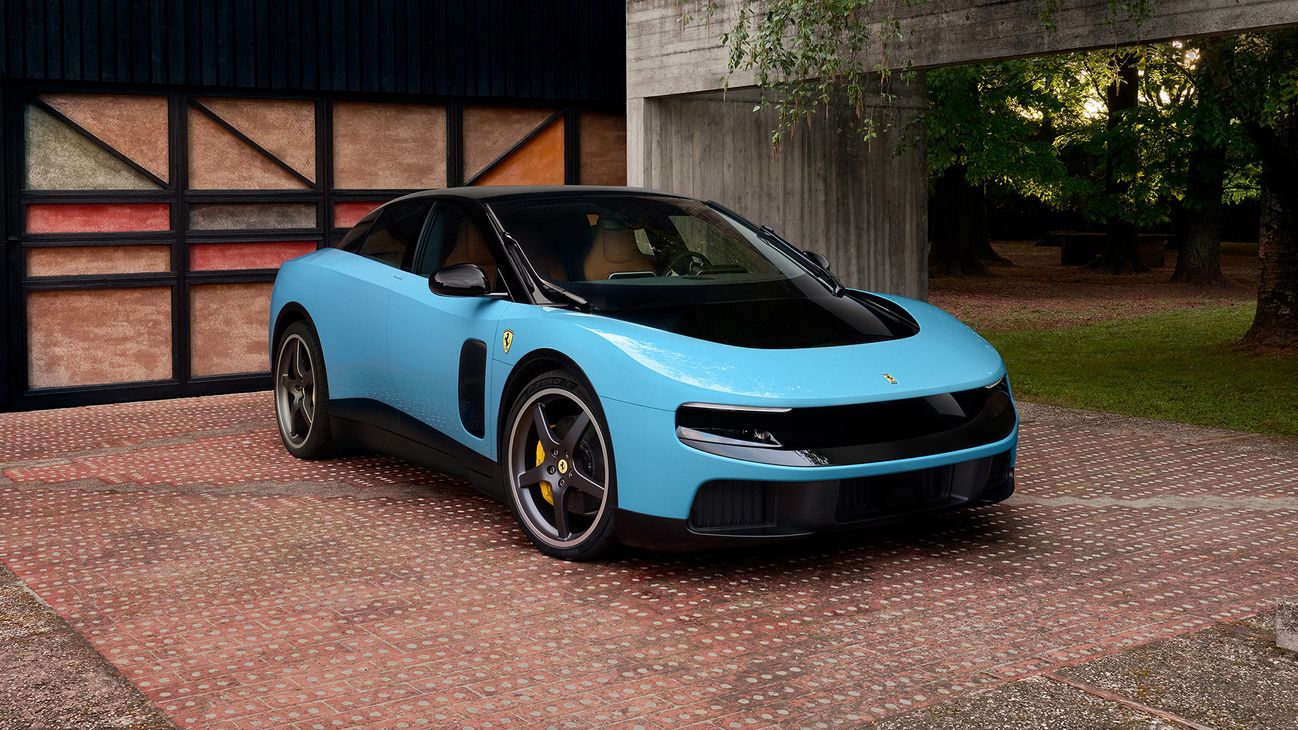
Ferrari Luce
"Hate the new Ferrari. Oh, the Luce? Yes."
The Ferrari Luce is a Ferrari model name mentioned in the podcast. The speaker is reacting to it as part of a discussion about newer Ferraris. The key point is that it’s a modern Ferrari being talked about, not a classic model.
The Ferrari Luce is referenced in the podcast as a newer Ferrari model that someone dislikes, contrasted with “the new Ferrari.” The mention suggests it’s part of a conversation about how people react to Ferrari’s modern lineup. It’s discussed because it’s a current or newly announced name that’s drawing attention.

Honda E
"The new Honda E. Yeah. Okay, that's interesting."
The Honda E is Honda’s compact electric car. In this segment, they’re talking about it in the context of EV features—how it charges and how many electric motors it has.
The Honda E is a small, retro-styled electric hatchback from Honda. It’s notable here because the discussion quickly moves to EV-specific details like charging and motor count, which are key to how the car drives and feels.
lightning cable
"I've seen is the one with it like upside down with like the lightning cable plugged into it."
They mean the charging cable you plug into an EV to charge it. It’s part of a funny image they’re describing.
“Lightning cable” here is a casual reference to the charging cable used to plug an EV into a charger. The key idea is that the cable is physically connected to the car for charging, and the speaker is using it as part of a meme/visual joke.

Ford F-150 Lightning
"...is the one with it like upside down with like the lightning cable plugged into it. Like the mouse, like that ..."
The Ford F-150 Lightning is a pickup truck that runs on electricity instead of gasoline. The podcast mentions plugging in the charging cable, which is how you recharge it. It’s brought up because it’s an EV truck and charging is a big part of owning one.
The Ford F-150 Lightning is an all-electric version of the F-150 pickup, built to bring EV technology into a full-size truck. The podcast describes the charging cable being plugged in and shows the setup, highlighting how charging works in real life. It’s discussed because it’s a prominent example of an EV truck and because charging logistics matter for owners.
four motors
"And man, four motors. Four motors is cool. There's lots."
“Four motors” means the EV has a motor for each wheel (or four total motors working together). More motors can help the car grip better and control power more precisely.
“Four motors” refers to an EV architecture where the vehicle uses four separate electric motors to drive the wheels (often one per wheel). This can improve traction and allow more precise torque distribution for handling and acceleration.
coefficient of drag
"Well, you had to accomplish coefficient of drag somehow, right?"
The coefficient of drag is a way to measure how “slippery” a car is through the air. If it’s lower, the car needs less energy to move, which can improve range.
The coefficient of drag is a number that describes how easily air resists a vehicle’s motion. Lower drag helps an EV go farther and feel more efficient, especially at highway speeds.

Ferrari F40
"...who know Ferrari as it is. So we care about a, an F40 or a Testerosa or whatever. Like for a new audien..."
The Ferrari F40 is a very famous high-performance sports car from Ferrari. It’s known for being exciting and special, and many car fans recognize it. In the podcast, it’s brought up as an example of classic Ferrari models people care about.
The Ferrari F40 is a legendary supercar known for its raw, performance-focused character and iconic status in Ferrari history. In the podcast, it’s mentioned alongside other classic Ferrari models as something people recognize and care about, especially for attracting new audiences. That’s why it comes up—it's a benchmark of classic supercar appeal.

Ferrari 458
"“...one of my best friends got a 458 when they first came out and he put 20,000 miles on it in the first year...”"
The Ferrari 458 is a famous Ferrari with a V8 engine that you can rev really high. People love it because the engine feels exciting and responsive when you push it.
The Ferrari 458 is known for its high-revving V8 engine and the way it delivers power as you rev it out. In enthusiast circles, it’s a benchmark for naturally aspirated “driver’s car” feel, which is why the host connects it to loving a high-revving V8.
power train
"“...I don't, and again, I don't like, you know, EVs are wonderful... I'm talking about the power train.”"
Your powertrain is the set of parts that makes the car move. For gas cars it’s the engine and related parts; for EVs it’s the electric motor and the system that sends power to the wheels.
A powertrain is everything that generates and delivers motion—typically the engine (or motor), transmission, driveshaft, and final drive. In this discussion, the host contrasts traditional powertrains with EVs to explain why the “feel” can be different even when EVs are fast or fun.
Flavio Manzoni
"Yes. Flavio Manzoni. He's very explicitly said he wants to get rid of anthropomorphism as a thing in Ferrari design."
Flavio Manzoni is a Ferrari design leader. Here, they’re talking about his ideas for how Ferrari should shape its cars—especially whether they should look “human” or not.
Flavio Manzoni is a Ferrari design executive who has publicly discussed how the brand approaches styling. In this segment, he’s referenced in connection with Ferrari design language and how it avoids “human-like” car features.
anthropomorphism
"He's very explicitly said he wants to get rid of anthropomorphism as a thing in Ferrari design. In other words, we're used to looking at cars and we see a human face, the headlights are eyeballs, the grills, the mouth."
Anthropomorphism means making something non-human look or act human. For cars, it’s when the styling makes it seem like the car has a face, like “eyes” and a “mouth.”
Anthropomorphism is the design idea of giving non-human objects human traits. In car design, it often means styling cues that resemble a human face—like headlight “eyes” and grille “mouth”—to make the vehicle feel expressive.

Ferrari F355
"Man, the pop-up lights of the F355 like hit me in the mind when you talk about the facial features and that's one of the most iconic designs in my brand."
The Ferrari F355 is a famous Ferrari supercar with a mid-engine layout. Here they’re pointing out its pop-up headlights, which can make the car look like it has a face—matching the “human features” design idea they’re debating.
The Ferrari F355 is a mid-engine V8 supercar known for its distinctive styling and character. In this segment, the host highlights the F355’s pop-up headlights as a memorable “facial” design element, tying it to the anthropomorphism discussion.
two-sided marketplace
"So it's a two-sided marketplace. We facilitate the buying and selling of used EVs..."
It’s a business model where one platform brings together two groups that want to trade with each other. In this case, it connects used EV sellers with used EV buyers (dealers).
A two-sided marketplace is a platform that connects two different groups—here, buyers and sellers—so both sides can transact. The platform’s value comes from matching supply (used EVs) with demand (dealers).
consignment
"We source vehicles on consignment from automakers, lenders, fleet operators, other dealers..."
Consignment means the vehicle owner hands the car to a seller to sell for them. The seller usually gets paid only if the car actually sells.
Consignment is when an owner (like an automaker, lender, or fleet operator) places vehicles with a seller/auction platform to sell on their behalf. The platform typically earns a fee or share after the vehicle sells, rather than buying the vehicle outright first.
wholesale auction
"sell them to dealers usually the next day inside of our wholesale auction."
A wholesale auction is a dealer-to-dealer sales event where vehicles are sold in bulk or quickly to other businesses rather than retail customers. For used EVs, this can speed up inventory turnover and affect pricing because dealers bid based on condition, battery health expectations, and resale demand.
software-defined
"Tesla particularly at the time was really our introduction into the software defined battery defined computer hardware defined electric vehicle..."
“Software-defined” means the car’s behavior is controlled by software. Instead of everything being hardwired, the car can be updated or adjusted through its computer systems.
“Software-defined” refers to the idea that key vehicle functions are controlled by software rather than fixed hardware logic. In EVs, this often includes features like updates, configuration, and how the car manages powertrain behavior.
electric vehicle
"like really a true computer on wheels, a direction that I argue were headed toward for the majority of four wheel mobility."
An electric vehicle is a car that runs mainly on electricity from a battery. It also relies heavily on computers and software to operate.
An electric vehicle (EV) is a car powered primarily by an electric motor using stored electrical energy from a battery. The transcript frames EVs as “computer on wheels,” emphasizing how the vehicle’s electronics and software play a central role.
leasing loophole
"So it was a loophole. It wasn't supposed to happen, but it did."
A leasing loophole means the rules had a gap that let more people get the subsidy than the policy was originally meant for. Here, it’s about how leasing made the EV incentives apply more widely.
A leasing loophole is an unintended gap in policy rules that lets people qualify for benefits in a way the law’s authors didn’t intend. In this segment, it’s described as enabling EV subsidies to apply broadly through leasing, regardless of where the vehicle or battery came from.
EV leasing
"So it was a loophole... So EV leasing became majority of new EV sales."
Leasing an EV means you rent it for a few years and return it at the end. The big idea here is that subsidies made leasing so attractive that most new EVs were being leased instead of bought.
EV leasing is when you pay to use an electric vehicle for a set term (often a few years) instead of buying it outright. In this segment, the key point is that leasing became the dominant way people got new EVs, largely because subsidies made the monthly cost easier to manage.
leases be returned
"We're about to see 1.1 million leases be returned over the next three years."
When EV leases end, the vehicles are typically returned to the leasing company, creating a supply of used EVs in the market. The host frames this as a large upcoming wave of returned EVs that could affect used-EV pricing and availability.
tidal wave
"And that's a tidal wave."
“Tidal wave” here just means a huge amount coming in all at once. The host uses it to stress that many EVs are returning from leases soon.
“Tidal wave” is a metaphor for an overwhelming, fast-growing influx of something—in this case, returned EV leases. The point is to emphasize scale: a sudden increase in used EV supply can change pricing quickly.
charging network
"The charging network situation was a total mess and you could buy a gas car where you don't have any of those problems or concerns for considerably cheaper."
A charging network is the system of public places where you can plug in an EV. If those chargers are hard to use or not available, owning an EV can feel more inconvenient than buying a gas car.
A charging network is the collection of public charging stations (often owned by different providers) that EV drivers rely on for charging away from home. If the network is unreliable, hard to find, or slow, it makes EV ownership feel risky compared with fueling a gas car.
combustion vehicle
"Even today, the average new EV is $7,000 more than the average new combustion vehicle."
A combustion vehicle is a gas-powered car that makes power by burning fuel in an engine. They’re using it as the “normal” alternative to compare against EVs.
A combustion vehicle is a car powered by an internal combustion engine that burns fuel (like gasoline or diesel) to make power. In this discussion, it’s the comparison baseline for EV pricing and convenience.
tax credit
"If only there was a $7,500 tax credit. Yeah, if only."
A tax credit is money the government subtracts from what you owe in taxes. For EVs, it can make the car cheaper to buy, which helps close the price gap versus gas cars.
A tax credit is a government incentive that reduces a buyer’s tax bill, effectively lowering the purchase price of an EV. When the speaker says “If only there was a $7,500 tax credit,” they’re pointing out how incentives can change the price gap between EVs and gas cars.
early adopters
"we had plenty of early adopters that would pay green premiums... The early adopters have all been exhausted."
Early adopters are the first people who buy a new kind of product, even if it’s not perfect yet. The idea here is that those first buyers are mostly gone, so selling EVs gets tougher for dealers.
Early adopters are the first group of buyers willing to try a new technology even if it’s more expensive or less convenient than the established option. The speaker argues that once early adopters have moved on (or bought multiple EVs), the remaining market is harder for dealers to serve.
green premiums
"we had plenty of early adopters that would pay green premiums."
A green premium means paying extra money for something because it’s “greener,” like an EV. Here, it refers to the higher price early EV buyers were willing to pay.
A green premium is the extra amount buyers pay for an environmentally friendlier option, like an EV, compared with a similar non-EV. The speaker uses it to describe how early EV buyers accepted higher prices for the environmental benefits.
floor plan
"That leaves dealers in a really tough spot because they only have a certain number of parking spaces, a certain amount of room on their floor plan and they're in the business"
A dealer floor plan is basically how a car dealership pays for and keeps cars in stock. If EVs don’t sell fast, the dealership can run out of room or money to keep more cars on hand.
A dealer floor plan is the way a dealership finances and manages its inventory—how many cars it can afford to stock and display at once. If EVs are harder to sell, dealers can get stuck with inventory they can’t move quickly enough.
premium on EVs
"Right. Let me ask you, so of course I know the premium on EVs is roughly $7,000. Does that exist in the used market?"
A “premium” here means EVs are priced higher than similar gas cars. The host is checking whether that extra cost still exists when you shop used, and whether it shrinks enough to make EVs a better bargain.
A premium on EVs means EVs cost more than comparable ICE vehicles, typically measured as an average price difference. Here, the host compares that premium on new cars versus used cars to argue that the used-car deal is improving.
days to sell
"There's how much more do you pay and it's how much longer do they take to sell? So on new cars today, it's a $7,000 premium and the days to sell on new, if I remember correctly, it's like a seven day difference."
“Days to sell” means how many days a car stays listed before someone buys it. If EVs take longer to sell, dealers may be more willing to discount them, especially in the used market.
Days to sell is a market metric for how long a vehicle sits on dealer inventory before it’s sold. The segment uses it to show that EVs can take longer to move on lots, which can affect pricing and incentives.
Cox report
"I can't remember the exact number from the Cox report, but it was like 70 versus 77 days on new car supply right now."
The “Cox report” is data from Cox Automotive, a company that tracks how cars are selling and how long they sit on lots. The host is using it to support the numbers they mention about EVs taking longer to sell.
The Cox report refers to Cox Automotive’s vehicle pricing and sales analytics, often used to track inventory and days-to-sell trends. In this segment, the host cites it as the source for the new-car days-to-sell comparison.
ICE
"Those are on the 7,000, seven days longer for a new ICE to new EV. What's the split on used?"
ICE means internal combustion engine—basically a gas or diesel engine. In this segment, they’re comparing those gas cars to electric vehicles to see which is a better deal in the used market.
ICE stands for internal combustion engine, referring to gasoline- or diesel-powered cars. The host is using ICE as the baseline comparison against EVs for both pricing and dealer days-to-sell.
days of supply
"But days of supply is lower. Days of supply on used EVs is 35."
“Days of supply” is a way to measure how quickly cars are getting sold. It estimates how many days the current stock would last if sales keep going at the same rate.
“Days of supply” is a market metric that estimates how long current inventory would last at the current sales pace. In this context, lower days of supply for used EVs suggests they’re selling faster and inventory is tightening.
electrification of transportation
"[1638.9s] Why do I continue to believe that electrification of transportation is inevitable? [1642.5s] Right. [1643.5s] Yeah. [1644.5s] And I want to be clear, I'm not an EV extremist."
It means cars are gradually switching from gas engines to electric power. That can be fully electric cars or cars that use electricity in some way.
This refers to replacing traditional gasoline or diesel drivetrains with electric propulsion in cars and other vehicles. In practice, it usually means more battery-electric vehicles and other electrified powertrains becoming common over time.
Phev
"[1671.1s] Potentially a continued mix of some Phev, maybe a little more the HREV like as we said"
A PHEV is a hybrid you can plug in. It has both a gas engine and an electric motor, and you can charge the battery at home or at a charger.
PHEV stands for plug-in hybrid electric vehicle. It combines an internal combustion engine with an electric motor and a battery you can charge from an outlet, allowing some trips to be driven on electricity alone.
HREV
"[1671.1s] Potentially a continued mix of some Phev, maybe a little more the HREV like as we said"
HREV is a shorthand for another kind of hybrid-electric car. It’s meant to describe cars that use electricity to help drive, but the exact charging/energy setup is different from a plug-in hybrid.
HREV is used here as an electrified powertrain category distinct from BEVs and PHEVs. In this context, it likely refers to a hybrid-electric approach where the vehicle can use electric drive but doesn’t rely on being plugged in the same way as a PHEV.
EREV
"Yeah, the EREV, thank you. Yeah, yeah, yeah. But that's going to be, yeah, the extended range."
EREV means an electric car with extra range. It drives like an EV, but it also has a backup engine that helps recharge the battery so you can go farther between charges.
EREV stands for extended-range electric vehicle. It’s an EV where the main drive is electric, but it also has a small engine/generator that can recharge the battery when needed, extending how far you can go without plugging in.
extended range
"But that's going to be, yeah, the extended range. I think we're going to see quite a bit of that."
Extended range is how much farther the car can go than its battery would normally allow. In these cars, a backup system can help keep the battery charged while you’re driving.
Extended range refers to the extra driving distance an EV can cover beyond what its battery alone would provide. In an EREV setup, that extra range typically comes from a generator/engine that charges the battery while you drive.
drivetrains
"The reason I believe that is because the drivetrains themselves are insanely reliable. The technology is becoming increasingly affordable as we hit economies of scale."
A drivetrain is basically the car’s power system that gets energy to the wheels. In an electric car, it’s especially important because it’s what makes the car drive reliably.
A drivetrain is the set of components that deliver power from the energy source to the wheels. In EVs and EREVs, the drivetrain reliability matters because it’s central to how the car moves day-to-day.
economies of scale
"The technology is becoming increasingly affordable as we hit economies of scale. We're almost hitting that first point of the cycle where we'll start seeing battery packs"
Economies of scale means things get cheaper when you make a lot of them. For EVs, producing more cars and batteries can reduce the cost of each one.
Economies of scale are cost advantages that happen when production volume increases. For EVs, higher battery and vehicle production can lower per-unit costs, which helps make EV technology more affordable.
battery packs
"We're almost hitting that first point of the cycle where we'll start seeing battery packs go through recycling processes and I'm sure you both know it's over a 99% reclaim rate."
Battery packs are the big rechargeable battery units inside an EV. They store the electricity that powers the car, and recycling them helps reduce waste.
Battery packs are the large rechargeable battery assemblies in EVs that store energy for the electric motors. Their lifecycle—including recycling—affects both long-term cost and environmental impact.
recycling processes
"go through recycling processes and I'm sure you both know it's over a 99% reclaim rate. We're keeping up, we're keeping up, yeah."
Recycling processes are the factory steps that take old batteries and pull useful materials back out. That way, fewer raw materials have to be mined for new batteries.
Recycling processes are industrial steps used to recover valuable materials from used batteries and other EV components. For listeners, the key point is that battery recycling can reclaim materials rather than sending everything to landfill.
reclaim rate
"I'm sure you both know it's over a 99% reclaim rate. We're keeping up, we're keeping up, yeah."
Reclaim rate is how much of a used battery’s materials can be recovered and reused. A higher number means recycling is getting more of the valuable stuff back.
Reclaim rate is the percentage of materials that can be recovered from used batteries during recycling. A very high reclaim rate implies recycling can capture most of the valuable battery materials for reuse.
grid
"Yeah, and it's also my belief that the grid overall will see its own transformation to one that relies increasingly on renewables."
The grid is the power network that delivers electricity to where you live and work. If the grid gets cleaner, charging an EV can produce less pollution overall.
The grid is the network that generates, transmits, and distributes electricity to homes and businesses. The speaker is connecting EV charging to how the grid’s electricity mix changes over time.
renewables
"one that relies increasingly on renewables. The carbon neutrality question, which comes up rightfully so, will no longer be a difficult"
Renewables are cleaner energy sources like wind and solar. If more of the electricity comes from these, charging an EV tends to be cleaner too.
Renewables are energy sources that naturally replenish, such as wind, solar, and hydro. When a larger share of the grid comes from renewables, EVs can have lower lifecycle emissions than if electricity is mostly from fossil fuels.
carbon neutrality
"The carbon neutrality question, which comes up rightfully so, will no longer be a difficult equation."
Carbon neutrality means aiming for net-zero climate impact. For EVs, people debate it by looking at emissions from making the car and charging it, not just tailpipe emissions.
Carbon neutrality refers to balancing carbon emissions with carbon removal or offsets so the net impact is near zero. In EV discussions, it usually means evaluating emissions across the whole lifecycle—electricity generation, manufacturing, and battery recycling.
diesel
"Yes, if you have a 90 foot boat you have to haul around, you probably want to diesel."
Diesel is a type of fuel used in certain engines. The speaker is saying that for very heavy jobs—like hauling a big boat—diesel can still be the practical choice.
Diesel is a fuel used in compression-ignition engines, often chosen for heavy-duty work because of efficiency and torque characteristics. The speaker uses it as a contrast for a special use case (a 90-foot boat) where diesel may still make sense.

Toyota A90
"It's a better power train, it's a better solution for most people most of the time. Yes, if you have a 90 foot boat you have to haul around, you probably want to diesel. Yeah."
The Toyota Supra is a sports car, meaning it’s designed to drive fast and feel exciting. It’s a two-door coupe aimed at people who want performance. In the conversation, it’s being compared as a good overall choice for most drivers.
The Toyota Supra is a sports coupe built for strong performance and an engaging driving feel. In the podcast context, it’s mentioned as having a “better power train” and being a good solution for most people. That’s why it’s discussed—people weigh it as a practical way to get sports-car performance without going to more specialized setups.
quad motor
"Yeah, dang. [1761.9s] Yeah, maybe that quad motor Rivian's a good tool for that job as you have enough charging [1765.1s] along the way."
“Quad motor” means there are four electric motors working together. That can help the car put power to the wheels more effectively, especially when traction is limited.
A “quad motor” EV uses four electric motors to drive the vehicle. Compared with single- or dual-motor systems, it can enable finer control of how much torque each motor applies, which often improves traction and drivability.
buyer that buys and holds
"[1816.7s] So there's two different types of buyers, right? [1818.8s] There's the buyer that buys and holds and there's the buyer that rinses in repeats and [1824.1s] goes through every few years."
It’s just a way of owning: some people keep a car for many years, while others trade it in and switch often. The host is saying used EV pricing can look especially good when you buy after the first owner’s depreciation hit.
This describes a “buy-and-hold” ownership style where the driver keeps the car for a long time rather than cycling to a new one every few years. In the used-EV context, the host contrasts this with buyers who churn vehicles, which affects how depreciation and resale pricing play out.
buyer that rinses in repeats
"[1818.8s] There's the buyer that buys and holds and there's the buyer that rinses in repeats and [1824.1s] goes through every few years. [1826.2s] The used EV is the greatest financial arbitrage of all time when it comes to car purchases."
They mean people who keep swapping cars often. When that happens, the first owner usually takes the biggest price drop, and the next buyer can get a better deal.
This phrase refers to a “repeat churn” buyer who cycles through cars frequently. The host implies that frequent turnover accelerates the depreciation experience for early owners, which is why later buyers can find better used pricing.
financial arbitrage
"[1824.1s] goes through every few years. [1826.2s] The used EV is the greatest financial arbitrage of all time when it comes to car purchases."
They’re saying the deal is so good because the used EV’s price drops faster than its real usefulness. So you buy it after the first owner took the big depreciation hit, and you get more value for your money.
“Financial arbitrage” here means profiting from a pricing mismatch—buying a used EV at a much lower price than its underlying value. The host argues that the depreciation curve creates a gap between what you pay and what the car is still worth in real use.
useful life
"[1838.3s] So we don't know exactly how far into its useful life like a three-year-old vehicle is. [1840.8s] Let's I'll say something controversial. [1842.1s] Let's say it's 10% into its useful life, but at the same time, it's 50% off."
They mean how long the car can keep being a good, usable car. Even if it’s only a few years old, it may still have a lot of good driving left—especially compared to how cheap it is now.
“Useful life” is the period a vehicle can still deliver practical value before major wear, battery degradation, or systems aging make it less attractive. The host’s point is that a “three-year-old” EV may still be relatively early in its useful life even if it’s already heavily discounted.
biggest hit
"[1842.1s] Let's say it's 10% into its useful life, but at the same time, it's 50% off. [1848.3s] The first owner took the biggest hit. [1850.7s] They did."
They’re talking about how the price of a new EV often drops a lot soon after you buy it. The first owner takes that loss, and the used buyer gets the car for less money.
“The biggest hit” refers to the steep early depreciation that many EVs experience after purchase. The host’s argument is that the first owner absorbs that price drop, so used buyers can benefit from the discount while the car is still relatively early in its useful life.
depreciation hit
"And you know, that was a brilliant statement, Ed, because that's how I answer the other part of that question is if you're going new, who should take the depreciation hit? Should you take it or should the leasing company take it?"
When you buy a car, it usually becomes worth less over time. The “depreciation hit” is that loss in value, and the debate here is whether the buyer should take it or if a lease structure makes the leasing company eat more of the loss.
“Depreciation hit” is the money you lose as a vehicle’s value drops after you buy it. In EV discussions, it matters because battery tech and incentives can make used EV values swing quickly, so the question becomes who absorbs that loss: the buyer or the leasing company.

G-Class Gwagon
"I tell you, if you want an electric G-Wagon, now's the time. [1881.9s] I kind of do. [1882.9s] I just, I just wonderful."
They’re talking about a Mercedes-Benz G-Class that runs on electricity instead of gas. It keeps the classic G-Wagon look, and the point is that deals and incentives can make it easier to get into one right now.
An “electric G-Wagon” refers to the Mercedes-Benz G-Class in an EV form, keeping the iconic boxy, off-road-capable styling while using an electric powertrain. The segment highlights it as a high-demand EV where timing incentives and pricing can make new or used deals especially attractive.
four-wheel steering
"Yeah. [1892.1s] That four-wheel steering looks just absolutely epic. [1893.8s] I just wish like it's what, like a 240 mile range or something."
Four-wheel steering means the back wheels can turn too, not just the front wheels. That can make the car easier to maneuver in parking lots and more stable when driving fast.
Four-wheel steering is a chassis system where the rear wheels can steer along with the front wheels. It improves low-speed maneuverability (tighter turning) and can enhance high-speed stability and cornering behavior.
lithium sodium
"But soon they'll have a new battery chemistry, lithium sodium. [1903.6s] I don't know what that is, but lithium sodium and it'll be, it'll be 20% better. [1908.1s] So it'll be like 280, which is totally livable."
Lithium-sodium is a different type of battery chemistry than the usual lithium-ion. The idea is that it could make EV batteries better—here they’re saying it could extend driving range by roughly 20%.
Lithium-sodium refers to a battery chemistry that aims to improve cost, supply chain, or performance compared with conventional lithium-ion. The host claims it will raise usable range by about 20%, implying better energy density or efficiency (though the exact mechanism isn’t specified).

Tesla Model Y
"What, like, what do I buy? Which is the model three. Model three. Model Y."
The Tesla Model Y is an all-electric SUV. The hosts mention it as one of the main EV models people consider when deciding what to buy.
Tesla Model Y is a compact electric SUV built around a battery-electric powertrain and a focus on everyday usability. In this segment, it’s part of the host’s “which EV should I buy?” shortlist for shoppers comparing options.
charge at home
"Question number one, can you charge at home? Right. Yes. That's the biggest question."
This means charging your electric car at your house instead of relying only on public chargers. The hosts say it’s the most important question because it affects what EV options are practical for you.
“Charge at home” refers to plugging your EV in at your residence (typically overnight) so you start each day with a full or planned battery level. The hosts frame it as the biggest decision point because it dramatically expands which EVs make sense for your routine.
Nax capable vehicle
"Let's say you can't charge at home. If you cannot charge at home, then I would say a Nax capable vehicle is probably the better choice right now."
They mention a “Nax capable” EV as the better choice if you can’t charge at home. The idea is that some cars are better suited to public charging, but the transcript doesn’t clearly define what “Nax” means.
“Nax capable vehicle” appears to refer to an EV that can use a specific charging capability or network (the exact meaning of “Nax” isn’t clear from the transcript). The context suggests it’s recommended when you can’t charge at home, because it would make public charging more workable.
Tesla Supercharger Network
"And what you're, what we mean by that is something that's able to jump on the Tesla Supercharger [1948.3s] Network."
Tesla has its own network of fast charging stations. They’re designed to charge EVs quickly so you can drive longer distances without worrying as much about running out of battery.
Tesla’s Supercharger Network is a fast-charging network built for Tesla vehicles, using high-power DC charging to add significant range in a short time. In practice, it’s a major factor in EV road-trip convenience because it reduces “range anxiety” by providing predictable charging access.
North American Chargers
"Network. [1949.3s] North American Chargers later."
This is talking about the charging stations you can find across the U.S. and Canada. The idea is that you have more choices now, not just one company’s chargers.
“North American Chargers” here refers to the broader set of EV charging providers and station networks available across the U.S. and Canada. The key point is that EV charging access is no longer limited to one brand’s ecosystem, which affects route planning and used-EV value.
brand affinity
"[1974.1s] And at that point in time, you know, it'll come down to like, do you have any brand affinity? [1978.5s] Do you care about luxury or do you care about the best self-driving technology?"
Brand affinity just means you naturally prefer one car brand over others. Here, they’re saying that once charging is sorted, personal preference can drive the final choice.
Brand affinity is a buyer’s preference for a particular automaker or EV brand based on identity, past ownership, or loyalty. In the context of used EVs, it’s presented as one of the deciding factors once charging access and day-to-day practicality are covered.
self-driving technology
"[1978.5s] Do you care about luxury or do you care about the best self-driving technology? [1983.8s] Right. [1984.8s] Is there anybody politically that you love or don't love?"
This means the car’s advanced driver-assist features—things like steering help and cruise control that can do more of the driving. People may choose an EV based on how capable and reliable those features are.
“Self-driving technology” refers to driver-assistance systems that can automate parts of driving, such as lane keeping, adaptive cruise control, and—depending on the system—more advanced highway or city features. For EV shoppers, the quality and availability of these features can be a differentiator, especially if they’re tied to software updates.

Model 3
"I was quoting like, you can buy a Model 3 for like $15,000. $299 a month right now leasing one, man. It's like insane. A new Model 3 for $299 a month."
The Tesla Model 3 is an all-electric car. The hosts are saying the current lease price is so low that it can feel like you’re getting a great deal compared with gas cars.
Tesla Model 3 is an electric compact sedan known for its relatively low cost compared with many other EVs. In this segment, the hosts discuss aggressive pricing/leasing offers that make it feel like a “deal” versus buying a gas car.

Hyundai Ioniq 5
"I have a friend that just turned in their Ioniq 5 lease and then they immediately bought a used one just like it. And they absolutely love the car and they just wanted to stay inside of it."
The Hyundai Ioniq 5 is an electric SUV/crossover. The point here is that someone leased one, returned it, and then bought a used one right away because they liked it.
The Hyundai Ioniq 5 is a mainstream electric crossover that became popular for its fast-charging capability and practical daily usability. Here, the host describes a lease-to-buy pattern: turning in a lease and immediately buying a used one to keep the same car.
Lucids
"Yeah, we see people picking up used Rivians and Lucids like crazy. Great cars."
Lucid makes electric cars. The host is saying people are buying used Lucid cars too, which supports the idea that used EV deals are getting more popular.
Lucid is an EV brand known for high-end electric sedans. In this segment, the host groups Lucid purchases with Rivian to illustrate that buyers are increasingly comfortable shopping for used EVs.
Rivians
"Yeah, we see people picking up used Rivians and Lucids like crazy. Great cars."
Rivian is a company that makes electric cars. The host is saying lots of people are buying used Rivian EVs.
Rivian makes electric vehicles, and the host is specifically talking about people buying used Rivian EVs. The mention is used to support the broader claim that used EVs are becoming a popular “next step” after leasing or trying EVs.
full self-driving hardware
"Especially if you get the full self-driving hardware on there. Totally."
This means the car has the extra sensors and computer needed for Tesla’s more advanced driving features. The hosts are saying that if a used car already has this hardware, it can be a better buy.
“Full self-driving hardware” refers to the vehicle being equipped with the sensor/compute package Tesla uses to support its advanced driver-assistance and future autonomy features. The key point here is that some used cars may already have the hardware, so buyers can get more capability without paying for it later.
latest update
"I really appreciate that take and that the two of you did a segment dedicated to the latest update. One thing that I continue to hear is that other manufacturers are either up to speed"
They’re talking about a recent software update for the car. With EVs, software can add or improve features, so the car can feel better over time.
A “latest update” here likely refers to an over-the-air software update that improves Tesla features over time. Because EVs rely heavily on software, these updates can change how capable the car feels without any hardware swap.
AI in autonomy
"But like, I mean, you were in the car, we got a demo from Rivian on their AI in autonomy day and it's just going, it's making a left-hand turn."
Autonomy means the car can do driving tasks on its own. AI in autonomy is the software “brain” that figures out what’s around the car and decides what to do next.
“Autonomy” here means the car’s ability to drive itself using sensors and software. “AI in autonomy” refers to the machine-learning systems that interpret the environment and make driving decisions.
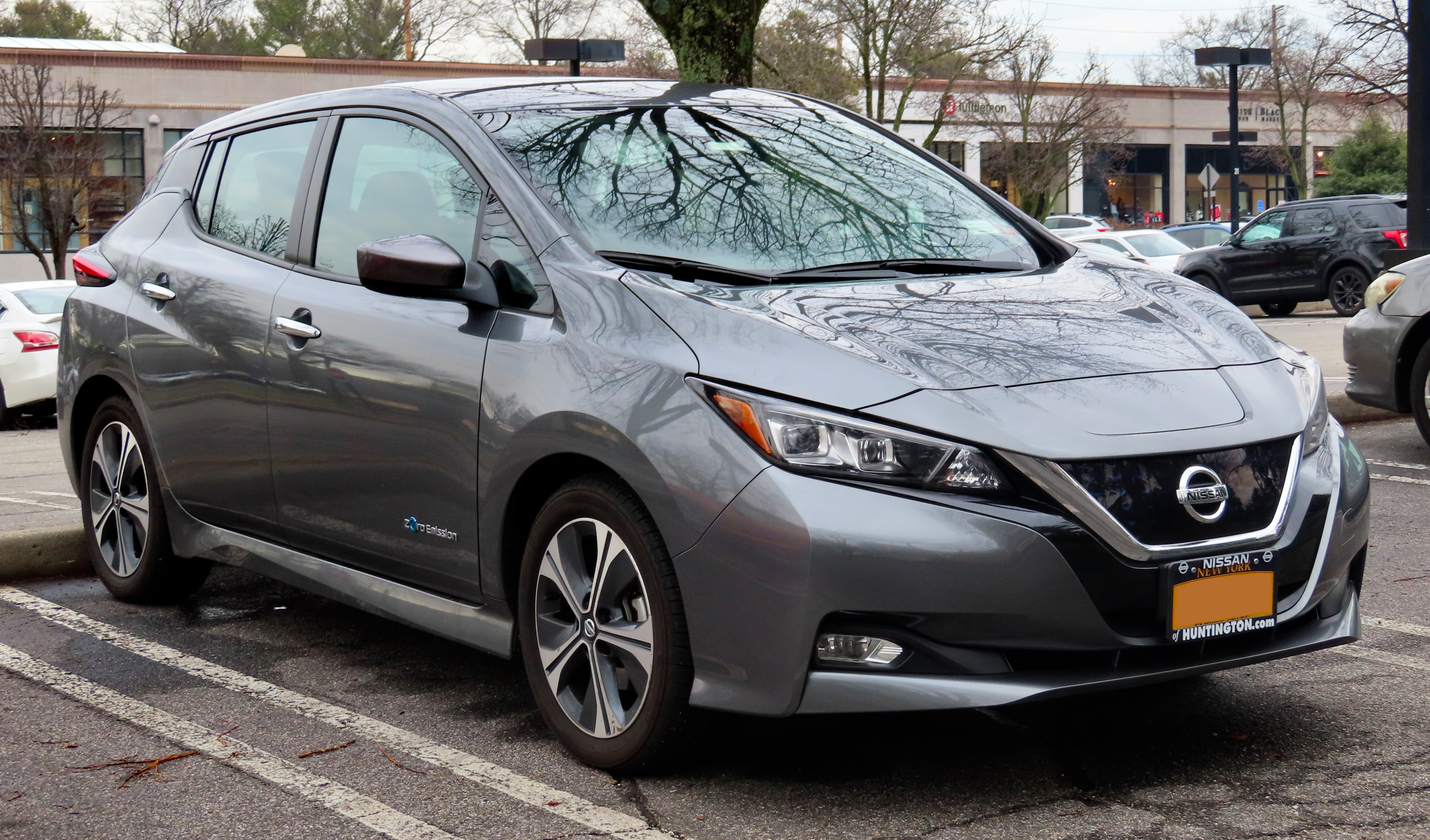
Nissan Leaf
"Like, you know, we know, I'm making this up. Like a Nissan Leaf, like, you know, the battery. I had a friend, they had a first gen Nissan Leaf."
The Nissan Leaf is a popular electric car that many people buy new and then later sell used. Here, they’re talking about what happens to its battery over time and how much range you still get.
The Nissan Leaf is a long-running mass-market electric car (EV) that became a common “first EV” and a frequent used-EV shopping target. In this segment, it’s brought up specifically because used Leaf buyers often worry about battery condition and remaining range.

Dodge Charger
"We don't do anything. We can't find a Chabinville charger anywhere. Right."
The Dodge Charger is a car model known for performance and a sporty look. In the podcast, the word “charger” seems to be about charging a car’s battery, not the vehicle itself. The point is that they couldn’t find a charging station nearby.
The Dodge Charger is a performance-oriented sedan/coupe-style muscle car known for its power and classic American styling. The podcast mentions trouble finding a “charger” at a specific location, which suggests the conversation is about charging infrastructure rather than the car’s performance. That’s why it comes up—people may be discussing EV charging availability while referencing the Charger name.
charging speed
"Like some gotchas, like the charging speed like is going to be very limited. Right."
Charging speed is how quickly the battery fills up when you plug in. If it’s slow, you’ll spend more time at chargers—especially when you’re away from home.
Charging speed is how fast an EV can add energy to its battery, usually limited by the car’s onboard charging hardware and the charger’s power output. On older EVs, charging speed can be noticeably slower, which changes how convenient road trips and frequent charging feel.
battery health testing
"There's a lot of question around like battery health testing as an example, understanding like what software packages you're getting, the FSD actually stay on this car and to actually get it."
Battery health testing is a way to see how worn out an EV’s battery is. It helps you guess how much range you’ll still get and whether the battery is in good shape.
Battery health testing checks how much usable capacity an EV battery has left compared to when it was new. For used EVs, this helps estimate remaining range and whether the battery has degraded more than expected.
FSD
"There's a lot of question around like battery health testing as an example, understanding like what software packages you're getting, the FSD actually stay on this car and to actually get it."
FSD usually means “Full Self-Driving,” a set of advanced driver-assist features. When buying used, you need to confirm whether that feature is still included on the car you’re buying.
FSD typically stands for “Full Self-Driving,” a driver-assistance software offering that can include advanced automated driving features. The important used-EV question is whether FSD is tied to the car or the original owner’s account, which affects whether you can access it after purchase.
software packages
"There's a lot of question around like battery health testing as an example, understanding like what software packages you're getting, the FSD actually stay on this car and to actually get it."
Software packages are add-on features controlled by the car’s computer. When buying used, you want to know which features you’re actually getting and whether they’ll still work on that specific car.
Software packages are bundles of EV features delivered through the vehicle’s software, which can include driver-assistance, navigation, and other capabilities. With used EVs, the key issue is whether the specific packages are included and still active on that car.
charging stations
"Right. Can I really charge this thing at all these stations here in my house?"
Charging stations are places you can plug in to charge your EV. Before buying, it helps to know what chargers you can realistically use near home and on your routes.
Charging stations are the public (or semi-public) chargers where EVs can recharge away from home. Used-EV buyers often evaluate charging stations because real-world convenience depends on charger availability, speed, and compatibility with the vehicle.
sales training
"lot of car makers will suddenly come out with an EV, no training at all for the salespeople. [2269.1s] Never. [2270.1s] As a salespeople just want to make a sale."
Sales training means teaching dealership staff how to explain a new kind of car clearly. In this case, it’s about helping salespeople understand EVs so they can guide customers instead of pushing them away.
Sales training here refers to preparing dealership staff to explain EV-specific topics—like charging, software features, and how updates work—so customers don’t get turned off. The host contrasts dealers that do this well (BMW) versus those that launch EVs without educating their salespeople.
software updates
"We train our salespeople like you want to sell on the EV because, you know, it'll make them [2291.6s] happier. [2292.6s] They'll enjoy the product more and more features, updates, blah, blah, blah, blah."
Software updates are like new computer updates for the car. They can add features or improve how the car works after you’ve bought it.
Software updates are changes delivered to a vehicle’s electronic systems after purchase, often improving features or fixing issues. EVs commonly rely on frequent updates, so salespeople need to understand that the car can evolve over time, not just stay the same.

BMW i3
"And man, I remember back when the I3 first came out and I had all kinds of, I was in [2305.5s] Portland, I had a ton of friends that worked at the BMW dealer."
The BMW i3 is BMW’s early electric car. It was one of the EVs that helped people get used to buying and owning an EV, so it’s a good example in a discussion about how dealers handled EV sales.
The BMW i3 is BMW’s early mass-market electric car, known for its compact size and lightweight design. It was one of the first EVs many people encountered in daily life, so it’s a useful reference point when discussing how EV sales training and dealer experience evolved.

BMW E92
"...atever like monstrous, like probably what was it, E92 M3 that they were driving. Which I had one at tha..."
The BMW 3 Series is a luxury car that’s meant to feel sporty to drive. Some versions are built for higher performance, like the M3 mentioned in the conversation. It comes up often because it’s a popular model with a strong enthusiast following.
The BMW 3 Series is a compact luxury sedan that’s widely known for its driving dynamics and broad availability in different performance trims. The podcast references an E92 M3, which is a high-performance version of the 3 Series, highlighting how memorable those cars can be to enthusiasts. It’s discussed because it represents a well-known performance/luxury platform.

BMW M3
"And man, they were all driving I3 leases on top of whatever like monstrous, like probably [2313.7s] what was it, E92 M3 that they were driving."
The BMW E92 M3 is a sporty BMW from the E92 generation. It’s the kind of car enthusiasts talk about, so it’s being used here to show that BMW dealer employees weren’t just EV salespeople—they were car people too.
The BMW E92 M3 is a performance-focused 3 Series generation (E92) with the M3 badge, famous for its high-revving character and driver-focused feel. Mentioning it alongside i3 leases highlights how BMW dealers’ staff could be EV-curious while still being enthusiast-grade car people.

Mercedes-Benz EQB
"If you're looking to buy a used EV, something made in the last five or so years, I would avoid the Mercedes Benz. What? EQB. Oh yeah. Oh yeah. Even the gas powered one."
The Mercedes-Benz EQB is an electric SUV from Mercedes. In this part, the host says you should avoid it if you’re buying a used EV, even though they’re comparing it to other options.
The Mercedes-Benz EQB is a compact electric SUV built on the same general idea as the brand’s gas compact SUVs, but with an electric powertrain. Here, the host specifically advises avoiding the EQB when shopping for a used EV, even mentioning it includes a gas-powered variant as part of the comparison.

Chevy Bolt
"As much as I love the form factor of the Chevy Bolt and the price because it's super cheap. And I'll tell you why for both."
The Chevy Bolt is a compact electric car from Chevrolet. The hosts like it because it’s usually cheap for what you get, which is why it comes up in a “best used EV deals” discussion.
The Chevy Bolt (Chevrolet Bolt EV) is a mainstream electric hatchback/small EV known for offering a lot of value per dollar, especially on the used market. The host calls out its “form factor” and low price as reasons they’re interested, setting up the episode’s theme about used EV deals.
compact three row
"My wife was like, I want an EV. What? Because we wanted a compact three row. Okay. Very hard. Very hard to find something that has three rows."
“Compact three row” refers to a smaller-sized vehicle that still has three rows of seats, typically to fit more passengers. The host says it’s very hard to find, which is why the Mercedes-Benz EQB (and similar EV SUVs) becomes a key shopping target.
home charger
"You can only consider buying this if you have a home charger and you're just going to charge overnight."
A home charger is a charging station where you park at home. The host is saying you really need this so you can charge overnight instead of relying on public chargers.
A home charger is an EV charging setup installed at your residence, typically allowing convenient overnight charging. The host’s point is that if you don’t have one, you’re more dependent on public fast charging, which can make daily life and road trips harder.
road trip
"And because of any kind of road trip, you are screwed."
Here, “road trip” means driving long distances where you have to stop to charge. The host is saying the charging speed can make those stops take too long.
In EV discussions, “road trip” usually means traveling far enough that you must plan charging stops along the way. The host argues that with the EVs mentioned here, the charging-speed limits make those stop-and-go charging plans frustrating.

EQE AMG
"They have to be, I mean, like the, the looks like a bar soap at the EQE AMG, the little sedan, like that is such an incredible car."
The Mercedes-Benz EQE AMG is the sportier, higher-performance version of the EQE electric sedan. The host is basically saying it looks great and feels like a standout EV.
The Mercedes-Benz EQE AMG is the performance-focused version of the EQE electric sedan, tuned by AMG. The host uses it as an example of how the design and “incredible car” factor can make certain EVs feel more special, even while discussing charging practicality.
rear steering
"Because I mean that like, I forget the horsepower, but like too much and it's got the crazy rear steering where you can just, you know, make a U turn in the lane."
Rear steering means the back wheels can also turn. That helps the car turn more tightly, so things like U-turns and parking become easier.
Rear steering is a system that turns the rear wheels (often in coordination with the front wheels) to improve low-speed maneuverability and reduce turning radius. The host connects it to the ability to make a U-turn in the lane, implying easier parking and tighter turns.
anti EV hysteria
"Because, you know, all the, all the anti EV hysteria that's out there."
The speaker is calling out what they see as exaggerated fear about EVs. They’re setting up the question of whether battery worries are real or just fear.
“Anti EV hysteria” is the speaker’s framing of widespread public fear about EVs—especially battery-related concerns—rather than a measured assessment of actual risks. In this context, it’s used to set up a discussion about whether those worries should affect how Plug sells used EVs.
state of health of the battery
"Having some sort of indicator on the state of health of the battery is really important."
“State of health of the battery” (often abbreviated as SOH) is a measure of how much capacity a battery has left compared to when it was new. For used EVs, SOH helps dealers and buyers understand remaining usable range and how much degradation has occurred.
environmental impact reports
"And they released it in two parts, two different years in their environmental impact reports. And it said 200,000 miles."
These are company reports where they share environmental and sustainability information. In this case, the host is pointing to them as where battery-mileage data was published.
Environmental impact reports are formal publications that companies release to summarize their environmental footprint and related metrics. Here, they’re being used as a source for battery performance data over high mileage.
battery capacity retention
"And it said 200,000 miles. Battery capacity retention was 85% for three and why and 88% for SNX."
It’s a way to measure how much battery “power” is left after a lot of driving. If retention stays high, the battery isn’t wearing out as fast as people feared.
Battery capacity retention is how much of a battery’s original usable capacity remains after time and miles. In this segment, they’re using it as evidence that EV packs degrade slower than many people expected.
catastrophic failure
"Now, granted, remaining capacity, state of health is not an indicator of likelihood of a catastrophic failure. Right. Right. But catastrophic failures are very rare."
This means a worst-case battery problem—something serious rather than just “the battery got weaker.” The point here is that these dangerous events are uncommon.
A catastrophic failure is a severe, high-consequence battery event—something that goes beyond normal degradation. The speaker argues that these events are very rare, even if SoH metrics don’t predict them perfectly.
Request an Explanation
Heard something you'd like explained? We'll add it to this episode.
Sign in to request explanations for terms you heard.
Want to learn more?
Browse our glossary for plain-English explanations of automotive terms, jargon, and concepts.
Help improve this episode
See something that's not quite right? Our annotations are AI-generated and can sometimes miss the mark. Click the flag icon on any annotation to suggest a correction.