The Honda Accord is a popular car that many people choose because it's reliable and has a lot of space. It comes in different versions, so you can pick one that fits your needs.
Financing terms are the details about how you will pay for the car over time, like how much interest you'll pay and how long you'll take to pay it off. It's important to know this before buying a car.
Insurance costs are what you pay to protect your car in case of accidents or damage. Different cars can have different insurance prices, so it's good to check this before buying.
A warranty is like a guarantee from the car maker that they'll fix things if they break within a certain time. It's important to know what kind of warranty comes with a car before you buy it.
An extended service contract is like an extra warranty for your car that lasts longer than the original one. It helps pay for repairs if something goes wrong after the factory warranty ends.
Infotainment screens are the touch screens in cars that let you listen to music, get directions, and connect your phone. They can be expensive to fix if they break.
CarMax is a place where you can buy used cars. They have a set price, so you don't have to negotiate, and you can return the car if you change your mind within a week.
A pre-purchase inspection is when a mechanic checks a car before you buy it to make sure it's in good shape. It's like a check-up for the car to find any problems you might not see.
A VIN number is like a car's ID card. It's a special code that helps identify a specific vehicle and can tell you about its history, like if it was in an accident or if it has any recalls.
A factory buyback is when a car company buys back a car from someone because it had too many problems. They fix it and then sell it again, usually at a lower price.
Lemon laws are rules that help people who buy cars that have serious problems. If a car can't be fixed after several tries, the buyer might be able to get their money back or get a new car.
A vehicle history report tells you what has happened to a car before you buy it. It can show if the car has been in accidents or if it has had many owners, helping you decide if it's a good purchase.
Carfax is a company that gives you a report about a car's past. It can tell you if the car has been in accidents or if it has any problems, helping you know if it's a good buy.
Airbag deployment means the airbags in a car went off during an accident. If a car has this history, it could mean it was in a serious crash, which might make it less safe or valuable.
A salvage title means the car was in a bad accident and the insurance company decided it was too damaged to fix. This can make the car less safe and harder to sell later.
A one-owner car means that only one person has owned it before you. This can be a good sign because it might mean the car was well taken care of. If a car has had many owners, it might make you wonder if there were problems with it.
Book value is how much a car is worth according to guides that help people buy and sell cars. It can change based on how well the car is kept and how many people have owned it.
The Toyota Camry is a type of car that's great for everyday use. It's comfortable, easy to drive, and doesn't usually have many problems, making it a favorite for many people.
Hertz is a big company where you can rent cars. If a car was rented from Hertz, it might have been driven by many different people, which can change how well it has been taken care of.
Enterprise is a company that rents out cars. They also sell used cars that they have maintained well, which can be a good option if you're looking to buy a car.
A new car dealership is a place where you can buy brand new cars straight from the manufacturer. They often offer services like warranties and financing to help you buy a car.
MSRP means the price that the car maker suggests you should pay for a vehicle. It's like a starting point for how much a car should cost, but the actual price can be different at the dealership.
The Chevrolet Corvette is a fast and stylish sports car that many people dream of owning. It's known for being powerful and fun to drive, but it can also be quite expensive.
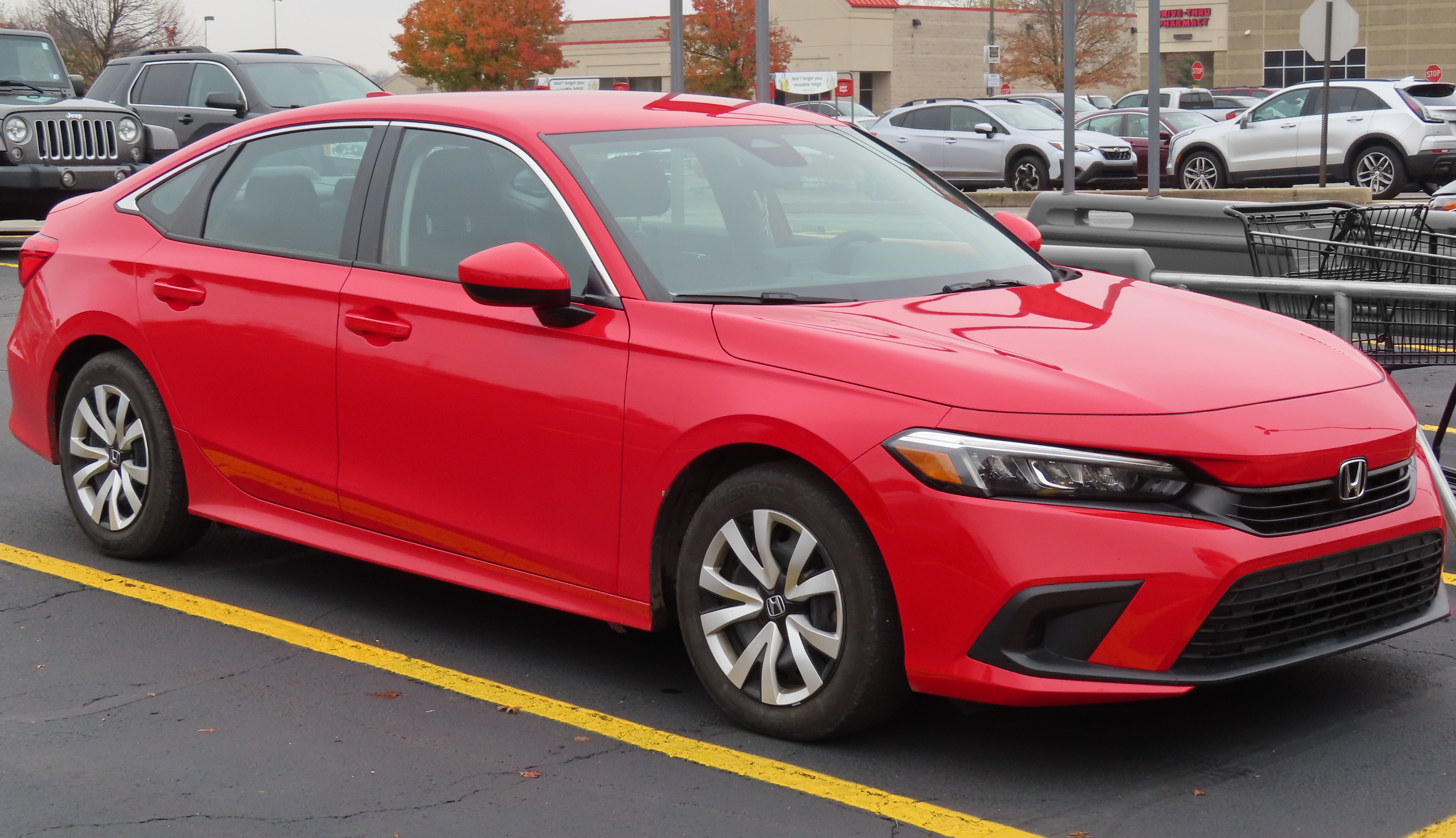
The Honda Civic is a small car that's very popular because it's easy to drive and saves on gas. It's a good choice for anyone looking for a dependable vehicle that won't break the bank.
LIVE
Hey folks, welcome back to another edition of My Car Guru.
On this particular episode, we are going to focus on one topic and one topic only.
It's very important.
And the title of this episode is The Used Car That You Should Never Buy.
You actually may be driving one right now that you shouldn't have bought.
Do you regret it?
Has it been a problem or has it just been perfect?
There are reasons why, well, I guess some of that could have to do with luck.
But a lot of it's not about luck.
I heard one time that luck is an acronym for laboring under correct knowledge.
What's that mean, Lenny?
Well, to me, it means that if you are knowledgeable about a particular thing,
then your chances of making a good decision go up dramatically.
So that's one of the things I'm going to try to do in today's episode because most
of you buy used cars for different reasons.
Sometimes it's because, well, you can't afford a new car.
Sometimes you see no value in buying a new car.
Used cars have gotten really expensive, though.
You look at a one or two year old used car, just about as much as a new one.
So why buy the used one?
Good question.
A lot of people don't realize they're so close because they don't shop around.
If you're looking at a 2024 or 2023 Honda Accord, well, before you buy it,
it's used, obviously.
But before you buy it, you better check and see what a new one's going to cost.
See what the difference is in the financing terms.
See what the difference is in insurance costs.
All the different factors that go into it.
You know, warranty.
Maybe you're buying a vehicle that's being sold as is.
No warranty.
The last episode, we talked about how important it is today to buy an extended
service contract, something that covers you for longer than the actual factory
warranty period.
And that will take care of those really expensive repairs that used to be just
engines and transmissions, rear differential, air conditioning.
But gosh, some of those things are cheap compared to the infotainment screens
and a lot of the other technology that's on cars today.
We had to replace an entire sunroof assembly on a full-size SUV the other day.
And thank goodness for the customer, it was under warranty because it was $7,000.
Now, what kind of mood would that put you in if you were not under warranty?
You exceeded the warranty by, I don't know, 10,000 miles.
And they said, well, we're going to have to put a new sunroof in.
How come?
Well, because yours is defective and it's all messed up.
And it's going to be $7,000.
Or if you'd bought an extended service contract that covers that, yes, Mr.
customer, you're going to have to pay $100 deductible.
The rest will be covered by the extended service contract.
Now, 15, 18, 20 years ago, I'll say, hello, I've been doing this.
The radio show has been more than 25 years.
I'm going to say probably 28 years by now.
Back then, I didn't recommend people buy extended service contracts because
things were not as expensive as they are now.
There wasn't as much technology on vehicles and we didn't have infotainment screens.
We just had a stereo, you know, with a CD player.
You just pull it out and put a new one in.
It was $300.
But no, it's not that simple anymore.
And so that's why people do that.
But yeah, there are certain used cars, pre-owned cars.
That's a nice way of calling, of saying used car, that you shouldn't buy.
You shouldn't even consider buying them.
And I'm going to talk about those.
The used car that you should not buy.
Now, I'm going to just talk about the cars.
I'm not going to talk about your personal financial position.
I can't do anything about that.
And if you are extremely limited, let's say you have really horrible credit
and your only choice is a buy here, pay here car lot where you can make payments
to the guy that's selling you the car.
I'm sorry you're in that situation.
More than likely the car that you're going to be buying is not first class.
It's going to have a lot of issues when you drive it off the lot.
And hopefully you know that.
You just need transportation.
Okay, we're not going to talk about those cars.
Let's just talk about, let's say you got money or you can finance a car.
What should you stay away from?
Let's talk about that little corner used car lot.
You know, if they're one of those used car dealers that have been there for 15, 20 years,
they've probably done a pretty good job.
You know, it's not an easy business.
But you have to think about where are they sourcing their cars from?
Those little corner car lots that have late model cars on their lot.
Those cars were not trade ins.
Those cars were bought at the auction.
Or they were bought from a dealership who didn't want to sell the car for some reason.
I'm sorry you little used car dealers.
You know it's the truth.
And sometimes, you know, they'll address any issues that the cars have.
Like if the check engine lights on, they'll fix it.
Sometimes they'll just unplug the light.
And these cars have high miles.
They have questionable miles.
The cars maybe have been under water someplace.
And that's the kind of cars they're selling.
I'm not going to buy a late model car from a little used car lot.
Because more than likely, there's an issue, and they've probably paid too much for it.
And you can buy it cheaper somewhere else.
Okay, here's another used car you should not buy.
One that you can't drive.
You know, I'm just going to tell you straight up, I think buying a car from Carvana
or any of these other online sources where they deliver it to your house.
You know, I know you young people, you think you buy everything online.
So why not a car?
Well, if you haven't driven it, you haven't smelled it.
You haven't experienced how it handles, you know, whether you have good visibility or not.
Whether there are blood stains in the seat, you know, it's just not been taken care of.
You don't know until you drive the car whether it's the right car for you.
Now, maybe you've driven one at CarMax or at some dealers lot and you shopped around and
you found one on Carvana's website and you said, well, this just like it looks good.
But you're a non-smoker and they deliver it to you and it smells like smoke.
Non-smokers can't tolerate that, especially if they're really sensitive to it.
So I'm not buying a car from them.
I want to buy a car from a dealership that is fairly local so that if I have any issues,
I can walk right in there and deal with the issues.
It's like the guy yesterday I talked about yesterday that had has an electrical problem
with a 2022 model. He bought it from us, new, but now it's used.
Now it's out of warranty and he's having issues.
And I'm a local businessman. I want to preserve my reputation.
I want him to be happy with us.
I want him to keep bringing his vehicle to us to get it serviced,
but it's in here for the fourth time to get this electrical problem taken care of.
I'm doing everything possible to make sure that this guy doesn't have to come back the fifth time.
Now when you buy a car from somebody you don't know and it's shipped across state or
you buy it from a car van, are you going to deal with somebody on a telephone tree,
some person who doesn't know you, doesn't really care about you?
Or would you rather deal with somebody that knows your name when you walk in and they recognize you?
That's a used car you don't want to buy.
You also don't want to buy a car that you haven't had inspected.
That you haven't driven, maybe even kept it overnight.
I mean, if you buy a car from an individual, you should insist on a qualified mechanic
inspecting that vehicle. And you should be willing to pay to have that done.
What's that going to cost? Probably $150 to $200.
Is it worth it? Well, if it's a $30,000 car, I mean, do you just throw money around?
$30,000 no big deal to you? I mean, that's how people treat buying cars these days.
It's like they're buying a microwave oven. It's just not, it's just frivolous.
It's just a regular purchase. It's a commodity. No, it's not.
It's something that you live in and that dictates how you live your life, your mobility,
your freedom, your safety. You want to take it seriously. A lot of people don't.
So you don't want to buy a car that hasn't been hooked up to a scanner to make sure
that it doesn't have any codes in the system, that you haven't pulled the vehicle history,
that you haven't called the dealership that sells that brand, give them the VIN number
so that they can pull the warranty history. Was this a problem car? Was it a factory buyback?
You know, what happens when the factory buys back up a car because the customer's not happy
with it, qualifies for the lemon law? Well, it goes back, it's dropped off at a dealership,
goes back to the factory, they fix it. They typically have another dealership work on it and
fix it. When they're satisfied that it's fixed, they take it to the auction and sell it as a buyback.
Dealers bid on the vehicle. They pay less for it because it was a buyback. They put it on their
life. They don't tell anybody it was a buyback. You don't know that. Would you want to know that?
I would. And so you pull the vehicle history at the dealership. You say, you know, tell me
what kind of vehicle this was. Oh, they never had it in here. It was a great car. They serviced
it all the time. No problem. This would be a pristine use car for you. Doesn't that make you
feel good? And then you're going to pull a car fax or an auto check and you're going to see if
there was any damage history. See if it's ever been wrecked. Now, if you see a vehicle and a
vehicle history and it says airbag deployment, you going to buy that car? Not me. You won't see
a car like that on Gateway Ford's lot. I'm not going to buy it. So you shouldn't buy it either.
But again, some people don't have the choice if it's cheap enough.
They don't care. They don't even know that the airbag was replaced. You know, there's a lot of
body shops and a lot of shady used car dealers that will buy a car that had airbag deployment.
They'll buy it a salvage auction. They'll claim the title where it looks like it has a good title.
And then the airbags are not replaced. So, you know, you think that you're safe driving down the
road and you're in a bad accident. There's no airbag to inflate in the steering wheel or in the
passenger side. This happens. So that's why you need to check the car fax or the auto check.
All right, I'll take my first break and be back here in just a minute.
Okay, I'm back and we are talking about the used cars or trucks or SUVs that you should never buy.
You've got the money to buy it. You've got the financing arranged to buy it.
But you shouldn't buy it because this particular vehicle has had five different owners.
Now, that's kind of an arbitrary number. But if you look at the vehicle history report,
and that vehicle began its ownership history in California and then went to Arizona,
and then it changed hands. Owner number two lived in Texas. Owner number three lived in
Oklahoma. Owner number four lived in Wisconsin. At that point, I'm saying no thank you.
I mean, it may drive good. You've seen the car. It drives good. It looks fine,
but it's had all these owners. The best case scenario is that, well, you know,
these people just didn't like that car. The worst case scenario is that it had problems.
That it was not a good car. It was always having some kind of an issue.
Also, if you buy that car and then you go to trade it in at a new car dealership,
they're going to pull the history. They're going to see all those owners and it's going
to scare them to death. And let's say the book value of the vehicle with one or two owners was
$20,000. They're going to want to hit you at 12 because they just don't feel good about it.
That's definitely a used car that you don't want to buy. Another one is I'm sorry about you people
that live north of the Mason-Dixon line, but if you live in Atlanta or Tennessee or Florida,
you don't want to buy a vehicle that was sold new and owned for a number of years in Michigan
or Wisconsin or Minnesota or Pennsylvania or New York because they use salt on the roads up there.
And more than likely, rust has already started. You may not be able to see it because I've seen a
lot of vehicles come through the auctions in Atlanta, mostly trucks. And they're from Michigan.
There's this one dealer that sells a lot of vehicles down there that all of his vehicles
are sourced out of Michigan. And if you look underneath all of them, they have fresh undercoating
everywhere. Why do you think they're doing that? They're covering it up. The road salt damage,
the surface rust, and some of that rust gets into the exterior panels on the vehicle, the interior
inner fenders, the inner bed panels, and that rust starts coming out from the inside out.
And you've seen them going down the road. You probably didn't notice, but you see a ram truck
that's, I don't know, five or six years old and the whole side of it's rusted out. And the lower
cab corners are rusted out, even over the fenders. That car came from up north, folks. Why do you
think people that live up north want to buy used vehicles that come from the south because they
understand what northern vehicles go through? So that's a used vehicle you don't want to buy.
Okay, let's look at another category. Let's say that you go to a new car dealership. You're looking
at a Toyota Camry. It's a 2022 model. You like it, looks good. You ask them to pull the vehicle
history. They're reluctant. They say, well, why do you want to see the history? Well, I just want to
see, you know, how many owners it's had and stuff. Well, this one's a one owner. Oh, really? Well,
cool. And then you say, well, I still want to see the vehicle history report. Well, they finally
pull it for you. And guess who the one owner was? Hertz rental car. Would you want to buy that car?
Now, the answer to that question, well, I mean, would I want to buy that car? Possibly.
I'd like to see where the car was used. If it's a 2022 model, did it come from Michigan?
Because you, you know, you still have the rust issue. Or was it in California or Texas or Florida?
You know, was it used around Disney World? rental car companies maintain their vehicles pretty well.
Now, not some of these really small independent rental car agencies, the ones that they keep
vehicles for a really long time. But if that Camry has, you know, 25 or 30,000 miles on it,
more than likely the oil changes were done based on the manufacturer's recommendation.
It's still a guess. I mean, you can't tell that from the vehicle history report.
We buy a lot of vehicles, not a lot, but we buy some from enterprise because they're more
locally based, you know, enterprise offices. We have one in our small town,
just about in every town there are vehicles, they buy vehicles from us to rent.
And so we don't feel too bad buying from enterprise because they're very diligent in
maintenance and so forth. I don't know about Hertz or Avis or dollar or budget.
I'm going to be a little bit concerned about it. I'm going to make sure that I test drive that car.
I want to see if it'll pass the, the smell test and just check the carpet out, you know,
just make sure it's not completely worn out. Doesn't have scratches all over the bumper.
See, that's a problem. A lot of people, they rent a car and they don't treat it like they
treat their own car. I mean, you'll see a lot of rental cars, they'll have really bad scratches
on the rear bumper. Why? Because a lot of people rent those cars, they go play golf,
they put their golf clubs in the back and when they're putting on their golf shoes,
they just put their foot right up there on the bumper and just scratch the heck out of it.
Or they're, when they're loading the luggage, they don't care. They just jam it right across
the bumper. And as it's traveling into the trunk, it, it scratches the bumper. If that was their own
car, they wouldn't do that. A lot of people are that way. So rental cars are abused. They have
totally, I mean, they may have had 500 different drivers and you don't know how they drove that
car. So if the salesperson tells you, yeah, it's a one owner, you want to know who that owner was
and you would like to call them. Some owners don't like to be called. They don't like to
talk to strangers. Others would be perfectly willing to talk to you. I would find out,
you know, you have the salesperson get permission first, they'll call the customer.
They say, would you mind talking to these folks? They're interested in buying your car. If it was
a good car, then they don't mind telling them that it was, it was a bad car. They'll probably
tell them that to folks, you probably ought to stay away from that car because we had all kinds of
problems with it. You know, if you had just gone ahead and bought that car and then found out
that information later, because you're having problems with it. And then finally, you somehow
discover who the original owner was, you call them say, man, you should never bought that car.
So what's the safest car to buy when it's used? I'll tell you that here in just a minute.
Okay, the safest car to buy when it's used. What is it? Well, it's different for everybody.
It's obviously the local trade in something that you can speak to the owner. You have access to
the warranty history. You can pull a vehicle history report and verify everything. The salesperson
even knows the people who traded it in. These are things that, that can give you comfort
and assurance that you're buying a good car. Does that mean that you're not going to have an issue
with it? No, it doesn't. That's why you buy an extended warranty to cover those issues.
And you, and you buy that warranty from the dealership that's selling it. The safest place
to buy a used car is at a new car dealership, unless there are a bunch of bandits and there are
several out there, hundreds of dealerships that just, you know, they break all the rules. You'll
know it. If you're paying attention, if you, if you get the my car guru guidebook and send, send me
your email address to my cell phone number 423-552-2020, then you'll know what to look for when it
comes to a shady dealership. You know, one of the first things is that they'll want to find out
real early on in the process. What kind of monthly payment you're looking for? They don't want to
answer any of your questions about price, about vehicle history. You know, you're trying to do
some serious research and they're just very vague about things. And all they want to do is to get
you in there and write you up, get you into their system, maybe let you stand in the money machine,
grab for dollar bills, and you get caught up in something that I call the momentum of the deal.
This is where your emotional mind takes over your logical mind. And you fail to follow the,
the steps that I teach into my car guru guidebook. So that's why you need it. But to make a long
story short, there are certain used vehicles that you should totally stay away from, certain types
of dealers that you should stay away from, certain steps that you have to take to verify
that it is a good car and that it has a good history. And just slow down. And some people say,
well, you know, if I go too slow, then they'll sell the car out from under me. Fine. You didn't
need to get it anyway. They made all kinds of cars. They're, they're out there. You can find
what you want. You can find a dealer that is ethical, that buys the right kind of cars, trades for
the right kind of cars, stands behind what he sells. You know, even if somebody doesn't buy an
extended service contract, something goes bad within, you know, 30 days, 60 days, whatever,
something close to the sale period, they're going to, they're going to step up, even if you bought
it as is, but don't buy them as is anymore. It's just, it's too risky, folks. Just buy an extended
service contract. What should you pay? 4% of the MSRP, 4% of the sale price, that's about what you
should pay. If you pay more than that, it's, it's, it's too much. Now, if it's a specialty vehicle,
you may have to pay 5% of MSRP. You know, if it's a Corvette, you know, if it's a,
you know, maybe a Raptor truck, something that has a really high repair rating,
these are all determined by actuarials that, that know what the breakdown frequency and the cost
to repair is on certain vehicles. So, you know, Alexis is going to cost more to repair than a,
than a Honda Civic. And so the, but I really think that those percentages will hold true.
And you can negotiate that service contract. I mean, somebody prices it to you for $4,000 say,
I'm not paying $4,000 for that. I said, I might pay $2,000 and then you just negotiate, you know,
and come to some type of agreement, but still make sure that it stays close to that 4% mark.
And I think you'll be okay. Well, thanks for listening to this edition of my car guru.
I really don't think you can learn this stuff anywhere else. It's possible,
but unlikely. If you need more information, send me a question to your, to my, not your cell
phone, but my cell phone, 423-552-2020. Send me your email address and I'll forward you a copy
of the my car guru guidebook. Well, I'll see you next time.
About this episode
Exploring the pitfalls of buying used cars, this episode highlights specific vehicles and situations to avoid. The host emphasizes the importance of knowledge when purchasing used cars, discussing factors like vehicle history, the risks of buying from small used car lots, and the dangers of online purchases without inspection. Key advice includes checking for prior ownership, inspecting for rust, and considering extended warranties. With anecdotes and practical tips, listeners gain insight into making informed decisions in the used car market.