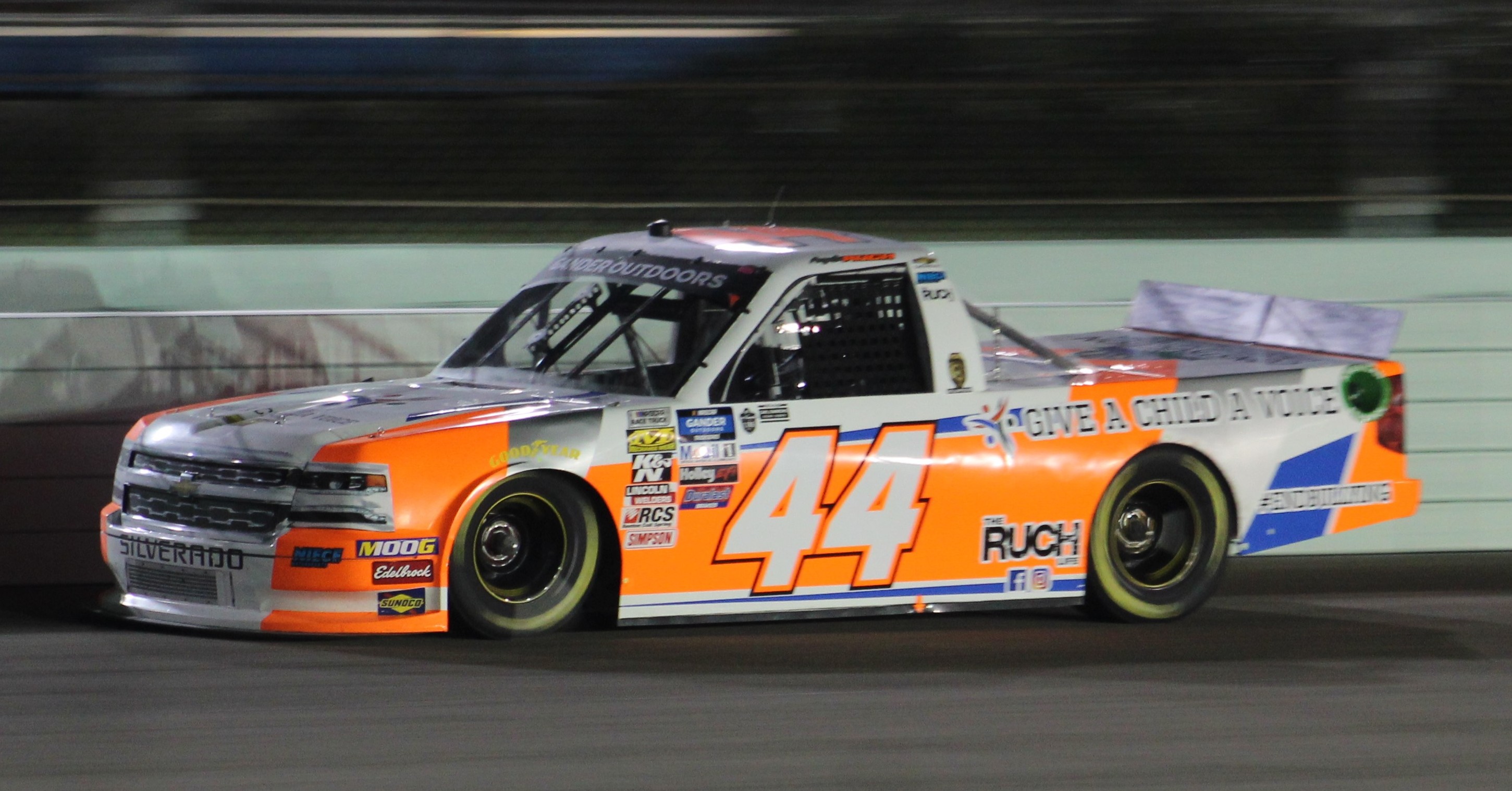
The Chevrolet Silverado is a large pickup truck made for hauling and everyday driving. People talk about it a lot because you can choose different engines and options when you order one. The ordering choices can be complicated, so it’s a good example of how truck builds work.
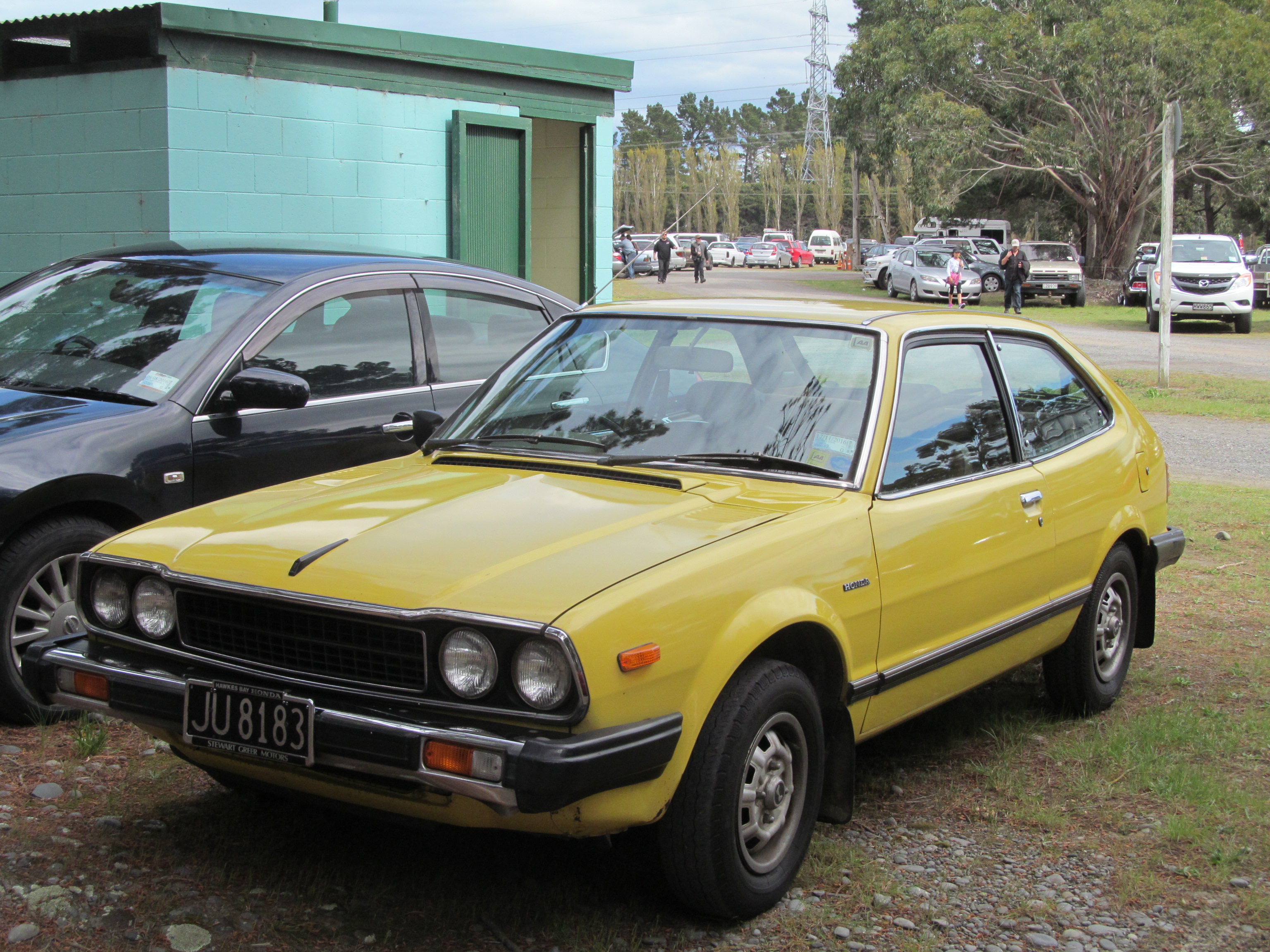
The Honda Accord is a midsize car made by Honda. It’s important because it’s been around for a long time and has helped define Honda’s car lineup. In the podcast, it’s mentioned to talk about when Honda introduced different models over the years.
The Honda Civic is a compact car made by Honda. It’s mentioned in the podcast as a model that came after the Accord and became a big part of Honda’s lineup. The discussion is mainly about how Honda’s cars evolved over time.
The Ford Expedition is a large SUV made by Ford. It’s built to carry more people and handle bigger tasks like towing. The podcast mentions it because the speakers were talking about wanting that specific SUV.
The Ford Mustang is a sports car made by Ford. In the podcast, it’s mentioned because some Mustangs can come with factory-installed features like a spoiler. The question is whether a spoiler was installed by the factory or added later.
Tape lines are the visible boundaries where masking tape was placed during painting or refinishing. Appraisers and inspectors can use them as evidence that a panel was repainted, which can affect valuation and insurance assessments.
Overspray is when paint gets sprayed onto parts you weren’t trying to paint. Painters use tape to cover areas so the wrong spots don’t get paint on them.
Concept
vehicle appraisal
A vehicle appraisal is an estimate of what your car is worth and what condition it’s in. Here, the appraiser checks for clues that parts were repainted, which can change the value.
Lifting a truck or SUV means raising it higher off the ground than it came from the factory. If it’s lifted too much, it can mess with how the wheels and suspension work together.
A leveling kit is a modification that raises the front of a truck so it sits more even with the back. People use it mostly to fix the truck’s “front sits lower” look.
The Ford F-150 is a very common pickup truck. The host is using it to explain how changing the suspension height can change both the look and the way the truck drives.
Here, “lift it” means raising the truck higher than stock. The host’s point is that going too far can make the truck handle differently, cost more at resale, and use more fuel.
“Chipping” here means adding a device that changes the car’s computer settings. It can make the car feel stronger, but it can also cause problems and may void coverage.
A turbo is a device that helps your engine breathe more air. If the car’s settings are changed, the turbo may be pushed harder, which can increase power but also increase strain.
A warranty is the promise from the maker to pay for certain repairs. If you modify the car with something like a chip, the dealer may refuse to cover related problems.
“Trade it in” means you give your current car to a dealer and use it toward buying another car. Dealers have to resell your car, so changes you made might lower what they’ll pay.
Term
on the dollar
“On the dollar” is a resale-value comparison. If someone says you’ll get “10 cents on the dollar,” they mean you only get about 10% of what you spent back.
Borla makes aftermarket exhaust parts. The host is saying that if you put a Borla exhaust on your car, it might hurt your resale value because some buyers want the original factory exhaust instead.
“Factory exhaust” means the original exhaust system that came on the vehicle when it was new. Many buyers prefer it because it matches the car’s intended sound, emissions calibration, and fitment, which can make modified cars harder to sell.
LIVE
Hey folks, Lenny Lawson, the car guru, with you again.
And I've got a few questions to answer that were asked of me in the past week or so.
Had a person wanting to order a car.
Have you ever ordered a car from the factory?
How long did they tell you it would take for it to come in?
Well, the traditional answer is 8 to 10 weeks.
But guess what?
There's a certain caveat to the question if that makes any sense at all.
Can you order a Honda?
Nope.
Can you order an Eson?
Nope.
Can you order a Hyundai?
No.
What about a Toyota?
No.
How come Lenny?
Well, because they don't allow it.
Now, there may be some of you out there saying,
Well, I ordered a Toyota.
No, you didn't.
You told the dealer that you wanted a particular color and equipment.
And it just so happens that Toyota built one like that.
And it was allocated to that dealer.
Maybe he had to make a phone call, say,
I need a red one or I need a blue one.
But nobody filled out an order blank for you with your name on it.
Doesn't work that way with import brands.
Why?
Because they've simplified everything.
They only build certain configurations and somebody at their headquarters
orders all the vehicles for the market.
So no, you cannot order, well, just about any import,
Japanese import or Korean import.
Can you order a Porsche?
Yes, you can.
Mercedes?
Yes.
BMW?
Yep.
You can order them.
You can order any domestic.
Also, whether it's a Chevrolet or a Buick,
I don't know why you'd want to, a Ford or a Cadillac.
Yes, you can actually go into their website,
build it the way you want it, send it to a dealer.
They'll contact you and you can send them a deposit
if you want to handle everything online.
And they will order the vehicle for you the way you want it.
Now, next question, are you going to get it the way you want it?
Maybe not, because there are always restrictions.
Ford calls them commodities, commodity restrictions.
General Motors calls them constraints.
So let's say that you want a Silverado and you want a particular engine
and you order it and it goes to the factory
and it just sits there until they can consolidate
all the different things it's going to take to build your vehicle,
along with hundreds of thousands of others.
But they run out of that particular engine
due to a small part inside the engine
that a supplier is having a problem making.
They've got a machine broken.
They can't get materials.
You know, it could be any option on the vehicle
that is an elective, basically.
Could be on constraint or on a commodity restriction.
And then the dealer ends up calling you and say,
hey, we just found out that you can't get luggage racks
or you can't get sunroofs right now.
If we take the sunroof off, the car will get built.
Well, I want a sunroof.
Well, I'm sorry.
But if you want a sunroof,
you're going to have to wait until the constraint comes off
and then they can build your vehicle.
You know, I think this is really one of the reasons
why Japanese manufacturers originally were so successful
is because they limited the number of options that you could get.
I'll never forget when,
that was probably in 1975, 6, 7.
I can't remember exactly when Honda came out with the Honda Accord.
And then they came out with the Civic and the rest is history.
But they only had like four colors.
They only had two optional, two basically transmissions.
You could get air or not get air.
AMFM radio or AMFM cassette, all of them had crews.
You know, depending on which model you could get a DX,
you could get an LX.
And at that time, I believe that was it.
And so they could build them by the hundreds of thousands.
As people would buy them just the way they were configured by the factory.
Everybody was happy.
Nobody ordered anything.
And then they would customize the vehicles when they came in.
They'd put all kinds of stripes on them
and they would rivet some body side moldings on them.
Maybe change the wheels.
Dealers could put mud flaps.
You know, there were ways to personalize the vehicles,
but nobody ordered one except some dude in wherever, Japan, Tokyo, Yokohama.
So that's the way it has been for Japanese automakers.
And it's one of the reasons they've been able to build the quantities
and sell the quantities that they've had.
They just kind of hit the market right,
whereas the domestic manufacturers had to complicate things.
They had to give you choices.
They thought that Americans needed choices.
The Japanese proved that they didn't.
But did the American manufacturers learn that lesson?
No.
Not until recent years.
They've simplified a lot of things,
but it's still very complicated.
And I mean, just if you were to see the order guide for an F-150,
your eyes would bug out of your head.
How in the world does a manufacturer make all of that available,
all of these different options?
Well, sometimes they don't.
Sometimes it's on constraint.
And that's what happens to your orders.
So really, how long does it take?
People come in and say,
I need to order a vehicle.
How long would it take for it to come in?
And we say, you know, if everything goes right,
eight to ten weeks.
Now, sometimes, I mean, it's weird.
A vehicle will show up in six weeks.
Other times, six months,
because of some restriction that's going on.
So I hope that answers his question.
The guru listener.
We talked about it, so I know it answers his question.
I just wanted to make sure that you had the answer
in case you were wanting to order a vehicle.
So they have, like I say, they have simplified things.
Okay, today I want to talk about something
that is important to car owners.
You already own a vehicle.
What are the worst things that you can do to it
that will drive down the value of it at trade-in time?
I'll tell you right after this break.
Okay, so if you want to buy a vehicle
and you plan on ordering it, be prepared to wait.
What percent of the people actually order vehicles?
Well, from us, of all the vehicles that we sell,
less than 5% actually place an order and wait for it to come in.
The rest, buy it out of stock.
That's because people want it and they want it now.
And so that's, we're going to oblige that.
What happens if we don't have what they want in stock?
Well, we do something called a dealer trade.
Now, a dealer trade, people say,
is that going to cost me more?
Typically, no.
You know, if you are wanting a particular vehicle,
we find it in Florida
and you insist on having it,
then there's going to be some additional transportation costs.
But if it's a close dealer like we're in Greenville, Tennessee,
Knoxville is about 75 miles away.
Johnson City is about 30 miles away.
If we want something at one of our competing dealers,
we typically will work together in trade.
Like, I'll have something he wants
and obviously he has something I want,
so I get it from my customer.
We swap at our cost
and we bring it to Greenville, we sell it to our customer.
And we kind of go by a rule that says
what goes around comes around or vice versa.
And what that means is
he's willing to give up a unit
because he knows that when he calls,
we'll be willing to give up a unit.
We have to work together.
Now, the bandits, you know, the bad dealers,
sometimes they just say,
no, we're not giving you nothing, you know,
because they consider you a competitor
and they don't want to help you.
And they don't realize that,
well, you know, what goes around comes around.
If you call us wanting something,
you're not going to get it.
I love it when a dealer calls that has behaved that way
and he asked for something that we have.
And I just love telling him in a really sweet way.
I say, remember when we wanted that expedition that you had
and you wouldn't give it to us
because you just didn't want to?
Oh, yeah, forgot about that.
Well, you're not getting this one.
Now, those relationships can be repaired.
That's a good time to do it,
is when finally he's come to you asking for something
and then you guys make peace and move on
because it's in the interest of both businesses to do that.
So that's what happens when we do a dealer trade.
The only time it's going to cost you more
is if the dealer has done something extra to it.
For example, maybe he has, well, let's see,
maybe he's put a spoiler on it
or he has added mud flaps,
something that he doesn't want to take off.
And so we end up calling our customer,
say, well, he's added mud flaps
and it's got a spoiler installed on it.
Is that okay? Maybe it was a Mustang
and it was a factory spoiler.
He said, yeah, that's okay.
So we get it for him and he comes in and buys the car
and everybody's happy.
So that's the other way to get a vehicle.
Buying one out of stock is probably the,
well, it's definitely the fastest and it's the easiest.
So anyway, I just wanted to go over that for everybody.
And let's talk about the worst things
car owners can do to their cars.
Well, one of the worst things, obviously,
would be to be involved in an accident
and have to have paint work done.
Because not only is it going to cost you
a deductible on your insurance,
but it's going to cost you at trade-in time.
Now, is that the responsibility of the insurance company
to accommodate you for that depreciation?
It is not.
I used to ask for some accommodation like that,
especially if it was a new vehicle on my lot
and it was damaged.
And I said, you know, we're not going to be able
to sell this thing for the regular retail price.
We're going to have to discount the whiz out of it
because we have to disclose that to the customer.
And sometimes in the past,
I have been able to get some market value adjustment.
But most insurance companies right there in the policy
says they ain't doing that.
They're not giving you any market value adjustment
if you have an accident.
But, you know, that's one of the worst things you can do
is have paint work done to your vehicle.
If they're going to have to paint it,
just make sure that they do a great job.
They don't have overspray on the frame
or on the glass.
You know, lots of body shops,
they don't tape off the cars complete enough.
And overspray ends up in places where it doesn't need to be.
And, you know, tape lines is another thing.
You know, where they have to paint the door
or the fender, and they use tape
to kind of protect the rest of the vehicle from overspray.
If they tape off around the door jam,
a car dealer is going to pick that up
when he's appraising your vehicle.
He's going to be filling for those tape lines.
He's going to say, uh-oh, vehicle's been painted.
Then he looks at the car facts,
and he sees the evidence there as well.
So, I guess the moral of that story,
don't wreck your car.
But if you do, just understand
it's going to cost you a little bit of money
more so than just your deductible.
It's going to cost you money at trade time.
Guarantee it.
Okay, another thing that car owners do
to their cars that they shouldn't.
Well, truck owners or SUV owners, they lift them.
They lift them up.
They raise the vehicle higher than it's supposed to be
from the factory or than the way it was built.
Now, it's not really a bad thing if they do a minor lift.
Sometimes they call those a leveling kit.
And so, if you look at a brand new F-150 from this side,
you're going to see that it's a little bit lower
in the front than it is in the back.
And a lot of people say, well, I don't like that.
I want to level it.
So, what we do is we put these spacers in the springs
that lifts up the front end, and it makes it all look level.
And it really does improve the stance of the vehicle.
Is that going to hurt the value?
No.
But if you jack it up four inches and put big monster wheels
and tires on it, when you trade it in, you'll be lucky
if you recover any of that expense.
You are completely changing the driving dynamics of the vehicle.
You are hurting the gas mileage probably by 20 to 25%.
So, to me, that's one of the worst things you can do.
But people, you know, they buy a vehicle and they want to personalize it.
That's their business.
That's none of my business.
I'm just telling you what the worst things are that you can do,
and that's one of them.
So, if you can avoid it, don't lift it.
Level it, that's okay.
Just don't lift it.
Okay, another bad thing that a lot of young people do.
Now, you don't think about this unless you're under 42.
If you're under 42, the amount of horsepower that your vehicle has is not enough.
You want more.
Not all of you.
Not you ladies, for the most part.
It's mostly the young guys around 25 or less.
Okay, we've already said don't paint it.
Don't lift it.
Now we're saying don't chip it.
Which is a programming chip.
It's a plug-in to the OBD port which changes the specifications of the engine.
It can actually make the turbo work a little bit harder.
It can change the fuel delivery, the amount of air it's going to the engine.
It can do a lot of little things.
And you can increase the horsepower, not dramatically, but enough that you can tell it.
Okay?
But this is not something that the factory likes.
If you're under warranty, don't do it.
People say, well, I'll just unplug it if I have a problem, take it into the dealership.
They can find out.
We have very smart computers that can see if a vehicle has been chipped.
And if it has, and you've got engine problems, anything related to the motor.
Matter of fact, they could actually avoid the entire warranty.
So, don't do it.
Don't paint it.
Don't lift it.
Don't chip it.
And don't over-accessorize it either.
I mean, if you do, if you put a bunch of accessories, you change a bunch of things.
Let's say you put a bed cover on it.
You put different bumpers on the front and rear, like a brush guard on the front.
You really personalize it a lot.
When you go to trade it in, dealers don't like that.
Now, if it's done well, some will like it.
But you're going to get about 10 cents, maybe 15 cents on the dollar for every dollar you invested in that.
If you change the sound system, it's even less than that.
Because people like factory music.
And if they see something crazy in there, they think some kids had it, which probably, that's probably the situation.
And not only have they changed the radio, but they've driven the whiz out of that vehicle.
That's how people think.
So, don't over-accessorize it.
You know, suspension changes, exhaust upgrades.
It may be an upgrade to you.
You want it to sound that way?
Most people don't.
Better to retain the old exhaust.
And when you get ready to trade it, take off the Borla exhaust system, put on the factory exhaust.
And now, again, that may not be the case with somebody that you're selling it to on Facebook Marketplace.
They may really like that Borla exhaust.
They think it adds value.
So, I mean, you just, you're gambling if you do that kind of thing.
And then finally, don't neglect it.
Don't neglect your car.
And that includes the exterior appearance.
Going through the car wash every week.
All you're doing is scratching your car.
Micro scratches, and then all of a sudden, especially if it's a dark color.
And then one day, the light hits it in a certain way, and you say, who scratched my car?
You did.
You didn't hand wash your vehicle in your driveway on a Saturday morning.
No, you had to go through the car wash.
And those big brushes just got done beating the dirt off of another vehicle.
There's got to be little particles of dirt in those things.
And then here comes your car, and it starts beating you with his dirt.
And it scratches your vehicle.
I don't care how much foam they use.
It's not good for your paint finish.
And I know you probably don't want to hand wash your car, so find a detail shop that will do it.
But it's good exercise.
Get out in the sun, you and your wife, wash the car, you know, get some buckets, some soft mitts,
and make sure they're clean because you can scratch your car as well.
Also, the interior, you know, vacuuming on a regular basis.
If you have leather seats, you need to clean them, and then you need to moisturize them.
And Maguire's makes great products that you can buy at just any auto parts place.
And they are very good at making that leather last long and look good.
And if you have cloth seats, then just vacuum them on a regular basis.
And, you know, some people put seat covers on them.
I mean, I've never been a fan of that because, doggone it, I want to sit on the factory seat covers.
I don't want to sit on some cheap burlap thing that somebody made to protect the seat covers.
And plus, it doesn't look as good.
Again, another personal opinion.
But keeping your car clean, it's a habit, but it will pay off at trade-in time.
You know, mechanical things, obviously.
I mean, you want to take care of issues.
If your brake light comes on, you want to get your brakes inspected.
I mean, those safety items, you don't want to ignore them.
Regular maintenance.
Any time that you do anything to a car, you should get a copy of the repair order,
fold it up neatly and put it in your glove box.
Unless you're one of those folks that like to keep detailed records,
and then you can keep it in a little notebook.
That is a very great confidence builder when you're trying to sell your car.
Okay, I'll be back in just one minute.
I just sold a 1965 Alfa Romeo to a guy that drove all the way down here
from Allentown, Pennsylvania to pick it up the day before yesterday.
And he was tickled to death.
I have never seen such extensive records on a vehicle.
The guy that owned it was an engineer.
Every time he drove the car, he wrote notes about his experience.
And he did most of the work himself.
But that probably added $15,000 to $20,000 to the value of that vehicle
because the new owner was greatly comforted by the fact that this vehicle had been well maintained
because it's an expensive and valuable vehicle.
And the same thing goes for your vehicle.
It's expensive and it's valuable to you.
And it's a big deal if you can hand somebody a maintenance record
that proves that you took care of it and you cared about the vehicle.
It can make a huge difference.
It can add 20 to 25% of the value to your car.
If it's properly maintained versus a car that comes in here that's nasty,
that has busted windshield, the tires are worn out,
it's got car wash scratches all over it,
it costs a lot of money at once for a diggler to recondition that vehicle
and get it ready to sell and that's coming right out of your pocket.
It's not coming out of his.
He deducts that from your actual cash value
so that when he has the car finally on the lot ready to sell,
he can still make a profit.
There's still margin there between what he has in the car
and what he can sell the car for.
And if the car sits there and sits there,
it's usually because it is not detailed properly.
People walk around it, they see little things,
they may not say anything but they see it.
Same thing goes for your car when you're trying to sell it in your front yard.
Well, I hope this information helps you.
Helps you make money, really.
Money saved is money made.
If you have any questions about any of this stuff,
any details, call me or text me.
423-552-2020.
And I will do my best to answer your question.
If you have a vehicle you're thinking about buying,
send me the 17-digit VIN number.
Remember, there are no I's in a VIN number, the letter I.
There are also no letter O's in a VIN number.
It's either a 1 or a 0.
I get a lot of incorrect VIN numbers.
So count the digits and make sure of those.
And also, I need the miles and I need the equipment that it has on it
so that I can tell you accurately what the vehicle is worth.
Whether you're trying to buy it or you're trying to trade it into somebody
and you want to make sure that they're not going to rip you off.
Well, thanks for listening and I'll see you next time.
About this episode
Ordering a car isn’t as simple as people think—many brands don’t allow direct factory orders, and options can be delayed by constraints. The episode then pivots to trade-in value: accidents with paint work, sloppy masking, and lifted trucks can all hurt resale, while “chipping” via the OBD port can raise warranty risk. On the flip side, good maintenance records, proper reconditioning, and knowing your VIN and mileage help you avoid getting ripped off.