CarEdge.com is the service sponsoring the show. The host says it helps people research cars, contact dealers, and negotiate so the buying process is less stressful.
Mercedes is mentioned as the least recalled brand in the episode’s research. This sets up a contrast with Ford and helps listeners think about how recall rates can vary widely between automakers.
The Lincoln Aviator is a luxury SUV made by Lincoln. They’re talking about how many recalls it’s had, and using it to show that some cars can rack up a lot of recall notices over time.
The Lincoln Corsair is a luxury SUV. It’s meant for comfortable everyday driving with more upscale features than regular SUVs. The podcast mentions it because it has had a notable number of recalls.
The Porsche Taycan is an electric car. It’s designed to be a sporty, high-performance sedan. The podcast mentions it because it’s part of a discussion about how well certain expensive models are selling.
The Ford Maverick is a small pickup truck. It’s meant to give you the usefulness of a truck, like hauling or carrying things, without being as expensive or big as many other trucks. That’s why it can show up in conversations about what people are buying.
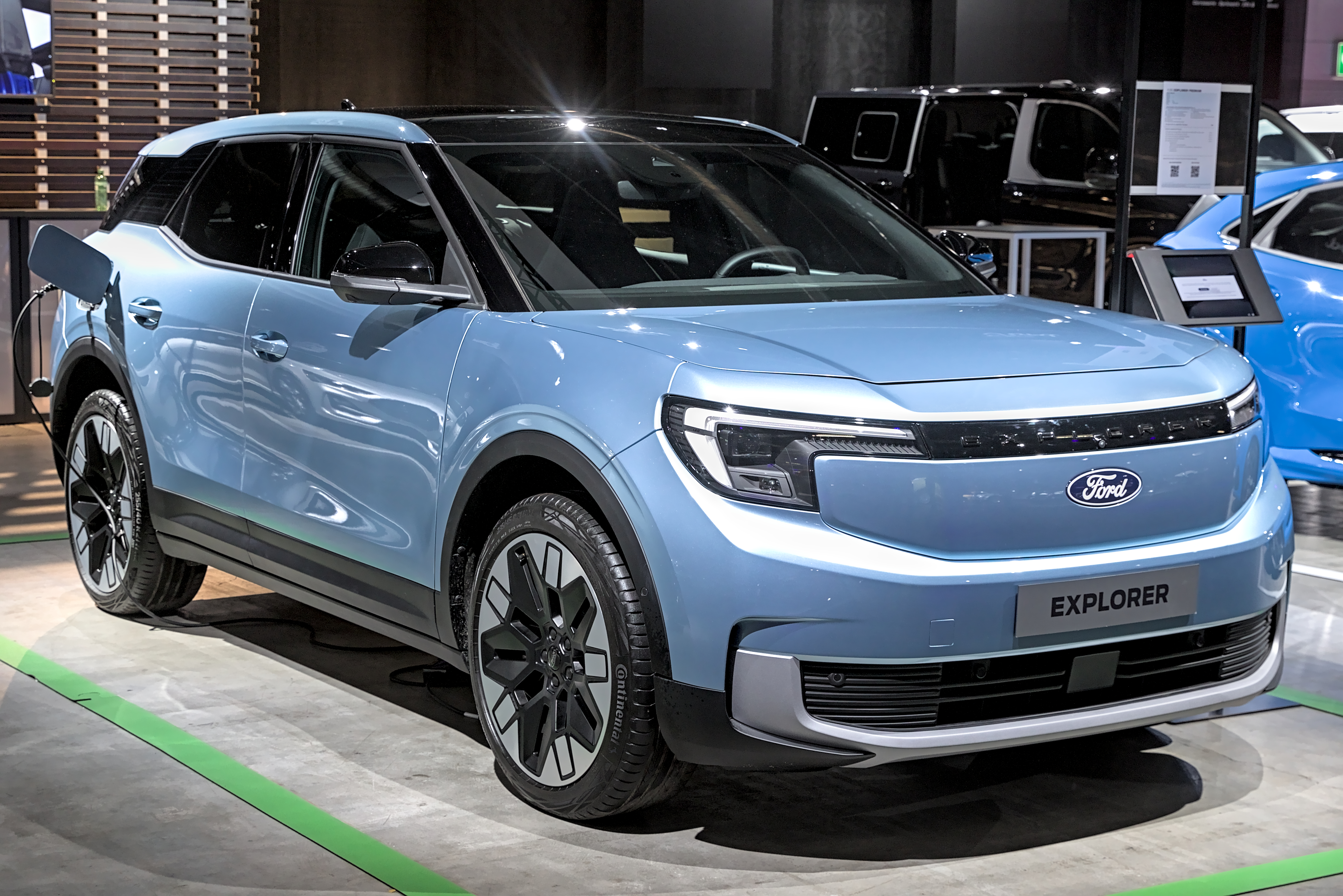
The Ford Explorer is a midsize SUV. It’s built for everyday driving and family use, with room for several people. The podcast brings it up because it’s a common, widely sold SUV that shows up in market comparisons.
The speaker is comparing brands based on how many recalls they have. But recall numbers don’t always mean one brand is “better”—they can be influenced by how many cars the brand sells and how issues are handled.
IC cars is the company the speaker credits for compiling the data. The takeaway is that the recall charts come from a specific source, and different sources can sometimes show different results.
Wolf Street is a website that publishes articles and charts about the economy and industries. In this episode, they’re used as the source for the used-car price data.
MSRP is the “new price” the manufacturer originally lists for the car. When you compare the current price to MSRP, you can tell how much the car has gone up or down in value.
A price history chart shows how the asking price changes over time. They’re using it to see if the dealer keeps adjusting the price upward again or just lets it drift down.
This is the name of the dealership they’re looking at. The point is that this dealer’s pricing choices (like add-ons and fees) can make the car cost more than it should.
This is an electric Audi A6 wagon-style car (the Sportback). The key point here is that the dealer is asking more than the suggested price, which can happen when a car is hard to find or the dealer thinks buyers will pay.
The Toyota Tacoma is a long-running midsize pickup known for strong resale value and off-road capability. The speaker uses it as a benchmark for where Kia wants to compete in the pickup market.
Genesis is Hyundai’s luxury car brand. The point being made is that the company has moved upmarket and can build more premium vehicles, not just budget cars.
Concept
Q4
Q4 is just the last three months of the year. They’re using Q4 data to talk about which brands are selling the most.
“Days supply” is a way to estimate how many cars are sitting around compared to how fast they’re selling. More days supply usually means more choice for buyers and more room for discounts.
Concept
inventory understocked vs overstocked
“Understocked” and “overstocked” describe mismatches between what a dealer has and what the market is buying. The host’s example shows how buying excess inventory from another dealer can improve cash flow and prevent cars from sitting too long.
The Ford F-150 is a very common U.S. pickup truck. Because it’s so popular, where it’s sitting in inventory can vary a lot by region—affecting how much you might be able to negotiate.
Car
Mazda Miata
The Mazda Miata is a popular two-seat sports car that’s known for being easy and fun to drive. Here, they’re talking about how where you live can change how many Miatas are for sale and how competitive the market is.
LIVE
It's noon here in Venter City, New Jersey, and our nation's capital, Washington, DC,
and this is Carage Live for Thursday, April 9th with your host, me, Ray, here sitting in my living
room in Venter and Zach hanging out in Washington, DC. Hey, I'm playing a little hurt today, handsome.
It turns out that the bronchitis I thought I had was actually pneumonia, ladies and gentlemen,
but I'm on antibiotics, and before you know it, I'll breathe like a champion again.
Thank you for taking it seriously. I was very concerned about your help, Dad, so I'm glad
that you went to the doctor. Really appreciate that, and hopefully you feel better soon. Thanks
for playing through the pain today. It would not be a normal day if it weren't for having some Car
Edge live time. All right, then, here's the deal. Today's show is brought to you by caredge.com.
For those of you that are unfamiliar, my dad and I for six years now have been providing a buying
service for those of you out there. We take care of research, dealer outreach, and even
negotiation. We learn what matters to you, contact dealers, compare real offers,
and help you get the best deal without the stress. We also have live right now, caredge.com
slash beta. This is the brand new car search from caredge.com, and so we seek out your input
and feedback. Dad, I'm thrilled to say that most people are having a really good experience over
on caredge.com slash beta, but we want your feedback. We want your input, so please continue
to share it with us. There's some new features over there, some new capabilities, and importantly,
just a lot of stuff y'all have asked for it to work. It finally works over there, which is really,
really nice. Now, dad, the story I wanted to cover first this morning is this. I see cars put out
some new research, and it was not that astounding. Ford is the most recalled brand. Mercedes is
the least recalled, but it is interesting when you dive into the data here. There are certain car
brands out there, dad. That just will never stop recalling your car, and it is obscene when you
start to break this data down, especially because I appreciate IC cars doing this. They broke it down
by over-the-air recall and non-over-the-air recall. We're going to jump into this data here in just
a second. We also then have a little bit more information on the used car market, what's happening
there. Kia, we've got some announcements from them too, so lots to cover this morning or this
afternoon, I should say. Dad, we'll start here with the recall data. Let's just lead off with it.
Ford and Lincoln. There's a reason they're the champions. All right. You know what, dad? You
know what? StreamYard added a new feature. We can create polls. All right, so let's do a poll. Let's
poll our community. The question I want to poll everyone this morning is how many more recalls
do you think you're going to get on? We'll do a Lincoln Aviator. How many recalls do you think
you're going to get on a Lincoln Aviator? If you had that vehicle, I don't know why they did this,
for 30 years, all right? That was the measurement that they used. How many recalls? Let me put it
in the chat. How many recalls will a Lincoln Aviator? Forget the recalls. How many major repairs
in 30 years? I mean, goodness gracious. Less than 10, more than 10,
uh, other. All right, ready? Yes. Oh, over 90 years. Whoops, I put them. Oh my God, 90 years.
Come on. Okay, everyone click on that. Nobody's going to be around the care 90 years. I mean,
do you feel like I'm saying nine or 10 for 30 years, which I think is a little bit crazy here?
Let's see. Let's see. Let's get some guesses. All right. We've got, we have more and more
guesses. All right, we'll see if those come in. We're trying the poll for the first time. Dad,
you ready for this? Yes. The Lincoln Aviator is going to have 92 recalls over 30 years.
Not only, so, so, so that's what? Three a year? Three times three is nine. Yeah, three a year?
And what's the big deal? Could they, could they all happen in the first year?
Think about this for a second, folks. The Lincoln Aviator has 23.4 more times as many recalls as
a normal car. Define normal. One that doesn't need a recall. The average, the average.
I'll think about that for a second. The Lincoln Corsair will have 70 recalls
over the course of its lifetime. 17.7 times more than median than average. The Porsche
Taycan, dad. Not only does it not sell because it's a really expensive electric vehicle,
well, evidently, it's also going to have 56.7 recalls over its lifetime. 14. So,
look at these brands on here. The Ford Maverick. What a bummer.
Look at the brands. Look at the top five. Who, who's in the top five? Four of the five
worst recall vehicles are manufactured by the same damn company. And that would be our good
friends at Ford. And if I'm not mistaken, a lot of the executives there just got a bonus
because their quality has improved dramatically. So, imagine, imagine if their quality hadn't
improved, okay, that over 30 years, that, that might be 270 recalls instead of 90.
But dad, maybe, maybe it's because they're all over the air recalls, right? Well, no, this is
again what I appreciate about this research. Look at this. The top 25 cars with the most
predicted safety recalls, excluding over-the-air recalls. The Lincoln Aviator still has 94 lifetime
recalls. The Corsair, 71.5. The Porsche Taycan, 56.7. Ford Maverick, 44.2. The Ford Explorer,
31.7. And the Ford Bronco, with 29. Six. So, out of the top six, four of them, excuse me,
five of them, five of them are Ford products. Yes. Yes. Now, now, now do what everybody's
curious about. What's that, dad? Who's the lowest? All right. So, we can jump over to the lowest.
These are the top 25 with the most recalls, just to bring up a few more here. You've got Rivian,
then Lincoln, Lincoln, Ford, Porsche, Ford, Rivian, Ford, Ram getting in here. Here we go.
Then you get some of the Stalantis products, et cetera, but it really is a list dominated
by Ford and Lincoln. And the average, the median is 3.7. So, that's a really good baseline
to mention, dad. On average, over the course of a 30-year lifetime of a vehicle being in
operation, you should expect 3.7 recalls. That are non-OTA, not over-the-air. That's your baseline.
That's the end. And that, I think, would fall into the category of acceptable,
more than acceptable. That's what the data sets. Yeah.
You want to see the brands that have the fewest recalls? Yes.
All right. We're going to start at the bottom this time, and we'll work our way up.
At number 25, the Lexus with the IS 350 and 500, 0.7 and 0.6. All right. So, over a 30-year lifetime
of ownership, the expectation, think about that for a second, is less than a recall.
Yeah. You've got Volkswagen, you've got BMW, you've got Lexus, you've got the Miata from
Mazda, the Subaru Crosstrek. What great validation for Subaru with the Crosstrek here.
Yes. Mercedes-Benz, Mercedes-Benz, Mercedes-Benz, Chevrolet with the Suburban, nothing's bulletproof.
Mercedes-Benz, Mercedes-Benz, look at that, that mini-mineable.
Any kind of shocking? Well, not really, because the mini normally has a stop sale to fix the
problems before the dealers here allowed to sell them so that they end up as recalls.
So, the beauty is, because I remember when I was managing a mini-store and we had the new
body style come out, and literally, as they were on the boats, getting taken off the boats at the
ports, okay? We got a stop sale that they weren't even going to ship the vehicles to the dealers,
because there were issues with them and they wanted to correct them prior to shipping them
to the dealers. So, hey, you don't have recalls if you do it like that.
There's certainly a way to gain some of these numbers. Dad, Mercedes-Benz, Mercedes-Benz, Mercedes-Benz,
Mercedes-Benz. Pretty sure Mercedes-Benz is the best way to go if you don't want to ever go back
to your dealer for a recall. You may have to go back to the dealer for other issues more frequently,
but it won't be for recalls. So, isn't that also fascinating about this? Mercedes-Benz
owns this list in terms of the least number of recalls, and obviously the brands with the most
recalls. It wasn't even close. It was Lincoln and Ford, and obviously Porsche getting in on some
of the phone with some of their EVs as well. And then we look at this all the time as a pie chart,
but I see cars put down here in terms of total units affected. And you can see here, it's actually
a bit surprising to see Toyota at the number two spot, but then you have to put into perspective
here. Toyota owns the most market share. We have vehicles sold almost a quarter of all new registrations
last quarter where there's like 24% or something like that where Toyota vehicles. So, Toyota just
sells the most number of cars. So, that's why they're up here. But yeah, that Ford, it's not even a
competition. No, not at all. It's five times as many. That's crazy. Well, I guess I'm glad I have
my Mazda. All right, so huge thanks to IC cars for pulling that data together. And again,
if you're in the market for a Lincoln or a Ford, just know what was it that if you buy the,
was it the Aviator? There's a 97, you know, you can take 97 trips or 93 trips to your local dealer
to get that thing looked at. It's over 30 years. Don't worry about it. It's not a big deal.
All right, Dad, let's turn our attention to another big story we talked about the other day in
relation to CarMax, but let's talk about it again here. There's a blog called Wolf Street that
publishes articles fairly often about the auto industry. Used vehicle wholesale prices jumped.
That's how it started in 2021. Broad inflation took off. Dad, these charts that the team over
at Wolf Street pulls together are really, really interesting. And you can see this chart shows
you the Manhattan Used Vehicle Value Index. So, this is what we look at all the time. And,
you know, if you tuned into the show the other day we talked about, we've got the highest levels
of used car prices since 2023, at the summer of 2023. Look at the slope of the line right now,
because this goes all the way back to 2014, excuse me. And you can see, y'all, there's typically
seasonality at the beginning of each year. Look at 2014. Goes up during the springtime,
comes back down during the remainder of the year, goes up during the springtime, comes back down,
goes up during the springtime. It's like very cyclical and you can see it. Then obviously,
we had the pandemic years and wow, used car prices went up like crazy. But look what's
happening again right now. The seasonality, Dad, is earlier in the year and more aggressive than
ever before. So, this is equally as aggressive as it was during the pandemic. So, it's really
interesting to see some of these other prognosticators out there talking about the impacts of used car
prices. Just again, the data in another format here is showing you how damning used car pricing
really is right now. And there's nothing to indicate that we're going to see the seasonality
that we saw in the past where we'll see a steep decline. And the reason I say that is
the prices have gone up so significantly. And it's still happening now that typically,
retail values follow six to eight weeks behind what you see on the wholesale level. Well,
eight weeks puts us into June, okay? And that's a little later in the year than when we would
normally see prices to start going down. And I'll be curious to see what happens next week
with the auction results. To have a better understanding as to what we could be looking
at June, July, moving into August. I believe because the price of new cars is still in the
stratosphere that we're going to continue to see dealers asking for more and more on their used cars
and being able to get it because the spread is broad enough from used to new that people
perceive the used cars a better value. Now it is interesting, Dad. The team over at
Wall Street plotted the data for different powertrains. So EVs, ruthless internal combustion
engine used vehicles. And this chart is just so like, it's so fascinating. This shows you price
over a year for EVs in red and internal combustion engine vehicles in blue.
And EV used EV prices just skyrocketed back in 2021, 2022 and 2023. And obviously,
internal combustion engine used car prices also increased significantly, but not that much.
Everything's come back down. But now again, it's going back up. And again, look at the slopes of
the line. So yes, internal combustion engine vehicles are increasing in price as used cars.
But look at EVs, Dad. So this is 100% a reversal of what we had seen, which was look at the rapid
depreciation of EVs here. It was unparalleled or unmatched relative to internal combustion
engine vehicles. But now the volatility of it, they're spiking, like literally spiking back
up in value. It's crazy. Well, as gas prices go up, interest will go up in the EVs. And since EVs
are more expensive as new cars, once again, people are going to turn to the used EV market
to find what they're going to consider to be value. And we know that EVs depreciated like rocks.
I mean, nothing fell faster than the value of an EV. So it should in relative to its original MSRP,
it should, EVs, used EVs, should equate to a better value. You're paying much less
of its original value than you would on a comparable ice field.
Now, Dad, you know me. I love to do live experiments. Let's do it. I'm coming over here
to the new car search I want to play around. I've currently just got EV as my filter set
under here for powertrain. And I want to look at some electric vehicles that have been on sale
for a little while here. You know, I want vehicles that have been on the market, let's say, at least
30 days. Because what I'm curious about, Dad, is if we've seen these EV prices actually go up,
if they've price adjusted them back up. And obviously, like we did the other day with CarMax,
I'm curious how these relate relative to their original MSRP. So I'll get three of them open
here that we can take a peek at. You ready? Yes, yes, I am. We've got a 2021 Tesla Model S
plaid, $50,414. Now, this obviously a plaid, Dad. This is the top of the line trim from Tesla,
55,238 miles on this vehicle. It's been on the market for 41 days. I'm curious. So yeah,
this is actually depreciated significantly. Oh, Cal, these Model S plaids have, you know,
were really expensive originally. The MSRP of over $130,000 for a plaid is crazy.
I'm curious, Dad, let's come all the way down here. The price history chart. Interesting. So I
mean, back, so that was last year. So that was before they're currently selling it. This would
be the original price they listed it at, which was $50,840. They increased it in March to $51,000,
that decreased it, that decreased it. And now it's sitting here at $50,414. So nothing too crazy on
the price history chart here. They're not dynamically increasing the price of this
vehicle because it's going up the wholesale options. No, but you would suspect they would.
It could be. Yeah. Here's another one, another, man, these are expensive youth cars, Dad. A 2020
Porsche Taycan Turbo, $75,000, $34,000, caught 35,000 miles on it. Again, has depreciated a ton,
51% from its original MSRP. These were so expensive, new.
They were. And I would have suspected that it would have depreciated more than that,
regardless of the fact that it's a low mileage vehicle.
That's fair.
Yeah, it just seems like it hasn't depreciated enough for the price of that vehicle was originally.
You can see the price history here, Dad. They've actually come down significantly.
They wanted $80,000 back in February, that's $76,000 or $77,000. Now they're down to $74,000.
This is another example. They actually haven't increased the price that they're asking for
this vehicle, but again, they've held on to it now, let's see, for 55 days. They've had it for a
little bit. Yes. It's getting aged. You would think that would be something that is either going to
be moved to the auction soon, or perhaps they would take an even larger discount to move that
vehicle before they have to ship it to the auction. All right, let's do one last one.
Again, we've got another electric vehicle, another expensive one, a 2025 Audi A6 Sportback
E-tron Premium Plus. That's a mouthful, $73,565. It's only got 3,800 miles on it, Dad.
I'm going to scroll down here. They're asking more than the original MSRP, so that is fascinating.
That's really exciting. God of our blood, when it's being sold as a used car that's certified
pre-owned for more than original MSRP and drum roll, please, here we go. It finally happened.
We have a price increase. I don't know what a significant one. Yeah.
Wow. I don't know what they're doing, what they're pricing on this thing. Good luck trying to sell this.
What dealers add that? Just out of curiosity. Audi North Scottsdale.
God bless you. The dealers that we know on average adds $995 in add-ons and has a $642
Dock fee. Yeah. No, that's a lovely store, but I'll say this as nicely as I can. They're
out of their frigging minds. I mean, they just are. I'm just having some fun here, Dad. Yeah,
you can see they add exterior protection premiere and expel window tint.
Of course they do. Well, you are in Arizona. Just about every dealership in Arizona will add
window tint. I heard just fascinating to see the data. That's all. Yes. No, I understand.
It is also interesting if I made this for a second, Dad, coming back to this dealerships page,
we actually break down their inventory based on how aged it is. This is fascinating.
33% of their inventories, 180 days or older? No. I wonder if I still have any friends at
that dealership. Maybe I should give them a call. Explain that actually for our community. I know
I'm getting a little off track here with used car prices, but we've demonstrated used EV prices are
still sky high and they've increased. To be clear, used EVs have depreciated, but they've also
started to come back up in price. But what is this chart mean? How as customers, how should
we think about a chart like this? Well, as a customer, I would look at that chart and I would
print that out and I would take that with me when I have conversations with the dealership
or share it as an attachment if I'm doing it via email. And I would simply say that
relatively speaking, you can't afford to have a third of your inventory be 180 days older.
Older. The cost of carrying that inventory is astronomical. We're talking about
Aldi's here. These are not inexpensive cars. So if 74 of the vehicles you have
are aged 180 days or more, it is time to move off them. It is time to get very,
very aggressive with pricing. And I know from experience that the longer they sit,
especially in the heat in Arizona, the more things just disintegrate on these vehicles. So
the cost to make it saleable after it's been sitting on the lot for six months or more,
that's going to be astronomical. So as a buyer, you should have some leverage there. And as the
dealer general manager, Mr. Penske should be asking you, what the hell are you going to do
to move these units? It is like really interesting now, just digging in for a second. They're
that means that and we know, we know that Aldi is struggling sales wise.
Yeah, that's a good point. That's a really good point. Yeah. So we know that, which if that's
the case, then dealership should be more aggressive. You know, why would you just want to sit there
in every one of your cars? If you have somebody that's come in and has expressed a desire to
remove one of them from your lot, it is your job as both the salesperson and as the manager,
not to screw it up. Your job is to figure out how to make that happen for that customer.
You were me for a second, dad. Let's actually juxtapose this with a different brand. Let's actually
go. Like a Toyota? Like a Toyota store. Yeah, because this is actually, I haven't played around
with this in this way really. But it is cool. Now on the car edge dealer ratings, we do have the
inventory data. So again, median days listed, we have some of the vehicles. You can obviously click
there and view them back on the car search. But this chart is super compelling to days on market
because yeah, it shows they've got a third of their inventory, 180 days or more. Like that's
bad. That's really, really bad. Let's do a quick search for a Toyota dealership here. Let's just
take a peek at that. I would be say right Toyota in there. I already clicked on this one. So let's
just look here, dad. Median days listed 18. Big differences today. This is crazy. They added 100
and new nine vehicles for sale on their website in the past week. Oh my gosh. This is so cool to
look at actually. Like I'm such a data nerd. 75% of this dealership's inventory they've had for
less than 30 days. This cannot be more of a polar opposite to what we were just looking at
with the Audi dealership. That is crazy. Look at that. How quickly they sell cars,
which means that the floor plan assistance from Toyota to help carry, to fray the cost of carrying
their inventory becomes a profit center for the dealership as opposed to say Acura nor
Scottsdale where the cost of carrying inventory now is a negative. It is a drain as opposed to what
you see at that Toyota dealership. Thanks for asking who the dealer was for that Audi that
they're trying to sell for over original MSRP, that A6 Sportback e-tron premium plus. Again,
what a freaking mouthful. And also if I may, this is just my opinion, kind of a weird looking car.
Well, it almost looks like a Mustang Mach-E from the front.
Just, I don't know. Yeah. Yeah. Now I get all kind of like a Buick.
Yeah. This thing's gross. I mean, I'm not rushing there to buy it. That's for sure.
Like look at that. Like that's where you're buying. That's crazy.
All right, Dad. The other story I want to talk about this morning, we talked about it with
Hyundai the other day, but Kia, Dad. Kia is also, and which makes sense. I mean, it's Hyundai Kia.
They're moving into the pickup truck game. Everyone's targeted in 2029, 2030, but Kia, Dad,
is in pursuit of Tacoma and Ranger sales. Seems like eventually, maybe by the end of this decade,
which is a crazy timeline for us to be talking about, but by the end of the decade, we should have
a plethora of that word, a plethora of midsize and smaller pickup trucks. At least that's what
Kia is pushing towards. You know, I saw this headline and don't ask me why, but I was taken
back to the 1960s. Of course you were. And a song popped into my head. And the lyrics to the song
goes something like this, what the world needs now is love, sweet love, not just for some,
but for everyone. And apparently, and apparently in 2026, 50 years later, or 60 years later,
what the world needs now is another pickup truck, not just for some, but for everyone.
Apparently, the world is now obsessed with pickup trucks. And so Hyundai and Kia,
along with every other manufacturer out there, is going to do everything in their power to see to
it that everybody has at least one pickup truck in their driveway, whether they have a driveway
or not. It's just to me that's absolutely insane. And I get it. I mean, there's a huge market for
pickup trucks. And everybody wants to get in on it. And I am sure that they will be successful
at it. They have done a, between Hyundai and Kia, they have done a masterful job
since coming to the United States, I guess about 40 years ago, where, you know, what they were
originally thought of was crappy Kono boxes. And they have turned it around completely to where,
you know, they even came out with what they say is a luxury brand, Genesis. And they have
become a major force in automotive in the United States and worldwide. And
there would be no reason to suspect that they won't be successful at it. Whether or not we
really need it or the world needs another one, I have no idea. But damn, they can make some pretty,
I mean, it's like Mad Max beyond Thunderdome type looking vehicles to pique our interest.
Matt, I did not expect to hear you say that today. But yes, I think you're right. You know,
they're trying their best to be in that market. And it reminds me of this. Toyota dad has, you know,
flirted with the idea of bringing the stout to market for a long time. Another pickup truck
over there, which again, Toyota, it was like, I think the experience data I looked at from Q4 was
a quarter of all new vehicle registrations in the United States with Toyotas. Could you imagine
if Toyota came out with the stout? And for context here, I think Hyundai and Kia were like
seven percent, something like that. Nissan was around seven percent of new vehicle registration.
So like this could be if Kia launches and Hyundai launches, which they're all talking about doing
by 2029 and 2030. And we've seen, I know they're trying to, the headline was like, they're competing
with the Ranger, competing with the Maverick, which has done incredibly well for Ford. I think this
could be the precursor for Toyota to finally come out with the stout here in North America and
really make a bang with that. And perhaps there will never be like cars again. It'll only be
trucks and SUVs, perhaps. I mean, that certainly feels like we're moving in that direction. I
to be honest here, but those people, those people are interested in, you know,
interested in those types of vehicles. Absolutely. I mean, you look at the numbers and you see it.
I mean, you just, you just see how big SUVs and pickup trucks are overwhelmingly popular
in this country. I mean, you know, one of my drivers, CX-30. Well, that's like a little SUV.
It's not a big one, but it's a, you know, it's a little one. I mean, nobody wants something that's
like really sedan-ish anymore. They want something that's, you know, even though my CX-30 is all-wheel
drive, do I think it would perform off-road? Absolutely not. You know, but would certain
people out there think, well, it's all-wheel drive. I can take that on the beach in Brigantine.
Yeah. And you can leave it there because when the ocean comes and washes it away,
because it'll get stuck there. It's just, it's interesting how people's tastes for vehicles
has changed over time. All right, Dad, I want to get your feedback and the community's feedback.
This is a new feature. It's not live yet. This is something that we are working on and may become
available soon. It's a map feature for the CarEdge car search, but what's interesting here, Dad,
and I'm going to have to, you know, move you and I around on the screen. Can I move you around a
bit? Okay, I'm going to zoom out a little bit. So this is a new map feature that I've been working
on and I want your feedback on, Dad. So on the car search, we're contemplating adding a map.
And the map, the way that it would work is over here, you would choose the make and model that
you're interested in, and then it would show you a map of the United States of America. Now,
the legend here for the colors that you're seeing on the screen is market day supply.
So the market day supply is right above my Dad's head. The states that are green have over a 120
days supply of inventory, meaning that they're more negotiable. So you can see here, for example,
in Arizona, it's going to be more negotiable to buy, in this case, a Ford F-150 than Mississippi,
where they have a 45 to 60 days supply, or even just more locally in Utah, where there's a 68 to
90 days supply. So I'm curious to add, and then obviously you can zoom in and we've got the vehicles
listed by days on market to try and help people identify the most negotiable vehicles in their
area. Curious your reaction to this? Curious your thoughts? And then Lumber Jeff, Lumber Jeff helped
me four years ago, and Lumber Jeff, I was looking, I was looking back at our old Slack channel,
so thank you. Spatial listings, my friend, took a while, but we're back at it. So super curious
that what are your thoughts on that? You could search for cars, see the nationwide map, it helps
you identify, whereas the highest day supply, lowest day supply, you click in and then it gives you
the vehicles that have the longest days on market, so that you could target those for negotiations.
Well, I think if, first of all, I can't think of any other source that does anything like this.
And more importantly than that is the fact that it provides more granular, important information
to customers when it comes to looking for vehicles. And the last time I checked, and I could be wrong,
but I think I might be right. Most people are looking for the best deal possible. Now that's
not to say that, you know, if they find a dealership that they really like, that they wouldn't pay a
few dollars more to continue to do business with the dealership that they like. But if you are more
price sensitive than others, the fact that you would be able to pinpoint within states, within
cities, the dealers that have a vehicle that you would be interested in that has been sitting
around the longest, that would give you the greatest amount of leverage to pay the least
amount for the vehicle, well, that is incredibly valuable to a potential customer. And it also
states to a potential customer, when you're looking for something that's hot, how difficult
it's going to be, based on these market conditions, to be able to utilize that to
save money when there's nothing out there. So yeah, this was for a Ford F-150. And again, this is like
not accessible right now, folks. This is me just playing around with it. It is live data,
though. So let's do it with a Toyota, and I don't know, you want to do a Toyota, let's do a
Highlander. Highlander, Grand Highlander? Yeah, Grand Highlander.
Nice, let me click on map here. So the whole country's red, because there's less than a 45
days supply, but there are three states here, Utah, Missouri, and New Hampshire, where the
day's supply is 45 to 60. It gives you valuable information. Yeah, and this would work for used
cars too. So anyway, this is just an idea I had yesterday. I was in Chicago, I was on the airplane,
so I was building it on the airplane, and I was just having a lot of fun with it. And then I wanted
to get your reaction, which why not do it live on the show? And then obviously I wanted to get the
community's reaction. So please share thoughts in the chat. Please also share thoughts in the
comments. It's super helpful for me. And how you would like to see us involve this to be more
useful for you to find those vehicles that you can negotiate the most on. Honestly, even for
dealers, this is helpful for dealers, because if they've got an oversupply inventory, they're
definitely wanting people to buy it. Well, it could be helpful for dealers in the case of finding a
dealer that has too many of something that they might be looking to sell down on, and as a dealer,
you can buy it, or the opposite. So yeah, this is valuable information. I want to say the early
80s during an ass crisis, and there were limits placed on how many Japanese vehicles could be
brought into the country. And we bought some Nissan's at the Nissan dealership I was at
from a store in upstate New York. It was a ton more Nissan. You get more with a ton more. No,
that wasn't really their ad, but they were overstocked, okay, and we were understocked.
And I believe it was winter, and I believe they were in Buffalo, New York. Yeah, it gets a little
snowy there, and so we were able to help them out and buy some of their excess inventory,
which helped their cash flow, and it helped us because we then had some inventory that
otherwise we would not have. So this could be extremely valuable for dealers as well as customers.
Let's do it for one more now. I'm just purely curious. Maybe a vehicle that's got more variability
nationwide. So we did an F-150. We did a Grand Highlander. I'm thinking the Mazda Miata is what
just came into my head. Okay, do a Mazda Miata. Let's get one. Okay, I don't know if I'm going to
get a Mazda Miata, but all right, we got Mazda. Let me get rid of that. Get rid of Toyota. Yeah,
there you go. Yeah, see, here we go. This is exactly what I was hoping to see. Just more
variability. Look at that. Yes. Look at that for a second. So if you're a Mazda Miata shopper
and you're in the Southeast, this is showing you that in the Southeast, there's a more competitive
market than in the West right now. There's an oversupply of inventory in the West. That's what
the green is showing you. And there's an undersupply of inventory or an over-demand for the limited
inventory in the Southeast. I'm so glad we did the Miata that. This is to me like...
Well, yeah, it makes perfect sense because the Miata is a sporty car. And yeah, the Southeast
is where it's warmer. So yeah, and the further north you get, the more niche of a product that
becomes until the weather really changes and warms up. Again, please share feedback in the comments.
Such a fun time to be a tinkerer. That's how I'm now thinking. I was literally on the
plane for two hours. I was just built back. I'm like, I want to look at this. I want to see what
it looks like. So please, please, please share feedback, share thoughts in the comments. It goes
such a long way. Or email me directly, Zach at caredge.com. And dad, after today's conversation,
if you have ideas, please share them with me as well. I want this to be a research tool. And
obviously like drill in and find the one to go negotiate. I'm really, really, really excited
about it. Okay, cool. Dad, let's call it a show. Okay. Thank you so much for getting that chest
x-ray. I was so nervous about why you were coughing. So really excited for you to feel
better soon. And yeah, I did see the comments at the beginning of the show. People said,
nice haircut. It's growing on me. I kind of like it.
Yeah, it's you got a mop on the top and it's a cleaner on the sides. Yes, yes.
All right. I like it. My dad does not like it. I like it. I said to you, nice haircut.
I love that. Email me, please. Let's get back in touch. I love to learn from our community
members. So please, if you can, if you have a minute, email me. Dad,
rest up this afternoon. All right, we got another show to do tomorrow. Okay.
I have another media availability at 1.30. I have to take care of. And I had one at 11 o'clock
that I had to take care of. They're busy. And then I'm going to the trainer's room for massage,
I think. Oh, did the Suns win last night? Or did they lose? They did. They did. Yes. Yes. Yes.
I watched the whole DMK. I fell asleep. All right, y'all. We're back tomorrow. I love you, Dad.
I love you too, handsome. See everybody back here tomorrow at noon Eastern.
About this episode
Ray and Zach kick off with a data-driven rant on recalls, using ICARs research to argue that Ford and Lincoln keep racking up non-OTA safety recalls far more than most brands—while Mercedes shows up at the low end. They then pivot to used-car pricing, citing Wolf Street’s wholesale index: seasonality is arriving earlier and prices aren’t dropping like they used to. EVs are highlighted as reversing their prior depreciation spikes. Ray also demos CarEdge’s new map concept for spotting the most negotiable inventory by “days supply,” and ends with Kia’s push into midsize pickups.
Today on CarEdge Live, Ray and Zach discuss the latest news on recalls. Tune in to learn more! Hosted by Simplecast, an AdsWizz company. See https://pcm.adswizz.com
for information about our collection and use of personal data for
advertising.