A state trooper is a law-enforcement officer who works for a state police agency. In a simulated traffic stop, the trooper typically explains what they look for and how they assess risk during the encounter.
Probable cause is a legal reason police can use to take action. It means they have enough information to reasonably believe something illegal is happening.
Battery fumes are gases that can come out of a battery if it’s damaged or charging incorrectly. They can be harmful, so you should avoid breathing them and follow safe procedures.
Jumper cables are heavy wires you use to “borrow” power from another car when your battery is dead. You connect them in the right order so the dead car can start.
Road rage is when someone drives aggressively because they’re angry at other drivers. It can lead to dangerous driving and even fights, so it’s important to stay calm.
Tire pressure is how much air is in your tires. If it’s too low, the car handles worse, stops less effectively, wears the tires faster, and can use more fuel.
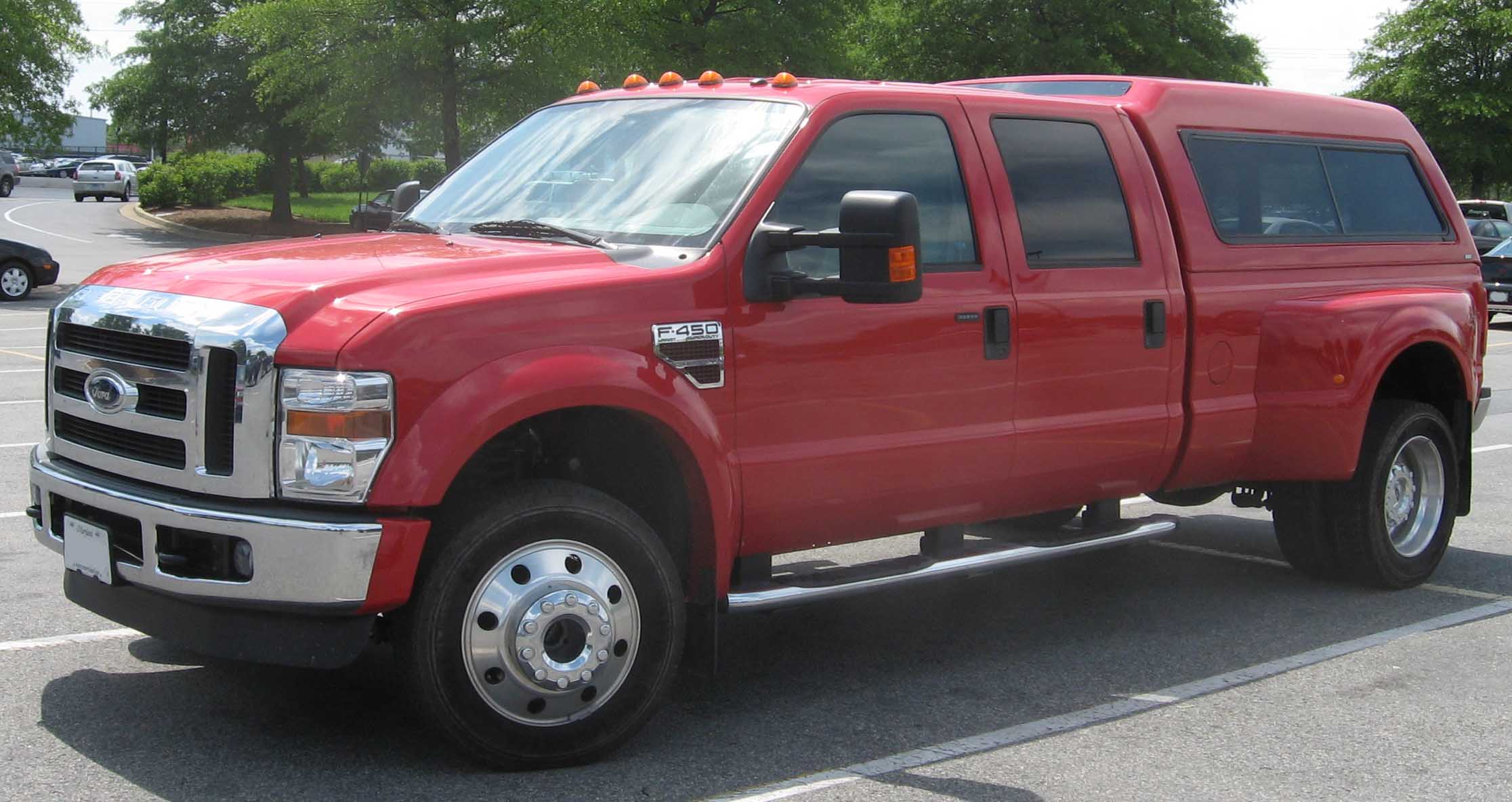
The Ford F-450 is a heavy-duty truck meant for tough jobs like towing and carrying heavy loads. Because it’s built to handle more weight, it uses larger tires and often needs higher tire pressure than regular cars. The podcast mentions it to explain how tire pressure can be different on trucks like this.
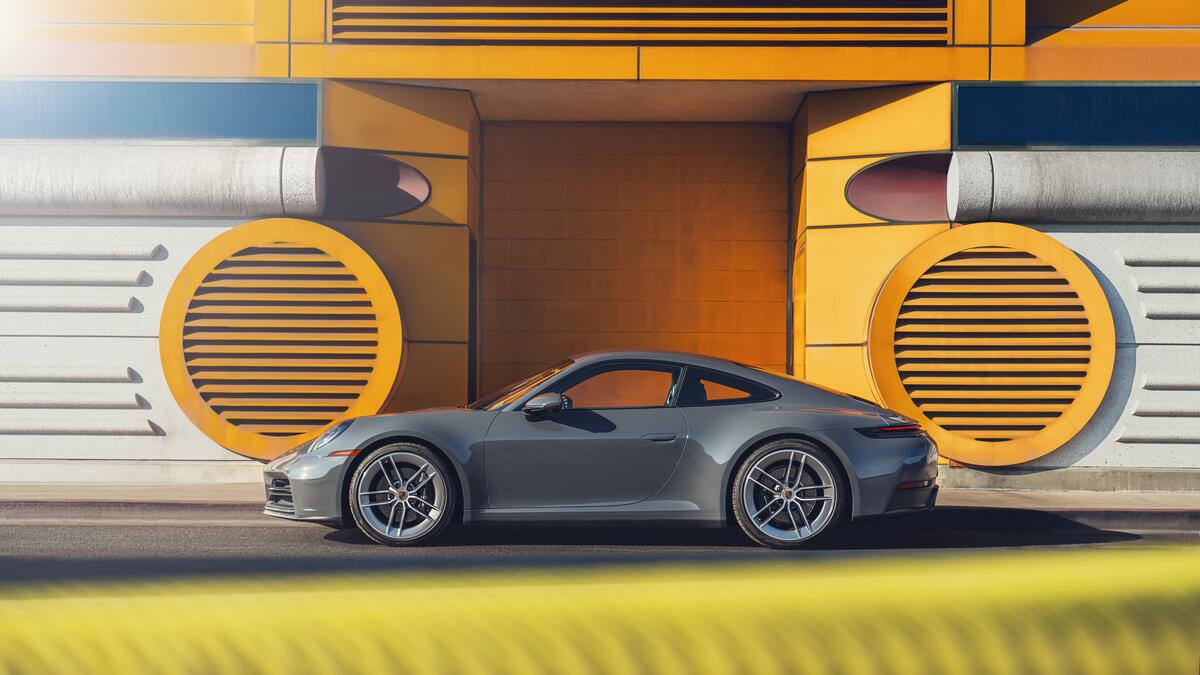
A Porsche 911 is a famous sports car from Porsche. Here it’s mentioned because the speaker sets different tire pressures for the front and back to help the car grip and handle correctly.
The 1994 Ford Bronco is a big, older Ford SUV. The host is talking about a specific one they saw—what it looked like and what features it had—so you can judge an older vehicle more accurately.
Manual windows are the kind you open and close by turning a crank by hand. The host is pointing out that this Bronco doesn’t have power convenience features.
“Synchronized” means the transmission helps the gears match speeds before they lock together. That makes shifting smoother and easier. Without synchronization, the gears can clash and grind if you don’t time it yourself.
The 1934 Ford Model A is an old manual car whose gears don’t have built-in synchronizers. Without those helpers, you have to time your clutch and gear changes carefully so the gears match speed. If you don’t, the gears grind and the shift feels rough.
Double-clutching is a way to shift smoothly in an older manual car. You briefly disengage the clutch, shift out of gear, let the drivetrain speed settle, then press the clutch again and put it into the next gear. It helps prevent the gears from grinding.
Matching transmission speed means getting the drivetrain speeds to line up before you put the car into the next gear. Older manuals don’t do that automatically, so you have to time the clutch and engine revs yourself. If you don’t, the gears won’t mesh cleanly.
Grinding is what you hear/feel when the gears don’t match speed before they try to lock together. In older manual cars, that usually means the shift timing wasn’t right. It’s rough and can be a sign you need better clutch and timing technique.
When you shift gears in a manual car, the transmission has to match speeds so the gears can slide in smoothly. If it doesn’t match, you get grinding or a loud “clunk.”
Synchronizers are the little parts inside a manual gearbox that help the gears spin at the right speed before they lock together. That’s why shifting feels smoother and doesn’t grind.
The rear differential is what lets the two rear wheels spin at different speeds. That matters when you’re turning, because one wheel has to travel farther than the other.
Power steering fluid is the hydraulic fluid (in many older systems) that helps the steering feel light and responsive. If it’s low, you may get harder steering or noise, and the system can wear out.
The VIN number is like your car’s unique ID. Mechanics and dealerships use it to make sure they’re looking up the right parts and the right repair information for your exact vehicle.
A remanufactured transmission is a transmission that was taken apart and rebuilt with worn parts replaced. It’s usually less expensive than buying a brand-new transmission, but it’s rebuilt to work like it should.
This is a warranty that can pay for big drivetrain repairs for as long as the warranty says “lifetime.” It usually covers the engine and transmission, so if something major breaks, you may not have to pay the full repair bill.
A short block is part of an engine—mainly the lower parts. It usually doesn’t include everything on top of the engine, so it can be cheaper than a full engine replacement.
The parts department is the place at a dealership that orders the replacement parts needed for repairs. If an engine is damaged, they’d price out what has to be replaced.
A “long block” is a more complete engine assembly than a short block, typically including the cylinder head(s) plus the lower block. It’s a common way shops describe engine replacement options that sit between a partial rebuild and a fully complete engine package.
LIVE
Hey folks, Lenny Lawson, the car guru, I just got a text from my grandson just seconds before
I got on here.
Hey pop-up, send me a copy of my insurance card.
Mine has expired.
So do you carry that in your vehicle?
What are you supposed to have in your vehicle when you get pulled over by the coppers?
You're supposed to have proof of insurance, one of the things.
The other thing is the registration, updated registration.
Are your tags expired?
Have you checked that pile of mail over there on your desk?
Does that have your renewal notice on it?
So these are things that we have to do to be prepared.
Also do you carry your driver's license?
That's important too.
I've been watching some of these videos on YouTube of these people getting pulled over
and refusing to identify themselves.
That never ends well, does it?
So why do they continue to do it?
Oh, to prove a point or to get a lot of likes on TikTok, who knows.
But yeah, you got to have that proof of insurance.
So good job, Canon.
I told him, will do.
I'm proud you are aware of that.
And then I just thought about it.
Hope you didn't get pulled over.
He said, I didn't.
I just saw that it was expired.
So I will give him kudos for that.
So our team driver experience is coming up this Thursday.
It's from 6 to 8 p.m.
And I'm feeding the teenagers, and we're going to talk about everything from how to handle
a traffic stop with a police person, because we're going to have a state trooper, a Tennessee
state trooper here, and we're going to do a simulated traffic stop.
And the person that's being stopped is going to have to behave in the correct way.
And the state trooper is going to talk about the things that he is looking for in order
to, number one, protect his life.
Number two, protect the life of the people in the car.
And then just to find out what's going on, why were you speeding?
Why were you swerving?
Why did you run that red light?
Why did you run that stop sign?
Why were these other drivers calling 911 about your tag and your reckless behavior?
All of these different things.
And you know, they're going to be looking in the back of the seat if they have probable
cause and you don't cooperate.
They can pull you out of that car, put handcuffs on you, and take you to jail where you deserve
to be, regardless of how you feel about it.
So we'll be doing that.
We're also going to show them how to handle a lot of different emergency situations.
Like do you know how to properly hook up a set of jumper cables so that you don't create
sparks and maybe ignite battery fumes that have escaped out of a battery?
Do you know how to do that?
Most people don't.
Most people don't even have jumper cables in their vehicle.
But we're going to show them what kind to buy and how to properly hook up those cables.
We're going to show them how to check all the fluids in their vehicle.
We're going to talk about how to avoid dangerous situations on the road, such as road rage.
We're going to remind them about a lot of different things, no doubt.
And then we're going to show them how a car works.
We're going to get up underneath some vehicles in the service department.
I've got them up on a lift pulling wheels to show them the braking system and the exhaust
system and the steering system.
All the different things that make it possible for a vehicle to travel down the road safely
or unsafely, as the case may be, things to look for, how to gauge tires, how to properly
inflate tires.
Can you believe that there are people that do not know how to put air in a tire or how
much to put in a tire?
I'm actually going to give them digital tire gauges.
I got them off of Amazon.
They're $7.99 a piece and they're really cool.
So I think they'll like those.
And now they'll know how to use them.
You know, I told the kids, I said, well, and there were a lot of parents there too.
And by the way, in this particular event that we're having on this Thursday night from six
to eight o'clock, I already said that, July the 23rd at Gateway Ford in Greenville, Tennessee,
1055 West Andrew Johnson Highway in Greenville, Tennessee, as a matter of fact.
Or you can just Google us.
Okay, so back to another thing that I told them was everybody should have a little air
compressor in their house or in their garage so they can check their own air pressure because
tire pressure affects a lot of different things.
The handling of the vehicle, how it steers, how it takes curves, how quickly it can stop
in an emergency situation, how quickly the tires will wear out, and what type of fuel
economy that you're going to get under inflated tires.
Use more fuel.
Well, the tires don't, but the engine does because it's having to overcome friction.
So is it important for proper tire inflation?
Yes.
Do you know how to check it?
Most people don't.
Do you know how to inflate it?
Not if you don't have a compressor.
Well, can you use a bicycle pump on it on a vehicle?
Yeah.
If you want to pump it for about three hours, be a really good workout.
Now, you need a little air compressor.
They sell them at Lowe's or Home Depot, lots of other places.
You can order them online, but you need one that will pump out enough pressure to fill
a tire in a reasonable amount of time.
Probably the highest pressure that we put in any tire is about 85 pounds.
That would be in an F450.
That's a lot of pressure.
I guess the average is probably 35 pounds.
Some cars require a certain amount of pressure in the front tires and a different amount of
pressure in the rear.
My Porsche 911 has 35 pounds in the front, 47 in the back.
So it's important to know these things and keep them where they need to be.
Okay, I'll be back in just one minute.
I had an interesting thing happen yesterday.
Normally, I have to go out and find older vehicles.
People call me sometimes and I go to their house and see the car and sometimes I buy
it.
Sometimes I help them sell it.
Sometimes I walk away and try to leave them with a little bit of advice.
Had two instances, really.
One, a vehicle showed up on my lot, 1994 Ford Bronco.
That is the OJ Simpson Bronco, full size.
And it was a real pretty kind of a marine blue color.
I like the color.
Had a white top, new wheels, new tires, 57,000 actual miles.
It had the XL package, which is not much, a cloth seat.
I don't even think it has cruise control.
It has manual windows.
In other words, you don't push a button.
You crank it like the old days.
And it was very attractive, very clean.
Like I said, 57,000 actual miles.
That's good.
What intrigued me the most?
Manual transmission.
Now, some of you are out there saying, well, that's awful.
I want to have to shift gears.
Well, it's not for you.
This is for resale.
And when I put that on bringitrailer.com,
it'll bring the rain, as they say,
because it has a manual transmission.
People that love manuals are a little bit off.
That would include me.
So I'm not being accusatory here.
We like to shift gears for some reason or other.
I think it is the, I don't know, it's
a different level of engagement.
And you have to participate so much more
when you have to shift gears.
You know, everything from pulling out from a red light
or navigating some curves and straightaways.
And you just have to be on top of the gear changing
because the car is not going to do it itself.
We like that.
I mean, just about all of the vintage cars
that I have are manuals.
Well, let me rephrase that.
I like it when the gears are fully synchronized.
I do not really enjoy driving my 1934 model A.
It's a real pain.
None of the gears are synchronized.
What's that mean?
Well, that, so when you push in the clutch to,
like, increase your speed to shift gears
to go from first to second, it's nice and smooth, just fine.
You still have to double clutch it.
That means you push the clutch in, take it out of gear,
let it out.
Push the clutch back in, put it into gear, let it out.
It shifts fine when you double clutch it,
when you go from first to second to third.
But when you want to go from third to second,
you've got to match the transmission speed
to the engine speed perfectly.
Or it's going to go like that.
Not pleasant.
What's happening is gears are grinding.
And so that's not fun.
Now, my 1934 model 40 faton,
you still have to double clutch it.
But it's synchronized in second.
So when you're going from third to second, it's synchronized.
When you go from second to first, not synchronized.
So you have to remember these things
or you shock everybody with that noise.
So synchronization is great.
Most modern, all modern vehicles are fully synchronized.
Like the 78 280Z that I have fully synchronized.
They figured out how to do that
with devices in the transmission called what?
Synchronizers.
Don't ask me how they work.
That's something I've just never really fully comprehended.
Also how a rear differential manages to work.
I saw an explanation on it on YouTube one time
and how it was invented.
And I say, okay, that makes sense.
Five minutes later, I'm still confused.
And a lot of people are like that
when it comes to their cars.
Like when the kids come to this team driver experience,
we'll show them how to do a whole lot of different things.
But if they don't go out and do it
in the not too distant future,
like actually jumpstart a vehicle
or check their own oil, transmission fluid,
power steering fluid,
if they don't go out and find these things on their cars
that aren't exactly like the points on our vehicles
in the showroom, then they'll forget it.
You know, I always heard the same practice makes perfect.
Well, it really doesn't.
Perfect practice makes perfect.
If you don't practice the right way to do something,
then when you really have to do it,
then you're gonna fail
because you didn't practice right.
I guess I should say effective practice makes perfect.
That would be probably a good way to say it.
Oh, okay, so I sent an email to my insurance agent
and I said, let's see here.
I said, please send me a copy of Canon's current insurance
card for the 2005 Chevy Silverado.
Thank you.
And then I signed it.
Or I wrote Lindy Lawson and she said,
she just responded, she said, here you go.
And let's see if I scroll all the way down here.
I will see if there it is.
Okay, so I will send that to him
right after I finish this.
And that wasn't hard.
You know, if you have a relationship
with your insurance company,
you have their cell phone numbers.
And you know, you just have all these people, right?
That you use in your life.
You don't use them a lot.
I mean, I think a lot of people, they just,
you know, they have a guy to repair their washing machine.
And they just looked them up and they Googled them.
They come in, fix the washing machine.
And they don't get their business card.
They don't do anything.
There's no relationship made there.
And then when they have a problem with the washing machine
or the dryer next time, they go Google it again
and find a totally different person
and never really formed those connections.
I think that's so important to have those connections.
I mean, I have this lady's email address.
I've got her cell phone number.
And I mean, yeah, I give them a lot of business
through the dealership.
They ensure everything that I have.
And so, you know, probably when I send a message,
they jump, they take care of it.
But I think anybody can develop those kind of relationships.
It is a two-way street.
Like I've got this relationship with the banker.
And well, I had it.
We were really close.
He worked for my favorite bank up in Johnson City.
And we've probably been working together for,
I don't know, 12 years when I call him boom.
He either answers or he sends me a text message.
I'm in a meeting, I'll call you in a minute.
You know, it's just that type of relationship.
Then he decides to leave and goes to work
for Eastman Credit Union.
And so, am I gonna start doing business
with Eastman Credit Union?
Probably not because I still have a lot
of good relationships at this bank.
And as long as they take care of me,
and, you know, buy me meat every year from Hamilton's meat.
That's a butcher in Johnson City.
And I'll keep using them because I'm a proud carnivore.
And they know it because they know me.
So yeah, relationships are important.
I am your connection to the car business.
You know, people tell me I am nuts
for putting my cell phone out there.
It's probably why I get so many spam calls.
But I just send them to spam and then, you know,
then they use another number that I don't recognize.
But everybody needs somebody affiliated
with a car dealership that they can call
and count on to be able to give them answers and advice
and to take care of them when they come in for service.
Maybe give them a loan or car that the dealership
doesn't normally do, but because you have a good relationship
with this person, yeah, I'll get you a car to drive.
I've got a lady in Johnson City.
She sent me a text last night.
She said, mom's transmission's gone out.
I said, hmm, so how do you know that?
Well, we took it to Johnson City Ford.
And we took it for a regular oil change
and they did the oil change
and then they found some metal in the transmission
when they were servicing it.
I said, well, what did you do?
Well, they gave me an estimate.
It's horrible, Lenny.
I'm not gonna say what it is, but it's really high.
What am I gonna do?
And I said, well, is it drivable?
She said, yes.
I said, can you get it to Greenville?
She said, absolutely.
So I said, well, before we do that,
let me just see what it would cost if we did it.
If we had to replace the transmission.
So I called my service manager,
told him what the situation was, gave him the VIN number.
He looked it up.
Yeah, we sold it in 2015.
And he let me know real quickly.
He said, well, this is what we can do it for.
Well, it was a significant number less
than what she'd been quoted.
And I think the reason is because they had quoted her
a brand new out of the box transmission,
whereas Ford also offers a remanufactured transmission,
which is a completely overhauled rebuilt unit,
which would be fine even for me
on a vehicle that has 75,000 miles on it.
Pretty low mileage though for 2015, wouldn't you agree?
And so I just started thinking about it.
I woke up this morning and I said, wait a minute,
she bought that from us in 2015.
Everything that we sold since 2012
has a lifetime powertrain warranty.
Why didn't I think of this before?
And so I called my service manager and I said,
verify her warranty coverage, please.
Make sure she has lifetime powertrain.
He called.
They said, yes.
So he let me know.
I called her.
I said, you want the good news or the good news?
She said, I'd like to have the good news
because I need it today.
She was not having a good day.
And I said, well, you remember those numbers I gave you
on the transmission?
Yeah.
I said, well, I'm gonna have to give you another number.
Uh-oh.
Did it go up?
I said, no.
Went way down.
The number now is $100.
What?
Yes.
You have a lifetime warranty
because you bought the vehicle for me.
Oh, she started sobbing.
Well, she gathered herself.
Thank you so much.
I said, well, you know, this is what we do.
And I'm just glad I thought about
the lifetime powertrain protection.
I'm sorry that maybe I'm not as sharp as I used to be
and I didn't think about that right off.
But yes, so she's gonna get it covered
with a $100 deductible.
That's pretty cool, isn't it?
You know, you need an extended warranty
when you need it.
You know, that's when people are saying,
man, I am so glad I bought that
because there's no way that I could have afforded
to pay for this out of my budget.
I would have had to go to the, you know, a loan shark
to borrow this much money unsecured.
And that's a situation a lot of people are in.
So she didn't have to buy it though
because at Gateway Ford and Gateway Nissan,
we give a lifetime powertrain warranty.
To everybody that buys a new car.
Pretty big advantage.
Okay, I'll be back in just one minute.
Okay, I am back.
I love delivering good news.
But you know, I'm pretty good at delivering bad news too.
And because I deliver it with compassion,
people say, what does that matter?
Well, it does matter because I'm always looking for a way
to mitigate the bad news.
For example, if somebody comes in and says,
well, blew my engine up.
I'm not just going to go back to the parts department,
add up all the parts, short block, long block, you know,
all the different things that are required
to replace the engine and, you know, do it the easy way.
Price of a brand new engine.
Why would I do that on somebody in a car
that has 75,000 or 150,000 miles?
It doesn't make sense to do that, folks.
There are alternatives.
And the alternatives come with warranties.
And just because you get a quote
from an independent shop or a dealer,
and they tell you what it's going to cost,
you don't have to roll over and play dead at that moment.
You get a second opinion.
And that's why I put my cell phone out there.
423-552-2020.
Text me, please, don't call.
And then I'll call you back.
Or you can send me an email, Lenny, L-E-N-N-I-E,
Lawson, L-A-W-S-O-N, 2020, at gmail.com.
Tell me what your situation is.
You know, what they've told you.
Send me copies of the estimates.
I'll be your guy.
I'll help you figure out what to do.
What will it cost you?
Nothing.
It's free.
It's what I do.
And so that's why I have listeners all over the world,
I guess, because they like common sense advice.
And I don't get a lot of phone calls from overseas.
I don't really know why that is.
Most of my, well, 99.9% of my phone calls
and texts come from the continental United States.
I've had three from Alaska.
And because the problems are universal.
You know, there's crooks everywhere.
I would just review in the FTC guidelines,
the new Federal Trade Commission guidelines for advertising.
And man, I wish that when you saw this
in dealer advertising that you would call and report them.
All you have to do is call the FTC
and they have a line that you can call in on
and you're not gonna be held accountable.
They'll do their own investigation,
but any dealers that advertise prices
that do not reflect all non-government fees,
like a dock fee, if you see a price on a new car,
or any car dealers advertisement,
and it doesn't have a dock fee and then you get there
and they say, well, you gotta pay the 14.95 dock fee.
No, I do not.
I'm sure the FTC will be happy to hear
that you are doing this to me.
Guess what will happen to that dock fee?
It will go away.
FTC is a powerful acronym.
Also advertising prices that factor in rebates
or discounts that are not available to everybody.
I saw an ad one time a dealer was advertising,
you could get this price if you belong
to this particular horse owners association.
And not many people are gonna belong to that.
They got an extra $1,000,
but they were deducting that from the price.
And the ad said, your price might be as low as,
and most people don't read all that fine print anyway.
They just see the price and then they go,
they buy a plane ticket, they fly this dealership
and who knows where they show up and the whole game's changed
and what happens is they go ahead and do it
because they've already invested the time and that's sad.
Just remember the acronym of choice.
I'll just call the FTC
because all dealers know about it now.
That's your leverage from the Guru.
And I'll see you next time.
About this episode
Keeping young drivers out of trouble starts with basics: carry proof of insurance, updated registration, and check that “Are your tags expired?” before you drive. The show also walks through real-world traffic-stop realities—probable cause, cooperation, and why “That never ends well, does it?”—plus hands-on readiness like learning to “properly hook up a set of jumper cables.” Tire pressure gets practical too, since it affects handling, stopping, wear, and fuel economy.