“Think Instacart for inventory!” — How Digital Platforms Are Reshaping Auctions & Profitability | Justin Zane, SVP, US Marketplace & Services at OPENLANE.
Justin Zane, SVP at Open Lane, discusses the evolving landscape of used car auctions and inventory sourcing. He emphasizes the importance of speed and efficiency in accessing off-lease vehicles, highlighting how digital platforms are outperforming traditional methods. The conversation also touches on the role of AI and human inspections in enhancing accountability. Zane shares insights on the challenges and opportunities dealers face in acquiring used cars, particularly as electric vehicles begin to return to the market. His experience and strategies provide valuable perspectives for dealers navigating this competitive environment.
Today Sam D'Arc is joined by Justin Zane, SVP, US Marketplace & Services at OPENLANE.
We unpack why digital auctions have overtaken physical lanes in reach and efficiency, and why old habits—not economics—are keeping brick-and-mortar alive.
Justin explains how off-lease inventory is reshaping acquisition strategy, where AI improves condition accuracy, and why speed is now the dealer’s most valuable asset.
This episode is brought to you by:
1. Wikimotive - Wikimotive delivers organic and paid search solutions to hundreds of dealerships from rural rooftops to multiple top-5 national dealers. Their focus is simple: get your store in front of people already searching for a car or service, and measure success by the leads and appointments that follow — not vanity metrics. Visit @ https://wikimotive.com/CDG/
2. Openlane - The world’s best online dealer marketplace for used cars, bringing you exclusive inventory, simple transactions, and better outcomes. Learn more @ openlane.com/cdg
Check out LotGPT here: https://lotlinx.com/lotgpt-waitlist/
Check out Car Dealership Guy’s stuff:
For dealers:
CDG Circles ➤ https://cdgcircles.com/
Industry job board ➤ http://jobs.dealershipguy.com
Dealership recruiting ➤ http://www.cdgrecruiting.com
Fix your dealership’s social media ➤ http://www.trynomad.co
Request to be a podcast guest ➤ http://www.cdgguest.com
For industry vendors:
Advertise with Car Dealership Guy ➤ http://www.cdgpartner.com
Industry job board ➤ http://jobs.dealershipguy.com
Request to be a podcast guest ➤ http://www.cdgguest.com
Topics:
04:06 How does Openlane help dealers win?
05:16 What's happening with off-lease EV prices?
07:31 What are the key tips for buying EVs?
09:09 How can dealers move aged inventory?
11:56 Digital auctions versus physical lanes
15:25 How is trust built in online buying?
18:54 What AI features does Openlane use?
22:04 What are the key takeaways for 2026?
Car Dealership Guy Socials:
X ➤ x.com/GuyDealership
Instagram ➤ instagram.com/cardealershipguy/
TikTok ➤ tiktok.com/@guydealership
LinkedIn ➤ linkedin.com/company/cardealershipguy
Threads ➤ threads.net/@cardealershipguy
Facebook ➤ facebook.com/profile.php?id=100077402857683
Everything else ➤ dealershipguy.com
"And one of the things we've talked about is EVs through the rebate, allowed vehicles to be super, uh, affordable. They did."
EVs stands for electric vehicles. These are cars that run on electricity instead of gas, making them better for the environment and often cheaper to maintain.
EVs, or electric vehicles, are cars that are powered entirely or partially by electricity instead of traditional gasoline or diesel fuel. They are known for being more environmentally friendly and often have lower operating costs compared to conventional vehicles.
"And one of the things we've talked about is EVs through the rebate, allowed vehicles to be super, uh, affordable."
A rebate is money that you get back after you buy something. For electric cars, the government sometimes gives you money back to help lower the price you pay.
A rebate is a partial refund to someone who has paid too much money for tax, rent, or a utility. In the context of EVs, government rebates can significantly reduce the purchase price, making these vehicles more affordable for consumers.
"There were some great deals in leasing and just with the rebates out there."
Leasing is like renting a car for a few years. You pay to use it but don't own it, and when the time is up, you give it back.
Leasing a vehicle means you pay to use it for a set period, usually a few years, without owning it. At the end of the lease, you return the car, which can be a more affordable option for many drivers compared to buying a car outright.
"That went away and a lot of that EV demand dried up."
Demand is how much people want something. If a lot of people want electric cars, we say there's high demand for them.
Demand refers to how much of a product or service is desired by consumers. In the automotive context, high demand for EVs means more people want to buy or lease them, often leading to higher prices.
"A lot of pundits are saying that as those, those EV vehicles come off lease, they're going to be very inexpensive."
When a car 'comes off lease,' it means the time you rented it is over, and you have to return it. This can make more used cars available for sale.
When a vehicle comes off lease, it means the leasing period has ended, and the car is returned to the leasing company. This can lead to an influx of used vehicles in the market, potentially lowering prices.
"...a lot of people have a hard time going back away from the EV. They like that experience."
An EV, or electric vehicle, is a car that runs on electricity instead of gasoline. They are known for being more environmentally friendly and can save money on fuel over time.
EV stands for electric vehicle, which is a car that is powered entirely or partially by electricity. This technology is becoming increasingly popular due to its environmental benefits and lower operating costs compared to traditional gasoline vehicles.
"...ey like the driving experience. They've bought a charger for their house. They're used to overcoming the ..."
The Dodge Charger is a big car that looks sporty and can go really fast. It's popular because it combines a fun driving experience with enough space for passengers and luggage, making it great for families or anyone who likes a powerful ride.
The Dodge Charger is a full-size sedan known for its powerful performance and muscular design. It has a rich history dating back to the 1960s and is often celebrated for its blend of style, speed, and practicality, making it a popular choice among car enthusiasts and families alike.
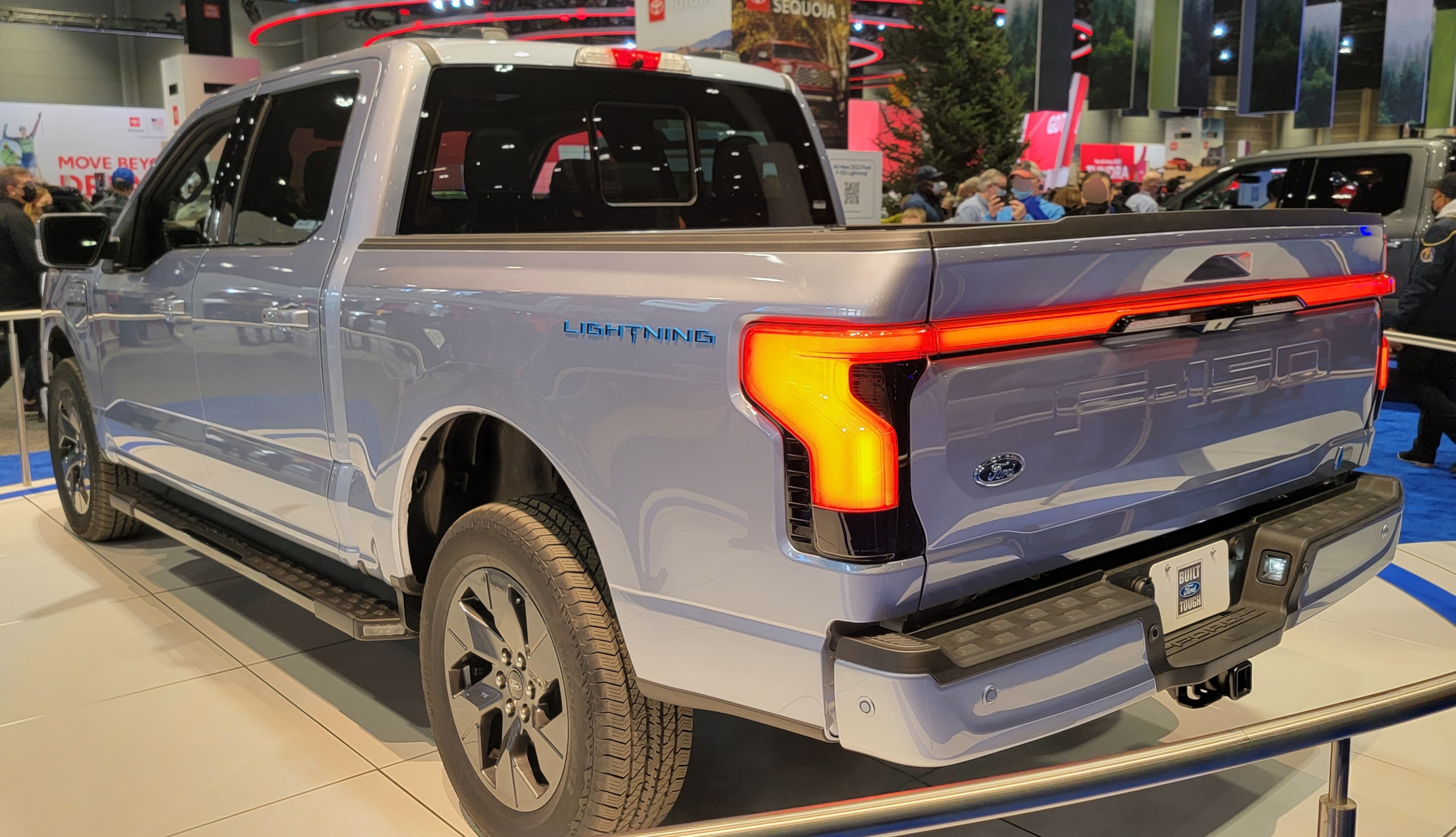
"...I still got hung up on the, on the Ford Lightning story. I got so hung up on that and I've retold the battery replacement."
The Ford Lightning is a type of electric truck made by Ford. It's designed to be powerful and useful like a regular truck but runs on electricity instead of gasoline.
The Ford Lightning is an all-electric version of the Ford F-150, known for its performance and utility. It represents Ford's push into the electric vehicle market, combining the capabilities of a pickup truck with electric power.
How does Openlane help dealers win?
What's happening with off-lease EV prices?
What are the key tips for buying EVs?
How can dealers move aged inventory?
Digital auctions versus physical lanes
How is trust built in online buying?
What AI features does Openlane use?
What are the key takeaways for 2026?
Select text to request an explanation
And they realize, hey, this is actually, you know, this is really,
it really boils down to opportunity cost.
What do I want to spend my time doing?
So when you're asking the question, hey, how am I sourcing this inventory?
How are you helping dealers source inventory?
The premium that we see when we talk to our customers, it's like, hey,
what are you placing a premium on right now?
And it's time.
Hey, everybody, I'm your host, Sam Dark.
And today I'm joined by Justin Zane, SVP US Marketplace and Services at Open Lane.
As off lease inventory returns, the real battle for dealers is an access,
its speed and efficiency.
Justin breaks down why digital auctions now outperform physical lanes,
how clunky processes and old habits are holding dealers back and where AI and
human inspections actually create accountability.
If you're still tying up time and capital in legacy wholesale workflows,
this episode will reset how you think about acquisition.
A big thanks to our sponsors for making this episode possible, wiki motive.
And of course, Open Lane.
Now, let's get into the show.
So Justin Zane, welcome to the show.
Hey, thank you for having me.
So it's fun.
We're here at NADA.
We're here live on the floor.
And there's an electricity, as there always is.
Last year was New Orleans.
Right.
We had some weather issues in New Orleans.
Yeah.
Still had a good group, but it feels like this is back, right?
Well, not only does it feel like back, but it feels like there's a little bit of
pent up demand and energy after last year.
And I'll tell you what's interesting.
I love the fact that we're here talking about the wholesale use marketplace
because there's maybe two topics and automotive that are top of mind.
One is AI.
I know we'll get into some of that today.
The other is for dealers like myself, how do we acquire that perfect used car?
Yeah.
And you're front and center in that marketplace.
We absolutely are, Sam.
We see it from all dealers like sourcing right now is a huge, it's a huge
component of this business.
And how do we get the right car at the right time?
How do we represent the cars correctly at open lane?
And we kind of have our purpose theme is we make wholesale easy, so our
customers can be more successful.
So when we look at that sourcing problem or that sourcing, I would call it
actually an opportunity.
There's actually quite a bit of inventory out there, but it's how do you find it?
How do you sort through it?
What's applicable for your group?
Yeah.
What's close?
What's the transport look like?
So there's a lot of things that go into, hey, what's the right vehicle for my
business or how do I source this collateral?
And that's one of the areas where that's where one of the areas where open
lane can help.
All right.
So on today's show, we want to walk away with practical tips for dealers in
2026 to win in the used car marketplace.
Because to your point, sort of new cars, that's sort of fixed, right?
Like we're going to get the vehicles we get from the manufacturer.
Chances are, unless we're in one of those manufacturers that's overproducing,
we'll end up selling the cars that we get.
For sure.
Use cars, it's a tough place.
But let's back up a little bit.
You're newer to open lane.
You joined about seven, eight months ago.
Well, I've actually been with the company since 2018.
Okay.
And I joined open lane through acquisition.
Okay.
We was the founder of a software company.
Back in 2018, we were acquired by open lane.
So, you know, just.
What software company?
That's a software company called ClearPlan.
And it was more on the asset recovery side of the business.
So, I've been in automotive in some way, shape, or form since 2000, right?
But we saw a need and we created a product called ClearPlan.
Open lane acquired that at the end of 2018 and been with open lane ever since.
My role has evolved through the services businesses that open lane holds,
whether it be, you know, cars arrive, RDN, auto need, businesses like that.
I had the leadership over those businesses.
And now I oversee the U.S.
marketplace for open lane.
Okay.
For about seven, eight months, right?
For about seven, eight months.
It's a rapidly changing and evolving marketplace.
It is.
So, in the seven, eight months since you've been in the leadership role,
what are one or two things that you've done to just continue that moment of
success open lanes been having?
Yeah.
First of all, I mean, I was, I was extremely fortunate that, that, that
I already had an amazing leadership team.
And, you know, kind of one of the analogies I use with my team was, Hey,
you know, I'm excited about this role.
It's a, it's a big role.
So I'm really excited to learn from everybody.
And the analogy I use is like, you know, let me get in the boat and
don't let me slow you down.
Yeah, that's cool.
I don't want to put my order in there until I'm at the same pace with the team.
And until, you know, until I can kind of run at their pace.
So, um, that was one of the first things I did was really embrace that team and
that momentum.
Um, and then the other thing was just get on the road.
You know, I mean, I think I've told our leadership team at open lane several
times, I'm like a Johnny Cash song, you know, in the last, the last eight months,
it's like, I've been, I've been everywhere.
I actually live in Northern Nevada near Reno.
This is, you know, our stores are in Michigan, Indiana, Illinois, Wisconsin.
And actually this is our store.
I've been to your stores.
I've seen your team out there.
Yeah.
Lovely, lovely facilities.
Um, but you know, there's no, there's no, one is the same, right?
I mean, I've been to, I've been to independence.
I've been to franchise dealers.
I've been to, you know, major dealer groups.
I've been to our OEM customers because we obviously service a lot of major
OEM customers on the, on the lease side, on the off lease side.
So I've been really getting in front of customers and understanding the pain points.
All right.
So let's talk about what you're seeing as an industry expert and as a subject
matter expert in this used vehicle acquisition.
So in 2026, this is maybe where you were here at NADA, how is open lane helping
me as a dealer win in that bid and that battle for that perfect used car?
So every, every day we're trying to, we're trying to find ways for you to
source inventory as quickly as possible.
Okay.
I think we could do that.
I think the best way, the best way you do that is, you know, you've got your
sword functions, we've got, we've got the, the best access to off lease
inventory, which we're really excited is starting to come back through.
Right.
We're starting to see that off lease.
You know, we had that low and kind of saw the, saw the trough on off lease now
that we're starting to see that, that's a huge competitive advantage for
off lease, like getting that frontline, that frontline inventory.
Who are the providers for off lease?
I mean, I mean, you name them.
We've got 70, 75% of the off lease business.
I don't know, you know, okay.
So it's a, it's a, it's a huge, how'd you put that together?
Well, I can't take credit for that.
I can't take credit for that now.
It is.
Is there anyone else that has that big access to off lease?
Is that back up?
Absolutely not.
No, that's the strength.
That's been, that's been one of the staples.
If you, if you look back, I mean, that was one of the staples of our business
was that in our, our competitive advantage, was that, that access to
off lease inventory.
So I don't want to get too far away from the point, but I would like to
ask a little bit about off lease EVs.
So in, we've talked a lot this week about how in automotive, we need to make
vehicles more affordable to the consumer.
And one of the things we've talked about is EVs through the rebate,
allowed vehicles to be super, uh, affordable.
They did.
There were some great deals in leasing and just with the rebates out there.
That went away and a lot of that EV demand dried up.
A lot of pundits are saying that as those, those EV vehicles come off lease,
they're going to be very inexpensive.
I don't totally buy into that.
It would be curious to your perspective, but there's going to be a lot of EVs
coming back.
So I assume you have access to those and then what's your take on EVs coming
off lease?
Yeah.
I don't totally subscribe to that either.
Yeah.
Because we're, we're starting to, we're starting to see them come back in.
And, you know, we have, we've had, I've gone through, you know, a few dealer
advisory board sessions and, and it's really interesting to watch how the
room splits and it really, it depends.
Hey, what's your market and what's the infrastructure in your market?
You know, I mean, obviously there's a couple of clear leaders that have
infrastructure in certain markets and those vehicles still have some, some
staying power and there's some appeal.
And I think anecdotally, if we think about our, you know, kind of our, our
friends or our peers that have bought them, a lot of people have a hard time
going back away from the EV.
They like that experience.
They like the driving experience.
They've bought a charger for their house.
They're used to overcoming the problem with gas.
Yeah.
So we've had, we've had dealers or we're sitting in a room with, you know, 40
different dealers from all across the country and the room is actually split.
Right.
We're, we're seeing, Hey, we've got a, we've got a group over here that says I
buy them for these five lots and we're doing an incredible, we're doing
an incredible job with EVs, but I don't, I don't touch them over here.
Um, and they've got a strategy around that.
And others are, you know what, I'm just staying away from them for now.
It's not my core and I, you know, it doesn't mesh with the inventory that I
have on my lot.
So I like, I like seeing the split, but I will say, you know, especially
speaking with the OEMs on the off lease, obviously that's a real big concern
on the off lease inventory.
So that's front of mind for all of our, all of our OEM customers that are
coming to us saying, Hey, you know, when these flow to your open iteration, you
know, what is this going to look like?
And are we going to get a return?
And I'll say with the EVs that are starting to flow in, it's they've, they've
performed really well.
We're actually really surprised.
And that was something that was kind of a concern to us early on as well.
So as a marketplace of those EV lease returns, do you have any tips or
strategies for used car managers or dealers looking to acquire those and win
in an EV marketplace where demands probably going to look demands normalizing in
that, whatever that ends up being the price will be what it is.
But it is an opportunity to acquire a fairly affordable vehicle and offer
that to the consumer in 2026.
It is.
I think, um, I think what I would do is I would focus on, I would focus on some
of the data that's available from the, from a battery perspective.
Right.
And there's a lot of companies that are coming out.
And I think, I think all of us are trying to vet, Hey, who can actually
measure this battery health?
Yeah.
What's it look like?
Do these cars come from a cold environment?
We know that that can, we know that that can have a draw.
You know, what's the, what's the effect?
So I think being, you got to be a little more conscientious.
And I think you got to be more of a student of these EVs before you just say, Hey,
these are popular.
I know I can move them now, which I mean, for a fast turn, you're probably going
to be okay.
Yeah.
I would say, but you know, then you've got, it's funny, I was watching, I was
watching your show.
I think I referred to it last time I was on, but I still got hung up on the, on
the Ford Lightning story.
Yeah.
I got so hung up on that and I've retold the battery replacement.
And I thought you were, I thought you were, I was like, there's no way they
quoted that, right?
I was like, there's no way Sam got that right.
It's crazy.
I was.
I wonder if there's, I was like, yeah, that's real, right?
That's real.
So I think it, I think it depends.
It's a problem.
Yeah.
It depends on the vehicle.
I think it depends on the infrastructure.
Yeah.
I think, does it, does it match with your, does it match with your inventory?
Because a lot of them are really attractive and there are buyers for them,
but does it match with your strategy?
All right.
So your company open lane, you're helping dealers win by getting access to those
off-lease vehicles.
You've got some strategies on EVs and, and appreciate the conversation on the market.
Sure.
What are a couple of other areas where open lanes helping dealers win to acquire
that perfect used car vehicle in 2026?
That's one of our competitive advantages for sure.
Yeah.
But if you look at the dealer to dealer segment, I mean, the ability to, I think
you've, the turn time on these vehicles is quick, you know, margins are, margins are
kind of tight on these vehicles.
So if we think about how quickly we need to turn those and, you know, there is a
strategy there, we'd love, you'd love to retail those cars, right?
That makes the most sense because that's where the most, you know, that's where
the biggest return is 100%.
But if you think about those holding costs, one of the ways we can help is, you
know, keeping fresh inventory on that lot.
And, and our dealer to dealer to dealer footprint has grown, you know, leaps and
bounds over the past two years.
So our access to inventory out there and the, and the feasibility to get it is, in
our opinion, a second to none.
So how does that work?
So within our auto group, we have a program where if, if a unit goes over 90
days aged, we have everybody get together and they can exchange intergroups.
So 41 stores, four states, 27 earn employees.
They can trade inventory between stores.
That's sort of what open lane does, but in a much broader dealer network, which I
assume helps command better prices of that inventory.
It absolutely does.
We, you know, we, we can set up on our site, we can set up what's called a
closed trade network to kind of manage all that back and forth between all your stores.
Okay.
Right.
And it is.
So then it's not out in front of the public.
It's not out in front of the public, but you're allowing the other stores to
actually bid on that, bid on that vehicle in between.
And, and actually, you know, it keeps a, it keeps a good consistent environment
between all the stores, right?
It's not just, hey, back, you know, backdoor calls and, hey, is this vehicle
available?
I've seen this since it, and so it's a, it kind of cleans that process up.
So we've, we've set up closed trade networks for, for a large majority of
the major dealer groups out there.
This episode is brought to you by wiki motive, frustrated with marketing reports
that are always green, but your showroom and service drive don't feel it.
Concerned about falling behind in an AI search world, wiki motive delivers
organic and paid search solutions to hundreds of dealerships from rural roof
tops to multiple top five national dealers.
Their focus is simple.
Get your store in front of people already searching for a car or service and
measure success by the leads and appointments that follow.
Not vanity metrics for a clear, no hype plan on how your dealership should
compete in search in 2026.
Visit wiki motive.com slash CDG and get a personalized expert analysis.
Absolutely free.
Again, that's wiki motive.com slash CDG or click the link in the show notes below.
And then at the point it doesn't sell or transact intergroup, then do you
offer it to a larger group outside?
Yeah, that's, that's usually the next, that's the next iteration, right?
Our preference is, I mean, you obviously can move it to you, to your choice.
If it's, if it's physical, we prefer you, you sell it in our open.
We've got, we've got a ton of eyes in, in the open marketplace and we're,
we're, we're transacting and, and I think it's easier than transporting
that vehicle to physical, you know, getting, getting the wash and back,
getting the detail, our inspectors can show up and it makes that, you know,
closer to like a touchless process for, for the dealer groups instead of saying,
okay, it's been 90 days.
We can't move the car.
Nobody in the dealer, no, nobody in our group is giving us real money on that.
So let's just send that to physical.
Well, that's a process in and of itself.
Yeah.
You know, they're going to show up, they're going to pick it up,
they're going to move it to do the wash and back.
But for us, we can have an inspector there same day, next day.
Okay.
Because our inspector, our inspector network is, is it covers the entire country,
right?
We have more than, you know, more than 800 inspectors in our group.
Okay.
So they can be there same day.
And once the inspection's done that vehicle, you typically will sell within one
to three days.
Okay.
So it keeps that, it keeps the touch points down.
So as you start to describe that, you think, you think about your inspector
network and then your access to other dealers as you're trying to move that
aging inventory, how do you rank or how do you fit into the online auction and
the auction space in terms of size and in terms of reach?
For those that may not know Openlane.
We're a publicly traded company, so I've got to be a little bit careful.
But a recent, a recent survey of dealers by a large investment bank, uh,
pulled in, Openlane was the number two auction overall.
And we were number one in digital pure play.
So when we look at sizing, that's, that's how we're starting.
You know, it's fascinating about that.
And let's talk your subject matter expertise to uncover that a little bit.
Who would have thought in 2026 that digital online auctions would have gone
from kind of down low in terms of ranking overall, and you've overtaken
brick and mortar auctions?
Like there, there is one brick and mortar auction by this one survey that
is bigger, broader reach, whatever.
For sure.
Like what, what does it say about the nature of the used vehicle marketplace
that digital is about to surpass brick and mortar auctions?
Well, I think we're, I think we're, we might be a ways from surpassing it,
but I would say, I would say this, I think it speaks to the speed and time
that dealers are placing, the emphasis in like, how do we speed up our process?
We have to speed up that process.
We have to.
We can't, we can't wait to go to an auction, sit in a lane, find a carrier,
schedule the carrier and get that vehicle to a lot, because by the time it comes
to a lot, all the floor plan expenses eaten that profit away, fair?
That's fair, but the, the adoption, the adoption in the momentum right now
kind of makes sense, because if you look at other digital services that people
are starting to adopt, I mean, whether it's, you know, people are, hey, you
know, I love, I love Costco.
I love getting this, this stuff at Costco, but you know, it's easier if I can
just shop online and have it delivered to my door, you know, if we look at
Instacart, if we look at things that it's actually taken a little while for
people to get traction and once they use it a few times and they realize, hey,
this is actually, you know, this really, it's really boils down to opportunity
cost, what do I want to spend my time doing?
So when you're asking the question, hey, how am I sourcing this inventory?
How are you helping dealers source inventory?
The premium that we see when we, when we talk to our customers, it's like, hey,
what, what are you placing a premium on right now?
And it's time, the answer, the first answer is time.
If I'm going to source inventory, how am I going to get it?
There's, there's still, there's still a lot of clunky processes out there that
I feel like we help, we help clean up and it's like, hey, we'll, we'll show up,
we'll get the inspection done, we'll put it in front of a huge audience.
We'll sell this within one day and it's out of your hair and it's off your lot.
So that process, we're seeing that in other industries and it's taken just a
little while for us to adapt, but I am, I am buying my groceries online a lot
more than I had before.
Yeah, Instacart is a cool discovery for me as well, DoorDash, but it is interesting.
Costco, I would never think to go on their app and buy something.
I still go brick and mortar.
So I think some of those behaviors have been set and they're going to take a
little longer to overcome.
It's interesting.
Well, wait till you try it, Sam.
What?
Wait till you try it.
Have you bought online at Costco?
I mean, have you gone to Costco on a Saturday morning?
I hate Costco.
I won't do it anymore.
I mean, actually there's two places I won't go, is Costco and Walmart.
I'm sure they're going to peel that out, but, but like who wants the traffic and
the crowds, you want that experience, but I've also had this perception and
maybe it's a good place to talk about it, that it's a little more expensive in
some cases online and you have less recourse online.
So what do you say to that used car manager that, Hey, you know what?
I have my guy, right?
I got my wholesale guy.
I got my auction guy at whatever the big auction is that's brick and mortar.
Yeah.
He'll come in, pick it up, cart it off and just having the safety and security of
knowing where they work and who they are.
I'm more apt to transact on that.
That's one of the things in my role that drives me nuts is use car managers
that shape their buying behaviors based on a relationship and or a physical
location rather than data and economics, which it still exists in our industry.
I, you know, I couldn't agree with you more.
So, and I love that challenge.
I actually love that challenge.
So my, you know, if I look at what's what I value the most in this industry,
like there's a lot of tech in this industry.
Like if you look on this floor, there's tech all over this industry.
And it's crazy the things people are building and innovating.
I love that.
Like, and I, we look like, Hey, open lens at digital marketplace.
And, you know, they're, they're tech for we, we are, we're all of those things.
Yeah.
But we start, I mean, we start the engine with a relationship period.
So I just don't think a business like this thrives without that relationship.
You have to have a point person.
Our dealers have to know exactly who they're dealing with when we look at, and
you say, Hey, a lot of those online services that we use, they're a little
bit more expensive.
That's not necessarily the case in a digital, in a digital marketplace
because your costs are lower.
Yeah, it should be less expensive.
That's right.
There's less margins sitting in it.
That's exactly right.
So the ability to source inventory quickly.
And then for me, it's paramount.
If you look at, if you look at the swath of like our, our sales representation
in the field and you go speak to dealers, they know who open lane is now.
As a matter of fact, they can probably name their rep and all the way they can
name their inspector, you know, our inspectors and our inspectors and our
reps are not necessarily the same, but they can name those people.
And I think those relationships are absolutely key.
If there's a problem, you know, we don't necessarily, nobody loves to deal
with, with an arbitration, but it was fun.
We were at our last dealer advisory board.
That's the perfect time for dealers to tell you where you got it wrong.
And one of the things that, that I, that I had to echo to the team when I first
took over as I said, Hey, the best thing I think you can do in this industry
is solve a bad problem really well.
Right.
And, and I feel like we, we've nailed it on the arbitration piece.
And that also helps grow that relationship.
Okay.
What's it look like?
And then all the way to how was that, how's that vehicle represented?
Like the customer, I use this at a, at a recent conference.
So forgive me if I'm going to reuse it.
But if we go back to an Instacart example, we go back to a bit.
It's like, Hey, I'll buy, I'll buy all my groceries from there, but I'm not going
to get my avocados there.
I got to feel those.
Yeah.
Like I got to touch those ones, those ones I got to feel right.
And, and I think that's where the technology in this room helps it.
It helps you say that's a good, that, that produce is good.
And that purchase is healthy.
And we know that that's going to be a strong purchase and a good experience for
you. And that's one of the things that a lot of these businesses in the room are
going to be able to help with.
So a couple of threads are I want to pull on here.
And by the way, it's kind of awesome to be having this conversation here.
You can hear a lot of the background noise.
Yeah.
Again, here on the floor at NADA 2026.
And it's not happy.
Oh, we're in the morning.
No, no, no, nobody's really in the morning.
There is a lot of activity here on the floor and a lot of excitement as people
are out looking for solutions.
One of the things you said is the importance of a, importance of relationship
and a great field force.
I think particularly in one of the buzzwords of today, which is AI, these AI
companies have got to have better people bolting and plugging that technology in,
in important places to get buy in, to get adherence, to get belief in the product
so that teams will put it in place.
You use AI.
Absolutely.
Talk to us a little bit about some of the areas where you use AI in open lane
and how it's benefiting dealers today in 2026 in acquiring that perfect used car.
Yeah, we've actually been using AI for, for quite some time, which is great
because that means our training just evolves.
But a couple of ways we use it.
So we've got, we've got damage detection.
We've got, we've got audio detection.
I'm bullish on that piece because it just trains and iterates and gets better and
better, you know, comparing what that engine should sound like at 120,000
miles versus what that engine sounds like today.
Comparing that to a healthy brand new 53, you know, what are those three comparisons
and being able to measure that and really letting a dealer say, Hey, we're, you know,
and calling out, Hey, here's where we've got some discrepancies.
When we're sitting, you know, when we're sitting at a sitting with the dealers,
a lot of these dealers are still their savants on certain years, make some models.
And they're like, I know exactly how that should sound.
Yeah.
And that's what we've done a great job replicating with the, with the,
the audio technology that we've put in place.
Um, we're, we're just, we're rolling out, um, predictive pricing now and we're,
we're very, we're very excited about that because you're saying, Hey, how do we,
how do we help dealers?
You know, being, being able to show them, Hey, taking all of the kind of the human
generated and AI enabled data that we've got, we've got decades of data, right?
Yeah.
And being able to compile all that together and say, Hey, what's the predictive
pricing look like on this and what should this look like 30, 60, 90 days out?
So the dealers are buying with a little bit more confidence and say, Hey,
there's an immense amount of data that says, Hey, this is what this vehicle
should move for.
Yeah.
And, and I think that those are a couple of ways that we've put, we've deployed
AI that we're really, really excited AI to determine a vehicle's condition.
That is spot on in 2026.
So a hot topic we've talked a lot about on daily deal alive is condition reports
in the use car marketplace.
Dealers are very frustrated out there at the inability to get a accurate
condition report on a vehicle be traded in, in a wholesale auction or in any auction.
Yeah.
Why is that such a challenge in 2026?
Given all the technology that's out there and what are you doing to fight that?
We've had many dealers on expressing frustration with that.
You know, I, it seems like there's so many people trying to solve that problem
and there's so many investors, so much investment dollar going in.
I mean, there's a lot of inspection technology in this building right now.
There's a lot of it, right?
The problem isn't inspecting the vehicle.
The problem is labeling the vehicle.
Well, there's a lot of people trying to solve that problem through automation.
And I think, I think it can get there, but I think it's still going to be
assisted back to the relationship.
That's one of the reason we value the inspectors on the ground so much is that
number one, we, we base the performance of the inspector on a, did that have an
arm? Was there any discrepancies coming back?
And that's where that relationship business is still very critical and having
that human touch to say, Hey, what's the accountability if we get an inspection
wrong? Yeah, I don't want to go look at a machine.
I want to call my rep or I want to be able to speak to my inspector and say, Hey,
you got this wrong and this wasn't represented accurately.
I think that's something that I think AI is going to get better and it's going
to iterate. I think we're a long ways from that.
And we still need, we still need that accountability from, from a qualified
inspector. Justin Zane, thanks for being on the Cardiola Ship Guy show.
Appreciate you being here.
Fascinating insights into the wholesale marketplace.
Hey, absolutely. Love, love, love being on the show.
Thanks for having me.
Keep doing what you're doing. Love watching you.
Thank you.
Absolutely.
All right. Hope you enjoyed that episode.
Please give the podcast a rating.
Consider subscribing to the show and check the show notes for links to what we
talked about. Thanks for tuning in.
I'll see you guys next time.
Request an explanation for:
2 cars
2 cars featured
Request an Explanation
Heard something you'd like explained? We'll add it to this episode.
Sign in to request explanations for terms you heard.
Want to learn more?
Browse our glossary for plain-English explanations of automotive terms, jargon, and concepts.
See something that's not quite right? Our annotations are AI-generated and can sometimes miss the mark.
Click the flag icon on any annotation to suggest a correction.