
This guy is a real, live new car dealer....the actual car-guy you need in your car-life
About this episode
Lenny Lawson, a current new-car dealer, pushes back on typical dealer podcasts by emphasizing honesty and walking customers away when timing or terms would hurt them. He explains how misleading trade-in and “over book value” ads can collapse once the fine print and MSRP markups are considered, and how many buyers focus on monthly payments instead of total price. He then breaks down lease math using Ford examples (MSRP, selling price, residual value, buyout cost, and taxes/fees) and warns about long-term financing traps. The show also touches on credit revolving vs installment, dealership tech overwhelm, and community events like Cars and Coffee.
Email Lennie at [email protected]
Federal Trade Commission
"according to the Motor Vehicle Commission in the state of Tennessee and the Federal Trade Commission."
The Federal Trade Commission is a U.S. agency that helps enforce rules about fair advertising. The speaker is saying the FTC was involved in requiring clearer deal information.
The Federal Trade Commission (FTC) is a U.S. government agency that enforces consumer-protection and advertising rules. Here, it’s cited as part of why certain dealership advertising practices had to change.
Motor Vehicle Commission
"according to the Motor Vehicle Commission in the state of Tennessee and the Federal Trade Commission."
A Motor Vehicle Commission is a government office that regulates vehicle-related rules in a state. The speaker is saying Tennessee’s regulator said the ads weren’t following the rules.
A “Motor Vehicle Commission” is a state-level regulator that oversees vehicle-related rules and compliance. In this segment, it’s referenced as the Tennessee authority that found advertising violations.
required disclosures
"They just came out with new guidelines as far as required disclosures that have to take place."
“Required disclosures” are the specific details a dealer has to clearly tell you by law. The point here is that some ads didn’t include the necessary fine print or conditions.
“Required disclosures” are legally mandated statements that must be clearly provided to consumers (for example, how a deal is calculated or what conditions apply). In this context, the speaker says competitors weren’t meeting those disclosure requirements.
trade-in
"when you tell somebody that you're going to pay them $8,000 or $10,000 over book value for their trade, and you don't have any kind of disclaimer there"
A “trade-in” is your current car being used as credit toward buying the next one. Instead of selling it yourself, you hand it to the dealer and they subtract its value from the new-car price.
A “trade-in” is when you give your current vehicle to the dealer as part of the purchase price for a new car. The dealer then applies a trade value to reduce what you pay for the new vehicle.
addendum stickers
"and you have addendum stickers, the sticker beside the sticker that jacks up the price on a new car,"
“Addendum stickers” are extra dealer-added price labels. They can add fees or add-ons that raise the price beyond the first sticker you see.
“Addendum stickers” are extra price/fee markings added to a vehicle’s advertised sticker, typically listing dealer-installed charges or add-ons. They can make the final out-the-door price higher than what shoppers initially see.
book value
"Yeah, well, we only offer $8,000 over book value for the very best cars that absolutely need nothing that are tops in our market."
Book value is a “typical” used-car price from pricing guides. When a dealer says they’ll pay over book value, they mean they’re paying more than that guide price for your trade-in.
“Book value” is a reference price used by pricing guides (and sometimes dealers) to estimate what a used car is worth. Dealers may offer more or less than book value depending on condition, demand, and how they structure the deal.
winter sticker
"Well, off of what price? [253.1s] Well, off of the winter sticker. [256.0s] You know, the one, the sticker, the sticker, oh no, no, no."
They’re talking about the sticker price the dealer starts from when they negotiate. It’s the number they use to decide how much they’re “discounting” or “adding” to your trade.
The speaker is referring to the vehicle’s pricing sticker used to anchor negotiations—essentially the dealer’s posted price reference. In practice, listeners should treat this as the starting price the dealer is using to calculate discounts and “over/under” offers.
MSRP
"You're still not giving me anything off of MSRP. [265.3s] You're starting at that higher number."
MSRP is the “list price” the manufacturer sets for the car. If a dealer says they won’t discount off MSRP, they’re basically saying they’re not reducing the car’s list price.
MSRP (Manufacturer’s Suggested Retail Price) is the manufacturer’s baseline list price for a new vehicle. Dealers often advertise discounts relative to MSRP, so it’s a key number for comparing offers.
monthly payment
"What if we had not talked the sale price or the trade value? [275.5s] And we had just talked about monthly payment."
Monthly payment is what you pay each month on a loan or lease. It can be misleading because two deals can have the same monthly payment but very different total costs.
“Monthly payment” is the financing figure people focus on during a car deal. Dealers can structure a deal so the monthly number looks good even if the total price (car price minus trade plus fees/interest) isn’t as favorable.
approved at $5.50 a month
"Salesperson comes back to me and says, good news, I got you approved at $5.50 a month. [288.9s] Oh, good, good."
They’re pitching the deal as “you’re approved for $5.50 per month.” But the real question is what the car costs overall—monthly payment alone doesn’t tell you that.
This is an example of payment-based negotiation: the dealer frames the deal as an approval at a specific monthly cost. Without the underlying sale price, trade value, term length, and interest rate, the listener can’t tell what the car really costs.
lease
"I just got some information from Ford on some leases. We talked about leases the other day, and I just thought it was worth showing you how this works and what the dealers have access to."
A lease is like renting a car for a few years with an option to return it. You pay a monthly amount, and the deal is based on what the car is expected to be worth later.
A lease is a contract where you pay to use a vehicle for a set term (typically a few years) and then return it or buy it for a pre-set price. Lease pricing is often structured around monthly payments, plus factors like the vehicle’s expected value at the end of the lease.
Ford
"I just got some information from Ford on some leases. We talked about leases the other day, and I just thought it was worth showing you how this works and what the dealers have access to."
Ford is the car company. Here, the host is saying Ford provides lease deal information that dealers can use when quoting offers.
Ford is the automaker whose lease programs and calculations the dealer can access. In this segment, the host uses Ford as an example of how manufacturers provide pre-calculated lease offers to dealers.

Ford Maverick
"Ford has been generous enough to go ahead and calculate a bunch of leases on different models, everything from a Ford Ranger to a Maverick to a F-150."
The Ford Maverick is a smaller pickup truck. The host is using it as an example of a specific model that can have its own lease deal numbers.
The Ford Maverick is a compact pickup known for being relatively affordable compared with many other trucks. The host name-drops it to show that lease offers can be pre-calculated by model, not just by brand.

Ford F150
"Ford has been generous enough to go ahead and calculate a bunch of leases on different models, everything from a Ford Ranger to a Maverick to a F-150."
The Ford F-150 is a big, popular pickup truck. Here it’s mentioned because lease deals can be calculated for specific models like this one.
The Ford F-150 is Ford’s full-size pickup and one of the most common trucks on the road. The host includes it to demonstrate that manufacturers can generate lease payment examples across a wide range of vehicle types.

Ford Ranger
"Ford has been generous enough to go ahead and calculate a bunch of leases on different models, everything from a Ford Ranger to a Maverick to a F-150."
The Ford Ranger is a pickup truck. The point here is that Ford can provide lease numbers for specific models like this one.
The Ford Ranger is a midsize pickup truck from Ford. The host mentions it as one of the models Ford provides lease calculations for, illustrating how dealers can advertise specific lease offers by vehicle.
disclaimer
"So, dealers have something that they can advertise, and then they can put this disclaimer. You know what a disclaimer is. So, that's when you see a price and it has a little asterisk beside it."
A disclaimer is a note that explains the offer has conditions. It’s the part that says “this price only applies if you meet certain requirements.”
A disclaimer in car advertising is the legal/contractual note that limits or qualifies the advertised price or offer. It often points you to conditions in the fine print (like eligibility requirements or specific lease/finance terms).
Find Print
"It's called the Find Print. And I'm going to give you a little tutorial on looking for finding and analyzing the Find Print. I'll be back in a minute."
“Find Print” means the small, detailed terms in the paperwork. It’s where you learn the real rules of the deal—things you might miss if you only look at the advertised price.
“Find Print” is the host’s playful way of referring to the fine print in a car deal—especially lease or financing terms that aren’t obvious from the advertised price. It’s a reminder to read the details behind the monthly payment or advertised offer.

Ford Mustang
"You know, for example, here's a Mustang EcoBoost 2026 model with the 2.3 liter automatic transmission."
This is a Ford Mustang with the EcoBoost engine, meaning it uses a turbocharged four-cylinder instead of the bigger V8. The host uses this specific Mustang example to show how lease pricing and end-of-lease purchase price are calculated.
The Ford Mustang EcoBoost is the turbocharged, four-cylinder version of the Mustang lineup. In this example, the host is discussing a 2026 Mustang with a 2.3-liter engine paired to an automatic transmission, and then using it to explain how leasing math works.
residual value
"What is the residual value? That's what you can actually purchase the vehicle for once the lease is over and done. In this case, the residual factor is 59% of the MSRP or $26,270."
Residual value is what the leasing company expects the car will be worth at the end of the lease. If you want to buy the car later, that estimate is the starting point for the purchase price.
Residual value is the estimated value of the car at the end of the lease term. It largely determines how expensive the lease is and what you can pay to buy the vehicle when the lease ends.

Ford Escape
"Let me look at another one here, an escape, Ford Escape MSRP, $34,585."
The Ford Escape is a compact SUV. The host brings it up to show that the same lease concepts—like residual value and the buyout price—apply to other vehicles too.
The Ford Escape is a compact SUV that the host uses as a second example to compare lease numbers against the Mustang. The segment focuses on how MSRP, residual value, and the end-of-lease purchase price work across different vehicles.
96 months
"On used vehicles, it's $550, and that's why terms are being extended to up to 96 months. That's a lot of months."
“96 months” means the loan is stretched out to about 8 years. That can lower the monthly cost, but you often pay more interest overall and it can be harder to get out of the deal early.
“96 months” is a very long auto-loan term (8 years). Longer terms can reduce the monthly payment, but they usually increase total interest paid and can make it harder to exit the loan early.
getting buried
"Some of them will loan in excess of 130% of MSRP. And what that's called is not just getting buried once, but getting buried twice."
“Getting buried” means you owe more on the loan than the car is worth. If you try to switch cars again later, that problem can get worse.
“Getting buried” in auto finance usually means being “upside down” on the loan—owing more than the car is worth. If you try to exit or trade again after another change of circumstances, the negative equity can compound, making it even harder to get out.
bankruptcy
"And then the only option is to file bankruptcy. It's just a way to wipe the slate clean again."
Bankruptcy is a legal way to get rid of certain debts. After it’s done, some people can buy a car again, but lenders may charge higher interest because your credit is affected.
Bankruptcy is a legal process that can discharge certain debts, effectively wiping out what you owe under the court’s rules. In the auto context, it can allow some people to reset their finances and later qualify for a new car loan, though often at higher interest rates.
discharged
"I've seen people file bankruptcy and turn around a month later. I mean, once it's discharged, turn around a month later..."
“Discharged” means the bankruptcy court has cleared certain debts. After that, you may be able to get a car loan again, but the interest rate can be higher.
In bankruptcy, “discharged” means the court has eliminated (discharged) certain debts, so you’re no longer legally required to pay them. The transcript ties this to being able to qualify for a car purchase soon after, but with worse loan pricing.
interest rate
"They have to pay a higher interest rate, much higher interest rate. And a lot of it depends on what they've done since."
The interest rate is the extra cost you pay for borrowing. If your credit is worse, lenders often charge a higher interest rate.
The interest rate is the percentage cost of borrowing money on a car loan. After credit events like bankruptcy, lenders often charge a higher interest rate, which can significantly raise the total cost of the vehicle.

Ford Bronco
"because we were freezing. So we got into my Bronco, and I looked straight ahead, and there's a mattr..."
The Ford Bronco is a type of SUV made for both regular driving and off-road adventures. It has a roomy, enclosed cabin so you can stay comfortable even when the weather is cold. The podcast mention suggests they used it to get out of the freezing conditions.
The Ford Bronco is a rugged, off-road-focused SUV designed for driving on rough roads and trails. It’s often discussed because it combines everyday usability with features meant for colder or tougher conditions, like enclosed cabin comfort and practical interior storage. In the podcast context, it sounds like the Bronco’s cabin helped during freezing weather.
infotainment system
"I feel like somebody just bought a new car trying to figure out the infotainment system. I mean, we have to spend probably 30 minutes just on the dashboard area"
The infotainment system is the car’s screen and controls for things like music, navigation, and phone connections. New cars can be confusing at first, so dealers often spend time teaching it.
An infotainment system is the car’s integrated interface for things like the touchscreen, audio, navigation, Bluetooth/phone pairing, and vehicle settings. Modern cars often require a learning session because the menus and controls are more complex than older stereos.
power windows
"I mean, when I first started selling cars, you just had to show them how to work the power windows and adjust the mirrors"
Power windows are windows you open and close with buttons instead of turning a hand crank.
Power windows are electrically operated window regulators controlled by switches, rather than manual cranks. The host uses them as an example of simpler, earlier new-car “how-to” basics.
adjust the mirrors
"you just had to show them how to work the power windows and adjust the mirrors"
Adjusting the mirrors means setting them so you can see behind and beside you clearly.
Mirror adjustment refers to setting the side mirrors (and sometimes the rear-view mirror) to the correct angles for visibility. Many cars include power mirror controls, which dealers may demonstrate during delivery.
8-track
"and adjust the mirrors and maybe how to slide an 8-track into the stereo system. That's about it."
An 8-track is an old type of tape player/car stereo format that used tape cartridges.
An 8-track is an older magnetic tape audio format used in cars and home stereos, where music is played from a continuous loop of tape in cartridge form. The host mentions it to highlight how car audio used to be simpler to explain.
cars and coffee
"Okay, we got cars and coffee tomorrow at Gateway Ford in Greenville, Tennessee. We do it every second Saturday."
“Cars and coffee” is a friendly car meet where people show up with their cars, hang out, and talk about cars over coffee.
“Cars and coffee” is a recurring casual meet-up where car owners bring their vehicles, park together, and socialize—often with a focus on sharing what they drive and learning from other enthusiasts.
Gateway Nissan
"and get out some lawn chairs and sit around and drink coffee and eat some unhealthy donuts, compliments of Gateway Ford and Gateway Nissan."
Gateway Nissan is another dealership involved in the event atmosphere the host describes.
Gateway Nissan is another dealership name the host credits as part of the “cars and coffee” crowd and the donuts/coffee setup.
properly store it, drain the fuel out of it
"It's become a piece of furniture with oil in it, gas. If you've got an old car, make sure that you properly store it, drain the fuel out of it."
If you’re not driving an old car for a long time, you should store it in a way that prevents fuel-related problems. One common step is draining the fuel so it doesn’t go bad while the car sits.
This is guidance for long-term vehicle storage: draining fuel reduces the chance of stale fuel problems and helps prevent gumming/clogging in the fuel system. It’s a practical “winterize/hibernation” step for older cars that won’t be driven for a while.
history of the car
"You tell them everything that it has on it. Just like the engine size and the history of the car."
“History of the car” is basically what you can prove about where the car has been and who owned it. For classic cars, that kind of proof can make people trust the car more and pay more.
“History of the car” means the documented background of ownership and use—who owned it, how it was maintained, and any notable events. In collector-car sales, that record can matter as much as the visible condition because it reduces buyer uncertainty.
engine size
"You tell them everything that it has on it. Just like the engine size and the history of the car."
“Engine size” tells you how big the engine is. Bigger or different engine sizes can change how the car feels and what buyers expect it to be worth.
“Engine size” is the engine displacement (how much volume the engine’s cylinders move), commonly expressed in liters or cubic inches. On listings, it helps buyers understand what kind of power and character the car has, especially for older cars where engine options vary.

57 Chevy
"My 57 Chevy that I bought. It's unbelievable. It is an absolutely remarkable restoration."
“57 Chevy” means a 1957 Chevrolet, a very famous classic car. The point here is that if you can prove who restored it and what the car’s background is, it can make the car worth more to collectors.
The “57 Chevy” refers to the 1957 Chevrolet, a classic American car that’s especially popular with collectors. In this segment, the host uses it to illustrate how restoration quality and documented ownership/history can strongly affect what buyers are willing to pay.
restoration
"It is an absolutely remarkable restoration. And it looks as good on the underside as it does on the top."
“Restoration” means someone rebuilt and refreshed the car to make it look and work like it should. The host is saying this one was done so well you can tell even underneath.
In classic-car context, “restoration” means bringing a car back to a high standard of original or near-original condition, often including bodywork, mechanical refreshes, and cosmetic refinishing. The host emphasizes that this 57 Chevy looks great both on top and underneath, which is a key restoration-quality signal.
value of it
"If I knew the history and if it was good history, it could add 10, 20% to the value of it."
They’re saying that if you can prove the car’s background and restoration quality, buyers may pay more. In other words, good documentation can raise the price.
When the host says the car’s history “could add 10, 20% to the value,” they’re talking about how documentation affects market pricing. For enthusiasts, verified restoration and provenance can increase buyer confidence, which can translate into a higher sale price.
accident estimate
"or several pictures of it, get a copy of the estimate, put it in an envelope and stick it in your glove box."
An accident estimate is a document from a repair shop that lists what it would cost to fix the damage. Keeping it helps prove what happened and what repairs were needed.
An accident estimate is a written cost breakdown for repairing damage after a crash. It’s often produced by a body shop and can include parts and labor costs, which helps document what was actually fixed and how much it cost.
Carfax
"what the dealership's going to do is they're going to pull a car fax and they're going to see that it's had an accident."
Carfax is a report that shows a car’s history. It can include things like accidents, so dealers and buyers use it to judge what the car is really worth.
Carfax is a vehicle history report service that compiles records from sources like insurance claims, service data, and other reporting systems. Dealers use it to spot past accidents and other events that can affect a vehicle’s value and how buyers perceive risk.
four-wheel drive
"Let's say that you have a 2020 Chevrolet Silverado extended cab four-wheel drive with 100,000 miles on it, has a Z71 package, it's got leather seats and, you know, it's in decent condition."
Four-wheel drive means power goes to all four wheels. That helps the truck grip better on slippery or rough roads.
Four-wheel drive (4WD) is a drivetrain setup that can send power to all four wheels to improve traction. It’s especially useful in low-grip conditions like snow, mud, or uneven terrain.
extended cab
"Let's say that you have a 2020 Chevrolet Silverado extended cab four-wheel drive with 100,000 miles on it, has a Z71 package, it's got leather seats and, you know, it's in decent condition."
Extended cab is a pickup configuration with extra space behind the front seats. It’s usually smaller than a crew cab, but gives you more room than a basic regular cab.
Extended cab is a pickup truck body style where there are additional rear seating areas compared with a regular cab, but it’s not as large as a full crew cab. It’s a way to balance extra passenger space with a shorter overall length than a crew cab.
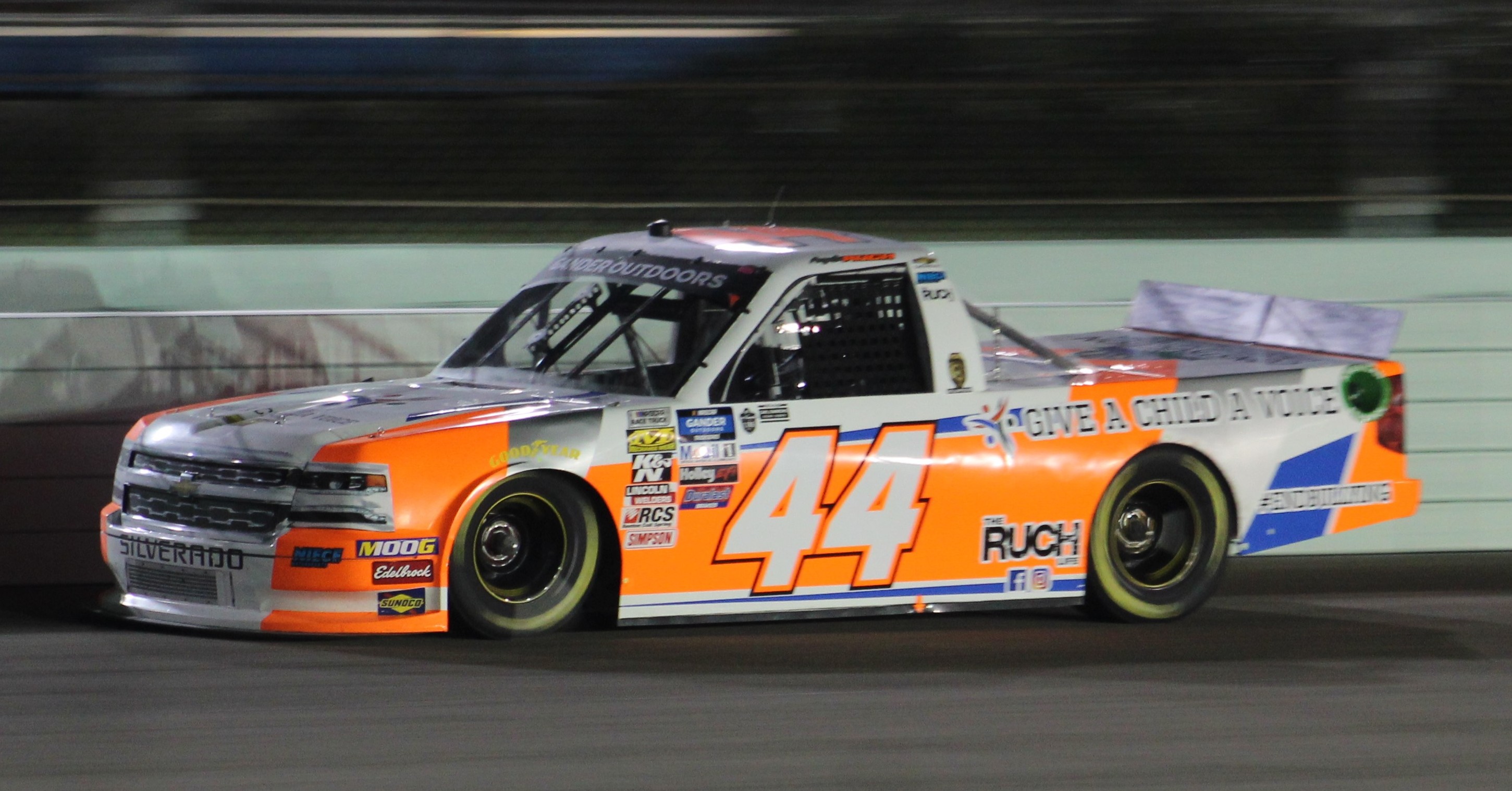
2020 Chevrolet Silverado extended cab four-wheel drive
"Let's say that you have a 2020 Chevrolet Silverado extended cab four-wheel drive with 100,000 miles on it, has a Z71 package, it's got leather seats and, you know, it's in decent condition."
A Chevrolet Silverado is a full-size pickup truck. This example is a 2020 Silverado with an extended cab (more space behind the front seats) and four-wheel drive (better traction in snow, dirt, or rough roads).
The Chevrolet Silverado is GM’s full-size pickup, and the 2020 model is known for being a common, high-demand truck platform. In this example, the “extended cab” body style and “four-wheel drive” drivetrain describe how it’s configured for more passenger space and off-road/traction capability.
Z71 package
"Let's say that you have a 2020 Chevrolet Silverado extended cab four-wheel drive with 100,000 miles on it, has a Z71 package, it's got leather seats and, you know, it's in decent condition."
The Z71 package is an off-road-focused option on some Silverado trucks. It usually adds upgrades that make the truck better for dirt roads and rough conditions.
The Z71 package is a trim/option package on certain Chevrolet Silverado trucks that’s aimed at off-road use. It typically adds features like off-road suspension tuning and related hardware so the truck can handle rougher terrain more confidently.
leather seats
"has a Z71 package, it's got leather seats and, you know, it's in decent condition."
Leather seats are a nicer interior material than cloth. They can make a used truck more appealing and sometimes help it sell for more.
Leather seats are an interior trim feature that can affect buyer appeal and resale value compared with cloth upholstery. They’re often used as a quick shorthand for a higher-trim or more optioned truck.
AutoTrader
"Go to AutoTrader, it'll pull up hundreds of them [1253.3s] and search for vehicles that have similar mileage to yours."
AutoTrader is a website where you can look up car listings. The host is saying you can use it to find cars similar to yours and see what they’re selling for.
AutoTrader is an online marketplace where you can search for used and new cars and compare listings. In the context of the episode, it’s used to find comparable vehicles and estimate market pricing.
markups
"Now, is a car dealer going to give you that much for your car? [1295.0s] No, because he's going to have markups. [1298.0s] So you need to discount that number by about 10%."
A markup is the extra amount a dealer charges to make money. So even if your car looks worth a certain amount online, the dealer may offer less because they’ll add their own profit on top.
A markup is the amount a dealer adds on top of their cost or baseline price to make profit. The host is saying that the dealer won’t offer you the full “online value” because dealers need to account for markup and profit.
VIN number
"then you just send the information to me, the VIN number, [1310.2s] the trim packages that it has on it, the miles that it has,"
The VIN number is like your car’s unique ID code. If you give it to a dealer, they can look up the exact car and figure out what it’s worth more accurately.
A VIN (Vehicle Identification Number) is a unique 17-character code that identifies a specific vehicle. Dealers use it to pull the car’s exact build details, history, and equipment so pricing and valuation are more accurate.
trim packages
"the VIN number, [1310.2s] the trim packages that it has on it, the miles that it has,"
Trim packages are the specific equipment levels and option bundles a car came with (for example, different infotainment, wheels, or driver-assist features). They matter for valuation because two cars with the same model can be priced very differently depending on what’s included.
Request an Explanation
Heard something you'd like explained? We'll add it to this episode.
Sign in to request explanations for terms you heard.
Want to learn more?
Browse our glossary for plain-English explanations of automotive terms, jargon, and concepts.
Help improve this episode
See something that's not quite right? Our annotations are AI-generated and can sometimes miss the mark. Click the flag icon on any annotation to suggest a correction.