This is a Chevrolet Silverado pickup from 2018. Some versions use a system that can shut down part of the engine to save fuel, and that’s why people talk about AFM and possible engine wear.
An AFM delete is a way to turn off the truck’s fuel-saving feature that shuts down some cylinders. Instead, the engine stays in full-power mode all the time.
The OBD port is a diagnostic plug on the car that lets tools talk to the engine computer. Some aftermarket devices use it to change how the engine system runs.
A lifter is a small internal engine part that helps open the valves at the right time. If lifters wear out or break, the engine can start making noise and may need major repairs.
A lock pin is a tiny part that holds internal lifter components in place. If it comes loose, the lifter can fail and cause serious engine damage.
Term
turning on and off
In the AFM context, “turning on and off” describes the engine’s cylinder deactivation/activation cycling between fewer cylinders and full-cylinder operation. The host suggests this cycling could contribute to wear if oil changes and oil quality/contamination aren’t handled properly.
Camshafts are the rotating shafts that control valve timing by operating the lifters and valves. The segment describes camshaft wear caused by internal material breakdown, which can be separate from AFM-related lifter issues.
Delaminating refers to layers of material separating from each other inside a component. Here, the host says the metal is coming apart on a forged camshaft (and the lifter), which points to a material/heat-treatment or lubrication-related failure mode rather than purely AFM operation.
A forged camshaft is made by forming the metal under high pressure (forging), which is often used to improve strength and durability compared with some casting approaches. The host specifically ties delamination to the forged camshaft’s material breaking down.
An oiling system issue means a problem with how engine oil is supplied, circulated, or maintained to lubricate internal components. The host connects camshaft/lifter delamination and breakdown to lubrication/oil delivery problems, noting it can be separate from AFM.
A solenoid valve is an electrically controlled valve. In some cylinder-deactivation systems, it uses oil pressure to move parts that stop certain cylinders from working.
Concept
partially open
Partially open means the mechanism isn’t fully on or fully off. The speaker is saying that “in-between” position can cause extra wear compared with being fully engaged.
Concept
disables it
Here, “disables it” means turning off a feature in the engine. The host is saying that if you turn it off after the problem starts, you may not be fixing the underlying issue the feature was meant to prevent.
Regular maintenance means doing the routine services the car needs over time. Keeping up with it helps prevent small problems from turning into big ones.
Solenoids are small electrically controlled valves. They help the car decide when to route fluid or pressure, and if they wear out the car can start acting weird or shift poorly.
An oil change is when you drain old engine oil and put in fresh oil. Fresh oil helps keep the engine clean and lubricated, which can help it last longer.
It’s when a car’s engine can turn off some cylinders to use less fuel. When you need more power, it turns those cylinders back on.
Term
random or not random
The car can choose which cylinders to use or shut off in different patterns. The idea is to avoid always stressing the same cylinders over and over.
Term
failures on the 7 to 13 model
They’re saying there was a period when this cylinder system was more likely to break. Later versions were improved so the problem happened less often.
Term
14 or newer LT series
They’re talking about a newer generation of the engine/system (the “LT series”). The host’s takeaway is that the newer version was updated to be more reliable than the older one.
A solenoid manifold is a valve/actuator assembly controlled by solenoids, used to route oil or control engine functions. In this context, it’s part of the hardware involved in cylinder deactivation, so replacing or removing it is labor-intensive.
A “defeat device” is an aftermarket gadget that tricks or overrides a car’s factory system. Here it’s being used to stop the cylinder-deactivation feature from turning on.
Active Fuel Management is a system that can temporarily shut down some cylinders to save gas. The car decides when to do it using sensors and the engine computer.
Term
transmission settings
Transmission settings refer to the shift strategy and behavior commanded by the vehicle’s transmission control module (how it decides when and how to shift). The speaker is saying these “defeat devices” don’t alter shifting behavior—only the cylinder-deactivation behavior.
Start-stop mode is a system that turns the engine off when you’re stopped, then turns it back on when you start driving again. It’s meant to save fuel in city traffic.
Stop-start is the feature that shuts the engine off when you stop and restarts it when you go. Here they’re talking about options to turn it off or change when it turns back on.
This means the car can save your preferences so you don’t have to set them again every time you restart. In this case, it’s about keeping the mode/behavior you chose.
Term
toll hall mode
“Toll hall mode” sounds like a custom setting in the car that changes how the car behaves. The host is saying the car should remember it and go back to it automatically after you turn the car off and on.
Term
trader plugged in
This sounds like a device you plug in to the car that makes the car switch to a certain setting. The host thinks the car should recognize it automatically and go to the right mode.
Auto start/stop is the feature that turns the engine off when you’re stopped (like at a light) and turns it back on when you’re ready to go. Some people don’t like it and want it to stay off.
“Factory settings” are the original settings built into the vehicle by the manufacturer. They’re saying the add-on isn’t changing the truck’s core programming—just what it does based on the button you pressed.
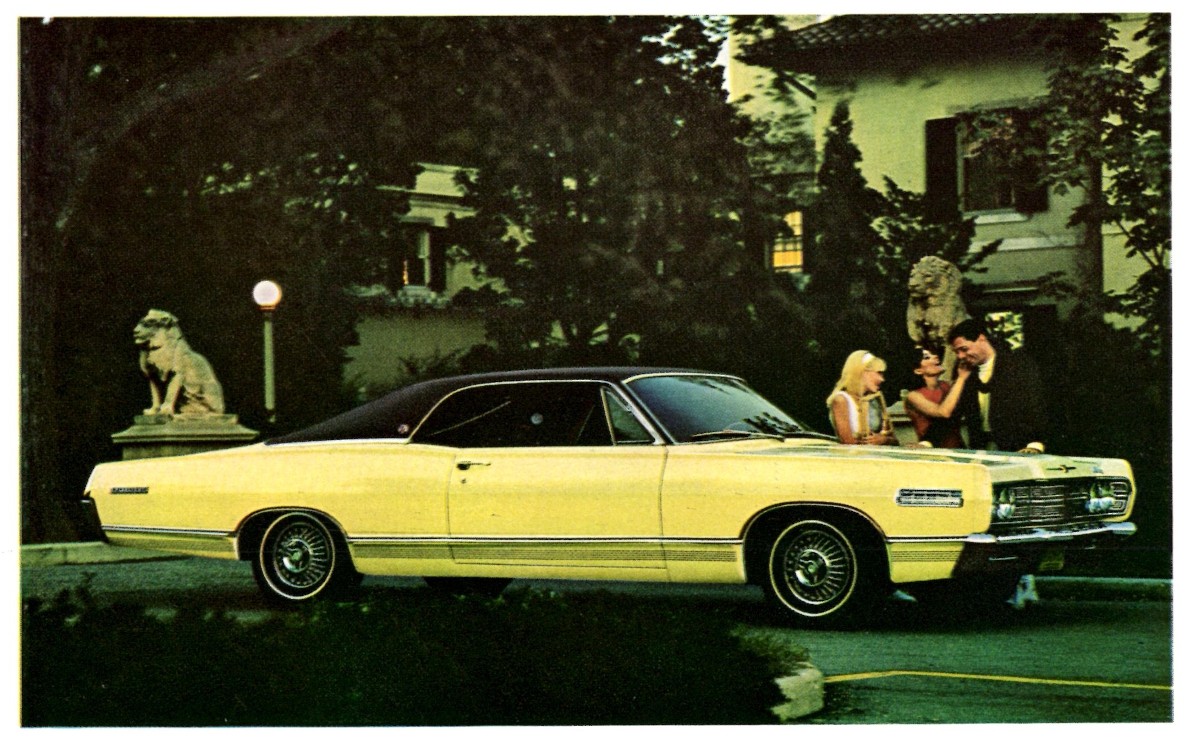
The Mercury Marquis is a large, older luxury car. The podcast mentions replacing the air suspension, which is the system that helps control the car’s ride height and comfort. On older cars like this, that kind of suspension work can become necessary as parts wear out.
Air suspension uses air bags instead of regular springs. It helps the car keep a consistent ride height, but if something in the system fails, you can get warning lights.
“Crawl springs and shocks” appears to refer to converting from air suspension to conventional coil springs and dampers (shocks). The key idea is that the car’s suspension hardware changes from an air-based system to a traditional spring/shock setup.
Warning lights are the dashboard alerts that tell you the car thinks something is wrong. Here, they’re trying to stop the suspension-related alert after the swap.
A bypass module is a small electronics add-on that helps the car’s computer stop complaining. It’s often used when you change parts so the dash warning lights don’t stay on.
Term
dark green wire with a lighter green stripe
They’re talking about a specific wire color pattern to make sure they connect or cut the right circuit. Getting the wrong wire can create problems or new warning lights.
The module is the car’s control computer for the suspension. It watches the sensors and decides whether everything is working; if not, it turns on the warning light.
These sensors tell the car how high the suspension is sitting. If they’re unplugged or don’t show the car moving when the system tries to adjust it, the car will think something is wrong and turn on a warning light.
The compressor is the pump that powers the air suspension. If it doesn’t run correctly—or if the car doesn’t actually change height—the car will detect a problem.
Pulling a fuse removes power from a part of the car. The idea here is that if the system is intentionally turned off, it may not treat it as a failure and won’t warn you the same way.
A fuse is a protective electrical switch that melts/breaks if too much current flows. Pulling it removes power to a system, and the car may notice and turn on a warning light.
Service mode is a special setting the car uses for repairs. It helps the mechanic test things without the car doing normal actions like moving the suspension.
The instrument cluster is the part of the dashboard with the gauges and warning lights. It’s how the car shows you things like speed and alerts.
Term
networks all got to communicate together
Newer cars have computers that talk to each other through wiring networks. If you cut the wrong wire, one computer may not get a message and can turn on warning lights or act weird.
If you see oil leaking from the shocks, it usually means the shock isn’t working as well as it should. That can lead to a rougher ride or more bouncing.
Lincoln Continental is a luxury car model. The speaker is saying that on some of them, something in the suspension can fail so the car sits too low and scrapes the ground.
“Air ride” means the suspension uses air bags instead of traditional metal springs. If that system has a problem, the car can sink too low and start scraping the ground.
Nitrogen charge shocks are shock absorbers that use gas pressure inside to help control how the car moves over bumps. The shop is saying this setup is different from the air-suspension systems they normally work on.
Ram is the pickup-truck brand associated with Stellantis (formerly under Chrysler). The shop says they avoid air-suspension work on Ram products because of the nitrogen-charged shocks used in that system.
Jeep is the off-road-focused brand within Stellantis. Here, the shop is saying they avoid air-suspension work on Jeep vehicles due to the nitrogen-charged shock setup they use.
This is a 1996 Ford Ranger pickup truck. The conversation is about a problem it had with starting—especially when the engine is hot—and how it was fixed.
The fuel pump is what sends gas from the gas tank to the engine. If it’s not working right, the truck may start poorly or run rough, especially when conditions change.
A rough start means the engine doesn’t catch cleanly when you turn the key. It can happen more on hot days when fuel and air conditions inside the engine change.
Term
hot days
They’re talking about starting problems that show up when it’s very hot outside. Heat can make the fuel behave differently, which can affect how smoothly the engine starts.
A heat cycle means the engine gets fully warmed up and then cools down again. If you only drive short distances, the engine may never get hot enough to burn off moisture and buildup.
Condensation buildup is water that collects when the engine cools off. With short trips, the engine doesn’t get hot enough to dry out, so moisture can build up.
Hydrocarbons are parts of fuel that can end up as leftover chemicals when the engine doesn’t burn everything cleanly. They can stick to engine parts and form grime over time.
Fuel injectors are the parts that spray fuel into the engine. If they get dirty, the engine can start running poorly because fuel delivery becomes less effective.
In a manual car, the clutch is what you press to disconnect the engine from the transmission so you can change gears. If it’s not working right, the car may not go into gear smoothly or may make strange thumps.
Bleeding the clutch means getting trapped air out of the hydraulic fluid so the clutch responds normally. If there’s air in there, the clutch can feel weird and not fully release or engage.
The pressure plate is part of the clutch that squeezes the clutch disc to the engine so power can get to the transmission. If the contact marks look uneven, it can mean the clutch isn’t engaging or releasing evenly.
Term
machined it crooked
This means the part may have been cut or finished slightly off-level. If the clutch isn’t perfectly aligned, it can contact unevenly and cause rough engagement or weird pedal feel.
A wear pattern is the uneven shape that friction material develops over time when it contacts imperfectly. The speaker argues that a clutch won’t naturally “self-correct” into a perfect pattern; instead, it will keep wearing down where it’s already grabbing.
“Torqued down” means the bolts were tightened to a specific tightness setting. Doing it correctly helps the part sit straight and secure—if it’s tightened unevenly, it can cause vibration and uneven wear.
A flywheel is a heavy spinning part connected to the engine. It helps the engine run smoothly, and it also affects how the clutch engages—if it’s not mounted perfectly, the clutch can wear unevenly and feel off.
A criss-cross pattern is the tightening sequence used to clamp a circular part evenly—like a flywheel—by alternating sides as you tighten. This helps prevent the part from being pulled down crooked, which can cause wobble and uneven clutch disc wear.
The crankshaft is the main rotating shaft inside the engine that converts piston motion into rotational motion. For clutch-related work, the flywheel must sit flat against the crankshaft so it doesn’t wobble, which would otherwise lead to driveline vibration and uneven clutch wear.
The master cylinder is part of the hydraulic clutch system (on many cars) that converts pedal movement into hydraulic pressure. If it’s replaced along with other clutch components, it can help prevent symptoms like a stiff pedal or inconsistent clutch feel.
Term
remachined
Remachining means cutting and resurfacing a component to restore its flatness or correct dimensions. In flywheel service, remachining can be used to address surface issues, but it must be done within allowable limits to avoid weakening the part or changing its balance.
The pilot bushing helps line up the transmission to the engine. If it’s worn, the car can feel rough when shifting and the clutch/transmission parts can wear out faster.
This is a Ford F-250 pickup from around the year 2000. These trucks are built for heavy work, so repairs to the clutch/drivetrain are pretty common topics.
A Ford F-350 is a heavy-duty pickup, and this caller specifically mentions the 7.3L diesel engine, which is a well-known powerplant in the Super Duty lineup. The 7.3L diesel’s durability and torque make it a popular choice for towing and long-term ownership.
“7.3 diesel” means the engine is about 7.3 liters and runs on diesel fuel. Bigger diesel engines usually make strong pulling power, which is why they’re popular for towing and work.
“Shift on the fly” means you can switch the car into 4-wheel drive while you’re driving, instead of having to stop first. It’s useful when road conditions change quickly.
They’re saying the button/switch you use to control the window might be the problem. If the window only works sometimes, the switch can wear out or make bad electrical contact.
Terminals are the metal connection points for wires. If they get corroded from moisture, the connection becomes unreliable and the window/door electronics can act up.
A “door switch” is the control switch inside the door that sends electrical signals to the window/lock circuits. When it wears out or gets intermittent, the windows can fail in a way that’s consistent across both sides.
A window switch is the button you press to raise or lower the power windows. If it’s worn out, the window may only work when you move or press the switch just right.
A wiring diagram is a map of the car’s electrical connections. It helps you figure out which wire should be getting power when you press the window switch.
LIVE
Hey, welcome to the end of the hood show podcast.
I am Russ Evans, along with Shannon Nordstrom and Chris.
He's playing hooky for a good reason.
It's just me and just Shannon, and we're
going to talk cars like we always do.
And as usual, Under the Hood is brought to you
by Berkeley One Classics, your key to collector car insurance
celebrating 50 years in business.
And by car-part.com, over 200 million recycled originally
climate use parts ready to ship to you fast.
And by roadreadywheels.com, use the code hoodie
to save even more on your aftermarket OEM lookalike wheels.
Now, here's the podcast.
This is Under the Hood.
Welcome to the end of the hood show.
I'm Russ Evans, along with Shannon Nordstrom.
Welcome, hoodies.
Thanks for tuning in so we can help you tune up.
Chris has taken the day off, so we're
going to get this thing rolling all by ourselves
with the help of producer Doug Maschik, of course,
from Prairie House Productions.
Hi, Doug.
He's waving.
He must have ramped the train this morning.
He did.
He was stalled by a train out near where we're at.
We get the trains now.
We told him to jump it.
And so he was here on time, so I think he jumped it.
I think so.
He's got that, I jumped it look, doesn't he?
I didn't check the van in the parking lot
to see if the bumper was Duke's of Hazard style
or what we had going there, but.
Well, we're going to get right to it.
We've got, well, we've got a load of colors already.
We've got room for one more up there,
but we're going to go right away to talk to Ron in Idaho
with an 18 Silverado.
How are you doing, Ron?
I'm doing great.
How are you guys?
We're not bad at all.
Missing Chris, but we're all right.
We'll get her done.
Hey, thanks for what you're doing,
giving us all this good information out here.
We really appreciate it.
You're very welcome.
I've got a 2018 Silverado.
I'm curious about something.
I've been reading on the internet about the AFM delete
devices that you put in your OBD port that keeps it in eight
cylinder mode all the time.
Does that really save the engine from losing the lifters
and having to be rebuilt?
Well, it stops it from turning on and off.
And what we've seen when they're dead,
if we've taken one apart, we see that one of two things
has happened, either the lifter has fallen apart,
the lock pin has come out of it and it's fallen apart,
because it's got a lot of wear on it,
which could be caused from turning on and off
if the oil is not changed off enough or just a poor quality
or some contaminations in there, whatever reason.
The other thing we see is camshafts that are worn down
because they're delaminating.
The metal's coming apart that's on that forged camshaft
and the lifter as well.
And that breaks down, which is an oiling system issue.
That wouldn't have anything to do with the AFM.
If you shut the AFM off, the cam could still wear.
That's gonna be a separate thing.
But as far as the lock pin goes, yes,
I believe that if you've got,
let's say you just have an oil quality issue,
so things are gonna wear under pressure easier.
If that lock pin is having to move a lot,
anything that has to move needs a friction reduction
by means of that oil.
So if you've got something going on there
and it's gonna wear, keeping it from moving
is gonna prevent that wear you would hope.
So it's definitely not gonna hurt anything
and they're really cheap.
I see those out there anywhere from $40 to about $120
depending on which brand you buy
and they all do the same thing.
They just keep the computer in a mode thinking
that we shouldn't be running the AFM right now
and it shuts it down.
So for peace of mind, I have a lot of customers
that put those in the vehicles.
Now as the vehicles age,
if they've ever had that system operating
or if the system just breaks down on its own,
the solenoid valves that open up to allow the oil
to go into that system to shut those lifters off
to collapse them, the solenoids can leak.
And if they start leaking just a little bit of oil
creeping by them, it tries to lift that pin off the seat
in the lifter, that lock pin just a little bit.
And that's worse than being turned on fully
and turned off fully as they're normally supposed to work.
There's no pulse with them between their on or off.
So if it's partially open,
it's gonna allow that pin to slide off its lock
and wear it out faster.
And there's nothing you can do about that.
So shutting that off, it won't help that
once it's already occurred.
But I think if you shut it off early in life on a vehicle,
your chances of that are pretty low
that it's ever gonna leak by there.
But if you do, like a lot of people have,
when they hit 150,000 miles
and they still haven't had a problem,
they're wanting to fix it,
they put that in and it disables it.
I think they might be kind of defeating the purpose
because it's better to have it full on or full off
than that little leak in between.
If that makes sense.
It does, it's only got 18,000 miles on it
and it gets regular maintenance.
You know, if the question was with 18,000 miles,
do you think there's any significant wear
in those solenoids?
Yet I would say no.
I would say you're probably pretty good.
But also, I see so many people come in
that have never turned that off
and they're working just fine.
Yeah, they come in with,
we get them in here with 170,000 miles
and they're still running fine.
And it's usually when you look at the vehicle,
it's either been ran really hard
and it's been maintained well
or you can just tell it was a truck as nice
as it sounds like yours is run with 18,000 miles
and somebody that's really concerned
and they just took extra caution
to make sure they did their oil changes
at 3,500 miles or 3,000 miles instead of 7,000 miles.
And the way they drove the vehicle made a difference too.
But it's a truck, you're supposed to be able
to use it like a truck.
And I know that as we've had
these multi-cylinder displacement changes,
we've watched over the years
as the technology has also improved
because they went from the old 468 fuel injection
or whatever it was in the old Cadillacs back in the 80s
to the first generation,
which seemed to operate the same cylinders.
And then they got the newest generation
where it can random or not random,
but it uses all the cylinders in different sequences.
And the thought was that it would not be
as problematic on certain cylinders that way.
And so there's been many evolutions of it
and then system has gotten much better over the years.
We've seen at this point, I think Russ,
tell me if I'm wrong, if I am, please do.
But the failures on the 7 to 13 model
they're older now, so you see more of them,
but that system seemed to produce more failures
at its point in its life.
Earlier.
Then this 14 or newer LT series has,
which was an updated version of the system.
That earlier system, 12, 13,
those were the ones that really hit.
We put a lot of engines in those.
So, but I think what Russ said a good thing,
if it's peace of mind and you sound like you want that,
we haven't found that there's any harm
in putting the system to bed, just putting it to sleep.
But if you want to do it 100% the right way,
you would take out the cam and the lifters
and get the whole solenoid manifold and everything just.
And that's a lot of work and a lot of money.
That's that cost a bunch of money.
This is a pretty easy peace of mind.
Is there any one particular brand of those defeat devices
that you like over the others?
No, they all seem to do exactly the same thing.
I haven't heard anything bad from anyone on those yet.
And I haven't heard anything like special or good
in exception to one brand over another.
They go in there and they basically tell the computer,
it's in from what I've seen that it's in toll hall mode
without it being in toll hall mode.
It doesn't change the transmission settings.
It just goes into that portion where it says,
when it's in this mode, don't run the AFM, shut that off.
And it does that.
Other ones have the ability they shut off that
and they also shut off that start-stop mode
when you come to a stop sign that shuts it down
and stop start it shuts that off too.
So you can get, if you pay a little more,
you can get it to do different things.
They also have one that when you put in,
remembers the last settings,
Shannon has something similar to that in his,
you plug it in and whatever you set on your dash,
if you turned off the stop start,
it doesn't start up the next time.
That's exactly what I have.
And if it's in toll hall mode, when you shut it off,
it restarts in toll hall mode,
where I've got one and every time I pull a boat,
every time I turn the thing off, I start it back up.
It says, don't forget to put it back in toll hall mode.
I see you have a trader plugged in.
So it's, I mean, it's not a big deal,
but it's also a pain because it's like,
look, I've got this plugged in, just stay.
It should've, my thought would be on that.
It should always, you got a trader plugged in,
automatically go to toll hall mode.
If it knows the trader's plugged in,
it's reminding you, put it in there.
Yeah, no, that's, the device I put in was from Gen 5,
DIY was the name of the company.
And it's on the auto start, stop.
And it's a 22 and a half Silverado.
That's the mid-year refresh.
And that's Russ Nail that right on the head.
It just remembers the last button push that I did.
It's not changing any of the factory settings.
It's just remembering that every time I was starting
the vehicle, I was pushing the button
and turning start, stop off.
Well, this just does that automatically.
If you watch the information screen,
it's just doing that automatically
when I start the vehicle.
Does that help you out?
Okay.
Yes, it does.
I'll do some research and I really appreciate all your help.
You guys have become my favorite podcast
of anything I listened to.
So I really, thank you very much.
We appreciate that.
Thank you.
Take care.
You bet.
Have a great day.
Well, thanks for the call.
That was awesome.
We always appreciate a little bit of feedback
on how we're doing and we'll try to keep doing better.
Welcome back to the end of the hood show.
I'm Russ Evans along with Shannon Nordstrom.
Welcome, hoodies.
Thanks for tuning in so we can help you tune up.
Oh, very welcome.
We're glad that you remember your lines.
We'll just give you a little extra.
Oh man, we've got so many people calling us.
I wish Chris was here to throw his two cents in worth,
but you're here for answers and we're going to give you some
answers.
So we're going to go to Randy in Arizona with an 04 Mercury.
How you doing there, Randy?
Hey, great.
I don't know how you're doing it without Chris.
I'll pray for you.
Thank you.
That's how we're doing it.
God is my copilot.
Shannon's the guy in the back.
Yeah, I'm hanging out with him.
He's checking luggage.
Definitely love listening to you guys.
So I'm doing what a pretty common thing's done on a 22-year-old
Mercury marquee is I'm replacing that air suspension with the
crawl springs and shocks.
I got the kit.
And so unlike my truck where I got one of those warning lights
with my tires, I'm trying to eliminate that warning light
situation.
So I did some research and I want your opinion.
It gives you the research I found is there's four options.
One, I'm eliminating.
I'm not going to put in a bypass module.
So it's either a dark green wire with a lighter green stripe
in it, which I looked at a diagram.
And I've been underneath that area.
I had my glove box out before.
And if I did do that, I would want to know maybe if it's important.
There's two areas.
Make sure I cut it in the right place.
The other one is one of the other ones is turn the switch off,
which my switch is off right now in the trunk for the suspension
and pull a fuse.
But I just have I'm not confident that one would work.
And then the other one is my car is real clean underneath.
I could just I've been underneath there doing all kinds of stuff.
I could pull that those hearts out and then take those sensors
and tie them, zip tie them up.
I mean, I'm sure they're clean and that would be easy to do.
So just wondering your opinion on which one of those you would recommend.
The best way to do is with the module.
If you got to buy the kit, they have kits with the bypass and kits without.
But when you're not doing that, you've got a couple things going on.
So you've got ride height sensors back there.
If they're not connected, it needs to see that the computer wants to see them
connected and wants to see them moving when it commands error to the suspension.
So if the compressor is not running, it's going to say, Hey, we the
compressor didn't put a load on it, turn the light on.
If it is running, but the car doesn't move and suspension, it doesn't see
those sensors move up and down.
It's going to say, Hey, we turn the compressor on and they didn't move.
Turn the light on.
If we try to drop it and it didn't drop, turn the light on.
So it's got a lot of things it'll turn that light on.
If you turn the switch off and then pull the fuse, what's going to happen
is it's going to see that the switch is off and that'll be fine.
It shuts it down.
But when you pull the fuse, it's going to turn the light on because it sees
that there's power missing from the module back there.
Sometimes you can just turn the switch off with the car sitting.
You know, if it's sitting at rest, keys turned off, the doors open,
you can just flip that switch off and it'll stay off.
That'll work fine.
But there's a lot of those cars that don't even have a switch.
Those are the ones that you can't get by.
But I have had some success with those where just try that first.
Turn the switch off with the car off, leave the fuse in it and see what it does
because it won't try to power the compressor or raise or lower it when it's
in service mode by having that switch off.
Other times, though, there are some of those models that with the switch off,
it says on the dash, hey, the power's off to the suspension.
So we got a light on and that's what the code is, is that it's turned off.
And it wants it's reminding you to turn it back on after so many minutes.
Yeah, there's a few things you can do with that.
But have you bought the kit yet to convert it?
Yeah, none of the I bought one from the Jeep guys there and the it didn't come
with a one of those bypass modules.
But and then none of them that I saw had that.
It looks like you can get one for probably 5000 bucks, whatever.
And then what you probably need a battery for it.
No, it should be just a just should be just a plug in.
No, to that to that.
Oh, really?
OK, now you might be able to pull in the fuse and shutting it off.
That's one thing and it's old enough.
I think you can the wire you're cutting feeds the instrument cluster.
And I think you can do that if you get the right one.
Now, if you cut the wrong one, you can always put it back.
It's not the end of the world.
But yeah, if you can look up and find which wire to cut, what you're doing
is you're just cutting the the power to that information center on the dash.
You just want to shut that, you know, tell it and everything's fine.
We're not doing anything.
The newer ones, you cannot do that.
Yeah, that's all the networks all got to communicate together and you cut
something that's going to say, hey, I'm missing the signal
to the light, turn the light on.
But this one, I think you know, it powers the bulb.
It's funny, though, you eliminated the height sensor one that cracks me up.
They ought to when you go to YouTube, there ought to be a little
headline saying fiction and nonfiction, you know.
They're there should.
And it's if you look at the stats on the Internet right now, I believe
we're up to close to 60 percent of all information period on the Internet
is posted by and run by AI and bots.
So it's fake.
So when you're looking at the posts on on Facebook, I used to enjoy
just 34 years ago, enjoy reels on Facebook and posts on YouTube
and Instagram that were somebody had to work hard to post crazy, funny content.
You'd see a car crash that was a stunt and staged and it was real.
Like when they jumped that Duke's a hazard car and I think it was in Michigan
67 years ago, they had that huge jump and just destroyed the car.
Well, it was a hundred percent real.
Well, now they're doing that with AI and if you watch it close, you'll catch
the spots where they screwed it up.
But like you said, so when we post on our YouTube page every week, if you
haven't seen us, you can be scared and see our faces there.
But on YouTube, it asks me, is there any AI generated content?
And if I do not click, if I had it in there, which we never have, and I
clicked on the box that said, you know, or didn't click on it for AI, they
can take your page down and just ban your channel.
But there are hundreds of thousands of people that never put that in it.
When you see it, it'll give a warning, right?
As you turn the video on at the top, it says contains AI generated content.
And I've seen plenty of that, but I've also seen plenty that are horrible AI
with bad information because you can ask a channel to just, you can ask AI,
create a video on disabling air ride on a Mercury, and it'll come up with
whatever it finds on the internet, good or bad.
And it'll post it like it's the truth.
So it's, it's hard for you to find it.
You've got to find a guy or girl out there that's, that's actually done it.
They're showing you the procedure as they do it and how it worked.
And I think you can believe for sure you can find that if you take a look.
You know, you're, you, you gave me a piece of mind in two areas.
One is the, if I cut a long wire, which I'm probably not going to do,
then I could just reconnect it because the fear was cutting the wire
and I'm screwed forever.
Yeah.
The other thing is I had that, that switch off and left it off by accident.
And that drove my car around and no light came on.
Then keeps on thinking you're.
Yeah.
So I'm thinking that just as simple as just turning that switch off.
We'll probably remedy the situation.
So I appreciate it.
Turn off the lights.
A lot of people too, with the air ride problems, they found, they're like,
Oh, hey, my, my bags are blown out or whatever.
My air ride's not working.
They turn the switch off and they're like, well, I've been driving it for six
months.
Did you notice anything?
No, it drives exactly like it did before.
It seems fine to me.
It's like, well, maybe you just want to leave it.
Don't convert it.
Don't do anything.
Just leave it.
Some of them work pretty good because the air bag is what they call an air spring.
It adjusts the level of the vehicle, but it uses the springs of the car.
If it's equipped with coil springs back there to keep it level, the air ride
just runs it up and down and changes the dampening a little bit, but it still has
the shock built into it.
So if they're not leaking oil, you know, in a lot of cases they're still safe.
You just got to find that out with your own shop to know for sure.
Yeah.
And so that was another, and I'll let you go on the next one, but I haven't
one of it.
So in other words, it won't hurt anything.
If you're not hearing metal rubbing or you're not bouncing up and down and you
can hear problems, it ain't going to hurt nothing to keep driving it as it sits.
Right.
Right.
If it's got a spring back there anyways, and there's no leakage of oil from those
shocks and they're still doing their job, it's not bouncing.
When, when you hit it like a roller coaster, when you hit the bumps, yeah, most
people, I know they've, they've left them.
I've got some customers have had them 10 years.
They're like, oh, I just keep driving the thing.
Okay.
Well, if you've gone this far, it must be.
Okay.
And you have other ones like the Lincoln Continentals where they go bad and the
car just dragging the ground, dragging the ground.
You can't, that's unsafe.
And you can't do like a dog with warm arms, you know, so.
All right.
Well, I appreciate the info, guys.
You bet.
Thanks for the call.
Take care.
Yeah.
Those air ride, that's a thing.
We still convert a lot that have to be some of the newer Cadillacs, some of the,
um, if you don't need Jeeps yet, no, we don't.
We will not work on the, the, we don't do any air suspension work on the Jeeps or
any Chrysler Ram products because of the nitrogen charge shocks they have in there.
Um, it's a, it's just a different type of system.
And with that, it's just something that we don't like.
I mean, the dealers will still work on them, but they're kind of a nightmare.
So we've stayed away from them.
We've had our own employees that own those and they said, uh, nightmare.
We'll be right back after a couple of minutes on under the hood.
Take care.
Under the hood is brought to you by Berkeley, one classics.com, your key to
collector car insurance.
And by car dash part.com over 200 million recycled originally
couldn't use parts ready to ship to you fast and by road ready wheels.com.
Use the code hoodie to save even more on your aftermarket OEM lookalike wheels.
What would your vehicle be without wheels?
Our partner at road ready wheels has wheels, thousands of wheels, affordable in
stock and ready to ship to you.
Replace or upgrade your damage or plain steel factory wheels with new OEM
looking road ready wheels.
Maybe steel is the way to go for you to mount a second set of winter tires or
you just don't like the aluminum look.
Road ready wheels has many choices for you.
Go to road ready wheels.com and use their online vehicle selection tool to
help you find the wheels that fit your vehicle.
Mercedes Cadillac Ford Chevy Chrysler and many more with the OEM fit and
look that you want, save 10% at checkout when you use the code hoodie for
being a loyal under the hood show listener.
New OEM wheels can be expensive with some wheels that cost 500 or more from
the dealer.
Many of those from road ready wheels are about half of that saving you some
serious cash.
Use your factory TPMS sensors and caps too.
Go to roadreadywheels.com to find out more.
That's roadreadywheels.com.
If you need parts, whether it be for a brand new car or going back about 20
years, it doesn't matter.
Check out car dash part.com.
It's fast and it's easy over 200 million parts strong all across North
America, over 4,000 recyclers to choose from, giving you the largest
selection available, whether it's an engine, transmission, doors, seats or
wheels, you can find them on car dash part.com.
We even let you know what parts from other models and years fit your car.
Many recyclers supply pictures of their parts too.
We even have a mobile app, search US and Canada or buy from your local
independent recycler, whichever you choose.
Buying recycled is good for the environment and good for your wallet.
If you're a repair shop, there is a professional version available for you at
no charge.
That's car dash part.com car dash part.com.
Check it out today.
I'm Russ Evans with Shannon Nordstrom and Chris Carter.
When we needed protection for our own personal collectibles and performance
vehicles, we turned to Berkeley one classics and here's why.
Berkeley one classics has over 50 years experience and they're dedicated to
serving their customers.
They will work with you to help determine the amount of coverage a vehicle like
yours should have.
And that coverage is agreed valued coverage.
So there is no disagreement on what your vehicle is covered for.
They also have discounts for car club members.
Berkeley classics ensures a wide range of vehicles from sports cars and rare
exotic cars to antique vehicles, including cars, trucks, tractors, military
vehicles and antique motorcycles.
Over 50,000 of them a year.
Visit Berkeley classics.com today and get a free quote and find out firsthand
what they can save you and how well they can cover your valuable investment.
It takes just a few minutes using their easy online quote tool on their
website, visit Berkeley classics.com.
That's Berkeley classics.com or call 800-603-3330.
That's 800-603-3330.
Welcome back everybody.
It's time to get back under the hood with a motor medics.
Welcome back to under the hood everybody.
I'm Russ Evans along with Shannon, the Nordstrom.
That's perfect.
Welcome hoodies.
Thanks for tuning in so we can help you tune up.
We're going to give away another hoodie.
Congratulations, Barbara Herkowitz from our friends over at Berkeley one
classics celebrating over 50 years of collector car coverage.
And congratulations.
Everybody here under the hood.
Hey, we've got, uh, we got calls just lined up today and we always love that.
And we're here to help you out.
So the next one we're going to go to here is.
Gil in, uh, Arizona, Arkansas, which one is it?
Give me a, there we go.
Arkansas.
All right.
Arkansas, Arkansas with a 96 Ford Ranger.
How you doing?
I'm doing well.
Sorry that Chris isn't there because he would have told you guys to cut the blue wire.
Cut the blue wire.
Chris would have been right on that in color.
Yeah.
Everybody knows you cut the blue wire.
Should have told that guy.
I said, well, I don't know about cutting that yellow wire with the
stripe, but don't cut the red wire.
We've all watched two movies.
Learn that from the M&M's guy on the, before the movie comes out.
You always see the M&M's.
I never got the red wire early.
I think I've only been to a movie early enough once to see that before the movie.
I believe it.
You're probably like, well, it says the movie starts at seven oh five,
which means we can get there by seven 20.
We'll miss all the preview.
I may have that in my mouth.
I'm the guy that gets there early before Melissa Mnudo or whatever her name is.
Is that her name?
I've seen it once.
The, you know, but what the screen is dark still and the curtains are closed.
They're doing an interview type stuff.
No, nothing.
It's like, it's like dead silent.
The people are still coming out.
Guys never been there.
That's going to, they're still coming out.
My popcorn's gone before the, before the previews even start.
So what can we do for you with your 96 Ford Ranger?
I'm calling to give a report and to ask another question.
All right.
So a while back, I called and we had a fuel pump issue and we replaced it.
And then it had a rough start on hot days, which you said to put, put in CRC
guaranteed to pass.
Yes.
Which I did.
And you said, even try it twice, which I did.
And now I don't even think twice when I started up on hot days.
It just fires up.
No stumbling.
So I want to say thank you on that.
Perfect.
That sounds good.
We'll tell, we'll say a thank you to CRC.
They'll appreciate that good, good cleaner always helps out a lot of things.
Mama told me to clean my room and I wouldn't ever know if it helped or not.
Okay.
So besides the other question I also have back to CRC, when should I run it again?
How many miles are you putting on this thing a month?
Maybe 500 500 a month.
Maybe that low.
How many of those miles are in one drive where you're getting the vehicle heated
up and through a really good heat cycle on the engine?
Are they all little drives?
Uh, each it's 10 miles, it's 11 miles each way.
I'd probably be doing it every two months.
Those are really short trips and that's, that's what's going to happen.
So you're going to get condensation buildup in the engine when you shut it off
as things cool and heat up and you're going to have carbon that's unburned fuel
and things that hydrocarbons, they get on those injectors and in the back of the
valves and it just sits there and then it hardens up and it keeps building up.
So if you told me you ran this once and it got a little better, you ran it twice
and it worked really good.
Yeah, I'd, I'd do that every couple of months.
If you're, because it's, it's cheap, it's cheap insurance.
It keeps it clean.
Do that and then, uh, you know, see where you're at.
I mean, you know, if you, if you go a little too long without doing it and it,
it starts running poorly again, you can, you can do it again.
Like every other gas, every other tank, then it sounds like because I only, you know,
right, because that, but that's still going to be like every, what four months?
Uh, no, it's about once a month.
Okay.
Yeah, you could, you could go every couple of months.
Okay.
So now when I called in the last time a little while back, I'm the guy that had
put in a brand new clutch a year later, the pebble got hard.
It's been bled a million times and it only had like 2000 miles on it.
So my son and I replay every part from beginning to end, just because it was
driving me nuts before, because I could be at a stop, push the clutch in and the
clutch was released, but the disc wasn't spinning enough to allow it to go into gear.
I'd hear a thump in every year and then all of a sudden I'd have to give it a shove,
but I didn't get no grind.
So anyway, we replaced it and everything, but the question now is after it's all
done, it works beautiful.
Looking at the pressure plate, half of it still had the machine mark.
And the other half showed where it was actually grabbing or wearing.
But like I say, half of the pressure plate still had perfectly machined
marks in it after 3000 miles.
Any thoughts just because.
Now, when you say half, you don't mean like half the moon and the other half.
You mean like, uh, yeah, it's two inches wide and it's half.
Yeah, I'm talking half the moon when half was machined still and the other half
showed where it was actually doing work or something anyway.
It's not smooth after 3000 miles.
Yeah.
If you're looking at the face of it, like a clock in between 12 and six,
they're all gone in between six and 12.
On the other side, there's machine marks that then it was either there yet.
Yeah.
Then either when they made that either it's bent, which is very unlikely or they
machined it crooked when it was on their machine, it wasn't sitting level.
So it, you know, it was wobbling as they machined it.
So half of it is machined further down than the other side.
Very unlikely that the clutch surface was done that way because the clutch fibers
are synthetic and they're basically molded and pressed into a surface in a mold.
So thousands of them coming off their machine would be that way, but it's
very likely that when they machine the clutches that way, and especially if it
shatters, if you try to release that clutch, if it no chatter, and then then
it's, it's gripping, but it's, it's not right.
It could never, it'll never, it'll never wear into a pattern by itself.
It'll, well, it'll, it'll cut down the side of the clutch that it is grabbing
on the side of the flywheel that it's touching that will wear down until it's
even all the way across and it's going to take a while, but it'll, it'll wear down.
But it sounds like it's off, maybe even by a thousandth, you know, it's just, it's
just like I said, we put brand new everything in it just because, and because
like I said, it was hard to go into gear when you're at a stop light and it's
like, okay, I need to move and the pedal was getting stiff.
So like I said, we put all the new parts just because I wasn't going to live
with it and just on inspection, we noticed the way it looked and we've
disposed of it now, but it was just odd to have perfectly machined side and one
side that actually was working, you know, there was no chatter.
The original, right?
The one that you took out.
Yeah, it was only 3000 miles old.
Okay.
And then the other thing that it could, that could do that, it's, you know,
somebody will probably say, oh, you forgot about this.
Well, when the flywheel is bolted to the engine and torqued down, if it is not
torqued in a criss-cross pattern in several steps, it could have been bolted
down tightly, just a little crooked.
So it's tighter on one side than the other.
And if it's not flatly seated against the crankshaft, it's going to wobble back
and forth.
So your clutch disc coming out straight is going to wear, wear it funny.
Uh, but more than likely, uh, because that's always in a different position
when you release the clutch, I'm thinking that your flywheel was just ground.
They, they ground the thing.
Did you guys replace the flywheel or remachined it or anything when you had
the part?
Uh, yeah, we went from flywheel all the way up to the master cylinder.
We were taking no chances on having a stiff pedal when we got done.
Is it all good?
Did that all, what'd that look like, the flywheel?
Did they think it was flat yet when they machined it or did they make any
comments or?
Um, it, it, it kind of looked weird.
No, I did the work myself.
It kind of looked weird where one side looked like it had more, it had, it
had heat cracks on it and you know, look like it had some hot spots.
Was the pilot bushing in good shape yet?
In the end of the crankshaft?
Uh, oh, it was still good, but we replaced it also.
Okay.
I said, we weren't taking no chances.
It sounds like you got it covered probably, but I'm just curious.
That analysis is always interesting.
When you look at the broken part of the parts, I say broken parts.
Not all of them are weird.
Well, thanks for the report.
Pressure plate.
I got, thanks Gil.
Take care.
You're welcome.
All right.
We're going to jump over and talk to James in Oregon with a 2000 F 250.
How are you doing James?
Hi, it's a F 350 with the 7.3 diesel power screw, big one.
All right.
And, uh, everybody, everybody wants to buy it because it's a six speed manual.
Every, it has every other option, but no shift on the fly that was going
on bad on them and no, uh, self locking hubs.
Oh, it's never, ever been a part.
It's never been a part.
We bought two of them and this one has the most miles on it.
It's 300,000 miles.
And, uh, the other day when I went to town and rolled the window down on my side.
And then when I got into town, I couldn't, it wouldn't roll back up again.
So, and it's done that a couple of times since then might just be a loose wire.
I don't know the, the passenger windows doing the same thing.
They're both, they're both having issues.
They'll go down, but not up.
Yep.
Yep.
Okay.
Eventually I can get them up and lock the, lock the truck up.
But I'm kind of, you know, so literally about leaving the windows down.
When you say eventually you can get the windows up.
Is that with the doors closed?
You haven't done anything, but just mess with the switch.
Yes.
Okay.
More than likely than what you're seeing is a problem with that switch itself.
Uh, the switches are very common.
We still put a lot of those in those model trucks and the Chevy's of that year.
When you have the door open, rain gets in there, snow all sorts of
things and can corrode the, the terminals.
And the way they work is they have to have a ground to all the wires when they're
at rest and then as you push it to up or down, it removes the ground from one
wire and applies power to it to go up.
And then it puts it back to ground when you let go of it in the neutral position.
And then the other wire gets pulled up off of ground and hooked to power.
So if I would think wiring only if you move the door, you open and close it a little
bit, wiggle it around and then it works.
But with what you're have going on there with that, I'm thinking more of the switch.
The partner over at standard does sell a really nice door switch for these things.
Window switch with the lock and everything.
And they're built, they're, they're more weather resistant inside.
They're, they're built with good quality terminals.
So I think that would be my first thought.
It can be tested.
You could pull it apart and get a wiring diagram and all that and check it out.
But if you can push harder on the switch or wiggle it around a little bit, that's
almost always a switch issue, especially if it's occurring on both windows.
I asked the question, if you go to the passenger side and use the window switch
over there, does it do the same thing?
Or does it operate normally from there on the passenger side?
It's doing the same thing.
And I was kind of thinking maybe it was because the sun was in the door when it
was parked and then, you know, driving down the road, it gets cooled down, I guess.
You're right.
It can, if the switch is getting poor, poor ground inside of it, that can do that.
And then if you lose the ground and the driver switch, the passenger
window switch won't work either.
Our view on plug the switch standard.
Yeah, standard parts.
Are they still available at Napa?
Yeah, you can get standard pretty much every auto parts store carries it.
Advanced auto parts carries that.
That's where we get them around here locally.
You could pick them up at other stores too, but, you know, my brother and I, we
used to trade every 10 years, but we got these diesel.
They're so good and really good mileage.
That's a good truck.
They've never been apart.
You've got the hidden gold right there.
Yeah.
Yeah.
Well, everywhere, every time anybody messes with it, they want to buy it.
So I guess that means something.
Yes, it does.
Well, I never, never figured I'd be driving a 26 year old truck.
Well, it's a lot of miles and it's been a lot of money saved because if you go
to replace that truck today with the equivalent truck, you're going to spend a
lot more money.
A lot of money.
Thanks for calling us.
Yeah.
We bought both, we bought both of them for 35 each and now they're 107.
Yeah, that's, that's crazy.
Isn't it?
All right.
Thanks, James.
And you can't buy it.
You can't buy a manual transmission anymore in a truck.
Oh no.
All right.
Take care.
Thank you.
Thank you very much guys.
You're welcome.
866-5944-150.
This is the under the hood show with Russ and Shannon.
Chris is out today.
He'll be back next week.
He says so he promises.
We'll, we'll, we'll count our chickens.
He'll be here.
He'll be here and he needs to be here because otherwise we're going to leave
Russ solo and I don't like doing that.
Yeah, it happens now and then, but we're going to jump right back on the
phones now because we've got people to talk to.
We're going to talk to Mike in North Dakota and Mike has a 2013 suburban.
How you doing, Mike?
Pretty good.
How are you guys doing?
All right.
I'm liking it.
It's a good day.
Every day is a good day.
Yep.
Um, 2013 suburban, 255,000 miles.
Uh, last January, I was about 30 miles from home on the shopping trip, uh,
driving through the grocery store parking lot.
The trans kind of slipped a little bit and I parked it, went inside, left it
running cause it was about minus 25 out that day.
And I came back outside and I had no gears and so thought maybe the shift
cable had broken from ice or something crawled under, looked at that.
That was fine.
Called somebody to come pick me up and I sat there for probably 20 minutes to
put it in gear and it drove just fine.
Uh, called my buddy back, told him it was working now.
And I drove probably five miles and a quick moving again.
Um, so called them back, got a ride, tailored at home, left it for a couple
of weeks, the weather got nice out and I, uh, drove just fine for a couple of months.
Then it did the same thing again and I got P0872 and P0989 for the codes,
trans fluid pressure sensor, circuit C and E low.
And I guess my question is, is, I haven't got the pan down yet.
I'm still trying to get the exhaust bolts loose.
Um, is that like just a solenoid type sensor up in there that I can replace
or how's that work?
It's not the sensor causing the problem.
It's the problem causing the sensor reading of no pressure.
I think you actually have no pressure and it's not going anywhere in that pressure
problem might be caused by something in the fluid that's not supposed to be
there more than likely moisture.
If it's either there's a failure in the pump, there's a failure in the, in the
valve body, so it's hanging up and sticking and you're dumping all your
pressure or you've actually got moisture in there.
If you got a lot of moisture in there, water, not coolant, but because if you
had a cracked cooler and the radiator could do that, but the coolant won't
freeze under cold temps, though, you can get moisture to freeze.
And you'll, you should be able to see that if you look in there and you see
that that fluid, when you get the pan down, it's a little milky or there's
some droplets, balls of water running around the bottom of the pan.
That's a good indication.
That's what's going on.
And when it gets really hot though, if you can get, if you get that transmission
really hot, like when you're towing and it gets up around 200 degrees, it's
going to start burning that out of there, boiling it out of the fluid.
But if you're driving without a trailer and it stays in that 160 range, it
just doesn't get all the moisture out of there.
And you could even take a, a small sample of that fluid out of the, the bottom
into that, but once you dump most of it out, you take a little off the bottom
and put it on a hot plate and see if it sizzles.
If it smokes, it's doesn't have any water in it, but if it's sizzles and
crackles like bacon on a stove, it's got water in it and that moisture, it
will cause things to stick, especially on an older transmission.
And you could try to do a flush on it with some cleaner first in our shop
where we use the justice brothers cleaner.
We put that in, we run it, we dump it, we change it and flush it completely,
put a filter in it and, you know, that may take care of it.
On the long hand, you may have to drop the valve body out of it and make
sure all the valves are clean.
They move forward and back full travel like they should.
You may have to use some cleaner and spray in there and get them cleaned up.
And that, that could be good to go on.
It doesn't sound like your transmission has got a major failure.
It sounds like it's either got moisture in it or it's got a sticky valve body.
The fact that you, if you would have said it started and went for five miles
and then quit again and that was the end of the story, that was going to be
a different answer.
When you said you went two months and it seemed like it shifted fine.
During that two months also, it behaved normal.
Yeah, yeah, yeah, it drove just fine.
I mean, it's kind of a second vehicle.
So it's only makes, you know, 10, 20, 30 mile trips.
There you go.
Well, I think once you, you get that pan off, you're going to
have an immediate tell.
If you take that pan down and you smell icky fluid and you see a lot of
control valve could be having issues with the valve behind it too.
You know, it could be having issues and not giving enough pressure.
But if you take it down and everything seems kind of somewhat normal.
It's not really burned up.
You don't see anything out of line.
And you start seeing some of this moisture, then, then you can be optimistic.
But I, I got a feeling you're going to get a tell pretty quick.
Once you get that fluid inspected in the pan down.
Okay.
Does that help you out?
And then just maybe new filter and flush.
Hopefully take care of it.
That's what that, that's what we would see with the additive with the cleaner first.
Yeah.
Before we run it and an additive after.
All right.
Yeah, that's perfect.
That's kind of what I was hoping for.
All right, thanks, Mike.
Take care.
We're going to jump over and talk to Bob next in Minnesota with a 15 Jeep.
I have a 2015 Jeep.
We have a break control module issue.
I checked with the dealership and they gave me two different part numbers.
One is for the hydraulic part and one is for the module part.
Right.
Okay.
How do I know which one I got to order?
Well, usually when these fail, it's, it's, it's more of a bottom, I'd say 95
percent of the time it's the electronic portion that fails and gives you the codes.
And it doesn't operate.
Now there, there's a slight possibility it's the other portion.
It's just got dirty fluid.
They fluid needs to be changed probably 56 years on those.
Otherwise they can come up and stick, but usually it's the electronic portion that
fails, but it has to be programmed.
The mechanical part does not, the electronic part does.
So they would have to do that.
But more than likely it's the electronic part.
Now the electronic part is the easy part to put on.
They just unbolt it, slap it on, program it.
They're done.
So being that it's so much easier if you need, found out you needed the hydraulic
portion later, that's the more expensive part labor wise to put on and bleed out
and everything anyway.
So you've already got the electronic portion done, but more than likely I hit,
you're going with the electronic part and we have had people call us and say they've
had failures in these and every one of them so far, the four or five that have called
they've said, Hey, we had to put the new electronic portion on our brake control
module because it went bad.
Nobody's called me with a hydraulic one failed yet.
It's been years since I've seen that in anything.
And back in, in the early onset of the newer generation Silverado in 99,
eventually those started having some failures with the ABS and we quickly learned
that people were buying the complete used assemblies from us and then just taking
the, the electronic pancake off the top and putting it on the theirs at the shop.
And most people were straight about it, but we had a few that returned and said,
Hey, I didn't use this.
And they're like, Oh, you.
So we had to start marking the both of them, marking the bolts on them because
people were just taking the electronic part off.
And so it's definitely, definitely the most common thing we see is the electronic
piece to fail.
Do you sell those?
We do.
We do sell them.
And, and I believe that 2015, you got us, we just got to check.
And so sometimes they can't be programmed independently, quite so easy, certain
ones, um, but I just don't, we're not aware of each one until we really give it a
shot.
So dealer on most of those.
Yeah.
All right.
Thanks, Bob.
You bet.
Thank you.
Take care.
Yeah.
I mean, electronic stuff, driving nuts, it's just the way it goes.
But hey, that's what we're here for.
We'll help you out.
It is solvable.
All right.
This has been another episode of the under the hood show.
We hope you enjoyed it.
Chris will be back again next week.
Take care, everybody.
We'll see you under the hood with Russ Evans.
This is Shannon Norton from thanking you for tuning into the Nordstroms under the
hood show.
Have a great day and remember PTLA.
The opinions heard on this program based on the many years of experience of
Russ and Shannon are offered for entertainment value only and as a guide to
your repair needs.
No claim to repair or cause is given or implied.
Always consult with your own certified technician and follow all safety procedures
before attempting any repair.
To be a part of the show, call 866-594-4150.
Find out more by visiting under the hood show.com.
Under the hood is produced by Prairie House Productions.
All content is the property of Nordstroms Automotive Incorporated and may not be
used without our permission.
Copyright Nordstroms Automotive, Inc.
About this episode
Live callers drive the conversation as the hosts tackle real-world fixes across multiple systems. They dig into AFM “delete/defeat” approaches, explaining how lifter lock-pin failures and cam delamination point back to oiling issues, and why late disabling may not help. The show then pivots to air-ride warning-light troubleshooting, start-stop behavior workarounds, and several electrical, clutch, and transmission diagnostics—plus practical advice like CRC cleaner timing for short trips.
The best call-in car talk show in America! Under The Hood. We take your live calls and get you answers to all your car repair problems fast. Give us a call today. Here are today's callers. 1. 18 Silverado disable the AFM or not. 2.004 Mercury air bag suspension conversion 3. 96 Ranger Using CRC cleaner and when 4. 00 Ford F350 with a 7.3 and manual trans 5. 13 Suburban won't go into gear. Transmission pressure issue 6. 15 Jeep Brake control module replacement.