The Buick LaCrosse is a large car made by Buick, a brand of General Motors. The 2011 version is known for being comfortable and having a lot of space inside.
Windshield wipers are the rubber blades that move back and forth across your car's windshield to wipe away rain, snow, or frost so you can see clearly while driving.
The fuel pump helps get gasoline from the tank to the engine so the car can run. Many newer cars have this pump inside the gas tank to work better and last longer.
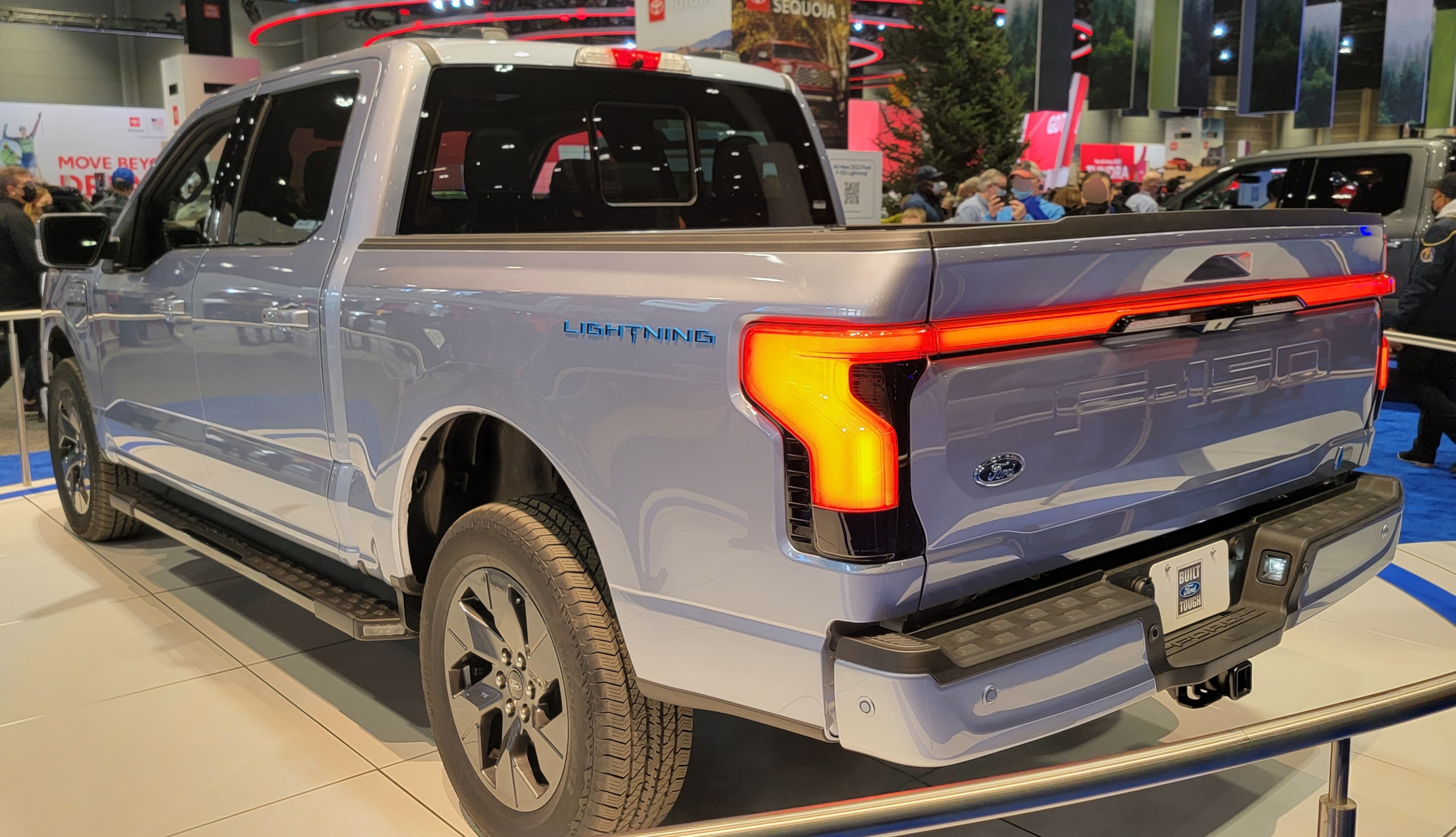
The Ford F-150 is a large truck that people often use for carrying heavy loads or towing. It's well-liked for its strength and ability to handle tough jobs.
A rear strut is a part of a car's suspension that helps keep the ride smooth by absorbing bumps from the road. If it breaks, it can make the ride uncomfortable and affect how the car handles.
A shock strut is a part that helps your car handle bumps in the road. It works like a cushion, making the ride smoother by absorbing shocks as the car moves up and down.
CV joints help the wheels move smoothly even when the car goes over bumps. They connect the driveshaft to the wheels and allow for movement while still delivering power to the wheels.
Independent suspension means that each wheel on a car can move up and down separately from the others. This helps the car handle bumps and turns better, making for a smoother ride.
A CV axle is a part of a car that helps transfer power from the engine to the wheels while allowing the wheels to move up and down. It has special joints that keep the power flow smooth, even when the car goes over bumps.
A rubber accordion boot is a protective cover that keeps dirt out of important parts of your car's axle. If it gets torn, it can cause problems with the axle.
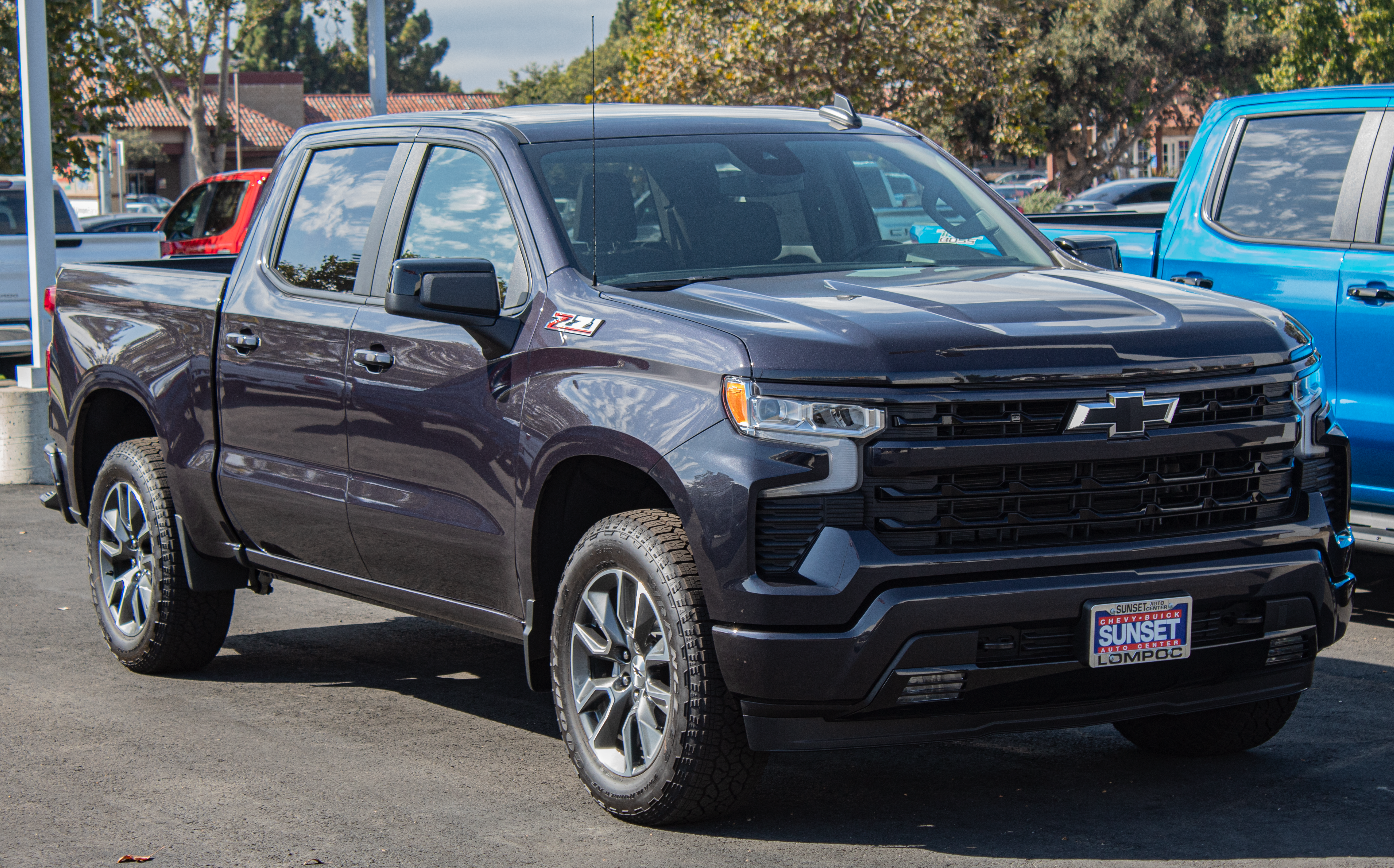
The Chevy Silverado is a large truck made by Chevrolet, often used for hauling and towing. The 2020 model has various features that make it suitable for different tasks.
A 12-volt system is the electrical system in cars that powers things like the lights and radio. It's important to handle it carefully when working on your car.
The battery hold down is a part that keeps the car battery securely in place. It's important to make sure it’s tight so the battery doesn’t move around.
Cleaning the battery cables means removing dirt and corrosion from the wires that connect the battery to the car. This helps the car start better and work properly.
Poor contact means that the electrical connections in your car aren’t good, which can cause problems like the car not starting. It’s important to make sure everything is tight and secure.
A supercharger is a part that helps an engine get more air, which helps it produce more power. It works by using a belt connected to the engine to push air into it.
The Mitsubishi Outlander is a type of SUV that is designed to be practical and useful for everyday driving. The 2014 version has a lot of space inside and can be a good choice for families.
Spark plugs are small parts in a car's engine that help start the engine by creating a spark. They need to be changed from time to time to keep the engine running well.
The catalytic converter helps clean up the exhaust gases from the engine so they are less harmful to the environment. If the engine isn't working right, it can hurt this part.
The Chevrolet Impala is a big car that can fit a lot of people and stuff inside, making it great for families. The 2012 version is often used by police because it's reliable and comfortable to drive. People talk about it because it's a good choice if you're looking for a used car that won't break the bank.
A voltmeter is a tool that checks how much electricity is flowing in a circuit. It helps mechanics figure out if parts of the car are getting the power they need to work.
The ignition switch is the part of the car where you put the key to start it. It helps send power to the starter and other parts needed to get the engine running.
The Dodge Ram is a big truck that's great for carrying heavy loads and towing trailers. The 2015 model is known for being comfortable to drive, even though it's a work truck. People often talk about it because it's strong and can do a lot of different jobs.
It's a specific code that mechanics use to find problems with the system that keeps gas fumes from escaping. A P0456 code means there's a tiny leak somewhere.
LIVE
It is seven oh nine on a Saturday morning. You know what that means and means to talk cars more specifically the problems you may be having with your car, your truck, your van, and you want to know what the heck is wrong before you take it in for service at your favorite dealer, your favorite shop.
We have on hand again this week and we appreciate it. Next awful from Lloyd's Automotive in St. Paul. Good morning and Merry Christmas to you.
You too, Danny. Good morning to you and all our listeners.
I was, uh, happened to be, we're going to get you a little louder here. I, uh, I was, uh, happened to be, as you know, I was into Lloyd's just a few days ago and that chilly, chilly Thursday morning, uh, getting some new tires.
It was, it was, it was my turn, but I picked the cold day to do it. Uh, and of course at Lloyd's, you were kind of busy, you guys, that day.
And I, of course, I went out for coffee, uh, trudged down the block, which is great because you got on Grand Avenue.
This is great places, but, uh, having coffee while your technician, Graham, um, did the work. So I didn't see him.
Uh, but what is the process? I know that, uh, it's, it's kind of SOP that you, your, uh, technicians, when they put on new tires, they kind of clean the rims.
What is the, tell, tell me the process of the whole thing.
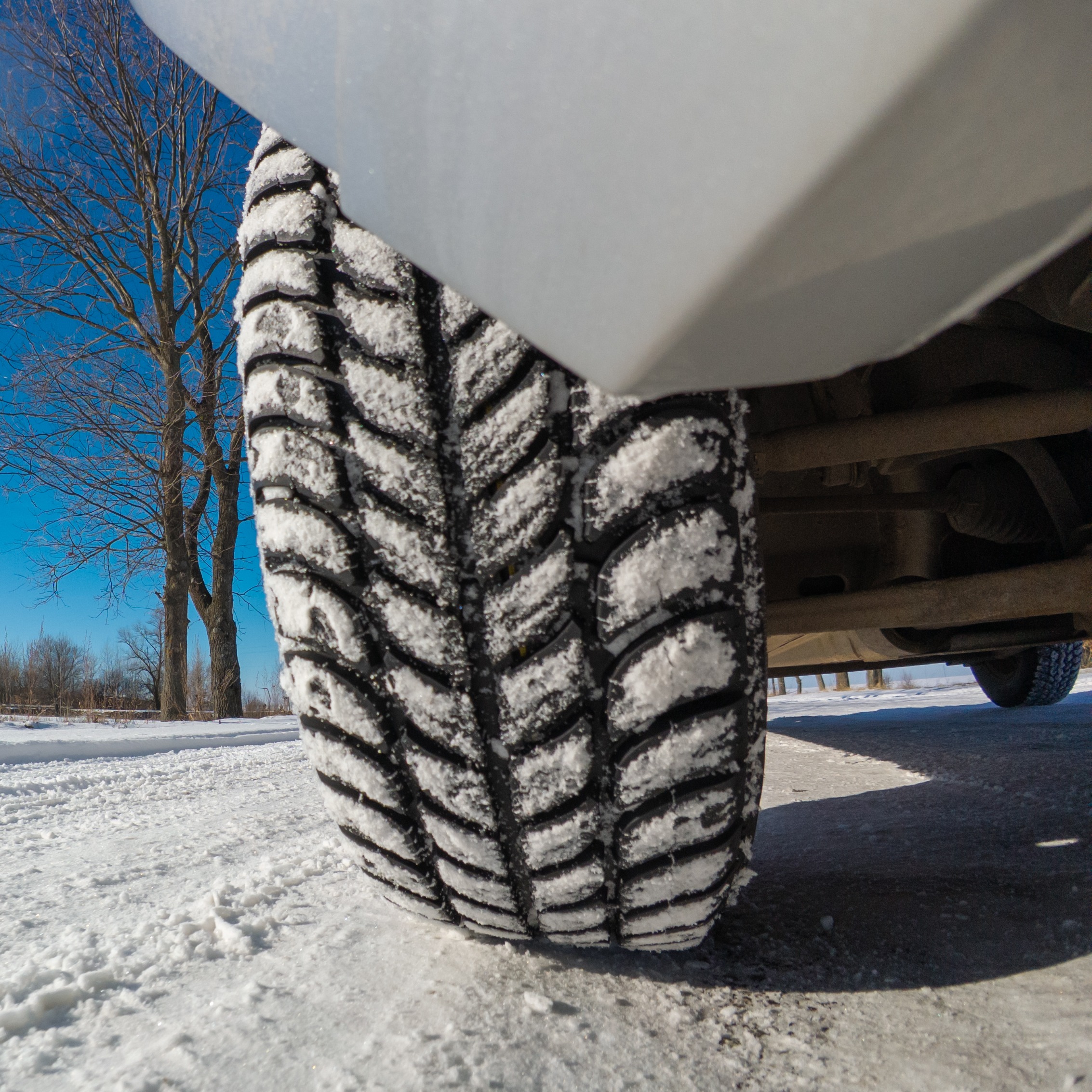
So yeah, first off, like we've been talking the weeks leading up to this week, you got cold and we got snow.
So, uh, if you haven't gotten your tires for winter yet, get on someone's schedule, please be patient.
Everyone's doing the best they can, but we're, we're at least a week or two behind it as it is.
So just be patient with your, with your shopping dealer, but you do have time before the holiday seasons.
If you're traveling, absolutely get on somebody's schedule Monday, if possible.
Um, as far as replacing tires, you need to be careful.
You know, as we remove the whole assembly from the vehicle, separate the tire from the wheel, then we're going to expect, inspect that bead surface on the wheel where the tire mounts to.
What will happen over time, moisture and condensation will work its way in there. We get some corrosion.
So if we see any corrosion there, we're going to clean that corrosion and then we put a sealant back on and then reinstall the tire.
That way we prevent from having a bead leak, which will cause the tires to go low.
So oftentimes people say, I'm losing a couple pounds here and there.
Typically that's a bead leak that creates that.
So if that's the case, take it in, have someone look at it.
You might find that they separate the tire from the wheel to clean that mounting surface and reinstall it.
Any kind of a car care question, we urge you to give us a call if you want to chat with Nick or you can just send a text like folks are doing.
But keep in mind, we always like to say, do it sooner rather than later.
Our time goes by so quickly.
Nick will take his leave about 7.45 this morning, making way for Ted Ferrell's wine chat.
So don't wait any kind. You don't have to be a motorhead either.
Just call us or text us with any kind of a car care question.
We have 6514619226.
I know I'm getting a little detailed here, but what kind of a tool do the technicians use to clean that point?
Where the sidewall hits the wheel?
Well, you need to be careful.
You don't want to damage that wheel surface, obviously, but with the corrosion sometimes you need to get in with the wire brush.
You know, sometimes you can take some Emory cloths, clean it up.
But you know, use the appropriate tool for the job because it's the best answer.
You don't want to overdo it and gouge or create a problem, in other words.
And over the years, we've seen some really bad ones done are very best to clean them.
Use some of that bead sealer, which is kind of like a glue in even those cases.
In those situations where that wheel is so far corroded, you just can't get a clean, smooth surface that unfortunately needs to be reconditioned.
And new ones are not cheap, are they?
No, no. And keep in mind, if you do have a problem like that or if you happen to hit a pothole and there's like a fracture in the wheel,
a lot of times they can be reconditioned, meaning that they take your wheel out.
I understand you might have thought your car for a day or two, but oftentimes that repair can be quite less expensive than a new wheel.
That's good news. 6514619226. And Nick, I'm looking at a text from Craig.
He said, 2011 Buick La Crosse, the warning light, quote, service tire pressure system.
What's the deal with that? And is this an expensive repair?
What is that warning saying to the driver?
Well, you mentioned it's a 2011, so it's getting to be, you know, 15 years old.
I suspect that maybe one of the batteries and one of the sensors, each wheel has its own sensor.
One of those batteries is the voltage drop low enough we're not identifying it and it needs to be replaced, possibly reprogrammed.
So you get that into your shop, they can access that system, retrieve that information for why the warning is on and then give you a better information.
All right, very good.
Here's one we get from time to time during this time of year.
Is there a difference in windshield wiper, washer, fluid?
You know the stuff I'm talking about, the blue juice.
I do.
What are their differences?
The marketing people say yes.
I think the biggest issue is if you're new to our climate coming from the south and a lot of times when you get below the Macy Dixie line, they will use water.
And as we know here, water will freeze.
So if you came from the south to visit us this winter, you need to get that water out of that reservoir, refilled with fresh fluid.
That being saying, we use it enough that it should flush its way through from any condensation, keep those lines clean of any contamination and such.
But I think whatever you buy at the filling station will be sufficient.
I know there's different grades and different protection levels and I've just used the blue juice as you call it, my whole life I've had no problem.
Is there a way I'm looking at a text, basically this listener is a regular listener obviously, talking about, I've heard you guys talk about, don't use the windshield wipers to clean off the frost.
Is there another method to get rid of that stuff before the car warms up?
Which I think was a good question.
Frost isn't really the concern in the ice.
So if the wipers are stuck or adhered to the windshield and you turn them on, there's a lot of stress at that pivot point.
You do that one too many times and that pivot point is going to fail.
Now you won't have any wipers working for you.
With the snow, same idea is wipers are designed to clear the glass.
It's a squeegee.
It's not a shovel.
So don't try to take two or three inches of snow and sweep it off your windshield.
I know we're all guilty of it from time to time.
But I promise you, we see plenty of those situations where people come in and the one wiper doesn't work and they're trying to drive the vehicle and you can't see and it just creates a very dangerous situation.
So start your vehicle, let it run.
While the car is running, get out of the vehicle, scrape the windshield.
Wipe it or take the brush and clear the snow, gives the vehicle the opportunity to warm up a little bit, allow that defrost to clear the windshield some while you're doing that.
So that's probably the best practice.
I'm looking at a text, not a question, but a comment about that very thing.
Even though it's a bother, this person, and I've seen this, take the windshield wipers and pull them away from the windshield, you know what I mean?
And kind of leave them like that if they're going in for the night or whatever.
You've seen those.
I have seen that.
You know, that does work.
My only fear is if for whatever reason that were to slap down, you run the risk of cracking that windshield.
So just keep that in mind because it's, you know, when we replace wipers, we lift the arm up, but we set it back down.
That spring is pretty strong, so that wiper comes slapping down.
It could, I'd say it's guaranteed, but it could crack that windshield.
So just keep that in mind if that's something you're doing on a regular basis.
That's a good point.
Tell you what, let's take a quick break inviting our listeners to join in on this conversation.
If you have any kind of a car care question, maybe you always wanted to ask a mechanical question, can be that.
If you're having problems with your vehicle, you need to bring it in for service, but you want to know what may be healing.
Call Nick or Tex Nick either way, but do it sooner than later.
6-5-1-4-6-1-9-2-2-6.
I can tell you right now in the Twin Cities, we're holding a 22 degrees bend that way for the last two, three hours or so.
That is probably our warm temp for the day.
We'll get to about 20 here in a couple of hours or so.
But then as far as the overnight low.
We're looking tonight at a low of three below zero.
So we're talking about cold weather and warm up tomorrow.
No, sunshine will return, but we'll only get up to about nine above.
Maybe even rain mix with snow Tuesday.
My goodness.
We'll talk weather, of course, coming along in a matter of minutes.
Right now, overcast 22 degrees here on Newstalk A3O WCCO.
And a good Saturday morning to you.
Welcome back to our car care show.
So Denny Long here, along with ASC certified technician, Dick Stoffel,
runs a place called Lloyds Automotive on Grand Avenue in St. Paul.
I know the address.
I know how to get in touch.
But for those folks that need some help from Lloyds or your other stations, how do we find you?
Absolutely.
So if you need any questions answered before you take your car in,
you can always call.
We will help you as we've always mentioned.
You can reach us at 651-228-1316.
And I have to mention today, Denny, the Grand Meander on Grand Avenue.
So if you're looking for something to do, I believe 10, 11 o'clock in the morning,
there's a whole list of events going on.
So you can go to the Grand Avenue website and see that.
But we're on Grand, as we mentioned, at 982, which is two blocks east of Lexington Parkway.
And if you need any more information on us, you can find that at LloydsAutomotive.net.
It is indeed a Grand Avenue.
It's always fun being there.
We'll give you that information before Nick takes his leave, which is about 7.45.
So if you have any kind of a car care question, let's hear from you, either by phone or by text.
Yeah, you can call and chat with Nick if you like.
651-461-9226, or again, send him a text if that's easier.
Speaking of texts, here is another one.
We get this from time to time.
Is it best to keep a full tank of gas in the winter?
I believe it is just because I'm that kind of guy.
But what's the real deal?
I agree with you.
A lot of it's mostly if you get in an unfortunate situation where you end up with a flat tire stranded somewhere.
You want to be able to let the car run as long as the exhaust is free of any kind of blockage to keep you warm until you can find gas.
So I think having a full tank really all the time is the best idea.
I don't know if you know this, but it costs just as much to have a full tank as it does an empty tank.
That's right.
Keep that in mind and keep it full.
And we were all young, you know.
We're picking on the kids, I suppose.
We were always in a hurry and don't have time to put $5 at the time and all that.
But I know, honestly, if you can keep the tank full, I think it's better for all of us.
How many times, be honest now, and I think I've done it a couple of times.
You're looking down at that less than a quarter of a tank and I thought, I think I can make it.
Let's see if we can do another 20 miles.
But I don't want to gamble, especially during the winter time.
But what about the fuel pumps now?
Aren't most of them, correct me if I'm wrong, in the tank itself?
Correct.
You know, as systems have evolved, the feeder pump and sometimes the only pump is located in the tank
and it does use that fuel as a coolant and a lubricant.
So you want to keep fuel in there so that the electric pump is operating properly, staying lubricated properly.
If you're always running on a quarter or less of a tank, that's not happening.
So you do want to keep the tank as full as you're capable of.
Obviously we need to run through the tank and fill it back up.
That's completely normal and fine.
But you know, I always joke that if I go from my house to up north and back, it's about a tank of gas.
So usually I try to make it as far as I can before I fill it up.
That way I don't have to worry about on the way home.
So sometimes I do play that game too.
Like, oh, it says I got 70 miles. I can make it to Mora.
Yeah.
Famous last words.
Okay. Looking at a text.
Hi, Danny and Nick.
My 2014 F-150 rear passenger door is closed.
But the dash warning says it's open.
I reopen and shut the door.
No change.
Now what's going on there?
There's likely or there is a switch probably in the latch assembly that isn't actuating.
So the door is closed and it's good.
But the electric part is not.
So it's not an immediate danger.
Obviously I don't think you're running at risk of the door opening up on you.
However, if the door is not secure, you don't have that warning.
So if you have a young one in the back seat, you may not know whether or not that door is left properly.
So I would probably have that looked at next and have it serviced and get that fixed.
Very good.
Again, 6514619226, call it in or text it in speaking of calls.
Let's go to the phones.
Danny from Macarver is calling in this morning.
Thanks, Danny.
What is your question for Nick?
Well, I just got something I do.
I've driven school bus 25 years for Chaska and I always keep a bottle of blue juice
to spray my windshield and wipers real good beforehand and even on my truck and stuff at home here.
So instead of scraping you just put a warm squirt of that blue juice out there in front first.
It's a great idea because that isopropyl alcohol will help melt that ice.
That's a quick easy button.
For those that don't have the patience to wait for the car to warm up,
that's a great remedy, a great solution.
Yep.
Yeah, Danny, thank you.
That's a good tip, yeah.
But don't, I probably don't put warm or hot water on it, right?
No, I would use just the regular washer fluid and if it's coming from inside the home,
it's going to be like above, it's going to be warm.
So I think that's not a bad idea.
I kind of like that.
I think I'll do that myself next time.
Again, I'm looking at another text.
What is a rear strut and what would cause one to break?
My SUV texture says has 46,000 miles on it.
I'm being told I have a broken strut that needs to be replaced.
So on the suspension, front or rear, something needs to dampen at the wheel.
A shock strut, it's a hydraulic dampener that goes up and down with the vehicle,
absorbs the bounces in the road to give us a smooth ride.
Typically they leak.
I think maybe the nomenclature's getting a little bit mixed up here.
If something's broken, it's more likely to suede our link or stabilize our link,
which is fairly common.
They take a lot of stress from those bumps and stuff as we head down the road.
And there's a ball and socket joint that will wear in time.
So if a strut is worn, leaking, not dampening properly, they do need to be replaced.
They are what keep us firmly on the road.
They also affect how our tires wear.
So if your shocks or struts are worn, you could premature or improperly wear your tires,
which would mean you need to replace your shocks and struts and your tires.
So don't do both.
Fix the problem what it faces you and get it back on the road.
A stabilizer link, like I said, is a more common type repair.
Isn't overly complicated.
And it's probably what the broken part would be.
Looking at a text from, well, not from last week, but from hearing last week's show,
I think we talked about CV joints and leaking.
What is that talking about suspension?
Do all cars have CV joints?
What is it?
They do.
Any drive wheel on a vehicle outside of a pickup has a solid axle.
So solid axles, which were the mainstay in the estuary years,
which are only really in a pickup or a heavier vehicle these days.
But most vehicles have an independent suspension,
meaning the wheels can move on their own up and down.
But in order to get the power from the engine through the transmission,
we need some sort of axle that has flexibility built into it.
And that's what that CV axle does.
So it's a solid shaft with a CV axle or a constant velocity joint at each end
filled with grease.
And then there's that boot that protects it and keeps it lubricated.
Over time, debris in the road, salt, you name it,
will deteriorate that rubber and can cause it to split and start to leak grease.
If it's a minor seepage, we can keep an eye on it.
I'm not overly worried about it.
But once that rubber tears free and the grease starting to fling out of that joint,
it's no longer lubricated.
As that grease can leave the joint, dirt can get in, which will wear that joint out.
My opinion or practice has been, because we've tried repairing them and re-greasing them,
rebooting them, but it's kind of like you can't get all the dirt out of there.
So it's kind of like putting that band-aid on a dirty wound.
You don't resolve for much.
But typically we replace the axles a whole.
They're very competitively priced.
The price is not as bad as they used to be.
So it seems to be the amount of time to disassemble one, rebuild it, reinstall it.
It's less expensive to get a new one.
Is that something not to do with yourself or somebody who parks in a garage or they can look in the driveway?
Can you see leakage once in a while on that?
You're not going to see anything on the ground.
If you're curious enough, you can turn the front wheels fully to the left or fully to the right.
And you look down in there, you'll see a little rubber accordion boot.
That's a CV joint. That's the boot that we're referring to.
And I do it yourself.
If you're very handy, you could replace one, but you need a way to lift the vehicle safely, securely.
And then a lot of times those nuts and bolts, which are close to the ground, can get maybe breasted into place
where you need a little extra heat or a little oomph to get it freed up.
So unless you're very skilled and have the proper tools, don't attempt that.
Because what can happen is you can break something number one or you can't get it back together.
Now we have to figure out how to get on a tow truck.
No, thank you.
Don't go down that path unless you know where you're headed.
I'll be on Grand Avenue. Thank you very much.
Hang on, Nick. We're going to take a break from that forecast, which is interesting in itself.
And then we'll have more time for, we have some text questions to get answered here.
If you want to join the crowd, 651-4619-226.
From Newstalk A3O, this is WCCO.
And welcome back to CCO's Car Care Show.
Denny Long here along with ASC certified technician Nick Stoffel from Lloyd's Automotive.
We are here every Saturday thanks to Nick helping us out, helping you out every Saturday in this particular hour.
Nick will be with us till just about, oh, about another 10 minutes or so.
Looking at another text, Nick.
Texture has a 2020 Chevy Silverado.
They would like to change the battery.
Can I do this myself without hooking it up to another 12-volt system and not cause any damage to the computers, et cetera?
Good question.
Yes, you should be able to.
If you have the right wrenches and such, you know, got to remove the battery hold down, remove the cables, make sure the cables are clean.
If not, get an old toothbrush or something to kind of, some baking soda and water and just kind of mix that up and kind of brush it clear, rinse it off.
Make sure when you put the cables back on that they're fully secure.
Make sure they're tightly mounted and squarely mounted.
We don't want any poor contact or connection there.
And just take your time.
You know, maybe watch a couple of videos online.
It's, you know, do it yourself.
You can definitely handle it.
Taking some time, having some patience.
All right.
This listener bought a new car, doesn't say what, but it's got a turbo.
And the question is, do I need to let it cool off before I turn off the car?
No, they have their own cooling systems kind of built in with the vehicle.
You know, it's a good question, but definitely not necessary.
Now a turbo, I think you guys tried to explain it to me once.
Turbo, a car with a turbo function is different than a supercharged car, right?
What is the difference?
The turbo uses the exhaust gases to spin the turbine,
where the supercharger uses a belt that runs up the accessories that forces the air into the engine.
You'll find this more and more common as we found ways to create more power,
more efficiencies, better fuel economy with engines.
That engines have become smaller, but to create this sufficient amount of power,
they do use things like turbochargers and superchargers.
It's a little more common these days.
So it's good technology.
They've been worked out.
They work fine.
Makes you change your oil, which is the turbo would appreciate it very much.
So if you change your oil on a regular basis.
But yeah, I think it's great.
You know, we were able to use less fuel, save some weight,
and still create the power you need to keep cars moving.
Very good.
Good morning, gentlemen.
The texture says we have a 2014 Mitsubishi Outlander, which has 93,000 miles on it.
I've done the basic maintenance, tires, filters, oil changes.
The brakes have never been replaced and they still look and feel like new.
I've searched the Mitsubishi owner's manual.
Cannot find anything about spark plug replacement.
You guys have any idea if I should replace them or let them run till there's a problem?
And what's the difference between platinum and iridium spark plugs?
So there is an interval somewhere.
I don't know enough to top my head.
Do not go until something happens because all you do is create a bigger problem.
Example being if we go until one of the coils fail.
Well now you need spark plugs and a coil.
Or you have a misfire, which means that the fuel's not being properly burnt and spent.
So it works its way into the exhaust, which is hard on the catalytic converter.
So there's a cause and effect to all these things.
So maintenance is a great cause to avoid a lot of those effects.
So maybe you have to call, do a little more research, but there is an interval.
And the question as far as iridium and platinum, precious materials.
It used to be just a standard copper plug, which ran 20, 30,000 miles.
You'd have to re-gap them and file them.
That goes way back when.
And then we had platinum plugs, which is a little platinum tip,
allowed them to last longer, run better, clean, run more cleanly, you could say.
And then iridium is just another advancement in that.
That's how we can get spark plugs to last 100,000 miles because those precious materials
that they use that allow for that spark to be good and strong,
400,000 miles without anything being done to them.
So typically around that 100,000 miles, some are a little bit sooner, some are a little bit later.
But that's the general timeline where we see spark plugs being replaced.
But I think if that listener were to go into a place like Lloyd's to have that done,
you guys have the computers and you have that information available.
We do have the resources for service intervals, procedures, diagnostic stuff.
We have subscriptions. You wouldn't believe the amount of money we spend on this stuff.
It's insane, almost.
But you need the information.
Well, you need the information and that's what allows us to get through so much work every day.
So we have all the resources to get the job right the first time.
Nick, we have some callers we want to help out this morning.
Ernie's first up here calling from Montgomery, I think.
Ernie, what is your question? Thanks for calling.
What's your question for Nick?
Thank you. I got a 2012 Chevy Impala.
It was a highway patrol car, but it's been running beautiful for 150,000 miles.
Now when I turn the key on, the dash lights come on and I turn it off and sometimes it will start,
but now it won't start at all and I put a new battery in.
Well, I'm thinking if you're turning the light, things are lighting up and nothing's happening.
It appears that you have the power to make it happen.
You mentioned you put a new battery, so that kind of checks that box.
But I wonder if there's not something going on with the starter,
not getting or the starter's not taking that power and cranking the engine over.
That might not be something you can do yourself.
What we would do is take a voltmeter, find that starter,
have somebody crank it, see if that power is making it to the starter while we're trying to start the vehicle.
Because obviously a few things need to happen before that,
but that's the first place we would check is that starter.
Make sure the power is there to allow it to crank that motor order over.
If the power is there, we know we have a faulty starter.
If the power is not making it to the starter, now we need to look back.
There's relays, ignition switches, there's other items in that circuit that could cause a problem.
So if you don't have the ability, you might have to have a tow to your local shop,
or if it does start, you get lucky, I would still take it to the local shop,
have them test that to make sure it's going to be okay,
because this because it started once doesn't mean it can continue to start.
And looking at the forecast, I don't think that's something you want to risk,
having been stranded somewhere when it's cold out.
Good luck, Ernie, with that.
Another caller coming in, Pete, calling in from Mound this morning.
Pete, good morning. What is your question?
Good morning. Thank you for taking my call.
I've got a 2015 Dodge Ram where I just recently had the cold red,
and it says evaporative emission control, small leak, very small leak.
I just wanted to get a little understanding of how that system works,
and what are the components that would probably need some replacement?
So I believe it's a P0456,
and what it's telling us is that it's not significant,
like the gas cap's not left off, something very obvious.
Now that doesn't mean that that rubber seal that tightens when we put the gas cap on
is not sealing properly.
It doesn't mean that the vent solenoid, the purge solenoid,
all these different solenoids that help control and maintain the evaporative system,
which the evaporative system is, when we put fuel into the tank, there's vapors.
Usually those vapors go into that atmosphere.
We've learned that that's not good for that atmosphere.
So now we have a canister that contains those vapors.
And if there's a leak within that system, when the car does a self-test,
it's going to notice that it's not holding those vapors.
It's going to turn that light on.
We oftentimes will test those solenoids, see if they're operating properly.
If they are, if they're not, that's the first step.
Sometimes people, as far as what we call smoke testing,
we have a smoke machine that we fill that system with and look for the leak.
And a lot of times to find the leak is maybe a seam in a hose
or a contact point where something comes together.
Being that it's a very small leak, sometimes it takes a little time to find it.
So I don't think it's critical to the operation of the vehicle today.
However, that warning light is your only warning light.
So if something else is going on, you're not going to be aware of it.
Number two, having excessive emissions is not good for the atmosphere.
So that's probably something you want to get in somebody's schedule.
Have them do those couple tests, determine what's going on.
Very good. Looking at some tests, if we don't get to all the tests,
we'll open up the show with them next Saturday morning.
Here's one that we're talking about windshield wiper fluid, the blue juice.
This listener says, my windshield juice has stopped pumping,
but it's not frozen in the reservoir tank.
What could be going on there?
Possibly that the pump has failed or there's a block somewhere.
So the first thing you can do is somebody can operate that switch
and add the vehicle with it running.
You can see if you can feel that pump running or see any action going on there.
If it is, now I think there might be something with one of those hoses.
So if you're capable of removing that hose and getting a little bit of air in there,
not excessive, but it's enough to try to force whatever blockage is through,
maybe we have to also remove it up at the wiper blade where the nozzles are.
Because that'll happen, we'll see that where something becomes plugged,
a little compressed air, frees up that blockage and it's working again.
Alright, I think I have time for maybe one more interesting question.
What is the purpose of a vehicle having a dual exhaust?
Love the show.
Well, thanks for that.
What's the deal with a dual exhaust?
You know, a lot of it might be cosmetic.
A lot of it might be bouncing the engine depending on the engine setup.
It's an eight cylinder, six cylinder, four cylinder.
You know, oftentimes you'll see underneath the vehicle that comes back as one pipe
and it splits at the tail.
So I feel there's more than cosmetic reasons.
It might be helping with noise dampening, the mufflers too.
It kind of helps control the noise.
But it does a deal.
Back in yesterday's years, you try to have two exhaust systems.
They have more air coming out of the engine so you can have more air going in
and create more power, but that's not necessarily the case now.
That's not the case these days.
Nick, we have to run.
Always a pleasure.
Thanks so much.
How can we find you guys at Lloyd's?
Yes, sir, if you have a question, as always, do not hesitate to call.
We will help.
651-228-1316.
If you're looking for us, we're in St. Paul at 982 Grand Avenue.
That's two blocks east of Lexington Parkway.
If you're needing that information or more, you can find it on our website,
which is LloydsAutomotive.net.
And we're going to have to leave you with a question you can answer next week.
And Nick's career textor asked, did he ever install an adjust points?
We'll talk and we'll get the answer to that cliffhanger when we come back next week.
Nick, have a good week and thanks for the help today, but stay warm out there.
Yes, you too, Danny.
All right, thanks very much.
Nick Stoffel from Lloyd's Automotive.
Yeah, he'll be back next Saturday morning.
About this episode
A deep dive into essential winter car care tips, focusing on tire maintenance, windshield care, and battery replacement. Nick Stoffel from Lloyd's Automotive shares insights on tire installation processes, the importance of cleaning wheel rims to prevent leaks, and the right windshield washer fluid for cold weather. Listeners ask questions about common issues like tire pressure warnings, wiper fluid problems, and the significance of keeping a full gas tank in winter. The episode is packed with practical advice for keeping vehicles running smoothly during the colder months.
With all the snow it would be a good idea to make sure your tires are in good shape. How to clean and maintain wheels. Are there differences in windshield washer fluids? How ice and frost can damage windshield wipers. Why its important to have a full tank of gas in the winter. Repairing and replacing an axel. How to change your own battery. Seeing problems with the starter. Ask our car care expert Nick Stoffel of Lloyds Automotive. Visit lloydsautomotive.net 651-228-1316.