Titan Motorsports' Nero discusses the evolution of the 2JZ platform, the rivalry with RB engines, and the history of the iconic Copper Supra. He shares insights on the business side of automotive performance, including the challenges of running a shop and the importance of parts sales. The episode dives into the future of racing, the significance of reliability in builds, and the impact of social media on the automotive community. Nero also addresses a past incident involving a customer's car and the lessons learned from it.
In todays episode we sit with Nero of Titan Motorsports who opens up about their comeback, the 2JZ vs RB rivalry, building legendary Supras, and the biggest races that shaped their name in the world of high performance racing.
@titanmotorsports Motorsports Official Instagram: https://www.instagram.com/titanmotorsports
00:00 Intro
04:49 Neros Early Days In IT
05:19 How Nero Got Into Selling Car Parts
08:46 Buying a MK4 Supra In the 90s
10:56 Nero's First Street Race In the MK4 Supra
15:48 What Made The Supra Popular
16:44 Why The MK4 Supra Price Dropped In 97
18:00 What Inspired Nero To Buy A Supra
19:54 How The Name Titan Motorsports Was Made Up
23:19 Why Titan Started Selling Parts Online
25:32 How Titan Supra Went From Street Car To Race Car
26:49 How The Titan Supra Started To Gain Popularity
35:11 How To Build a Class Legal Drag Racing Car
39:00 TX2K Is Expensive For New Racers
42:42 How People are Funding Race Cars
47:36 How The Titan Supra Went From Black To Copper
53:33 Why Big Companies arent Sponsoring Drag Racing
59:17 Victors Copper Supra
01:04:22 Iconic Moments With The Titan Copper Supra
01:05:40 Titan Motorsports vs Papadakis
01:08:12 How Titan Motorsports Helped Ekanoo
01:20:27 Ekanoo Vs White Rice
01:22:06 Is White Rice Holding The Torch For The 2JZ?
01:24:30 Who Should Represent The 2JZ platform
01:34:57 What Makes The Titan 2JZ So Great
01:39:57 Daily Driving Billet Blocks
01:41:11 Building Less Than 1000Hp 2JZ Engines
01:42:53 Machine Shops For 2JZ
01:45:27 Is It Hard To Mess Up a 2JZ
01:48:10 The Cost To Build a 1000HP 2JZ
01:54:58 02:02:41 02:05:41 02:15:35 Performance Shops Dont Make Money
How Much Money Does a Automotive Parts Business Make
Titan Motorsports Audi Crash Incident
The Future For Titan Motorsports
02:18:09 B58 Running 6 Seconds01:41:11 Building Less Than 1000Hp 2JZ Engines
01:42:53 Machine Shops For 2JZ
01:45:27 Is It Hard To Mess Up a 2JZ
01:48:10 The Cost To Build a 1000HP 2JZ
01:54:58 Performance Shops Dont Make Money
02:02:41 How Much Money Does a Automotive Parts Business Make
"...However, um, I've been inspired growing up with, uh, a lot of the two J's, Honda's, just imports in general. So, um, I figured if we're going to have a two J podcast, why not have it with..."
The 2JZ is an engine made by Toyota that is popular for its strength and ability to be modified for more power. It's especially well-known because of its use in the Toyota Supra sports car.
The 2JZ is a series of inline-six engines produced by Toyota, most famously known for its performance in the Toyota Supra. It's renowned for its durability and tuning potential, making it a favorite among car enthusiasts and tuners.
Nero is a company that works on making cars faster and better, often teaming up with Titan Motorsports to improve performance.
Nero is a performance automotive company that collaborates with Titan Motorsports to enhance the performance of vehicles, particularly in drag racing contexts.
"So if you guys don't know, or aren't familiar, which I'm pretty sure you guys are, uh, Nero and Titan Motorsports, uh, have been responsible for some of the world's fastest and quickest Supras, right?"
Titan Motorsports is a company that makes parts and upgrades for cars, especially the Toyota Supra, to make them faster and more powerful.
Titan Motorsports is a well-known company specializing in performance parts and tuning for various vehicles, particularly the Toyota Supra. They have gained recognition for building some of the fastest Supras in the world.
"...ble for some of the world's fastest and quickest Supras, right? A lot of, uh, races with TX2K, FL2K, Wor..."
The Toyota Supra is a fast sports car that many people love because it can be made even faster with upgrades. It's often talked about in racing and car shows because of its cool design and strong performance.
The Toyota Supra is a high-performance sports car that has gained a legendary status among car enthusiasts, particularly for its tuning potential and racing capabilities. Known for its powerful engines and rear-wheel-drive layout, the Supra has been a favorite in motorsports and street racing scenes, making it a common topic of discussion in automotive circles.
"A lot of, uh, races with TX2K, FL2K, World Cup, NHRA, Sport Compact, pretty much records in every single big event that you guys can go see drag racing for the most part."
TX2K is a big car racing event where people show off their fast cars and compete in races. It's popular among car enthusiasts.
TX2K is an annual automotive event that focuses on drag racing and showcases high-performance vehicles, particularly those modified for speed. It attracts participants and spectators from across the country.
"A lot of, uh, races with TX2K, FL2K, World Cup, NHRA, Sport Compact, pretty much records in every single big event that you guys can go see drag racing for the most part."
NHRA stands for the National Hot Rod Association, which is an organization that runs drag racing events in the U.S. and helps set the rules for the races.
The NHRA, or National Hot Rod Association, is the largest sanctioning body for drag racing in the United States, organizing events and competitions for various classes of vehicles.
"A lot of, uh, races with TX2K, FL2K, World Cup, NHRA, Sport Compact, pretty much records in every single big event that you guys can go see drag racing for the most part."
Drag racing is a fast-paced car race where two cars go straight down a track to see which one is the quickest. It's all about speed and acceleration.
Drag racing is a type of motor racing where two vehicles compete to see which can cover a straight distance in the shortest time, typically a quarter-mile. It's known for its high speeds and quick acceleration.
"...but more import stuff, right? Correct. Yeah, import, sport compact is our core, you know, and a lot of people don't know us for distribution..."
Sport compact cars are small cars that are made for speed and fun to drive. They usually look sporty and many people like to customize them.
Sport compact refers to a category of small, lightweight cars that are designed for performance and handling. These cars often feature sporty styling and are popular among enthusiasts for modifications and racing.
"...another shipment came in of blah, blah, blah, weld wheels or precision turbos, but I mean, we do stock that stuff..."
Weld Wheels makes special wheels that are lighter and stronger than regular ones. They are often used in racing cars to help improve performance.
Weld Wheels is a manufacturer known for producing high-performance wheels, particularly for racing and off-road applications. Their products are designed to be lightweight and strong, making them popular among enthusiasts and racers.
"...another shipment came in of blah, blah, blah, weld wheels or precision turbos, but I mean, we do stock that stuff..."
Precision Turbos makes special parts called turbochargers that help engines produce more power. They're used in many fast cars to make them even quicker.
Precision Turbos is a company that specializes in manufacturing high-performance turbochargers. Their products are widely used in both street and racing applications to increase engine power and efficiency.
"...buy race fuel for it to go to events. That was the whole point of getting into selling parts."
Race fuel is a special type of gasoline designed for racing cars. It helps the car run better and faster because it can handle more power than regular fuel.
Race fuel is a high-octane fuel specifically formulated for racing applications. It typically has a higher energy content and can enhance performance in high-compression engines compared to regular gasoline.
The Chevrolet Camaro is a powerful sports car that many people enjoy driving. It's known for its speed and cool looks, and it's been around since the 1960s.
The Chevrolet Camaro is a classic American muscle car known for its performance and sporty design. It has been a popular choice among car enthusiasts since its introduction in the 1960s.
"And some of the same things happened with the Tesla Plaid, right? Like, you know, I mean, they've depreciated because the manufacturer would bring new..."
The Tesla Model S Plaid is a fast electric car that can go from 0 to 60 mph in just a couple of seconds. It's known for being very high-tech and has a lot of features that make it stand out.
The Tesla Model S Plaid is a high-performance variant of the Model S, known for its impressive acceleration and advanced technology. It features a tri-motor setup that allows it to achieve remarkable speed and range.
"But I'm assuming that was for like a twin turbo, right? That was a twin turbo, but that for a brand new one."
Twin turbo means the car has two turbochargers that help the engine produce more power, making it faster.
A twin turbo setup uses two turbochargers to increase an engine's power output by forcing more air into the combustion chamber, resulting in better performance.
"I didn't even know about launching the car. So my definition of launching the car was like, just leaving a stoplight normal, like, you know, 2000 RPM, slip the clutch a little and just drive off like normal, not launching it."
When you launch a car, you're trying to start moving as quickly as possible without spinning the wheels. It usually involves revving the engine higher than normal and carefully letting out the clutch to get the best start.
Launching a car refers to the technique of accelerating from a standstill in a way that maximizes traction and minimizes wheel spin, often using higher RPMs and specific clutch control. This is commonly used in racing scenarios to achieve the best possible start.
"I don't know how to launch the car and all this..."
Launching the car means how you start driving fast from a stop. It involves using the gas pedal and sometimes the clutch to get going quickly.
Launching a car refers to the technique of starting from a standstill to achieve maximum acceleration. This often involves controlling throttle and clutch engagement.
"but I can make more horsepower. So I was like, okay, time to get mods..."
Horsepower tells you how powerful an engine is. The higher the horsepower, the faster and stronger the car can go.
Horsepower is a unit of measurement for power, commonly used to quantify the power output of engines. It indicates how much work an engine can perform over time.
"time to get mods, exhaust, downpipes, whatever..."
The exhaust is a part of the car that helps get rid of gases from the engine. Changing it can make the car run better and sound cooler.
The exhaust system is responsible for directing exhaust gases away from the engine and reducing noise. Upgrading the exhaust can improve engine performance and sound.
"...back then you asked somebody what tire pressure to run and everybody has a different opinion, right? It's still kind of like that too when you ask."
Tire pressure is how much air is in your car's tires. It's important to have the right amount for safety and to make your car drive better.
Tire pressure refers to the amount of air inside a tire, measured in pounds per square inch (psi). Proper tire pressure is crucial for vehicle safety, performance, and fuel efficiency.
"I'm running Mickey Thompson radial. You can be like, boom, set that at 18 psi for this tire, this size, this car."
Mickey Thompson is a brand that makes special tires for cars, especially for racing. Their radial tires help cars grip the road better, which is important for performance.
Mickey Thompson radial tires are a brand known for high-performance tires, often used in racing and performance applications. They are designed to provide better grip and handling on the road or track.
"...set that at 18 psi for this tire, this size, this car. I mean, I literally had 10, 15 psi swing."
PSI means pounds per square inch, and it's how we measure pressure. For tires, it tells you how much air is inside them, which affects how well they work.
PSI stands for pounds per square inch, a unit of measurement used to express pressure, including tire pressure. It's essential to monitor tire pressure in psi to ensure optimal vehicle performance and safety.
"...and I'm like, hey, turbo cars weren't even that big."
Turbo cars have a special part called a turbocharger that helps the engine produce more power. This makes the car faster and can improve fuel efficiency.
Turbo cars are vehicles equipped with a turbocharger, which forces more air into the engine to increase power output. This technology enhances performance and efficiency, making engines more powerful without increasing their size.
"And they're like, you just rev it up and slip the clutch and dump it and then go."
Slipping the clutch means using the clutch pedal to let the engine power go to the wheels slowly. It's a way to start moving without stalling or to help with smooth gear changes.
Slipping the clutch is a technique used in manual transmission vehicles where the driver partially engages the clutch to control power delivery to the wheels, often used during starts or to manage engine speed during gear changes.
"And then I don't know, wait, what's the shift points, right?"
Shift points are the speeds at which you should change gears in a car to make it run better. It's important to know when to shift for the best performance.
Shift points are the specific RPMs at which a driver should change gears to optimize performance and efficiency. These points vary depending on the vehicle and driving conditions.
The red line is the highest speed your engine should go before it could get damaged. You want to change gears before hitting that limit.
The red line refers to the maximum engine speed, measured in revolutions per minute (RPM), that an engine can safely reach before risking damage. Shifting before reaching this point is crucial for engine longevity.
"So it was a complete brand new learning experience."
A learning experience means you learn something new, especially about how to drive or understand cars better. It often happens when you try something challenging.
A learning experience in automotive contexts often refers to the process of gaining knowledge and skills about driving, vehicle dynamics, and performance through practical engagement and challenges.
"You know, 300Z was one of the quite popular options back then."
The Nissan 300ZX is a sporty car that was popular in the late '80s and early '90s, known for being fast and stylish.
The Nissan 300ZX is a sports car that was part of the Z-car family, known for its performance and advanced technology during its production in the late 1980s and early 1990s.
"a fully loaded Z28 was, you know, $20,000 to $23,000. And at the time, a similar performing Toyota Supra was $50,000."
The Z28 is a special version of the Chevrolet Camaro that is designed for better performance and handling.
The Chevrolet Z28 is a performance variant of the Camaro, known for its sporty features and enhanced power. It has been a popular choice among enthusiasts since its introduction.
"you know, other Toyota makes, you know, because the Celica was coming out, And we did the Celica back then."
The Toyota Celica is a small car that was made for many years and is popular for its sporty look and feel. It has different versions that are fun to drive.
The Toyota Celica is a compact car that was produced from 1970 to 2006, known for its sporty design and performance. It has a strong following among car enthusiasts, particularly for its performance variants.
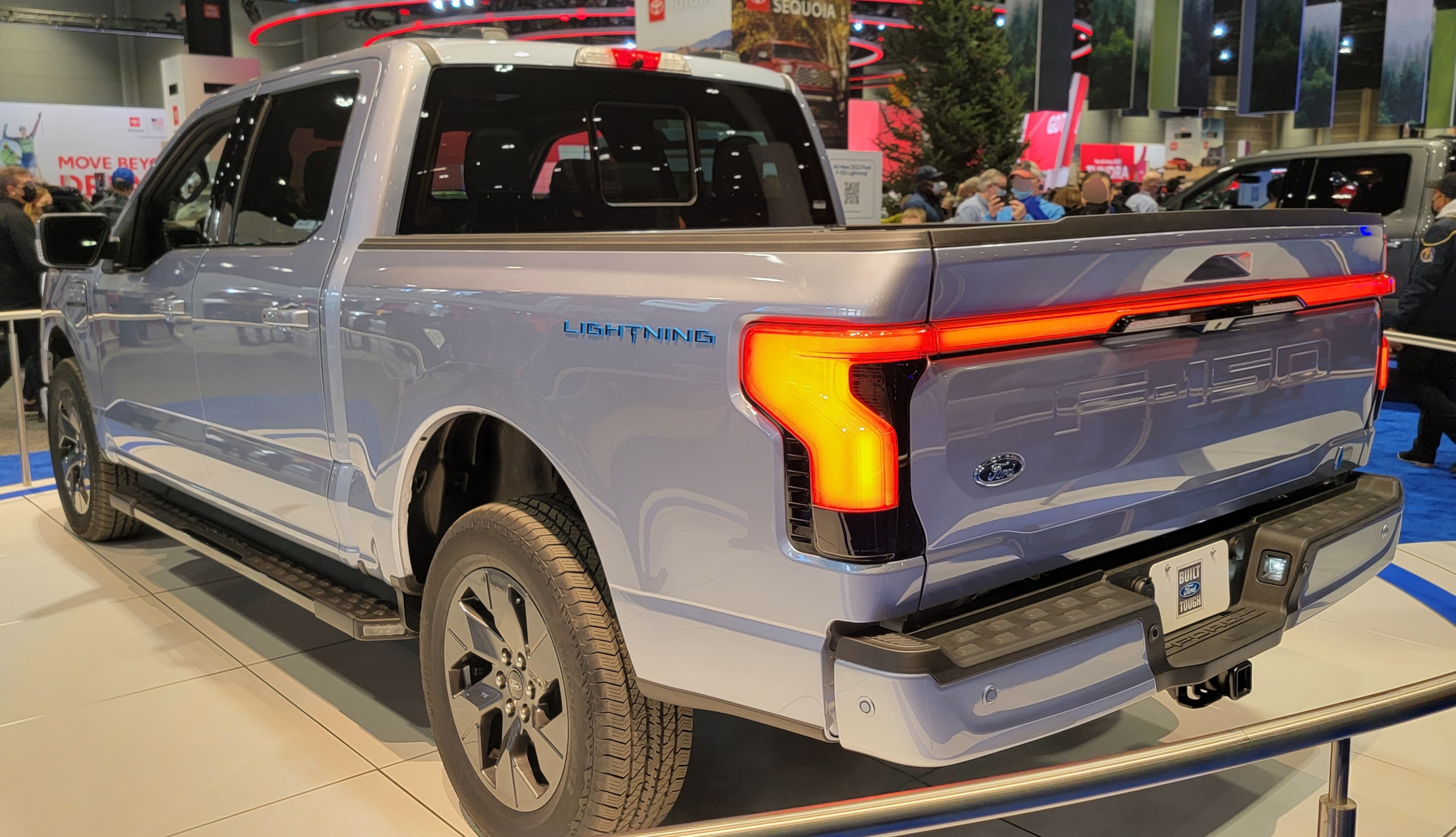
"The business is making some money. Now I'm spending it buying parts, open truck and trailer, F-150, still living at home."
The Ford F-150 is a really popular truck that people use for work and everyday tasks. It's known for being tough and able to carry heavy loads, which is why many people choose it.
The Ford F-150 is one of the best-selling pickup trucks in the United States, known for its versatility, durability, and strong towing capabilities. It is often used for both work and personal purposes, making it a popular choice among truck buyers.
The Scion xB is a small car that has a funny box shape, which makes it really roomy inside. People like it because it's different and can be customized to look cool.
The Scion xB is a compact car known for its boxy shape and spacious interior, appealing to those looking for a unique and practical vehicle. It has a strong following among younger drivers and is often associated with customization and urban culture.
"...s, Nissan's, Mazda's, your normal minivans, your Tacomas, you know? But they don't know that those guys a..."
The Toyota Tacoma is a smaller truck that people like to use for adventures, like camping or off-roading. It's known for being reliable and able to handle rough terrains.
The Toyota Tacoma is a midsize pickup truck recognized for its off-road capabilities and reliability. It has a strong following among outdoor enthusiasts and is often praised for its durability and versatility in various driving conditions.
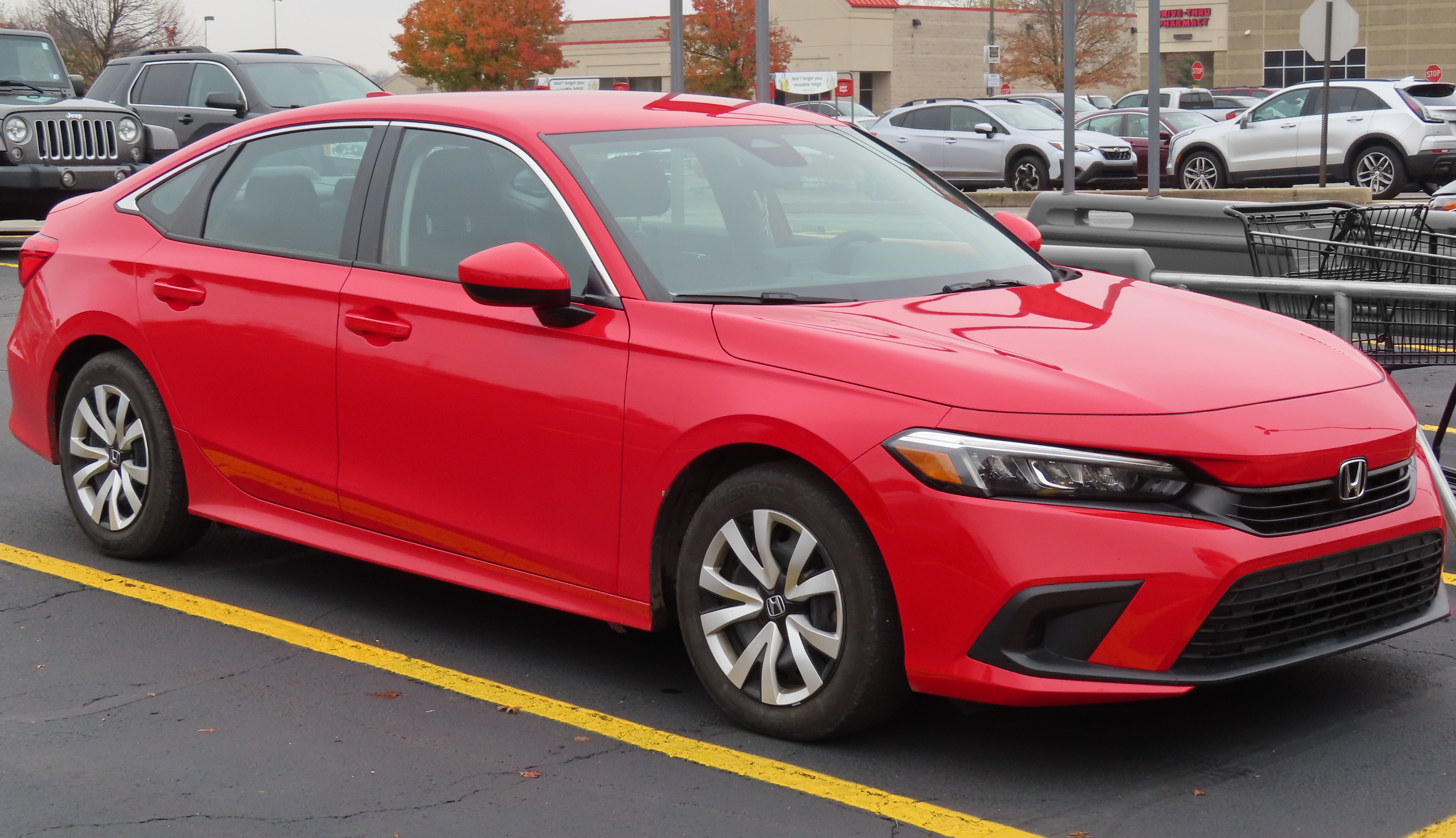
"...nd those guys, they're doing like $100,000 Honda Civic builds. And back then, they weren't able to affo..."
The Honda Civic is a small car that many people drive because it's good on gas and lasts a long time. Some car fans really enjoy making their Civics look and drive better by adding special parts.
The Honda Civic is a compact car that has been a staple in the automotive market for decades, known for its fuel efficiency, reliability, and sporty performance. It has a strong aftermarket community, with many enthusiasts customizing and modifying their Civics for better performance and aesthetics.
"...inny 10 came back into that world when he built a 350Z. Which is, yeah."
The Nissan 350Z is a stylish sports car that many people love because it looks great and drives fast. It's a popular choice for car fans who like to upgrade their vehicles for better performance.
The Nissan 350Z is a sports car that gained popularity for its sleek design and powerful V6 engine, making it a favorite among car enthusiasts and tuners. It is often discussed in the context of performance modifications and racing due to its strong aftermarket support.
"But a majority of people put them together and they work great. So now, you said 800's probably where a street car for a 2J would be kind of like a sweet spot for the most part, right?"
The Maruti Suzuki 800 is a small, affordable car that many people in India used to drive. It's known for being cheap to buy and easy to maintain, which is why lots of families chose it.
The Maruti Suzuki 800 is a compact car that became one of the most popular vehicles in India, known for its affordability and efficiency. It played a significant role in making car ownership accessible to the masses in the country.
Car
Honda That Honda
"...king on a Honda build coming in? And how long is that Honda going to take to build? Well, I mean, again, if ..."
The Honda That's is a small car made for city driving, and it's designed to be very practical and fuel-efficient. It's a good choice for people who need a reliable car for everyday use.
The Honda That's is a compact car designed primarily for the Japanese market, known for its practical design and efficient use of space. It is often discussed in the context of urban driving and fuel efficiency.
Intro
Neros Early Days In IT
How Nero Got Into Selling Car Parts
Buying a MK4 Supra In the 90s
Nero's First Street Race In the MK4 Supra
What Made The Supra Popular
Why The MK4 Supra Price Dropped In 97
What Inspired Nero To Buy A Supra
How The Name Titan Motorsports Was Made Up
Why Titan Started Selling Parts Online
How Titan Supra Went From Street Car To Race Car
How The Titan Supra Started To Gain Popularity
How To Build a Class Legal Drag Racing Car
TX2K Is Expensive For New Racers
How People are Funding Race Cars
How The Titan Supra Went From Black To Copper
Why Big Companies arent Sponsoring Drag Racing
Victors Copper Supra
Iconic Moments With The Titan Copper Supra
Titan Motorsports vs Papadakis
How Titan Motorsports Helped Ekanoo
Ekanoo Vs White Rice
Is White Rice Holding The Torch For The 2JZ?
Who Should Represent The 2JZ platform
What Makes The Titan 2JZ So Great
Daily Driving Billet Blocks
Building Less Than 1000Hp 2JZ Engines
Machine Shops For 2JZ
Is It Hard To Mess Up a 2JZ
The Cost To Build a 1000HP 2JZ
Performance Shops Dont Make Money
02:02:41 02:05:41 02:15:35 Performance Shops Dont Make Money
How Much Money Does a Automotive Parts Business Make
Titan Motorsports Audi Crash Incident
The Future For Titan Motorsports
B58 Running 6 Seconds01:41:11 Building Less Than 1000Hp 2JZ Engines
B58 Running 6 Seconds
Garage Builders Advice
Select text to request an explanation
Welcome back to another episode of the Street Alpha podcast.
I'm your host, Tuques.
And today we are back in Florida, which is now my new hometown.
So we had the pleasure to stop by Titan Motorsports and we're here with Nero.
So as you guys know, we're a big import podcast and we're slowly making our way
to domestic side.
However, um, I've been inspired growing up with, uh, a lot of the two J's,
Honda's, just imports in general.
So, um, I figured if we're going to have a two J podcast, why not have it with
Nero Titan, right?
So if you guys don't know, or aren't familiar, which I'm pretty sure you guys
are, uh, Nero and Titan Motorsports, uh, have been responsible for some
of the world's fastest and quickest Supras, right?
A lot of, uh, races with TX2K, FL2K, World Cup, NHRA, Sport Compact,
pretty much records in every single big event that you guys can go see drag
racing for the most part.
So if there's anybody to speak about this platform in general, it should be
Nero Titan Motorsports.
So we're going to get into a lot of, uh, the history of Titan, which we have
to speak about because it's very important.
And this car behind us, which is the copper Supra, which is the legendary
Supra that most of you guys have probably watched.
If you guys aren't the two J's growing up, going to drag racing events and so
on, this is the car that probably inspired so many people across the world.
So before we begin, let's give a round of applause for Nero Titan Motorsports.
I know, I forgot to tell you, I always do the clap thing, so long clap, right?
So thank you so much for taking the time to do this.
Um, I came here last year for a little tour.
Uh, Ryan was giving me the tour on the shop.
I don't think you were here.
I think your brother was here actually.
So, um, I had the pleasure to do another tour today with you.
You guys can check that out.
If you guys remember, you guys can check that out.
Um, so we went around the shop, saw what the shop is about and how it's grown
into the business today, which is kind of crazy that you guys do a lot
of, um, parts like you guys sell a lot of parts to a lot of people all over
the world, which is pretty interesting because I personally, just being honest,
um, I've never purchased anything from Titan because I guess you guys don't do
RB stuff, right?
So of course you guys obviously do two J stuff.
You guys do have some RB stuff here, but primarily your focus seems to be more,
um, I guess I would say not so much to Jay, but more import stuff, right?
Correct.
Yeah, import, sport compact is our core, you know, and a lot of people don't
know us for distribution, um, but that is like actually the core of the business
here, um, you know, on social media, we show a little bit of that, but truth be
told, you know, parts and boxes are not sexy.
So we, we don't, you know, we're not sitting there all day long on social,
you know, showing like, hey, another shipment came in of blah, blah, blah,
weld wheels or precision turbos, but I mean, we do stock that stuff, um, you know,
so that customers can get it quickly, you know, just, just like us, we want our
parts as soon as possible.
So that's why, uh, you know, that's, that's the core of the business and what we
mainly do.
You know, what you'll see on social is, you know, a lot of the stuff that we
build in the workshop, some of the parts that we build, you know, some of the
racing that we do and truth be told, that's, that's our passion, right?
The reason that, uh, I got into this business was to basically fund the race
car, this car right here, um, keep it on track, buy race fuel for it to go to
events.
That was the whole point of getting into selling parts.
It was never meant to be a business that it is today or this big.
It was meant to just, you know, fund it to be able to go racing.
Now, obviously racing is a lot more expensive than it used to be.
So we had to sell a lot more parts.
Right.
Um, and it's, uh, it's become a career.
Most people who are into cars, drag racing or even street racing, right?
A lot of these people have careers.
They have regular jobs and then they have those jobs to fund the, the hobby.
Right.
So your job was IT.
Yeah.
So, you know, when I was in college, my goal was to, to go into IT.
I was, I got a degree in management information systems.
Okay.
Um, so my goal was to actually do e-commerce, which is funny because I basically,
Titan does e-commerce now.
It's obviously we're, we're running the business of doing it versus me, you know,
maybe creating websites or, or being just the IT infrastructure portion of it.
Um, I'm doing the whole business with the IT stuff, right?
Um, I'm, every time I think of IT, I think about the, like those guys pretty,
they have a good living, like they, salary is probably pretty good.
Right.
So was the majority that I'm going to use to start the business or was it more so to fund the car?
Like, so when we, when I, well, so when I was getting my degree, I used to like do some,
some work on like part-time doing computer stuff, which actually helped me get the car.
Okay.
Um, and then that later transition into starting to sell parts, which I had a business infrastructure
at that point, you know, your printers or credit card machines and whatnot.
And so it kind of slowly as that, that industry changed in the late nineties,
I kind of just fell into selling car parts as a favor to a friend.
Um, was like, okay, let me do this.
And before you know it, it snowballed into, you know,
building Supras and selling more and more parts all around the world.
Um, so we, it didn't really need a lot of funding.
So I started the business out of my parents' house.
So I was in, I was in car, yeah, I was in college.
So I lived at home, uh, like a lot of young kids do today.
And, uh, you know, it was, it was going through college and, you know,
got into cars, got in, well, it was in the cars, but got into the racing side of the Supra,
you know, it was going out street racing every Saturday night.
Um, and then just kind of fell into it over time, uh, got more and more into modifying the car,
learned about driving the car.
And, uh, then before you know it, I'm selling parts on the side
because I'm like, now I want to start taking this car to some,
some of these bigger events.
Back then in Palm Beach, there was a drag wars event that was massive.
It's kind of similar to like what Fast and Furious showed in the first one.
Yep.
So it's very, it's very similar.
I mean, that, that event was phenomenal.
We had, you know, you had Vinny 10, um, would come down.
Yeah, would come down there.
You had, uh, the Porsche Eddie bellow doing the wheel stands.
Yeah. Eddie bellows in Florida now.
Yeah.
So I mean, like, like when I went to those first events, it was, it was, it was a game changer.
Yeah.
Like, I mean, watching Eddie bellow unload the car, you know, like, and just do wheel stand.
Like you, when he was coming up to run, you ran up to the, to the line just to see the car.
You know, and then you see Vinny 10 would bring his car.
I've got pictures from then back then of him literally bringing the car on an open trailer
all the way from New York down to Florida and racing the car.
You know, so like, I mean, there were some back then those, those were names were huge.
Heavy hitters.
Um, and some of them are still, you know, heavy hitters, right?
And, uh, they've stayed in the industry.
And so that got me really into it.
And so then I was like, man, I don't have, at that time, I just had the car and I'm like,
I wasn't struggling to pay for the car, but I, it wasn't a, it was a stretch to get it.
Right.
So I was like, I don't have money for a truck, a trailer, you know, drag tires.
Like I need all, I'm watching these guys.
I'm like, I need all the stuff they got, right.
So, you know, at least on a lower level.
Right.
So I was like, that's why I got to start selling some parts, you know,
grind it a little more, but, you know, start, you know, use that money to keep funding the car.
I mean, fortunately I lived at home.
So there was like very few expenses.
Yeah.
Yeah.
And so almost all the money went into, to, to building the car and paying, paying the credit,
you know, you're buying the parts on credit cards and paying the credit card bills down and
shuffling cards with a zero percent.
So in the nineties, what was it about the Supra that, that made you want to purchase it?
You know, what's funny is the Supra was a huge stretch.
So I was like, I was really big into Camaro's.
And then at that point the LT was the engine for that, for the modern Camaro.
So I wanted to get a Camaro in like 1997.
And I'd actually even put money down to get one.
The dealership was getting that car from another dealership and somehow whatever,
you know, how it happens, the car got sold at that other dealership before they transferred it.
And so the deal fell apart.
Right.
And so I got my deposit back, no big deal, blah, blah, blah.
And a month or two goes by, I can't find the right car.
And then Toyota dropped the retail price of the Toyota Supra from 50,000 for the turbo to 40,000.
So when that price drop happened for the new cars, all the used cars came down,
obviously, accordingly, you know, 10,000 dollars.
And some of the same things happened with the Tesla Plaid, right?
Like, you know, I mean, they've depreciated because the manufacturer would bring new,
give you brand new ones for cheaper, right?
Then the used ones were selling for, so the market, of course, adjusted.
So when that adjusted, the hunt came on for the Toyota Supra.
And it was like, it was definitely a stretch because there's more money still than the Camaro.
Yeah.
Right.
A fully loaded Camaro, it was still more money than that.
And I think I was trying to spend like 23 grand on the Camaro, which was a stretch.
And then the Supra I ended up getting was $26,700.
So and I had negotiated that thing for three hours at the dealership.
So, okay.
So I didn't even know the Supra was about $50,000.
But I'm assuming that was for like a twin turbo, right?
That was a twin turbo, but that for a brand new one.
And so in 97, obviously, I couldn't afford a new one.
I was already stretching.
So I was looking for a good deal on a used one.
And I was fortunate enough to have one pop up right down the street.
And I was like, I love it.
You know, I'm never going to modify it.
It's got everything the way I want it.
I don't even need to do anything to it.
Yeah, that didn't last.
But of course.
So, yep.
So we ended up getting it.
And back then, like a lot of young adults, I was in the car audio.
That was big, right?
There was no sport compact racing.
There was not much of it.
And I'm going to, we'd always hang out on the street corner or parking lots.
I take by brand new car, parking lot.
And mind you, I'd never had a manual car before.
This was my first manual car.
Right. So I'm just learning just to drive it point A to point B, not race it.
And I'm out there and it's late night, you know, some Saturday night, like 11 o'clock,
maybe 12 o'clock, and I get invited out to the street racing by some Latin guys, right?
Okay.
And so at this time, I'm like, this seems real sketched, right?
They're going to the middle of nowhere.
These guys want me to come with them.
They're like insisting.
And I'm like, I'm getting robbed, right?
This is like, this is not normal.
Yeah.
And so of course, I didn't go the first time.
And the second time I was like, okay, these guys have some pretty nice cars.
This seems intriguing.
So the second, next week, same guys invite me out again.
So I'm like, you know what?
What's the worst can do happen if I just follow them?
Right.
So of course, followed cautiously.
And we're going to, we go out in the middle of nowhere,
like 20, 30 minutes out of town, no middle of nowhere.
And I'm like, so when I, when we get there, I start to see what's going on,
stay in the car for a few, probably a few minutes.
Then I get out and I'm like, holy cow.
This is like a movie setting.
Like, you know, these guys are street racing up and down the road.
You know what year this was, roughly?
This is probably right around that 97, 98.
Okay.
And so like literally, you know, streets are lined with,
with cars and people and people screaming and, you know,
the whole thing was going on.
And then before you know it, you know,
I, they're like, Hey, you want to race?
I'm like, sure.
I'll take, I'm like, I don't know what to do.
Right.
I don't, I never even launched the car.
I didn't even know about launching the car.
So my definition of launching the car was like,
just leaving a stoplight normal, like, you know, 2000 RPM,
slip the clutch a little and just drive off like normal, not launching it.
So I had no idea launching was even a thing.
So of course, like I pull up there, windows are rolled down initially and people are screaming,
you know, Supra Supra, you know, in the Latin accent and it was intoxicating.
So I get my ass whooped, of course, because I didn't know how to drive,
you know, and I probably did it a second time because it was so intoxicating.
Yeah.
And I'm driving home probably every day, every night I'm going out,
just trying to figure out how to drive this thing after that.
And then I started going to the races before you know it.
I'm wanting to follow people home, like race all the way back to their house.
Like I'm just getting into it every weekend and still learning to drive.
But that's where the mod bug happened.
I was like, you know what, I can't drive that great.
Like I don't know the shift points and I don't know how to launch the car and all this,
but I can make more horsepower.
So I was like, okay, time to get mods, exhaust, downpipes, whatever, you know, intake,
boost controller, all this stuff I'm starting to learn about and get, you know,
because today it's easier.
You can learn and ask questions online and learn about, hey, how do I launch the car?
How do I foot break the car?
How do I do this?
You know, anything, whether it's safety, performance, mods, any of it, you know,
back then you asked somebody what tire pressure to run and everybody has a different opinion,
right?
It's still kind of like that too when you ask.
It's up.
But I mean, you have people who actually know, right?
I'm running Mickey Thompson radial.
You can be like, boom, set that at 18 psi for this tire, this size, this car.
I mean, I literally had 10, 15 psi swing.
Some people don't mess with it.
Some people run it almost all the way till it's flat, right?
And nobody would tell you how to launch the car, how to slip the clutch, how to do anything.
So, and especially with Supra, because I was one of the few that had a Supra that was trying
to race it at that point, right?
I mean, this was in a common car.
So if I had a Fox body, it probably would have been easier because I could have asked people.
But, you know, and I'm like, hey, turbo cars weren't even that big.
Sport compact wasn't that big.
So it's like, how do I launch the Supra?
And they're like, you just rev it up and slip the clutch and dump it and then go.
And then I don't know, wait, what's the shift points, right?
Do I go all the way to red line?
Do I, you know, shift at 5,000?
Like nobody had an idea.
So it was a complete brand new learning experience.
I mean, it's great now that you reflect on it because you learn so much about the car,
so much about the sport, you know, you didn't just shortcut it to, okay, do this setting,
this setting, this setting, and the car just drove away and, you know, you go fast.
You actually literally had to learn a lot about the platform.
So now before Fast and Furious and Titan Motorsports, what was it that made the Supra
so popular back then?
Like, what were you looking up to?
What inspired you to get the car and why did everybody know about it already?
You know, I just thought the car was sexy.
It had the wing, I mean, it had the gorgeous wing, the cockpit being, you know, geared
towards the driver, you know, at that time, I mean, I had options.
You know, 300Z was one of the quite popular options back then.
The Integra GSR was one I actually test drove.
I wasn't a big front-wheel-drive fan at that time.
You know, being that I wanted a Camaro, I wanted a real-wheel-drive car,
so the Supra just kind of fit in between.
Now, I never thought it was going to be, you know, a monster,
mod-beat platform that it is today.
Right.
I just thought it was an awesome car that you would probably was well built from the factory.
Like, I didn't need to do a lot to it.
The price of that car, what you said, was $50,000, brand new.
Brand new, yep.
Right.
$96,000, it was $50,000, and in $97,000, they did a price drop to $40,000.
Was that considered a lot of money for back then?
That was a lot.
I guess for an import, technically, right, as a Toyota?
I think it was the most expensive Toyota.
And, you know, the reason they did the price drop back then
is because the cars weren't selling.
I mean, it's funny to...
Funny, it's like the Mark V kind of similar.
Not saying you can compare the two, but it's the same thing with these cars.
I mean, with the Mark IV, like, literally the dealers,
they didn't sell a lot.
So if you look at your production numbers in $97,000, $98,000,
one of the reasons these cars sell for so much is they have
some unique colors in those years, but they also had a low production run.
You know, now you have a line of people waiting to buy Mark IV Supras, right?
It's a classic, right?
It's a bucket list car for a lot of people.
So, but then, because probably it was an expensive Toyota,
or very expensive Toyota, I mean, compare similar performance to a Camaro,
a fully loaded Z28 was, you know, $20,000 to $23,000.
And at the time, a similar performing Toyota Supra was $50,000.
So, I mean, it was a lot of money.
It was probably a ton of money for a Toyota Supra.
So was there any cars in particular?
Because for me, growing up, I know the Supra because of Fast and Furious.
Before that, were you looking at anybody?
Was there anybody that you were looking at,
maybe a magazine or something that you were like,
I want to build my Supra to go as fast as this car or anything of the sort?
You know, like before I got the car, I was your motor trend,
road and track, read the stats kind of guy, right?
So it was all, you know, this is the stats, that's how you learned.
And the only way you would figure it out if you liked the car
and I is you went to test drive them.
And you could only, you couldn't test drive that many cars, you know,
with me being young and these cars being, you know, fast and expensive.
But then once you got into the, once you got a little bit forward,
once I had the car and you got into the mod game,
you know, the biggest hit in my opinion was Turbo Magazine.
That was, you know, that magazine at that time was a technical Bible for,
you know, turbo charging cars, right?
It may not have been the, it may not have been Super Street
that had the most amount of sales as far as the magazine went.
But it was the magazine that like, if you were in there,
it was a special thing to be in the magazine,
to be talked about in the magazine.
Like you had technical provenance.
Okay.
Once you were listed in there, you know, like a lot of those names,
you know, your Kenny Duttweiler, you know,
yeah, like Vinny Ten, Craig Paisley.
They were in there?
Bullish Racing, all those guys have been, you know, covered in there.
Oh, covered, but not at the time when you were like, before you bought a Supra.
Um, not before I bought a Supra, but I mean,
I didn't start reading that magazine till after I bought the Supra.
Okay.
Kind of when I was like looking to figure out how to mod my car and stop losing.
Right.
You know, it was when I started to pick up those magazines.
So now, uh, this car, obviously, you know, you said you funded it with, um,
selling parts, right?
What was the next phase?
How did you guys transition into running this into like a full on business?
Like, how'd you guys even come up with the name Titan?
So it's pretty funny, you know, initially,
I ran the business with a friend in Texas and
at some point the, I think between shipping, because people are shipping parts to the wrong
address between Texas and Florida and people are, uh, getting a little bit of a name confusion.
We probably about six months in, we decided to basically split off in part, you know,
like not part ways in a bad way, but part ways in change, just change names.
So I changed the name and Titan was not even, I don't even think it was in the top 20.
I think it was like right around between 18 and 25, as far as names.
And I was looking at so many different names.
Some of them had like a super in it, but I didn't want to be, you know, stuck with one
make, you know, because the super was not at that point in 99, no longer sold anymore.
So for all intents and purposes discontinued, they may never bring one back.
Um, so yeah.
You think about how long it took for them to bring another one out.
I know.
Crazy.
I mean, I'll be honest, we, we were waiting for the new super to come.
So, um, yeah.
So we went down the names.
I mean, so many names, you know, at the time I wanted to be in e-commerce.
So I want to be online.
So I was looking for the domain name.
That was one of the key things that I needed to be able to get a dot com name,
which sounds simple, but it really isn't.
And it's even harder today if you to come up with something unique.
Right.
So so many names didn't, didn't qualify.
I didn't, because it's the domain name was taken.
Maybe not even the name was used, but it wasn't, it wasn't was taken.
And we weren't, I don't think it was that popular just to be go buy a domain name,
but I didn't have that kind of funding to say, okay, let me go pay somebody a couple
thousand dollars for a dot com.
So slowly and steadily going down that list of like trying to find names and different
variations of names with whether I added racing at the end or motor sports at the
end or whatever.
Titan Motorsports came up and then a buddy of mine who was a great graphic artist
kind of made the logo and I was like, man, that looks really good.
Right.
So I was like, okay, let's register the domain.
I don't think I'm going to use it.
And I still don't like didn't like the Titan name.
I wasn't sure about the colors or any of the other, you know, it was a, it was a mind
mind meltdown.
Honestly, trying to figure it out.
And then I think I just gave up.
I was like, I can't come up with anything better.
So boom, Titan Motorsports is what it was.
Interesting.
And one of the things is that it was universal, right?
So I could sell Honda parts or I could sell Camaro parts, whatever, you know,
motorsports related, it was universal.
And being that I was like, okay, I don't know how long I'm going to do this,
but you know, I know the Supra is no longer made.
So if I have to transition into something else or add something else,
you know, other Toyota makes, you know, because the Celica was coming out,
you know, stuff like that.
And we did the Celica back then.
Then we were able to sell Celica parts as well as Toyota Supra parts.
You mentioned that it seems like your push was to get a website first.
And back then the internet was kind of like just starting.
So were you getting inspiration from other people?
Because I know, like, for example, kind of a weird relation, but like
people like Jeff Bezos, like, you know, back then that was kind of like,
they believe that what they're doing now was they already had that in their head.
They were ahead of the game.
Was that something that you were doing?
Like were you trying to be ahead of the game
or you just didn't know where the website would take you?
No, I knew that e-commerce was going to be popular.
Okay.
Or I felt like, because for me, that was my information source, right?
That's what the World Wide Web was, right?
Initially it was a pure information source and I'd been online since 95.
You know, and that's where I learned a ton about the Toyota Supra and modifying it.
And back then, when emails were popular, they started doing email groups.
And so I don't even know.
You probably, you have no idea what probably an email group is.
The only thing I know about is AOL Instant Messenger.
I don't even know Hotmail.
I don't know.
That's like, I'm like 91.
Before forums came out, there was email lists.
And so you basically would email, conversation would start,
and the conversation would start by people all getting the email,
and then they would reply, and then that would continue the conversation.
But you're talking about 300 or 500 people on this email chain,
just continuing to update that specific topic.
And each topic would have its own email chain.
So the Supra email lists, I would get 10 or 20 emails a day,
because each time somebody replied, it would be another email for that topic.
And then that later formed into the forums.
So it's kind of like CCing a bunch of people.
Correct.
You're literally maybe want to hear about this conversation or don't,
but you're on the group chats.
And so I would participate a lot in those, some with questions.
But then once I learned a lot about the platform,
I answered a lot of people's questions,
because there'd be a new person who would come on and then ask,
how do I mod my car?
I have the car stock.
What are my first things that I should do to the car?
Right.
So how did you make the transition from a street car to the track?
Like, what was the push there?
You know, that started pretty early, you know,
even in the street racing days, probably right around 98.
I was into going to the drag strip.
And, you know, one of the things after I did some mods was to,
you know, buy a set of drag wheels that, you know, put drag radials on.
And back then it was BF Goodrich that had the best drag radial.
So you'd put a set of BFGs on drag radials.
And, you know, you just go to the track.
And then we didn't have, you know, they probably had private testing,
but, you know, you didn't really know about it.
You would just go to the normal test and tune nights,
which was in Orlando since still is every Wednesday and Friday night.
So I'd be literally here at OSW, it's my home track.
And we would be, you know, we would go and test and tune from six to 10 o'clock.
Now, were you the one driving or you had somebody else drive?
I drove actually.
So at that time in the 90s, I mean, this was all personal, right?
It was just my car.
I would just go try to beat my own personal times and have a good time,
you know, bring a bunch of my friends.
And what's funny is a lot of those friends from street racing days
then are still my friends now, we still have a blast going out.
Racing is different level obviously, but we still have a blast going out,
you know, different events as a group.
So now when the car was black, when was that a thing where you like,
you started to become known?
So, you know, once the business started in 99, it started to take off pretty quickly because
those email lists that I was a part of, a member of, you know, I never,
I had had people sometime ask me if I could sell them stuff.
And I was like, not really.
Let me, I'll tell you where to get it from, right?
And when I started actually doing e-commerce and selling product,
I didn't realize it, but I had a following already.
People knew me, knew my name from that, from helping them, giving them advice,
because I had modded my car already past their point.
And I'd also measured and tested almost all the mods that I had done.
So I was able to give the advice.
So people started purchasing parts from me almost immediately.
And so I thought that would slow down.
It was like, okay, this is a new business.
I'm like, you know, the new restaurant in town is busy and then it will fade away,
you know, in six months.
And it never did.
It just kept going because once people got a taste of going fast,
and everything I sold them worked like it was supposed to,
they, they were like, I'm going to this guy for more and more, right?
You know, like, why am I going to go to somewhere else,
somebody else who doesn't know the platform well?
So it kept taking off.
And, you know, in the 2000, I had the car and it was down for about,
I think late nineties, I was building the car and I wasn't building it.
I was having the shop in Texas build it.
And it kind of just sat in the back corner to be honest.
Oh, wow.
And somewhere, I want to say somewhere like mid-late 2000s.
At this point, the shop, the business was doing something.
I had one buddy who became an employee and I had gotten the truck and trailer
that we needed to go racing with.
So we'd gotten sort of getting the pieces, right?
The business is making some money.
Now I'm spending it buying parts, open truck and trailer, F-150,
still living at home.
We drove all the way to Texas to get all my stuff.
And of course we get it and it's like a complete shell.
Like the cars probably sat outside a bunch.
We loaded the whole truck down the things.
The truck's fully loaded with all the parts in the bed and in the cab.
And basically it's almost bottomed out and drove it all the way back to Florida.
And boom, just put the parts away, put the car.
Now the car's home, right?
But what are we going to do?
We don't have time to put this thing together.
But we had all the parts.
So we'll fast forward a little bit to like, I want to say like later 2000, you know.
So at that point, we had already moved into an actual shop.
And it was one of those typical like individual bay rentals, right?
So small bay rental.
So we had rented two bays.
Then we had rented a third bay.
And we Mazurowski, Mark Mazurowski, which now owns Mazwerks, actually worked for us.
And he was our fabricator.
And, you know, we got two pallets of car parts in the car sitting in the back.
Mark had a Nissan he used to race.
He was pretty, that's how we met, right?
Is at the streets.
And he's like, what are we doing with this car?
I'm like, he's like, you're going to need a lot of parts to put this together.
And we had John Ferguson back then who was big into the Honda world.
And John's like, he has everything.
It's all sitting there.
So Mark's, you know, one day after work starts looking through everything.
He's like, you have everything.
You have turbos, you have pistons, you have rods, you have, I was like, yeah, I know.
I'm a parts distributor.
I have, I bought everything to put the car together.
It just didn't get put together, right?
I even, I paid the guy to put it all together.
It just didn't get put together.
So before you know it, he's like, I want to put this together.
Go, yeah, it's going to be, it's going to be fast, right?
And we were racing a car, one of our buddy's car, which had a Gretti T78 on it.
And that thing was going like, I want to say 1050s, 1070s.
It was pretty quick.
We took that to Supra's Invade Las Vegas back then.
That was a big event for Supras.
Supra's Invade?
Supra's Invade Las Vegas.
So it still, it still goes around.
It's a little bit smaller event, but they, drag racing was a big thing.
So we did, it had a big hit there.
Showed that the car was going, that car was going fast that we built.
And we were like, let's, we were building our car to be a dead rule book legal car
for pro street tire and NHRA Sport Compact.
And the Mark and John were like, Nero, can we put the wheels?
Let's put this together.
I'm like, cool.
I definitely want to put it together.
I don't like to leave a project unfinished, especially since that was my car, right?
Like even if I wasn't going to drive it, I could easily just sold it off.
But I'm like, I'm going to at least finish it and it go to one race.
Yeah.
And then we'll see what happens after that.
So those guys worked freaking almost every night after hours, right at the end of the day,
ordering parts left and right.
I'm talking to Jeff Giovino at NHRA Sport Compact.
He was the tech director back then.
I was making sure everything I did was by the rules, by the rule book.
If there was a little bit of gray area, I wasn't sure.
I wanted to ask because I didn't want to get,
I felt that I would build the best car.
And I didn't want to get protested once I got there and it ran fast.
So I didn't want to go through that headache.
I was like, let me build it 100% right.
So, you know, got the NHRA cert, everything, we caged the car.
The guys put the whole car together.
And I think it got done like maybe a week before the Sport Compact race.
Wow.
That's how it usually goes, huh?
The annual event.
So nobody knew I was building this car.
You know, I'd done some research.
You know, the guys at bullish racing were huge back then.
They had built pro cars at that point,
but they'd been into the Super RR Slainian, George, all those guys.
So I'd called them, you know, which clutch do I use?
So I got Tilton Clutch at the time, Tilton Triple Carbon.
I mean, that thing, I think then was $5,000.
Triple Carbon back then.
$5,000.
So it was like, is this worth it?
I had to call so many times and be like,
are you sure this thing works?
Are you sure it's worth it?
I mean, because back then an expensive clutch was $2,500.
$5,000 tilted his day is expensive.
Yes.
Imagine, but this is in 2000.
I'd be sweating.
It's like a transmission, bro.
Back then, well, transmissions were cheaper.
Yeah, but I'm saying that price is like similar to that.
You could have bought a transmission from Toyota brand new, a V160 brand new
for probably like $3,500 or $4,000.
And yet I have to buy a clutch that's $5,000.
Those prices are going to go around today.
So I'm like, you know, is this thing going to work?
So of course I did a lot of due diligence before I spent that money,
but we put the car together and went and tested it.
And we'd pretty much set in testing the national record for the class.
We knew it was there already, but we just had to go and do it.
Yeah.
And that's how it snowballed.
And so we didn't even know who was going to drive up until probably a month or two before.
Back then, I had some back issues and I was running the business.
And I really wanted to drive, but honestly, just running the business alone,
it was an 80 or 90 hour a week thing in my mindset wasn't there.
And Mark was ready to go, honestly.
So we put Mark in the car and I mean, he did fantastic.
He was like a fish in water.
I mean, he built the car, so he knew everything about it.
Him and John built the car.
So we went and one of the biggest highlights is we went to Gainesville,
which is our backyard, sport compact opener.
And we set the national record for the class when we blew it out of the water.
We actually didn't win that race.
We actually run it up because we smoked the tires in the final.
But we still left number one qualifier,
sent the records, we left points leader.
And so that's where Chase and the championship started.
It's like we're points leader by one point.
Game on.
So since you built this car, it seems like you had a purpose, right?
You were going to build it to drag race, right?
Now there's people who build their cars and they want to take it to the next level.
Now, one of the things that you have to build your car for is for class,
for whatever class you're going to race in, right?
Where there's X275, which is probably a stretch or any other class, right?
So can you briefly break down as best as you can how the classes work
and how you would build your car for a class?
So classes are always changing.
That's the first thing.
So you got to be cognizant of that.
Don't just start building a car so strict to the rules that the rules could change.
And by that, I mean, look, if you're building a car for a basic class,
order some of your parts last.
Your turbocharger, they're changing every freaking year, every few months.
Order your turbo last.
I can tell you people who've been building cars,
who've been through three turbos before the car ever got started,
because the turbochargers constantly will change.
Like, and it's not even the rules, the technology has changed.
Same thing with engine management.
So those are the two things I would say, hey,
wait till you're close to the end of firing the car up before you order them.
If you order them first, which is those are the ones that are like the juicy parts, right?
Like, I want to see it.
I want I got the turbo.
Those are the parts that by the time you get the car done,
you're going to have to get the new new, right?
So I would say wait on those.
I mean, so a lot of your classes, it depends on what you're building.
A lot of people build street tire type cars or street cars
that you're going to be on your first entries into racing quite often, right?
You know, fortunately, a lot of those rules are a little bit more open.
Like, like in the case of the A90 Supra class, you know,
or now it's called the X58 class, you can have pretty much anything that's legal to the rules,
which is just a, you know, if you have a roll bar in it, all your safety equipment,
which is critical.
And then, you know, you have factory engine, you know,
58 engine and factory style transmission, you're good to go.
So, and then you can build upon that by obviously doing a built transmission,
built engine, and you can work your way up.
So if you're starting in some of those classes, they're pretty wide open.
They, you know, they have a big swing of cars, like at Texas 2K, you know,
770, you could be number one qualifier.
860 is number 16.
That's where the bump is, right?
So that's a one second gap.
It's pretty huge.
But it's huge because it has a wide variety of cars that can enter it without a strict
rule set.
If you go into maybe some sort of bracket racing or, you know, a more competitive class,
like let's say like a pro import class, you know, the five second classes,
well, those are going to have a little bit of a stricter rule set, right?
They're going to have a weight, they're going to have a chassis,
they may have a turbo rule, engine displacement rules,
and of course all your typical safety rules.
So each class varies.
It all depends on kind of what it's going for.
You know, the more cars that are racing in those classes,
usually the stricter the rules are because they're trying to keep the
parody as close together.
So even like NHRA Pro Mod, you know, you can have any of three power adders,
you know, the three different choices, right?
Three, four different choices.
But the parody is so close because the rules are so strict, right?
They can throw, if one power adder seems to have a benefit,
they'll throw 20 pounds of weight onto that category.
So, but there's 80 or 90 cars sometimes showing up for a 32 car field.
So it all depends on kind of where you're, where you're going.
If you're entering into something extremely competitive,
then you're going to have to be very cognizant of the rules.
And at that point, hopefully you have some friends that are already racing there
because you need to get an understanding of the background.
There's people who want to just go and race to the track and do and enter,
you know, let's say if it's TX2K or whatever,
let's say if they get into like the stick shift class,
right? That, that is a pretty competitive class, right?
So where would you even line up there?
Would you just go to have fun or does it get to a point where you're like,
I want to go race, but I know I'm not even going to be able to compete
with some of these cars in that class.
So, you know, you know, it's funny.
I have, I have a friend here local.
He has a new Supra and you know who it is.
But, but, you know, he wants to go race at TX2K.
Okay.
But he doesn't want to spend the money, right?
He's like, that's a lot of money.
I can use it in my business.
I can use it for my family, my house.
So first start off by having fun.
I can tell you I love going to TX2K.
It's like a goal of mine to win, but it's super expensive.
You've got to get first of all, you're at the Super Bowl.
So the teams in NFL that go to Super Bowl are quite often the ones
that spend the most money, right?
Yep.
It's the same thing at Texas 2K.
So whatever category you're in,
you got to be spending a good amount of money.
If you want to be one of the front runners,
then the event's seven days long.
So you're spending money to get your car there,
seven days worth of racing, seven days with the hotels,
eating out, having a good time.
Now it's a fantastic time.
Yeah.
But it is, it is tiring, right?
You, you, it's exhausting.
It's literally, you know, a full week long thing of racing.
If you want to have fun and you're starting out,
go to your local track where all your friends are,
where all your friends can come help you,
can help guide you even,
especially if you're more into it, new into it.
And a lot of these events like the racing channel events
or any of these one day events that are out there,
you can literally go in the morning
and you're done by the end of the day doing your race
and you go out to eat with your friends.
No hotels.
You spent probably 30 or 40 bucks in gas to get there.
You know, if the car broke, it wasn't the end of the world.
You can, it's not an expensive tow back.
Your friends will help you, you know, work on the cars,
learn, learn about the car, tune the car, whatever,
whatever changes you're trying to make.
And you'll honestly, those events
where there's a least amount of pressure,
you'll have probably the most amount of fun.
And you'll spend the least.
So that's, that's the first thing.
Now, all of us want to win the Super Bowl, right?
Yeah.
Of racing, right?
Any event.
So when you get there and you work your way up
and you're ready for that challenge,
then, and you're willing to spend the money for it,
then you go to those races.
But the truth is, you're going to have more fun going to
five or 10 races a year that's local
than you are going to one huge event in that year.
You will have a lot of, you can cut save yourself
a lot of cost if you don't have a car
that's that competitive to go there
by just flying out and just experiencing it.
And you'll learn a lot by walking around
asking people questions about their mods,
about how they got this.
You'll make friends in that same category,
whether it's the X58 class, the Stick Shift class,
the 2JZ versus the World.
Any of those classes, you will GTR, V10,
you just walking around that event,
you will learn so much just by talking to different owners.
But those guys are coming from all around the country
to race for that prize.
Where if you haven't raced in Orlando,
you're really getting people who are maybe
just in Florida coming to the event.
This is a one day one day deal.
There's not a big purse, but you'll have a massive amount of fun.
So I would start there.
I always wondered, like the amount of money
that goes into this hobby that we have is insane, right?
And it's probably one of the more expensive hobbies
out of anything else, right?
Maybe aside from boats.
But when these people go to these events and race like TX2K,
and maybe even, I wouldn't say World Cup,
because World Cup is probably the expensive too.
But TX2K is more of like you said, Super Bowl, right?
Where do you think most of these people
are getting this money from?
How are they funding this stuff?
Is it just more of like a marketing tool or write-off
because they have to spend the money?
Because the amount of money that some of these people spend
is like they have spare motors, just travel,
RVs and everything, it's really expensive.
So I always wonder, you have to have some sort of business
to be able to fund this, right?
You can't be like a guy who's just working a job
and doing this, right?
So there's a bit of both.
So you have a wide variety.
You definitely have your business owners, right?
Business owners that have big businesses
that can go away for a week and go race
and have the money to race the car.
You have some people who have good jobs,
maybe an executive level or a high-paying sales job
or something else that could be there.
Again, it depends maybe on the class that's running.
Some of those guys have been in the game for so long
that they have friends that may tow the car there, right?
Like if you have a busy job and you're on my team,
but you're like, yo, you're gonna drive the truck
and trailer there, I'll fly in,
I'm gonna cover the costs, whatever.
We're all gonna get together,
or we're all gonna piece it together.
One of the things that we don't see
as much in the streetcar world, but I've talked about
even with my good friends is like,
we could build the baddest car if four of us get together
and put all our money into one car.
And in the domestic side, that's literally what happens
quite often.
Yeah, if you're trying to build a pro-mod
and you've got a good team and they all like working on it,
but none of them can completely afford it,
but everybody can chip in 10 grand a year and you go.
One of the other things too is a lot of these programs,
a lot of these cars weren't built in one year, in two years.
These guys have been doing it for 10 or 20 years, right?
So once you have a car, let's just say you have a car
that's worth 50,000, it's paid off,
you sell it to go buy yourself the 80,000 or $90,000 car, right?
And you do that.
And same thing with the truck and the trailer,
and you just work your way up.
And that's how you go, it's in steps.
So the guy that's gonna go,
that's gonna have the most fun at their local track,
in 10 years may have a semi-truck, trailer, and a V10,
but he started by just racing his local track,
five races a year, that's how you get there.
I think I was referring more to now
because you were speaking and I'm like, yeah, that makes sense.
There are people who, maybe people who build their Supra
and they put like $100,000 into it
and they've been working on that car for the past three years,
they're able to go there, they have a trailer already,
they can definitely go and race the TX2K.
But I'm talking about like the Promo guys,
like those guys who have those $500,000 bills,
it's like you gotta have an abundance of money
to be able to afford to build a $500,000 car, right?
Usually, but it's not always the case.
Some people finance it, like some people finance the car.
Finance 500K?
You finance the car, yeah, you can finance it.
One of those payments look like $500,000.
They're not good, they're more than a house.
Yeah, no, literally.
It's like you're literally buying a house, you're spending money.
Yeah, maybe even two houses.
No, 100% and then it's never $500,000, it's usually more.
But I mean, those guys, I mean, it's like anything.
Everybody has like that competitive drive
and some of these guys did well in business.
Some of them maybe had a windfall, they sold their business,
they got inheritance, whatever.
And this has been like their dream.
They've always wanted to be at Texas 2K
or one of these big events.
And so they spend the money to build a car,
to race it at that event.
No, they don't always have their truck and trailer.
Like they work with a shop, whether it's like a Titan,
Underground Racing, a T1 race, AMS.
There's a lot of big games that have been around
that will say, hey, we'll build,
we have the support network.
You can basically lease our support network
and we'll service your car and you'll be there.
So that's, if you don't have it,
if you haven't been around it forever,
that's your best way in is to have a shop build you
an awesome car and support taking you to those few events.
Because most of the time, if you're trying to go to those events,
you're just going to go to a few of them, two or three,
which the shop likely is going to,
and then they'll charge you to support it.
It's a good thing that those cars obviously are racing
because that's what most people look up to.
I mean, obviously this is another car that evolved
from a Black Super up into the Copper, right?
So another event that was big back then,
that was before my time, was Nopi.
And that was literally like the Super Bowl
for car shows, drag racing, and so on.
Now, the car was black or it was copper when it was at Nopi?
So, you know, the car started out black.
The first year of racing, it was black.
And then we added a graphic scheme to it before,
I want to say atco, which I think was the second race.
Because we brought the car
and we just had kind of a couple of stickers on it.
There's nothing fancy.
And we're like, we need to graphic this up.
Now it needs to look like a race car, right?
So we graphic it up before one of the races.
And literally took it like there in the shop speed by design.
I think it was no speed design, one of the something like that.
Literally graphic it overnight.
They stayed up all night and graphic two cars for us,
our white car.
And we had another or we had a black car,
but then we also had a white car that Omar Sanchez drove.
It was slower, but it was the sister car.
So we had kind of that opposite thing going.
So we did graphic schemes on both of those cars
and took it to that event.
And that became kind of what rolled us into,
we didn't know how many races we're going to go to.
We're like, we're going to chase this championship.
That was the goal, but we don't know.
We had, you know, we had, Gainesville was easy.
We didn't break any parts.
We were just sitting around,
just filling it up with fuel and checking it, right?
Atco, I think we had some things break
and we started to learn the realities of trying to drag race a car.
And then we just started doing well
and we were in the points chase and we were doing good.
So we just kept going to one after another.
And before you know it, I think I was borrowing
40 foot enclosed trailer.
And then I think I had to go from my F 150
to I went and traded it in on a duly.
So like this, this game like, yeah, what's at the car done?
It doesn't stop there.
Then it's like, you know, how do I get to each race
and how do I bring all my spare parts to the race?
So I kept evolving and kept, you know, the whole year.
So that year, and that year we won the pro street tire championship
with Mark driving, with Mark driving.
Yep. So with NHRA sport compact.
So then they actually canceled that class.
I think maybe they couldn't find parody.
Maybe they didn't feel it was popular.
So be of good rich.
Then sponsored the pro street tire class in no B
and so that's where we would fall into in 2002.
And the car was still black when it was.
The car was black.
So we get a call.
I want to say it's like probably right around December.
And I think Fast and Furious had already come out
and they've done the orange car that year.
Yeah.
So everybody knew the orange and be of good rich
had the monochromatic posters, right?
So they were like, hey, we want to have you on the poster,
which like was huge.
Like, I was hoping, I was hoping they would ask,
but you know, they never said anything.
And suddenly, hey, we got a spot.
You can be on it.
They're like, I'm like, cool.
They're like, but can you paint the car?
They had to ask night like it was weird how they didn't know
if I was obsessed with the color of it being black or what.
And I knew that wasn't like the most photographic colored car,
but it was on the cover of Turbo magazine, you know, in black.
And I was like, I'm like, would you consider painting it?
And I'm like, yeah, I would consider it, you know, that's expensive.
And wraps weren't even a thing back then?
Raps didn't even exist back then.
That would have made it definitely really easy.
So and they wanted, you know, I mean,
they wanted the monochromatic theme.
So they really needed the paint,
the car to be painted that color, to stay that color, right?
So we, you know, we started brainstorming and, you know,
we kept coming back, you know, one of the colors for Titan is orange.
You know, it's orange, silver and black.
So we're not going to paint it silver or black wasn't the two.
That's beyond brand.
So the orange was it, but our orange was similar to like kind of
the Fast and Furious orange.
And we didn't want to go that route.
And we just brainstorming month after month.
And then we, you know, we found this color,
we found a similar color to this and manipulated it
and basically became the Titan Copper Super.
And so we took it back to Gainesville
and they rented the track.
Be of good or a trend of the track.
They had a huge photo team.
This was like paparazzi level stuff.
I mean, it was very serious.
Like these were high end professionals.
We had not been around that, you know,
level of like photography and media at that point.
And they did a whole big photo shoot.
We did a burnout.
What's funny is Weld sent us wheels for the brand new wheels at the time,
but Weld didn't even have, couldn't even send us a pair of wheels.
They sent us one set of wheels.
So we would photo shoot the car from one side,
even when we did a burnout.
And then we would take the wheels off
and put them on the opposite side.
Just for the photo.
Just, just for the photos when they would shoot either side.
So we had to juggle it back and forth.
But it was a, I mean, it was a phenomenal experience.
You know, that poster is very special to me,
just that we were able to get, you know, filmed that way.
And they were giving me,
they gave these posters away to, you know,
all the kids, the young kids, you know,
I'm sure there's tons of super fans that still have them.
And yeah, I think I might have seen some photos in Dave's shop, Head Games.
I think he has a shot, a photo of the car
somewhere in the shop, I think I saw.
But I'm sure there was other OEM companies
that were sponsoring a lot of the drag racing back then, right?
Why do you think that has shifted now?
You know, Sport Compact was very new.
And once we got into, let's say 2004 or 2005,
you know, you had General Motors came in,
Toyota was there,
then Toyota was also there with the Scion brand.
Wow, Scion, yeah.
Yep.
Shout out to my Scion XB, my daily.
Yep.
You know, Honda, Honda was present, Mazda,
you know, all the names were really there.
Yeah.
You know, I think when, in Detroit, Sport Compact,
you know, they stopped doing Sport Compact,
I think that changed the atmosphere.
Okay.
At the same time, they, I believe,
I think they stopped in 2008,
then the economy, we rolled into a bad economy.
Right, the crash.
Recession, yep, everything changed.
Right.
So the marketplace changed,
NoPy then stopped racing.
So I think we just lost manufacturer support
overall for the sport.
There's this controversy around drag racing a little bit,
and it's mostly about if it's going to survive for a while,
because of how many less people are getting into it now.
I'm not sure if it's because of cost or what it is,
but how do you think we can get some of these bigger companies
to kind of come on board and really push and get back into it?
That's kind of hard because they normally need to see
something happening in order for them to be involved,
but if there's not much happening,
it's kind of hard for them to kind of be involved.
And a lot of stuff now has changed because of,
I guess, safety and so on.
But is there, is it just different times or?
Yeah, I think, you know, part of it is, you know,
in Seema's face, some of these same issues, right,
with the EPA, you know, multiple manufacturers have stepped away
from Seema from presenting there,
and some of those same manufacturers, you know,
are probably a little hesitant about, you know, turning a chassis
that was built into a race car.
Obviously, with our political climate now changing again,
hopefully some of those manufacturers will come back
and be less weary about, you know, promoting in race venues.
I think the other side also is, you know,
I think race venues need to try to work with, let's say,
your local car dealerships and work with your local,
you know, those car dealerships as well as the manufacturers,
as far as, like, displaying.
In the end of the day, you know,
these manufacturers are there to sell cars, right?
That's their business.
You know, when you have an event that's huge,
I mean, you have a captive audience,
you have an enthusiast audience,
but you got to, you know, car dealerships are kind of like,
hey, do we want to send some people there to, you know,
they don't know if they're welcome,
they don't know if there's a place to display,
you know, a lot of these owners,
a lot of these marketing professionals,
you know, they're used to doing your radio ads,
they're used to doing social media, those are your key things.
They don't know that there's a huge event in town.
They also don't know if they're, like, welcome there, right?
Because it can be a little bit more grungy
or a little bit more, like, you got to be a car vent,
like somebody who's a vendor that's in that industry.
And technically, some of these guys are like,
well, we sell the cars,
but we're kind of not in the industry, right?
Like, if you're racing at your local Sport Compact event,
realistically, a lot of those people that are there have
Toyota's, Nissan's, Mazda's, your normal minivans,
your Tacomas, you know?
But they don't know that those guys are there
and that they could turn them into clients
or show them vehicles.
Like, I would love to see at some of our local races,
you know, Toyota bring four or five cars to display
just to show people and say,
hey, this is the cars that we have available, come in,
if you want, why don't you set an appointment
up to Test Drive.
Those activations will then turn into race car sponsorship.
Yeah, we need some more big companies.
I feel like it's kind of like, we need,
drag racing needs something.
I mean, it's definitely evolved from the time
you were doing it up until now.
It's definitely shifted.
And obviously we have drifting and other things
that are coming out that are becoming more popular.
But I think social media has been a big factor
for a lot of the push in those different sports.
I mean, definitely our viewership is phenomenal, right?
World Cup sold out.
World Cup is honestly, I think that's the,
to me personally, you know, there's respect
to any other event.
I think that's the one event that drag racing is still
like holding its own on.
Yeah, but Orlando, World Sport Compact Nationals.
That event too, I'm sorry.
Sorry, hold on, I'm wrong.
There's like Snowbirds is also popular.
Snowbirds.
There's a lot of events that.
Florida 2K, FL 2K.
Texas 2K, a lot of these events, you know,
they've virtually sold out or the place has been packed.
Well, World Cup usually actually sells out.
Like I think that that event, that's what I meant.
Like a lot of people, a lot of the marketing thing is,
oh, this event's selling out or we're sold out,
but like World Cup actually sells out, like legit.
100%.
There's no debate there.
But I mean, all these events so far over the last few years
have had great attendance, phenomenal attendance.
Yeah, FL 2K is actually, that's to me,
that's one of my favorite events.
It's an untapped market for some manufacturer,
some vendors to promote their line of products.
Right, right.
And you know, 20,000, 30,000, 50,000 people
through the weekend that are enthusiasts.
You know, I mean, if you have a product they could buy,
I mean, you have them captive there ready to look at it.
I did forget to ask you this, right?
So when you change the color to copper, right?
Victor has a copper Supra.
And a lot of people seem to compare the Supras
because obviously this has been so iconic, right?
You mean the Timu version?
I didn't say all that.
I mean, it is slower, it is not as quick.
But no, in all honesty, you know, I love Victor.
You know, he's done great for the sport.
Yeah, he's the Timu version, that's great.
But yeah, no, Victor's fantastic.
I'll tell you, it's flattering, right?
Victor's actually a connoisseur of the Toyota Supra, right?
You know, Craig Paisley is one of his icons,
one of his, a car of that he's always like looked up to.
He's known that he's known the Toyota Supra market
from a young age, you know, he's a little younger.
So, you know, he's built his business, built the racetrack up.
And I really feel like, you know, him emulating his car
against ours just shows like how much of an impact
our platform and we had with our Toyota Supra.
So, and he's not the only one, you know, there's been
a couple of streetcar, we built a streetcar
that was kind of the same color.
There's another streetcar that was a copy of that streetcar
in Dubai, they copied the stickers, all the parts,
they bought all the parts from us.
I couldn't tell in some of the pictures
the difference between that one and the one that we built.
So, you know, it's honestly a privilege, you know,
that other people, especially the next generation
and the generation after that has literally felt that
our car was that special to them,
that they were willing to spend money to emulate it.
It's hard because the color thing is, with this car,
it's like, you know, it's a very specific color.
So, do you think that was intentional?
Because obviously, a lot of people have looked up
to this car, right?
Or do you think it was just like, hey, I like this color?
Like, no, I think it was, I think it was 100% intentional.
You know, like, you don't build a drag car,
you know, drag specific car without obviously knowing,
like, the market and every other car.
And obviously, you know, he grew up wanting to drag race,
you know, loving the Toyota Supra.
So, for him, you know, to do that, I feel it was special.
It was special to him because he was able to accomplish
building something.
And obviously, the car was iconic enough
and special to him in a way that he felt it was something
like that he wanted to be a part of or have a piece of.
Yeah.
So, it's because of, you think it's because of the inspiration,
of course, obviously.
And you're able to kind of, you know, what's funny about that
is that most people that, and shout out to my guy, Dre,
the reason why he's, I don't want to say the reason
why he's doing so well.
But we're at the age, and Jay spoke about this too.
We're at an age now, we're in our 30s,
like I'm in my 30s, right?
And I've looked up to this car.
So, now we get a little bit of money,
we're able to afford these cars, right?
So, you're going to do, and even Honda's too,
like there's guys who have Hondas like Sonic and those guys,
they're doing like $100,000 Honda Civic builds.
And back then, they weren't able to afford
to do those kind of things, right?
They're doing like full restorations.
So, even when you get a Supra,
you're going to do everything that you saw when you were younger,
maybe, you know, you want to emulate that
and kind of relive that moment of you, you know.
It's funny because, you know, the people who are spending,
let's say, $50,000 or $100,000 in a Honda,
they could afford a Supra, right?
And they go, I've always wanted a Honda.
I didn't care about the Supra.
The guys doing the Supra,
that can afford a $50,000 or $100,000 or $150,000 Supra,
they could afford a Porsche.
And they're like, no, I never wanted a Porsche.
I always wanted a Supra, or I wanted a Copper Supra.
I wanted a Supra built by Titan Motorsports.
So, that's, you know, something they've always wanted, lived up to.
That was their favorite car when they were young.
And, you know, if, again, you know, props to those guys,
you know, because they've, they had a goal when they were young.
Yeah.
And they may have taken them 10 or 15 or 20 years
and they got to that goal
and they stuck to who they really are and what they liked, you know.
And so, whether it's a Honda, a Supra, DSM, 300Z,
you know, all these cars have a following, a cult following.
And those are the people who really have built their sport
and adding those guys up and keep going up and up.
You know, that's what continues to propel it.
And that's, yeah, that's what keeps it alive, 100%.
Because without those builds, like I was saying before,
the guys who were spending those $500,000 full mods,
you're looking at builds that haven't evolved or evolving over the years.
So, it just keeps people who are trying to get into the sport,
like looking at something to kind of keep going.
So, with the Copper Supra, right, there's so much history with this car.
And I'm sure that people who have Supras or even import racing,
they were watching this car throughout the years, right?
I know it probably is a lot for you to kind of think about,
but what was one of the most iconic or biggest rivalries you had back then
that you can remember with the Copper Supra?
Oh, Copper Supra.
So, like initially with Ari Allen with the FD, that was the first year.
He was the guy who'd won the championship in 2000.
So, obviously, when we came in, that was the bullseye.
If he was going to show up, that was the car that we knew we had to race against.
He was the prior record holder, prior champion.
So, he was the guy we were chasing after.
After we won that championship, then we ended up racing Paula Fontis,
which also had a Toyota Supra in the Nopi series.
So, that would go literally back to back all the time.
And then, even Vinny 10 came back into that world when he built a 350Z.
Which is, yeah.
Yeah, and they drag-raced that also in that class.
What was in the 350Z?
I believe it was a twin turbo, turbo 400.
It was a full street tire car, yeah.
So, Vinny wasn't driving, but he had built the car.
Right. There was a bit of rumors going around about Papadakis,
and how you had beat him so bad that he wanted to quit drag racing and go into drifting.
I don't know.
This is what I heard.
I don't know if he could handle it.
Maybe he just knew the 2JZ was the king.
You know, I mean, he was the Honda guy.
He had the V6, and he had a gorgeous car built by Don Ness.
But yeah, I mean, after getting his ass whipped a couple of times,
I think he moved on to drifting.
It's easier to do a judged event and feel good about yourself.
That's crazy.
So Papadakis is obviously a legend, right?
Oh yeah. I love Steph, by the way.
We're going to have him on the podcast as well.
I've been wanting to interview him for a while.
Even when the B58 first came out, because he was like first on that,
like the first guy actually building those cars,
or the engine's taking them apart and doing big things with them.
I just find it funny that he's more so into the B58 platform,
and he's had a history before that.
That just kind of doesn't even, like, they're opposite for the most part, right?
Yeah. I mean, you know, Steph is just a professional.
I mean, from front to back, top to bottom,
he is just an absolute professional, and so some of that is the partnership, right?
So he's partnered with Toyota.
So that's where, obviously, they want to take the platform, right?
That's what they feel is relevant to him, as well as some of his other sponsors.
So, you know, a lot of times for Steph, you know,
his sponsors are going to dictate some of what he's, you know,
they're wanting to see what they're wanting him to use and do,
and what events they want him to do.
So, you know, he's built a program and sport compact,
you know, from the early days that has just done phenomenal, you know.
And he's continued to migrate through the changes,
through the Great Recession.
You know, he moved into drifting because, you know,
he saw that there was something there that the youth wanted to capture.
Yeah, he was smart with that one.
Yeah, smart.
And also, you know, in the West Coast, you know.
It's more popular.
Yeah, it was more popular.
So, he moved onto that platform and, you know, he's done great with,
you know, YouTube, sharing technical information.
Yep, I watched all those videos when he first came out.
So, yeah, I mean, you know, he's a great guy.
He's been, you know, phenomenal for our sport.
Yeah, legend, right?
Now, we can't overlook Ikenu, right?
And obviously, Shane, he was on the podcast,
and he had mentioned your involvement as well.
So, how did that even happen?
Of course, we know that Titan has been involved with some of the fastest supers in the world.
Back then, that was another iconic moment,
and obviously, another copper super moment,
but obviously with the white super, of course.
So, how did you get involved with that?
It was somewhat dumb luck, right?
So, I'm over, I was invited when Qatar built their first drag strip
for their grand opening to come over, visit, check it out.
In the Middle East at that time, and this is 2008,
turbo charging was the preferred method of making power.
So, I went over there, and we went to Bahrain first,
which is Kenu's hometown, and there's a drag race there
with all the pro mods and stuff.
And I happened to be just, you know, walking around,
and I saw he had a GTR, brand new one,
and it had already been painted orange,
and then he had the Supra, green one, it was the Hulk.
And I mean, these cars were gorgeous, right?
You didn't see this kind of stuff in the U.S.
So, you know, he shows up a little later, I talked to him,
he knew who I was, which was like awesome.
Of course, yeah.
We ended up spending a decent amount of the day together,
hanging out, went to dinner, and whatnot.
And then from there, I'd gone to Abu Dhabi,
gone to Qatar to see the grand opening of the track,
and then come home.
So, we stayed in touch, some emails here and there.
He had Shane T and his teams, they had their programs,
so they were happy, but I'd always wanted to help
and wanted to be part of it.
And somewhere along the lines, he called me up,
a little bit of a frantic thing, needed a motor,
and because they had a race starting in a week or whatnot,
maybe I think they'd heard their motor testing as it happens.
And, you know, our season was over, when their season starts,
it's usually right around October.
So, our season was over, this may have been November,
and I had a spare motor for the Cup for Supra, of course,
in the trailer.
And I'm like, look, he's on go, when do you need a motor?
He goes, I need it today.
I'm like, when do you really need it?
He's like, seriously, I need you to ship something,
hopefully today.
This was like two o'clock.
So, I'm like, I think I can sell you my spare motor
for my street car, for my car, it's in the trailer.
I gotta go check, right?
So, I'm like, have my guys go check what's in the trailer,
how together is it?
I don't know if it's just a cylinder head block,
or if it's ready to go in the car.
So, it was pretty close to ready to go in the car.
I think I needed the cams, I needed to be shimmed,
and a couple of things.
So, I was like, look, here's the deal.
I was like, I know you're in a pinch, I can help you out,
I can ship this thing tomorrow.
I'll have the guys stay late tonight.
We gotta go get a crate.
We gotta, you know, we gotta get this thing,
it's gotta go all the way to Bahrain, and air shipment.
So, he's like, cool.
So, that's how it started.
He needed some help, you know,
just like a lot of our other customers do.
And before you knew it, you know, the motor worked well.
He was happy, and then he needed more help with the car.
And, you know, we're talking at that point,
like I'm talking to his team pretty often,
and, you know, just kind of helping them migrate
to building it, his car, into being similar to our cop or Supra.
You know, like, literally piece by piece.
Okay, hey, this is the flywheel I use.
This is a transmission I've used.
You know, it didn't happen at one time.
It happened over probably a six-month period of us,
like, yeah, like sharing information and data
and helping them get to where it was at.
So, once that started, that car started to fly.
It was running phenomenal.
Yeah, it was running phenomenal.
So, I don't know what we're talking about.
You know, we're just always, you know, car guys,
just like we're talking right now.
We're brainstorming, and he is honestly such,
he's awesome to work with.
Like, he is, when he's passionate about it,
you know, he's all in on it.
Mm-hmm.
And, at this time, you know, his life, we're of similar age.
We were both into it, and he's like,
you know, why don't we build a new car?
And I'm like, okay, you're gonna build it over there?
I'll just send you the parts.
And he's like, no, no, no, no, no, no, no.
I need you to, you know, let's go to the next level.
Okay.
So, that's where this whole thing, like,
I don't even think it was maybe a month,
month and a half, and probably a month.
And it's like, go find a chassis, you know, a car,
a rolling shell, and let's start building it.
I was like, okay.
And so, I want to say this is 2010.
Yeah.
So, I think I'm just gonna build a little bit of it,
ship it over, you know, they'll do their thing.
And we're talking all the time.
And so, literally, I bought actually my best friend's car.
It was a, the motor was blown in it,
and it was literally a rolling shell.
Yeah.
And he was like, yeah, I got other things going on,
sell it.
So, I had it brought it here, boom.
Before you know it, we're building the whole car
top to bottom, and literally, you know,
we're cutting the whole car apart,
trying to shed all the weight.
You know, we'd raced 80RL,
so we knew about making a car light.
Yeah.
We, you know, had never built a full chassis,
but at the time, I had a chassis builder on staff.
So, we knew what to do,
but we didn't have all the equipment.
So, we're like buying the equipment,
setting, getting the jig table,
and literally building this car top to bottom.
And it's basically was like a three-quarter style car,
but a modern one at the time in 2010.
The whole goal was just to run sixes in Bahrain,
which was blistering fast, by the way,
to go 690s was a big deal.
I mean, that's still kind of like a big deal nowadays.
It is still a big deal nowadays,
but I mean, obviously 2010, that was huge.
Yeah, yeah, yeah.
So, you know, before you know it,
it's like, hey, we have one spare motor,
and he's like, you know,
we're going to need another spare motor,
because, you know,
he'd already been racing his super front multiple years.
He knew he needed to have spares.
And, you know, I had, with his prior, the prior cars,
I had helped him, you know,
kind of build it to build a similar program to mine, right?
To be like, these are the spares I use.
These are the parts that we go through on a regular basis,
and that you need to keep,
and it's easier to keep an inventory and cycle it
than you always need it last minute.
Especially since it's so far away.
So, we bought the car, plenty of spares,
you know, tested the car here, the first debut.
Now, he was supposed to drive,
so he was driving his car.
You know, he's a great driver.
You know, he, honestly,
sometimes he let it hang out,
probably a little too much, you know?
But I mean, he was doing fantastic.
So, this car was going to be just like the next step up in safety,
and the next step up in like E.T.,
but he was more than capable of hopping in it and driving it.
So, we all fly over there for the first debut.
Gary White, you know, drives it.
We go, I think we went sixes the first time,
so I was like, check that off for this season.
That was the, I think we had four races
or five races that season.
That was like, what he wanted to do was go sixes.
So, we didn't get a chance to test over there
much and get him in the car.
So, we had a conversation.
Okay, we're going to come back to the next race a month later,
and we're going to put you in the car.
Great.
We're going to go the whole day of testing with him in the car.
He was like, great.
By the end of the thing, he's like,
you think you guys would come over each race
and Gary would drive it?
I said, sure, you know?
I mean, no problem.
But at some point, he's going to get it.
Never got in the car.
I think he just had too much fun, you know, with not driving for once, you know?
Probably starting to watch.
Yeah.
I mean, he just, he loved it.
You know, I told him, I said, you know, from my standpoint, I used to drive,
and I wanted to finish this car.
And I was like, I just want to finish it and go to one race.
And I didn't know if I'd like not driving
because I always built the car because I wanted to drive it.
Right.
And I had a different feeling standing behind the car knowing like,
hey, this is my program, my car, and we're racing it.
But I had a lot of fun.
So that's where like, it went from going to Gainesville for the first race to
racing it and still racing now and having drivers drive for me now.
It's still a blast.
It's a different responsibility, you know, different interaction, but it's still your stuff.
You're still like, it's your program.
You get to dictate it.
You get a call to shot.
So I think you have the same thrill.
And before you know it, you know, years ago, a couple years go by and it's like
six nineties was not a big deal.
Six fifties, six forties.
And you just keep chipping away at it.
You know, turbo's kept getting bigger and went from 98 millimeter to 102 to 106.
And those each time a new turbo came out, you know, that was a big iteration,
but you were obviously setting the whole car up and changing everything.
And probably what it's one of the biggest accomplishments, I think in my career
is that car going fives first.
First five seconds super in the world.
And I think I feel, you know, I was talking to Shane at PRI and that's one thing we have in
common.
He feels in his career, that was probably one of the biggest deals I think ever in his career.
So it's something we both share in common.
You know, I can't thank canoe, you know, enough.
Abraham is, I mean, I still work with him.
We send them parts still, I mean, we're sending now it's season again.
So we're sending them parts nonstop for, you know, some of the, he's working on the orange
Supra, the manual one.
So, you know, they're building it and drag racing it.
So, but, you know, the funny thing is, I don't know if anybody will ever see that car,
unless you come back to Bahrain, you'll never, you'll never sell that car.
It is, it is, it is, yeah, it's a true collector.
I actually was wishing that, you know, when the no prep king stuff came out,
that he would have taken it to some no prep.
That car.
Yeah.
It would have fit that rule base, steel quarters, firewall.
I mean, it's, it really is identical to some of those type of cars.
Well, where do you go from there?
Like, obviously we have Natty now, right?
Yep.
Who set the, the import record.
But like, once you're in the fives, I mean, where do you, then what?
Like you're, you're like, how much money would it cost to go from,
where did that car run?
A five was a five?
Five, uh, nine, nine, six, maybe something like five, nine.
That was the record?
Well, when it went, it was the first to go fives.
Well, I'm saying the, oh, like the, the personal best for that, for that super,
you can do super.
I don't have to look, I think it was like, yeah, like five, nine, eight,
maybe somewhere in that range.
How much more money would it cost to go from a five, nine to like a low five?
No, I don't see the thing is at that point, that car was still
an actual steel-bodied car with, you know, based off of factory wheelbase.
Okay, so it's, it's going to be a big factor.
And the car was, yeah, probably, I don't remember what it weighed,
but it was probably like 2,500, maybe 20, maybe even 26.
So it's, it's definitely a heavier car, right?
Where like you have like a, obviously like our modern pro imports, you know,
some of them are in the 22 to 2,300 pound range.
Right.
And those are like, like you mentioned, Natty, you know,
they have our full driveline.
So our motor, you know, the Eric Lisinski's clutch,
which he's also our crew chief, he's been with us for 20 years.
You know, so basically like our whole driveline package.
And Natty is, is definitely held the torch.
He's, he's been another phenomenal racer to work with.
Yeah, Natty's, Natty's doing this thing out there.
Now, so we also got guys like, like white rice, right?
Those guys are doing big things, right?
Now, can they be in the same conversation as Econu and that car, what it's done?
I mean, you know, Econu did that 10 years ago.
Okay.
2015, okay.
And, you know, white rice, which is now on the two O version, right?
Which that car is very similar to Econu's car, hasn't gone fives yet.
So it's, it's really hard to, to compare because, you know,
you're talking about, you know, somebody who is 10 years ago, things have changed.
So, you know, the white rice guys are doing phenomenal.
You know, I love Eric.
I love the team.
You know, I think they're doing great with, with the 2JZ platform.
Yeah.
And they've always used that engine as their primary choice.
I mean, they've played with some, some V8s, you know, some pro-mod engines and so forth.
But, you know, they've really focused on the 2JZ in the last couple of years.
And so I think they've done great.
But it's hard to compare, you know, in the canoe and canoe went fives 10 years ago and they haven't yet.
Is it like the same car technically?
Like, can it even be in the same class?
It'd be pretty similar.
You know, they ran white rice, right?
And Saki bomb is pretty much like a pro-mod.
Saki bombs.
Yeah.
Complete pro-import, you know, pro-mod type car.
You know, they would run in a similar class.
I mean, they're, they're both built similar.
You know, obviously different, different timelines.
And, you know, canoes use a different rear tire, right?
They use a radial, you know, he's a slick at the time.
But, but they're actually pretty similar cars.
If you look at just the way they were built.
So you think those guys are holding the torch for 2JZ right now?
I don't know if they're holding the torch.
You know, I think, I think, you know, they've done a fantastic job.
Truth be told, Natty has, you know, when, when they are racing a ton, they, he's got the record.
He's got them on our record.
He's got the ET record.
He's done it at two different tracks, two different years.
He's done that.
So he's gone fast.
You know, they won a bunch of races when they raced last year before they, before they set the record.
You know, so I feel like, you know, Natty's the car
100% to beat, you know, unfortunately, as far as the team, I mean,
they have a, like I said, they got a great program, but, you know, they don't have one of these.
And by that, I mean this chair that I'm sitting in right now.
I'm looking down like, wait, what are you talking about?
Okay, you get this when you win sweet 16.
Okay. Last time we want, we're at sweet 16.
We took the trophy home for the import guys.
Where was white rice?
Nowhere to be found.
They qualified and packed their shit up and went home.
Suck that up for a little bit.
Okay. They packed their shit up and went home before eliminations.
Okay. Why?
They had reliability issues with the motors.
Now they've learned a lot.
Okay.
You know, they still haven't learned as much as I've forgotten.
Damn, it's spicy over here.
Okay.
But
they packed their shit up and went home.
Who's building their motors?
I'm not sure.
I know they put them together.
I mean, listen, it's not all about how they build the motors.
It's also about the tuning.
It's about the whole pack.
100%.
Now you said they had reliability issues, I'm not sure.
How to run it.
You know, I mean, it could be other things, right?
So, but look, if I was in eliminations at one of the biggest races,
I would have at least walked over and been like,
yo, can I borrow an engine?
Right?
I would have done whatever I had to do.
I mean, we're three hours from Titan.
I would have had my guys drive any part, any engine up that they needed
because they're part of our 2JZ culture and got them so that they could have made eliminations.
They chose to tuck their tail behind their legs and go home.
But what I'm trying to tell you is, do you want them representing the 2JZ?
They're a fantastic team, but do they hold a torch to Natty?
No, of course not.
Natty's king right now.
Right?
Of course.
So Natty's the king.
So who should be racing the 2JZ versus the RB?
Oh, we're going into RB now.
I mean, we know it's, we know it ain't.
We know it's like picking on children.
I want to see where you're going with this.
So I'm flattered, right?
Since I have an RB, you know, I'm an RB guy.
Well, listen, you said we need some action.
We need something to talk about.
Let's talk about it.
Of course.
I mean, the 2JRB thing is always going to be at a date, right?
But I'm flattered that you brought it up because obviously,
it shows that like 2J guys are sweating a little bit, you know?
I don't know about sweat.
There's a little bit of nervous energy that's coming up.
It's not sweating as a person who's made his career,
his name off of trying to move the 2JZ to the top of the.
100%.
We got to give him what he's back to the Copper Super.
I want to see the best representing us in the 2JZ field.
Okay.
So you want to see the best representing the 2J to beat the RB?
Because you guys are nervous that the RB probably,
not at the same like the other percentage.
I don't know.
But I see a lot of stuff going on social media.
I've seen the reliability issues with the white rice.
Oh, I thought you meant the RB.
With the white rice.
Well, I've seen it with the RB too.
The RB is holding up pretty well.
I've seen it with the RB as well.
So nothing is holding up pretty well.
Listen, anything can happen, but if you're going to raise some,
you got to be ready.
It doesn't matter if it's a RB, if it's a VQ, if it's a VR,
you know, if you're going to put this deal together,
you want, we need to have, as a loyal 2JZ guy, I want to see our best.
And white rice and...
Natty right now has shown that he has everything to be that guy.
You know, unfortunately, the car has obviously been in an accident in December.
He's going to make you come back.
He's going to make you come back for sure.
He'll make you come back.
But I'm just saying, like, you know, we need our best.
And right now, Natty's shown to be the best.
Okay.
That's fair.
That is perfectly fair.
But honestly, how you feel about what the RB has done in such a short amount of time
for that car, not just RBs in general.
Obviously, it's a platform that's been around for years.
I mean, I think, you know, Mac has made great strides.
I mean, he's put a program together with the best of the best.
Okay.
And that's, that's saying something.
I mean, he's put it top to bottom.
He's got great tuners, great equipment, you know, brand new car, you know,
and he's going to keep getting quicker and quicker.
He's already the fastest RB in the world right now.
Now, will he be able to beat a 2JZ?
Hell no.
Hell no.
How do you want to see that?
Listen, the motors are not that far apart, right?
There might be some 2J involvement, very depending on how fast you're going, right?
But they're not like, they're pretty similar platforms.
They're not that far.
They're not, they're not that different.
Honestly, I think.
RB is a good motor, obviously.
You know, they, there's two icons in the JDM world, right?
The R34 and now in the Super.
Right.
And so obviously those are the two power plants.
And it's awesome that we're talking about it.
These motors were made 25 years ago and now they're both very relevant, right?
Super.
I think, I think, I think the RB's got a lot of potential.
I think they're going to keep getting quicker and quicker.
I mean, it's shown, look at the mile an hour.
Yeah.
You know, they've got the team.
So again, like, if you're going to, if you're going to have the heavyweight
fight of the year, we need to have our best in the fight.
You seem to think that white rice and sake bomb, you know,
those aren't going to be the guys through the whole torture.
I mean, are, are they the quickest?
They're not, of course.
We know this, right?
Are they the fastest?
No, they're not.
Have they won anything?
I mean, have they?
I don't know.
Has one done you?
Okay.
I mean, I guess they haven't.
I don't know.
I don't know if they want anything.
I could be, I could be wrong, but.
I think you're pretty undoubted.
Oh, okay.
I mean, unless you've been living in an alternate universe.
Okay.
So these guys are probably going to be,
they're going to feel a type of way about you saying this stuff, right?
Obviously, it's all, it's, there's nothing personal here.
It's like I said, I love the team.
Yeah.
100%.
They've done fantastic.
Nothing personal here, but they're probably going to want to see
what you can do since you seem to, you know, obviously you've
done some legendary stuff with the super, right?
But you're talking kind of spicy.
You're talking kind of spicy, right?
Yeah.
So they're probably going to say, well, what do you have for us?
I mean, let's be honest.
Like, I mean, look at all these trophies behind.
Okay.
Okay.
There's a lot of trophies in here.
There's a lot of things I've forgotten.
Okay.
Like wheels.
When it comes to racing.
There's a lot of things I've forgotten.
But one thing I haven't forgotten is how to win.
Okay.
So you know what?
If, if they want to set it up, I'll put something together.
You, you want to make a comeback?
I'll put it together.
You know what?
You want the best of the best.
The last races of the year, October, November, December.
Wait, are you talking about for 2026?
2026, because let's be honest.
You want to see the best of the RB.
It's not going to be January, February.
They're going to keep working on their program.
Okay.
True.
If, if they want to call me out, they want to have a piece.
I'll put something together.
But oh, see, it's not going to be this car though.
No, no, no, this car.
It'd be for the pro import.
I would put something together.
Pro import, race Big Mac.
You're racing.
Oh, so you're going to go against RB.
See, I told you they sweating.
If the fans, if the fans want to see the best 2JZ guy race,
I'll do it.
If the fans tell me they want to do it.
But it has to be for 2026 though.
But he got to be ready.
2026, I'm going to get some sponsors from you.
You're going to help me get some sponsors.
You know, throw some money at it.
And yeah, no problem.
We'll go, we'll go find the car laying around somewhere.
You said, I love when people say that.
Like, yeah, just, yeah, bro, you don't need me to sponsor you, man.
Like, so they can see other way around.
So you got a car ready?
Oh, I don't have, I don't have anything.
I mean, honestly, Natty was the guy, right?
He was running the full Titan drive line.
Unfortunately, like, you know, I know they're planning on
repairing the car, but I don't know where they're at in that phase.
But, you know, what's important to me is accurate representation.
Okay, so if you want a winner in the 2JZ camp, I'll throw my hat in the ring.
Okay, well, I wasn't expecting that one.
So we were going to see this thing, you know, make a comeback.
But we can, we can paint the new car copper, you know, if that's what you'd like to see.
Again, whatever the fans want, that's a good one.
That's a good one.
If the fans, if the fans want to see it, if Big Mac or 2.0 or something,
Big Mac is down.
No, I think, I think Big Mac will be down to run it.
You think so?
He may be scared.
Hey, I don't, I think, honestly, I'm going to be honest with you, right?
I don't think any RB is scared of the 2J right now.
I think, I think, I think the 2J guys are sweating.
I think you are underestimating the 2JZ.
No, no, there's nothing to underestimate.
We know the 2J is amazing.
It's already proven as point.
Oh, so you heard it?
You heard it?
No, listen, we know it's amazing.
No, we know, I know, I know it's amazing.
I know, listen, I'm going to be honest, I'm going to be honest.
I know I could have put a 2J in my car and I know I would have had fun,
but it's going to be different.
That's just my personal thing.
But we can't deny that most people in America think that a RB is only good for 800 horsepower,
right?
That motor is making 3,000 plus horsepower and it's doing its thing,
is getting these guys talking.
This is what, when is the last time you've seen an RB race in World Cup or any of these other events?
No, I love, like I said, I love what the Big Mac team is doing, you know?
I know a lot of the guys over there.
That's going to be extra.
You're going to, so you're going to, I don't know, man, that's going to be a tough one.
You're going to be stressed out.
I mean, you're going to have to put it together.
You're responsible for this whole thing.
I'm just saying, you're going to be stressed out, man.
Damn, these RB drives, man.
Stressed out.
They're too fast.
Stressed out.
I'm just going to have to go back to my notebook and be like, how do I do this again?
Well, I'll be praying for you, man.
Like, whole praying.
Yeah, I just, I want to make sure everything works out for you.
You know, so when you're in the process of building this new car, you know,
you're thinking about the RB in the back.
Let's see.
Let's see what the fans want.
I'm talking like I'm racing.
I'm the host.
I shouldn't be talking like this.
He's going to be the host and next he's going to be the promoter.
If y'all want to see, if y'all want to see Nero put the car together, right?
This car that he hasn't, he doesn't have yet.
Don't have yet.
Put a car together.
Put a car together to compete.
Let us know down below in the comments.
I don't know.
It's been, it's been quite some time, man.
It's not been that long.
It's been quite some time.
It's not been that long.
I'm going to down you.
You're still involved in, obviously you're involved in the fastest Supra.
Yeah.
Right.
So obviously there's still, you know, you know, you know this.
This is, this is what you do, you know.
I mean, I love the sport, right?
And I want to see the sport grow.
And I think adding the diversity of the different engines into the class has been fantastic.
Right.
You know, the Rotaries for a little while, we're racing now.
The Rotaries are doing fantastic against the four cylinders.
So, you know, for the pro import category, the RB has obviously shown to have a lot of promise.
Yeah.
What is it about your 2JZ package, right?
That is like, that makes it as great as it is.
You know, honestly, having developed the 2JZ over, you know, multiple decades,
the platform is honestly phenomenal out of the box.
100%.
Yeah.
That's why 2JLS are both great packages.
Right.
Every engine, whether it's, I mean, 2J, you know, the V10, the VR, they all have some issues,
some weakness that has to be fixed, right?
Something that just makes it better, some machining that fixes issues,
whether it's head gasket or head gasket combination.
Figuring all that out, then gets you to the point where you can sell somebody,
sell somebody something reliable.
Yeah.
So, there's a lot of great builders for 2JZs.
Over the years, what made the 2JZ continue to get better and better developed is a lot
of the teams worked with each other, whether companies worked with each other, like,
let's just say when we were doing half-inch head studs, right, on 2JZ.
We made half-inch custom head studs for the 2JZ and they were available.
We sold them to everybody.
We didn't hoard it.
We didn't keep it secret.
Here, this is what works.
This is what we have.
If you have something you like different, you can do your own thing,
but this is what we've tested in our copper car and then canoe's car, and it's available.
That's how we got, you know, to the billet block.
When we started breaking blocks all the time in the canoe program, the billet block became
something that-
I think Shane T. had mentioned that actually in the podcast.
It became something that went from like something we kind of wanted to something you had to have.
Right.
We were breaking blocks, cracking sleeves, plus you shed 40 to 50 pounds off of the car,
another benefit, and you built your reliability.
So canoe could have kept the blocks and said, hey, nobody can have it.
It's just ours.
We made it available to everybody.
So, you know, working with other teams, building parts, you know, like some parts,
there's a cost to it, right?
Like there's cost of engineering.
If you're only going to keep it and like build five for yourself, it doesn't make financial sense.
Yeah.
But when you can make 50 in a crew that R&D over those 50, it makes it available to everybody.
It helps everybody.
Right.
And so the platform can continue to go quicker and quicker.
Okay.
So at some point, Natty's record will fall and it could be another team.
And then hopefully they're continuing to progress and then it'll fall again.
That's what keeps the sport migrating forward.
So is there anything in this car specifically or even you can use cars that I don't want to
say you guys gate kept or anything, but you can be honest, you don't have to say what it is.
But is there anything in this engine setup that's only specific to these cars?
Nope.
So what is in this car?
You can buy and have the same setup.
Exactly.
Nothing different.
Nothing different.
No secret or anything.
No secret.
And you know what?
I've told people many times at the racetrack, after winning a race, you want the engine,
my guys will pull it out and I'll sell it to you, bring me the money.
I mean, hell, you know, if you want the spare engine at the racetrack, I'll sell it to you.
There's, there's, I mean, there's secrets in it, right?
There's a way you put it together, but all those parts are available through our website,
through our staff, or you can buy the whole thing, turn key, ready to go.
Now you mentioned there's secrets in it, would it have to be built?
So anybody could buy parts, right?
But you have to know how to put things together.
Yeah.
So I guess that's more of this.
That's kind of the, that's the massaging, right?
Like how you put it together and a lot of it is in tuning too.
I think, oh yeah, 100%.
That's why I said more mechanically, rather than the tuning is going to be a relative.
Multiple teams have used our engines and they've all run different times.
That's because they're running the cars differently.
The cars themselves are different.
The clutch, the gearing, the rear ends, you know, the tire size,
you know, so many pieces factor into it.
And have you guys done anything with the dark block yet?
We've done some assemblies with it.
You know, obviously it's a lot heavier than an aluminum block
because they've added actually even more cast iron.
But it's a great interim piece as far as like you want something to make power
be reliable, brand new block, even you can go to a bigger bore if you wanted.
So it's a great interim piece between a factory cast iron block and a billet block.
I feel if it's like...
Right in between.
Right in between.
You can't daily drive a billet block even if you have running water through it, of course.
You could with the water.
We actually have our own water block and so does Bullet, so does Mazworks.
So you could run one of those.
I don't know how many people have actually dailyed it versus done done,
like more like drag and drive.
Yeah, because I'm always curious about that.
A lot of people, even on the RB side, same thing.
The billet block thing is this seems to be a thing where like I don't really see people
who actually really daily drive them.
Like they say you can, but like I haven't ran into anybody
who's actually daily driving in their car.
I'll be honest, I don't think anybody who has these cars,
if it's a really nice car and they put that much effort into it,
really want to daily drive it.
They don't want to park it random places.
They don't want people door-dinging it.
They don't want something happening to it on their daily commute.
It's just not a common thing.
I think these cars have become too collector-like for the owners
and for people out there that they just don't want to take that risk.
It's one of those things you don't want to leave your jewelry just sitting on the counter.
True, that's true.
So do you still do like regular, that's crazy to say regular,
but do you still do like less than a thousand horsepower two-day stuff
or are you only doing like high horsepower stuff?
Yeah, no, I mean, I'll be honest.
I mean, the most popular stuff right now is 608 horsepower.
Really?
Maybe 600 to 1,000.
Yeah, I mean, streetability, 6 to 700 horsepower is fantastic.
Oh, that's great.
Yeah, for the street, I mean, depending on the weight of the car,
but I think that's fun.
I mean, that's the core of our distribution is there.
You know, the thing is like our billet blocks, our race cars,
those are all signature pieces.
That just shows that, hey, you know, we've pushed the limits of all of this stuff,
but like the core of what we sell is going to be 600 to 1,000 horsepower.
Like I tell people don't even, like people always want 1,200, 14, 16.
I was like, don't even...
It's just for the number for some people.
Like if you're trying to actually drive the car a lot and have fun
and not go to the drag strip, go smaller.
Like less horsepower or you can build something for to handle that.
You can build something.
I mean, the sweet spot there is usually, you know, 800 to 1,000, I feel.
On the street.
It's on the street.
It's fantastic.
Railroad drive.
Yeah.
Okay.
That's fair.
I mean, all the drive will probably be a little bit more, obviously,
because you're putting the power down.
But for a railroad drive...
Yeah, all the drive.
Now, if you're talking like, yeah, if you're talking 2JZ, yeah,
but if you're talking, let's say, V10, then I would say, yeah, go 1,000.
I feel is like almost the minimum because like it works, right?
800 is like a great number to drive around in.
If you have a good tire on a V10, like an R8, yeah, you can make 1,000 to 1,500.
So now, like, there's other people who do 2Js.
I know Jay does 2Js as well.
He uses MassWorks.
Are you guys using MassWorks for your machine?
Not on the 2JZ platform.
We have a couple of builders that do our machine work for 2JZs
and also a different person for the heads.
And we cater the pack.
We actually sell short block packages, just rotating assemblies, or complete long blocks.
So whatever the customer wants, most of the time, most of our customers usually choose
to put it together themselves, either by buying the short block in the cylinder head
and then marrying it, assembled, or just buying the components
and having their own local machine shop do it.
I mean, there's a lot of great machine shops.
It's funny, 20 years ago you couldn't find anybody who knew anything about a 2JZ.
I've talked to machine shops that don't really do anything sport compact
and they're like, oh yeah, we've put 2JZ motors together.
Like, it's common now.
So depending on where you're located, if you're overseas,
you, from a shipping standpoint, it's better to have a local machine shop
put together parts and just, you know, buy the rotating assembly from us and put it together there.
Now, since the 2JZ is obviously a reliable platform, is it one of those platforms,
even with the amount of advancement that we've had with it, that you can easily mess up,
even in the machining process, or even putting it together?
It's pretty much standard to do things the right way, but...
You know, it's pretty funny.
I think if you asked me that question, I'd say, yeah, it's hard to mess up.
You ask Jay that question, he would tell you, it's easy to screw it up.
So, you know, the baseline is you've got to have, obviously, somebody who's competent,
who's a good engine builder, period, right?
If they're messing up LS's and small block Chevy's,
then they're going to mess up a 2JZ, right?
But if you're following the right recipe and a lot of the information is online,
you're making sure you're bored of the block correctly, you hone it correctly,
you clean it out so there's no metal left over after you've done all your machine work.
All your, what I would call your basics, then it should go together correctly.
I mean, we sew thousands of parts all over the world,
and sure, people put together stuff wrong.
But a majority of people put them together and they work great.
So now, you said 800's probably where a street car for a 2J would be kind of like
a sweet spot for the most part, right?
You're not really getting into any issues with that kind of horsepower, right?
If you're building an engine from here, of course not.
What about the guys who are not getting an engine built?
And those guys who are doing stuff in their garage, they're picking up like,
I don't know, like a GE block or something like that?
I think, I mean, honestly, as long as they're putting good components in,
I think a guy can put a 2JZ together in their garage and do a very good job of it.
I've seen it by many people.
It's again, it is also what J kind of preaches,
which is being meticulous in looking at the details.
If you're looking at all those details, you'll put together a great short block.
Most of the components are all OEM.
Mike Wright, you're going to use a factory oil pump, factory water pump,
or a mesier water pump.
That's an OEM type of replacement.
You're going to use stock size head studs.
Everything is somewhat OEM.
So you use stock head studs on a 2J?
You use a stock size head stud because it comes originally with the head bolts,
but you do use a stock size.
So you don't have to do, there's no machining.
The machine's only there if you're doing half inch, right?
So like for 800 horsepower motor, all the components are pretty like OEM plus.
Oh wait, so you guys go to half inch studs once you get past 800?
Or is it just something you do just because?
Usually, I say past a thousand or past 1200.
You do for a half inch head stud.
But you can machine into an OEM block, which is like what we did like with canoes motors
and all the race motors when they were cast iron.
That's what you had to do.
It was a machine that had studs out for half inch.
Now you can buy a dart block with half inch head studs.
Well, those blocks already come like machine for that.
Like when you order them, do they have the option to do half inch already from how they built?
Correct, yep.
Okay, okay.
So you do have to machine the cylinder head to fit the half inch head stud.
Oh true, true, because the cylinder head is still obviously factory.
So aside from that, just the studs, what are you doing machine wise to
kind of like advance the amount of power you can make on it?
I mean, once you cross, if you're going to cross, let's say a thousand horsepower,
you do need to do billet main caps.
Okay, okay.
So again, having a machine shop that is able to line bore a block, that becomes important, right?
So if you're building something for 800 horsepower, you could do,
and you're doing stock main caps, then you don't have to line bore it.
Let's say I have a 240, an S14 or something that I want to put a 2JZ in.
For a thousand horsepower, how much would that cost me to put that in that car?
I would say $15,000 to get you pretty far.
Okay, that's just for the engine itself.
And that engine.
For building it, yeah.
Now, is that from Titan, of course?
Yeah, I mean, we, like I said, we have a lot of various packages.
So we got, you know, built three liter, built 3.4 liters.
And is there a big variance in price between a three liter to a three four?
The biggest core cost difference is the crankshaft.
That's really all the other components are the same.
So you can use an OEM crankshaft.
So if you already have like a motor with a good crank, you can use an OEM crankshaft.
That's a three liter.
To go to the 3.4, you need to do a billet crankshaft.
Right now, that's approximately, you know, 3,500 bucks.
So $15,000 will get you a thousand horsepower, 2JZ up until how much power?
Well, you said a thousand horsepower.
Yeah, but like, normally you're not building it for a thousand, right?
So the biggest thing with, well, once you cross, so once you have billet main caps on a 2JZ,
the biggest thing as far as reliability becomes the cylinder liner,
whether you would crack one or crack by a head stud hole, the block, crack the block itself.
So that's where going with the smallest bore that you can gives you that extra amount of material
to give you a little bit extra amount of like security.
So one thing that we also do, or I also did, it's pretty common,
is half fill the blocks as well for extra rigidity.
Is that something that you guys do when you're over a thousand?
Or is that even thing you guys at all?
I would like to do that usually over 1200.
And also that limits your street use.
Hmm, because of the water.
Because of the water.
Because of the water, I mean, the concrete in the bottom half of the block is an insulator,
so it's not great for oil temps in long range use.
Right, and long range use, it's like a line between street car and...
Yeah, we're talking about if you're trying to drive the car for 30 minutes or 45 minutes straight,
or more, then you're starting to get into a little bit longer range use, right?
If you're driving down 10 minutes down the road and that's it, then that's not really...
You're not heating up.
Right, interesting.
Yeah, I know there's people who drove a long time with their RBs and they haven't really had
any issues, but again, it's really tough to say who's really daily driving these cars.
Because like you said, a lot of people don't want to have their cars out in the street so much.
The more you drive your car, the more susceptible it is to getting into an accident or something
like that, you know, some stupid shit, right?
So aside from that, there's nothing else that you would have to do in order to have a
thousand horsepower 2JZ reliably.
Yeah, I mean, yeah, I mean, it's hilarious, but it's as simple as that.
I mean, the biggest thing is like the main caps will or can start to crack at 850.
Okay, the stock ones.
Stock ones.
Now, people are like, oh no, they'll make 1200, they'll make 1000.
Sure, they will until they crack.
So if, you know, I don't want to sell you something and then be like, okay, the motor
needs to come out, you know, a month later or a year later if it didn't have to, right?
So like to give you extra security, yeah, I mean at 850, if you put billet main caps,
problem solved.
Damn, okay.
Yeah, past that 1200 is when you can start to, you know, get into block cracking issues.
And that number could go 1200, 1600, 1800.
I mean, you know, we've done it, we've done it in this car, we've done it in a lot of other cars
and we do it until the block cracks, right?
So people are like, oh, my motor lasted two years.
Well, yeah, I mean, it did.
And then some people, it will last one race.
Yeah.
You know, I mean, that's where it kind of circles back to we are trying to give you reliability,
right?
So some of that reliability requires education.
Yeah.
But, you know, if you have the information, you're willing to take that risk, then,
you know, I mean, that's fine.
Is it hard to find 2J blocks nowadays?
No, you know, it's been, I think between the IS 300s and probably some SE 300s
and JDM imports, I think there's been a pretty good, you know, availability on blocks.
Surprisingly, it's not been like the RB where the motors are extremely hard to find, extremely
expensive to get.
So plus now with the dart block being available, there's even more use stuff kind of floating around.
The cores that are no good.
Is there anything you can do with them?
It's funny because right now we probably throw, we throw them away and you could technically
sleeve it.
But realistically, you know, they're so cheap that you just toss it and get a new one.
Now, if I'm, I guarantee you that was the same case with RB blocks and people probably through,
throw 20, 30, 50 of them away and they wish they had them now because even a crappy RB
block is worth over a thousand bucks.
The RB stuff is ridiculous, the way that people are taxing for all these parts.
You know how much valve covers are for RB 26?
How much?
On the cheap end, on the very, very bare minimum, $1,500.
You're not getting any cheaper than that.
I've seen $2,500.
When I was looking for mine, hard to find and that's what they were going for.
Ridiculous for valve covers.
Doesn't make any sense.
So a block, I think the prices were like $6,500 for a block.
So with the 2JZ, that's the nice thing is it's, I mean, if you have a block that is
basically marginal, you can throw it away and buy a new one.
Oh, 100%.
Yeah.
It's cost effective enough to do that.
And I think that's why it has proven to be, well, not even that.
I think it's just more people have had it here.
It's a platform that obviously you guys have R&D for years and it's proven to work and be
reliable because more people have had access to it and there's more people involved.
So that way they can figure out if this works and be the most reliable platform, right?
Yep.
So I want to switch gears a bit and pretty much talk about your business and how you guys operate
here, right?
Obviously, most people think that you're just a performance shop, but this is really primarily
a parts business and that's what really funds a lot of the things that you were able to do back
in the day leading up to the Copper Super, right?
So I did a podcast with Sissy about a year ago and one of the biggest conversations,
one of the ones I took away from that was the performance shops.
Now, he mentioned that performance shops don't make money, right?
So the way that you're operating your business is parts first, then car is obviously the hobby
and that's parts business is what's funding this.
So is that true that performance shops don't make money?
And I mean money where you can go and do this kind of stuff and live a lavish lifestyle for the
most part.
So, you know, I would say that's somewhat correct and also incorrect.
And I'll say, you know, at Titan, you know, our racing and our shop is obviously kind of more
of an accessory to our core business.
So because of that, if, you know, we are a little bit selective about the cars that we take on,
but then if that car needs something, extra couple hours of labor, we may not bill for it.
We want all the cars to leave at a high caliber.
And the customers to be happy about it because it's a representation of our brand, right?
It's not our number one profit center.
Our shop also is kind of our R&D center, you know, for new development and new parts that we develop.
You know, so like that year, that development of a part doesn't necessarily translate to
profit for that division that works on the cars, but it benefits Titan overall.
But can shops be successful and make money?
Yes, 100 percent.
Performance shops.
Performance shops.
I mean, like, I mean, obviously, Sysio has multiple locations and has been successful,
you know, in expanding, you know, you have your underground racing who builds
some of the most high end, highest dollar builds, and they just build cars.
But that's, that's like, they're doing like, okay, so that's an anomaly.
But you know, let me give you another one, you know, and he's a good buddy of mine,
Kenny Tran from Jotec.
Okay, yeah.
He's been in business 30 years.
He's a true survivor in the industry.
I mean, you know, a pioneer in the industry.
And, you know, he's not a parts distributor.
He owns a shop.
And if you see, he's at Texas 2K and he races a Lamborghini himself.
You know, he has his own McLarens.
His wife has a GTR.
You know, he's, he really is, is embedded himself in the industry, but has become successful because
of it.
T1, you know, Tony Paolo, I know he has Injector Dynamics, but you know, before Injector Dynamics,
he was a shop, only a shop.
And now, you know, Injector Dynamics is part of his business, but the other part of his
business is his shop.
And he runs his shop very strict as a business and it, it's very successful.
So, you think that most of these people are, and I'm not, I'm not insinuating anything,
but you think that most of these people are only doing performance.
They don't have any other, any other business that they're doing.
I mean, yeah, I mean, that's their core business.
Now, I mean, there's plenty of business owners that, you know, have expanded into other,
other lines.
And I mean, you know, obviously T1 race, they started off working on cars and, you know,
primarily doing fabrication, and then it spawned into doing more tuning.
And then it's, you know, Injector Dynamics, that partnership started.
So, it obviously has evolved, but if you were to look at, you know, some of these businesses
that I named, like, they're, they're on their, they stand on their own as a performance shop.
Those are some of your larger ones.
So, you know, there's plenty of small ones that, that also do very well.
I mean, us as a distributor, we see it, right?
So, it...
Right, because they're ordering the parts.
They're ordering the parts.
I mean, these, some of these businesses wouldn't be ordering parts for five years,
10 years, 20 years and building cars only if they weren't successful.
Now, do those owners work their ass off?
Yes.
Do they stay up late to finish jobs?
Yes.
Do they probably hold harder to deadlines than, you know, shops that aren't financially dependent?
Yeah, 100%.
They have to, right?
Because the rent is due every month, the electric bills due every month.
And so, they have to turn and burn, you know, cars.
Smaller businesses, like you said, if they're doing like Hondas and stuff,
how are you making money on building a Honda?
I mean, the biggest thing is, you know, do they manage their business well?
But like, realistically, right, how much money are you making on a Honda build coming in?
And how long is that Honda going to take to build?
Well, I mean, again, if they're managing their time, they're managing their business,
you know, in that realm, most of the time, the owner is usually the head technician
and usually the head tuner, right?
So, they're involved in that division, that department all the time.
So, they're not sitting there talking on the Facebook all day.
They're making sure the cars are getting done.
And when it's like, okay, we didn't get far enough on this project today, they stay late.
Interesting.
Yeah, I've always been curious about that because I feel like the margins are much slimmer
when you're doing like, you name T1, AMS, these guys are doing like high-end builds.
And of course, there's probably larger margin there because people are spending a lot of money.
They're probably spending a lot of money with Hondas too, but I kind of feel like you can
tax a little bit more just because it's a GTR or it's a Lambo, you know?
That's UGR.
I'm sure they have their fees, especially to show up at the races.
Sure.
And people are paying for those events to be there and have UGR like work on their cars.
So, they're already making money at the events, not only building the car,
but they're making money at the events as well.
Look at another survivor, Vinny Ten, you know?
Vinny is Vinny still racing?
I mean, he's not racing currently, but he's still operating his shop with his staff
or open, you know, like normal business hours.
And, you know, I mean, he's been doing it for also, I think, 30-plus years, right?
So, you're saying, you know, is it hard?
Yes, it is hard, but any business is hard.
I've got all kinds of problems at Titan Motorsports on a constant basis.
And, you know, we don't need to make necessarily money in that division,
but I need to make money in the other division.
So, what it boils down to is, what can I focus my time on that benefits the business
as a whole the most?
You know, the young generation, you know, they have to find their niche.
And, you know, the thing with running a shop is when you take on a client,
you're married to that client.
So, you need to do your due diligence on who you're going to like be working with.
You know, is the client going to pay?
Is he going to pay on time?
Or is it going to end up turning into a big mess?
You have more money out in the car than the customers will be willing to pay for.
Sometimes it's the shop owners fault because they didn't collect their deposits.
You know, if they built a system to run their shop and run their business and it,
you know, everything has to work in that system, they can be extremely successful.
How much money can a parts business really make in the automotive space?
Margins will typically be, and it all depends, you know, because we're a blended business,
right? So, we're doing retail and we're doing wholesale.
So, but, you know, margins, most companies will try to make 17 to 25 percent
selling margin on parts retail.
Okay. Cool.
Cool. So, if you're asking, can you make millions?
Yeah, but you've got to sell millions and millions.
So, you're selling millions and millions of dollars.
I mean, you've seen the warehouse.
How much is that parts the machine?
The machine that just stores the parts is 200,000.
Oh, it's 200,000. I thought it was more than that.
Well, that was when I bought it.
So, it may be a little more.
I mean, that was a couple years ago.
200,000? I like to put that in my backyard.
That's it. 200,000. I thought it was like a million dollar machine.
Wow. Okay. So, several M's we talking?
Like maybe like 10 mil, you know?
10 mil what of revenue?
That's not going to get you very far with 30 plus in place.
If I wanted to be in a different industry that was all money driven,
I would probably stay at an IT.
And at the time, I would have been into it.
And even now, I mean, as hard as I work and I think some of the team building skills
that I've learned over the years, I mean, I would be managing a sizable,
you know, company or network or being a CTO.
I think I would be making a lot more money than I am now,
but I would not have had any aware amount of fun or the ride so far of having fun.
So, you know, a lot of people lose interest in what they do in the industry.
I mean, I'm very passionate about the industry, as you can tell.
I mean, I think it's in a great location, great business.
You know, I think it's going to continue to grow.
You know, we're really coming into like a whole new era of turbocharged, you know, drag racing.
So, I'm just more concerned about like, I'm less concerned about like my financial well-being
on some of that than like making sure I'm having fun and making sure everything's just
going the right direction.
So, want to switch gears, right?
In 2018, there was an incident where there was a customer that had his car here,
and that car ended up getting crashed, right?
So, it was a big deal, apparently.
It was on the news and so on.
I'm pretty sure the guy probably complained about it, of course, because he was pretty upset.
Of course.
So, what is your take on that?
Because I don't think anybody's heard your side of this story.
So, you know, it's unfortunate that, you know, the accident happened with Audi.
Fortunately, I mean, it did take four or five years, but that did get settled to
both of our mutual satisfaction.
But basically, you know, one of our employees who's no longer with us was driving the Audi
and taking a legal turn and got sideswiped.
And unfortunately, you know, that happened right around the end of the day on a Friday.
And before we had any chance of settling it, you know, or trying to, you know,
make it right for the customer, you know, the customer had already gone to the news,
and it was already out there in the public and on the news.
So, as that, you know, migrated over time, there was no easy way to resolve it.
Because, you know, I feel I was being like taken advantage of.
Okay.
And by, you know, the team at Titan really has the best wishes of our customers at heart.
And, you know, we're still a small business.
And, you know, when we're willing to, you know, take, you know, money out of our pocket,
food off the table, so to speak.
But when somebody tries to take advantage of you and asks you for three times what,
you know, vehicles worth, tries to make you pay it, obviously, you know,
your insurance isn't going to cover that, you know, there's no easy way to resolve it.
So, you know, unfortunately, I had to go to, you know,
through some of the core system.
And again, it did take four plus years to resolve it to our satisfaction.
But, you know, it got done, you know, and obviously, you know, whether it's a small
business like ourselves or insurance, you know, they're not just going to, you know,
pay more than what some things, you know, worth.
And, you know, it was tough time, you know, having to deal with that on a personal level.
So, how has that affected your business?
Even right after the incident happened, up until today?
You know, for the first 10 days, you know, we were getting a lot of those nasty calls,
you know, from, you know, your typical random online people.
But after that settled down, I mean, you know, business was kind of back to normal.
But, you know, still to this day, you know, we've had negative Google reviews.
We've had, you know, people, you know, with bots with negative Google reviews,
which are obviously, you know, unfounded, you know, saying that, you know, we weren't
willing to take care of it. And, you know, you know, we wanted to take care of it.
So, when the incident happened, did you exchange words with this person at all, you personally?
You know, I did, you know, but I think, you know, because it happened, like I said,
like a Friday night, then the car was brought back to Titan really late at night because it
took three plus hours for the police to show up. I think by the time Monday came and we started to
talk about things, you know, I think maybe it was too late because, like I said, you know,
it was already like on its way to the news being published.
Wait, so you waited, so the incident happened, of course, the cops and everybody was there.
I'm not sure if you guys came to an agreement that you guys would speak about it on Monday,
because it was Friday night, but by Monday, it was already on the news.
I think on Wednesday, I think the news published it, but we, you know, hadn't,
there was no, there wasn't a lot, a ton of communication.
So you didn't even, basically, you didn't even know that this person went to the news to speak
about the situation. I don't know, I don't know when exactly he went to the news, but I know,
like they were... No, I'm saying, but you didn't know, of course, that this person went to the news
correct and said all these things or whatever it was.
Meanwhile, you guys didn't even have any agreement on anything yet,
of as far as what you were going to do with the car.
No, we hadn't even really formulated a game plan or anything.
Okay, so I'm just trying to, in my head, because if this happened to me,
if I'm at Titan or any other shop, and this happens while I'm there,
of course, I'm going to be like, well, how are we going to take care of this, right?
So obviously, you guys had some sort of agreement.
And if you tell me, oh, well, this is, let's, it's Friday, let's do the car here.
There's a process, right? You have to, you know,
you have to go through your insurance, you have to go through the protocols.
I mean, unfortunately, there was another vehicle that was also involved, you know,
that hit the car. So, you know, you couldn't just, you couldn't just start fixing it.
Yeah, because you were still obviously dealing with that situation with the cops and insurance
and so on. So, but you did offer something to this person in order to...
I thought made it very clear that we wanted to, you know,
make this right and, you know, sort this, sort the problem out, obviously.
You know, we weren't trying to leave, you know, the guy hanging.
We had the car here stored at our facility.
Right. And then this person had said to you that they wanted this amount of money,
and then that's when kind of, you know, things took a turn, I'm assuming.
Yeah. I mean, we're still a small business, you know, we can't just, you know,
just pay, you know, three times what something's worth, you know, we could,
you know, we were willing to help purchase a new vehicle, switch any of the mods over,
which was just basic stuff, you know, and make the customer happy.
But I think there was a no easy resolution.
Now, you mentioned small business, right? And this is a very touchy topic, but people would
think that Titan's not a small business. You're coming into this facility.
We did a shop tour, of course. It's a massive facility.
You guys do a lot of money in sales and so on.
So what would you consider a small business technically for those people who may look at
that and say you're not a small business?
I mean, I'll tell you, you know, Titan, mind you, this was seven years ago,
was a fraction of the size that it is today. We're small business, you know, we're family
owned business and we, you know, have employees, right? So like, you know, there's no reason that
our people should suffer, you know, for an accident, for literally, I mean, that's the whole
reason there's insurance. I mean, this type of thing happens on a common basis, you know,
there's no reason to, I felt, you know, go to the news and basically, you know, steer the,
you know, topic one direction, you know, as a, I hadn't really talked about it before,
because as a courtesy of my staff didn't want me to talk about it, you know, I can definitely be
a little bit more hot headed and tell you, you know, how I really feel about it. But, you know,
you know, out of the benefit of them, because they had to deal with this problem,
you know, dealing with it on the phones, dealing with people, you know, twisting the story.
Now, with this car, what, because I don't, I don't really know much about that car specifically,
but that car, what was, was it a lot of money into that car? Like, as far as what you guys did
to it or? No, I think there was probably like $3,000 worth of mods. It was all basic stuff.
So it wasn't like a built engine or not that it matters. No, it was about a day's worth of work.
Okay. So this is a car that wasn't like a car that was a fast high performance car or anything
like that. No. So in this accident, obviously there was no speeding or anything that was
happening. The car was just at a stoplight or something. Yeah, it was actually taking a turn.
I was taking a turn. Yep. Okay. That's when it got sideswiped. Okay. So in this turn,
was this like a legal turn, like over something that? Yeah. Yeah. Though there was a entered in a
basically, what do you call it, like a driveway, I believe, and it was coming out the,
and there was construction. So that's why there was a lot of stop traffic in a car.
Actually, they went against traffic and hit it. Wow. Damn. Okay. Well, for those people,
I mean, obviously they're, you're getting. And no, unfortunately, you know, nobody,
in the end, nobody was hurt. So, you know, on either side. So that was like, honestly,
I felt like the most important thing. Yeah. Of course, when it comes to like this kind of
situation, it's obviously very sensitive, right? But your Google reviews, obviously,
you can't really remove those, right? No, I mean, you can try to remove the fraudulent ones, you know.
Okay. But you can't, there's, you know, unfortunately, if you look at Google,
you know, there, you don't have to be a consumer to actually post a review,
where if you look at, let's say eBay, you had to actually purchase something and had actual experience.
That sucks, man. I think, because I've heard about the Google thing. I know
there's companies that are affected by that when they have situations like this. And of course,
people get a hold of this problem. And then next thing you know, they're just like,
bashing the company. And unfortunately, you know, you don't really get to say your side of the story.
But this is the first time you're speaking about it publicly, I'm sure, right? Yes,
yes, it is. Right. So I'm glad you spoke about it, of course, you seem to have tried to fix the
situation. It just didn't go. Yeah. And then, I mean, like I said, fortunately, you know, now,
you know, years later, it is resolved, you know, to both of our mutual satisfaction. So,
I mean, it ended up, you know, working out, like I said, nobody got hurt.
And we've moved forward. So what is Toyota 2026 looking like for Titan Motorsports?
Aside from you putting together a car that we don't even know about yet.
We don't. That doesn't exist. That doesn't exist. And the RB is going to beat.
What else? No, no, no, it's not going to beat. It's not going to beat.
What else is happening? Maybe it maybe we'll let them win one. Maybe we'll give them the
let them run. I don't know. Do you think I should give them the rear tire?
I don't know, man. I think I think you guys are sweating. They may need the rear tire.
Let them stage with the let them stage one time with the rear tire.
You can say that to him on camera. He knows, he knows. If he needs, if he needs,
talking spicy, listen, Mac, if you need the stage with the rear tire will give you one.
And then what happens if once? Well, I mean, if he needs it, he needs it.
Aside from you getting smoked by RB's in 2026, what else is happening for Titan?
I mean, you know, we're going to continue to focus on honestly, like just trying to build
a better customer experience, you know, you know, we'll continue to work on like some of our internal
IT systems to accomplish that. Any new any new builds you guys working on this year?
You sold the Supra, the white one, right? Yep, we did sell the white one.
It's, uh, we'll be official here soon. So probably from this podcast, but
Oh, damn. Oh, well, you ain't going to come out until like Saturday.
Yeah. So Sunday, Sunday, Sunday, Sunday.
This Sunday? Yeah, this Sunday.
Yeah. So now we haven't officially announced. I guess I'll announce it next week.
All right. Well, I'll take it out then.
That's cool.
No, we can. I mean, if you want to talk about it. So yep, we sold that car. It's going to Guyana.
Oh, really? Yeah.
Yeah. It should be shipping here soon.
Uh, and then, uh, our goal is to build another A90 that's going to be like more drag specific.
Like gutted, completely gutted, like full on race car, full on race car.
Yeah. I mean, the thing is that car truly is a street car. It's like it's got eight.
It's got AC's got the factory power steering in it. Uh, you know, it's got a four point
roll bar. It's literally, you can drive it on the street everywhere like a normal car.
So I think we were getting kind of to that limit, you know, where they're going like
seven seventies of what it's capable of as a street car. And we didn't want to
completely cut it apart or gut it. We felt like if we're going to build something, um,
to try to go to this, this area of low sevens and then likely to the sixes,
which I feel is the future of that platform, uh, you needed to build a purpose built car
that's obviously built to be safe. Um, you think, so you think sixes are in the future for the B
15? Yeah. I mean, you know, I know seven fifties are kind of like we're already there before you
know it. That's, you know, seven thirties and, you know, every time, every time, you know,
that platform has a leap, some improvement, you know, it's about two tenths. So every time,
you know, we're maybe a couple of years away, but it's on its way there. You know, we've seen it
with the Supras, you know, um, with so many different people's, you know, going sevens was
huge. Yeah. And then once it went sevens, like so many people got down to, oh, my car's going seven
twenties. Oh, just a bigger turbo and I can go six nineties, right? Or I'm very close.
You think it's the bigger turbo that's going to get this car into the six?
I think a lot of the standalone engine development and transmission development
will be huge. Um, the cars, you know, yielding quicker, a little bit better and better 60
foot people continue to work on it. And yeah, I mean, the cars making a little bit more power
always is going to help. Interesting. Well, I'm curious to see how the B 58 does this year and
then following year and the year after that. What else do you have that is coming up in the
future aside from the Supra? Kind of as it is. I mean, I'm happy. Yeah. I don't know what to tell
you. That's good. That's good. I do spend a lot of time, uh, you know, with my family. So
I'm not like at the racetrack every weekend. Like I used to be, but, uh, you know, I mean,
work is, is important, but it's, it's, it's going the right trajectory. Like I'm really
pleased as to where the industry is going. And I think it can continue to grow. I mean,
you know, people such as yourself has helped that quite a bit. Actually, I don't think, uh,
people give you enough credit for what you've done for the industry. Really? Yeah.
Why do you say that? I mean, you're taking the effort to go out and show people things behind
the scenes that they've never seen before. Understand who the people are in the industry.
Understand how people got to where they are in the industry, you know, for the next generation
to follow. They need to learn, you know, how to kind of, how it was got there, where they're at,
and how to continue to move forward, you know, and that, that requires education. And honestly,
a lot of young people don't have those resources. Maybe they're scared to reach out. Yeah. They
don't have, uh, accessibility to some of these business owners that you, you have put on such
just like Tony, such as the CEO, uh, you know, such as Shane T. So, uh, you know, you're doing,
you know, a fantastic job of like, thank you, you know, getting the word out. And that helps the
whole industry grow. I appreciate that. Yeah. That was basically the reason why all this started
is because I, I didn't think I'd be able to have conversations with people like yourself, Tony,
and those guys. I mean, you've even shown people what not to do, you know, such as using the RB.
I didn't know you was going to go there without. That was good. That was good. Um, all right. So
for those guys who are, um, we're building a car in a garage or maybe, you know, they started
building cars, working on cars, their friends' cars, and they progressed that into like actual
business, right? What would you say to those guys? Um, you know, maybe a piece of advice for
those guys, um, that way they can be something successful like yourself. I mean, I would tell
you, you know, like, if you love building the cars, get your group of friends together
that you love working on the cars with. And, you know, it sucks because some of them will,
you know, give up, phase out, not be into it anymore, but you'll, you'll build a core group of
people, hopefully that you're like building your car with, helping you build your car,
you're helping build their cars. I mean, that's how I got started. And those life experiences are
like immeasurable, right? Like you can make more money doing something else or whatever,
but you'll never like have as much fun doing like what I did, you know? And that's why I still love
getting the support. That's why it still, you know, makes me excited to come to work.
You know, is like those relationships that you built and those relationships that
I've built through my career, like with friends that are in cars is like
still some of the best friends like for the last 20 years, 30 years, you know? And that's like,
when we still get together, we're like, Oh, remember, like when we were doing this or when
you did that stupid, whatever. And yeah, that's what like, I want to have more of those, right?
So that's why I want to go racing again, you know, in a few years next year and do your thing and do
my thing. Well said, well said. I do want to say thank you for your time. This podcast is a bit
different for me because normally I'm more of a more neutral, right? I never really speak on my
opinion most of the time. And I do a pretty good job, I think at staying neutral. But we
obviously know each other prior to the podcast, and we honestly talk like friends. So hope this
podcast wasn't too, I don't know, like, at a character for most people, what they see.
I'm pretty comfortable. So that's why I was able to talk to you about that.
I apologize if you weren't able to handle the heat.
No, no, no, I'm good. I'm good. I just don't people thinking out like I'm bashing or disrespecting
you by talking the way I'm talking with you. So you know how people are, that's all.
Oh, yeah. But yeah, I do appreciate your time. Thank you so much for the hospitality,
for the shop tour as well. We will be doing some stuff with the Supra here in the future,
maybe in the next few months, actually. So guys, be on the lookout for that.
But if people want to work with Titan Motorsports, right, how do they reach out to you?
Just go to the website. I mean, you know, all our contact info is on there.
There are thousands of products that we sell are on there.
You know, obviously our social media, we have plenty of content, you know,
YouTube, Facebook, Instagram. So yeah, I mean, you can reach out any of those ways.
I mean, the easiest way is through the website. There's multiple, you know, contact forms on there.
Awesome. Awesome. Well, thank you so much for your time, Nero. Really appreciate it.
I had a great conversation and a fun one. We will be looking out for the Supra that you
decided to build to beat the RB, right? So guys, if you guys want to see this car be built,
drop a comment down below and let Nero know that he has to get it done before World Cup, right?
Yep. Awesome. So if you guys listening and watching,
make sure you guys continue to keep listening and watching, and also make sure you head over
to streetofford.co to copy merch. That's pretty much it. Until next time, guys. Peace.
Request an explanation for:
10 cars
Scroll for more
10 cars featured
Request an Explanation
Heard something you'd like explained? We'll add it to this episode.
Sign in to request explanations for terms you heard.
Want to learn more?
Browse our glossary for plain-English explanations of automotive terms, jargon, and concepts.
See something that's not quite right? Our annotations are AI-generated and can sometimes miss the mark.
Click the flag icon on any annotation to suggest a correction.