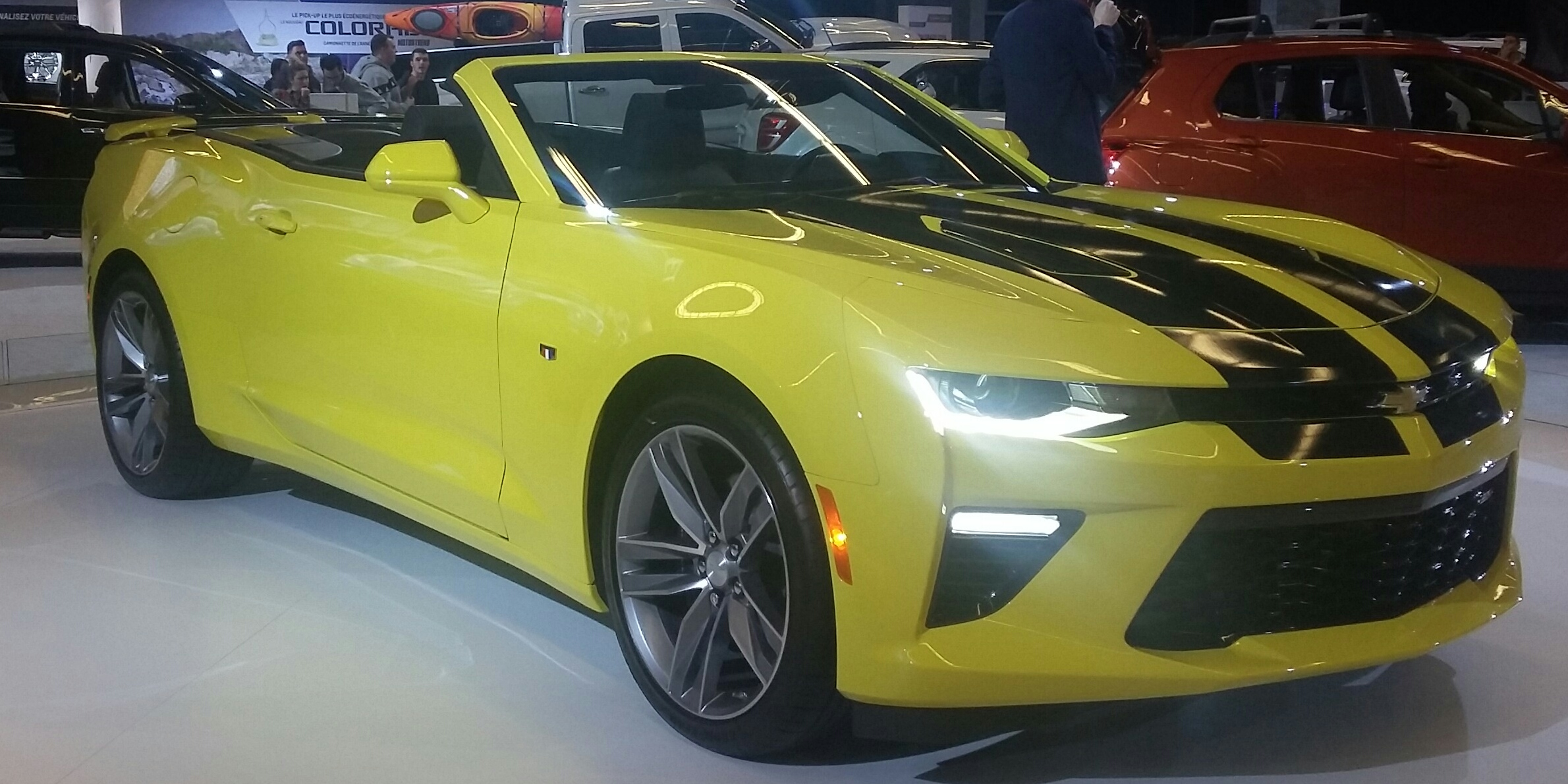
The Ford Mustang is one of the most famous American performance cars. Here, they’re using it as an example of newer performance cars that may be selling less than before.
They’re talking about whether car owners will still be allowed to change their cars the way they want. The concern is that new rules could restrict modifications.
They mean laws and rules from the government that companies have to follow. The point is that those rules can affect how cars get repaired and what parts are available.
A muscle car is a classic American performance car, usually from the late 1960s or early 1970s, built for quick acceleration. Here, the host is saying the giveaway car isn’t that kind of performance car.
A hot rod is an older car that someone has modified to be faster and more exciting. It’s usually customized instead of kept in factory-original condition.
This just means cars made before the mid-1960s. The host is saying he personally doesn’t get excited about that older era, even though plenty of collectors love it.
Car
1940 Ford
This is a 1940 Ford, a classic car from the early 1940s. The host is talking about it as a “hot rod,” meaning it’s been customized for a more aggressive look and driving feel.
Moonshine runners were people who illegally transported alcohol. Car builders use that vibe as inspiration for builds that look low-key but are tough and fast.
Steel wheels are wheels made from steel rather than aluminum. They’re typically heavier but can be durable and help keep the car’s appearance understated and vintage.
TCI (Total Cost Involved) is a company known for supplying hot-rod and restoration chassis and performance components. Here, they’re providing the foundation for a modern build using a purpose-built frame and updated suspension geometry.
Box rails are rectangular, hollow frame rails used in a chassis to provide stiffness and strength. Using larger box-section rails helps resist twisting forces during hard driving and suspension movement.
Coilover shocks combine a shock absorber with a coil spring in one assembly. They’re popular on hot rods because they allow adjustable ride height and tuning of ride and handling.
Independent front suspension means each front wheel can move up and down somewhat separately. That usually improves ride comfort and steering control compared with older solid-axle setups.
Control arms are suspension links that locate the wheel and control its motion. In an independent front suspension, they help determine alignment geometry like camber and how the wheel reacts during cornering and braking.
“L.S.” is slang for a popular modern V8 engine family from GM. People swap them into older cars because they’re strong and there are lots of parts and tuning options.
Car
Cadillac V8
This is an older Cadillac V8 engine that hot rodders liked because it could make real power. The host is talking about the early 331 V8, which was an important engine in the late 1940s/early 1950s.
This is a specific Cadillac V8 size—331 cubic inches—and it uses an overhead-valve design. In simple terms, the engine’s valve setup helps it breathe well and make power.
A forged crankshaft is a stronger crank made with a high-strength manufacturing process. It’s used in builds that aim for more power and stress than stock.
The camshaft helps decide when the engine’s valves open and how much they open. A custom cam is shaped to make power where you want it—like low-end torque or high-rpm pull.
Term
custom machine Ross Racing valve covers
Valve covers are the covers on top of the engine that protect the valvetrain area. Custom ones are made to fit the specific engine parts and can also be done for the right look.
Term
craggler blower
A blower is a device that pushes extra air into the engine so it can make more power. The “craggler blower” is a particular kind of blower used in older performance builds.
Stromberg carbs are classic carburetors associated with older performance cars. Here, the EFI parts are designed to feel and look like that old-school carb setup.
Auto Trend EFI is the brand supplying parts for electronic fuel injection. In this build, they provided throttle bodies that help control how much air the engine gets.
Throttle bodies control how much air the engine can suck in. With EFI, they help the computer manage the engine’s airflow for better power and response.
An ECU is the engine’s computer that controls things like fuel and spark timing. A Holley ECU is a popular aftermarket computer used for tuning custom engines.
A distributor helps deliver the spark to the cylinders at the right moment. MSD makes performance ignition parts that are often used when an engine is modified for more power.
The alternator charges the battery and powers the car’s electrical systems. If you add lots of electronics, a stronger alternator can help keep everything running reliably.
The firewall is the wall between the engine area and the inside of the car. Changing it (“firewall alternations”) usually means the builder cut or reshaped it so the new parts could fit and be wired correctly.
The transmission tunnel is the raised area in the floor where the drivetrain parts sit. If it’s “custom,” it means the car was modified so the transmission and related parts would fit properly.
Block sanding is how painters smooth and level the car’s body before paint. It helps make the surface straight so the final color looks clean and even.
“LS” usually means a modern GM V8 engine swap that many people put into older cars. The host is saying this car doesn’t use that common engine choice, which helps it look more like a traditional 1944.
Tall sidewall tires have more rubber between the wheel and the tread. They can make the ride feel a bit softer and also change the car’s look to feel more old-school.
The Alfa Romeo GTV is a classic Italian coupe made for comfortable, sporty driving. People like it because it’s fun to drive on the street and can be upgraded for better performance. It’s mentioned here for fans who enjoy building a great “streetcar” rather than a dedicated race-only car.
The Chevrolet Corvette is a high-performance sports car made by Chevrolet. It’s designed to drive fast and handle well, not just to look like a race car. That’s why it often comes up when people talk about what makes a car truly performance-focused.
Alignment is adjusting the angles of your wheels so they point the right way. If it’s off, your tires can wear out quickly and the car won’t handle straight and smooth.
Camber is how much your wheels tilt inward or outward. If it’s set too far (especially negative camber), the tires can wear unevenly and the car can feel annoying or unstable on normal roads.
A DCT is a transmission that uses two clutches to shift quickly. The next gear is basically ready ahead of time, so it can feel snappier than a normal automatic.
Charlotte Motor Speedway is a big race track in North Carolina where teams run cars to race and test. It’s the kind of place where you can learn a lot about setup and driving.
Some race tracks have a “best line” where the cars go fastest. On a bottom groove track, that best line is near the bottom of the turn, closer to the inside.
Hickory Motor Speedway is a race track in North Carolina. Short tracks like this are famous for tight racing and for figuring out the best line through the turns.
In this format, even if you qualify well, your exact starting spot can be chosen randomly. Here, the top four qualifiers get their positions drawn from a hat/bag.
“Leno’s law” is a California rule change meant to help older cars avoid extra emissions testing. The idea is that certain collector cars can get exemptions from smog checks if they meet requirements.
A smog check is an inspection that measures how much pollution a car is producing. California requires these checks, so older cars can get exemptions if they qualify under special rules.
A smog check exemption means a qualifying older car doesn’t have to pass emissions testing. The host says the proposal would cover older cars starting around 1981 and eventually up to 1986.
A “daily driver” is a car you use every day for normal errands and commuting. The law being discussed would require the car not to be used that way to qualify.
A mileage restriction means there’s a cap on how much you can drive the car. The host implies the exemption would require the car to stay under a certain mileage threshold.
A “fuel efficient car” is a car that uses less fuel to travel the same distance. If fuel and taxes are expensive, people are more likely to choose something that costs less to run.
Smog tests are checks that measure how dirty a car’s exhaust is. If a car fails, you usually have to fix it so it meets the emissions rules before you can keep driving it.
“Leno Law” is a California rule that lets some older cars avoid certain emissions requirements. The argument is that these cars don’t pollute as much as newer cars that are driven every day.
A “rolling 25 year old number” describes an age-based threshold that updates over time—once a vehicle reaches 25 years old, it may qualify for different treatment under emissions rules. This is often used to define which older cars are considered low-impact enough to exempt from stricter testing.
Onboard computers are the car’s electronic brains that control things like the engine and emissions systems. If they’re not working correctly, the car may run poorly or fail emissions checks.
“Emissions products” are parts that help clean up what comes out of the tailpipe. When people restore cars, they may want to keep those parts so the car still has the pollution-control equipment it originally had.
“Concor” sounds like concours judging, where cars are judged on how correct and authentic they look. The host is saying that emissions parts can complicate restoration if you’re trying to meet show standards.
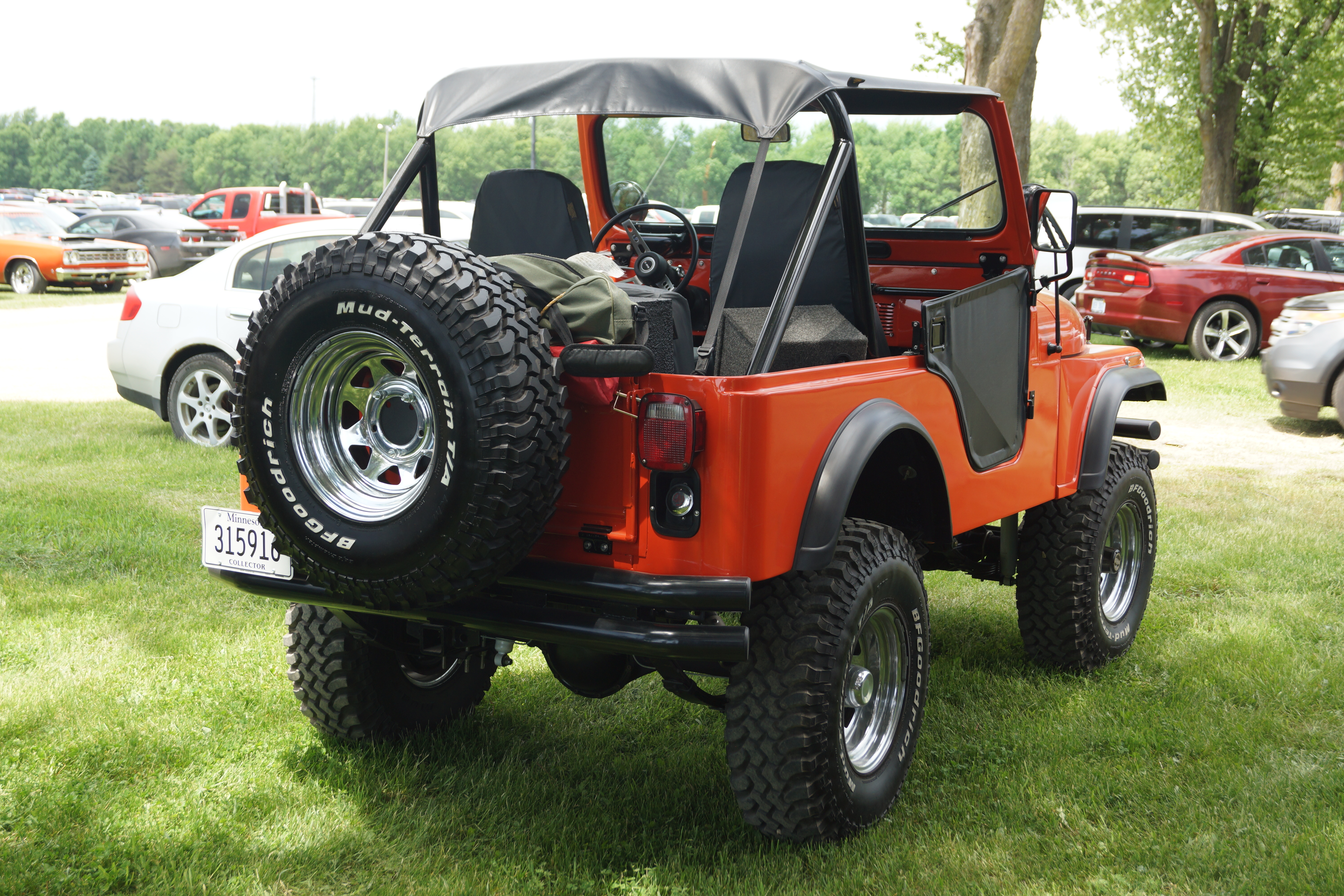
The 1985 CJ7 Jeep is a classic, boxy Jeep that a lot of people restore. The host is saying that even getting the exhaust to match correctly can be difficult when you’re trying to restore it the right way.
Here, “exhaust” means the car’s full exhaust setup—how the pipes and muffler are arranged. The point is that matching it correctly during a restoration can be tough.
An “aftermarket market” means parts you can buy from companies other than the original automaker. In this case, it’s about replacement parts for emissions equipment during restoration.
A catalytic converter is a part in the exhaust that helps reduce pollution. When restoring a car, people care because the right catalytic converter can be hard to find and it needs to fit and match the original setup.
A “lift” is a machine that raises the car so you can look underneath. The host is saying emissions parts might not be visible unless the car is up on a lift.
A 1972 Camaro is a classic muscle car from the early 1970s. People restore them because it’s usually easier to find the right parts than it is for newer cars with lots of electronics.
CAN bus is the car’s electronic “messaging system.” It connects different computers in the car so they can share information, like what speed to display on the gauges.
This is a 2002 Mercedes SL 55 AMG, a luxury roadster with a big 5.5-liter V8 and a supercharger. The point is that cars like this rely heavily on electronics, which can be harder to service decades later.
A retractable roof is the car’s convertible top that can open and close. Because it’s a powered system, if something goes wrong it can be more complicated than just fixing a normal body panel.
The “SL 55” is a Mercedes-Benz luxury sports car (a grand tourer). It’s the kind of car people buy for comfort and style, but if the electronics break, repairs can get tough—especially if replacement parts are rare.
“Electrical gremlins” means weird electrical problems that are hard to track down. The car might act like something is wrong in one place, but the real cause could be wiring or a module somewhere else.
A radar detector is a gadget that warns you when it detects police radar. Rick is saying that the way these devices were wired into the car ended up causing serious electrical problems.
A laser jamming system is a device meant to interfere with police laser speed guns. If it’s installed poorly, it can cause electrical damage to the car’s systems.
The instrument cluster is the dashboard panel with the gauges and warning lights. Rick is saying the electrical issue ended up damaging that dashboard module, and it can’t be repaired—so he had to hunt down a rare replacement.
“New old stock” means brand-new parts that were made in the past but never used. Rick is saying the replacement part is so rare that he had to buy one of the remaining NOS units.
“Fox body” is the nickname for a specific Mustang generation from the late 1970s through the early 1990s. “Fox body mode” means the car’s digital dashboard can switch to a display that looks like the older Mustang gauges.
The Mustang is a sporty American car that’s been made for many years. In the podcast, the speaker mentions a “Fox body mode,” which is a way to mimic the look or feel of an older Mustang style while driving. That’s why it comes up—Mustang fans often like connecting to the classic versions.
ECM means the car’s engine computer. If you change or replace parts of the dashboard/electronics, they have to “talk” to that computer correctly, or the car might not start or behave properly.
Anti theft is the car’s security system that stops it from starting if the wrong key or authorization is detected. The host is saying that changing electronics can interfere with that security system.
Term
security issues
“Security issues” here means the car’s electronics are protected and controlled. If you try to replace or connect parts that weren’t designed for that exact system, it can cause problems.
Park sensors are the little sensors in your bumpers that help you avoid hitting things when you park. If you change the car’s electronics or software, they can get messed up.
Independent repair shops are regular mechanics that aren’t tied to a specific car brand’s dealership. The discussion is about whether newer car software makes it harder for them to work on cars.
Collector car insurance is a special type of insurance for cars you don’t drive every day. It can be cheaper because the insurer expects limited use, but it may come with rules like mileage limits and other restrictions.
Agreed value is a collector-car insurance approach where the insurer and owner set a value for the vehicle up front. If the car is totaled, the payout is based on that agreed figure rather than standard market-value calculations.
A mileage limit is a cap on how many miles per year (or per period) you’re allowed to drive the insured collector car. Exceeding it can reduce coverage or trigger denial of claims, which is why collectors often track usage carefully.
In insurance, “fine print” refers to the detailed policy exclusions, conditions, and requirements that determine when coverage applies. For collector policies, these details can include restrictions on storage, supervision, permitted use, and claim eligibility.
This is an insurance type made for cars you keep as a hobby, not for everyday driving. Because you usually drive them less (often with mileage limits), the insurance can cost less than regular coverage.
This is a 1974 Oldsmobile Cutlass. It’s a classic American car from the 1970s, and the speaker is talking about one that’s still in pretty original condition.
This is a 1973 Oldsmobile Cutlass Supreme. The host says it’s an “unrestored low-mile survivor,” which means it hasn’t been fully restored and it has relatively low mileage for its age.
This phrase means the car is basically still original and hasn’t been fully restored, and it also has low mileage for how old it is. Collectors like these because they can be more “authentic” than a fully rebuilt car.
Air conditioning is the system that cools the cabin. For older cars, having it (and especially having it work) makes the car much more pleasant to drive.
Power windows open and close with a switch instead of a hand crank. On older cars, working power windows are a convenience feature people notice.
LIVE
The Muscle Car Place, online podcast, episode number 653.
This week, Rick is here to kick off July, and on this 250th anniversary of the good old
US of A, we're going to cover a lot of ground.
Like, what do we got to do when it comes to keeping those 80s and 90s era cars restored?
There's tech in them, emissions in them, all sorts of do-dads that fail.
There's no solution for that.
And then when it comes to new American performance cars like the Mustang, there's no question
that sales volumes are down.
Maybe it's because stuff just costs too much.
Or maybe it's because we're in a situation right now where the right to modify your car
could be taken away from you.
That's a problem, and Rick has a thought on that.
I don't think it's the auto manufacturers wanting to control all aspects of repair and
part supply and all that.
I think it's government regulations that they are forced to abide by.
Yes, indeed.
I am Rob Kibbey, and welcome to the Muscle Car Place podcast.
Well, let's start this show off right.
This is the Independence Day kickoff burn, laying the stars and stripes forever under
the monologue.
Oh yeah, that's the good stuff.
John Phillips, who's a real toe tappers.
That's what he wrote.
Rick is here to kick off our July together, and we will really dig into the world of
modern cars, modern restoration issues that face people restoring 80s, 90s, and 2000 era
cars end up.
What do we have to do right now to protect our rights to modify our vehicles like we
want to?
That's a problem, and it's a problem right now, and it's potentially facing us all for
real.
Then of course, Rick and I, we're going to find some weird auction cars to bid and flip.
That's always fun.
But when it comes to modifying your cars, is there anything more American than that when
it comes to the car world?
Being able to put a turbo on it if you damn well feel like it?
If you look at the Mustang sales right now, and I think Rick mentioned this in the interview,
Mustangs sold more when people could mod them.
Isn't that interesting?
People would buy a brand new car to mod it.
Yeah, we got to get our arms around this one.
Well, this is a very unique show.
Tomorrow will be July 4th, 2026, and that means that the good old US of A here is turning
250 years old.
I know that usually come here for car stuff, and occasionally come here for some business
stuff.
Sometimes you're interested in me personally, but you know that my goal here is to be as
real with the A-can.
This time of year, this year especially, we do need to acknowledge that this country under
God has given us the freedoms to do, frankly, whatever it is we feel like doing without
the persecution fear that so many before us felt.
Today is not July 4th as I release this.
This is July 3rd.
I'm at the Good Guys Car Show in Des Moines, and I'm racing my show out today.
I short of fighter jets and aircraft carriers and see the American flag not flying on the
moon, but existing horizontally on the moon.
The Good Guys 4th of July Car Show is as stars and straps as it gets from me.
I love it.
I love being there.
I love the environment of it.
And while I've been to other Good Guys shows that are certainly a nice event, it's not
like the 4th of July show.
It's just different, and for me, it's better.
I hope that you spend this specific holiday enjoying it sincerely and being thankful for
it and remembering what it's for.
Now this isn't a history show.
I didn't do very well in history in school, frankly.
Frankly Franklin, Ben Franklin.
But our man Bernie is a fan of history.
He probably did quite well in school and history, and he shared something on the Kibbe and Friends
show that I'd like to take a cue from, and I'm just going to repeat to you.
So this was a lesson Bernie was teaching us.
It was from Ben Franklin.
So when Ben Franklin was asked whether the Constitutional Convention had created a monarchy
or a republic, he replied, a republic.
If you can keep it.
And what he meant by that is that the founders had designed a government based on freedom
and the rule of law, and its survival depended entirely 100% on the vigilance, education,
and active participation of the American people.
It can be lost.
Franklin's famous warning highlights three core ideas.
Citizen responsibilities.
Number one, a republic cannot sustain itself.
It endurance relies on the moral integrity, patience, and active involvement of its citizens
to protect democratic institutions.
It is up to us and it is our problem to maintain it.
The second was constant vigilance.
Freedom is not guaranteed.
Franklin recognized that democracy is fragile and can easily decay into tyranny or corruption
if the public becomes complacent or indifferent.
And there are times when it feels like that's happening now, doesn't it?
Most of us can go through our daily lives and not think a thing about the country we live
in or how it works or who's doing what to who.
We have the freedom to not pay attention.
But if we do that too long, we lose that freedom.
Finally was the power of the people.
Third item, unlike a monarchy where power is inherited, power in a republic resides with
the public.
People must consciously choose to uphold the constitution through the laws they support
and the leaders they elect.
If you have the opportunity in this country to vote, it's irresponsible to do so.
That is my personal opinion.
But if you don't vote and you don't take the opportunity to educate yourself on who you're
voting for and why, you have nobody to blame but yourself.
That is just the truth.
So there you go, Bern.
How'd I do?
I hope you liked it.
You know what?
I'm going to end this with something that hopefully is inspiring.
I'm not here to scold you.
I'm here to say out loud what we all know is true.
But I would like to end with one thing that's so awesome, Bern.
Track number one, God bless America.
Ladies and gentlemen, we now take a moment to sing God bless America.
We are led tonight by retired Navy Petty Officer, first class, Janerald Wilson.
God bless America, land that I love.
Stand beside her and guide her through the night with the lights from above, from the
mountains to the prairies to the oceans, wide with foam.
God bless America, my home sweet home.
God bless America, my home sweet home.
Isn't that amazing?
Okay.
I got that from the 2012 World Series off of Fox.
I'm pretty sure it was 2012.
It was the Red Sox and I can't remember where they're playing.
It was the Red Sox and somebody.
There's a line of Marines.
I think it was the Red Sox.
Well, there's a line of Marines that they show that are watching that performance there
and they're all stone faced and focused.
But towards the end of that performance, you could see them taking it in and eventually
one of the Marines just broke with smiles of joy.
I mean, you couldn't contain it, right?
You probably did yourself a little bit.
That's pretty good.
Amazing.
All right.
Let's get back to work.
I'm going to show you a good guy's show.
I don't register on, I don't pick up my stuff the day of.
I go down the day before because I have the luxury to and it's so much easier than doing
it the day of.
When I go there, I want to autocross and the bad part about the autocross is it's a long
day to get like six runs truly.
And the even suckier part about it is you got to show up early to get a decent spot.
Otherwise, you are way out in 10 bucks too.
So I'm going to go down pretty early and I don't want to get my registration at four
in the morning.
So I go pick it up the day before and I live here and it's easy to do.
Well, while I was down there, I got to take a look at this year's giveaway car and I
need to tell you about it.
I never signed up for these giveaway cars because frankly, I know I'm not going to win
and you also have to be present to be eligible for the opportunity to win later.
So that's how they do it on a Sunday afternoon.
They draw a name and then you don't win the car.
You win the opportunity to win the car later against everybody else from every other show
that won the opportunity to win the car later.
So then you're just whittling yourself down to like a rally of like 24 people or something.
The car that they have isn't even a muscle car.
It's a hot rod.
And I will just admit I get nothing, nothing out of like pre 1964 era cars.
I don't they do nothing for me.
50s cars, I mean, they're fine.
They're just not my bag.
They're not my area.
A 57 Chevy is cool, but 40s cars, 30s cars, the 32 for I don't care.
They do nothing for me.
But this one did.
This is a hot rod.
It's a 1940 Ford.
I'll read something to you about it.
This is from a fuel curve.com.
I'm just going to read you pieces of the article.
When Ben York from Roseville Rod and Custom signed on to build a 1940 Ford
coupe for the good guys, 2026 grand prize giveaway.
He immediately pitched the idea of a sleeper style hot rod
modeled after vintage moonshine runners.
The style perfectly fits his shop and shop for crafting subtle hot rods.
Eric and artist Eric Black traded ideas and drew on that inspiration,
which is evident in Black's illustration that guided this project.
It looks like something that could have flown under the radar back in the day.
Minimal flash, steel wheels, blackwall tires, only the slightly lowered
downstance nose offers a hint at what lurks behind the surface.
But the concept for a covert coupe established, been located a clean
original 44 to the starting point.
He says the extra money invested for a nice car up front paid huge divis
ends in avoiding time wasting metalwork during the build.
There's a lesson.
This assembly and stripping revealed minimal hidden damage, allowing
work to commence almost immediately.
Moonshine runners back in the day had all kinds of homebrewed
tricks for stiffening suspensions on their speed machines.
Today we have the benefit of a robust hot rod market that builds precision parts.
One such company, Total Cost Involved or TCI, provided the sturdy foundation
for our modern bootleg build.
Little.
Literation.
The company's chassis consists of a purpose built frame with two by six
inch box rails, a sturdy cross member and a modern independent front
suspension with two bill of control arms, ride deck coilover shocks and rack
and pinion steering.
Additionally, ride deck coilovers work with a four-link setup to position a
nine inch rear end from Curry.
Will with disc brakes at all four corners, delivers stopping power.
That fresh TCI chassis supports something any law of aiding coupe should have,
a formidable power plant.
Here's the good part.
It's not an L.S.
Taking a cue from early sleepers, Ben wanted to use a Cadillac V8.
One of the most highly regarded V8s of the early 1950s Cadillac introduced
its powerful 331 overhead valve V8 1949.
Our hot rodders were quick to leverage its performance potential.
We turned veteran vintage anobilder Tony Lombardi at Ross Racing Engines to
build a strong performing Cadillac V8.
Tony started with a later 50s, 390 and fitted it with a forged crank,
even connecting rods, Ross Racing forged aluminum pistons and a custom
ground cam.
Rebuilt and upgraded heads were topped with custom machine Ross Racing valve
covers that resembles stamped steel originals.
The engine's crowning touch was a vintage, craggler blower modified and a GMC
471 supercharger, which were topped with throttle bodies from Auto Trend EFI
modeled after Stromberg carbs.
Support components like a Holley ECU, MSD distributor and nation box helped to
make the combination work along with a power master power gen alternator.
No, it's kind of salesy, isn't it?
It has a nice power gen alternator on it.
I'll stop there with the Holley and MSD stuff.
It's just buried in there.
If it didn't say that in the article, I frankly wouldn't have known.
This thing is so, so, so subtle.
It is awesome.
As we already know, this project began with a clean 1944 following tear down the
body went to American stripping and Sacramento.
Thankfully, no dirty secrets were present.
Most of the custom metalwork involved making minor firewall alternations,
building a custom trans tunnel and making sure some precision cuts and adjustments
to the hood were performed so everything would fit in.
The Roseville team made the necessary nips and tucks.
From there, the body was treated to bodywork block sanding to deliver an
outstanding finish.
The medium gray color achieves that objective.
It's the sort of finish that can help hide the car in shadows.
Ben calls the car color still gray and its reference to a moonshine still.
And I'll stop reading the article there.
There's a lot more.
Again, this era of car typically does nothing for me.
But when you see this thing sitting there, it looks like a 44.
It doesn't have an LS under the hood.
You can't see the chassis.
It's sitting on tall sidewall black tires.
And then slowly, but surely you realize this thing is nothing but cool and fast.
It's a manual transmission, too.
But I mentioned that it's awesome.
So that's the good guys give away car.
I think you can enter online now that I think about it.
Maybe Kim, maybe I don't know.
You'd have to Google that one.
I don't know how to enter it for sure anyway in person, but I'm pretty sure
that there's information from good guys online.
So that's the giveaway car.
Other industry news.
Dodd is returning to NASCAR, but they might not.
The Camaro might come back or might not.
The economy is back.
Or maybe it isn't.
There you go.
Next week, a little preview for you pro touring fans who love the GTV classic,
good guys and ultimate streetcar and really want to haul the mail.
I mean, haul, but we're going to have Chris Smith on from Smitty's Customs in
Ohio, his pro and touring builds, they burned down the event at any event that
they go to.
They are built to race and they're real cars.
They are not race car chases with a like a Corvette body on them or something
like that. They're real, real, real cars and they're usable.
He will tell you Chris meter of who gives an F is it's pretty high.
He does not give a, he does not care.
He'll tell you who to buy parts from, who not to buy parts from.
What's worth doing.
What isn't.
And the trick he's found with good equipment to avoid putting a ton of negative
camber in your alignment so that you don't have a car that eats tires in his
miserable to drive on the road.
He isn't doing any of that crap and he is really fast and he shares everything
he does and no hidden secrets.
When he told me that they were messing around with DCTs from BMWs, that blew
my mind. So that'll be next week preview of what to come.
Let's go ahead and get to the Dallas Kibbe racing update presented to you by
Lexani tires, lionheart tires and rolling big power tires all available for
purchase easily at simple tire.com.
Burn cue the intro please.
The Dallas Kibbe racing update driven by Lexani tires, lionheart tires and
rolling big power tires all available for purchase easily at simple tire.com.
Now here's the update.
Loose is fast and on the edge of out of control.
Okay. Well, I'm happy to report Dallas has continued racing and we still have
cars to race and more learning has been done.
And the flip side has just been kind of more of the same.
So we spent the last 10 days in Charlotte together.
And the way that I'm doing these is he races every Monday and Tuesday,
basically at Charlotte Motor Speedway.
He either has a race or a practice on Monday and then he always has a race on
Tuesday. So when we do that, we go down for the Monday, Tuesday.
And then if he's going to have a late model race that weekend, we just stay.
We just stay throughout the week.
We stay throughout the weekend and then we go back to Charlotte on Monday.
You know, the hard part about this is it is hard being away from home and
trying to run a business from home and being away from your family.
But the good part is we're getting a lot accomplished in a short amount of time.
And we're kind of learning the industry as much as I would like to race more at
home here. And I'm not saying that we won't.
The exposure is down there. It just is.
Kind of wish that weren't the case, but I can't ignore it.
It's true. Eventually you got to make your way down there.
If you want your name known and you want to get more access to the racing
world and industry, it's just down there.
So when it comes to the Charlotte summer shootout in his legends car,
he's now six of the 10 races into the season.
Five and six are done in the month of July here.
It's he'll practice every Monday and race every Tuesday.
Tell it's over. There's four weeks left to go.
He's getting very good in practice and he's become excellent at racing.
Qualifying needs help.
For some reason, he just hasn't found a way to put that together.
And what's frustrating about that is this is a series that is a kind of a catch
all when it comes to people's interest and ability in the semi pro class.
And that's where he races. He's in the semi pro class.
This is where you go when you're over age 16 under age 40 and you're an up and
comer. So this class has a wide range of talent.
And out of all the classes out there, it's the one where cars get wrecked.
And I mean wrecked a lot wrecked the most.
There has not been and likely will not be a single race where there isn't at least
one or two or three cars that go home on a record.
It's also the biggest class.
It's the class that has far more entrance than can race.
Only 24 cars race in the main feature.
Think last week there were 35 trying to qualify.
I mean, it's a big sucker.
If you qualify in the top 20, you just go right to the straight feature.
If you don't make the top 20 and there are guys that have won races there this
season that have not made the top 20 in qualifying.
I mean, it's that crazy.
But last week, a former winner didn't make the feature on qualifying at all.
He had a races way in.
It's just a wild class.
So I know that while Dallas is probably frustrated, hasn't ever win yet.
He's learning a ton.
But this is the part of the season where it's time to expect a lot out of himself.
I'm not putting that pressure on him.
He's putting it on himself.
And I know that he's feeling that.
And so I would like you to pray for his confidence here.
He can do it.
When he's in a race, he's at his best.
He just is.
He's had to start most races towards the tail just because of the qualifying times.
And that's what's so frustrating.
The qualifying times, I mean, he's not off by like half a second or half a minute here.
I mean, it's hundreds of a second.
The leaders are running twos and he might be running a 35.
I mean, that's that's that's all it was.
That's how much time he was behind on the track in qualifying.
So the good news is he has found a way to do racing really well.
And one area that I'm proud of I didn't tell him to do.
He just seemed to know how to do was how to shoot the gaps himself and how to
position people in gaps.
And it's the same trick you do.
And yes, I'm talking to you when you're on the interstate.
If you're in the left lane and somebody tries to race up and pass you in the right
lane, I'm not saying you've done this.
But if you just speed up a little bit to pin him in the right side.
And then when you come up on traffic, especially when there's somebody in front
of them and you and then you slow down a little bit just to make their life
kind of miserable so they can't quite get around you.
They can see there's room in front of you, but they can't get around you.
And then you're doing it so that you can close up the gap behind you with the guy
coming up behind you.
That's what pacing is.
He has figured that out in racing.
And at the particular tracks we're doing, it's a bottom groove track.
They start the cars two by two outside and inside.
You want to be on the inside.
And he's finally figured out by himself that once you get on the inside, the way
that you stay on the inside is when you see a run coming up to go forward, you
make sure that you keep the people on the outside, on the outside so they can
never get down.
So he's figured that out.
Late model race number two with the sets of racing and development.
That's done it as well.
And that was another new track for him, historic Hickory motor speedway.
He's got more learning to do there and he knows that, but he was P1 in practice.
P3 in qualifying qualified well.
And for the second race in a row, he's qualified better than gets to start.
The top four qualifiers redraw.
They just randomly draw a position out of a bag.
And he has randomly drawn both times.
Fourth out of four.
So he's always started fourth.
And that means they've always started the outside.
He finished the race sixth, 75 lap race.
He about got fifth towards the end.
Much, much harder track and significantly harder competition than the first race.
So good effort.
The next race that we will run with sets or will be at Hickory again on August first.
I've been giving them a lot of thought now, what do we do now when we're done with
the Carolinas?
I kind of want to bring his legends car back to Iowa for a couple of months and race it
up here and I'll crew chief it for him.
There are some local races that we could do that would be way easier on the pocket book
and something that we could do together on a Friday night.
I'll open them.
I miss that.
I miss just the two of us going to a track together and, you know, having that time.
Hopefully we're not past doing that.
I know that I'll never do it as well as the people that we're working with right now.
But I would enjoy getting another shot with him.
Even if it's just a one off here or there, I'm kind of hoping that we'll get to do that.
Well, there you go.
That concludes the Dallas Kibbe racing car update presented by Lexani tires, iron
heart tires and RBB tires.
Make sure that you buy them at simple tire dot com.
You'll love the sizes and the prices.
And when you prices, not prizes, prices, I will tell you that his new racing suit
from Simpson's just about to show up and it's got all their company logos on the back.
It's very cool.
There you go.
Burn.
Run the outro, please.
OK, let's go ahead and get to our feature interview with Mr.
Rick Schmidt from NPD.
We are going to talk seriously about how to keep emissions on cars when you want to
keep cars up to speed that have taken them and exactly what Rick predicts will happen
to the bulk of cars today.
I'll give you a hint.
It rhymes with future beer cans.
In doing.
The Muscle Car Place Weekly podcast interview is brought to you by our good
friends at National Parts Depot.
See them through the link at themusclecarplace.com.
Up next on the National Parts Depot hotline is Mr.
Rick Schmidt from NPD.
Rick, happy Independence Day.
Yes, same to you.
We're recording much earlier in the month than we normally do.
But if you can think about three weeks from now, will you celebrate the
independence of our country by blowing up a small part of it?
I have been responsible for plenty of explosions in my past.
But this year, I'm pretty sure we have plans to be at the beach in St.
Augustine, Florida, which we've done before with friends.
Everybody kind of rents condos over there and spends the holiday in the ocean
and on the beach.
But setting fireworks off on the beach, it starts this whole Keystone cops
thing where the police technically do not allow the fireworks and they try to
enforce it, but there's only so many of them.
So it turns into this organized mayhem where in some part of the coastline,
somebody throws up a bunch of beautiful mortars.
And as you see the police officers with their sirens rushing down there to
figure out who was responsible for that, behind them, somebody else is
loading up mortars and sending them off as they're speeding away from that.
Yes.
It just goes back and forth all night.
I don't know why they try.
They may not try this year, but I don't feel like any of the ticket are
arrested. All of my fireworks, my big booming, large diameter mortars have
always done on a private lake.
And my wife Elaine's late father's lake house, where we were free to set off
whatever nonsense we wanted to and nobody was going to bother us with it.
But at the beach, I let everybody else take the risk and I just watched the show.
This will be a unique one.
It's the 250th for this country, our country.
Do you remember the 200th?
You were probably quite young, 1976.
Yeah, I was nine years old.
Actually, eight years old because I wouldn't turn nine until August.
So I was eight going on nine.
I remember it though.
My most vivid memory was remember the call it the Freedom Train, I think.
The Freedom Train.
White with blue and red pinstripes, not a train buff.
So I couldn't tell you what model and type of train, but this was huge,
beautiful train.
And they had filled up all of these repurposed passenger cars through the
train with displays.
I think they were carrying around a copy of the Declaration of Independence
on the train and everything else.
It did a whole nationwide tour and it happened to stop in Gainesville.
So that was a big field trip where all the school kids for the whole
entire county had an opportunity to get them a school bus and go out and
see the Freedom Train.
That's kind of my biggest memory of the whole thing.
And I just remember watching TV in the evening that all the networks had
their little under the anniversary special when the networks would be in
between commercials, you're watching NBC, DOOM DOOM DOOM.
But every network had a patriotic themed thing going on for the 200s.
What is the most patriotic themed thing your family did in your childhood?
And I'll give an example of mine.
My mom was a huge history buff, really of all history, but loved American,
United States history.
In 1986, she made us go to New York City and we had to go to New York City for
the 100th birthday, I guess, of the Statue of Liberty.
It was in 1886 that it was dedicated in New York.
So in 1986, we went on the 4th of July, we went to a parade in New York City.
I think it was the battleship of Iowa, came up the river.
Reagan was there.
Ronald Reagan was there.
I can't tell you a lot of the details of that other than we went to the Statue
of Liberty and I remembered seeing it.
But the whole spectacle of it was very mind altering to me.
It was a very red, white and blue type of event.
It wasn't a car related thing specifically, but my mom and dad had this
25 foot knockoff Winnebago that we drove all the way there through New York.
And I remember a cop taking pity on us, a motorcycle cop taking pity on us.
Given my mom a six pack of his beer or Pepsi, he was off duty.
He was going home and he could tell that we were lost.
And he gave her his six pack to hold so he could drive around like through some
barricades and have us follow him.
I remember that whole memory, but it set in my heart to think of the Statue of Liberty
as a very patriotic type of place, but it wasn't automotive in nature.
Do you have any that were automotive or patriotic in nature besides the Freedom Train?
I visited Washington, D.C. and saw the Smithsonian Institution
when I was in fifth grade in elementary school as a safety patrol.
All the patrols got sent up there.
And I think my mom figured that because we got the full boat saw everything.
She was like, well, I guess you've been there and done that.
He never had DC as a destination.
My mom, she enjoyed when we would go on some family trips and we did a couple
of Winnebago trip type trips.
But every time we would be in a big city, my mom and my sister and I would be
advocating that we spend a few days and ride the trains and go down to the downtown
and shopping areas and really take in the city.
And my father just wouldn't have any of it and he could not get out of the city fast enough.
So most of our big vacations were into the mountains or to see the fall colors
natural things.
So my dad had this huge aversion to big cities.
And I just think they just stressed him out.
It was all it was just the traffic and everything.
It overwhelmed him.
And then a lot of times we took our summer vacations.
My dad just worked.
He'd stay home and my mom would haul us down to C.S.
to Key and Sarasota right at condo for a week or two.
And my sister and I, my mom would just have a blast just being on the beach and going
to good restaurants and going to St.
Armand's Circle and took it to the Ringling Brothers Museum and to the Botanical Gardens
that are there in Sarasota.
So I did a lot of more vacations with my mother than with my dad.
Now, vacations we took with my dad, there was a lot of car show destinations on those
to where we take our little red T-bird and head to a show.
But none of the shows had anything to do with history or anything like that.
I do remember going to a big show in Detroit.
And that was an opportunity that the first time as a very young age to go to the Henry Ford Museum.
It was that pretty cool.
To this day, that's my favorite museum in the country.
Anybody who thinks it's just about cars and Ford Motor Company, that's just a pie slice.
Yeah.
What's in that museum and the stories it tells and the artifacts that Henry Ford
collected pieces of talk about American history.
That guy brought so many important pieces ahead.
American history into that museum world history, for that matter.
I mean, he was he was shipping over steamed power plants from Europe
and installing them in the museum.
Speaking of Henry Ford, the model of you're not just employee here, you have a life here.
It's hard to put what Henry Ford did in a box, but he brought an employment workforce in
that had housing available for purchase.
Yes.
You could literally be a Ford man, your whole working career.
Yes.
Not just during your working hours, during your evening weekend hours, all of it.
Yeah.
That's a concept that doesn't really exist today unless maybe you're in the military.
But just having recently been in North Carolina, there's a lot of history down there
of textile manufacturing and having visited a few old textile manufacturing plants.
They did the exact same thing and they must have learned it from Henry Ford.
Or maybe that was the era of the time.
We have the office here.
We have the factory here.
Your housing is over there.
Maybe they do a lot of that to this day and on the other side of the world
in India and in Africa and in China were large factory, fresh new housing nearby,
restaurants and grocery stores so they can keep their employees in a tight community
where they don't have to travel far for anything.
Yeah.
Having been down there, just reminded me of a lot of the Henry Ford studies that I'd started doing
my 30s and 40s.
Just learned what he had to do to build.
All I want to do is build a damn car.
Sure knows really hard on a different topic.
While we record this in June, Leno's law, if you're familiar with the phrase,
is giving it another try in California.
What it is in California is some California specific legislation that does the following.
And I'm summarizing here for the listeners and frankly for myself.
In California, smog checks are a thing.
That's not a thing in many states, but in California it is.
This bill out there seeks to provide smog check exemptions for older vehicles,
starting with 81 and eventually all the way up to 1986.
To qualify for that, a car would need to have collector car insurance.
It couldn't be a daily driver.
I think there's a mileage restriction of some kind out there.
But are you familiar with this law?
Is there anything like it in any other state, aside from California?
I don't know that it's necessary in any other state, except for California,
because California is one of the last refuges where they're making people with
cars that old still have to come in.
And I've been going out to California, traveling out to California and making
my classic car observations since the early 1990s.
And when I first would travel out there, when I first was taking more of a role
of operations with NPD, and of course we've long had a warehouse and distribution
center in Ventura, California.
Back in the nineties, there were so many classics still on the road, people
using them as their daily drivers.
It was just mind blowing.
It was cool.
It was like going to Cuba and seeing all these classic cars and going, my gosh,
California wasn't like that, but still a lot of people daily driving what you
would do, classic cars from the sixties and seventies and even the fifties.
The last few times I've traveled to California more recently, let's say
in the last 10 years, that dynamic has, it just almost doesn't exist anymore.
I think that's a function of a lot of the cars are still out there, but not
being used as daily transport.
And I think with the traffic and with the advent of there's a lot of electric
cars coming around out there with the price of gasoline and needing to have
a fuel efficient car as taxes and gas prices in California continue to grow
exponentially compared to elsewhere around the country.
What I'm getting at, there's so few classic cars actually on the road in
California right now, driving around at any given time, anyhow, their impact is
so negligible.
They amount to one or two grains of sand on an entire sand in the impact of their
quote unquote emissions, I would argue is absolutely immeasurable.
They would not be able to do any truly scientific study that would prove, in my
opinion, in my guess, the grand total of classics that are still twirling around
weekends, pleasure, what people in California really are using those cars
more for now is for pleasure, not for their daily driver.
That entire activity is so negligible compared to people with more modern
cars driving back and forth to work and driving around in general, that why
continue to have these people chained into having to get smog tests and to
make repairs, to meet some sort of certain, and I'm sure it's a pie in the sky
standard.
It's just why even do it?
Just leave it alone because I think the result of just leaving it alone and
allowing the Leno Law to pass environmentally will be a zero impact.
Common sense would say that.
Common sense would say that a rolling 25 year old number is probably enough.
Yeah.
Really, probably it doesn't need to be more complicated than that, but you had
mentioned something in our last interview and I'm going somewhere with this.
There's two takeaways that I had from this, specifically in light of the fact
that a 25 year old car is old now, but it's to us not that old.
Right.
The restoration industry will need to support what I would call technology
here, both in emissions and onboard computers, all the stuff that makes a 90s
era car, a 90s 2000s car.
Let's just start with emissions.
If you want to restore a car and keep the emissions in it, maybe that's how you
want it done.
Maybe you're going for on poor rating.
Is there a market out there for emissions products that you can put back on a
car that might not have them?
If you're restoring an 88 Iraq Camaro for Concor, how do you do that?
For Concor, no, that can be a real problem.
Shoot, just getting the exhaust exactly right on my dad's 1985 CJ7 Jeep when
we restored it, that was a challenge.
We really had to beat the bushes to find new exhaust parts.
And then we kind of had to do a little bit of a ingenuity to come up with a
like new looking system.
That was just the way it rolled off the line.
I honestly, I just be pulling in answers out of thin air.
It's a problem.
Most people, if they were restoring the car, there is an aftermarket market for
replacement catalytic converter, eight pipes, white pipes, what have you.
Are they concors correct for restoration?
No, I don't believe they are.
They just get the job done.
So you can keep the emissions on the car, but if it's the type of show, but then
again, cars like that are so low, who's going to be able to see it?
Unless you put the car up on the lift.
But that's why as you get into the nineties and 2000s, that's why I'm not
going to sit here and say that the restoration hobby is just going to continue
to move into newer and newer cars.
I think there's a point at which everybody just throws up their arms and say,
I'm going to go look for a 1972 Camaro and do that and do something that's
simple and easy and does not require a bunch of parts that just aren't available
and never going to be available.
Same question.
Like my kid's 85 and a half Porsche, the gauges died.
I couldn't fix them at home.
I tried.
I ended up looking out and finding a speedometer shop in Atlanta that specialized
in that and could actually do something with the little circuit boards that are on
there and they repaired them and they sent them back and it works like new.
Oh, great.
They both were can bus and neat design ahead of its time.
They both tied to the computer in the car.
There was nothing mechanical about any of them.
And that's just a set of gauges.
Now what if 50 years from now and you're trying to fix an Apple car play?
Yeah.
How the hell are you going to do that?
I relatively recently purchased just because I always thought those were really
great cars, but when they were new, I bought a 2002 Mercedes SL 55 AMG, which is
the 5.5 liter V8 with a supercharger.
It makes, can't remember, 470, 480 horsepower and it's got the hydraulic
retractable roof on it.
Those cars compared to what they sold for new and adjusted for inflation, you
can buy them for just nothing, which is kind of what I did.
This is a really clean 27,000 original mile SL 55.
And I was like, boy, that with the right weather, put the top down.
That'd be a fun little car.
And they're so good looking because I kind of think the SL's got a little
uglier as they continued on with the styling on this.
I'm not going to share how deep I am into fixing electrical gremlins that the
cars had.
The original owner, a wealthy guy in Chicago, I guess he owned a house on
Trump Tower there.
We had some really space age wired into the whole car, radar detector and laser
jamming system, you know, one of these really expensive and the installers
whacked out the wiring in that car so much.
And then we find out because it's still having problems that whatever it did,
it now it's managed to short out the instrument cluster.
And there's only four or five of those SL 55 instrument clusters, new old
stock, it's not repairable.
It's not repairable.
And I've had to buy one of the last four or five existing in the country, new
old stock.
Otherwise I got a non driving car.
What choice do I have?
I'm in deep now.
So I just all I can do is just keep on swimming deeper until I find the
treasure at the bottom of the ocean and swim back up with it.
But you know, that Mercedes is kind of a wacky example because it is a really
rare high end European vehicle.
But now you get into today's modern cars is that kind of stuff is with anything
you buy.
I don't see a future in those types of cars being a restoration market.
I see a future in them being a traded in watch it get hold off.
To be recycled into beer cans market.
I don't know where the future will go, but I can tell you half the time when I
go around a new car, a new Mustang is one of the options.
And it is fun to cycle through the dash because the dash is just a screen.
And you can flip through all sorts of classic gauge modes.
I'll throw it in Fox body mode all the time.
It's so cool looking.
Maybe that's where the future will be.
But yeah, there is a window here in the late eighties, probably up to the mid
late 2000s where there's cars that are still mechanical, but they got up
electronic doodads and stuff.
The screens and all that stuff in modern times, that stuff can be redone.
But is it going to behave and play with the ECM that's in the car?
Yeah, there's all these security issues and the ECM was also anti theft.
And all that you put a completely alien product and plug it into that dash.
And is the whole car just not going to start.
There is other legislation going through right now that I think it's the right
to modify act, but like new car OEMs and trucks have technology in there
that prevents you from modifying the vehicle.
Yeah, it messes up park sensors and all sorts of other stuff.
So somebody sent me a video on Facebook today.
They messaged it to me and it was this guy ranting and raving, saying that
his argument was it was the government and the auto manufacturers colluding
together to put independent repair shops out of business and to keep you
from working on and repairing your own car so that they had control over you.
I tend to think that the real big reason that they've got everybody locked
out of their computers and ability to modify the cars is purely emissions
and environmental reasons, not some evil plot by Ford, Chevy and all the other
auto manufacturers, you know, having meetings in dark rooms to control
the universe and what they drive.
I think all this stuff costs them money too.
And I think they realized a robust aftermarket when the vehicles, they
sold more Mustangs when Mustangs could be modified.
Now that you can't easily modify a Mustang, they're selling less because it
defeats the purpose of buying the car for a lot of people who want to buy it.
Then they want to do stuff to it.
Now you can't.
Now there's less demand.
I don't think it's the auto manufacturers wanting to control all aspects of repair
and heart supply and all that.
I think it's government regulations that they are forced to abide by.
And I really think it's if you put all the blame on big government.
I had another series of questions about Tim Kaneskis, you know, 750 horsepower
trucks making their grand comeback.
There's a lot of good things that auto makers will do that in the next one.
I did want to get one more question related to Leno's law.
He specifically referred to classic car insurance or collector car insurance.
Many people listening know what that is.
Is that something you specifically use?
Collector car insurance or do you just stick it on your own home and auto policy?
I'd realize it was an election, but how do you do it?
Collector car insurance.
It's the only way to go.
For my quick understanding of that, it's a secondary car that you can easily
show proof of.
Sometimes there's a mileage limit on there.
Sometimes there isn't insurance company where they've got options, but you really
have to read the fine print closely to see what you can can't do with the car.
And if the collector car policy is extremely restrictive where you've got
to keep have an eyeball on the car at every moment that you have it out and
then go shop to another insurance company is what I would suggest because
that's nonsense.
But I have to use collector car insurance because I'm ensuring 217 vehicles on
that policy.
And if they were insured the traditional insurance way, that would be
grossly unaffordable.
And the collector car insurers are able to wheel and deal.
They've taken into account how many cars you have in your collection.
There might just be two or three, but they realize that you can only drive one
of them at a time.
And the rest of the time, the other two are safely ensconced, hopefully inside
your garage or in some secure building that mitigates the risk.
It's not like a family insurance policy where every car on that policy is being
driven by a family member daily.
All the vehicles on that policy are exposed to risk.
Same on a risk, daily risk all day, every day, week after week, whereas with
collector car policy and mileage limits.
And a lot of times they're reasonable because you're not putting 10,000 miles
a year on your collector car, typically.
All of those dynamics really make the collector car insurance a far more
affordable deal than traditional.
And then the collector car companies also try intentionally because it's that
type of service that gains them more business.
They try to be more accommodating when you do have an accident of you being
able to pick and choose where you want the car to go, who you want to be working
on it and to have a bit of a control aspect instead of just being told, well,
it's going to our authorized shop that's close to you.
And that's the way it goes.
Yeah.
The other biggie is the agreed value.
You can put a number on the car.
You put a number on the car and if the car gets wiped out, you get that number.
Yeah.
I got a pretty good insurance broker that handles my daily needs, but I don't
know if the things he's proposed to do deal value on cars is better than
collector car insurance.
So I don't do it.
I do collector car.
I do the real thing.
Let's go ahead and get to some car reviews here.
Some of our listeners favorite segments of all time.
So Rick, you've gotten in front of you three cars, all that you want to buy less
than 25,000 bucks because you like a deal and you like to have fun.
Now you do what you want.
You've marched to the beat of your own drummer.
You need something fast.
It needs to be unique.
And it does need to be cheap.
In this case, cheap is relative less than 25,000 bucks.
Your goal is to have fun, have little to no maintenance worries.
And if the mooch strikes you right, sell it or don't.
But if you choose to sell it, you can't lose money and you've got to do it by
July 4th, 2027, one year from today.
No more than one year.
You can do so, but you can't lose a dime.
Which one do you want?
What do we have for car number one?
Now unique, fun.
These are cool cars.
I always have that and I have come close to buying one for the collection over
these years, but never pulled the trigger, never found one that white stood
up conditionalize, but it's a 1974 also be a cutlass herstals.
I believe you could get these like in black with gold accents or white with
gold accents and this one's a white with gold accents.
I just had my 73 cutlass supreme out.
That's an unrestored low mile survivor.
Two nights ago, I drove home and drove it back in the morning.
I really like these cars.
Mid 70s vintage cars have been so undervalued and unrepresented in the hobby
for so long, but that's been changing.
I think over the last even 10 years, the values have been creeping up on these
as people realize that there were some really nice designs and especially on GM,
the chassis engineering, the comfort of the car.
They usually have air conditioning and sometimes power windows and some amenities
to them. Yeah.
These days you're driving around in a 40, 50 year old car.
Yeah.
There's actually two.
There was one that was a 78, I think so little, the next body style up newer,
but this big round one reminded this is a 24 car.
It is rough.
When you get into the photos, you'll see that it is rough.
Yeah, it doesn't have that many miles on it.
They're saying that they had 37,000 miles now.
It's got 57,000 miles on it.
It should be nice.
That just means that it belonged to the wrong people.
I think at the purchase in 1995, it had 37,358.
It currently has 52,796.
There's one photo where you're going to see a shot of the upper right corner
of the rear window.
That's why I chose this car.
Really.
There's a Z-Bart logo up there.
Was that something that they had down south in Florida up here in the Midwest?
When you saw a Z-Bart on there, you thought, oh man, I got to get out of jail
free card.
That's the cars never going to rust.
They always did.
Yeah, right.
Well, for unrestored cars, oh boy, where's that?
Yeah, this car's got issues all over the place.
Most collectors of low mile and restored survivor cars like me run away from Z-Bart
and under code and rust proofed cars like the plague.
It is not a value adder.
I don't care if it did prevent rust.
I'm looking for a low mile, unrestored survivor car that wasn't driven in the
frigging winter and shouldn't need the Z-Bart because it shouldn't be out in that
type of weather.
I want the car that people that was their spring and summer car.
And as soon as snow started dropping, they put it in storage and did it the right
way and put a little heater in there and took care of the car.
Z-Bart also usually that involves drilling a bunch of holes in door jams and other
places so they could get the wand inside and fill that up with a rust preventative.
It sounded like a great idea of North when the cars were new back then, but it
just makes collectors today kind of moan and sigh and go, oh, that's going to be
a mess to clean up and seal it in the rust.
Yes.
This car has a lot of issues to it.
It's a rare car.
It's a desirable car.
When I lose money on it, I could probably sell it for whatever I paid for it.
Somebody else would deal the issues.
It's just like, but are you going to enjoy the car with the issues that I'm seeing here?
Or would I be tempted to start working on it, which would mean I'd be spending money
on it, which would mean I would not sell it for.
Yeah, you can't lose money for more than what I had in it because I'd be putting
money into it the entire year trying to deal with what I see decaying here.
This one is listed on Hemmings and it does have the ability to make an off.
This is not an auction.
The asking price is 17.5.
You can make an offer.
So we're going to come back to the if you choose this car, we'll come back to it
and just say, what would you make an offer as?
But the asking price is 17.5.
That doesn't mean that's what you got to pay for.
What do we have for the second car?
Dang, the auction ended.
I thought I would time that better.
It didn't.
OK, the auction has just ended.
Now we'll know what it's sold for.
Yeah.
OK, this is a 1988 Ford Thunderbird Turbo Coupe.
It's a five speed.
It's a great looking cars.
35000 original miles.
These cars have always been fairly desirable.
I think 16000 is a whole lot of money, but it is for a car like this.
They've always been really desired.
They're just neat, I think.
And they're really attractive.
They're fun to drive.
I dig this car.
I can't buy it now because it just sold.
But it went for 16 grand.
Other than the front bumper being drilled for license plate carrier, which I hate.
You don't need that in Florida.
It looks like a really nice, clean example.
I might have started with 16 grand for it.
And I think you could enjoy it for a year and probably get every dime out of it.
I don't see these cars sinking anytime soon.
Like the old, but without the rust, it is a twenty foot car.
The more you look at it, the more you realize if photo is great from 10 feet away.
But I suppose it's full of nicks and picks and tricks and it's not perfect.
It's just complete.
If you look under the hood, you can see the stuff you see under any hood.
You can see that they have blown out, you know, like tree debris.
Park car under tree every day for six months.
It's just caked full of leaves and needles and things.
It's there. It's an honest car.
It's got fluid leaks underneath.
But it was 16000 bucks for a SuperCoupe.
Do they call this one SuperCoupe?
Is this turbo?
That's a turbo turbo.
It's turbocharged.
The SuperCoupe started in 1989 and those were supercharged.
OK, these are cool.
This one is 16. You don't have to pick right now.
You've already said you dig this one.
What do we have for the third car?
Again, we're trying to stay under 25000 dollars.
You got to count anything you put into it and you got to enjoy it.
It's got to be rare.
This is a 1991 Marz 28 with the B4C police package.
Desirable car.
It's an RS car.
Should be an RS if I chose right, just with the police package on.
It says RS on the rocker, I think, but it says it's a B4C Z 28.
That does carry a RS badge on them because back then there was no such thing as a Z 28 RS.
Like there was later on with the next generation.
I admittedly don't know my third gen police package that well.
But for some reason, I didn't think it would say Z 28 on it.
It was more for the police package.
Definitely says RS, but maybe we both don't know what we're looking at.
Also has, you know, a non Z 28 flat hood, but that might be how the B4C option package rolls.
I think this is a pretty neat car.
It's good looking.
I'm looking close up at it and it's got issues to the aluminum wheels all look like they need to be restored.
What I don't know is if the mileage on this thing.
80000 miles.
Mm hmm.
These cars are going up and up.
They kind of lag behind the Fox body Mustang craze and the five liter craze that's been going on,
but they're catching up.
I'd be willing to roll the dice on this car.
I'd say a year from now, it's just going to continue growing.
And since this is a very rare example of one, it's there.
It's complete.
The interior looks very nice on it.
It does.
Somebody might be interested in actually putting the money into restoring or at least given a fresh paint job.
Restoring the wheels, maybe some new weather stripping it probably needs here and there.
This might be the car that's just because of the rarity of it.
Now that Hurst holds is really rare, too, but that car needs to be taken apart and put back together again, probably between the three.
Again, this one is right at budget 25000 but between the three, this one, the Hurst holds and the turbo turbo.
Which one would you pick?
I think this Z 28 has more potential to be some day of much more valuable car than the little Turbric.
And I'm not even touching the Hurst holds.
It's scaring me and I don't like the all the having to clean up all the Z mark.
OK, I've been googling in between.
This car is appropriate.
It has an RS badge as part of the place package.
It got all the Z 28 stuff on it, plus some cop stuff on it.
So it is it's kind of a factory built Frankenstein package.
Yeah, I think that works for I do, too.
I like it.
It's factory black.
It's got a lot going for it.
I don't know if we're in North Carolina or South Carolina recently, but a brand new police Mustang Blue bias.
I do like that.
I like muscle car police cars.
Let's go to segment two.
It's the same as segment one, but the price limit is gone.
You don't have to save money.
You do have to count what you put into them.
And if you feel like it, you can let it go in a year.
That's only if you feel like it.
They got to be rare.
So what do we have for car number one here?
All fun muscle cars.
Our number one is a Galen Govier Govier certified
1966
The month Belvedere to 426
Hemmy.
Mm hmm.
Pretty cool.
So they ask it standard grant.
Yeah. So not a CUDA, not a charger, a Belvedere.
Cool car.
You know, now that I know what I know about Mopar is I know that under the
sexy sheet metal of a charger is exact same thing.
There's this.
Dual fours is a four speed car.
Benz seat.
The certification means a lot.
Restored in the late 90s, mostly in OS parts.
I think the first Hemmy Mopar I ever saw when I was a kid was
there was a little tiny little car show that they did at our local county fair.
And it was one of these Belvedere twos.
The car looked just like this one.
Oh, yeah.
It would be the same car.
Who knows?
But I really thought it was a neat car and it's a good looking car.
I like this car.
I think for what people pay for Hemmy, Kudos and chargers and
road runners and things like that, I think these get a little bit
overlooked or undervalued, but that could just be me.
I think your numbers matching Hemmy car period is hard to find.
Here's one for a 100000 bucks.
I'm liking this car by quality and you always make money.
There you go.
Mark the tape.
No, that was a good one.
Yeah.
Can't go wrong if you're buying quality, junk,
you're out on your own.
OK, is this rare to you?
See, yeah, it's rare.
OK, let's go with the next one.
I don't think you have one of these, but if you do, I'm all in.
I don't.
I missed out.
I should have bought one 30 years ago that I drug my feet going to look at it.
And by the time I went to look at it, the guy had sold it.
Why he didn't call me up and say, don't bother coming.
I guess he just wanted to torture me because it was beautiful.
Is that burnt orange metallic?
It was a 68 if I remember right.
394 speed.
What do we have here?
This is a red.
So this is an original paint survivor, 69 AMX, 390 go pack four speed.
And if that's original paint, that would be pretty exceptional.
Showing 55,500 miles on it.
Ask in 55,000.
That seems kind of reasonable.
Where it gets a little interesting is it says it's an original paint, original
interior, but a comprehensive chassis, restoration, engine, refresh were done.
So if you look under the car, that's where all the pretty pictures are.
And under the hood, yeah, that's been restored effectively.
But it says that the body and interior are untouched.
OK, well, I mean, I see a crack in the steering wheel.
The interior looks nice, but for a fifty some thousand mile car,
the interior just depends on who owned it.
It's the way people treat their cars.
The interior can be absolutely trashed or the interior could look like brand new.
If my dad owned this car and put 55000 miles on it,
the interior would look like brand new because I swear him in and Sally float
and in and out of their cars.
They don't sit down.
They float down.
And I understand people doing restoring engine compartments
and undercarriage is if the car wasn't stored all that well, as far as that goes,
they just can't leave it alone.
They can't leave it that way.
So I understand why people would do that.
How does this one compare to you from a perspective versus the Belvedere?
I think I'm still kind of leaning towards the Belvedere.
It doesn't show me any real close up pictures of the paint, but I'm just
if that's original paint, I don't know.
I'm wondering if I did walk around this and I wouldn't find this blown in
and that blown in.
There's I don't see this single sign of any rash behind the rear tire
or just driving the car in the rain.
You'd get a little bit of I don't know.
Rick's buddy senses are up.
I'm still liking the Mopar, I think I'll spend more money and be more comfortable.
OK, let's look at car number three.
Now, we've looked at Cobras before.
I like this one a lot.
When you read through it, you'll see why.
Oh, this is gorgeous.
It's a recreation, a continuation Cobra 289 type 50th anniversary,
354 powered, it's 100 and 31000
It's probably going to be more expensive than that.
They only produce 50 of them by Shelby American.
Even though it's not a 60s era car, it is a Shelby car built by Shelby.
Does that add anything to the other spec?
And he wanted a 354 stoker in it.
So cars got to be plenty quick, black with red interior, a sky in a might looking
for those not watching right now.
I mean, it looks like a 289 car.
It's not a wide body.
Maybe nine with Webbers.
Yeah, slabs side keeps coming.
I love on a just wanted measure.
And it's not a true classic Cobra.
But if it was, it'd be over a million bucks.
This pushes all of my buttons.
I would never ever be one to part with the kind of money it takes to own the Jenny 11
But I always figured that if I didn't have a genuine, whether it's a replica or one
of the continuation cars, I think I've said it on here before.
I don't understand and I don't have any appeal with the kit cars and the replicas
that are done up with big wheels and modern colors and crazy colored stripes
and enormous, not original side.
All that does is screen kit car to me.
It doesn't make me go, wow, that's amazing.
Cobra makes me go kit car.
You know, same feeling you have when you think you're looking at a three
or eight Ferrari and then you discover it's a Fiera.
Usually you figure it out pretty quick.
And you figured out pretty quick because it painted purple with yellow pin stripes.
This car really looks you'd be driving down the road and it looks like
an absolutely right off the showroom new real 289 Cobra.
I love the presentation, the colors, the engine compartment,
the webbers. I'm in love with this car.
I'm taking this. This one's your pick.
And it's such a quality build.
It's got pedigree because it's one of the continuation cars.
It's not going to go down in value.
I'm not going to lose money on it.
I think I'll have a lot more fun with this car than I would with the Belvedere.
OK, your pick is the answer.
And for what it's worth, it says it has a hundred and 44 miles on it.
Yeah, I'm spending the most money on the car that has the biggest appeal.
There we go. Well, Rick, I hope that you have a happy and actually,
I think Rick, if I'm looking into the future calendar here,
tomorrow is Independence Day.
So tomorrow, happy Independence Day.
I'm going to be hopefully enjoying good sunny
weather and spending it with some old high school friends.
Sounds good. Maybe have a cold beer. Maybe.
Oh, I can guarantee that. All right.
Catch you later. I can guarantee that. Maybe to.
Maybe three.
So holiday. So it's a long day.
See you later. OK, see you.
There you go. Thank you, Rick.
OK, just a reminder for you, pro touring fans.
Chris Smith will be on next week.
He will name names and tell you what parts to buy and what not to buy.
That is it for this week.
Burn, would you queue up the 1812 overture?
Let it run here and don't let us stop to the cannons go.
I'll be back next week between now and then hit me up
on Facebook or Instagram anytime.
Be sure to subscribe to us on Apple podcast, Spotify and YouTube.
And you can always find every show plus all the merch on the home page
of the muscle car place dot com website.
As always, don't forget to keep chasing your dreams like you've let me chase mine.
Happy Independence Day, everybody. Bye bye.
Thanks for parking at the Muscle Car Place online podcast
sponsored by National Parts Depot.
Visit the muscle car place dot com to get the show weekly through Apple podcast.
Google podcasts and wherever you get your content.
Don't forget to leave some feedback about the show
and keep up with us on Facebook and Instagram.
Visit our sponsors often.
They make it all possible.
See you soon at the muscle car place.
About this episode
Rick and Rob kick off July with a wide-ranging “Ask Rick” covering why 80s/90s restorations are getting harder—tech, emissions gear, and failing “do-dads” with no clean fix. They debate modern performance-car sales dips, weighing cost versus a looming threat to the right to modify. Rick argues government regulation—not automakers—drives pressure on repair parts and control. Between the talk, Rick shares his Good Guys show day, plus details on a 1940 Ford sleeper hot rod giveaway build: moonshine-runner styling, a modern TCI chassis, and a Cadillac V8 with supercharging and EFI.
July means Independence Day, fireworks, and finding any excuse to put an old car on the road. This month on Ask Rick, Rick Schmidt from National Parts Depot and I kick things off by reminiscing about Fourth of July celebrations, childhood memories of America's Bicentennial, and the famous Freedom Train before turning our attention to a much bigger question: what does the future of the collector car hobby actually look like?
From there, we dive into California's proposed Leno's Law, the growing challenge of restoring electronically controlled vehicles, and why collector car insurance remains one of the smartest investments enthusiasts can make. As today's performance cars become increasingly dependent on computers, digital displays, and proprietary electronics, Rick shares why tomorrow's restorations may look very different from the classics we've restored for decades.
We wrap things up with two of our favorite collector car challenges. First, Rick picks his ideal enthusiast car under $25,000 that he could enjoy for a year without losing money. Then, with the budget removed entirely, he chooses between a Galen Govier-certified 1966 Plymouth Belvedere II Hemi, an original-paint 1969 AMC AMX 390 Go Pack, and a stunning Shelby 289 Continuation Cobra. As always, Rick doesn't simply pick favorites—he explains exactly what makes a collector car worth buying, owning, and preserving for the next generation.