TMCP #653: Ask Rick – Leno’s Law, The Future of the Collector Car Hobby, and Rick’s Summer Car Challenge
About this episode
Rick and Rob kick off July with a wide-ranging “Ask Rick” covering why 80s/90s restorations are getting harder—tech, emissions gear, and failing “do-dads” with no clean fix. They debate modern performance-car sales dips, weighing cost versus a looming threat to the right to modify. Rick argues government regulation—not automakers—drives pressure on repair parts and control. Between the talk, Rick shares his Good Guys show day, plus details on a 1940 Ford sleeper hot rod giveaway build: moonshine-runner styling, a modern TCI chassis, and a Cadillac V8 with supercharging and EFI.
July means Independence Day, fireworks, and finding any excuse to put an old car on the road. This month on Ask Rick, Rick Schmidt from National Parts Depot and I kick things off by reminiscing about Fourth of July celebrations, childhood memories of America's Bicentennial, and the famous Freedom Train before turning our attention to a much bigger question: what does the future of the collector car hobby actually look like?
From there, we dive into California's proposed Leno's Law, the growing challenge of restoring electronically controlled vehicles, and why collector car insurance remains one of the smartest investments enthusiasts can make. As today's performance cars become increasingly dependent on computers, digital displays, and proprietary electronics, Rick shares why tomorrow's restorations may look very different from the classics we've restored for decades.
We wrap things up with two of our favorite collector car challenges. First, Rick picks his ideal enthusiast car under $25,000 that he could enjoy for a year without losing money. Then, with the budget removed entirely, he chooses between a Galen Govier-certified 1966 Plymouth Belvedere II Hemi, an original-paint 1969 AMC AMX 390 Go Pack, and a stunning Shelby 289 Continuation Cobra. As always, Rick doesn't simply pick favorites—he explains exactly what makes a collector car worth buying, owning, and preserving for the next generation.
The post TMCP #653: Ask Rick – Leno’s Law, The Future of the Collector Car Hobby, and Rick’s Summer Car Challenge first appeared on The Muscle Car Place.

Ford Mustang
"And then when it comes to new American performance cars like the Mustang, there's no question that sales volumes are down."
The Ford Mustang is one of the most famous American performance cars. Here, they’re using it as an example of newer performance cars that may be selling less than before.
The Ford Mustang is a long-running American performance coupe/convertible known for its V8 heritage and wide aftermarket support. In this segment, it’s used as an example of a “new American performance car” whose sales volumes are being discussed.
right to modify your car
"Or maybe it's because we're in a situation right now where the right to modify your car could be taken away from you."
They’re talking about whether car owners will still be allowed to change their cars the way they want. The concern is that new rules could restrict modifications.
This refers to the legal and regulatory ability for owners to change or “modify” their vehicles—such as swapping parts or tuning—without losing legal protection. The segment frames it as a potential policy risk that could limit the collector and enthusiast aftermarket.
government regulations
"I don't think it's the auto manufacturers wanting to control all aspects of repair and part supply and all that. I think it's government regulations that they are forced to abide by."
They mean laws and rules from the government that companies have to follow. The point is that those rules can affect how cars get repaired and what parts are available.
“Government regulations” here means rules set by regulators that automakers and repair/parts ecosystems must follow. The host suggests these rules—not automakers’ desire—are what drive constraints on repair and parts availability.
muscle car
"[553.5s] The car that they have isn't even a muscle car. [555.7s] It's a hot rod. [557.1s] And I will just admit I get nothing, nothing out of like pre 1964 era cars."
A muscle car is a classic American performance car, usually from the late 1960s or early 1970s, built for quick acceleration. Here, the host is saying the giveaway car isn’t that kind of performance car.
A muscle car is typically a U.S. performance car from the 1960s–early 1970s known for a big engine and strong acceleration. The host contrasts it with a hot rod, implying the giveaway car is more about custom classic-car culture than the classic muscle-car formula.
hot rod
"[553.5s] The car that they have isn't even a muscle car. [555.7s] It's a hot rod. [557.1s] And I will just admit I get nothing, nothing out of like pre 1964 era cars."
A hot rod is an older car that someone has modified to be faster and more exciting. It’s usually customized instead of kept in factory-original condition.
A hot rod is a modified older car—often from the 1920s through the 1950s—built for style and performance. The key idea is that it’s not meant to be stock; it’s typically customized with upgrades to make it drive and look better than it did when new.
pre 1964 era cars
"[557.1s] And I will just admit I get nothing, nothing out of like pre 1964 era cars. [563.2s] I don't they do nothing for me. [565.3s] 50s cars, I mean, they're fine."
This just means cars made before the mid-1960s. The host is saying he personally doesn’t get excited about that older era, even though plenty of collectors love it.
“Pre-1964 era cars” refers to vehicles built before the mid-1960s, which often includes early postwar designs and classic U.S. styling. Collector preferences can vary a lot by era because the driving feel, parts availability, and restoration/customization culture differ.

1940 Ford
"But this one did. [578.1s] But this one did. [579.5s] This is a hot rod. [580.5s] It's a 1940 Ford."
This is a 1940 Ford, a classic car from the early 1940s. The host is talking about it as a “hot rod,” meaning it’s been customized for a more aggressive look and driving feel.
The 1940 Ford is a classic-era Ford coupe that’s being discussed here specifically as a hot rod build. In collector culture, a “hot rod” usually means a pre-1960 car modified for modern performance and style rather than kept stock.
moonshine runners
"He immediately pitched the idea of a sleeper style hot rod modeled after vintage moonshine runners."
Moonshine runners were people who illegally transported alcohol. Car builders use that vibe as inspiration for builds that look low-key but are tough and fast.
Moonshine runners were bootleggers who transported illegal alcohol, often using modified cars designed for speed and evasion. In car culture, the term is used as inspiration for stealthy, rugged builds that look period-correct but are engineered to perform.
blackwall tires
"Minimal flash, steel wheels, blackwall tires, only the slightly lowered downstance nose offers a hint at what lurks behind the surface."
Blackwall tires have a simple black sidewall. They’re often used to keep a car’s look classic and not flashy.
Blackwall tires have a plain black sidewall (as opposed to whitewalls or raised-letter styling). They’re often chosen for a more period-correct, subtle look on classic-inspired builds.
steel wheels
"Minimal flash, steel wheels, blackwall tires, only the slightly lowered downstance nose offers a hint at what lurks behind the surface."
Steel wheels are wheels made from steel rather than aluminum. They’re typically heavier but can be durable and help keep the car’s appearance understated and vintage.
Total Cost Involved or TCI
"One such company, Total Cost Involved or TCI, provided the sturdy foundation for our modern bootleg build."
TCI (Total Cost Involved) is a company known for supplying hot-rod and restoration chassis and performance components. Here, they’re providing the foundation for a modern build using a purpose-built frame and updated suspension geometry.
box rails
"The company's chassis consists of a purpose built frame with two by six inch box rails, a sturdy cross member and a modern independent front suspension with two bill of control arms, ride deck coilover shocks and rack"
Box rails are rectangular, hollow frame rails used in a chassis to provide stiffness and strength. Using larger box-section rails helps resist twisting forces during hard driving and suspension movement.
coilover shocks
"The company's chassis consists of a purpose built frame with two by six inch box rails, a sturdy cross member and a modern independent front suspension with two bill of control arms, ride deck coilover shocks and rack"
Coilover shocks combine a shock absorber with a coil spring in one assembly. They’re popular on hot rods because they allow adjustable ride height and tuning of ride and handling.
independent front suspension
"The company's chassis consists of a purpose built frame with two by six inch box rails, a sturdy cross member and a modern independent front suspension with two bill of control arms, ride deck coilover shocks and rack"
Independent front suspension means each front wheel can move up and down somewhat separately. That usually improves ride comfort and steering control compared with older solid-axle setups.
control arms
"The company's chassis consists of a purpose built frame with two by six inch box rails, a sturdy cross member and a modern independent front suspension with two bill of control arms, ride deck coilover shocks and rack"
Control arms are suspension links that locate the wheel and control its motion. In an independent front suspension, they help determine alignment geometry like camber and how the wheel reacts during cornering and braking.
pinion steering
"[678.1s] and pinion steering. [679.1s] Additionally, ride deck coilovers work with a four-link setup to position a"
Pinion steering uses gears to turn the steering wheel’s motion into the wheels turning. The goal is usually a more direct, responsive feel.
Pinion steering is a steering system where a small gear (the pinion) meshes with a larger gear to convert steering wheel rotation into steering movement. It’s often used in performance and custom builds because it can feel more direct than older steering designs.
ride deck coilovers
"[679.1s] Additionally, ride deck coilovers work with a four-link setup to position a [682.6s] nine inch rear end from Curry."
Coilovers are suspension parts that help control how the car rides and handles. They can often be adjusted to change ride height and stiffness.
Coilovers are adjustable suspension units that combine a coil spring and shock absorber in one package. In this context, “ride deck coilovers” are part of a custom suspension setup used to control ride height and handling balance with the rest of the chassis geometry.
four-link setup
"[679.1s] Additionally, ride deck coilovers work with a four-link setup to position a [682.6s] nine inch rear end from Curry."
A four-link setup uses multiple arms to keep the rear axle positioned correctly. That helps the car stay planted and predictable when you drive hard.
A four-link setup is a rear suspension arrangement that uses four control arms to locate the rear axle. It helps control axle movement under acceleration, braking, and cornering, improving traction and stability compared with simpler linkages.
disc brakes at all four corners
"[684.8s] Will with disc brakes at all four corners, delivers stopping power. [688.2s] That fresh TCI chassis supports something any law of aiding coupe should have,"
That means every wheel has disc brakes. Discs usually handle repeated hard braking better than drum brakes.
“Disc brakes at all four corners” means each wheel has a disc brake, rather than using drums on some wheels. This typically improves braking consistency and heat management, especially for performance driving.
TCI chassis
"[688.2s] That fresh TCI chassis supports something any law of aiding coupe should have, [692.3s] a formidable power plant."
TCI makes aftermarket frames and suspension parts for custom cars. A “TCI chassis” usually means the car has a purpose-built frame made for upgrades.
TCI is an aftermarket manufacturer known for chassis and suspension components for hot rods and restomods. A “TCI chassis” typically means the car uses a purpose-built frame designed to accept modern suspension and driveline setups.
L.S.
"[693.5s] Here's the good part. [694.4s] It's not an L.S. [695.7s] Taking a cue from early sleepers, Ben wanted to use a Cadillac V8."
“L.S.” is slang for a popular modern V8 engine family from GM. People swap them into older cars because they’re strong and there are lots of parts and tuning options.
“L.S.” here is shorthand for an LS-series V8 engine family (commonly the GM LS platform). In the hot-rod world, LS swaps are popular because they’re compact, powerful, and have huge aftermarket support.

Cadillac V8
"[695.7s] Taking a cue from early sleepers, Ben wanted to use a Cadillac V8. [699.8s] One of the most highly regarded V8s of the early 1950s Cadillac introduced [703.1s] its powerful 331 overhead valve V8 1949."
This is an older Cadillac V8 engine that hot rodders liked because it could make real power. The host is talking about the early 331 V8, which was an important engine in the late 1940s/early 1950s.
The Cadillac V8 mentioned is an early-1950s GM V8 design that became a favorite for hot rodders because it offered strong power potential for its era. The speaker specifically points to the 331 overhead valve V8 introduced for 1949, which is a key performance foundation for the build they describe.
331 overhead valve V8
"[699.8s] One of the most highly regarded V8s of the early 1950s Cadillac introduced [703.1s] its powerful 331 overhead valve V8 1949. [706.5s] Our hot rodders were quick to leverage its performance potential."
This is a specific Cadillac V8 size—331 cubic inches—and it uses an overhead-valve design. In simple terms, the engine’s valve setup helps it breathe well and make power.
The “331 overhead valve V8” is a specific Cadillac V8 displacement (331 cubic inches) using an overhead valve (OHV) layout. OHV engines place the valves in the cylinder head and use a cam-in-block with pushrods, which was a common design for strong low-to-midrange power in that era.
Ross Racing Engines
"[709.6s] We turned veteran vintage anobilder Tony Lombardi at Ross Racing Engines to [713.7s] build a strong performing Cadillac V8."
Ross Racing Engines is a company that builds and upgrades performance engines. In this story, they helped build the stronger Cadillac V8.
Ross Racing Engines is a performance engine builder referenced as the shop that helped create the upgraded Cadillac V8. The name matters because it signals this wasn’t a stock rebuild—specific internal parts and machining were sourced/installed for performance.
Tony Lombardi
"[709.6s] We turned veteran vintage anobilder Tony Lombardi at Ross Racing Engines to [713.7s] build a strong performing Cadillac V8."
Tony Lombardi is the engine builder mentioned in the segment. He’s the person who helped design and build the stronger Cadillac V8.
Tony Lombardi is identified as the veteran engine builder (at Ross Racing Engines) who worked on the Cadillac V8 build. In enthusiast circles, the builder’s reputation and specific parts choices are often as important as the engine’s base model.
forged crank
"[715.7s] Tony started with a later 50s, 390 and fitted it with a forged crank, [719.5s] even connecting rods, Ross Racing forged aluminum pistons and a custom"
A forged crankshaft is a stronger crank made with a high-strength manufacturing process. It’s used in builds that aim for more power and stress than stock.
A forged crankshaft is made by forging metal under pressure, which typically improves strength and durability compared with many cast cranks. In high-power builds, a forged crank helps handle higher cylinder pressures and stresses.
forged aluminum pistons
"[719.5s] even connecting rods, Ross Racing forged aluminum pistons and a custom [723.1s] ground cam."
These are stronger pistons made using a forging process. They help the engine survive more heat and stress than stock pistons in performance builds.
Forged aluminum pistons are pistons made from forged (pressure-formed) aluminum, which generally provides better strength and heat tolerance than many cast pistons. They’re commonly used when building engines for higher boost or higher rpm.
custom ground cam
"[719.5s] even connecting rods, Ross Racing forged aluminum pistons and a custom [723.1s] ground cam."
The camshaft helps decide when the engine’s valves open and how much they open. A custom cam is shaped to make power where you want it—like low-end torque or high-rpm pull.
A camshaft controls valve timing and lift, which strongly affects how an engine makes power. A “custom ground cam” means the cam profile was specifically tailored (ground) for the engine’s intended airflow and powerband.
custom machine Ross Racing valve covers
"[723.9s] Rebuilt and upgraded heads were topped with custom machine Ross Racing valve [727.1s] covers that resembles stamped steel originals."
Valve covers are the covers on top of the engine that protect the valvetrain area. Custom ones are made to fit the specific engine parts and can also be done for the right look.
Valve covers are the housings that protect the top of the engine and cover the valvetrain area. “Custom machine” valve covers indicate they were fabricated to fit the specific build and likely match the look of original stamped covers while accommodating upgraded components.
craggler blower
"[730.1s] The engine's crowning touch was a vintage, craggler blower modified and a GMC [734.9s] 471 supercharger, which were topped with throttle bodies from Auto Trend EFI"
A blower is a device that pushes extra air into the engine so it can make more power. The “craggler blower” is a particular kind of blower used in older performance builds.
A “blower” is a supercharger that forces more air into the engine to increase power. A “craggler blower” refers to a specific blower type/brand style used in vintage hot rodding, and it’s being modified here to work with the rest of the forced-induction setup.
supercharger
"[730.1s] The engine's crowning touch was a vintage, craggler blower modified and a GMC [734.9s] 471 supercharger, which were topped with throttle bodies from Auto Trend EFI"
A supercharger is a device that forces extra air into the engine. More air usually means more power, as long as the fuel and tuning match.
A supercharger is a forced-induction device driven by the engine (typically via belts/gears) that compresses intake air. Compressing air allows more oxygen into the cylinders, enabling higher power when paired with the right fuel and engine calibration.
Stromberg carbs
"[734.9s] 471 supercharger, which were topped with throttle bodies from Auto Trend EFI [739.3s] modeled after Stromberg carbs."
Stromberg carbs are classic carburetors associated with older performance cars. Here, the EFI parts are designed to feel and look like that old-school carb setup.
Stromberg carbs refers to carburetors made by Stromberg, a well-known name in classic performance. The speaker says the EFI throttle bodies are modeled after Stromberg carb shapes/behavior, which is a common way to blend vintage look and drivability with modern fuel control.
Auto Trend EFI
"[734.9s] 471 supercharger, which were topped with throttle bodies from Auto Trend EFI [739.3s] modeled after Stromberg carbs."
Auto Trend EFI is the brand supplying parts for electronic fuel injection. In this build, they provided throttle bodies that help control how much air the engine gets.
Auto Trend EFI is referenced as the source for throttle bodies used in the engine’s fuel/air system. EFI (electronic fuel injection) setups often require compatible throttle bodies and calibration to work correctly with forced induction.
throttle bodies
"[734.9s] 471 supercharger, which were topped with throttle bodies from Auto Trend EFI [739.3s] modeled after Stromberg carbs."
Throttle bodies control how much air the engine can suck in. With EFI, they help the computer manage the engine’s airflow for better power and response.
Throttle bodies are air-control valves (one per bank or per cylinder group) that regulate how much air enters the intake. In EFI systems, throttle bodies work with the ECU to meter airflow precisely, which is especially important on forced-induction engines.
Holley ECU
"[741.2s] Support components like a Holley ECU, MSD distributor and nation box helped to [745.2s] make the combination work along with a power master power gen alternator."
An ECU is the engine’s computer that controls things like fuel and spark timing. A Holley ECU is a popular aftermarket computer used for tuning custom engines.
An ECU (engine control unit) is the computer that manages fuel injection, ignition timing, and other engine parameters. A “Holley ECU” indicates the build uses Holley’s aftermarket engine management, which is common in custom forced-induction engines because it supports tuning.
MSD distributor
"[741.2s] Support components like a Holley ECU, MSD distributor and nation box helped to [745.2s] make the combination work along with a power master power gen alternator."
A distributor helps deliver the spark to the cylinders at the right moment. MSD makes performance ignition parts that are often used when an engine is modified for more power.
An MSD distributor is an ignition component that distributes high-voltage spark to the correct cylinder at the right time. MSD is known for performance ignition parts, and pairing an MSD distributor with an ECU is common in custom builds to improve spark control under boost.
alternator
"[741.2s] Support components like a Holley ECU, MSD distributor and nation box helped to [745.2s] make the combination work along with a power master power gen alternator. [750.0s] No, it's kind of salesy, isn't it?"
The alternator charges the battery and powers the car’s electrical systems. If you add lots of electronics, a stronger alternator can help keep everything running reliably.
An alternator is the charging system component that generates electrical power to run the car’s electronics and recharge the battery. High-output alternators are often used on custom builds with modern EFI, ignition, and additional accessories.
firewall alternations
"Most of the custom metalwork involved making minor firewall alternations, building a custom trans tunnel and making sure some precision cuts and adjustments to the hood were performed so everything would fit in."
The firewall is the wall between the engine area and the inside of the car. Changing it (“firewall alternations”) usually means the builder cut or reshaped it so the new parts could fit and be wired correctly.
The firewall is the bulkhead between the engine bay and the cabin. “Firewall alternations” means the builder modified that panel—often to route wiring, fit components, or accommodate a different transmission/engine setup.
custom trans tunnel
"Most of the custom metalwork involved making minor firewall alternations, building a custom trans tunnel and making sure some precision cuts and adjustments to the hood were performed so everything would fit in."
The transmission tunnel is the raised area in the floor where the drivetrain parts sit. If it’s “custom,” it means the car was modified so the transmission and related parts would fit properly.
A transmission tunnel is the raised channel in the floor that houses the driveshaft and transmission components. A “custom trans tunnel” indicates the builder reshaped the floor to fit a different transmission/driveline than the original car used.
bodywork block sanding
"From there, the body was treated to bodywork block sanding to deliver an outstanding finish. The medium gray color achieves that objective."
Block sanding is how painters smooth and level the car’s body before paint. It helps make the surface straight so the final color looks clean and even.
Block sanding is a body-shop process where sandpaper is used with a flat block to level and smooth filler and primer surfaces. “Bodywork block sanding” is part of preparing the surface so the final paint finish is straight, uniform, and free of waves.
LS
"But when you see this thing sitting there, it looks like a 44. It doesn't have an LS under the hood. You can't see the chassis."
“LS” usually means a modern GM V8 engine swap that many people put into older cars. The host is saying this car doesn’t use that common engine choice, which helps it look more like a traditional 1944.
“LS” refers to the GM LS-series V8 engine family, a popular modern swap in older cars because it’s compact, powerful, and has lots of aftermarket support. The host specifically notes “It doesn't have an LS under the hood,” meaning this build avoids the common LS-swap recipe and keeps the engine bay looking more period.
tall sidewall black tires
"It doesn't have an LS under the hood. You can't see the chassis. It's sitting on tall sidewall black tires."
Tall sidewall tires have more rubber between the wheel and the tread. They can make the ride feel a bit softer and also change the car’s look to feel more old-school.
Tall sidewall tires have more rubber height between the wheel and tread, which can improve ride comfort and give a more classic, “period-correct” look. The host is using this visual detail to explain why the car reads as a 1944 at a glance.

Alfa Romeo GTV
"...tle preview for you pro touring fans who love the GTV classic, good guys and ultimate streetcar and rea..."
The Alfa Romeo GTV is a classic Italian coupe made for comfortable, sporty driving. People like it because it’s fun to drive on the street and can be upgraded for better performance. It’s mentioned here for fans who enjoy building a great “streetcar” rather than a dedicated race-only car.
The Alfa Romeo GTV is a classic Italian grand touring coupe known for its stylish design and enthusiast appeal. It’s often brought up in “pro touring” and street-performance conversations because owners like to keep them usable while improving performance and drivability. In the podcast context, it’s being previewed for fans who love the GTV nameplate and the idea of an ultimate streetcar.

Chevrolet Corvette
"... cars. They are not race car chases with a like a Corvette body on them or something like that. They're real..."
The Chevrolet Corvette is a high-performance sports car made by Chevrolet. It’s designed to drive fast and handle well, not just to look like a race car. That’s why it often comes up when people talk about what makes a car truly performance-focused.
The Chevrolet Corvette is a performance sports car built by Chevrolet, famous for its distinctive design and track-capable reputation. It’s frequently mentioned in conversations about “real” sports cars because it’s engineered as a purpose-built performance vehicle rather than a modified-looking body on something else. That makes it a common reference point in muscle-car and performance discussions.
alignment
"avoid putting a ton of negative camber in your alignment so that you don't have a car that eats tires"
Alignment is adjusting the angles of your wheels so they point the right way. If it’s off, your tires can wear out quickly and the car won’t handle straight and smooth.
Alignment is the setup of suspension angles—commonly camber, toe, and caster—so the tires track correctly. Proper alignment improves tire wear and steering feel, while poor alignment can cause rapid tire “eating” and instability.
camber
"the trick he's found with good equipment to avoid putting a ton of negative camber in your alignment so that you don't have a car that eats tires"
Camber is how much your wheels tilt inward or outward. If it’s set too far (especially negative camber), the tires can wear unevenly and the car can feel annoying or unstable on normal roads.
Camber is the tilt angle of a wheel relative to vertical. Negative camber (top of the tire tilted inward) can help grip in corners, but too much can make the tire wear faster and feel worse on the road.
DCTs
"When he told me that they were messing around with DCTs from BMWs, that blew my mind."
A DCT is a transmission that uses two clutches to shift quickly. The next gear is basically ready ahead of time, so it can feel snappier than a normal automatic.
DCTs are dual-clutch transmissions that use two clutches to pre-select the next gear for faster shifts than a traditional automatic. When the host says they were “messing around with DCTs from BMWs,” they’re talking about swapping or adapting that transmission tech to a different project car.
Charlotte Motor Speedway
"So we spent the last 10 days in Charlotte together... he races every Monday and Tuesday, basically at Charlotte Motor Speedway."
Charlotte Motor Speedway is a big race track in North Carolina where teams run cars to race and test. It’s the kind of place where you can learn a lot about setup and driving.
Charlotte Motor Speedway is a major racing facility in Charlotte, North Carolina, known for stock-car events and frequent motorsport testing. It’s a common venue for teams to run development sessions and track learning.
bottom groove track
"And at the particular tracks we're doing, it's a bottom groove track. They start the cars two by two outside and inside."
Some race tracks have a “best line” where the cars go fastest. On a bottom groove track, that best line is near the bottom of the turn, closer to the inside.
A “bottom groove track” is a racing surface where the fastest and most consistent line is near the bottom (closer to the inside of the turns). Drivers often need to manage tire grip and car balance so they can stay low without losing speed.
outside
"They start the cars two by two outside and inside. You want to be on the inside. That's what pacing is."
On an oval track, the “outside” is the lane closer to the outer edge of the turn. Whether it’s good or bad depends on where the track grip is best.
In oval racing, “outside” refers to the lane/starting spot farther from the inside line (closer to the outer edge of the track). Depending on track grip and setup, starting or running outside can be harder to keep fast, especially on tracks where the “bottom groove” is preferred.
historic Hickory motor speedway
"And that was another new track for him, historic Hickory motor speedway. He's got more learning to do there and he knows that, but he was P1 in practice."
Hickory Motor Speedway is a race track in North Carolina. Short tracks like this are famous for tight racing and for figuring out the best line through the turns.
Hickory Motor Speedway is a short-track oval in Hickory, North Carolina, known for close racing and learning the groove (where the tires grip best). “Historic” here suggests the track has a long-standing reputation in grassroots and late-model racing.
P1 in practice
"He's got more learning to do there and he knows that, but he was P1 in practice. P3 in qualifying qualified well."
“P1” means first place. So “P1 in practice” means the driver was quickest during the practice session before qualifying and the race.
“P1 in practice” means the driver was fastest in the practice session (P1 = first place). Practice is used to learn the track, test setup, and gauge pace before qualifying and the race.
P3 in qualifying
"He's got more learning to do there and he knows that, but he was P1 in practice. P3 in qualifying qualified well."
“P3” means third place. “Qualifying” is the session where drivers set their best timed laps to earn their starting spot.
“P3 in qualifying” means the driver qualified third fastest (P3 = third place). Qualifying determines the starting position for the race, though some series use redraws or other rules that can change the final grid.
top four qualifiers redraw
"The top four qualifiers redraw. They just randomly draw a position out of a bag."
In this format, even if you qualify well, your exact starting spot can be chosen randomly. Here, the top four qualifiers get their positions drawn from a hat/bag.
A “top four qualifiers redraw” is a format where the best qualifiers (here, the top four) are assigned starting positions by random draw rather than by their qualifying times. This can increase variability and makes qualifying performance only part of the starting outcome.
Leno's law
"While we record this in June, Leno's law, if you're familiar with the phrase, is giving it another try in California. What it is in California is some California specific legislation that does the following."
“Leno’s law” is a California rule change meant to help older cars avoid extra emissions testing. The idea is that certain collector cars can get exemptions from smog checks if they meet requirements.
“Leno’s law” is a nickname for California legislation aimed at making it easier for older cars to stay on the road. In this segment, it’s specifically about exemptions from California smog checks for qualifying collector cars.
smog checks
"In California, smog checks are a thing. That's not a thing in many states, but in California it is."
A smog check is an inspection that measures how much pollution a car is producing. California requires these checks, so older cars can get exemptions if they qualify under special rules.
Smog checks are emissions inspections required in some places to verify a vehicle meets pollution-control standards. California requires them more broadly than many other states, which is why legislation like “Leno’s law” focuses on exemptions for older cars.
smog check exemptions
"This bill out there seeks to provide smog check exemptions for older vehicles, starting with 81 and eventually all the way up to 1986."
A smog check exemption means a qualifying older car doesn’t have to pass emissions testing. The host says the proposal would cover older cars starting around 1981 and eventually up to 1986.
Smog check exemptions are legal allowances that let certain vehicles avoid emissions testing under specified conditions. In this segment, the exemption is described as applying to older vehicles, starting with model years beginning at 1981 and eventually extending to 1986.
daily driver
"To qualify for that, a car would need to have collector car insurance. It couldn't be a daily driver."
A “daily driver” is a car you use every day for normal errands and commuting. The law being discussed would require the car not to be used that way to qualify.
A “daily driver” is a vehicle used regularly for everyday commuting and errands. The segment notes that the proposed exemption would not apply if the car is treated as a daily driver, implying limited-use eligibility.
mileage restriction
"I think there's a mileage restriction of some kind out there. But are you familiar with this law?"
A mileage restriction means there’s a cap on how much you can drive the car. The host implies the exemption would require the car to stay under a certain mileage threshold.
A mileage restriction is a limit on how many miles a vehicle can be driven to remain eligible for certain rules or benefits. Here, the host suggests the exemption would include a mileage limit as part of the limited-use requirements.
electric cars
"I think with the traffic and with the advent of there's a lot of electric cars coming around out there with the price of gasoline and needing to have a fuel efficient car as taxes and gas prices in California continue to grow"
“Electric cars” run on electricity stored in a battery, not gasoline. As more people switch to them, fewer older gas cars get used every day.
“Electric cars” are vehicles powered primarily by an electric motor and rechargeable battery instead of a gasoline engine. In the collector-car hobby context, their rise can reduce the number of older gasoline cars being used as everyday transportation.
fuel efficient car
"cars coming around out there with the price of gasoline and needing to have a fuel efficient car as taxes and gas prices in California continue to grow"
A “fuel efficient car” is a car that uses less fuel to travel the same distance. If fuel and taxes are expensive, people are more likely to choose something that costs less to run.
A “fuel efficient car” is one that goes farther on the same amount of fuel (or, in modern terms, uses less energy per mile). The speaker is tying this to California’s higher costs and taxes, which can push buyers away from older, less efficient classics.
smog tests
"that why continue to have these people chained into having to get smog tests and to make repairs, to meet some sort of certain, and I'm sure it's a pie in the sky standard."
Smog tests are checks that measure how dirty a car’s exhaust is. If a car fails, you usually have to fix it so it meets the emissions rules before you can keep driving it.
Smog tests are emissions inspections used to measure how much pollution a vehicle produces. In places like California, failing a smog test typically means the owner must repair the car to reduce emissions before it can be legally driven.
Leno Law
"Just leave it alone because I think the result of just leaving it alone and allowing the Leno Law to pass environmentally will be a zero impact."
“Leno Law” is a California rule that lets some older cars avoid certain emissions requirements. The argument is that these cars don’t pollute as much as newer cars that are driven every day.
“Leno Law” refers to a California policy that exempts certain older vehicles from stricter emissions rules, typically based on age and/or how the car is used. The idea is that older cars contribute relatively little to overall pollution compared with newer vehicles used daily.
rolling 25 year old number
"Common sense would say that a rolling 25 year old number is probably enough."
A “rolling 25 year old number” describes an age-based threshold that updates over time—once a vehicle reaches 25 years old, it may qualify for different treatment under emissions rules. This is often used to define which older cars are considered low-impact enough to exempt from stricter testing.
onboard computers
"The restoration industry will need to support what I would call technology here, both in emissions and onboard computers, all the stuff that makes a 90s era car, a 90s 2000s car."
Onboard computers are the car’s electronic brains that control things like the engine and emissions systems. If they’re not working correctly, the car may run poorly or fail emissions checks.
Onboard computers are the vehicle’s electronic control units (ECUs) that manage engine and emissions systems, monitor sensors, and coordinate functions like fuel delivery and diagnostic readiness. For 1990s–2000s cars, these systems can be critical for passing emissions requirements because they control how the car runs and how it reports faults.
emissions products
"Maybe you're going for on poor rating. Is there a market out there for emissions products that you can put back on a car that might not have them?"
“Emissions products” are parts that help clean up what comes out of the tailpipe. When people restore cars, they may want to keep those parts so the car still has the pollution-control equipment it originally had.
“Emissions products” refers to parts used to control a car’s exhaust pollutants, such as catalytic converters and related hardware. In restoration discussions, it usually means keeping or re-installing the emissions equipment so the car can be driven or displayed with the correct emissions setup.
Concor
"If you're restoring an 88 Iraq Camaro for Concor, how do you do that? For Concor, no, that can be a real problem."
“Concor” sounds like concours judging, where cars are judged on how correct and authentic they look. The host is saying that emissions parts can complicate restoration if you’re trying to meet show standards.
“Concor” appears to refer to concours judging—show standards where cars are evaluated for correctness and authenticity. The segment connects concours expectations to emissions equipment decisions, since visible or original-looking emissions hardware can affect judging.
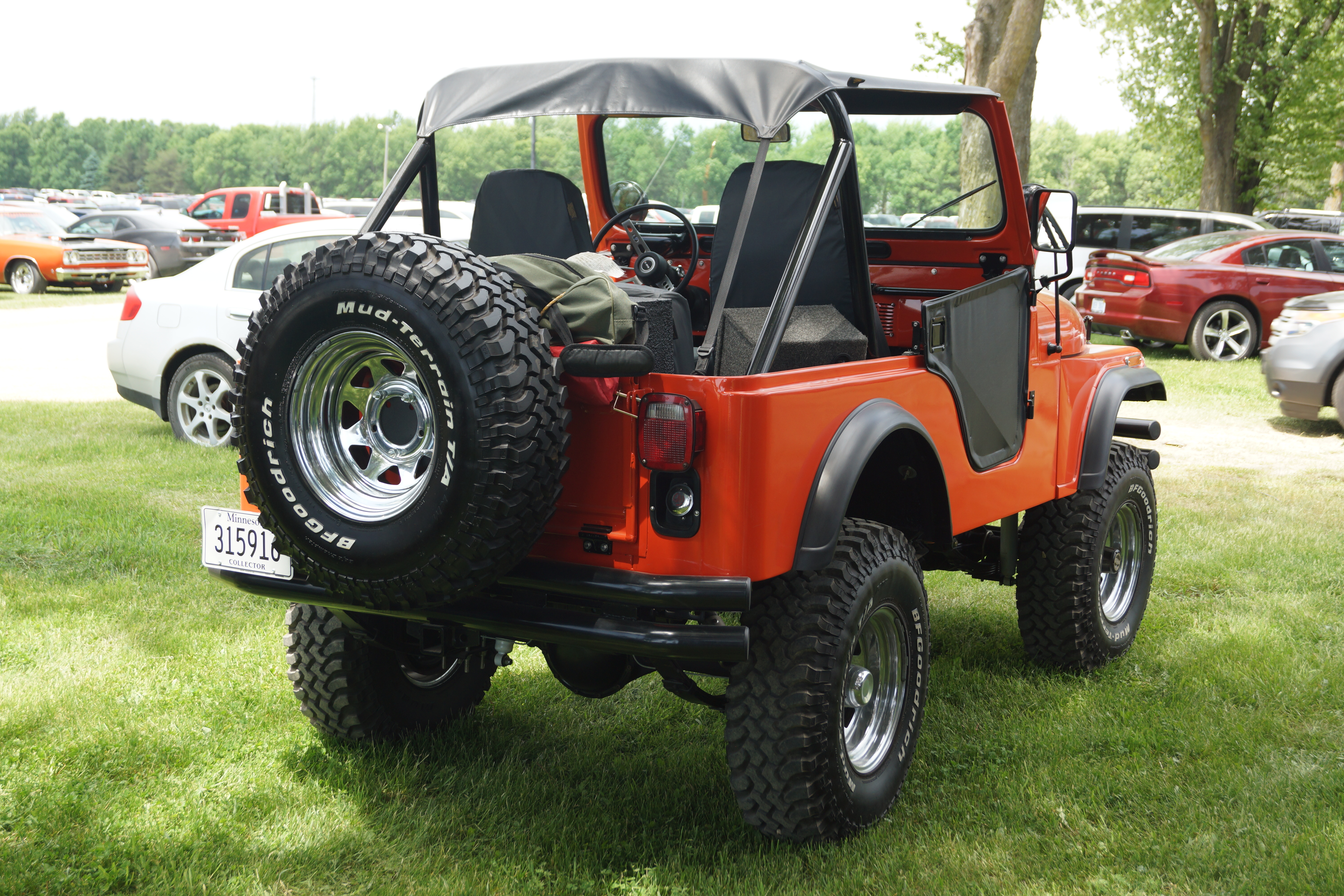
Jeep Cj7
"Shoot, just getting the exhaust exactly right on my dad's 1985 CJ7 Jeep when we restored it, that was a challenge."
The 1985 CJ7 Jeep is a classic, boxy Jeep that a lot of people restore. The host is saying that even getting the exhaust to match correctly can be difficult when you’re trying to restore it the right way.
The 1985 CJ7 Jeep is a classic Jeep model known for its simple, rugged design and enthusiast restoration scene. This segment highlights a very specific restoration challenge: getting the exhaust system “exactly right,” which matters for both authenticity and emissions equipment fitment.
exhaust
"Shoot, just getting the exhaust exactly right on my dad's 1985 CJ7 Jeep when we restored it, that was a challenge. We really had to beat the bushes to find new exhaust parts."
Here, “exhaust” means the car’s full exhaust setup—how the pipes and muffler are arranged. The point is that matching it correctly during a restoration can be tough.
In this context, “exhaust” refers to the specific exhaust system components and routing (manifold/downpipe/muffler/catalyst) rather than just the general idea of exhaust gases. The host emphasizes that getting the exhaust “exactly right” can be a major restoration hurdle.
aftermarket market
"Most people, if they were restoring the car, there is an aftermarket market for replacement catalytic converter, eight pipes, white pipes, what have you."
An “aftermarket market” means parts you can buy from companies other than the original automaker. In this case, it’s about replacement parts for emissions equipment during restoration.
An “aftermarket market” is the industry of parts sold outside the original manufacturer—often to replace worn components or to fit specific restoration goals. Here, it’s specifically about replacement emissions-related parts that restorers can buy instead of hunting for original equipment.
catalytic converter
"Most people, if they were restoring the car, there is an aftermarket market for replacement catalytic converter, eight pipes, white pipes, what have you."
A catalytic converter is a part in the exhaust that helps reduce pollution. When restoring a car, people care because the right catalytic converter can be hard to find and it needs to fit and match the original setup.
A catalytic converter is an emissions-control device in the exhaust that reduces harmful pollutants by using catalysts to convert them into less harmful gases. For restorations, the exact type and fitment can matter for both authenticity and whether the emissions system works as intended.
lift
"So you can keep the emissions on the car, but if it's the type of show, but then again, cars like that are so low, who's going to be able to see it? Unless you put the car up on the lift."
A “lift” is a machine that raises the car so you can look underneath. The host is saying emissions parts might not be visible unless the car is up on a lift.
A “lift” is a shop hoist used to raise a car so the underside can be inspected. The host mentions it because emissions hardware may be hard to see unless the car is elevated during a show or inspection.

1972 Camaro
"I'm going to go look for a 1972 Camaro and do that and do something that's simple and easy and does not require a bunch of parts that just aren't available"
A 1972 Camaro is a classic muscle car from the early 1970s. People restore them because it’s usually easier to find the right parts than it is for newer cars with lots of electronics.
The 1972 Chevrolet Camaro is a classic first-generation “muscle car” that’s become a common restoration target. In collector circles, it’s often chosen because many parts are still available or easier to source than for newer cars with complex electronics.
can bus
"They both were can bus and neat design ahead of its time. They both tied to the computer in the car."
CAN bus is the car’s electronic “messaging system.” It connects different computers in the car so they can share information, like what speed to display on the gauges.
CAN bus (Controller Area Network) is the in-car communication network that lets modules like the instrument cluster and other electronics talk to each other. When the speaker says the gauges were “can bus,” they’re emphasizing that the cluster is integrated with the car’s computer systems rather than being purely mechanical.

2002 Mercedes SL 55 AMG
"I relatively recently purchased just because I always thought those were really great cars, but when they were new, I bought a 2002 Mercedes SL 55 AMG, which is the 5.5 liter V8 with a supercharger."
This is a 2002 Mercedes SL 55 AMG, a luxury roadster with a big 5.5-liter V8 and a supercharger. The point is that cars like this rely heavily on electronics, which can be harder to service decades later.
The 2002 Mercedes-Benz SL 55 AMG is a performance-focused luxury roadster built around a supercharged 5.5-liter V8. It’s notable to enthusiasts because it combines high-output forced induction with Mercedes’ electronics-heavy era—exactly the kind of car that raises questions about long-term repairability of modern systems.
retractable roof
"[2336.7s] retractable roof on it. [2339.5s] Those cars compared to what they sold for new and adjusted for inflation, you"
A retractable roof is the car’s convertible top that can open and close. Because it’s a powered system, if something goes wrong it can be more complicated than just fixing a normal body panel.
A retractable roof is a convertible-style top that can move between open-air and closed positions. On cars like the Mercedes-Benz SL-Class, it’s a major mechanical/electrical system, so problems can quickly turn into complex repairs.
SL 55
"This is a really clean 27,000 original mile SL 55. And I was like, boy, that with the right weather, put the top down."
The “SL 55” is a Mercedes-Benz luxury sports car (a grand tourer). It’s the kind of car people buy for comfort and style, but if the electronics break, repairs can get tough—especially if replacement parts are rare.
“SL 55” refers to the Mercedes-Benz SL-Class with a 5.5-liter V8 (the SL 55 is known for its performance-focused grand-touring character). In this segment, Rick is talking about a specific example with very low mileage and a retractable roof, and how electrical issues can become expensive when key modules are scarce.
electrical gremlins
"I'm not going to share how deep I am into fixing electrical gremlins that the cars had."
“Electrical gremlins” means weird electrical problems that are hard to track down. The car might act like something is wrong in one place, but the real cause could be wiring or a module somewhere else.
“Electrical gremlins” is enthusiast slang for intermittent or hard-to-diagnose electrical problems—often caused by wiring issues, failing modules, or poor connections. These can be especially frustrating on older cars because symptoms may appear unrelated (like cluster problems caused by another installed system).
radar detector
"We had some really space age wired into the whole car, radar detector and laser jamming system, you know, one of these really expensive and the installers"
A radar detector is a gadget that warns you when it detects police radar. Rick is saying that the way these devices were wired into the car ended up causing serious electrical problems.
A radar detector is an aftermarket device that listens for police radar signals and alerts the driver. In this case, Rick says the car had a radar detector plus other electronics installed, and that the installer’s wiring caused major downstream electrical issues.
laser jamming system
"We had some really space age wired into the whole car, radar detector and laser jamming system, you know, one of these really expensive and the installers whacked out the wiring in that car so much."
A laser jamming system is a device meant to interfere with police laser speed guns. If it’s installed poorly, it can cause electrical damage to the car’s systems.
A laser jamming system is an aftermarket setup intended to interfere with police laser (LIDAR) speed measurement. These systems often require tapping into vehicle wiring, and Rick’s point is that the installation “whacked out the wiring,” leading to later failures like a shorted instrument cluster.
instrument cluster
"And then we find out because it's still having problems that whatever it did, it now it's managed to short out the instrument cluster. [2402.3s] And there's only four or five of those SL 55 instrument clusters, new old"
The instrument cluster is the dashboard panel with the gauges and warning lights. Rick is saying the electrical issue ended up damaging that dashboard module, and it can’t be repaired—so he had to hunt down a rare replacement.
The instrument cluster is the dashboard module that houses the speedometer, tachometer, and other gauges/displays. Rick says the car’s electrical problems eventually shorted the instrument cluster, and that replacements are extremely limited—making the car non-driving until a rare part is found.
new old stock
"And there's only four or five of those SL 55 instrument clusters, new old stock, it's not repairable. [2408.7s] It's not repairable."
“New old stock” means brand-new parts that were made in the past but never used. Rick is saying the replacement part is so rare that he had to buy one of the remaining NOS units.
“New old stock” (NOS) means parts that were manufactured long ago but never sold or installed, so they’re still “new” in packaging. Rick emphasizes that only a handful of NOS instrument clusters exist, which is why the repair becomes a parts-hunt rather than a normal fix.
Fox body mode
"And you can flip through all sorts of classic gauge modes. I'll throw it in Fox body mode all the time."
“Fox body” is the nickname for a specific Mustang generation from the late 1970s through the early 1990s. “Fox body mode” means the car’s digital dashboard can switch to a display that looks like the older Mustang gauges.
“Fox body” refers to the Ford Mustang’s 1979–1993 generation, named after the platform code used internally. “Fox body mode” here means the digital instrument cluster can display a classic-style gauge layout to mimic that era’s look and feel.
Mustang Fox Body
"...ll sorts of classic gauge modes. I'll throw it in Fox body mode all the time. It's so cool looking."
The Mustang is a sporty American car that’s been made for many years. In the podcast, the speaker mentions a “Fox body mode,” which is a way to mimic the look or feel of an older Mustang style while driving. That’s why it comes up—Mustang fans often like connecting to the classic versions.
The Mustang is a long-running American pony car known for its sporty look and wide range of performance and configuration options. In the podcast context, the speaker references “Fox body mode,” which points to a specific driving/visual setup tied to the Mustang’s classic-era styling. It’s discussed because Mustang fans often enjoy recreating or referencing those classic generations in modern driving experiences.
ECM
"But is it going to behave and play with the ECM that's in the car? Yeah, there's all these security issues and the ECM was also anti theft."
ECM means the car’s engine computer. If you change or replace parts of the dashboard/electronics, they have to “talk” to that computer correctly, or the car might not start or behave properly.
ECM stands for Engine Control Module, the car’s main computer that manages engine and drivetrain functions. The host is arguing that if you try to restore or modify a modern car’s electronics, the new parts must still communicate correctly with the ECM or the car may not run.
anti theft
"Yeah, there's all these security issues and the ECM was also anti theft. And all that you put a completely alien product and plug it into that dash."
Anti theft is the car’s security system that stops it from starting if the wrong key or authorization is detected. The host is saying that changing electronics can interfere with that security system.
In modern cars, “anti theft” refers to electronic immobilization systems that prevent the engine from running unless the correct security authorization is present. The host connects this to the ECM, implying that swapping in “alien” electronics can break the security handshake and stop the car from starting.
security issues
"Yeah, there's all these security issues and the ECM was also anti theft."
“Security issues” here means the car’s electronics are protected and controlled. If you try to replace or connect parts that weren’t designed for that exact system, it can cause problems.
“Security issues” in the automotive context usually means vulnerabilities or access-control problems in the car’s electronic systems (including authentication between modules). The host’s point is that modern cars are more locked down, which complicates restoration or aftermarket integration.
park sensors
"[2517.7s] that prevents you from modifying the vehicle. [2520.5s] Yeah, it messes up park sensors and all sorts of other stuff. [2523.7s] So somebody sent me a video on Facebook today."
Park sensors are the little sensors in your bumpers that help you avoid hitting things when you park. If you change the car’s electronics or software, they can get messed up.
Park sensors are ultrasonic (or sometimes radar) sensors mounted on the car’s bumpers that detect nearby objects at low speeds. When you change wiring, modules, or software, the sensors can stop working or behave incorrectly.
independent repair shops
"[2531.2s] his argument was it was the government and the auto manufacturers colluding [2536.9s] together to put independent repair shops out of business and to keep you [2542.5s] from working on and repairing your own car so that they had control over you."
Independent repair shops are regular mechanics that aren’t tied to a specific car brand’s dealership. The discussion is about whether newer car software makes it harder for them to work on cars.
Independent repair shops are non-dealer service businesses that diagnose and repair vehicles without being part of the automaker’s dealership network. The debate here is about whether modern software locks and access restrictions make it harder for these shops to service cars.
collector car insurance
"He specifically referred to classic car insurance or collector car insurance. ... Collector car insurance. It's the only way to go."
Collector car insurance is a special type of insurance for cars you don’t drive every day. It can be cheaper because the insurer expects limited use, but it may come with rules like mileage limits and other restrictions.
Collector car insurance is a specialized policy for hobby vehicles that are typically driven less and kept in better condition than daily drivers. It often uses agreed value (or similar valuation methods), may include mileage limits, and can have restrictions on how and where the car is used—so the policy wording matters.
agreed value
"For my quick understanding of that, it's a secondary car that you can easily show proof of. Sometimes there's a mileage limit on there."
Agreed value is a collector-car insurance approach where the insurer and owner set a value for the vehicle up front. If the car is totaled, the payout is based on that agreed figure rather than standard market-value calculations.
mileage limit
"For my quick understanding of that, it's a secondary car that you can easily show proof of. Sometimes there's a mileage limit on there."
A mileage limit is a cap on how many miles per year (or per period) you’re allowed to drive the insured collector car. Exceeding it can reduce coverage or trigger denial of claims, which is why collectors often track usage carefully.
fine print
"Sometimes there's a mileage limit on there. Sometimes there isn't insurance company where they've got options, but you really have to read the fine print closely to see what you can can't do with the car."
In insurance, “fine print” refers to the detailed policy exclusions, conditions, and requirements that determine when coverage applies. For collector policies, these details can include restrictions on storage, supervision, permitted use, and claim eligibility.
collector car policy
"Same on a risk, daily risk all day, every day, week after week, whereas with collector car policy and mileage limits. And a lot of times they're reasonable because you're not putting 10,000 miles a year on your collector car, typically."
This is an insurance type made for cars you keep as a hobby, not for everyday driving. Because you usually drive them less (often with mileage limits), the insurance can cost less than regular coverage.
A collector car policy is an insurance policy designed for hobbyist vehicles that are driven far less than normal daily cars. It often includes mileage limits and other rules that reduce the insurer’s risk, which can lower premiums compared with standard auto insurance.

Oldsmobile Cutlass
"but it's a 1974 also be a cutlass herstals. I believe you could get these like in black with gold accents or white with gold accents"
This is a 1974 Oldsmobile Cutlass. It’s a classic American car from the 1970s, and the speaker is talking about one that’s still in pretty original condition.
This refers to a 1974 Oldsmobile Cutlass, a mid-1970s American muscle/pony-car from GM’s Oldsmobile brand. The Cutlass nameplate is known for its classic styling and for being a common platform for “survivor” cars that still show original condition rather than being fully restored.
1973 Cutlass Supreme
"I just had my 73 cutlass supreme out. That's an unrestored low mile survivor. Two nights ago, I drove home and drove it back in the morning."
This is a 1973 Oldsmobile Cutlass Supreme. The host says it’s an “unrestored low-mile survivor,” which means it hasn’t been fully restored and it has relatively low mileage for its age.
The Oldsmobile Cutlass Supreme is a higher-trim version of the Cutlass line, and the 1973 model is part of the early-to-mid 1970s GM “personal luxury/road car” era. The speaker highlights it as an unrestored low-mile survivor—meaning it’s kept original components and condition rather than being rebuilt or cosmetically restored.
unrestored low mile survivor
"That's an unrestored low mile survivor. Two nights ago, I drove home and drove it back in the morning. I really like these cars."
This phrase means the car is basically still original and hasn’t been fully restored, and it also has low mileage for how old it is. Collectors like these because they can be more “authentic” than a fully rebuilt car.
An “unrestored low mile survivor” is a collector-car description meaning the car remains largely in its original condition (not professionally restored) and has relatively low mileage for its age. In the collector market, survivors often command attention because they preserve original wear patterns, parts, and authenticity.
chassis engineering
"as people realize that there were some really nice designs and especially on GM, the chassis engineering, the comfort of the car. They usually have air conditioning and sometimes power windows"
Chassis engineering is how the car’s frame and suspension are designed. It affects how the car rides and handles, not just how powerful the engine is.
Chassis engineering refers to how the car’s structure and suspension systems are designed to control ride, handling, and stability. When enthusiasts praise “chassis engineering” on a specific brand (here, GM), they’re usually pointing to how well the platform handles real-world driving and how balanced it feels.
air conditioning
"as people realize that there were some really nice designs and especially on GM, the chassis engineering, the comfort of the car. They usually have air conditioning and sometimes power windows and some amenities to them."
Air conditioning is the system that cools the cabin. For older cars, having it (and especially having it work) makes the car much more pleasant to drive.
Air conditioning in a mid-1970s GM car is a comfort feature that many buyers consider a desirable option, especially for cars they plan to drive regularly. In collector terms, original A/C (when present and working) can add to usability and sometimes value.
power windows
"They usually have air conditioning and sometimes power windows and some amenities to them. Yeah. These days you're driving around in a 40, 50 year old car."
Power windows open and close with a switch instead of a hand crank. On older cars, working power windows are a convenience feature people notice.
Power windows are electrically operated window regulators, as opposed to manual crank windows. In older cars, original power-window functionality is often treated as a “nice-to-have” because it reflects higher trim/option content and improves daily drivability.
Request an Explanation
Heard something you'd like explained? We'll add it to this episode.
Sign in to request explanations for terms you heard.
Want to learn more?
Browse our glossary for plain-English explanations of automotive terms, jargon, and concepts.
Help improve this episode
See something that's not quite right? Our annotations are AI-generated and can sometimes miss the mark. Click the flag icon on any annotation to suggest a correction.