TMCP #654: Chris Smith – Smitty Built Custom Auto – If You Want To Go Fast, Smitty Can Build It!
About this episode
Chris Smith (“Smitty Built Custom Auto”) explains how he builds vintage muscle cars to brake, turn, and stay controllable—especially with ABS. The conversation ties performance to practical details: parts budgets, brake-pad behavior with ABS, and how suspension geometry (caster, camber, roll center) and staged upgrade planning keep cars fast without wasting money. Alongside the pro-touring build talk, the hosts share track and racing updates, plus a detour into general aviation upgrades and a few classic-car body sourcing and titling realities.
The Kibbe and Friends Show Artwork
The Kibbe and Friends Show
Dashboard
Stats
Episodes
Social
TMCP #654: What REALLY Makes a Pro Touring Car Fast? Chris "Smitty" Smith Explains
episode artwork
The Kibbe and Friends Show
TMCP #654: What REALLY Makes a Pro Touring Car Fast? Chris "Smitty" Smith Explains
0:00
1:04:50
Episode Description
This week's episode has a little bit of everything I love.
First, I share why I'm heading back to EAA AirVenture Oshkosh, a place that's become much more than the world's largest aviation gathering for me. It's where I spent countless summers with my dad, and every time I go back I find myself reconnecting with those memories while getting excited about the future of aviation. This year I'm especially looking forward to seeing TurboTech's regenerative turbine engine, a technology that could completely change general aviation by delivering turbine reliability with piston-engine fuel economy. If you're an engineering geek like me, you're going to enjoy this discussion.
Next, I have another Dallas Kibbe Racing Update, including race broadcast audio from Charlotte Motor Speedway. Dallas continues battling through one of the toughest Late Model fields in the country, and while the wins haven't come yet, the progress absolutely has. We talk about why racing is about much more than trophies, the importance of learning race craft, and why I believe he's building the foundation that will eventually put him in Victory Lane.
Then it's time for one of the most candid interviews I've ever had on this show. Chris "Smitty" Smith from Smitty's Custom Automotive joins me to talk about what it really takes to build a modern Pro Touring car that can compete at the highest level. Chris doesn't hold anything back. We discuss suspension systems, ABS braking, chassis design, budgets, what parts are worth the money, what parts aren't, and the lessons he's learned after nearly three decades of building and racing some of the fastest street cars in the country. If you've ever wondered what separates a good Pro Touring build from a championship contender, this is an interview you won't want to miss.
Episode Details
Status: Scheduled
Release Date: Jul 17, 2026
Author: Robert Kibbe
Episode Type: full
Episode: 654
Rating: Clean
File Info
Size: 89 MB
Duration: 01:04:50
File Type: audio
Codec: mp3
Bitrate: 187.50 kbPs
Sample Rate: 44100 Hz
Upload Date: Jul 16th, 2026 05:04 PM
Downloads for This Episode
IAB
IAB
Unique
Daily Downloads
0
Downloads: [bold][/]
Last processed 07/17/26 01:35am
Destinations
Search
Destination Status Release Expiration
Android App Pending Jul 17, 2026 10:00am Never
Apple Podcasts / Libsyn Classic Feed Pending Jul 17, 2026 10:00am Never
iHeartRadio Pending Jul 17, 2026 10:00am Never
iPhone/iPad App Pending Jul 17, 2026 10:00am Never
Podcast Source/Network App Listing Pending Jul 17, 2026 10:00am Never
Simple Download Released Jul 17, 2026 5:35am Never
Spotify Pending Jul 17, 2026 10:00am Never
Website Pending Jul 17, 2026 10:00am Never
Wizzard Player Pending Jul 17, 2026 10:00am Never
1
of
1
6
Episode Description
This week's episode has a little bit of everything I love.
First, I share why I'm heading back to EAA AirVenture Oshkosh, a place that's become much more than the world's largest aviation gathering for me. It's where I spent countless summers with my dad, and every time I go back I find myself reconnecting with those memories while getting excited about the future of aviation. This year I'm especially looking forward to seeing TurboTech's regenerative turbine engine, a technology that could completely change general aviation by delivering turbine reliability with piston-engine fuel economy. If you're an engineering geek like me, you're going to enjoy this discussion.
Next, I have another Dallas Kibbe Racing Update, including race broadcast audio from Charlotte Motor Speedway. Dallas continues battling through one of the toughest Late Model fields in the country, and while the wins haven't come yet, the progress absolutely has. We talk about why racing is about much more than trophies, the importance of learning race craft, and why I believe he's building the foundation that will eventually put him in Victory Lane.
Then it's time for one of the most candid interviews I've ever had on this show. Chris "Smitty" Smith from Smitty's Custom Automotive joins me to talk about what it really takes to build a modern Pro Touring car that can compete at the highest level. Chris doesn't hold anything back. We discuss suspension systems, ABS braking, chassis design, budgets, what parts are worth the money, what parts aren't, and the lessons he's learned after nearly three decades of building and racing some of the fastest street cars in the country. If you've ever wondered what separates a good Pro Touring build from a championship contender, this is an interview you won't want to miss.
The post TMCP #654: Chris Smith – Smitty Built Custom Auto – If You Want To Go Fast, Smitty Can Build It! first appeared on The Muscle Car Place.
suspension companies
"Chris is the guy that suspension companies have do their R&D driving he can break stuff he can fix recommend stuff"
Suspension companies test their parts by driving them hard and seeing how they hold up. The goal is to make sure the car stays controlled and doesn’t break when you push it.
Suspension companies rely on real-world testing to validate how springs, shocks/struts, and geometry changes behave under load. Using a skilled driver to push the car and then diagnose failures is a common development approach for performance suspension parts.
ABS
"now everybody wants to know what the big fast upgrade is in its ABS when you can drive into a corner whether it's on an autocross or a road course"
ABS is a safety system that helps your brakes not lock up. That means you can still steer while braking hard, which helps you stay in control when you’re driving fast.
ABS (anti-lock braking system) helps prevent wheel lockup during hard braking. By modulating brake pressure, it lets you keep steering control while braking, which is especially useful when entering corners fast.
auto cross
"whether it's on an autocross or a road course and you can put a car in pitch and yawn still be on the brakes"
Autocross is a timed driving event on a closed course marked with cones. It’s a good way to see how well your car handles and brakes when you’re turning a lot.
Autocross is a timed motorsport event run on a closed course with tight cones and frequent direction changes. Because braking and turning happen repeatedly at lower speeds than road racing, it’s a great place to test suspension, tires, and braking upgrades like ABS behavior.
road course
"whether it's on an autocross or a road course and you can put a car in pitch and yawn still be on the brakes"
A road course is a racetrack with longer, faster corners than a cone course. It tests how steady your car feels when you brake and turn repeatedly at speed.
A road course is a circuit designed for higher-speed cornering and sustained driving, typically at tracks. Compared with autocross, it places more emphasis on braking stability and tire/suspension consistency over longer corners and repeated laps.

Ford Edge
"...mpetitive event you know that he's on the cutting edge best of the best I don't think it was in this int..."
The Ford Edge is a crossover SUV, which is a family-friendly vehicle that’s meant for normal daily driving. It’s built to be practical and comfortable, not just for racing. In the podcast, it’s brought up as part of a discussion about being on the leading edge.
The Ford Edge is a mainstream crossover SUV designed for everyday driving, with a focus on comfort and practicality rather than pure muscle-car performance. It’s mentioned in the episode in the context of competitive or “cutting edge” work, suggesting discussion about capability, development, or performance-related aspects. That makes it a relevant example when talking about how modern vehicles are engineered for real-world use.
DCT
"his shop experiments with all sorts of fun stuff like DCT's out of BMW's and third gen Camaro's I mean he's out there"
DCT means a dual-clutch transmission. It’s a special kind of automatic gearbox that can shift very quickly because it’s readying the next gear ahead of time.
DCT stands for dual-clutch transmission, a gearbox that uses two clutches to pre-select the next gear. Swapping or using DCT setups (like the ones mentioned from BMW) is often done to improve shift speed and drivability compared with older automatic or manual setups.
bolt on stuff
"you have probably suspected this maybe you have purchased some bolt-on stuff and had success and maybe you didn't and now"
“Bolt-on” means parts you can install without doing major surgery on the car. You usually just bolt them on, and sometimes they help performance, but not always as much as people expect.
"Bolt-on" refers to aftermarket parts that install with basic tools and don’t require major fabrication or engine/transmission removal. In performance circles, it’s often used to describe easy upgrades like intakes, exhausts, or suspension components—though results vary by application.
UMI
"I think I took some note UMI total cost involved heights was in there hotchkiss was in there art Morrison was in there Detroit Speed is"
UMI is a company that makes aftermarket parts for classic cars, often for suspension and handling. It’s the kind of upgrade that can help the car feel more controlled.
UMI is an aftermarket performance parts brand commonly associated with suspension and chassis components for classic muscle cars. When a builder lists it alongside other brands, it usually signals a focus on handling and fitment improvements rather than just engine power.
Hotchkiss
"UMI total cost involved heights was in there hotchkiss was in there art Morrison was in there Detroit Speed is"
Hotchkiss makes aftermarket suspension parts. Upgrading suspension can make the car handle better and feel more stable when you drive hard.
Hotchkiss is an aftermarket suspension brand known for components like control arms, sway bars, and other chassis parts. In a performance build context, it typically points to upgrades aimed at reducing body roll and improving grip.
Art Morrison
"hotchkiss was in there art Morrison was in there Detroit Speed is the speed tech Roadster shop ride tech will was stop tech Brembo Bosch ABS"
Art Morrison is known for building high-end chassis and suspension parts. If it’s in the cost list, it usually means the project isn’t just small bolt-ons—it may involve serious upgrades.
Art Morrison is an aftermarket chassis and suspension builder/brand, especially known for custom frames and high-quality suspension setups. Mentioning it in a “total cost involved” list suggests the build may include major structural or handling upgrades.
Brembo
"ride tech will was stop tech Brembo Bosch ABS systems there's another ABS all listed"
Brembo makes high-performance brake parts. Better brakes can help you stop harder and more consistently, especially when driving on a track.
Brembo is a performance brake brand known for calipers and brake systems used on many track-focused cars. In this context, listing Brembo alongside ABS and other brake-related brands implies a braking upgrade aimed at stronger fade resistance and better pedal feel.
Barrett Jackson
"what stuff has value would you go to sell the car at like a Barrett Jackson and what doesn't it is very very revealing"
Barrett-Jackson is a famous car auction where collectors buy and sell high-value vehicles. The host is talking about whether certain upgrades make a car worth more there.
Barrett-Jackson is a well-known collector-car auction company and event. Mentioning it in the context of what parts add value suggests the interview will cover how performance upgrades affect resale or auction pricing.
tuning the transmission
"I forgot I had spent a whole day tuning the transmission last fall whole Sunday afternoon man that car drove nice"
Tuning the transmission means adjusting how the car changes gears. The goal is usually to make shifting feel better and respond the way you want when you accelerate or slow down.
Transmission tuning means adjusting how the gearbox shifts and responds under different throttle and load conditions. On many performance builds, this is done to improve shift timing, reduce unwanted shift behavior, and make the car feel smoother or quicker.
EFI
"Holley system that I have for EFI also has transmission control and the Silver Sport A41 automatic than I have it's really a GM4L60E with all their"
EFI means the engine uses electronics to control fuel delivery. Instead of a carburetor, a computer and sensors decide how much gas the engine needs, which usually makes the car run smoother and respond better.
EFI stands for electronic fuel injection, where sensors and a computer control how much fuel gets sprayed into the engine. Compared with older carburetors, EFI can improve throttle response and help the engine run more consistently across different temperatures and driving conditions.
transmission control valve
"Holley system that I have for EFI also has transmission control and the Silver Sport A41 automatic than I have it's really a GM4L60E with all their"
Transmission control is the electronics that tell an automatic transmission when to shift and how smoothly (or firmly) to do it. It helps the car drive correctly instead of shifting randomly.
Transmission control refers to the electronic management of how the automatic transmission shifts—when it changes gears and how hard it applies. In modern swaps, the engine computer or a dedicated controller can also coordinate shift behavior with engine load and throttle position.
GM4L60E
"Sport A41 automatic than I have it's really a GM4L60E with all their modifications to make it fit in a moped nicely which it does beautifully with"
GM 4L60E is a four-speed automatic transmission used in many GM vehicles, with the “E” indicating electronic control of shifting. It’s commonly swapped into custom builds because it’s widely supported with parts and tuning options.

Dodge Charger
"US car tool has released their brand new 68 and 69 charger body built to order 45,000 bucks I think is the last thing that I saw there hang on I got an article here"
A “68 and 69 Charger” means the 1968 and 1969 Dodge Charger. The host is talking about new replacement body parts being sold so people can build or restore these cars without hunting for old sheet metal.
The Dodge Charger is a long-running muscle car, and “68 and 69 charger” refers to the 1968 and 1969 body styles. In this segment, the speaker is discussing brand-new replacement charger bodies being offered to customers, which is a big deal for restorations and custom builds.
US car tool
"US car tool has released their brand new 68 and 69 charger body built to order 45,000 bucks I think is the last thing that I saw there hang on I got an article here from Mopar connection magazine let me source the right people it is Mopar"
US Car Tool is the company the host credits with selling brand-new Charger body parts made to order. Instead of relying on old junkyard sheet metal, you can buy fresh panels.
US Car Tool is referenced as the company releasing brand-new 1968 and 1969 Charger bodies “built to order.” The key point is that they’re positioned as a supplier of new sheet-metal body components rather than used parts.
new sheet metal
"offering a brand new 68 or 69 charger body using pretty much the entire catalog of new sheet metal offered through auto metal direct so why didn't AMD just offer it for themselves you might be asking"
“New sheet metal” means brand-new body panels made for the car. That’s helpful because old metal can be rusty or hard to fit correctly.
New sheet metal refers to freshly manufactured body panels and metal components, as opposed to salvaged or reproduction parts from older tooling. For classic cars, having “new sheet metal” can reduce fitment headaches and corrosion issues that come with aged panels.
Auto-metal direct
"pretty much the entire catalog of new sheet metal offered through auto metal direct so why didn't AMD just offer it for themselves you might be asking"
Auto Metal Direct is a parts supplier the host mentions for new body metal. Think of it like a store for fresh restoration panels instead of used or rusty originals.
Auto Metal Direct is mentioned as a source for the “catalog of new sheet metal” used to build the new Charger bodies. In classic-car circles, companies like this are known for supplying panel sets and restoration-grade metalwork.
AMD
"direct so why didn't AMD just offer it for themselves you might be asking and that's a fair question suffice to say that licensing such a kick car involves a whole lot of lawyers and exorbitant legal fees"
AMD is another company mentioned in the comparison. The host is basically asking why AMD didn’t sell the same kind of brand-new Charger body panels.
AMD is referenced as a company that “didn’t” offer the same new 1968/1969 Charger body solution. In this context, AMD is being compared to US Car Tool on who supplies new body components.
licensing
"that's a fair question suffice to say that licensing such a kick car involves a whole lot of lawyers and exorbitant legal fees rather US car tool is doing the Lord's work by offering a completely assembled 68 or 69 dodge charger"
Licensing means getting legal permission to copy or reproduce a specific car design. The host is saying that the legal process can be expensive and complicated.
Licensing here refers to the legal permission required to produce and sell body components that replicate a specific car’s design. The host ties it to “a whole lot of lawyers and exorbitant legal fees,” implying licensing costs can block smaller suppliers.
body and white
"unibody as a body and white made from all new parts reproduced by industry leader AMD and yes body and white is a jig assembled by US car tool"
“Body and white” is the car body after it’s assembled and aligned, but before it’s painted. It’s basically the “ready for paint” stage.
"Body and white" refers to the car body stage before paint—typically after panels are assembled and aligned, but before the final color coats. In custom builds, it’s the checkpoint where fitment (panel gaps) and structural assembly quality are verified.
unibody
"unibody as a body and white made from all new parts reproduced by industry"
A unibody means the car’s body and frame are built as one piece. It usually makes the car lighter and helps it feel more solid when driving.
A unibody is a vehicle construction where the body and frame are integrated into one structure. That makes the car lighter and stiffer than a traditional separate frame, which matters for how well it handles and how easily it can be built into different configurations.
jig assembled
"leader AMD and yes body and white is a jig assembled by US car tool in their headquarters in Graham North Carolina each body is properly assembled body"
A jig is a precision fixture used to hold parts in the correct position while they’re assembled. In bodywork, jig assembly helps ensure consistent alignment so the panels line up correctly and the build can be repeated accurately.
body gapped
"build to any configuration whether you want it riding on a custom chassis or factory floor plans and the one at Carlisle by the way I think was set up for a road to shop chassis but if you just want it to be a stock Mopar ... they'll do it per US car tool you can like to have your body and white assembled with their chassis stiffening kits fully body gapped to 316 inch gaps"
“Body gapped” means the body panels are spaced evenly—like the small gaps around doors and fenders. Good gaps usually mean the car was assembled carefully.
"Body gapped" means the body panels are set with consistent spacing (panel gaps) between doors, fenders, quarters, and other sheet metal. Tight, even gaps are a key quality indicator for fitment and final appearance.
chassis stiffening kits
"assembled with their chassis stiffening kits fully body gapped to 316 inch gaps your choice of aftermarket suspension like QA1 speed deck or a complete paint"
A chassis stiffening kit adds extra braces to make the car’s structure feel less “wobbly.” That can help the car handle better, especially if you’re upgrading suspension or power.
Chassis stiffening kits add structural bracing to reduce flex in the frame/body. Less flex can improve steering response and stability, especially on cars that will see suspension upgrades or higher power.
aftermarket suspension
"316 inch gaps your choice of aftermarket suspension like QA1 speed deck or a complete paint and body build US car tool will make your body and white as bare or built"
Aftermarket suspension means replacing the factory suspension parts with upgraded ones from other companies. People do it to improve handling or change how the car sits and rides.
Aftermarket suspension refers to suspension components made by companies other than the original manufacturer. Enthusiasts swap these parts to change ride height, handling balance, and adjustability compared with the factory setup.
QA1
"your choice of aftermarket suspension like QA1 speed deck or a complete paint and body build US car tool will make your body and white as bare or built"
QA1 is a company that makes performance suspension parts. Here it’s mentioned as one option for upgrading the car’s handling.
QA1 is a performance parts brand known for suspension components like shocks, struts, and related hardware used in custom and classic builds. In this context, it’s being referenced as an option for upgrading the car’s suspension.
semi-decent roller
"about this point but one more now consider what you're saving you're not hunting down a semi-decent roller that needs to be disassembled media blasted or dip stripped down or having years worth of metal and bodywork removed"
A “roller” is basically a car body/chassis that doesn’t have the engine and transmission installed. Buying one can be cheaper, but you still have to do a lot of work to get it ready to paint and finish.
A "roller" is a car shell or chassis without the powertrain installed—often without an engine and transmission—so it can be built up from scratch. The phrase "semi-decent roller" suggests buying a partially complete project that still needs significant disassembly and metalwork before paint.
lead additive
"they're proven there's like one provider out there I think that still makes the lead additive to use in that style of legacy engine"
Some older engines were designed around fuel that included lead. A lead additive is basically lead added back into the fuel so those older engines can run the way they were meant to.
A lead additive is a substance added to fuel to improve how an engine runs. In older “legacy” engines, it can help prevent problems caused by modern fuel formulations that don’t include lead.
leaded gas
"and there are many many many thousands of little airplanes that can only run on leaded gas"
Leaded gas is regular gasoline that has lead mixed into it. Some older engines need it (or tolerate it better) because they were designed before lead was removed from fuel.
Leaded gas is gasoline formulated with added lead compounds. Some older engines—especially certain aircraft engines—were built to tolerate or rely on leaded fuel for proper operation.
turbine engine
"but there is another option jet fuel a piston engine can't run on jet fuel but a turbine engine sure can"
A turbine engine is an engine that works by spinning hot gas through it, instead of using pistons. It can use fuels like kerosene that many piston engines can’t.
A turbine engine is a type of powerplant that uses a hot gas flow to produce thrust or shaft power, rather than pistons. In this discussion, it’s contrasted with spark-ignition piston engines for fuel compatibility (like kerosene).
turbo prop
"a turbine engine with a propeller on the front it's called a turbo prop"
A turbo prop is basically a turbine engine that turns a propeller. It’s common in many airplanes because it can be powerful while still using a propeller for thrust.
A turbo prop is a turbine engine that drives a propeller, combining jet-like power generation with propeller thrust. The host uses it to explain a potential path for efficient small aircraft power without melting issues.
AOPA news
"it's never been possible before until maybe now this is from AOPA news and this is what I want to see at Oshkosh this year"
AOPA News is aviation news from a pilot-focused organization. The host is saying they saw this development reported there.
AOPA News refers to reporting from the Aircraft Owners and Pilots Association. It’s cited here as the source for the turbo-prop development and the Oshkosh-related update.
Oshkosh
"this is from AOPA news and this is what I want to see at Oshkosh this year"
Oshkosh is where a big aviation airshow happens. It’s a place pilots and companies go to show off new aircraft and engine tech.
Oshkosh refers to the EAA AirVenture event in Oshkosh, Wisconsin, a major aircraft show where new aviation tech is often demonstrated. The host is looking forward to seeing the regenerative turbo prop there.
turbo tech
"well not anymore turbo tech a french firm has developed a regenerative turbo prop for light airplanes"
Turbo Tech is the company behind the new engine design being discussed. The idea is that their turbine setup uses less fuel than older turbine engines.
Turbo Tech is the company credited with developing the regenerative turbo prop for light airplanes. The host attributes the efficiency improvement to its turbine technology and heat-recovery approach.
heat exchanger
"this is the interesting part this is the heat exchanger that allows the turbine to burn half the fuel consumption as usual turbines"
A heat exchanger is a component that moves heat from one part of the system to another. Here, it captures heat from the engine’s exhaust and uses it to help the engine burn fuel more efficiently.
A heat exchanger is a device that transfers heat from one fluid or gas stream to another. In this turbine context, it uses exhaust temperature to preheat or reintroduce energy into the combustion process to cut fuel consumption.
light sport aircraft
"I recently flew a bristelle xl-8 light sport aircraft equipped with a 141 horsepower turbo tech engine"
Light sport aircraft are smaller, simpler airplanes that fall under a specific aviation category. The host is saying this new engine tech could be especially relevant for that kind of aircraft.
A light sport aircraft is a regulatory class of small aircraft designed for simpler operation and lower costs than full-size general aviation. The host uses this category to frame where the new fuel-efficient turbine tech could fit.

Volkswagen Crafter
"...and landing stuff he has a carbon cub I think cub crafters who I think they're the company that make carbon ..."
The Volkswagen Crafter is a van made for work, like carrying cargo or tools. It’s not a passenger sports car—it’s built for practical use. In the podcast, it’s mentioned while talking about vehicles and parts the shop deals with.
The Volkswagen Crafter is a commercial van built for work use, typically used for transporting goods or equipment. It’s mentioned in the episode in a context that sounds related to the kind of vehicles a shop might work on or use, including talk about “carbon” components. That makes it relevant as an example of a practical vehicle that can still be involved in performance or customization discussions.
checkered flag
"when the checkered flag waves if it's a yellow checker they go by the last lap completed"
The checkered flag is the signal that the race is over. In some situations, like when there’s a late wreck, the way the finish is handled can change how drivers get credited with their positions.
The checkered flag is the signal that a race has finished. In NASCAR, how it’s displayed (for example, under caution) can affect how laps are counted and how drivers are scored.
yellow checker
"when the checkered flag waves if it's a yellow checker they go by the last lap completed let's say if it's a 25 lap race and on lap 24 there's a huge wreck"
A “yellow checker” is a special kind of finish signal used when there’s a major incident late in the race. Instead of counting laps after the wreck, officials score the race based on the last lap that was completed safely.
In NASCAR-style racing, a “yellow checker” finish means the race is effectively decided using the last completed lap before the caution/incident. That’s why drivers can be scored based on where they were when the field was last officially organized.
start finish line
"they just go back to where the last start finish line was that everybody was driving and then they remove their it's complicated they remove the cars that were involved and then they reset the field"
The start/finish line is the official line on the track that counts laps. If there’s a big crash and the race gets reset, that line helps determine the official order and restart setup.
The start/finish line is the track line used to mark the official beginning and end of each lap. When a race is interrupted and the field is reset, officials may use the last start/finish line position to determine where the cars line up for scoring and restarting.
no mercy rule
"what this series does have is the best of the best out there racing it is also a no mercy rule if you cause a wreck you're going to the back"
The “no mercy rule” means if you cause a wreck, officials will penalize you by moving you to the back of the pack. It’s meant to discourage reckless driving.
The “no mercy rule” is a harsh NASCAR-style penalty policy for drivers who cause wrecks. If you’re responsible for a crash, you can be sent to the back of the field, even if the incident wasn’t intentional.
qualifying
"he's had trouble qualifying he's got good speed but for some reason the qualifying isn't just coming together"
Qualifying is how drivers earn their starting positions. If you don’t qualify well, you start farther back, which can make it harder to run up front in the race.
Qualifying is the session where drivers set their starting positions based on lap times. Even if a driver has strong race speed, poor qualifying can force them to start deeper in the field and face more traffic.
pole
"he's got to fix a couple of mental mistakes and when he does he will be on the pole every time he can race up front"
The pole is the best starting spot—right at the front of the grid. If you qualify well, you start first, which usually helps you avoid early traffic and chaos.
The “pole” is the front starting position for a race, awarded based on qualifying results. Starting from the pole is advantageous because you’re first into the first turn and can control early pace.
points
"he's doing well he's top 10 in points right now i mean that's freaking great for perspective"
“Points” are the championship scoring totals accumulated across races. A driver can be doing well overall (top 10 in points) even without wins yet, because consistent finishes still earn points.
NASCAR Cup
"like right now an active nascar cup denny hamlin has 64 nascar cup wins that puts him ninth overall"
NASCAR Cup is NASCAR’s main top-level racing series. When people talk about “Cup wins” or “Cup starts,” they mean results from that top series.
NASCAR Cup refers to NASCAR’s top national stock-car series (the premier level of NASCAR competition). Drivers’ career stats like wins and starts are often tracked specifically within the NASCAR Cup series.
Denny Hamlin
"like right now an active nascar cup denny hamlin has 64 nascar cup wins that puts him ninth overall in the history of nascar cup he said 700 plus starts"
Denny Hamlin is a long-time NASCAR Cup Series driver known for frequent top finishes and a large career win total. In this segment, the host uses his career stats as a reference point for how many starts and wins are considered “a lot” in NASCAR Cup.

56 Chevy wagon
"dad didn't really know how to do bodywork thing but you know he had a 56 Chevy wagon that's actually in the background above my head you can see it oh yeah that car ran 12 o's in 1984 with a small block so on kelly springfield tires that was amazingly fast"
This is a 1956 Chevy wagon, a classic car people often modify. The episode says it was surprisingly fast for its time, which is part of the reason Chris grew up wanting to work on cars.
A 1956 Chevrolet wagon is a classic small-block-era GM platform that’s commonly hot-rodded and raced. The host notes it ran “12 o’s” (about 12-second quarter-mile times) on Kelly-Springfield tires, highlighting how fast the car was and why it shaped Chris’s gearhead upbringing.
small block
"oh yeah that car ran 12 o's in 1984 with a small block so on kelly springfield tires that was amazingly fast"
“Small block” means a smaller V8 engine design that’s popular for hot-rodding. The speaker is saying that engine helped the wagon run very quick times.
“Small block” usually refers to a compact V8 engine family (most commonly Chevrolet’s small-block V8) known for being lighter and easier to modify than larger engines. In this context, it explains what powered the 1956 Chevy wagon’s fast performance.
Kelly springfield tires
"oh yeah that car ran 12 o's in 1984 with a small block so on kelly springfield tires that was amazingly fast"
Kelly-Springfield is a tire brand. Tires are a big part of how fast a car can accelerate and grip the road, so it’s relevant to the story about that wagon’s speed.
Kelly-Springfield is a tire brand. The mention matters because tire choice can strongly affect traction and elapsed time in drag-style performance testing.

1967 gmc pickup truck
"what'd you drive to high school a 1967 gmc pickup truck at a 81 malibu square body malibu is that right yep yeah 50 the last g body"
This is a classic GMC pickup from the late 1960s. It’s the kind of truck people often modify because parts are widely available, and Chris mentions it as what he drove while learning to work on cars.
A 1967 GMC pickup is a classic, full-size American truck era known for easy customization and a big aftermarket. In the episode it’s used as Chris’s early “first car”/daily-driver while he learned bodywork and car skills.

81 malibu square body malibu
"what'd you drive to high school a 1967 gmc pickup truck at a 81 malibu square body malibu is that right yep yeah 50 the last g body"
This is a Chevrolet Malibu from 1981. The “square body” wording is a common car-person way to describe that older, boxier GM look, and Chris says it was part of what he drove while learning car work.
An “81 Malibu” refers to the Chevrolet Malibu from the early 1980s, and the speaker calls it a “square body,” which is a styling/era nickname for GM trucks and related platforms. Here it’s mentioned as the other car Chris drove to high school, tying his background to classic GM cars.

Rolls-Royce Phantom
"...ght before we started the shop it was a 69 camaro phantom green car for a local guy dz 302 car i mean it wa..."
The Rolls-Royce Phantom is a very expensive luxury car designed to feel smooth and comfortable. It’s meant for high-end driving rather than sporty performance. The podcast mentions it because it was present in the shop along with other cars.
The Rolls-Royce Phantom is a flagship luxury sedan known for high-end comfort, quiet refinement, and a very premium ownership experience. It’s significant in a muscle-car-focused podcast because it highlights the variety of cars that can show up in shops and collections, including rare or notable examples. In this episode, it’s mentioned alongside other cars in the context of what was in the shop before work began.
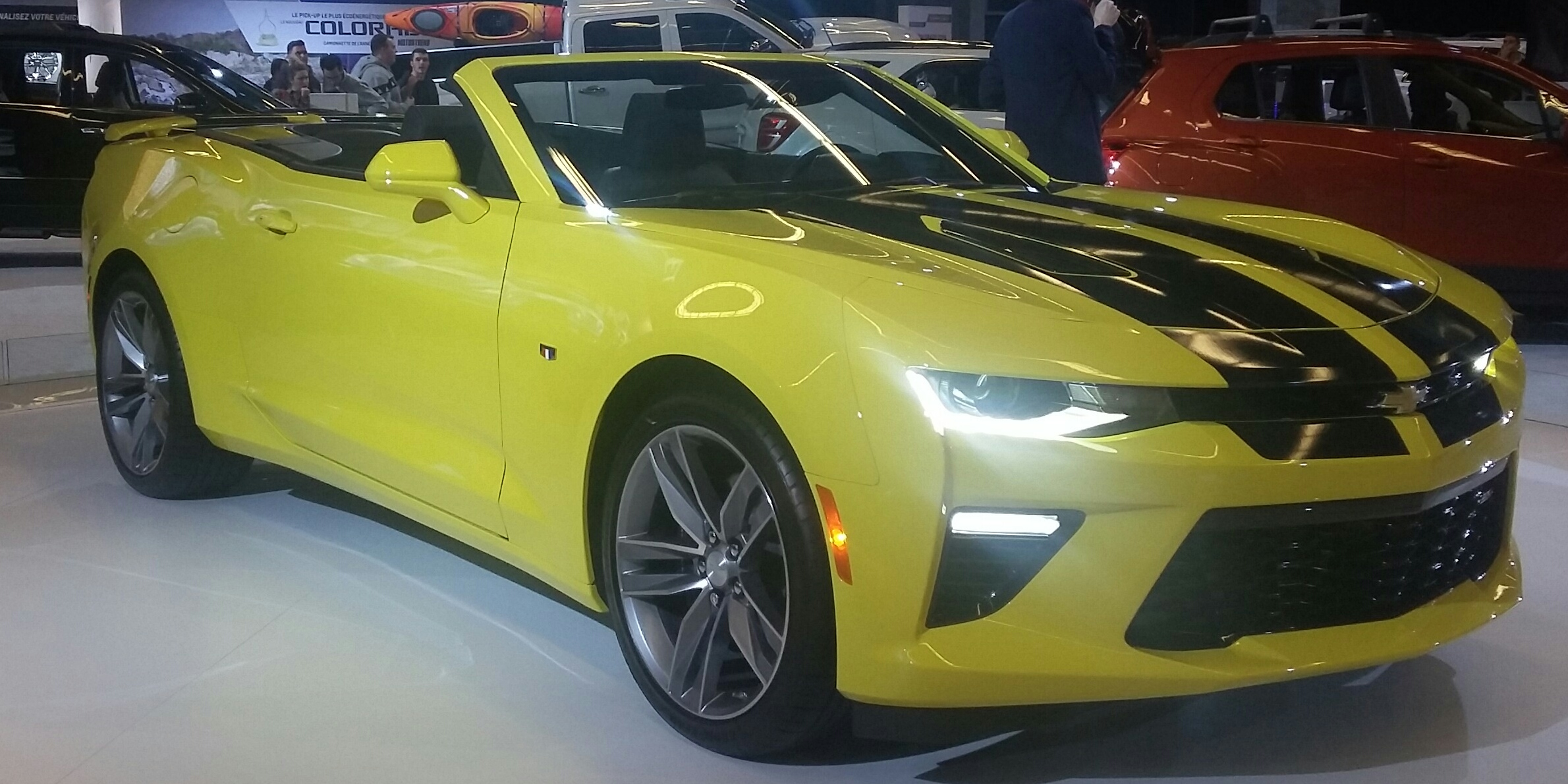
69 camaro
"built for a customer the first old car i had redone was actually right before we started the shop it was a 69 camaro phantom green car for a local guy dz 302 car i mean it was a cool cool car"
This is a 1969 Chevrolet Camaro, a classic muscle car. The host is saying they restored/customized one for a customer, and it was finished in a specific green color called “Phantom Green.”
A Chevrolet Camaro from the 1969 model year—one of the most iconic first-gen muscle cars. In this episode, it’s described as a customer build in “phantom green,” which signals a specific factory-style color choice and a classic restoration/customization project.
street challenge
"i would say because we still do both but the first step into the racing stuff i think was in 01 with brett vocal when he did the street challenge if you remember that or not i don't is that predate good guys"
A “street challenge” is basically a test where cars are pushed in a more real-driving way, not just judged as show cars. In this story, it’s part of the reason the shop started building more race-capable cars.
The “street challenge” is a motorsport-style event format where a car is tested against real-world driving expectations rather than only track-only setups. Here it’s used as the turning point for moving from show-focused builds toward race/track credibility.
air suspension
"brett kept being told that an air suspension car can't handle it can't do this that he pretty much forced all the magazines and tv shows to come to indiana to put in part to come drive his cars and he was"
Air suspension is a suspension system that uses air bags to change how high or low the car sits. The host is saying people doubted it could handle hard driving on a street-challenge kind of course.
Air suspension uses air-filled bags instead of traditional steel coil springs to control ride height. In the episode, it’s brought up as a debated setup for track-style driving—specifically the claim that an air-suspension car “can’t handle it.”
air ride
"we took the air ride cars out and just thrashed on them and the first year was pretty good"
“Air ride” means the suspension uses air pressure instead of regular springs. It can raise or lower the truck so it sits differently, but it may not handle rough driving as well unless it’s tuned.
“Air ride” refers to an air-suspension system that uses compressed air instead of traditional springs. It lets the driver raise or lower the car/truck for stance changes, comfort, or clearance, but it can be less ideal for hard track use unless set up carefully.
black 67 gmc truck
"that was on kdw's i had a black 67 gmc truck and it was 18s and 20s it wasn't exactly set up for track by any means"
They’re talking about a 1967 GMC truck they had. Even though it wasn’t built for racing, they’re saying it could still handle pretty well with the right suspension parts.
This is a 1967 GMC truck, and the speaker is using it as an example of how a classic truck can still be driven hard. They mention it had a track-unfriendly setup, but still handled decently thanks to suspension components.
18s and 20s
"i had a black 67 gmc truck and it was 18s and 20s it wasn't exactly set up for track by any means"
They’re talking about wheel sizes—18-inch and 20-inch rims. Bigger wheels usually mean shorter tire sidewalls, which can change ride comfort and handling.
“18s and 20s” refers to wheel diameter sizes (18-inch and 20-inch wheels). Wheel size affects ride comfort, steering feel, and tire sidewall height, which can change how a truck feels on rough roads or during aggressive driving.
sway bars
"any good suspension will handle pretty decent one it's got a lot of sway bar on it"
A sway bar is a bar that helps keep the vehicle from leaning too much in turns. It can make the truck feel more stable when you drive it hard.
A sway bar (anti-roll bar) helps reduce body roll when cornering by linking the left and right suspension. More sway bar stiffness generally improves stability and turn-in, especially on a vehicle that isn’t originally set up for track driving.
burnouts
"and i did like a 500 foot long burnout start the tv on that thing and that's kind of where it all started"
A burnout is when you spin the tires to heat them up. People do it to get better grip, and it’s also a crowd-pleasing show move.
A burnout is when the driver spins the tires while the car is held in place (or moving slowly) to heat the rubber and improve traction. It’s common in drag racing and shows, and the speaker describes doing an unusually long one.
control arms
"from just bolting on you know control arms and sway bars to actually building a proper modern functioning kind of semi race car"
Control arms are parts in the suspension that hold the wheel in the right position. Changing them can help the car handle better and feel more predictable.
Control arms are suspension links that locate the wheels and control how they move through bumps and turns. Upgrading control arms can change ride/handling geometry and improve consistency compared with basic “bolt-on” setups.
torque arm
"full chassis summer torque arms summer IRS this is an entirely different world than it was maybe even five years ago"
Torque arms are suspension parts that help control how the rear end moves. They can improve traction and make the car feel more consistent when you accelerate or brake hard.
Torque arms are suspension links used to control axle movement and manage forces under acceleration and braking. In performance builds, they help keep the rear suspension geometry stable so the car hooks up more consistently.
traction control
"traction control we've been messing with for probably 10 years really we just didn't talk about it the streetcar pro touring world actually drives this as much as"
Traction control helps stop your tires from spinning when you’re trying to accelerate on slippery or low-grip surfaces. It can reduce engine power and sometimes brake one wheel to keep the car moving straight.
Traction control is an electronic system that reduces wheel spin when the tires lose grip. It typically does this by cutting engine power and/or applying brakes to individual wheels, helping the car accelerate and stay stable.
streetcar pro touring world
"really we just didn't talk about it the streetcar pro touring world actually drives this as much as anything everybody that walks in here wants their car to ride drive and act like a new Corvette"
“Pro touring” is a style of build where you make a car handle really well, like a track car, but you can still drive it normally. The goal is a car that’s fun and confident on both the street and at events.
The “streetcar pro touring” scene is about building cars that handle like modern performance cars but are still driven on the street. It emphasizes suspension, brakes, and chassis tuning so the car feels composed at speed, not just fast in a straight line.
LS engine
"and an LS engine is pretty much well the standard so now everybody wants to know what the big fast upgrade is and it's abs when you can"
An “LS engine” is a popular GM V8 used in a lot of hot rods and swaps. People like it because there are lots of parts available and it’s known for making strong power.
An “LS engine” refers to General Motors’ LS-family V8s, known for compact size, strong aftermarket support, and easy swapability. In muscle-car and pro-touring builds, they’re popular because they make good power and are relatively straightforward to build and tune.
yaw
"and you can put a car and pitch in yaw and still be on the brakes and turn the wheels it's just faster that is for sure"
Yaw is how much the car’s front swings left or right. In cornering, managing yaw helps the car stay pointed the way you want instead of getting loose.
Yaw is the car’s rotation around its vertical (up-and-down) axis, like the nose swinging left or right. In performance driving, controlling yaw is crucial for staying on the intended line through corners while braking and turning.
OEM stuff
"so I'm guessing you have adapted over the years OEM stuff and now there's good easier aftermarket options like give me a name whose kit should you buy it"
OEM parts are the original parts that came with the car from the factory. People often upgrade from OEM to aftermarket when they want more performance or better handling.
OEM means Original Equipment Manufacturer—parts made by the company that built the car. “OEM stuff” usually refers to stock components, which can be replaced or upgraded with aftermarket alternatives for better performance or fitment.
Bosch Motorsport
"options like give me a name whose kit should you buy it falls into that you remember racing is like the Bosch motorsports you have to fill out a form that the car doesn't have license plates"
Bosch Motorsport is Bosch’s racing-related side of the business. The host is using it as an example of a well-known performance brand in racing tech.
Bosch Motorsport refers to Bosch’s racing-focused engineering and components used in motorsport applications. In the context of the conversation, it’s used as an example of a high-profile performance brand or system.
aggressive brake pad
"ABS stuff is you get into a habit of running a really really aggressive brake pad because you're [2693.4s] trying to overcompensate your brake package and brake pads can be sticky and sticky brake pads"
An aggressive brake pad is designed to generate strong friction for performance braking, but it can also be harder to modulate and may behave poorly with ABS if it tends to stay stuck to the rotor. The host is warning that “more bite” isn’t always better if it interferes with ABS operation.
Willwood
"we predominantly [2720.6s] run willwood on everything I think willwood is the best bang for the buck top to bottom we just [2728.0s] don't have any issues with any of their stuff as you get faster they make some kits that are more"
Willwood makes aftermarket brake parts. The point here is that the host trusts their brake kits to work well without spending “race-only” money.
Willwood is an aftermarket brake manufacturer known for performance calipers, rotors, and brake kits. The host specifically endorses Willwood for value and fitment across different setups, including larger multi-piston front kits and matching rear kits.
StopTech
"does it have to be willwood or bear or stop tech or anything like that we predominantly [2720.6s] run willwood on everything"
StopTech is a company that makes performance brake parts. The host is basically saying “no, you don’t have to buy from a specific brand like this.”
StopTech is an aftermarket brake brand often associated with performance street and track brake systems. It’s mentioned as one of the possible manufacturers someone might ask for when choosing a brake kit.
14 inch kit
"the willwood kit we're running right now [2745.8s] is a 14 inch kit six piston front run like an 800 thick pad they're big calipers"
A “14-inch kit” means the brake setup is designed to fit a 14-inch wheel/rotor configuration. Bigger brake setups can help the brakes stay consistent when you drive harder.
A “14 inch kit” refers to a brake package sized around a 14-inch wheel/rotor setup, which determines rotor diameter and caliper clearance. Larger rotor and wheel-compatible kits can improve heat capacity and braking consistency for faster driving.
six piston front
"is a 14 inch kit six piston front run like an 800 thick pad they're big calipers they work as good [2753.0s] as any full floating rotors"
“Six piston” describes how many pistons squeeze the brake pads against the rotor. More pistons can help the pads clamp evenly, which can make braking feel stronger and more consistent.
A “six piston” front caliper uses multiple hydraulic pistons to clamp the brake pads more evenly and with higher clamping force. In practice, multi-piston calipers help improve pedal feel and pad contact uniformity, especially under repeated hard braking.
full floating rotors
"they work as good [2753.0s] as any full floating rotors they've got a nice snap ring that holds them together and lets the [2757.5s] hat and rotor float works great"
A full floating rotor is built so part of the rotor can move a little as it heats up. That helps the rotor handle heat better and can make braking smoother over time.
Full floating rotors are designed with a rotor “hat” that can move slightly relative to the rotor friction surface. That floating action helps the rotor manage heat expansion and reduces stress, which can improve durability and reduce brake noise or uneven wear.
IRS cars
"and on the rear we've got a couple different kits with them they [2762.6s] got the 13 inch version of the kit and a 14 so when you get in the IRS cars we actually end up [2768.8s] putting more rear brake on them they'll dive brake and they'll dig into the track better"
IRS means the rear wheels move independently instead of being tied together. The host is saying that with IRS, you often want the rear brakes set up to work harder so the car stays planted when you slow down.
IRS (independent rear suspension) cars use a rear suspension design where each rear wheel can move somewhat independently. The host notes that IRS cars may need more rear brake bias (more rear braking) to help the car “dive” and “dig into the track” under braking for better traction and stability.
rear brakes
"putting more rear brake on them they'll dive brake and they'll dig into the track better so you can [2773.5s] run more rear brake"
“Rear brake” is about how much of the stopping power comes from the back wheels. Changing that can affect how the car behaves when you brake hard.
“Rear brake” here is shorthand for brake bias—how much braking force is sent to the rear axle versus the front. Adjusting rear brake contribution can change how the car transfers weight under braking and how stable it feels while slowing down.
building suspension in stages vs buying twice
"a lot of times they'll [2843.5s] do their cars in stages and we want to build the cars in the right order so that we don't have to buy [2848.9s] parts multiple times I'm just allergic to doing that I'm not a shop and I see this a lot of time"
The host emphasizes planning a suspension build order so customers don’t have to replace parts later. This is a practical strategy for controlling cost and avoiding duplicated labor when upgrading for autocross/road-course use.
pro touring car
"I'm just allergic to doing that I'm not a shop and I see this a lot of time [2854.1s] it drives me crazy that customer comes in and you know they try to get three grand five grand [2859.3s] three grand and just play this game and then down the road we're back replacing the first three [2864.7s] five grand parts I don't like that I like to get a good game planned together if you had a first [2870.5s] generation Camaro and you wanted to build a pro touring car it starts with how much do you want"
A pro touring car is a muscle car build meant to drive and handle really well, not just be fast in a straight line. It’s usually set up for better cornering and braking while still being usable on the street.
A pro touring car is a streetable performance build that blends modern handling with classic muscle-car style. The goal is usually improved suspension geometry, brakes, and tires so the car can corner and stop like a sports car, not just accelerate in a straight line.
Detroit Speed
"these days [2882.7s] it's either usually Detroit speed or speed tech if you want an 11 inch wheel and you don't want to [2888.8s] have wide fenders and make it turn at a sharp angle you go a speed tech if you just want a [2895.4s] 10 inch wheel at 275 and you want to look really pretty we go with a Detroit speed"
Detroit Speed is a company that makes aftermarket suspension and handling parts for classic cars. Here they’re mentioned as a suspension/chassis option depending on wheel and fitment goals.
Detroit Speed is an aftermarket performance brand known for suspension and chassis components, especially for classic American cars. In this discussion, it’s presented as the choice when you want a larger wheel size without going to wide-fender modifications.
Speed Tech
"these days [2882.7s] it's either usually Detroit speed or speed tech if you want an 11 inch wheel and you don't want to [2888.8s] have wide fenders and make it turn at a sharp angle you go a speed tech if you just want a [2895.4s] 10 inch wheel at 275 and you want to look really pretty we go with a Detroit speed"
Speed Tech makes aftermarket parts to improve how a car handles. In this conversation, it’s suggested when you want bigger wheels and sharper turning without changing the body with wide fenders.
Speed Tech is an aftermarket suspension/chassis brand commonly associated with upgraded handling setups for classic cars. In this segment, it’s recommended as the route for sharper turning with an 11-inch wheel while avoiding wide fenders.
wide fenders
"these days [2882.7s] it's either usually Detroit speed or speed tech if you want an 11 inch wheel and you don't want to [2888.8s] have wide fenders and make it turn at a sharp angle you go a speed tech"
Wide fenders are body modifications that allow wider wheels and tires to fit without rubbing. In suspension planning, they affect how aggressively you can run tire width for grip and how much steering lock you can achieve without interference.
RideTech
"when you see cars that bear Jackson [2930.6s] just have the bold on stuff whether it's ride tech umi qa1 fill in the blank and they don't have a [2937.6s] full chassis or change subframe them cars there's a big drop off of the price"
RideTech is a company that sells suspension and chassis upgrade parts. The point here is that a more complete chassis-style setup tends to hold value better than only doing some bolt-on parts.
RideTech is an aftermarket suspension and chassis brand that’s known for complete upgrade systems, including frames and suspension packages. The host compares RideTech chassis builds to other brands and notes that having a full chassis/subframe approach tends to preserve value better than partial upgrades.
subframe
"when you see cars that bear Jackson [2930.6s] just have the bold on stuff whether it's ride tech umi qa1 fill in the blank and they don't have a [2937.6s] full chassis or change subframe them cars there's a big drop off of the price"
A subframe is like a strong inner frame that the suspension attaches to. If you change it, you can make the car handle better because the suspension has a better foundation.
A subframe is a structural frame section that mounts to the main body and carries key components like suspension pick-up points. Changing the subframe (or doing a full chassis conversion) can be a major part of a pro touring build because it changes geometry and stiffness more than simple bolt-on parts.

64 Chevelle
"I have a 64 Chevelle built 15 years ago and it was the best of the best them but it was a hacked together GM chassis boxed and narrowed and it it all worked out to be able to bolt on Detroit speed stuff today"
A 1964 Chevrolet Chevelle is a classic muscle car people often modify for faster driving. Here, the speaker is talking about a Chevelle build that used a custom chassis setup so it could accept modern aftermarket parts.
The Chevrolet Chevelle is a classic American muscle car, and a 1964 Chevelle is especially popular for restomods and custom builds. In this segment, the host describes a 1964 Chevelle that was built with a hacked-together GM chassis and then later made compatible with modern bolt-on performance chassis parts.
boxed and narrowed
"I have a 64 Chevelle built 15 years ago and it was the best of the best them but it was a hacked together GM chassis boxed and narrowed and it it all worked out"
This means the frame was modified to be stronger and fit better. Boxing makes it stiffer, and narrowing helps the suspension and wheels line up the way the builder wants.
“Boxed and narrowed” describes chassis fabrication where the frame rails are boxed (made more rigid by enclosing them) and narrowed to fit the intended wheel/tire and suspension geometry. It’s a common approach in custom builds when adapting a chassis to a specific car or target stance/handling.
full chassis
"when you have people coming to you with trucks what do you recommend full chassis again at same exercise with the customer do you side where your budget is"
A “full chassis” is basically the whole undercarriage system—frame and key suspension mounting parts—built or replaced as a package. The speaker is comparing different complete chassis options and what they cost.
A “full chassis” typically means a complete aftermarket chassis system (frame and major suspension mounting points) rather than piecemeal upgrades. The host contrasts full-chassis options across price tiers and mentions different independent-suspension setups within that category.
front cross member
"you can run ride tuck bolt on stuff you can run the QA1 makes a nice front cross member"
A front cross member is a strong bar that ties the two sides of the front frame together. It helps the front suspension mount correctly and can make the car/truck feel more stable.
A front cross member is a structural bar that connects the left and right sides of the chassis/frame at the front. It helps support the front suspension and improves rigidity, which can affect handling consistency.
no limit rob
"if you want to go autocross and race it you know we look at the no limit rob over there make some great stuff we ran that rob stuff on the red truck it was fantastic"
The speaker is naming a particular aftermarket builder/supplier (“No Limit Rob”) whose chassis parts they’ve used. They’re saying it worked really well on their truck.
“No Limit Rob” refers to a specific aftermarket supplier/builder the host credits for chassis components. The host says they used No Limit Rob’s parts on a red truck and calls the result “fantastic,” implying strong real-world performance.
irs chassis
"if you want to take it further no limit has an irs chassis and speed tech does too truck market's a big market we saw a lot of truck stuff it just depends on where you want to fall it in the realm of your availability"
IRS means the rear wheels don’t move as one solid unit. That usually makes the ride smoother and helps the truck handle better because each wheel can react to bumps and grip changes.
An “IRS chassis” means the truck/chassis is built around an independent rear suspension (IRS) setup, where each rear wheel can move somewhat independently. The host argues IRS improves ride quality and handling, especially compared with simpler rear suspension designs.
forward bite
"it'll beat everything because they just make so much forward bite a lot of people don't realize"
“Forward bite” means how well the tires grab when you accelerate. More forward bite usually helps you get up to speed faster and stay in control through corners.
“Forward bite” is a traction/handling description meaning how effectively the tires grip and propel the vehicle forward during acceleration. The host ties it to suspension geometry and traction behavior, arguing that some setups provide more usable grip than others.
four link
"we're about I'd say half of what we build has irs and then the other half is half a four link of [3107.2s] some kind or a torque arm"
A four-link is a type of rear suspension that uses multiple arms to control where the rear axle goes. Performance builders like it because it can be adjusted to help the car grip and handle better.
A four-link is a rear suspension layout that uses four control arms (links) to locate the axle and manage its movement. It’s popular in performance builds because it can be tuned for traction, ride height control, and predictable handling.

Ford Mustang
"but if it's [3129.6s] a Mustang 2 based front suspension and your upper control arms look like they were made out of spare [3135.6s] parts"
“Mustang II” is a specific older Ford Mustang generation. When people build custom cars around that platform, the front suspension parts—especially the control arms—need to be strong and properly made.
The speaker is referring to the Ford Mustang II, a late-1970s Mustang generation known for its compact, more modern-for-the-era suspension compared with earlier Mustangs. In custom builds, the Mustang II front suspension is often swapped or reworked, and the quality of the control arms and geometry matters a lot.
suspension geometry
"there's just a lot of you can optimize suspension geometry [3144.0s] on a lot of bold on stuff but you got to move ball joints around you got to move the arms around"
Suspension geometry is how the suspension is set up—basically the angles that control how the tires sit on the road. Changing it can make the car handle better or worse.
Suspension geometry is the set of angles and mounting relationships that determine how the wheels sit and move—like caster, camber, and toe. Tuning geometry is how builders shape handling and tire contact as the car turns and accelerates/brakes.
ball joints
"there's just a lot of you can optimize suspension geometry [3144.0s] on a lot of bold on stuff but you got to move ball joints around you got to move the arms around"
Ball joints are pivot parts that let the suspension move while keeping the wheel connected. If you’re changing alignment or suspension geometry, ball joints often have to be moved or reworked too.
Ball joints are pivot joints that allow suspension arms to move through their range while maintaining steering and alignment. In many front suspensions, changing geometry requires repositioning ball joints or their mounting points to keep the suspension working correctly.
caster
"you just can't move the front tire back in the wheel by adding eight degrees to caster and [3152.1s] have the wheel base shortened up an inch and a half and think it's cool"
Caster is an alignment angle related to how the steering axis is tilted. It helps the car track straight and can change how the steering feels.
Caster is the fore-aft tilt angle of the steering axis, measured from the side of the car. More positive caster generally improves straight-line stability and steering feel, but it can also affect how the car responds in turns.
center of gravity
"one of the biggest misconceptions in our [3201.2s] industry is that if it's Corvette suspension or Corvette based it makes it better and that just [3206.5s] isn't the case it works and it looks good but the center of gravity on a C5 and C6 Corvette is [3213.1s] drastically different"
Center of gravity is the “balance point” of the car’s weight. If it’s higher or shifted, the car will lean and handle differently.
Center of gravity (CoG) is the point where the car’s weight effectively acts. Where the CoG sits—height and fore/aft position—strongly affects handling balance, how the car transfers weight in turns, and how it feels under acceleration and braking.
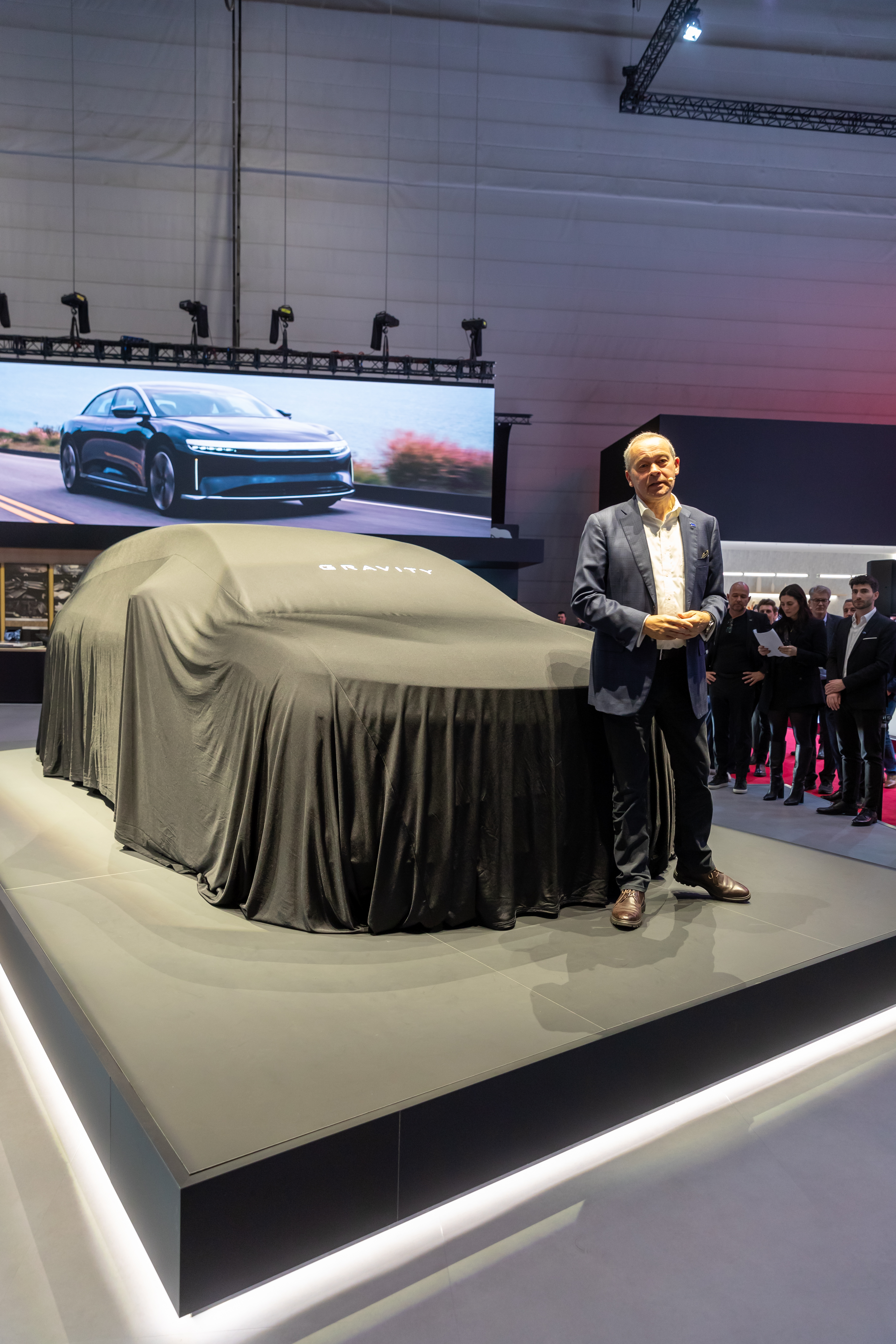
Lucid Gravity
"...case it works and it looks good but the center of gravity on a C5 and C6 Corvette is drastically different ..."
The Lucid Gravity is an electric SUV, meaning it runs on electricity instead of gasoline. How the weight sits in the car—like the center of gravity—can change how it turns and feels when driving. The podcast brings it up to explain that handling differences aren’t just about power.
The Lucid Gravity is an electric SUV from Lucid, designed to combine EV performance with a more family-friendly, higher-riding body style. It’s relevant to the conversation because the episode discusses how vehicle weight distribution and center of gravity affect handling. That’s especially important when comparing how different cars feel on the road or track.
Request an Explanation
Heard something you'd like explained? We'll add it to this episode.
Sign in to request explanations for terms you heard.
Want to learn more?
Browse our glossary for plain-English explanations of automotive terms, jargon, and concepts.
Help improve this episode
See something that's not quite right? Our annotations are AI-generated and can sometimes miss the mark. Click the flag icon on any annotation to suggest a correction.