Suspension companies test their parts by driving them hard and seeing how they hold up. The goal is to make sure the car stays controlled and doesn’t break when you push it.
ABS is a safety system that helps your brakes not lock up. That means you can still steer while braking hard, which helps you stay in control when you’re driving fast.
Autocross is a timed driving event on a closed course marked with cones. It’s a good way to see how well your car handles and brakes when you’re turning a lot.
A road course is a racetrack with longer, faster corners than a cone course. It tests how steady your car feels when you brake and turn repeatedly at speed.
The Ford Edge is a crossover SUV, which is a family-friendly vehicle that’s meant for normal daily driving. It’s built to be practical and comfortable, not just for racing. In the podcast, it’s brought up as part of a discussion about being on the leading edge.
DCT means a dual-clutch transmission. It’s a special kind of automatic gearbox that can shift very quickly because it’s readying the next gear ahead of time.
“Bolt-on” means parts you can install without doing major surgery on the car. You usually just bolt them on, and sometimes they help performance, but not always as much as people expect.
UMI is a company that makes aftermarket parts for classic cars, often for suspension and handling. It’s the kind of upgrade that can help the car feel more controlled.
Art Morrison is known for building high-end chassis and suspension parts. If it’s in the cost list, it usually means the project isn’t just small bolt-ons—it may involve serious upgrades.
Barrett-Jackson is a famous car auction where collectors buy and sell high-value vehicles. The host is talking about whether certain upgrades make a car worth more there.
Term
tuning the transmission
Tuning the transmission means adjusting how the car changes gears. The goal is usually to make shifting feel better and respond the way you want when you accelerate or slow down.
EFI means the engine uses electronics to control fuel delivery. Instead of a carburetor, a computer and sensors decide how much gas the engine needs, which usually makes the car run smoother and respond better.
Transmission control is the electronics that tell an automatic transmission when to shift and how smoothly (or firmly) to do it. It helps the car drive correctly instead of shifting randomly.
GM 4L60E is a four-speed automatic transmission used in many GM vehicles, with the “E” indicating electronic control of shifting. It’s commonly swapped into custom builds because it’s widely supported with parts and tuning options.
A “68 and 69 Charger” means the 1968 and 1969 Dodge Charger. The host is talking about new replacement body parts being sold so people can build or restore these cars without hunting for old sheet metal.
US Car Tool is the company the host credits with selling brand-new Charger body parts made to order. Instead of relying on old junkyard sheet metal, you can buy fresh panels.
Auto Metal Direct is a parts supplier the host mentions for new body metal. Think of it like a store for fresh restoration panels instead of used or rusty originals.
Licensing means getting legal permission to copy or reproduce a specific car design. The host is saying that the legal process can be expensive and complicated.
A jig is a precision fixture used to hold parts in the correct position while they’re assembled. In bodywork, jig assembly helps ensure consistent alignment so the panels line up correctly and the build can be repeated accurately.
“Body gapped” means the body panels are spaced evenly—like the small gaps around doors and fenders. Good gaps usually mean the car was assembled carefully.
A chassis stiffening kit adds extra braces to make the car’s structure feel less “wobbly.” That can help the car handle better, especially if you’re upgrading suspension or power.
Aftermarket suspension means replacing the factory suspension parts with upgraded ones from other companies. People do it to improve handling or change how the car sits and rides.
A “roller” is basically a car body/chassis that doesn’t have the engine and transmission installed. Buying one can be cheaper, but you still have to do a lot of work to get it ready to paint and finish.
Some older engines were designed around fuel that included lead. A lead additive is basically lead added back into the fuel so those older engines can run the way they were meant to.
Leaded gas is regular gasoline that has lead mixed into it. Some older engines need it (or tolerate it better) because they were designed before lead was removed from fuel.
A turbine engine is an engine that works by spinning hot gas through it, instead of using pistons. It can use fuels like kerosene that many piston engines can’t.
A turbo prop is basically a turbine engine that turns a propeller. It’s common in many airplanes because it can be powerful while still using a propeller for thrust.
Turbo Tech is the company behind the new engine design being discussed. The idea is that their turbine setup uses less fuel than older turbine engines.
A heat exchanger is a component that moves heat from one part of the system to another. Here, it captures heat from the engine’s exhaust and uses it to help the engine burn fuel more efficiently.
Light sport aircraft are smaller, simpler airplanes that fall under a specific aviation category. The host is saying this new engine tech could be especially relevant for that kind of aircraft.
The Volkswagen Crafter is a van made for work, like carrying cargo or tools. It’s not a passenger sports car—it’s built for practical use. In the podcast, it’s mentioned while talking about vehicles and parts the shop deals with.
The checkered flag is the signal that the race is over. In some situations, like when there’s a late wreck, the way the finish is handled can change how drivers get credited with their positions.
A “yellow checker” is a special kind of finish signal used when there’s a major incident late in the race. Instead of counting laps after the wreck, officials score the race based on the last lap that was completed safely.
The start/finish line is the official line on the track that counts laps. If there’s a big crash and the race gets reset, that line helps determine the official order and restart setup.
The “no mercy rule” means if you cause a wreck, officials will penalize you by moving you to the back of the pack. It’s meant to discourage reckless driving.
Qualifying is how drivers earn their starting positions. If you don’t qualify well, you start farther back, which can make it harder to run up front in the race.
The pole is the best starting spot—right at the front of the grid. If you qualify well, you start first, which usually helps you avoid early traffic and chaos.
“Points” are the championship scoring totals accumulated across races. A driver can be doing well overall (top 10 in points) even without wins yet, because consistent finishes still earn points.
Denny Hamlin is a long-time NASCAR Cup Series driver known for frequent top finishes and a large career win total. In this segment, the host uses his career stats as a reference point for how many starts and wins are considered “a lot” in NASCAR Cup.
This is a 1956 Chevy wagon, a classic car people often modify. The episode says it was surprisingly fast for its time, which is part of the reason Chris grew up wanting to work on cars.
“Small block” means a smaller V8 engine design that’s popular for hot-rodding. The speaker is saying that engine helped the wagon run very quick times.
Kelly-Springfield is a tire brand. Tires are a big part of how fast a car can accelerate and grip the road, so it’s relevant to the story about that wagon’s speed.
Car
1967 gmc pickup truck
This is a classic GMC pickup from the late 1960s. It’s the kind of truck people often modify because parts are widely available, and Chris mentions it as what he drove while learning to work on cars.
This is a Chevrolet Malibu from 1981. The “square body” wording is a common car-person way to describe that older, boxier GM look, and Chris says it was part of what he drove while learning car work.
The Rolls-Royce Phantom is a very expensive luxury car designed to feel smooth and comfortable. It’s meant for high-end driving rather than sporty performance. The podcast mentions it because it was present in the shop along with other cars.
This is a 1969 Chevrolet Camaro, a classic muscle car. The host is saying they restored/customized one for a customer, and it was finished in a specific green color called “Phantom Green.”
A “street challenge” is basically a test where cars are pushed in a more real-driving way, not just judged as show cars. In this story, it’s part of the reason the shop started building more race-capable cars.
Air suspension is a suspension system that uses air bags to change how high or low the car sits. The host is saying people doubted it could handle hard driving on a street-challenge kind of course.
“Air ride” means the suspension uses air pressure instead of regular springs. It can raise or lower the truck so it sits differently, but it may not handle rough driving as well unless it’s tuned.
Car
black 67 gmc truck
They’re talking about a 1967 GMC truck they had. Even though it wasn’t built for racing, they’re saying it could still handle pretty well with the right suspension parts.
They’re talking about wheel sizes—18-inch and 20-inch rims. Bigger wheels usually mean shorter tire sidewalls, which can change ride comfort and handling.
Control arms are parts in the suspension that hold the wheel in the right position. Changing them can help the car handle better and feel more predictable.
Torque arms are suspension parts that help control how the rear end moves. They can improve traction and make the car feel more consistent when you accelerate or brake hard.
Traction control helps stop your tires from spinning when you’re trying to accelerate on slippery or low-grip surfaces. It can reduce engine power and sometimes brake one wheel to keep the car moving straight.
“Pro touring” is a style of build where you make a car handle really well, like a track car, but you can still drive it normally. The goal is a car that’s fun and confident on both the street and at events.
An “LS engine” is a popular GM V8 used in a lot of hot rods and swaps. People like it because there are lots of parts available and it’s known for making strong power.
OEM parts are the original parts that came with the car from the factory. People often upgrade from OEM to aftermarket when they want more performance or better handling.
An aggressive brake pad is designed to generate strong friction for performance braking, but it can also be harder to modulate and may behave poorly with ABS if it tends to stay stuck to the rotor. The host is warning that “more bite” isn’t always better if it interferes with ABS operation.
A “14-inch kit” means the brake setup is designed to fit a 14-inch wheel/rotor configuration. Bigger brake setups can help the brakes stay consistent when you drive harder.
“Six piston” describes how many pistons squeeze the brake pads against the rotor. More pistons can help the pads clamp evenly, which can make braking feel stronger and more consistent.
A full floating rotor is built so part of the rotor can move a little as it heats up. That helps the rotor handle heat better and can make braking smoother over time.
IRS means the rear wheels move independently instead of being tied together. The host is saying that with IRS, you often want the rear brakes set up to work harder so the car stays planted when you slow down.
“Rear brake” is about how much of the stopping power comes from the back wheels. Changing that can affect how the car behaves when you brake hard.
Topic
building suspension in stages vs buying twice
The host emphasizes planning a suspension build order so customers don’t have to replace parts later. This is a practical strategy for controlling cost and avoiding duplicated labor when upgrading for autocross/road-course use.
A pro touring car is a muscle car build meant to drive and handle really well, not just be fast in a straight line. It’s usually set up for better cornering and braking while still being usable on the street.
Detroit Speed is a company that makes aftermarket suspension and handling parts for classic cars. Here they’re mentioned as a suspension/chassis option depending on wheel and fitment goals.
Speed Tech makes aftermarket parts to improve how a car handles. In this conversation, it’s suggested when you want bigger wheels and sharper turning without changing the body with wide fenders.
Wide fenders are body modifications that allow wider wheels and tires to fit without rubbing. In suspension planning, they affect how aggressively you can run tire width for grip and how much steering lock you can achieve without interference.
RideTech is a company that sells suspension and chassis upgrade parts. The point here is that a more complete chassis-style setup tends to hold value better than only doing some bolt-on parts.
A subframe is like a strong inner frame that the suspension attaches to. If you change it, you can make the car handle better because the suspension has a better foundation.
A 1964 Chevrolet Chevelle is a classic muscle car people often modify for faster driving. Here, the speaker is talking about a Chevelle build that used a custom chassis setup so it could accept modern aftermarket parts.
This means the frame was modified to be stronger and fit better. Boxing makes it stiffer, and narrowing helps the suspension and wheels line up the way the builder wants.
A “full chassis” is basically the whole undercarriage system—frame and key suspension mounting parts—built or replaced as a package. The speaker is comparing different complete chassis options and what they cost.
A front cross member is a strong bar that ties the two sides of the front frame together. It helps the front suspension mount correctly and can make the car/truck feel more stable.
Brand
no limit rob
The speaker is naming a particular aftermarket builder/supplier (“No Limit Rob”) whose chassis parts they’ve used. They’re saying it worked really well on their truck.
IRS means the rear wheels don’t move as one solid unit. That usually makes the ride smoother and helps the truck handle better because each wheel can react to bumps and grip changes.
“Forward bite” means how well the tires grab when you accelerate. More forward bite usually helps you get up to speed faster and stay in control through corners.
A four-link is a type of rear suspension that uses multiple arms to control where the rear axle goes. Performance builders like it because it can be adjusted to help the car grip and handle better.
“Mustang II” is a specific older Ford Mustang generation. When people build custom cars around that platform, the front suspension parts—especially the control arms—need to be strong and properly made.
Suspension geometry is how the suspension is set up—basically the angles that control how the tires sit on the road. Changing it can make the car handle better or worse.
Ball joints are pivot parts that let the suspension move while keeping the wheel connected. If you’re changing alignment or suspension geometry, ball joints often have to be moved or reworked too.
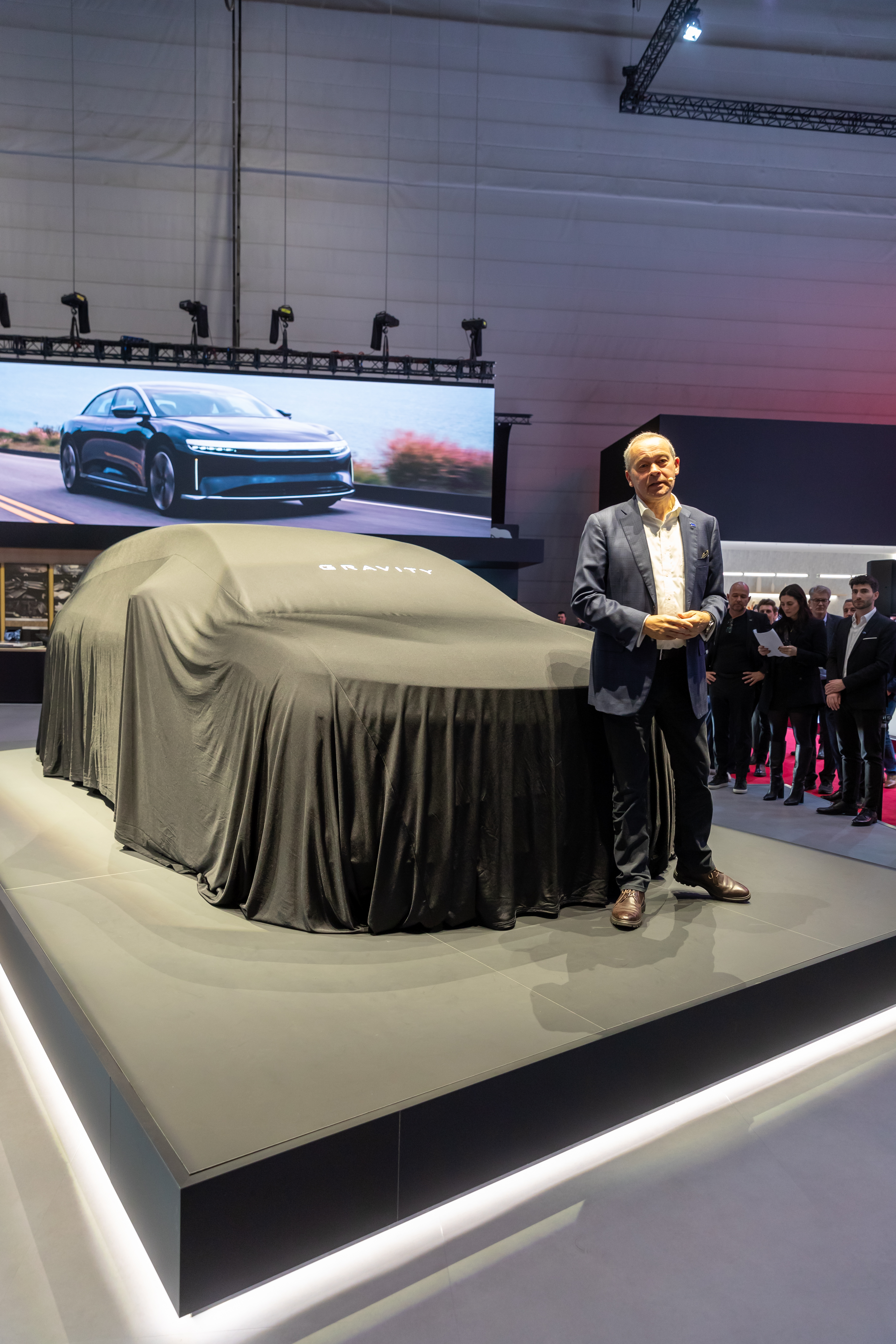
The Lucid Gravity is an electric SUV, meaning it runs on electricity instead of gasoline. How the weight sits in the car—like the center of gravity—can change how it turns and feels when driving. The podcast brings it up to explain that handling differences aren’t just about power.
LIVE
the muscle car place online podcast episode number 654 this week friends for
those of you who want to build vintage muscle that goes really really fast I
have the interview you have been waiting for Chris Smith of smithy's custom
automotive Chris's cars go fast Chris's filter to hold back it ever exists that
it is long gone now Chris is the guy that suspension companies have do their
R&D driving he can break stuff he can fix recommend stuff if he
has used a vendor for something uses it again you can trust it if he doesn't
take a lesson he does name names and who he uses in here he does state why he
named them he does tell the truth in here some of it is a surprise some of it
isn't and LSN gin is pretty much well the standard so now everybody wants to
know what the big fast upgrade is in its ABS when you can drive into a corner
whether it's on an autocross or a road course and you can put a car in pitch
and yawn still be on the brakes and turn the wheels it's just faster the parts
list on these cars to get started range between 100 and 175 thousand for the
parts so if you have a really clean car and we're not painting it the things you
know you can get in a really competitive car at 250 275 300 if you're doing a lot
of body work we just keep adding up more and more from there
this is the muscle car place online podcast brought to you by National
Parts Depot this is the weekly show dedicated to people worldwide who love
American muscle cars if you're buying selling restoring even racing them this
is the place for you now here's your host Rob Kibbey yes indeed I am Rob Kibbey
and welcome to the muscle car place podcast well here we are everybody
halfway through July and this is a whopper of a good interview for you in
today's show Chris Smith of Smitty's custom automotive so going from a recent
history to past history if you've seen the blue Camaro or the yellow Corvette or
the red Chevy truck if you've seen anything that Chris has ever raced at a
competitive event you know that he's on the cutting edge best of the best I don't
think it was in this interview but his shop experiments with all sorts of fun
stuff like DCT's out of BMW's and third gen Camaro's I mean he's out there and
his cars not only look good they perform this is a very revealing interview
about what it takes to go fast in an old car at a high level not just effort
money from the outside looking in you have probably suspected this maybe you
have purchased some bolt-on stuff and had success and maybe you didn't and now
you're gonna hear maybe why Chris has been doing this for almost 30 years
he's ridden the highs lows in my humble opinion he's at a point
in his career where saying the truth out loud isn't gonna get him blacklisted
from any manufacturer or media source anymore those days are gone he can say
the truth out loud and that's a good thing and it's okay this is interview
cold you typically don't get people that are okay being this candid he will
name names of stuff I think I took some note UMI total cost involved heights was
in there hotchkiss was in there art Morrison was in there Detroit Speed is
the speed tech Roadster shop ride tech will was stop tech Brembo Bosch ABS
systems there's another ABS all listed they will be discussed he will talk not
only about what those parts can do for you on the track what things cost what
stuff has value would you go to sell the car at like a Barrett Jackson and what
doesn't it is very very revealing I would love to do a follow-up with Chris I'm
sure you will have specific questions send him to me I'll take him I want to do
a follow-up with him I would look forward to that very much if you've heard
other interviews here over the past though this is Chris telling the truth
from his experience and his customer base and the type of cars that his
customers demand there are other ways to do this Tyler Gibson in his
international scout a few years ago I've just ran a Tyler couple weeks ago at
our local good guy show Tyler's hustling his scout out there as fast as any of
them and I think he uses a far more homebrewed engineering approach I
assume it's a less dollar spend but I could be entirely wrong Tyler if you
hear this tell me if I'm wrong there's a lot of ways to slice this cake but for
the most part when you're using performance parts from companies that
when you want to go to the top and really if you want to compete in Ultimate
Streetcar for wins in this class you should be listening to Chris for advice
he's got a lot to offer here I can't think of anything in here that I
specifically disagreed with I just couldn't believe he said it this is
awesome all right so since the last show I personally got to go to a good guy
show and I haven't been to my local show in a long time but I got to go with my
buddy Aaron I had a great time I got to autocross my Chevelle is a little rusty
but that course was a little confusing and I and a few people blew turn three
and I initially felt pretty stupid I even blew it in the walk like the autocross
walk like I got lost in the first I think it was turn three then I saw a few
other people make the same mistake including I think Mark I think 11 if you
hear this I think you did it too once and he won like he won his class for the
whole weekend it was so fun to get to do it whenever I leave those events though
I always think one thing man I want a chassis Dallas brought the general down
in the afternoon with my wife Laura and his buddy Jake they had a great day did
not across the general just came and enjoyed the show my wife Laura and I
brought the general down Saturday and I forgot I had spent a whole day tuning the
transmission last fall whole Sunday afternoon man that car drove nice the
Holley system that I have for EFI also has transmission control and the Silver
Sport A41 automatic than I have it's really a GM4L60E with all their
modifications to make it fit in a moped nicely which it does beautifully with
just one little dent in the transmission tunnel you can get in there no
cutting no fussing very very simple man that car just drove great I went down
Sunday for the award all by myself and I just kind of want to see who won there
were a lot of awards I will say I really wanted a shot to win the giveaway car and
you don't win the car there you qualify at every good guys event for a year you
qualify for the chance to win it at the next year's Columbus show well in this
case the Columbus show is the very next event that has happened last week as we
record this in Ted Bauer congratulations you qualify I think it
Fort Worth Texas show and then Ted won the 1944 very cool next year's car was
also revealed 66 Chevelle on a speedtec chassis even Redburn you'd love it
also in the news not at a good guy's show at the Carlisle Mopar Nats US car
tool has released their brand new 68 and 69 charger body built to order 45,000
bucks I think is the last thing that I saw there hang on I got an article here
from Mopar connection magazine let me source the right people it is Mopar
connection magazine and it says here and the authors Mr. Kevin Shaw the man
himself how about that he says a US car tool motor sports finally did what
everybody's been asking for offering a brand new 68 or 69 charger body using
pretty much the entire catalog of new sheet metal offered through auto metal
direct so why didn't AMD just offer it for themselves you might be asking and
that's a fair question suffice to say that licensing such a kick car involves
a whole lot of lawyers and exorbitant legal fees rather US car tool is doing
the Lord's work by offering a completely assembled 68 or 69 dodge charger
unibody as a body and white made from all new parts reproduced by industry
leader AMD and yes body and white is a jig assembled by US car tool in their
headquarters in Graham North Carolina each body is properly assembled body
gapped and build to any configuration whether you want it riding on a custom
chassis or factory floor plans and the one at Carlisle by the way I think was
set up for a road to shop chassis but if you just want it to be a stock Mopar
they'll do it per US car tool you can like to have your body and white
assembled with their chassis stiffening kits fully body gapped to 316 inch gaps
your choice of aftermarket suspension like QA1 speed deck or a complete paint
and body build US car tool will make your body and white as bare or built to the
Raptors as you wish but don't be fooled you're paying for a brand new
professionally assembled second gen charge your body with a starting price of
$43,993.69 Kevin such a good author I might keep reading normally I'd stop
about this point but one more now consider what you're saving you're not
hunting down a semi-decent roller that needs to be disassembled media blasted
or dip stripped down or having years worth of metal and bodywork removed
before it's ready to be painted saving you all the time in the headache that you
want best of all you're working with two of the biggest names in Mopar metal
AMD and US car tool motorsports this is in Graham North Carolina I looked it up
it's about an hour and a half drive from our apartment in Charlotte I'm going to
see if I can go there I would like to see this in person and I want to talk to
them about what they're doing so what Kevin's revealing here this body and
white this is not a licensed Dodge Charger body it's effectively a
replacement body no different than well at least I don't think it's a licensed
Dodge Charger I'm gonna ask that question I don't know if it's a licensed
Dodge Charger body what I can say is that it's not a car with a VIN on it
it's certainly I think meant to be a replacement body I assume you would have
to provide a donor chassis with a VIN or you'd title the thing as a kit car I
don't know lots of questions I want to ask I'm gonna go there and try to find
out okay switching gears here a little personal update many of you longtime
listeners will know that I am an aviation buff right out of college I thought
what I wanted to do for a living was fly planes in the Air Force applied even
got a slot that's a story for a different day I got a slot as a navigator
not as a pilot for a lot of reasons it just didn't come together I did end up
on my own getting a license in my late 20s just as a private pilot and I've
always loved airplanes but frankly I really haven't flown that much since
getting the license there's only so much time money go around my dad loved
airplanes though he worked his whole career in the aerospace industry he had
a couple of small airplanes when I was a kid his 62 Mooney M20C was his
favorite airplane he always wanted a bonanza we always used to go to the EA
a Oshkosh annual air show in Wisconsin every year together we missed very few
from the age of 10 to well he died in October of 2021 and in July of 2021 we
were there I was one of my favorite shows that we did together was his what
turned out to be his last one since he has passed away I have made it back a
few times because I want to continue that with my family and frankly I weird
to say it I kind of feel his presence there and it's interesting of the year
after he died we went back we saw an old Concorde RV like we used to have my son
actually spotted a Mooney M20C wearing its factory paint scheme and other than
photos of my dad's I've never seen another one of my life but saw one the
very next year so I love going racing and kid schedules haven't allowed me to
go every year consistently since I think the last time I personally when it was
a couple years ago and I took my youngest daughter I've taken all my kids over
the years I took my wife 20 years ago when I don't mean this to be a sad
story but when my mom was ill and dying with cancer my dad couldn't go and I
took my wife over and we 10 camped one year I think she had fun I don't really
remember if she loved it but she's a good sport I have a couple three days that
I could make this work into next week I get up there Thursday night and go
Friday and Saturday so the full air shows be there all day Friday all day
Saturday and what I really love doing is camping in the campground you need to be
around the people smell the smells eat camp food I mean and you don't go home
at night you don't go back to a hotel you stay in the environment it's awesome
man you can camp up there for $42 a night and a hotel right now for a last
minute purchase which is usually what I end up having to do is like 300 bucks a
night and I mean for a place you probably don't want to stay in if you
catch my drift so my buddy Aaron who I went to the Good Guys show has a camper
trailer and he has said it's yours if you want it they do have some spots up
there where you can plug in and get power and all that they probably won't be
available by the time I get there but there is some designated generator
parking and there's nothing more that I love doing than camping in a camper with
the AC on so Aaron's got a couple of little suitcase Honda generators you know
little 2,000 watt ones you can gang them together for 4,000 watts and you can run
AC off of that so that's what I'm gonna do take Laura up there for three nights
in two days and just take in everything I can I love the innovation up there at
that show it really parallels the automotive industry in a lot of ways
but I love looking at the vintage airplane restorations I love seeing the
new stuff for the general aviation market probably at this point the most
more than commercial or military I love watching the military planes fly but
that's right now all that is I just get to enjoy seeing them Garmin has a new
general aviation avionics suite that I'm very interested in understanding more
my dad would love that there's nothing my dad love more than putting all the
doodads and gadgets in so when you got the airplane just tucked up off the
ground and wheels up then push the button and let her fly it all the way to
the next stop safely and accurately and he loved the technology of the systems
that made that possible that's what he did in his career what I really want to
see in addition to that stuff is this there is a French company called
TurboTech and their regenerative turbine engine is for the general aviation
market airplanes that fly in the GA market right now in principle haven't
been changed much since the 1940s the GA market you know it isn't like cars to
have a little private airplane it has the same problem that a big airplane does
it has to go through annual FAA inspection if it doesn't pass it doesn't
fly so it is very reasonable to own a 1960s era airplane that you use for
regular use because they don't really wear out kind of like a car in Cuba or
something keep fix them they'll keep on chugging the biggest problem that the
GA market though has is something that cars haven't had in a long time let it
gas I have a sound effect for this let it gas they run on let it gas the good
stuff high octane let it gas
general aviation airplanes have four years for 70 years run on horizontally
opposed air-cooled four or six cylinder engines VW engines Porsche their boxer
engines that's what they run on that's what's proven because an aviation if it
isn't certified to fly for the most part you can't use it those engines are and
they're proven there's like one provider out there I think that still makes the
lead additive to use in that style of legacy engine and there are many many
many thousands of little airplanes that can only run on
leaded gas now there are also many many many companies working on
substitutions allowances to switch to auto fuel many of that will be
successful and I think that's probably where it'll go in the long run for gas
but there is another option jet fuel a piston engine can't run on jet fuel but
a turbine engine sure can well a piston gas engine can't run on you know ignited
you know spark ignited can't run on jet fuel but a turbine engine can run on
kerosene and a turbine engine with a propeller on the front it's called a
turbo prop you can see where I'm going here if a really small turbo prop could
exist without melting itself to death that would be great for the GA market but
it's never been possible before until maybe now this is from AOPA news and
this is what I want to see at Oshkosh this year
turbo props are light sleek and highly reliable
but they've always had one big problem they burn way more fuel than piston
aircraft engines well not anymore turbo tech a french firm has developed a
regenerative turbo prop for light airplanes that uses about the same
amount of fuel per horsepower this piston engine and the implications for flight
training and light GA are huge this is the interesting part this is the heat
exchanger that allows the turbine to burn half the fuel consumption as usual turbines by
using the exhaust temperature and reintroduce it into the combustion chamber here
this turbine burns exactly the same amount of fuel as a piston engine of the same
all sport simple I recently flew a bristelle xl-8 light sport aircraft equipped with a 141
horsepower turbo tech engine and I was astounded by its smoothness and efficiency
for now turbo tech engines will be limited to the light sport and experimental aircraft
markets but the company also is developing 250 and even 400 horsepower engines aimed at the
broader GA market that is just so cool I can't wait to see that in person
for those of you who are cletus mcfarland fans and have watched his aviation stuff you know that
he's into this too he is into some of the short takeoff and landing stuff he has a carbon cub I
think cub crafters who I think they're the company that make carbon cubs they have come out with a
turbo tech equipped turbo prop little carbon cub 140 horsepower all carbon cub airplane
and it's going to be up there it's $700,000 I'm not buying that but cletus is probably good
I just can't wait to see that airplane out in the wild my mind does instantly race to the
businesses I could start to build my favorite plane moonies and I've dreamt of building all carbon
fiber turbine powered moonies with two doors and air conditioning and more payload more range but
all the speed and efficiency that moonies are known for and moonies handle they don't use cables
they use real push rods they're like positive force airplane you can wheel a moony
moons you good looking too anyway I'll be up in Oshkosh next week if you're up there
say hi I'd love to chat with anybody and I run into somebody from this show up there regularly
very very common also at Oshkosh everyone and I mean everyone has seen the movie airplane
and if you're part of our younger audience that you don't know what airplane is
here is your introduction the stewardess said
both pilots can you fly this plane and land it surely you can't be serious I am serious
and don't call me surely doctor I've checked everyone mr striker's the only one what flying
experience have you had I flew single-engine fighters in the air force but this plane has
four engines it's an entirely different kind of flying all together it's an entirely different
kind of flying you know what Bernie that's not enough give him two more give him the
Tylenol one and then route him into lake michigan how much longer can those passengers hold out
I have an hour left for five minutes who's flying the plane one of the passengers but he's an
experienced air force pilot a crew during the war so there's no cause for alarm hitching our tick
what kind of plane is oh it's a big pretty white plane with red stripes curtains in the
window and wheels and it looks like a big Tylenol striker this is captain rex kramer's
yes captain kramer reads you loud and clear
right it's obvious you're a member so what do you say you and I just forget about everything
except what we have to do now let's not kid each other kramer you know I've never flown a bucket
like this I'm gonna need all the luck there is stand by striker one hope is to build this man up
striker you ever fallen on an engine plane before no never shit god damn wasted times the way you
can land this plane have all yourself you gotta talk about you gotta route him into lake michigan
least I'll avoid killing innocent people you're the only chance they've got all right man I love
that movie okay up next is the Dallas kibby racing update presented to you by lexani tires lion
heart tires and rolling big power tires all available for purchase easily online at simple
tire dot com burn cue the intro please the Dallas kibby racing update driven by lexani tires lion
heart tires and rolling big power tires all available for purchase easily at simple tire dot
com now here's the update boosts fast and on the edge of out of control well the season is coming
to an end here out of 10 races in the cookout summer shootout at charlotte motor speedway
eight or done two to go since our last show race seven got rained out well I mean we got down there
the way it works is you practice on money in a race on Tuesday well we got down there on Monday
at 8 p.m. and he got like seven laps of practice finally we had a number of flight snafus but we
got down there Monday he got a little bit of practice he qualified Tuesday terribly qualifying
just didn't work out and that sucks because you practice at night when the car is in different
conditions it's cool and dark at night and he was ripping in practice and then in qualifying
it was a hot slick day and nobody for the most part qualified like to practice if he qualified
21st for race seven and the race seven got rained out so we ended up doing a double header this week
race seven started at noon and then race eight was after that he did quite well in a race seven
races way all the way up he ended up finishing by the books 13th he crossed the line sixth though
that was just due to a melee of events and this kind of racing there's a couple things number one
when the checkered flag waves if it's a yellow checker they go by the last lap completed let's
say if it's a 25 lap race and on lap 24 there's a huge wreck and they don't make it back to the
start finish line anymore they just go back to where the last start finish line was that everybody
was driving and then they remove their it's complicated they remove the cars that were
involved and then they reset the field anyway he crossed the line sixth he was officially
scored his 13th if things keep going the way they're going he's going to win an award called
the up on the wheel award he has passed the most cars from starting position to finish position
than anybody else there's two races to go and that could change but right now he's the leader there
he's done it in two races in a row in fact race eight nothing but a wreck fest
dallas has probably not seen the bigger picture right now but he is picking up a lot of skills
and i know he's only measuring success by wins and there haven't been any wins but what this series
does have is the best of the best out there racing it is also a no mercy rule if you cause a wreck
you're going to the back if you're a victim of the wreck and you lose control of your car
you're going on the back if you're an incidental victim of a wreck like if three cars pile up ahead
of you and then you end up touching them you're going to the back i can't think of a race this
year where dallas hasn't gone to the back at least once i'm sure there's been at least one but
most of the time he's gone to back once or twice he's had trouble qualifying he's got good speed
but for some reason the qualifying isn't just coming together he's got to fix a couple of
mental mistakes and when he does he will be on the pole every time he can race up front and he
can race through people he's doing a lot of things right but right now he could use a little confidence
builder he's doing well he's top 10 in points right now i mean that's freaking great for perspective
like right now an active nascar cup denny hamlin has 64 nascar cup wins that puts him ninth overall
in the history of nascar cup he said 700 plus starts that means denny hamlin has won 9 of the
time or if you're a young racer and you only look at wins you'd say denny hamlin fails 91 of the
time and he's one of the most successful guys out there you see what i'm saying here perspective
is the key racing for a championship versus a trophy is key dallas has a couple of little bad
habits to fix they're so minor at this level if it weren't for the data that you pull out of the car
you couldn't find it he looks the same as everybody else looks it does take these little
infinitely small changes to get from really really good great to that elite status and i
think he will get there actually i'm quite confident he will he's not going to win the
championship for this series without a really crazy series of events happening and that's
what it would take i do think it's possible he could win maybe two and crazy series events
happen all the time here's race seven as announced by mrn's own steve post dylan faulkner gets into
the back bumper up the racetrack they go they're side by side holding hail gotta keep that whole
field down on the low side nice move by fickager he gets into the back of hail hail goes around
bristley goes around chaos the big one off turn number four there's still rucking across the line
oh my what a mess what a big old harry mess yellow checker is out that's going to end it
going to the scoring and well good luck with this one preston ristling looks like going to be the
winner of that race i don't even know where he is you probably don't know any of those names but
colton hail the guy that got smashed there at the end was the points leader and he finished that
race in the 20s see i mean it can happen colton hail by the way run they fixed his car and he
won race number eight that same very night so i have faith for dalis here he's getting there
he's pretty hard on himself there's a life lesson here though if you can fix some of your bad habits
that are holding you back you can get to the top i think that will happen for him but he's the only
one that can do it here's one more clip this is from race number eight i'll just always treasure
here in my kid's name uh mentioned on the tv okay there you go two races to go in a charlotte series
his next late model race we'll just stay down there after his final charlotte race
we'll go to hickory motor speedway again race in the carolina pro late series on august first
and then uh i do have two legends cars down there and one of them's not beat up i might bring one
of them back up here to iowa for a couple months and race up here we did hear through the grapevine
that our uh hawkeye downs our only asphalt track here in iowa will be switching to dirt at the end
of the season they basically concluded they got to do something to get the fans to come to the track
putting on a show on dirt they tried for a little bit last year and it worked it worked better they
are permanently going to switch the infield to dirt that means there will be no asphalt track to
erase a legends car on anymore in iowa dal's got his start there he really cut his teeth there he
got his first little win in a legends car there i'd like to take him back so he can he at least
have one more stab at it that would be cool by the way our new suit from simpson finally got here
it was worth the wait we've got photos he looks good so all of his simpson gear including the
shoes the helmet everything it's all there now finally all right that concludes the dalis kibby
legends car and general racing update presented by lexani tires line heart tires and rbb tires
find them all to purchase online at simple dire dot com and at simple dire dot com
you'll like the sizes and the prices burn you the outro please
all righty don't forget once per month we do have mr rick schmitt from national parts depot
on to talk all things npd you can ask him anything you like send in your questions to me robert at
the muscle car place dot com and of course visit national parts depot dot com to peruse for all
your muscle car parts needs because they find the source they suspect the best there is a difference
and they've got the goods you do have time to get in your questions for august you don't have much
time or recording it tuesday the 21st get them in by then already up next is our feature interview
with mr christ smith from smith's automotive is going to tell you everything you need to know
about going fast and turn the corners and who's using what to win and what it costs and what stuff
wins and what to avoid i love it enjoy the muscle car place weekly podcast interview is brought to
you by our good friends at national parts depot see them through the link at the muscle car place dot
com today our guest is chris smith he's the owner and operator of smithy's custom automotive in tiffin
ohio and known throughout the world of autocross and road course events as the g tv superhero for
20 years he's been building fast classics from camaros to trucks to chivelles he's the guy
that companies go to to be their r&d driver he breaks stuff and then he tells them how to make
stuff unbroken we're going to talk about developing his business cars drivers who's stuff is the best
who's stuff to avoid chris welcome back to the show thank you for making his work so early in the
morning so i've known you maybe 20 years but i wouldn't say that we know each other well and i'm
looking forward to that because i know all about you you're the guy that when you show up to ultimate
streetcar events whoever's there is running for second like you are a dominant figure you're a
big personality but i don't know anything about your background so chris did you grow up in ohio
where you from i'm from tiffin ohio born and raised here the property that the shop said actually
as our house beside it and my dad bought it in 87 after graduation a few years work i bought it
off of him and we started the company in 99 did your dad build car how do you have skills
went to a technical school in high school for bodywork i always wanted to work with cars dad was
kind of the backyard gearhead he worked at a factory this property had a pole barn on it we
bought a wire welder and i had an old pickup truck and uh wanted to be able to fix it dad didn't
really know how to do bodywork thing but you know he had a 56 Chevy wagon that's actually in the
background above my head you can see it oh yeah that car ran 12 o's in 1984 with a small block
so on kelly springfield tires that was amazingly fast so he was a good gearhead and drove me into
the the wanting to do it so i went to a high school boatech school and started doing bodywork
what'd you drive to high school a 1967 gmc pickup truck at a 81 malibu square body malibu is that
right yep yeah 50 the last g body did you always want to be owning your own business no it never
really dawned on me that i was working in a dealership doing pretty well and was doing a
bunch of side work out of where my dad's friend shop he worked with my dad also and in 98 it was
a call that was crankshaft got bought up by phase crop and they come in and the union pushed the
younger guys to vote basically the older guys out enforcement retirement my name is only
early 50s he wasn't ready to retire so i was like hey i'm doing the side working on stop
let's just start doing some bodywork out of the shop at home to see if we can make a go of it
how long you've been in business then 1999 27 years even longer than i thought has it ever
been stressful yeah i've refinanced the house a couple of times and been about broke more times
that i can count you know the last 12 15 years has been way smoother and a lot better you go through
the trying times customers not paying some people leaving you hung out the o8 deal we've
rode the highs we've rode the lows and now we're got a great customer base and just kind of cruising
along hopefully it stays that way every business goes through basically getting your foundation
planted but i don't remember if you're still on the interview yesterday but i was talking to jimmy
day by you and i said i think chris is smart enough to start a construction company that lays
fiber OPTIQ and be a billionaire like he doesn't have to be in the hot rod business he's choosing
to be it can be a hard place to make a living it's just really really really fun i assume that's
why you've stuck with it i mean you're competitive but you want to see it win because you actually
do love it right love the bottom of industry i don't think this is where you'd be to make money
because like you said there's a lot easier ways to do it but the passion to make cars go fast look
good sit right make customer happy you know in 27 years all my customers my friends we build
relationships they'll call you first and we just talk about the family you know then we'll get to the
cars the car community is genuinely the best group in the world as far as i can tell we're
actually talking a little bit this last night i think in my hair could i just couldn't imagine
doing a regular job or just playing golf or something for a hobby i mean we're so into the
community and going out racing and getting to be with our friends and doing this that i couldn't
imagine never going to a trade show i mean i just i don't know what life would be like to live
it the other way because i just don't think it'd be very fun you're a staple you're at all the
events you're at all the trade shows you're there to race yourself there with your one son you have
two son how many kids you have two boys they're both racing now palin hasn't got to run as much
with high school and sports he's gonna go off to engineering school but yeah i've got two boys that
are working this summer and jason works full time and we haul around three cars
busy life busy family what was your first customer car i mean a car that was a brand new new to you
built for a customer the first old car i had redone was actually right before we started the
shop it was a 69 camaro phantom green car for a local guy dz 302 car i mean it was a cool cool car
that was the first real old car i had done when the shop opened we did a 50 truck there was a whole
bunch of them kind of all at once once i opened it was kind of weird so we had a handful of old
cars we've had a first generation camaro in the shop minimum of one for 27 years it just always
has been and funny as now we don't have any 69 we have any 69s in the shop in a while they're all
67 and eight so i think the 67 and eights are making the push right now we've had a good group of
customers you probably want to know this we did two great eight cars i did not know that no
they were both crazy builds craig naff built the body on the one
evolution with the name of the car it was a craig naff hand-built body craig is who did a lot of
metalwork back at boys back in the day did the Cadillac and did the beginning years there
and the other car was a kraken which most people would know from seeing all over dave kendig's show
that did then build that car we did we do some way up around show cars and we do a whole bunch
of race car stuff i didn't know the show car part not surprised but i am impressed when it comes to
the race car side of things though did people always come to you for did you build your own
race car first for like a good guy show like when did you transition from building cool cars that
people would want to enjoy to cars that people want to race like truly track kind of a transition
through a couple steps i would say because we still do both but the first step into the racing
stuff i think was in 01 with brett vocal when he did the street challenge if you remember that or
not i don't is that predate good guys i think it does so brett kept being told that an air
suspension car can't handle it can't do this that he pretty much forced all the
magazines and tv shows to come to indiana to put in part to come drive his cars and he was
going to prove them wrong and i think part of what he just wasn't going to advertise in the
magazines that they didn't do it though we had every magazine person every tv show everybody
was there and we took the air ride cars out and just thrashed on them and the first year was pretty
good and the second year was complete insanity i mean he had boris said and timothy peters and
mass car drivers there helping drive cars and teach people to drive and but we just went out and beat
the tar out of this stuff and that was on kdw's i had a black 67 gmc truck and it was 18s and 20s
it wasn't exactly set up for track by any means but any good suspension will handle pretty decent
one it's got a lot of sway bar on it which started at tv show how that thing had a nasty 434 small
block and i did like a 500 foot long burnout start the tv on that thing and that's kind of where it
all started and then we did popular hot riding tv show right after that with the truck and then we
took a couple years off because the business was really growing right then and then we're doing
the show stuff with good guys with all the ridder contending cars and that stuff that good guys
autocross started somewhere right there went into the mix with that a little bit and then i built the
red truck when i built the red truck that's when we really come on strong with it when i got into
this business almost 20 years ago now the good guys autocross was just starting and i remember
getting to know brett vocal the founder of ride tag as i recall he was pretty influential in making
that go and for a while man it was it was the wild west because nobody frankly did that a good guy's
show was a sitting a lawn chair type of an event and now it has become a true destination way back
in the day it was quite different and throughout his years brett was pretty vocal about how to
make it better and make it more approachable for people but i mean the goal was to showcase parts
and showcase business and for people to go out and enjoy cars when did that start turning into
customers for you we ran the good guy stuff i want to say it was for about two years i had a 48 foot
trailer and brett asked me to haul one of his cars somewhere if i hold his car then brett basically
paid us to haul one of his cars around and he covered all the bills for me
that worked out really well and it helped me be able to go out and be in front of everybody
and afford to do it so that worked out really well and as you start doing that people start
breaking stuff you know whether we fixed it at the track or after an event you know the people
slowly started coming this way because they wanted their stuff fixed right because it's hard to find
someone that knows how to do it and understands suspension and as we progressed back in the day
we had the right tech versus Detroit speed rivalries we'll call it yeah everybody thought there
was this big beef and like we didn't get along all this stuff which was pretty humorous because at
the end of the day we all hung out talk but the outside thought it was the ultimate battle and
we just make everybody look better and make all their stuff work as we continued through that
brett stuff was always just pulled on wasn't a lot to modify a lot you work the factory pickup
points we pushed that as far as we could push it and optimize it as much as we could and build a
pretty damn good product in my opinion so that was kind of the beginning stages of it as we got
into the years with the yellow Corvette is when the shop really started picking up more and more
customers because the yellow Corvette become really competitive we won a lot of races in that car
and I think when you win people notice it and that's when the customers really started to follow
was that a ride tech car the yellow Corvette I'm trying to remember yeah that was a 48 hour
Corvette okay make sense now you have customers coming to you with more than Camaros and Corvettes
and trucks the reason I want to do this interview well I want to do this for a lot of reasons but
the big reason is when we had you on the ultimate streetcar podcast you started talking about how
to make somebody fast and you said wait I'm getting ahead of myself the first thing is the driver
the driver needs to go to school because we started talking about suspension and tires and
stuff and then you said the second thing they need to consider here is ABS when did this world
change Chris from just bolting on you know control arms and sway bars to actually building a proper
modern functioning kind of semi race car because today it's not bolt on stuff we're talking about
full chassis summer torque arms summer IRS this is an entirely different world than it was maybe
even five years ago but definitely 10 so when did ABS and traction control start showing up and why
longer ago than you would think
traction control we've been messing with for probably 10 years
really we just didn't talk about it the streetcar pro touring world actually drives this as much as
anything everybody that walks in here wants their car to ride drive and act like a new Corvette
we also want our cars to ride drive and race like a Corvette so the two kind of go hand in hand
if you're new and want to come autocross and race and you're at the right event because you got to
have you'll have riders or people help you can learn a lot from the people around you because
as you well know everybody in this community will help you they'll give you the shirt off their back
if you ask I mean it's there for the taking but with a lot of the insurance going issues and
some of the stuff that's happened we can't give rides everywhere so I always say go to a driving
school try to get some experience that way that way you understand because everybody looks at some
of this autocross and think it's not fast well I'm here to tell you 60 70 80 mile an hour around
cones on a flat surface when you get in that car it isn't fast forward and we all have this
suspension and like you said some stuff bolts on but you have full chassis weld and irs as you
have all that stuff so that's almost a given at this point and an LS engine is pretty much well
the standard so now everybody wants to know what the big fast upgrade is and it's abs when you can
drive into a corner whether it's on an autocross or a road course and you can put a car and pitch
in yaw and still be on the brakes and turn the wheels it's just faster that is for sure so I'm
guessing you have adapted over the years OEM stuff and now there's good easier aftermarket
options like give me a name whose kit should you buy it falls into that you remember racing
is like the Bosch motorsports you have to fill out a form that the car doesn't have license plates
okay we all know that there's a lot of big name cars have been built for a lot of years with it on
it so I think that's their legal way to get out of it mm-hmm Delta ABS is new they're doing a real
nice job on some stuff what was the name again Delta ABS what do you use on your cars and customer
cars the way we kind of base it is this uh if you're building a top 5% car we tell you to go
Bosch if you're new and if I save a few bucks we tell you to go to the Delta what do they cost
the Delta kits call it five grand the Bosch is 8500 ish okay do you have to select a specific
brake package along with it they'll work with most I think where some guys get some issues with
ABS stuff is you get into a habit of running a really really aggressive brake pad because you're
trying to overcompensate your brake package and brake pads can be sticky and sticky brake pads
don't work with ABS they won't release so you get into the ABS mode the pad wants to say stuck to
the rotor so some pads don't work real well and some pads work really well do you have any manufacturers
you specify does it have to be willwood or bear or stop tech or anything like that we predominantly
run willwood on everything I think willwood is the best bang for the buck top to bottom we just
don't have any issues with any of their stuff as you get faster they make some kits that are more
race inspired kits than others and the stop tag AP brambo stuff is just super expensive
and I just don't see where you have to have it the willwood kit we're running right now
is a 14 inch kit six piston front run like an 800 thick pad they're big calipers they work as good
as any full floating rotors they've got a nice snap ring that holds them together and lets the
hat and rotor float works great and on the rear we've got a couple different kits with them they
got the 13 inch version of the kit and a 14 so when you get in the IRS cars we actually end up
putting more rear brake on them they'll dive brake and they'll dig into the track better so you can
run more rear brake IRS is a it's not new but it's in our world it's sort of new you have a
relationship with QA1 speed tech right now right yes yep you've probably used everybody's parts
over the years is that fair to say as well oh yeah you know it's one of the big misconceptions
is even through my years with ride tech is I sold as much Detroit speed stuff as I ever have
anybody's I was actually in Kyle's first dealer when they first came out he was just up here in
Michigan ride tech QA1 UMI Detroit speed speed tech roaster shop I mean no limit on the truck
stuff you name it we've installed it or messed with it at some point for a customer that comes to you
with a car that they want actually want a street drive it they want to enjoy the car and they want
to put family in it and they want it to be fun at an autocross but not a pure race car what do
you recommend to them for suspension I start my recommendations off on what they're going to do
by how much they want to modify their car or how much front tire they want and then we kind of go
off of there I really push with everybody ultimately what their budget is and a lot of times they'll
do their cars in stages and we want to build the cars in the right order so that we don't have to buy
parts multiple times I'm just allergic to doing that I'm not a shop and I see this a lot of time
it drives me crazy that customer comes in and you know they try to get three grand five grand
three grand and just play this game and then down the road we're back replacing the first three
five grand parts I don't like that I like to get a good game planned together if you had a first
generation Camaro and you wanted to build a pro touring car it starts with how much do you want
to autocross it and are you going to the road course and then we decide at that point these days
it's either usually Detroit speed or speed tech if you want an 11 inch wheel and you don't want to
have wide fenders and make it turn at a sharp angle you go a speed tech if you just want a
10 inch wheel at 275 and you want to look really pretty we go with a Detroit speed
do you avoid any stuff and specifically no not necessarily I mean we get guys with
full on umi stuff and bold on right tech stuff still to this day it just depends on what they're
wanting to do the thing with speed tech and the Detroit speed and even the roaster shop stuff is
at the end of the day if you start looking at car values them components significantly increased
the value of your car when you see the cars really yeah when you see cars that bear Jackson
just have the bold on stuff whether it's ride tech umi qa1 fill in the blank and they don't have a
full chassis or change subframe them cars there's a big drop off of the price what do you think of
the new ride tech chassis I have not installed one Tom Farrington is running one right now
I think it'll be a good part I don't know that it's what I would call completely performance-based
I think they put some time into trying to make it better but I think really they're going after a
price point which is good because the Chevelle frames are I don't know if you ever seen one
out from beneath the Chevelle or not but you can almost tie it into a knot they're pretty flimsy so
I think they're filling a good void in the market of a more affordable chassis it wouldn't be my
first choice for a race car but I think they'll work pretty well for most so I have a 64 Chevelle
built 15 years ago and it was the best of the best them but it was a hacked together GM chassis
boxed and narrowed and it it all worked out to be able to bolt on Detroit speed stuff today I would
just go buy a chassis it would have been easier it may have cost about the same amount of money
when you have people coming to you with trucks what do you recommend full chassis again at
same exercise with the customer do you side where your budget is and where you want to start on
front tire and all that they're not going to race the truck and a lot of truck guys still run the
air ride stuff for you know being able to lay them down on the ground you know if it's just a driver
you know you can run ride tuck bolt on stuff you can run the QA1 makes a nice front cross member
for them if you want to go autocross and race it you know we look at the no limit rob over there
make some great stuff we ran that rob stuff on the red truck it was fantastic if you're going to go
full chassis I think you have two price points here and performance is great on both of them
you get the no limit chassis and then you've got the speed tech stuff and then if you want to take
it further no limit has an irs chassis and speed tech does too truck market's a big market we saw
a lot of truck stuff it just depends on where you want to fall it in the realm of your availability
and and how much money you want to spend when is it worth it or when should you go irs versus
like a nice torque arm it all falls back to money is what it really falls back to if you
can afford it you just buy it and irs is going to ride better it's going to handle better it's
going to do everything right there are just some surfaces that a torque arm up the mountain it'll
beat everything because they just make so much forward bite a lot of people don't realize that
sometimes these autocrosses are just won by whatever goes forward the best because you're not going
real fast at some of the good guy stuff as long as it turns around the getting up the speed and
hammer into brakes as much of the time as anything so if you didn't want to run a road course would
you recommend customers just stick with a torque arm or does it matter it doesn't really matter
we're about I'd say half of what we build has irs and then the other half is half a four link of
some kind or a torque arm who makes stuff to avoid what are some products out there that you don't
want on your cars and customers cars I've named about most everybody we use I've never had super
bad experiences with most I never like to say companies names so we won't do that but if it's
a Mustang 2 based front suspension and your upper control arms look like they were made out of spare
parts I would just avoid that all right there's just a lot of you can optimize suspension geometry
on a lot of bold on stuff but you got to move ball joints around you got to move the arms around
you just can't move the front tire back in the wheel by adding eight degrees to caster and
have the wheel base shortened up an inch and a half and think it's cool there's some companies
out there that just don't work with most these companies are disappearing Rob I said you know
you look around I think thoughts kids I think they're closed they might be back open BMRs
I think they might have got bought up again eights I think they're sold or being sold that
stuff's more just average bold on stuff you know on the west coast the TCI stuff's real popular
I've sold some of it I think it's fine I think they have a good group of guys that makes their
stuff fast it's not pretty as some others but I think they have a good price point
I didn't mention Art Morrison Art Morrison makes a great chassis I think they fall more under the
show car stuff and Roadster shop does too I mean I think one of the biggest misconceptions in our
industry is that if it's Corvette suspension or Corvette based it makes it better and that just
isn't the case it works and it looks good but the center of gravity on a C5 and C6 Corvette is
drastically different than a first-gen or second-gen Camaro man there's so much more I want to ask
you how about this what does it cost to build a winning car so if somebody wants to be in GTV
and go race an ultimate street car and come to you with just a checkbook what are we talking about
here is it half a million bucks it all depends you have a car to start with is a big variable
the parts list on these cars to get started range between a hundred and a 175
thousand for the parts so if you have a really clean car and we're not painting it and things you
know you can get in a really competitive car at 250, 275, 300 if you're doing a lot of bodywork you
just keep adding up more and more from there we've found a sweet spot of the 250 to 350 cars
whether the race cars or the pro touring cars I think one of the differences between us and a
lot of shops is we are in the middle of nowhere Ohio and we're efficient you know I don't have the
welder doing the bodywork and we build a much higher quality car than most at a better price
point are there cars you don't like building like Camaro's Corvettes trucks Chevelles I've seen those
I can't remember I assume you've done mustangs and stuff I just don't remember if you have
dislike any car I think one of the big confusions with customers when they're looking for shops is
they see for example you know we've built a hundred Camaro's and they think we can build a
Mustang I mean ours a car is a Mustang is easy to make fast no because they're narrow the suspension
pickups are horrible they have all their issues but they're all fun to work on some of the worst
cars work on us some of the mid to early 50s stuff late 50s we did a 59 Cadillac I think
has a bazillion little parts in the grills in the front and back of them and that stuff kind of
sucks at times but it's all a challenge at the end of the day but you know a first gen Camaro
second gen Camaro I mean we don't like the back of our hands we have templates to cut and put all
the parts in them which makes it more efficient and we've done so many of them we just do it
how about big Mopars b-body Mopars we've only ever done one and it wasn't a full build so the
Chrysler guys I'll just call them out the Chrysler guys and Ford guys are cheap they just think that
cars are not worth doing I don't know they just like they see the parts list and can't cut up
their sacred car or whatever I'm not real sure and they just won't do it and we get Mustangs in
here and do some bold on suspension but my lord if you were to cut the towers and the aprons out
of front of it you know they're gonna fall over have a heart attack it's just a damn Mustang
everybody always asks us would you cut up a good car or would you start with something that has
problems and I'm like if it's a one of one car that's completely rust free let's cut it up
I don't care when the metal is good it makes my life way easier and it saves you a ton of money
Chris your treat I wish we could go a couple of hours here how could people reach out to you
they got a car question for you if they need some advice or frankly they understand what they're
getting into and they want to get a car built what do they do Smitty's Custom Auto we have a
website quite frankly I don't update it because I don't know if anybody goes to websites anymore
Facebook Instagram YouTube at Smitty's Custom Auto find me anywhere there is send me a message
shop numbers 419-448-8080 that's easy to remember or find me an event that's not all old stuff
third gens newer stuff you can do it all right oh yeah the newer cars weren't necessarily new
anymore a C5 Corvette you know 2000 Corvettes now 26 years old 25 years old yeah you can buy them
really cheap make great cars out of them I think probably one of the things we missed on Rob on the
why our cars work as well as they do we know the setups in them we kind of probably missed that part
and we have some data stuff and we have some suspension programs and I have about every chassis
that I can think of plotted out and all the geometry put into a computer so I can set cars up on
the computer before they ever go to the racetrack and it just works and now I saw in social media
your own car was on the rack you had a tablet in front of you showing showing the alignment you
just put on it right yeah that was a smart ass thing everybody wants to argue about how much
camber in these cars or what you have to do and they forget how much work castor does to make
camber be less and when your suspension setup that you can get all the way to 10 plus degrees
castor if you wanted to you run seven or eight degrees of castor you can run a lot less negative
camber and your tires will last much longer and the car is every bit as fast our cars don't run a
lot of camber and even in the IRS we just don't run it and we're not hurting tires and our cars
are fast so the setup knowing what the suspension does how much it moves all placed part of setting
the cars up and that's why I think we unload our cars and they're fast so when you say you
have all the setups in the computer like you've modeled these cars so okay I know the instant
thing I know the roll center and I know the roll angle through the car acrimon the scrub we know
all that information we know how much sway bar rates on them so we can get the spring rate styled
in each tire and the 200 tread word game wants a little bit different wheel rate at the end of the
day there's a maximum on it and we live in a window that I've set our cars up at and it doesn't
matter whose suspension it is you know we can be fairly close when we unload and guys can go drive
the cars and and be happy four line wheels oh yeah four line is pretty much our only choice
Dave and them guys and Steve down a date and they're great they're made in the states the right
and Dayton we built the FN Camaro forum so you know that's all the more reason to support them
they support us they support everything in our industry they build a great product and one of
the things I always say is you're gonna mess wheels up if you road race you're gonna hook a curb on
the inside or you're gonna hit a curb too hard or you're gonna get one of these holes the size of
it you go these days and you're gonna bend the wheel and the beauty of forge line is that you call
them up and your serial numbers on the back of your wheel and they can send you a couple new hoops
and a tube of ceiling out and you can rebuild them yourself and be right back going I do want to
end on setups then are you self-taught like have you learned all suspension geometry and
race setups yourself yeah with ride tech when I was running brett steel for all those years
we kept working more and more with making the stuff better and finding some programs you could
buy to set the cars up you kind of get into the spot of you take what you can learn from everybody
then you got to make your own path you know I thought myself how to align the car how to measure
them and how to do everything and we just have our own formula right now cool all right Chris
this has been insightful you're good salesman it always ends on a cliffhanger like and I know one
more secret if you're not pushing the envelope you're not going forward and I feel like we are
always pushing it as far as we can push it we put some of the first LT4s ever into these cars
and abs and all this stuff it's all fun and you work with it I think a lot of guys go out and
they try to build race cars based off full blown race cars and that's not the world we live in
so I went down and spring the holy hell out of it and put a ton of rebound in it and make it into
a go kart well hell that's easy that doesn't make it fast we like cars that drive nice
and you can control them and very competitive do most of your cars have air or are they not
most of them have air conditioning my car does the smurf has air conditioning on it's got a
whole veneer jerry unit okay so we're not going full blown race cars they're just really really
excellent street cars yeah you know everybody asks on my car could I drive it anywhere do anything
I think the two holdups on it is being comfortable it has till it seats in it which are absolutely
amazing and they're super comfortable but it's still a race seat there's not much padding there
and the sequential really is the annoying part I mean it's tough to just go drive a sequential
around on the street it works really good it shifts really good and the new version of the
billet one is not as noisy as the others but it's still a sequential a lot of our cars now are
running BMW DCTs in them what yeah which is made the cars much more street friendly how
oh how exactly we got there eric balt built some motors for us he kind of started playing with it
and me and him's worked with it a whole bunch and we've got I think six of them out there now on
dual clutch trainees my kids car's been on one for years it's probably gotten a little bit of a
bad rep for it because people do see that that one that's up some but it's the test car and we're
always messing with it Mike oh and Chevelle has one in it never has any issues works perfect
bronze new car has one in it it's just a cool deal it's got seven gears and since it's leaving
off that wet clutch they launch like no other really yeah first gear's like 450 in it we're
running like a 270 rear end gear a 3 over end gear it gets the thing moving you pull into second
and then you know you basically use second third on most of autocross stuff that is awesome if you
ever did an ultimate street car event with Jason on the road course it sounds just like a sequential
and he blasted up after the gear should not stop and that thing it's pretty fun
all right everybody if you'd like more secret voodoo tricks that are actually pretty simple
once you hear about them chris one more time how do people read you smithy's custom auto
all right thank you chris this has been a treat i will catch you later we'll see you
thank you chris okay that is it for this week and technically that's it for this month this is
supposed to be a two show month you know there's a few months of the year where it's a two show
not a three show but i will officially be back on august 7th i have a suspicion that will
probably sneak in another one anyway of the last week of july down from charlotte anyway between
now and then hit me up on facebook or instagram anytime you can subscribe to us on apple podcast
spotify and youtube and you can always find every show plus all the merch on the home page of the
musclecarplace.com website and as always don't forget to keep chasing your dreams like you let me
chase mine thanks everyone bye bye thanks for parking at the muscle car place online podcast
sponsored by national parts depot visit the musclecarplace.com to get the show weekly through
apple podcast and wherever you get your content don't forget to leave some feedback about the show
and keep up with us on facebook and instagram visit our sponsors often they make it all possible
see you soon at the muscle car place
About this episode
Chris Smith (“Smitty Built Custom Auto”) explains how he builds vintage muscle cars to brake, turn, and stay controllable—especially with ABS. The conversation ties performance to practical details: parts budgets, brake-pad behavior with ABS, and how suspension geometry (caster, camber, roll center) and staged upgrade planning keep cars fast without wasting money. Alongside the pro-touring build talk, the hosts share track and racing updates, plus a detour into general aviation upgrades and a few classic-car body sourcing and titling realities.
The Kibbe and Friends Show Artwork
The Kibbe and Friends Show
Dashboard
Stats
Episodes
Social
TMCP #654: What REALLY Makes a Pro Touring Car Fast? Chris "Smitty" Smith Explains
episode artwork
The Kibbe and Friends Show
TMCP #654: What REALLY Makes a Pro Touring Car Fast? Chris "Smitty" Smith Explains
0:00
1:04:50
Episode Description
This week's episode has a little bit of everything I love.
First, I share why I'm heading back to EAA AirVenture Oshkosh, a place that's become much more than the world's largest aviation gathering for me. It's where I spent countless summers with my dad, and every time I go back I find myself reconnecting with those memories while getting excited about the future of aviation. This year I'm especially looking forward to seeing TurboTech's regenerative turbine engine, a technology that could completely change general aviation by delivering turbine reliability with piston-engine fuel economy. If you're an engineering geek like me, you're going to enjoy this discussion.
Next, I have another Dallas Kibbe Racing Update, including race broadcast audio from Charlotte Motor Speedway. Dallas continues battling through one of the toughest Late Model fields in the country, and while the wins haven't come yet, the progress absolutely has. We talk about why racing is about much more than trophies, the importance of learning race craft, and why I believe he's building the foundation that will eventually put him in Victory Lane.
Then it's time for one of the most candid interviews I've ever had on this show. Chris "Smitty" Smith from Smitty's Custom Automotive joins me to talk about what it really takes to build a modern Pro Touring car that can compete at the highest level. Chris doesn't hold anything back. We discuss suspension systems, ABS braking, chassis design, budgets, what parts are worth the money, what parts aren't, and the lessons he's learned after nearly three decades of building and racing some of the fastest street cars in the country. If you've ever wondered what separates a good Pro Touring build from a championship contender, this is an interview you won't want to miss.
Unique
Daily Downloads
0
Downloads: [bold][/]
Last processed 07/17/26 01:35am
Destinations
Search
Destination Status Release Expiration
Android App Pending Jul 17, 2026 10:00am Never
Apple Podcasts / Libsyn Classic Feed Pending Jul 17, 2026 10:00am Never
iHeartRadio Pending Jul 17, 2026 10:00am Never
iPhone/iPad App Pending Jul 17, 2026 10:00am Never
Podcast Source/Network App Listing Pending Jul 17, 2026 10:00am Never
Simple Download Released Jul 17, 2026 5:35am Never
Spotify Pending Jul 17, 2026 10:00am Never
Website Pending Jul 17, 2026 10:00am Never
Wizzard Player Pending Jul 17, 2026 10:00am Never
1
of
1
6
Episode Description
This week's episode has a little bit of everything I love.
First, I share why I'm heading back to EAA AirVenture Oshkosh, a place that's become much more than the world's largest aviation gathering for me. It's where I spent countless summers with my dad, and every time I go back I find myself reconnecting with those memories while getting excited about the future of aviation. This year I'm especially looking forward to seeing TurboTech's regenerative turbine engine, a technology that could completely change general aviation by delivering turbine reliability with piston-engine fuel economy. If you're an engineering geek like me, you're going to enjoy this discussion.
Next, I have another Dallas Kibbe Racing Update, including race broadcast audio from Charlotte Motor Speedway. Dallas continues battling through one of the toughest Late Model fields in the country, and while the wins haven't come yet, the progress absolutely has. We talk about why racing is about much more than trophies, the importance of learning race craft, and why I believe he's building the foundation that will eventually put him in Victory Lane.
Then it's time for one of the most candid interviews I've ever had on this show. Chris "Smitty" Smith from Smitty's Custom Automotive joins me to talk about what it really takes to build a modern Pro Touring car that can compete at the highest level. Chris doesn't hold anything back. We discuss suspension systems, ABS braking, chassis design, budgets, what parts are worth the money, what parts aren't, and the lessons he's learned after nearly three decades of building and racing some of the fastest street cars in the country. If you've ever wondered what separates a good Pro Touring build from a championship contender, this is an interview you won't want to miss.