The Alpina B10 is a BMW that’s been upgraded by Alpina to make it faster and more comfortable. It’s built to drive well day to day, but still feel sporty. People talk about it because it’s a tuned version with a distinct character.
The Leap Motor C10 is a plug-in hybrid that can run on electricity. But in this setup, the front motor mainly makes electricity instead of directly pushing the wheels.
The Chevrolet C10 is a pickup truck, meaning it’s built to carry things and handle work. It’s an older model that many people like because it’s straightforward and easy to customize. It may be discussed because of how it feels to drive and its classic style.
A plug-in hybrid is a car that can run on electricity and also has another way to keep it moving. You can charge it like an EV, and it can also generate electricity when needed.
A range extender is a backup system that helps the car go farther. Instead of pushing the wheels directly, it mainly makes electricity to keep the battery and electric drive going.
EV chargers are devices that supply electrical power to recharge an electric vehicle’s battery. For plug-in hybrids like the Leap Motor C10, charging at home or at public stations is what enables the car’s electric-only driving.
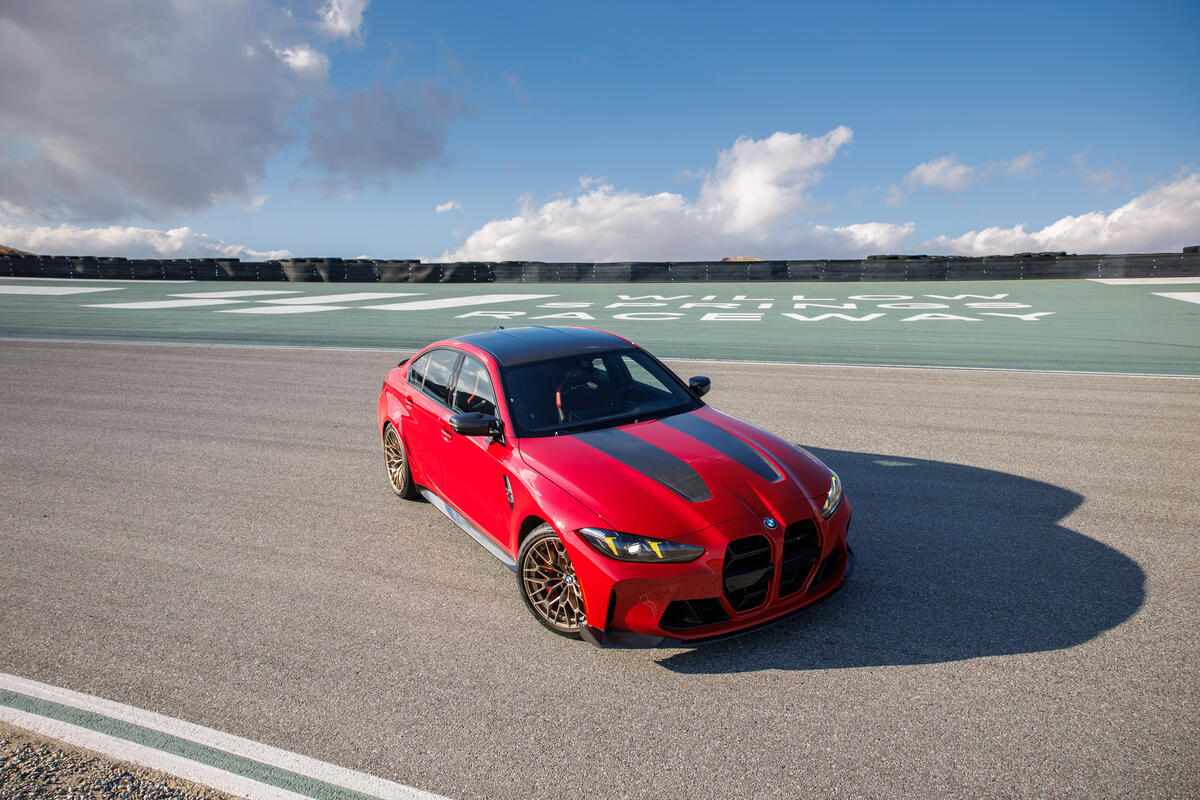
The BMW M3 is a sporty, faster version of a BMW 3 Series. It’s made to handle well and accelerate strongly, not just to look good. People talk about it a lot because it’s designed to be fun to drive.
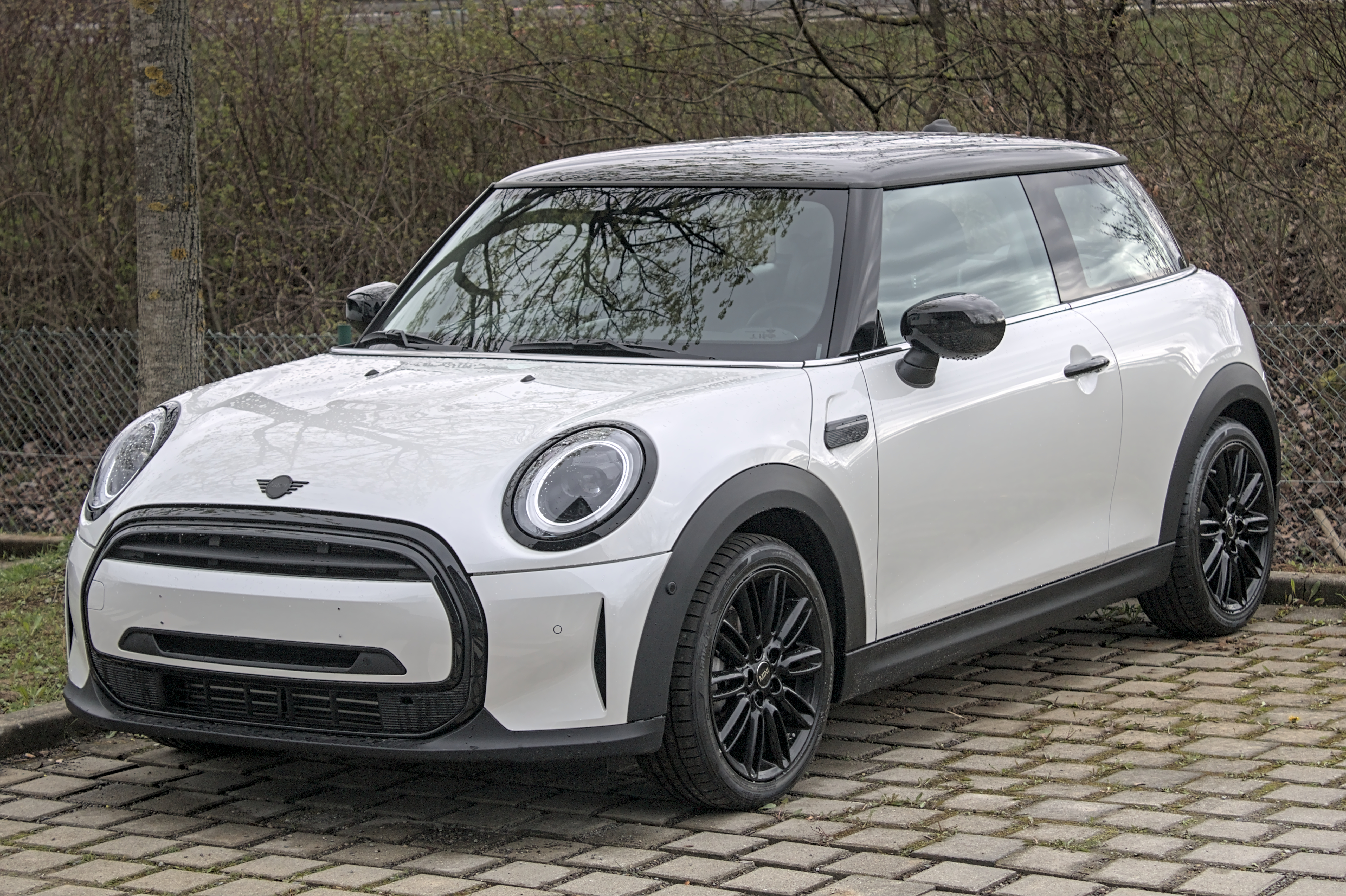
F56 is the generation code for a particular Mini Cooper hatchback. The speaker is saying they currently drive an F56 Cooper and want to compare how it feels versus the newer Mini they’re considering.
Cooper S is the more powerful Mini version of the Cooper. In this discussion, they’re comparing how the newer car feels versus an older Cooper S, including power and whether the safety features are easy to disable.
ADAS is the car’s safety and driver-assist tech, like features that help you stay in your lane or warn you about hazards. They’re asking whether it’s easy to switch those features off if you don’t want the car to intervene.
Term
HP box
They’re talking about a gearbox “mode” called the HP box. It changes how the car shifts—like how quickly it reacts and how fast gears change.
“ZF” refers to ZF Friedrichshafen, a major automotive supplier that makes transmissions and driveline components. Saying it’s an “HP ZF” implies the car uses a ZF gearbox/shift system in an HP (high-performance) configuration.
A “2-litre engine” is an engine with about 2.0 liters of total capacity. Bigger or heavier engines can change how the car feels when you steer and drive.
They’re saying the engine is about 1.5 liters. They’re comparing it to a 2.0-liter engine and saying the smaller engine feels lighter and changes how the car handles.
Term
half triple
This sounds like they’re trying to figure out what kind of engine it is—likely a 1.5-liter three-cylinder (“triple”). It’s probably a quick, slightly confused way of confirming the engine type.
Car
mini
MINI is a brand that makes small cars with a fun, distinctive feel. Here they’re saying the newer MINI still feels high-quality and that some people were skeptical when it first came out.
They mean the car still feels “nice” and well-made even after you’ve had it for a while. It’s basically about how the quality seems to hold up, not just how it feels brand-new.
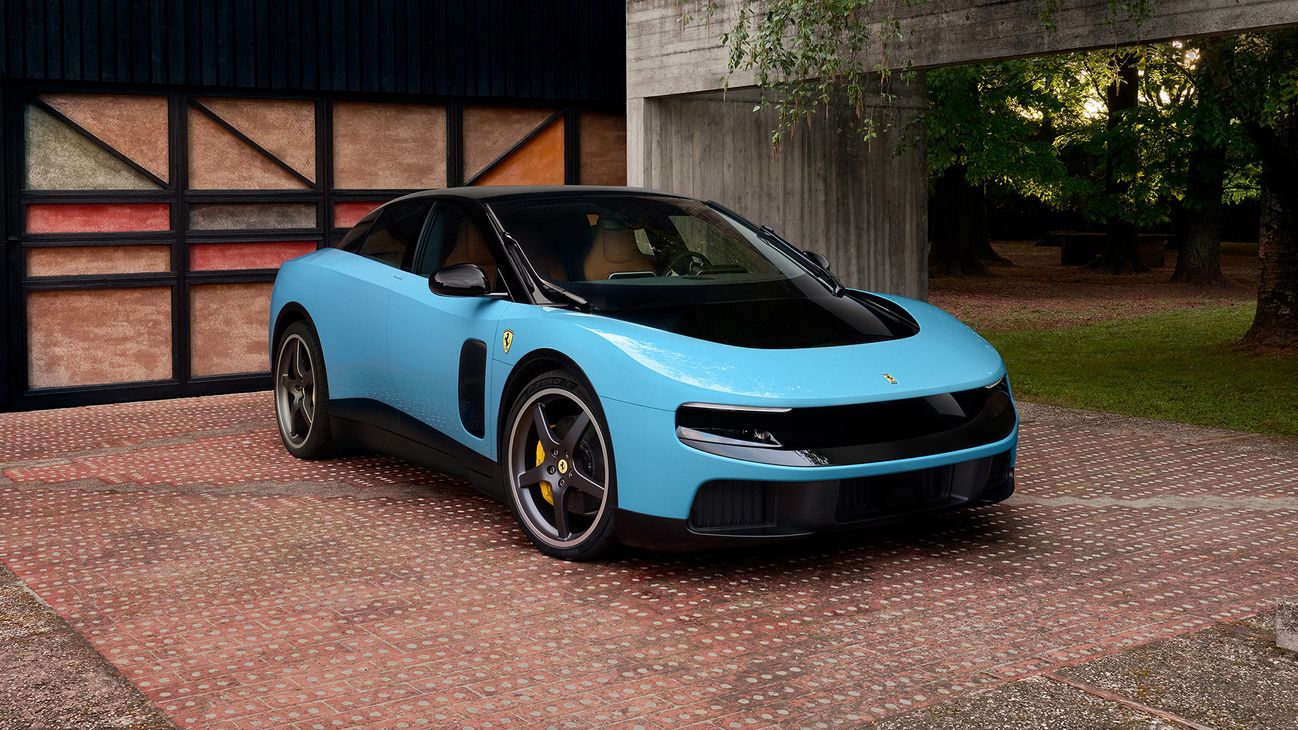
The Ferrari Luce is mentioned as a name in the conversation, but it doesn’t come across as a specific, clearly defined car in the way the other models do. It sounds like it’s being used to talk about an idea or a possible modern Ferrari direction. Without more detail, it’s best treated as a reference to a concept rather than a confirmed, specific vehicle.
A “speedo” is the speedometer, and the “official speedo” is the car’s factory-calibrated reading. The hosts contrast it with what they’d expect from GPS, implying the dash speed can differ slightly from real-world speed due to calibration and tire/rolling-speed assumptions.
Auto wipers are windshield wipers that turn on and change speed automatically when they sense rain. It’s convenient, but you can still get annoyed if the timing feels off.
Term
energy mode
Energy mode is a setting that changes how the car manages power. If the battery is low, the car may limit certain functions to save energy.
This is a camera system that tries to figure out what the driver is doing. If it thinks you’re distracted or not acting as expected, it can trigger alerts.
It’s a safety feature that watches whether you seem distracted while driving. If it thinks you’re not paying attention, it warns you so you can get focused again.
A manual gearbox is the kind where you choose gears yourself. The point here is that on some early Minis, you should be extra careful to make sure the manual gearbox feels right and shifts correctly.
The Alpine A290 is a small hatchback that’s meant to be more fun to drive than a typical compact car. People talk about it because it can feel sporty while still being practical. The podcast mention suggests they’re comparing how loud or quiet it is while driving.
The 5 E-Tech Electric is a small electric car. It’s powered by a battery instead of a traditional engine. The conversation is mainly about how quiet or noisy it feels while driving, which can depend on the tires.
Car
JCB HydroMax
JCB HydroMax is a hydrogen-powered vehicle trying to set a land-speed record. It’s built for Bonneville and uses two big four-cylinder engines, so it sounds and behaves like a very loud, specialized record car rather than a normal road vehicle.
“Hydrogen powered” means the car uses hydrogen as its fuel instead of petrol or diesel. The goal is to turn that hydrogen into energy to make the engine run, including for very high-speed attempts.
Bonneville refers to the Bonneville Salt Flats in Utah, a famous venue for land-speed records. The segment places the HydroMax attempt there, explaining that the target speed (350 miles an hour) is tied to what the engines can produce.
Andy Green is the driver slated to pilot JCB HydroMax at Bonneville for the hydrogen land-speed record attempt. In this segment, he’s also referenced during shakedown testing, including the RPM figure used while running the engines.
A four-cylinder engine has four cylinders that each contribute to producing power. HydroMax is described as using two extremely large four-cylinder engines, and the segment discusses how their combined output and how hard they’re run affects the vehicle’s noise and power.
RAF Wittering is an RAF base used here as a testing location for HydroMax shakedowns. The hosts mention a specific runway length (1.7 miles) to explain why they can run and evaluate the record car before the Bonneville attempt.
A fuel rail is like a pressurized “supply pipe” that feeds fuel to the engine in a controlled way. If the fuel system isn’t delivering at the intended pressure/flow, the engine can’t reach its maximum power.
The crankshaft is the main rotating part inside an engine that turns the engine’s internal motion into usable rotation. They’re saying HydroMax uses a JCB crankshaft, meaning some parts come from existing JCB engineering.
RPM tells you how fast the engine is spinning—basically how “revved up” it is. Higher RPM usually means the engine is working harder, which matters a lot for record-car testing.
Instead of burning hydrogen, a fuel cell turns hydrogen into electricity. That electricity can then run an electric motor, but the system needs special parts to do it.
In a fuel cell, the “stack” is the main set of parts that actually makes electricity from hydrogen. More stack area generally means more power, but it also makes the system more complex.
Green hydrogen is hydrogen made using clean electricity, so it’s intended to be lower-carbon than hydrogen made from fossil fuels. In this idea, it’s used to create a storable fuel.
“Zero fuels” is a name for fuels meant to be very low impact on the climate. The key idea here is making a liquid fuel from hydrogen so you can store it and use it like conventional fuels.
Jet fuel is what airplanes burn. The point being made is that if we want greener aviation, the alternative fuel still has to work with how planes store and use fuel.
Term
greenly
Here, “greenly” means in a cleaner, more environmentally friendly way. The speaker is basically saying: if you can make a cleaner fuel that still works for planes, you’ll do it.
Concept
off-highway agricultural
“Off-highway” refers to vehicles and equipment that operate outside normal public roads—like farm machinery, construction equipment, and some industrial fleets. The phrase is used here to broaden the fuel-transition discussion beyond just cars and passenger vehicles.
An “atmosphere” is a pressure unit—basically Earth’s air pressure. “700 atmospheres” means the system is under pressure far beyond anything you’d see in normal car fuel systems.
This is an early Mercedes-Benz race car prototype. It’s famous because it helped lead to the iconic Gullwing-style 300SL that became a big deal in racing history.
They mention a price of 25 million euros to show how extremely valuable these rare Mercedes race cars are. It’s basically a “this is how collectible it is” moment.
Rudolph Caracciola was a famous racing driver from Germany. Here, he’s mentioned because he drove this Mercedes race car and helped it finish fourth in 1952.
“Carbs” are carburetors—devices that mix fuel with air for the engine. The host is saying this Mercedes uses that older-style setup rather than modern fuel injection.
“H-pattern” describes the way you move the gear lever in a manual transmission. This car has four forward gears, and the host is pointing out how shifting feels, especially for first gear.
Synchros help a manual transmission shift smoothly by matching gear speeds. If first gear has no synchro, it can be harder to shift into and may need more rev-matching.
A “power band” is the range of engine speeds where the car feels strongest. The host is saying this Mercedes pulls well not just at high RPM, but across a big chunk of the rev range.
Siena is a historic city in Tuscany, Italy, and it’s referenced as one of the ancient towns where the event routes can pass through. The host’s point is that the narrow, busy streets make the experience feel chaotic and risky compared with modern road layouts.
Police outriders are motorcycles that escort an event and help clear the route. The host is saying sometimes the escort setup isn’t as organized as it should be.
The Fiat Punto 3 Doors is a small car with three doors, made for everyday driving. It’s the kind of car you might use in busy city traffic. The podcast reference sounds like it’s about what it’s like to drive in normal situations.
Understeer is when the car doesn’t turn as sharply as you want. It usually happens when the front tires lose traction, so the car feels like it’s pushing wide.
A hairpin is a very tight, near-180-degree corner, often found on mountain roads. The host mentions it in a crash context to emphasize how little margin for error there is when speed and grip are limited.
Max Hoffman was an American Mercedes dealer/importer back in the early 1950s. In this story, he encouraged Mercedes to make a car that could appeal to racing fans and U.S. buyers.
The BMW 507 is a rare, classic BMW from the 1950s that enthusiasts love for its looks and character. The host also says they drove one, highlighting how it still feels solid and engaging today.
Mercedes SL is a famous model line from Mercedes-Benz that’s built for fast, comfortable driving. Here, the host is saying Mercedes could sell it in America if they made it much more performance-focused.
Monocoque means the body is built like a strong shell that supports the car, rather than using a separate frame. That kind of structure usually helps the car feel stiff and solid when you drive it hard.
The Mercedes-Benz 300 SLR is a famous Mercedes race car from the 1950s. In this segment, it’s important because the host says the later Uhlenhaut Coupé is based on it, and they talk about its special lightweight construction and racing pedigree.
Car
Ullenhaup Coupe
The Uhlenhaut Coupé is an extremely rare Mercedes-Benz coupe derived from the company’s famous 300 SLR racing car. The host emphasizes how few exist and that one recently sold for a record-breaking price.
The Mille Miglia is a famous long-distance race in Italy. Here, the host is linking it to Mercedes’ 300 SLR and to famous drivers who won around the 1955 era.
Magnesium is a very light metal that race cars use to save weight. The host is saying that in a major crash/fire at Le Mans, magnesium made the fire situation worse because it doesn’t handle water well.
An inline eight is an engine with eight cylinders lined up in a row. The host is pointing out that the Mercedes 300 SLR used this kind of engine for its racing performance.
Horsepower is a number that tells you how strong the engine is. Higher horsepower usually means the car can accelerate more easily, and the host is using it to explain why the car feels quick.
The Jaguar D-Type is a famous race car made by Jaguar. It was built for long-distance racing and high speed. The podcast is connecting it to the XK120 family and emphasizing that it was heavily modified for racing.
The Mille Miglia is a historic Italian road race/regularity-style event that runs on public roads, with cars starting in batches and covering long distances. Because it’s on real roads with spectators and mixed traffic, the hosts discuss how overtakes and crowd behavior can get intense and “hairy.”
Term
M25
The M25 is a big highway around London in the UK. They’re just talking about the route they’d take to get there.
The Ferrari 430 Scuderia is a more performance-focused version of the 430. It’s made to feel more agile and track-ready, with a lighter, tighter setup. It’s often discussed because it’s a more extreme take on the same basic supercar idea.
The Ferrari F430 is a high-performance sports car made by Ferrari. It has its engine behind the driver and is built for fast acceleration and responsive handling. People mention it because it’s a classic, well-known supercar model.
Silverstone is a famous race track in the UK. The host is saying they took a Ferrari there for a track day, which is like a supervised driving event on a real circuit.
A track day is an organized event where drivers take their own cars (or cars provided by an organizer) onto a race circuit for timed practice and coaching. It’s different from racing because the focus is usually learning and safe driving rather than competition.
Shellsley Walsh is a UK hillclimb event. Instead of going around a track, cars go up a hill, and the host notes it was wet—so grip and control are harder.
“Wet” means the road or track surface was damp or slick. When it’s wet, tires don’t grip as well, so it’s easier to lose control and you have to drive more carefully.
The Volkswagen Polo GT is a “hot hatch” version of the Polo—basically a sportier, quicker take on a normal small car. It’s mentioned as an example of the kinds of hot hatches the exhibition covers.
A production car is the normal car version that regular customers can buy. It’s different from a race prototype, which is built mainly for competition.
Term
Melee Amelia
This sounds like the Amelia car event the host is talking about. It’s a big organized car week where people bring their cars and pay to enter, and there’s a lot of event support.
Term
six ish noise
That phrase is basically about how the car sounds—like it has a six-cylinder character. It’s the kind of “feel” people notice when comparing different cars or setups.
“Electrics” just means the car’s electrical stuff, like the wiring and lights. They had a problem so most lights stopped working, and they had to work around it to keep going.
Driving lights are extra lights on the front of a car, separate from the main headlights. They help you see farther ahead, and in this story they’re the only lights that still work after an electrical problem.
Wire wheels are the classic-looking wheels with lots of thin metal spokes. They’re talking about not damaging those wheels while dealing with a lighting problem.
The Jaguar XK120 is an old-school British sports car that’s famous for being fun to drive and having a great sound. Here, they’re saying it’s not just a show car—you can actually enjoy driving it for long days.
Brescia is a city in Italy that the Mille Miglia passes through. The hosts are describing how the event is organized so lots of cars can arrive and move through the finish area in order.
San Marino is a small country inside Italy. They’re saying the Mille Miglia route takes you up into the mountains and through a scenic hilltop village there.
Term
piazzas
A piazza is an Italian town square. It’s the kind of place where people gather, and in this story it’s also where the cars are being routed through.
A motorcycle is a two-wheeled vehicle. The discussion is about how motorcycles and cars handle safety differently, because bikes don’t have the same kind of body structure around the driver.
Armor plating means protective material meant to shield someone from impacts. Here it’s used to compare how cars can be built with more protection around the driver than motorcycles can.
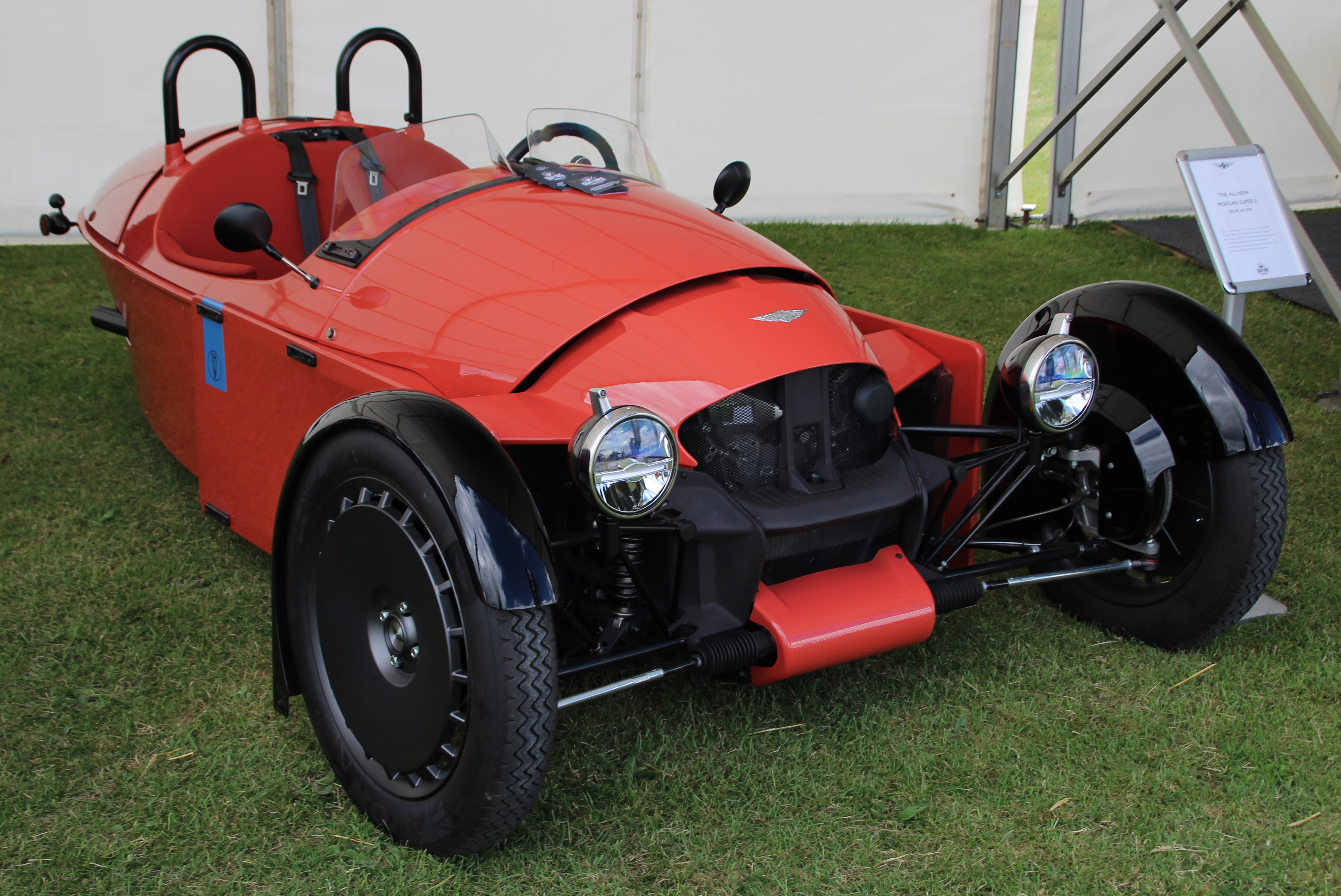
The Morgan Super 3 is a small, sporty car made by Morgan that has three wheels instead of four. With fewer wheels, it can feel different and needs a bit more care than a normal four-wheel car.
box with synchros, except on first. So it dry, unassisted everything, so it drives as you'd,
really as you'd hope the car like that drives. Amazing. Amazing, broad power band because they
can beat it at Le Mans and everywhere else as well. So, you know, four speeds, but from
little over a thousand revs through to 6000 is, it's making power all the way through.
And that's what six grand of what you were allowed to use? Well, I know, I think, because I was driving
with the head of Mercedes-Benz Classic on the Friday, who used to be the head of Mercedes-GB,
Marcus. Yes, Broshford. Yeah, and he's a lovely, really lovely guy. He was going to retire
when Ola Kalanius said, look, actually, would you rather run Mercedes-Benz Classic instead?
And he went, well, yeah, okay. So they've set it up as a proper separate entity, because I think it
risks being a bit forgotten in the Mercedes-Benz Empire that, but they've, but the museum is now
really well looked after and everything else. Wow. But the, the, the later cars,
okay, the car's brilliant. The car's great. The event is great, but a little chaotic.
Yeah. Do you remember? Oh, I remember it. Yeah. I remember it very well. Yeah. But I remember
the thing I remember was being encouraged by the cops to go flat straps through all these
ancient towns. You know, there you are in Siena or somewhere, and you're encouraged to do sort of
70 through the town square. Yeah. They sometimes have police exports and police outriders, but in
this wonderfully Italian way that it's not quite as organized as it should be. There might be two
motorbikes and then you'd have three cars, three classic cars behind it. I think the problem with
these old race cars is they don't like sitting in traffic and a lot of modern Italy has a lot of
static traffic. Yeah. So people try and keep these cars moving, but that isn't universally popular
with everybody who's sitting in traffic at the time. No. And if you're driving your Fiat Punto
hoe and you come round the corner and there's some Swiss dentist plus, is that his daughter or his
wife? Who knows? Coming towards you on your side of the road at 70 miles an hour and they're
expecting you to get out of the way. I could imagine that would cheese you off a bit. Yeah. So it's a
real, it feels a bit airy. And I've seen video clips since. Over Porta Turn decide to get out
of traffic and make a turn right into the path of a traffic officer who rode into the side of it.
I bloke understeer off of a mountain hairpin into the side of a, into the side of a new alpha or
something. And then somebody else, we actually, we saw it as we passed it. Somebody who'd left the
road and ended up upside down in a river in their car as well. So it does feel slightly sketchy.
Yeah. And I don't think all of the Italians love it anymore. Spectators do. They turn out by the
tens of thousands to wave and shout and cheer and everything else. But it does, I think only in
Italy, which is still, which is still running on the road. Am I right in thinking you drove
two different cars then? Yeah. So the next day on the Saturday, I drove a production 300 in the
Gullwing, which came about because the American Mercedes importer in the early 50s was a guy
called Max Hoffman and he saw those racing cars and he said to Mercedes, you've got to build a
production car of that. He also actually influenced BMW to make the 507. Yeah. Gosh. And he said to
Mercedes, look, the Americans have got a lot of money. They're not suffering like Europe still
is. You could sell a car over here if you made that SL into a super sports car. And Mercedes said,
apparently said, okay, we will, if you order a thousand of them. Wow. So he did. And they did.
And that made the production car, which I thought was, and I drove that on Saturday to the finish.
That was great. That's really good. I can see it in John 30's drive on as his daily.
I had to go in John 30's 300 and also in his 507. And they, the thing I remember about the Merc,
and I think it, they would still tell you it was, it was somehow a monocoque double skinned or
something. Right. And it, although I bet there was a frame in there somewhere, but he, it just
felt so rigid. So, so completely modern, modern. Yeah. And the idea that this 71 year old car,
the guy from the museum, Peter, I was driving with on Saturday, it's just giving it everything,
you know, taking it up to the red line and or, you know, up to 6,000 and giving it a lot. And
the idea that this 71 year old car can still cope with that and have such integrity. I thought
it was remarkable. Really remarkable. It is remarkable. So then the Ullenhaup Coupe is based
off of the later 300 SLR, which is the car that Sterling Moss and Dennis Jenkinson won the 55
Millet, me here. Right. So that was a Le Mans car. Yeah. Basically. Yeah. And that was heavily
based on their F1 car at the time. And that was an inline eight with some kind of magnesium based
body. And it was the 55 Le Mans when Pierre Levé had that enormous accident that killed 80 people.
Yeah. And then I think the local firefighters put water on it, but magnesium doesn't respond well
to water and burn flowers. Yeah. And at that point, Mercedes withdrew from motorsport
pretty much for 30 years. And then there were two of the SLRs that were made as coupes. And
they were the Ullenhaup Coupes. Mercedes sold one of those at auction four years ago for 115 million
quid. So that's, and I think that's the most expensive car at a sold auction. Good God. Does
history, I don't suppose that the bloke that bought it would particularly want to
advertise the fact that he did so? No, I think it's said to a private collector. I think the
after because I've been in the, I've been on the internet this morning looking these things up,
and it said private private collector. So it, yeah, I don't know who's got it. But I think
it was not universally popular in Germany at the time because Mercedes owned both of these
coupes and has then sold one. And I think a lot of people were cheased off about it. Yeah. But I
think Mercedes decided it could have done with the money to keep funding its classic program. But
also it has SIDS set up and puts the money into a nonprofit scheme that supports younger engineers,
which is quite a good thing. The thing that I remember about John Serti's car, and it didn't
really apply as much to the 507 or the BMW 507, which felt more like an old car. But it was just
that it was, you know, I remember you probably do as well in the, in the olden days of Mercedes
advertising used to use the same line underneath the image. It would always say engineered like no
other car. Yeah, I do remember that. Yeah. And I was, I've always berated them for dropping engineered
like no other car because that car was so conclusively better than I was around at the time. Yeah.
Yeah. You know, everybody else was, well, you know, that sort of young people were driving
around in the MGTDs and things like that, weren't they? And yeah, God, that really was engineered
like no other car. Yeah. And I can, I mean, you drive around, I think the production one had 240
horsepower, still weighed a little over a tonne. So it's quick enough, makes a great noise, is
comfortable, is nicely finished inside, has got a boot, has got passengers, got a better luggage
space behind. Yeah. As a, as a, as a usable classic when they're a couple of million and
quit each, I think, but as a, you know, in terms of how usable they would be if you owned one.
Yeah. It'd be great. When, when I did it, I did it with Gavin Green, another journalist, and, and
there were lots of 300 SLs, even then, and it was a few years ago and that, and it was because
they were so dependable. Yeah. And quick. You know, everything that passed you was a 300 SL.
What were you, what were you in? I was in the world's greatest, most famous Jaguar XK120.
The, the Nub 120, the Apple Yard, you know, the car that won the Alpine Rally three times,
whatever it was, much modified XK120, quite fast. Yeah. You know, D-type bits in the engine and
all that, and balanced. They didn't, you know, they, they were pretty terrible for brakes and
handling, but not this one. That was great, but it was, you know, that 300 SLs were, were
these sort of massively quicker than us. Yeah. Would you do it again? I had my doubts about
it as well, because I had the rather horrible experience of seeing a couple of, you know,
on the, on the second day, on the, on the end day, all the local motorbikers come out and compete with
you. Oh. And we, at least that's what happened to us. And we, we saw several people kind of
stretched out on the road and they were, you know, they looked as though they weren't going to move
anymore. And it's, it's, it's pretty hairy, but you, it's, it's such a sort of expression of the,
the old days of Italy, Italian motorsport, that you're kind of reluctant to say, well, ban it,
you know. Yeah, yeah, yeah. So I don't know. Yeah. But people, people, I think the spectator cars are,
to some extent, driven to excess. I mean, God knows the competing cars are driven to excess,
as well as some of the people that go past you.
It's the, yeah, it's some of the overtakes with the expectation that, you know, well,
we're doing this, so you'll get out of the way. Yeah. Surely you'll get out of the way. It's just,
and, you know, quite rightly, you see some people who are absolutely furious about it. And some other
people who are gesticulating wildly because they love it. And it's funny how quickly you get to
see, you get to, you know, you know the difference between one and the other, depending on how they're
shouting and waving and everything else. Absolutely, yeah. Yeah. Do you just take the M25 here?
Yeah, just M25 and M3. Okay. So, but it was amazing. I also did it with, do you remember
Stan Papiore, our photographer? He and I did it together in what was my long-termer at the time,
which was a Ferrari 430. Oh, really? And the Ferrari, I don't know if they still do it.
I think they do. They do a Trafeo or something, don't they? Where they, a Tributo, they do a,
they run a Ferrari class at the start. Yeah, you start off two hours ahead. Yeah. Well,
that was the way it was for us. And so you clear out of the way of the, because your cars are quick,
they clear out of the way of the older cars that are coming soon. Yeah. But we, you still get to
drive on those lovely roads. And the car, of course, was, I mean, an F430, it's a few years old now,
probably 15 or something, but it's still a considerable amount. That was a joy, wasn't it?
But that was great. Oh, was that the grey one? It was red, I think. Geez, I'm not sure. It might have
been, or was it some sort of purple colour? I don't know. It's just, I thought we had one at some
point that I took to a track day at Silverstone, a Ferrari owner's club track day at Silverstone.
But maybe that was a used, maybe it was a used F430 that we had for a short time. Yeah. I had quite
a good time in it anyway. Good car. Good car. Great car. Yeah, really good car. I remember taking
one to Press 2, Shellsley Walsh one time, and it was wet. And some bloke in a, in an old car, vintage
car, and gone up there and basically dropped oil all the way. And I was completely spooked because I,
because I just didn't have the bottle to commit this car at all, because I could imagine
sticking the nose under the armoire and then ringing up the Ferrari blokes and saying,
yeah, it's under the armoire. Sorry, yeah. Oh dear. Yeah. But we're over, well over halfway,
let's take a short break just to tell you this part is sponsored by Anderson, visit Anderson
dash EV.com to see their full range of charges. And that we both recommend the Auto Car Archive to
you, which is at the magazine show dot com. And I've been in it a little bit this week to look up
some stuff. We've done a lot of, a lot of research in the archive. I've been working with people from
British Motor Museum because I've got a new exhibition that's about to own a open, which is
called spoiler alert. And it's all about the history of the hot hatchback. Oh, I like that.
And there's a whole, there's a whole exhibition of them and, you know, everything from a sort
of Polo GT to a Metro 6R4. Oh, super. And so, you know, in order to inform the
storyboards that you need for things like this, we've been making extensive use of the Auto
Car Archive because every single one of these cars has been road tested by us. Yeah. So when does that?
I think it opens, there's an opening literally tomorrow. So last Friday,
last Friday, it's already, according to you. And I think you can go there now.
Super. And it is good. It's just such a nice idea. They've got these two
female curators. I mean, the header collections is a bloke called Stephen Lang that you know,
but there are these two other women that aren't as well known, but they've got this
fantastically cheery way of doing things. And this is such a joyous
exhibition. It's really nice. So it's really good. I was just being, I was wandering around
before I came to your Gaff. Yeah. Oh, I look forward to that very much.
If you could just, just sorry to complete the meal Amelia. Yeah. So you drove different car
each day. Different car each day. Two things. How did they differ?
Oh, well, the road was one much better than the others. They're sufficiently different, I would
say. The race car, the prototype feels, it feels a little bit smaller. I don't think it's that much
smaller, but it feels it and looks it even when you see the two next to each other. But I think
when I looked at the stats earlier, it suggested that the production car is about a foot longer,
but most of that is in the bumpers. Right. So actually when you see one big bumpers,
yeah, they've got big chrome bumpers on, but they had, they had one out there because Mercedes was
entering three of its own cars. Plus also Mercedes classic, if you go to them and say, look, will
you, I've got, I've got a gullwing when you look after it for me on the Melee Amelia, they'll,
they will. Oh, right. And they have mechanics working three shifts.
So they've got blokes working all night overnight at hotels to make sure they're still in decent
nick and stuff like that. Love to be in that bracket. Yeah. But it costs about,
Mercedes will charge you about 23 grand for that. But that's, you know, your hotels and looking after
and everything else. And they look after you really well. And then the rest of the Melee Amelia
fees, by the time you've got there and paid to enter your car and everything else, it's probably,
it's probably a 50 grand week, which is quite a lot for a week. But it is doing something that not
many people get to do. Yeah. And, and, and it is a special experience, a special experience in
your own car. Oh, for sure. The road car is more civilized, but makes a, and rides better, but
makes it, I thought actually made a nicer noise, makes a proper six ish noise, whereas the race
car's a bit gruff, just spits out the side exhaust. So it's quite loud. Yeah. The road car's less
tiring, you know, compared to the race car, it feels like a, a bit like a limo, you know, you could,
you could certainly drive it for five days and come out having had a nice time. Whereas I think
if you spent five days in the race car, you'd be, you might be quite tired at the end of it.
I suppose so. They're long days as well, aren't they? They're like 12 hour days in the car.
So, yeah. Because you go a long way, there's all these adventures, aren't there always? We had a
problem with the electrics in the XK and we finished up with one drive. It had regular headlights
and a pair of driving lights and everything went out except for one driving light, which we,
it was a right-handed car in a left-handed country. Yeah. So we just pointed the,
the driving light at the curb, you know, where we're a curb. You could see where the edge of the
road was. So it was not to kind of nerf the wire wheels on a kind of curb. But it, I mean, we,
we finished, but we didn't cover ourselves in distinction, but the, but it was a hell of an
adventure. Yeah. Made me love the XK120, but the trouble is I then drove another one, which
was deeply inferior compared with the Apple guys. Oh, really? Yeah. You know, less poked,
terrible steering, no brakes, all the old 50s sports cars, probably. Yeah.
Yeah. And yes, it's just, they're just really nice cars. Oh, they are. You can drive it. You're
an idiot to complain as well, aren't you? So what, so you've crossed the finish line and all that
and everybody cheered? Yeah, you go up to the finish. Everybody, I mean, the thing is they've
got 400 cars to get through the finish line one at a time. So, you know, they're driven up onto
the plinth and then driven down the other side. So, so you drive into Brescia, stop, wait, and then,
you know, probably push the cars a bit in that, in the, in the run up to it, because otherwise
you'll sit in there for a long, you know, sit, you'll, you know, takes a while for everybody to
get through. Yeah. But it's really, it feels, you know, it feels very special as people shout
a cheer. You drove up to San Marino and through this really hilltop, mountain top village up there,
which is, you don't get to do that stuff. Oh, with all the skinny little rows here. And across these,
you know, in various cities, you'll drive across these little piazzas and things like that. And
you think, people don't drive these, people don't get to do this. No. It's, so it's, I can absolutely
see why. No, it was amazing. Yeah, God. Well, when we did the Ferrari one, the, the, the Tributo,
the thing that you're talking about, we were, because we were traveling ahead of the main field,
we all arrived in a clump in Rome. And there was this kind of raised dais thing that Italians are
good at, you know, every car drives up onto a raised bit and surrounded by people. And we're
all individually greeted by Luca Montesemolo. And, and within sight, this is a bit of a big
piazza, but, but within sight were these, were these lines of the very people you were talking
about with, who were trying to get home in their fiert punto. Yeah. Fuming. And there's, there's,
there's, there's all this tooting going on. I mean, Montesemolo said something or other to us,
but I wouldn't know what it was because there were too many fiert's drowning out. Yeah, it is. Yeah.
I mean, it's a wild event. I don't, I just, I mean, I hope it carries on. It's not like the TT. If
you designed it today, nobody would let you do it. No. You know, but because it's been going for
a significant amount of time. Watch all that bloke saw us at first, did he? No, he,
yeah, somebody now. Oh, he's having a moment. That's fine. He's got his hazards on. Oh, something's
gone wrong. Yeah. It's about conch. Oh, yes. Yeah. The truck is pulled from lane
three onto the arch holder as we, as we pass. What was I saying?
There's a couple of things I might pick up. The TT and so on. You were talking about that.
Yeah. If you, if you invented it today, they wouldn't let it happen. Yeah. Surely. And
but that's, there's so many things like that, aren't they? We, you know, we talk about the,
the actual concept of the motorcycle, you know, given all the strappings in and armor plating and
pieces of, there it goes again, me, attention spans gone wrong. You know, all the, all the,
all the ways that you're cost-cited for safety reasons in a car, just completely absent in a
motorbike. Yeah. You know, I can't imagine the, the authorities allowing them, but
no, unfortunately, it was from the motorcycle that the car sprang. Yeah. Yeah. I read a comment on,
because my column about buying a Morgan Super 3 went online the other day. And, or
something about it went online the other day. And there was a comment on one of the social things
about how dangerous a three-wheel vehicle was and you, you know, should buy one. I should be
careful. And I was just thinking, I'm not sure they had that. I mean, you have to be a bit more
careful than a four-wheeled vehicle, but they're not. They weren't the death threats that it was
being made out to be by, by somebody online. Well, you've got the seat of the parents, haven't you?
You've got a, you've got, you know, you're, God knows, you've got a, your own powers of discernment,
surely you've got. I tell you what, that column and the reaction to it was, was a lovely thing.
Because did you, did you notice how we got so much mail, just all these warm
comments from people saying, well done Matthew. Yes. Yeah. I am pleased. I must say it's,
but I mean, the thing that's so nice about auto car readers is that they're pleased for you. You
know, there isn't a bunch of people wondering why they haven't got one. They just, they just
want you to enjoy it. I thought it was so, it was, made me want to, you know, sign up and do it again.
Yeah. Thanks for listening. This spot is brought to you in association with our sponsor Anderson,
visit Anderson-Evy.com to see their range of premium design focused electric car chargers.
Price is starting from 695 pounds. Steve and I are off to record another one because our diaries
aren't mixing very easily over the next couple of weeks and we'll be back.
I might be back with a Q and A or something interview next weekend, but if not, Steve and I
will be back next Wednesday. So we'll see you then. Cheers mate. Cheers all the way.
About this episode
The Autocar podcast swings from tech to classics: the hosts explain how the Leap Motor C10’s range extender generates electricity for the electrics, then compare MINI generations—156 horsepower, gearbox “box” modes, and whether ADAS is easy to switch off. They also cover camera-based driver monitoring, high-mileage expectations, and a hydrogen land-speed push with JCB HydroMax, including 700 bar delivery pressure. The rest of the week is packed with Mille Miglia chaos, Mercedes rarity, and driving fixes like aiming a single XK light at the curb.
In this week's My Week In Cars Steve Cropley and Matt Prior find themselves in a Leapmotor C10 on the way to the office. And during it the pod they talk this car, plus lots more: Steve's new Mini, the Mille Miglia, the JCB Hydromax land speed record car, and other things besides.
The pair also have your letters and chat the archive. For details of a special offer which gives you SIX issues of Autocar for just £6, click here.