Fuel economy myths can cost drivers significantly, and this episode dives into the top five misconceptions that lead to wasted money at the pump. Host Niall Monermouth Jenkins shares insights from his extensive experience, emphasizing the importance of driving habits and vehicle maintenance. Listeners will learn how factors like stop-and-start driving, city versus highway travel, and fuel choices impact overall efficiency. With a blend of humor and practical advice, Jenkins aims to help drivers reclaim their fuel budget and make informed decisions.
4) How driving habits matter more than most modifications
5) Why short trips quietly destroy fuel efficiency
This isn't internet theory - it's real-world experience from the shop floor.
If you want your vehicle to last longer and cost less to operate, this episode is a must-listen
"MPG doesn't matter if the engine doesn't last"
Motormouth Morning Drive- real advice for owner-operators, commuters, and anyone tired of wasting money at the pump.
More episodes and ...project details & links available at Car Connection Business Network.com (ccbusnet.com) you'll find everything on our home page if you'd like to follow the build /repair work we do in the shop daily, Connect with our program partners just click their logo and connect Thank You! Grab some merch proceeds going to Total Freedom Addiction Campuses Canada & USA, helping those struggling with addiction get set free! Happy Healthy Motoring Friends, Tnx for watching & Listening, Nile Motormouth Jenkins Peace, Patience, Kindness Always. NMJ
"Whether it's a 25-year-old Jeep Wrangler getting a second chance at life, or a Nissan Road getting its brakes back in order, or a mystery leak that's got everyone scratching their heads."
The Jeep Wrangler is a tough vehicle that can handle rough terrain and is often used for off-roading. Many people love it for its ability to go on adventures and customize it to their liking.
The Jeep Wrangler is a compact and mid-size four-wheel drive off-road vehicle known for its rugged design and off-road capabilities. It's popular among outdoor enthusiasts and has a strong following due to its versatility and customization options.
"...or a Nissan Rogue getting its brakes back in order, or a mystery leak that's got everyone scratching their heads."
The Nissan Rogue is a small SUV that is great for families and everyday use. It has a lot of space for passengers and cargo, making it a popular choice for many drivers.
The Nissan Rogue is a compact crossover SUV that offers a comfortable ride, ample cargo space, and a range of modern technology features. It's designed for families and individuals looking for practicality and efficiency.
"...to in order to be able to write my diesel endorsement for diesels, big rigors, you know, 18 wheelers."
A diesel endorsement is a special license that lets drivers operate vehicles that run on diesel fuel, like big trucks. To get this, drivers usually have to take a test.
A diesel endorsement is an additional certification that allows a driver to operate vehicles powered by diesel engines, such as trucks and buses. This endorsement typically requires passing a written test and sometimes a driving test specific to diesel vehicles.
"...for diesels, big rigors, you know, 18 wheelers."
'18 wheelers' are big trucks that have 18 wheels in total. They are used to carry heavy loads across long distances and are often seen on highways.
'18 wheelers' is a colloquial term for large trucks that have a total of 18 wheels, typically used for transporting freight. These trucks are often referred to as semi-trucks or tractor-trailers and are a common sight on highways.
"...even though I was in the 07 FJ Cruiser, I felt like an aunt a lot of the times."
The Toyota FJ Cruiser is a tough SUV designed for off-road driving. It has a unique look and is built to handle rough terrains, making it popular among adventure seekers.
The Toyota FJ Cruiser is a retro-styled SUV known for its off-road capabilities and distinctive design. It features a rugged body and is built on a truck platform, making it suitable for both urban and off-road environments.
"...did that whole trip in an 07 four-wheel drive. Yes, it's four-wheel drive, not two-wheel drive."
Four-wheel drive means that power goes to all four wheels of the vehicle, which helps it grip the road better, especially in tough conditions like snow or mud. It’s different from two-wheel drive, where only the front or back wheels get power.
Four-wheel drive (4WD) is a drivetrain configuration that allows all four wheels of a vehicle to receive power from the engine simultaneously. This setup is beneficial for off-road driving and provides better traction in challenging conditions such as snow, mud, or rocky terrain.
Parts departments are parts of car dealerships where you can buy replacement parts for your vehicle. They help you get the pieces you need if something breaks or needs to be replaced.
Parts departments are sections within dealerships that sell replacement parts and accessories for vehicles. They play a crucial role in maintaining vehicles after the initial sale, ensuring that owners can obtain the necessary components for repairs and maintenance.
"...Why do they give you factory warranty and have parts departments? Because they know it breaks down."
A factory warranty is a promise from the car maker that they'll fix certain problems for free if they happen within a specific time or distance. It helps protect you from unexpected repair costs right after buying the car.
A factory warranty is a guarantee provided by the manufacturer that covers certain repairs and defects for a specified period or mileage. It ensures that any issues arising from manufacturing defects will be addressed at no cost to the owner during the warranty period.
"...But after the warranty's over, who's paying? And what items aren't covered by warranty?"
Warranty coverage means the things that the car maker promises to fix for free if they break. It's important to know what is included because some common parts like tires and brakes might not be covered.
Warranty coverage refers to the specific items and repairs that are included under a warranty agreement. It is important to understand what is covered and what is not, as many common maintenance items like tires and brakes may not be included.
"...just a few. Tires, brakes, exhaust, fluids, belts, hoses,"
Fluids are the liquids that help your car run smoothly, like oil and coolant. Keeping these topped up and in good condition is important for your car's health.
Fluids in a vehicle include essential substances like engine oil, coolant, brake fluid, and transmission fluid. Regular maintenance of these fluids is crucial for the proper functioning and longevity of the vehicle.
"...just a few. Tires, brakes, exhaust, fluids, belts, hoses,"
Belts are parts in your car that help move things like the engine and air conditioning. They need to be checked and replaced sometimes to keep everything working well.
Belts in a vehicle, such as the timing belt and serpentine belt, are crucial components that drive various engine accessories. Regular inspection and replacement are necessary to prevent engine damage and ensure proper operation.
"...just a few. Tires, brakes, exhaust, fluids, belts, hoses,"
Hoses are tubes in your car that carry liquids like coolant and oil. They can get old and break, so it's important to check them regularly.
Hoses in a vehicle are flexible tubes that carry fluids to various parts of the engine and cooling system. They can wear out over time and may need replacement to prevent leaks and overheating.
"...Tyrant ends, ball joints, lower control arms, pushings, not covered. Unless you have a bumper to bumper coverage..."
Ball joints are parts of the car's suspension that help the wheels move up and down while allowing the car to steer. They are important for keeping the ride smooth and the car stable.
Ball joints are crucial components of a vehicle's suspension system, allowing for smooth movement and articulation between the steering knuckle and the control arms. They help maintain proper alignment and handling of the vehicle.
"...Tyrant ends, ball joints, lower control arms, pushings, not covered. Unless you have a bumper to bumper coverage..."
Lower control arms are parts of the car's suspension that help connect the wheels to the body of the car. They help the wheels move properly and keep the car stable while driving.
Lower control arms are suspension components that connect the vehicle's chassis to the wheels. They play a key role in maintaining wheel alignment and stability during driving.
"...Unless you have a bumper to bumper coverage, that stuff's not covered. And here, I'll give you another big clue this morning..."
Bumper to bumper coverage is a type of car warranty that protects almost everything in the car, except for things that wear out over time. It helps cover repairs if something goes wrong with the car.
Bumper to bumper coverage refers to a type of vehicle warranty that covers most parts of the car, excluding certain components like wear-and-tear items. It provides comprehensive protection against defects and failures.
"...why modern engines don't last like they used to, turbo engines. You got a turbo engine? You're gonna want to listen up for that one, friends, because turbos are nice."
A turbo engine is one that has a special device called a turbocharger. This device helps the engine produce more power without making it bigger, which can save fuel and improve performance. However, it needs to be taken care of to work well.
A turbo engine uses a turbocharger to force more air into the combustion chamber, allowing for more fuel to be burned and increasing power output without significantly increasing engine size. This technology enhances performance and fuel efficiency but requires proper maintenance to avoid issues.
"I look at my RPM gauge and it'll tell me basically exactly where I am on the speed."
An RPM gauge shows how fast the engine is spinning. It helps you know when to change gears to keep the car running smoothly.
An RPM gauge, or tachometer, measures the engine's revolutions per minute. It helps drivers understand how hard the engine is working and can be used to optimize performance by shifting gears at the right time.
A tachometer is a tool that tells you how fast the engine is turning. It helps drivers know when to change gears for better performance.
A tachometer is a device that measures the rotational speed of an engine. It's crucial for performance driving, as it indicates when to shift gears for optimal power and efficiency.
"...I made it all the way to London from Fort Erie and back on $80 worth of fuel."
Fuel efficiency is how far a car can go on a certain amount of gas. Better fuel efficiency means you spend less money on fuel for the same distance.
Fuel efficiency refers to how effectively a vehicle uses fuel to travel a certain distance, often measured in miles per gallon (MPG). Higher fuel efficiency means less fuel is consumed for the same distance, which is economical for drivers.
"That tire blows, you're a goner. That tire will blow you completely sideways."
A tire blowout is when a tire suddenly bursts, causing the car to lose control. It can happen for several reasons, like if the tire is too old or damaged.
A tire blowout is a sudden loss of air pressure in a tire, which can lead to loss of control of the vehicle. This can happen due to various reasons, including over-inflation, under-inflation, or damage to the tire.
"It'll roll your car over instantly while you're going highway speeds. What do you think that's gonna look like?"
Highway speeds are the fast speeds you drive on highways, usually between 55 and 75 miles per hour. It's important to be careful at these speeds because it can be harder to control the car if something goes wrong.
Highway speeds refer to the higher speed limits typically found on highways, which can range from 55 to 75 mph (or higher) depending on the region. Driving at these speeds requires more attention and control, especially in case of emergencies.
"no fuel economy at all, it's gone. That means you're sucking fuel like a shop vac."
Fuel economy tells you how far your car can go on a certain amount of gas. If it's low, your car uses a lot of fuel for the distance it travels.
Fuel economy refers to how efficiently a vehicle uses fuel, typically measured in miles per gallon (MPG). Poor fuel economy means the vehicle consumes more fuel for the same distance traveled, which can be influenced by various factors including engine performance and driving conditions.
"the thermostat and the cooling system's working so hard to maintain 195 degrees Fahrenheit so the engine is running at normal operating temperature."
Operating temperature is the best temperature for your car's engine to work well. Most engines run best around 195 degrees Fahrenheit.
Operating temperature is the ideal temperature range at which an engine runs efficiently. For most vehicles, this is typically around 195 degrees Fahrenheit, which helps ensure optimal performance and fuel efficiency.
"...Number five, regular gas versus premium. Now here, we talked about this a little bit..."
Regular gas is the standard type of gasoline that most cars use. It's usually cheaper but may not be the best choice for high-performance cars.
Regular gas is the most commonly used type of gasoline, typically with a lower octane rating than premium fuel. It is suitable for most vehicles but may not provide optimal performance for high-performance engines.
"...the deal is butane, not butane, sorry, BTUs, British thermal units. That's how you measure the kaboom in the engine."
BTUs are a way to measure how much energy fuel can produce when burned. It's important for understanding how powerful different fuels can be for engines.
BTUs, or British Thermal Units, are a measure of heat energy. In the context of engines, they indicate the energy content of fuel and its potential to produce power.
"...because the octane level's higher. It's as simple as that."
The octane level of fuel tells you how well it can handle pressure in the engine without causing problems. Higher numbers mean better performance for some engines.
Octane level refers to the fuel's ability to resist knocking or pinging during combustion. Higher octane fuels can withstand more pressure before igniting, which can lead to better engine performance.
"...you're gonna get a bigger boom on premium fuel than your regular fuel because the octane level's higher."
Premium fuel is a type of gasoline that has a higher octane rating. It's better for some cars that need more power and performance.
Premium fuel typically has a higher octane rating compared to regular fuel, which can improve performance in high-compression engines. It is often recommended for sports cars and luxury vehicles.
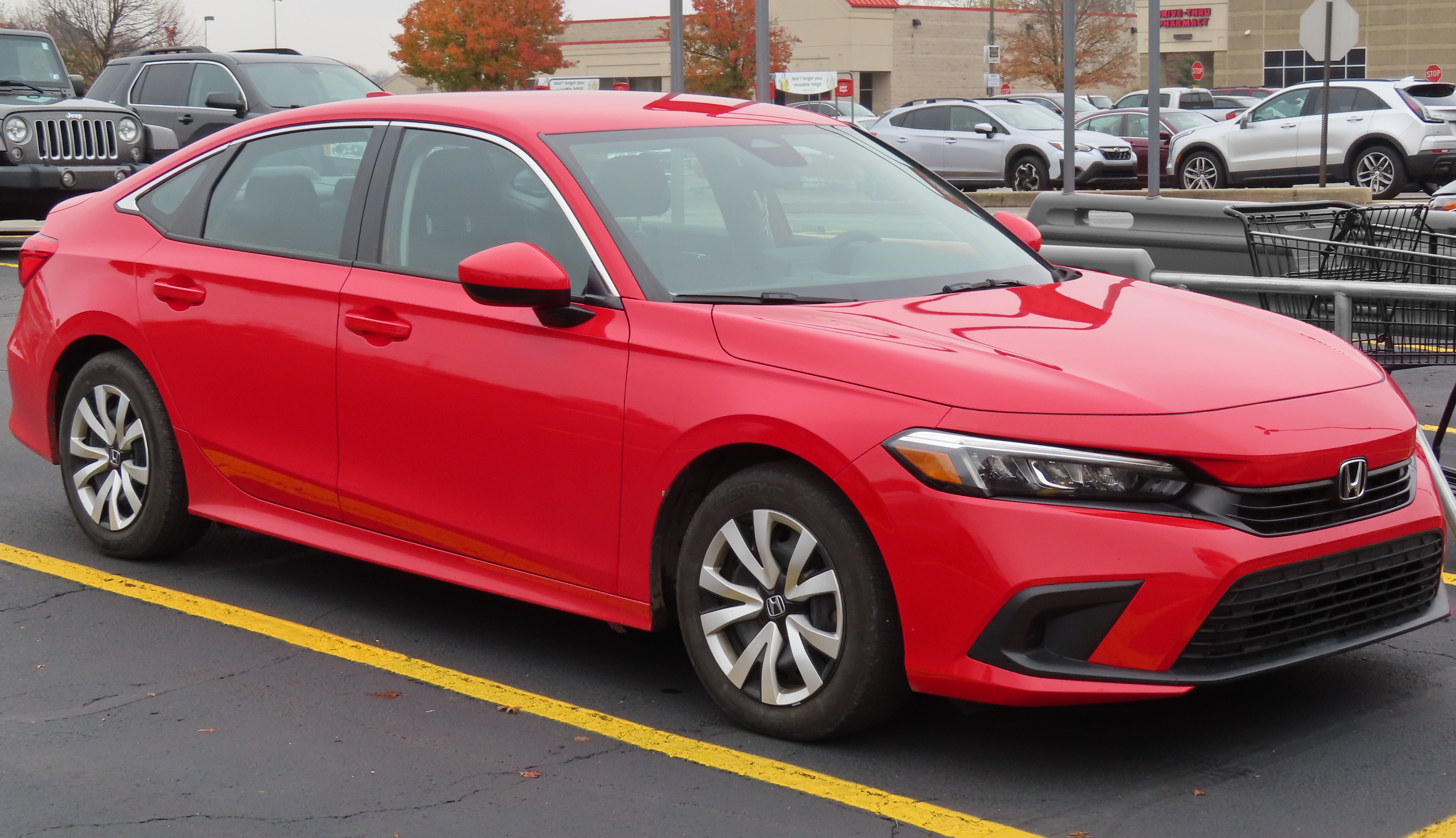
The Honda Civic DX is a type of car made by Honda. The 1999 model is known for being reliable and good on gas, making it a popular choice for many drivers.
The Honda Civic DX is a variant of the popular Honda Civic, known for its reliability and fuel efficiency. The 1999 model is part of the sixth generation of Civics, which is appreciated for its compact size and practicality.
"First one is with the, what do they call it, CVT? Yeah, transmission. You gotta know and understand that puppy because it'll bite you big time."
A CVT is a special kind of car transmission that helps the engine run more smoothly and efficiently. It can change gears without the usual steps, which can make driving feel smoother.
A CVT, or continuously variable transmission, is a type of automatic transmission that can change seamlessly through a continuous range of effective gear ratios. This allows for smoother acceleration and improved fuel efficiency compared to traditional automatic transmissions.
Select text to request an explanation
Good morning, folks.
You're tuned in to Car Connection
where the coffee's strong, the stories are real,
and the wrenches, the wrenches, and the wrenches,
they never stop turning.
I'm your host, Niall Monermouth Jenkins,
coming to you from the Car Connection Workshop,
where the smell of fresh oil and a little elbow grease
is all part of a balanced breakfast.
Around here, we don't just talk cars, we live them.
Whether it's a 25-year-old Jeep Wrangler
getting a second chance at life,
or a Nissan Road getting its brakes back in order,
or a mystery leak that's got everyone scratching their heads.
This is where we roll up our sleeves and get it done,
with a little wit, a little wisdom,
and a whole lot of fun.
The Car Connection Workshop isn't just about
nuts, bolts, and diagnostics, it's about connection.
Connection to our vehicles, to the people who drive them,
and to the community that keeps Niagara rolling.
Because when you fix a car, you're not just turning a wrench.
You're restoring someone's confidence, freedom,
and maybe even their sanity.
We're here every week for you,
for our MotorMouth 8 a.m. Morning Drive,
Monday through Saturday, helping you keep your ride safe,
reliable, and ready for whatever road lies ahead.
So whether you're a weekend wrencher,
a daily commuter, or someone who just wants to understand
what that strange rattle really means,
welcome aboard, and stick around for shop talk,
expert advice, a few good laughs, and maybe a story or two.
So let's shift gears this morning.
I have a lot of information to share with you.
We're gonna continue on our fuel series for a little bit,
because it is going to eventually tie in just right
with the fuel savings 30 day challenge, back to back,
and how that can put minimum $100 a month back
in your wallet per vehicle, per household.
I think my muffins are ready.
I think that's what that is.
Yeah, muffins are ready.
Well, I'm a little tied up right now,
so they're just gonna have to wait.
That's all I can tell you, they're gonna have to wait.
So let's jump in.
So put that on your calendar,
the 30 day fuel savings challenge,
30 days back to back, and you'll have homework
that you have to do, but I will be your coach
and your cheerleader.
But if at very minimum, per vehicle in your home,
you could put $100 back in your wallet,
would that be of interest to you?
So in other words, that would be $1,200 a year
getting a raise, perhaps, maybe?
Maybe your boss gonna call you out and go,
you know, I've been keeping an eye on you,
like you are a valuable team player,
so because of that, giving you a $1,200 a year raise,
$100 a month, would that get you excited?
Well, I'll tell you what, if I lost 20 bucks in the driveway,
I would trip you getting there to find it, absolutely.
So welcome aboard this morning, if you're driving,
thank you for letting me into your space.
If you're just heading through the drive-through,
well, we have a routine here in the car connection workshop.
We can't fit you all in, but we could have a few laughs
certainly trying, that's for sure.
Is we raise our favorite morning beverage,
we count it down three, two, one,
and we share a swiggy together from your own cup, of course.
You got your car connection,
limited edition coffee mug yet?
No?
You might wanna find out how you can do that.
All right, you ready?
Three, two, one.
There's a little extra something, something in there.
I got a floaty.
What the heck?
Well, it's a coffee that you can also eat
at the same time, perhaps.
I shouldn't announce that too loud,
shouldn't I?
Everybody's gonna want a floaty in their coffee.
All right, this morning, top five myths, not myths.
Top five myths about fuel, economy, costing drivers money.
I'm trying to line you up for the springtime,
because that winter, well, you'll hear me talk about that.
In winter, it's tough, tough to get fuel economy,
but there still is hope.
And if you listen up, babies, you will pull some back.
You'll claw some fuel economy back,
but it's entirely upon yourself.
The car, whatever vehicle it is you're driving,
can't do it on its own.
It's driver responsibility.
So putting more money back in your wallet is of interest.
You wanna save money on your vehicle repairs
and maintenance, then guess what?
You're on the right podcast and the right network,
car connection network.
We have our YouTube channel, Facebook, Instagram,
Stephensvilleontheweb.ca.
We have a wonderful business profile there
that the host of that website happens to be my videographer.
Thank you very much.
Put us up a great profile page there,
and that's where she puts bloopers, outtakes, reels
on Instagram and on Facebook, little short videos
you won't find or see anywhere else.
That's where you'll find the iHeart link as well.
Just click on there, take you right in.
Remember that we are on all podcasting platforms.
So wherever you pull your podcast from,
type in the search bar, car connection workshop,
you'll find us.
We're on all the majors, Spotify, Amazon, Apple,
and of course iHeart Monday through Saturday,
8 a.m. for the morning motormouth drive,
motormouth morning, nevermind.
Let's just press on.
So if you're just scooting through the drive through,
double check your order, lock it down in your cup holder,
keep an eye on the other guy,
and at least one eye on the road for sure
is we get driving this morning.
How many out there getting involved
in some of those whiteouts?
Aren't they lovely?
Yes, I was on the road yesterday,
was a very long day, 18 hours from Fort Erie to London,
downtown London, Ontario, and all the way back.
Yeah, I think my butt will, should arrive soon
by 10 o'clock this morning,
I think to hear a little tapping on the door.
Yeah, a little bum-itis by the time I got back.
The weather was great going up,
a little blowing and drifting on the way back,
but still clear skies, but you know what, lots of traffic.
Man, I don't know how people do that.
I don't know how you guys do that every day,
but I say that and I did it every day
when I was commuting into downtown Toronto,
Queensway and Kipling area.
I was working for Mack Trucks of Canada
towards my 310T truck and coach diesel license.
So I had to lead the automotive world,
light truck and passenger vehicles and work 1670 man hours
on trucks, heavy duty trucks, motor coaches, all that gear
to in order to be able to write my diesel endorsement
for diesels, big rigors, you know, 18 wheelers.
So I do, I have my 310T with a diesel endorsement.
So yeah, lots of trucks on the highway yesterday,
even though I was in the 07 FJ Cruiser,
I felt like an aunt a lot of the times.
You know, these trucks come up beside you
and yeah, I stay in the outside lane, you know,
I'm cool with driving just a tad over the speed limit.
Yep, I am that fella, but I say all that to say this.
And you can do the math.
So I'll, for all you human abacuses out there,
here I give you some homework.
Okay, I left from Fort Erie, went all the way
to Wellington Street in London, Ontario, Canada
and back, same day, I know.
Imagine if that was horse and buggy.
And I don't think it'd be the same day.
I'm gonna say no.
Driving a 401 West, Westbound.
The wind was really, really strong.
Had a very hard headwind.
So I used more fuel going than returning with a tailwind,
which was really good.
I used half the amount returning back to Fort Erie
than driving into the headwind.
But still, I did that whole trip in an 07 four-wheel drive.
Yes, it's four-wheel drive, not two-wheel drive.
I did only have it in two-wheel drive high.
So yeah, there isn't two-wheel drive low.
So I'm just messing with you.
On three quarters of a tank of fuel.
So cost 80 bucks to fill it, you do the math.
Three quarters of a tank got me all the way there
and all the way back.
And I have a quarter, just a little over a quarter tank
remaining.
So you do the math.
Is it worth, here's your question.
Here's the big question, Jerry.
Yeah, you remember that episode?
Yeah, the show about nothing.
The big salad.
I think that's one of my top favorites.
Yeah, anyhow, do the math on that
and calculate that you should be able to go,
wow, that thing gets amazing fuel economy.
How does he do it?
That's what I'm gonna help you with.
Because the way I see you guys and gals driving out there
every time you fly past me dodging
in and out of traffic, I'm just, here's what I hear.
Cha-ching, cha-ching, cha-ching.
You're costing yourselves so much money, I can't believe it.
You say, well, motor mouth, your mechanic,
you can fix your car yourself.
Yeah, I can't fix that.
No, I can't.
I can make suggestions.
So that's what we're gonna jump into today.
Top five myths about fuel economy.
Costing drivers, that's you.
Yeah, if you're driving well over the suggested speed limit,
man, you know what?
You gotta sit down with a certified financial planning
professional and take a look at how hard you're working
for your money and how you're just throwing it away.
Buckets full of cash.
Buckets, kid you not.
So we're gonna spend some time and unpack a lot
of these things over the next couple of months
because you can put so much money back in your wallet.
It's pathetic.
And it's only by having some discipline.
Just remember, where there's no discipline, there's chaos.
Hello, that's where we are, right?
No discipline, we live in chaos.
Ding, ding, ding.
I'll just give you a few clues.
I've got several topics written down to help you.
But if there's something that you don't hear
or you would like me to talk about,
I have four decades plus in the service
and repair industry, light truck and passenger
all the way up as I just talked about my 310T.
In fact, I saw a big sign on the highway up there
because that's where the big Peterbilt of Ontario,
that's Mothership.
I used to work for Peterbilt Hamilton till it closed.
Yeah, the Mothership is up there
and some other trucking companies as well.
Big sign, hiring 310T technicians.
That's a clue for all of us that, you know,
the kids are not getting into the trades
and the trades are fading.
And by 2028, there is already a serious issue
with North America-wide technicians,
automotive and truck technicians.
They're not there.
The fellers are retiring out, they've had enough
and there's no foot soldiers coming in.
And an article I just recently read
and then I'll get on track here is,
and it's serious and I'll keep you up to date on it,
that you could be facing car down for up to six months.
Did that make you skid off the road
and spill your beverage this morning?
That's serious.
Serious is a heart attack, folks.
The trades are dying in the automotive trade period.
Automotive service technician trade is fading off.
There's no foot soldiers coming in behind the fellers
and fellettes that are, you know,
they're getting up there and they want to get out.
You know, the average lifespan
for an automotive service tech, ready?
Age 38.
If they've been in it for a while,
they're done by about age 35, 38.
Their body's had enough.
It's not easy, you know, crawling around and fixing stuff.
You know, not everybody can work from a laptop
and be a diagnostician.
Service tech, that's not true.
Not everybody can do that.
Depends on the field you want to go in into.
If you want to do diagnostics,
I'll tell you those techs right now, invaluable.
You can name your price.
That sign I saw for 310T, if I pulled off
and went in there and showed them my license,
they go, when can you start?
And they'd say, how much do you want?
And when can you start?
They're desperate.
So by 2028, because of the reduction
in automotive service techs entering the field,
the classrooms are puny now,
and there's not enough techs
versus the number of vehicles on the road,
you could be, the average Joe could be facing
six months to get your car back when it's broken.
Think about that one, ladies and gents.
And for all you young'uns out there,
not all of you can wear white gloves
and mess with computers or work on AI.
AI is taking a ton of jobs away.
It's, I call that a paradigm shift.
Just like when we went from LPs to cassettes,
or should I say, eight tracks to cassettes,
LPs to MP3s and CDs,
those are all paradigm shifts.
What happened to all those people in that manufacturing?
Where did they go?
Well, that's the way the world runs.
So now, where do we go if we don't have enough service techs
to service the number of vehicles on the road?
I don't know, I'll keep you as it continues to grow,
and it is a major conversation right now,
major conversation.
So make sure you take coffee and donuts
or whatever the technician's favorite snack is,
because you may need them to do some work free on the side
when they say, you know what,
today's my last day in the shop.
Yeah, you might wanna find their address,
become friends, if you know what I mean.
Friends, absolutely.
Car Connection brought to you by Citi Auto Sales and Leasing,
providing low mileage, top quality,
pre-owned vehicles at fair prices.
They have in-house leasing and financing available as well.
They have earned the title in 25 plus years
to be Greater Toronto Area's premier pre-owned auto store.
Check in with Earl and Louise Grant,
their car guys, and I'll tell ya,
Earl knows how to pick them,
and they have 20 plus years of resources.
So they don't have the vehicle you're looking for
inside the building or on the lot.
Let them know what you're looking for
and let them do the legwork, cause I'll tell ya.
Earl will pick you a good one.
Let me tell you that.
So when you purchase a vehicle at Citi Auto Sales and Leasing,
here's what's gonna happen.
You'll be able to buy with confidence,
knowing that you didn't get somebody else's junk ride,
and you'll be treated with nothing less
than honesty and integrity.
All our program partners and sponsors
are on the homepage of our website
because everything we talk about lives on our website.
It's the biggest drawer in our toolbox
to help you connect with business owners
that we've known for many years,
a part of 31 years on radio,
and this is our first year podcasting,
and I'm enjoying it so much more.
There's more freedoms and I'm reaching a lot more people,
which is what I've always wanted to be able to do
is reach people north, south, east and west.
So although our program partners and sponsors
may not be in your own backyard,
but the information you're receiving is
and it can help anyone anywhere on the planet
if you drive and operate an automobile.
So check in with City Auto Sales and Leasing,
GTA's premier pre-owned auto store.
And Rainbow Motors and Garage in Scarborough, Ontario, Canada,
that's Rita and Ramin Shnuda are the brothers
that run the place,
and at sales and service you can trust as well.
They have a small car lot.
They also have extended warranties as well,
and they don't sell any junk either.
So if you've got family up in Scarborough,
sales and service, so you can purchase something there
and have its service there.
They service all years, make some models,
including an up to light commercial vehicles.
Rainbow Motors and Garage, sales and service
that you can trust in Scarborough, Ontario, Canada,
and you can find all our program partners
at carconnectionbusinessnetwork.com.
Just click on their logo.
It will open a profile page.
All profile pages are set up the same
for ease of navigation from one business to the other.
And thank you, thank you in advance
for giving them your business.
All our links, everything is there
on the top right hand corner of our homepage,
our YouTube channel, Facebook, Instagram,
Stevensvilleontheweb.ca, you say why Stevensville?
My pops has lived there almost 40 years.
My mom passed a couple of years ago now in 2022,
still living there, 89 years old, still driving.
Hallelujah for that.
It's awesome.
Pops is doing really, really good.
And Stevensville has a lot of really cool business owners
and eateries there that there's a zoo there as well.
The, what do they call that?
Zoos?
Well, it used to be zoos, the safari, safari Niagara.
I knew I'd get it eventually.
Yeah.
Also, our iHeart link is there and our merch store.
We just added six more items.
We got zip up hoodies as well as pullovers,
long sleeve shirts.
We have shirts, knitted tux.
We added another truckers snapback cap,
which is our colors, black and goldish yellow,
like a road sign.
And our official limited edition car connection coffee mug.
How cool is that?
31 years we haven't had our own coffee mug.
You know, I had a board operator, Dale.
Dale means he was cool.
He was in his late 70s.
We had a lot of fun, a lot of fun with Dale.
And we all celebrated when it took 23 years,
I think it was 23 years for him to get his own washroom key
at the studio at the time.
Yeah, we had a good laugh about that.
Anyhow, some of the titles and topics
that I have coming up.
Again, if you want to see something specific,
if you haven't signed up for our YouTube channel,
here's what you're missing.
I want you to be, I want to be perfectly clear.
How many people have heard that before?
Yeah, makes my hair stand up.
I just wanted to say it for fun.
Yeah, let me be perfectly clear.
Lie, here it comes, zing.
Whoa, sure glad cows don't fly.
You'll learn five things in every single video,
every single one.
We're not building hot rides, we're not customizing mods,
doing modifications, stuff like that.
There is a time and a place for that
and we do some of that stuff, but usually off camera.
Because the whole purpose of our YouTube channel
is that here I'm talking, but on the YouTube channel,
you're seeing me do the work.
And all the basic fundamentals of taking care
of your automobile, keeping it longer,
giving it longer life means more money in your wallet.
Understanding your vehicle will help you
to get a better mindset on, hey,
this thing's valuable when it's paid off.
That's right, because when you put the key
in the ignition or push the button,
you're not in partnership with the bank
making a principal payment and interest payment.
And by the time you pay it off,
just had this conversation, it's like deja vu.
Said this conversation the other day,
that some can't understand why you'd wanna keep
the vehicle beyond the manufacturer's warranty.
Well, if you just don't have the cash to replace it,
how important is that vehicle to you?
It should, you should be treating it with kid gloves
and petting it and talking nice to it.
Because that thing, that vehicle that's paid off
and you've maintained it and it's running well
and it's looking good and it's not falling apart.
That vehicle to the families that are struggling
just to keep a jalopy going, that vehicle's gold to them.
Why?
Because they see value in it, but you don't.
That's the difference in the conversation, you don't.
What you see is you're always having
to put some money into it.
Well, when you're going buy a new one
and when it's out of warranty,
who pays to put the parts on that then?
Why do they have parts departments?
Why do they give you factory warranty
and have parts departments?
Because they know it breaks down.
But after the warranty's over, who's paying?
And what items aren't covered by warranty?
Let me give you a few, just a few.
Tires, brakes, exhaust, fluids, belts, hoses,
lighting, accessories, many of the accessories
aren't covered.
So, okay, front end and suspension.
Tyrant ends, ball joints, lower control arms,
pushings, not covered.
Unless you have a bumper to bumper coverage,
that stuff's not covered.
And here, I'll give you another big clue this morning.
If you want to know what a warranty covers
and doesn't cover, what you really need to know
is what it doesn't cover, that list.
That's the list you want to see
when you're buying an extended warranty.
We'll do a whole program on that,
is what's not covered.
Then that will leave a very small list for you to go,
wow, the covered components, there's only a few.
Ding, ding, ding.
Yep, the mice gotta get smarter than the cat.
Anyhow, I'm gonna be talking about top five myths
about fuel economy that keeps costing you drivers
a ton of money.
Coming up, why modern engines don't last
like they used to, turbo engines.
You got a turbo engine?
You're gonna want to listen up for that one, friends,
because turbos are nice.
Give you that extra boost,
but if you treat them like a very bad donkey,
your wallet's gonna know what that means in English.
C-A-S-H, and buckets of it.
Cold weather driving, what actually matters,
the most expensive, cheap maintenance skips.
I have 13, 13 program titles to cover
and share over 44 years of experience
in the service space, 11 years having my own shop
until my body said 82 hours a week is not,
we've had a show of hands and that's not happening anymore.
Okay, got it?
Yeah, then your life changes.
But I'm doing all right, doing good.
Going back out on the shop floor full time
would not be a good idea for me,
but yeah, I pushed myself pretty good anyways.
I'm still working 80 hours a week.
So let's jump in, top five myths about fuel economy.
You ready?
You got your crayons ready?
Wake up your passenger this morning.
Say, yo, you gotta take notes this morning.
Here's the crayons, here's the folded up leaf bag,
looks like a small laptop.
Take some information if you need to listen,
re-listen and share us with someone else,
you can do that very simply
by going to our iHeart radio library
and pull the podcast from there.
They're all titled.
Today's, we're still on series one
and today is episode clickity click 66.
That's right, number 66.
Are you ready?
Say I'm ready.
Okay, good, you're ready.
Stop and start driving.
Will not get you fuel economy, period.
That's costing you a serious amount of fuel economy
starting and stopping,
rushing from one traffic light
or stop sign to the next stop sign.
That's wear and tear in your brakes.
We've talked about that already,
but it's a ton of fuel economy.
That's not gonna help you on fuel economy whatsoever.
So that's a big no-no.
Yeah, it's costing you a lot of money to drive that way.
So stop and start driving,
ties in with the next one,
which is city driving versus highway driving.
And that's what I did yesterday was highway driving.
It was pretty much all highway driving
and right into downtown London on Wellington street.
The traffic was, even though it's under construction there
still, yeah, that's one of the other seasons, right?
In Ontario, yeah, construction, construction season.
Yeah, I didn't see anybody working there.
I don't know why.
It was like, you know, a bomb, a bomby single digit.
But anyhow, the traffic was moving even in downtown.
So it wasn't stopping gold.
So fuel economy wasn't bad yesterday.
Wasn't too bad.
Going lost a bunch, coming back with a tailwind
from the wild west on the 401,
that would be actually 401 ESTA, East coming back,
right to the 403.
City driving versus highway driving.
Highway driving is where you'll get your maximum fuel economy
if you're smart.
And I'm gonna teach you some smarts
and what you do with it from there
will determine whether you put money back in your wallet
or you suffer some financial damage there.
Emotional damage, no, it's financial damage, silly.
Number three, here's the big kicker.
When you human advocates figure out
how much it cost me for fuel yesterday
to go all the way from downtown Fort Erie
all the way to downtown London on $80 worth of fuel.
And that's premium fuel, okay?
And I believe it was just slightly over a gold bar ounce.
One, it was at 159.9 for premium.
So there I'll help you a little more with the math.
Yeah, that's all I use is premium, no ethanol in there.
We talked about that already.
And when I find that article
that I got from the engineers who designed
and tested ethanol fuel in the UK,
I will definitely share that with you
because there were some nuggets in there
that even I myself could not come up with.
And that's how I got educated on ethanol
a long time ago in Bethlehem.
So 2,500 RPM is the sweet spot.
So I don't look at my speedometer much.
I look at my RPM gauge and it'll tell me
basically exactly where I am on the speed.
I used to drive a car like that for a minute.
My first car had no speedometer.
I drove it by tachometer.
And it's very accurate on your speeds.
So if you're driving at a particular speed,
look over at your tachometer
and memorize where the needle is.
And that will tell you how fast you're going.
So I keep it at 2,400 RPM.
Just under 25 all the time when I'm on highway.
Why would I do that?
Well, I made it all the way to London
from Fort Erie and back on $80 worth of fuel.
And that was six and a half,
almost seven hours of driving in traffic there and back.
Do the math, figure that out.
How does he do it?
I just shut it off and coast.
No, I don't do that.
Hook on the back of a big rig.
I don't mind getting behind a big rig,
but I won't get.
You guys, I saw vehicles yesterday
sucking right up to the back of a truck.
Here's the deal, if you're a truck driver,
here's what I know, sitting behind.
I know how to drive truck as well
because I worked for Mack and Peterbilt.
Anyhow, if I can't see you in my side mirrors,
I don't even know you're behind me.
So when you get that close, I don't know you're there.
I have no idea that you're right up the back of my trailer.
And I'll tell you folks, when you see what it looks like,
a car stuffed right into the back
of a highway truck trailer,
that should shake you to wake you.
Don't do that, okay?
That is so unsafe you can't even imagine
because if he has to lock it up, you're done.
You're a goner, airbags are not, you're done.
You're right in there.
You stuff your car right in under that back bumper,
that trailer, or right into the middle of it.
That's why some of them have bigger bumpers at the back
to try and stop that from happening.
But I'll tell you what, you'll be lucky if you survive that.
Yeah, I worked with a guy at Peterbilt
that happened to his pops.
Yeah, and it was a really sad story.
Really, really sad story.
Yeah, and so please don't do that.
Get off their butts.
Get back where if you can't see the driver
in his driver's side, side mirror, he can't see you.
He has no idea you're there.
And if you had any idea whatsoever,
what it takes to get a big rig stopped,
you know they only have approximately two and a half
really good brake applications
and then the compressor can't,
it's not able to keep up and refill the system.
So in a panic stop, that means like gotta get on it
to get it stopped.
First of all, it takes like three quarters
of a football field to get a rig stopped.
They don't stop on a dime and give you change.
They have two hard brake applications
and then you're a dead man at that point.
Yeah, that's what you need to know.
Another thing you need to know,
if you're one of those people on the highway
driving beside a truck trailer,
if one of those wheels, those tires decide
to blow off the rim, you realize it'll take you
right off the road and roll your car instantly.
It'll blow you like a tumbleweed when that comes off.
When that tire blows, you blow away.
Did you know that?
Maybe perhaps not.
So I'm not saying that to scare you,
get away from them.
Don't sit there, yesterday I saw that and I'm going,
you guys have no idea.
That tire blows, you're a goner.
That tire will blow you completely sideways.
Like I'm saying, just like a tumbleweed.
It'll roll your car over instantly
while you're going highway speeds.
What do you think that's gonna look like?
Not good, so I'm thinking about you, do not do that.
If you're passing a truck, get past it.
If you can't get past it, back off and get out of the way.
As you don't know the state of any of those tires
on those trailers, I do.
They're not maintained like they should be.
I guarantee you any trailer I pull over
that I will find under-inflated inboard tires on the Dooley's.
Those tires are running hot even in the winter.
An inboard tire blows, it'll take out the outside tire
and if you're sitting right there in your car,
you got a problem.
You got a problem, so please, please, please, two things.
Stay back far enough from an 18-wheeler
that you can see the driver in the driver's side mirror
because if you can't see him, he can't see you.
Number two, if you wanna sit beside an 18-wheeler
and drag race him, good luck because one day
your luck will run out and when a tire blows,
life is going to be different for you, guaranteed.
Get away, give them space, give them a distance.
Stay a distance back like I just said
and don't sit there humming along beside the trailer.
Yeah, bad spot to be.
Okay, 2,500 RPMs, when you get over 2,500,
no fuel economy at all, it's gone.
That means you're sucking fuel like a shop vac.
That's what that means, zero fuel economy.
Winter driving is really hard on fuel economy
to begin with because the engine's working so hard,
the thermostat and the cooling system's working so hard
to maintain 195 degrees Fahrenheit
so the engine is running at normal operating temperature.
See something that's not quite right? Our annotations are AI-generated and can sometimes miss the mark.
Click the flag icon on any annotation to suggest a correction.