On-time manufacturing means making cars exactly when they are needed, so companies don’t have too many or too few cars sitting around. This helps keep things running smoothly and saves money.
A manufacturing plant is a big factory where cars are made. More plants mean more cars can be built, which can make it easier to buy one and sometimes cheaper.
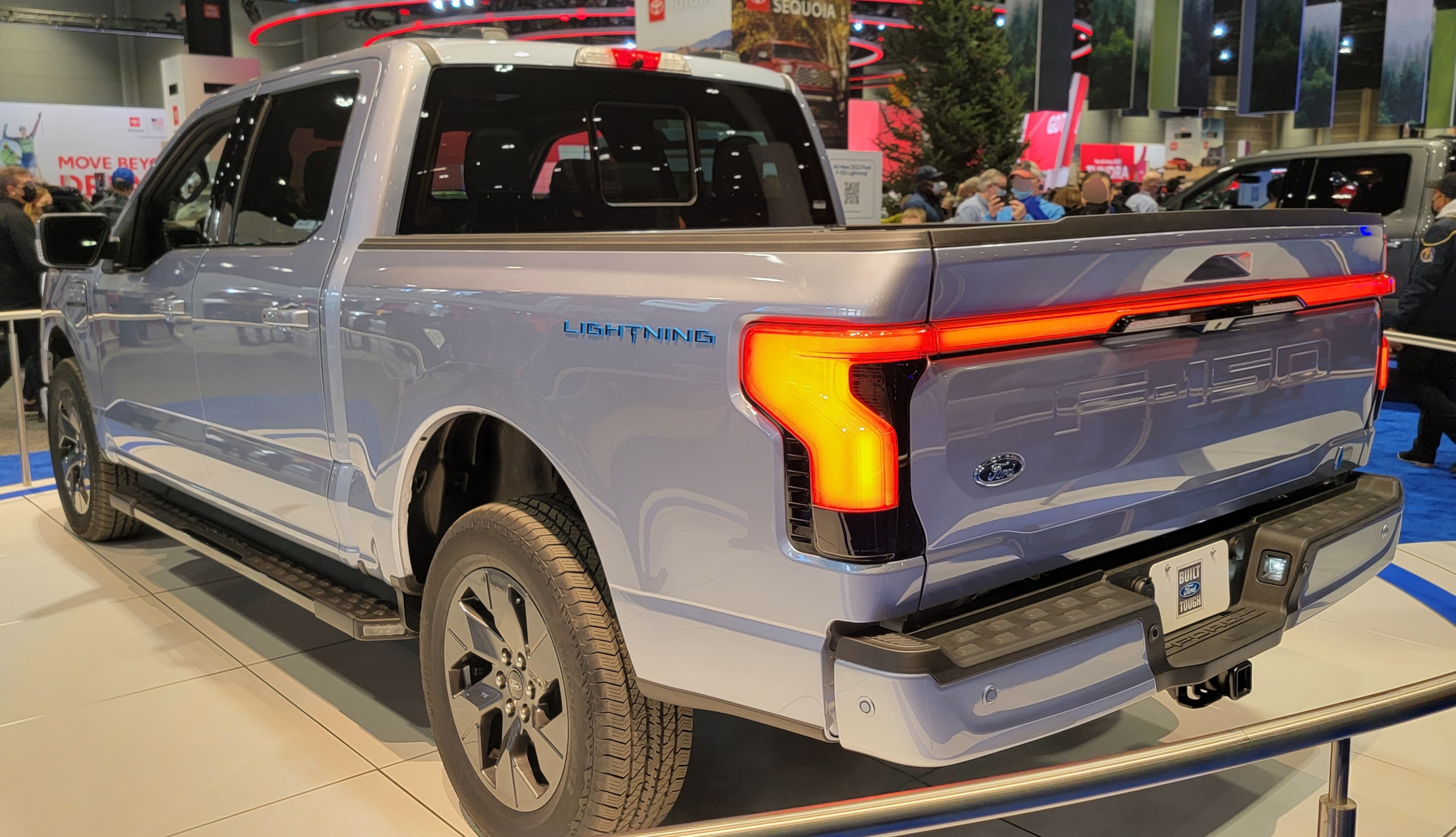
The Ford Maverick is a small truck that’s easy to drive and saves gas. It’s good for people who want a truck but don’t need something big or expensive. People talk about it because it’s different from regular trucks and very practical.
The chicken tax is a tax the US puts on some trucks that come from other countries. It makes those trucks more expensive, so companies often build them in the US instead.
The Toyota RAV4 is a small SUV that many people like because it is reliable and good on gas. It's often used as a base for making other types of vehicles.
Dealer incentives are deals or discounts that car makers give to car sellers to help sell more cars. If there aren't many cars available, sellers might not give these deals.
The Toyota Sienna is a big family van that many people buy because it has lots of space and is dependable. It sells quickly because many families want it.
The Kia EV6 is a new electric car that looks cool and drives well. It can go a long way on a single charge and charges quickly. People are talking about big discounts on some models, which means you might get a good price if you want one.
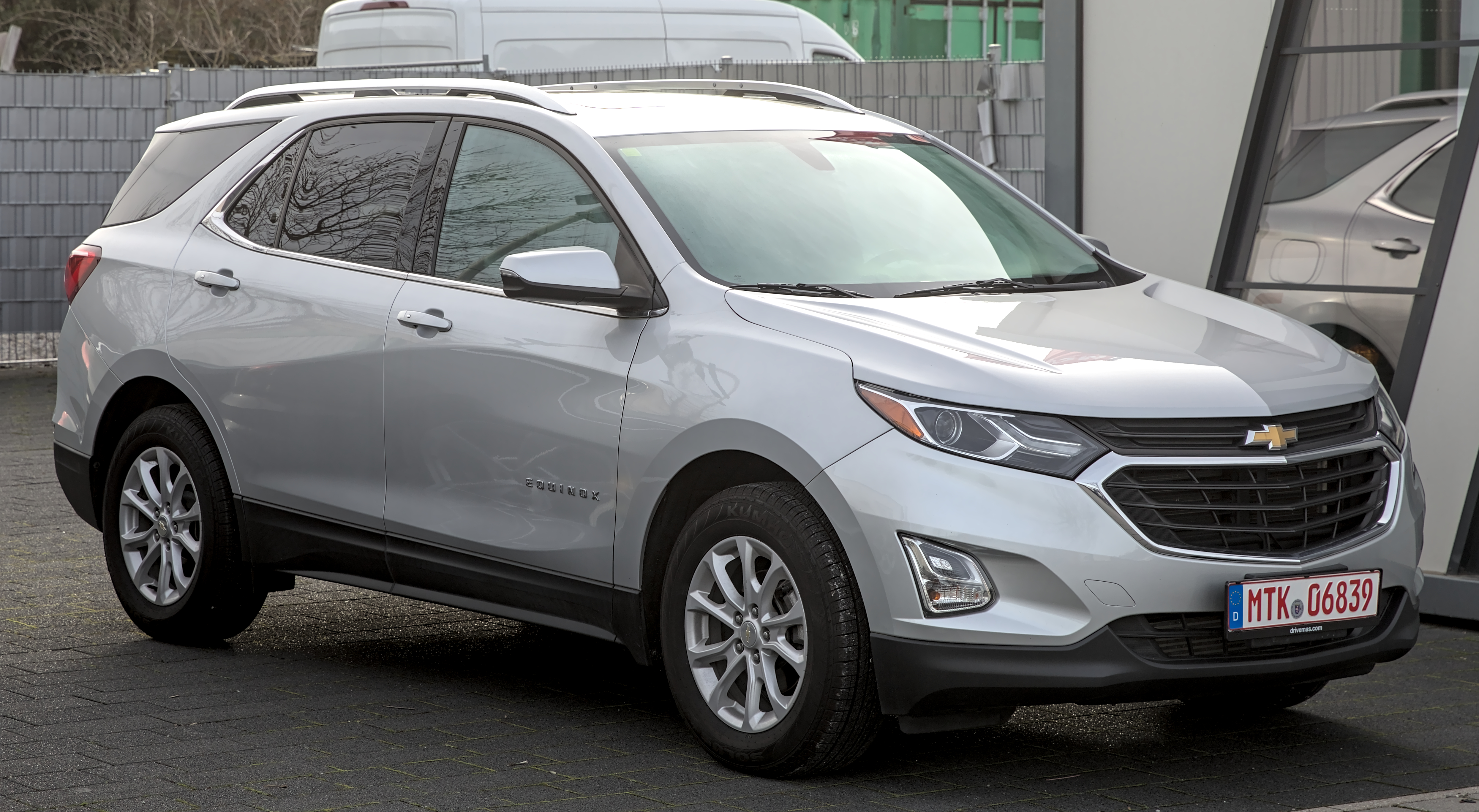
The Chevrolet Equinox is a small SUV that’s easy to use and doesn’t cost too much. The newer versions run on electricity, which means they don’t use gas and are better for the environment. People are interested because you can get a good deal on these electric models.
A V8 engine is a type of car engine with eight cylinders shaped like a V. It makes a lot of power and is used in strong, fast cars and trucks.
LIVE
It's noon here in Ventner City, New Jersey, at our nation's capital, Washington, DC, and this is
Car Edge Live for Tuesday, March 3rd with your host, me, Ray here in Ventner, and Zach, feeling
a tad bit under the weather with a cold in his apartment in DC. I'm not going to ask how you
are handsome. I already know the answer to that question. I do hope you feel better soon.
Appreciate it. Welcome, everybody, Tuesday, March 3rd. Thanks for tuning in for another episode
of Car Edge Live. We love seeing everyone here. Thanks so much for being a part of it. Today's
show is brought to you by caredge.com. You're six of me and my dad and our incredible team
helping you out. We offer a car buying service that takes care of research, dealer outreach,
and even negotiation. We learn what matters to you. Contact dealers, compare real offers,
and help you get the best deal without the stress. You can learn more back at caredge.com.
Now, dad, the big story this morning, Toyota shocking the auto industry with a semblance of
desperation, but not for the reason that many of you might think. Toyota needs another US assembly
plant. Will they pull the trigger? Dad, the desperation at Toyota isn't the fact that
they can't produce enough vehicles. They're capped out at their 10 million vehicle annual
production, and they're looking at investing billions of dollars here in the United States
to increase production with a new manufacturing plant. We're going to break down this article
in just a few moments. Dad, the desperation at Toyota is unlike any other automaker out there.
They're desperate to be able to build more cars. Yeah. I'm like most of the manufacturers,
excuse me, who are desperate to figure out how to sell more cars. Toyota's desperate to try and
figure out how to build more cars. Let's just say this. This is nothing that's written in stone.
This is not coming directly from Toyota. This is a column written by a gentleman who
works for Automotive News, and it is his opinion that Toyota should look at
considering a sixth manufacturing facility for here in the United States so that they could,
well, produce the cars that their customers are demanding in greater quality,
equities, than they're able to do at the moment. I think that's one of the interesting parts that
is Toyota does need to produce more of their vehicles in greater quantities, and opening up a
sixth manufacturing plant here in the United States of America would obviously give them
that latitude to produce more. For context here, Toyota is producing 10 million vehicles
annually nationwide. They're saying they're capped out there. Dad, they can't produce any
more. 10 million is a huge number. I think that's 10 million globally. They would love to be able
to produce 10 million and sell 10 million vehicles here just in the United States, but they can't.
But yeah, I believe they're the largest automotive manufacturer in the world,
and nobody else is coming anywhere close to what they're able to produce. It's not just
what they're able to produce. It's how they have managed to create demand for their products,
because they always seem, at least since the pandemic, they always seem to be in short supply,
and nobody, I mean, they talk about on-time manufacturing, but really, it is on-time
inventory control for their dealerships. They have created a scenario where their most popular
products are typically usually pre-sold before they ever hit a dealership. When your popular
products are in short supply, your dealers have the leverage. What do we mean by that? Well,
it means that they don't have to discount as much because there's the proverbial poop ton of
customers right behind them. If you don't buy it, they will. It would be better for the consumers
if Toyota did build a sixth facility here in the United States, and so that there could be
more availability and then more competition to grab a customer where you might actually have to
discount the vehicle. Now, it's interesting, Dad. There's a little bit of conjecture here as to what
vehicles Toyota would produce here if they did make a sixth manufacturing plant. You can see it
here. Toyota dealers have been clamoring for a compact pickup to rival the Ford Maverick,
and a design based on the Toyota RAV4 is favored. US tariffs, including the decades-old chicken tax
mean it would need to be manufactured in the United States, but there is no factory capacity
available to build it. They'd also like a similar-sized small delivery van as well. So Toyota,
if they want to compete with the Ford Maverick, which has Dad, done incredibly well for Ford,
and Ford can't produce that in high enough quantities, if they want to do that and they want
to avoid the chicken tax, they have to do it here domestically. So there's all sorts of indications
as to why they would pull the trigger on investing the tens of billions of dollars
to open up a new manufacturing plant here in the United States of America. And your point
earlier, 10 million vehicles globally. They sold 2.5 million here domestically in the United States
last year. So they sell a lot of cars here, obviously. Oh, no, they do. There's no doubt about
that. But here's the sad reality. Even if they decide they want to do it, even if they say,
okay, we're going to do it. It's not like the plant can be built overnight. We're looking at
probably three years minimum to get a facility up and running. They have a facility, what is it,
South Carolina or North Carolina, where they're supposed to be building electric batteries.
And the facility is only sitting on half of the ground that Toyota bought for that location.
And I believe only half of the existing structures are being utilized at this point.
So they might be able to do it a tad bit quicker, but we're still looking at, what,
a minimum of two to three years. So it's not like there's anything on the horizon
that's going to ease their inventory situation or that will allow them to produce that small truck
sooner. I mean, their plants in the United States and their plants worldwide, for the most part,
are operating at about 90% of capacity. That's like a magic number, okay? I mean,
most manufacturers would kill to be at 75% or 80%. For these plants to be at 90%,
it doesn't really allow them to look at much in the way of expansion.
But it's not as if it's not needed. They have created this monster when it comes to vehicles
that people want, and they need to feed that monster. That is one way to frame it. We recently
did an experiment. It was a video that went out over on the Car Edge main channel. We reached out
to a hundred different Toyota dealerships for the same 2026 RAV4 Hybrid XSE. We've done this
experiment a handful of times. Most recently, Toyota obviously here, but in the past, we've done it
for Ford F-150s. And this puts into perspective the need that they have to treat customers better.
Hundred dealers contacted only 32 verified out-the-door price quotes that when we contacted
a hundred different dealers nationwide. And some of that has to do with the fact that, quite frankly,
they didn't have inventory. It was pre-sold. There's less incentive for a Toyota dealer
to be a great partner to a customer when they don't have enough cars to sell. And that is really
truthfully the desperation that Toyota right now is they've got too much demand and not enough
supply, which is a privilege problem to have, but it's a problem nonetheless.
Oh, absolutely. And I believe if memory serves, I believe there were three dealers that just
absolutely ignored us and never got back with, never even answered our email inquiries,
whether the email inquiries went to their spam folder or whatever. I mean,
just absolutely ignored us because my suspicion would be is that they were smaller dealers,
that everything they have is pre-sold. They don't really have time to mess with
the tremendous number of internet leads. And so they don't. They concentrate either on the people
that are coming through the door or calling, as opposed to the people who are emailing,
and they want to handle the customers that are there because they have limited inventory
availability. And like I say, with limited inventory, as a customer, you have limited
leverage, unfortunately. And so it would be nice if they do it. And I am sure
there's two sides of the coin for the dealers. And dealers would certainly like to have a little
more inventory of their fastest selling vehicles, Corral is RAV4 Sienas, but they don't want to get
significantly more inventory of those vehicles because they like the fact that they don't have
to discount those vehicles very much because they are in such short supply. And so from just a
greed profit standpoint, they want to see some improvement in inventory, but not dramatic
improvement in inventory because they don't want it to cut into their profit margins.
We are going to keep our hands all over this story. If Toyota ultimately makes that move,
you will be the first to hear it. Dad, let's switch gears. We've got the latest February
new car sales data rolling in and Hyundai and Kia Dad continue to cruise along. Honda actually
showing a year over year slowdown in sales. I'll pull this chart up right here on the screen so
we can all look at it. Acura sales up Dad, significantly 17.3%. Year over year, Honda sales
down a half of a percent year over year. And then look at Hyundai Kia, Dad sales up 5%
year over year. So Hyundai Kia continuing to grow even when we anticipate and expect
February to be a generally down month for the auto industry. Hyundai Kia and also obviously Acura
showing some signs of life here. And what's really interesting is that this is the second
month in a row that Kia has outsold Hyundai. And that has never really happened before. Hyundai
was always the volume leader. Kia was the redheaded stepsister. And now things are turning
around. And what is powering their growth is primarily a hybrid. They've seen a slowdown
in full battery electric vehicle sales. Which makes tons of sense. And to continue with any
of those sales, they have had to really increase incentives on the BEVs, the battery electric
vehicle significantly. In the article stated that there was one deal where I think it was in
Michigan that was offering 24% off of MSRP on Kia EVs. That's a lot off last time I checked.
Because none of them are all that inexpensive. So yeah, they to a certain degree
followed the Toyota Playbook in the sense that they have concentrated a lot of their efforts
into hybrids. They also contributed a lot of their efforts towards battery electric vehicles.
And where I think one of the top players in battery electric vehicles. And even though
they've had issues with their ICE vehicles, they've had some engine issues and some quality issues.
The fact that you don't have an ICE engine in an EV has allowed those two brands, Hyundai and Kia,
to stand out in the EV market. And they have established good reputations as good electric
vehicle manufacturers. Now, dad, we will be getting data from a handful of other manufacturers soon
here today. Toyota, Ford, Honda, obviously we just got that Subaru Mazda. So we got the little
peek under the hood with Honda. That sales actually down Euro for a year. We've talked about that a
bit. And we've had many of our community members expressed to us some of the challenges they've
seen with Honda dealers. But that Toyota sales, we anticipate that'll be up. When I look at Ford,
kind of a crapshoot, Subaru, obviously they've said they need to push volume. So I'll be curious
to see how that worked out for them. Mazda, they're now going back on the volume playbook.
It'll be really interesting to see these numbers when they come out.
I think what's really going to be interesting is we have any number of manufacturers who have
stated that they want to see a 10% to 15% sales increase. They've projected a 10% or 15% sales
increase for 2026. When the industry pundits, either rightly or wrongly, are anticipating
perhaps a two and a half to 3% decline in new car sales in the United States for 2026.
So I get that there's a lot of brands that say, oh yeah, we're expecting a 10% increase.
Well, what's going to drive that 10% increase in a 3% down market? You can't just hope. You
but that's typically not a plan. So if those brands that have stated that they want to see
those type of increases in sales this year, if they are to accomplish that in what is being
projected to be a somewhat down market for the year, how can they do that? And the only thing I
can think of, you will have to dramatically increase your incentives so that they are so much
better than your competitors who you're hoping to finally steal business from again.
Which we have a little bit of an update here on that from JD Power. The average incentive
per new vehicle was on pace to rise drumroll please, $63 from a year ago. Now, obviously,
you can see down there at the bottom some Chevrolet dealerships are offering 20% off sticker price
on 2026 equinox EVs. Kia dealers, you mentioned 124% off on 2025 EV6s, but your year over year,
as measured by JD Power, increase in incentives, which you're saying is the number one lever
that these manufacturers can pull to sell more volume because they're all coming out and saying,
we're going to sell more, we're going to grow in a down market. Well, there you go, Dad,
a $63 increase in incentives year over year, that's not going to move the needle.
Oh, come on, $63, that's more than enough to get somebody to say, yeah, I want to buy that $50,000
vehicle. If I didn't have that extra $63, I'd have to pass. Yeah, it doesn't seem like enough,
but then again, we're talking January and February, we're now into March, the spring
selling season is about to begin. So perhaps we will see a significant increase in incentives
for those brands who have said, we need to increase sales 10%. It's very bold to state that.
When you know that the market is stagnant at best and declining at worst. So
it could bode well for customers. I just don't know that there's enough customers out there
that can, I mean, we talk about it all the time and you see the pundits talking about it,
about affordability. We've been beating that dead horse for five years now.
Most of the pundits have been beating it for about 18 to 24 months. And everybody beats that dead
horse saying, we need to figure out affordability for consumers out there. And yet nobody seems to do
it. I disagree that we started today's show talking about how Toyota, the desperation that
Toyota feels is that they need to be able to produce more of their vehicles. And the expectation,
at least from this article, is that they're thinking about building a manufacturing plant here
in the United States of America so they can compete with Ford, with the Maverick, with a small pickup
truck. So we do have Ford with the Maverick. We do have various other automakers who are trying to
produce Nissan, for example, affordable vehicles. So I don't think you can pay with that as broad
of a paintbrush dab. There are some signs that these automakers are trying to alleviate some of
the affordability crisis. And then again, look at Toyota here, if they end up pulling the trigger
on this plant, it's partly in service of re-anticipate, getting around the chicken tax to be able to
sell a pickup truck here in the United States. But that's still two to three years away.
But, Dad, you can't make cars. You can't snap your fingers and have a car, you know?
Well, maybe you can. The front page of automotive news every day shows what the average asking
prices are. And they're up over $50,000 again, or at least they were this morning when I looked.
Okay, $50,115. That's not moving in an affordable way. That's moving to make it less affordable.
I have said this before, we all talk about the affordability crisis and how we're going to handle
it and what dealers and manufacturers can do. And yet, I still believe that the vast majority of
the manufacturers out there have just said, we're going to talk about it. We're not going to do a
damn thing about it. We're going to talk about it. That's what we're going to do. We're going to say
that we need to find affordable solutions and they are going to continue to sell cars. Excuse you,
they're going to continue to sell cars to the 12 or 13% of the popular. Well,
I thought I was off. I'm so sorry. No, no, we can still hear you just because you're not on screen.
Doesn't mean we can't hear you. Sorry, y'all. My apologies. Off screen, you can be telling me to
f off, but we would hear you. But my point is that I think the manufacturers are perfectly content
to keep the pricing where it is, sell to the 12 to 13, 14% of the population that can afford the buy
and just give lip service to the idea and the concept of affordability and really trying to
address it. They're all making tidy enough profits selling 15.8 million to 16.2 million new cars a
year. Could that number be higher if they really wanted to address the affordability issue? Yeah,
it probably could be. With the rollback of some of the EPA initiatives, could the manufacturers
go back to some older, less expensive technologies to be able to build less expensive, more affordable
cars? They probably could. What's going to be interesting is to see if they actually do it.
And just my guess, they won't. That's just my guess. Did you see, Dad, there was an article in
Carn Driver quoting the Audi CEO talking about gas engines having a future well into the 2030s.
I think this fits into the narrative that you're just sharing a second ago. If these manufacturers
choose to use more tried and tested things, they don't have to underwrite tens of billions of dollars
in electric vehicle investments, maybe we will see vehicles get cheaper. And again, the whole point
of today's show is to talk about how Toyota, obviously, their desperation is around not being
able to produce enough vehicles and needing another US assembly plant. But you can't have that
conversation about talking about all these other pieces, which do frequently tie back
to the affordability crisis. So I am curious, Dad, your thoughts here
on Audi's CEO coming out and saying, we're not anticipating selling as many EVs,
we think ICE engines are going to be the thing of the future.
Well, in 2021, they had expressed the desire to be 100% EV, battery electric vehicle manufacturer,
by 2033. And now they're walking that back. And they're not the first manufacturer to do that.
Oh, no, no, no. They're just joining a long line of manufacturers who are walking it back.
Now, that's not to say that EV sales still aren't doing well in some parts of the world.
They are not doing nearly as well in the United States. EV sales, I think they're expecting
that penetration to drop from 6% in January to 5.6% in February.
All it shows is a continuing decline in the percentage of people who are buying EVs
in the United States. That's not to say that the United States is an island unto itself,
because there is less EV adoption here than in other parts of the world.
I think that there needs to be a greater understanding of what motivates American drivers,
as opposed to what motivates European and Asian drivers. And I think they'll come across a mix
that will work globally. And in the United States, my suspicion is that there will
always continue to be more ICE vehicles made available than in some other parts of the world.
And ICE, for those of you that are unfamiliar, internal combustion engine. We've seen Ram,
for example, Dodge. They let us more broadly walk back a lot of their hybrid and electric vehicle
powertrain ambitions in service of producing more V8 engines, for example. This from Audi's CEO
is actually not that unexpected relative to what we've seen from other automakers recently.
He's looking at it globally, and he realizes that North America is significantly different
than Europe and Asia. But the truth of the matter is Audi's struggling in every one of its markets
at the moment, and is one of the few brands that is actually expecting sales to contract again,
at least in North America in 2026. They actually tried in China with one of their new electric
vehicles there to just brand it as an Audi, spelled out A-U-D-I, as opposed to the four
interlocking rings. Because they thought, by modernizing it, that sales would take off.
And they have not. So I mean, it's a struggle for Audi. It's a struggle for a lot of the
manufacturers globally. And it's going to be a struggle in North America, in particular,
the markets that we're concerned with. Because at this point, car age is not global. Okay, we are
United States based. And so I don't see a stronger push towards battery electric vehicles here,
as I would say in Europe or China. Folks, I'm feeling under the weather. We're going to call
it a show early. And we appreciate you all tuning in. Join us tomorrow for some more Car Edge live,
12 p.m. Eastern, 9 a.m. Pacific. If we can help you out with anything, got an incredible team,
caredge.com. Sorry again about blowing my nose into the mic. I was on mute. We're back tomorrow.
Thanks for everything, Pap. See you then. Yeah, feel better, handsome. I'm sorry you're down,
but not out. But you'll be back up before you know it. Thanks, everybody, for being here. We'll
see you back here again tomorrow. If you liked the show, please take a moment to rate, review,
and subscribe. It really does help the show to grow. Thank you for listening.
About this episode
Toyota faces a unique challenge: high demand but capped production at 10 million vehicles annually, prompting discussions about building a sixth U.S. assembly plant to increase capacity. The podcast explores the impact of limited inventory on dealers and customers, including the potential for a compact pickup to rival the Ford Maverick. Additionally, recent sales data highlights Hyundai and Kia's growth, Honda's slowdown, and the evolving dynamics in electric and hybrid vehicle markets. The hosts analyze how these trends affect manufacturer strategies and dealership experiences.
Today on CarEdge Live, Ray and Zach discuss the latest news from Toyota. Tune in to learn more! Hosted by Simplecast, an AdsWizz company. See https://pcm.adswizz.com
for information about our collection and use of personal data for
advertising.