WLTP is a testing system that helps figure out how much fuel cars use and how much pollution they produce. It's designed to give more accurate numbers than older tests, especially for electric and hybrid cars.
A plug-in hybrid is a type of car that can use electricity from a wall outlet to run, as well as gasoline. This means you can drive it using just electricity for short trips, which is better for the environment.
The Chevrolet Bolt is an electric car that can drive long distances on a single charge. It's a good option for people who want to save money on gas and help the environment.
General Motors is a big company that makes many different car brands, like Chevy and Cadillac. They're one of the largest car manufacturers in the world.
The Jeep Wrangler is a tough, off-road vehicle that many people love for driving on rough terrain. It's known for its ability to handle challenging paths and has a classic, boxy look.
The Toyota RAV4 is a popular small SUV that many people use for everyday driving. It comes in different versions, including ones that use both gas and electricity.
MSRP is the price that car makers suggest you should pay for a new car. It's a starting point for how much you might expect to spend when buying a vehicle.
Financing is when you borrow money to buy a car and then pay it back in smaller amounts over time. It's a way to make buying a car more affordable by not having to pay the full price upfront.
Leasing is like renting a car for a few years. You make monthly payments to use the car, but you have to give it back when the lease ends, and you don't own it.
The money factor is a number used in car leasing that helps determine how much interest you pay. A lower money factor means you'll pay less in interest over the lease period.
A warranty is like a guarantee that the car will be fixed for free if something goes wrong within a certain time. It helps protect you from paying for repairs yourself.
Chinese vehicles are cars made in China. They are becoming more popular and can be cheaper, but some people worry about their quality and how they are viewed in the U.S.
The Nissan Versa is a small, affordable car that many people use to get around. It's not fancy, but it's good for those who want a reliable vehicle without spending a lot of money.
Autonomous emergency braking is a system that can stop the car on its own if it thinks a crash is about to happen. It's a safety feature that helps keep you safe while driving.
The BMW 3 Series is a popular car that many people like because it drives well and looks nice. It's often chosen by those who enjoy a sporty feel when driving.
The Honda Civic is a small car that many people like because it's dependable and gets good gas mileage. It's available in different versions to fit what you need.
A catalytic converter helps clean the exhaust gases from a car, making them less harmful to the environment. If it has issues, it can be expensive to fix.
A FICO score is a number that shows how good you are at paying back loans. The higher the number, the better your chances of getting a loan with good terms.
The Toyota Camry is a slightly bigger car than the Corolla, and it's known for being comfortable and reliable. Many families like it because it has a lot of space.
The Jeep Recon EV is a new electric car that Jeep is planning to release in 2026. It's designed for off-road driving, just like other Jeep vehicles, but will run on electricity instead of gasoline.
Stellantis is a big car company that makes many different brands of vehicles. It was created when two companies, Fiat Chrysler and PSA Group, joined together.
The Jeep Grand Wagoneer is a big, fancy SUV that can go off-road and also has a lot of luxury features inside. It's perfect for families who want to travel in style and comfort.
The Wagoneer S is a new electric SUV from Jeep. It's designed to be both fancy and good for off-roading, but the speaker wasn't very impressed with it.
The Ioniq 9 is a new electric car from Hyundai. It's part of their line of electric vehicles and is expected to have modern technology and eco-friendly features.
The Jeep Compass is a smaller SUV compared to the Wrangler, designed for both city driving and some light off-road use. It's more practical for daily driving than serious off-roading.
Hummer is a type of vehicle that looks tough and can go off-road, but many people just drive it on regular roads. It's famous for its big size and military look.
The Jeep Grand Cherokee is a large SUV that can handle rough roads and also feels nice to drive. It's great for families who want space and comfort while still being able to go on adventures.
The Tesla Model Y is a modern electric car that looks like a small SUV. It runs on electricity instead of gas, which is better for the environment, and it has cool tech features like self-driving options.
The Ford Mustang is a classic sports car that is famous for being fast and stylish. It's been around for a long time and is loved by many people who enjoy driving.
The Ford Bronco Sport is a smaller SUV that is built for going off-road, meaning it can handle rough trails and dirt paths. It's a good choice for people who like to explore nature but still need a car for daily use.
The Kia Sportage is a small SUV that is good for families because it has a lot of space and nice features. It's also usually priced lower than some other SUVs, making it a smart choice.
The Toyota Prius is a car that uses both gas and electricity to drive, which helps it save fuel. It's known for being good for the environment and is one of the first hybrid cars that many people recognized.
The Ford Escape is a small SUV that is easy to drive and has a lot of space inside. It's a good choice for people who need a car for daily errands and family trips.
The Hyundai Genesis is a luxury car that feels really nice to drive and has lots of high-tech features. It's a good option for people who want a fancy car without spending too much money.
The Toyota Crown is a big, fancy car that is known for being comfortable and reliable. It's often used by people who want a nice car for business or special occasions.
The Nissan Sentra is a small car that is easy to drive and doesn't cost a lot to fill up with gas. It's a popular choice for people who want a reliable car for getting around town.
The Mazda CX-70 is a medium-sized SUV that looks good and is fun to drive. It's a great choice for people who want a car that feels sporty but still has room for passengers and cargo.
The Toyota Grand Highlander is a bigger SUV that has lots of room for families and their stuff. It's great for road trips and has features that help keep everyone safe.
LIVE
Hello and welcome to another Autobire's Guide podcast.
Today we're going to be talking about plug-in hybrids
and some of the studies that we've seen resurfacing yet again.
I'm going to jump on my soapbox and we're going to talk
about some cheap cars in North America
and some of the facts around them.
And we might be talking about some electric jeeps
and some other things and an electric bicycle.
So Travis, this bad penny just keeps coming back out of the machine.
And you don't just mean bad lighting in hotel rooms, do you?
No, no.
No, I keep seeing this report and it's hard for me to understand it.
And at the same time, I feel compelled to believe it
and that hurts even more.
The report everybody that we're talking about is based on data
from Europe saying that emissions in plug-in hybrid vehicles
are higher than expected and that people aren't plugging them in.
So to this, I will say a few things.
The first one is the core of the study is vehicles
primarily in Germany, in the EU, and they're talking about emissions
versus WLTP projections.
Well, A, no shit Sherlock, WLTP projections are dreadful.
I mean, we got to start with the elephant on the elephant on the elephant
in the room that WLTP is in any way reflective of everyday driving
or realistic expectations on efficiency.
Straight trash.
Yeah, if you think the EPA numbers are bad
and I do think the EPA numbers are bad, you should check in at the WLTP.
But it's so much focused on and the reason we see so many plug-in hybrids
over in Europe is because the WLTP is so friendly towards plug-in hybrids
that have anywhere, you know, 30 to 50 mile range
because it covers almost the entire test loop essentially in EV mode
before it fires on the engine at all.
So when you get these skyrocket numbers, you're always going to get below that.
But then you do need to plug it in.
Indeed, indeed.
And so A, starting on the foundation of WLTP, WLTP is straight trash.
We have to build on that by saying the numbers are not representative
of the North American car buying public.
That's that's the big, big thing with these studies.
So when when you dive deeper into the numbers, most of the studies,
there have been a few studies that have parroted this,
but most of the studies have been focusing on company cars.
Remember that in several markets in Europe, they're tax advantaged reasons
that your job may come with a car basically.
And these companies are buying plug-in hybrids for their fleets,
not because customers are wanting them, not because the employee driving
the car is wanting them, but for their green green missions,
their emissions profiles, their tax benefits, whatever the reason may be,
the company is doing it.
So say you work for Siemens, mid-level position, your job comes with a car
and they're like here, plug-in hybrid Kia for you. Great.
OK, but I live in a tiny flat on the 50th floor of a building somewhere
and I have nowhere to plug it in. Of course, I'm not going to plug it in.
If this had been a personal choice by that consumer,
they probably would not have bought a plug-in hybrid.
No, maybe a hybrid, but maybe you know, they don't have a spot to plug in,
especially when they get to work the place that bought them in the car.
It's not like they have charging there either.
We then we contrast that with North America, specifically the United States.
It's a very different environment.
People are buying cars because they are choosing the vehicle,
even though there was a time where company cars were more of a thing in the US
because of America's tax structure.
It's no longer advantageous to do that.
So now, by and large, people go out and buy their own cars, right?
And they're buying cars that fit their desires, their lifestyle,
their charging reality.
So if you remember that new cars are, by and large,
purchased by upper middle income earners living in suburbia that own their own home.
The exact demographic that can charge their car.
People have driveways and garages, et cetera.
Yes, there's not putting in a level two charger.
You don't need one for a plug-in hybrid, so you could plug into a 110.
And yes, there are people that live in apartments that buy new cars,
but we're not talking about the majority there.
The majority are single family homeowners.
So the problem here is we don't have actual plug-in hybrid data
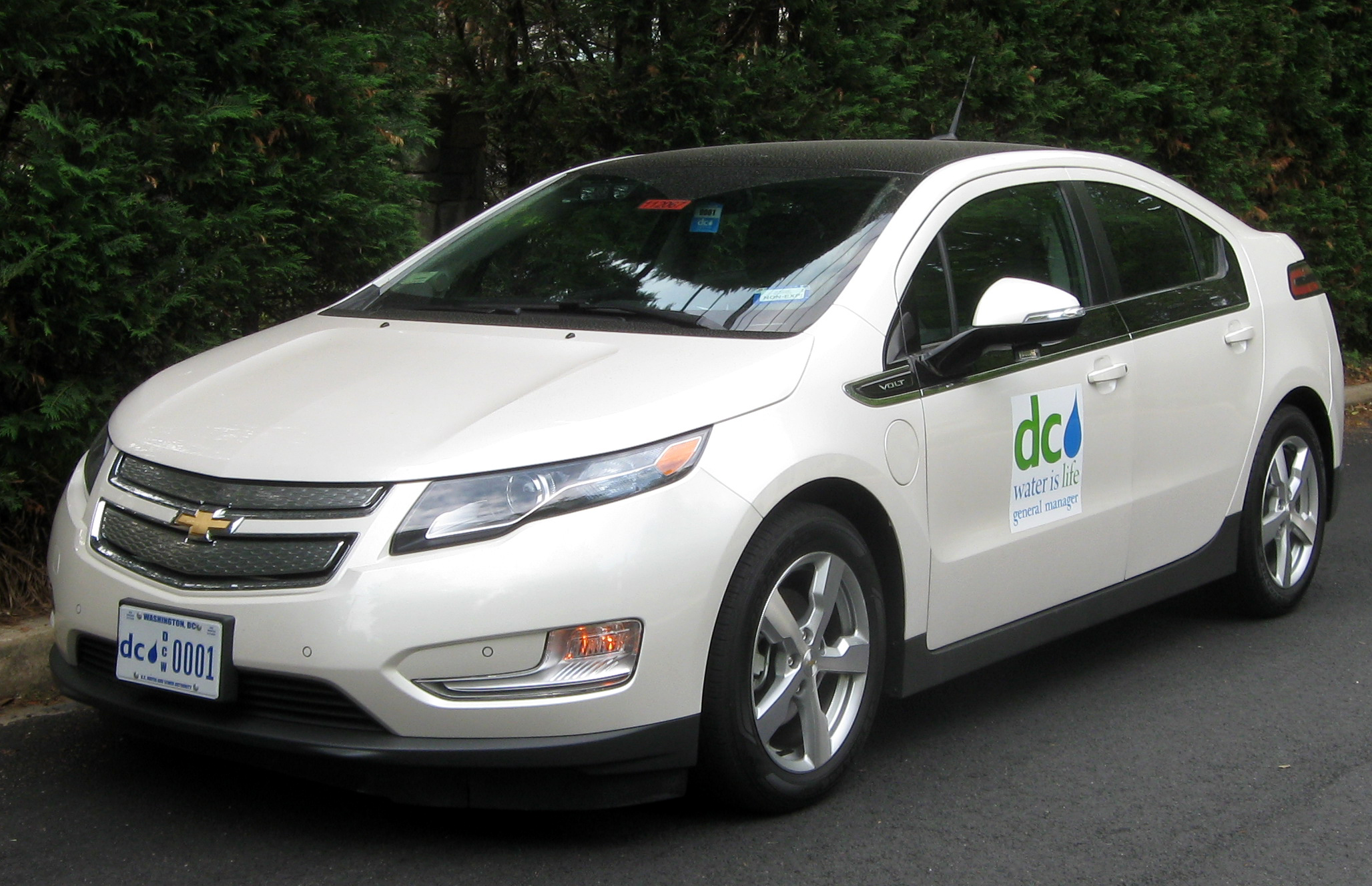
for the United States now, but we do know what Chevy Bolt owners did.
You had a bolt, sorry, a Volt, but the V.
I had a bolt in the household.
Yeah, at the very least.
And I had a bolt in a household at one point, so I've done both of those.
And both of those charged off of a standard 110.
Yeah. And guess what?
You also had a plug-in hybrid Audi.
And how many times did these vehicles get plugged in in your driveway?
Every single day.
Yep, maybe multiple times a day, depending on if I was bumping around.
But and the the evidence that we have from most plug-in hybrids that that out there
that that manufacturers have been able to collect and send this data on,
most notably General Motors with their Chevy line up, they're plugged in all the time.
It does appear that that maybe Wrangler owners are not doing that.
I would say on the scale of plug-in hybrids where people are plugging in regularly,
I would guess maybe I don't know this for sure,
but I would guess that Wrangler is probably the bottom of the pile
because they were definitely pushing that hard in some markets
where you had to order other engines like California.
Theoretically, the dealer had to order other engines.
The normal allocation was just Wrangler four by E.
But plus I've heard more than one story about people saying that their dealer
told them the salesman said, and you don't even need to plug these in.
I'm sure that there are some people that do that.
I would assume, though, that the larger share,
most plug-in hybrids are plugged in on a regular basis in the United States
simply because of this demography difference,
the fact that these people are choosing a plug-in hybrid.
They haven't just been given a plug-in hybrid because whatever.
Yeah. And I will say, you know, there's not just the efficiency benefit of it.
We were driving the RAV4.
We just posted those videos there two ago.
And one of the comments said, why didn't you plug?
Why don't you charge this car before you drove it?
Well, the reason we didn't is because we didn't have a chance to.
But more importantly, the car is faster when it's plugged in.
I mean, you have to have some state of charge to be able to get the full
boost from the electric motors.
Your car is quicker if it's a plug-in hybrid if you've plugged it in.
And that's something a lot of people are going to be down for.
And I could see, you know, that's definitely one of those reasons
that people might want to plug in.
But I think the bigger one is simply you can stretch out your fuel stops.
Again, this is one of those things that is not as easy to do in many places
in Europe in certain living situations.
But, you know, in the US, the average commuter average being an air quotes
here that's buying a new car, they live in suburbia commute to somewhere to work.
And they are able to charge.
So you can really stretch out your gas station visits, which are kind of a pain.
And that's kind of the handiest thing.
Even if it doesn't save you a bunch of money at the pump, you know, let's just say
it's a it's a dead even between electric and gas.
I would still plug in so that I don't have to stop very often.
I mean, that just seems like it seems almost like a luxury benefit to me.
Yeah. You know, speaking of luxury and affordability, etc.
This this next topic is from a comment section on one of our posts
that really had me scratching my head because we often see
when we're talking about new vehicles, a affordability, people say,
oh my God, who can afford this thing?
Well, the average cost of the average new car is over $50,000 now.
I mean, it seems like it was a big leap at the last time we got this number.
I mean, it was in the high forties, but now it just seems like a landmark.
We've crossed the five.
Yes. So very expensive for new cars.
But simultaneously, when we talk about affordable new cars,
especially some of the most affordable vehicles in North America,
we do get a significant portion of commenters saying,
that's that's just terrible.
I would never get that.
Anybody should be, you know, disgraced if they buy one of these things new.
The clear answer is go buy a used car.
And it's always an option, but is it a clear answer?
Because the used cars, especially as new cars get more expensive,
so too do used cars sort of a sort of a rubber band effect there.
You know, you might find a moment in time where, oh, hey, that's a better deal.
There's also a moment in time where it's not as beneficial to get a used car
because of how how affordable the new car is comparatively, right,
with incentives and discounts and those sorts of things.
The other one is you're not getting a new car and there are reasons to do so.
I mean, and there's a ton of reasons to do so.
There's financing, there's leasing options, which is generally not available on a used car.
So you're looking at incentivized rates or lower rates or longer terms
that are more affordable, you know, money factor, those sorts of things.
You can also, of course, get warranty that comes standard with the car
instead of having to maybe purchase more of it.
Yep. And this is where I need to get on my soapbox a little bit here
because we've said it before and I'll say it again,
affordable transportation in the US is a gap that I think if we as a car buying
public could get over some of the the the the scary factor of having
Chinese vehicles or Indian vehicles in the United States,
this is a gap that could be filled by them.
And there are ways around this with tariff structures, say,
you know, big tariff on Chinese manufactured cars,
except if it's under $15,000, then no tariff or something like that.
That could just make vehicles so much more affordable
because we have lost the Nissan Versa in North America.
And this is one of those one of those questions that some commenters were like,
why is anybody sad that the Nissan Versa is gone?
And the answer is because it was good, honest, affordable transportation.
Was it a fantastic car? Was it fun to drive? No.
But it got you from A to B and it got you from A to B very, very affordably.
It is $18,635 after destination right now for the least expensive model.
This is the most expensive the Versa has been, you know,
for inflation, et cetera, but you still get power windows,
power door locks, you get a radio, a touchscreen, Bluetooth,
autonomous emergency braking and 35 miles per gallon combined.
Importantly, though, for this discussion,
you also get cash on the hood to make it a little bit less expensive.
And most buyers with credit scores over about 650, 675
should be getting 4.9 percent financing for 72 months,
which is not only a couple of points lower than you're going to get on
most new car loans that are not incentivized by the manufacturer,
but that's going to be for a 60 month term, not 72.
It's certainly going to be cheaper than you'll find on used cars.
Yeah. So we have to kind of go down this rabbit hole a little further.
So the key reason to buy for, for especially someone maybe that's
young, starting off graduate at high school, graduate college,
has their first job, something like that, and they need to get from A to B.
I will tell you, as an employer with employees
that have had reliable and unreliable cars in the past,
being able to depend on an employee showing up every day is critical,
not just for me as an employer, but for the employee
in the way that their employer is going to treat them, look at them,
review them when annual reviews and bonuses and payroll actions come up, etc.
The very stability of their job is is dependent on them
getting to work on time on a regular basis.
And so vehicle reliability is definitely a thing.
So when you take a look at new versus used,
I think people do get lost in this that are older and wealthier.
So the older and wealthier you get, the more you're likely to look down
on someone and say, well, why are they making this decision to buy a cheap, nasty car?
I like my BMW. They clearly should just buy a used BMW or a used whatever.
Well, and it's funny because that that is actually the answer
that I get quite frequently is like, why would you buy a Nissan Versa?
You could buy a used three series.
And I'm like, you could.
Are these the same people?
Like, is this the same shop or demographic here?
But yeah, we're talking to car people.
Yeah, but let's dive into this one here a bit because on that Versa,
you're going to get a three year, 36,000 mile warranty,
a five year, 60,000 mile powertrain warranty.
Importantly, also emissions warranty, rust warranty, et cetera, all on new cars.
And because it's a new car, you can at the same time buy a Nissan factory
extended warranty for about $1400 that will take you all the way up to eight
years and 120,000 miles.
So consider those your worry free miles.
Right. I do not have to think about this.
If something goes wrong, it's going to be covered.
And you'll still when you get there up towards 100,000 miles, it could be covered.
You're still going to maybe miss a day or a morning of work
because your car died and you have to find some other way to get to the office.
But this is not going to be a repeated thing where it's like, oh,
my car has been parked and I'm I'm depending on family members or friends
or something else to get me to the office.
Or, you know, unfortunately, I know a lot of people use public transportation,
but that can be unreliable in a source of stress for people as well.
If it doesn't work for you in your situation.
So if you have it available, if you're looking at it as a last minute alternative,
you go, oh, my gosh, my car won't start.
How do I bust? How do I buy a bus or whatever?
Oh, my goodness, those options are going to be limited.
Yeah. So what else could you get?
Let's let's run through this this exercise here.
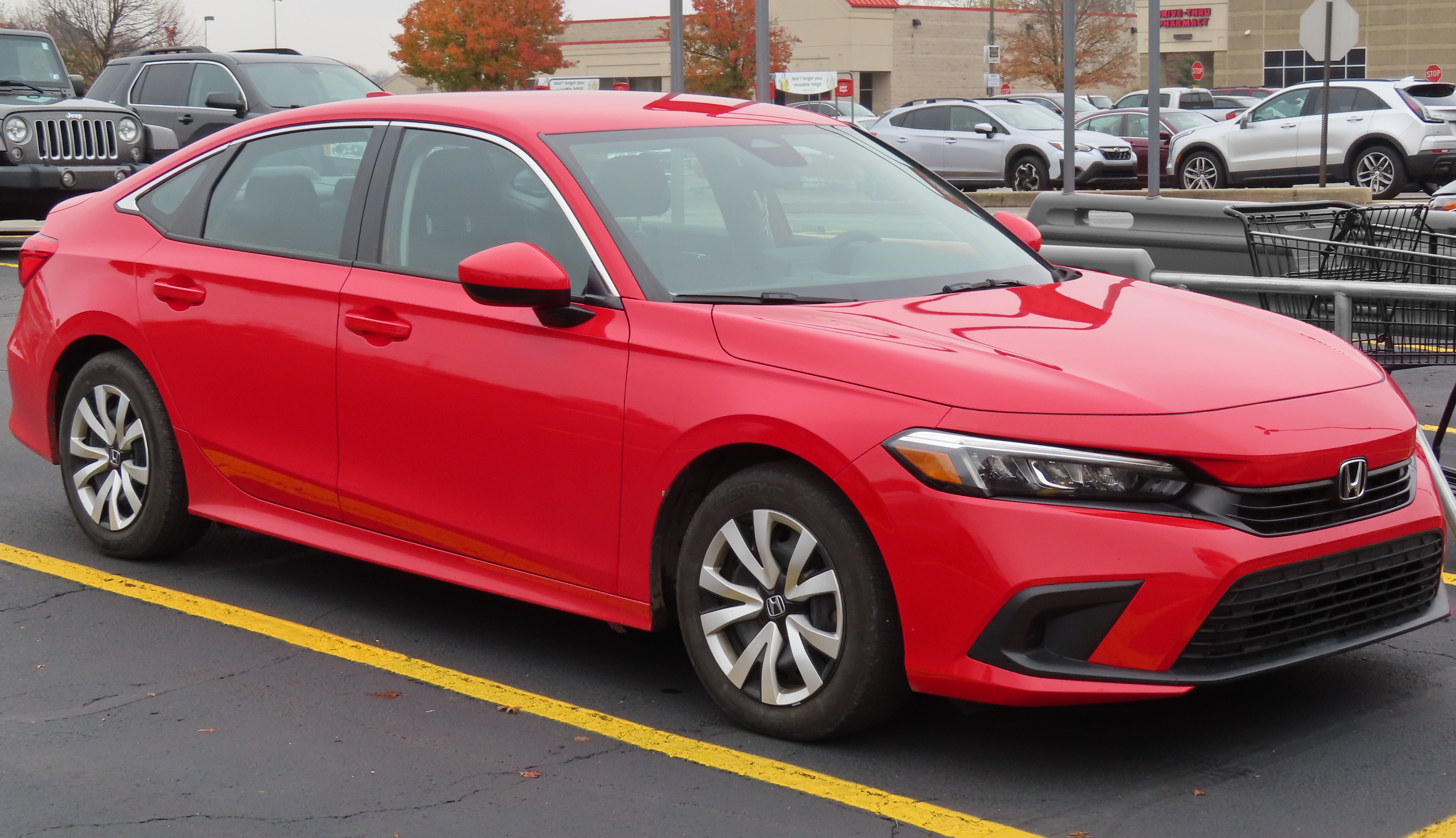
So I was digging around to try and see what kind of Honda Civic
you could get with low miles around this price point.
It appears that you'd be basically between 2016 and 2020 with low miles,
maybe somewhere around 30,000 miles there, or you could get a newer model
with higher miles, so 2022 to 2023 with maybe 60 to 90,000 miles.
We're talking averages here, everybody.
So, you know, depending on your area, you may find a better or worse deal.
This is interesting because when we're talking about a 2016 Civic, for instance,
we go that far back, we're talking about a car that's almost 10 years old.
So there's certainly going to be seals and belts and things like that
that are going to start going, even on a low mileage car.
Yeah. And the next couple of years.
Yeah, you also are going to find the same kind of standard safety tech.
So no autonomous emergency braking standard in that generation of Civic.
Smaller screens, you know, you won't find car play in a lot of those models,
whereas you would in certain versions of the verse and not the base model,
but certain versions, there won't be any warranty left.
There won't be a rust warranty, no emissions warranty left, right?
None of that.
So you could have a catalytic converter issue that you'd be on the hook for.
But there are also some hidden costs.
So like we talked in previous episodes, financing is a big, big problem for used cars.
Yeah, I mean, I wouldn't be surprised if you're looking at, you know, seven, eight
percent, even with a good credit score, because there's when you look at the bank,
the problem is that the more used, the more likely someone it seems to be to
default on that loan.
And that's why they charge you more.
You know, that's why it's more because you have to essentially cover anyone else
who may have ended up defaulting on it.
So the higher the miles, the older the car, the less expensive it is.
That's when those interest rates start to climb pretty steeply.
And if you're somebody who, in this case, you're trying to save a few bucks.
And I guess for this argument, let's say it's out of necessity, right?
You're not just trying to be cheap.
You have to be cheap.
You're saying, how can I make my dollars stretch further?
You're not somebody who's going to be paying that car off in advance.
So you're like, oh, I have an eight and a half percent interest rate for 16 months,
but don't worry, I'll pay it off in three years.
That's probably not where you're at in this situation.
So you're going to pay all of the interest.
And if we look at the averages, as of the time we're recording this video,
currently, if you have an 800 plus FICO score, the average is 7.1 percent on
a used car loan.
Remember that they're still repossessible in the event of default.
But what's the bank going to do with a 10 year old civic, right?
It's like they're going to be like, ah, spend money, time, money and resources
to get the money back out of it.
Exactly.
So most, most new car buyers in this range of 600, you know, FICO scores 600 to
700 in that range, where some new new car buyers could be because they don't
have a lot of credit history.
They're going to be in the 10 to 13 percent range in that same range where
you could get a 4.9 percent interest on a new car.
You're going to be up at 10, 13 percent.
So here's how that works out.
So new Nissan Versa, $18,000 financed.
We're talking $290 a month, $2,800 of interest over the term of the loan.
If you have a used car at 7.1 percent, you're paying almost $1,300 more in
interest, so $308 a month at 13 percent.
You're paying $5,112 more in interest over the term of the loan.
So $361 a month, that's a pretty big difference.
Then we have to add the actual cost to own it.
And this is what I think a lot of people don't realize, especially with
cheap, cheap cars like the Versa, the Versa isn't almost always on the list
of the least expensive cars to own and operate in the US.
So according to Edmonds, the total cost of ownership for five years, excluding
financing and depreciation, et cetera, just the actual cost to roll that thing
down the road for five years, fuel and everything, it's $24,157 for a Versa.
A 2019 Civic, it's going to be about four grand more expensive.
And if we take a look at what a lot of people rationally or irrationally do when
they are used car shopping in this way, they're like, well, instead of that
new Versa, I could go buy myself a Mazda CX-5 or maybe they see a neighbor
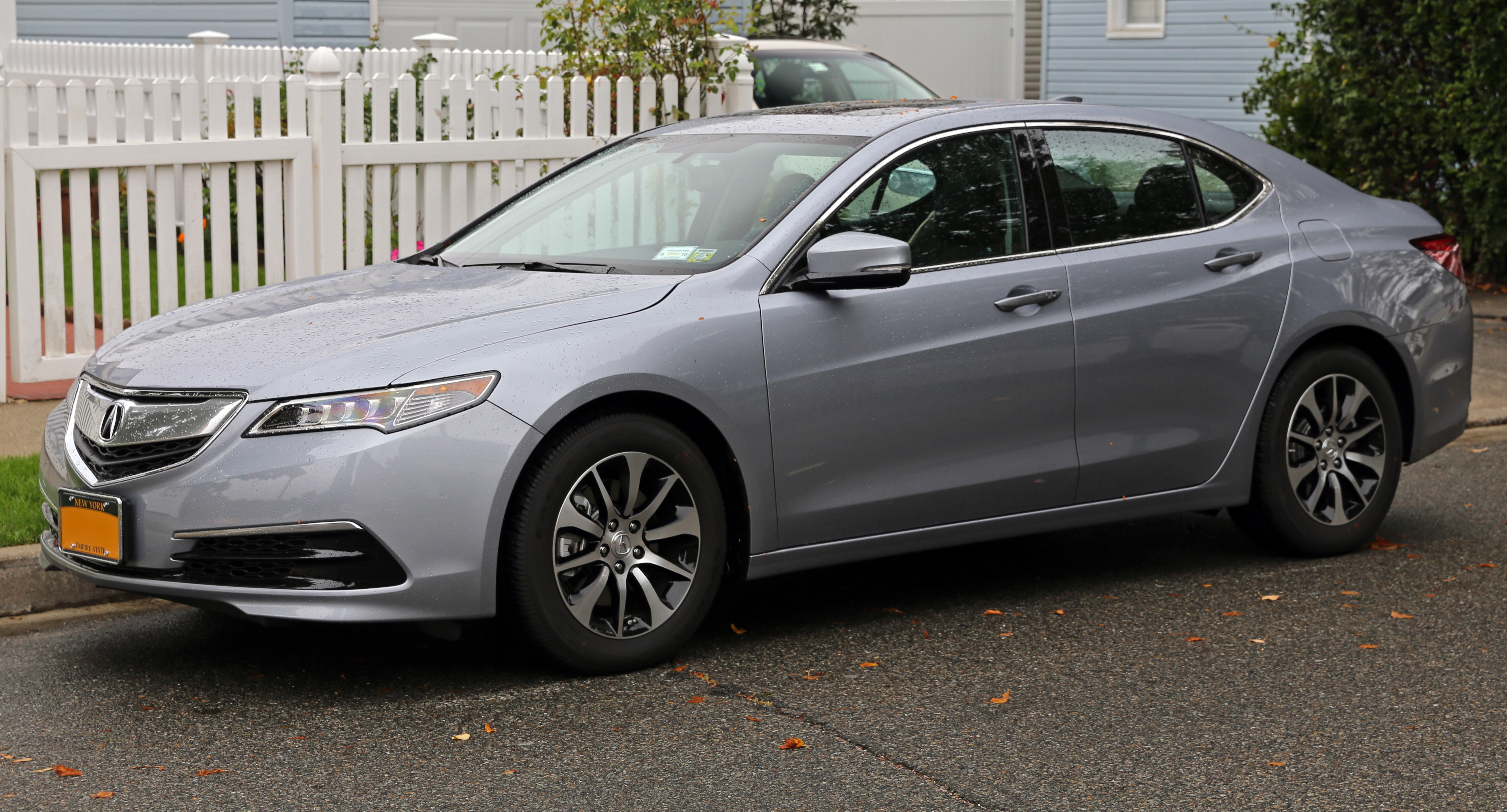
selling them their old Acura TLX and they're like, ooh, I could get an Acura.
Well, how does that sort out?
Well, on top of the finance problem, where again, you'll be paying $5,000
more over the term of the loan for financing any used car at 13%, a CX-5's
operational costs are going to be $5,000, $6,000, $7,000 higher over five years,
an Acura TLX $12,000 higher expected operational costs than that Versa.
The thing people, one thing I think people aren't going to factor in is also
going to be the cost of insurance.
And insurance is wild because it varies depending on who you are even in the
household, right?
And if you're the neighbor and you cross some imaginary line, obviously credit
scores have been looked at and that sort of thing.
So insurance is one of those things where, oh, I'm buying a cheaper car, it's
going to be cheaper insurance.
That is not necessarily the case, especially if you're looking at something
like a Civic on a court, a Corolla or a Camry, which are generally speaking,
the most stolen vehicles out there, mostly because of volume.
But also you're looking at there's more equipment on that vehicle.
So you got a base model Versa, well, then its value is going to be inherently
lower in ways at all times than the higher equipped model.
And especially if you have coverage that says, Hey, it's comprehensive.
I got the replacement coverage.
If the insurance has to pay out for you to get a replacement model, they're
paying a lot more if you got that Civic than the RA if you got the Versa.
Definitely true.
And the bottom line of this is if you are, if you are telling people, your
friends, your family members, especially people starting off that are maybe, you
know, in a financial position where they're really deciding based on a
hundred dollars here or there is the vehicle affordable, can this get me to
a better place in life?
And that's theoretically what you want to do when you start off, right?
Is you want to get to, you want to build yourself up to a better place in life.
This is why we need affordable transportation that's reliable in the US.
If you buy, again, a Nissan Versa in just this experiment, but it could be
anything inexpensive versus a used thing that's going to cost you more long term.
Even though we know that list is getting shorter and shorter.
Exactly.
Like what, what, what could that person do with $300 a month?
They could, they could have, you know, a better apartment, which is probably a
better place to spend your money.
You could save the money, which is going to be an even better thing to do.
So you'd actually be able to save for, for a rainy day for retirement.
So many Americans don't have a rainy day fund.
If you put that $300 a month, even in a savings account, you'd be able to have,
you know, an extra a month or two months worth of salary if something goes wrong.
And of course, if something goes wrong and you need to find a new job,
you're only paying, you know, $290 a month for your car, not 600 something
plus a month for your car.
And that's going to be a whole lot easier.
It draws a lot less from it.
And again, if we're talking about getting the head, you could also go, you know,
stand back.
Well, maybe it means you could upgrade your wardrobe.
And let's say you're in, you're, you're unfortunately, your workplace is one,
or if you don't look the part, you're not getting the part.
Well, you could look the part.
You could go ahead and get a gym membership or a better gym membership.
That's closer.
Are you projecting here on your wardrobe and gym?
Okay.
You could also, although I was at a hotel without a gym and I was like,
Oh, I could really use a gym.
First world problems.
The other one, you can eat better.
I'm just wondering about this shirt, this shirt that's going on here.
It's a, the shirt's just fine.
Okay.
Okay.
It's very, very Pacific Northwest.
Very, yeah.
Well, I would have blended it in Arizona.
I spent a lot of time there the last couple of weeks and, uh, yeah,
it seemed right at home.
I will say this is one of those things where you could invest in yourself in
different ways than, than just the car.
And if I were going to put my Susie Orman cap on, uh, hopefully she hasn't
been, uh, blacklisted for any particular reasons, but you know, this,
this may sound ridiculous, but this kind of decision in this process and
pattern of decision-making can mean the difference between buying a house or
not buying a house for a lot of people.
So if you're, I would say, especially if you're a parent and you have
children that are going off to college, graduating college, and maybe you've
made the decision that they need to buy their own first car.
This is the kind of advice that I think is critical to them to, to be in good
patterns for money and reliability and, and, and just involving themselves in
a workplace, et cetera, reliable translation is important.
Affordability is important.
And it may sound ridiculous to say this could mean the difference
between buying a house or not.
But if you think about this, if you invested that $300 a month, especially
if they had a 401k at work and they were able to remove that money without
taxes and have it build away, they can take that out for the purchase of,
of a home.
That's one of the, one of the allowed distributions without penalty from a 401k,
or you can borrow it for things like that, or they could simply save it
after tax and have a down payment in 10 or 15 years when they needed it.
That's like an investment account.
And that's what you retire on.
I mean, I don't know.
I don't know the last time you played the game of life.
Uh, I have a real love, hate relationship with it.
And the reason is it depends on what card you draw and what your
profession is, which sets your salary and that sets you on one track or the next.
Right.
It's one of these, one of these small things.
I remember being a kid and having to put some money away in savings and I hated
it, kicking this scream and I go, no, I want, you know, I want, I want more
Pokemon cards.
I want to buy that video game.
I want this piece of candy.
Pokemon cards.
Oh, well, you know, back in the day, I say back in the day, it's even way
worse now these, but, um, excuse me, I digress.
The point is now I have at least some form of a, of a, you know, retirement
account and, and I wouldn't, if I hadn't done that and it puts me in a very
different position out in the world.
So yeah, we're not trying to make it bigger than it is, but these are some
of the important decisions that can certainly add up because cars have a
lot of hidden costs and that's, that's the one that can sneak up on you.
When I was your age, all we wanted was extra flint so we could actually
start a fire.
Cause you know, and enough money to buy a second stage in case your
first kick, in case your first stick broke, or you could trade it out for
another one.
Yep.
You know, it's just counting those, those, uh, the denarii, right?
It's like, uh, it's a thing.
Anyway, since it's both uphill, both ways, you know, that sort of things in the,
in the rain and sleet and snow.
It was always snow.
I will say, uh, I, I, I lived at, uh, 800 feet in the schools, around, uh,
200 feet of elevation and, uh, we got dropped off at school and we had to
hike our butts back up home and that was a bummer.
I'm like, could we not do this the other way?
Other way, right?
Yeah.
Could we not walk to school and get a ride?
No, you're fine.
Anyway, they're good.
Uh, you know what's getting a ride home though?
Uh, Jeep's recon EV supposedly, because it is coming, they claim.
We will see the final one soon.
It's going to be a production of 2026.
Yes.
Now, uh,
Selantis, Selantis has been moving the goalposts on a lot of vehicles lately.
And I do kind of have some strong opinions on that.
Um, not just moving them, but then removing them completely.
I do think the recon's on its way.
Jeep has momentum.
They're, they're trying to make moves or making changes.
Um, I was there a few weeks ago.
Uh, we, we have our, our Grand Wagoneer video up talking about some of the
changes they've made there and simplifying the process.
And they said, Hey, we're not done.
Uh, you'll hear from us before the end of the year.
That's what I was told.
So hopefully, um, I'm back in Detroit sooner than later and we'll have more
information on this recon.
But, but my question is, um, some of the, some of the changes they've made.
So again, Selantis, the parent company here, they removed the Ram Rev, the
complete electric truck from the market.
And I could see why, but we're still waiting on the new Rev, which is the
Ram charger.
I'm not so sure this is in their mind, the right time to bring this thing out
because they've kind of backtracked on a lot of EV stuff.
And I think one of the largest groups of, of EV hesitance is probably going
to be the off-road segment.
So this one is a little bit curious.
I think it's coming and I think it's going to be super cool, but, but is it
going to land the way they want it to?
Yeah.
And I'm wondering if it's going to be everything we hope because I will say,
uh, I, you know, I have been accused of being a Stalantis topologist in the past.
I will say my, my official thought process on their EVs is that boy, Stalantis
needs to make some more EVs for North America because they're not good at it
and they need some practice.
And I think that's the only way you're, they're going to get better at it is
by actually trying to make some EVs and actually make good ones.
The Wagoneer S, I was, you know, I think I was ready to be surprised by it.
Once we got at home at the event, I was not quite sold on it.
It's like, it's okay, silly name, et cetera.
We have one here.
And unfortunately for Jeep, we also have an Ionic nine at the moment.
And the Wagoneer S, it's, it's lacking so much polish aside from the fact
that the name is stupid.
It's lacking a lot of polish.
The efficiency is not as good as I had hoped it would be once we actually
ran it through the paces here.
Do you have the wider tires or are they still the silly skinny ones?
Still the silly skinny ones.
Okay.
You know, this, this next one, the Recon, I think is going to be a better fit.
It's Wrangler sized, which could be good.
Interestingly built on the same platform though as the Charger and as the
Wagoneer S electric.
So they just kind of shrunk everything there.
But the doors are going to be able to come off.
They're claiming it's going to be offered capable, not an electric Wrangler,
but somewhere between, you know, maybe Jeep Compass and Wrangler capability,
which is a free, like in, in forerunner territory or something like that.
I don't, it, yeah, it remains to be seen.
I mean, that's a pretty wide gulf between Compass and Wrangler.
So where on that spectrum are we?
I don't know, but at least it will look the part with the removable doors and,
you know, skylight, you know, the sunroof kind of set up there.
It should be interesting.
Yeah.
I mean, the only, well, not the only under $100,000, the only electric commuter you
can buy with that's convertible ends up being a Wrangler four by E.
You know, so, so in a weird way, they are getting a little bit ahead of the curve.
Yeah, I guess maybe you could get a Hummer under a hundred thousand, but not by a lot.
Yeah.
I mean, again, I think there's going to be an interesting and cool market for it.
And as you and I know, there are a lot of people by off-road vehicles that never
take them off-road.
It's just a, it's a persona.
It's a style.
It's a, Hey, I really like the way this looks.
It doesn't need to do all these things.
So in that sense, I think it's going to do just fine.
Actually, not too dissimilar to the Hummer, right?
Hummer is technically capable in a number of areas.
Nobody's taken that thing off-road now.
So why, why is it?
Well, that's because someone wants it to be able to, in theory, do it.
And I, and all the pictures we've seen, right?
The recon already exists.
Just not here in the U S.
I think it's a cool looking thing.
I would love to drive one for a while.
Here's, here's what I'm hoping is better this next time around the, and I have
to preface this by saying that, yes, we had, we've had a 500 E.
We have another 500 E and there've been other, you know, minor attempts of
electrification and plug-in hybrids, of course, but, but Wagoneer S and
Charger are co-equal the first North American focused EV that Stellantis has
ever done, first EVs done by the North American side of Stellantis as well.
And I think it really shows, I actually was surprised at this.
When I looked up this trajectory, the Hyundai Kia conglomerate, the Ionic
Nine is the 14th electric vehicle designed for the North American market.
I mean, I was, I was just thinking, this is, this is their Chevy Bolt, you
know, kind of, yeah, it's kind of, and look how, and look how far away in
years they are from the Bolt coming out and then look at how far, I guess, the,
the, the milepost there is, right?
They're not going for a small, affordable, cheap and cheerful.
They're going for, hey, look at all of these things they can do.
And yeah, they've fallen short on a couple of those.
And that's where I have to say, it's like the Wagoneer is full of, full of missed promise,
you know, missed, missed opportunities, I guess you'd say, for, for lack of a,
a mixed metaphor there.
Um, yeah, but it, missed opportunities in that, you know, it has a lot of power.
Why doesn't it have crazy wide tires?
It could have been positioned as like a trail hawk or track hawk kind of thing,
right, just from the track hawk.
Um, instead it got the really skinny tires, but then the range is like it's okay.
But if you're going to sacrifice the one for the other, that's tricky.
It did not get the kind of ground clearance that you'd expect in a Jeep.
So it can't do things.
It's, it's, you know, that's kind of odd right there.
The name is weird and that confuses everybody.
The name is super weird, especially now that the Wagoneer doesn't exist at all.
So is this now a Grand Wagoneer S?
No, apparently it's still going to be a Wagoneer S where it should have just
been a Grand Cherokee V, you know, um, cause that's Grand Cherokee size built
on the platform.
It's also going to be Grand Cherokee, et cetera, yada, yada, yada, right?
The front trunk is entertainingly small.
Although I did discover that it's a good place to change your baby when they've
got a dirty diaper because the rubber mat's there and it's so high off the
ground that you can actually change it.
You're just not having to bend over.
It's just right there.
Yes, right there.
You're a two stage charge cable and then go ahead and have the baby there.
But little things like only two different levels of throttle, liftoff, regen, you
have to dig around through a menu to find them.
The charging speeds are not great.
They're okay, but they're not great, great.
Um, why is it that it's all electric and has an electronically controlled, you
know, reduction gear transmission?
Why is it that you can't just stop a car and hit the stop, the start, stop button
and then exit the vehicle?
No, you hit the stop button and the car automatically parks itself, but then it
turns the radios and accessories into accessory mode.
They just, they don't go off.
So then you have to press the button again.
If you actually make that mistake and it's an easy mistake to make.
If you have other cars in the house, because A, if you have a GM EV or a
Tesla or a bunch of different EVs, you just don't turn it off at all.
You just park it and then you walk away.
You split and does its thing, right?
You can either park and leave or turn on and off and leave, right?
Or some of these, like the Hyundai's, et cetera, you can just, you can foot
still on the break, you roll into the parking spot, hit the off button, turns off.
And then you get to leave the car and lock it, et cetera, like a normal car.
So some of those things just seem odd in, in the Wagoneer S.
And then there are those reliability teething troubles that Wagoneer has had.
I've heard of a few.
And I actually, you know, when we, when we first saw this thing, I went, you know,
I've always liked the way the Grand Cherokee looked.
And this just has a little bit of a sportier Grand Cherokee vibe to it.
I don't think all these, especially when you're talking about Grand Cherokees
and that sort of thing, they're not Jeep in it.
They could Jeep it and you know, it's always there.
But those are your round town cruisers.
Those are dropping kids off at school every day of the week, those sorts of things.
So the Grand Clarence didn't bother me.
And the tires, I thought, were hilariously skinny.
I mean, we left, you know, four wheel burnout marks on that thing
because there's just so little tire and so much torque.
I was actually, I was surprised.
They went, I think I really like this thing.
I like the sound system.
You know, I had that premium feel to it.
But if you got to keep taking a dealership, that does not feel as premium.
Yeah, if you start limping home in turtle mode, that's not luxury either.
Yeah.
And that's where I am torn because I think the interior is relatively well done
for a Grand Cherokee price tag.
And that's the problem.
It's seventy something thousand dollars, although apparently
people are actually getting them for around forty thousand dollars out the door.
The tax credit situation that I don't know how that's going to affect going
goings in the future.
But previously there was, you know, seventy five hundred dollars off
plus a whole ton of cash on the hood, et cetera.
So people were walking out with some screaming deals.
I'll tell you what, forty five thousand dollars.
I'll get a Grand Cherokee or Grand Wagoneer ass.
Wagoneer ass all day of the week.
I mean, that's a great car.
I know, I know. It's a swag in here.
Yeah. But but but that.
But then, you know,
this is why are you buying a car at such a discount?
Like, shouldn't it be good enough to sell at the price it's built for?
And why wouldn't you get a Mach-E or an Ionic five or a Model Y?
Like what other things could you be buying for that same price?
Even at the lower price point, that's the tricky part.
Yeah. And there are a lot.
I mean, the good news is there are a lot of great options out there.
And, you know, you want performance and go get a Mustang Mach-E GT.
And that's going to have not just, you know, it's not a full second generation,
but they've worked out whatever year one kinks are there for sure.
And they've got a much better idea of how the system works.
And yeah, no, it's a fair point.
Yeah. And the ride quality in the Wagoneer S and the handling on roads
that I'm familiar with now that we've been able to get home.
This guy is why it's important always to remember when we're first driving a car,
they're on roads that the manufacturers have chosen for the vehicle.
Obviously, we don't get to spend a week in the car.
We get to spend a day in the car.
So it's representative hours you're going to experience.
But but we don't have the choice to to go pick a specific road surface and say,
well, how does this car handle this kind of surface?
I will say that the Wagoneer S steering comes across as
a little too twitchy and a little rubbery isolated at the same time.
And the suspension, the suspension is firm and and yet wobbly.
I'm trying to think of find the right word here.
But it's not the rear end motions are a little bit unsettled.
So the motions in the rear are a little unusual over some pavement surfaces.
The combination, I think, could lead some people in the backseat
to being a little car sick.
I noticed that the constant corrections that you might have to do
on on narrower winding roads also lead the car to think that you are tired
and that you need a break.
Oh, interesting.
They came up once or twice.
Yes, if you're trying to hustle it on a road where you're kind of, you know,
because again, skinny tires, so you're really trying to work this thing
because it's not a lot of grip going on.
A lot of weight, not a lot of grip.
All these various things are compounding.
And then the car goes, do you need a break?
Are you OK?
I'm thinking, no, you need a better steering rack and better tires, buddy.
And then the problem there, you want to talk about compounding,
then you turn off the sleepy alerts and then when you need them, they're not there.
Although if there's one alert that I don't like in cars,
it is the sleepy distracted alert.
I mean, not well done.
And I the way they implement it can be funky.
I have to say the Grenadier does the same thing with the sleepy alert
because it's such a handful steering on roads.
I mean, you're constantly, you know, working on steel.
And it does the same thing.
But at least it's charming and cute in other ways.
And the Wagoneer is not in those same ways.
So it's it's, you know, Grenadier gets away with it sometimes.
But will the recon be charming in that way?
That's the question.
That's what I'm wondering.
Will it be? And I don't know.
I know it will be.
It will be assuming that we see it in 2026.
And I think we will.
At this point, if they move the price tag post again, it would be a it'd be a shock.
It'll be the first of its kind, right?
We just don't have an off road TV.
Again, let's say Hummer aside.
So so it could in the first couple of years see see some pretty good sales
if if it's fun and quirky enough.
I would say if it could be only five thousand dollars more than a Bronco sport,
then then it's then it'd be good.
Yeah, if this if this is if this is Stellantis's so far pricing schedule
that we've seen on Charger and Wagoneer S, then it is dead, dead dodo running
at the very beginning because that's the that's the ultimate problem
with Wagoneer S, I would say, is it's it's so expensive.
Even though you're not going to pay that price at a dealer,
that's the price you're going to see on the configurator on their website.
And you're not even going to look at it.
Right, you're going to stop there.
Yeah, a lot of I can forgive a lot of things for the right price.
You know, I've all I've said that for me, at least I think that designing
there are two design methods that are quote unquote easy value,
which is what you get for your money is the hard one, because that's
how much are you getting?
How much does it cost that that middle ground?
Simply targeting the cheapest car in America, pretty easy.
Start cutting stuff until you get to ten thousand dollars good.
And then you can say, well, hey, it's a shitty car, but it was cheap.
The opposite side, the opulent side, you can you could make the best car,
the fastest car, the most luxurious car, etc.
And you could charge whatever you want for it because it's the best, right?
It's everything else in the middle is this tricky part.
And the closer to the middle you get to this average
fifty thousand dollar price point, I would say the harder that work becomes.
And that is where Wagoneer S falls apart.
It's like, what are you getting for seventy thousand dollars?
And you are not getting it right that you're not getting somewhere else.
What you're not getting in a a more competitive or competent EV that
you're not getting in a better luxury hybrid or bringing out ice alternative.
And that's the, I would say that is the tricky part with Wagoneer S for
its price tag in my brain.
Again, bearing in mind, you're not going to pay that, but for MSRP.
I cannot, I honestly cannot think of a single vehicle that on balance is not better period.
Sure. Yeah, you have to you have to like it, right?
You have to love the look and the feel and the and, you know,
I would be one of those folks that goes, yeah, I actually really like this as a package.
When you step back and you go, I like what's going on here.
But if you start piecing it, you go, oh, well, that's better or that's better.
You know, that's that's going to be tough.
You know what else is getting a little bit more expensive?
And and by a little bit more, I mean, I don't know yet is the new RAV4.
Yeah, we spent some time with it and we were told it's going to start now all hybrid.
So it's always going to get a little bit more expensive than the outgoing model.
But it really makes the hybrids overall a little bit cheaper.
All things considered, we were told to start in the low 30,000s.
I can't think of a more vague way to describe how the pricing of a structure
of a vehicle is than it starts in the low 30,000s.
Yeah.
And I'm going to go to this definition of low has been awkward in the past.
So currently the 20 25 RAV4 hybrid is 32,850 starting.
I am going to bet that it's going to be more mid 30s.
I'm going to I'm going to guess just under 35, especially with destination.
Some estimates, I know, see, you and I would have a mid 30,000s, 34 to 36, right?
But are they saying under 35,000 is lows and above as high as they're not?
There's no mid.
Yeah, I'm going to go ahead and guess, though, that it's going to be right
around that $35,000 mark.
Some some people I know that are industry analysts that work for S&P
and global building and a number of other companies, they're actually guessing
more like 30,000s.
So I'm hoping that's not the case.
Of course, they're all 34, 5 plus destination, something like that.
That's what they're thinking.
They're thinking it will be just under 35 before destination over 35
after destination, which does make sense, given what you're getting
in the new model and tell us what we are getting in that new RAV4.
I mean, it's gotten a significant update.
I will say the exterior and the powertrains feel more updated than the
interior does, but that's more of a design choice than it is about the technology.
You know, we have some different screens set up.
We're looking at a 12.3 for the driver, and it's either a 10 and a half
or 12, nine sort of an interesting ratio there.
But Toyota doesn't give you the full screen when you do your carplay
or Android Auto, they kind of keep a reserve to themselves.
So that's not bad.
And the equipment levels are competitive.
You know, you'll get heated seats here and a moon roof there based on
the other opportunities in the segment.
But everything's hybrid and we have doubled the availability of
plug-in hybrid models so you can get a wider spans of equipment.
And it's a new generation hybrid, too.
So it's not.
So it's the fifth gen hybrid, sixth gen plug-in hybrid,
which I thought was kind of interesting.
We know Toyota's for their hybrids.
And so, but you don't think of them for their plug-in hybrids as much,
but they've been doing a lot of work there.
It's more power.
It's more range.
I don't know if it's more efficient.
It probably probably is.
It looked like it depended on the trim.
So most mainline trims of plug-in hybrid are a tiny bit more efficient.
It looks like one mile per gallon better.
And then the GR is probably, yeah, is in the 30s range for efficiency,
which is still pretty good, given 324 horsepower, because that's the big thing.
Everybody got more power this generation.
So it's more power and either same or better efficiency, which is always great.
I mean, that does feel like a generational leap in the powertrain technology.
And then the woodland and the GR, you know, woodland is going for knobbier tires.
It's got a lift.
Obviously, that's always going to be less efficient.
And then the GR is lower to the ground, but it's going for stickier tires.
So there's your rolling resistance right there.
And those, those are things are doing a good job of really bookending, you know,
the extremes of what this vehicle is and what it might be used for.
I think finding somewhere in the middle, like an XSE is probably where I'd find myself.
Give me the, give me the plug-in hybrid there.
51, 52 miles of EV range, something like that.
A nice look, plenty of equipment, but, but it's going to get expensive.
Yes.
You know, RAV4 pricing, I think, has done relatively well in comparison.
We recently actually were looking at Sportage and a bunch of other entries
in the segment Forester.
So we were doing the pricing chart layout here that we often have in our videos.
And I have to say, I think RAV4 is right in a good sweet spot, bearing in mind
that there are fewer discounts on RAV4 than some of the competition.
They still exist and you'll still be able to get the RAV4s for a little bit
less than MSRP here and there, especially if you're willing to travel
and go visit some of those larger Toyota dealers.
I am, I am going to be curious to see how the average Toyota shopper takes this
because I was surprised by some of our commenters and our viewers that were
saying, oh my God, Toyota has, has lost me.
I'm never going to buy a Toyota again because the RAV4 now has their
most reliable drivetrain in it.
Yeah.
That one, that one lost me a little bit.
Um, and here's the thing, there, there's an upfront cost difference
between an internal combustion and a hybrid.
That's true.
Um, but we're at the point now where the efficiency difference starts to add up
quickly.
We're not talking about in 10 years, your hybrid will pay off.
We're talking about three, four years, your hybrid will pay off.
And at the end of that timeframe, you are still left at this point with
the more powerful and more efficient and again, incredibly reliable system.
Um, I'm not sure I see the miss and that feels like a hate hybrid for
the sake of hating hybrid.
Um, and I just, the only argument that I can see is that
there's also just sort of a buying into it highway.
Yeah.
There's also sort of the buying into the misinformation or fear around them.
And even on the highway, you're probably going to be getting better
efficiency in the hybrid because I do not know of a single person who, a
lot of people say, Oh, I only, I only quote unquote drive highway miles.
Okay.
So you wake up in the morning and you live at exit 59 and you just immediately
bump it up to 75 and you stay at 75 all day long.
And then you just, you just put it in neutral, turn the car off and just
coast to a stop at your office.
Like, yeah, people drive more and less highway, but even on the highway in
average driving cycles, Toyota's hybrids are more efficient than their
non-hybrids.
Like there's no way.
Yeah.
And more powerful.
Because on hybrid systems, Toyota's hybrid system has an infinite
number of ratios available for the engine.
So it can always keep that engine at an optimal, optimal RPM for your speed,
which is why highway fuel efficiency is still quite good in those vehicles.
Not as good as the city economy number usually, but still quite good.
And even on the highway, you're still going to be finding yourself in
situations where regenerative braking is going to be useful.
You go up and down and mountain pass.
You go up and over and overpass, et cetera.
You want the extra power for passing traffic and the whole thing.
It's like it's still a win.
The big thing though, for me though, is this, this fear of battery
replacement and battery cost.
And I'm not saying this is a non-existent fear.
I'm saying it is, it is largely an irrational fear.
It's, it's not wrong to, to worry about it.
It's not wrong to think about it and ask questions about it.
I would say it's wrong to be afraid of it because first off.
But I read a story.
I read a story, Alex.
I know a guy who knows a guy who said that.
Yes. Back in 1999, their Prius needed a new battery.
The important thing to remember is the battery is covered by the
powertrain warranty in the vehicle for, for once.
So under the warranty period, there's absolutely no concern.
The second thing is true battery failures are incredibly rare,
incredibly, incredibly rare.
The next thing is there's this concern that your battery is going
to wear and they don't last forever.
Yes, your battery will wear over time.
Even if your battery after 10 years only has 10% of its capacity
are available, you're still getting better fuel economy than if you
were not driving the hybrid because of the rest of the hybrid system design.
And the last thing is, as we've talked about before, when your vehicle
is 15 years old, et cetera, like we have a good friend that has a
first year, first generation escape hybrid with over 200, 250,000 miles on it now.
Which everyone thinks they drive their new car for 200,000 miles.
They are finally on their second battery.
And the second battery, including installation, was a thousand dollars.
And they came to his house to do it because in reality, by the time
you get to this age in vehicles, you're not buying new batteries.
You're buying reconditioned batteries on the secondary market, which are
actually still quite affordable.
And this third party company in Denver, it just is like, yeah, we'll roll
and drop a battery in your car.
It was done in 30 minutes.
They popped up the back seat, dropped the new battery in, reset the
trouble codes on the car and, hey, Presto, away you go.
Voila, new battery.
And when you think about how much fuel and how much money has been saved,
over 250,000 miles, a thousand bucks.
Hybrid versus the non-hybrid.
I mean, yeah.
Absolutely no brainer to just pop a new battery in that puppy and keep it
cooking along.
And I think the fear comes from the early hybrids that they were still
figuring this technology out that happens everywhere, every time in the
history of the world, right?
The first cell phone goes, what's this?
I got to plug it in.
This is crazy.
My landline doesn't, you know, we see it in every new technology.
So it's not like it's never happened.
And like I said, it's not like it won't happen.
But yeah.
And how many transmissions and again, how many transmissions would the
gasoline car have been through?
This, this is, this is part of the question.
How many transmissions could it have gone through?
It's maybe, maybe none, maybe one, maybe none, but maybe none, maybe one, but
I'll tell you one thing, replacing a transmission in a RAV4 or a Ford
escape is going to be a whole lot more expensive than replacing a battery
after 10 years.
Just the, just the shop cost and just the labor, not even the parts.
And that is where the design of the planetary power split system is important.
If we're talking about a Hyundai Kia hybrid system or the upcoming
Genesis hybrid systems, or importantly, a Toyota hybrid max drive system,
those repair costs longterm are going to be substantially similar to a
gasoline vehicle plus a battery because they have regular transmissions.
But if we're talking about Toyota's core hybrid system in RAV4, Crown,
Camry, Corolla, et cetera, Prius, that kind of thing, those hybrid systems
are mechanically incredibly simple.
And that is why they last so long.
The longest lasting part of your Toyota hybrid is probably going to be the
transmission.
I know that some Priuses, old Priuses have some, some engine issues logically
caused by their constant starting and stopping over time, well designed, but
eventually you'll get there eventually.
Work on the technology and make that better, smoother, et cetera.
I have, I have honestly, no joke, I have never actually heard of a true
mechanical failure in a Chrysler Ford GM's Voltec or Toyota traditional
hybrid system.
I have never, ever heard of one.
You will hear about electronics issues.
You'll hear about this with that actual core hybrid system needing to get
replaced, that two motor transmission unit itself.
I have never heard of that.
You could have bearings go wrong, maybe here and there.
But since there is so little going on inside, there are no clutches, there are
no bands, there's not even a reverse gear in there.
So there's so little to go wrong.
That's why I can't imagine why you wouldn't want the hybrid system in a RAV4.
Yeah, I, I wouldn't not want the hybrid system.
It's just things that make sense, you know.
The only thing I could conceive of is you just want to burn more gas.
Yeah, you've got the oil rig out back and it's free 99 and go for it.
Yeah.
Now tell us, tell us how the GR went because on the flip side of this, Toyota
is trying to make a sporty entry in this segment.
And then I would say on top of the wanting to burn more gas, I might want a
more quote unquote traditional transmission feel.
How, how, how has Toyota addressed that or not in GR?
You know, I actually, I really like the GR sport for what it is.
There are so many vehicles out there that don't really need more power or don't
really benefit from more power, but you want it to handle better.
You want it to feel a little racier.
You want it to have a certain look.
I was just looking at the Sentra and the Sentra is not racy, but it has a cool
look, right?
And so how can you find a balance there?
Well, you put a spoiler on a RAV4, that's going to give you a racy look.
I think it is, I don't know, if we're talking about performance or dynamic driving,
you know, if a RAV4 is somewhere around a five tenths, right?
Just a dead middle.
It's like, yeah, it's fine, but obviously it's not.
This is probably one to two tenths, two on the high end better.
And so it does feel a little bit more engaged, a little bit more exciting, a
little bit more dynamic, which means also a little bit less comfortable.
Well, let's put this in perspective, because it is the most horsepower in the
segment by actually a pretty healthy number.
So three twenty four, right?
It's slightly lowered and it's got grippier tires on it.
So it's slightly wider stance, too.
Yeah.
So if we were to compare this to, say, the closest entry in the segment,
which is not saying a lot, but Mazda CX-5 turbo, like, where are you?
Where are you on GR, GR RAV, Grav, Grav 4?
Well, GR Sport, you know, they're not trying to make it to GR-ish.
We'll call it a Grav 4 versus the CX-5.
I will also say a lot of people were saying CX-70.
And I think I might have mentioned this is like, you know, the biggest move
in the segment, and they were saying CX-70 is bigger.
I didn't mean in size and also CX-70 is not the same car.
Just talking about different categories and they have a plug in.
But yeah, it's Grand Highlander size.
Toyota has a complete model in between the size of a CX-70 competitor and RAV 4.
So like, oh my God, like that's a bad thing.
Turbo and this.
We'll bleep it out in the video, but what journalist was that?
I know those commentators.
That was our audience saying.
Oh, our audience.
Oh, I'm throwing our audience under the bus.
Crazy guys.
Crazy, crazy.
Sometimes it happens.
Yes.
So I do think the CX-5 Turbo is probably going to be still more engaging to drive.
It's going to be CX.
The Mazdas are usually a little bit tighter on the suspension
and in a way that I appreciate, but not everyone does for comfort.
Yeah.
And we're not talking about the the same kind of all-wheel drive
torque off the line thing.
True.
So if you if you race them, I think you're going to get better performance
in the RAV 4.
If I was constantly in the RAV 4, I think I'd probably want to go with the CX-5.
But if it was my money and I said, I'm comparing these, what do I get?
I'm going to go get the RAV.
I am, especially if I want, if I want.
If I want sporty look and feel.
Now, if you're if you're driving it hard, are you satisfied with the the plug
in hybrid's feel in that Canyon carving situation that I don't know
who is doing with 2.5 children and a Labrador in the back?
But yeah, are you happy with that?
Or are you more interested in in CX-5's six speed automatic, which is a few
gears behind the norm and the tires are a little skinny.
But I think the suspension is nice and done in the steering racks.
Nice. Yeah, I'm probably happy enough.
But I'm going to give the nod to the CX-5, right?
So it's not I'm not I'm not saying it's not going to be better in those situations.
I just think that the GR Sport provides enough of a different experience
than the other RAVs that it makes sense to exist.
It's not going to be for everyone.
We're not saying it's a high performance car.
It's not, but it is the attention to detail, right?
The suspension tuning and the wider track and tires.
And again, obviously, the look the steering is is beefed up a little bit.
So you get a little bit more steering response and it's got all the color
accenting pieces that you're looking for in part of the experience.
And it's the one that gets paddle shifters.
Yeah. Do you think it's do you think it's too heavy?
Should they have made a a GR Sport with a half sized battery?
Maybe no, no, because it wouldn't have made any sense.
And it would have been more expensive, you know, for for the extra
manufacturing cost and nobody would have cared because no one's taking this to a track.
If you want to do an autocross in it, go for it.
And you'll probably have fun.
But everyone else will beat you, everyone, every single person.
Except that person in the Nissan Versa.
The Nissan Versa wouldn't beat it.
No, they win because of the smile on their face going, oh, this is crazy.
You know, the fastest car in the world's a rental and it's kind of a similar vibe.
But we have the kids in the back and they're going to have a blast.
So go for it.
Hmm. I think we will end this and I wouldn't pay for it.
We'll end this episode by regaling everybody with the tail of our
yearly checkup on our Grenadier and how this has gone.
So I have been meaning to do a yearly update on the Grenadier,
but we were waiting on some warranty repairs that took forever.
Want to guess how long it took or an appointment or parts?
Want to guess how long it took to get the parts?
Oh, I should tell you what went wrong.
So on the inside, three of the four door panels
had some weird bubbling in the slush molded plastic bits.
So for viewers and listeners that don't know how slush molding works in cars,
that's when you when you look at the average new car dashboard
and it has that, you know, Naga Heidi texture and it's squishy to the touch,
but there's like a firm firmness below that.
That's what's typically a slush molded process.
And so basically there's like a plastic, a soft plastic on the outside
that has that that texture that you feel when you touch the dashboard.
Then there is a middle layer of a softer material.
So kind of a foamy texture inside that gives it that squish, that touch that you want.
And then it's backed by a hard piece of plastic.
And the way that this usually works is hard plastic is molded first.
You then put this in a form with the outer plastic,
the plastic that you actually touch, these two are then jammed into the form.
And then they squeeze in the slushy bit in the middle and then it's all set.
And then it comes out as this now bonded
together piece that has the nice squishy bits.
Well, sometimes the process goes wrong.
So in the grand ed here, three of the four door panels process went wrong
and there were bubbles starting to appear.
So these layers weren't properly bonded and they were the top part of the door.
So where the sunlight is is beaten down on it.
So bubbly bits after only a year and eight thousand miles.
Right. For a brand new company that isn't high volume production.
How many spare door doors are probably made by Vallejo.
So the door panels are all made by the same companies that make everybody's doors.
Right. So it could have just been a forming or a shaping issue or whatever.
It's not the new mold, right?
It's not the worst thing ever because they're covered under warranty.
It still is a little bit head scratchy going like that's kind of weird.
Hopefully it doesn't happen after warranty.
So that's that.
But anyway, so how long do you think it took to get these door panels?
I think we ended up at three and a half months.
Oh, pretty close.
It was a little over four months.
OK. A little over four months for the door panels.
And how far away do you think the Grenadier dealer is in hours of travel?
That one I already know because of many.
Oh darn it.
About the Grenadier and availability of servicing and unfortunate lack of concierge
servicing where they aren't really coming to pick it up for you and drop it back off.
So go ahead and tell the people.
Yeah. So unfortunately, Marin is about an hour and a half from home,
a little more than an hour from the office.
And then, of course, you get the car there.
And because of the timing of servicing and the volume of servicing,
et cetera, maybe you'll get a loaner car, maybe you won't.
We did not get a loaner car because of the number of things
that needed to be addressed in the time that would have taken.
So I then had to take the commuter train back home,
which is a whole different problem.
But yeah, Bart Bart takes a while to get around the bay.
Great if you're going San Francisco to Oakland or inside Oakland or San Francisco.
If you're making your way from one whole loop.
Yeah, that is a it is a very long loop.
Yes, the trains reach a maximum speed of 80 miles an hour for a millisecond somewhere.
Right. Yeah. Not not overly helpful on that front.
And then I had to repeat the train because I got more text messages
about about different things.
I got some work done, got some work done.
So yeah, so we had that done.
I have the good news, the speed warning, clicky click.
Dead. Finally gone. Stuck a fork in it.
It is done.
Thank heavens.
And that's a software update they had to do with the dealer.
Yes, it is.
And it is a software update that somehow took hours, hours and hours and hours.
Software is complicated.
You know, it's so complicated.
Don't know why that went wrong.
There was an issue that the dealer had created.
Last time it was in that got addressed, it was simple.
They did a tire rotation and forgot to update the system.
So yeah, that caused a little bit of confusion.
It wasn't really a problem once we understood it.
But we're getting a low tire pressure warning on the car.
And I'm like, but the car says that that, you know, tire pressure is low.
But when I went back to the rear and checked it, like, no, it's right.
Is because the front and rear tire pressures are different
in the grenadier, you know, for the recommendations and right.
And that disconnect was there.
So that had to get addressed.
The HVAC system has an issue where not all the lines were insulated from the factory.
So you can get condensation and dripping into the footwell.
That's kind of a bummer if you have carpet formats.
So they had to take the whole dashboard apart for that.
We had the door panels.
What else did we have done?
There was an evaporative emissions error
that caused a check engine light that was actually a software bug.
And so that also had to get software updated.
Was it just the gas cap left off?
No, it was a fuel plausibility error.
I think is how it's phrased in the software.
And so it's like the car's calculation for like
how much gas is it consuming versus how much gasoline it should have consumed.
And there was a mismatch in the calculation.
So caused an error.
So that got fixed.
And then we had a safari window clip that fell out of the car that got re-inserted.
Yeah. So that's a fair fair amount of work.
Yep. So car was gone for five days.
Yeah, that's also a fair amount of time.
Yeah, they didn't get you a Versa as a rental to and from.
Just just a little bit of time.
I would have been so happy with with the cheap and cheerful Versa.
I actually I actually wanted to get a Versa for one of our test vehicles.
I wanted an absolutely base, boring refrigerator, white manual transmission.
I that could have been epic.
No one was interested. Everyone said no.
It's a shame.
We have all these things that we're interested in and the people just aren't on board.
The people that we and we do this for the people.
So we only do it for the people for us a little bit.
But and speaking, speaking of the people,
I have a question for our viewer readership, not readership, viewer watchership.
Well, no, viewer listenership, viewer listenership.
I promise everybody this is tea.
There's no there's no day drinking to date,
although maybe there should be, I don't know, on leg room.
We're doing a lot of leg room measuring here.
And this has has brought me to a secondary question
of how useful is it to measure leg room with the front seats all the way back in their tracks?
Because the average average adult in North America is like five, six,
five, seven, something like that average male is just under six feet tall.
So who's who's got the seat?
Forty four inches rearward.
I don't know who's got it back there.
Right. It's one of those like you and I can like depend on the on the model.
We can tippy toe touch it, but not really the safest way to drive.
Yeah. So it's like, should we set the seat somewhere else
and then measure the the benefit of course, having the seat all the way back?
If we're just noodling this through and Travis and I,
the benefit to having the seat all the way down and all the way back
and doing our measurements from there is I'm not sitting in a different sitting position than Travis.
And so where is that front seat?
That is the question. Where is that front seat?
Yeah.
But I do agree with our viewers over on on Facebook and and YouTube
that the seat back to seat back measurement,
where we're talking about the distance between the back of the front seat
and the front of the back seat.
That that measurement is the most critical for many, many reasons.
You know, child seat, fitment, luggage stuffed in the back,
had the feeling of roominess, the distance between your knees and that front seat back
because you're that you're, you know, your leg is not going to change.
Your thighs not going to change dimensionally.
So you still got to be able to jam it, jam it in this this seat back area.
And so that is that is the measurement I think that I'm focusing on for new graphics.
But we do need everybody to sound off and, you know, send us questions, emails, phone calls, etc.
about where should that front seat be?
Yeah. And again, you and I sit in different positions
and we're basically the same height, but our proportions are different, right?
And you and I are above the average.
So we want to, I know, do we do we need multiple points
where we have a high and a low or, you know, I don't know, we can figure it out.
Logically, I may need to put on my my crown and
and Alex is back as king of the channel.
Maybe we just have to find an actual measurement
from accelerator pedal to front seat back.
And that is the number we use for seat position in everything for this measurement.
Well, I await the order when we have one.
Yeah, I don't know what that that will be.
We'll have to cook that one up.
It may maybe we base this on the size of the average adult,
which is going to be short for some people, you know, etc.
Being tall for others.
Yeah, being that we're two dudes and not everybody that buys a car is a dude.
So yeah, if we talk about the average adult height in North America,
maybe we focus on the average adult height
rather than the average male height, something like that.
Anyway, let us know.
Yeah, so we can get it all figured out.
Yeah, you can you can send us voice numbers to hate auto buyers guide dot com.
You can call us at 6698421947
and you can send those typey typey questions to hate auto buyers guide dot com as well.
Yeah, as you can.
See you real later.
About this episode
A deep dive into the latest automotive trends, focusing on Toyota's new RAV4, Jeep's underwhelming EV offerings, and the plight of affordable cars like the Nissan Versa. The hosts discuss the implications of recent studies on plug-in hybrids, emphasizing the differences in consumer behavior between Europe and North America. They also explore the rising costs of new vehicles, the importance of reliability in affordable transportation, and the potential market for budget-friendly cars. Notable discussions include the performance of the RAV4 hybrid and the challenges facing Jeep's EV lineup.
In this episode Alex gets on his soapbox about affordable transportation and why a cheap new car is better than a used car, and why it's important for our economy that they exist. Travis talks about Toyota's all-hybrid RAV4 and how the new 324 horsepower GR Sport model compares against the competition. Rounding things out, the guys discuss what exactly is wrong with the Wagoneer S...