A hybrid crossover is an SUV that uses both gas and electricity. The car can use the gas engine, the electric motor, or both to help it use fuel more efficiently.
The Toyota RAV4 is a popular SUV. In this episode, they’re talking about the redesigned 2026 version and how many people want it—especially as a hybrid.
A waiting list happens when lots of people want the same car, but the dealership can’t get enough cars in stock. The episode suggests Toyota’s production isn’t matching demand right now.
The Toyota Land Cruiser is a large SUV built to handle rough roads and off-road trails. It’s designed for people who want a vehicle that can go long distances and still work reliably. It may be mentioned when someone is talking about Toyota’s overall lineup and what different buyers want.
A hybrid uses two power sources: a gas engine and an electric motor. The car can use one or both depending on driving conditions, which often helps with fuel economy.
In this context, turnaround refers to the estimated time from ordering to delivery (how long it takes to get a customer their car). The speaker estimates about a four-month turnaround, tying it to production lag and supply shortages.
This means the factory was switching to build the redesigned version of the car. During that switch, production can slow or stop briefly, which can cause shortages and longer customer waits.
A “markup” means the dealer charges extra money on top of the normal price. When cars are hard to find, dealers may raise prices. The speaker is saying they don’t do that.
Concept
added
“Added” here means extra dealer charges or add-ons that increase what you pay. Some dealers tack on extra stuff you didn’t ask for. The guest is saying they don’t do that.
“Ramping up production” means the factory is making more cars. If there aren’t enough cars available right now, making more can help cars show up sooner. They’re asking if that will make buying easier next year.
Out-the-door price is the final total you pay at the dealership. It includes the car price plus the fees and taxes, so it’s the number you can compare between dealers.
A dock fee is a dealer charge tied to moving or handling the vehicle when it arrives (often at a port or receiving facility). It’s one of the common line-item fees that can vary by region and dealer.
A trade-in is when you bring your current car to the dealer and use it to help pay for the next one. The host is talking about different types of Toyota customers in this situation.
Term
service customers
Service customers are people who mainly use the dealership for things like maintenance and repairs. The host is saying Toyota has to deal with different customer groups, not just new-car buyers.
Cross-shopping means comparing different brands before buying. Here, it’s about people who might switch to another brand if Toyota cars aren’t available quickly enough.
If someone’s car gets towed, it usually means it’s not driveable anymore. That can push them to buy quickly, even if they can’t get their first choice.
The Toyota Corolla Cross is a small SUV. It’s meant to be practical for everyday driving, with a bit more space and higher seating than a typical sedan. It’s mentioned as an option for people who want something in the crossover category without going too large.
EVs are electric cars that run on a battery instead of gas. The host is saying that charging can take time, which can be less convenient than hybrid or gas cars.
MSRP is the price on the car’s window sticker—the “official” starting price. The host is saying many Toyotas aren’t discounted much right now, so the deal is often close to that sticker price.
The Toyota Crown is a Toyota model that’s usually harder to find than the most popular ones. The host is saying it might be easier to get a better price on it if you can find one.
Even if the car’s price is close to the sticker price, dealers may add a small extra fee. In this segment, the host says that add-on is often about $299.
A buyers market means it’s easier for shoppers to get a deal because sellers are competing for your business. The host is hoping truck prices are in that kind of situation.
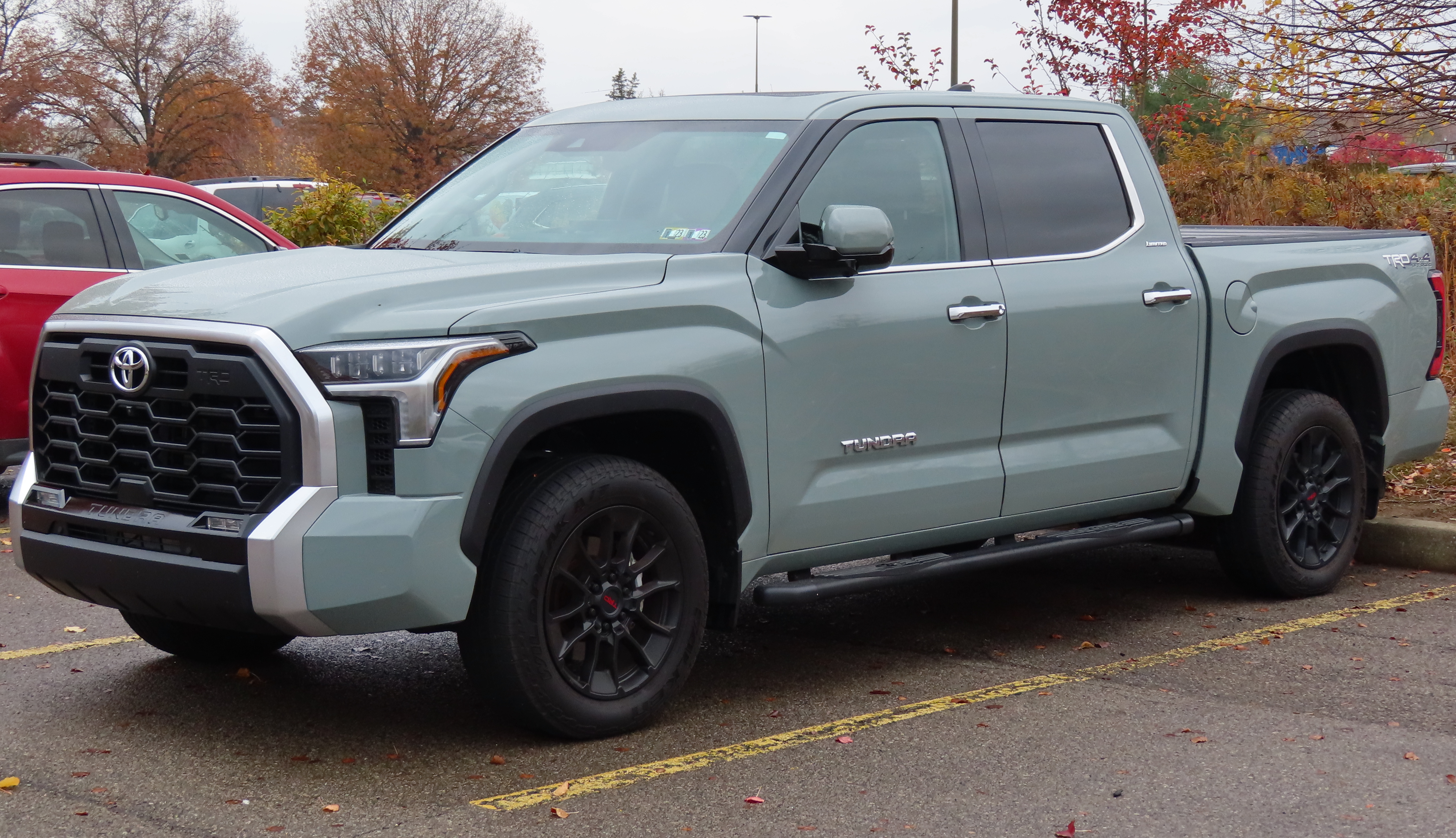
The Toyota Tundra is Toyota’s big pickup truck. In this episode, they’re talking about an engine problem that affected only a tiny number of trucks, and Toyota reportedly replaced the engines for free.
A reliability issue means something can go wrong with the car more than you’d expect. They’re saying Toyota had an engine problem on the Tundra, but it only affected a small number of trucks.
A recall is when the carmaker admits there’s a problem and asks owners to bring the car in for a fix. It’s usually done because the issue could affect safety or reliability.
Replacing the engine means the fix is a full engine swap, not just a minor adjustment. That’s a big deal because it’s expensive and takes more work than most recall repairs.
Company
Yahino Motors
The hosts mention “Yahino Motors” as a company connected to the broader Toyota problems they’re talking about. It’s brought up to explain that the issue may have involved a related organization, not just Toyota itself.
“Frame issues” means there’s a problem with the truck’s main metal structure. If the frame is corroded or cracked, it can be unsafe, so Toyota may offer to replace the frame or pay you to address it.
A “frame payout” is compensation offered by the manufacturer when the vehicle’s frame has a covered defect. Instead of (or in addition to) repairing the car, Toyota would pay owners—often based on a formula—so the owner can replace the frame or otherwise address the issue.
Book value is the value of the car on paper—usually based on depreciation. The point here is that Toyota’s payout was higher than that paper value, so people got more money than you’d expect from the standard valuation.
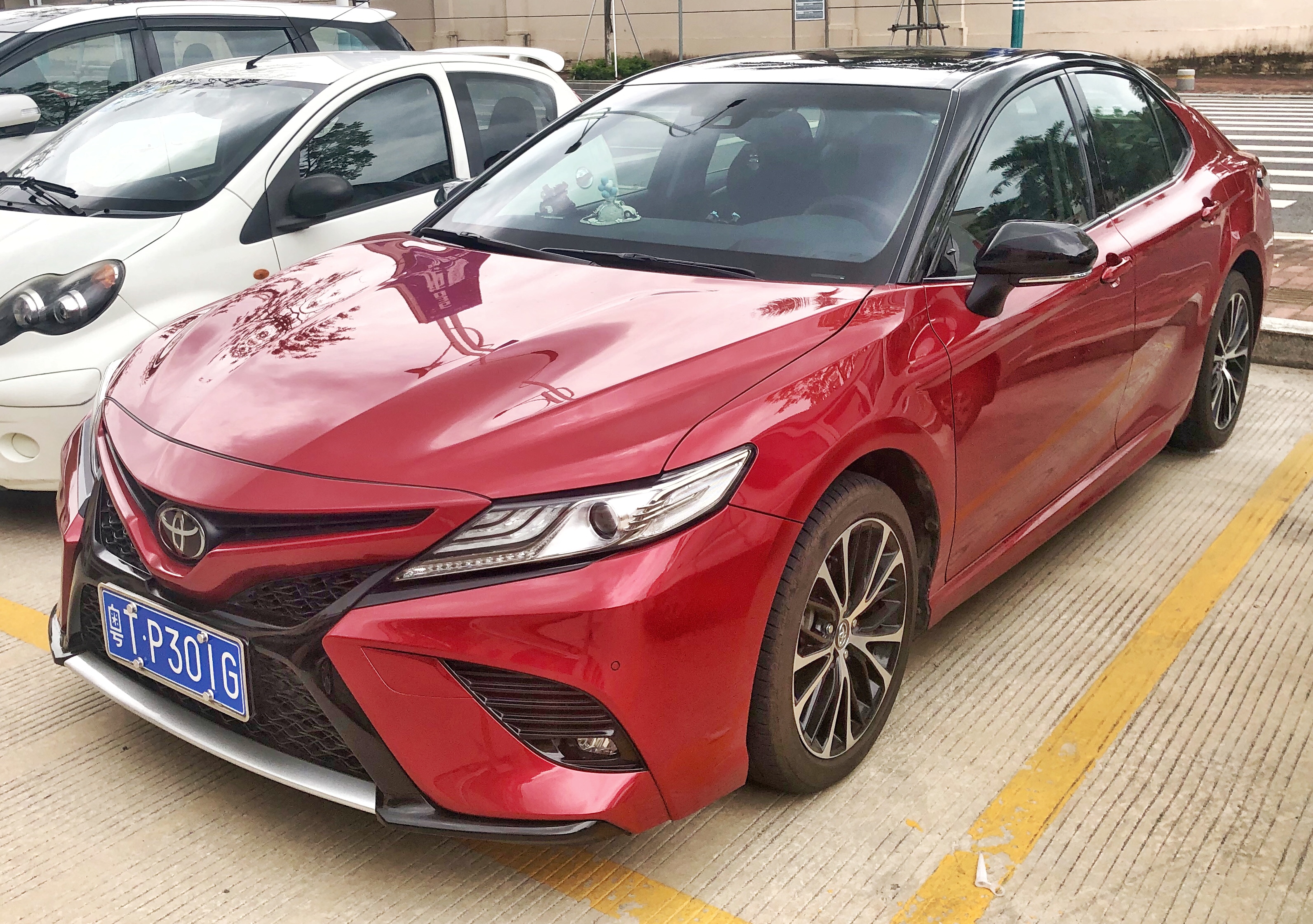
XSE is a higher trim level on the Camry. Trim levels are basically packages of features, so an XSE usually includes more equipment than the base version.
Floor mats are the removable mats that protect the carpet where your feet go. They’re mentioned here because the host is trying to compare what’s included in different years.
Gulf States Toyota is a Toyota dealer/distribution organization in the Gulf States area. The discussion suggests that the way they handle add-ons can raise the final price you pay.
JM&A is a company mentioned as being connected to Toyota distribution. The point here is that distribution companies can influence how add-ons are added and how much the car ends up costing.
These are extra features added after the car ships in, usually by the dealer/distributor. Since they’re not built into the car at the factory, they can add cost and make the car more expensive than you’d expect.
These are extra features added by the distributor/dealer network instead of the factory. They can make one car cost more than another even if the base model looks the same.
A factory option is a feature that the car maker builds into the car during production. It’s usually part of the car from the start, not something added later by a dealer.
Toyota organizes dealers into different geographic areas. This can change how financing and lease rules work, so a dealer in one area may not be able to handle a lease that was set up in another area.
A lease is like renting a car for a fixed time with payments, and you usually return it at the end. This segment says lease returns can be restricted depending on which Toyota region set up the lease.
“Options” are the factory add-ons you choose when ordering a car, like certain tech features or trim levels. Different cars can come with different option combinations even if they’re the same model.
A Toyota Camry is a very common, everyday family sedan. The host is using it as an example of how used cars can have different option packages depending on where they were originally sold.
Florida is one of the states the host brings up as an example of where certain Toyota dealers are located. They’re using it to explain why cars from different regions can show up with different option packages.
Georgia is mentioned alongside Florida as part of the same regional example. The host is using these locations to explain why cars from different areas can have different factory options.
A primary marketing area is basically the region a car brand expects a dealership to sell to. If you’re outside that region, you might find cars with different option packages than what you usually see nearby.
The host is talking about a dealership rating system where dealers can get low grades like “F” or “D.” They’re using it to explain why certain areas might have different buying/selling behavior than others.
It means there are fewer cars available than people want. When that happens, sellers can often charge more or push extra charges because buyers feel they have fewer choices.
The Toyota Corolla is a very common, budget-friendly sedan. The hosts are wondering if Toyota will make more of them because lots of people want to buy one, which can affect overall pricing.
“Allocation” means the factory decides how many cars it will send to each dealership. If your dealership doesn’t get enough Corollas, you can’t sell more than other dealers that do get more cars.
Ackerman Toyota is a car dealership. They’re using it as an example of how Toyota’s supply decisions determine what cars that dealer can stock and sell.
Allocations are how car companies decide which dealerships get the limited cars they can build. If a dealer has a bigger allocation, they’ll have more cars to sell.
Damon Rose is a Toyota executive in charge of sales for Toyota North America. The hosts quote him to explain how Toyota is handling car supply and getting cars to dealers.
Toyota North America is Toyota’s organization that handles sales and distribution for the region. Here, it’s mentioned because the quote is from a Toyota sales leader in that organization.
This refers to how automakers track supply constraints: instead of talking about “days” of inventory, they’re counting how many vehicles are available in the pipeline. It’s a way to communicate that the bottleneck is current supply volume, not just how long existing stock will last.
Inventory turnover means how fast a dealership sells its cars. If it’s turning nearly all of its stock every month, that usually means there aren’t many cars sitting on the lot for shoppers to choose from.
A deposit is money you pay to reserve a car that’s coming in. Here, the host is saying there can be hundreds of people waiting with deposits, so the dealer can’t satisfy everyone at once.
El Monte, California is the city the host mentions for a specific Toyota dealership example. They’re using it to show how tough it can be to manage incoming car orders.
A “Penske store” is a dealership that’s part of a larger dealership group. The point here is that even big, organized dealers can struggle when demand is extremely high.
LIVE
It's 1203.30 here in Venture City, New Jersey,
and our nation's capital, Washington, DC.
This is Car Edge Live,
running late, but we're running,
ladies and gentlemen, with your host,
me, Ray, in my condo inventor,
and Zach hanging out in the office in DC.
How are you today, handsome?
Doing great. Very excited for today's show.
We've got a incredible Toyota dealer joining us today.
Thanks everyone for staying tuned for
just a moment before we jump into today's show.
A friendly reminder that today's program
is brought to you by CarEdge.com.
If myself, my dad, our incredible team,
if we can assist you with anything we'd be thrilled to,
please check out back at CarEdge.com.
So much good stuff going on back there on the website.
And dad, today, we get to bring a guest to the show,
Tyler Baker. Tyler, good to see you again.
It's fantastic to have you on the show.
Tyler from Ackerman Toyota is joining us today.
Tyler, I'm gonna pull up the Ackerman Toyota website
really quickly here.
While I do, do you mind sharing your background
with everyone as I think,
if I'm not mistaken, your second time on the program.
Yeah, yeah, I've been with Ackerman Toyota
for almost 20 years.
I'm in sales.
I'm one of the top salesmen in the entire country.
And that's really it.
I love working with Tyler, man.
Tyler is the most down-to-earth guy in the business.
He also has one of those things
that's gonna make his back longer, I think, behind him.
So really cool dealer.
Ah, that's so cool.
That's the owners.
More power to the owner.
Let's kick things off, Tyler, and pops with this.
There's an article in automotive news this morning,
and it has one of the most insane lines
I've ever seen in an automotive news article,
and it is this.
First, I'll read the headline.
Toyota starts RAV4 production in the US
to answer overwhelming demand for all hybrid crossover.
This line right here, Tyler, makes me shake my head.
Demand for Toyota's redesigned 2026 RAV4 is huge
with a waiting list exceeding 800 customers
at one dealership.
Toyota doesn't have enough cars to go around.
What is going on?
Give us the update, the lay of the land theory.
What is going on in Toyota land?
Yeah, the RAV4s are the high on item.
They were redesigned this year for the first time since 2019.
They're all hybrids.
They're fantastic in every way.
Our wait time isn't now.
We know 800 people on that list.
We have about a four-month turnaround probably right now,
but that is its building.
Every month since they came out,
the list has just grown
because we can't keep up with production on them.
They didn't make any RAV4s for six weeks,
which I assume when they were changing the lines over
for the redesign, which contributed to that.
But, yeah, RAV4s are definitely the hot car right now.
Let me ask you a silly question.
Being as hot as they are,
being that at your store, it's a four-month wait,
at other stores, I'm sure it's even longer,
I know in your dealership,
you don't charge additional dealer markups.
What have you heard is going on with your competitors
who probably do?
What type of additional dealer markups
have you been hearing about from other Toyota dealerships?
I think with the plugins, there's some markups going on.
I think most of the above MSRP, at least in this area,
has been relegated to the identification of the vehicles.
So you have to buy X, Y, or Z package
that might present actually a $100 value
where they charge $1,800 or whatever it might be for it.
We don't do any of that kind of junk.
But I think that's what the dealers in this area have been doing.
It is worth mentioning for everyone in our community,
Tyler's part of the Car Edge certified program
over at Ackerman Toyota.
So if you are in the market to buy a Toyota
and keep us honest here, Tyler,
I know for some vehicles like the RAV4s,
which we're going to stick on here for a second,
yeah, four-month waitlist.
But any Toyota product,
you're happy to work with Car Edge community members
to help them make a deal.
They can reach out to you directly.
Find Tyler's info on the website,
say you're with Car Edge or go through the Car Edge website.
But I just want to call that out here.
We love the fact that y'all have never done markups,
never do added, never do, must have this product,
that product, and I especially love on your website
how y'all say you have the lowest docty in the state of Missouri.
I earn in St. Louis at $299.
So I especially love that.
What's going on in Toyota more broadly?
Is it just these RAV4s?
And if someone is in the market for a RAV4,
should they be waiting until next year to buy one
once production's ramped up?
Give us the lowdown on what you're seeing
because Toyota is hot, man.
It's like they just don't have enough cars, it seems.
I mean, I don't think waiting's going to do you any good
because if you wait so you don't have to wait
three or four months and you just wait six months,
I don't really understand how that moves things along.
And things do just get more expensive over time.
So it's not like Toyota is going to increase prices
by 34 grand on the cars, but just historically,
outside of even the current market, 23 times a year,
there are price increases on every car,
whether it's a half a percent or whatever it is
just to keep up with inflation.
So if in the 20 years I've been doing it,
if you look at any car the year prior,
it's going to be a little bit less expensive
than what it is that year
just because there's incremental price increases on the cars.
Now, if you want to wait because you want to be able to drive a car,
that's completely understandable.
The downside right now is I don't have an answer
to when that is going to be.
All I can say is it's not going to be in the foreseeable future.
So if I can extrapolate from that,
it seems to me that the dealership has made a decision
that demand is so high for the RAV4s right now
that they don't even want to take one
just to put it in demo service
so potential customers can drive one
before they have to put a deposit on it.
Yeah, that's a question we get a lot and it's a fair one.
The reason you don't do that
is because it doesn't just cost you one car.
It can cost you a future car is actually not having a car sold
because even though you can sell that car to yourself,
Toyota approaches some of the allocations
a little bit differently than that.
So if you don't have a car sold to an actual customer,
you earn less cars in the future.
So that one car actually might not cost you one car.
It might end up costing you five or six or seven or eight
over the next year, two years, whatever it might be.
And that's the reason we don't do that.
It's not because we don't want to make it easier
and don't want to have a car here for people to drive.
It's just that we want as many people
to have these cars as possible
and that will end up limiting that.
I'm going to ask a follow-up if I may.
And the follow-up would be,
this might be more of a comment than a follow-up,
but I'll get your response to it.
It seems to me then that it might be
in Toyota corporate's best position
to actually provide a demo, a RAV4 demo to each dealership,
that doesn't count against earning future allocations.
It seems counter-intuitive to me,
since I spent 43 years in retail automotive,
to ask people to pay $40,000 plus for a vehicle
without driving it.
And okay, but you're going to say,
but you can drive it before you buy it
after you waited four months for the damn thing to come in.
In that four-month time,
you might have been able to buy something else
because it turns out you didn't like the way the RAV4 drove.
It just seems that from a corporate level,
not a dealership level, but from a corporate level,
Toyota could be doing something slightly differently
so that it would seem to be more fair for their customers.
Just a thought.
Yeah, and that's a reasonable thought,
but then if I think about it from the corporate side then as well,
okay, so we're going to have this car for people to drive
and what's the goal of that?
To sell more RAV4s?
Well, there's a four-month wait form right now.
What do you mean, sell more RAV4s?
Yeah, you know, Tyler, I want to put myself,
if I may, in the customer's shoes for just a second here.
And this is for the car edge community.
Y'all know how we do it.
Tyler's not prepped on this.
We're doing this live.
Super proud, right?
Like, we are grateful to work with Ackerman Toyota.
Over 50 verified out-the-door price quotes
have been supplied to car edge in the past year
and they score 100 out of 100.
We've never seen add-ons show up.
The dock fee's always been $299, which is $215 below the Missouri average.
You can come down here and you can see all the quotes.
These people do it right.
But at the same time, Tyler,
if I come to your recent Google reviews,
you can see there's unfortunately, for y'all, a one-star review.
And here it is in practice.
I'm going to turn this into a question here in just a second.
I went to see today if I could test drive a RAV4.
I was told by someone that's a three to four month wait for them.
I asked if I could test drive one.
He said they only have two and they're both sold.
So no, I could not drive it.
Is Toyota, are you as a dealer?
Are you losing customers, you think?
Because RAV4 sales we know year over year are down 40% right now
and it's not because of demand.
Are you as a dealer?
Are you losing potential customers?
Trade-in customers, service customers,
Toyota customers because of what's going on right now?
And what's the message to prospective customers
who are maybe cross-shopping a Mazda, a Subaru,
those competitive brands?
What do you say to those customers who unfortunately
want a vehicle but just can't get their hands on it?
Yeah, that's a tough position.
As far as that Google review, which I'm very familiar with,
that was very strongly addressed immediately when that happened.
Yeah, I mean, it's a tough position.
All you can do is the best of what you have in front of you.
And that's, I mean, you have to sell the reasons
why there's a big weight on the RAV4.
Whether you can lose a customer to the fact
that there's a car sitting on someone else's lot,
that can absolutely happen.
And it's going to happen in situations
where someone has a car towed out and their rental's up
in a month or their rental's up in a week or whatever it might be.
And they have to have a car and that kind of car in that segment.
It's the only one that's going to work for what they need.
Certainly, if there's something like a Corolla Cross or a Highlander
or something that might be more readily available
or in a shorter time frame,
you could possibly switch into something like that.
But yeah, I mean, what you're hitting on,
I don't think there's a really great answer for that.
There are situations that are just unavoidable,
usually where there's a time pressure where you could ultimately
lose a customer to that.
But again, the problem that's causing that
is demand is so high you can't keep up.
So are there going to be negatives associated with that?
Sure, but it's a good problem to have.
Pops, jump in and then I want to remind our community.
Ask the questions in the chat.
We'll pull them up here after my dad.
Go for it, Pops.
I have a question for a dear friend of mine
who's in the market for a car, loves EVs,
but his condition in life is such that he's getting older
and it's more painful to get in and out of the EV
that he presently drives.
And he's thinking of something along the lines of an SUV,
but he can't think of an EV that could fit his budget.
Could you speak about the Crown Signia?
Even though it's not an EV, it is a hybrid
and that would be his second choice would be a hybrid.
Talk about the Crown Hybrid and how I believe that is
probably one of Toyota's best kept secrets.
Steve, I don't know if you remember from the last time I was on the show,
but I have a very strong affinity for the Signia.
As does the general manager who takes one as his demo.
I take one as my demo.
Our office manager bought one and they are great.
Getting in and out, that's a huge thing.
You're not getting up into the car or down into the car.
You still have an SUV that rides like that,
gives you all the practical things an SUV gives you with the room
and all that kind of stuff.
They get 38 miles to the gallon,
which is actually only if you drive them kind of hard.
The ride on them, it has the nicest ride of any Toyota.
I guess you can make an argument for the Sequoia,
but the Sequoia is a giant boat.
Of course, they're going to ride nice.
But I think it has the nicest ride of any Toyota.
The power on them is awesome.
The fuel economy on them is awesome.
I think they look great.
And with the hybrid, you get the added fuel economy
and some of the environmental benefits,
but you don't have the practicality shortcomings
of the current EVs as far as charging time,
which I think is the biggest thing
that's kind of keeping those at bay
as far as getting a larger market share.
Let's put you on the spot then, Tyler.
We've got Jumbo Heat Wonder.
What's the deal?
How much is someone targeting to get off?
Which is a great thing to ask for when it comes to Toyotas,
because some Toyotas right now,
it sounds like some of these RAV4s you have to wait four months for.
You're probably not getting anything off of MSRP,
but on something like the Crown
or maybe even some other examples, if you don't mind, Tyler.
Give us a sense of what's a good deal
on the Toyota market today.
It really depends model by model.
It's going to be anywhere from 0% to 6% off of MSRP.
It'll never be above an administrative EV will be $299.
But most of the hybrids, it's going to be just MSRP
because there's a wait for the car.
Or at the very least, we might have one
that'll show up every once in a while.
So a deal is going to be MSRP and it's going to be plus $299.
And the real deal here is going to be the service you get,
both when you buy the car and after you buy the car.
And that's the big difference here,
and especially for me and us as a dealership,
where you're going to have the same people here year after year.
And when you have an issue,
you have someone's cell phone that you can call
to address that issue.
You're not just leaving voicemails at a dealership
to try to solve something that you are angry about in that moment.
How long you been with that from then, Tyler?
18 years.
And if I remember correctly, yours is one of the shorter time frames at Ackerman?
Yeah, yeah.
There's only two people in the sales department
that have been here a shorter amount of time than me,
which really speaks to, I mean,
it speaks to how the GM treats his employees,
but it also speaks to how we run this place as a dealership.
Let's talk trucks, you know,
can't have a show talking about the car market without talking trucks.
What's the situation with trucks at Toyota,
the Tacoma and the Tundra?
Obviously, there were some challenges in the past
regarding the engines and things like that.
What's the situation on the ground with your truck customers,
your truck inventory?
Give us a little bright spot here.
Maybe buyers market on the truck side, fingers crossed.
Yeah, no, you can absolutely, yeah.
You can get a discount on a Tacoma or a Tundra.
I do have both of those in stock.
We don't have a Tundun, but we do have a number here.
There are rebates on the Tundras as well.
They did have issues.
You know, here's something I want to speak towards towards the Tundras,
and this really speaks towards to it as a brand.
The Tundras had, for Toyota, a giant problem.
Okay, they had a giant problem with the engines.
Okay, it affected less than 1% of those two and a half years on those Tundras,
and Toyota replaced those engines with brand new engines,
just free of cost, right?
But it affected less than 1% of them,
and this is probably the biggest deal
as far as the reliability issue with Toyota.
Since I've been in the business, I'm really trying to think.
Yeah, since I've been in the business as far as what's new,
and I think that just speaks to Toyota as a brand,
and when there is an issue like that, everybody wants to pile on
because we do make the most reliable cars in the world,
and even when you have an issue that affects
a very, very, very small percentage of the car,
it is a giant deal with the Toyota.
But you can get a Tundra, you can get discounts on Tundras,
but depending on the car is upwards with the rebates of $6,000-$7,000,
which is gigantic on a Toyota.
And on a Tacoma, you're probably looking somewhere
around 6% off MSRP.
There you go.
And, Dad, I remember when Toyota went ahead and they recalled
and replaced those engines on over 100,000 vehicles,
you came out and you commended them.
You said, wow, that's a big deal.
I mean, that is like acknowledging the issue that happened,
and then it's not to replace an engine,
like that is a very expensive proposition,
but it was a blemish,
and it came at a time if I'm not mistaken,
where Toyota corporate, and globally,
was also running into some issues with various subsidiaries
that they own that were maybe falsifying safety.
Yeah, it was just there was a moment there
where Toyota kind of didn't look like Toyota,
and it seemed like on the truck side,
that led to a little bit of build-up,
Yahino Motors, I think it was the company that was tied up in that.
But, Dad, I remember you praising them,
like, wow, that's a big deal to replace 100,000 engines.
Well, we were extrapolating what the cost of that would be,
which was astronomical.
Well, do you remember the...
And this happened before I was in the car business,
but it was still...
I mean, the recall itself was still present when I started,
but the frame issues on old foreigners and Tacomas
from the early 2000s,
and if you want to talk about Toyota standing behind their product,
when I first started in this business,
which was nearly 20 years ago,
anytime you would get an 02 and 03 and 04 Tacoma traded in,
you would get calls from all over the country,
and it would always be wholesalers or car guys calling
because they'd want to buy that car
to get the frame payout from Toyota,
because Toyota would give you a brand new frame,
and people that love their cars and want to keep it,
they'd just get a brand new frame from Toyota,
but Toyota would also offer payouts on it,
and the payouts were such a high percentage
over what the book value of the car was.
Every single time you get an 02 Tacoma traded in,
and you get a million phone calls from all over the country,
for people trying to buy it just
so they could get the payout from Toyota for the frame.
Absolutely crazy.
I want to ask a quick question, Tyler,
with regards to price points,
and I bring this up through the lens
of some of the deals that we've seen,
meaning some of these Toyotas have gotten quite expensive.
I'm going to share my screen here.
We, as you know, provide car buying services to customers nationwide.
Here's an example.
This is not in your neighborhood,
but it's still a good example of a $45,741 Toyota Camry,
which at the end of the day,
this is a kind of Irish customer of ours,
we ended up getting the selling price to be $38,500.
Can you talk to us about price points here
on some of these Toyotas?
They're pretty expensive.
They had a almost $46,000 Camry.
For me and my dad and I have talked about that.
It's just like a hard stuff to swallow
that they got that expensive.
Yeah. Well, here,
so that's a combination of a couple of things.
One, that's the most expensive Camry
probably that exists on planet Earth.
They put every single option
under the sun on that thing.
Part of it is the amount of things you can add to a car.
So with all the electronics now,
you can add so many different accessories,
many of which are very expensive to a vehicle.
Cars have got, when you say more expensive,
I always think you got to adjust for inflation, right?
So when people say, well,
I bought my house for $120,000 in 1982,
it's, well, okay.
Well, what actually does that house cost in real money?
As far as what a dollar is today, right?
So if you look at how the inflation
and how things have gotten more expensive
over the last six years, new Toyotas have not.
And this is interesting because I was on YouTube
just the other night and there was an entire 30 minute video
on how Toyotas have gotten so much more expensive
at a higher rate than everything else.
And everything in the video was completely and utterly wrong.
Yeah. We've done the analysis.
The brand that is like the biggest culprit would be Jeep.
If I'm not mistaken, Toyota has not increased prices
at the same rate as inflation.
They've been right at or below it.
So like we've done that analysis,
but still the fact that the Camry can be $46,000
is still mind boggling.
Part of that is, okay, so they're all hybrids.
You can get all, I assume that's an all wheel drive,
XSE probably with every option possible under the sun on it.
But yeah, I mean, if you look at the, if you look at a basic,
so just take a basic LE Camry without floor mats on it now,
and you look at a basic LE Camry in 1992 without floor mats.
And forget the fact that that car had two airbags,
and this car has 10, and then the $10,000 of electronics
that's in this car that wasn't in that car,
the LE basic Camry right now costs you less money
than a Camry did in 1992 when you account
for what you can buy with a dollar.
For sure.
Dad, I'm so sorry.
I promise this is my last question
because I'm sucking up a lot of air.
Tell me one of the things on here that is mind boggling
is this Camry has $3,011 of distributor added options.
So this is like another phenomena that is Toyota specific,
which would be these Toyota distributors,
which keep me honest here, my understanding is
when they came over back in the 60s,
they had to get help with distributing their vehicles.
JM&A, if I'm not mistaken,
owns Gulf States Toyota or has a relationship.
Yeah, something's true here.
Yeah, they just add $3,000 of port installed options,
distributor installed options like Jerry's saying here.
That also is a little bit why the prices have been inflated,
and that is a Toyota specific thing.
I know I'm not really explaining what that is to our community.
Maybe you could, but that's a Toyota reality right now.
Yeah, and that's up to the dealers,
and everybody needs to be aware that there's two types of options.
There's a factory option and a port installed option,
and the delineation between those two is a port installed option.
Well, there's a couple,
but a port installed option is something you get
from a parts department,
and a factory option is something you can't.
Also, a factory option is something that you can change
from the factory, but sometimes,
and it requires requests in the sole process,
a port installed option literally up until about five days
before the car is built,
I can take a click of the mouse and I can add or delete
anything I want on or off that car,
whether it's floor mats or body side moldings
or lower accent lamps or whatever it might be.
And that's 100% up to the dealer
as far as what they want to do with that.
Factory options, sometimes it's our choice.
A lot of times it's Toyota's choice as far as that's concerned.
But port installed options is a 100% of the time a dealer decision.
Do you get your vehicles from Gulf State?
No, no, no.
So there's 10 Toyota regions.
We're in the Kansas region.
And the Southeast Toyota, yeah, with Jam and A, they're completely different.
If someone, yeah, they're completely different in every way.
The financing's different.
If someone has a lease,
if they lease through any one of the nine regions
that's not Southeast Toyota,
we can do it, they can turn their lease in
or we can do whatever we normally do if they were local here.
But if it's like a Southeast Toyota lease,
we can't even get them out.
We can't even unwind that or deal with it
because it's a completely separate entity.
And how they option their cars, how they build their cars too.
Like we'll get sometimes when someone trades in a car
and it has a three-year-old Camry, whatever it might be.
And it has option X, Y, and Z on it.
And we'll go, I've never seen this before.
Our cars only come with A, B, and X.
They never come with X, Y, and Z.
And you go, well, this car obviously came from Florida or Georgia
because they will combine things that they won't combine up here or anywhere else.
As you know, Tyler, we grade dealerships, car dealerships nationwide.
Like that's one of the things that has brought a lot of joy to us
and also our community and also a lot of, you know,
put us in the crosshairs from a lot of dealers.
Some of the worst Toyota dealers in the United States
as graded on transparency and also one of the best
with Earl Stewart Toyota down in Florida
are down in the state of Florida, Georgia.
And it's just a friendly reminder to people watching this video,
like shop outside of your local market area.
The manufacturer is called from PMA's primary marketing area.
You'll outside your primary marketing area
if you're in one of these regions where you just flood it
with kind of like what we would call F or D-rated dealers
because they're not transparent
because they ultimately have these add-ons
or are taking advantage of a short supply high demand.
Obviously, this is why we love the relationship we have with y'all.
We're shopping y'all all the time and we get these quotes
and we see how kosher it is, how clean it is, which is great.
But man, oh man, like with Toyotas
and with such high demand and low supply,
it just creates these creative opportunities
for whether it be the dealer or the distributor
to just make more money.
Well, in the case of Southeast Toyota and Gulf States Toyota,
it's the distributor in more cases than not.
I do have a question for you, Tyler, if I may.
We talk on this show constantly about affordability.
I do a lot of different media engagements
and the conversation is typically vehicle affordability.
Now, Toyota has two of the absolute, well, more than two,
but when it comes to sedans and affordable sedans,
Toyota has two of the most affordable,
most sought after vehicles out there, the Camry and the Corolla.
Is there or have you seen a commitment from Toyota
to try and produce more Camrys and Corollas
to help address the general affordability issue
that is impacting the auto industry as we know it today?
I mean, I think Toyota is going to build whatever people want to buy the most of.
So I understand what you're asking
and I understand where you're coming from with that question,
but they're going to look at it purely from a standpoint
of what ultimately do people want to spend money on
and we will build those cars.
So yeah, I mean, we'd love it if they built more Corollas.
So we're in the city of St. Louis, it's in a college town,
but we got Wash U and Slough, like right next to our dealership.
So we actually sell more Corollas than anyone else.
We sell more Corollas than any other car at our dealership,
which is different.
Everybody else sells more Reffors and whatnot than any other model,
but we sell more Corollas than anybody else.
So we'd love if they made more Corollas, but yeah.
I understand where you're coming from,
but they're just going to look at what cars
or do people want to spend money on
and that's the cars they're going to build.
Do they adjust what they build for different regions
or different areas, much like for you guys?
You can't sell more Corollas than anybody else
if you're not allocated more Corollas than anybody else.
Right, exactly.
Exactly.
So do they drill down that deeply to decide
okay, for the Midwest, when we're in the St. Louis market,
we have to produce more Corollas for Ackerman Toyota
because they're going to sell every Corolla
they get their hands on.
Do they drill down that deeply?
It's my understanding that's a region level.
So when you talk about those 10 different regions,
it's the allocations work to the region
and then to the dealer, as far as my understanding is.
And if I may.
Oh, sorry, Tyler.
I was just going to say from our article that was on automotive news,
literally hear our quotes from Damon Rose,
the vice president of sales for Toyota North America.
It's so hot, we're counting inventory in our supply right now, not days.
So my sense here, dad, just reading that one quote,
is that they probably do.
Like they pay a person or two or three or 10
to do what you're describing to be like,
okay, where do we need to move the metal to sell the most cars?
Sorry for interrupting you, Tyler.
No, no, no.
Well, then how about this, pops?
How about this, Tyler?
Again, the reason we are so grateful to have Tyler join us on the show is,
one, Toyota demand is crazy right now and supply is quite low.
So it's great to get his inside info.
Two, this is one of our certified dealer partners.
We've been working on this program for a while now.
50 verified out-the-door price quotes from Ackerman Toyota.
You do not have to worry about any games,
whether you work with Tyler or anyone over there on that team.
Every single quote, there are no add-ons that dock these $299.
And heck, if you negotiate hard enough,
you might even be able to get yourself some savings.
So have a conversation with Tyler.
Have a conversation with his team.
It's AckermanToyota.com.
Here's their website.
So, Tyler, thanks so much.
And I really do want to just pull up one more thing before we sign you off,
which is this 30-minute ad.
I don't know how it can be an ad when I didn't prep you at all
and I'm pulling up a one-star review on your Google page.
You had no clue that was coming, right?
You had no clue I was going to pull up a one-star review on your Google page.
Not an ad, folks.
Definitely not an ad.
Wouldn't have surprised Tyler with that one if it was an ad.
All right.
I think if it was an ad, they would have requested that not be part of it.
Tyler, we appreciate you having you on.
As always, hopefully we can get you back in another month or two.
No, for sure.
Thanks, AckermanToyota.
Thanks, Ray.
Tyler, good to see you again, my friend.
No, you too.
Yep.
Bye-bye.
Ad, come on, man.
You know what's funny?
I was texting with Tyler before the show to make sure he was still available.
And I just want to pull this up for you.
He literally said, I am crazy busy this morning, but I'll be on.
I think they are just like, they're just flooded, man.
Like, they just got too many people that want to buy their,
because the title of today's show is Toyota Seriously Has No More Cars.
How did this happen?
Update, how this happened?
If too many people who want to buy their cars are not enough inventory,
now across the model lineup looks a little bit different, but it's crazy.
It's crazy.
They're unlike any other automaker.
It is, especially the RAV4, if you, you know, the quote that you pulled up in that article,
if you would have followed down that little paragraph, the fact that they're turning their
RAV4 inventory, they're turning almost 97% of their RAV4 inventory on a monthly basis.
That is insanity.
Oh, I don't, if Longo Toyota in El Monte, California has 800 deposits for incoming RAV4s,
and that's a Penske store, and I know how hard it is to keep track of incoming deposits.
I mean, you must have like a one person that has to keep that spreadsheet and keep it accurate,
because it's crazy, but, and that number is growing every month.
It is just so hard for people to be able to get the RAV4 that they want.
And yes, Toyota ultimately loses some customers.
Definitely.
Of course, they don't have a RAV4 available for people to drive.
You know, well, you can look at this one over there.
You can't get in it.
It's sold.
You certainly can't drive it.
So, you know, ultimately they do lose some customers because of that, but it just,
it's a testament to the reputation that they have developed over the years,
that they don't have customers, they have fanatics.
Yeah, they absolutely do.
It's such a polar opposite from other brands that we talk about on this show, too.
Really, really good stuff.
All right, folks, again, friendly reminder.
If we can help you out with anything back at CarEdge.com is where we are.
So, please, please, please spend some time there to see if we can help you out.
We've got this question.
Why is Ackerman on?
Because they're fantastic.
They're ethical.
They're responsible.
They're willing to come on here and share the insights of what's going on on their dealership floor.
If you're a dealer out there and you're ethical, responsible, as graded by our measurements here
at CarEdge by mystery shopping, your dealership and your transparent,
you have the privilege to be able to potentially join us.
So, we love being able to share that information with our community.
Also, final note here from John.
How about answering my emails?
It's Monday, man.
I just got back from the weekend.
I'll check in my email.
I'll get back to you.
I promise.
A little busy over here in CarEdge, land.
But thanks to anyone who emails me, Zach, Z-A-C-H at CarEdge.com.
Pops, let's do it again tomorrow.
That was quite fun.
What's tomorrow, Tuesday?
Yeah, I can do it again tomorrow.
I do have, I think, an 11 a.m. radio interview in Denver tomorrow morning.
Or is that radio interview?
I don't know.
But I'll be on in Denver tomorrow.
But yes, I can certainly find time to do this again at noon tomorrow.
Yes, I'm looking forward to it.
Thank you for putting up with me.
Are we good?
And done.
I'm good and done.
Back tomorrow, folks.
I'll be done.
Love your answer.
About this episode
Toyota’s inventory crunch takes center stage as the hosts and guest dealer Tyler Baker from Ackerman Toyota explain why demand is outpacing supply—especially for the redesigned, all-hybrid 2026 RAV4. They connect long waits (around four months), limited production downtime, and dealer allocation rules to why customers can’t even test-drive. The conversation also covers transparent pricing, how some dealers use add-on “packages,” and how Toyota’s allocation system can penalize dealers when cars aren’t sold to actual customers.
Today on CarEdge Live, Ray and Zach are joined by Tyler from Ackerman Toyota. Tune in to learn more! Hosted by Simplecast, an AdsWizz company. See https://pcm.adswizz.com
for information about our collection and use of personal data for
advertising.