because remember that whole lifetime fluid BS, yeah.
That led to overheating problems, fluid breakdown,
premature wear of the belt and pulley systems,
inadequate cooling, they'd start to shudder,
then they'd lose power,
and you'd end up having to replace it.
And it's very expensive to do so.
Nissan has a reputation
for being very forward thinking with their engineering,
they're not afraid to try things,
and they have some epic failures
that go along with their engineering boldness,
but their CBTs have gotten a lot better.
Just beware if you're looking
at buying an older Nissan that has a CBT,
you're taking a big risk.
So again, to take care of a CBT transmission,
change the fluid.
There's no such thing as a lifetime fluid.
I don't care if they tell you it's a closed system,
it's not designed to be changed.
Bullshit, pardon my French.
Fortunately, most manufacturers now have figured out
that yeah, you really do need to service the fluid,
so they have included that service
in their maintenance schedules.
But if you're buying a vehicle
that has a CBT transmission before you buy it,
look at the owner's manual,
look at the manufacturer's maintenance schedule.
Does it tell you to service the transmission?
Because if it doesn't,
then the dealer's probably not gonna do it,
and you're gonna have to find a mechanic
that is willing to do it and knows how to do it
because the car is not gonna last
if you don't change that fluid.
And you have to be sure to use the right fluid.
Don't cheap out and get the wrong stuff
because each manufacturer has very specific requirements
for the fluids that work
in their specific CBT transmissions.
If you feel your transmission shuddering
or slipping, it just doesn't feel right,
do not ignore it.
They don't get better on their own.
It'll only get worse,
and it will cost you more to fix it.
Now for the mysterious gearhead favorite,
the dual clutch transmission.
Imagine two manual transmissions
living together in one box
and working together as a team.
Kind of like a marriage.
One handles the odd number of gears
and the other handles the even number of gears
and they each have their own clutch.
When you're in one gear,
the computer preloads the next gear on the other side
with the other transmission, the other clutch.
When it's time to shift,
one clutch opens and the other one closes
in a fraction of a second.
It's so fast.
It's like passing a baton in the Olympic relay race.
Smooth, instant, wicked fast.
This is why high performance cars
and their drivers absolutely love them.
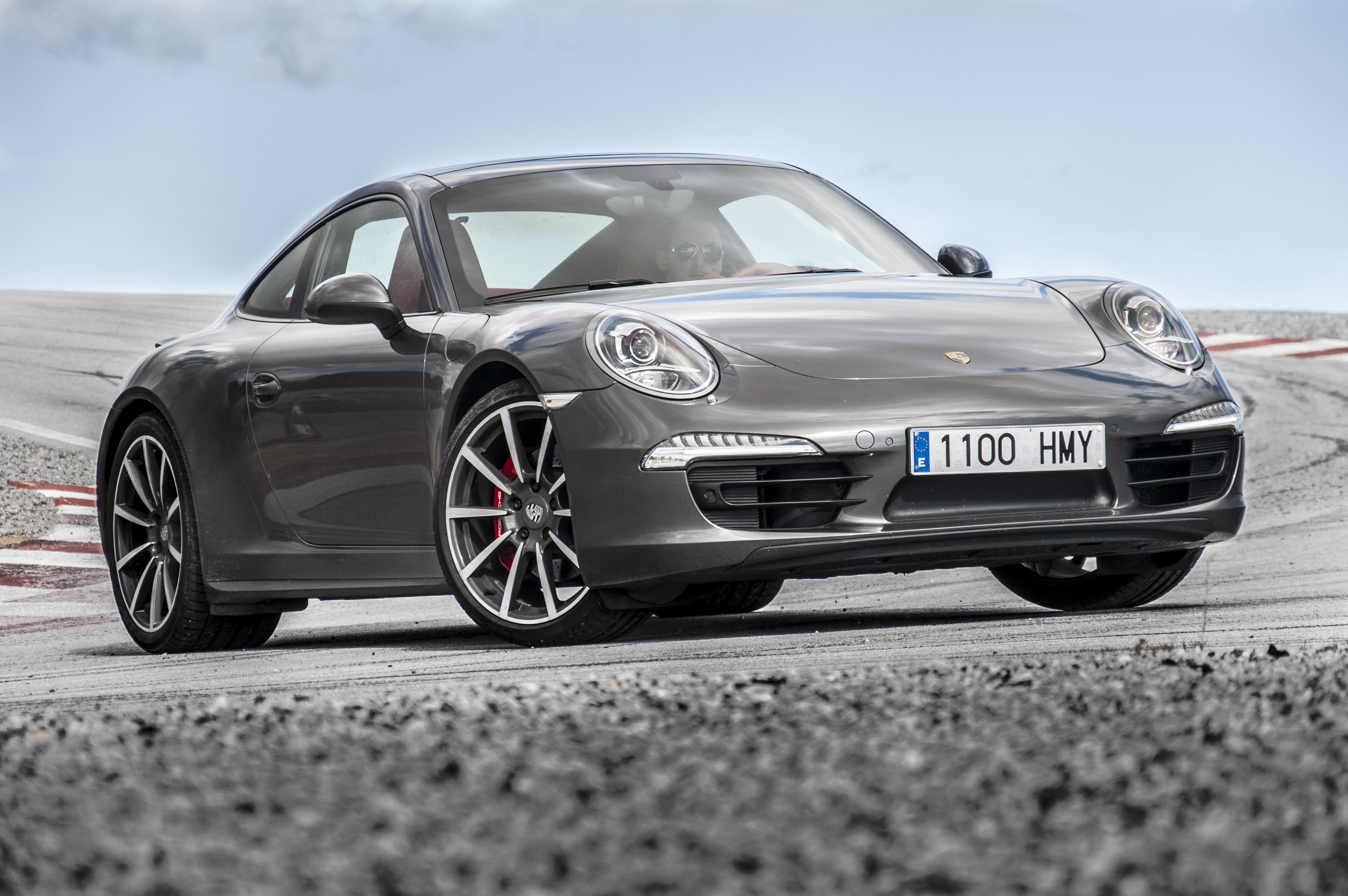
Think Porsche 911
if it doesn't have a proper manual transmission.
The Audi R8, the Nissan GTR,
some of the supercars like Ferrari and McLaren
use dual clutch transmissions.
It's really the best thing next to a true manual
when it works.
Why McLaren's are not reliable
even though they're amazing.
When it's not done well,
they can be very jerky at low speeds and in traffic,
kind of like a caffeinated teenager
learning to drive stick for the first time.
And repairs are ridiculously expensive.
There's this thing called the mechatronics unit.
It's just a fancy name for the brain.
And that's a common failing point.
Hyundai unfortunately is notorious
for their dual clutch transmissions
and the issues that go along with them,
including premature clutch wear and overheating
and some weird programming issues.
Thank goodness for that 10 year 100,000 mile
powertrain warranty.
But it's been so problematic
in the newest generation of the Santa Fe
is the new really boxy ones that they're canning it.
So for 2026, the Santa Fe's are going back
to their traditional eight speed automatic
that is currently in the hybrid model of the Santa Fe
which works just fine.
So if you're looking between the Hyundai Santa Fe
and the Santa Fe hybrid,
be aware they have different transmissions right now.
But as soon as the 26 models come out,
they'll both have the eight speed automatic.
So this is why it matters what kind of transmission
the car has when you are doing your research
to buy a car, because they're not all the same.
Even within a specific car like the Hyundai Elantra,
the end model, the more high performance model
uses a dual clutch.
So it's important to understand the type of transmission
the car has and then research, okay,
what problems has this had?
Transmission problems are one of the biggest problems.
In some ways they are more difficult
than engine problems because when they fail,
I mean, you just gotta get a new one.
So yeah, definitely get one that's under warranty.
Again, you want to stick
to your fluid change intervals religiously.
Don't creep along in traffic for hours if you can avoid it
because that's what makes the clutch packs overheat,
especially in the dual clutch transmissions.
Again, if it feels jerky, it feels hesitant,
go directly to the dealership.
Do not wait until it leaves you stranded.
All right, now let's look at electric vehicles.
You don't really think about electric vehicles
having a transmission because they just work
so differently because they don't have an engine.
They have an electric motor.
So EVs don't need gears in the traditional sense
that regular gas cars do.
Electric motors, they make full torque from zero RPMs
and they can spin up to just these ridiculous speeds
like 10,000, 15,000 RPMs.
That's why the acceleration in an electric vehicle
can be just ridiculously fantastic.
And instead of trying to juggle gears,
most EVs use what's called a single speed reduction gear.
It takes all that speed that the motor makes
and they gear it down just once to be safe
to send it all to the wheels.
It's an awful lot of torque.
So they do have to kind of taper it a little bit
to send it to the wheels.
Some of your high performance EVs, like the Porsche Tacan,
they add a two speed gearbox to give you
better acceleration and efficiency,
but most of your regular EVs
that the average person can afford.
One gear is all that's needed.
It's great because it's fewer moving parts.
They are incredibly smooth.
Did I mention that ridiculous acceleration?
And there's almost no maintenance.
However, if something does fail, it's fairly spectacular.
The car will lose power, come to a stop
and your wallet will spontaneously combust.
So that's the downside.
Some EVs still have fluid in that reduction gear
that does need changing, usually only over 100,000 miles.
But otherwise, they're fairly maintenance free.
At least until the battery of the motor goes quick.
Then you're totally screwed,
but that's a whole nother issue.
I hope this explanation of the different types
of transmissions has been helpful to you
whether you are looking to buy a car
or just trying to keep the one
that you have going for a long time.
Because no matter what you drive,
there are a few universal truths
thanks to the laws of physics.
One is that heat kills.
Overheating cooks the fluid and fries the transmission.
So do your best to keep it cool.
Fluid is blood, blood is life.
Different transmissions need different fluids,
but they all need fluids.
Manuals, automatic CVTs, dual clutch,
they all use their own types of fluids,
their own special blends.
So be sure to use the fluid that is specified
by the manufacturer in your owner's manual.
And pay attention.
If you feel your transmission is slipping,
if it's whining, God forbid if it's grinding,
or you smell burning smells, none of these things are good.
Don't ignore them and hope they'll go away.
They will not, they will only get worse.
So have it looked at right away.
You may be getting bad news from your mechanic
at that point, but it's better than it leaving you stranded
in the middle of the highway.
And don't overload your vehicle more
than it is capable of handling.
So if you use your vehicle for towing,
trying to tow more than the car's rated for,
it's like asking a toddler to deadlift 200 pounds.
It's not gonna happen.
Something's gonna break.
And it's not just the engine that may break.
Very likely it is the transmission that will give out.
So be religious about your maintenance.
$200 transmission fluid change
or flush every 50,000 miles somewhere in there.
That really beats a $5,000 transmission.
Rebuild any day of the week.
So to wrap this up, manual transmission,
three pedals, the only real transmission in my opinion,
but fun, relatively cheap, tough,
but sadly quickly going extinct.
Automatics, they're everywhere, they're smooth,
but they're pricey to fix
and change that fluid religiously.
CVTs very fuel efficient,
but can be problematic, especially the older ones
before anyone knew to change the fluid.
So again, change the fluid, dual clutch transmissions,
sporty, quick, super fun, but a little more high maintenance.
Not every manufacturer programs them correctly
or gets them right.
So be wary of those EVs, no gears, no fuss,
almost no maintenance, but super expensive if they fail.
At the end of the day, the best transmission for you to have
is one that you understand, know how to take care of,
and that works for your lifestyle,
especially if you do a lot of driving, a lot of commuting.
So next time your mechanic says,
hey, you need a transmission flush,
you're gonna know what they're talking about
and why just make sure that your car actually needs it
and you're doing it on a schedule
that makes sense for the type of driving that you do.
The more stop and go driving that you do,
the more towing that you do,
the more frequently that fluid needs to be changed.
That's what's called the extreme schedule
in your owner's manual.
You may not think your driving is extreme
because we think extreme like racing or deserts
or freezing temperatures, but it's not.
Extreme simply means more heat building up in the car
without it being able to cool.
And that's what happens in stop and go commuter traffic.
Thank you so much for listening to The Straight Shift.
If you've got a transmission horror story,
I'd love to hear it.
So hit me up on my website or on social media.
And if you're shopping for a car,
check out my online car buying course,
The No BS Guide to Buying a Car,
or if you just don't wanna deal
with the car buying process yourself at all,
you can hit me up for a free car chat.
Both of those things you can book
at thecarchick.com.
That way you don't accidentally
buy a ticking transmission time bomb.
Until next time, folks, drive safely.
And for the love of all that is holy,
if you have a manual, don't ride the clutch.
I'm outta here.
The Straight Shift podcast is copyright
Lee Ann Shattuck, The Car Chick.
All views expressed by guests and or co-hosts
are those of the guests and or co-hosts,
and not necessarily those of Lee Ann Shattuck
or The Car Chick.
About this episode
Understanding transmissions is crucial for any car owner, yet many overlook this vital component. The episode breaks down the different types of transmissions—manual, automatic, CVT, and dual-clutch—explaining how each functions and their unique pros and cons. The host shares personal anecdotes and practical advice on maintenance, emphasizing the importance of fluid changes and recognizing warning signs of transmission issues. With insights into electric vehicles and their simpler setups, this episode equips listeners with the knowledge to make informed decisions about their vehicles.
In this episode of The Straight Shift, The Car Chick® delves into the often-overlooked topic of car transmissions. She explains the critical role transmissions play in vehicle performance, detailing the various types including manual, automatic, CVT, dual clutch, and electric vehicle systems. The discussion emphasizes the importance of understanding how each transmission works, their maintenance needs, and the potential issues that can arise. Listeners are equipped with knowledge to make informed decisions when buying or maintaining their vehicles, particularly regarding transmission care.
Takeaways
Most car buyers don't realize there are multiple types of transmissions.
A transmission is essential for connecting the engine to the wheels.
Manual transmissions offer a more connected driving experience.
Automatic transmissions are convenient but can be expensive to repair.
CVTs provide fuel efficiency but can feel different to drive.
Dual clutch transmissions are fast but can be jerky in traffic.
Electric vehicles use a single-speed reduction gear for efficiency.
Regular maintenance is crucial for all types of transmissions.
Heat is a major enemy of transmission longevity.
Understanding your transmission can save you from costly repairs.
You can view a full list of resources and episode transcripts here.