00:00
Straight Shift, with the car shift, the podcast that's all about cars, buying, selling, fixing,
00:14
and driving, and sometimes running fast to hear the car shift, now here's he is.
00:22
Hey everyone and welcome back to the Straight Shift, the podcast that slices through the
00:26
spin and calls out all the crap so you can be a smarter car buyer, owner, and driver.
00:33
Today we're tackling one of the most mysterious, least understood, and most expensive parts
00:38
of your car, the transmission.
00:41
When most people are car shopping, they think about the engine, how many cylinders does
00:45
it have, how much power is it a turbo, but almost nobody thinks about the transmission
00:52
beyond does it come in a stick or an automatic, and honestly that hardly matters anymore because
00:57
there are so few manuals left, which makes me very sad.
01:01
But anyway, most buyers don't even realize that there are multiple different kinds of
01:06
automatic transmissions, and each has their own quirks, strengths, and unfortunately headaches.
01:12
But here's the thing, without your transmission, you're not going anywhere, it's the matchmaker
01:18
between the engine and the wheels.
01:21
But if it fails, oh yeah, you're definitely going to notice, usually in the form of a tow
01:26
truck and a repair bill the size of a family vacation.
01:30
So today I'm going to explain the different types of transmissions, how they work, don't
01:35
worry, in layman's terms I promise you're not going to need an engineering degree, which
01:40
ones are the most problematic, and how to get yours to last.
01:44
Before we get into the different types of transmissions, let's back up and talk about
01:49
why we even need a transmission at all.
01:53
Engines are picky little buggers, kind of like my cats at dinner time.
01:57
The job of the engine is to make power, but they only make good power in a certain RPM
02:05
range, that's revolutions per minute.
02:07
If engines spin too slowly, they stall.
02:11
They spin too fast, then they run out of breath.
02:15
This is why you can't just bolt an engine directly to the wheels, you'd either stall it out at
02:21
every stoplight or blow the thing up on the highway.
02:25
This is where the transmission comes in.
02:28
A transmission is a set of gears that keeps the engine spinning in its happy zone all the
02:34
time while letting the wheels spin at whatever speed you need them to go to go the speed
02:42
Let's think of this like riding a bicycle.
02:45
In this scenario, you are the engine.
02:49
If you're climbing a steep hill, you pick a lower gear, right?
02:53
The small sprocket up front, the big one in the back.
02:56
This way you have to pedal a lot, but it feels manageable to get up that hill.
03:03
If you tried to trek up the hill in a higher gear, which means the larger sprockets
03:07
in the front, the smaller ones in the back, yeah, technically you would cover more ground
03:11
with fewer pedal strokes, but it would be so much harder.
03:16
You probably have a heart attack, hence you want to use the lower gear to make it easier
03:22
for you as the engine to get the vehicle, the bicycle up the hill.
03:28
I remember when I was in high school, the summer before my senior year, I had this
03:33
wonderful opportunity to spend several weeks in France and we were biking.
03:38
Went over there and we got these 15 speed road bikes.
03:43
We're not talking Tour de France here, but we were there at the same time as the Tour
03:48
de France and we got passed like we were standing still by all those incredible professional
03:57
We had a lot of hills going through the French countryside in between the different
04:01
youth hostels and little places that we were staying, the villages.
04:06
We always had to make sure we were in the right gear.
04:08
I'd never had a bike that had that many gears before.
04:11
Plus, we were hauling everything we owned for the trip as well as food and water on
04:16
these bikes, so they had extra weight.
04:19
I remember one day we were staying at this really cute little place in a very
04:24
I don't remember what it was, but everybody talked about when you went out of town
04:30
because there was only one road.
04:31
There was this massive hill.
04:33
I'm like, oh, come on.
04:35
It can't be that bad.
04:37
So that night after we'd had some wine at dinner, we walked to the edge of town
04:41
to see this hill and holy cow.
04:46
I thought San Francisco was hilly.
04:49
This was ridiculous.
04:50
It wasn't that long of a hill, but I swear it looked completely vertical as
04:56
we were standing there looking at it.
04:57
While we were standing there, one of these little tiny French cars drove up
05:01
to it, stopped, and then turned around and went the other way.
05:05
They're like, oh, no, I'm not getting up that hill.
05:08
So we had to use the lowest possible gear to haul our bikes and our butts and
05:14
our bags up that hill the next morning.
05:17
I'm glad it was first thing in the morning when we were fresh, but it
05:21
was still a whole lot of work.
05:25
This is why gear ratios matter.
05:28
When you get to flat ground, those higher gears are great.
05:31
They allow you to lay on more speed without having to pedal frantically
05:35
and give yourself a heart attack, you're like a gerbil on math.
05:39
So this is why you have to have a transmission.
05:43
It's basically a whole set of these bicycle gears all packaged into one box so your
05:50
car can always be in the right gear for the job, whether that's creaking
05:54
along in morning traffic or merging onto the freeway like you're being chased
05:59
by a swarm of angry beats.
06:00
And the transmissions don't just help you go, they can also help you to slow down.
06:06
You've ever downshifted going down a hill or even just let off the throttle in an
06:12
You feel the car drag a little, even though you're not touching the brakes.
06:17
This is called engine braking.
06:19
The resistance of the engine is helping to keep your speed in check.
06:24
You can only do it so much, truckers call this jake braking.
06:28
That term comes from the Jacobs engine brake.
06:32
It was one of the first widely used compression braking systems for heavy duty diesel engines.
06:37
Your car essentially does the same thing.
06:40
It just won't sound nearly as cool blasting through the mountains, but same principle.
06:46
Okay, now that you get the why, let's dig into the different types of transmissions
06:51
and how they each pull off this fancy gear juggling act to get you where you want to go.
06:56
We are of course going to start old school, the stick shift, the manual transmission,
07:04
Anyway, a manual transmission is very much just like riding that bicycle that we just
07:10
In a car, however, you've got three main players involved.
07:14
You've got the clutch, you've got the shifter, and you have you.
07:19
You are responsible for shifting the gears.
07:22
The car is not going to do it for you.
07:24
So you press in the clutch pedal, that disconnects the engine from the transmission.
07:31
Then you move your shifter into gear, and then inside the gearbox, there's this little
07:35
collar that slides over and locks you into a different gear on the output shaft.
07:42
When you let the clutch back out, the engine, the transmission reconnect and you're on
07:47
your way in your new gear.
07:49
And hopefully you do it smoothly.
07:51
This is the trick of learning to drive a manual transmission is to get all that timing exactly
07:59
Otherwise, you're stall.
08:02
But it's so cool because it's simple, it's mechanical, and you get to decide what gear
08:09
Driving purists like me love it because you feel so much more connected to the car.
08:14
You understand more about how it works, what the car is doing.
08:18
My daily driver, Maggie, my little mini, she's a six speed manual and honestly I would not
08:24
have it any other way.
08:26
My dad started teaching me how to drive stick when I was seven years old when he got his
08:30
Mazda RX7 and I have never looked back.
08:34
They are also a little bit cheaper to buy if you can find one and they're usually
08:39
a lot simpler to repair.
08:42
They can technically last forever if you don't abuse them.
08:47
Don't ride the clutch like it's a lazy boy foot rest.
08:50
And you still have to change the oil in the clutch about every 50 to 100,000 miles depending
08:56
on the car and how well you drive it.
08:59
The clutch itself will wear out.
09:02
Maggie finally needs a new clutch after 145,000 miles, including track time.
09:10
I've done really well getting a clutch to go that long, but that is why I'm driving my
09:14
mom's old Corolla right now while I wait for a whole bunch of heavily tariffed parts to
09:18
arrive from Germany.
09:20
Not looking forward to disassembling Maggie to change out the clutch, but it's time.
09:26
The downside to a manual transmission is that driving them in stop and go traffic
09:31
is a royal pain in the butt.
09:33
It's about as fun as a root canal without no vacane, especially those of us who are
09:36
getting older and our knees just really don't want to do that anymore.
09:40
This is why automatics have become so much popular and why the manuals are dying out.
09:45
Most people have never learned how to drive them, but there's nothing like driving a manual.
09:55
Anything else is just aiming and you're not going to budge me on that opinion.
10:00
Let's talk about the automatic transmissions because that's probably what the majority
10:04
of you are driving.
10:06
They're boring, but they are easy to drive.
10:12
Imagine two desk fans facing each other inside a big metal donut filled with fluid.
10:22
One of the fans is hooked to your engine.
10:24
The other is hooked to the transmission.
10:27
When the engine fan spins, it throws fluid at the transmission fan making it spin too.
10:33
That's sort of like a water fight inside a donut.
10:37
That's a torque converter and that is doing the work to replace the clutch.
10:42
Instead of a bunch of collars like an Emanuel, you have what's called a planetary gear set.
10:48
So picture a little tiny solar system with a sun gear in the middle and little planet
10:53
gears all around it and a ring gear around those.
10:59
By locking or releasing different parts, you get different gear ratios.
11:05
The beauty of this is you don't need to understand it.
11:08
You don't need to know what it's doing.
11:10
The computers and the hydraulics, they do all the work.
11:13
So all you do is put it in drive and go.
11:17
It's really easy and when done right, they can be smooth.
11:21
They're super convenient.
11:23
They're great for commuting and stopping go traffic, long highway trips and even
11:30
Your older transmissions had four, five, six gears.
11:34
Today, it's not unusual to see eight, nine, 10 speed automatics.
11:39
Those are designed to help increase fuel efficiency by giving you all these different gears,
11:44
everything you could possibly need to do the job without making the engine work
11:48
too hard and drink too much gas.
11:52
The downside, they're really, really expensive when they break.
11:57
They build up more heat than a manual transmission.
12:01
So this is why you have to take really good care of it.
12:04
The fluid in the transmission is the lifeblood.
12:08
Like the vampire said, blood is life.
12:10
The fluid is life and do not under any circumstances,
12:15
believe this lifetime fluid BS.
12:18
There is no such thing as a lifetime fluid.
12:20
It's only lifetime if you define lifetime as until the transmission dies.
12:26
So change that fluid typically every 40 to 60,000 miles, again,
12:31
depending on the car and how you drive it.
12:35
If you use the car to tow or if it's a Volkswagen or an Audi,
12:40
you may need to change it every 30,000 miles.
12:43
And you want to keep your automatic transmission cool as much as possible.
12:47
Avoid overloading the vehicle.
12:50
Try to reduce extended idling.
12:52
I know that's really hard in stopping go traffic,
12:55
but use proper driving habits like downshifting on the inclines
12:58
to minimize that heat build up because they do give you some lower gears.
13:02
But overheating and dirty fluids are what kill most automatics.
13:08
And unless it's a Christ of product like our old Dodge Grand Caravan,
13:12
in which case the planetary gears could just explode
13:14
like the Big Bang Theory for no reason despite proper care and maintenance.
13:18
That's, again, another story.
13:21
Again, keep the fluids changed.
13:24
So that is the key to keeping your automatic transmission working properly.
13:30
All right, now let's stir the pot a little bit.
13:33
The CVT, that stands for Continuously Variable Transmission.
13:39
So how that works is instead of gears,
13:42
you have two cone shaped pulleys with a steel belt that runs between them.
13:48
And by moving those cones closer together or further apart,
13:53
the belt rides higher or lower, which change your gear ratios.
13:58
This, in theory, gives you an infinite number of gear ratios
14:02
instead of a fixed set like 7, 8, 9, 10.
14:06
You get this infinite theoretical range.
14:10
It would be like pedaling a bicycle with this magical chain
14:13
that can just stretch and shrink at will,
14:16
giving you the exact perfect gear ratio for whatever you need.
14:21
Sounds awesome, right?
14:26
They can be super fuel efficient.
14:29
They can be very smooth.
14:31
And they can keep your engine in that sweet spot,
14:33
both for acceleration or fuel efficiency.
14:39
On the flip side, it can feel weird to drive
14:42
because there are no distinct gear shifts.
14:46
We're kind of used to feeling when the car shifts.
14:49
Less so now because automatics are getting smoother,
14:52
but at least those of us purists are used to feeling our gear shifts.
14:56
The other challenge is when you floor it, the engine revs up
14:59
and then it kind of sits there, buzzing like a weed whacker
15:02
waiting for the rest of the car to catch up.
15:05
It's this infamous rubber band effect.
15:08
And it also really depends on how it is programmed
15:12
because, yes, it is controlled by computers.
15:15
Some manufacturers program to maximize fuel efficiency
15:19
at the expense of oomph.
15:21
That's the technical term for acceleration.
15:24
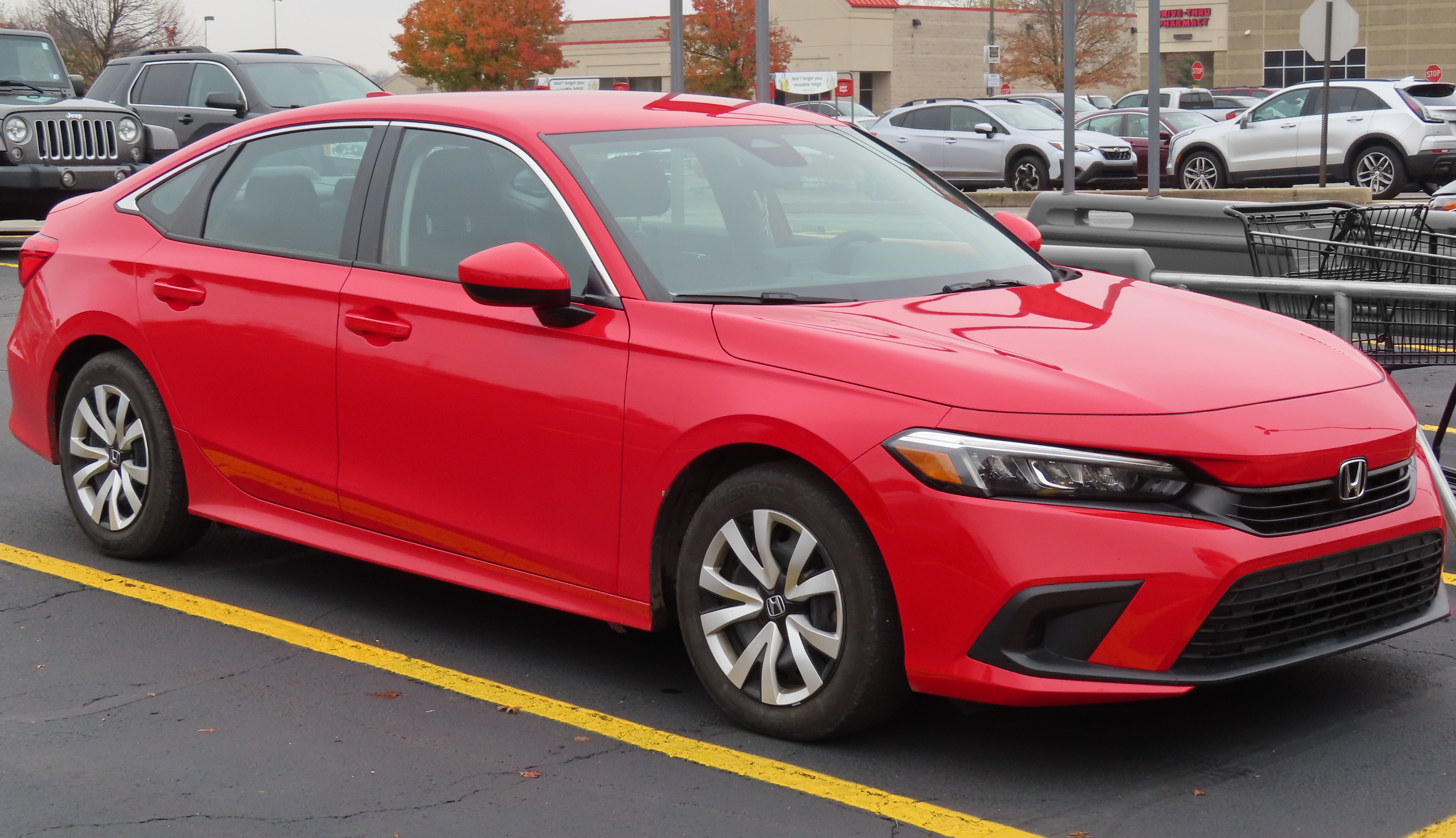
I had a rental Honda Civic many, many years ago.
15:29
It was like maybe a 2014, somewhere in there.
15:32
I think it was a ninth gen Civic.
15:34
And that poor rental car, it had a CBT transmission.
15:38
It gave you like eco mode, normal mode, and sport mode.
15:44
I could not find a mode that worked.
15:46
That poor car was never in the right gear
15:50
for what I needed it to do.
15:53
It was probably not programmed for my style of driving,
15:57
but I have never been so miserable in a rental car,
16:02
including that PT Cruiser that I had in San Diego,
16:05
which was at least fun.
16:06
Some manufacturers do it a lot better than that.
16:08
Like Subaru, they tend to do a good job with theirs.
16:11
They give you enough oomph because Subaru,
16:15
without sacrificing too much fuel efficiency,
16:19
But the CBT in general is just very boring.
16:23
It has a little bit of a droning noise
16:24
that can drive people nuts,
16:27
and it's about as fun as driving a Blender.
16:29
But it can be very fuel efficient
16:31
and more and more cars are going to the CBTs.
16:34
Unfortunately, they're not always the most durable,
16:38
especially the earlier ones, Nissan.
16:42
Nissan CBTs tended to fail,
16:45
especially in the early years due to a combination of things,
16:49
design flaws, manufacturing issues, poor maintenance,
16:53
because remember that whole lifetime fluid BS, yeah.
16:57
That led to overheating problems, fluid breakdown,
17:00
premature wear of the belt and pulley systems,
17:02
inadequate cooling, they'd start to shudder,
17:05
then they'd lose power,
17:06
and you'd end up having to replace it.
17:08
And it's very expensive to do so.
17:10
Nissan has a reputation
17:12
for being very forward thinking with their engineering,
17:15
they're not afraid to try things,
17:18
and they have some epic failures
17:19
that go along with their engineering boldness,
17:23
but their CBTs have gotten a lot better.
17:26
Just beware if you're looking
17:27
at buying an older Nissan that has a CBT,
17:30
you're taking a big risk.
17:32
So again, to take care of a CBT transmission,
17:37
There's no such thing as a lifetime fluid.
17:39
I don't care if they tell you it's a closed system,
17:42
it's not designed to be changed.
17:44
Bullshit, pardon my French.
17:46
Fortunately, most manufacturers now have figured out
17:49
that yeah, you really do need to service the fluid,
17:52
so they have included that service
17:54
in their maintenance schedules.
17:56
But if you're buying a vehicle
17:57
that has a CBT transmission before you buy it,
18:01
look at the owner's manual,
18:02
look at the manufacturer's maintenance schedule.
18:05
Does it tell you to service the transmission?
18:07
Because if it doesn't,
18:09
then the dealer's probably not gonna do it,
18:11
and you're gonna have to find a mechanic
18:13
that is willing to do it and knows how to do it
18:16
because the car is not gonna last
18:19
if you don't change that fluid.
18:21
And you have to be sure to use the right fluid.
18:24
Don't cheap out and get the wrong stuff
18:26
because each manufacturer has very specific requirements
18:29
for the fluids that work
18:30
in their specific CBT transmissions.
18:34
If you feel your transmission shuddering
18:37
or slipping, it just doesn't feel right,
18:41
They don't get better on their own.
18:43
It'll only get worse,
18:44
and it will cost you more to fix it.
18:48
Now for the mysterious gearhead favorite,
18:51
the dual clutch transmission.
18:54
Imagine two manual transmissions
18:58
living together in one box
19:00
and working together as a team.
19:04
Kind of like a marriage.
19:05
One handles the odd number of gears
19:07
and the other handles the even number of gears
19:10
and they each have their own clutch.
19:13
When you're in one gear,
19:14
the computer preloads the next gear on the other side
19:19
with the other transmission, the other clutch.
19:22
When it's time to shift,
19:24
one clutch opens and the other one closes
19:27
in a fraction of a second.
19:30
It's like passing a baton in the Olympic relay race.
19:33
Smooth, instant, wicked fast.
19:36
This is why high performance cars
19:38
and their drivers absolutely love them.
19:43
if it doesn't have a proper manual transmission.
19:45
The Audi R8, the Nissan GTR,
19:49
some of the supercars like Ferrari and McLaren
19:51
use dual clutch transmissions.
19:52
It's really the best thing next to a true manual
19:59
Why McLaren's are not reliable
20:01
even though they're amazing.
20:03
When it's not done well,
20:04
they can be very jerky at low speeds and in traffic,
20:09
kind of like a caffeinated teenager
20:10
learning to drive stick for the first time.
20:13
And repairs are ridiculously expensive.
20:17
There's this thing called the mechatronics unit.
20:20
It's just a fancy name for the brain.
20:23
And that's a common failing point.
20:26
Hyundai unfortunately is notorious
20:27
for their dual clutch transmissions
20:29
and the issues that go along with them,
20:32
including premature clutch wear and overheating
20:35
and some weird programming issues.
20:38
Thank goodness for that 10 year 100,000 mile
20:40
powertrain warranty.
20:41
But it's been so problematic
20:43
in the newest generation of the Santa Fe
20:45
is the new really boxy ones that they're canning it.
20:49
So for 2026, the Santa Fe's are going back
20:53
to their traditional eight speed automatic
20:55
that is currently in the hybrid model of the Santa Fe
20:59
which works just fine.
21:00
So if you're looking between the Hyundai Santa Fe
21:03
and the Santa Fe hybrid,
21:05
be aware they have different transmissions right now.
21:07
But as soon as the 26 models come out,
21:09
they'll both have the eight speed automatic.
21:12
So this is why it matters what kind of transmission
21:16
the car has when you are doing your research
21:19
to buy a car, because they're not all the same.
21:22
Even within a specific car like the Hyundai Elantra,
21:27
the end model, the more high performance model
21:29
uses a dual clutch.
21:31
So it's important to understand the type of transmission
21:33
the car has and then research, okay,
21:36
what problems has this had?
21:40
Transmission problems are one of the biggest problems.
21:43
In some ways they are more difficult
21:45
than engine problems because when they fail,
21:48
I mean, you just gotta get a new one.
21:50
So yeah, definitely get one that's under warranty.
21:53
Again, you want to stick
21:55
to your fluid change intervals religiously.
21:59
Don't creep along in traffic for hours if you can avoid it
22:03
because that's what makes the clutch packs overheat,
22:06
especially in the dual clutch transmissions.
22:08
Again, if it feels jerky, it feels hesitant,
22:11
go directly to the dealership.
22:13
Do not wait until it leaves you stranded.
22:18
All right, now let's look at electric vehicles.
22:22
You don't really think about electric vehicles
22:24
having a transmission because they just work
22:26
so differently because they don't have an engine.
22:28
They have an electric motor.
22:31
So EVs don't need gears in the traditional sense
22:35
that regular gas cars do.
22:37
Electric motors, they make full torque from zero RPMs
22:42
and they can spin up to just these ridiculous speeds
22:44
like 10,000, 15,000 RPMs.
22:47
That's why the acceleration in an electric vehicle
22:50
can be just ridiculously fantastic.
22:54
And instead of trying to juggle gears,
22:57
most EVs use what's called a single speed reduction gear.
23:01
It takes all that speed that the motor makes
23:06
and they gear it down just once to be safe
23:09
to send it all to the wheels.
23:11
It's an awful lot of torque.
23:12
So they do have to kind of taper it a little bit
23:16
to send it to the wheels.
23:18
Some of your high performance EVs, like the Porsche Tacan,
23:22
they add a two speed gearbox to give you
23:25
better acceleration and efficiency,
23:28
but most of your regular EVs
23:31
that the average person can afford.
23:33
One gear is all that's needed.
23:35
It's great because it's fewer moving parts.
23:37
They are incredibly smooth.
23:40
Did I mention that ridiculous acceleration?
23:42
And there's almost no maintenance.
23:45
However, if something does fail, it's fairly spectacular.
23:50
The car will lose power, come to a stop
23:53
and your wallet will spontaneously combust.
23:55
So that's the downside.
23:57
Some EVs still have fluid in that reduction gear
24:00
that does need changing, usually only over 100,000 miles.
24:04
But otherwise, they're fairly maintenance free.
24:07
At least until the battery of the motor goes quick.
24:09
Then you're totally screwed,
24:09
but that's a whole nother issue.
24:11
I hope this explanation of the different types
24:14
of transmissions has been helpful to you
24:16
whether you are looking to buy a car
24:18
or just trying to keep the one
24:20
that you have going for a long time.
24:22
Because no matter what you drive,
24:24
there are a few universal truths
24:27
thanks to the laws of physics.
24:29
One is that heat kills.
24:32
Overheating cooks the fluid and fries the transmission.
24:35
So do your best to keep it cool.
24:39
Fluid is blood, blood is life.
24:42
Different transmissions need different fluids,
24:45
but they all need fluids.
24:47
Manuals, automatic CVTs, dual clutch,
24:50
they all use their own types of fluids,
24:52
their own special blends.
24:53
So be sure to use the fluid that is specified
24:56
by the manufacturer in your owner's manual.
25:01
If you feel your transmission is slipping,
25:04
if it's whining, God forbid if it's grinding,
25:07
or you smell burning smells, none of these things are good.
25:11
Don't ignore them and hope they'll go away.
25:13
They will not, they will only get worse.
25:15
So have it looked at right away.
25:18
You may be getting bad news from your mechanic
25:21
at that point, but it's better than it leaving you stranded
25:25
in the middle of the highway.
25:26
And don't overload your vehicle more
25:29
than it is capable of handling.
25:32
So if you use your vehicle for towing,
25:34
trying to tow more than the car's rated for,
25:38
it's like asking a toddler to deadlift 200 pounds.
25:41
It's not gonna happen.
25:41
Something's gonna break.
25:42
And it's not just the engine that may break.
25:45
Very likely it is the transmission that will give out.
25:49
So be religious about your maintenance.
25:51
$200 transmission fluid change
25:54
or flush every 50,000 miles somewhere in there.
25:57
That really beats a $5,000 transmission.
26:01
Rebuild any day of the week.
26:04
So to wrap this up, manual transmission,
26:07
three pedals, the only real transmission in my opinion,
26:10
but fun, relatively cheap, tough,
26:13
but sadly quickly going extinct.
26:16
Automatics, they're everywhere, they're smooth,
26:19
but they're pricey to fix
26:20
and change that fluid religiously.
26:23
CVTs very fuel efficient,
26:26
but can be problematic, especially the older ones
26:29
before anyone knew to change the fluid.
26:31
So again, change the fluid, dual clutch transmissions,
26:36
sporty, quick, super fun, but a little more high maintenance.
26:40
Not every manufacturer programs them correctly
26:42
or gets them right.
26:44
So be wary of those EVs, no gears, no fuss,
26:48
almost no maintenance, but super expensive if they fail.
26:52
At the end of the day, the best transmission for you to have
26:55
is one that you understand, know how to take care of,
26:58
and that works for your lifestyle,
27:00
especially if you do a lot of driving, a lot of commuting.
27:04
So next time your mechanic says,
27:07
hey, you need a transmission flush,
27:09
you're gonna know what they're talking about
27:10
and why just make sure that your car actually needs it
27:13
and you're doing it on a schedule
27:15
that makes sense for the type of driving that you do.
27:19
The more stop and go driving that you do,
27:22
the more towing that you do,
27:24
the more frequently that fluid needs to be changed.
27:26
That's what's called the extreme schedule
27:29
in your owner's manual.
27:31
You may not think your driving is extreme
27:33
because we think extreme like racing or deserts
27:36
or freezing temperatures, but it's not.
27:39
Extreme simply means more heat building up in the car
27:43
without it being able to cool.
27:45
And that's what happens in stop and go commuter traffic.
27:49
Thank you so much for listening to The Straight Shift.
27:51
If you've got a transmission horror story,
27:54
I'd love to hear it.
27:55
So hit me up on my website or on social media.
27:58
And if you're shopping for a car,
28:00
check out my online car buying course,
28:02
The No BS Guide to Buying a Car,
28:04
or if you just don't wanna deal
28:05
with the car buying process yourself at all,
28:08
you can hit me up for a free car chat.
28:10
Both of those things you can book
28:12
at thecarchick.com.
28:14
That way you don't accidentally
28:16
buy a ticking transmission time bomb.
28:19
Until next time, folks, drive safely.
28:21
And for the love of all that is holy,
28:23
if you have a manual, don't ride the clutch.
28:28
The Straight Shift podcast is copyright
28:31
Lee Ann Shattuck, The Car Chick.
28:32
All views expressed by guests and or co-hosts
28:35
are those of the guests and or co-hosts,
28:38
and not necessarily those of Lee Ann Shattuck