The hosts are teeing up a discussion about race-focused tires and how they’re chosen for grip and durability. Tire selection is a major part of motorsport strategy because it affects traction, braking, and confidence.
Topic
security around them
This refers to protecting race tires from theft or tampering before events. In motorsport, tires are expensive and performance-critical, so teams often take extra steps to secure them.
Rear-wheel drive means the power goes to the back wheels. Many performance cars use it because it can make the car feel more controllable when you drive hard.
Term
sequential look
A sequential gearbox means you shift one step at a time in order—like 1st to 2nd to 3rd—rather than moving through a gate pattern. Racers like it because it can make shifting quicker and more repeatable.
An “aeropackage” is the car’s add-on aero parts, like wings and front/rear spoilers. They help the car stick to the road at speed, improving grip and stability.
A “sequential kit” makes the car shift gears in order—one step at a time—rather than using an H-pattern gate. It usually makes shifting quicker and more repeatable during hard driving.
A “Hollinger H-pattern box” is a heavy-duty racing transmission made by Hollinger. The “H-pattern” is the classic shift layout, and it’s designed to survive hard launches and lots of shifting.
Phillip Island is a famous race track in Australia. People use it to test how a car handles at speed because the track has lots of challenging corners.
Place
Bassett
“Bassett” here sounds like a motorsport event connected to older cars. The host is saying there was a heritage event, meaning it was more about history and classic-spec cars.
Steve Winwood is the person the host mentions who was rallying with an XR8 Falcon. The story is about the host meeting him at events and getting the chance to drive the car.
The Ford XR8 Falcon is a V8-powered performance version of the Falcon. Here it’s being used in rally-style events, meaning it’s been modified to compete off-road/over stages.
The “rally paddock” is where rally teams hang out and work on the cars between timed sections. It’s where they do quick changes so the car is ready for the next stage.
“Rally tyres” are special tires made for rally stages. They’re designed to grip on loose or changing surfaces, and they can be prepared differently than normal road or track tires.
Term
cutting the tyre between stages
“Cutting the tyre between stages” means the team alters the tire tread after one timed section and before the next. The goal is to keep the tire gripping well as conditions and wear change.
This is a Holden Commodore, an Australian car that can come with a V8 engine. The V8 is the big deal here because it sounds great and has lots of pulling power, so it’s forgiving even if you grab the wrong gear.
A V8 is an engine with eight cylinders. It usually makes strong low-end pulling power, so the car can accelerate easily without needing to rev as high.
Rally “stages” are timed road sections. “Night stages” are the same kind of timed runs, but after dark, so you have to rely more on what you can see with headlights and what you remember from notes.
Topic
camber event
“Camber” means the road surface tilts sideways. If an event has lots of camber, the tires can grip differently in corners, so it can change how the car feels and handles.
Topic
silver fern
“Silver fern” is the name of a rally event in New Zealand that the speaker wants to do. It’s basically the event they’re planning to enter.
Michelin is a well-known tire brand. The speaker is talking about Michelin’s business presence, and tires are a big deal in rallying because they affect grip.
The Ford Mustang is a sporty car made by Ford. In racing events, people can race specific versions of it in a “cup” series where many cars are set up to compete under similar rules. That’s why it’s mentioned as part of the racing lineup.
TCR is a type of touring-car racing where the cars are based on models you could buy, but modified for racing. The rules are standardized so teams can compete without spending as much as in some other series.
The Audi R8 is a fast sports car made by Audi. A racing “cup” series means a group of cars based on the same model compete against each other under shared rules. The podcast brings it up because there was an R8-focused racing program.
Asian Le Mans is endurance racing in Asia, similar in spirit to the famous Le Mans format. It’s longer races where tires and planning matter a lot.
Term
containers
Here, “containers” means large shipping boxes used to transport lots of tires at once. It’s a way to describe the scale of moving race tires around the world.
“Wets” are special race tires made for rain or wet track conditions. They’re designed to grip better and clear water so the car can handle safely and quickly.
Term
quality tyres
“Quality tyres” here means the specific race tires the team is using for that event. After they’re fitted, the team watches how they’re performing and makes adjustments so everything stays within the rules and recommendations.
“Recommended suspension” means the suggested settings for the car’s suspension. Those settings help the tires stay planted on the road so you get better grip and more even tire wear.
Sydney Motorsport Park is a race track in Australia. Different tracks stress the tires in different ways, so teams change tire pressures and setups depending on where they’re racing.
Place
Phillip Barlin
This sounds like a reference to a specific Australian race track. The point is that each track makes tires work differently, so teams adjust tire pressures and setup accordingly.
“Temperature” here means how hot the track and tires are. Tire grip changes with heat, so teams may adjust tire pressure when it’s hotter (like at Darwin).
Darwin is a place where the race conditions are hotter. When it’s hotter, tires heat up differently, so teams often adjust tire pressure to keep performance consistent.
“Super touring” was a period of touring-car racing where cars were based on production models but heavily prepared for competition. The speaker is saying the tires back then were extremely secret and advanced.
“Confidential tyres” means the race tires were so secret and important that they were handled like critical technology. The speaker says teams had strict rules about where they could keep them.
A “three hour” race is a long endurance event. Instead of just sprinting, you have to keep the car or bike performing for hours without overheating or wearing things out too fast.
Term
Suzuki flat
This phrase is probably mis-transcribed or said as slang. The speaker is mainly saying the bike was pushed extremely hard the whole way.
GTP refers to a type of race category for purpose-built prototype cars. It’s basically a class of racing cars designed for endurance-style competition.
A street circuit is a race course made from normal city streets. Instead of a dedicated racetrack, they close roads and set up barriers and markings for racing.
Lakeside is a race track where teams can test cars. Here, it’s where they did a special tire test that helped them understand how much faster the right tires could make the car.
Term
rolled those tires
In racing, “rolling” tires means getting them warmed up and ready to work at their best. The idea is to make sure the tires perform consistently when you start measuring lap times.
Term
pushed them down the grid
This means getting the tires/car staged on the starting grid in a specific way. The goal is to have the tires at the right temperature and ready to grip when the run starts.
Toyota Racing Series is a racing championship in New Zealand. In this part of the conversation, they’re talking about tires and how Michelin became the official tire supplier.
A tire supplier is the company that provides the tires for a race series or team. Better or different tires can change how the cars handle and how long the tires last.
An official tire is the tire brand designated by a racing series as the approved or contracted supplier. That usually means teams use that tire specification, which can standardize variables and shift competition toward car setup and driver skill.
Formula Renault was a junior race series for up-and-coming drivers. People treat it like an early training ground before moving to bigger, faster racing categories.
Formula Ford is a junior open-wheel racing series. It’s known for being a good place for drivers to learn because the cars are relatively straightforward compared to higher levels.
Term
F3
F3 means Formula 3, a mid-level junior racing class. Drivers often move into it after earlier series as they work their way up.
Keita Mazepin is a racing driver mentioned as part of the overseas competitors. The point is that the series attracted international talent.
Place
Oren Park to the South Circuit
Oren Park was a motorsport venue, and the “South Circuit” refers to one of its track configurations/layouts. Track layout matters because different sections stress brakes, tires, and suspension differently, changing lap times and car behavior.
A “24 hour” race is a long endurance event where the car has to keep going for a full day. Drivers swap out and teams manage fuel, tires, and repairs over many hours.
“Formula Atlantic” refers to a North American open-wheel racing category used as a stepping stone for drivers aiming at higher-level series. The host is describing a specific “J Splitter Racing” Formula Atlantic effort and how it came together for an Atlantic gig in the early 90s.
This means an older-style racing series for cars built to a particular set of rules (“Formula Forward”). The “historic” part means people race these cars as part of a throwback or preservation-minded competition.
Car
FRA-01
FRA-01 is the specific car Trevor Sheumack built for historic Formula Forward racing. The name is treated like a project/vehicle identifier, and the segment explains it was later converted into a hill-climb car with different engine and chassis changes.
A hill climb car is built or modified for racing up a hill. Instead of going around a track, it’s about getting up the incline as fast as possible, so the car often gets tuned differently.
“Uprights” are the strong metal pieces that hold the wheel in place and connect the suspension to the car. If they’re wrong or weak, the handling and alignment won’t be consistent.
Concept
COVID lockdown period
They mention the COVID lockdown as the time when they had more time at home to work on the car. Instead of normal routines, they used the downtime to build parts.
Wishbones are the arms that connect the suspension to the wheel. They help control how the wheel moves as the car hits bumps and turns, which affects grip.
This is a Ford Escort from the “Mark II” generation, but in a panel van body style. People in motorsport sometimes keep these vans around because they can be used to store or swap engines and parts.
Stephen Brooks is the person credited with the winning racing engine in this story. Mentioning him is basically a way of saying the engine has a strong racing history.
An E30 M3 is a BMW performance model from the 1980s/early 1990s. It’s a rally-and-racing favorite because it’s strong, well-supported, and has a big motorsport reputation.
“Group A” is a type of racing class with rules about using production-based cars. It helps ensure cars are comparable and that the competition follows a defined rulebook.
The Nürburgring is a famous German race track. The “Short Circuit” is a shorter version of the track layout, but it’s still very challenging and used for major racing events.
Zandvoort is a race track in the Netherlands. It’s known for being demanding on the car—especially the tires—because of how the track is shaped and how the corners flow.
Sandown is a motorsport venue in Australia (commonly referring to Sandown Raceway in Melbourne). It’s used for racing events, so it’s a relevant reference for where the guest arranged a passenger ride.
LIVE
G'day, it's Rusty here. I'll set the part two of my feature episode with Trevor Schumack,
part of our commitment to stories from the paddock and service park, from time to time,
by good storytellers who are these long time, friendly, familiar faces who we see so often
when we go to work at events, but you don't always realise the things they've done or
the significant people that they've worked with along the way. On that note, worth listening
to part one, if you haven't done so before hitting the gas on this one, from working
on rides in Manly to Formula Ford fabrication and then rolling the dice on Europe where
he met and worked with some great people. Coming up special tyres and security around
them, some sleepless nights there, plus a cool BMW and a beast of a rally car that is
all set to tackle some iconic Aussie roads. Let's launch back into it now.
You have bought one of those BMWs, it's got to be the History 2, Johnny Giacotto, I think
Paul Morris and someone tell me about that thing and you rented it winter not all that
long ago, didn't you? Is that right? Yeah, a couple of years ago I sort of had an opportunity
to, I mean I've always had those, the super touring cars, rear wheel drive, they're just
fantastic and they sound amazing and what have you. Anyway, I bought a car out of New
Zealand that was the first, Nigel Barclay helped you. Yeah, Nigel, I've been talking
to Nigel for a couple of years saying, if you find me a car and he came up to me when
I was there one time and he says, hey have at this one. Anyway, catalogue story short,
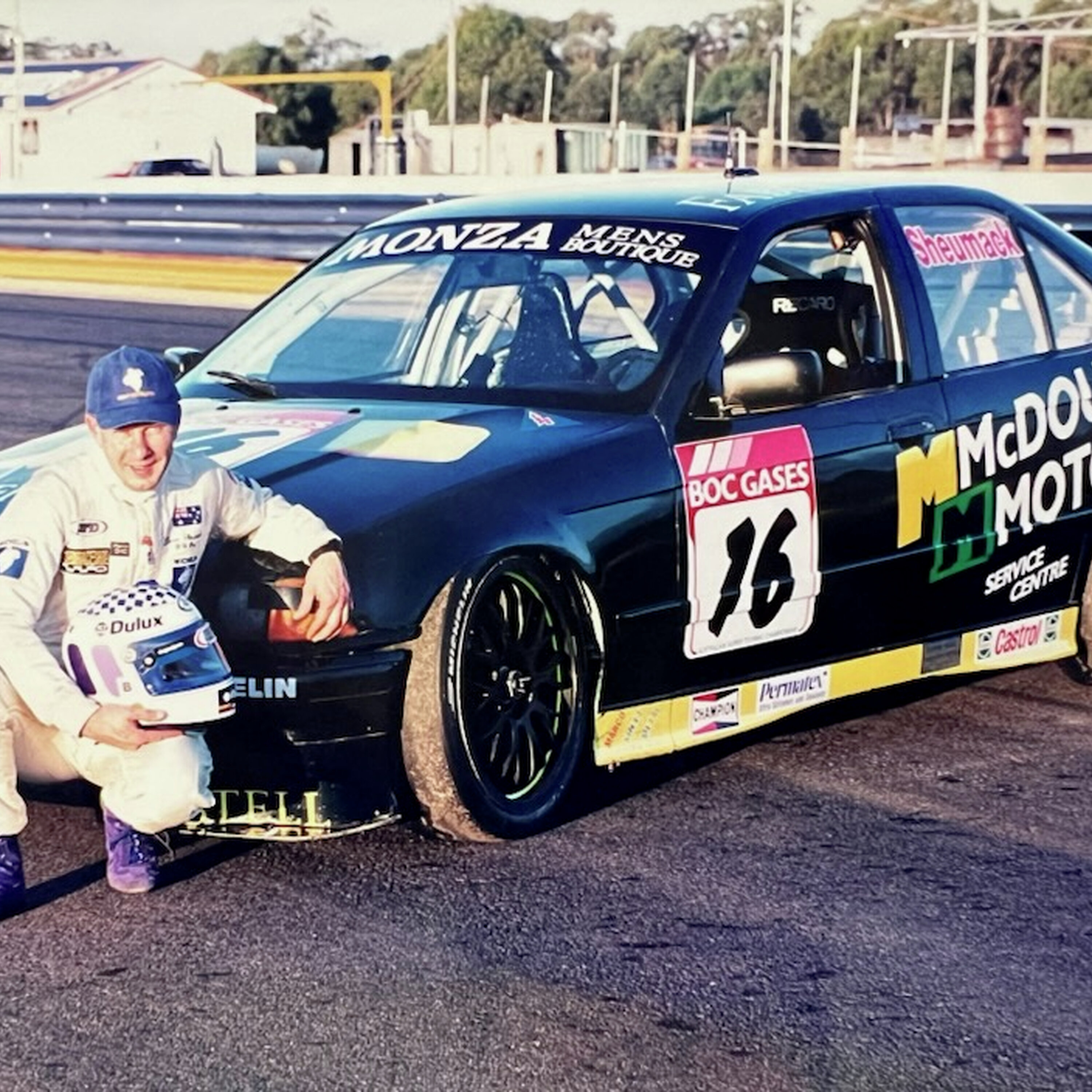
I got that car and it's originally, it ran in the 1993 World Cup with Johnny Giacotto.
Monza? Monza, yeah. Yeah, in the factory Warstyne Fina sort of colour scheme with the big flag
and lots of stuff on it and so, but it was one of the first cars that was, so it was a
bagazzi run car and then it came to Australia to, you know, Norwell, you know, to the local
team here and Paul ran it in one of the championships in Diet Coke colours because in the logbook
it's got, it's a Diet Coke car. Diet Coke car, so was it an age pattern to begin with
before it became a sequential look? Correct. What is it, what is it? Yeah. So it's in a
1993 spec, they ran with no wings effectively and then 94, 95 and my car's running, it's
a 93 car, but it's running a 95 aeropackage on it and that allows it to be a 95, they're
in sequential. So it's got a Hollinger H-patten box, but with a sequential kit on it. So it's
just, you know, it's just a cool thing and they sound amazing and you know, that's fantastic.
So I've run that at Phillip Island a couple of times and Winton and then I did, you know,
they had that heritage thing at Bassett a couple of years ago, which was pretty cool.
Yeah, awesome. That is like a little later life. I really love those cars. I want to get one of
those. Is that what's transpired there? Pretty much, yeah, exactly that. Nice. What did it
require when you got it from Nige? Did it need a whole lot of love and what did you do?
It did very good shape, it came out of it, it had been in New Zealand for 20 years and
they do have a number of tucked away over there. They've got heaps of them over there and it had
been looked after, but you know, yeah, when I got it, we sort of learnt a lot and you know,
I probably made a couple of mistakes with different things and so we've sort of refreshed it and
what have you, but it's a, you know, it's a nice little car, it's a good little project and you
know, I love it. Good. Rally does tempt you back in the early 2000s though. Steve Winwood,
XR8 Falcon. She don't mind the wild rally cars, do you? Well, when we were running,
looking after Neil and I was in that rally paddock, I mean, I love rally. I love the interaction of
it because you know, with the rally tyres in that era, we were cutting the tyre between stages
and no, so you could have more of an input and you feel a bit closer to the performance of it,
you know. The result, you're playing a part in the result. Yeah, yeah, a little bit of that
sort of thing and I just love the whole environment of rally and then Steve Winwood was running at
Falcon. They hadn't run like an Aussie class or something, I can't remember in the ARC and I
just said to him at one of the events, I said, hey, you know, I'd love to drive your car. Yeah,
sure. Well, you know, we should do a deal and blah, blah, blah. What have you? And you know,
so I found some tyres and bits and pieces and I went and did bigger in, must have been 2004 in
his ARC car and had a hoot and because, you know, those shy roads in bigger are amazing and what
have you and then just, you know, probably a couple of years ago, another man of mine, David
Gregg, who runs Spring Cup, he was talking about, you know, maybe buying an ARC 100 or something
else. You know, we should get a Commodore and he just said, hey, what a great idea. Anyway,
you've got one. So between us, we've got a Commodore and I'm running bigger in two weeks
time. So good. What model is it? It's a V. It's a VH. Okay. So, you know, but it's just, I mean,
there's nothing like a V8 in the forest, you know, like it's just, they sound amazing. Good thing
is you get the wrong gear, you're still, you can still pull out, there's so much torque and they're
easy to drive. What is that rally like now? Is it only daytime stages? Is there any nighttime
stuff? I did it last year in this car. And then, you know, we start like two o'clock on Saturday
and finish at 10 o'clock at night. So in the night stages and they're just, you know, they're
such beautiful. Magic roads. Yeah. I can record maybe on VHS mate or something somewhere, the likes
of Gregg Carr or might have been Dunco or any of those guys, even when you mentioned Mulligan
before, you know, on those roads. 40 split seconds, you remember that? Yes, I do. Do that
camber event? Yep. Yeah. Yeah, nah, it's amazing. So just, you know, rally and beautiful shy roads
and so, you know, I want to do that silver fern, the one in New Zealand, you know. Yes, New Zealand.
So that's sort of on my radar and you know, bit of that. With that car, you would want to do with
that car? Yeah, I'd ship it over there and have a bit of fun. Oh, I'd love that. That's something,
you know, to the already impressive offering that they have for that event. In the timeline,
you talked about almost, I guess, consulting, some contracting there in sort of 95. But as you
detailed, it becomes in sort of, you know, 2003, the distributorship, if you will, for Michelin.
And then, you know, New Zealand becomes a part of that and so on.
Melbourne is your base. You have a truck, you bring in people for the weekend. What does that
look like in shape? We've got, yeah, we're based out of Melbourne and Auckland and we've got
branded trucks, you know, so we look the part and we go all over the country here. And in New
Zealand, we do the same. We've got fully branded trucks and we look after all those programs in
New Zealand. And then, so in Australia, you know, we have Kura Cup, Spin Cup, Mustang Cup now.
We had TCR, you know, like so we've had a pretty solid sort of program here.
In 2015 or so, Michelin were looking to rationalise their program in Asia and they asked me if I
could be involved in there. There's like some regional programs up there. So not domestic stuff
in Asia, so not stuff in Malaysia or Thailand or whatever. They said the programs that they stretch
across Asia, could I look after those programs. So in 2016, I took over that program up there,
which was back then, it was Audi R8 Cup, Kura Cup, TCR, Asian Le Mans. Anyway, so that's filtered
out now. We pretty much look after now, some of those categories have gone, but we look after
Asian Le Mans and Kura Cup. Which is strong, mate. So I have a warehouse in Malaysia and so I, you
know, I probably ship 60 or 80 containers a year, moving stuff around different places and
the Asian Le Mans stuff is pretty massive now. Yeah, we've sort of, we've been in the Middle East
there for the last five years, doing races in Abu Dhabi and Dubai and that sort of stuff. And,
you know, we have a staff of like 40 or 50 people and 20 containers of fuller tyres and yeah.
I've released today an episode as we record this with Brendan Leach and there's a picture of him
on the podium from one of those rounds. Really cool, mate. The game then, I mean, logistics isn't
a good enough word, but it must be a bit of that. Like, we're going to need a bank of these
amount of tyres to satisfy Australia. Shipping's a challenge at the moment within, we need these
for Asia. You're about to, even if I get a bit micro for a second, we're about to go, you and I,
speed series event at Queensland Raceway. There's some support category stuff then,
the weekend after at Darwin. Not all that long after again, we're back in Darwin with speed
series. What is that juggle like? Well, that's the big program now. The big program is just
stitching all that together and making sure we have the right tyres in the right place
at the right time and having enough wets and all those sorts of things and so yeah. In Australia,
you know, like the distances when we're heading to Darwin twice this year and with Townsville and
QR a couple of times, what have you, the distances are all quite big, but it's just about trying
to be efficient and make sure we've got the right people in the right places at the right time.
On the ground, let's say the speed series is an example where I often see you, right? It might be
for sprint challenge and things like that and Mustang Cup now. How many people would you have
on the ground? Are you starting putting tyres on on Wednesday or Thursday? What does that all look
like? We're pretty much in there on Thursday morning and we have, and we're pretty busy on
Wednesday, Thursday and Friday. Yep. And then usually after that's a bit of a caretaker role,
if the weather changes, you know, we might have to, because once they've got all their
quality tyres, they're sorted. Yep. But we'd have probably six to eight people,
depending on, you know, the volume and yep. But the work doesn't stop there though for you,
because I would imagine you're then also assisting teams around whatever pressure settings,
recommended suspension, blah, blah, blah, and then then probably even providing feedback.
Are you back to the factory? Yeah, monitoring all that. I mean, you know, we know where we're
challenged at the circuits where Sydney Motorsport Park, Phillip Barlin, what have you. And so some
other circuits, Winton and what have you, doesn't load a tyre in the same way as some other circuits.
So we know where we need to focus, you know, when you go to Darwin, you've got more temperature,
so we adjust pressures and, you know, yeah, I'm sort of constantly talking to people and
monitoring what they're up to and making sure that they're keeping within our recommended
guidelines or trying to do my best to keep them within the recommended guidelines.
Yeah. They have, I mean, this is a, you know, full transparency. They've been unbelievably
supportive of me and I've done a various, you know, from podcasts to MC to you name it,
I've done some things, things with them, cool things with them along the way,
including passion experience in Malaysia and so on. But I can remember Daryl Beatty talking to me
about, you know, in the 500cc and MotoGP era, what they would do at the factory and then overnight
some tyres for the next day and so on. The depth of knowledge, passion, blah, blah, blah, HQ is
huge, mate, isn't it? I mean, the thing about Michelin is, and I mean, we don't, we don't have
competition so much nowadays. It's a mainly controlled series and, but competition is what
drives them. And the thing about Michelin and the people I've dealt with in France is there,
whenever they entered into, you know, when they came into MotoGP or when they went into Formula
Leone over here, you know, they understand there's a challenge in it. But the belief in France is
not if they will win, it's when they will win. So that the confidence and, you know, and they have
a huge respect for the opponents and what have you. And so, and sometimes when it doesn't work
and they're behind the eight ball, that inspires them more because they just go and dig deeper.
And then way back in those super touring days, you know, when we had the full blown confidential
tyres, I mean, when they came out to Bathurst, we were putting tyres back from the teams in our
containers with security overnight. The teams were not allowed to keep them in the garages.
So, so the level of technology in those tyres, it's like Super GT, we're not in Super GT anymore,
but the level of confidentiality in those tyres is so high. If you lose one, it's the end of the,
you know, like it's like your life depends on, I tell you, I've had, you know, there have been
times when I'm fricking counting them back in myself just because you're the fear of losing one
and having to say to someone you've lost a tyre is, so yes, the technology is amazing. I mean,
what we deal with here in a commercial sense now is a much more user friendly tyre. But the special
stuff is really special. And when you bolted on the car, you know, I've listened to your podcast
before and Paul Morris spoke about it from 20 years ago. Brad says the same thing, you know,
when they bolted those tyres on that have got the special tyres, they still remember it 20 years
later. Mega. Mega, I love that. So vivid. Can we come back to a bit of racing? And I'm jumping
around, but 1997, there's a three hour class win with Andrei Povichovic in the mighty Suzuki,
mate. Tell me about that, baby. Yeah, that was good. It was fantastic. I tell you, that was,
you know, those three hour races I used to do were great fun. And to do it in a Suzuki flat,
because you just literally flat out from, you know, up the mountain, across the top, down the
other side. And it was great. We're just really, that was my first run at the mountain. And I
went up with Andrei and we won our class. So I stood on the podium, Michelin podium cap. You
know, I'd only been, I'd only been sort of looking after Michelin for a couple years then. So it was
pretty, pretty amazing opportunity. You mentioned your lovely wife before and the whole Uncle Toby
seeing it. It does collide in GTP to an extent, extent, doesn't it with Grant and, and Lisa Currie,
you told me about that. The, I did a little bit of GTP, you know, those, do you remember the
street circuit in Canberra? Yes. So I was running at Subaru and Grant Kenny was in a Subaru at the
same time. And, and we just, you know, I think there was a bit of, you know, paneled rubbing or
whatever. Anyway, Karen was in some meeting with Lisa Currie the next, you know, during the next
week at an Uncle Toby's thing talking about, I don't know, the Olympics or whatever it was. And
she said, Hey, what's this, your boyfriend running into my husband? And there was a bit of banter
like that. It's a bit of fun. Yeah. Awesome. To your, your point about tires there before,
I don't know if we've covered this, was there a secret test in 96 at, at Lakeside with Brad and
what transpired with all of that? Yeah, that was, that was at the peak of, that's when we, when we,
when we rolled those tires in and we pushed them down the grid. And that was, and we had some
French people there with us. And we said, and I knew Brad very well. And I said, Hey, you know,
you should try it because you should understand what you're missing out on here. Anyway, they
rang Germany to Audi and we, my people, you know, our people rang France and we got the clearance
and we went back on the Monday. No one around. Nobody around. My truck had left. We fitted up
five tires on rims and we, we went back to the circuit in a rental car and then they put them on
and Brad was basically in a quality sim. He was a second faster and across a race distance,
it was like about 0.7 of a second per lap for the race distance difference. And he just, you know,
rolled, it just blew his mind. Like the difference was so amazing. So what, what happens then?
Because sometimes people get a bit protective of not wanting that to go to a rival. Did that
cause some chance for you? We kept all that within our, you know, within our program.
And then I think you'll find that I think the next year Brad was still contracted to Dunlop,
but after that, they moved to Michelin. And I think Audi, you know, Audi formed a partnership
with Michelin from probably 12 months up. But I think that was probably, you know, opened their eyes
to, you know, they, maybe they never really understood the difference that the tire had
because they had the four wheel drive car. It had only ever run on a Dunlop. It had never run.
So all of a sudden they put the best tire on it and it was just Monday.
Legendary broadcast to Neil Crompton joined Rusty for a two part chat back in April 2020.
While most fans know him from touring cars or V8 supercars, Crompo has also covered IndyCar,
Formula One, and there's a little arm on appearance you may not know about.
I remember at about three or four o'clock in the morning having to sleep under the bench
in the commentary box because I couldn't spell my own name at that stage. I was so tired. But
anyway, so Brunel and those guys won the race. And so they sent me up on the podium and I'd
forgot completely forgotten about this until someone showed me the photograph recently.
And here's me standing there next to Martin interviewing him on the podium at 1990. So
I mean, really being on the podium at Le Mans. Everyone's done that.
Search for it later if you haven't already. NC is sewing during and a reaper storyteller.
Now back to Michelin Man. Well, Trev doesn't really look like Bibendon, but you know what I mean.
You mentioned the New Zealand aspect of your business there before. I have a bit to do with
what is now it's got quite a long acronym, but everyone calls it Toyota Racing Series, right?
You had an involvement there for a time, didn't you? Was the tire supplier there too, basically?
When Barry Tomlinson who put all that program together in must have been 2003 or 2004 or
something like that, they proposed that championship. You know, I went to him and I said,
hey, I'd love to be involved in this. I like it to be fantastic. And that's when Toyota were in
Formula One and they were with Michelin. And so that sort of helped the cause of it. And so we
did a deal and we became the official tire of Toyota Racing Series. And at the same time in
Europe, Formula Renault was super strong. It was like one of the main stepping stones before F3.
And so it was almost Formula Ford, Renault and then F3. And so it was a good synergy with the
guys that wanted to come out and race in New Zealand and what have you. So we just, we looked
after that program, you know. Man, some cool names have come through their trips. And then a few
years later, I mean, I love the formula so much. Like I was so passionate about Toyota Racing Series.
I bought one then two, and then I ended up running a team of four cars. And I ran, you know,
some great drives, Scott Pie, you know, early days I put Leanne and Martin Moore. Yeah. Yeah,
yeah. All those. So I tried to help some of the Aussies in there. And then we had overseas drivers
and Keita Mazepin, Kala Milot. Yeah. I think Timmy Slade driving somewhere there too, is it right?
Yeah, yeah. So, but I just, I love that formula so much. Yeah. It was so fantastic. And then,
you know, I was so busy on the tire thing that I was like, not focusing on it. And that's when
I got Bruin Beasley involved. You know, I said, Bruin, come and just help me out. Can you run
this program for me? And he was doing a much better job at running it because I was too busy.
And I said, hey, let's just morph this into M-Tech, which is what Bruins got now.
You were E-Tech, I think, at the time, weren't you? It was E-Tech and now it's M-Tech.
M-Tech, yeah. Cool. Yeah, yeah. So, yeah, just, and I still love it. I still watch it this day to
today. You've missed a little something here that, forgive the self-indulgence, but you bring one of
those cars to Oren Park to the South Circuit. You decide, or I don't know how, I can remember
you ringing me about it. We get RPM involved. And the idea was that Neil Bates and Simon Evans
would drive the car. And Rookie Greg Rust, who's an idiot, got a chance to sample the damn thing too.
That was an awesome afternoon. And I seem to recall Evans giving it like a typical him 11 tens.
That was great. Yeah, I've forgotten about it.
Today works with Larco and works out of Crompton's office and things like that.
An amazing producer. He, I think, was with me on the day. And we got all these rustic shots because
it was toward the end of Oren Park's life or tenure. Yeah, yeah. So you brought that out.
Well, we were trying, you know, I was trying to bring the category to Australia. I was trying to,
because it was such a good thing in New Zealand. Why couldn't we have it over the ditch?
Why could we run them there for five weeks in January and then bring them here and do like,
you know, an Australian season. And I brought them and we did a test day at
Winton and we put drivers in them and we did a whole, you know, we sort of worked hard at it, but
it never, never fell the right way. We did try, mate. We did try with the promotional story.
It was a funny day that when I, I think, I think Bates, he was on the wall at one point. I don't know.
I don't know what he said to me. I'm paraphrasing here. I think he was watching Simon
and he turned to me and said something about, we thought this was going to be a joke. Pull
him in kind of thing because Evans was full, full tilt as always. Now, Dubai, you have a crack at
the 24 hour there and it was a 2008 in the VIP car. Is this right? Tell me about this.
I knew Beto quite well from some stuff we did in Europe. I went to America with him and stuff.
We actually, I've missed that story. It's the J Splitter Racing Formula Atlantic.
That's quite a story. That's 97. Is that right? No, early 90s.
You know, I'm losing dates, but Craig had a deal to go to America to run Atlantic and
Rick Gorn out of Raynard's had sort of offered him, or put him in connection with some guy who was
going to like run a pensy style operation. You know, like he had more money than you can imagine
and he had a mechanic with him called Alistair Gibson, who's a great guy that I've known before,
and they rang me and said, hey, can you come over and give us a hand with this Atlantic gig?
And they got there before me and they're just, they're dreaming on how good it's going to be
and the guy's going to have the biggest truck and, you know, how all the money. And when I turned
up, you know, the first day, we went to the hotel and they'd already been to the motorbike shop
working out what dirt bikes they were going to ride and all this stuff. We went to the workshop
the next day and it was just full of old sort of midget speed cars with sawdust on the floor and
you know, axle stands and like it was just, and the guys go, no, we're going to put a big,
build a big extension. It was all, anyway, it was, it was all smoke and mirrors. And the guy gave us
some, um, Travellers checks to go down. Craig had air freighted his, that because they couldn't
supply a new Raynard, Craig had air freighted he owned a Lantica or his dad owned a Lantica,
air freighted it to Los Angeles. So we, on some, some dodgy Travellers checks, we went down to
Los Angeles, we get a rider truck, we wait two days at United Airlines and got the Craig's
Atlantic, went out to Phoenix to the oval there and, um, and we're bringing this guy over the
other day saying, you know, he wears the money and he said, oh, the big truck's coming and he was
still, still trying to sell the story. Yeah. Anyway, we were out there. There was an Australian,
a Kiwi and a South African. It's been the three of us. Yes. We had a rider truck and two A-frame
stands. The car, we left the car on stands at night, went back to the hotel and the car was
just sitting there in the paddock. And there's all these other teams like the players team with
Jack Villeneuve and, you know, incredible money. Anyway, we, uh, we sort of, the cars, if you
have a shunt there, you know, it was the weekend when, um, remember when Mansel shunted and went
through the, smashed the wall or something. So it was that weekend. But, um, anyway, the guy turned
up at the 11th hour, we were sort of spent because we were just, you know, and, um, and we said,
we, you are with this money and what have you. So he got him in the back of the truck and said,
you know, pay us the money. And then in the end, we didn't race because the risk was too high and
the guy wasn't going to go forward. Okay. And so, uh, so it was pretty massive. I mean, it's a much
longer story than that. Beto and Alastair, we still, you know, still have a laugh about it every now
and then. He would have been running the, um, the Durange around here back then, looking pretty
sharp too, Beto. So fast, fast forward then to 2008 and the VIP. And so, uh, so in that era,
around that sort of, uh, when, when, um, Quinney and, uh, Sean Juniper had those RSRs and what
have you, they were, a few of them, they were doing Nürburgring and a few others, the same dollar was
low. So I could give them ties in their container here at a good price, like same tire and they
go to the event when they came back. Um, I would just take back the ones I don't use that I could
sell the ties. So it was, it was a bit of a commercial range at which work for them because
the ties, our ties were cheap because of the Australian dollar. Gotcha. And, um, so I'd just
give them a stock of ties and, and so I'd go to some of those events and service, you know, the,
like, you know, be the time and, and I had that Dubai 2008, I had six or eight cars or something and,
and, uh, and Beto rings on Christmas Eve or whatever and says, Hey, you better bring your helmet
because we're down one driver in the nine on six. And I said, sure, I'll do that. So I went to Dubai
and, uh, I took my helmet and everything and I ran in that race in 2008, um, with, um, Dean Grant and
I can't remember the other two guys, but they were, one was a German Porsche test driver or
something and another one was out of Crera Cup and I just drove the nine on six with them and
so cool. Yeah. And they won the race in the nine in the RSR. That was the one when, um,
Beto and, you know, Tony and I think Clark and, uh,
Ryder would have been a tiny little tacker then probably. And now he's, now he's racing,
if that's the one I'm thinking of. Yeah. Wow. Yeah. Yeah. So anyway, this is pretty amazing. Yeah.
Crazy. Crazy. Um, you find before COVID or maybe just around the time of COVID, a formula forward,
is it your formula forward that you found? What is this car? The, uh, a few of my mates were racing,
you know, historic formula forward. Yeah. And, um, and they were saying, Hey, you know, you should
find that car that you built, you know, way back, you know, in the, in your twenties, the one that
you built back then. So I sort of did a bit of research and I sort of tried to dig it up. Anyway,
I found it in South Australia. So not the Ren Max? No, no, this was the car that I built. You built?
Yeah. Yeah. Yeah. Okay. In my fun rides of Australia factory. It's called the FRA-01 because I was
in this car, um, in South Australia, somebody had converted to a hill climb car. Okay. And it
started a different engine and the chassis had been changed a bit or what have you. And, uh,
and when I sort of got onto them and had a chat with them about it, they said, um, oh, you know,
we were, were thinking about restoring that car back to the formula forward. You haven't
still got the original drawings, do you? You know, and I said, well, I'm not in the same factory
because what I did last time I drew it on the floor. But you were lying off memory because
you'd remember a lot of things. So I got, uh, anyway, I got the car back and, um, and I said
about, you know, I had to sort of cut the chassis a bit so I might have you, but all the original
compartment, you know, chassis part of it was about 80% of it. And, um, and I built new uprights.
And so during COVID, during the lockdown period, um, my boys and I were at, you know, we're not
doing so many tires. And so we just set about sort of building this car. So we made all the
jigs and I made uprights and wishbones and, you know, all that, the chassis and what have you.
And is it back to it back to, you know, as it was, I'm racing this weekend with Malcolm,
that's racing at, uh, at the winter history and another side story, um, Bob Holden.
So I ring Bob to tell him the story. I mean, I'm, this is, you know, Bob's 86, right? He's 93 now,
but 86, 87. I ring him and I say, Hey, you know, I bought my formula forward. I bought this formula.
I'm going to restore it and, you know, get it back to, and he says, uh, he says, you'd be looking for
an engine, wouldn't you? And I said, well, yeah, well, I'll need an engine. Anyway, rings me the
next day. And he says, I don't know if you remember, but Bob had a little luck, uh, Mark II escort
panel van that he always had at Amaroo Park. Like it had. Anyway, he said, he still got the van today.
And he said, it's got Stephen Brooks championship winning engine from 9 and 80 in it. In the van.
In the van. And he said, he said, I'll pull it out and, uh, you can have that engine as a, and I'll
put just a, you know, had a forex block or something. There's a special block that those former
employees said. So Bob at 86 pulled that engine out of the van himself. And I went up to Taree
and picked it up. Like I went up to, you know, and picked it up. And then, um, I since had it refreshed
here and what have you, but, but just the story, you know, Bob at 86 pulled the engine out of the
van himself. That's so good. That's very cool. Um, did COVID, how challenging was that for the
business for you? Look, I think, yeah, I think it was hugely challenging for a lot of people.
I was fortunate because New Zealand, you know, New Zealand closed the doors,
yes, but they remain sort of opened internally a lot of the time. And in actual fact, the racing
program, you know, you know, pushed on. Yeah. And so I, we had, we derived income because we were
selling tyres in New Zealand and I was distributing some tyres into the northern states of New
South, nothing like the normal year. And then the other thing is Asian Lamar that year, um,
they'd been traveling through Asia for all their championships. So they'd been going to,
you know, Shanghai, uh, Fuji, you know, Malaysia and Thailand. And for that year, they moved to
do Dubai and Abu Dhabi and because they were able to run a bubble. And so that was at the back end
of 21. And I had to, so we put this program to go there. Remember when Formula One were traveling
in a bubble, you know, and they only had 400 people or whatever. That's exactly what Asia Lamar did.
So they did a number of races in the Middle East there. And we were, um, I had to get a,
like a approval from Australian government to leave Australia. And I flew over there on a, you
know, a Emirates plane with nine people on it. And I came back, did my quarantine and went over
and I came back, but we were there for two and a half weeks or something or three weeks
early and we were, um, tested every second day and we, and we were masked the whole time and you
weren't allowed to do this and what have you, but, but, and that was the, but it worked well,
and so therefore we managed to derive income outside of Australia, which sort of helped
help me through the, through the, um, COVID period for sure.
Nice. What's next? Is there, is there a bucket list race you'd like to do? Is there something or
other? Yeah, look, you know, I think just, I've got a formula for a BMW Super Tour and a V8 rally
car. So I've got a good cross-section of, you know, and I think just, you know, do a little bit
of that. I just love it. You know, I watched a bit of that, Otago the other day and awesome.
Yeah, I'm thinking how cool is that? So put that on the list to do that. Yeah. And, uh, and maybe,
you know, the BMW, it could go to Europe and I could do a cup, you know, because nowadays,
you know, those like spa classic and those sorts of things, they're much more festivals
than they are race meetings. They're so well attended though there. Yeah.
You know, and, and, and you go along there and it's the, it's the whole
activity around the thing. It's got such a great atmosphere and so, um,
a good friend of mine, Bill Cutler, who races in group A in Australia. He's got an E30M3. He's,
he's in Europe. He ran at Spa on the weekend and he's got, and he's sent his car to Europe
and he, and it gets moved around and he just goes into Zandvoort and, you know, Nurburgring
Short Circuit and, you know, and you can just pick and cherry pick a few events like that.
And, uh, and so, you know, maybe down the road, you know, I'd like to spend some more time in
Italy, you know, that sort of stuff. So who knows?
To finish here, team is super important, right? And I want to talk team into, to, um, types here.
Firstly, family for you, your lovely wife, kids and so on. Tell me a little bit about that. And
then separately, when I walk into, um, the, you know, your setup, the Michelin setup at any
racetrack, there are the same by and large familiar faces every race weekend. There are some
integral people that are a part of that operation, mate, aren't they? Yeah. Yeah. Firstly, on the
family side, you know, look, Karen's been alongside me, back to me in business, all that for 25 years
or more. Um, mad racing is not necessarily her thing, but, uh, but, you know, she, but she's
been a great, um, supporter of the business. And my two girls, I think similar to you, Greg, they're,
Lucy's got a full-time job, finished uni and Chloe's at uni at the moment. I mean,
you know, they're full of beans, funny. Lucy's now, you know, with the drive to survive,
think she's got a real interest in the car racing and, and, uh, I just, I was lucky enough in, um,
January this year, there was a opportunity at Sandown to give them a passenger ride.
Oh, that's a really good. So they all had a passenger ride in the BMW. Um, the two girls
were big smiles, Karen, not so much of a smile, but, uh, anyway, I think, uh, so they look,
they're fantastic, you know. And, um, and on the work side, you know, I've had some amazing people
help me along the way. Lloyd Davis, who, who backed me in my tire store was a great man
of Jimmy Richards. And, you know, he sort of really helped me a lot in my, uh, I had a retail
shop and he was the backbone there and he's Michelin to the core, Duncan and the boys,
you know, that helped me day-to-day now. I mean, the guys that you, you see all the time,
Phil and Peter. And, you know, there's, there's a whole cross, I mean, where the dads are me,
because we're all, you know, gray and there's a wealth of experience and all that though.
You know, we sort of smoke on, we have a, we have a sort of busy time, um,
you know, for a couple of, uh, a day or so, you know, a few hours or what have you,
and then the rest of it, the way we go and get to enjoy some life.
So, you don't know, I couldn't have done it without, uh, Wayne in New Zealand,
Wayne Scott, who you know, as well, just does such an amazing job and represents me.
And, and in an identical fashion, really, with the people on the approach.
He really is the, the key player in New Zealand, like, you know, the, and the operation he runs,
you know, I'm proud of every, I go there and I look at how beautiful the trucks are and,
you know, how we present and he has the right connection to the people and, you know, it's
fantastic. Congrats, mate. It's nice to sort of tell a bit of your story, your, um, your very life,
the pure love of motor racing. You're still doing it all these years later and the back stories are
what, you know, what makes these things and, and rolling, rolling your sleeves up and saying,
what the heck, I'll have a go at Europe and, and look at the places that's taking you and the
people that you've met and, and so on. Amazing. I'd have to say, I, I feel very fortunate to
have had the opportunity to represent such an amazing brand. You know, you look at,
doesn't matter what walk of life you're in, if you get to represent one of the very best brands in
the world and have their backing and, you know, their support, I just feel very privileged to
have had that opportunity. Congrats. Yes, we're great. Mate, it's been lovely to chat with you.
That's blown my mind about that yarn we did back in the day to sell privacy back to the universe,
but lovely to tell some of your story. Thank you, mate. Fantastic. Thanks, Greg.
Rusty's Garage is written and presented by me, Greg Rust. Series editor and producer is Joel
Harrison. Audio production by Link Kelly. If you've got a guest suggestion, get in touch with me on
social media. The Garage. It's where a journey begins with a tank full of passion-fueled stories.
About this episode
Trevor Sheumack’s story swings from motorsport history to tyre logistics. He talks about buying and refreshing a 1993 BMW Super Touring car tied to Johnny Giacotto, including its later sequential aero package and how it’s been run at tracks like Phillip Island and Winton. Rallying also pulls him in—cutting rally tyres between stages, then jumping into a Steve Winwood Falcon and now planning more in a VH Commodore on iconic night-capable Aussie roads. The second half shifts to his Michelin work: managing branded trucks, container shipments across Australia and Asia, and staffing tyre operations for big series like Speed Series, with constant monitoring of pressures and circuit demands.
Twisting Brad Jones arm to race an Audi in the Australian Super Touring Championship but falling in love with the rival BMW.
Taking on a motorsport tyre distributorship for Michelin and BF Goodrich and expanding the footprint into New Zealand and Asia.Bringing a Toyota Racing Series car to Australia in the hopes of broadening the successful Kiwi series to our side of the pond.And giving Neal Bates and Simon Evan’s the keys to the TRS car at Oran Park.Plus the BMW he tracked down and his plans (maybe) to take it to some races in Europe.And a beast of a rally car that is a break with tradition.
This ep is part of our commitment to stories from the paddock and service park (from time-to-time) by good story tellers who are these long time, friendly, familiar faces who we often see working at events but you don’t always realise the things they’ve done or significant people they’ve worked with along the way.
Head to Rusty's Facebook, Twitter or Instagram and give us your feedback and let us know who you want to hear from on Rusty's Garage.