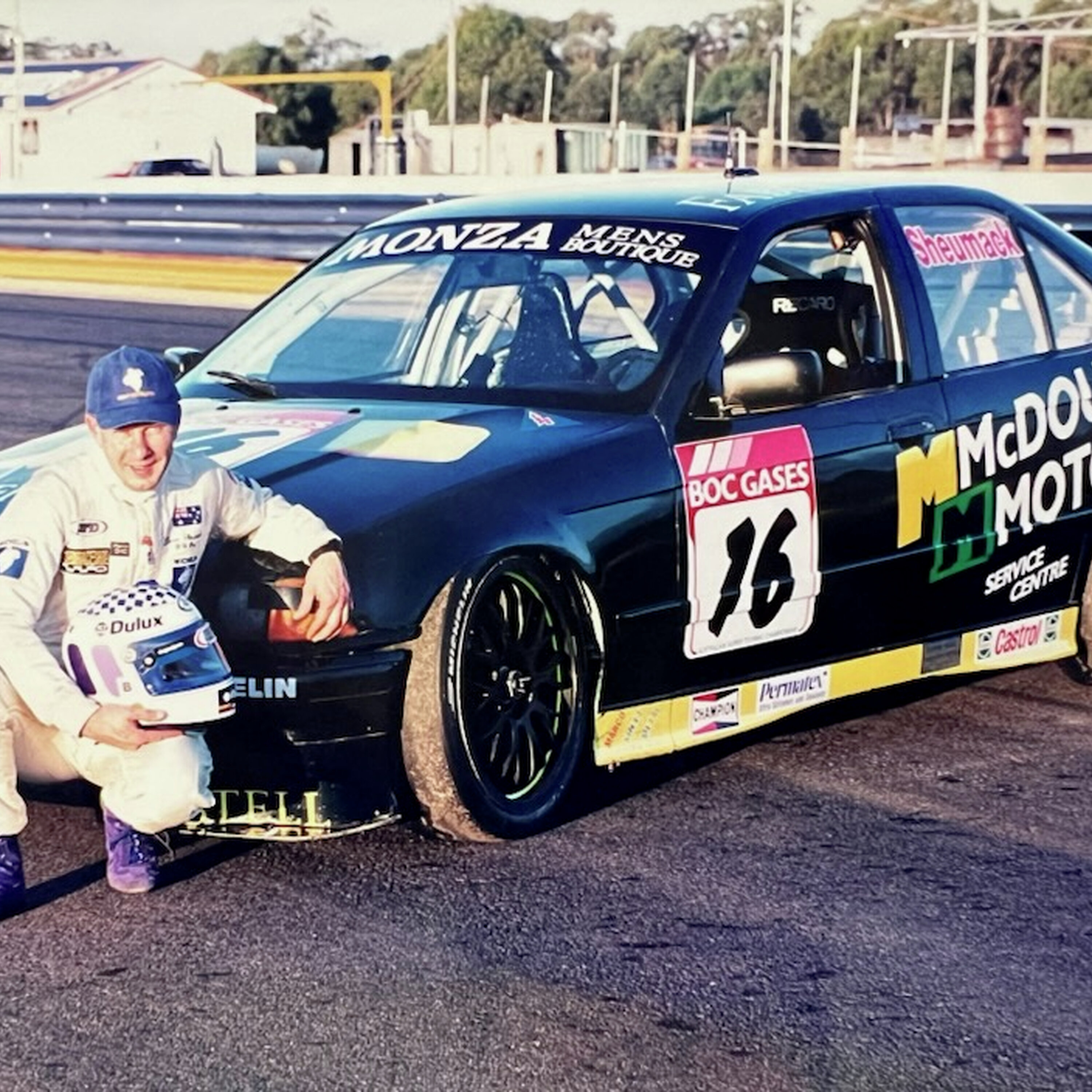
Trevor Sheumack | Part 2 - the Michelin Man & rallying a beast!
About this episode
Trevor Sheumack’s story swings from motorsport history to tyre logistics. He talks about buying and refreshing a 1993 BMW Super Touring car tied to Johnny Giacotto, including its later sequential aero package and how it’s been run at tracks like Phillip Island and Winton. Rallying also pulls him in—cutting rally tyres between stages, then jumping into a Steve Winwood Falcon and now planning more in a VH Commodore on iconic night-capable Aussie roads. The second half shifts to his Michelin work: managing branded trucks, container shipments across Australia and Asia, and staffing tyre operations for big series like Speed Series, with constant monitoring of pressures and circuit demands.
Twisting Brad Jones arm to race an Audi in the Australian Super Touring Championship but falling in love with the rival BMW.
Taking on a motorsport tyre distributorship for Michelin and BF Goodrich and expanding the footprint into New Zealand and Asia.Bringing a Toyota Racing Series car to Australia in the hopes of broadening the successful Kiwi series to our side of the pond.And giving Neal Bates and Simon Evan’s the keys to the TRS car at Oran Park.Plus the BMW he tracked down and his plans (maybe) to take it to some races in Europe.And a beast of a rally car that is a break with tradition.
This ep is part of our commitment to stories from the paddock and service park (from time-to-time) by good story tellers who are these long time, friendly, familiar faces who we often see working at events but you don’t always realise the things they’ve done or significant people they’ve worked with along the way.
Head to Rusty's Facebook, Twitter or Instagram and give us your feedback and let us know who you want to hear from on Rusty's Garage.
See omnystudio.com/listener for privacy information.
See omnystudio.com/listener for privacy information.
special tyres
"Coming up special tyres and security around them, some sleepless nights there, plus a cool BMW and a beast of a rally car that is all set to tackle some iconic Aussie roads."
The hosts are teeing up a discussion about race-focused tires and how they’re chosen for grip and durability. Tire selection is a major part of motorsport strategy because it affects traction, braking, and confidence.
security around them
"Coming up special tyres and security around them, some sleepless nights there, plus a cool BMW and a beast of a rally car that is all set to tackle some iconic Aussie roads."
This refers to protecting race tires from theft or tampering before events. In motorsport, tires are expensive and performance-critical, so teams often take extra steps to secure them.
rear wheel drive
"Yeah, a couple of years ago I sort of had an opportunity to, I mean I've always had those, the super touring cars, rear wheel drive, they're just fantastic and they sound amazing and what have you."
Rear-wheel drive means the power goes to the back wheels. Many performance cars use it because it can make the car feel more controllable when you drive hard.
Rear-wheel drive (RWD) sends engine power to the rear axle. It often gives a more balanced feel for performance driving and is common in many touring cars and rally cars because it can be tuned for predictable traction and handling.
sequential look
"Diet Coke car, so was it an age pattern to begin with before it became a sequential look? Correct. What is it, what is it? Yeah. So it's in a"
A sequential gearbox means you shift one step at a time in order—like 1st to 2nd to 3rd—rather than moving through a gate pattern. Racers like it because it can make shifting quicker and more repeatable.
A “sequential” gearbox lets you shift in order (typically up/down one gear at a time) rather than using an H-pattern. In racing, sequential gearboxes are popular because they can be faster and more consistent under load.
aeropackage
"a 93 car, but it's running a 95 aeropackage on it and that allows it to be a 95, they're"
An “aeropackage” is the car’s add-on aero parts, like wings and front/rear spoilers. They help the car stick to the road at speed, improving grip and stability.
An “aeropackage” is a set of aerodynamic parts—like wings, splitters, and diffusers—designed to generate downforce and stabilize the car at speed. In racing, changing the aero package can effectively move a car into a different “spec” category by matching the rules for that year.
sequential kit
"So it's got a Hollinger H-patten box, but with a sequential kit on it. So it's"
A “sequential kit” makes the car shift gears in order—one step at a time—rather than using an H-pattern gate. It usually makes shifting quicker and more repeatable during hard driving.
A “sequential kit” converts the gearbox control to sequential shifting, where you move through gears in order (up or down one at a time). This typically enables faster, more consistent shifts than a traditional H-pattern, which matters a lot in rally and circuit racing.
Hollinger H-patten box
"So it's got a Hollinger H-patten box, but with a sequential kit on it. So it's"
A “Hollinger H-pattern box” is a heavy-duty racing transmission made by Hollinger. The “H-pattern” is the classic shift layout, and it’s designed to survive hard launches and lots of shifting.
A “Hollinger H-patten box” refers to a Hollinger-built racing gearbox (the “H-pattern” describes the shift layout). Hollinger gearboxes are common in motorsport because they’re built to handle high torque and frequent, aggressive gear changes.
Phillip Island
"I've run that at Phillip Island a couple of times and Winton and then I did, you know,"
Phillip Island is a famous race track in Australia. People use it to test how a car handles at speed because the track has lots of challenging corners.
Phillip Island is a well-known Australian circuit used for track days and racing events. It’s a common venue for testing and driving performance cars because it has fast corners and strong elevation changes.
Bassett
"they had that heritage thing at Bassett a couple of years ago, which was pretty cool."
“Bassett” here sounds like a motorsport event connected to older cars. The host is saying there was a heritage event, meaning it was more about history and classic-spec cars.
“Bassett” likely refers to a motorsport event or venue associated with the Bassett name, mentioned here in the context of a heritage-style gathering. These events typically focus on historic cars and period-correct setups.
Steve Winwood
"Good. Rally does tempt you back in the early 2000s though. Steve Winwood, XR8 Falcon. She don't mind the wild rally cars, do you?"
Steve Winwood is the person the host mentions who was rallying with an XR8 Falcon. The story is about the host meeting him at events and getting the chance to drive the car.
Steve Winwood is mentioned as the person running an XR8 Falcon in rally events. In this context, he’s a key figure because the host describes interacting with him in the rally paddock and arranging to drive his car.

Ford Falcon
"Good. Rally does tempt you back in the early 2000s though. Steve Winwood, XR8 Falcon. She don't mind the wild rally cars, do you?"
The Ford XR8 Falcon is a V8-powered performance version of the Falcon. Here it’s being used in rally-style events, meaning it’s been modified to compete off-road/over stages.
The Ford XR8 Falcon is a performance-focused variant of the Australian Ford Falcon, known for its V8 muscle-car character. In this segment it’s specifically tied to rallying, showing how a street-based V8 platform can be adapted for competition.
rally paddock
"Well, when we were running, looking after Neil and I was in that rally paddock, I mean, I love rally."
The “rally paddock” is where rally teams hang out and work on the cars between timed sections. It’s where they do quick changes so the car is ready for the next stage.
The “rally paddock” is the service area where teams work between stages—prepping cars, changing tires, and making adjustments. It’s a key part of rally life because the car’s setup can change quickly based on stage demands.
rally tyres
"because you know, with the rally tyres in that era, we were cutting the tyre between stages"
“Rally tyres” are special tires made for rally stages. They’re designed to grip on loose or changing surfaces, and they can be prepared differently than normal road or track tires.
“Rally tyres” are tires built for rally stages, typically with tread patterns and rubber compounds designed for loose surfaces and repeated acceleration/braking. They’re also often set up differently than track tires, including how they’re cut or prepared for grip and wear.
cutting the tyre between stages
"because you know, with the rally tyres in that era, we were cutting the tyre between stages"
“Cutting the tyre between stages” means the team alters the tire tread after one timed section and before the next. The goal is to keep the tire gripping well as conditions and wear change.
“Cutting the tyre between stages” is a rally practice where teams modify tire tread between timed sections to manage grip and wear. By reshaping the tread, drivers can keep the tire working better for the next stage’s surface and conditions.

Commodore
"Anyway, you've got one. So between us, we've got a Commodore and I'm running bigger in two weeks time. So good. What model is it? It's a V. It's a VH."
This is a Holden Commodore, an Australian car that can come with a V8 engine. The V8 is the big deal here because it sounds great and has lots of pulling power, so it’s forgiving even if you grab the wrong gear.
The speaker is talking about a Holden Commodore, a popular Australian V8 sedan used in rallying and motorsport. In this segment they specify it as a V8 variant ("V" then "VH"), emphasizing the appeal of a V8 sound and the way it makes strong torque for pulling out of corners and mis-shifts.
V8
"there's nothing like a V8 in the forest, you know, like it's just, they sound amazing. Good thing is you get the wrong gear, you're still, you can still pull out, there's so much torque and they're easy to drive."
A V8 is an engine with eight cylinders. It usually makes strong low-end pulling power, so the car can accelerate easily without needing to rev as high.
A V8 is an engine with eight cylinders arranged in a “V” shape. In performance driving, V8s are known for strong torque (twisting force) at lower engine speeds, which helps a car accelerate smoothly out of slow corners and makes it easier to drive on twisty roads.
torque
"Good thing is you get the wrong gear, you're still, you can still pull out, there's so much torque and they're easy to drive."
Torque is the engine’s pulling strength. More torque means the car can get moving and accelerate out of corners more easily.
Torque is the engine’s twisting force that actually turns the wheels. The speaker links torque to rally driving: with lots of torque, the car can still pull away even if you select the wrong gear, which is useful on uneven, twisty forest roads.
night stages
"I did it last year in this car. And then, you know, we start like two o'clock on Saturday and finish at 10 o'clock at night. So in the night stages and they're just, you know, they're such beautiful. Magic roads."
Rally “stages” are timed road sections. “Night stages” are the same kind of timed runs, but after dark, so you have to rely more on what you can see with headlights and what you remember from notes.
In rallying, “stages” are timed sections on closed roads, and “night stages” are those same timed runs done after dark. Driving at night changes visibility and grip expectations, so pace and caution become more about reading the road than just seeing it clearly.
camber event
"40 split seconds, you remember that? Yes, I do. Do that camber event? Yep. Yeah, yeah, nah, it's amazing."
“Camber” means the road surface tilts sideways. If an event has lots of camber, the tires can grip differently in corners, so it can change how the car feels and handles.
A “camber event” refers to a rally route or event known for significant camber—sideways tilt of the road surface. Camber can strongly affect tire grip and how the car loads in corners, making setup and driving technique more critical.
silver fern
"I want to do that silver fern, the one in New Zealand, you know. Yes, New Zealand."
“Silver fern” is the name of a rally event in New Zealand that the speaker wants to do. It’s basically the event they’re planning to enter.
“Silver fern” is used here as the name of a rally event in New Zealand. The term is functioning like an event title, and it signals the specific competition the speaker wants to enter with their Commodore.
New Zealand
"I want to do that silver fern, the one in New Zealand, you know. Yes, New Zealand. So that's sort of on my radar and you know, bit of that."
New Zealand is the country the speaker wants to rally in. They’re talking about shipping the car there to do an event and have fun on those roads.
New Zealand is the country the speaker wants to rally in, specifically referencing an event there. Rallying in New Zealand is known for long, scenic stages and a mix of road surfaces that can be very different from Australia’s typical routes.
Michelin
"it becomes in sort of, you know, 2003, the distributorship, if you will, for Michelin. And then, you know, New Zealand becomes a part of that and so on."
Michelin is a well-known tire brand. The speaker is talking about Michelin’s business presence, and tires are a big deal in rallying because they affect grip.
Michelin is a major tire manufacturer, and the speaker is describing a business timeline involving Michelin’s distributorship. For car enthusiasts, Michelin matters because tire choice is a huge part of rally grip and durability.

Ford Mustang
"... Australia, you know, we have Kura Cup, Spin Cup, Mustang Cup now. We had TCR, you know, like so we've had ..."
The Ford Mustang is a sporty car made by Ford. In racing events, people can race specific versions of it in a “cup” series where many cars are set up to compete under similar rules. That’s why it’s mentioned as part of the racing lineup.
The Ford Mustang is a performance-focused American sports coupe that’s also been used in various one-make and touring-style racing series. In the podcast context, it’s mentioned as part of the event lineup (like a “Mustang Cup”), which highlights how the car can be raced in a structured competition format. That’s why it comes up alongside other racing categories—because it’s a recognizable platform for motorsport.
TCR
"We had TCR, you know, like so we've had a pretty solid sort of program here."
TCR is a type of touring-car racing where the cars are based on models you could buy, but modified for racing. The rules are standardized so teams can compete without spending as much as in some other series.
TCR is a touring-car racing formula that uses production-based front-wheel-drive cars with standardized rules. It’s designed to be relatively cost-controlled compared with top-tier touring categories, which is why it shows up across multiple regions.

Audi R8
"...rogram up there, which was back then, it was Audi R8 Cup, Kura Cup, TCR, Asian Le Mans. Anyway, so tha..."
The Audi R8 is a fast sports car made by Audi. A racing “cup” series means a group of cars based on the same model compete against each other under shared rules. The podcast brings it up because there was an R8-focused racing program.
The Audi R8 is a high-performance sports car known for its mid-engine layout and track-capable performance. The podcast mentions an “Audi R8 Cup,” which refers to a racing series built around the R8, showing how it’s used as a dedicated competition platform. It also helps explain why the R8 comes up in a discussion of different racing programs and series.
Asian Le Mans
"So in 2016, I took over that program up there, [425.6s] which was back then, it was Audi R8 Cup, Kura Cup, TCR, Asian Le Mans. Anyway, so that's filtered out now... but we look after now... Asian Le Mans and Kura Cup."
Asian Le Mans is endurance racing in Asia, similar in spirit to the famous Le Mans format. It’s longer races where tires and planning matter a lot.
Asian Le Mans refers to endurance racing in the Le Mans style held in Asia, typically featuring multi-hour races and prototype or GT-style machinery. In this segment, it’s treated as one of the major ongoing programs that requires large tire logistics.
containers
"I probably ship 60 or 80 containers a year, moving stuff around different places and [450.9s] the Asian Le Mans stuff is pretty massive now."
Here, “containers” means large shipping boxes used to transport lots of tires at once. It’s a way to describe the scale of moving race tires around the world.
In motorsport logistics, “containers” refers to standardized shipping units used to move large quantities of tires and equipment between regions. The host’s mention of container counts highlights how tire supply chains are managed like industrial freight operations.
Queensland Raceway
"You're about to, even if I get a bit micro for a second, we're about to go, you and I, [496.4s] speed series event at Queensland Raceway."
Queensland Raceway is a race track in Australia. The host mentions it because races there create scheduling and tire-delivery challenges.
Queensland Raceway is a motorsport circuit in Australia used for racing events. In the segment, it’s referenced as the location for a speed series event, which helps explain why tire supply and timing are critical.
wets
"The big program is just stitching all that together and making sure we have the right tyres in the right place at the right time and having enough wets and all those sorts of things..."
“Wets” are special race tires made for rain or wet track conditions. They’re designed to grip better and clear water so the car can handle safely and quickly.
In racing tire talk, “wets” are tires designed for wet or very damp track conditions. They use tread patterns and rubber compounds optimized for water evacuation and grip when the surface isn’t dry.
quality tyres
"once they've got all their quality tyres, they're sorted. Yep. But we'd have probably six to eight people"
“Quality tyres” here means the specific race tires the team is using for that event. After they’re fitted, the team watches how they’re performing and makes adjustments so everything stays within the rules and recommendations.
“Quality tyres” in this context means the approved race tires provided for the event. Once the tires are in place and the team has them set up, the focus shifts to monitoring and adjusting pressures and setup within the manufacturer’s or series’s guidelines.
pressure settings
"I would imagine you're then also assisting teams around whatever pressure settings, recommended suspension, blah, blah, blah, and then then probably even providing feedback."
“Pressure settings” means the air pressure in the tires. In racing, the right pressure helps the tire grip the track and wear evenly as it heats up.
“Pressure settings” are the tire pressures teams set before and during an event. In racing, pressure affects the tire’s contact patch shape, grip, and how the tire heats up across the tread.
recommended suspension
"I would imagine you're then also assisting teams around whatever pressure settings, recommended suspension, blah, blah, blah, and then then probably even providing feedback."
“Recommended suspension” means the suggested settings for the car’s suspension. Those settings help the tires stay planted on the road so you get better grip and more even tire wear.
“Recommended suspension” refers to the specific suspension setup a team is advised to use, such as spring/damper settings and alignment-related geometry. Suspension tuning changes how the car loads the tires, which directly impacts traction and tire wear.
Sydney Motorsport Park
"we know where we're challenged at the circuits where Sydney Motorsport Park, Phillip Barlin, what have you."
Sydney Motorsport Park is a race track in Australia. Different tracks stress the tires in different ways, so teams change tire pressures and setups depending on where they’re racing.
Sydney Motorsport Park is a racing circuit in Australia used for touring car and other motorsport events. The host mentions it because different circuits load tires differently, which affects setup and tire management.
Phillip Barlin
"we know where we're challenged at the circuits where Sydney Motorsport Park, Phillip Barlin, what have you."
This sounds like a reference to a specific Australian race track. The point is that each track makes tires work differently, so teams adjust tire pressures and setup accordingly.
“Phillip Barlin” appears to refer to Phillip Island, a well-known Australian circuit. The context is circuit-specific tire loading, so the key idea is that different tracks require different tire and setup strategies.
Winton
"And so some other circuits, Winton and what have you, doesn't load a tyre in the same way as some other circuits."
Winton is an Australian race track. Tires behave differently there than at other tracks, so teams may change tire pressure and setup.
Winton is a racing circuit in Australia (Winton Motor Raceway). The host uses it as another example of how circuit layout and conditions change tire loading and therefore tire pressure/setup needs.
temperature
"So we know where we need to focus, you know, when you go to Darwin, you've got more temperature, so we adjust pressures"
“Temperature” here means how hot the track and tires are. Tire grip changes with heat, so teams may adjust tire pressure when it’s hotter (like at Darwin).
In motorsport, “temperature” is the track and tire temperature that drives how tire grip and wear behave. Warmer conditions generally increase tire operating temperature, which can require pressure adjustments to keep the tire in its ideal working range.
Darwin
"when you go to Darwin, you've got more temperature, so we adjust pressures"
Darwin is a place where the race conditions are hotter. When it’s hotter, tires heat up differently, so teams often adjust tire pressure to keep performance consistent.
Darwin refers to racing conditions in Australia’s Darwin region, which the host associates with higher temperatures. In practice, hotter conditions can change tire operating temperature, prompting pressure adjustments.
recommended guidelines
"making sure that they're keeping within our recommended guidelines or trying to do my best to keep them within the recommended guidelines."
“Recommended guidelines” means the suggested targets the team should follow. It helps ensure the tires are set up correctly so they work as intended.
“Recommended guidelines” are the target ranges and procedures teams are advised to follow for tire pressures and related setup. In racing, staying within these ranges helps keep tires operating in their intended temperature and grip window.
MotoGP
"...whenever they entered into, you know, when they came into MotoGP or when they went into Formula Leone over here..."
MotoGP is the top-level motorcycle racing series in the world. Teams and tire makers build specialized gear for these races.
MotoGP is the premier motorcycle road-racing championship run by the FIM. It’s where manufacturers and teams develop race-specific engines, electronics, and tires to compete at the highest level.
Formula Leone
"...when they came into MotoGP or when they went into Formula Leone over here..."
This sounds like a mis-heard “Formula” racing series name. The speaker is talking about Michelin entering major racing categories beyond MotoGP.
“Formula Leone” appears to be a transcription error for a motorsport “Formula” series. In context, it’s likely referring to a major open-wheel racing category where Michelin competed.
super touring days
"And then way back in those super touring days, you know, when we had the full blown confidential tyres..."
“Super touring” was a period of touring-car racing where cars were based on production models but heavily prepared for competition. The speaker is saying the tires back then were extremely secret and advanced.
“Super touring” refers to a touring-car racing era/format known for highly regulated, production-based cars and close competition. The speaker contrasts that era’s tire secrecy and technology with modern, more standardized racing tires.
confidential tyres
"...when we had the full blown confidential tyres, I mean, when they came out to Bathurst, we were putting tyres back from the teams in our containers with security overnight."
“Confidential tyres” means the race tires were so secret and important that they were handled like critical technology. The speaker says teams had strict rules about where they could keep them.
“Confidential tyres” describes race tires treated as tightly controlled, proprietary technology. The speaker emphasizes that teams couldn’t even store them in garages and that losing one could be catastrophic.
Bathurst
"...when they came out to Bathurst, we were putting tyres back from the teams in our containers with security overnight."
Bathurst is a famous racing location in Australia. Long races there put big demands on tires, so how they’re managed and protected matters.
Bathurst most likely refers to Mount Panorama in Bathurst, Australia, famous for endurance touring-car racing. It’s a key venue where tire strategy and reliability matter a lot, especially in long events.
three hour races
"...those three hour races I used to do were great fun. And to do it in a Suzuki flat, because you just literally flat out from..."
A “three hour” race is a long endurance event. Instead of just sprinting, you have to keep the car or bike performing for hours without overheating or wearing things out too fast.
A “three hour” race is an endurance format where teams and riders manage tires, fuel, and consistency over a long continuous effort. The speaker’s point is that these longer races were especially enjoyable and demanding on equipment like tires.
Suzuki flat
"...And to do it in a Suzuki flat, because you just literally flat out from, you know, up the mountain..."
This phrase is probably mis-transcribed or said as slang. The speaker is mainly saying the bike was pushed extremely hard the whole way.
“Suzuki flat” is likely a transcription error or shorthand for a specific engine configuration or bike description. In context (“flat out”), it may not be a technical term at all, so it’s not reliable enough to treat as a defined automotive concept.
GTP
"It does collide in GTP to an extent, extent, doesn't it with Grant and, and Lisa Currie, you told me about that."
GTP refers to a type of race category for purpose-built prototype cars. It’s basically a class of racing cars designed for endurance-style competition.
GTP is a motorsport category name used for Grand Touring Prototype-style racing, where purpose-built prototype cars compete under specific rules. In the transcript, it’s referenced as the kind of racing environment where tire and team dynamics can overlap with other series.
street circuit in Canberra
"The, I did a little bit of GTP, you know, those, do you remember the street circuit in Canberra? Yes."
A street circuit is a race course made from normal city streets. Instead of a dedicated racetrack, they close roads and set up barriers and markings for racing.
A street circuit is a race track laid out using public roads, with barriers and temporary track markings. Canberra’s street circuit is a specific example where rallying or touring-style competition happens on city streets rather than a purpose-built track.
Lakeside
"To your, your point about tires there before, I don't know if we've covered this, was there a secret test in 96 at, at Lakeside with Brad and what transpired with all of that?"
Lakeside is a race track where teams can test cars. Here, it’s where they did a special tire test that helped them understand how much faster the right tires could make the car.
Lakeside refers to a motorsport venue used for testing and racing, where teams can run controlled sessions to evaluate tires and setup changes. In this segment, it’s tied to a “secret test” in 96 and the tire experiment that produced measurable lap-time gains.
rolled those tires
"Yeah, that was, that was at the peak of, that's when we, when we, when we rolled those tires in and we pushed them down the grid."
In racing, “rolling” tires means getting them warmed up and ready to work at their best. The idea is to make sure the tires perform consistently when you start measuring lap times.
“Rolling” tires in racing usually means pre-conditioning them—warming them and getting them into their effective operating window before a run. The context here is a tire test where the team pushed the tires down the grid and then measured lap-time differences over a race distance.
pushed them down the grid
"Yeah, that was, that was at the peak of, that's when we, when we, when we rolled those tires in and we pushed them down the grid."
This means getting the tires/car staged on the starting grid in a specific way. The goal is to have the tires at the right temperature and ready to grip when the run starts.
“Pushing them down the grid” describes moving the car and/or tires into position on the starting grid so they can be prepared and managed for optimal temperature and readiness. In racing, tire temperature and track conditions strongly affect grip, so timing and positioning can change performance.
tires on rims
"We fitted up five tires on rims and we, we went back to the circuit in a rental car and then they put them on"
That phrase means they mounted the tires onto the wheels. It’s a practical step so the tires are ready to be put on the car for testing.
“Tires on rims” means mounting the tires onto the wheel rims (the wheel’s metal structure) before installing them on the car. This matters in testing because teams can control tire selection, mounting consistency, and how quickly the car can be returned to the track.
Dunlop
"And then I think you'll find that I think the next year Brad was still contracted to Dunlop, but after that, they moved to Michelin."
Dunlop is a tire brand. Here, it’s being mentioned as the earlier tire supplier before the switch to Michelin.
Dunlop is a major tire brand that has supplied tires to various motorsport categories. In this segment, it’s mentioned as the earlier tire supplier before switching to Michelin.
four wheel drive car
"because they had the four wheel drive car. It had only ever run on a Dunlop. It had never run."
A four-wheel-drive car powers all four wheels. That usually helps it grip better, and in racing it can make tire changes feel like a big upgrade.
A four-wheel-drive (4WD) car sends power to both the front and rear axles, improving traction—especially on loose or slippery surfaces. In racing, 4WD can make tire differences feel more dramatic because grip limits are reached differently than in two-wheel-drive cars.
Toyota Racing Series
"everyone calls it Toyota Racing Series, right? You had an involvement there for a time, didn't you? Was the tire supplier there too, basically?"
Toyota Racing Series is a racing championship in New Zealand. In this part of the conversation, they’re talking about tires and how Michelin became the official tire supplier.
The Toyota Racing Series is a motorsport championship in New Zealand that’s referenced here as a place where the speaker had involvement. The segment focuses on tire supply and how Michelin became the official tire for the series.
tire supplier
"You mentioned the New Zealand aspect of your business there before. I have a bit to do with what is now it's got quite a long acronym, but everyone calls it Toyota Racing Series, right? You had an involvement there for a time, didn't you? Was the tire supplier there too, basically?"
A tire supplier is the company that provides the tires for a race series or team. Better or different tires can change how the cars handle and how long the tires last.
A tire supplier is the company that provides the tires used by a racing series or team. In motorsport, the tire supplier can strongly affect grip, tire wear, and overall competitiveness.
official tire
"And so that sort of helped the cause of it. And so we did a deal and we became the official tire of Toyota Racing Series."
An official tire is the tire brand designated by a racing series as the approved or contracted supplier. That usually means teams use that tire specification, which can standardize variables and shift competition toward car setup and driver skill.
Formula Renault
"Europe, Formula Renault was super strong. It was like one of the main stepping stones before F3."
Formula Renault was a junior race series for up-and-coming drivers. People treat it like an early training ground before moving to bigger, faster racing categories.
Formula Renault was a European single-seater junior racing series that helped drivers move up the ladder toward higher-level open-wheel categories. It’s often described as a “stepping stone” because many drivers used it to build racecraft and attract attention from bigger teams.
Formula Ford
"And so it was almost Formula Ford, Renault and then F3."
Formula Ford is a junior open-wheel racing series. It’s known for being a good place for drivers to learn because the cars are relatively straightforward compared to higher levels.
Formula Ford is another historic junior open-wheel racing category known for emphasizing driver skill and mechanical simplicity. It’s frequently used as an entry point before moving into more powerful series like Formula 3.
F3
"And so it was almost Formula Ford, Renault and then F3."
F3 means Formula 3, a mid-level junior racing class. Drivers often move into it after earlier series as they work their way up.
F3 typically refers to Formula 3, a well-known junior open-wheel series that sits above entry-level categories. It’s a common next step for drivers aiming to progress toward top-tier single-seater racing.
Keita Mazepin
"And then we had overseas drivers and Keita Mazepin, Kala Milot."
Keita Mazepin is a racing driver mentioned as part of the overseas competitors. The point is that the series attracted international talent.
Keita Mazepin is mentioned as an overseas driver in the Toyota Racing Series context. In junior open-wheel racing, driver lineups like this are important because they reflect the level of competition and the talent pipeline.
Oren Park to the South Circuit
"you bring one of those cars to Oren Park to the South Circuit."
Oren Park was a motorsport venue, and the “South Circuit” refers to one of its track configurations/layouts. Track layout matters because different sections stress brakes, tires, and suspension differently, changing lap times and car behavior.
Simon Evans
"The idea was that Neil Bates and Simon Evans would drive the car."
Simon Evans is one of the drivers who was going to drive the car during that Oren Park session. It’s being used to explain who got to sample the car.
Simon Evans is named as one of the drivers who would take the car out at Oren Park. The segment frames this as a planned driver test, with Evans and Neil Bates sharing the driving duties.
Neil Bates
"The idea was that Neil Bates and Simon Evans would drive the car."
Neil Bates is another driver mentioned for that track session. The host is basically saying who got to test the car.
Neil Bates is mentioned alongside Simon Evans as a driver who would take the car out at Oren Park. In a motorsport context, naming specific drivers signals who had the opportunity to evaluate the car’s behavior.
Rookie Greg Rust
"And Rookie Greg Rust, who's an idiot, got a chance to sample the damn thing too."
Greg Rust is being described as a rookie who got to try the car. It’s like giving a newer driver a chance to experience it and learn.
Greg Rust is described as a “Rookie” who got a chance to sample the car. This highlights a common motorsport practice: letting less-experienced drivers get seat time to learn the car and provide feedback.
24 hour
"Now, Dubai, you have a crack at the 24 hour there and it was a 2008 in the VIP car. Is this right? Tell me about this."
A “24 hour” race is a long endurance event where the car has to keep going for a full day. Drivers swap out and teams manage fuel, tires, and repairs over many hours.
A “24 hour” refers to endurance racing where cars must keep running for an entire day, typically with driver changes and pit stops. The host is talking about Dubai’s 24-hour event as a major racing opportunity.
J Splitter Racing Formula Atlantic
"We actually, I've missed that story. It's the J Splitter Racing Formula Atlantic. That's quite a story. That's 97. Is that right? No, early 90s."
“Formula Atlantic” refers to a North American open-wheel racing category used as a stepping stone for drivers aiming at higher-level series. The host is describing a specific “J Splitter Racing” Formula Atlantic effort and how it came together for an Atlantic gig in the early 90s.
axle stands
"the next day and it was just full of old sort of midget speed cars with sawdust on the floor and you know, axle stands and like it was just, and the guys go, no, we're going to put a big,"
Axle stands are heavy supports used to hold a car up safely. They’re what you put under the car so it can’t fall while people work underneath.
Axle stands are safety supports used to lift and hold a vehicle or race car securely while work is performed underneath. The host mentions them to paint a picture of the workshop setup during the racing project.
midget speed cars
"the next day and it was just full of old sort of midget speed cars with sawdust on the floor and you know, axle stands and like it was just, and the guys go, no, we're going to put a big,"
Midget speed cars are small race cars used for short-track racing. The speaker is basically saying the workshop was full of those kinds of cars.
Midget speed cars are small, lightweight open-wheel race cars commonly used in short-track racing. The host uses them as a description of what the workshop contained before the team planned something bigger.
air freighted
"Craig had air freighted his, that because they couldn't supply a new Raynard, Craig had air freighted he owned a Lantica or his dad owned a Lantica, air freighted it to Los Angeles."
“Air freighted” means they shipped something by plane to get it there faster. It’s often used when timing is tight for a race.
“Air freighted” describes shipping parts or vehicles by aircraft to reduce transit time. In the excerpt, the team uses it to get a replacement “Raynard” quickly enough to make the event.
rider truck
"We had a rider truck and two A-frame stands. The car, we left the car on stands at night, went back to the hotel and the car was just sitting there in the paddock."
A “rider truck” is basically a support truck that helps a racing team move gear and people around. It’s part of the logistics behind the scenes.
A “rider truck” is a support vehicle used to transport equipment and personnel in motorsport logistics. The speaker mentions having one as part of the team’s setup for moving and supporting the car and crew.
A-frame stands
"We had a rider truck and two A-frame stands. The car, we left the car on stands at night, went back to the hotel and the car was just sitting there in the paddock."
These are sturdy metal stands that hold a car up off the ground. They’re used so the car can sit safely in the paddock without being driven.
A-frame stands are rigid support frames shaped like an “A” used to lift and hold a car securely in a paddock or garage area. In the excerpt, they’re used to leave the race car safely stationary overnight.
shunt
"we, uh, we sort of, the cars, if you have a shunt there, you know, it was the weekend when, um, remember when Mansel shunted and went through the, smashed the wall or something."
In racing, a “shunt” means a crash or bump between cars. It’s basically a short, sudden impact.
A “shunt” in motorsport is a collision or impact, often a relatively sudden rear-end or side contact during racing. The speaker uses it as a shorthand for the kind of crash damage that could happen over a weekend.
Mansel
"it was the weekend when, um, remember when Mansel shunted and went through the, smashed the wall or something. So it was that weekend."
They’re talking about Nigel Mansell, a famous race driver. The story is using his crash as a reference point for the weekend they mean.
“Mansel” refers to Nigel Mansell, a legendary Formula 1 driver known for aggressive driving and frequent headline-making incidents. Here, the speaker references a specific shunt that happened during that same racing weekend.
Nürburgring
"Quinney and, uh, Sean Juniper had those RSRs and what have you, they were, a few of them, they were doing Nürburgring and a few others, the same dollar was low."
The Nürburgring is a well-known race track in Germany. Car teams use it to test and prove how fast and capable their cars are.
The Nürburgring is a famous German motorsport venue known for its demanding track layouts and use as a benchmark for performance cars. In the excerpt, it’s referenced as a place where race teams ran Porsche RSRs and other entries.
Dubai 2008
"like, you know, be the time and, and I had that Dubai 2008, I had six or eight cars or something and, and, uh, and Beto rings on Christmas Eve..."
This is the name the speaker uses for a race they did in Dubai in 2008. It’s basically the “when and where” for the racing story they’re telling.
“Dubai 2008” refers to a specific racing event in Dubai that the speaker participated in. It’s used as a timeline anchor for the story about joining a driver lineup and racing a particular car class.
historic Formula Forward
"a few of my mates were racing, you know, historic formula forward. Yeah. And, um, and they were saying, Hey, you know, you should find that car that you built..."
This means an older-style racing series for cars built to a particular set of rules (“Formula Forward”). The “historic” part means people race these cars as part of a throwback or preservation-minded competition.
Historic Formula Forward refers to a vintage racing category for cars built to the Formula Forward rules, raced in a historical context. In this segment, it’s the category the speaker’s mates were competing in and the reason he tried to locate his old build.

FRA-01
"In my fun rides of Australia factory. It's called the FRA-01 because I was in this car, um, in South Australia, somebody had converted to a hill climb car."
FRA-01 is the specific car Trevor Sheumack built for historic Formula Forward racing. The name is treated like a project/vehicle identifier, and the segment explains it was later converted into a hill-climb car with different engine and chassis changes.
hill climb car
"somebody had converted to a hill climb car. Okay. And it started a different engine and the chassis had been changed a bit..."
A hill climb car is built or modified for racing up a hill. Instead of going around a track, it’s about getting up the incline as fast as possible, so the car often gets tuned differently.
A hill climb car is set up for racing up a steep course rather than around a closed circuit. Converting a car to hill climb typically involves changes to gearing, suspension setup, and sometimes the engine and chassis to suit the shorter, uphill acceleration-focused runs.
engine
"somebody had converted to a hill climb car. Okay. And it started a different engine and the chassis had been changed a bit..."
Here, “engine” just means the motor in the car. The speaker is saying the hill-climb conversion used a different engine than the original build.
In this context, “engine” is being used specifically to describe that the FRA-01 was converted to a hill-climb configuration with a different powerplant than the original. That matters because engine swaps can change how the car balances, accelerates, and fits within the chassis.
chassis
"And it started a different engine and the chassis had been changed a bit or what have you."
The chassis is the car’s main frame/structure. If it gets changed, it can change how the car handles and how everything else fits together.
A chassis is the car’s structural foundation that suspension, drivetrain, and body components attach to. The segment notes the chassis was changed during the hill-climb conversion, which can significantly affect handling and how the car responds to setup changes.
uprights
"So we made all the jigs and I made uprights and wishbones and, you know, all that, the chassis and what have you."
“Uprights” are the strong metal pieces that hold the wheel in place and connect the suspension to the car. If they’re wrong or weak, the handling and alignment won’t be consistent.
In a race car chassis, “uprights” are the structural parts that carry the wheel hub and connect the suspension to the chassis. They’re critical for steering geometry and for keeping the suspension loads in the right place under cornering and braking.
COVID lockdown period
"And so during COVID, during the lockdown period, um, my boys and I were at, you know, we're not doing so many tires. And so we just set about sort of building this car."
They mention the COVID lockdown as the time when they had more time at home to work on the car. Instead of normal routines, they used the downtime to build parts.
The “COVID lockdown period” is used to explain how the builder had time and motivation to fabricate parts and assemble the car. It highlights how restrictions changed day-to-day work, but also created opportunities for hands-on projects.
wishbones
"So we made all the jigs and I made uprights and wishbones and, you know, all that, the chassis and what have you."
Wishbones are the arms that connect the suspension to the wheel. They help control how the wheel moves as the car hits bumps and turns, which affects grip.
“Wishbones” are suspension control arms (often A-arms) that locate the wheel and determine how it moves relative to the chassis. Their shape and mounting points strongly affect camber change, ride behavior, and tire contact during hard driving.
restoring a formula car
"I ring Bob to tell him the story. I mean, I'm, this is, you know, Bob's 86, right? He's 93 now, but 86, 87. I ring him and I say, Hey, you know, I bought my formula forward. I bought this formula. I'm going to restore it and, you know, get it back to, and he says, uh, he says, you'd be looking for an engine, wouldn't you?"
They’re talking about bringing a race car back to life—fixing the chassis and suspension, then finding the right engine so it can race again.
The segment focuses on restoring a formula-style race car, including cutting the chassis and rebuilding key suspension components. It also covers sourcing a period-correct racing engine to complete the build.

Mark II escort panel van
"he said, he says, uh, he says, he says, you'd be looking for an engine, wouldn't you? And I said, well, yeah, well, I'll need an engine. Anyway, rings me the next day. And he says, I don't know if you remember, but Bob had a little luck, uh, Mark II escort panel van that he always had at Amaroo Park."
This is a Ford Escort from the “Mark II” generation, but in a panel van body style. People in motorsport sometimes keep these vans around because they can be used to store or swap engines and parts.
The “Mark II Escort panel van” refers to a Ford Escort in the Mark II generation, configured as a panel van. In rally and club-racing circles, these are often used as donor vehicles because they’re common, parts are available, and some examples have been fitted with competition engines.
Stephen Brooks
"And he said, it's got Stephen Brooks championship winning engine from 9 and 80 in it. In the van."
Stephen Brooks is the person credited with the winning racing engine in this story. Mentioning him is basically a way of saying the engine has a strong racing history.
Stephen Brooks is referenced as the person who built or campaigned the “championship winning engine” mentioned in the story. The host uses him to establish the engine’s motorsport pedigree.
spa classic
"and I could do a cup, you know, because nowadays, you know, those like spa classic and those sorts of things, they're much more festivals than they are race meetings."
“Spa Classic” is a classic-car event at Spa in Belgium. It’s usually more of a big festival weekend than a single serious race meeting.
“Spa Classic” is an event associated with the Circuit de Spa-Francorchamps, focused on classic cars and historic racing. It’s often more festival-like than a pure race weekend, with lots of attendance and on-track demonstrations.
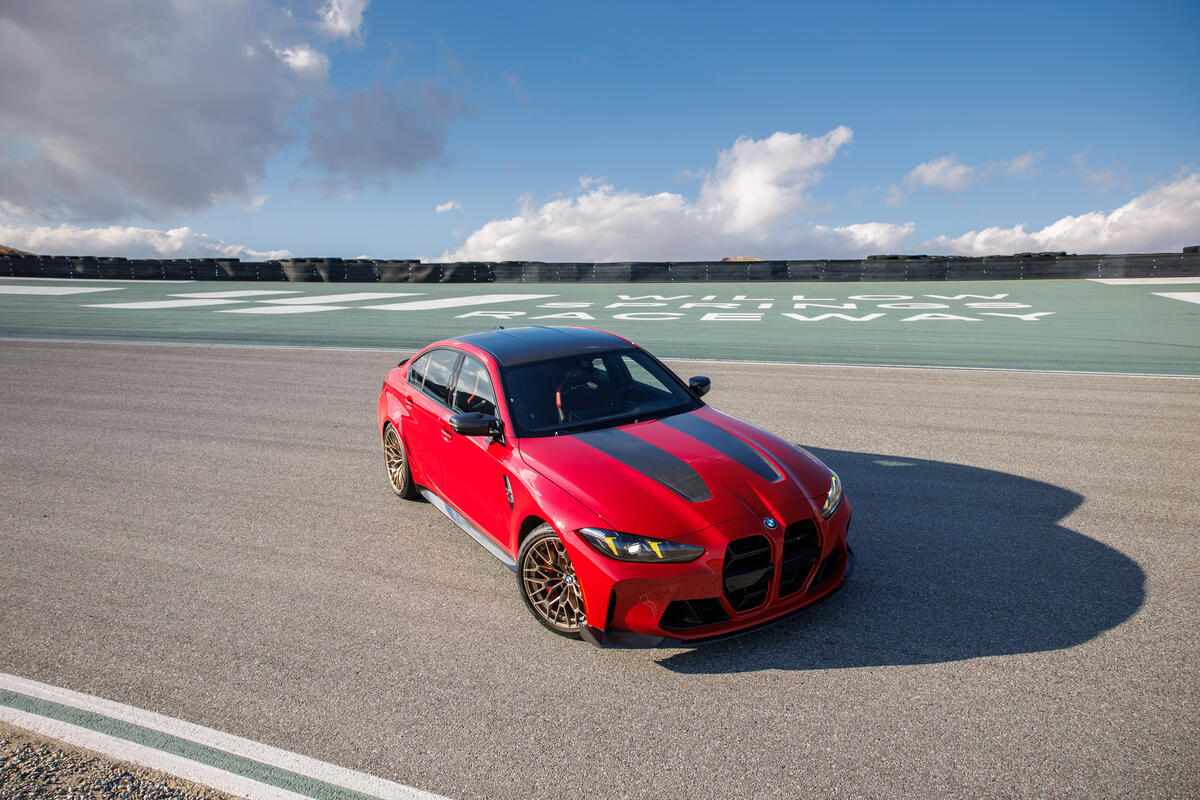
BMW E30M3
"a good friend of mine, Bill Cutler, who races in group A in Australia. He's got an E30M3."
An E30 M3 is a BMW performance model from the 1980s/early 1990s. It’s a rally-and-racing favorite because it’s strong, well-supported, and has a big motorsport reputation.
The BMW E30 M3 is a classic homologation-era performance car from BMW, built around the E30 3 Series platform. It’s especially famous for rallying and touring-car racing success, which is why it shows up in group racing contexts like the one your guest mentions.
group A
"a good friend of mine, Bill Cutler, who races in group A in Australia."
“Group A” is a type of racing class with rules about using production-based cars. It helps ensure cars are comparable and that the competition follows a defined rulebook.
Group A was a historic FIA touring-car racing category that required cars to be based on production models, with rules around homologation and modifications. When someone says they race in “group A,” they’re pointing to a specific rule set and competition class rather than just general racing.
Nurburgring Short Circuit
"and he just goes into Zandvoort and, you know, Nurburgring Short Circuit and, you know, and you can just pick and cherry pick a few events like that."
The Nürburgring is a famous German race track. The “Short Circuit” is a shorter version of the track layout, but it’s still very challenging and used for major racing events.
The Nürburgring is Germany’s legendary motorsport complex, and the “Short Circuit” refers to the shorter Grand Prix–style layout rather than the full Nordschleife. It’s still a high-speed, technical track, so it’s a serious place to run a race-prepped car.
Zandvoort
"and he just goes into Zandvoort and, you know, Nurburgring Short Circuit and, you know, and you can just pick and cherry pick a few events like that."
Zandvoort is a race track in the Netherlands. It’s known for being demanding on the car—especially the tires—because of how the track is shaped and how the corners flow.
Zandvoort is a well-known Dutch circuit on the North Sea coast, famous for its tight, flowing layout and the steep camber changes that challenge tires and braking. It’s a frequent venue for European motorsport events, so shipping a race car there is a real logistics and competition step.
Sandown
"I was lucky enough in, um, January this year, there was a opportunity at Sandown to give them a passenger ride."
Sandown is a motorsport venue in Australia (commonly referring to Sandown Raceway in Melbourne). It’s used for racing events, so it’s a relevant reference for where the guest arranged a passenger ride.
Request an Explanation
Heard something you'd like explained? We'll add it to this episode.
Sign in to request explanations for terms you heard.
Want to learn more?
Browse our glossary for plain-English explanations of automotive terms, jargon, and concepts.
Help improve this episode
See something that's not quite right? Our annotations are AI-generated and can sometimes miss the mark. Click the flag icon on any annotation to suggest a correction.