The Motorsport Brief | Supercars Darwin Debrief
About this episode
Darwin’s weekend recap kicks off with Trans-Am chaos: Brody Kasticki’s virus triggers a late call-up, and Todd Houselwood is drafted in on Sunday—just 0.28 off pole. The Supercars debrief follows, with medical decisions and suit/clutch issues reshuffling entries, including Frosty stepping into the Kastrol Mustang. Drivers then share what enduro prep feels like, from visibility discomfort to pit-stall no-start drama. Hidden Valley also gets a Darwin Triple Crown highlight, plus talk of upcoming Townsville dates and even night racing in 2027.
From last minute driver call ups to team manager take outs this is a snapshot of story lines at the end of another sensational Supercars weekend in the Northern Territory.
How Mark Winterbottom suddenly ended up racing at Hidden Valley while his Tickford stablemate Thomas Randle recovered from a brutal Saturday.
What went wrong for Walkinshaw TWG’s Chaz Mostert almost within sight of the finish - a candid chat with their CEO Bruce Stewart who reckons he needs to work on his poker face.
Penrite Racing’s Stephen Grove joins us for the first time after moving to the top of the ladder in the Teams championship just days after star driver Matt Payne shut down conversation about his future.
And Team 18’s Adrian Burgess on letting Anton De Pasquale’s win speak for itself despite heavy criticism of the GM homologation squad in the lead-up.
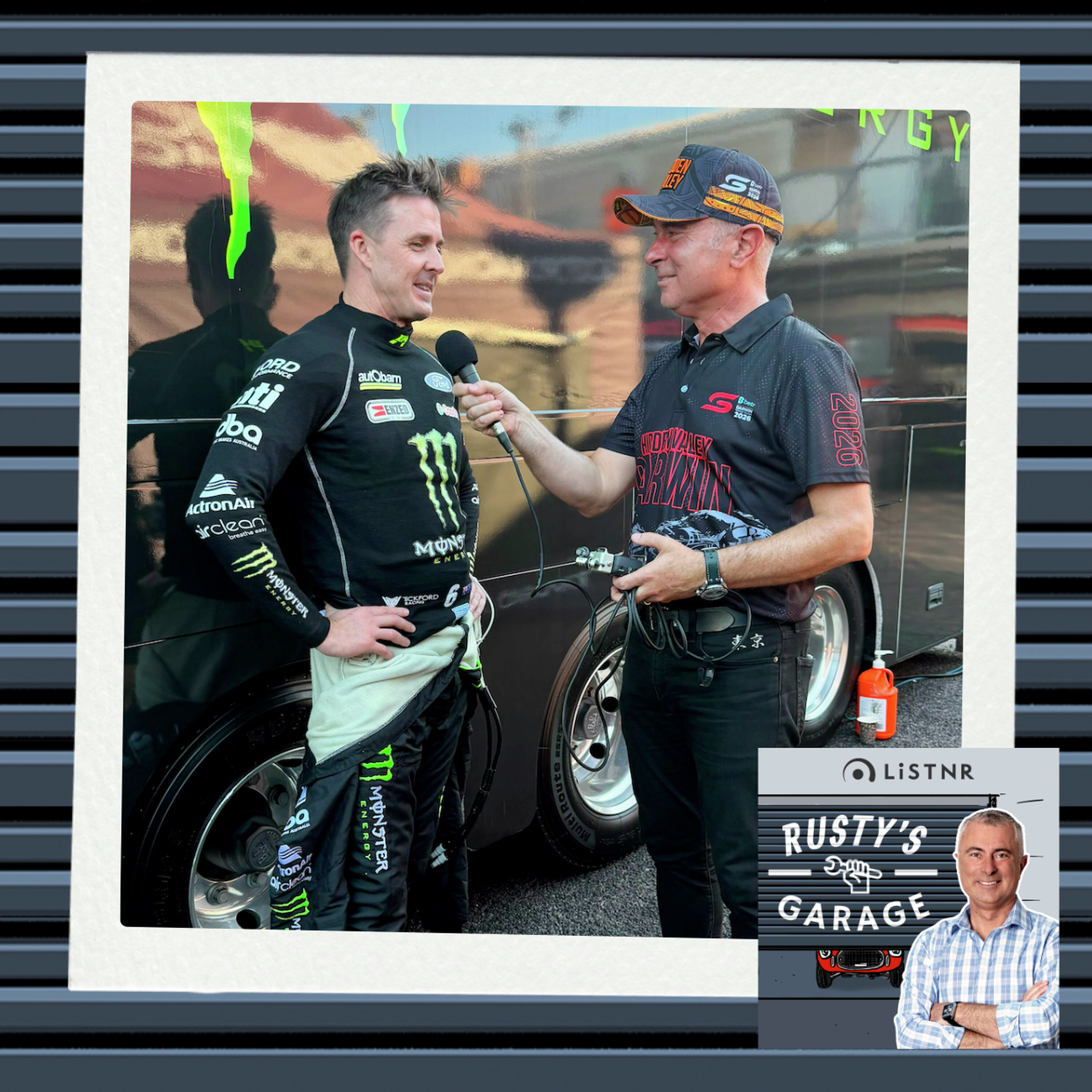
Rusty was on location working for Tourism and Events Northern Territory. He spoke with today’s guests after round 6 of the Repco Supercars Championship wrapped up.
Head to Rusty's Facebook, Twitter or Instagram and give us your feedback and let us know who you want to hear from on Rusty's Garage.
See omnystudio.com/listener for privacy information.
Trans-Am
"Tupata recorded just before he left Brisbane for Darwin, [29.4s] where he was racing Trans-Am. [35.3s] which was kind of our first indication that the Shelby Power Racing star driver... was battling a virus."
Trans-Am is a racing series for sports cars. It’s one of the events drivers compete in, and here it’s the category that Todd stepped into after Brody couldn’t race.
Trans-Am is a North American road-racing series known for production-based sports cars and a strong emphasis on driver skill and race strategy. In this segment, it’s the racing category where Brody Kasticki was scheduled to compete and where Todd Houselwood was drafted in after a health issue.
Shelby Power Racing
"which was kind of our first indication that the Shelby Power Racing [38.6s] star driver, his good mate Brody Kasticki, was battling a virus."
Shelby Power Racing is a motorsport team/brand associated with racing drivers in this segment. The hosts mention it to identify the team behind Brody Kasticki, tying the driver’s situation to the team’s race weekend.
dummy grid
"He actually found out on the dummy grid for Trans-Am, [65.8s] then bolted up to the DJR pit after that race, [69.2s] quickly looked at a bit of Brody's..."
A dummy grid is a practice or staged lineup before the real starting grid. It’s where teams and officials get things set up, and Todd found out he’d be stepping in there.
A dummy grid is a staged pre-race lineup used for procedures like driver introductions, timing checks, or rehearsals before the official grid. It’s mentioned here as the moment Todd Houselwood learned he would be drafted in for qualifying.
DJR pit
"He actually found out on the dummy grid for Trans-Am, [65.8s] then bolted up to the DJR pit after that race, [69.2s] quickly looked at a bit of Brody's..."
“DJR pit” refers to the pit area used by DJR (a racing team/operation) during the event. In this context, Todd Houselwood goes to the DJR pit after the race to get ready to take over for qualifying.
pole
"He was only 0.28 of pole, just missing out on a shootout birth,"
Pole position is the best starting spot at the very front of the race. If you’re close to pole, it means you qualified almost fastest, but not quite.
Pole position is the starting spot at the front of the grid, awarded based on qualifying results. Being “0.28 of pole” means Todd Houselwood was extremely close to the fastest qualifying time, narrowly missing the top starting position.
shootout birth
"He was only 0.28 of pole, just missing out on a shootout birth,"
A “shootout” in qualifying is a short, high-stakes session where the fastest drivers compete again to determine final grid positions. “Shootout birth” here means narrowly missing the cutoff needed to advance into that final qualifying showdown.

Ford Mustang
"...o further part in things. Frosty into the Kastrol Mustang for the race. Well, we go to dinner on Saturday n..."
The Ford Mustang is a sporty car made by Ford, usually as a coupe or convertible. People talk about it a lot because it’s built for performance and there are many ways to modify it. In the podcast, it’s mentioned in connection with a race or event.
The Ford Mustang is a performance-focused American sports coupe/convertible known for its long-running popularity and strong aftermarket support. In a racing or track context, it’s often discussed because its platform is widely tuned for different power and handling setups. It may come up in the podcast as part of a motorsport or event story involving a specific Mustang build.
Pit Lane
"I got the approval and we drove out of Pit Lane at two o'clock, so hence not getting to do a seat pour and all that sort of stuff"
Pit Lane is the special area next to the race track where the team can work on the car. The driver pulls in for things like tires or fuel, then goes back out when it’s time.
Pit Lane is the dedicated lane alongside the track where teams service cars during a race. Drivers enter it for scheduled stops (like refueling, tire changes, or repairs) and then rejoin the circuit when released by the team.
seat pour
"I got the approval and we drove out of Pit Lane at two o'clock, so hence not getting to do a seat pour and all that sort of stuff to be comfy, but anyway, I tried to survive"
“Seat pour” sounds like a pre-race setup to make sure the driver fits properly in the racing seat. The goal is to feel secure and comfortable so you can focus on driving instead of adjusting yourself.
“Seat pour” here likely refers to a pre-race seating/fit process—commonly used to get a driver positioned correctly in the racing seat and harness. In practice, teams may adjust seat position, padding, and sometimes use a molded or fitted setup so the driver can stay secure and comfortable for long stints.
steering wheel
"like that insert I missed because I looked at, normally I look over the steering wheel and for 69.9 laps, I was looking, trying to look over a steering wheel"
The steering wheel is the main control you use to steer, but in a race it also affects what you can see. If you’re trying to look around it, it can make driving feel harder.
In racing, the steering wheel isn’t just for turning—it’s also where you interact with controls and where your sightlines matter. Drivers often position their head and body to see the track clearly, which can be challenging if they’re trying to look around the wheel during a race.
Enduro's coming up
"But now, good head out, good experience, and obviously with Enduro's coming up,"
An enduro is a longer race where you have to keep the car going for a long time. Teams usually plan for things like tires and fuel, and sometimes driver swaps.
An “enduro” is a long-duration race (often endurance-style) where the emphasis is on managing the car and driver workload over time. These events typically involve multiple stints, and teams plan things like tire wear, fuel strategy, and driver changes.
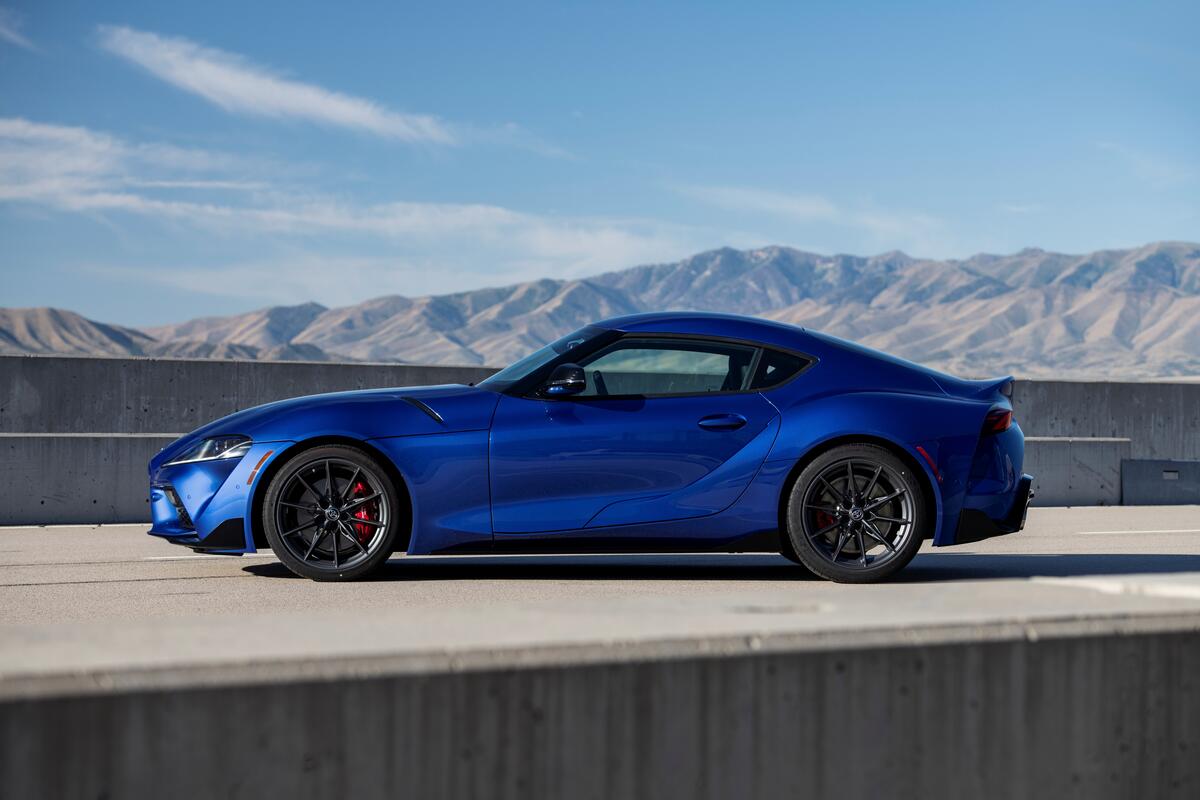
Toyota Supra
"...e first chance for Territorians to see the new GR Supra in the flesh, but smoke from Chaz's car late in S..."
The Toyota GR Supra is a sports car made by Toyota that’s meant to be fast and fun to drive. The podcast mentions it because people were able to see the new version in person at an event. The “smoke” reference suggests something happened during driving, like a car making a lot of heat or leaving tire marks.
The Toyota GR Supra is a modern sports car designed for performance driving, and it’s frequently highlighted when new versions are shown publicly. In the podcast context, it’s mentioned as the “new GR Supra” that people get to see in person, with a reference to smoke from another car during an event. That kind of mention typically ties to how the car performs under real driving conditions and how it draws attention at track or show gatherings.
Townsville
"Cars are in great shape in that few weeks between now and Townsville. It looks like you've got a good launch pad for that. Yeah, we think we have. We like Townsville."
Townsville is where the next race is happening. The hosts think their cars work well there because the track’s layout and grip characteristics match what their team is good at.
Townsville is a circuit location used in Australian motorsport, and it’s being discussed here as a track that suits the team’s car setup. The hosts call it a “high-deck circuit,” implying the track layout and surface characteristics favor how their cars behave in acceleration and traction zones.
high-deck circuit
"It's a high-deck circuit. Seems to suit us as well."
A “high-deck circuit” is a track that has a more elevated or pronounced layout/surface feel compared to others. That can change how the car grips and how stable it feels, so teams adjust their setup to match.
“High-deck circuit” is an enthusiast shorthand for a track with a higher, more elevated or more pronounced “deck”/surface profile and layout that changes how the car loads up through corners. In practice, it often affects traction, braking stability, and how well the car can carry speed—so teams may tune gearing, suspension, and aero balance to suit.
Sydney Motorsport Park
"Being a whilst in Sydney Motorsport Park, [1076.4s] a lot of talking in the press about different things,"
Sydney Motorsport Park is a race track in Australia. When they mention it here, they’re talking about what happened during a race weekend at that specific track.
Sydney Motorsport Park is a motorsport circuit in Australia used for racing events across multiple categories. In a race context, it’s the kind of venue where track position, safety car timing, and late-race strategy can strongly affect results.
press
"a lot of talking in the press about different things, [1078.5s] is that just one to, sort of, quietly say that, [1080.3s] what does it mean?"
Here, “the press” just means the journalists and media talking about the race. They’re saying they’re not paying attention to it and focusing on the work instead.
In motorsport, “the press” refers to journalists and media coverage that interpret events, speculate on incidents, and publish commentary around races. This segment contrasts that external commentary with what the team is focused on day-to-day.
safety car
"Well, it was the last thing we wanted, was the safety car, [1106.0s] but, you know, and you don't want to finish races under the safety car, [1109.1s] it's not great for TV, it's not good for the fans,"
A safety car is a car that comes out to slow everyone down when the track isn’t safe. It can change how the race ends, especially if it happens near the finish.
A safety car is an official pace vehicle that enters the track to control speed during hazardous conditions (like debris or an incident). Finishing behind the safety car changes race strategy and can affect how drivers gain or lose positions late in the event.
Request an Explanation
Heard something you'd like explained? We'll add it to this episode.
Sign in to request explanations for terms you heard.
Want to learn more?
Browse our glossary for plain-English explanations of automotive terms, jargon, and concepts.
Help improve this episode
See something that's not quite right? Our annotations are AI-generated and can sometimes miss the mark. Click the flag icon on any annotation to suggest a correction.