The latest episode dives into Tesla's recent earnings report, revealing a revenue of $28 billion but a decline in earnings, raising concerns about the company's growth. The hosts discuss Rivian's layoffs as it prepares for the R2 launch and Ford's pause on F-150 Lightning production due to supply chain issues. They also touch on GM's new level three autonomy features and Tesla's new solar panel production. The conversation highlights the challenges facing electric vehicle manufacturers and the evolving landscape of EV technology.
In the Electrek Podcast, we discuss the most popular news in the world of sustainable transport and energy. In this week’s episode, we discuss Tesla's earnings madness, Rivian layoffs, Ford pausing F-150 Lightning, and more.
As a reminder, we’ll have an accompanying post, like this one, on the site with an embedded link to the live stream. Head to the YouTube channel to get your questions and comments in.
After the show ends at around 5 p.m. ET, the video will be archived on YouTube and the audio on all your favorite podcast apps:
We now have a Patreon if you want to help us avoid more ads and invest more in our content. We have some awesome gifts for our Patreons and more coming.
Here are a few of the articles that we will discuss during the podcast:
"...there was an interesting announcement about, I guess it's level three autonomy that they announced. They don't call it level three, but that's what it is."
Level three autonomy means the car can drive itself most of the time, but you still need to be ready to take control if something goes wrong. It's like having a really smart co-pilot that can handle driving in some situations.
Level three autonomy refers to a stage in automated driving where the vehicle can handle most driving tasks independently, but the driver must be ready to take over when requested. This level allows for limited self-driving capabilities in certain conditions, unlike lower levels that require constant driver supervision.
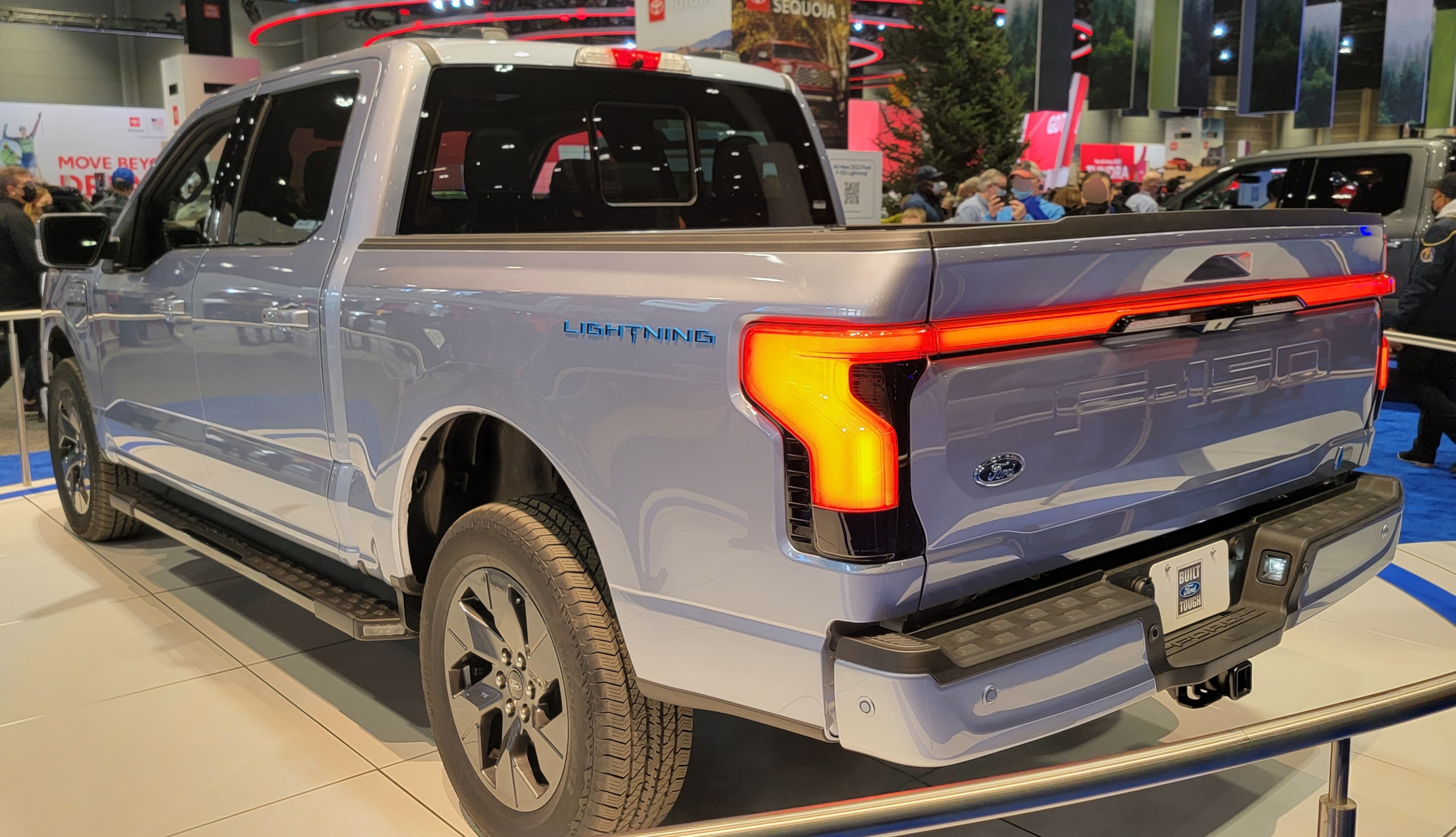
"two vehicle programs that were, you know, sort of kill this week, or at least pause, and that's the F-150 lightning and the bright drop electric van. So two big bummers that we're going to have to discuss later on the show. We're going to have time to talk to you guys. So if"
The Ford F-150 Lightning is an electric pickup truck that looks like the regular F-150 but runs on electricity instead of gasoline. It's important because it shows how trucks can be more environmentally friendly while still being strong and useful.
The Ford F-150 Lightning is an all-electric version of the popular F-150 pickup truck, representing Ford's commitment to electrifying its vehicle lineup. It combines the utility and performance of a traditional F-150 with zero emissions, making it significant in the shift towards sustainable transportation.
"Tesla disclosed in the earnings report that they lost $1.4 billion in regulatory credits. So that's not like this quarter, like this quarter, I think they had like 400 something million in regulatory credits compared to like 700 the same period last year."
Regulatory credits are like rewards for car companies that make electric cars. They can sell these rewards to other companies that need them to follow environmental rules.
Regulatory credits are incentives given to automakers for producing electric vehicles or meeting certain environmental standards. These credits can be sold to other manufacturers who need them to comply with regulations.
"...contracts that they had with automakers to buy their credit, $1.4 billion of that was erased due to the changes with the cafe standard and all that."
The CAFE standard is a rule that helps make cars use less fuel. It pushes car companies to create vehicles that are more efficient and better for the environment.
The Corporate Average Fuel Economy (CAFE) standard is a set of regulations in the United States aimed at improving the average fuel economy of cars and light trucks sold in the country. It encourages manufacturers to produce more fuel-efficient vehicles.
"...the take rate on them all S and X for FSD is way higher, for example. Right. Because of that..."
FSD means Full Self-Driving, which is a technology from Tesla that allows their cars to drive themselves with little to no human input. It's a big deal for people looking for advanced car features.
FSD stands for Full Self-Driving, a feature offered by Tesla that aims to enable autonomous driving capabilities in their vehicles. It includes advanced driver-assistance features and is a significant selling point for Tesla cars.
"...Time to get them on a Y. Yeah, I'm still leaning more towards model three, but..."
The Tesla Model Y is an electric SUV from Tesla. It's known for being roomy and having lots of tech features, making it a good option for families or anyone needing more space.
The Tesla Model Y is a compact electric SUV that shares many components with the Model 3 sedan. It offers spacious seating, advanced technology, and impressive performance, making it a popular choice among electric vehicle buyers.
"...I'm still leaning more towards model three, but..."
The Tesla Model 3 is a smaller, more affordable electric car from Tesla. It's known for being efficient and having a simple design with a big screen for controls.
The Tesla Model 3 is a compact electric sedan that has gained popularity for its affordability, range, and performance. It features a minimalist interior with a central touchscreen for controls and is designed for efficiency and safety.
"...Tesla confirmed that Semi truck production Tesla Semi production has been delayed into next year. And I feel a little bit vindicated on this because if you remember this year I have a report on that saying that Tesla had delayed production into next year..."
The Tesla Semi is a large electric truck made by Tesla. It's designed to carry heavy loads and is more environmentally friendly than regular trucks that run on diesel fuel.
The Tesla Semi is an all-electric Class 8 truck designed for freight transport. It aims to reduce costs and emissions compared to traditional diesel trucks.
"...Tesla confirmed that Semi truck production Tesla Semi production has been delayed into next year..."
Class 8 trucks are big trucks used for transporting heavy loads. They are the largest type of trucks on the road and can carry a lot of weight.
Class 8 trucks are the heaviest classification of trucks, typically used for long-haul freight transport. They have a gross vehicle weight rating (GVWR) of over 33,000 pounds.
"...we need to know the pricing because we know the price of increase we know it's not $180,000 for the 500 mile version like it originally was..."
MSRP is the price that the car maker suggests you pay for a vehicle. It's like a starting point for how much a car should cost, but the actual price can be different when you go to buy it.
MSRP stands for Manufacturer's Suggested Retail Price, which is the price that the manufacturer recommends for the vehicle. It serves as a guideline for pricing but can vary based on dealer markups or discounts.
"Yeah, so GM had an event in New York City, Mary Bara, Royce, like kind of all the big leagues were there."
GM stands for General Motors, a big company that makes cars and trucks. They own several popular car brands.
GM, or General Motors, is one of the largest automobile manufacturers in the world, known for producing a wide range of vehicles under various brands, including Chevrolet, GMC, Buick, and Cadillac.
"Yeah, so GM had an event in New York City, Mary Bara, Royce, like kind of all the big leagues were there."
Mary Barra is the CEO of General Motors, which means she is in charge of the company and makes important decisions about their cars.
Mary Barra is the Chairperson and CEO of General Motors, and she has been instrumental in leading the company through significant changes, including a focus on electric vehicles.
"Sterling Anderson who we know from Tesla and then Aurora and some other stuff is now one of the chief product officers."
Sterling Anderson is a person who has worked with big car companies like Tesla and now works at GM to help create new cars.
Sterling Anderson is known for his work in the automotive industry, particularly with Tesla and Aurora, and he is currently a Chief Product Officer at GM, focusing on product development and innovation.
"...at were pretty important. There's a 2028 Cadillac Escalade IQL which is the longer Escalade which is crazy b..."
The Cadillac Escalade is a big, fancy SUV that has a lot of room inside and comes with many luxury features. The new version coming out in 2028 will be even longer, which means it can carry more people and stuff.
The Cadillac Escalade is a full-size luxury SUV known for its spacious interior, high-end features, and bold design. The upcoming 2028 Escalade IQL is expected to be an even longer version, highlighting Cadillac's focus on luxury and innovation in the SUV market.
"it's gonna have eyes off super cruise. They're not calling it ultra cruise anymore."
Super Cruise is a feature in some Cadillac cars that lets you drive without using your hands on the wheel on certain highways.
Super Cruise is Cadillac's advanced driver-assistance system that allows for hands-free driving on compatible highways, utilizing a combination of adaptive cruise control and lane-keeping technology.
"they're using like invidia chips and what you would expect."
NVIDIA is a company that makes powerful computer chips, and they also create technology used in cars for things like self-driving features.
NVIDIA is a technology company known for its graphics processing units (GPUs) and has expanded into automotive technology, providing chips for advanced driver assistance systems.
"...you can see like the LiDAR hump on it. Yeah, it's a big one. First GM car to have that, I think."
LiDAR is a technology that helps cars understand their surroundings by using lasers to measure distances. This helps in making cars smarter and safer, especially for self-driving features.
LiDAR stands for Light Detection and Ranging. It's a technology that uses laser light to measure distances and create detailed 3D maps of the environment, which is essential for advanced driver-assistance systems and autonomous vehicles.
"...that's been one of the big slight again, Tesla for a long time is like, why there's level three is super valuable, like long distance."
Level three automation means that the car can drive itself in many situations, but you still need to be ready to take over if something goes wrong. It's like having a helper that can do most of the driving for you.
Level three automation refers to a stage in autonomous driving where the vehicle can handle most driving tasks under certain conditions, but the driver must be ready to take control when needed. This is a significant step towards fully autonomous vehicles.
"on those. And a technology company because they use a lot of what they are learning from the R1's program to deliver the R2. Yeah. And then they also sold their technology to Yeah. Yeah. So that they're making some money from that too now."
The Rivian R1S is an electric SUV made for people who love outdoor adventures. It's special because it can go off-road and is part of a new trend of electric vehicles that are designed for fun and exploration.
The Rivian R1S is an all-electric SUV that emphasizes adventure and off-road capability, designed by the American electric vehicle manufacturer Rivian. It is significant as it represents a new wave of electric vehicles that cater to outdoor enthusiasts and showcases advanced technology.
An internal combustion engine is a type of engine that makes cars go by burning fuel like gasoline. It's the kind of engine most cars used before electric cars became popular.
An internal combustion engine (ICE) is a type of engine that generates power by burning fuel, such as gasoline or diesel, inside the engine itself. This is the traditional engine type used in most vehicles before the rise of electric vehicles.
"...the bright drop program started roughly, it was rough for them with 146 trucks in 2022 about 500 trucks in 2023."
BrightDrop is a company that makes electric delivery vans. It's part of General Motors and helps businesses deliver packages in a more eco-friendly way.
BrightDrop is a subsidiary of General Motors focused on electric commercial vehicles, particularly delivery vans. They aim to provide sustainable solutions for logistics and delivery services.
"...bring it to EV production because it was an ice plan before that."
An electric vehicle, or EV, is a car that runs on electricity instead of gasoline. They are better for the environment because they produce less pollution.
An electric vehicle (EV) is a type of vehicle that is powered entirely or partially by electricity, using electric motors instead of internal combustion engines. EVs are known for being more environmentally friendly than traditional vehicles.
"...it's not as much as like the transit or the even Rivians Amazon delivery van."
A delivery van is a big vehicle used to carry packages and goods from one place to another. Businesses use them to deliver items to customers.
A delivery van is a type of vehicle designed specifically for transporting goods and packages. These vans often have larger cargo areas and are used by businesses for deliveries.
"...comparable to the GMC seven of van or the Chevy Express, which are the main commercial van from GM..."
The Chevy Express is a large van made by Chevrolet. It's often used by companies to carry people or cargo because it has a lot of space inside.
The Chevy Express is a full-size van produced by Chevrolet, primarily used for commercial purposes. It's known for its spacious interior and versatility, making it popular among businesses for transporting goods and passengers.
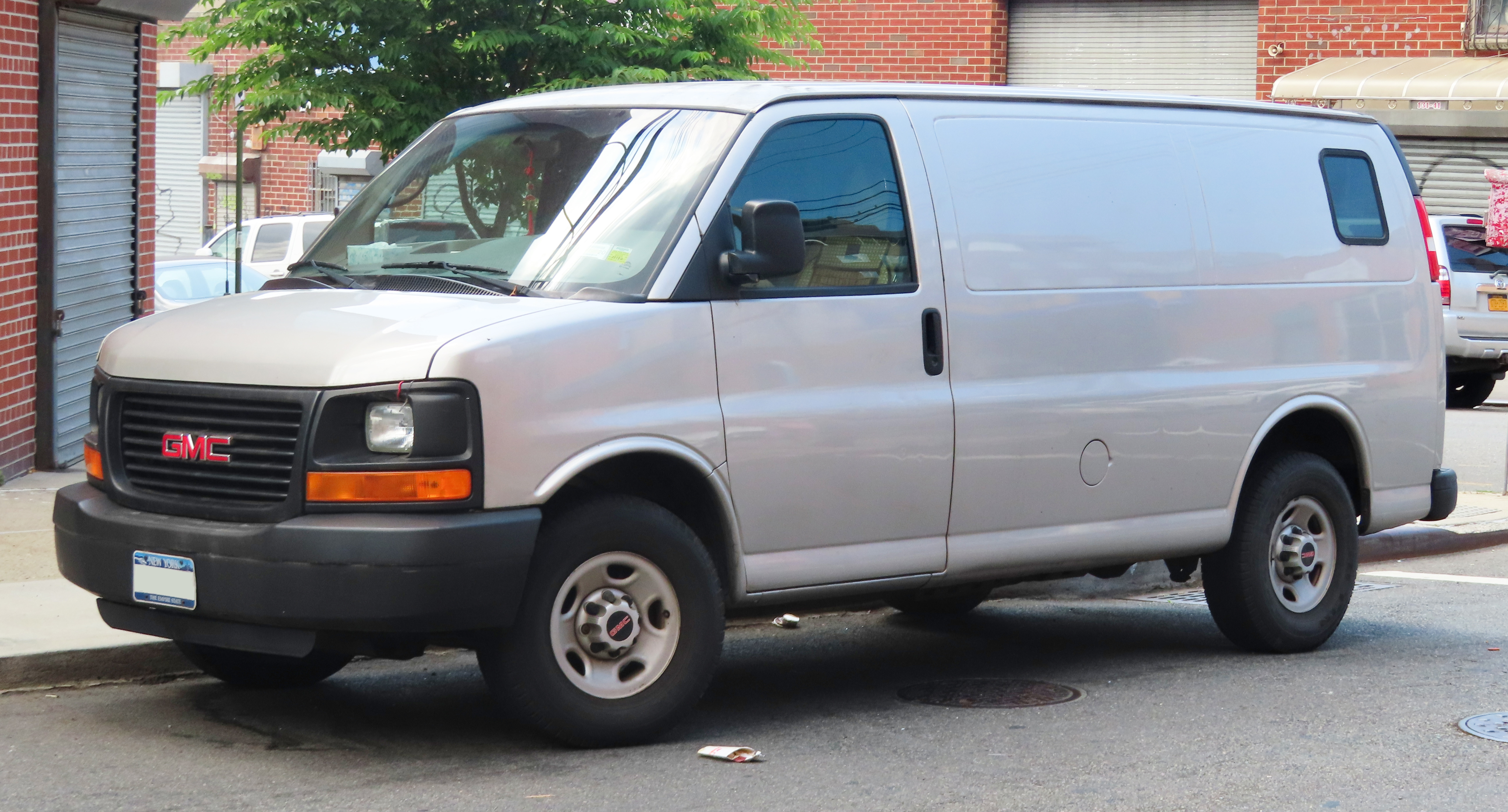
"...comparable to the GMC seven of van or the Chevy Express, which are the main commercial van from GM..."
The GMC Savana is another large van made by GMC, similar to the Chevy Express. It's used by businesses to transport goods or people because it has a lot of room.
The GMC Savana is a full-size van similar to the Chevy Express, designed for commercial use. It offers a range of configurations for cargo and passenger transport, making it a practical choice for businesses.
"...like the Android Auto experience is fine. But like for me, it's, you know, when, for instance, texting..."
Android Auto is a feature that lets you connect your Android phone to your car so you can use apps and get directions easily while driving.
Android Auto is a mobile app developed by Google that allows Android users to connect their smartphones to their car's infotainment system, providing access to navigation, music, and messaging features.
"...when I'm driving around my Chevy Bolt 2023, which has CarPlay, it's a really nice experience because I can just, you know, tap the, you know, respond to the stuff really easily..."
CarPlay is a feature that lets you connect your iPhone to your car so you can use apps and send messages easily while driving.
CarPlay is Apple's system that allows iPhone users to connect their devices to their car's infotainment system, providing access to apps, navigation, and messaging features directly from the car's display.
"... can support CarPlay. It supports CarPlay and the prologue, the Honda prologue, which is basically a GM car...."
The Honda Prologue is a new electric SUV that Honda is making, and it will be similar to some cars made by General Motors. It's important because it shows that more car companies are starting to make electric vehicles.
The Honda Prologue is an upcoming all-electric SUV that is expected to share its platform with General Motors vehicles, marking Honda's entry into the electric SUV market. It is significant as it reflects the growing trend of automakers collaborating to produce electric vehicles.
"...if you're promising unsupervised full self-driving to someone and you're selling it for $10,000..."
Unsupervised self-driving means that a car can drive itself without anyone watching or controlling it. It's what companies like Tesla are trying to achieve with their technology.
Unsupervised self-driving refers to a level of autonomous driving where the vehicle can operate without any human oversight or intervention. This is a key goal for companies like Tesla in their development of self-driving technology.
"...issues with my hardware three full self driving computer. Most likely Tesla will be forced to upgrade..."
Hardware three is the third version of Tesla's computer system that helps their cars understand the environment around them. It's important for features that allow the car to drive itself.
Hardware three refers to the third generation of Tesla's onboard computer system designed for processing data from the vehicle's sensors and enabling features like Full Self-Driving. It is a critical component for the vehicle's autonomous capabilities.
"...the Ken power stuff is what a lot of the charging station operator mentioned a lot. So a friend of mine, Sylvain Juteau operates in what is called the really electric station..."
Ken Power makes equipment that helps charge electric cars quickly. They are known for having some of the best charging technology available.
Ken Power is a company known for producing electric vehicle charging solutions, particularly in the realm of DC fast charging stations. Their technology is often praised for its efficiency and reliability in charging electric vehicles.
Alpetronic makes charging stations for electric cars. They are known for making good quality chargers that work with many different types of electric vehicles.
Alpetronic is a company that specializes in electric vehicle charging solutions, particularly known for their high-quality charging stations that support various charging standards.
"I've been using the Tesla mobile connector, the whole ownership of my car, which the benefit of getting a dedicated home charger."
The Tesla mobile connector is a charger that you can use to charge your Tesla car at home or on the go. It can plug into regular outlets or special charging stations, making it easy to keep your car charged.
The Tesla mobile connector is a portable charging solution for Tesla electric vehicles, allowing owners to charge their cars using standard household outlets or dedicated charging stations. It provides flexibility for charging in various locations.
Select text to request an explanation
And we are live on the episode of The Electric Podcast. I am Fred Lambert, your host, and as
usual, I am joined by Seth Wynchal. How are you doing, Seth?
I'm good.
All right. We have a ton to talk about this week, because it was the Tesla earnings week,
so it always comes with a lot of news that comes out of, you know, the earnings report
itself or the conference call that followed. And we have plenty of news to talk about
here when it comes to that. And then we have Seth went to a little GM event this week, and
there was an interesting announcement about, I guess it's level three autonomy that they announced.
They don't call it level three, but that's what it is.
It sounds like it. Yeah, yeah. Then we have Rivian layoffs we want to talk about, and then
two vehicle programs that were, you know, sort of kill this week, or at least pause,
and that's the F-150 lightning and the bright drop electric van. So two big bummers that we're
going to have to discuss later on the show. We're going to have time to talk to you guys. So if
you guys have any question for us, you can put it in the comment section. I'm going to remind
you about it a little bit later on the show once the more people are coming in.
All right. Let's talk about the earnings a little bit. So quick numbers, expectation were
26.5 billion in revenue, 55 cents per share. Tesla came in a higher in revenue at 28 billion,
but lower in earnings at 50 cents per share. And yeah, it's indicative of a company that is not
really growing anymore. Like we anticipated the record revenue. We anticipated actually how much
higher earnings. I was closer to like 70 cents per share that I was expecting. So way below
what I was expecting. We already discussed it a bunch of time. The higher revenue is due to the
demand being pulled forward in the US due to the tax credit going away that gave us the
giant boost. But even with this giant boost, this couldn't grow, it couldn't grow its earnings
despite that and despite lower capital expenditure too. So that's the thing. I mean,
when I was at this level, that's the thing I was always like hammering on. I was like,
yeah, Tesla is not making any money. Or at the end of my bull run that Tesla investor,
it was like, they're not making that much money. But that's because they're reinvesting a lot of
it in their future growth. Capital expenditure was high for a company of that time that size.
Now it's not even the case anymore. Like the capital expenditure is down 36% quarter
over quarter. And especially for a company that Elon claims is like a AI company now.
And I don't know if you've been following all these other AI companies, capital expenditure,
but they are through the roof, like investing. Yeah, bananas and data centers and the same
thing. You don't see that. To be fair, they did invest heavily last year and a year before
that. And I heard this a little bit in data centers, but not so much anymore. And not so
much in their vehicle program, not so much on new production capacity. So yeah,
capital expenditure is way down and still the net income is also down on top of it. So
$28 billion in revenue, $3.4 billion in auto rating expenses. So $1.6 billion in income
from operation. So that's 40% down. I just said EBITDA is also down 9%.
Net income attributable to shareholders is down 37% gap, 29 non-gap. So that plus the
capitalist capital expenditure is way down. It has all the signs of a company that is simply
not growing anymore. That's where it is. Like you had the last like good quarter of a big boost
because of that higher revenue. Thanks to the tax credit going away. But that's about it.
Tesla disclosed in the earnings report that they lost $1.4 billion in regulatory credits.
So that's not like this quarter, like this quarter, I think they had like 400 something
million in regulatory credits compared to like 700 the same period last year. So it was down a
lot despite record deliveries. So normally more deliveries, more credit, not the case anymore
because of the changes in the US. But they also disclosed that their long-term contracts,
contracts that they had with automakers to buy their credit, $1.4 billion of that was erased
due to the changes with the cafe standard and all that. So yeah, it's not a good look for Tesla
long term. But yeah, they also said a lot of things about I should mention, they still,
you know, it still was a positive core quarter in terms of a free cash flow. So Tesla did
add $4 billion to it. It's rich or recent. Now it's sitting on $41 billion. So Tesla still,
you know, it's not in trouble. Anything like that is just not growing anymore.
Their profits are going down. Yeah, there was a few things that were mentioned in the
in the conference call that were, we thought were newsworthy. So first of all, production
increase. So Elon is talking about actually increasing Tesla's production capacity, which is
interesting because demand has been down. Tesla's capacity production capacity is currently at
about a 60% utilization rate. So that's a problem. And we've, you know, we thought Tesla probably
would be opportunities to increase that production with the release of the standard range
vehicles. And that's not standard range. It's standard. They're called standard vehicles.
You know, the strip down Molloy Moll three. But you know, after they were unveiled, we're like,
yes, I don't think so. It's kind of a flop. Like maybe they get a few percentage points higher,
they get to 65, maybe 70% capacity, but they're still going to be way below capacity.
Now, you know, and said that they're actually going to increase production,
but not because of these new models, but because I feel like I'm quoting,
I feel confident in expanding this production. So that is our intent to expand as quickly as we
can our future production. I was reticent to do so until we had clarity on achieving unsupervised
full self-driving. But at this point, I feel where we got clarity and it makes sense to expand
production as fast as we reasonably can. So basically says, now I have clarity on
solving unsupervised self-driving, you know, all the other times that he said that it's
going to happen by the end of the year over the last six years, he wasn't confident,
even though he's on the record saying he was. But now this time he is. So just to be,
to make like a little summary of what he's saying here is like,
he thinks that it's worth increasing production right now, because in the near future,
they're going to solve a product, a feature that he has been historically terrible at predicting
when it's going to be solved. So what can go wrong here? Actually, for consumers, this is,
this is a good thing, I think, because if this increases production right now and expect a higher
demand from FSD, I think, you know, FSD demand has been, oh, that's another data point said
that was interesting in the, in the earnings call of the, the share. The CFO said that
they are at about 12% of the fleet is buying FSD. 12%. Yeah. So the take rate is 12%,
which is, you know, about what we expected. I think, you know, a few years ago, it was
roughly 10%. I'm going to say 2022, 2023 or something. At some point, actually, we got the
data on it and Tesla has been like keeping that close to the chest for a while. But we got it
like a few years ago and we were able to publish it. And it was, you know, eight, 10%. And it varied
greatly, obviously, between regions because the availability of FSD features in North America
is way higher than in Europe. And just now it comes to China and Australia, New Zealand.
So I guess, I guess 12 is low a few years later with all the improvements and with,
you know, more availability in other markets, especially China, you would think,
but at the same time, it's so expensive that I, and, and Tesla sells in China's 10 towards the
lower end of their lineup. So the lower end, the lineup is the higher, the harder it is to sell a
$10,000 feature on a vehicle. You know, I think the take rate on them all S and X for FSD is way
higher, for example. Right. Because of that. So yeah, it's, what could happen here is that
Tesla increases production thinking, Hey, are we going to solve cell driving by the end of the
year? It doesn't do it. And then they're like, all right, we still have to sell those cars. So we're
going to have to do crazy discounts. And I think, I think that's what's going to happen because I
think Tesla still has some hope that they might not hand the year down in total deliveries, which
is not impossible because they did catch up quite a bit thanks to the, the men being pulled forward
in Q3, but they will need like significant discounts. So good news. If you're in a market
for a car by the end of the year, I think you might find yourself with some big discounts
on Tesla vehicles. Time to get them on a Y. Yeah, I'm still leaning more towards model three, but
all right. The trillion dollar package came up a bunch of times in the, in the call. It came
up at the beginning of the call, get on a midway through the call. And at the end, the CFO and
then Elon got on the back of it literally made a call for shoulders to give Elon a trillion
dollars. But Elon kind of, I mean, he didn't change his tune. He's been saying that for a while.
That's not about the money. It's about the control over the company and everything. And,
but this time he phrased it in a more like headline worthy way, where he was like,
I'm about to build an army of over a million robots, and I want control over this army.
And I don't think I have control right now, which something we have repeatedly,
you know, pushed back against that, like, all evidence point to Elon having complete control
over Tesla over the last, you know, two decades, like, you know, especially since
Eberhard interpreting has been halved since that was 2009. And even before that,
because he got his way and he was able to push them out. Like, can you point to a moment in
time that Elon didn't get his way at Tesla, like Tesla didn't do exactly what he wanted to do.
And by that, I mean, especially the board and the shareholders, like I cannot think of a single
moment. But that's his fear. He fears that he called the ISS and Glass Lewis that the two proxy
firms that advise institutional investors, they call them corporate terrorists for recommending
that people vote against the trillion dollar stock package. And there's been some other
development this week about this. I posted an article this week based on a tweet from Elon,
where he, you know, the board already hinted towards that, but now confirmed it that
basically if he doesn't get his way, if he doesn't get his package, he will leave.
And he did that in response to someone who's, you know, was a Tesla shareholder and someone that
appeared bullish on Tesla and Elon that brought up the point that we brought up a bunch of times
before is that there are issues with his competition package where he could get between
20 and 40 billion dollars from the package without Tesla doing much than business as
usual and even growing at a return on investment rate that is lower than the S&P 500. So why would you
and 20 and 40 billion dollars sounds low compared to a trillion dollars, but it would still be the
biggest compensation package ever for a CEO ever. So why would you give that to someone who
delivers below average return? It makes no sense. So they are obvious flaws in the
competition package itself and the person that Elon was responding to when he said he was going to
leave if he doesn't get it simply pointed out that that first trend specifically that
could be easily achieved without significant return to Tesla shareholders. And instead of
just addressing that as like, oh yeah, maybe we should change that because that's
as it seems fair. He was like, who's going to let Tesla because it's not going to be me.
And also I have kind of fired everybody that would be capable of leading Tesla.
Yeah, that's a problem. That's the talent exodus issue that we've been highlighting for a while
and I like that like last week I posted an article on the talent exodus and saying that like
the, what's her name? Robin then home. Tesla's chairwoman was saying that
she keeps seeing these headlines about people leaving Tesla, but she never sees headlines about
people joining Tesla. And I'm like, I'm looking for those headlines every day. Like I'm looking at
people that Tesla hires and there's just no big names, no big people that they secured.
And I'm saying Tesla's still hiring people, but he's mostly hired interns like people right out
of college and then try to build them up from there, which is a strategy that's worthy and
everything, but you cannot expect me to write an article about Tesla hiring a new intern.
And during the earnings call, they basically confirmed my, the thing that I've been saying
that Tesla is losing a lot of top talent and relying mostly on hiring people in interns
and people right out of colleges. And that's what he said. He said we are growing and
wearing a lot of talent and mostly straight out of college. So that's exactly my point I've
been saying. Well, yeah, there's this robot army thing is
who believes that? I'm sure they are like shareholders, but I would like to have a
good poll on people that have been following Tesla for a while. It's like how many people
really believe that Elon, it's not about the money, it's about the control over the future
robot army. It's like you have to be very gullible to believe that. It just so happens they get 30,
40 billion dollars if Tesla just keeps doing like 3% return for the next five, 10 years and
but no, no, it's about the robot army. So do you think, okay, so you make a great point.
They, you know, the trillion dollars is like the big, you know, headline. Everybody's thinking
about that. But that also requires, you know, Tesla to grow like 8x or something, or, you know,
eight, eight trillion dollar company. Maybe the real goal is just, you know, another 50
billion dollars. Like, that's my point. Yeah, that's what that's what I've been saying is
like this, it's the the he doesn't have to complete the package like he does one trench
of it and it's still the biggest deal ever. There's things like if you're really that confident
in what you say and everything like that, I would be on board, I'm not even a shareholder anymore,
but if I was, I would be on board with like, oh yeah, let's give him 50 billion dollars if
he delivers on supervised self-driving and the capability safer than a human driver
proven over let's say a billion miles. Like if you can deliver on supervised
self-driving to consumer vehicle, which you promise for a decade at this point,
and you can do it with proving that it is safer than human driver over, you know,
let's whatever reasonable amount of mileage it is, then yeah, get your 50 billion dollars from
that. That's a trench. That's one trench there get 50 billion dollars and
and that would be it. That would be fair. Like, but why is that not one of the milestones
and like it's not one of the milestones is the only milestone related to this
is a million vehicle subscribed to FSD. Is it is a million or tell me, I don't remember which one,
but subscription to FSD like they are already known. It's probably more than a million
because there's there's already probably close to a million. If it is, it would be sad.
But so yeah, it's you can you can just lower the price of FSD subscription, which should already
be the case. Like, especially our word three subscriptions should be lower than all the word
for like, what is that about? Like, I don't have the same capacity in my order three car
and my friend doesn't as our word for cars. And yet I have to pay the same subscription
price than he does. Makes no sense. Change that that model and everything. Make it like
$50 a month to subscribe FSD, you'll get to 10 million in a few years easy. So
there's no he made it purposely easy milestone to get to like even the million robot thing
milestone, like you couldn't make a million. You could justify making a million robot that
were worth like $50,000 to $100,000 and use them for, you know, repetitive, relatively
simple tasks. And and that would be, you know, wouldn't have a major impact that he's talking
about on the world's economics and, you know, ending poverty, like you keep using these timeline
he called it said he called the optimist. He called it an infinite money glitch.
You know, he literally sounds like the scammers on Dory's expose, like trying to
trying to pass as him to give you like a crypto scam, like a get rich quick scheme.
He sounds like that. It's like going full circle of scamming. But yeah, I like you could
you could deliver something like that. And and then Elon would get another $50 billion
for that, even though it's your your light years away from between making a million
robots that are useful for certain tax that you train them for versus like a generalized
useful robot. It's it's light years away. So yeah, there's a lot of problems like that with
his conventional package. All right, we got an interesting news that came out of the earnings
to Tesla announced that they have a new solar panel in production in the US at Gigafactory
New York in Buffalo. So it was Mike Snyder, Tesla's VP of energy charging said,
we've seen a surge in the resistance to solar dominant in the US due to policy
changes, which we suspect to continue into the first half of 2026 as we introduce a new solar
lease products. So we talked about that a few podcasts ago, that after neglecting its solar
business for years, even stopped reporting deployment because it was so low, Tesla relaunched
solar leasing product earlier this month. And we noted that it was a purely
opportunistic move from Tesla because of the tax credit for residual solar going away
at the end of the year. Just like what happened with electric vehicle in Q3,
it's resulting in a big boost in demand for solar in Q4 in the US, which by the way,
you got to be careful about because I think there's a similar extension that if you get
everything locked in by the end of the year, you're going to you should be firing everything,
but it's not as clear as with electric vehicles. And if you even if you lock in
your order in the next few weeks, like in the next few weeks, maybe you get get an
installation by the end of the year. But from what I'm hearing, like everyone is like,
there's a lot of demand. So it can be it can be rough and 30% tax credit is a big difference,
obviously. So Tesla is trying to take advantage of that. But then he had it,
Snyder added, we also began production of our Tesla residential solar panel in our Buffalo
factory. And we will be shipping that to our customers starting in Q1. So it's not
shipping right now, but Q1. The panel has industry leading aesthetic shape performance
and demonstrate our continued commitment to US manufacturing. So this is this is previous solar
panel, which is an NWA panel. And so I do a little bit of research because, you know, the
Tesla has been talking about manufacturing panels for a while, but they never really
manufactured themselves. And and it passed on like Tesla branded panels that were
manufactured for or from others, again, mainly stock carriers and one. So I looked it up a little
bit and I saw that this did recently change the specs of its panel on its website from 400 405
watts to 410. So maybe this is it or maybe this this is not the new panel just yet because
it's not shipping already. But this this one here, like I did the spec comparison,
it is basically the NWA Q cells, which only a little differential in the framing.
So but the framing is is Tesla. So it's not so it's almost guaranteed that it is the NWA Q cell
panel. I have some doubts here just because the history and I in the article I posted the history
of the Gigafactory in New York is it's it's a wild thing for those that don't remember like
it was announced as a syllable solar panel manufacturing factory in 2013. But then in
2014 solar city bought this level. So it is sort of city financial trouble shortly after
2016 Tesla buy a solar city. And then Tesla says it's going to manufacture the solar panels as
expected. But then pivots to doing a deal with Panasonic Panasonic manufactured the
panels for them there. And then Panasonic pulls out after a few years, Tesla is missing
its target on a thing it's it's job requirements there. So they start to like pivot and they make
solar roof tiles there, which you know, as proven, didn't ramp up production of that
significantly ever. So that didn't go well, they pivot to making supercharger equipment there.
So that that has been the core product that the Gigafactory New York has been producing
for the last few years. They also move a team of autopilot data labeling there. So that helped
them with those two things combined, fulfill the requirement for jobs. But now they are apparently
bringing back solar panel manufacturing out there was also dojo to dojo also end up dying
basically everything that Gigafactory New York touches ends up not going to.
So so yeah, I'm curious to see what's happening exactly there if you if anyone has
information they can reach out to me I would be I'd be curious to know exactly what's going on with
these solar panels from Tesla. Those look a lot different than yeah. Is the frame said that the
frame they make it look like very square ish and everything but it's it's that that was a stand
door in what panel they make it like really look very square with the frames.
And then the other thing that came out of the earnings is that Tesla confirmed that
Semi truck production Tesla Semi production has been delayed into next year.
And I feel a little bit vindicated on this because if you remember this year I have a
report on that saying that Tesla had delayed production into next year and that they had the
dramatic I'm quoting from from a customer here dramatic price increase for the Tesla Semi.
And then then we had our friend Dan priestly the manager of the Tesla Semi program
commented on my article saying that there's no change on schedule and multiple incorrect
conclusion in that report. He didn't specify any of the incorrect conclusion. And I had no
conclusion in the article other than like I mentioned what the customer which was writer
said which was that delays and dramatic price increase. And then I did speculate on what
the price increase could be based on some of the information in the filing that writer had
with the local authorities in California for financing for the Tesla Semi program that they're
running. Anyway, now Dan is singing a completely different tune than what he did on my article
a few months ago. He said that the factory is still in say equipment for production.
So we are in Q4 right now and they're still in installation so you can expect that production
is not going to happen this year. And then he had it that we'll have larger build stores
the end of this year and then our first online bills online bills mean generally let's start
to start a production where you can deliver those equal to customers in the first part of next year
ramping into Q2 timing. So you know in a Q1 Q2 they're not expect to have the
the first production Tesla Semi truck and then volume in the back end of 2026. So in the second
half of 2026. Yeah, I'm still I'm still very hyped about like if there's one program at Tesla
that I'm hyped about it is this a semi I think it could have an impact is just is just we need
to know the pricing because we know the price of increase we know it's not $180,000 for the
500 mile version like it originally was. So how much did it be like I I think it's going
to be closer to 300,000 and it's it's original pricing of 180. But I don't know is it going
to be more than 300,000 it's going to be less than 300,000 if it's 250,000
to 300,000 starts to be high but if it's closer to $250,000 I think I think it's going to be just
fine if it's over $300,000 it's going to start to have a much lesser impact than
than you know the originally talked about because there's also like a lot of the
operational costs and everything that this that originally talked about was based on
like delivering like I know I think it was $0.07 a kilowatt hour or something that they quoted
which which makes no sense these days you know the price of electricity has ramped up quite a bit and
it's still a lot cheaper than a diesel truck to run to an appropriate but it's still like
higher than it was in 2017 when Tesla first introduced the Tesla Semi. Yeah.
And we're almost 10 years from the unveiling of that truck. Yeah, that was same as the roadster.
Yeah, but at least speaking of friends while Austin this week said
or last week on a podcast, he said that he swears that Tesla still plans to unveil
the latest version of the roadster later this year. So we'll see about that maybe at the
maybe at the shareholder meeting we'll see.
Maybe before the shareholder meeting because I mean the latest renders maybe.
I mean he's been talking about like the craziest demo ever so if it's a render it's like
that's not quite crazy. All right Seth then talk a little bit about this event for GM that you
went through this week. Yeah, so GM had an event in New York City, Mary Bara, Royce,
like kind of all the big leagues were there. Sterling Anderson who we know from Tesla and then
Aurora and some other stuff is now one of the chief product officers. So it's interesting to see
his dynamic there. I think he was he of the four people that presented kind of was I feel
like the best presenter like Mary Bara is just you know PR speak you know just looks like an avatar
almost. And he he mentioned some things that were pretty important. There's a 2028 Cadillac
Escalade IQL which is the longer Escalade which is crazy because the regular Escalade
it's already it's pretty pretty crazy. That's gonna have Lidar so like the hump in the front
that like some of the Wolvos have. Radar it's got basically like a full on Waymo
suite of sensors and it's gonna have eyes off super cruise. They're not calling it ultra
cruise anymore. But yeah, I mean, it's happening like they're gonna do it.
It's just gonna be on the Escalade IQL though not on the IQ regular IQ.
That's what they said. I mean, I think they're rolling it out slow.
That would be crazy because in the Peter artwork. So you were there alive and then you send Peter
information in the Peter article is just as IQ, which would make more sense to me as the
I mean, at the same time if you can buy an Escalade IQ might as well buy an IQL.
Yeah, it's I mean, maybe it's they just showed it in the IQL but anyway.
Yeah, you're right. It is an IQL.
Yeah, the what's cool about it. I mean, there's a bunch of new technologies they showed and a lot
of like, let's be honest here, a lot of this stuff was kind of that to cover up the right
drop disappearance and some other, you know, like the bolt being a limited edition or a limited
run, you know, all this other electrification stuff that they're they're they want to keep us
excited about what they're doing rather than just like killing programs of their programs.
Right. Yeah. So the other cool thing about this tech technology, you know, it's got a ton of
sensors, but instead of having your what you're looking at now if you're watching,
instead of having like 16 different modules, you know, all over the inside of a car GM is
like very much central simplified and centralized, all of its computing stuff. So and they're using
like invidia chips and what you would expect. But what's cool is like, this is not
regular super cruise. This is like, you can watch TV super cruise. You can read a book super
cruise. And I asked as I was like, All right, you can watch Netflix, why can't I go to sleep?
And the folks there were just like, we're not doing that. That's that's not this. And I'm like,
All right, so what happens if I do fall asleep? And they were like, it'll, it'll wake you up
and it'll freak out. But, you know, I think we're I think we're that the last stage before
you can actually sleep. This is what is traditionally called level three
autonomy. And GM will not call it that because they're like, you know, that
puts us in a corner a little bit. And we have some things that are better than level three and
worse than level three. But that's what this is. And you know, some, some other journalists asked
about, you know, are you responsible for the speeding ticket? If you get a speeding ticket
or, you know, get into a wreck, I know, you know, Sterling was very hype on the
the idea that they had gotten into zero wrecks and super cruise ever. But GM wouldn't wouldn't
say that they would be responsible if it got into a wreck or speeding ticket. The problem with that
is like, you know, I don't know what Canadian roads are like, but on US roads, like people go 20 miles
per hour over the speed limit all the time. So even if this thing's right at the speed limit,
like right on the speed limit, it's going to be like the slow car in the right lane that
everybody's going to rear end. So here's the thing, I think why they cannot say that
they got to be responsible for the for for the speeding tickets, I think it has to do with
it depends on your setting. Like if you can set super cruise to go over the speed limits,
and it respect your the boundaries that you put in the settings, and then you get a speeding
ticket, but well, it should be on you shouldn't shouldn't be on GM. So, so there is some
some things to work out on that front, I think same things with autopilot, like, you know,
if autopilot as we're tested as these drive too fast, but you put it in a mode that allows it to
drive too fast, then, you know, who's responsible? Well, in the case of Tesla, it's always the
drivers anyway. But you know, if they were to open up, opening up to being responsible,
they would have to to work through that to those things. And though for a wreck, if you're
allowed not to look at the road, then you should be responsible for an accident. Unless
the accident is caused by, you know, speeding and you allowed it to speed. So there's so many
problems with that. Like we haven't just scratched the surface with with self driving stuff when it
comes to that when it comes to specifically self driving vehicles that are owned by by by people
like rather than the taxi services. When it comes to double taxi services, like,
everything is owned by the company that operates it and they're responsible for
everything. So that's simplify things a little bit. But in this case, though,
we can talk about level three and level three generally means
that it needs to be, you don't have to pay attention, but you need to be able to take control
within a reasonable time. So yeah, it makes sense that you cannot fall asleep because like
imagine you need needs to wake you up, however long that takes. And then once you just wake
up, woke up, you just are you in a good state to take control of a vehicle in a potentially,
you know, stressful or dangerous situation. It's not ideal. Well, if you're just like watching
a movie, awake, reading your texts and everything, and then the car tells you be ready to take
control in the next 10 seconds or whatever. That's, that's very doable, especially when you can
shut down your screen or something to like. Yeah, and they're they're trying to build
in a system where that the car can react to the the emergencies and it'll kind of give
you like a two minute countdown. I'm like, and I'm like, if you can give me a two minute
countdown, like, let me go to sleep in the back. I'll wake up in like 10 seconds and be
Yeah, that's fair. If it's a two minute, if that is the reasonable time that they're talking
about, yeah, it's, yeah, that's why I guess they don't want to sit level three, because
it sounds like they can in the other system that's might be closer to level four.
Yeah, a little bit. And they want to be able to, you know, iterate instead of having
one straight thing. Just, you know, things you would expect, none of the cars are going to be
upgradable to this. You want to buy new, they said it's going to be a pretty quick rollout,
like across their lineup. So this will probably be the 2028 model, then like, there'll be five or
six 2029 models that have it. And then it'll be on as many cars as possible, because it's
quite valuable. Yeah, you can see like the LiDAR hump on it. Yeah, it's a big one.
First GM car to have that, I think. Yeah, no, I mean, that's, that's been one of the big
slight again, Tesla for a long time is like, why there's level three is super valuable, like
long distance. If you, if you do like a big trip, a lot of that's going to be on the
highway. And if you can automate most of that. But at the same time, that's,
that's the problem with Tesla is like the, maybe they can't, especially with,
you know, without radar and LiDAR, it's at higher speed. It can be problematic. And
we've seen some tragic accident around that too. So
Tesla prefers selling the dream a level four and five rather than deliver a reality of
little three feels like. Yeah, let's get back up with this. I'm trying. All right.
Rivian announced some layoffs this week. It was announced first, it was going to be a few,
like 600 individual, but then there was a release from RJ's courage to CEO that said it's
going to be about 4% of the workforce roughly 4.5. And let's see, let's see exactly because I
read the news when it originally came out, but not since we have now the official release from RJ.
So let's read it real quick. So a difficult update that with the launch of R2 in front
of us and the need to profitably scale our business, we have made the very difficult
decision to make a number of structural adjustment to our teams. These change
results in the reduction, the size of our team by roughly 4.5%. And sorry, I just
started the massage on my share on purpose. These are not changed that were made lightly
with the changing of operating backdrop. We had to rethink how we are scaling our go to market
function. This use is challenging to hear and the hard work and gumption of the team
members were leaving a Greek depreciated. So some of the areas impacted, they say to provide
a seamless experience to our customers, we are integrating the vehicle operation
work streams into the service organization to create fewer customer end up and clear ownership.
So the vehicle operation or stream and service organization. So I guess like
vehicle deliveries and service. We're also integrating the delivery and mobile operation
into sales organization to ensure that the purchase of experience as seamless as possible
in a single touch point throughout the entire cell process delivery. So sounds like sales
deliveries and service are being integrated into one organization. Elevating our marketing
effort historically we have had multiple functions like let's see to capture what
would typically be ours in a single market marketing organization. We've made the decision
to form a single marketing organization that we recruit our first chief marketing officer. I'll
be acting as interim chief marketing officer. Our marketing experience team led by Dennis Cherry
and the creative studio team led by Matt Soldin will vote the report directly to before now.
So they are looking for a new CMO. That'd be a fun job. Okay. Yeah. But yeah, in short,
they are looking to, you know, streamline operation reduce costs ahead of the R2 because
they need to show profitability like as soon as possible. We know that won't happen until they can
deliver, you know, ramp up production and deliver R2 in a high volume. But they are finding
efficiencies throughout that and they are reducing the workforce. So makes sense. It's a
bummer. I'm sorry for all the cool people at Rivian that were let go. I mean, basically
Rivian until they start making the R2 is kind of a marketing company, kind of a branding firm
because every car, every vehicle they make, they lose a little bit of money. So
they're just kind of keeping it going until the R2 has come out and hopefully they can make profit
on those. And a technology company because they use a lot of what they are learning from the
R1's program to deliver the R2. Yeah. And then they also sold their technology to
Yeah. Yeah. So that they're making some money from that too now.
All right. So Ford is using the current situation with the fire at their, their plan that
to, to basically kill the F-150 Lightning program or pause it, the Alton production,
they're calling it, but then indefinite Alton production. So there was a fire at the
aluminum supplier factory that's kind of scramble all of its operation for for many
all the vehicle program that use aluminum and the F-150 Lightning is one of them.
So they say that they're going to pause all production at the assembly print in Rouge
indefinitely now and they're going to move the workers working on that line to the other lines
on the neighboring factory that's making the F-Series Super UD trucks. So they're focusing
on the more gas-gusting vehicles and pausing the F-150 Lightning and obviously this timing
also matches the end of the federal tax credit that was helpful for the program. So
I think that as just as much of an impact as the aluminum plan fire, I would assume.
Yeah. At the same time, there's a next generation truck, electric truck that's
supposed to come relatively soon next year, I think, end of next year.
Do you think they have enough lightnings to last until the new one comes out?
Yeah, that's that's what I was going through. I was like, I don't know the exact
inventory situation for the lightning. I'm sure they have some on end. I was actually
like looking at some here too. So it's maybe the thing that that's going to last for a little
while and they're going to be able to sell them a little bit higher prices because there's no more
coming in. And so there's a little bit more of a scarcity issue and that will get them
through their next generation truck next year. All right, we have one more news item to
discuss. We already touched a bit on it earlier and then we're going to jump into the comment
section. So if you guys want or take on something in the EV world or the renewable energy world,
you can put them in the comment section right now. It can be, you know, some of the things
that we discussed today or it can be any other topics in the EV world that you like,
set or not to to discuss. All right, the last thing is the bright drop vehicle program, which
you know, has been killed completely. The shutdown production at the plant in Ontario.
Cami assembly plants, you know, one of the rare all electric vehicles that have been produced
in Canada is no more. The Kansas government also invested $500 million into that plan to
bring it to EV production because it was an ice plan before that. And you know, the bright drop
program started roughly, it was rough for them with 146 trucks in 2022 about 500 trucks in 2023.
And then, you know, similar like doubling a ramp up in 2024. But this year, things were going
pretty well. They delivered for the first three quarter of the year, 2300 van. It's not as much
as like the transit or the even Rivians Amazon delivery van. Well, it's not just Amazon now,
but that's what it's known for. But it is a bigger vehicle too. It's a large, very large
vehicle, the bright drop, but they have two models that have a little bit smaller one.
I was at a car show last weekend for showing up my electric tractors that I have here in Canada.
And the right next to me, there was a bright drop. And I was just every time I looked at it,
I was like, Jesus, that thing is way bigger than I remember it. It is, it is huge. So it's not,
you know, the same category as the E transit, but you're not seeing the same volume either.
But it was, it seemed like it was picking up and the demand was picking up.
But it's not, you know, comparable to the GMC seven of van or the Chevy express,
which are the main commercial van from GM. So they are like, all right, especially with the
situation across the border with us in Canada and the trade war, which now is apparently
completely stalled the negotiation between the US and Canada because the Ontario Premier shared
a video of Ronald Reagan that Trump didn't like. That's literally the reason why there's no
talks right now. It's kind of a screwed situation. So they just gave up on it basically. That's what
happened. So the good news is that you can now buy a bright drop van from Chevy for like, I think
$35,000 or yeah. So the 400 is like 30, I think 30, maybe 39. And then the 600 you can get for,
I think just about 50,000. Wow. Yeah, van life people. That's, yeah, I mean, there's some issues
with that. Yeah, the doors not super air. Yeah, the doors are like very much delivery van doors.
So you would need to figure out a way to isolate them better because the cabin is just,
it's not a good situation. I mean, the back of it, if you were doing like a van life thing,
you would have to isolate it anyway. But yeah, for driving the second seat too is like also like
kind of a very much a secondary seat. It's like a pull down seat. So it's not super comfortable.
You cannot like lay it back or anything like that. So there's, they are issues. But for a solo van
life thing though, I think there's ways to make it like great. But if you're doing like a
couple's thing, I think I think it would be a hard sell for the person of this, I can see.
All right, let's jump into the comment section. All right, I'm seeing 46,000 for one of those right
now. Oh, all right. Oh, dear Rivian, not an e-bike will save them. Yeah, Rivian had an e-bike
announcement this week or it's subsidiary also did and some of the controversy around that is
that why are they messing around with bikes when they can, but you know, they spun off the company.
I don't think it's spending, I don't think they're spending a lot of time with it.
Yeah, it's different people. Do you know of anyone that likes like as a dual role at Rivian
and also? There's one person, RJ. That's it. All right, question. What's the benefit of not
providing Android Auto in a car in 2025 like a new bolt? Why doesn't every OEM provided even
my 15k diesel Dacia from 2019 has it? So this is something I at the GM event, I was, you know,
people would come up to me and say, Oh, aren't we doing great? And I was like, come talk to me
about CarPlay and they would just walk away basically. They are just not going to do CarPlay
and they think they're like Rivian and Tesla and they're, you know, their software engineers
are better, are going to get a better experience. And for a lot of stuff, like the Android Auto
experience is fine. But like for me, it's, you know, when, for instance, texting, like I have
group texts and messages on my iPhone that doesn't work in other operating systems,
and it's really frustrating. And when I'm driving around my Chevy Bolt 2023,
which has CarPlay, it's a really nice experience because I can just, you know,
tap the, you know, respond to the stuff really easily. So yeah, I don't know why they don't
just do it. I mean, the software, the Google software that they use can support CarPlay.
It supports CarPlay and the prologue, the Honda prologue, which is basically a GM car.
Is there a cost to shoot attached to this? Like is the licensing of these things? Like,
I mean, I guess with that the guy said that he hasn't, you know,
it's 2019 Dacia. So probably shouldn't, it's not an astronomical cost, but
are at large scale. Yeah, yeah, probably that's more valuable in the actual licensing.
All right. So yeah, asking the same question there. People texting in their cars currently
is illegal in most US states. He's basically saying drive illegally. Who are we talking about?
I think the E-Mens, that it means that it wouldn't be legal right now to have to even deploy that
technology. Oh, yeah. First of all, this is coming in 2028. And I think the regulator is already
looking into that. What about in California, there's a stretch of highway where you can use
the Mercedes can use the low three system. Yeah. And in Vegas too, or something, maybe on the way.
I'm sure the local authorities where it is legal, they know that if you have the
proper technology, it's actually legal. This is a good question. Bull2035 says,
do we know how much money has been paid for FSD, but has not been realized as revenue yet?
I mean, you don't know exactly, but Tesla's deferred revenue consists mostly of that. So
you can use the deferred revenue line on the balance sheet and it's going to tell you that
I'm out. So it's honestly, I don't pay much attention to that anymore because
Tesla does what it wants with it. They will release an update and
just arbitrarily came up when it'll come up with a number and I'm sure they have a formula for it,
but obviously, if you're promising unsupervised full self-driving to someone and you're selling
it for $10,000, their value like 90%, $9,000 of that value is in unsupervised self-driving.
Like that is infinitely more, well, not infinitely, obviously, but you can put a number on it,
but like an order of magnitude more than driver assistant features. The ability to
the car and not supervise it and like go to sleep in it and text and work and get back your time,
that's where the value is. And that's not what Tesla is doing. They're not just right now
recognizing like 10% of the revenue from it. So they're already not doing it. I think the
right way, the way that they should be doing and there's no, I mean, this is 2025 US where
crime is basically legal and the SEC literally tell people that telecom companies that like,
we don't sweat the small stuff. So don't worry about it. So I don't expect any enforcement
there or anything like that. So what's the point? It's that sad. Yeah.
Yeah. All right. Con San Diego with all that you've seen happen with Elon and Tesla, how anyone
could consider putting money towards the Tesla is baffling. Your wallet has power and you're
using it the wrong way. Fair point. Fair point. Look, at the end of the day,
I still report on Tesla. I'm a Tesla reporter full time. And I'm starting to figure out
that the bomb that I knew that for a while, but like, I would like to have the latest computer
and be able to test this latest software, especially as they get closer. And because I do and I'm
saying that like knowing very well that I don't think I'm likely to get to the promise of once
provides self-driving on where for, but I want to be able to track that in a more accurate way.
And I would need to have that computer to do it. So yeah, that's it. That's the main reason that I
want to. Also, I have speaking of like, you know, influencing with my wallet. I do have
like $9,000 worth of Tesla credit that I need to spend.
Yeah, I'm not quite there, but I do have some credit that I would like to
spend down. And I'd also like to, you know, realize some of the money that I spent on full
self-driving. So hopefully I'm not giving too many too much profit. If and when I ever do.
Also, I'm thinking I might not. Mike, the car he says earning call was the most low energy
I've heard Elon until shareholder shareholder vote came up the very end and suddenly his
blood pressure went up. That's fair. That's fair. Every time you talked about is like,
like they're terrorists. They're corporate terrorists. That was him. It's, yeah, he's,
I mean, he's been losing it for a while now, but that clearly, you know, when you're a CEO of a
fortune 500 companies talking about infinite money glitch for a product that you haven't
finished yet, it's yeah, you're not, you're not going the right direction.
All right. Zapfab Lee, Lee box 2817 says humanoids are useless in factories.
Factory robots are already using vision and AI. So talking about the
I have a more nuanced approach to that. I hate when people say like, it's useless.
It's obviously not useless. Like there's, there's use cases. Like if they are,
and I'm not just talking about like, if you figure out a truly generalized humanoid robot,
then obviously it's super useful. But yes, the human form is not the optimal form for virtually
everything. Like there's, we're not, we are weak. We don't, we like,
Evulsely speaking, I think like our biggest asset was our cardio. Like we have like good
cardio over a long period of time, we could all flash some, some prey and things like that.
So that was our best thing. But like obviously robots as amazing cardio based on their power
source. So that's not really the challenge. But like in terms of our ends, that our ends are
amazing, but they're not optimized for a lot of things. So yes, a specialized solution is
generally better. However, there is a high cost in deployment for those for that kind of
machinery for that kind of specialized robots. And if you have a solution that's humanoid and
a task that's been done by a human where they can just observe the task and then take over for it,
there's a lot of value in that. The throughput will not increase that much because of the
limitation of a humanoid. And, and because of that, yes, it's, it's very limited. But there
there is some value. I, but I do agree because of that, that Elon's like idea of like millions and
millions of robots and infinite Monday glitch with with humanoids, I think that's false. I think
humanitarian robots will have a place in the future. But I think they will be outnumbered by
specialized robots, probably a million to one, very least like 100,000 to one.
Yeah, I saw a report, a really smart guy was talking about humanoid robots, and he was like,
yeah, the arms, that makes a lot of sense. Very tactile, very important legs make no sense.
No, put some wheels on there, you're much better off.
Yeah, especially like wheels that can like go over, you can you can have a wheel system
with springs with some suspension that can get over steps and you can go over like even
full flight of stairs and whatnot. Yeah, the wheels are so much more efficient than legs.
Yeah, it's, it's like, you know, we build boats, we don't have like big fins on boats,
you know, going like that, or you know, like, our airplanes don't go like this,
you know, like we're not, we had, we figured out better stuff.
All right, my favorite part of the protocol, Kyle six says my favorite part of the earnings
call was when Elon referenced optimists doing kung fu with Jared Lido, that bot moves just
like the most athletic 85 year old I've ever seen. Oh, that's not fair. That's not fair.
Optimists like good there. The only thing that was weird is like that, you know, Tesla had posted
that a few days prior to the the premiere, and it was clearly a reverse situation. So like,
it's, they say that they said that the robot was interacting with Jared Lido and
everything that first of all, that was not true. Jared Lido in the video is like
standing there just watching it. It's not actually interacting with someone else.
And, and yeah, in the, in the prior video, you could see that it was like a reverse
sequence of event of movement, and then was just replicated for it for the event. So
again, Elon is like lying all the time with that thing. It's annoying. Like why lie about that?
Like, you're trying to do something super difficult. Everyone knows we all understand
that there's great value in a generalized humanoid robots. Just show us what you're doing
to get there. And we're not seeing that right now. Yeah.
All right. Dean McManus 4862 says I just dropped my FSD subscription because it has issues with
my hardware three full self driving computer. Most likely Tesla will be forced to upgrade
hardware three CPUs, but they will probably only upgrade FSD buyers. I think, I think
determining it's too hard to do that though, right? Yeah, I've been very skeptical about
computer upgrade for hardware tree. I think it's too big of a retrofit program. But yeah,
there are we, I guess we didn't talk about that that much, but there was some mention
of our word threes during the call. And it was kind of disheartening really for it for
order three, because the CFO, I always have issues for it with his name, but the CFO kind
of walked back Elon's comments from earlier this year, where Elon straight up admitted
ain't going to happen on our word three. And then tenage is named tenage at the DCFO said
that we haven't completely given up on our word three. That was his work. We haven't
completely given up on our word three. And then a shock said that we plan to do a mini
version of the 14 for hardware three in Q2 of next year. So like, so that's not so
what does that mean is that don't expect a retrofit until, you know, later half of next
year at this, which not going to happen. But you're going to have to wait another six months or so to
maybe get a version or a lesser version that are worth for have right now,
which is still not what people paid for, which was unsupervised self driving. So
it's mind blowing the way that they treat their customers on that front.
I, you know, I cannot support that whatsoever.
All right. Let's see, Carl and San Diego problem with the EV revolution is that y'all
bet on manufacturers in the free market providing the change if we are ever going
to move from ice to EVs in climate crisis pace required regulation. I mean, we could
have also put a penalty on gas and made gas $10 a gallon. I think that would have
probably done way better than anything else. Of course.
Seven cents per kilowatt hour is a very reasonable rate for commercial buildings still.
I mean, I don't know about that, but the commercial buildings are not charging station
charging station that have extremely higher cost of electricity due to peak demand. It's
it's all about peak. It's not it's not consistent like a building. It's it requires
giant peak of electricity demand. All right. Question other than Tesla,
what charging company has shown the most progress building out an effective EV charging network?
Well, that's a good question. I mean, EV go and America, whatever,
let your farm America are both not again.
Yeah. What do you wear for is like that? A strange way. I was like, where are you?
Where are you going? No, what's Italian company? The out Papa Tronic?
Yeah. I mean, so there's networks and then there's hardware. I think there's not like
Tesla is good at both like the supercharged network has great hardware and also a very
reliable and extensive network. And it's the only one that like it's the best. So
like we're just talking about second best and we're talking about like second best that are
pretty far behind. Right. I think on the hardware side, there's things that are a lot closer,
even maybe potentially even better. The Ken power stuff is what a lot of the charging
station operator mentioned a lot. So a friend of mine, Sylvain Juteau operates in what is
called the really electric station, the Avenue Electric. And he has dozens of charging station
there, including a few DC chargers. So he's tested a bunch of different hardware for a bunch
of different charging station. And the Ken power one is by far the best he says. And
now that's what he used when he deploys other DC fast charging station. So there's that.
But in terms of network, like in North America, have you tried this this whole like
Iona thing? No, but I've heard good things about them and they are buying the Alpetronic stuff.
So yeah. So maybe that maybe that's going to be a thing in Europe. You have better stuff though.
They are fascinated. You have the big one, the Ionic. Yeah. Yeah, it's Ionic.
And of course, superchargers there as well with superchargers on defeated all time best.
All right. Any recommendations on home chargers? Any interesting new home charging options in 2025?
I mean, it depends on what you're after. Like there's some that have two charge ports that are
kind of nice that balance like Grizzly's got one. I like that. What is it starts with an E
euphonic or something? Emporia. Emporia is like 399 good hardware. The cable is nice and flexible.
Altel's got a good one. I don't know what about you? What do you think?
You know, wall box are pretty good. My dad has a flow he likes a lot, but I think they're
getting a little bit cheaper these days. And I mean, the wall connector, I've never had any
issues with a wall connector. That's the wall connector ever. So it's obviously good.
All right. 2026 full load Cascadia is over 200k to buy right now. It's like a full
Tesla Semi. Yeah, so that's what I'm saying. If you're at 250k, then you're very competitive.
If you're at 300k, 250k, it's become a tougher decision.
All right. Skeptic says still early stages, but Iona is making waves in the Midwest in practice.
I'm starting to view public charges as a single large network rather than individual companies,
especially with Nax. Yeah. I mean, as they get better and as they start taking,
taking, you know, plug-in charge and their credit card readers actually work,
it is starting to become a little bit smoother.
All right. What are you talking about with the two minutes of warning? All these
interventions needs to be instantaneous. It's the whole point of not having full autonomy. Well,
that's the point. Like, so first of all, this 2028 eyes off is only going to be on freeways.
So when it's time to get off the freeway, like if you've navigated to a place that's off the
freeway, when you're two miles away from your destination, it'll start beeping. It'll, you
know, like prepare to take over in two minutes and then it'll start beeping more and more and
more. And then if you don't get, get onto it, it pulls itself over to the side of the road.
All right. You have level three. Yeah.
Mike, the car gate years ago, all automakers wanted to skip level three driving because
there's a gray area as to who is responsible for accidents, but level four approved too difficult
for some automakers, actually all automakers. All right. Level three is all I need,
but I do need it at this point. I, I want to go to sleep in the back of my car whenever that
happens is when I'm cool. Uh, protocol says if Ford never research lightning production,
the STX trim will be super rare. Yeah, they didn't produce that for a minute.
Isn't anyone else a bit concerned about Elon being in control of a million humanoid robots?
Uh, what, if you were to arm them, will robots have the right to bear arms in the U S?
Yeah. I don't like the sound of it. I, I'm not, I'm not scared of, uh, of the Tesla robots right
now. I should be like, like, uh, protocol has been, has been saying, like, I think 85 year old
men, I don't know what kind of 85 year old millions out with, but I think that's not
exactly fair. But it's also not, they're not really strong right now. Like if they do use
weapons, I guess, but, uh, yeah, I think, uh, I think
More like dance parties. Gotta worry about the dance parties.
All right. Uh, Canada is screwed for manufacturing anyways. No matter what is being made, we are,
we are on a fast track to national bankruptcy and we're smile and wave.
Is it that bad? I don't know about that. But, uh, in terms of the automotive
aspect to it, I do agree that, uh, that we're kind of, we're kind of screwed on,
on that front, uh, in terms of manufacturing. Look, I think, uh, I think we can do, there's a
lot we can do for, we're such a resource rich country, insanely rich. And we've been focused a
lot on our like oil reserve, obviously, because we have the, I think the third largest confirmed
oil reserve, but terrible extraction of it, expensive attraction. So I think, yeah, the
tar sands. So I think we should focus less on that and, uh, and, and look at our mineral resources,
that, and look at the ways to exploit those in a way that is, uh, not through disrupting to the
environment and, uh, and our renewable resources, we have incredible forestry. And if we do it,
you know, uh, responsibly, it's, it's a renewable resource that, that you can use a lot. And
we, you know, it's something that, that, uh, you know, our trees are incredible. Like, uh,
one much better than the U S for, for lumber and that. So there is a lot of opportunity on that.
And, um, yeah, in terms of the manufacturing front, that's for sure we, we need, we need some reforms
on that. All right. When they've got the woke mind idiots, like you shoving that BS down their
throats, uh, what do you expect? Come on, Fred, I challenge you to a debate right now in front
of everyone. Let's do it. All right, Robert Vargas. Yeah. I mean, now a days I stay the,
for anyone that mentioned left, right, woke is in all of that stuff is like, I, I don't believe
in any of that stuff. I believe all of that is just distraction. If you're engaging in that,
like screw the woke, screw the Nazi, right. And everything on that is like, it's,
it's not helpful. I would, I would destroy you in a debate because I would just focus
on the actual, what are we debating about? Like if we were, if we were debating about
electric vehicles, what are you going to do? I don't engage anything that has to do wokeism,
left, right, stupid.
All right. According to the motor turned article, uh, car makers are ditching Android
Auto and CarPlay in large part to be in control of the data collected from the drivers. It's
valuable and they want a piece of that. Yeah. So you were right about that.
Just saying. All right, go watch it again. Fred and Tommy that the bot doesn't move like
an 85 year old. It's very rigid, you know, good movements and MMA. I mean, it's going to look
rigid. It's a robot. It's a lot more rigid, but like what kind of 85 years old can do, uh, uh,
like a 360 jumping spin, uh, like a, in a roundhouse kick, like even, even like a regular
roundhouse kick. I don't do a lot of 85 years. I can do that. And now that it was a great roundhouse
kick, but still, so, uh, yeah, I get, I get your point though. It's not, it's just not there yet,
but the unitary robot is doing some wild stuff. You can do like a back flip, like a front flip
from being like kneeling down on the, on the, on the ground, like it moves like
impressively well. Uh, it just doesn't have the level of, um, dexterity in the hands that,
that some of the other robots do.
All right. Uh, what do you think about fusion, nuclear fusion?
Oh, uh, over my head a little bit. Like, I mean, I, I know that if, if it is solved, it's,
it is great. It has a lot of potential, like less, um, I know that's a lot less, um,
I reasoned you from, from operation. And it's, uh, uh, so, so that, that's great. It's just,
if you asked me, like, when is it going to be solved? Uh, I have no clue. It's way over
my head.
All right. Um, an agreement, although it would be nice to have unlimited power.
I've been using the Tesla mobile connector, the whole ownership of my car,
which the benefit of getting a dedicated home charger. Yeah. I also have that kind of idea.
Like once you plug one in, you leave it there. It just works.
No, if you, if you have it on level two, if you have a connection for it and everything,
uh, there's, there's literally no, no advantage.
All right. And I think, uh, we are not allowed to work on the oil patch at all.
The federal liberals have stopped that completely with keep it in the ground policy.
All right.
I mean, I don't know if it's like, I'm sure like we, it's like, it's like the U S in that sense,
like when it's the conservative party with all their representatives from Alberta that it's
empowered and yes, the regulation gets relaxed and then with the liberal party, uh, it gets
tighter regulation. But at the end of the day, our costs of extracting oil is way higher than
like the Saudis and, or, or some of the other, uh, you know, big reserve out there. So,
so you have to take that into account. Like, cause I hear a lot of people like some often
compare us to the Saudis because in terms of population, we're similar in terms of oil
reserve, we're similar. And then yet they have like all of our social benefits like
healthcare and everything plus a hundred thousand dollar salary, uh, for, for citizens
and all that, all that stuff. Um, so like, why are we, we just as resource rich, we should be
as rich as a nation too at the same time. It's like, look at our costs, our costs of exploiting
the oil is way different. Uh, so it's not an ideal. I'm sure, I'm sure we have more
regulation. He's awesome. Uh, and I probably for the better, I would assume. Uh, but, uh,
at the end of the day, it's like a business. And if you're, if your costs of extracting
from Tarzan is higher than the, the Saudis drilling, uh, you're, you're not going to
compete as much. And especially when the prices of oil goes down, it's up in the last
week or two, I think like it's just got a big jump. But for a while it was going down
and that's, that's not good business for Alberta. No, but it's good for knocking food down to power.
So yeah, we'll be all right with that. All right. That's it. That's it for. All right. Well,
thanks everyone for listening to the electric podcast this week. If you do enjoy the show,
please give us a like a thumbs up. These things that help the show ton and it's free to do.
If you're listening in a podcast app too, if you can give us a five star rate,
only if you think we deserve it, of course, a five star race thing rating on your,
your podcast app, like Spotify, Apple podcast and everything, we always get those zero star
ratings from the people that think we're too much of an eight or involved in all that,
which I don't think is anyway, that that helps when you can compensate with,
with, with ratings on that front. And yeah, I hope you have a nice weekend and we're
going to see you same time, same place next week. Bye bye.
Request an explanation for:
9 cars
Scroll for more
9 cars featured
Request an Explanation
Heard something you'd like explained? We'll add it to this episode.
Sign in to request explanations for terms you heard.
Want to learn more?
Browse our glossary for plain-English explanations of automotive terms, jargon, and concepts.
See something that's not quite right? Our annotations are AI-generated and can sometimes miss the mark.
Click the flag icon on any annotation to suggest a correction.