The Chevy Colorado is a smaller pickup truck that's good for carrying things and driving around town. It's popular because it's easy to handle and can still do tough jobs.
An OBD-II scanner is a device that connects to your car to check for problems. It helps you see what's wrong with the engine and can show how much fuel is in the tank.
The body control module is like the brain for many electrical parts of a car, helping them work together. It controls things like lights and power windows.
The instrument cluster is the dashboard area where you see things like your speed and how much fuel you have. If it’s broken, it might show wrong information.
Jumpstarting is when you use another car's battery to help start your car if its battery is dead. This usually happens if you left the lights on or something similar.
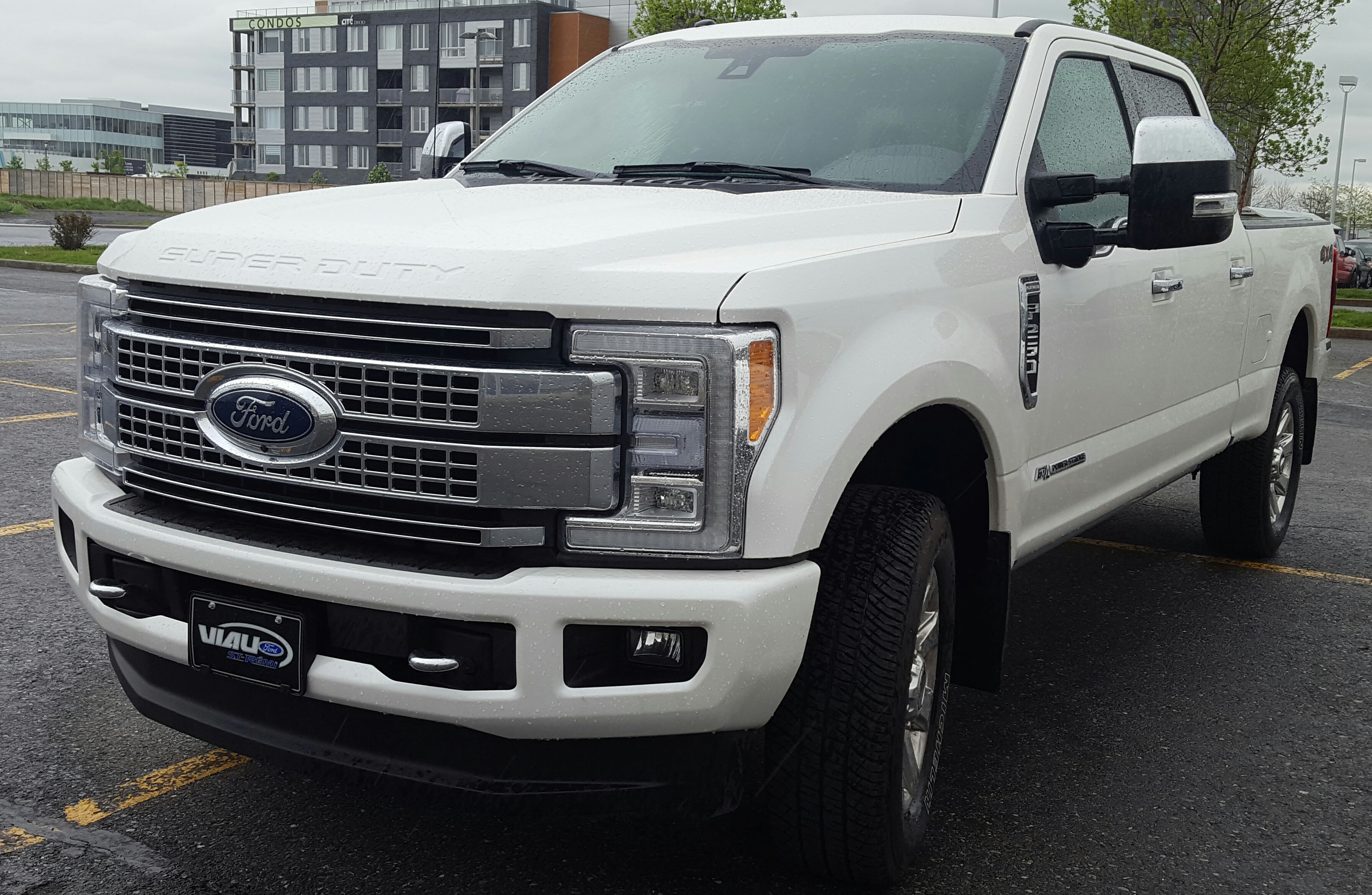
The Ford F-250 is a strong pickup truck that can carry heavy loads and is often used for work. The 1980 version is one of the older models, known for its toughness.
The Holley 850 double pumper is a special part that helps engines get more fuel and air, making them run better and faster. It's often used in powerful cars and trucks.
A carburetor is a part of some older cars that mixes fuel and air so the engine can run. It's less common now because most newer cars use a different system called fuel injection.
An ignition coil is a part of a car's engine that helps start it by creating a spark. It takes the battery's power and makes it strong enough to ignite the fuel in the engine.
A resistor is a small part that helps control the amount of electricity going to other parts of the car. It prevents parts from getting too much power, which can cause them to overheat and break.
A float in a carburetor is a part that helps control how much fuel goes into the engine. If it gets stuck, it can stop the fuel from flowing properly, which can cause problems.
The outer tie rod is a part that connects the steering system to the wheels, helping to turn the car when you steer. It works with other parts to make sure the wheels move in the right direction.
The steering knuckle is a part of the car that helps the wheels turn when you steer. It connects the wheels to the rest of the car's suspension system.
Dissimilar metals are different types of metals that can cause problems when they touch each other, like rust or corrosion. This is something to think about when working on cars, especially when connecting parts made of different metals.
Corrosion buildup happens when metal gets damaged by moisture and other things in the air, causing it to rust or break down. This can be a problem for car parts that are made of different metals and can lead to issues over time.
The Buick Park Avenue is a large, comfortable car made by Buick. It was designed to be a luxury vehicle, offering a smooth ride and plenty of space inside.
The alternator is a part of the car that helps keep the battery charged while the engine is running. If it doesn't work, the battery can run out of power, making it hard to start the car.
Parasitic draw is when something in your car continues to use battery power even when the car is off. If too much power is used this way, it can make your battery go dead.
Berkeley One Classics is a company that offers insurance specifically for classic cars and high-performance vehicles. They help car owners figure out how much insurance coverage they need for their valuable cars.
The Toyota Tacoma is a small truck that people often use for carrying things or going off-road. It's known for being tough and lasting a long time, which is why many people like it.
The Nissan Sentra is a small car that's easy to drive and good on gas. The 2006 version is known for being a reliable choice for getting around town without spending too much money.
The GM EV1 was an early electric car that people were excited about because it didn't use gas. However, it was taken off the market, which led to a lot of discussions about why electric cars didn't become more popular back then.
LIVE
Welcome to the Under the Hood Show podcast.
Thank you very much for listening.
Also, check out our YouTube channel and the Facebook page.
We do the show live on video as we record the podcast you're about to hear, which is brought
to you by Berkley One Classics, your key to collector car insurance.
And road ready wheels, replica OEM wheels at huge savings.
Use the offer code hoodie for even more.
And by car dash part, over 200 million used parts ready to ship to you fast.
Here is the Under the Hood Show podcast.
Thank you very much for listening.
This is Under the Hood.
Welcome to the Under the Hood Show.
We are glad to have you with us.
Russ Evans is here to answer your automotive questions.
Thanks for joining us Under the Hood.
Shannon Nordstrom, World Traveler is here to do the same.
Welcome, hoodies.
Thanks for tuning in so we can help you tune up.
I'm Chris Carter here to answer your calls at 866-594-4150.
How long before your next journey takes you out of the studio?
Well, I found out just last night that I'm going to be going to Louisville, Kentucky on
behalf of ARA.
It's Louisville.
Louisville.
You know what?
My daughter has a roommate from Louisville and I've been corrected on that.
But no, we're going to be going to Louisville to tour some properties for a future convention
site for our trade association and we're hoping we'll have an opportunity.
We've made some connections to stop in and drop off a donation to our industry friends
at Grade A Auto Parts in Louisville.
And they were unfortunately right in the flight path of where the UPS plane went down.
If you wondered about all those cars that were there, that was a automotive recycling
set.
However, he has been a speaker at our industry before.
First-rate fellow, I don't know him as well as others in our executive team, but I definitely
know who he is and he knows me and we're hoping we'll have an opportunity to stop in because
we've got a gift.
They've started a GoFundMe, but we want to give something direct to the families.
They had employees that were unfortunately had their lives taken, one in the hospital.
It was a horrific situation.
So I'm going to go do some, I think, very important industry representation and that's
something that just has come up in the last week here that we've decided to do and tie
it in with our visit we have to do down there at the same time.
So that's kind of short notice, but I should be back on Wednesday night late if these flights
are all straightened out.
Everything normal.
Well, it should be normalized by next week, right?
Okay.
Yeah.
I'm going with it, but no, I'm supposed to get back.
I'll leave it Tuesday morning on that 5 a.m. flight that goes to Minneapolis and then come
back and come back into Sioux Falls on that 11 p.m. flight that comes into Sioux Falls.
Nothing can go wrong there, right?
Yeah, exactly.
Minneapolis is usually pretty good.
It's the DFW, one of the Denver one that gets sketchy.
Yeah.
I'm glad I'm going east instead of west.
You can rent a car.
If I get that far, that's for sure.
866-594-4150.
Let's go to Oklahoma and talk to Pat.
You're on the end of the hood show.
Pat, what can we do for you?
Yeah.
I have a 2016 Chevy Colorado and the fuel gauge wasn't showing any fuel and I replaced
the fuel pump with the fuel gauge that's attached to it in the tank, gasoline tank,
and it still isn't working the fuel gauge.
The next step I need to kind of explore or look at.
What's the fuel gauge reading before and after the whole bit?
Full or zero?
Before it said empty.
Then afterwards it still said empty, so when you start it up, originally you know how the
gauges go from empty to full and then back down and then reset themselves.
It does all that, but it won't ever...
Won't read.
All right, full even though the tank's full.
Here's your next step.
You need to plug a scanner into the vehicle and a lot of them that read just your basic
engine codes and data will read fuel percentage on that screen on the PIDs.
You need to find a scanner that reads that, whatever it takes to do it, and see what
it says.
If it says zero percent fuel or two percent fuel, then you're not getting communication
from that unit in the back, which could be the part you just replaced, but let's just
assume that's good, but you replace it.
There was no change.
Probably something in the wiring coming up to the computer and into the vehicle, body
control module from that.
But if it reads 80 percent, 50, 20, 60, whatever it is that you've got in the tank, you
probably got a bad instrument cluster, got a problem internally in that.
Which is more unusual in those newer ones.
Very unusual.
We have not had one ever so far.
It is very possible you have a broken wire and if I was going to go chase a broken wire
on a 16, I'm probably going to be looking at a ground or an open in the wire somewhere
in the tank area within four feet of the tank would be my likely guess.
16's pretty new, but it's actually pretty old now.
Ten years.
Ten years.
Right.
We're going to start seeing some of those things pop up, but we have not experienced
this yet in one of them, but it's possible that you could have this happen.
So I would look in the tank area and make sure of the ground above all else right near that
tank that it's grounded well.
It's not corroding there.
That would be a good thing, but the scanner is going to tell you what you really need
to know and that if it's getting signal up to the body of the vehicle or not.
That's the most important thing.
No sense in chasing any wires if it says you've got 80% fuel at a module.
It's going to be beyond that.
At that point, you might try to, on this vehicle specifically disconnect the battery
for 10 minutes and hook it back up and may reset.
Some weird things happen.
You see rebooting computers, all sorts of stuff happen.
Okay.
I did have a bad battery also, and I did replace it too about the same time.
Before.
You did the fuel pump, but this gauge was already not working when you replaced the battery,
correct?
Correct.
And then it's probably not going to change anything.
It is very important that when you're changing batteries, I had a customer this past Monday
that said that their battery was dead.
They had AAA come out and jumpstart the car and they had left their lights on.
So the battery they felt was going to be okay, but their heater controls no longer
work.
You need to reset that and now it'll work.
And they thought scanner or what is it?
No, and not every car can be disconnected because sometimes you need programming and you run
your world of hurt, but on this particular car disconnected, they did and it fixed the
problem.
Now, if you ever have questions like that before you go and if we're not on the
air, you can go to the battery shop channel on YouTube.
That's one of our partners and they have spent some great time there, our partner
Clarios, putting together things like this about jumpstarting cars and it's more than
just how to hook the cables up.
It's like, well, you might have a module shut off on you afterwards and here's how
you would go about fixing it.
Things like that.
It's very resourceful.
Pat, thanks very much for the call.
Good luck.
I find that interesting as someone who is a casual listener to this program.
Can you say that?
Can you say that?
The fact that you listen every week, casually, the fact that we're talking
about a 10 year old GM that's a 16 automatically would think, well, those things
had a ton of trouble with the with the dashboard with the clusters.
Yeah, that was that's old news.
And that's it's interesting to me that that was old news.
It was a 2006 problem.
Yeah.
And it was that was what the answer was for years on things like this.
It was always that.
And now we're talking about even though it's 10 years old, that's no longer
an issue.
And that's how people get in those.
The interesting thing, the 2016 cluster problems are not normal.
2006, 2005, 2004, three, two, one.
There's whole industries, big stuff.
The clusters were a big issue.
Okay.
2003, four, five, six, there was not a lot of problems with the radios.
2016, there's a bunch of problems with the display board and the human
interface modules and the touchscreens when they went to that newer
technology, it wasn't perfect.
So they solidified clusters.
And then they got another thing that we see some one else challenges
with throw it.
So, interesting.
866-594-41, 5-0, that's the number to reach us here at the
end of the hood show.
Let's go to California and talk to Ron.
You're on the end of the hood show, Ron.
What can we do for you?
I have a problem within a problem.
I have a 1980 Ford F-250 with the 460 and it has an
Holley 850 double pumper on it.
It's been sitting for five years.
I've dumped the fuel out, new fuel, new lines, new fuel pumps,
new filters, the whole rigmarole.
I had it running a few weeks ago and it ran for about 10
minutes, no problem.
I went back to it last weekend, couldn't get it to fire,
pulled the fuel line off at the carburetor to make sure I
had fuel, I did.
And in checking for spark, I touched the coil that was
hot to touch.
I don't ever recall finding a coil that's hot to touch like
that and I'm wondering if it was from cranking the motor to get
it to start or if there's a problem with the ignition
that's prohibiting the engine to fire.
In the end, I did use some starting fluid and I got it
to fire for about 10 seconds and then once it burned that
up, it wouldn't fire.
If that's the case and it's just running out of fuel, you're
not getting fuel to it, so we know we have spark, but if you
leave the key on in the on position, the engine's not
running or you crank it for an extended period of time and
then it's on without running, yeah, it'll heat that coil up
because at the lower RP, at higher RPMs, it's fine.
It's pulse width because it's on and off, constantly
and it'll regulate itself, it'll be fine.
But when it's cranking real slow, the on time of the
coil is longer than that off time and it heats up and it
does, it'll get very warm.
They originally had a resistor in the line, the power line
going to the coil or they had a resistor coil on it.
If you do not have a resistor in either, then it needs
one in one of the two.
Either you need a resistor in the coil or you need a
resistor in the line.
Otherwise, there'll be a backup.
Okay, so I need to figure out what kind of coil I have.
Yeah, well look and see, look at the wiring diagram and see
if it shows resistor between the ignition switch and the coil.
If it shows no resistor, you need a coil that has a resistor
built into it.
If it does show a resistor in that line, you don't,
you put a standard coil on it with no resistor.
Then you got to find out what's wrong with your
fuel while you're not getting any fuel to it.
You can take the line off at that carburetor and disable
that coil completely so it doesn't have any ignition source,
no spark, and crank it over and see if you're getting,
if the fuel pump's pumping fuel up to it.
Maybe you got a restriction in the line somehow, rust,
Or if all that's good and it's pumping fuel up there,
it may be that the float's stuck in not allowing it
to get fuel in, but it's a double pumper.
So it's going to have a float on each end.
So both of them sticking at the same time is pretty rare.
One of them could stick.
I've had them where they'll stick on one end
and you just give it a good old tap
while it's running on the other end
and all of a sudden the fuel level will come up.
So yeah, that'd be pretty rare.
I'd be more apt to think you've got either
collapsed rubber hose, either at the front end
or the back end by the tank,
or you've got a fuel pump that's gone out.
Ron, thanks very much for the call.
Good luck.
866-594-4150.
Let's go to Wyoming and talk to Jess.
You're on the end of the hood show, Jess.
What can we do for you?
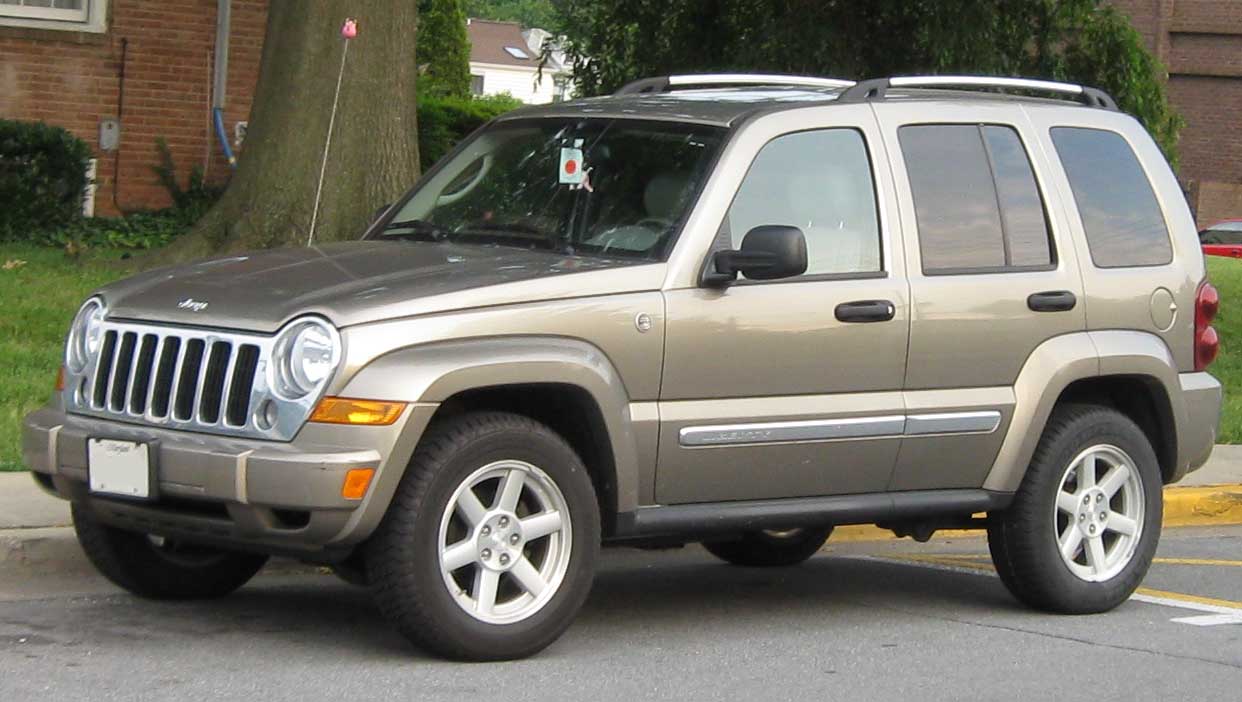
I've got a 2008 Jeep Liberty.
This past weekend I changed the struts,
CV axles and axle seals.
And of course, doing that,
you take a lot of stuff apart
and I put everything back together.
The factory specs, torquing everything.
And I was wondering, do I need to retorque again?
But in a few miles on, I've already had
the front end of line.
The only thing you need to retorque would be the wheels.
Everything else should be permanent.
If you're doing front end components,
you torque them once and they're done.
You put the cotter pins in there and you're good to go.
But the wheels, it's always a good idea.
We torque them down in the bay,
we drive it up the road and back
while we're doing our test drive
and then we retorque every single one of them.
Everyone, because occasionally
you will get one that will loosen up.
I have some after I bring them back, test drive,
they need to be tightened up a little more.
So, I need another.
Yeah, I did that.
I just wondering about like the,
you know, like your steering knuckle
and your outer tie rod and stuff like that.
They should see because you've got iron on iron,
they go together, they're pretty permanent.
But with a, unless you didn't get them tightened down
in the first place, it's good to torque them down
and then back the nut off and retorque them again
on the hoist.
You're turning the wrench, you don't click,
you tighten it up, do not go backwards with a torque wrench.
You can damage it unless it's a double bi-directional
torque wrench.
So you use a regular wrench to loosen it back
up a quarter turn and then torque it again.
It's like doing with all electrical connectors.
You have to do that, otherwise it may not torque properly.
But there, you're talking about iron on iron parts,
steel and steel, you don't, you don't have the problem
like you do with a wheel where you've got an aluminum wheel
and you've got a cast iron hub or steel.
It's two different dissimilar metals there
and you have corrosion buildup in there.
So you want to make sure you drive it,
it'll wear in a little bit, tighten it up again.
But with those front end components,
we just don't have them come loose.
We tighten them up once and then back them off
a quarter turn, click again and they're fine.
Yes, thanks very much for the call.
Good luck.
I found a torque wrench yesterday
while I was cleaning out my shed to get ready for winter.
And I thought to myself.
Why do you have a torque wrench?
That's what I was trying to figure out.
I remember getting it because I thought I needed it.
And I, why would I?
The torque's on the weekend.
It's a sad job.
Why would I?
Yeah.
So why would I have needed it, I wonder?
I did.
Probably, did somebody give it to you maybe
or was it a new one you thought?
A new one.
Get it for wheels, maybe?
Yeah, I'm sure I did, but I can't remember.
Was it bought while you've been part
of the Under the Hood show?
Yeah, it's pretty new.
And something in my mind tells me,
Chris got a torque wrench for something.
Yeah.
You should just come over to my garage some weekend
and just go through toolbox drawers and go,
what do I do with this?
Yeah, what's that?
Can I use this on something here and like,
we test this out and I gave him a tire one day
and I said, there you go, bud, put it on.
And he's like, okay, it's gone, changed the tire.
Yeah, it's fine.
You got it done.
That's why I had the torque wrench.
He got it done though.
He's like, I can say I changed the tire.
There you go.
866-594-4150.
Let's talk to Sue.
You're on the end of the hood show.
Sue, what can we do for you?
Hi guys, I listen to you a lot
and I enjoy listening to your information.
My husband and I have a 2003 Buick Park Avenue
and recently it just went start.
He thought it was a battery.
That was, that checked out okay.
They've checked the alternator, they've checked the fuses
and he's come to the conclusion that it's just a slow leak.
It's my car and I'm supposed to carry a battery pack in it
and then just charge it up whenever I can't get it to start.
I was wondering, is there anything else
he can check for a slow leak?
Well, he's done with it, Sue.
Yeah.
No, he's clearly made the decision
not to check anything for that.
Because of the battery pack.
Right, yeah.
That's a solution.
He solved it.
I know and I'm not strong enough
to put those clamps on the battery.
Well, you can, you know what?
You could attach them, get the leads
where you don't have to clamp,
you can just put them on and leave them on it.
Here's a quick fix.
If that car has got a current drain.
Probably a better idea.
People can't find it.
They make a really nifty little device
that I found on Amazon.
And I can't even tell you who makes it
because there were 20 of them out there.
But I bought one for a friend of mine at the shop, came in.
He says, you know, my daughter takes this to college.
It sits for two weeks and it goes dead.
It doesn't go dead if she drives it every day
or every three days, but two weeks,
it's gonna be dead, I guarantee it.
But if I disconnect the battery, it's fine.
So should I just keep doing that?
No, you really shouldn't have a girl opening the hood
at school in the middle of winter
and messing with the battery
where there's acid and there's sparks.
And I mean, there's just a lot of things that,
it's just not convenient.
This doesn't sound right when you say it out loud.
It's not convenient for me to open a hood as a mechanic
and disconnect it when I need to.
And if you got an emergency, you wanna get going,
you wanna go turn on.
They make a little remote control battery disconnect
for about 40 bucks.
You just disconnect the negative of the battery.
You put this unit clamps on right to the negative
where the cable came off and then the cable
clamps on to the little unit.
And then it's got another little wire
that runs over to the other positive terminal
and you're done.
It comes with little two remotes and it says on off.
You push the on button, it turns the battery on.
Push the off button, it disconnects it for you
so it doesn't go dead.
So you don't have to keep it charged.
You can just push the button and shut it off
because if it's gonna go, do we tell people
don't disconnect all your batteries in your car
to make stuff work
because you might have programming issues there.
But if it's going dead 100%, it's already disconnected.
So just turn it off.
Wow.
I'm thinking of our outside of these man-la vehicles
we put in the building here.
Oh, you know, it's also good for cars
where you don't know if they might burst into flames
at night because something's damaged on them.
Push the button.
So it's the equivalent of the manual disconnects.
The little levers that they make.
Hold on.
There's two different conversations going on here.
Yeah, that wasn't directed at your car.
That's not your issue.
But it is.
It's the equivalent of a switch on your battery.
It is a remote controlled switch for 40 bucks.
That makes it disconnect.
Very interesting.
I did not know that existed.
Ideally, I'm ready for a new car
but he's not on the same page.
So...
Well, Sue...
Because it's 2003.
Exactly.
You guys know him too.
So we're from Sioux Falls.
Let me ask you this, Sue.
If it were his car that was doing this,
would he be in line for a new vehicle?
Or would he disconnect it?
He's got a new pickup, so he's not on that same page.
I think you should get a new vehicle.
I think that's the answer here.
I've got the oldest car in my family and that's good.
03 Park Avenue.
There are some pesty things in those
that it could be a big trace
if it's not an obvious parasitic draw.
And...
Radio alternator.
Those are the two biggest things.
That's the first things that Russ would check is...
Disconnect the radio and leave it disconnected for a couple of weeks
and if it doesn't go dead, it's the radio.
Then you could just get a different radio
from a quality auto salvage yard,
have it programmed and put in there
and you could probably get rid of the problem.
If it's that, it could be the CD changer
and the radio is cycling
and causing the battery to go dead at night.
Sue, thanks very much for the call.
Push for the new vehicle.
The end of the Hood Show podcast
is brought to you by exclusive sponsors
like Berkeley One Classics,
celebrating 50 years,
your key to collector car insurance.
And by car-part.com
with over 200 million parts,
find them online at car-part.com.
And by Road Ready Wheels,
OEM replica wheels at a huge savings.
RoadReadyWheels.com.
Thanks for listening to the Under the Hood Show podcast.
I'm Russ Evans with Shannon Nordstrom and Chris Carter.
When we needed protection
for our own personal collectibles
and performance vehicles,
we turned to Berkeley One Classics and here's why.
Berkeley One Classics has over 50 years experience
and they're dedicated to serving their customers.
They will work with you
to help determine the amount of coverage
a vehicle like yours should have
and that coverage is agreed-valued coverage
so there is no disagreement
on what your vehicle is covered for.
They also have discounts for car club members.
Berkeley Classics ensures a wide range of vehicles
from sports cars and rare exotic cars
to antique vehicles,
including cars, trucks, tractors,
military vehicles and antique motorcycles.
Over 50,000 of them a year.
Visit berkeleyclassics.com today
and get a free quote and find out firsthand
what they can save you
and how well they can cover your valuable investment.
It takes just a few minutes
using their easy online quote tool on their website.
Visit berkeleyclassics.com.
That's berkeleyclassics.com
or call 800-603-3330.
That's 800-603-3330.
If you need parts,
whether it be for a brand new car
or going back about 20 years,
it doesn't matter,
check out car-part.com.
It's fast and it's easy.
Over 200 million parts strong all across North America.
Over 4,000 recyclers to choose from
giving you the largest selection available.
Whether it's an engine, transmission, doors,
seats or wheels,
you can find them on car-part.com.
We even let you know what parts
from other models and years fit your car.
Many recyclers supply pictures of their parts too.
We even have a mobile app.
Search US and Canada
or buy from your local independent recycler.
Whichever you choose,
buying recycled is good for the environment
and good for your wallet.
If you're a repair shop,
there is a professional version
available for you at no charge.
That's car-part.com.
Car-part.com.
Check it out today.
What would your vehicle be without wheels?
Our partner at Road Ready Wheels has wheels,
thousands of wheels,
affordable in stock and ready to ship to you.
Replace or upgrade your damage
or plain steel factory wheels
with new OEM-looking Road Ready Wheels.
Maybe steel is the way to go for you
to mount a second set of winter tires
or you just don't like the aluminum look.
Road Ready Wheels has many choices for you.
Go to roadreadywheels.com
and use their online vehicle selection tool
to help you find the wheels that fit your vehicle.
Mercedes, Cadillac, Ford, Chevy, Chrysler
and many more with the OEM fit and look that you want.
Save 10% at checkout
when you use the code hoodie
for being a loyal under-the-hood show listener.
New OEM wheels can be expensive
with some wheels that cost 500 or more from the dealer.
Many of those from Road Ready Wheels
are about half of that saving you some serious cash.
Use your factory TPMS sensors and caps too.
Go to roadreadywheels.com to find out more.
That's roadreadywheels.com.
Welcome back everybody.
It's time to get back under the hood
with our motor medics.
866-594-4150.
That's the number to reach us here
at the under-the-hood show.
Don't forget, if you miss an episode
you can always find out wherever you get your podcasts
and you can watch the show on our YouTube channel
if you subscribe there
and become a hoodie fan club member
at under-the-hoodshow.com, you could win a hoodie.
Like William Carter, congratulations from everybody here
under the hood and our friends over at Berkeley One Classic
celebrating 50 years of collector car coverage
and Universal Technical Institute.
Find them at UTI.edu.
Congratulations, Uncle Bill.
866-594-4150.
Before we go to the call,
today as we produce the under-the-hood show,
it is a momentous day.
Rest in peace to the penny.
Yes, the penny is no longer being minted.
Yesterday, the last penny was minted.
That ruins so many slogans that I've had in my life
as a person, as we grow up.
Penny for your thoughts.
No more.
Is it a nickel now?
Is it a dime?
I think it's a $2 bill for your thoughts.
Well, I guess that's very touching.
That's very touching.
But no, that's kind of a big deal.
Is it, though?
Really?
I don't know.
They said it costs 3.8 cents to make a penny.
So that was kind of a bad decision.
I'm gonna start hoarding them now.
They'll be worth a bunch, I'm sure.
I'm sure they'll be worth a ton.
There was a mint manager that they showed this morning
on the news that they showed a clip
with 60 minutes from 15 years ago,
where he was talking about,
I don't know if this is sustainable to make these pennies
what they cost us to make.
Actually, he said pennies and nickels in that interview.
I once found a 1902 penny, thought I'd hit the lottery.
I took it out to the mall to the coin place.
He said if I had three more, he'd give me a nickel.
They were worth about 1.4 cents,
and he would round it up to a nickel if I brought in two more.
Well, retailers got decisions to make
as the supplies run out.
And I'm sure they'll round down.
A lot of people are rounding to the closest, you know?
Yeah, but the thing is,
even though there's no, the penny thing,
so we don't have pennies, you go into pay cash,
hardly anybody.
Yeah, that's the thing.
Pennies have been close for years.
But people, we rarely get somebody that pays cash.
And I can see how people will manipulate this system.
It doesn't matter if it's cash payment
or it's a credit card payment,
they're gonna set their systems to automatically round
to the nearest nickel.
Sure.
Automatic.
It's like, oh, well, why is everything a dollar five
or $2.95 or $2.65?
What, whatever happened to one, two, three, four,
but no, we don't have that anymore.
And then parts instead of selling parts for, you know,
$80 and 26 cents, it'll be $80 and 30 cents.
Everything's gonna change.
The tax, the tax screws it all up
to try to make those systems work.
The con from it's gonna be nickel wise.
It'll have to round for that too.
Instead of penny wise.
I wonder how much it'll cost
to actually make the change versus,
it costs three cents to make every,
or whatever it is for three points.
What's it gonna cost to have all these systems changing?
How much is it gonna cost people to pay the difference?
Because they're, you said,
they're not gonna round down, Chris,
they're gonna round up.
There's some of the big retailers
that had issued statements, of course,
you know, they have to have a statement.
It's just funded.
And some were,
one grocery store chain was,
please bring exact change if you're gonna pay cash.
And I thought that was a,
probably a harsher way to look at it.
Then there was quite a few that were,
we'll round to the nearest nickel.
Sure. Up or down.
They made a movie about this where,
across America, somebody,
and I think it was based on a true story.
Somebody had gone to jail.
And Chris, you probably remember the gist of this.
They had figured out a way
that when somebody did a transaction at an ATM machine,
they would, they were, it was rounding
and they were able to take like a penny or two
out of every transaction.
And it was,
There's a lot.
Insane amount of money.
So it does add up.
Here's what I think.
Nothing.
It's not gonna affect anyone hardly at all.
Oh, we're not gonna notice.
They're not pulling the pennies out of circulation.
They're just gonna let them slowly fade away.
Someone asked me two weeks ago
at our local convenience store,
there was a person in front of me
paying with a $2 bill.
And they looked at me because they're like,
you're old.
Is this real?
And I said, well, yes,
it's real.
And you were required to take it
because it's, it's legal currency.
And yeah, I've never,
when did they make a $2 bill?
I said, I don't,
I don't know when they stopped,
but they've been around for a long time.
And they said, there was also a little round one
that says Susan B. Anthony is a dollar.
It looks like a quarter.
She goes, yeah, we had one in our quarter
during the other day.
I thought it was fake.
Like, no, that's a dollar.
Is it gonna be leave a nickel, take a nickel?
Yeah.
What about the penny jars?
Are they gonna still be there?
No.
Yeah, it's all,
nothing's gonna change.
They just aren't making them.
That's all.
That's all.
We'll see.
We'll use credit cards.
Let's go to Arizona and talk to Azariah.
You're on the end of the hood shows.
Azariah, what can we do for you?
Hi, yeah.
I have a question for you guys.
So I'm wondering what kind of trans,
I mean, what kind of gear oil I need to get
for my transmission?
Cause like, I got back in the book,
it says to use DL4 or DL5.
So there's two different,
I mean, two, the same transition.
I just don't know what to use.
I got an 01 Tacoma.
Synthetic, non-synthetic.
It's, a lot of it has to do with it.
They will allow you to use different,
so if they have GL4 and GL5,
if that's in your spec,
a lot of times what happens is a manufacturer
will give you a minimum rating
and they'll give you a recommended rating.
So you can use either one when you get a factory manual
for that manufacturer that gives you two things.
Like they'll say, it's very common.
We'll see this car requires a SAE grade,
whatever 5W30 or it'll say full synthetic.
You know, it says full synthetic
or you can use just this SAE and it will.
See that a lot with fuel.
It'll run on 89, recommended 91 or whatever.
Recommended, but it's fun on the 89 or fine on the,
fun, it's fun, it's fun with a more fun over, right?
On the lower octane, it's not as fun, right?
But yes, you can, it'll give you options for that.
And you might want to look on the Toyota forum too
because there's a lot of stuff on that
that they'll help you out with
what people have been using for years
and what's helped them with wear on parts
that people that really push them hard
because they're not gonna know
if they're just daily driving.
They're not gonna know, but if they're really towing
and pushing these things, rock crawling or whatever,
they'll know what doesn't hold up.
What, can I ask you to,
Isra, I have a question to ask these two on your behalf.
You guys mentioned the forums.
What forums do you guys go to
that I don't get access to?
Because when I go to a forum,
it's a complete waste of time.
Oh, you have a Tacoma, you should throw it in the river.
I had a Tacoma for a million miles.
I never put any fluid in it at all.
Oh, you know what Toyota stands for, don't you?
Oh, I would never drive anything.
It's just, it's all garbage talk.
Proper forums, Chris, have moderators
and they remove people that do that.
I gotta get on some of those.
When you join the page,
All right.
You know, they'll tell you,
you know, trash talk and other people's stuff.
We're only talking about Toyotas in this example.
You know, we don't wanna hear about
how you fixed your Ford
and how it relates to this Toyota.
No, just stick to, it'll say,
they sum all that up with stick to the subject.
Don't bash other people or you will be removed
and they kick you out really quick.
Cause that's what the internet usually is.
It's super good.
Then I got one more question for you guys.
So I got to buy a rebuild kit for my,
for my 74 Volkswagen Beetle.
And I was wondering if you guys got any recommendations
for any kits to rebuild it.
To rebuild the whole car or what?
What specific parts?
Just the engine, just the engine.
Okay, I've got a 74 Beetle.
It's a Super Beetle.
Whoa!
Yeah, a Super Beetle.
It depends on what you wanna,
it mine really is cause it's 2,300.
It's a, but it knocks.
So I'm just trying to make it just so I could drive around.
It was a, it was a family members that passed away.
I'm just trying to rebuild it and make sure
they still drive a bull and stuff in their memory.
Go to, you can go to, there's a company out there
called J-Bugs and the thousand others probably,
but J-Bugs is pretty good.
They've got everything you could ever need for rebuilding.
They have kits.
No, they're not a partner of ours.
It's a Volkswagen for goodness sake.
They could be.
I guess, we probably don't have, I bet we've got.
What was the name of that place in Longview
that we were staring through the window at?
Oh, they've been around forever.
They had a ton of Volkswagen stuff through there.
That's what they specialized in.
They do sell, yeah, there's a lookup Volkswagen rebuilder.
You know what, actually that would be a good resource
for you and then I'll, I'll.
Are you gonna cheat and go to the internet?
No, I was just gonna look up the photos
because I had the thing, but the others.
I was cheating and going to the internet.
There's a Volkswagen place there.
The guy's been there forever and he could,
he could help you out with that.
To go back to what you were saying,
J-Bugs, if you go to J-Bugs, they have,
they'll have a list of stuff.
And I know through someone else that you can call them
and ask these questions.
But there's also, I know like in the Twin Cities,
Minneapolis, St. Paul, there's a big rebuilder
who you can call and they'll help you out.
Like a far older land rover that Russ just got done,
figured out how to make it run right.
There was a place called Rovers North
that the guy that I bought it from had told me about
and they were the experts.
When you would call them, they knew the little parts,
they knew what worked the best.
They had tried a lot of different things.
They would say nope on this, get the OEM part
on this one here.
Nope, there's an aftermarket available.
We found works really good.
If you get to the right vendor like that,
it's very valuable because they've just got a lifetime
of experience and you don't have to,
they can get you up to speed quickly.
And to do it, Ezra, just a heads up,
you're gonna need hundreds of dollars and a couple wrenches.
That's about it.
It's the greatest.
That's fine, that's fine.
Yeah, it's good.
You just enrolled into UTI, so.
Oh, that's awesome.
You'll be able to be equipped here soon.
Oh, that's awesome.
Yeah, I listened to you guys' radio show.
I found it about a year ago,
so it's something I'm really passionate about.
I was working on my own cars and stuff.
So it's something I decided to go to school for.
Which campus are you gonna go to?
Because of the recommendation helpful.
Well, I wanna do a diesel mechanics.
Okay, and do you know which campus you'll attend here?
Where at?
Yeah.
The one in Phoenix?
Cool, awesome.
Keep in touch with us on that, is there?
Right, will ya?
How it goes.
I sure will.
Thanks.
I message in on you guys' chat every week,
on the live show and everything, you know?
Right on.
That's awesome.
Thanks for the call,
and good luck, and yeah, keep in touch with us on that.
Did you find it, Russ, or not?
And that is fun.
I gotta get one of those.
I gotta get one of those again.
That was fun.
I miss it.
866-594-4150.
That's the number to reach us here
at the Under the Hood Show.
Let's talk to Dick.
You are on the Under the Hood Show, Dick.
What can we do for ya?
Oh, I got a good one for ya.
It's a 2003 Mercedes S55 5.5
with a rear-wheel drive.
It's my grandson's car,
and it goes into a limp mode
when you push the pedal down all the way.
It'll kinda cut it down to like 40 miles an hour,
and then it'll quit on ya,
but you pull off the side or something
and let it just turn to switch on and off,
and then you can take off again.
Sounds like it's either got a catalytic converter
or an air filter that's plugged up
because it can't breathe,
or you got something going on with a fuel pump
where it's not getting enough fuel.
If you hold it all the way down,
it's just, and it's either suffocating
because it can't breathe.
It'll do it otherwise, too.
Yeah, if it's under a load.
Sometimes it'll just go in the limp mode,
but now it did flash codes on there,
compressor plate, is that what it is?
Okay.
Conductor plate transmission.
That's a-
Do you not have anything to do with it?
Well, that's internal transmission.
You could also have problems with that,
but if you have,
there's a lot of things that there's 1,000 things
that can put a vehicle, any vehicle in the limp mode.
Codes, temperatures, sensor readings,
wiring, computers, modules,
just all sorts of different things.
But if you got codes, now you got a bigger issue.
I mean, we can only guess when we're saying,
well, it's not breathing well
and you're running out of, you're running out of go,
that'll definitely do it.
It'll shut itself down to protect it.
But if you've got a code for a transmission issue,
a motivator type code,
you've got a bigger thing going on
and never clear any of those.
You need to leave them in there
so that when they're working on the car,
they can see what's up there.
Because if you just clear the stuff,
they're gonna lose half their information or more
and then they won't be able to properly diagnose.
It's gonna cost you more money.
So I would say-
You know, he just drove it back.
He just drove it back from California all the way back here
and it did it a couple of few times, you know.
That sounds to me like I'd be having somebody
do some close inspection on the wiring
that's connected to the transmission
and the harnesses that are in areas
that are exposed a little bit more
and that's the touchy thing on this.
It can be a wiring problem
that is something that's just gotta be common failure.
It's gotta be happening
and they can find out where that disconnect is at.
Cause that, I'm trying to think,
that car is kind of a sexy little two door, right?
Yep, four door.
Four door.
Oh, it's a four door.
I'm just trying to think which model that was when you-
The problem you're gonna run into with this
is that it's an old three.
So that's old enough that you're not likely gonna find
a shop that's gonna work on it around here
and the dealer's probably gonna say no
because of the age of the car.
There is a couple of German specialty shops
that have popped up around our market.
And they've proven to be okay.
We don't have a lot of experience.
But you've got an intermittent failure.
Yeah, that's like any intermittent failure
is challenging no matter what kind of vehicle it is.
Can you give me that model number again?
What'd you say it was?
S55?
S55.
It looks like a five.
It looks like a BMW five kind of.
I'm looking at it.
It's just a sedan.
It's a very good looking car for 2010.
S55 one that's been modified by like AMG or something?
Cause it just, most of their name, it is.
AMG.
Yeah.
So that adds another little degree of interest
to the challenge, but most of that was suspension,
brakes, performance that way.
But some of those vehicles,
they did do some modifications
to the control systems on them too.
Those were that car,
I thought it was trying to get a perspective
of what it was was a very, very high-end car
in its day when it was new.
For sure, yeah.
Your son's right there with you.
Did he research what the list price was on that car
when it was new?
Yeah, it's over.
Yeah, think about that.
In O3, it was a $100,000 car.
I watched a BMW 750.
Yep.
The Excel for $16,000 with 60,000 miles on it.
I just looked at the average price in our areas
between $7,000 and $15,000.
It's amazing how BMWs and Mercedes,
most of them drop in value at a certain point.
But some of them keep up there, but it's just how.
The thing with this car though,
if it's in good condition,
it'll hit a certain value and stay there.
And then if it starts appreciating,
they usually appreciate pretty quick.
What's the trend on this one?
Does he know?
What's the what?
What's the trend on it?
Is it trending up, trending down?
Is this a dream car?
I gotta know a little more about this.
Yeah, I've had it for a while.
It actually used to run really bad,
but I put a lot of work into it
and got the suspension all good.
Redid a lot of the plastics in it and stuff.
Do you drive this all the time,
or is it just kind of a daily driver,
or is it a car you take out to shows and stuff?
What is it?
It's kind of a daily driver,
but I do have another car.
I take it out when I can,
when it's not having problems.
Oh, all right.
Well, I was just trying to figure out
if this was a Berkeley classic or not.
It might not be, but it's on the edge
of whether they would,
they would probably talk to you about it,
but if you're-
And AMG, Mercedes, O3?
Yeah.
Rob Lee?
I don't think so.
He's using it as a daily driver,
kind of though.
Yeah.
I think it's kind of middle ground,
but they'll be the ones to decide.
It is a cool-
That's true.
We're not the one to decide.
They got underwriters for that stuff.
Good point, yeah.
But do we still guess the color?
We can now that you've-
I kind of think we kind of guessed the color.
It's an AMG O3 Mercedes.
I'm gonna go gold.
I'm just going gold.
White.
White.
I think it's maroon.
What color is it?
It's white.
Oh, there we go.
Yeah, we got a-
Russ is on a roll over there.
Yes, he is.
All right.
Well, good luck with that.
Stay on the line.
Producer Doug will get you hooked up to get a hoodie.
That is a, when he said it, I was like,
ooh, that's a young man's game.
Get into that Mercedes where you get into it.
You're like, oh, I could get this car.
I could get this Corolla for 10 grand or for 15 grand.
I could get this Mercedes that used to be 100,000.
It's a dangerous game
because they can get expensive to work on it.
But they do make an LS conversion kit for it
like they do with the BMW.
So you could pull it out and put a V8 LS in there.
When I looked at pictures of it, I went, oh yeah.
That's a nice-
Well, when he said the two-digit number,
I'm like, that's got to be an AMG.
Let's go to Mississippi and talk to Carl.
You're on the end of the hood show.
Carl, what can we do for you?
Yes, sir.
Well, my daughter has an 06 Nissan Sentra.
I think it's a 2.5 liter four cylinder.
And I can smell exhaust very strong
in the radiator fluid.
Whoa, what do y'all think that could be?
That's either a crack in the head
or some type of internal leak in the cooling system.
We could exhaust gases into the cooling system.
That means that we have a failed head gasket,
a crack in the block or a crack in the head
or a block that's leaking through it.
Is she having any performance issues with the car,
the heater, the anything?
It's running fine.
Runs fine, everything.
Would y'all suggest that case seal?
Well, I think first of all,
now I'm gonna make the assumption
that you know exactly what you're smelling
and you notice it only when you open up
the cooling system.
You'll lose cooling too.
It's gotta be going for it.
If you're never losing any coolant,
then you don't need to do anything
and it's just some anomaly going on.
Yeah, but you could do an exhaust gas test
just to make sure 100% that there are hydrocarbons
getting into that coolant
from the compression strokes of the engine
blasting through somewhere.
And if you happen to have that smell,
I just, people can get,
me included can get tricked where leaks
are coming from or smells are coming from.
It's definitely the,
I mean, I dip my finger down in the water.
It's definitely a foul smell in the water.
But you're not losing any coolant
and the car doesn't do anything weird.
Right, right.
Interesting.
Keep driving, huh?
Well, but Russ said our partner at Case Seal,
that would be where I would go next
if it's a small leak that's causing it to do that.
Case Seal Ultimate would most likely take care of it.
And...
Would y'all suggest taking out the thermostat
when you put the case seal in?
No, no.
No, you want it in and you want it completely full.
You want to put the case seal on it and then top it off.
So it's 100% full, put the lid on it and dry it.
This isn't like old school sealers.
This is not going to clog anything.
This is, this is going to go only to the spot.
Can you get running with the antifreeze?
Oh, 100%.
This is a modern day pour-in,
pour-in, chemically engineered.
One step pour-in solution.
Yes, yeah.
Yeah, solution.
And that is, in his case, in his daughter's case,
wouldn't you just, you kind of would,
would you start with that?
I mean, answering the question, is it losing something?
If it's got to be losing coolant, though,
if you're getting exhaust gases in there,
it has to be, it has to be using something coolant.
Something's got to be, it's replacing something.
Or, or it's...
If it ever starts losing now,
pour some of that in there and see.
Yep.
And it does not hurt.
Case seal doesn't hurt anything.
That's what I was thinking.
So it prevents leaks and helps stop future leaks.
The help stop future leaks
is one of the important things you're looking for.
So pour it in.
Just pour, that's what I was,
just drain a little bit of coolant on it.
Pour it in.
Case seal ultimate.
And the case ultimate's that little jar,
the little bottle, isn't it?
You can get it in smaller ones, yeah.
Yeah, you can do that.
And then you don't have to take out as much or you,
but that, that losing coolant is the,
the thing he wants to look for, right?
Yeah, it's, if it's losing coolant, it's leaking.
866-594-41, 5-0.
I would like to say thank you to Paul
and he enjoys the weekly radio show.
I'm not sure if he's a podcaster or a radio guy,
but he dropped off a copy of who killed the electric car
in regards to the EV1 with General Motors back in the day.
I've seen that presentation a number of times.
I think Russ has got copies of this
and he dropped off a DVD for us to have
and I appreciate the thoughtfulness.
Yeah, that's cool.
That's pretty cool.
He took the time to do that.
So I got it in my hand right here
if you're watching on YouTube.
All right, welcome to the after show.
Do I have any buttons to push to get the thing up
on the after the show, after the show, after show now?
Okay.
No, all right.
We don't have a, I didn't put a logo in there yet, did I?
No.
And look, did you see that the thing disappeared there too?
That was interesting.
Did you see that for a second there?
That, that, look at that.
Oh, all right, this is all, this,
if you're not watching, this is very weird to hear,
I'm sure.
Yeah, it really is.
Although if you're not watching, you couldn't be listening.
Is the delay more than normal?
No.
No.
I don't think so.
But let's, let's take some calls.
We got calls coming in.
We're going to use them.
Let's talk to Oli.
You're on the end of the hood show, Oli.
What can we do for you?
Well, I'm just going to tell you a little bit about pennies.
Okay.
Any last between 53 and 60 years.
Okay.
They're used between 17,000 and 20,000 times
in their lifetime.
So that's going to be pennied around for a long time.
Yeah, for sure.
Now those are some great, those are some great statistics.
Are you just super interested in the penny situation
or just a co-op or minor?
No, it's just been on YouTube and on some Facebook stuff.
I was going to that reading and I thought,
God, that's crazy.
Who'd ever thought that?
Say that, say it one more time.
You said for your statistics you had there.
The penny will last between 56 and 60 years average,
but they're used between 17,000 and 20,000 times
in their lifetime.
Interesting.
So that's all.
You know, they say it makes three and a half,
plus three and a half cents to make them,
but it is probably used more than anything else.
A dollar bill only lasts about 10 years.
Interesting.
That's an interesting spin to take on it
and just it makes me very confident that they're
germ-free when I get one.
Yeah, what could be on there?
Nothing.
Nothing at all.
I'm sure it's fine.
Yeah.
Holy, thanks very much for the call.
It is a fun time for a trivia buff,
a person who is into facts that are of no use really,
that just, I love that.
And it's a good time for that if you're, especially on pennies.
Cliff Clavin.
Exactly.
A little in fact, Normie.
The penny, it's used 17,000 times.
All right, I think that'll do it for today.
Yeah?
Yeah.
OK.
You've got to get back to do some recording
and I've got an employer review to do,
so let's just keep her moving.
I would appreciate everybody that's tuned in.
Yeah.
Thanks, everybody.
Talk to you next week.
With Russ Evans, this is Shannon Nortz
from thanking you for tuning into The Nortz
from Under the Hood Show.
Have a great day and remember PTLA.
The opinions heard on this program,
based on the many years of experience of Russ and Shannon,
are offered for entertainment value only
and as a guide to your repair needs.
No claim to repair or cause is given or implied.
Always consult with your own certified technician
and follow all safety procedures
before attempting any repair.
To be a part of the show,
call 866-594-4150.
Find out more by visiting undertheshow.com.
Under the Hood is produced by Prairie House Productions.
All content is the property of Nordstrom's Automotive
Incorporated and may not be used without our permission.
Copyright Nordstrom's Automotive, Inc.
About this episode
This episode dives into various car repair topics, featuring listener calls about specific vehicle issues, including a 2016 Chevy Colorado fuel gauge problem and a 1980 Ford F-250 ignition issue. The hosts provide practical advice on diagnostics, troubleshooting, and potential solutions, such as using scanners for error codes and checking wiring. They also discuss the importance of proper torque settings after repairs and share insights on common automotive problems. The episode is filled with engaging banter and valuable tips for DIY car enthusiasts.