
Under The Hood Talking About Car Repair Helping You Save
About this episode
This episode dives into various car repair topics, featuring listener calls about specific vehicle issues, including a 2016 Chevy Colorado fuel gauge problem and a 1980 Ford F-250 ignition issue. The hosts provide practical advice on diagnostics, troubleshooting, and potential solutions, such as using scanners for error codes and checking wiring. They also discuss the importance of proper torque settings after repairs and share insights on common automotive problems. The episode is filled with engaging banter and valuable tips for DIY car enthusiasts.
Get free answeres to car repair questions right here Under The Hood

Chevy Colorado
"...I have a 2016 Chevy Colorado and the fuel gauge wasn't showing any fuel and I replaced the fuel pump with the fuel gauge that's attached to it in the tank..."
The Chevy Colorado is a smaller pickup truck that's good for carrying things and driving around town. It's popular because it's easy to handle and can still do tough jobs.
The Chevy Colorado is a mid-size pickup truck known for its versatility and capability. It offers a range of engines and configurations, making it suitable for both work and everyday use.
fuel gauge
"...the fuel gauge wasn't showing any fuel and I replaced the fuel pump with the fuel gauge that's attached to it in the tank..."
The fuel gauge tells you how much gas is in your car. If it doesn't work, you might not know when you need to fill up.
The fuel gauge indicates the level of fuel in the tank. If it's malfunctioning, it can lead to confusion about how much fuel is available, potentially causing the vehicle to run out of gas unexpectedly.
fuel pump
"...I replaced the fuel pump with the fuel gauge that's attached to it in the tank..."
The fuel pump is a part in your car that moves gasoline from the tank to the engine. If it breaks, your car might not start or run well.
The fuel pump is a critical component that delivers fuel from the tank to the engine. If it fails, the engine may not receive the necessary fuel to operate properly.
OBD-II scanner
"Here's your next step. You need to plug a scanner into the vehicle and a lot of them that read just your basic engine codes and data will read fuel percentage on that screen on the PIDs."
An OBD-II scanner is a device that connects to your car to check for problems. It helps you see what's wrong with the engine and can show how much fuel is in the tank.
An OBD-II scanner is a diagnostic tool used to read information from a vehicle's onboard diagnostics system. It can provide data on engine performance, trouble codes, and other important metrics, including fuel percentage.
body control module
"...coming up to the computer and into the vehicle, body control module from that. But if it reads 80 percent, 50, 20, 60, whatever it is that you've got in the tank..."
The body control module is like the brain for many electrical parts of a car, helping them work together. It controls things like lights and power windows.
The body control module is an electronic control unit that manages various electronic components in a vehicle, such as lights, windows, and locks. It communicates with other modules to ensure proper operation of these systems.
instrument cluster
"...probably got a bad instrument cluster, got a problem internally in that."
The instrument cluster is the dashboard area where you see things like your speed and how much fuel you have. If it’s broken, it might show wrong information.
The instrument cluster is the panel in front of the driver that displays important information about the vehicle, such as speed, fuel level, and engine temperature. If it's malfunctioning, it can give incorrect readings.
jumpstart
"...AAA come out and jumpstart the car and they had left their lights on. So the battery they felt was going to be okay, but their heater controls no longer work..."
Jumpstarting is when you use another car's battery to help start your car if its battery is dead. This usually happens if you left the lights on or something similar.
Jumpstarting a car involves using a second vehicle's battery to provide power to a dead battery, allowing the car to start. It's a common method used when a vehicle's battery is drained, often due to leaving lights on or other electrical issues.
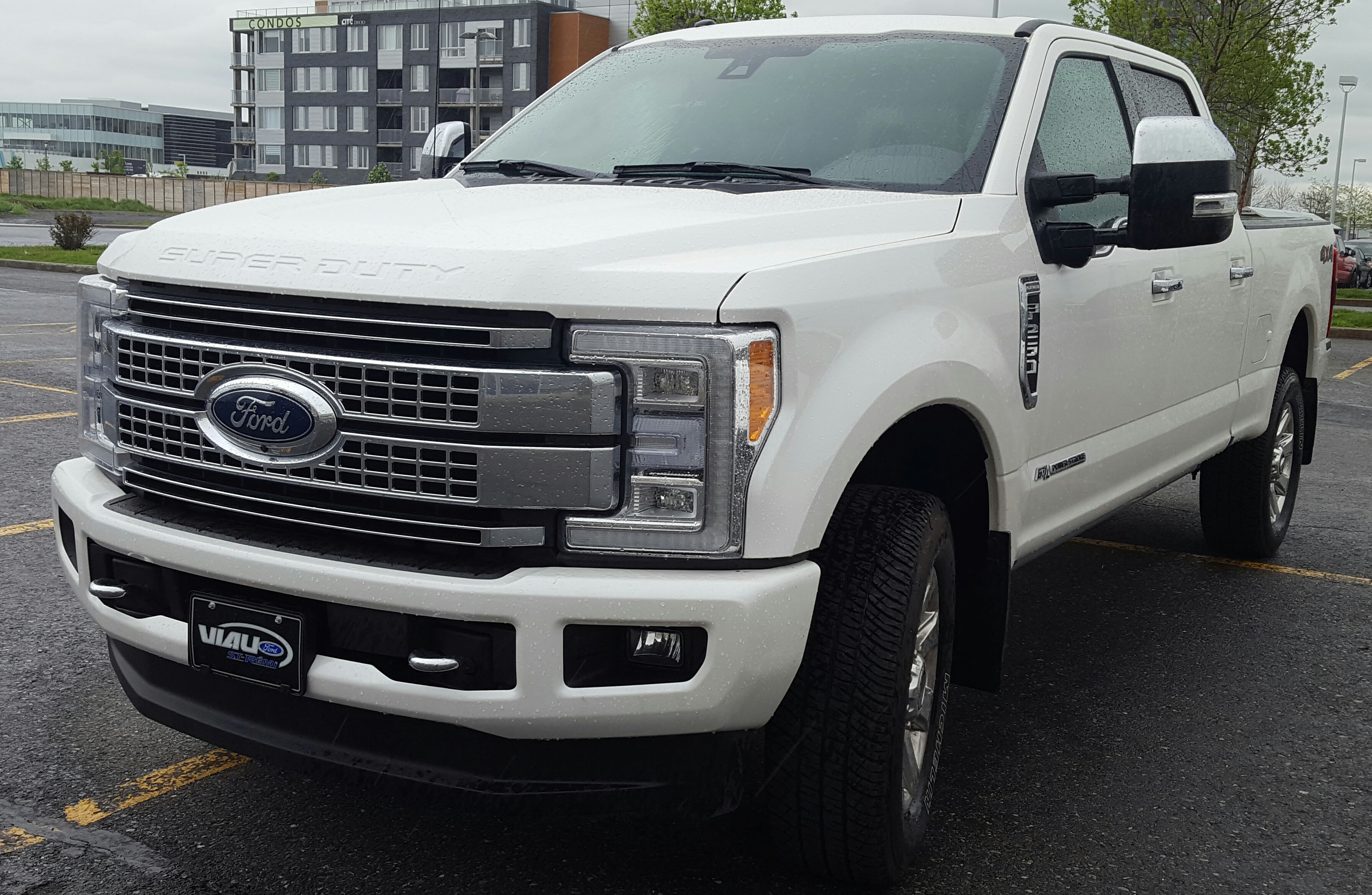
Ford F-250
"I have a 1980 Ford F-250 with the 460 and it has an Holley 850 double pumper on it."
The Ford F-250 is a strong pickup truck that can carry heavy loads and is often used for work. The 1980 version is one of the older models, known for its toughness.
The Ford F-250 is a heavy-duty pickup truck known for its durability and towing capacity. The 1980 model is part of the sixth generation of the F-Series trucks, which were popular for both work and personal use.
Holley 850 double pumper
"...it has an Holley 850 double pumper on it."
The Holley 850 double pumper is a special part that helps engines get more fuel and air, making them run better and faster. It's often used in powerful cars and trucks.
The Holley 850 double pumper is a type of carburetor designed for high-performance engines. It features two barrels that provide increased fuel and air flow, improving engine power and responsiveness.
carburetor
"...pulled the fuel line off at the carburetor to make sure I had fuel, I did..."
A carburetor is a part of some older cars that mixes fuel and air so the engine can run. It's less common now because most newer cars use a different system called fuel injection.
A carburetor is a device in older vehicles that mixes air with fuel for internal combustion engines. It atomizes the fuel, allowing it to mix with air for efficient combustion, although many modern cars now use fuel injection systems instead.
coil
"...I touched the coil that was hot to touch. I don't ever recall finding a coil that's hot to touch like that..."
An ignition coil is a part of a car's engine that helps start it by creating a spark. It takes the battery's power and makes it strong enough to ignite the fuel in the engine.
The coil, or ignition coil, is a crucial component in the ignition system of an internal combustion engine. It transforms the battery's low voltage into the high voltage needed to create a spark at the spark plugs, igniting the air-fuel mixture in the engine's cylinders.
starting fluid
"In the end, I did use some starting fluid and I got it to fire for about 10 seconds and then once it burned that up, it wouldn't fire."
Starting fluid is a special spray that helps engines start when they have trouble. It gives the engine an extra boost to get going.
Starting fluid is a highly volatile substance used to help ignite an engine that is having trouble starting. It is typically sprayed into the intake manifold to provide an initial burst of fuel vapor for combustion.
resistor
"They originally had a resistor in the line, the power line going to the coil or they had a resistor coil on it."
A resistor is a small part that helps control the amount of electricity going to other parts of the car. It prevents parts from getting too much power, which can cause them to overheat and break.
A resistor in automotive applications is used to limit the current flowing to components, such as ignition coils, to prevent overheating and damage. It helps regulate the electrical flow, ensuring that components operate within safe limits.
float
"...it may be that the float's stuck in not allowing it to get fuel in..."
A float in a carburetor is a part that helps control how much fuel goes into the engine. If it gets stuck, it can stop the fuel from flowing properly, which can cause problems.
In a carburetor, a float is a component that helps regulate the fuel level by rising and falling with the fuel. If the float gets stuck, it can prevent the correct amount of fuel from entering the carburetor, leading to performance issues.
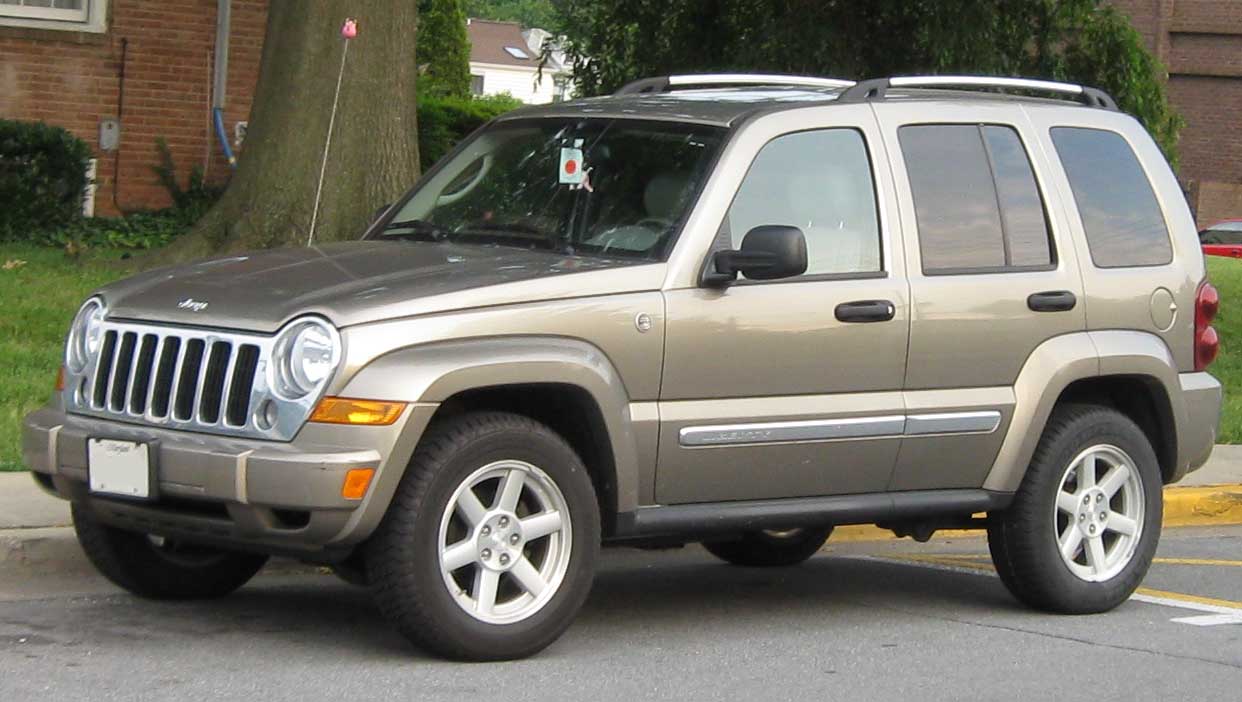
Jeep Liberty
"I've got a 2008 Jeep Liberty."
The Jeep Liberty is a small SUV made by Jeep, popular for its ability to drive off-road and its useful features.
The Jeep Liberty is a compact SUV that was produced by Jeep from 2002 to 2012. It is known for its off-road capability and practical design.
CV axles
"This past weekend I changed the struts, CV axles and axle seals."
CV axles are parts that help connect the engine to the wheels, allowing the car to move while the wheels can still go up and down over bumps.
CV axles, or constant velocity axles, are components that transfer power from the vehicle's transmission to the wheels while allowing for up and down movement of the suspension. They are essential for vehicles with front-wheel drive or all-wheel drive.
struts
"This past weekend I changed the struts, CV axles and axle seals."
Struts are parts of a car's suspension that help keep the ride smooth by absorbing bumps from the road.
Struts are a key component of a vehicle's suspension system, providing support and helping to absorb shocks from the road. They play a crucial role in maintaining vehicle stability and handling.
axle seals
"This past weekend I changed the struts, CV axles and axle seals."
Axle seals are parts that keep oil from leaking out of the car's axles, helping everything run smoothly.
Axle seals are used to prevent fluid leaks from the axle housing. They help maintain the integrity of the lubrication system within the axle, ensuring smooth operation and preventing damage.
outer tie rod
"...I just wondering about like the, you know, like your steering knuckle and your outer tie rod and stuff like that. They should see because you've got iron on iron,..."
The outer tie rod is a part that connects the steering system to the wheels, helping to turn the car when you steer. It works with other parts to make sure the wheels move in the right direction.
The outer tie rod is part of the steering linkage that connects the steering rack to the wheel assembly. It allows for the transfer of steering input to the wheels, enabling directional control of the vehicle.
steering knuckle
"...I just wondering about like the, you know, like your steering knuckle and your outer tie rod and stuff like that. They should see because you've got iron on iron,..."
The steering knuckle is a part of the car that helps the wheels turn when you steer. It connects the wheels to the rest of the car's suspension system.
The steering knuckle is a crucial component of a vehicle's steering system, connecting the wheel hub to the suspension and allowing for steering movement. It plays a vital role in the vehicle's handling and stability.
dissimilar metals
"...It's two different dissimilar metals there and you have corrosion buildup in there. So you want to make sure you drive it,..."
Dissimilar metals are different types of metals that can cause problems when they touch each other, like rust or corrosion. This is something to think about when working on cars, especially when connecting parts made of different metals.
Dissimilar metals refer to two different types of metals that can react with each other, often leading to corrosion. In automotive applications, this is important to consider when connecting parts made from different materials, such as aluminum and steel.
corrosion buildup
"...you have corrosion buildup in there. So you want to make sure you drive it,..."
Corrosion buildup happens when metal gets damaged by moisture and other things in the air, causing it to rust or break down. This can be a problem for car parts that are made of different metals and can lead to issues over time.
Corrosion buildup occurs when metal surfaces react with moisture and other elements in the environment, leading to deterioration. In automotive contexts, this can affect the performance and longevity of components, especially where different metals are joined.

Buick Park Avenue
"My husband and I have a 2003 Buick Park Avenue and recently it just went start."
The Buick Park Avenue is a large, comfortable car made by Buick. It was designed to be a luxury vehicle, offering a smooth ride and plenty of space inside.
The Buick Park Avenue is a full-size luxury sedan that was produced by Buick from 1991 to 2005. Known for its spacious interior and comfortable ride, it was aimed at buyers looking for a blend of luxury and practicality.
alternator
"They've checked the alternator, they've checked the fuses and he's come to the conclusion that it's just a slow leak."
The alternator is a part of the car that helps keep the battery charged while the engine is running. If it doesn't work, the battery can run out of power, making it hard to start the car.
The alternator is a crucial component of a vehicle's electrical system, responsible for charging the battery and powering the electrical systems when the engine is running. If it fails, the battery can drain, leading to starting issues.
battery disconnect switch
"They make a little remote control battery disconnect for about 40 bucks. You just disconnect the negative of the battery."
A battery disconnect switch helps you quickly cut off power from the car's battery. It's handy if you need to do repairs or if there's an emergency.
A battery disconnect switch is a device that allows you to easily disconnect the battery from the electrical system of a vehicle. This can be useful in emergencies or when performing maintenance to prevent electrical shorts or accidental starts.
parasitic draw
"if it's not an obvious parasitic draw. And..."
Parasitic draw is when something in your car continues to use battery power even when the car is off. If too much power is used this way, it can make your battery go dead.
A parasitic draw refers to the electrical current that is drawn from the battery when the vehicle is turned off. This can lead to battery drain if the draw is excessive, causing the battery to die when the car is not in use.
Berkeley One Classics
"...we turned to Berkeley One Classics and here's why. Berkeley One Classics has over 50 years experience..."
Berkeley One Classics is a company that offers insurance specifically for classic cars and high-performance vehicles. They help car owners figure out how much insurance coverage they need for their valuable cars.
Berkeley One Classics is an insurance company that specializes in providing coverage for classic and performance vehicles. They have extensive experience in the industry, which helps them cater to the unique needs of collectors and enthusiasts.

Toyota Tacoma
"Oh, you have a Tacoma, you should throw it in the river. I had a Tacoma..."
The Toyota Tacoma is a small truck that people often use for carrying things or going off-road. It's known for being tough and lasting a long time, which is why many people like it.
The Toyota Tacoma is a compact pickup truck known for its durability and off-road capabilities. It has a strong following among enthusiasts for its reliability and versatility, making it a popular choice for both work and recreation.

Volkswagen Beetle
"...for my 74 Volkswagen Beetle. And I was wondering if you guys got any recommendations..."
The Volkswagen Beetle is a famous small car with a unique design. The 1974 model is one of the last versions of this classic car.
The Volkswagen Beetle is a classic car known for its distinctive rounded shape and rear-engine layout. The 1974 model is part of the last generation of the original Beetle design before it was discontinued in the late 1970s.

Mercedes-Benz S55
"It's a 2003 Mercedes S55 5.5 with a rear-wheel drive. It's my grandson's car, and it goes into a limp mode..."
The Mercedes-Benz S55 is a luxury car that is part of the S-Class series. It's designed for comfort and has a strong engine for good performance.
The Mercedes-Benz S55 is a high-performance luxury sedan that belongs to the S-Class lineup. It features a powerful V8 engine and is known for its combination of comfort and performance.
limp mode
"...and it goes into a limp mode when you push the pedal down all the way. It'll kinda cut it down to like 40 miles an hour..."
Limp mode is when a car limits its speed and power to protect itself from damage. It happens when there's a problem that needs fixing.
Limp mode is a safety feature in vehicles that restricts engine power and speed to prevent further damage when a serious issue is detected. It allows the driver to get the car to a safe location for repairs.

Nissan Sentra
"Yes, sir. Well, my daughter has an 06 Nissan Sentra. I think it's a 2.5 liter four cylinder."
The Nissan Sentra is a small car that's easy to drive and good on gas. The 2006 version is known for being a reliable choice for getting around town without spending too much money.
The Nissan Sentra is a compact sedan that has been a staple in Nissan's lineup for decades, offering a balance of comfort, fuel efficiency, and affordability. The 2006 model, with its 2.5-liter four-cylinder engine, is known for its practicality as a daily driver.

General Motors Ev1
"... of who killed the electric car in regards to the EV1 with General Motors back in the day. I've seen th..."
The GM EV1 was an early electric car that people were excited about because it didn't use gas. However, it was taken off the market, which led to a lot of discussions about why electric cars didn't become more popular back then.
The General Motors EV1 was one of the first mass-produced electric vehicles, introduced in the late 1990s. It gained attention for its innovative technology and range but was ultimately discontinued, leading to debates about the future of electric cars and corporate responsibility.
Request an Explanation
Heard something you'd like explained? We'll add it to this episode.
Sign in to request explanations for terms you heard.
Want to learn more?
Browse our glossary for plain-English explanations of automotive terms, jargon, and concepts.
Help improve this episode
See something that's not quite right? Our annotations are AI-generated and can sometimes miss the mark. Click the flag icon on any annotation to suggest a correction.