AMA Superbike Racing is organized motorcycle racing in the U.S. under the AMA. The big idea is that riders and promoters worked to turn a loose set of fast bikes into an official racing category.
Bagger racing is when big touring motorcycles (the kind with saddlebags) are turned into race bikes. The hosts use it as an example of how something that wasn’t built for racing can become competitive.
Car
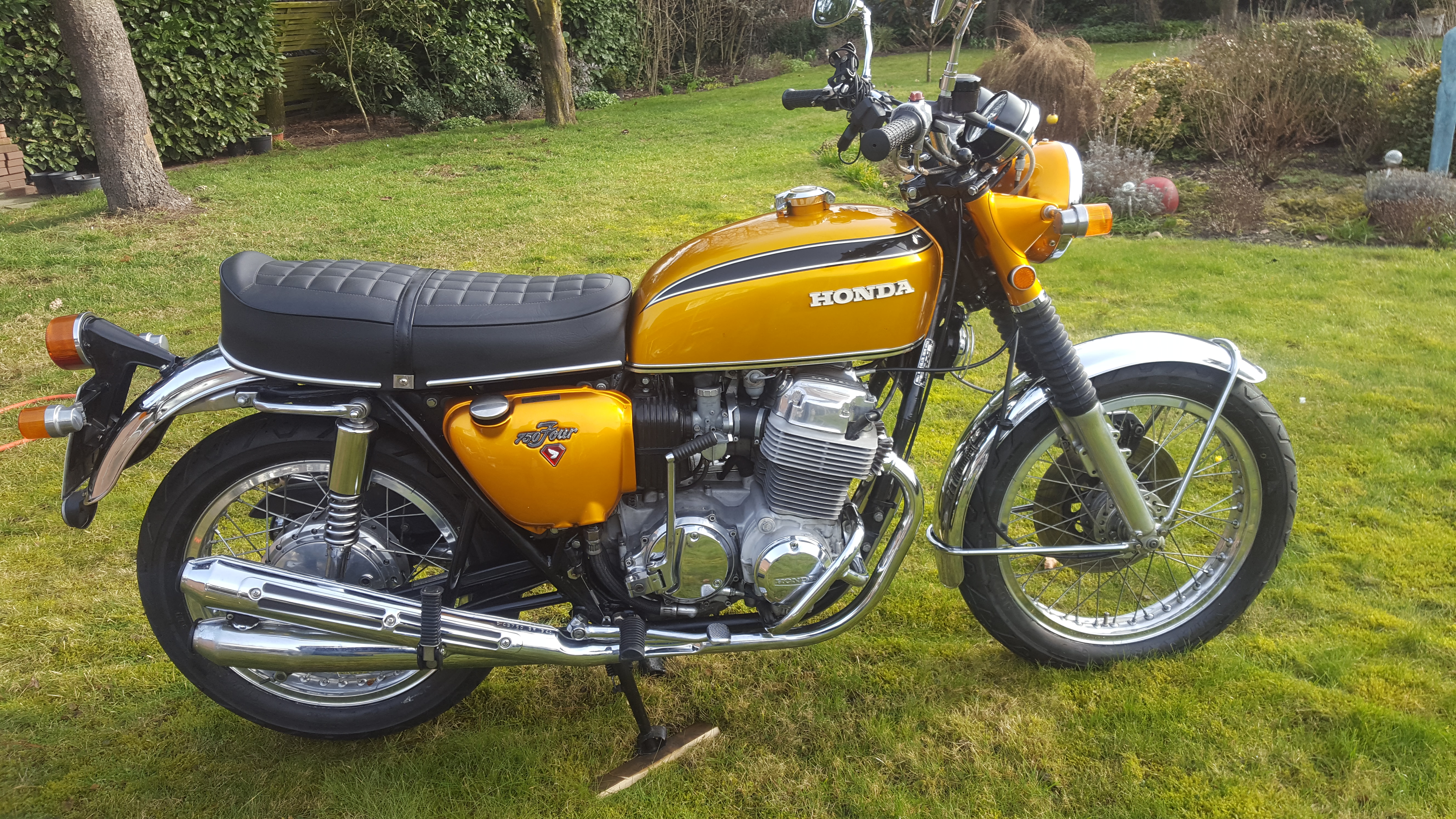
Honda CB 750
The Honda CB 750 is a famous Honda motorcycle from the early 1970s. It became a big deal because it was fast, reliable, and lots of people used it as a starting point for racing.
Car
Ducati 750 twin
The Ducati 750 twin is an early Ducati sportbike with a twin-cylinder engine. In this era, it was one of the bikes people were racing when the superbike idea was taking shape.
Daytona is a famous racing venue/event location. The hosts mention it because that’s where they heard the story about how superbike racing got organized.
In racing, a “class” means the rules define what kind of bikes can compete. Around 1976, super bikes became a recognized category, which helped racing evolve from local experiments into organized competition.
Car
BMW R90s
The BMW R90s is a famous older BMW motorcycle. The hosts mention it because it represents the kind of bike and rider background that helped people move into serious racing.
Kawasaki is central to the episode’s origin story because the hosts discuss a “big new Kawasaki” coming and secret code words heard from Kawasaki personnel. That highlights how early superbike-era development involved internal communication and anticipation of new models.
Car
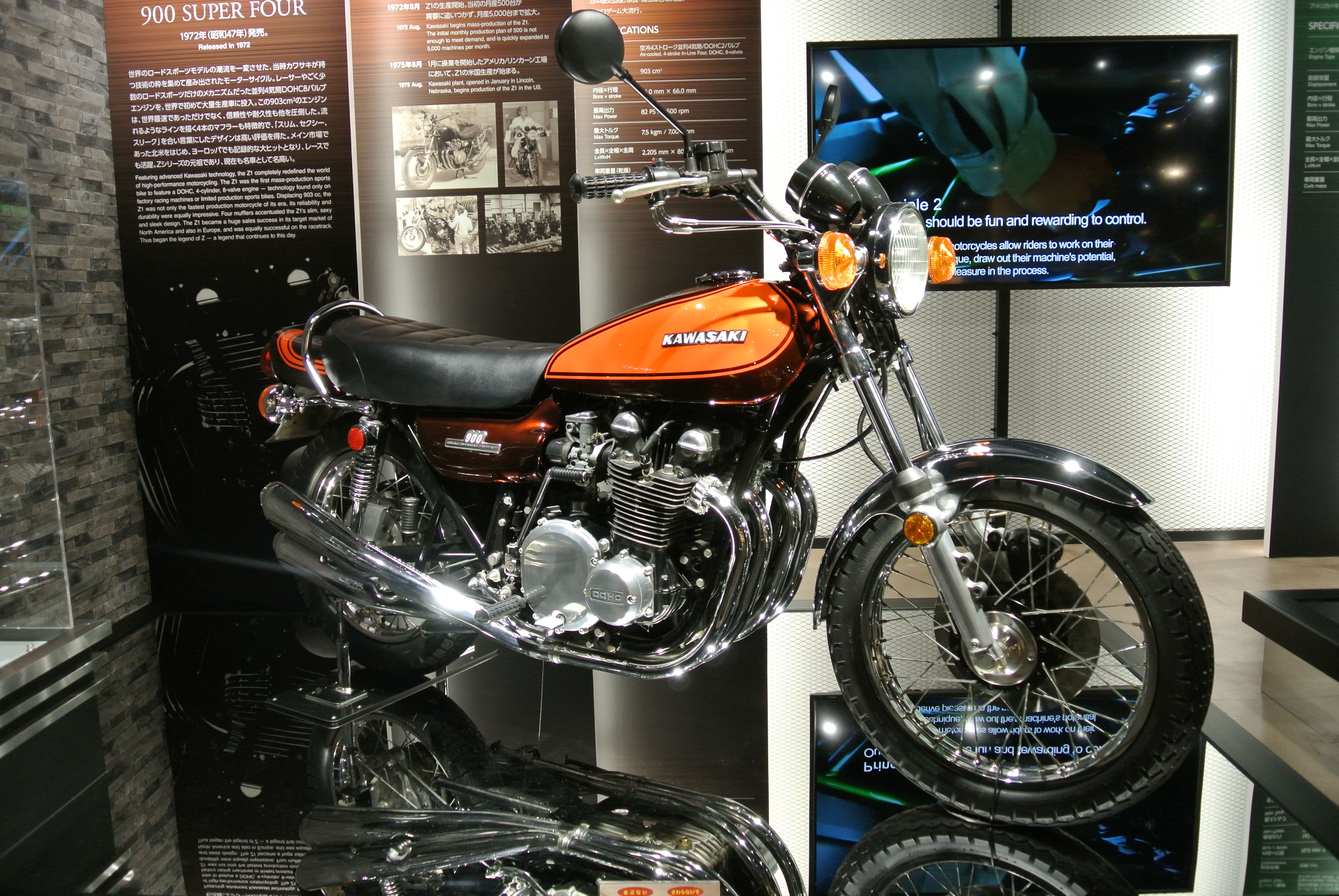
Kawasaki Z1
The Kawasaki Z1 was a famous early super-bike. Kawasaki used it to show that their new motorcycle could handle serious speed and distance, not just showroom bragging rights.
A 24-hour record is an endurance test where a motorcycle is run continuously (or as continuously as regulations allow) for a full day to measure distance and reliability. In the context of early superbike development, it was a high-visibility way to prove durability under sustained stress.
“Production-ized racing” means racing bikes that are more like the ones regular people can buy. Instead of building totally custom race-only machines, teams try to make the production bike competitive.
“Factory specials” are basically race-only versions built by the manufacturer. They can be much more modified than what you’d ever get from a dealership.
The phrase means the bikes weren’t built for racing yet. Even though they were great street machines, racing required changes so they could handle the stresses of competition.
“Re-engineered” means more than minor tweaks. It suggests the bike needed real engineering changes to make it work reliably and perform well in racing.
“Sit-up bikes” were early sport motorcycles where you sat more upright instead of tucked in like a modern racer. The sport was evolving, and later bikes became more race-like in shape and riding position.
“A thousand cc’s” is the engine size—about 1 liter. Racing series often group bikes by engine size, and that affects what kinds of engines manufacturers build.
Connecting rods connect the pistons to the crankshaft inside the engine. Making them out of titanium can make them lighter, which helps the engine spin up quicker—though it’s a more advanced, expensive approach.
Valves control airflow into and out of the engine, and in high-rev racing they’re under extreme thermal and mechanical stress. Titanium valves can reduce reciprocating mass and improve high-RPM performance, but they must be matched with the right valve train design and materials.
Privateers are independent racers who don’t have the manufacturer running their program. They often buy older factory machines and try to compete using their own resources.
“Aftermarket building” means people modify bikes themselves, using parts and tuning that aren’t standard from the factory. Here, they’re building for short races, so the engine setup is different than what you’d want for normal riding.
RPM is how fast the engine spins. When you try to run a motorcycle engine at extremely high RPM, the moving parts get stressed much more, and they can wear out or break faster.
Connecting rod failure means the rod inside the engine breaks. That can happen when the engine is pushed too hard for too long, especially at very high RPM.
They’re saying the engineers were told American roads would be limited to about 60 mph. If you design for that kind of use, you may not build the bike to handle the stresses of full-on racing.
The crankshaft is the main spinning shaft in an engine. It turns the piston’s motion into the motion that ultimately drives the bike’s wheels. If it develops cracks, the engine can fail.
Polishing is when you smooth metal surfaces to make them cleaner and more even. The idea here is to remove tiny imperfections that could later turn into cracks.
Surface defects are tiny problems on the metal’s surface. They matter because metal can crack starting from those weak spots when it’s stressed repeatedly.
Cracks are fractures that can begin at weak points and then grow as the part is cycled through loads. The segment links crack prevention to removing surface defects and improving the crankshaft’s condition.
These are connecting rods made from titanium. They’re used to make the engine’s moving parts lighter and potentially stronger for racing. But they still have to be made to the right specs.
The “big end” is the larger end of a connecting rod that houses the bearing surface for the crankshaft journal. Pressing in steel rings suggests a bearing or wear-surface solution to ensure proper alignment, durability, and load handling.
Term
rollers
Rollers are small rolling parts that help reduce friction. In an engine, that can mean less wear and smoother operation under heavy use.
Term
z1
“Z1” sounds like a code name for a specific part or specification. The episode doesn’t explain it clearly here, so it’s hard to say exactly what it means from this snippet alone.
To “true” something means to make it straight and properly aligned. Here, they’re talking about getting the crankshaft to spin without wobbling, so the engine runs smoothly and doesn’t shake itself apart.
A dial gauge is a super-sensitive measuring tool. When you’re truing a crankshaft, it shows you exactly how far off it is, so you know when it’s “good enough” to use.
They use a gentle hammer so they can nudge the crankshaft in tiny steps. It’s careful work—hit too hard and you can damage the metal or make the problem worse.
BSA was a well-known British motorcycle brand. They’re bringing up BSA’s old manufacturing process to explain why certain metal-handling steps could cause problems.
Norton is a classic British motorcycle maker. The hosts mention it because they’re talking about old factory methods—how metal was cast and cooled—and how that could cause issues.
Shock-cooling means cooling metal very quickly. That can cause the metal to warp or develop stresses inside, which can lead to defects and failures later.
This is a machine that makes the inside of an engine cylinder smooth and accurate. If it’s not set up right, the engine parts won’t fit or work correctly.
They’re saying the factory process was making bad parts that had to be thrown away. That usually happens when conditions or settings aren’t consistent enough.
Term
gear line
A gear line is basically the factory’s production setup for gears. Here, they’re pointing out that opening a door lets in cold air that can mess with precision work.
They’re saying the bikes worked better because they matched how European riders rode and what the tracks demanded. It’s like using the right tool for the job.
People often compare bikes using two numbers: how fast they can go in a quarter-mile, and the highest speed they reach. The quarter-mile is mostly about acceleration, while top speed is about power and gearing when you’re going very fast.
The idea here is that riders would buy motorcycles from the showroom and race them with only small changes. It’s a way of saying the bikes were already close to race-ready, even before big custom work.
“Bigger valves” means the engine’s intake and exhaust openings are larger. That can help the engine breathe better, but there are limits because the valves can get too close to each other.
They keep mentioning “Jerry Branch” as the person they went to for engine head work. The changes he helped with were aimed at making the engine breathe better so it could make more power.
They’re describing a hands-on metalworking step: welding the cylinder head so the inside shape can be changed. The goal is to improve how air moves into the engine.
The intake port is the channel that air (and sometimes fuel) travels through before it enters the engine. Changing its shape can help the engine pull in air more efficiently, which can improve power.
Overlap is when the intake and exhaust valves are both slightly open at the same time. It can help the engine “swap” gases, but it also creates timing and clearance limits when you change valve sizes.
“Sink the seats” refers to machining the valve seat recess deeper in the cylinder head. This increases clearance between valves (especially during overlap) so larger valves can fit without interference, while preserving the intended valve timing as much as possible.
Car
xr 750
They’re talking about the Honda XR750, a famous racing motorcycle. In the episode, it’s mentioned because parts like valves were taken from that bike for their own build.
They’re describing an engine setup that isn’t “the same on both sides” in how the valves and airflow are timed. Racing teams do this to improve how the engine breathes.
Valve lift is how much the engine’s valves open. If the lift happens more quickly, the engine can breathe better at high revs, but it also puts more strain on the parts.
They’re talking about cutting the cylinder head so the valves sit deeper. That can help the engine flow air better and fit everything correctly for performance.
They’re describing a custom modification to the engine head where the intake passages are reshaped. Welding and reworking ports helps the engine pull in air more efficiently.
They’re talking about changing where the suspension shocks mount. That changes how the bike handles bumps and cornering, and the rules allowed some flexibility.
They’re talking about how teams read the race rules and then figure out what they can legally change. When rules are vague, different teams can interpret them differently and end up with different setups.
The swingarm is the part that holds the back wheel and lets it move as the suspension works. In racing, it’s built stiffer so the bike feels more precise and doesn’t “wobble” under hard riding.
Forks are the front suspension parts that help the bike absorb bumps and stay controllable. On a race bike, they’re designed to handle harder braking and cornering without getting sloppy.
A stiffer frame flexes less when you brake hard, accelerate, or lean into a turn. That usually makes the bike feel more accurate and stable because the suspension and steering stay “where they should be.”
The steering head is the front “pivot” area of the frame. Boxing it in means adding reinforcement around it so the front end doesn’t flex as much when you turn or brake hard.
A gusset is like a small structural brace that adds strength at a joint. It helps the frame handle twisting and bending forces better, especially near the front where steering loads are highest.
Putting the engine farther forward shifts where the bike’s weight sits. That can put more weight on the front tire, helping the bike stay stable when you accelerate hard.
The steering head is the front part of the frame that the handlebars turn on. If it’s built differently (like a stock bike vs a race bike), it can flex more or less and change how the bike feels when you steer.
Welding joins metal parts into one stronger structure. If the steering head isn’t welded properly, it can flex more, and that can make the bike less stable and less precise.
Larger, heavier pistons increase reciprocating mass, which raises the forces involved as they accelerate and decelerate each cycle. That can amplify vibration and stress, especially if the engine’s internal geometry (like rod angles and planes) forces compromises.
A rocking couple is an engine-induced twisting/rocking force caused by how rotating and reciprocating components (like connecting rods and pistons) are arranged. When rods are offset or not in the same plane, the engine can generate more vibration because forces don’t cancel smoothly.
They’re talking about how the motorcycle frame can be built to let the engine area move a little, but not shake the rider as much. That helps keep the handlebars from feeling every vibration.
This is the joint where the rear suspension arm swings. Strengthening around it can help the bike stay more stable and predictable when you accelerate or hit bumps.
Brand
sealy matchless frame
The hosts compare the described reinforcement layout to a “sealy matchless frame,” referencing Matchless’s classic motorcycle frame design. It’s an example of how certain structural triangulation ideas show up across different eras and brands.
Company
pierre de roche
They’re talking about a person involved in improving the bike’s design. The goal was to make it lighter but also stiffer where it matters for handling.
A privateer is basically an independent racer, not a big factory team. They usually have less money and support, so they rely on their own effort to get the bike competitive.
Laguna Seca is a famous race track in California. The episode is saying that local races there were a proving ground for early superbike development.
Topic
Willow
“Willow” likely refers to Willow Springs Raceway, another major California track used for testing and racing. Mentioning it alongside Laguna suggests the builders were using multiple local venues to compare development progress.
The Volkswagen Crafter is a van made for work, like hauling goods or transporting a small crew. It’s discussed in terms of power because the engine’s horsepower affects how easily it can move when it’s carrying a load.
Horsepower is a way to describe how much power the engine makes. More horsepower usually helps a bike accelerate harder, but it’s not the only thing that matters.
They’re saying the bike’s gears were failing because the stresses were too high. Even if the gears look strong on the outside, the inside can still crack when you push hard.
Case hardening makes the outside of a metal part very hard, like a tough shell. The inside is usually less hard so it doesn’t shatter easily—but extreme loads can still break the hard shell.
Nitriding is a way to harden the surface of metal without making the whole part brittle. It helps the part resist wear, especially where it contacts other metal.
Carburizing hardens the outside of steel by adding carbon to the surface and then heat-treating it. It makes the gear’s contact surface tougher, but it doesn’t guarantee survival under extreme racing loads.
“Vacuum remelted 9310” refers to a high-strength steel (commonly 9310 alloy steel) remelted under vacuum to improve purity and consistency. Using a better material can improve gear fatigue life and reduce cracking/spalling under racing stress.
Tuning creep is when people keep pushing for more performance over time. Eventually, something else breaks—like gears—because the rest of the bike wasn’t built for that higher level of stress.
A clutch slip means the clutch isn’t grabbing firmly. The engine can rev, but the bike doesn’t move forward as strongly, which wastes power and can overheat parts.
The chain is what actually pulls the rear wheel. If it’s not up to the job, it can wear out fast or even fail when the bike is making more power than the chain can handle.
Spokes hold the wheel together. If they break, the wheel can become unsafe or lose alignment, often because the bike is being pushed harder than the wheel was designed for.
Yoshimura is a performance tuning company for motorcycles. Here, they’re described as bringing expertise that helped the bikes fix problems that showed up when racing got more intense.
Suzuki is another major motorcycle brand. The episode mentions a shift in where the performance tuning support went, showing how competitive development was changing during that era.
This describes a key superbike-era development pattern: as performance demands outpaced production components, teams relied on specialized engineering and tuning expertise to solve specific failure modes. It’s an early example of how race-derived problem-solving (materials, machining, and component upgrades) shaped what became “superbike” reliability.
Stock brake discs are the normal factory brake rotors. If they can’t handle hard riding or racing, they can overheat or change shape, which makes braking less consistent and can be dangerous.
Stress relieving is like “settling” the metal after it’s been shaped. It helps the part hold its shape better, which is especially important for brakes that get very hot.
Brake calipers are the parts that clamp the brake pads onto the disc to slow the bike down. “Trick” calipers usually means they’re higher-end and made to work better under hard riding.
First gear controls how the bike launches from a stop. A “taller” first gear can help the bike move more smoothly and avoid feeling like it’s revving too much without going anywhere.
LIVE
Hey, welcome to the cycle world podcast. It's Mark Hoyer editor-in-chief. I'm with Kevin Cameron our technical editor
Check us out on patreon. There's a link down there. We're doing extra podcasts on patreon you can
Or a small fee get everything commercial-free for one this one included that will be posted on YouTube and Spotify
But you can also get all the other stuff the extra things that we're doing and we're gonna figure out more cool stuff to do over there
And so join us on patreon today's topic close to my heart near and dear to my heart
Which makes me laugh that I'm gonna say the subject is unfit for purpose
near and dear to my heart unfit for purpose
the origins of AMA Superbike Superbike Racing in America and
the modern analogy that we have which is
Bagger racing also unfit for purpose yet evolved into genuine race bikes improving the breed
So prior to AMA Superbike Racing, I think we were probably racing just about anything but
The era of the Superbike was upon us sort of circa 70 we had the Honda CB 750 and then the Ducati 750 twin and
And a cycle magazine, I believe was the first magazine to coin the term super bikes
They did a comparison and called them the that set of bikes Z ones and
KZs and CBs and all that super bikes and Cycle World was soon to follow
It was our big super bike comparison and the way we went
More and more people were racing these things cook Nelson was getting his Ducati together with Phil Schilling
BMW was reimagining itself in the era and building 750s out of the the slash five and
Away we went and by 1975 it seemed reasonably formalized Steve McLaughlin a
longtime racer and John Ulrich a racer himself
decided to
Codify this and try to get the AMA to make a class an official racing class for super bikes
And as John Ulrich and see McLaughlin recently told this story to us at Daytona at a dinner
See McLaughlin's very ex-wife had moved out. There was no furniture
John Ulrich wrote over what they described as his first date with his longtime wife Trudy
And they sat on the floor with a typewriter and wrote the rules
for super bike as a class for 1976 and
So all these wobbling
Smoking bicycle frame skinny tire
Things showed up and started racing
Legitimately raising Kane
Yep
So to kind of finish the the brief origin brief but long origin story
You know the West Coast guys were calling them California hot rods and
Cook had called his bike the California hot rod with Phil Schilling and
That was kind of the AFM
Origin of that part of these guys thinking about it and there we were at Daytona
Three BMWs Udo Giedel not a tuner not a race tuner who became a race tuner of great note
Obviously with his R90s
And his later employment by Honda
That's right. Everybody got employed by Honda later. Did they she started all those guys?
So tell us Kevin you were far more there than I was
Well, we knew this big new Kawasaki was coming and
When I went to Japan in October of 72
I
mentioned one of these
Code words which I'd heard from Kawasaki personnel in the presence of of
the big the big cheese and
He said how you know this name that are very secret and
Well, of course in those days
The Japanese companies were porous to corporate spying so everyone knew what everyone else was doing now
The big deal in 1972 was that Kawasaki took the new Z1 and
set a 24-hour record of some
2600 miles
and a lot of people were there working on it riding it and
It was clear that
Kawasaki wanted people to know that this was the new king and
In 73
There was there was an open production race
Which was won by Yvonne de Hamel on the Kawasaki. He was one of their contracted riders
so it began and
A
Group of conspirators
Embraced by Steve McLaughlin included Jim France who has always wanted to see more
production-ized racing and less
Finely disguised factory specials racing
well
People were writing in retrospect like to say
That superbike was an everyman's class that you could go to the showroom
Buy yourself a Z1 and with minimal modifications get out there and do it
but what I found when I reviewed what I knew and
Read a lot more interesting new stuff was
That these motorcycles were unfit for purpose and therefore in order to race them they had to be
Re-engineered by people who knew what they were doing
Now you might think this was the way it was well way back at the beginning, you know
but as late as
1982 which was the last year of the first era of superbike the sit-up bikes
a thousand cc's
They
Brought all their Honda brought all their gear
To Daytona and they had not spared expense
Steve McLaughlin had been made initial team manager and he bought
Bins and boxes and crates of connecting rods made of titanium valves made of titanium and
His view was
Honda enters Honda wins, so let's do it fill in the blanks
but
He was replaced by Ron Murakami who came over from the automotive division to
run the race team and
He said to me
Here's the way the sport is at the moment
The three or four factory entries come screaming by and
then there's a pause and then a
Scream of somewhat lower tone is heard and
last year's factory bikes now owned by private entities
Come tearing by
then there's quite a long wait and
And
Finally here come the privateers on now these were his words and I had to burst out laughing
smoking junk
now that sounds very
contemptuous of the
Efforts of private persons to soup up their bikes, but we have to remember this
What was the aftermarket building? Were they building for 50 mile races? No, they were building for
1320 feet, which is a quarter mile and so
It was imagined by these people that
They could build road race engines turning 15,000 rpm the present day
Superbike engines do
Reach and exceed that rpm and
that
pistons and
Connecting rods and so forth just were failing right and left and they were failing on the factory entered motorcycles
When Rob Muzzy
Was
finally made put in charge of
This building the super bikes for Kawasaki
He
Had to deal with connecting rod failure. They were breaking near the small end
now this is
unfit for purpose
because
Japanese engineers had been told speed limit in America is 60 miles an hour so
Letter rip and
at least that
Wasn't excuse an excuse that was given later
so
Muzzy had a three-tier program for that what he could do today if there's a race tomorrow what he could do in a
Couple of weeks for races a couple of months ahead and finally a total solution
So what he did was he put a crankshaft into a plastic bag
With one rod sticking out and he polished and smoothed
The area where the breakages were taking place to eliminate
Surface defects that could expand into cracks a
Lot of grinding and polishing a lot of coughing up metal particles
Um breathed in by the people doing this work
Polishing is one of the most dirty and disgusting things that you can do as an industrial operation
Yeah, and those the guys doing it are always like like this with one finger missing. It's really I think they've probably figured it out better
But I went into some early polishing operations in my career where it was just just rooms
where the corners of the building were gone with a
Black matting of the polishing wheels and the rouge and everything. Oh god, it's really we've come a long way
You took your cast hot rod wheels to a polish shop
Get them polished you take your aluminum intake manifold to a polish shop get it shiny
It looks cool
Anyway
That was the first step that made the engines
Mmm more erasable
the second step was to take the crankshafts apart while
Ordering titanium rods made by whoever was willing to accept the contract and then reassembling
with
steel rings pressed into the big end of the rods for
The rollers to run on these were z1 as a roller crack
So were the GS Suzuki switch were about to arrive in 77
so then you had to true the four cylinder crankshaft and
This is an acquired taste. I don't think that there are people who do this for recreation
But it's a way to get a crankshaft in your motor
this week
That is straight
That's such an interesting concept in and of itself people who don't do this for recreation and yet you just gotta
Yeah
Yeah, well who else is gonna do it the polish shop is gonna do it
Yeah, so then the third step was the factory meanwhile is working hard to develop
Connecting rods and other crankshaft related parts that will enable them to ship you race cranks
From which you can take the crank and put it into the cases
after of course checking it for straightness
um because it used to appear to me that the follows truing cracks for one brand was was
Cranking away at the rods and looking at the dial gauges going back and forth and giving the
Smart tap with a soft hammer
And once he got the dial gauges to stay within the green zone
Then he threw the crank through a hole into a bin downstairs for shipping
But um as I say it's it's an acquired taste and
People teach themselves to do it. They can learn it from those who are adept in these black arts
Well, when you talk about throwing the crank through a hole
Are you saying that it's going out of true when it hits the ground or it's the bin where all the others are?
That's what I'm suggesting. That's what I thought because it reminded me of what factory was it bsa or norton
They were casting things in the foundry and then they'd put it on a cart and they would take it very hot
outside to the other building and that
Really hot iron would be shock-cooled and they were having terrible problems
With cracking in their castings. So well, that's just like Harley's trouble with the
Cylinder there was a cylinder finishing machine, which was this this tremendous
You'd expect it to be surrounded by worshipers bumping their foreheads on the floor. It was truly impressive
and
In the winter sometimes it would throw junk
it would wrote be way off dimension and
They had a big meeting and they actually had employees there for the first time
And these employees are sort of looking at each other and finally one guy said well, I can't stand it. I'm going to tell him
and he said
I know you guys are engineers and and you're real smart and so forth, but
We noticed that it's it's it throws scrap
When they open the big overhead door in the back of the gear
Gear line to bring in the the gear stock
And that cold air comes rolling in straight
To the cylinder finishing machine
Oh
Thank you
And that so much for cooperation between upstairs and downstairs
anyway
Uh, they had to do this primitive work with the crankshaft now
If you read other accounts about the early days of superbike racing you will find
that the european bikes
The
Goosey BMW ducati had an advantage because they were
Made to handle to the standard of european riders
the european riders did not just
tear out the part of the magazine that said quarter mile time and top speed they wanted to
Be able to cross the Alps in fine style
Well, this is true to a certain extent and one account that I read this past week said
That the european bikes could be taken off the showroom floor and raced with little or no modification
Well, now let's list some of the modifications that phil schilling the late phil schilling
and cook nelson
The first modern editor of the now defunct cycle
magazine
um
The things that they had to do to their european motorcycle to make it
Do the job of racing
They went to jerry branch repeatedly for bigger valves
And the engine was reported for these valves the cylinder heads were welded
To change the shape of the intake port
To make it more felicitous more inviting to the little air molecules teeming around the intakes. Shall we dive in?
I wonder if that's what they wrote on the on the board in the you know, the porting shop more felicitous
Well, uh
They found for example that
The intake and the exhaust valve on overlap were coming extremely close to one another and that was
That was the limit on valve size. You couldn't have a larger valve unless you
reduced overlap timing which would take some horsepower with it
And
Finally jerry branch said i'm just going to sink those things i'm going to sink the seats
And which pulls the valves
deeper into the head
So that they come less close to one another and the final uh valves that he was using i think were from an uh xr 750
Well, that's that's an interesting note because talking to udo geedle and bill warner at datona
So i went down with the pmw to datona
And we rode those bikes you rode the r90s's that udo had built and udo was there so i'm shitheading to udo
and bill warner and udo's like oh, yeah, we tried xr
cams
We had to go to roller eventually
to get uh
non symmetrical and and
More rapid lift it was just fascinating
But you're talking about sinking the valves and welding the heads to move the ports and the three bikes there
Fisher's bike
McLaughlin's bike and uh reg pridmore's bike
All of them had different intake port angles that udo had experimented with yes
A little or no modification necessary. Well, that's so what's so great about it is the
They said in the rules that you could reposition the shocks
Yes, and so so the bmw show
The bmw shows up at datona now reg's bike had twin shocks and it was reg wanted to
adhere to the rules this is the lore and um
But steve's bike and fisher's bike had single shocks and everyone joked that udo repositioned the one shock to the shelf
In his shop parts room. Yeah in the parts room
Now you can reposition it so single shock. There was a lot of interpretation
We read the we read the
Popular prints about how much modification was necessary for the japanese bikes that they had to be
They needed new swing arms new forks
That is parts made for racing
That they had to have their frames reinforced to stiffen them
And this include plate and gusset the steering heads were boxed in as if this was not done
Uh by the people running the european bikes now
Udo moved the engine forward
In order to get more weight on the front wheel to be able to accelerate and also to have the higher stability that increased load on the
Front tire brings with it
he
He said have you ever looked at the steering head of a stock bmw and i said well no actually and he said well
The tubes going crossing over each other
To join to the steering head are not welded together
He said i'm sure they built it welded
Nicely to begin with but then they found that
bmw buzz which became a
An issue as the pistons
Became larger and heavier
Um, which is the engine trying to do this
Because the connecting rods are not in the same plane. They cannot occupy the same space at the same
Yeah, the rocking couple if you offset the rods which they had to do
And then you make them bigger and heavier as you did with the 900
And they're going like this you can imagine when the both pistons drop like this
This one's pushing this way and this one's pushing this way to the whole engine that way
If they were perfectly aligned then you would have no vibration
For example, if there were two rods on one side and one on the other you could have them in the same plane
And bmw buzz would not exist. Yeah big big rod big single rod on the right side and two live rods on the other side
they
They deleted some of the welding in order to
Uh, let the frame
Wiggle at engine level without transmitting it all to the bars
Which bmw customers do not like to be disturbed by
vibration
Not that any touring rider likes to be but
The gaitle bike had to have its steering head reinforced
Then he ran diagonal
tubes
From each
Swing arm pivot point
Forward to the steering head rather like a sealy matchless frame
Um, although that's a bit of ancient history. It's not wrong
And
The uh schilling
Um
Had they they asked pierre de roche
to lighten the bike while stiffening it
their
Weight reduction program took 67 pounds off the bicycle
and pierre
Greatly reinforced the steering head
now
This would call for some
of
The van that has picked up this privateer bike at the showroom and is taking it to the race
Presumably all these pieces of work are going on in the
Now meanwhile, all of these california builders are having it out with each other on local tracks notably, uh, laguna and
Um
Perhaps willow
So they're they're keeping track of what everyone is doing. Oh those guys have edged away from us. We've got a you know
and at one point
um
in the
in the uh schilling nelson narrative
says that the
I think the race crafters
Kawasaki had 119 horsepower
And they were making somewhere in the 80s
and
Everyone was also going to the drag strip
Now oh nice to see you. Um
In order to get a baseline on their acceleration
This was going on
for four or five years
Before cook nelson and that bike the ducati that he and phil built
Was ready to win
the Daytona superbike race
And
This was a a wonderful program of development and the way they describe it. We worked eight hours
At the magazine and then we worked eight hours in the shop
um
My
experience of marriage would suggest that that's not the entire picture, but um
They put a lot of work in
What do you do when you discover that your production bike is case crushing its gears?
The material under the case hardened surface layer is not strong enough to prevent
The load from the teeth on the other gear from cracking
The hard case
which is
nitrided or
Carbureished
Cracking it and then
spalling off pieces of the hardened
The case hardening
well
They send you to webster gear
And webster gear says well, we'll have to make all these gears out of vacuum remelted 93 10, which is a real gear steal
Mind you, we don't want too bad mouth ducati because this was built as a street motorcycle and
The parts that they made for it are perfectly satisfactory in that role
But when we're talking about racing they were unfit for purpose
So it's it's the classic
Classic tuning creep where you you uh, you seek more power
And then the clutch slips or you're breaking spokes or the chain's inadequate. There's just every possible
You're vibrating so much more whatever it is. It's just
It's a constant squashing of bugs, you know, and of course meanwhile the four cylinder guys the um, yosh
Uh, suzuki yoshimura worked with Kawasaki's initially
And then in 77 he switched to uh, to suzuki's because he was
Um, I hope they made him an offer that he couldn't refuse
um
But those uh four cylinder bikes were
improving
As they brought professional resources to bear upon the problems for example, I was told, um by
Gary Mathers who was managing Kawasaki at this point
He told me that we couldn't keep
stock brake discs on the thing
So we went to uh persons unknown and we said we need stable
non-tackling
brake discs
And what was done was that they the material was cast an inch thick
And it was then put on the blanchard machine and ground thinner
And then it was stress relieved and this went on in steps grind
stress relief grind
stress relief until they had
discs of the
desired thickness
That did not shrink from their duty
And that solved their problem
If you look at the photographs in um
The little book that uh
John Owens and I did on early super bike
You will see some of the trick calipers that were used in early
super bike
Clearly billet stuff
Well, what's it going to take then go ahead and build it
So here we are at Webster gear
And there are the beautiful gears that have been made one of the most important changes was a taller first gear
Because street motorcycles typically have a low first
For starting away from uphill stop lights with a passenger on the back
Well, it was the
And he had gears full of whatever
Udo said he did the opposite
Yeah, he dropped them
They had a they had a custom first gear to get that BMW off the line
Ah, yes
And then they used the rest of the gears and when I raced at arm on the r75
Slash 5 it was also a low first gear. It was a close ratio racing gearbox
With with the starting gear to pound that guy off the line versus 120 horsepower Kawasaki's in the
Case of the there you are at the counter at Webster gear and you
Pull out one of those bank envelopes full of hundreds and start laying them out
Well, these privateers that made little or no modification must have had some good relations with the bank
Because that can't have been cheap Webster made gears for all kinds of race cars
Champ cars for example
And they knew how to make
racing gears
Uh, so
Uh, with the Ducati
They tried all kinds of pistons. They had oil control problems. So they switched to
Different kind of rings different ring pack
And all of this stuff was going on while they're trying to race it in California
And they are learning so much
This is the kind of program
To die for that
You should participate in such a a grand
Elevation of your own knowledge and experience because you've decided to do this crazy thing
And you can afford it
So, um, meanwhile, of course butler and smith were backing
The bmw effort they started out racing in california with the slash five
The 75 slash five
And when the r90s became available, they they switched their knowledge
and experience to that
So, uh butler and smith told, um
Giedel and shoester and kenny augustine who was responsible for
enticing the air to enter the combustion chamber
Uh, you boys have free run of the warranty parts
So any any stuff that was returned
For any reason
Belong to the race department
One of the great discoveries that was made by, uh
Shilling and um
Company was
Slick tires
They had started out with k91s. I think
k81s, was it? Yeah, and on little narrow rims
They very quickly had to switch to
Cast magnesium morris wheels
And when they switched to slick tires
They dropped 3.2 seconds a lap on whatever course
This took place on
3.2 seconds
Can you imagine increasing engine power enough to go 3.2 seconds a lap quicker?
No
This was an effort to build every aspect of the motorcycle toward racing success
And
therefore
We have to say in retrospect
that early superbike
Began with people like pierre de roche
uh who were
Trying to do the best thing they could with what they had
Gaining experience
But quickly evolved into a whole factory deal
And one of the
One of the amusing things that took place was in 1979
um
Freddie Spencer was
Hired to ride
one of the four cylinder bikes
And it had been
Enunciated by the
Top people in superbike who were all older fellows
Except for david aldana who will be young forever
um
That it takes an older
More experienced kind of rider to ride these
difficult motorcycles
Much as it takes a test pilot to do developmental flying
On a prototype prototypes can be tricky
so
Freddie arrived they
Gave him a running motorcycle and he disappeared
So the principle was denied
Professional riders only from this point and this is how people like
Well freddy for one
Uh were launched from superbike into international racing
Grand Prix racing
because
It was an intensely competitive class. It became an intensely competitive class
Uh
The european bikes had their time in the sun, which was
The first year of the series 1976
And never again they continued to win races here and there on the european brands
but once
They got the hang of
Make a racer out of
Those thousand cc bikes that were conceptually
Double the power of a hot triath twin of 1965
In a 60s
technology chassis with 60s tires and
60s suspension
That all got washed away and replaced by
What it takes to win races and this is why baggers is so such a wonderful demonstration
It shows that the most unlikely motorcycle
namely a bagger
that is intended for
A smooth touring
Cruising
Long wheelbases is plenty of weight
Lots of torque
and
That that kind of motorcycle
Attended to by with the same
medicines that were applied to
Early superbike the sit-up era
Makes a racer of it makes a much more capable machine
And so I got to I first hand got to understand
How much the bagger is now just a legitimate racing motorcycle so I went to kota for the test
For bagger world cup harley davidson's excuse me fim harley davidson bagger world cup the first round
Is the 27th of march. It's that the weekend
We shall be on the on the edges of our seats
So bagger world cup is a spec series harley's built all the bikes
and
They're giving them to international riders or their international riders are we're all paying an entry fee
That's how how those series is working they're paying an entry fee and they get bikes and they get allocations and parts and all that stuff
Americans have been racing these since 2020 when these series was conceived and they had an exhibition race at laguna
And we've just loved it and the bikes revolved and everybody's they're now their super bikes
And they are exquisite the the work on them is exquisite the triple clamps the it's a super bike owens fork
marcassini wheels the the tooling and machine work on the primary cover
The twin shocks the tuning on the owens twin shocks
The swing arm that starts as a 200 plus pound billet that is machined into a featherweight sort of 20 poundish
Gorgeous piece
Warren trust
It is a race bike now Americans have been racing these since 2020 and so we're like oh bagger world cup
We have four americans showing up
To to do this along with you know an australian kid who's grown up in spain a spanish kid an italian
and
You know somebody from indonesia or whatever you know some it's a global
A global phenomenon at this point and who is fastest?
Three foreigners
Three international riders not americans were fastest they went out
They had an organized team and they they're like oh wow. This is a this is this is a race bike
And they just did what you do with race bikes
They had to cope with the weight and they had to understand the probably 165 foot pounds of torque and 200
You may have 15 probably with these these are tuned a little bit down, but
Racers who grew up racing
In super bike in super sport and moto 2
Were out riding that bike at the limit and doing lap times that were nearly competitive
With the moto america test that had happened just days prior
They were close they had a better rear slick they had a higher spec rear slick and
Perhaps a lower tune definitely a lower tune to the engine just something that is
Equal all the deck heights all that they just they're not trying to beat another manufacturer like indian. They're just competing with themselves
It's a spec series. Let's make them consistent reliable and and good power
You can back away from the edge not quite so much compression not quite
Yeah, and they don't want to use the engines up as fast, right? You know so
It's a 100 legitimate race bike out of a touring model and they are using
stock rubber engine mounts
and a stock frame
That's the rule and so they obviously it's a good strong platform for this
but
It is a it is a race bike and one of the guys who grew up who had raced in moto 2 said
it really handles
It it corners like a moto 2 bike. We're doing corner speed
On the spike at this track. They're doing corner speed
Which means it has grip in addition to having traction
And when you see them on the racetrack, you see that they slide
Frequently and grandly
Under control now, um, it takes some
Uh motivation to slide
um a moto gp bike because
Everything on a moto gp bike is
Quite rigid including the tires
so, uh
A high side is possible
High sides are less often seen
In baggers, and I think it's because of the 620 pound minimum weight
Because the tire tries to grip i'm going to throw this guy over the moon
And the mass of the motorcycle says no way
Keep sliding it's cool
And they change direction quite quickly although you might think oh 620 pounds
This thing is going to knock down all the cones in the slalom
but
What's happening is
You're changing you're you're rolling the motorcycle by steering the tires out from under it now
That takes some doing
But it works just as well on a 620 pounder as it does on on a
200
212 pound 250 of the of the old days. So well something to note something to note of that is
I rode one and the seat is tall
The the bottom of the engine is wide. They've machined
You know outer covers that are tucked in super tight
And everything everything they can do to make it narrow, but the bike is raised and
In the riders meeting before all these guys are first riding the bike just a few days ago
First time they ever been on one
Part of the riders meeting was
Okay, here's something different folks. This is a very tall motorcycle
I'm a I'm an average height person. I cannot flat foot
This motorcycle and no, I am a tall person and I could not flat foot it you hang off one side your leg goes down
Uh, it is tall and so they've moved the mass and the mass is
Centered around the center so the wheels are going like this. It's not
It's at the center of rotation of the bike. I'm sure that they have they've concentrated the masses as you always point out
It's a the difference between turning a ladder
Very rapidly holding a rubber ladder, you know a 10 foot ladder horizontally and trying to rotate your body quickly
Versus holding that 10 pound bowling ball. You can rotate the bowling ball far
More quickly and I think that's what we're seeing on the roll response now the wheelbase is long
But for the few laps that I got to do on that bike at kota
Not going particularly fast because it's a very complicated track and I'm riding a complicated motorcycle
That's a lot different than anything I've ever ridden
but it was the steering was beautiful like you it just disappeared and then the
I wanted to try uh travis wyman
Tested my bike to make sure it was sort of in the ballpark, you know, that it was just a good solid
correct setup
And he came back and he says it's a big old pussycat
Just watch your quarter entry speeds because
It's weighs a lot more than anything that you've ever gone this fast on
And but yeah, the the steering response was exceptional
And one of the weird things about it is those motorcycles have a negative fork offset
The factory harley davidson touring banks have a negative fork offset
So it's it's it's to
Control weight on the front wheel you can come up with your rake and trail numbers the same way
But that ray spike has a negative offset which also shortens the wheelbase negative offset meaning
Your steering head is here and on normally on your superbike
Your fork legs. Here's the steering at your fork legs are ahead of
Uh, the steering had steering pivot. Yeah, and so you steer the bike like this on the bagger
They're back here. So the pivot's in front and you look down you're like, huh
That's unusual because you really don't see that on the harley. It's not something that's
Displayed there's lots of things in the way. What you're supposed to see is a large astrays
A large angle of the fork tubes. It looks raked out, but it's pulled back
So the steering geometry isn't as terrible as it looks. I mean 31 degrees and four and a half inches
So, uh, also
The motorcycle is raised not only for cornering clearance, but also to reduce the steering head angle
now this was
The norm during the brief reign of the 883 class a class in which
many
Young people who went on to become top riders later got their first
national exposure
And the front ends on those 883s were raked out
So what did they do? They just jacked the back end up like crazy every inch
That you raise the back end is roughly a reduction of one degree and steering head angle
Yeah, they had incredibly long shocks. I remember covering that stuff
Eric bosham was coming up in that class and they did build some really great riders
But yeah, the shocks were just ridiculously long, you know as they were just
I understand they were a really good handling bike with the solid mounted engine
Um, they made them work very well. And when the xr 1200
Uh spec racing class came out
There were a lot of challenges there because they you know, the the harley xr has had an 18 inch front wheel
rubber mounted engine by the time that class came around so it it was what it was at the uh,
04 model year, I think 0304 when they rethought the sporser and they gave them rubber engine mounts to smooth it out
Well by the time the xr came around still had rubber engine mounts
Had an 18 inch front wheel
But when they converted those the race bikes
It kind of eliminated the trail and you had the rubber elements of the frame
winding up a lot of tension with not a lot of trail and um
Anyway people lauded the handling of the early bikes because they were the
883s they were solid mounted engines
What's remarkable about the bagger is they're using stock engine mounts the engine is still rubber mounted
People have experimented with not running balancers
But they've had problems and you know, they're vibrating so much
It's like what what's happening to the electronics
With this jack hammering because like you're taking out a counter balancer that's four to five pounds
But it's it's too more of a detriment than leaving it in and having the smoothness
And then it's just I think I think we're seeing you know when you look at
Kyle Weiman
I think has somewhere in the neighborhood of a 50% win race in bagger racing
Over the course of the entirety of it
So the decisions that are being made are
Leaving the balancer in they tried it without it, but they're leaving the balancer in and keeping it smooth
But the bike is handling well, you know
Oscar Gutierrez
Needy racing racing the bagger moto 2 kid
Corner speed the americans were blown away. They're like
They're losing time in the s's because they're point and shooting like we do in the states so much
And that the you know, the moto america baggers have a have a bit more punch
And so they're they're parking it turning it and then pulling the trigger
And this european comes in and finds the chassis
amenable to corner speed
And rides it like a moto 2 bike like it was really something
I mean, what an engineering accomplishment
For a 620 pound bike and and each cylinder a let roughly 1100 cc's per hole
Making something like 105 107 110 horsepower per cylinder
When you crack that thing on the edge of the tire, I was like
terrified because it
It's so there. I only accelerated really hard in low gears a few times. I had four laps
Four laps by my own doing because I did fall off the bike and I'm very sore and I apologize
I don't apologize to myself. I apologize team and I thank them for the opportunity to ride that bike
It was a very foreign experience, but it was
It was wonderful and also keeping in mind
The rpm range that you're functioning in they're revving to 7000
That's not even on
For super bikes. That's like that isn't
It's not indicated on the tack. I mean, obviously it is indicated on the tack
But who's paying attention to 7000? That's where the show is ending. You feel the bike taper off on the top
so your entire
Perception of the bike in a corner seems wrong
Because you're in this low part of the rev range, but it's all there
I would love to see the dyno curbs. We Kevin and I off the air we as I was going to go test this bagger
talked about
bmep
And saying, you know how a race a race engine
A highly developed race engine might have a 200 psi brake mean effective pressure and kevin can
We could do the podcast on bmep probably
Um, but we just started messing with numbers at 7000 rpm at this many psi bmep
What are we thinking and you know at 190 at 7000?
it was
225 horsepower somewhere in that range and then doing the further math to say what's the torque
Using that classic formula with the 52 52
um
You were looking at 165 pound-feet of torque
And that's a lot
And it and it's and it's interesting and useful and awesome and even with all of that
European riders are doing corner speed and and being because in relation to its weight
It is a moto 2 bike
its power to weight ratio is small
and
Because because there's so much weight
the late, um
Rob Muzzy
Told me about a day when kenny roberts rode one of his 500s
Uh, no, it was somebody else's it was a norton max
And he saw that kenny was riding it in point-and-shoot style
And he spoke to him about it. He said, you know these
These motorcycles
Make 50 horsepower
And they weigh 300 pounds. So they're basically like a 125
They can't do that point-and-shoot thing because they can't accelerate that fast
So ride it that way
And he immediately went faster. He just
You know was was riding it the way he rode reflexively
so, um
If you weigh 620 pounds, do you do you want to
Come to a near stop at the apex and then count on blasting off to
uh
a competitive corner exit speed
But I think the what pleases me so much about this is that
Uh
It refutes essentialism. This thing's a Harley
It doesn't have any place around the racetrack
Wait a minute
Let's check. Let's investigate
Now the investigation has been done
And it doesn't matter what name you put on it
When you apply racing technology
to a motorcycle made
Anywhere by anyone
You will get
racy results
So and I can remember being
Offended by when I would go putting along on my little motorcycle and Harley riders would go by as if
They were the high and mighty and I was not to be waived at because I had given in to the temptation to buy a cheap
piece of undesirable material
Oh, you said late Rob Muzzy. I just want to update that he's okay
Well, he's not racing anymore. I think he's 83 ish
But he's uh still with us
We wonder sometimes
Rob
Iannucci Rob. I knew she there you go. Yep
Just to get that straight. Um, yeah, sorry about that
So
All the robbs
Yep Rob Tulloui
He's with us
He's the man who
After years in formula one
Found it boring and wanted to do different things
And of course ultimately a lot of those
Tasks that look so glitzy from the outside have a certain
inevitable rhythm to them
Yeah, definitely it's Thursday. So we must be doing this dismal task
Well, imagine how excited I was to get a tig welder and start welding many years ago now and um
I thought man welding the action in welding is going to be phenomenal
It's just going to be absolutely great and I can do all this stuff and I'm going to weld
And really what welding is is a ton of prep
And you're cutting and you're making fit fitting and if you're doing exhaust pipes
We're cutting them square and making the joints perfect and all that stuff and welding is actually
Like a very small percentage of
Of the work because once it's set up you're just going to go
And then it's it's over and it's pretty it's sort of tedious the the prep is tedious. It's just like paint
I took hours and sanding the area and then you know 20 minutes and shooting it
I took a crash bike to c and j frame in california
And they said yeah, we we can we can fix that for you
And it was just as you described
It's going over there to the stock rack and getting a piece of tubing and sort of looking at it
Coming to the bike and holding it up and
going over to
A tool and doing some things and just seemed like I was going to be there at two o'clock in the morning
and
unwashed and without food
But once he had it all set that prepared the area
He just welded the replacement repair in and there that ought to do it and it did it
So much for um
Preparation and then operating the the welder as if it were installing a zipper
Now it's held together. Yeah
So what happened with super bike
um after 82 82 was the last year of that first era
Is that the many reports that had gone back to japan
From the unfit for uh purpose
early bikes
Had persuaded the higher ups. Wait a minute. We race in international ground pre-race
Let's let the engineers responsible for that talk to the people who are designing the new
Uh motorcycles for the next phase
And I think that's exactly what happened
because uh
The bikes that replaced those big leader setups
Were far more sophisticated to the point that
They were almost raceable off the showroom
Super sport was basically a stock motorcycle category that allowed you to change the tires
the brake pads
To do a five angle valve job
instead of the factory three angle
and to change certain suspension components and then
number plates
Lights off go racing
And that those classes 607 50 and open
Were tremendous
Hotbeds of new talent because you could get in fairly cheaply
Once you're racing you spend everything you have so that's a constant
and
You could get noticed
If you who comes out of who comes out of the paddock leaving with more money than they showed up with
Yes, rating racing eats it all not sure anyone
I want you also to bear in mind three point two seconds from switching
from 1960s tire technology to
Mid-70s tire technology slick tires
Big they are a miracle. They are absolute miracles. Yeah, and look at what look at what super bikes are now when you look at a ducati
Panigale or a
bmw m 1000 rr
Um moto gp
Really? I mean, that's it's that close. They're just they're otherworldly now. This is because
as
People said have said to me in every decade in which I've been close to racing
Um, our new street bikes are better than the race bikes we were running 10 years ago
Kevin Schwartz went to a press launch. I didn't go on it, but there was a press launch for the uh
Uh gsxr 750 I think and in one of the eras and sort of vote 2005
2001 I was as I said, I wasn't on it
But the story came back and everyone printed it because he was something he was saying at dinner. Kevin was on the launch
And he said I could have won easily won the Daytona 200 on this bike as it is
yeah
And
Of course, they they one branch of the company is participating in 500 cc two-stroke
Uh gp racing and the people who are designing for the us with its 60 mile prior speed limit
Are in their own little box
And what had to happen was
Get the saws all and put a door right here
And uh
The results were were tremendous
A very elevated a great elevation of
Production bike capability took place
because those first era setups were so dreadful initially and
The steps that were taken to make them suitable for purpose if they were incorporated in production would not be that expensive
so
That's why
The
Street bike of today is comparable with the race bike of a decade previous its
Things move right along
And of course tires are the ones that
change the most
We had a revolution in 83 when they dropped the superbike displacement from 1,000 to 750
But there have been many revolutions in
tire
Manufacturing in 19
Somewhere in in the mid to late 60s. Good year
discovered
The effects of terpene resins and
aromatic oils
They found that by adding
things of this nature
they could raise the um
Glass transition temperature of the rubber the point at which it changes from a glassy solid
to a
rather sluggish energy absorbing
and very grippy
rubbery substance
And
Those good year people were over the moon. They just resins and oils
Bring it on and there have been
I'm sure that my ignorance prevents me from informing you about other tire revolutions that I don't know about
I'm just telling you about the ones the slick tire for example
was one and
Then came the radial tire in 84 and so on
Wonderful changes. You know, there was a fellow at the uh
kota
bagger world cup tests
who used to work for michelin
And we were we were reminiscing about the the overnight tire
So back in the day before there was a spec tire michelin
competing with other brands in moda gp or rompre racing as we called it
We're making tires overnight based on the weather report and how things went at the track. So they were
Making them and flying them to the race to be there in the morning
to put on the bikes to give
michelin the advantage and uh
we we reminisced about that as a
Wonderful interesting time when people were competing
viciously to get faster and faster and then when you get a spec tire
It's like automatically like well, let's use the hard ones because they just last longer and we have fewer problems
You know, you're not you're not treading the edges hard. So you don't have to necessarily
Strive in the same way not that you aren't developing
But um, it's a different game. Yeah, where else are you gonna get a 280 horsepower motorbike?
To the chest with
so it's a
Cooperative enterprise
well, that's the origin of the superbike and
How it relates to modern bagger racing which are the newest versions of superbike
Just keep in mind folks no wheelie control no trash control on a bagger race bike. They've got maps. They can change the delivery
They can change the engine braking, but there is no tc
Let's remember one other thing and that is that the 500 ground pre riders
Called superbike in the early days. They called them diesels. Yeah
because of their truck-like weight
and
handling
That soon changed
It did
No more diesels
Well, we've come a long way, you know computational fluid dynamics and modeling
Uh instrumented everything sensors on everything happening in the engine using those to manipulate the engine in any way we wish
It's none of this voodoo stuff. That was I think the fascinating thing to me
about the herb kanamoto and kevin cameron and
kelker other's era was
It wasn't particularly instrumented. They were working on it. There were things
I'm sure that there were things that were instrumented and there were wind tunnels and all that motor was an instrument
Yeah, but that's the thing is where
Exactly that where the person and the intuition and the understanding and that global
Digestion of all the data and what his rider is saying and how the air smells and smoke
And what's the needle doing and porting and the sound of the engine?
Like someone going to the big bang test when honda rolled out the big bang and said hey, wait a minute
That ain't right
Because it sounded so different from a screamer
Yeah, just the the human brain doing all of that and then taking an action
and
Your instrument is the stopwatch and what the rider is telling you and what's how you know
You're reading things like reading the plug or you're reading the tire. That's the instrumentation. It's not as it's happening
It's after it happened and what's the evidence to indicate what had happened
It's fascinating and what was such a do next. Yeah, and how do you find the answer indeed?
so
We have a lot more tools now, but um, but gosh, we just keep finding new ways to apply them
so, um
That's it folks. Thanks for listening. Check us out on patreon. Please like comment and subscribe. We love the comments. We're always there
appreciated a ton and um
Thank you for being with us. We'll catch you next time
About this episode
Mark Hoyer and Kevin Cameron trace AMA superbike’s birth from “unfit for purpose” showroom bikes into a true racing platform. They revisit the 1970s push to codify the class, the early factory/privateer scramble, and the engineering fixes needed when stock engines and frames couldn’t survive high-speed racing—crank failures, gear metallurgy, valve/port work, and tire/brake breakthroughs. The discussion then connects those lessons to today’s bagger racing, including the FIM Harley-Davidson Bagger World Cup, where touring hardware is transformed into corner-speed-capable race machines.
Find us on Patreon! https://www.patreon.com/cw/CycleWorldPodcast
Purpose-built production racebikes were available and pretty affordable in the early-to-mid 1970s, but humans will race just about anything. So as streetbikes started to improve and the term "superbike" was born, it didn't take long for people to start racing production bikes at local tracks. One of the most famous was Cook Neilson and Phil Shilling's Cycle magazine Ducati was born as the California Hot Rod, while Butler & Smith BMW's Udo Gietl turn the R 90 S into a race- and championship-winning bike. Kawasakis and more hit the race track, too. At first, modifications were limited, but once the first AMA Superbike Championship was launched in 1976--an idea and its class rules born on an empty California apartment floor in 1975 between John Ulrich and Steve McLaughlin--the motorcycles evolved quickly. Join Technical Editor Kevin Cameron and Editor-in-Cheif Mark Hoyer for a discussion about the birth of the Superbike.