
Unfit For Purpose: Birth of the Superbike, from local tracks to the world.
About this episode
Mark Hoyer and Kevin Cameron trace AMA superbike’s birth from “unfit for purpose” showroom bikes into a true racing platform. They revisit the 1970s push to codify the class, the early factory/privateer scramble, and the engineering fixes needed when stock engines and frames couldn’t survive high-speed racing—crank failures, gear metallurgy, valve/port work, and tire/brake breakthroughs. The discussion then connects those lessons to today’s bagger racing, including the FIM Harley-Davidson Bagger World Cup, where touring hardware is transformed into corner-speed-capable race machines.
Find us on Patreon! https://www.patreon.com/cw/CycleWorldPodcast
Purpose-built production racebikes were available and pretty affordable in the early-to-mid 1970s, but humans will race just about anything. So as streetbikes started to improve and the term "superbike" was born, it didn't take long for people to start racing production bikes at local tracks. One of the most famous was Cook Neilson and Phil Shilling's Cycle magazine Ducati was born as the California Hot Rod, while Butler & Smith BMW's Udo Gietl turn the R 90 S into a race- and championship-winning bike. Kawasakis and more hit the race track, too. At first, modifications were limited, but once the first AMA Superbike Championship was launched in 1976--an idea and its class rules born on an empty California apartment floor in 1975 between John Ulrich and Steve McLaughlin--the motorcycles evolved quickly. Join Technical Editor Kevin Cameron and Editor-in-Cheif Mark Hoyer for a discussion about the birth of the Superbike.
AMA Superbike Racing
"the origins of AMA Superbike Superbike Racing in America and the modern analogy that we have which is Bagger racing also unfit for purpose yet evolved into genuine race bikes"
AMA Superbike Racing is organized motorcycle racing in the U.S. under the AMA. The big idea is that riders and promoters worked to turn a loose set of fast bikes into an official racing category.
AMA Superbike Racing refers to the American Motorcyclist Association’s organized superbike racing class. The hosts describe how the era moved from racing “just about anything” to a more official, codified class structure.
Bagger racing
"the modern analogy that we have which is Bagger racing also unfit for purpose yet evolved into genuine race bikes improving the breed"
Bagger racing is when big touring motorcycles (the kind with saddlebags) are turned into race bikes. The hosts use it as an example of how something that wasn’t built for racing can become competitive.
Bagger racing is discussed as a modern analogy to superbike origins—starting from touring-style “bagger” motorcycles and evolving into genuine race bikes. The comparison highlights how racing rules and bike development can transform a category over time.
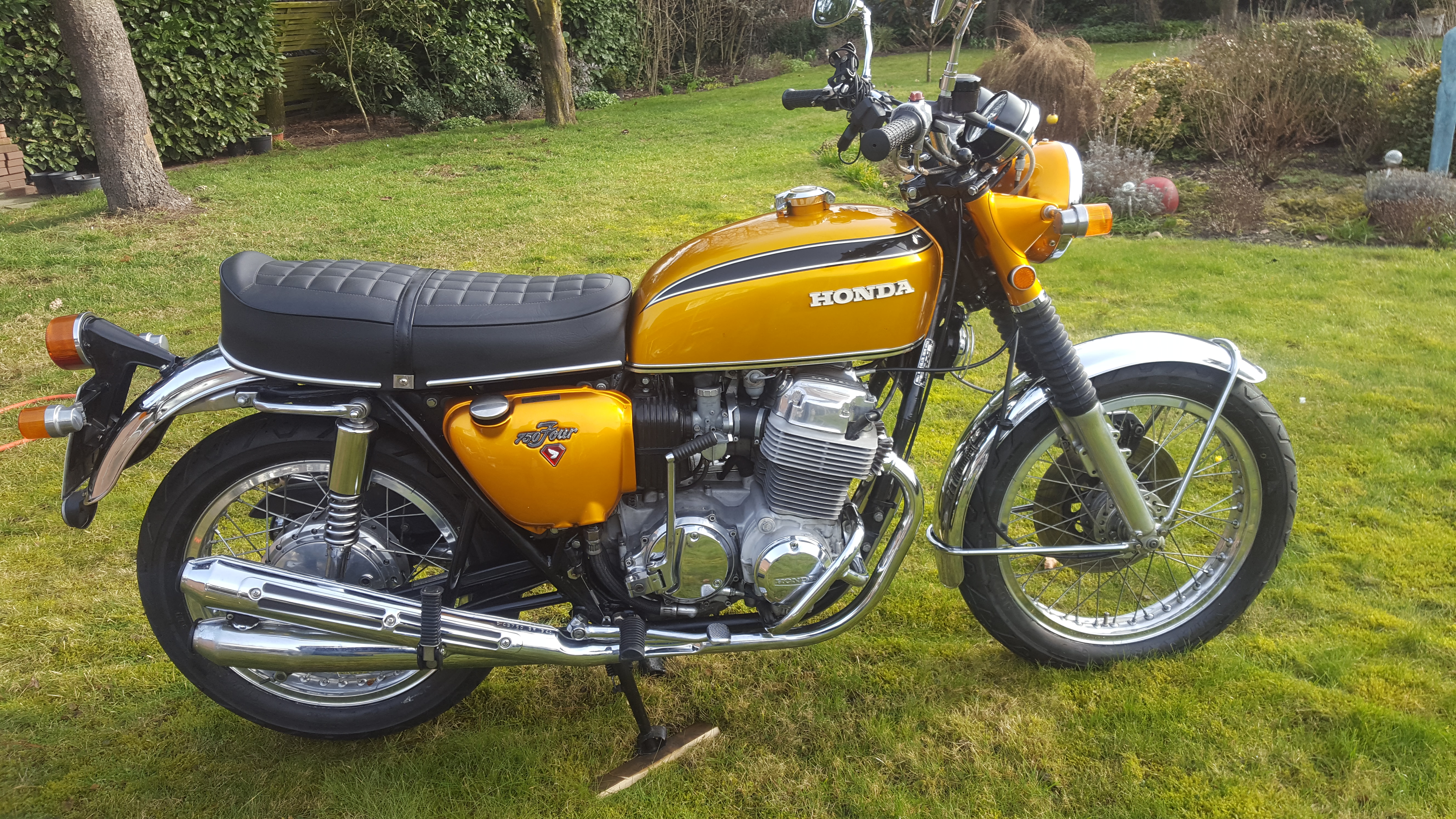
Honda CB 750
"The era of the Superbike was upon us sort of circa 70 we had the Honda CB 750 and then the Ducati 750 twin"
The Honda CB 750 is a famous Honda motorcycle from the early 1970s. It became a big deal because it was fast, reliable, and lots of people used it as a starting point for racing.
The Honda CB 750 is a landmark motorcycle model that helped kick off the modern “superbike” era. Its inline-four layout and strong performance made it a popular base for racing and street performance in the late 1960s and early 1970s.

Ducati 750 twin
"we had the Honda CB 750 and then the Ducati 750 twin"
The Ducati 750 twin is an early Ducati sportbike with a twin-cylinder engine. In this era, it was one of the bikes people were racing when the superbike idea was taking shape.
The Ducati 750 twin is referenced as one of the early “superbike” contenders. Ducati’s twin-cylinder configuration and racing pedigree made it a key part of the transition from mixed racing to more formal superbike classes.
Daytona
"And as John Ulrich and see McLaughlin recently told this story to us at Daytona at a dinner"
Daytona is a famous racing venue/event location. The hosts mention it because that’s where they heard the story about how superbike racing got organized.
Daytona is referenced as the location where a story about superbike class formation was told. In motorcycle culture, Daytona is closely associated with major racing events, making it a fitting backdrop for discussions about the sport’s evolution.
super bike as a class for 1976
"for super bike as a class for 1976 and So all these wobbling Smoking bicycle frame skinny tire Things showed up and started racing"
In racing, a “class” means the rules define what kind of bikes can compete. Around 1976, super bikes became a recognized category, which helped racing evolve from local experiments into organized competition.
The episode is describing how “superbike” became a formal racing class around 1976. That kind of class rulebook is what turns experimental street-inspired machines into a standardized competition category.

BMW R90s
"Obviously with his R90s And his later employment by Honda That's right."
The BMW R90s is a famous older BMW motorcycle. The hosts mention it because it represents the kind of bike and rider background that helped people move into serious racing.
The BMW R90s is a classic BMW sport-touring motorcycle from the 1970s, known for its performance and distinctive boxer-twin character. In the context of the episode, it’s used to illustrate how certain riders/teams built reputations that later fed into top-level racing.
Kawasaki
"Well, we knew this big new Kawasaki was coming and When I went to Japan in October of 72 I mentioned one of these Code words which I'd heard from Kawasaki personnel"
Kawasaki is central to the episode’s origin story because the hosts discuss a “big new Kawasaki” coming and secret code words heard from Kawasaki personnel. That highlights how early superbike-era development involved internal communication and anticipation of new models.
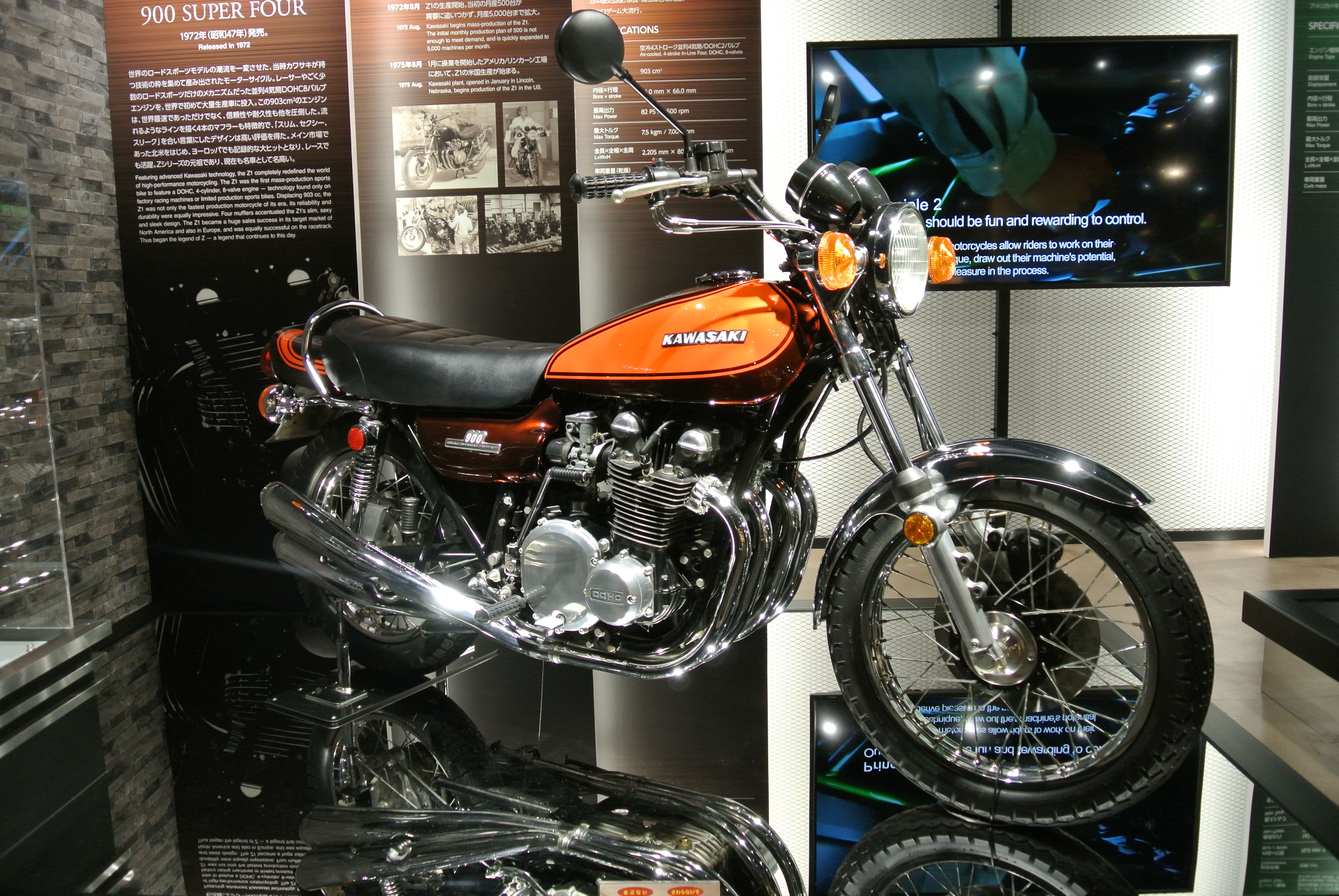
Kawasaki Z1
"The big deal in 1972 was that Kawasaki took the new Z1 and set a 24-hour record of some 2600 miles and a lot of people were there working on it riding it and It was clear that Kawasaki wanted people to know that this was the new king"
The Kawasaki Z1 was a famous early super-bike. Kawasaki used it to show that their new motorcycle could handle serious speed and distance, not just showroom bragging rights.
The Kawasaki Z1 is a landmark 1970s super-bike from Kawasaki, known for making big power and becoming a benchmark for street-legal performance. In this segment, the hosts highlight how Kawasaki used the Z1 to prove its credibility with major endurance and publicity efforts.
24-hour record
"The big deal in 1972 was that Kawasaki took the new Z1 and set a 24-hour record of some 2600 miles and a lot of people were there working on it riding it"
A 24-hour record is an endurance test where a motorcycle is run continuously (or as continuously as regulations allow) for a full day to measure distance and reliability. In the context of early superbike development, it was a high-visibility way to prove durability under sustained stress.
production-ized racing
"included Jim France who has always wanted to see more production-ized racing and less Finely disguised factory specials racing"
“Production-ized racing” means racing bikes that are more like the ones regular people can buy. Instead of building totally custom race-only machines, teams try to make the production bike competitive.
“Production-ized racing” refers to shifting race programs toward motorcycles that are closer to what customers can buy, rather than one-off “factory special” machines. This changes how teams develop parts and tuning, because the goal becomes making performance achievable from a production platform.
factory specials
"included Jim France who has always wanted to see more production-ized racing and less Finely disguised factory specials racing well"
“Factory specials” are basically race-only versions built by the manufacturer. They can be much more modified than what you’d ever get from a dealership.
“Factory specials” are highly modified, race-specific motorcycles built by (or for) manufacturers that may only resemble the showroom model on the outside. The segment contrasts these with production-ized racing, implying that factory specials were more effective but less representative of what buyers could realistically achieve.
unfit for purpose
"That these motorcycles were unfit for purpose and therefore in order to race them they had to be Re-engineered by people who knew what they were doing"
The phrase means the bikes weren’t built for racing yet. Even though they were great street machines, racing required changes so they could handle the stresses of competition.
“Unfit for purpose” here means that early superbikes (even if fast on the street) weren’t initially engineered to meet the demands of racing. The hosts argue that to race them effectively, teams had to re-engineer them using people who understood racing requirements like durability, heat management, and chassis/engine integration.
re-engineered
"unfit for purpose and therefore in order to race them they had to be Re-engineered by people who knew what they were doing Now you might think this was the way it was well way back at the beginning"
“Re-engineered” means more than minor tweaks. It suggests the bike needed real engineering changes to make it work reliably and perform well in racing.
“Re-engineered” implies substantial development work beyond simple bolt-on upgrades—changing how the motorcycle is designed and built to survive and perform under race conditions. In superbike history, this often meant deeper work on engine durability, cooling, chassis geometry, and component strength.
superbike the sit-up bikes
"but as late as 1982 which was the last year of the first era of superbike the sit-up bikes a thousand cc's"
“Sit-up bikes” were early sport motorcycles where you sat more upright instead of tucked in like a modern racer. The sport was evolving, and later bikes became more race-like in shape and riding position.
The phrase “sit-up bikes” refers to an earlier superbike style with a more upright riding position and generally less race-focused ergonomics. In the early era of superbikes, these bikes were transitioning toward the more aggressive, fully faired sportbike format that dominated later racing.
a thousand cc's
"a thousand cc's They Brought all their Honda brought all their gear To Daytona"
“A thousand cc’s” is the engine size—about 1 liter. Racing series often group bikes by engine size, and that affects what kinds of engines manufacturers build.
“A thousand cc’s” means engine displacement around 1000 cubic centimeters, i.e., roughly 1.0 liter. In superbike racing, this displacement class became a key rule framework that shaped engine design, power potential, and competition strategy.
connecting rods made of titanium
"he bought Bins and boxes and crates of connecting rods made of titanium valves made of titanium"
Connecting rods connect the pistons to the crankshaft inside the engine. Making them out of titanium can make them lighter, which helps the engine spin up quicker—though it’s a more advanced, expensive approach.
Connecting rods are the internal engine parts that transmit piston motion to the crankshaft. Using titanium reduces mass, which can help engines rev more freely and respond faster, but it also requires careful engineering and manufacturing quality.
titanium valves
"Bins and boxes and crates of connecting rods made of titanium valves made of titanium His view was"
Valves control airflow into and out of the engine, and in high-rev racing they’re under extreme thermal and mechanical stress. Titanium valves can reduce reciprocating mass and improve high-RPM performance, but they must be matched with the right valve train design and materials.
factory entries
"Here's the way the sport is at the moment The three or four factory entries come screaming by"
A “factory entry” is when the bike company itself runs the team. They usually have the best support and latest parts compared with independent teams.
“Factory entries” are teams backed directly by the motorcycle manufacturer, typically with the newest parts, engineering support, and development focus. In racing, the factory-vs-privateer split often determines how quickly technology advances and how dominant certain bikes can be.
privateers
"last year's factory bikes now owned by private entities Come tearing by then there's quite a long wait And Finally here come the privateers"
Privateers are independent racers who don’t have the manufacturer running their program. They often buy older factory machines and try to compete using their own resources.
Privateers are non-factory teams or riders who compete without direct manufacturer backing. The transcript contrasts factory bikes with “last year’s factory bikes now owned by private entities,” highlighting how technology trickles down and how competition changes when factory support shifts.
aftermarket building
"What was the aftermarket building? Were they building for 50 mile races? No, they were building for 1320 feet, which is a quarter mile and so"
“Aftermarket building” means people modify bikes themselves, using parts and tuning that aren’t standard from the factory. Here, they’re building for short races, so the engine setup is different than what you’d want for normal riding.
The hosts are talking about the aftermarket scene—private builders modifying motorcycles beyond what the factory offered. In this context, “aftermarket building” means tailoring engines and parts for specific race distances and rules rather than building for everyday road use.
15,000 rpm
"It was imagined by these people that They could build road race engines turning 15,000 rpm the present day Superbike engines do"
RPM is how fast the engine spins. When you try to run a motorcycle engine at extremely high RPM, the moving parts get stressed much more, and they can wear out or break faster.
The segment highlights the push toward extremely high engine speeds—around 15,000 rpm—to win races. At those revs, stresses on internal components rise sharply, so durability becomes a major engineering challenge.
connecting rod failure
"When Rob Muzzy Was finally made put in charge of This building the super bikes for Kawasaki He Had to deal with connecting rod failure. They were breaking near the small end"
Connecting rod failure means the rod inside the engine breaks. That can happen when the engine is pushed too hard for too long, especially at very high RPM.
“Connecting rod failure” refers to the rod breaking or failing under load—often due to insufficient strength, fatigue, or oiling issues at extreme rpm. The hosts mention Rob Muzzy having to address this specific failure mode when building Kawasaki super bikes.
speed limit in America is 60 miles an hour
"because Japanese engineers had been told speed limit in America is 60 miles an hour so Letter rip and at least that Wasn't excuse"
They’re saying the engineers were told American roads would be limited to about 60 mph. If you design for that kind of use, you may not build the bike to handle the stresses of full-on racing.
The transcript points to regulatory expectations—American speed limits—as a design constraint for Japanese engineers. That context helps explain why early performance strategies may have been misaligned with what riders and racers actually needed.
crankshaft
"So what he did was he put a crankshaft into a plastic bag With one rod sticking out and he polished and smoothed"
The crankshaft is the main spinning shaft in an engine. It turns the piston’s motion into the motion that ultimately drives the bike’s wheels. If it develops cracks, the engine can fail.
A crankshaft is the rotating shaft inside an engine that converts the up-and-down motion of the pistons into rotational motion. In performance and racing contexts, it’s a critical part because fatigue or surface defects can lead to cracks and failures.
polishing
"With one rod sticking out and he polished and smoothed The area where the breakages were taking place to eliminate Surface defects that could expand into cracks"
Polishing is when you smooth metal surfaces to make them cleaner and more even. The idea here is to remove tiny imperfections that could later turn into cracks.
Polishing is a metal-finishing process used to remove surface defects and smooth roughness. In this context, it’s described as reducing the chance that small surface flaws grow into cracks under stress.
surface defects
"Surface defects that could expand into cracks a Lot of grinding and polishing a lot of coughing up metal particles"
Surface defects are tiny problems on the metal’s surface. They matter because metal can crack starting from those weak spots when it’s stressed repeatedly.
Surface defects are small flaws on a metal’s outer layer—like pits, scratches, or roughness. Under repeated loading, these can act as stress concentrators, helping cracks start and propagate.
cracks
"Surface defects that could expand into cracks a Lot of grinding and polishing a lot of coughing up metal particles"
Cracks are fractures that can begin at weak points and then grow as the part is cycled through loads. The segment links crack prevention to removing surface defects and improving the crankshaft’s condition.
titanium rods
"the second step was to take the crankshafts apart while Ordering titanium rods made by whoever was willing to accept the contract and then reassembling"
These are connecting rods made from titanium. They’re used to make the engine’s moving parts lighter and potentially stronger for racing. But they still have to be made to the right specs.
Titanium rods refer to connecting rods made from titanium, chosen to reduce mass and improve strength-to-weight. In racing engines, lighter or stronger rods can help with high-rev durability, but they must be manufactured and assembled correctly.
steel rings pressed into the big end
"with steel rings pressed into the big end of the rods for The rollers to run on these"
The “big end” is the larger end of a connecting rod that houses the bearing surface for the crankshaft journal. Pressing in steel rings suggests a bearing or wear-surface solution to ensure proper alignment, durability, and load handling.
rollers
"for The rollers to run on these were z1 as a roller crack"
Rollers are small rolling parts that help reduce friction. In an engine, that can mean less wear and smoother operation under heavy use.
Rollers here likely refer to the rolling contact surfaces that run on the prepared rings at the rod interface. Using rollers can reduce friction and wear compared with sliding contact, improving durability under racing loads.
z1
"The rollers to run on these were z1 as a roller crack So were the GS Suzuki switch were about to arrive in 77"
“Z1” sounds like a code name for a specific part or specification. The episode doesn’t explain it clearly here, so it’s hard to say exactly what it means from this snippet alone.
“Z1” is mentioned as part of the roller/crack context, but the transcript doesn’t provide enough detail to confirm what specific part, material, or model designation it refers to. It may be a code name for a component or spec used in the build.
true
"so then you had to true the four cylinder crankshaft and ... checking it for straightness"
To “true” something means to make it straight and properly aligned. Here, they’re talking about getting the crankshaft to spin without wobbling, so the engine runs smoothly and doesn’t shake itself apart.
“Truing” a crankshaft means correcting it so it runs straight within very tight tolerances. The goal is to reduce wobble and ensure smooth rotation, which is especially important for high-revving race engines.
dial gauges
"Cranking away at the rods and looking at the dial gauges going back and forth and giving the Smart tap with a soft hammer ... within the green zone"
A dial gauge is a super-sensitive measuring tool. When you’re truing a crankshaft, it shows you exactly how far off it is, so you know when it’s “good enough” to use.
Dial gauges are precision measuring tools used to detect small deviations in a rotating part. In crank truing, they help the builder see how much the crank is out of line and confirm when it’s within the acceptable tolerance.
soft hammer
"... giving the Smart tap with a soft hammer ... And once he got the dial gauges to stay within the green zone"
They use a gentle hammer so they can nudge the crankshaft in tiny steps. It’s careful work—hit too hard and you can damage the metal or make the problem worse.
A soft hammer is used to make controlled adjustments during truing without damaging the crankshaft surface. The idea is to apply small, repeatable corrections while monitoring the part with gauges.
BSA
"... it reminded me of what factory was it bsa or norton ... They were casting things in the foundry"
BSA was a well-known British motorcycle brand. They’re bringing up BSA’s old manufacturing process to explain why certain metal-handling steps could cause problems.
BSA (Birmingham Small Arms) was a major British motorcycle manufacturer. The hosts reference BSA’s foundry practices as an analogy for how parts were handled and cooled during manufacturing.
Norton
"... it reminded me of what factory was it bsa or norton ... They were casting things in the foundry"
Norton is a classic British motorcycle maker. The hosts mention it because they’re talking about old factory methods—how metal was cast and cooled—and how that could cause issues.
Norton is another historic British motorcycle brand. In this segment, it’s mentioned alongside BSA as part of a foundry/production story used to explain how hot casting and cooling could lead to defects.
shock-cooled
"... take it very hot outside to the other building and they would take it very hot ... Really hot iron would be shock-cooled and they were having terrible problems"
Shock-cooling means cooling metal very quickly. That can cause the metal to warp or develop stresses inside, which can lead to defects and failures later.
Shock-cooling is a rapid cooling process that can create internal stresses or distortions in metal. The segment suggests that the foundry’s hot handling and quick cooling led to “terrible problems,” illustrating how metallurgy and process control affect part quality.
cylinder finishing machine
"Cylinder there was a cylinder finishing machine, which was this this tremendous You'd expect it to be surrounded by worshipers bumping their foreheads on the floor. It was truly impressive"
This is a machine that makes the inside of an engine cylinder smooth and accurate. If it’s not set up right, the engine parts won’t fit or work correctly.
A cylinder finishing machine is used to machine and finish the inside of an engine cylinder to precise dimensions and surface finish. The episode uses it to illustrate how manufacturing equipment and process control affected engine performance and scrap rates.
throws scrap
"I know you guys are engineers and and you're real smart and so forth, but We noticed that it's it's it throws scrap When they open the big overhead door in the back of the gear"
They’re saying the factory process was making bad parts that had to be thrown away. That usually happens when conditions or settings aren’t consistent enough.
“Throws scrap” means the process is producing parts that don’t meet spec and must be discarded. In manufacturing, this often points to process variation (like temperature changes) or equipment calibration issues that directly impact engine component quality.
gear line
"We noticed that it's it's it throws scrap When they open the big overhead door in the back of the gear Gear line to bring in the the gear stock"
A gear line is basically the factory’s production setup for gears. Here, they’re pointing out that opening a door lets in cold air that can mess with precision work.
A “gear line” refers to the production line where gear stock is brought in and processed. The transcript ties it to airflow and temperature effects, showing how shop-floor logistics can affect precision machining outcomes.
cold air comes rolling in
"Gear line to bring in the the gear stock And that cold air comes rolling in straight To the cylinder finishing machine"
They’re saying cold air blowing into the workshop can change how accurately the machines cut parts. That can make parts come out slightly wrong.
This describes how temperature changes from ventilation can affect machining accuracy. Even small thermal shifts can cause dimensional errors in precision cylinder finishing, leading to more scrap and rework.
Made to handle to the standard of european riders
"Goosey BMW ducati had an advantage because they were Made to handle to the standard of european riders"
They’re saying the bikes worked better because they matched how European riders rode and what the tracks demanded. It’s like using the right tool for the job.
This is about “fit” between motorcycle design and rider/track expectations—how chassis, ergonomics, and engine behavior are tuned to the style and skill level of a particular racing culture. The episode uses it to explain why certain European bikes performed better as superbike racing grew from local tracks to the world.
quarter mile time and top speed
"the european riders did not just tear out the part of the magazine that said quarter mile time and top speed they wanted to Be able to cross the Alps in fine style"
People often compare bikes using two numbers: how fast they can go in a quarter-mile, and the highest speed they reach. The quarter-mile is mostly about acceleration, while top speed is about power and gearing when you’re going very fast.
“Quarter mile time” and “top speed” are two common ways to quantify motorcycle performance. Quarter-mile time reflects acceleration and traction, while top speed reflects overall gearing, aerodynamics, and engine power at high rpm.
taken off the showroom floor and raced with little or no modification
"That the european bikes could be taken off the showroom floor and raced with little or no modification Well, now let's list some of the modifications that phil schilling the late phil schilling"
The idea here is that riders would buy motorcycles from the showroom and race them with only small changes. It’s a way of saying the bikes were already close to race-ready, even before big custom work.
This describes an early “race what you can buy” approach—using production motorcycles with minimal changes to compete. It highlights how, in the early days of superbike-style racing, manufacturers and racers were pushing stock hardware toward track performance.
bigger valves
"They went to jerry branch repeatedly for bigger valves And the engine was reported for these valves the cylinder heads were welded"
“Bigger valves” means the engine’s intake and exhaust openings are larger. That can help the engine breathe better, but there are limits because the valves can get too close to each other.
Bigger valves increase the engine’s ability to flow air/fuel into the combustion chamber and exhaust gases out. On motorcycles, valve size is often limited by physical clearance and valve timing, so increasing valve diameter can require head work and careful cam/overlap considerations.
jerry branch
"They went to jerry branch repeatedly for bigger valves And the engine was reported for these valves the cylinder heads were welded To change the shape of the intake port"
They keep mentioning “Jerry Branch” as the person they went to for engine head work. The changes he helped with were aimed at making the engine breathe better so it could make more power.
“Jerry Branch” is referenced as a specialist the editors repeatedly went to for performance cylinder-head work. In this context, he’s associated with valve and porting modifications that improve airflow and allow larger valves.
cylinder heads were welded
"And the engine was reported for these valves the cylinder heads were welded To change the shape of the intake port"
They’re describing a hands-on metalworking step: welding the cylinder head so the inside shape can be changed. The goal is to improve how air moves into the engine.
Welding on cylinder heads is a fabrication step used to reshape internal passages. Here, it’s described as a method to modify the intake port geometry so airflow characteristics improve for racing.
intake port
"To change the shape of the intake port To make it more felicitous more inviting to the little air molecules teeming around the intakes."
The intake port is the channel that air (and sometimes fuel) travels through before it enters the engine. Changing its shape can help the engine pull in air more efficiently, which can improve power.
The intake port is the passage in the cylinder head that directs the air/fuel mixture (or air, depending on design) into the combustion chamber. Port shape strongly affects airflow velocity and turbulence, which can change power across the rpm range.
overlap
"They found for example that The intake and the exhaust valve on overlap were coming extremely close to one another and that was the limit on valve size."
Overlap is when the intake and exhaust valves are both slightly open at the same time. It can help the engine “swap” gases, but it also creates timing and clearance limits when you change valve sizes.
Valve overlap is when the intake and exhaust valves are open at the same time near the end of the exhaust stroke and start of the intake stroke. It can improve scavenging and cylinder filling, but too much overlap can reduce efficiency and create clearance/timing constraints—especially when valve sizes increase.
sink the seats
"Finally jerry branch said i'm just going to sink those things i'm going to sink the seats And which pulls the valves"
“Sink the seats” refers to machining the valve seat recess deeper in the cylinder head. This increases clearance between valves (especially during overlap) so larger valves can fit without interference, while preserving the intended valve timing as much as possible.

xr 750
"So that they come less close to one another and the final uh valves that he was using i think were from an uh xr 750 [1091.6s] Well, that's that's an interesting note because talking to udo geedle and bill warner at datona"
They’re talking about the Honda XR750, a famous racing motorcycle. In the episode, it’s mentioned because parts like valves were taken from that bike for their own build.
The XR750 is a Honda off-road/racing motorcycle platform that was widely used in racing and became a parts and component source. Here, the hosts say the final valves being used were from an XR750, highlighting how teams mixed components across models to meet performance goals.
non symmetrical
"to get uh [1118.0s] non symmetrical and and [1120.3s] More rapid lift it was just fascinating"
They’re describing an engine setup that isn’t “the same on both sides” in how the valves and airflow are timed. Racing teams do this to improve how the engine breathes.
“Non symmetrical” describes an asymmetric valve timing or cam/port geometry strategy rather than mirroring left/right or intake/exhaust behavior. In racing engine development, changing symmetry can help tailor airflow and valve events for better power and torque.
More rapid lift
"[1118.0s] non symmetrical and and [1120.3s] More rapid lift it was just fascinating [1122.9s] But you're talking about sinking the valves and welding the heads to move the ports"
Valve lift is how much the engine’s valves open. If the lift happens more quickly, the engine can breathe better at high revs, but it also puts more strain on the parts.
“Lift” is how far the cam opens the valves; “more rapid lift” means the valve opens faster and/or reaches higher lift more aggressively. That can improve cylinder filling at high RPM, but it also increases stresses on valves, springs, and the head.
sinking the valves
"[1122.9s] But you're talking about sinking the valves and welding the heads to move the ports and the three bikes there [1129.9s] Fisher's bike"
They’re talking about cutting the cylinder head so the valves sit deeper. That can help the engine flow air better and fit everything correctly for performance.
“Sinking the valves” means machining the cylinder head so the valve sits deeper into the combustion chamber area. This changes combustion-chamber shape and can improve airflow and clearance, especially when combined with port reshaping.
welding the heads to move the ports
"But you're talking about sinking the valves and welding the heads to move the ports and the three bikes there [1129.9s] Fisher's bike"
They’re describing a custom modification to the engine head where the intake passages are reshaped. Welding and reworking ports helps the engine pull in air more efficiently.
This describes a custom cylinder-head porting process where the head is welded and reshaped to reposition the intake ports. It’s a common race-engine technique to optimize airflow direction and port geometry for better power.
reposition the shocks
"They said in the rules that you could reposition the shocks [1152.0s] Yes, and so so the bmw show"
They’re talking about changing where the suspension shocks mount. That changes how the bike handles bumps and cornering, and the rules allowed some flexibility.
Repositioning shocks means altering the suspension mounting points or linkage geometry to change ride height, leverage ratio, and handling characteristics. In racing, this is often tightly regulated, so teams interpret the rules to gain setup advantages.
twin shocks
"[1155.4s] The bmw shows up at datona now reg's bike had twin shocks and it was reg wanted to [1161.8s] adhere to the rules"
Twin shocks means there are two rear suspension dampers. It can change how the bike feels over bumps and how stable it is when you’re riding hard.
“Twin shocks” means the motorcycle uses two rear shock absorbers instead of a single shock. Different shock layouts can affect packaging, ride compliance, and how the rear suspension responds under braking and acceleration.
single shocks
"But steve's bike and fisher's bike had single shocks and everyone joked that udo repositioned the one shock to the shelf [1174.8s] In his shop parts room."
Single shocks means there’s one rear shock instead of two. That can change how the rear wheel moves and how the bike handles.
“Single shocks” refers to a single rear shock absorber layout, typically with a linkage to control wheel movement. Compared to twin-shock setups, single-shock designs can offer different leverage characteristics and packaging advantages.
interpretation of the rules
"Now you can reposition it so single shock. There was a lot of interpretation [1184.2s] We read the we read the [1189.3s] Popular prints about how much modification was necessary for the japanese bikes that they had to be"
They’re talking about how teams read the race rules and then figure out what they can legally change. When rules are vague, different teams can interpret them differently and end up with different setups.
The hosts describe “interpretation” of racing rules—how teams find legal ways to modify components within the letter of the regulations. This is a key theme in motorsport history, especially when rules are written broadly and teams exploit gray areas.
swing arms
"They needed new swing arms new forks That is parts made for racing"
The swingarm is the part that holds the back wheel and lets it move as the suspension works. In racing, it’s built stiffer so the bike feels more precise and doesn’t “wobble” under hard riding.
A swingarm is the pivoting arm that carries the rear wheel on a motorcycle. Racing versions are often stronger and more rigid to improve traction and reduce unwanted flex under acceleration and braking.
forks
"They needed new swing arms new forks That is parts made for racing"
Forks are the front suspension parts that help the bike absorb bumps and stay controllable. On a race bike, they’re designed to handle harder braking and cornering without getting sloppy.
Forks are the front suspension assemblies that connect the front wheel to the motorcycle’s frame. Racing forks are typically built for higher loads and better damping control to keep the front end stable during aggressive cornering and braking.
frames reinforced to stiffen them
"That is parts made for racing That they had to have their frames reinforced to stiffen them And this include plate and gusset the steering heads were boxed in"
A stiffer frame flexes less when you brake hard, accelerate, or lean into a turn. That usually makes the bike feel more accurate and stable because the suspension and steering stay “where they should be.”
Reinforcing a motorcycle frame increases stiffness, which reduces flex and helps the chassis maintain consistent geometry under load. In racing, that can improve handling response and stability because the bike’s steering and suspension behavior stays more predictable.
steering heads were boxed in
"And this include plate and gusset the steering heads were boxed in as if this was not done Uh by the people running the european bikes now"
The steering head is the front “pivot” area of the frame. Boxing it in means adding reinforcement around it so the front end doesn’t flex as much when you turn or brake hard.
Boxing in the steering head means enclosing and reinforcing the frame area around the steering bearing to make it more rigid. This reduces flex at the front end, which helps steering feel sharper and improves stability when the bike is loaded hard.
gusset
"And this include plate and gusset the steering heads were boxed in as if this was not done Uh by the people running the european bikes now"
A gusset is like a small structural brace that adds strength at a joint. It helps the frame handle twisting and bending forces better, especially near the front where steering loads are highest.
A gusset is a triangular reinforcement plate used to strengthen joints and spread loads. On a motorcycle frame, gussets help resist bending and twisting forces, especially around high-stress areas like the steering head.
engine forward
"Udo moved the engine forward In order to get more weight on the front wheel to be able to accelerate and also to have the higher stability that increased load on the Front tire"
Putting the engine farther forward shifts where the bike’s weight sits. That can put more weight on the front tire, helping the bike stay stable when you accelerate hard.
Moving the engine forward changes the motorcycle’s weight distribution and can increase front-wheel load. More front load can improve acceleration stability and traction, but it also affects steering feel and overall chassis balance.
steering head of a stock bmw
"He said have you ever looked at the steering head of a stock bmw and i said well no actually and he said well"
The steering head is the front part of the frame that the handlebars turn on. If it’s built differently (like a stock bike vs a race bike), it can flex more or less and change how the bike feels when you steer.
The steering head is the frame section that supports the steering bearings and controls how the bike turns. Comparing a stock BMW steering head to a race-prepped one highlights how reinforcement and construction details can affect rigidity and handling.
welded together
"The tubes going crossing over each other To join to the steering head are not welded together He said i'm sure they built it welded Nicely to begin with but then they found that"
Welding joins metal parts into one stronger structure. If the steering head isn’t welded properly, it can flex more, and that can make the bike less stable and less precise.
Welding the steering head tubes together creates a continuous, rigid structure that better resists bending and twisting. If tubes aren’t welded, the steering assembly can be more flexible, which is undesirable for high-performance racing stability.
pistons became larger and heavier
"they found that bmw buzz which became a An issue as the pistons Became larger and heavier"
Larger, heavier pistons increase reciprocating mass, which raises the forces involved as they accelerate and decelerate each cycle. That can amplify vibration and stress, especially if the engine’s internal geometry (like rod angles and planes) forces compromises.
rocking couple
"Um, which is the engine trying to do this Because the connecting rods are not in the same plane. They cannot occupy the same space at the same Yeah, the rocking couple if you offset the rods which they had to do"
A rocking couple is an engine-induced twisting/rocking force caused by how rotating and reciprocating components (like connecting rods and pistons) are arranged. When rods are offset or not in the same plane, the engine can generate more vibration because forces don’t cancel smoothly.
frame wiggle at engine level
"They deleted some of the welding in order to let the frame Wiggle at engine level without transmitting it all to the bars Which bmw customers do not like to be disturbed by vibration"
They’re talking about how the motorcycle frame can be built to let the engine area move a little, but not shake the rider as much. That helps keep the handlebars from feeling every vibration.
The hosts are describing a frame design goal: allow some movement (“wiggle”) near the engine area without sending that motion through the rest of the motorcycle’s structure. The idea is to reduce how much vibration and movement reach the handlebars and rider.
diagonal tubes
"Then he ran diagonal tubes From each Swing arm pivot point Forward to the steering head rather like a sealy matchless frame"
These are extra metal braces in the frame. They help the frame resist twisting and bending, which can make the bike handle more precisely.
Diagonal tubes are structural frame members used to triangulate loads and reduce flex. Running them from the swingarm pivot area toward the steering head is a common way to improve stiffness and handling response.
swing arm pivot point
"From each Swing arm pivot point Forward to the steering head rather like a sealy matchless frame"
This is the joint where the rear suspension arm swings. Strengthening around it can help the bike stay more stable and predictable when you accelerate or hit bumps.
The swingarm pivot point is where the rear swingarm rotates, controlling rear-wheel movement. Frame reinforcement that ties into this area can improve overall rigidity and reduce unwanted movement that affects traction and steering feel.
sealy matchless frame
"Forward to the steering head rather like a sealy matchless frame Um, although that's a bit of ancient history."
The hosts compare the described reinforcement layout to a “sealy matchless frame,” referencing Matchless’s classic motorcycle frame design. It’s an example of how certain structural triangulation ideas show up across different eras and brands.
pierre de roche
"Had they they asked pierre de roche to lighten the bike while stiffening it their Weight reduction program took 67 pounds off the bicycle and pierre Greatly reinforced the steering head"
They’re talking about a person involved in improving the bike’s design. The goal was to make it lighter but also stiffer where it matters for handling.
Pierre de Roche is mentioned in connection with a weight reduction and stiffness effort. This suggests a specific engineer or designer role in optimizing the motorcycle’s structure—removing mass while increasing rigidity at key areas like the steering head.
privateer bike
"The van that has picked up this privateer bike at the showroom and is taking it to the race"
A privateer is basically an independent racer, not a big factory team. They usually have less money and support, so they rely on their own effort to get the bike competitive.
A “privateer” is a rider or team that competes without full factory backing. In motorcycle racing, privateers often buy or build bikes themselves, then develop them through testing and local competition before stepping up to bigger events.
Laguna
"all of these california builders are having it out with each other on local tracks notably, uh, laguna and"
Laguna Seca is a famous race track in California. The episode is saying that local races there were a proving ground for early superbike development.
Laguna Seca is a well-known road racing circuit in California, often associated with motorcycle and sports car racing. When the hosts mention builders “having it out” on local tracks like Laguna, they’re pointing to how regional racing helped develop early superbikes.
Willow
"Perhaps willow So they're they're keeping track of what everyone is doing."
“Willow” likely refers to Willow Springs Raceway, another major California track used for testing and racing. Mentioning it alongside Laguna suggests the builders were using multiple local venues to compare development progress.

Volkswagen Crafter
"says that the I think the race crafters Kawasaki had 119 horsepower"
The Volkswagen Crafter is a van made for work, like hauling goods or transporting a small crew. It’s discussed in terms of power because the engine’s horsepower affects how easily it can move when it’s carrying a load.
The Volkswagen Crafter is a light commercial van built for carrying cargo and people, typically used by businesses that need practical, repeatable transportation. It’s the kind of vehicle that can come up in discussions about engine output and real-world performance because its power and gearing directly affect how well it moves under load. If the podcast is talking about horsepower figures, the Crafter may be referenced as an example of what that power translates to in a work-focused vehicle.
horsepower
"says that the I think the race crafters Kawasaki had 119 horsepower"
Horsepower is a way to describe how much power the engine makes. More horsepower usually helps a bike accelerate harder, but it’s not the only thing that matters.
Horsepower is a measure of engine power output, commonly used to compare performance across motorcycles. In racing discussions, horsepower figures help explain acceleration potential, but real-world results also depend on gearing, traction, and aerodynamics.
drag strip
"Everyone was also going to the drag strip Now oh nice to see you. Um In order to get a baseline on their acceleration"
A drag strip is where bikes race in a straight line. It’s useful for comparing acceleration because the run is short and repeatable.
A drag strip is a straight-line racing venue used to measure acceleration and top-end performance. The hosts mention everyone going to the drag strip to get a baseline, which is an early example of using repeatable testing to quantify improvements.
baseline on their acceleration
"In order to get a baseline on their acceleration This was going on for four or five years"
A baseline is a starting point measurement. Teams measure how fast the bike accelerates first, then they change things and see if it gets better.
Getting a “baseline” means establishing a reference performance number before changes, so you can tell whether development work actually improved acceleration. In racing, this kind of controlled measurement helps teams iterate on engines, gearing, and tuning with less guesswork.
case crushing its gears
"They put a lot of work in What do you do when you discover that your production bike is case crushing its gears?"
They’re saying the bike’s gears were failing because the stresses were too high. Even if the gears look strong on the outside, the inside can still crack when you push hard.
The phrase points to a gearbox/gear failure where the gears can’t handle the applied loads. In practice, it often means the hardened surface isn’t tough enough to resist cracking under racing-level stress.
case hardening
"The material under the case hardened surface layer is not strong enough to prevent The load from the teeth on the other gear from cracking ...The hard case which is nitrided or Carbureished"
Case hardening makes the outside of a metal part very hard, like a tough shell. The inside is usually less hard so it doesn’t shatter easily—but extreme loads can still break the hard shell.
Case hardening is a process that creates a very hard outer layer on a steel component while keeping the inside tougher. The goal is to resist wear at the surface, but if the load is too high, the hard layer can crack and fail.
nitrided
"The hard case which is nitrided or Carbureished Cracking it and then"
Nitriding is a way to harden the surface of metal without making the whole part brittle. It helps the part resist wear, especially where it contacts other metal.
Nitriding is a surface-hardening method that diffuses nitrogen into steel to form a hard wear-resistant layer. It’s commonly used on gears because it can improve surface hardness and fatigue resistance.
carbureished
"which is nitrided or Carbureished Cracking it and then spalling off pieces of the hardened"
Carburizing hardens the outside of steel by adding carbon to the surface and then heat-treating it. It makes the gear’s contact surface tougher, but it doesn’t guarantee survival under extreme racing loads.
Carburizing (often misspoken as “carbureished”) is a case-hardening process that enriches the surface of steel with carbon, then heat-treats it to create a hard outer layer. For gears, it can boost surface wear resistance, but the case can still crack if the underlying structure or loads aren’t suited.
spalling off pieces of the hardened
"Cracking it and then spalling off pieces of the hardened The case hardening"
Spalling is when the hard outer layer starts breaking off in flakes. Once that happens on gears, the teeth can wear quickly and the gearbox can fail.
Spalling is when small flakes or chunks break away from a hardened surface due to cracking and fatigue. In gears, spalling is a sign the hardened case has failed and the tooth surfaces are losing material.
vacuum remelted 9310
"webster gear says well, we'll have to make all these gears out of vacuum remelted 93 10, which is a real gear steal"
“Vacuum remelted 9310” refers to a high-strength steel (commonly 9310 alloy steel) remelted under vacuum to improve purity and consistency. Using a better material can improve gear fatigue life and reduce cracking/spalling under racing stress.
classic tuning creep
"So it's it's the classic Classic tuning creep where you you uh, you seek more power"
Tuning creep is when people keep pushing for more performance over time. Eventually, something else breaks—like gears—because the rest of the bike wasn’t built for that higher level of stress.
“Tuning creep” describes the gradual escalation of performance changes—often chasing more power—until the supporting components (like drivetrain and gearing) become the limiting factor. It’s a common path in motorsport development: the engine gets stronger, but the rest of the system must keep up.
clutch slips
"And then the clutch slips or you're breaking spokes or the chain's inadequate. There's just every possible"
A clutch slip means the clutch isn’t grabbing firmly. The engine can rev, but the bike doesn’t move forward as strongly, which wastes power and can overheat parts.
Clutch slip happens when the clutch doesn’t fully lock up, so the engine revs but the bike doesn’t accelerate as efficiently. In racing, it can overheat the clutch and reduce power transfer right when you need traction and acceleration.
chain's inadequate
"And then the clutch slips or you're breaking spokes or the chain's inadequate. There's just every possible"
The chain is what actually pulls the rear wheel. If it’s not up to the job, it can wear out fast or even fail when the bike is making more power than the chain can handle.
The drive chain transfers power from the gearbox to the rear wheel. If it’s “inadequate,” it can stretch, wear quickly, or fail under high torque and shock loads—common issues when early superbikes outgrew their components.
breaking spokes
"And then the clutch slips or you're breaking spokes or the chain's inadequate. There's just every possible"
Spokes hold the wheel together. If they break, the wheel can become unsafe or lose alignment, often because the bike is being pushed harder than the wheel was designed for.
Spokes are the tensioned wires that support a wheel rim. If spokes break, it usually points to excessive loads, poor wheel build quality, or inadequate wheel strength for the power and braking forces of a superbike.
Yoshimura
"meanwhile the four cylinder guys the um, yosh. Uh, suzuki yoshimura worked with Kawasaki's initially"
Yoshimura is a performance tuning company for motorcycles. Here, they’re described as bringing expertise that helped the bikes fix problems that showed up when racing got more intense.
Yoshimura is a well-known Japanese performance motorcycle tuner. The segment credits Yoshimura’s professional resources with helping four-cylinder bikes solve reliability and durability problems as they evolved into true superbikes.
Suzuki
"And then in 77 he switched to uh, to suzuki's because he was. Um, I hope they made him an offer that he couldn't refuse"
Suzuki is another major motorcycle brand. The episode mentions a shift in where the performance tuning support went, showing how competitive development was changing during that era.
Suzuki is the manufacturer mentioned as the later destination for Yoshimura’s collaboration (after 1977). In the context of the episode, it highlights how top tuning support moved between factories as superbike development accelerated.
improving four-cylinder bikes by bringing professional resources to bear upon the problems
"But those uh four cylinder bikes were improving. As they brought professional resources to bear upon the problems for example, I was told, um by"
This describes a key superbike-era development pattern: as performance demands outpaced production components, teams relied on specialized engineering and tuning expertise to solve specific failure modes. It’s an early example of how race-derived problem-solving (materials, machining, and component upgrades) shaped what became “superbike” reliability.
stock brake discs
"He told me that we couldn't keep stock brake discs on the thing. So we went to uh persons unknown and we said we need stable"
Stock brake discs are the normal factory brake rotors. If they can’t handle hard riding or racing, they can overheat or change shape, which makes braking less consistent and can be dangerous.
“Stock” brake discs are the standard production parts, not race-developed components. The episode describes how Kawasaki couldn’t rely on them under superbike use, prompting a materials and manufacturing change to prevent warping or dimensional changes under heat.
stress relieved
"And it was then put on the blanchard machine and ground thinner. And it was stress relieved and this went on in steps grind"
Stress relieving is like “settling” the metal after it’s been shaped. It helps the part hold its shape better, which is especially important for brakes that get very hot.
Stress relieving is a heat-treatment process that reduces internal stresses created during casting or machining. For brake discs, it helps them stay dimensionally stable so they don’t warp or change thickness after repeated heat cycles.
trick calipers
"You will see some of the trick calipers that were used in early super bike Clearly billet stuff"
Brake calipers are the parts that clamp the brake pads onto the disc to slow the bike down. “Trick” calipers usually means they’re higher-end and made to work better under hard riding.
“Calipers” are the brake components that squeeze the brake pads against the rotor/disc. Calling them “trick” and “billet stuff” suggests early superbike-era calipers were upgraded for stiffness, heat handling, and performance feel.
Webster gear
"So here we are at Webster gear And there are the beautiful gears that have been made one of the most important changes was a taller first gear"
Webster gear sounds like a company that made custom motorcycle gears. Racers would buy these to change how the bike launches and accelerates.
“Webster gear” appears to refer to a gearing supplier that made custom gears for racing applications. The discussion implies these gears were used by privateers and racers to tailor ratios (like first gear) to specific track and launch needs.
taller first gear
"And there are the beautiful gears that have been made one of the most important changes was a taller first gear Because street motorcycles typically have a low first"
First gear controls how the bike launches from a stop. A “taller” first gear can help the bike move more smoothly and avoid feeling like it’s revving too much without going anywhere.
A “taller” first gear means a higher gear ratio (less reduction), which changes how the bike accelerates from a stop. In superbike development, gearing choices were crucial for getting off the line cleanly and efficiently without bogging, especially when street riders started from uphill stoplights or with a passenger.
Request an Explanation
Heard something you'd like explained? We'll add it to this episode.
Sign in to request explanations for terms you heard.
Want to learn more?
Browse our glossary for plain-English explanations of automotive terms, jargon, and concepts.
Help improve this episode
See something that's not quite right? Our annotations are AI-generated and can sometimes miss the mark. Click the flag icon on any annotation to suggest a correction.
1 community members have helped improve this episode.