
Origin and Evolution of the Superbike engine Starting with the Muzzy Kawasaki
About this episode
Starting from “the Kawasaki Z1, the old Z1, a la Rob Muzzy,” the hosts trace how superbike engines evolved through valvetrain changes, breathing limits, and the push for higher RPM—while durability and stability problems forced smarter design. They connect early weaving and traction issues to rule changes, then dig into high-RPM valve float, cooling, and detonation that drove moves toward liquid cooling. The conversation broadens to modern ECU control, dyno mapping, and materials/coatings that make today’s power more raceable and reliable.
Find us on Patreon!
https://www.patreon.com/cw/CycleWorldPodcast
We go back to the original Superbike engines of the 1970s to see where they began and how they have evolved into the powerhouses we have now. Join us!

TR6
"Welcome subscribers to the PsychoWorld podcast. We appreciate you being here. I'm Mark Hoyer, the editor, and I'm with Kevin Cameron, our tech editor. We just had a vigorous off-camera blabbermouth about Ford pickup trucks and TR-6 restorations and pancake batter coming out of the oil tank. It was all great. Maybe those would be some kind of podcast in the future, but on this one, we're going to talk about the evolution of the superbike engine."
The TR6 is a classic sports car made by Triumph in the UK. It’s known for being a fun, open-road style car from the late 1960s and early 1970s. People still talk about it because it’s a popular classic to drive and restore.
The TR6 refers to the Triumph TR6, a classic British sports car produced in the late 1960s and early 1970s. It’s significant because it became a well-known enthusiast platform for open-top driving and classic-car restoration. The podcast context suggests it’s being discussed as part of a broader conversation about classic performance and tech details.
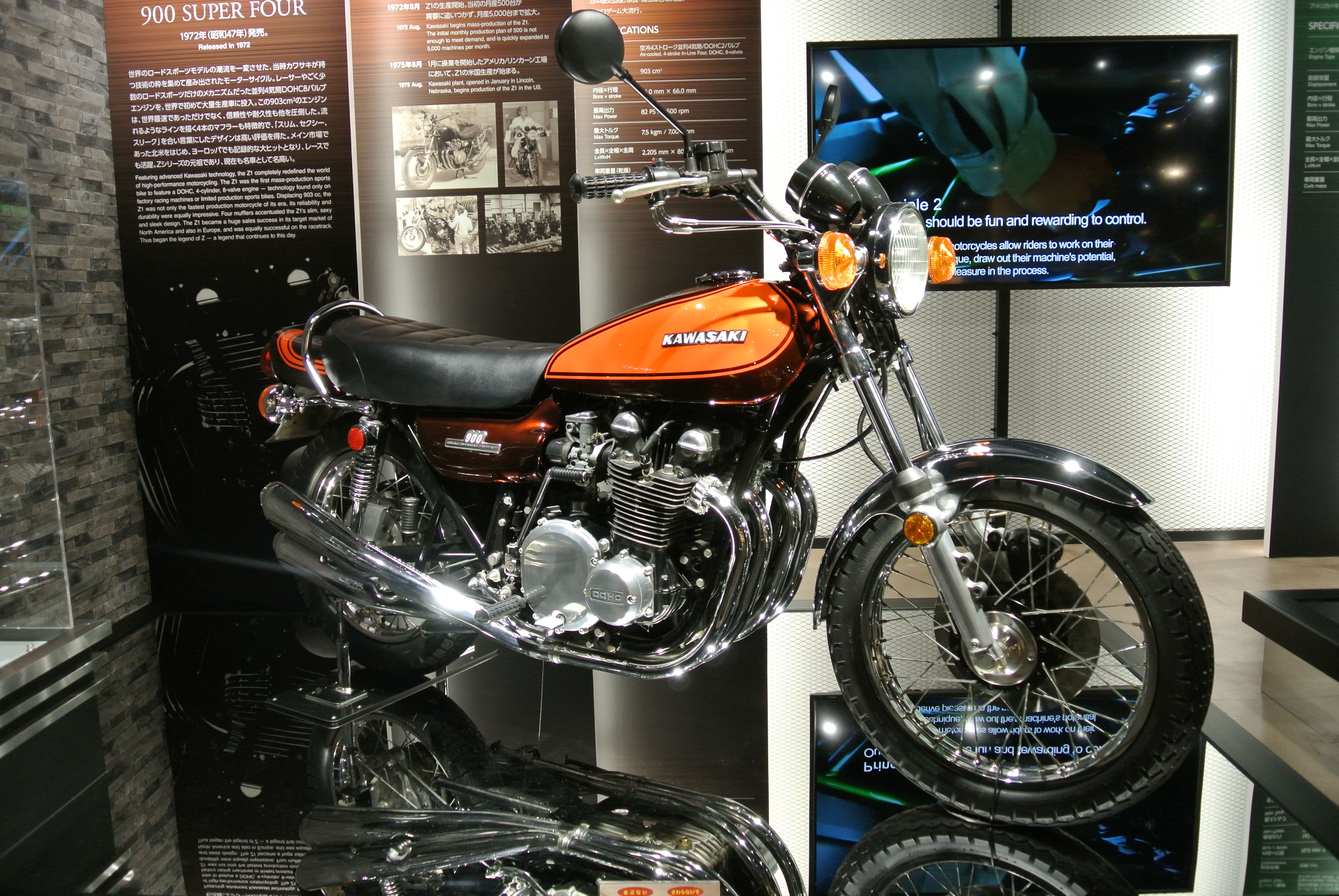
Kawasaki Z1
"We're going to use the Kawasaki Z1, the old Z1, a la Rob Muzzy. So that was the superbike engine making 150 horse, pretty good, but horsepower per pound was kind of high."
The Kawasaki Z1 is an early super-sport motorcycle that became famous for making a lot of power for its time. The hosts use it as the starting point to explain how later superbike engines got much stronger and more efficient.
The Kawasaki Z1 is a landmark superbike because it helped define the early-1970s four-stroke performance formula: a high-revving inline-four with advanced valvetrain for its era. In this segment, it’s used as the baseline for how later superbike engines improved power and efficiency while keeping similar displacement.
horsepower per pound
"So that was the superbike engine making 150 horse, pretty good, but horsepower per pound was kind of high. We'll talk about that."
Horsepower per pound is a way to compare how strong an engine is relative to the bike’s weight. Higher numbers usually mean the bike feels more eager and accelerates better.
Horsepower per pound is a power-to-weight metric: it compares how much engine output you get for each pound of motorcycle mass. It’s useful because two bikes can have similar horsepower, but the lighter one accelerates and feels quicker.
two valve with double overhead cams
"It was a two valve with double overhead cams, unlike Honda's CB750, which had single overhead cam SOHC plus rocker arms."
This describes how the engine controls airflow. Two valves per cylinder and two camshafts in the head help the engine open and close the valves more effectively, especially when you rev it high.
A “two valve” engine uses two intake/exhaust valves per cylinder, and “double overhead cams” (DOHC) means there are two camshafts located in the cylinder head. DOHC layouts can improve breathing at high rpm by optimizing valve timing and allowing more precise control of valve events.
SOHC
"It was a two valve with double overhead cams, unlike Honda's CB750, which had single overhead cam SOHC plus rocker arms."
SOHC means the engine uses one camshaft in the top of the engine to run the valves. It’s a different valve-control layout than DOHC, and it can affect how the engine performs at higher revs.
SOHC stands for single overhead camshaft, meaning one camshaft sits in the cylinder head to operate the valves. Compared with DOHC, SOHC can be simpler and cheaper, but DOHC often offers more flexibility for high-rpm valve control.
roller crank
"But it was a curious mixture. It had a roller crank. The Z1 had a roller crank that was all pressed together with one piece rods, no rod caps, no cap bolts."
A roller crank is a crankshaft design that reduces friction inside the engine. Less friction can help the engine rev more easily and feel stronger.
A “roller crank” refers to a crankshaft design that uses roller elements to reduce friction at the crankshaft interface. Lower friction helps engines spin more freely, which can support higher rpm and improved efficiency compared with more conventional sliding-contact designs.
one piece rods
"The Z1 had a roller crank that was all pressed together with one piece rods, no rod caps, no cap bolts."
Connecting rods connect the piston to the crankshaft. “One piece rods” means the rod is made as one piece instead of using a separate cap held on with bolts.
“One piece rods” describes connecting rods built as a single integrated piece rather than using separate rod caps and cap bolts. This can change how the crank/rod assembly is manufactured and how the rod is supported, which can affect strength and friction characteristics.
plain bearings
"But on the camshafts, it had plain bearings with replaceable inserts, just like it was two little miniature crankshafts up there in terms of concept plain bearings."
Plain bearings are the “sliding” type of bearing inside an engine. They rely on oil to keep metal surfaces from rubbing directly.
Plain bearings are sliding bearings that support a rotating shaft using a thin film of lubricant rather than rolling elements. In an engine, using plain bearings (with replaceable inserts) can be a compact, durable approach when designed for correct oiling and clearances.
carburetors
"And the engine was air cooled and it had carburetors on it."
Carburetors are how older engines mix fuel with air before it burns. Fuel injection is a newer approach that can control the fuel more precisely.
Carburetors are fuel-delivery devices that mix air and fuel mechanically before it enters the engine. They were widespread on older motorcycles, but many later superbikes moved to fuel injection because it can meter fuel more accurately across changing conditions.
turbocharged
"but it was really the Z1 TC where they turbocharged it in the American market."
Turbocharging adds a device that uses exhaust energy to push extra air into the engine. With more air (and fuel), the engine can make more power.
Turbocharging uses exhaust gases to spin a turbine that drives a compressor, forcing more air into the engine’s intake. More air allows more fuel to be burned, which can raise power substantially—especially compared with a naturally aspirated setup of the same displacement.
emissions and economy
"Well, one more thing, I know it's another aside, but that's what we live for. That in fact Kawasaki was thinking about emissions and economy when they dropped the Z1."
This is about making the engine cleaner and using less fuel. When regulations tighten, manufacturers often change how the engine is tuned so it burns fuel more efficiently and pollutes less.
“Emissions and economy” refers to balancing how much pollution an engine produces with how efficiently it uses fuel. Engine and calibration choices that reduce emissions often also target better fuel consumption, which can influence design decisions like fueling strategy and compression/combustion behavior.
fuel efficient tire smoking
"I read the press material from End of Cycle World Test and they were actually talking about reducing emissions and having a fuel efficient tire smoking."
They’re basically saying you could get the fun, dramatic burnout look while also trying to be more fuel-efficient. It’s a humorous way to point out the tension between “clean/efficient” and “wild performance.”
This phrase is describing a performance/marketing contradiction: making a motorcycle that’s both fuel-efficient and still capable of dramatic “smoking” tire burnouts. It highlights how manufacturers and enthusiasts talk about performance while also trying to meet stricter efficiency and emissions expectations.
two valve engine
"So it was a two valve engine and it had basically, as I said, the best of existing technology, which meant that the combustion chamber and valve angles and so forth were very much like the Norton twins."
It means each cylinder uses two valves total—one for letting air in and one for letting exhaust out. Fewer valves can limit how well the engine breathes, especially when you want big power at high revs.
A two-valve engine uses two poppet valves per cylinder—typically one intake and one exhaust. That valve layout affects how efficiently the cylinder can breathe, which in turn influences power potential and how the engine responds at higher RPM.
combustion chamber
"So it was a two valve engine and it had basically, as I said, the best of existing technology, which meant that the combustion chamber and valve angles and so forth were very much like the Norton twins. 58 degrees more or less between the valve stems."
This is the part of the engine where fuel and air get squeezed and burned. The shape matters because it affects how completely and efficiently the burn happens.
The combustion chamber is the space in the cylinder head where the air-fuel mixture is compressed and ignited. Its shape and size strongly influence flame travel, heat losses, and how efficiently the engine makes power.
58 degrees
"58 degrees more or less between the valve stems. So it did not have a deep combustion chamber like a sportsor or a Triumph 650 early type."
That number is describing how the valves are angled relative to each other inside the engine. The angle changes how the air-fuel mixture and exhaust flow, which affects power.
The “58 degrees between the valve stems” describes the included angle of the intake/exhaust valves. Valve angle is a key geometry choice because it affects combustion chamber shape and how the mixture flows into the cylinder.
atmospheric engine
"Well, this was an atmospheric engine. It was not supercharged."
It means the engine isn’t using a turbocharger or supercharger. It depends on normal air pressure and how well the engine pulls air in by itself.
An atmospheric engine makes power without forced induction—meaning it relies on ambient air pressure and engine vacuum/boost from piston motion to fill the cylinders. In racing, that usually makes airflow efficiency and valve/cam design especially important.
supercharged
"Well, this was an atmospheric engine. It was not supercharged. So when Rob Muzzy and company got hold of it, they were able to fill the cylinders quite well up to a general limit."
A supercharger is a device that forces extra air into the engine. More air can mean more power, but it also adds extra complexity and heat.
Supercharged means the engine uses a belt- or engine-driven compressor to force more air into the cylinders. That increases potential power, but it also changes heat management and stresses compared with a naturally aspirated (atmospheric) setup.
Superbike
"And three years, three or four years after the Z1 hit the market, the AMA had to create a class for these new big inch motorcycles, Superbike. And then everybody quickly found out that having doubling the power and not updating chassis tires and suspension was exciting to say the least."
Here, “Superbike” isn’t just a type of motorcycle—it’s a specific racing class. It was created so the AMA could organize races for the new, larger-engine bikes that were suddenly showing up.
In this context, “Superbike” is a racing class created by the AMA for large-displacement motorcycles. The key idea is that new, bigger “big inch” bikes were arriving with much higher power, forcing rules and competition to adapt.
Riverside
"In 1977, I stood at Riverside, the old Riverside track, Carousel. Every Superbike that came through there was weaving."
Riverside is a well-known race track in California. The host is saying that at that track, the Superbike bikes they saw were wobbling at speed.
Riverside refers to the Riverside International Raceway in California, specifically described here as the “old Riverside track” with the Carousel section. It’s used as the real-world reference point where Superbike weaving was observed.
weaving
"Every Superbike that came through there was weaving. And weave is a two to three cycle per second, complicated coupled roll pitch yaw motion."
Weaving is when a motorcycle starts to oscillate—kind of like a fast wobble—while riding. It’s dangerous because it can make the bike feel unstable at speed.
Weaving is a high-frequency oscillation where the motorcycle’s motion couples steering and chassis dynamics, causing a side-to-side “wobble” at speed. It’s described here as a coupled roll-pitch-yaw motion, which is why changes to suspension and frame stiffness matter.
roll pitch yaw
"And weave is a two to three cycle per second, complicated coupled roll pitch yaw motion. I believe that's the same frequency as nausea in my book."
Those are three ways a bike can rotate: tipping side-to-side (roll), nodding up and down (pitch), and twisting left and right (yaw). “Coupled” means these motions influence each other, which can create instability.
Roll, pitch, and yaw are the three rotational degrees of freedom for a vehicle: roll is left-right rotation, pitch is nose-up/nose-down, and yaw is turning rotation around the vertical axis. When weaving is described as “coupled roll pitch yaw,” it means multiple motions interact rather than happening independently.
front fork
"Well, somebody had talked the right talk to the AMA because the rulebook said front fork may be modified or replaced. Swing arm may be modified or replaced."
The front fork is the suspension at the front wheel. It helps the bike stay stable over bumps and affects how it steers and handles at speed.
The front fork is the suspension assembly that connects the front wheel to the motorcycle’s frame and controls how the bike absorbs bumps and manages steering forces. In racing rules, allowing fork modification directly targets stability issues like oscillations at speed.
Swing arm
"Swing arm may be modified or replaced. Some people were bracing the swing arm so that the rear tire in between the swing arm beams was not able to do too much of this."
The swing arm is the rear arm that holds the back wheel and lets it move when the suspension works. Making it stiffer can help the bike feel more stable.
The swing arm is the rear suspension arm that pivots to allow the rear wheel to move up and down. Bracing it changes stiffness and can reduce unwanted rear-wheel movement that contributes to high-speed instability.
pavement racing
"So this underlined the great rule of pavement racing, which is it's not how much power you have. It's how much you can use."
Pavement racing is racing on regular paved surfaces. The key idea is that having more engine power doesn’t matter as much as being able to put that power to the ground without losing control.
Pavement racing refers to motorcycle racing on paved roads/tracks, where traction and stability determine how much of the engine’s power you can actually use. The host’s “it’s not how much power you have, it’s how much you can use” ties this to real-world grip limits and chassis control.
horsepower race
"But the important thing about that era was that it created a horsepower race. It created a performance race."
A “horsepower race” means people were mainly trying to make engines stronger and stronger. Later, the focus shifted more toward how well the bike handles, not just raw power.
A “horsepower race” describes an era where manufacturers and riders chased higher engine output as the main performance metric. The host contrasts this with later eras where handling and real-world usability became just as important.

Jensen Interceptor
"...mance race. Because we have to remember that when interceptor 750 was brought to the market by Honda, people be..."
The Jensen Interceptor is an older sports car made in the UK. It was designed to be fast and comfortable for long drives. It’s remembered today because it has a distinctive classic look and performance focus.
The Jensen Interceptor is a classic British grand tourer from the 1960s, built for comfortable high-speed driving rather than everyday commuting. It’s significant because it represents a distinctive era of performance styling and engineering, and it’s often discussed by enthusiasts when talking about iconic “interceptor” performance names and race-inspired road cars. The podcast context suggests it’s being referenced in a performance-history conversation.
breaking connecting rods near the small end
"Now they had already got through a spate of breaking connecting rods near the small end so that most of the length of the connecting rod was still on the crank pin"
A connecting rod is a key engine part that helps move the piston’s motion to the crankshaft. The “small end” is the piston-side joint, and the host is saying those parts were breaking under the high stress of early powerful engines.
Connecting rods are the link between the piston and the crankshaft, and the “small end” is the end that connects to the piston via a wrist pin. The host says early high-output engines repeatedly failed there, which is a classic sign of extreme stress and insufficient durability at high RPM/load.
crank case
"with three strong running cylinders powering it as a jack hammer to poke holes in the crank case. Oh, peekaboo."
The crankcase is the bottom part of the engine that holds the crankshaft. In this story, when parts break, they can damage the crankcase badly.
The crankcase is the engine’s lower housing that contains the crankshaft and connecting rods. The host describes a failure mode where broken internal parts effectively “poke holes” in the crankcase, illustrating catastrophic engine damage when durability limits are exceeded.
crankshafts who would don't slip at the joints
"And one of the things that they had to do right away was consider crankshafts who would don't slip at the joints."
The crankshaft is the rotating shaft that the pistons’ motion turns. The host is saying engineers needed crankshafts that wouldn’t shift or move at their connections, because that can ruin the engine.
This refers to crankshaft joint integrity—preventing relative movement (“slip”) at crankshaft interfaces. In high-output engines, joint slip can change timing/clearances and accelerate mechanical failure, so the host frames it as a key engineering fix for reliability.
valve systems that don't float the valves
"And to consider valve systems that don't float the valves at the speed you'd like to be making reliable power."
Valve float is when the engine revs so high that the valves start to lose contact with the timing that controls them. The fix is stronger valve hardware so the valves keep working correctly at high RPM.
Valve float happens when the engine spins so fast that the valves can’t follow the camshaft’s timing, losing control of valve motion. The host’s point is that high-RPM reliability requires valve systems (springs, retainers, and related hardware) that resist float so the engine can keep making power without damage.
tappets
"And if the tapets start to turn purple, you run oil feeds in there. [758.8s] It only has to run for a few seconds."
Tappets are parts inside the engine that help open and close the valves. If they get too hot, they can discolor (like turning purple), which is a sign something isn’t being lubricated or controlled properly.
Tappets are the valve-actuation components in an engine that transfer motion from the camshaft to the valves. When the speaker says the tappets “start to turn purple,” they’re describing heat damage/overheating from inadequate lubrication or excessive stress.
oil feeds
"And if the tapets start to turn purple, you run oil feeds in there. [758.8s] It only has to run for a few seconds."
Oil feeds means sending extra oil to the engine parts that need lubrication most. The idea here is to keep those parts from overheating during short, hard runs.
“Oil feeds” refers to supplying extra oil to critical engine components to manage heat and friction. In this context, it’s a short-duration lubrication strategy for drag-racing-style operation to protect overheated valve-train parts.
AMA
"But if you're going to go 50 miles, which those early superbike races were, [767.5s] another important consideration by the AMA, they were made to understand if you don't make these races that short,"
AMA is a major motorcycle organization that helps set the rules for racing. In this story, they’re making sure the race format doesn’t push bikes into failure before the finish line.
AMA stands for the American Motorcyclist Association, which has historically sanctioned motorcycle racing and helped set technical rules. Here, the host credits the AMA with requiring races to be structured so competitors can finish reliably.
fuses
"somebody, there might come a day when nobody would finish because these things have got little bitty fuses on them. [785.0s] I would like to give credit to John Ulrich and Steve McLaughlin who wrote the rules that the AMA adopted."
Fuses are safety devices in the bike’s electrical system that stop current when something is overloaded. The speaker is saying early race bikes could run into electrical trouble if races lasted too long.
In racing motorcycles, “fuses” here likely means electrical protection devices that prevent wiring or components from failing catastrophically under high loads. The point is that early superbikes had limited electrical robustness, so rule-makers shaped race lengths to avoid total attrition.
Steve McLaughlin
"I would like to give credit to John Ulrich and Steve McLaughlin who wrote the rules that the AMA adopted. [791.8s] Because they sat around two racers, Steve McLaughlin, famous superbike racer John Ulrich,"
Steve McLaughlin is mentioned as a top superbike racer who helped write the rules used by the AMA. The story suggests the rules came from practical racing experience, not just theory.
Steve McLaughlin is described as a famous superbike racer and co-author of the rules that the AMA adopted. The host emphasizes that he and Ulrich were active racers who translated real-world racing needs into technical regulations.
John Ulrich
"I would like to give credit to John Ulrich and Steve McLaughlin who wrote the rules that the AMA adopted. [791.8s] Because they sat around two racers, Steve McLaughlin, famous superbike racer John Ulrich,"
John Ulrich is a well-known motorcycle racer mentioned as one of the people who helped create the racing rules. The idea is that racers themselves helped design the framework for how superbikes should be built and raced.
John Ulrich is credited here as a famous superbike racer who helped write the rules that the AMA adopted. The host frames him as both a competitor and a rule-setter shaping early superbike racing’s technical direction.
twin shock motorcycle
"But it was, replace this, replace that, reposition the shocks and like BMW, [851.2s] Udo Giedel, like that's a twin shock motorcycle that they're near vertical and Udo replaced,"
A twin-shock bike has two rear suspension shocks instead of one. The speaker is talking about how changing shock placement was part of improving how the bike handles.
A twin-shock motorcycle uses two rear suspension shocks, typically mounted on either side of the rear wheel or swingarm area. The speaker contrasts this with later layouts where one shock is moved to a different mounting position to improve packaging and suspension behavior.
monoshock
"he moved one of the shocks to the shelf and repositioned the other shock as a monoshock on some of the bikes. [865.4s] And so there was a lot of creativity."
A monoshock means the bike’s rear suspension uses one main shock instead of two. Putting it in a better location helps the suspension work more consistently and can improve handling.
A monoshock is a rear suspension design that uses a single shock absorber, often mounted centrally and linked to the swingarm via a linkage. The host’s point is that moving from twin shocks to a monoshock layout enabled more effective suspension tuning and handling evolution.
stiff chassis
"And so there was a lot of creativity. [868.0s] But as Kevin said, that was the evolution of handling that led to the bikes in the 80s that actually had a stiff chassis and had working suspension."
A stiff chassis means the frame doesn’t twist or bend as much when you ride hard. That helps the suspension and handling feel more controlled, especially as bikes get faster and put more stress on the frame.
A stiff chassis is a frame design that resists flexing under load, helping the suspension and steering behave more predictably. The speaker ties this to the 1980s era: as superbikes made more power, their handling problems became more obvious, pushing designers toward stronger frame/suspension integration.
chatter
"We load it heavier and then we get more, which suddenly we have chatter, like the tires get better and it's chatter. What's going on? ... And it induced chatter."
Chatter is a vibration or oscillation that shows up when a motorcycle’s tires and chassis/suspension can’t stay stable under load. In racing, it can be triggered or worsened by tire construction changes, and it often forces riders/teams to rethink setup rather than just “going back” to an older tire.
DOT race tire
"The new Dunlop came out with some spectacular new DOT race tire and they put it on the existing Honda 600 of the 80s, 90s, whatever it was."
A “DOT race tire” is a racing tire that’s still tied to DOT rules/markings. Even though it’s meant for racing, its grip and stiffness can be different enough to make the bike start vibrating (“chattering”).
A “DOT race tire” is a competition tire that still carries U.S. Department of Transportation (DOT) markings, meaning it’s street-legal/regulated in some way compared with fully non-DOT race slicks. The transcript’s point is that even a DOT-labeled race tire can dramatically change grip and stability characteristics, leading to chatter on an otherwise known bike.
Dunlop
"The new Dunlop came out with some spectacular new DOT race tire and they put it on the existing Honda 600 of the 80s, 90s, whatever it was."
Dunlop is a tire company. In this segment, a new Dunlop tire is blamed for making the bike start vibrating (“chattering”) after it was installed on an older Honda 600.
Dunlop is a tire brand that supplies racing tires and tire technologies used by motorcycle teams. Here, the speaker credits a “new Dunlop” DOT race tire as the catalyst for chatter when it was mounted on an older Honda 600 platform.
chassis and suspension
"I think we're going to be spending as much time on chassis and suspension as we have on engines in the near future. Maybe more."
The chassis is the bike’s frame, and the suspension is what uses springs and shock absorbers to keep the tires planted. The point is that if tires cause vibration, you often have to fix the bike’s setup, not just the engine.
“Chassis and suspension” are the motorcycle’s structural platform and its spring/damper system that control how the tires stay in contact with the road. The speaker argues that future development effort will shift toward these areas as much as (or more than) engine work, because tire-induced stability problems like chatter can require setup changes rather than engine changes.
Pocono
"Maybe more. Maybe more. Yeah. That was at breakfast after Pocono."
Pocono is a famous race track in the U.S. The hosts are saying this conversation happened after a race weekend there.
Pocono refers to Pocono Raceway in Pennsylvania, a well-known U.S. motorsports venue. The speaker places the discussion “at breakfast after Pocono,” tying the technical chatter/tire debate to a real race weekend context.
rolling element crankshaft
"Okay. Well, they had to get rid of the rolling element crankshaft. Now, it is true that when Suzuki built the GS, it had a roller crank."
Instead of sliding surfaces inside the engine, a rolling-element crankshaft uses rolling parts to reduce friction. Less friction can help the engine rev higher and make power more efficiently.
A rolling element crankshaft uses bearings/rollers to reduce friction compared with a traditional plain-bearing crankshaft. In motorcycle engines, that friction reduction can help the engine spin faster and feel freer at high RPM, which matters for superbike performance.
cylinder overfilling
"If people set to work trying to fill a cylinder, it doesn't matter if you have a two valve or a four valve or a five valve, eventually you hit a certain degree of cylinder overfilling."
Overfilling is when the engine can’t pull in any more air/fuel than a certain limit. Even if you add more valves, there’s still a point where the engine’s intake can’t keep improving.
Cylinder overfilling is the point where the intake charge can’t be increased further because the engine’s breathing becomes limited by airflow dynamics. The host argues that regardless of having two, four, or five valves, you eventually reach a limit where the atmosphere (and pressure waves) can’t push more mixture into the cylinder.
intake and exhaust waves
"even when assisted with all sorts of intake and exhaust waves bouncing around. So as long as we're breathing this atmosphere, that's the upper limit for an unsupercharged engine."
When the engine runs, pressure pulses move through the intake and exhaust pipes. Tuners try to use those pulses to help the engine breathe better, but there’s still a limit without forced induction.
Intake and exhaust waves are pressure pulses traveling through the intake and exhaust tracts. Motorcycle engines use these wave effects to improve cylinder filling and scavenging, but the host notes that even with wave tuning, there’s still an upper limit for an unsupercharged engine.
increase RPM
"That being the case, the quickest way to increase horsepower is to increase RPM because that performs the power producing cycle more often."
RPM is how fast the engine spins. If you can spin it faster, it can do its power-making cycle more times per minute, which can raise horsepower.
RPM (revolutions per minute) is how fast the engine’s crankshaft spins, which determines how often the engine completes its power-producing cycle. The host argues that raising RPM increases horsepower because the engine can generate those power strokes more frequently.
power producing cycle
"because that performs the power producing cycle more often. Each little pellet of power, if you can stack up more of them, you have a remarkably strong force"
The power-producing cycle is the engine’s repeating routine that makes energy—taking in the mixture, compressing it, burning it, and pushing exhaust out. If that routine happens more often per minute, the engine can make more power.
The power-producing cycle refers to the engine’s repeating sequence of intake, compression, combustion, and exhaust events that create usable work. In the context of RPM, more cycles per minute generally means more total power output if the engine can sustain that speed.
Supersport era
"And two valves persisted into the Supersport era, the Seca 550 or something. [1164.2s] It wasn't that a two valve."
“Supersport” is a motorcycle racing category. It’s for sport bikes that are close to production models, and rules can affect things like how many valves the engine uses.
“Supersport” is a motorcycle racing/production class where bikes are typically based on sport models and are subject to rules about engine configuration and displacement. When the host says “two valves persisted into the Supersport era,” they mean that older valve-count designs were still used on some bikes that competed in that class.
four valves per cylinder
"But the thing was to switch from two valves to four. [1181.2s] And why would you do that?"
“Four valves per cylinder” means the engine uses more valve openings in each cylinder. More valve area and lighter valve parts can help the engine move air in and out more efficiently, especially at higher RPM.
“Four valves per cylinder” means each combustion chamber has two intake valves and two exhaust valves (instead of one intake and one exhaust, for example). The host explains why this helps: smaller valves can reduce moving mass, and the total intake valve head area can increase, improving how much air/fuel the engine can breathe.
squared cubed rule
"What is it is the fact that when you scale a valve down, it loses weight faster than it loses area. [1210.7s] And that's the so-called squared cubed rule."
The “squared cubed rule” is a math rule about how things scale. When you make a valve smaller, it gets lighter faster than the openings get smaller, which can help the engine rev higher.
The “squared cubed rule” is a scaling idea: as a part gets smaller, its volume (and thus mass) shrinks with the cube of the dimensions, while surface/area-related effects shrink with the square. The host applies it to valves: when you reduce valve size, they lose weight faster than they lose flow area, which helps high-RPM breathing.
flow coefficient
"Don't they know that a single valve in a beautifully curved hemi head has a higher flow coefficient [1282.1s] than two nasty little valves in a folded piece of paper or something that looks like an army tent still in your head?"
A “flow coefficient” is a way engineers quantify how easily air can move through an engine’s valve and passages. Higher flow coefficient generally means the engine can breathe better.
A “flow coefficient” is a measure of how effectively a valve/port lets air (or air-fuel mixture) pass through compared to an ideal reference. In the transcript, it’s used to argue that a well-shaped single-valve “hemi head” can flow well, even if it has fewer valves than a multi-valve setup.
hemi head
"Don't they know that a single valve in a beautifully curved hemi head has a higher flow coefficient [1282.1s] than two nasty little valves in a folded piece of paper or something that looks like an army tent still in your head?"
A “hemi head” is an engine cylinder head design where the combustion chamber is shaped like half a sphere. That shape can help air flow more smoothly, which can improve engine efficiency and power.
A “hemi head” refers to a hemispherical combustion-chamber cylinder head design, typically associated with efficient airflow and good valve/port geometry. The host contrasts it with less favorable multi-valve layouts, arguing that chamber/head shape can strongly influence breathing and flow.
intake valves
"And two intake valves could be much more easily controlled at high RPM than one great big stocking valve. And when BRM didn't get any satisfaction from their 12,000 RPM V16 Grand Prix engine,"
Intake valves are the “inlet” valves that let the fuel/air mixture into the engine. At very high RPM, they have to move fast and accurately, or the engine won’t run right and can get damaged.
Intake valves are the engine valves that open to let the air-fuel mixture enter the combustion chamber. In high-RPM motorcycle engines, valve control becomes a major engineering challenge because the valves must open and close extremely quickly without floating or losing timing.
floating
"Great big valves that broke when they were driven hard enough to keep them from floating. They just broke."
Valve float is when the valves start “losing control” at high engine speeds. Instead of opening and closing exactly as designed, they can bounce, which can hurt performance and potentially damage the engine.
Valve float is when the valves can’t follow the camshaft’s timing at high RPM, so they lose contact with the intended motion. It often happens when springs and valvetrain control can’t keep up, leading to poor combustion and, in severe cases, valve or piston damage.
air cooling
"And they tried to combine that with air cooling and had some trouble. Everybody does."
Air cooling uses airflow to carry heat away from the engine, usually with fins. It can be harder to keep an engine cool when it’s making a lot of heat at high revs.
Air cooling removes engine heat using airflow over fins rather than a liquid coolant system. It’s simpler and lighter, but it can struggle to keep temperatures under control—especially as engines add more valves and rev higher, increasing heat and thermal stress.
cast iron skull
"they had to give each cylinder a cast iron skull around which the cylinder head was cast. And that cast iron skull didn't have any valve seat rings to loosen or move in undesired directions."
A “cast iron skull” is a tough cast-in insert around the combustion area. It helps keep the valve-seat area from moving around as the engine gets hot and vibrates.
A “cast iron skull” here refers to a cast-in insert/liner around the combustion chamber area. The purpose is to stabilize the valve-seat and combustion-chamber geometry so the valve seats don’t loosen or shift under heat and vibration.
valve seat rings
"And that cast iron skull didn't have any valve seat rings to loosen or move in undesired directions. It worked."
Valve seat rings are the hardened surfaces in the head that the valves seal against. If they shift or loosen, the engine can start leaking and can even get badly damaged.
Valve seat rings are hardened rings pressed or fitted into the cylinder head where the valve face seals. If they loosen or move, the seal can fail, causing noise, loss of compression, and potentially severe engine damage.
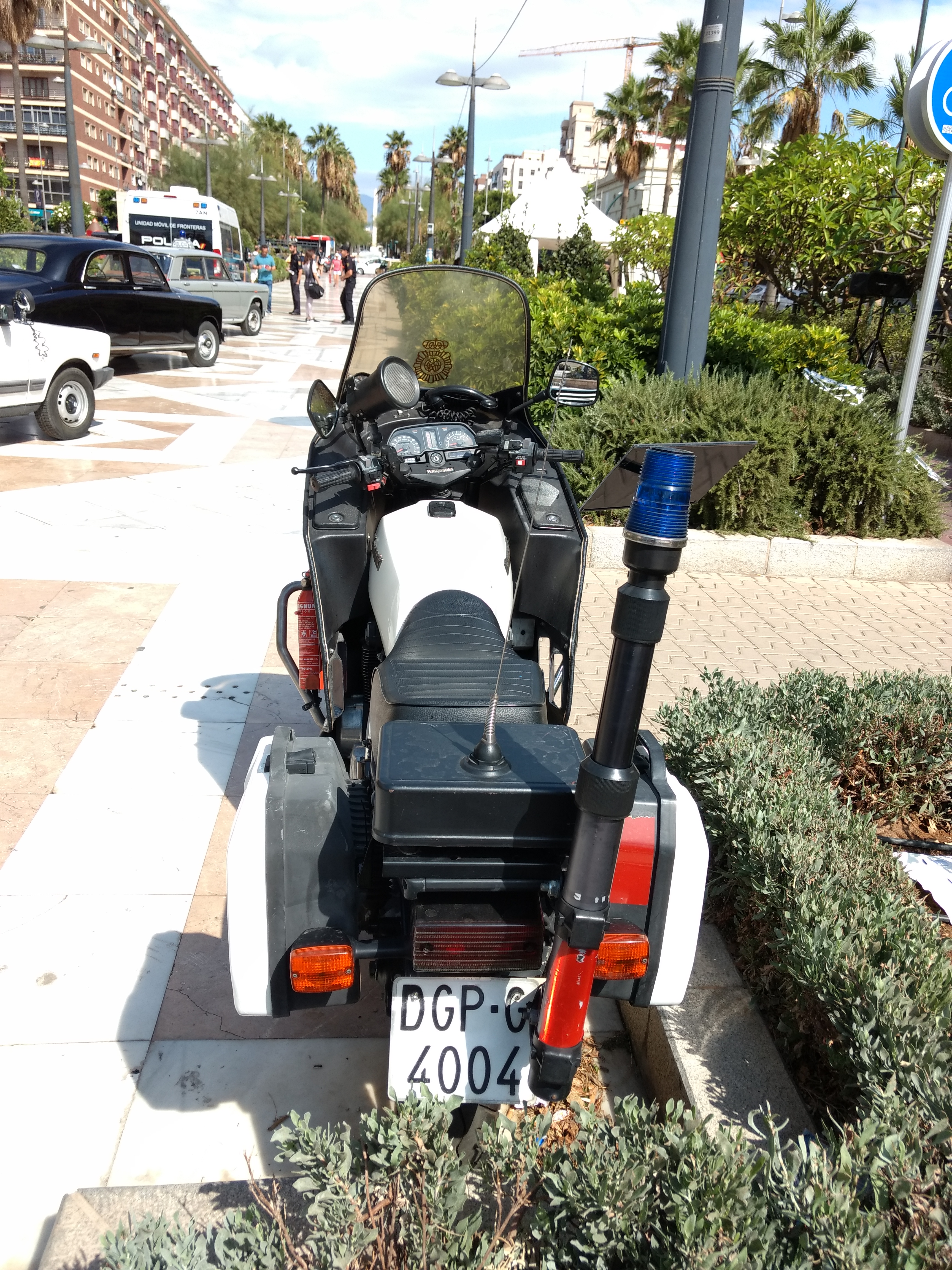
GPZ 550
"Even the GPZ 550, that was a two valve double overhead cam, like 82, a boat anchor of a cylinder head, even with two valves."
They’re using the GPZ 550 as an example of an older-style motorcycle engine. Even though it has two valves, the head can still be heavy because air-cooled engines need lots of metal to shed heat.
The GPZ 550 is being used as an example of a two-valve, double overhead cam (DOHC) air-cooled motorcycle engine. The host calls out that even with only two valves, the cylinder head can be heavy because air cooling requires extra metal to move heat away from the combustion chamber.
heat sink
"That's the bank for the heat sink for the acceleration down the street to give the heat somewhere to go that doesn't melt everything down."
A heat sink is just a big chunk of metal that soaks up heat. On an air-cooled engine, the cylinder head is shaped and built to pull heat away so the engine doesn’t overheat.
A heat sink is a mass of metal designed to absorb and spread heat so it can be released to the surrounding air. In air-cooled engines, the cylinder head and fins act like a heat sink to prevent overheating during sustained acceleration.
compression ratio
"Well, now another problem is air cooled engines and compression ratio can be a big problem. Because the air cooled engines operating temperature goes up in the summer and goes down in the fall..."
Compression ratio is how much the fuel-air mixture gets squeezed inside the cylinder. More squeeze can make more power, but if the engine runs hotter (like air-cooled bikes in summer), it can become harder to run safely without problems.
Compression ratio is the ratio between the maximum and minimum volume in the cylinder during the engine cycle. Higher compression generally increases efficiency and power, but it also raises the risk of knock and makes cooling demands more sensitive—especially for air-cooled engines that see big temperature swings across seasons.
air cooled engines
"Well, now another problem is air cooled engines and compression ratio can be a big problem. Because the air cooled engines operating temperature goes up in the summer and goes down in the fall..."
Air-cooled engines use airflow and metal fins to get rid of heat. Since there’s no liquid coolant to control temperatures, the engine can run hotter in summer and cooler in fall, which changes how it should be tuned.
Air-cooled engines rely on airflow and exposed metal surfaces (like cylinder fins) to remove heat instead of using liquid coolant. Because they don’t have a coolant system to stabilize temperatures, their operating temperature can vary more with weather and riding conditions, which affects things like safe compression ratio and valve-seat durability.
knocking
"You know, two rider and passenger on the bike climbing summer temperature, heavy hand on the throttle, even if the RPM is a bit low, maybe lugging, definitely knocking."
Knocking is a bad sound from the engine that usually means the fuel is burning at the wrong time or too violently. It’s a warning sign because it can lead to damage if you keep driving.
Knocking is the audible and mechanical symptom of abnormal combustion, often linked to detonation. It typically occurs when the mixture ignites prematurely or too violently, producing pressure oscillations that can harm engine components.
lugging
"even if the RPM is a bit low, maybe lugging, definitely knocking."
Lugging is operating the engine at a low RPM while demanding high load, which can lead to poor combustion conditions. For motorcycles, lugging can raise the chance of knock/detonation because cylinder pressures and temperatures don’t behave as they do at the engine’s intended operating range.
detonates
"And you can't have that because when an engine detonates chronically, the sonic combustion waves of detonation nibble at the edges of the piston until the top ring is exposed."
Detonation is when the fuel in the engine burns in a rough, explosive way instead of smoothly. That can create damaging shock waves inside the engine, which is why it’s something riders and tuners try to prevent.
In an engine, “detonation” is uncontrolled combustion that happens when the air-fuel mixture ignites too aggressively, creating shock waves instead of a smooth burn. Those pressure spikes can damage pistons and rings over time, especially under high heat and load.
base gas
"He's up. Throw some base gas. Yeah, more base gas to blow out."
“Base gas” means the starting fuel they use before making changes to improve how safely it burns. The point is to prevent the engine from knocking when it gets hot and loaded.
“Base gas” here refers to a lower-octane fuel used as a starting point before adding higher-octane components or adjustments to manage combustion. The goal is to reduce detonation/knock by controlling how resistant the fuel is to abnormal ignition.

Honda Element
"...ok frankly mysterious and mystery is an important element in beauty. Beauty keeps us mesmerized and that's ..."
The Honda Element is a small vehicle that looks boxy and is built for practical everyday use. It has a flexible interior so you can carry different kinds of stuff. People talk about it because it doesn’t look like a typical car.
The Honda Element is a compact, boxy crossover-style vehicle known for its practical, utilitarian design and flexible interior. It often comes up in discussions because its simple layout and “do-it-yourself” personality made it stand out from more conventional family cars. It’s the kind of vehicle that gets mentioned when the conversation turns to unusual, memorable design choices.

Honda Goldwing
"Now, Honda had a problem with two products. The first one was the Goldwing, which was a flat four, which meant that if it were air cooled, the rear pair of cylinders would be in quotes cooled by hot air that had just cooled the front cylinders."
The Honda Gold Wing is a big touring motorcycle. In this segment they’re explaining that its flat-four layout can make the rear cylinders run hotter if you rely on air cooling alone.
The Honda Goldwing (often spelled Gold Wing) is known for its large, touring-focused engine layout—here described as a flat four. The episode’s point is that with an air-cooled flat-four, the rear cylinders can run hotter because they’re effectively shielded from the cooling airflow.
rear pair of cylinders
"That will not work. It cannot work. Unless you're, you know, just putting around, of course, it'll run. But if you want to get power from it, like steady cruising at 75 miles an hour. Which was the goal. The rear cylinders are going to be very unhappy."
The “rear pair of cylinders” are the cylinders located toward the back of the engine. The point here is that they can run hotter if the cooling airflow isn’t as effective there, especially during long, steady cruising.
In a flat-four motorcycle engine, the cylinders are arranged left and right, so “rear” refers to the cylinders farther back in the bike’s direction of travel. The episode uses this to explain why cooling can be uneven: the rear cylinders may receive less effective cooling airflow during steady high-speed riding.
peak torque
"is that the current Goldwing engine gives. 80% of peak torque at 850 RPM. Now, is that a broad torque curve?"
Peak torque is the engine’s strongest “pulling force,” measured at a certain engine speed. If you get that strong pull at lower RPM, the bike feels easier to ride and more responsive without revving as high.
Peak torque is the maximum twisting force an engine produces at a specific RPM. It matters because torque is what actually accelerates the bike through the drivetrain, and where in the rev range it arrives strongly affects ride feel.
torque curve
"Now, is that a broad torque curve? I would say so. It's so good."
The torque curve is how strong the engine’s pull is at different RPMs. A broad torque curve means it stays strong across many speeds, so the bike feels smoother and more flexible.
A torque curve describes how engine torque changes across RPM. A “broad” torque curve means the engine makes strong torque over a wide range of speeds, improving tractability and reducing the need to constantly keep the engine in the power band.
bottom center
"Because with two valves, the way you can boost power is by keeping the intake open longer after bottom center. So that the air, which the intake flow, which is whipping in there at hundreds of feet per second."
“Bottom center” is when the piston is at its lowest point in the engine. The host is using it to explain when the intake valve timing happens, which affects how much air the engine traps for combustion.
Bottom center refers to the crankshaft position where the piston is at its lowest point in the cylinder (often called bottom dead center). Valve timing is described relative to this point because it determines how much the intake charge can flow into the cylinder before compression.
intake open longer
"Because with two valves, the way you can boost power is by keeping the intake open longer after bottom center. So that the air, which the intake flow, which is whipping in there at hundreds of feet per second."
This is about valve timing: the intake valve stays open a bit longer than you might expect. That helps the engine capture more of the incoming air so it makes stronger torque without needing to spin as high.
Keeping the intake valve open longer after bottom center (after the piston reaches its lowest point) is a valve-timing strategy used to improve cylinder filling. The goal is to take advantage of the incoming air’s momentum so more of it enters the cylinder during the compression stroke.
light switch power band
"But the problem comes when you're operating the engine at lower than peak torque RPM. What happens then is that the air is moving much more slowly when the piston rises on compression. It just pushes it back out of the cylinder, which is why you get the so-called light switch power band of a highly tuned engine."
A “light switch power band” means the bike feels like it’s not doing much for a while, and then power comes on suddenly. It’s the opposite of smooth, gradual pull across the rev range.
A “light switch power band” describes an engine that feels weak at lower RPM and then suddenly makes power abruptly when it reaches a certain speed. It’s often associated with narrow, peaky torque delivery caused by airflow and valve-timing effects that only work well near the engine’s tuned RPM.
power available at all RPM
"You want power available at all RPM and controllable predictable power. All motorcyclists agree that even though it's exciting to ride a light switch bike, it isn't good."
It means the engine feels strong not only when you rev it really high, but across a wide range of engine speeds. That makes the bike easier to ride and predict, especially during racing.
In motorcycle tuning, “all RPM” means the engine makes usable power across the whole rev range, not just at one narrow band. That helps riders accelerate smoothly in real-world conditions and makes the bike easier to control lap after lap.
two strokes
"Yes. That's why two strokes were remarkably powerful for their weight. But they were bad racing engines in the sense that the rider had to give more attention to the engine, which meant giving less attention to the racing."
Two-stroke engines make power in a simpler, faster cycle, so they can feel very strong for their size. But they can be harder to manage smoothly, which matters when you’re racing.
A two-stroke engine completes its power cycle in two movements of the piston, which can make it very powerful for its weight. The tradeoff is that two-strokes often require more rider attention and can be less predictable than four-strokes in how they deliver power.
liquid cooled
"So anyway, Honda made that thing liquid cooled the flat four. And the next thing was interceptor and Sabre, which were V-Force."
Liquid cooling uses coolant flowing through the engine to carry heat away. It helps the engine stay at a more stable temperature, which is useful when you’re riding hard for a long time.
“Liquid cooled” means the engine uses coolant circulated through passages and a radiator to remove heat. Compared with air cooling, it can keep temperatures more consistent—important for performance engines that see sustained high RPM.
flat four
"So anyway, Honda made that thing liquid cooled the flat four. And the next thing was interceptor and Sabre, which were V-Force."
A flat four is an engine where the cylinders are laid out horizontally in two sides. That layout can help the engine run smoother and feel more balanced.
A “flat four” is an engine layout where four cylinders sit horizontally in two opposing banks, like a boxer. This arrangement can help balance engine forces and reduce vibration compared with many inline designs, which is why it’s a common performance-oriented configuration.
V-Force
"And the next thing was interceptor and Sabre, which were V-Force. And they too have the problem of how are we going if we make an air cooled, how are we going to cool the rear cylinders with hot air off the front cylinders?"
V-Force is Honda’s name for a V-shaped multi-cylinder engine design. Because the cylinders are arranged differently, cooling and airflow become a bigger engineering challenge.
“V-Force” refers to Honda’s V4 engine concept used in certain models, where cylinders are arranged in a V shape. The V layout changes how heat is managed and how the engine packaging works, especially around cylinder cooling.
rear cylinders
"And they too have the problem of how are we going if we make an air cooled, how are we going to cool the rear cylinders with hot air off the front cylinders?"
Rear cylinders are the cylinders toward the back of the engine. In air-cooled bikes, they can get less cooling air, so they may run hotter than the front cylinders.
“Rear cylinders” are the cylinders positioned toward the back of the engine, which can receive less direct airflow in some motorcycle layouts. In air-cooled designs, that can make them run hotter than front cylinders, affecting performance consistency and durability.
ducts
"Well, we could duct it. We could bring in an air from the side."
Ducts are channels that guide air exactly where you need it. On an air-cooled engine, that can help cool parts that otherwise don’t get enough airflow.
In cooling discussions, “ducts” are shaped passages that direct airflow to specific engine areas. The goal is to improve cooling where natural airflow is blocked or insufficient—like rear cylinders in an air-cooled layout.
14-to-1 compression
"A little quick aside about front cylinders and rear cylinders, Harley Davidson V-Twin, right? You have a cylinder in the back, which is usually fine if you're just chuffing down and you don't have 14-to-1 compression and all the things that Kevin's talked about."
Compression ratio is how tightly the engine squeezes the fuel-air mixture before it ignites. A “14-to-1” number is very high, which can make more power but needs the engine and fuel to handle it safely.
“14-to-1 compression” is a high compression ratio, meaning the air-fuel mixture is compressed to 1/14 of its original volume before ignition. Higher compression generally improves thermal efficiency and can increase power, but it also raises the risk of knocking and requires careful fuel and engine design.
Harley Davidson
"A little quick aside about front cylinders and rear cylinders, Harley Davidson V-Twin, right? You have a cylinder in the back, which is usually fine if you're just chuffing down and you don't have 14-to-1 compression and all the things that Kevin's talked about."
Harley-Davidson is a famous motorcycle company, especially known for V-twin engines. Here it’s used as an example of how the back cylinder can run differently because of airflow.
Harley-Davidson is a major American motorcycle brand known for large-displacement V-twin engines. In this segment, the host uses Harley’s V-twin layout as an example of how rear-cylinder cooling can be affected.
V-Twin
"A little quick aside about front cylinders and rear cylinders, Harley Davidson V-Twin, right? You have a cylinder in the back, which is usually fine if you're just chuffing down and you don't have 14-to-1 compression and all the things that Kevin's talked about."
A V-twin has two cylinders arranged in a V shape. Because of that layout, cooling and how heat builds up can be different between the front and back cylinder.
A “V-twin” is an engine with two cylinders arranged in a V shape, sharing a common crankshaft. The V layout affects vibration characteristics and cooling airflow, and it’s why rear-cylinder heat management can come up in air-cooled or high-compression setups.
liquid cooling
"Yeah, but if you're liquid cooling, as Harley does with a lot of its touring bikes, they now run the water from the radiator to the rear cylinder first."
Liquid cooling means the engine has channels filled with coolant. That coolant carries heat to a radiator, which helps keep the engine from overheating.
Liquid cooling uses a coolant (water/antifreeze mix) circulated through passages in the engine and radiator. Heat is carried away by the coolant instead of relying only on airflow over fins.
stutter and stall
"That was the era of stutter and stall. You hit the start button, it fires and then it quits."
“Stutter and stall” means the engine doesn’t run smoothly at low throttle and can even turn off. It usually points to the fuel-air mixture being wrong.
“Stutter and stall” describes poor low-speed or off-idle running where the engine hesitates (stutters) and may shut off (stall). It often happens when the fuel/air mixture is too lean or otherwise miscalibrated, especially during emissions-driven changes.
Daytona
"And this is also why at Daytona, the PA system was always barking out."
Daytona is a famous race track in Florida where motorcycles race. The host is referencing a historical moment tied to how the bikes behaved there.
Daytona refers to Daytona International Speedway in Florida, a major motorcycle racing venue. The mention ties a historical emissions/starting issue to the event’s loud public-address announcements.
fuel injection
"So. [2398.7s] Fuel injection had to come and ignition timing controlled by a computer. [2409.0s] There were a few efforts to make automotive type air meter fuel injection systems for bikes as the wind blows into the intake pipes."
Fuel injection is how the bike puts fuel into the engine. Instead of using a carburetor, it uses sensors and a computer to deliver the right amount of fuel for the current conditions.
Fuel injection is a system that sprays fuel into the engine in measured amounts instead of relying on a carburetor. On motorcycles, it helps the engine deliver consistent power across different temperatures, altitudes, and riding conditions.
ignition timing
"So. [2398.7s] Fuel injection had to come and ignition timing controlled by a computer. [2409.0s] There were a few efforts to make automotive type air meter fuel injection systems for bikes as the wind blows into the intake pipes."
Ignition timing is when the spark happens inside the engine. The computer can adjust it so the engine burns fuel at the best moment for smooth power.
Ignition timing is when the spark plug fires relative to the engine’s position in the cycle. Controlling it with a computer lets the bike optimize combustion for power and efficiency while avoiding knock or misfire.
mass air flow
"It pushes a door and the angle of the door is in some way related to the volume of air that's passed. [2431.8s] Yeah, mass air flow. [2433.3s] They were also heated wires."
Mass air flow (MAF) is a sensor that estimates how much air the engine is pulling in. The computer uses that number to decide how much fuel to add so the engine runs right.
Mass air flow (MAF) is a sensor approach that measures how much air the engine is ingesting. The ECU uses that air quantity (and other inputs) to calculate how much fuel to inject for the target air-fuel mixture.
heated wires
"[2431.8s] Yeah, mass air flow. [2433.3s] They were also heated wires. [2434.8s] They would run a heated wire and then they would alter the voltage as the air blew over the wire and then they would calculate from that."
Some air sensors use a tiny heated wire. When air passes over it, the wire cools down, and the sensor measures that change to figure out airflow.
Heated-wire MAF sensors use a thin heated element (wire) exposed to incoming air. As air flows over it, the sensor measures how much cooling occurs and converts that into an estimate of airflow.
speed density
"[2455.5s] They went the map direction and or speed density in alpha in his RPM and alpha is throttle angle. [2467.4s] And what they did was they ran engines on the dyno and they found out what gave ideal power or planned power at all RPM and throttle angles and they stored that in a map."
Speed density is how the computer figures out how much air the engine is getting. It uses RPM and intake pressure (plus air conditions) to calculate the right fuel amount.
Speed density is an engine-calculation method that estimates airflow using engine speed (RPM), intake manifold pressure, and air density (from temperature/pressure). It’s common in performance and racing ECUs because it can be very accurate without a direct airflow meter.
throttle angle
"[2455.5s] They went the map direction and or speed density in alpha in his RPM and alpha is throttle angle. [2467.4s] And what they did was they ran engines on the dyno and they found out what gave ideal power or planned power at all RPM and throttle angles and they stored that in a map."
Throttle angle tells the computer how far you’ve opened the throttle. The ECU uses it to understand how much power you’re asking for right now.
Throttle angle is the measured position of the throttle valve, usually reported as an angle from closed to wide open. ECUs use it (often alongside RPM and pressure) to determine the rider’s requested load and choose the correct fueling and ignition targets.
map direction
"So an MAF mass air flow sensor type and then there's. [2446.3s] Well, this was all very well. [2452.5s] Motorcycling went a different way. [2455.5s] They went the map direction and or speed density in alpha in his RPM and alpha is throttle angle."
This is a way for the computer to estimate engine load using intake pressure. Rather than measuring air directly, it looks at pressure in the intake and uses that to decide fueling.
“MAP direction” refers to using a manifold absolute pressure (MAP) strategy to estimate engine load. Instead of measuring airflow directly, the ECU infers how much air is entering from pressure in the intake manifold.
manifold absolute pressure
"[2520.8s] And it's absolute manifold absolute pressure is one of those that they're using. [2525.6s] So you don't even necessarily need to read atmospheric. "
MAP is a sensor reading of pressure in the intake. The computer uses it to figure out how hard the engine is working and how much fuel to inject.
Manifold absolute pressure (MAP) is the pressure inside the intake manifold measured relative to a vacuum reference. MAP-based fueling can estimate engine load and airflow without needing to read outside atmospheric pressure directly.
intake manifold
"You're just reading what's happening in the intake manifold because that's the number that matters."
The intake manifold is the part that carries air into the engine. The bike’s computer uses information from the intake area to help decide how much fuel to add.
The intake manifold is the passage that routes air (and sometimes fuel) from the intake system to the engine’s cylinders. On a fuel-injected motorcycle, sensors and the ECU use signals from the intake side to calculate how much fuel to deliver for combustion.
position sensor
"And then you have a position sensor and they just, you know, they can sit in there and your little computer box has little chips and memories and."
A position sensor tells the computer where a key moving part is. The computer uses that to adjust how the engine runs.
A position sensor reports the position of a moving engine component (commonly a throttle body or throttle valve). The ECU uses that position information to determine load and to adjust fueling and ignition timing accordingly.
dyno jet
"Dobeck was the founder of dyno jet. That's who Kevin just mentioned and he had the dyno and he had the jet kits."
Dynojet is a company that makes tools for tuning motorcycles. They’re known for products that help you adjust how the bike’s fuel system behaves.
Dynojet (Dynojet) is known for dynamometers and aftermarket fuel/ignition tuning products for motorcycles. In this segment, the host connects Dynojet’s tuning approach to using “boxes” that modify the ECU’s fueling tables.
table
"we made boxes that were adding or subtracting from the table that was stored in the motorcycle."
The ECU has built-in maps that tell it how to run the engine. A tuning box can change parts of those maps to alter fueling.
In ECU tuning, a “table” refers to a stored map of calibration values—commonly fueling targets—indexed by operating conditions like throttle position and engine speed. The tuning box described here modifies values in that map to change how much fuel the ECU commands.
Request an Explanation
Heard something you'd like explained? We'll add it to this episode.
Sign in to request explanations for terms you heard.
Want to learn more?
Browse our glossary for plain-English explanations of automotive terms, jargon, and concepts.
Help improve this episode
See something that's not quite right? Our annotations are AI-generated and can sometimes miss the mark. Click the flag icon on any annotation to suggest a correction.