Electroverse is mentioned as a company that helps measure how healthy EV batteries are. The episode uses their study results to challenge common fears.
Auto Trader Insight is mentioned as part of the group that produced the battery health study. The point is that it’s based on real testing, not just rumors.
The segment is addressing a common fear that used EV batteries “degrade” quickly enough to make the car’s range unusable or require a very expensive replacement. The hosts frame this as a myth versus what large-scale testing shows.
State of health is a number that estimates how much battery capacity is left compared to when it was new. Higher SoH generally means more usable range.
The point is that EV batteries don’t all age the same. Even if most used EVs look good, some individual cars can have worse battery health than average.
A battery health certificate is documentation provided by the manufacturer or dealer that reports the battery’s current capacity (often as a percentage of original). It’s used to verify the battery’s condition before purchase.
Here, a diagnostic means running a battery check that estimates how much capacity the battery still has. The result is usually shown as a percentage of the original battery.
Year-on-year growth means “this year compared to the same time last year.” It helps show if things are really increasing, not just changing with the calendar.
Renault is a car company. In this segment, they share UK data showing more people are asking about EVs and that EVs are a big part of their registrations.
This is a Toyota Hilux pickup that runs on electricity instead of a traditional engine. The big idea is using an electric powertrain in a truck that people normally use for hauling and tough jobs.
The plug-in van grant is a government discount for certain plug-in vehicles used for work. In this segment, it’s the reason the price is lower when the car qualifies.
A light commercial vehicle is a category for smaller vehicles used for work. Here, that category matters because it can make the EV qualify for a government grant.
kWh is how much energy the EV battery can store. More kWh usually means the car can potentially drive farther, but it depends on how efficiently the car uses that energy.
Towing capacity is the maximum weight a vehicle is rated to pull safely. The segment contrasts the electric Hilux’s towing capacity (1600 kilograms) with the diesel’s much higher rating (3500 kilograms), showing why the EV may struggle on heavy, long-distance work.
Payload is how much weight you can load into the truck for work. They’re comparing the electric version’s lower payload to the diesel version’s higher payload.
The Ram 3500 is a large pickup truck made for heavy work like towing trailers and carrying loads. The podcast mentions the diesel version because it can tow a lot and carry a lot of weight. That’s the main reason it’s relevant to a conversation about vehicle capability.
Multi-terrain select is a set of off-road driving modes. It helps the truck adapt its traction and power delivery to different surfaces like dirt or rough ground.
Torque control is how smoothly and precisely the vehicle can apply pulling force. The hosts are saying electric motors can manage that force really well at low speeds, which helps when crawling over rough terrain.
DC charging speed is how fast the car can charge on a fast-charging station. If it’s quick, you can add enough range during a busy day instead of waiting for a full overnight charge.
A fleet of service vehicles is a company’s set of work trucks. The idea here is that EVs make more sense when the routes are predictable and the vehicles can charge at the same place every day.
A “fixed depot” is a home base location where the vehicle stays most of the time. If you can charge there reliably, the EV is much easier to run for work.
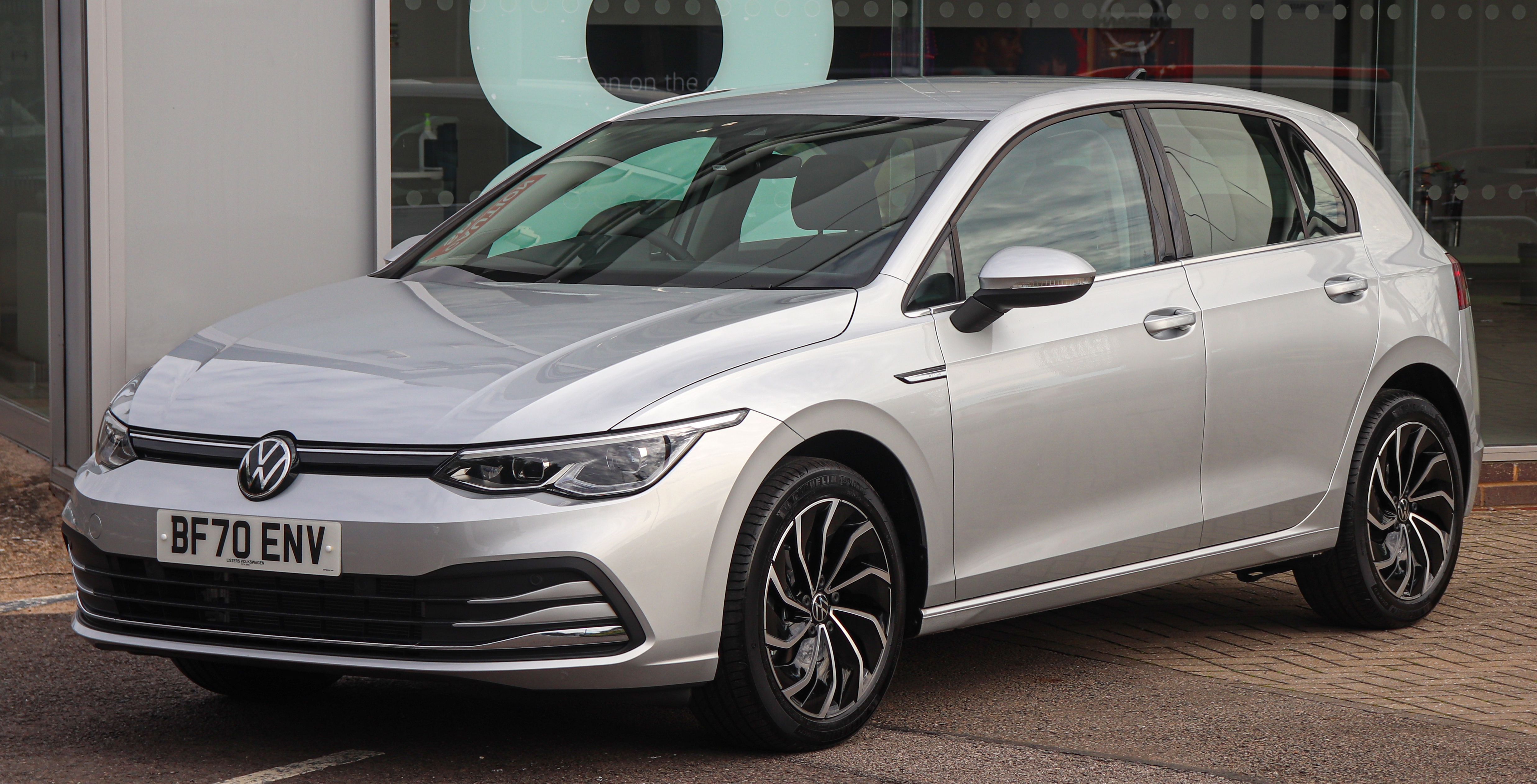
The Volkswagen Golf is a very common car, and an electric “Golf EV” would be the electric version of that everyday model. The episode is saying Volkswagen isn’t bringing it out on the timeline people expected.
A “road charge” is a government fee for driving on public roads. It can matter more as cars switch from petrol/diesel to electric, because fuel taxes may no longer apply the same way.
The ID.3 is Volkswagen’s electric hatchback. “ID3 NEO” here means a newer version that Volkswagen is planning to bring out instead of an electric Golf.
“Cannibalise” here means one car model might steal buyers from another model in the same company’s lineup. The idea is that selling an EV Golf could reduce sales of the ID.3.
Term
EVD
EVD is a new kind of road charge that’s based on how many miles you drive. Instead of being built into fuel prices, it would be charged per mile for EVs.
Fuel duty is the tax included in the price of petrol and diesel. If more people drive EVs, the government collects less of this tax, so it looks for other ways to fund roads.
The OBR is a UK government watchdog that makes forecasts about money and the economy. In this segment, they’re used as the source for an estimate of future EV sales.
Concept
fuel EVs
The phrase “fuel EVs” doesn’t sound like standard EV wording. Based on the context, they’re talking about how many EVs (electric vehicles) could be sold in the future.
Public charging is charging your EV at stations that aren’t in your driveway—like at shops or along roads. If you can’t charge at home, these stations matter a lot.
EV charge points are the individual charging stations you plug into at a site. The number and placement of charge points affects queueing, availability, and how reliably drivers can top up when they’re parked for shopping or errands.
Raw charging is the company building and running some of the EV chargers. They’re expanding chargers into places like retail parks, not just on highways.
It means a charging spot where you’re parked for a while, like while you shop. Because you stay there, the car has time to add enough battery range to matter.
A charging network is the set of charging places around an area. If there are more chargers where you already stop (shops, gyms), it’s easier to plan trips and less stressful.
Term
PowerPoint charger
This sounds like an older, simpler kind of charging setup. The host is basically saying it didn’t look like one of the newer, high-speed chargers.
Tesco is a supermarket brand mentioned as the place where the charger was located. It supports the idea that charging is showing up where people already park to shop.
Sainsbury's is a supermarket brand mentioned in the story about where a charger was found. The point is that chargers are often in places like grocery store parking lots.
It’s basically how fast the charger can refill your EV’s battery. The higher the number (kW), the faster it can charge—assuming the car can accept that speed too.
It means you can park at home somewhere you control. That matters for EVs because it makes it easier to charge at home instead of relying on public stations.
Term
PowerPoint charging
This sounds like charging from a normal outlet at a place you can plug into. It’s usually slower than the fast public chargers.
This is charging while you’re parked somewhere for a while, like shopping or at work. Since you’re not in a hurry, you can charge more easily without needing super-fast chargers.
Term
DC in there
They mean a short fast-charge stop to add enough range for your week. It’s like topping up quickly so you don’t have to charge every day.
A lease returns wave is when many EVs from earlier lease terms come back to dealers at the same time. When that happens, supply can temporarily increase and push used prices down until the market works through that inventory.
A battery certificate check is a verification process that documents the EV battery’s condition—typically including measured state-of-health figures. It’s used to confirm whether the battery degradation is within expected limits before buying a used EV.
EVED appears to be a shorthand used in the episode for an EV-related financial metric or decision framework—here, framed as whether buying an EV is a “worst financial decision.” Because the transcript doesn’t expand the acronym in this slice, listeners may need the show to define what EVED stands for and how it’s calculated.
Rapid charging refers to faster public charging (typically higher power DC charging) compared with slower home charging. It can affect both costs and battery wear patterns, which is why the episode distinguishes it from charging overnight at home.
LIVE
Hey guys. Happy Friday. Hope you've had a good week. Another busy week in the world
of EVs and a lot going on. But let's start now. Okay, it's 11 o'clock and there's a
lot to get through. So this week, 8,000 electric cars tested. The UK's largest battery health
study just dropped. The answer is not what the scare stories tell you. We'll go through
the real numbers. We've also got the UK quietly crossing 2 million registered electric vehicles.
2 million. And I'll tell you what's actually driving that number because it's more interesting than
the headline. Then there's the electric Toyota Hilux that's just been launched. 52,000 pounds and
150 miles of range. Orders open in June. We'll work out if it actually makes sense for people.
We've got the story of VW quietly cancelling the electric Gulf and why that matters more than
its sounds. Alongside the incoming road charge for EVs that everyone's going to have to deal
with in 2028. And we'll finish with a charging story hiding in plain sight. B&Q. Yeah, B&Q.
Five stories. 30 minutes. Let's get going. Okay. Sharing there. Just going to change my screen so
you can see it. Okay. Battery health. Let's get into this because this is an important one. And I
know that there was a study by Electroverse and Auto Trader Insight this week. And one of the great
worries and concerns is about battery health in used electric cars. And it's kind of a myth. So
let's just get going with it. There's one thing that puts people off buying a used electric car.
It's the battery. The question everyone asks, what if it degrades? What if I end up with a car
that won't do its range? What if I'm looking at a five figure replacement bill? It's a reasonable
question. It's not just a well informed one. And this week we get the most comprehensive answer
we've had just just yet. Generational. There are specialists in battery condition diagnostics.
They're an interesting company actually and worth checking out. They've tested more than
8,000 electric vehicles, passenger cars, light commercials, vehicles from zero to 12 years old,
up to 160,000 miles on the clock, 36 manufacturers. The UK's largest used battery electric vehicle
study conducted to date. Here's the headline result. Average battery health, state of health
across the entire fleet, 95.15%. Let me sit with that for a second. The average across 8,000
electric vehicles, including older ones, including high mileage ones, is 95% of their original
capacity. Not 60%, not 70%, 95%. But vehicles that are eight to nine years old, so the cars that
should theoretically be the scary ones, the median battery capacity is 85%. Manufacturers warrant
their batteries to 70% for eight years or 100,000 miles. The actual average at eight to nine years
is 85%. That's significantly above the threshold they're legally required to maintain. And here's
the thing that's worth understanding. Annual degradation rate across the whole sample came
out at 2.3% per year. So a car that's four or five years old, which is most of what you'd find in
the used EV market right now, is sitting in a median state of health of 93.5%. That's not a problem.
That's a well-functioning battery. Now, I'm not saying every used EV is fine. There's real
variance in the data and generational are quite clear that the spread is widening as vehicles age.
A 10% state of health reading on an older car is rare, but it exists. Used EV battery health still
matters, still worth checking. But the average, the actual data from 8,000 live, 1,000 cars says
the scare story is wrong. And I think this is important because word of mouth is generally
what's going on with used EV battery scare stories and people talking about it. What this
means practically is if you're looking at a used EV in 2026, average used EV prices are down nearly
10% year on year. Cars that cost 35 to 40,000 pounds new three or four years ago are sitting at
around 20,000 pounds right now. And the batteries in the vast majority of them are functioning at
93% or better of their original capacity. If you want to check the specific car you're looking at,
ask the dealer for a battery health certificate. Most manufacturers can produce a diagnostic
showing current battery capacity as a percentage of original. Anything above 80% is considered
healthy. For cars from 2019 onwards, this is pretty standard. Just ask for it. Used EV
battery health in the UK in 2026 is genuinely better than the fear suggests. EV battery degradation
UK data from 8,000 vehicles says the average is 95%. Used electric car battery life is the biggest
myth in the second hand market right now. That's the finding worth taking away. And I think that's
important. Okay, we're going to move on to the 1000000 EV number, which is absolutely amazing
actually or 2000000 sorry 2000000 EVs. So the UK has hit 2000000 EVs.
That's the headline in April 2026. 39,000 new battery electric cars were registered in the UK.
That's a 59% increase on April last year. BEVs, battery electric vehicles, hit 26.2%
market share. More than one in four new cars sold in April was electric. And cumulatively,
the UK has now passed 2000000 registered battery electric vehicles on the road.
2000000 is a proper milestone. It's the kind of number that changes the question from
will this happen to how fast. And when you look at April's 59% year on year growth,
there's something real happening here. But I want to give you the full picture because the SMMT,
that's the Society of Motor Manufacturers and Traders, they actually revised their 2026 forecast
down this week. They were expecting 28.5% market share this year. They've cut that to 26.8%.
And they've pointed to the ZEV mandate as a pressure the market's feeling more than it's
responding to. What that means in plain English, manufacturers have to sell a certain percentage
of electric cars or face fines. So some of what we're seeing in April, that 59% growth,
is manufacturers working hard to hit their compliance numbers. They're discounting,
they're pushing deals, and it's working in the sense that the cars are being registered.
Whether those buyers were going to switch, make the switch anyway, or whether they've been pulled
forward by the incentives is harder to unpick. Why I can tell you is this. There's another story
underneath the mandate numbers. Renault reported this week that EV inquiries have risen 42%
since the start of the Iran conflict at the end of February. Petrol prices are up,
people are doing the maths. The economics of running an electric car look different when
you've just paid £1.90 a litre. Renault says EVs now make up nearly half of their total UK
registrations, 49%. That's not mandate pressure. That's people making a decision based on running
costs. So what's actually driving the 2 million? Probably both things at once. Mandate pressure
bringing supplies and deals, rising fuel costs bring real demand. And in terms of what it means
for you, more EVs on the road means more used EVs coming, more charging infrastructure justified,
more service networks, more everything. 2000000 isn't the destination. It's the point
where it stops being a niche. One more figure from the SMMT I want to flag. Electrified vehicles
overall, BEVs, plug-in hybrids, full hybrids hit 53.2% of all new registrations in April,
more than half. That's not a small thing. That's the market moving. UK EV market share of 2026
is heading towards 27%. UK EV sales April 2026 show the trajectory. 2000000 electric cars UK
is the milestone. Those are the numbers worth knowing. Okay, we're into Story 3, the electric
Hilux. This is a new Toyota electric vehicle that's just come out. I'm going to show you a picture
of it here on the stage. So, I'll show it full screen for a minute, switch myself off, which
probably will be quite enjoyable for you all. There it is, the Toyota Hilux electric, battery
electric vehicle. It's interesting because this is a pickup. These things have been used all over
the world in extreme environments. They're all over Africa and so on. So, getting a battery
electric vehicle version of a heavy car like this that does a lot of towing and you throw a lot of
stuff into is an interesting idea. Let's talk a little bit about what it can do and so on.
So, the legend goes, battery electric vehicle. Right, one of the most recognizable vehicles
ever made, 50 years old as a nameplate, sold in more than 140 countries, the one they drove off
a pier on Top Gear and it still started, that one. It just went electric. Orders open in June,
priced with the plug-in van grant because it qualifies as a commercial vehicle, 52,845 pounds.
Without the grant, 57,845 pounds. That grant is worth 5,000 pounds and it applies here because
the Hilux is classified as a light commercial vehicle. It's not classed as a car. So, that's a
big saving. The powertrain is a 59.2 kilowatt-hour battery, front and rear electric motors, permanent
all-wheel drive. WLTP range and this is where we need to have a conversation is 150 miles.
150 miles. But let me just show you the graphic that gives more detail on this car
because it's an important one to have in here. I'll just remove that and add that to stage so
you can see it and let me put myself up here. Actually, that full graphic is probably better.
I'll just pop myself back in there. Okay. I want to be honest with you about what 150 mile range
means because the easy thing would be to say it's not good enough and to move on. But the situation
is a bit more complicated than that. If you're a farmer or a tradesperson who leaves the depot or
the farm every morning and comes back at the end of the day and your roundtrip is under 120 miles,
then 150 WLTP, call it 110 or 120 real world max, actually work for you. Maybe you'll get
less in the winter. Charge it overnight, go again in the morning. If the pattern fits,
the range is acceptable. So the Toyota Hilux at 150 miles battery electric vehicle range
is questionable. If you're doing long runs, towing heavy loads, going to remote sites,
working across a wide area, then 150 miles is a problem. Towing capacity is 1600 kilograms.
Payload is 715 kilos. For context, the diesel version of the same truck tows 3500 kilograms
and carries 1000 kilograms of payload. You're getting roughly half the capacity capability.
The diesel is staying in the range by the way and it's expected to be the volume seller for them.
What Toyota deserve credit for here is the off-road system. Multi-terrain select is still there.
All-wheel drive is standard across the range. Electric motors give you the extraordinary
torque control at low speeds, actually better suited to slow technical off-roading than diesel
in some ways. The electric Hilux is not a watered down version of the off-road capability,
it's just range limited. The DC charging speed is rated as best in class for this segment.
So when you do need to rapid charge, it's quick. That helps on longer days.
My honest verdict is that it's a serious vehicle for a specific use case. It doesn't
replace the diesel Hilux for heavy long-distance work. It wasn't designed to, but if you've got
a fleet of service vehicles doing short daily rounds, if you're operating from a fixed base,
if you're a council or a utility company trying to electrify your commercial fleet,
the Electric Toyota Hilux UK makes that case make sense.
Electric pickup truck UK 2026 is a growing category. The Toyota Hilux BEV UK is the most
credible entry yet. Electric Toyota Hilux price in the UK after Grant is £52,845. That's the number
to think about. I think it's a nice car. We know it's a really, really tough car. Commercial fleets
are going to save a fortune getting hold of the Toyota Hilux BEV. If they can charge overnight
and if they've got fixed depot, I think that's the important number to look at here. And if you've
got access to fast kilowatt DC charging somewhere, then the car is going to charge quickly for you.
So maybe you can make use of it, but really think about the destination charging and how you're
going to use a vehicle like that if you're looking at it for a commercial opportunity.
Right, next up is segment four and we've got the squeeze. The VW Golf EV and the road charge.
I think this is quite an interesting story. It's the Golf EV that won't happen and the road charge
that will happen. Two stories that sit together and I want to treat them as a pair because one
is about a product decision and one is about a policy decision. Together they tell you something
about the squeeze that's coming in the EV market. Story one, Volkswagen confirmed this week that
there will be no electric Golf in 2028. The ID3 NEO is coming. We talked about it about three weeks
ago. So if you look back in the podcast streams or the lives, you'll see that we did a lead story
on the ID3 NEO that's coming. It's got better range, sorted software, finally a car that fulfills the
original promise of the VW platform. But the Golf badge is going electric in 2028. Not happening.
VW says they're well set with their existing electric range. I'll tell you why this matters.
The Golf is the car that made mass market car buying makes sense for generations of British
drivers. It's the reference point. When people who haven't decided about EVs picture themselves
in an electric car, a lot of them are picturing something the size and shape of a Golf.
If Volkswagen had put the Golf badge on an electric car, proper Golf, same name, that would have been a
signal moment, a cultural permission slip, if you like. Not doing it says something. It says VW
aren't sure the market's ready for the Golf to exist purely as an EV. Or that the ID3 NEO is
close enough that they don't want to cannibalise it. Either way, the Golf was an electric icon for
the mass market is being deferred. That's a missed opportunity for normalisation.
And we really thought that they were heading down that route with the Golf EV before.
You can use Golf EVs up, actually relatively cheaply now. They're on the used
market. They've been around for a while, but they have limited range. But worth a look if you
don't need money miles. Story two that links to this, we think, is the EVED that's coming.
This is the mileage-based road charge for electric vehicles,
announced in the autumn budget and arriving April 2028. Three pence per mile for fully electric cars.
One and a half pence per mile for plug-in hybrids. For a typical UK driver doing eight
and a half thousand miles a year, roughly £255 annually, it's not nothing. But put it in context,
the average petrol car driver is currently paying somewhere between £900 and £1200 a year in fuel
duty alone, embedded in the petrol pump price every time you fill up. The OBR estimate, the EVD,
will cost the average EV driver about a fifth of that. Is it fair? That depends on your starting
point. If you think road costs should be borne by users in proportion to how much they use the roads,
then a mileage charge is actually more progressive than fuel duty. Someone who does 15,000 miles
pays more than someone who does 3,000 miles. That's logical. If you think EVs should still
be incentivised to accelerate the transition, then adding a charge now when only 26% of new cars
are electric and the transition is still fragile feels premature. The OBR forecast that the EVED
will result in nearly 440,000 fuel EVs sold by 2031. Some of that will be offset by other measures,
but 440,000 is a significant number. What I think is worth saying is this, road tax for
electric cars coming back was always inevitable. Roads cost money to build and maintain. EV drivers
use roads. This was coming. The question was when and how. Three pence per mile in 2028 is a fairly
soft entry point for the scheme. The real question is what happens to that rate in 2030, 2032, 2035
as the fleet continues to electrify and the government needs to replace the fuel duty revenue
it's losing. That's the one to watch. The EVED rate in 2028 is the headline. The escalation
trajectory after 2028 is the story. VW Gulf Electric UK is not happening in 2028. EVED road
charge for electric cars arrives April 2028 at 3p per mile. Electric car road tax UK 2028 means
roughly £255 a year for a typical driver. Those are the numbers. Right.
I'm going to come back to me now because I want to talk about B&Q who have, let me just
go full screen on me a minute. I'll actually just stick on the live rate so that you can have a
good look at what the rotating rates are doing. I'll share that instead and you can just have a
look through what the club rates are at the moment for lease deals. We're publishing rates every
month for our club members. Thank you to the new members that have joined this month. I've seen
them. The numbers are going up which is great and we're getting quite a few sign-ups. So keep an eye
out. Keep an eye on the rates and see what they're doing for public charging and so on.
Okay. Let's go to the B&Q story. So B&Q gets £11 million of EV chargers.
Quick one. This flew under the radar this week and I think it deserves a mention.
Raw charging and B&Q announced an £11 million roll out of EV charge points across B&Q car parks
nationwide. That's significant. Why? Because B&Q is not a destination in the same way as a motorway
service station. It's a dwell time location. You go, you spend 45 minutes to an hour,
you come out. That's plenty of time to add 80 to 100 miles of range while you're picking up
paint and some decking screws. That is exactly the category of charging that makes electric
car ownership work for people without home charging. The retail park is the gap in the
charging network that nobody really talks about. Motorway charging gets all the attention and
rightfully so. So that's where the anxiety sits on long journeys. But the live reality of charging
for most EV drivers isn't on the motorway. It's all the places you already go. The supermarket,
the gym, the DIY store. £11 million across B&Q's estate is a meaningful investment.
Raw charging have been building out their retail park network. This is one of the bigger commitments
in that category. It won't transform the picture overnight, but it's another strand in the web
and the web is getting thicker. EV charging at B&Q UK. Raw charging UK retail park roll out.
That's the one to watch. We've had some numbers explode on a short on the EV charging boot camp
YouTube channel this week and it's talking about supermarket charging. I went and filmed a charger
down in Devon that was sitting, it was an old PowerPoint charger, sitting in a Sainsbury's
or no in a Tesco car park actually I think at the time in North Devon and it looked like it hadn't
been used in years. So I did a film. It's got seven kilowatt charging on it and everyone is commenting
on it saying why would you have seven kilowatt charging at a destination where you're going in
for an hour? Why would you have charging when you probably have charging at home if you live
in North Devon or you have enough space for off-street parking so you're probably going to
charge at home and why did they take away all the free PowerPoint charging when they put it in
originally? So there's no incentive to drive up. It doesn't have a case, it's not tethered so you
have to get the cable out of your car, plug it into the PowerPoint charger and then go and do your
shopping for 45 minutes or an hour. These B&Q chargers depending on their spec and their speed
and I'm looking forward to finding out more about what raw charging and doing with B&Q because that's
a massive investment are going to be interesting and I hope are going to be more based on
destination charging and dwell time at charge points because that's the key thing around using
these electric cars. It's like you need to plug your phone in every now and again if it's getting
a bit low you need to plug your car in and you use it throughout the day. People talk about it like
it's kind of not carrying water with you. A lot of people carry water now but traditionally
you would use you would go and get water whenever you needed it. If you got thirsty you didn't carry
a massive bottle of water around you were able to go and top up somewhere generally that's what
you can do if you're lucky enough to live where we live and it's the same with EVs you top up when
you can so getting a quick squirt of DC in there and adding 100 miles range sorts you out for the
week and for all of you that don't have off street parking which is a huge number of people and are
being crippled by the fact that DC charging is too expensive hopefully some of this can work. The
companies are thinking about incentivizing around what they do for DC charging at destination
getting a good rate and hopefully they won't be just trying to sell you into an app continually
just in order to get a few lower rates on charging. Okay so let's go to Q&A.
Question one was if used EV prices are falling should I wait longer for buying which is a good
question. Sure answer is the rate of decline is slowing. Used EV prices were falling sharply in
2023 and 2024 some models lost 40 to 50% in three years. The adjustment is mostly behind us now
average prices are down about 10% year on year into 2026 but analysts are talking about stabilization
not continued free fall. The main pressure was a wave of 2020 to 2022 lease returns hitting the
market simultaneously that wave is moving through the sweet spot right now is three to four year old
mainstream brand above 80% battery state of health with remaining manufacturer warranty
that gets you a car that costs 35 to 40k new for around 18 to 22k that window will close soon.
So look for 2020 to 2022 lease returns they're coming through and our lead story today was about
battery health being at 95% so get a battery certificate check the car should be fine.
Question two does the EVED mean buying an EV is now a worst financial decision.
The running cost numbers still work 255 pounds a year extra in 2028 against energy saving
of around a thousand pounds to 1500 pounds per year petrol. Depending on your mileage and how
you charge means you're still well ahead where it gets more complicated is if you're doing high
mileage and mostly rapid charging publicly. Home charging means that remains the financial engine
of EV ownership if you charge mostly at home overnight the numbers still hold.
Question three is the electric Hilux going to sell honestly in volume no I wouldn't have thought so
it's kind of not practical enough and judging by the comments we get across our shorts channels
people aren't keen the diesel stays the dominant version but in fleet in utilities and council
and trade operations with short predictable rounds yes that's the market it's aimed at
and it's a market worth having. Question four when the SMMT cut its EV forecast does that mean
things are slowing down a cut from 28.5% to 26.8% isn't a collapse it's a recalibration
the market is still growing it just grew a bit more slowly in Q1 than expected the broader
trend is still upward. April at 26.2% is still higher than almost any month two years ago slower
than hoped but not going backwards. That's it that's your week in EV 2000000 on the road
batteries that actually last are Hilux that plugs in a gulf that doesn't and being Q becoming a
charging stop. Before I go the Primetime EV club which you can see members rates on right now on
the screen if you want the cheapest public charging rates every month the best lease deals we can find
and a weekly digest of what's actually worth knowing that's the club it's free to join there's
no catches link in the description below primetimeev.com slash club or just drop me an email to club
at primetimeev.com and I'll get you added you can also find the show as a podcast same content take
it with you Spotify Apple podcasts Amazon music and on YouTube we're on all of them and the links
in the description thanks ever so much for watching keep an eye out for charging deals keep an eye
out for what's going on with your council with with allowance on whether you can run a cable
across your street whether you can get a grant for putting a cable into a gully and running that
you won't necessarily get it you have to go via a an approved installer which is important it's on
the government website to find the approved installers but there are opportunities for people that
don't have charging at home more and more they're going to make sure that you get access to at least
what's happening with the public charging network and I hope that VAT will get reduced and prices
will begin to come down soon thanks for watching see you next Friday same time 11 o'clock have a
great weekend and thank you cheers guys
About this episode
Average used EV battery health in a large UK study lands at 95.15%, with an annual degradation rate of 2.3% and a median of 93.5% for 4–5 year cars—pushing back on worst-case “scare stories.” The hosts then track UK BEV growth past 2 million and unpack drivers like ZEV mandate pressure and changing economics. They pivot to the electric Hilux: 150 miles WLTP, ~110–120 real-world, plus towing/payload limits. Charging coverage, road charges, and retail “dwell time” charging round it out.
00:00:00 Introduction00:01:30 Used EV battery health — what 8,000 cars actually showed00:05:24 UK hits 2 million EVs — April sales & Iran fuel prices00:08;39 Electric Toyota Hilux — £52,845, 150 miles, orders June00:14:08 VW cancels electric Golf + eVED road charge 202800:19:09 B&Q gets £11M of EV chargers00:24:00 Q&A00:26:54 Subscribe & Join the Club
UK EV sales April 2026, used electric car battery health UK, electric Toyota Hilux UK, eVED road charge 2028, VW Golf electric UK — this week's Primetime EV Live covers all of it.Five stories in 30 minutes:THE BATTERY TRUTH. The UK's largest used EV battery study tested 8,000 electric vehicles across 36 manufacturers — ages 0 to 12 years, up to 160,000 miles. Average battery health: 95.15%. At 8–9 years old the median is 85% — well above the 70% OEM warranty floor. Annual degradation rate: 2.3%. If you've been putting off buying a used EV because of battery fears, this episode is the one to listen to.UK HITS 2 MILLION EVS. The UK crossed two million registered battery electric cars this week. April registrations were up 59% year-on-year at 26.2% market share. But Renault reports a 42% surge in EV enquiries since the Iran conflict began — petrol at £1.90/litre is doing what no incentive quite managed.ELECTRIC TOYOTA HILUX. £52,845 after the £5,000 Plug-in Van Grant. 59.2kWh battery, 150 miles WLTP range, 150kW DC charging. Orders open June 2026. Towing limited to 1,600kg vs the diesel's 3,500kg. We work out exactly who this makes sense for.VW GOLF EV CANCELLED + eVED 2028. Volkswagen confirms no electric Golf in 2028. And the mileage-based eVED road charge arrives April 2028 at 3p per mile — roughly £255/year for a typical driver. We look at whether that's fair, and why the 2028 rate isn't the number to watch.B&Q GETS £11M OF CHARGERS. RAW Charging and B&Q announce a major EV charger rollout across B&Q car parks. The retail park charging gap is finally getting addressed.──────────────────────────────⚡ FREE: Join the Primetime EV ClubCheapest public charging rates every month · best lease deals · weekly EV digestNo algorithm. Direct to your inbox.👉 primetimeev.com/club📧 [email protected]──────────────────────────────