
Used EV battery health truth, 2 million EVs & the electric Hilux | Primetime EV Live
About this episode
Average used EV battery health in a large UK study lands at 95.15%, with an annual degradation rate of 2.3% and a median of 93.5% for 4–5 year cars—pushing back on worst-case “scare stories.” The hosts then track UK BEV growth past 2 million and unpack drivers like ZEV mandate pressure and changing economics. They pivot to the electric Hilux: 150 miles WLTP, ~110–120 real-world, plus towing/payload limits. Charging coverage, road charges, and retail “dwell time” charging round it out.
00:00:00 Introduction00:01:30 Used EV battery health — what 8,000 cars actually showed00:05:24 UK hits 2 million EVs — April sales & Iran fuel prices00:08;39 Electric Toyota Hilux — £52,845, 150 miles, orders June00:14:08 VW cancels electric Golf + eVED road charge 202800:19:09 B&Q gets £11M of EV chargers00:24:00 Q&A00:26:54 Subscribe & Join the Club
UK EV sales April 2026, used electric car battery health UK, electric Toyota Hilux UK, eVED road charge 2028, VW Golf electric UK — this week's Primetime EV Live covers all of it.Five stories in 30 minutes:THE BATTERY TRUTH. The UK's largest used EV battery study tested 8,000 electric vehicles across 36 manufacturers — ages 0 to 12 years, up to 160,000 miles. Average battery health: 95.15%. At 8–9 years old the median is 85% — well above the 70% OEM warranty floor. Annual degradation rate: 2.3%. If you've been putting off buying a used EV because of battery fears, this episode is the one to listen to.UK HITS 2 MILLION EVS. The UK crossed two million registered battery electric cars this week. April registrations were up 59% year-on-year at 26.2% market share. But Renault reports a 42% surge in EV enquiries since the Iran conflict began — petrol at £1.90/litre is doing what no incentive quite managed.ELECTRIC TOYOTA HILUX. £52,845 after the £5,000 Plug-in Van Grant. 59.2kWh battery, 150 miles WLTP range, 150kW DC charging. Orders open June 2026. Towing limited to 1,600kg vs the diesel's 3,500kg. We work out exactly who this makes sense for.VW GOLF EV CANCELLED + eVED 2028. Volkswagen confirms no electric Golf in 2028. And the mileage-based eVED road charge arrives April 2028 at 3p per mile — roughly £255/year for a typical driver. We look at whether that's fair, and why the 2028 rate isn't the number to watch.B&Q GETS £11M OF CHARGERS. RAW Charging and B&Q announce a major EV charger rollout across B&Q car parks. The retail park charging gap is finally getting addressed.──────────────────────────────⚡ FREE: Join the Primetime EV ClubCheapest public charging rates every month · best lease deals · weekly EV digestNo algorithm. Direct to your inbox.👉 primetimeev.com/club📧 [email protected]──────────────────────────────
UK battery health study (8,000 EVs)
"This week, 8,000 electric cars tested. The UK's largest battery health study just dropped. The answer is not what the scare stories tell you. We'll go through the real numbers."
The hosts talk about a big UK study that tested thousands of EV batteries. They use it to answer whether buying a used EV battery is really risky.
This segment centers on the UK’s largest battery health study, based on testing thousands of EVs across multiple ages and mileages. The hosts use the results to address whether used EV batteries are actually a problem.
Electroverse
"And I know that there was a study by Electroverse and Auto Trader Insight this week. And one of the great worries and concerns is about battery health in used electric cars."
Electroverse is mentioned as a company that helps measure how healthy EV batteries are. The episode uses their study results to challenge common fears.
Electroverse is referenced as a specialist involved in battery condition diagnostics for the study discussed in the episode. The hosts use its testing work to support the episode’s “used EV battery health truth” angle.
Auto Trader Insight
"And I know that there was a study by Electroverse and Auto Trader Insight this week. And one of the great worries and concerns is about battery health in used electric cars."
Auto Trader Insight is mentioned as part of the group that produced the battery health study. The point is that it’s based on real testing, not just rumors.
Auto Trader Insight is cited as a partner in the battery health study being discussed. Their involvement signals the data is based on large-scale testing rather than anecdotal reports.
used battery electric vehicle (BEV) battery degradation scare stories
"And one of the great worries and concerns is about battery health in used electric cars. And it's kind of a myth. So let's just get going with it."
The segment is addressing a common fear that used EV batteries “degrade” quickly enough to make the car’s range unusable or require a very expensive replacement. The hosts frame this as a myth versus what large-scale testing shows.
state of health
"Here's the headline result. Average battery health, state of health across the entire fleet, 95.15%. Let me sit with that for a second. The average across 8,000"
State of health is a number that estimates how much battery capacity is left compared to when it was new. Higher SoH generally means more usable range.
State of health (SoH) is a battery metric that estimates how much capacity remains versus the battery’s original “new” condition. In EV testing, SoH is often used to compare batteries across different ages, mileages, and models.
annual degradation rate
"Annual degradation rate across the whole sample came out at 2.3% per year. So a car that's four or five years old... is sitting in a median state of health of 93.5%."
Annual degradation rate is how fast the battery’s capacity drops each year. If it’s low, the battery is wearing out more slowly.
Annual degradation rate is how quickly an EV battery’s capacity declines over time, typically expressed as a percentage per year. Lower rates mean the battery is aging more slowly than expected.
used EV battery health still matters
"Now, I'm not saying every used EV is fine. There's real variance in the data and generational are quite clear that the spread is widening as vehicles age. A 10% state of health reading on an older car is rare, but it exists."
The point is that EV batteries don’t all age the same. Even if most used EVs look good, some individual cars can have worse battery health than average.
This is the idea that EV battery degradation is variable, so you shouldn’t rely only on averages or internet “scare stories.” Even if the typical battery is fine, individual cars can show unusually low capacity.
battery health certificate
"If you want to check the specific car you're looking at, ask the dealer for a battery health certificate. Most manufacturers can produce a diagnostic showing current battery capacity as a percentage of original."
A battery health certificate is documentation provided by the manufacturer or dealer that reports the battery’s current capacity (often as a percentage of original). It’s used to verify the battery’s condition before purchase.
diagnostic
"Most manufacturers can produce a diagnostic showing current battery capacity as a percentage of original. Anything above 80% is considered healthy."
Here, a diagnostic means running a battery check that estimates how much capacity the battery still has. The result is usually shown as a percentage of the original battery.
In this context, a diagnostic is an EV battery test (typically via manufacturer tools) that measures current battery capacity and reports it as a percentage of the original. It’s the basis for battery health certificates.
BEVs
"That's a 59% increase on April last year. BEVs, battery electric vehicles, hit 26.2% market share."
BEV means a battery-electric car. It runs on electricity from a battery, not gasoline.
BEV stands for battery electric vehicle. It means the car is powered only by an electric motor(s) and a rechargeable battery, with no gasoline engine.
market share
"BEVs, battery electric vehicles, hit 26.2% market share. More than one in four new cars sold in April was electric."
Market share is how big a slice of new car sales a type of car gets. Here, it’s the share of new cars that are electric.
Market share is the percentage of total new-car sales (in this case, in the UK) that a category like BEVs represents. It’s useful for comparing adoption across time and against other powertrains.
year on year growth
"And when you look at April's 59% year on year growth, [372.4s] there's something real happening here."
Year-on-year growth means “this year compared to the same time last year.” It helps show if things are really increasing, not just changing with the calendar.
Year-on-year (YoY) growth compares a metric in one month (or period) to the same month in the previous year. It’s commonly used to show whether adoption is accelerating or just reflecting seasonal variation.
SMMT
"But I want to give you the full picture because the SMMT, [378.7s] that's the Society of Motor Manufacturers and Traders, they actually revised their 2026 forecast down this week."
SMMT is an industry group that monitors car sales in the UK. They update forecasts for how many EVs are expected to be sold.
SMMT is the Society of Motor Manufacturers and Traders, an industry body that tracks UK automotive registrations and publishes forecasts. In this segment, it revises its 2026 EV market-share outlook downward.
ZEV mandate
"And they've pointed to the ZEV mandate as a pressure the market's feeling more than it's responding to. What that means in plain English, manufacturers have to sell a certain percentage of electric cars or face fines."
A ZEV mandate is a government rule that makes car companies sell a certain number of zero-emission cars. If they don’t, they can get fined.
A ZEV mandate is a regulation that requires automakers to sell a minimum share of zero-emission vehicles (like BEVs) or face penalties. In practice, it can push brands to increase EV availability and offer aggressive pricing to meet compliance targets.
incentives
"Whether those buyers were going to switch, make the switch anyway, or whether they've been pulled forward by the incentives is harder to unpick."
Incentives are money-saving deals that make EVs cheaper to buy. They can make people buy sooner than they otherwise would.
Incentives are financial offers (like discounts, grants, or subsidized financing) that reduce the effective purchase cost of EVs. The episode suggests incentives may be pulling some buyers forward, affecting registration numbers.
Renault
"There's another story underneath the mandate numbers. Renault reported this week that EV inquiries have risen 42% since the start of the Iran conflict at the end of February."
Renault is a car company. In this segment, they share UK data showing more people are asking about EVs and that EVs are a big part of their registrations.
Renault is a major automaker that reports its own UK EV inquiry and registration mix. Here, the episode cites Renault’s data to argue that rising EV interest is being driven by running-cost economics, not only regulation.
charging infrastructure
"more EVs on the road means more used EVs coming, more charging infrastructure justified,"
Charging infrastructure is the network of charging stations for EVs. If there are more chargers, it’s easier to own an electric car.
Charging infrastructure refers to the network of places and equipment used to charge EVs, such as public fast chargers and home charging options. More infrastructure can reduce “range anxiety” and make EV ownership easier, which can increase demand for used EVs too.
plug-in hybrids
"Electrified vehicles overall, BEVs, plug-in hybrids, full hybrids hit 53.2% of all new registrations in April,"
A plug-in hybrid uses both electricity and a gasoline engine. You can charge it at home or at a charging station using a plug.
A plug-in hybrid (PHEV) combines an electric motor and battery with an internal-combustion engine. Unlike a regular hybrid, it can be charged from the grid using a plug.
full hybrids
"Electrified vehicles overall, BEVs, plug-in hybrids, full hybrids hit 53.2% of all new registrations in April,"
A full hybrid uses a gas engine and an electric motor together. You usually don’t plug it in—the battery charges as you drive.
A full hybrid uses both an internal-combustion engine and an electric motor, but it doesn’t rely on plugging in to recharge. The battery is typically charged through regenerative braking and engine operation.

Toyota Hilux electric
"Okay, we're into Story 3, the electric Hilux. This is a new Toyota electric vehicle that's just come out... There it is, the Toyota Hilux electric, battery electric vehicle. It's interesting because this is a pickup."
This is a Toyota Hilux pickup that runs on electricity instead of a traditional engine. The big idea is using an electric powertrain in a truck that people normally use for hauling and tough jobs.
The Toyota Hilux electric is an electrified version of the Hilux pickup, bringing battery-electric power to a vehicle known for heavy-duty work like towing and carrying cargo. In this segment, the hosts frame it as a way to electrify a “heavy car” that’s used in extreme environments worldwide.
plug-in van grant
"Orders open in June, priced with the plug-in van grant because it qualifies as a commercial vehicle, 52,845 pounds. Without the grant, 57,845 pounds."
The plug-in van grant is a government discount for certain plug-in vehicles used for work. In this segment, it’s the reason the price is lower when the car qualifies.
The plug-in van grant is a government incentive that reduces the effective purchase cost of eligible plug-in vehicles used for commercial purposes. The hosts use it to explain why the Hilux electric price differs with and without the grant.
light commercial vehicle
"That grant is worth 5,000 pounds and it applies here because the Hilux is classified as a light commercial vehicle. It's not classed as a car."
A light commercial vehicle is a category for smaller vehicles used for work. Here, that category matters because it can make the EV qualify for a government grant.
A light commercial vehicle (LCV) is a regulatory classification used for smaller work-oriented vehicles. In this segment, that classification affects eligibility for the plug-in van grant, changing the purchase price.
kilowatt-hour battery
"The powertrain is a 59.2 kilowatt-hour battery, front and rear electric motors, permanent all-wheel drive."
kWh is how much energy the EV battery can store. More kWh usually means the car can potentially drive farther, but it depends on how efficiently the car uses that energy.
A kilowatt-hour (kWh) battery is a measure of how much electrical energy the battery pack can store. In EVs, a larger kWh number generally means more potential energy for driving, though efficiency and vehicle weight also matter.
permanent all-wheel drive
"The powertrain is a 59.2 kilowatt-hour battery, front and rear electric motors, permanent all-wheel drive."
Permanent AWD means the car sends power to all four wheels all the time. That can help with grip on wet, snowy, or rough surfaces.
Permanent all-wheel drive (AWD) means power is continuously sent to both the front and rear axles. This can help traction in low-grip conditions, since the system isn’t waiting to “activate” AWD.
WLTP range
"The powertrain is a 59.2 kilowatt-hour battery, front and rear electric motors, permanent all-wheel drive. WLTP range and this is where we need to have a conversation is 150 miles."
WLTP range is a standardized test number for how far a car can go on a charge. Your real range may be different in everyday driving.
WLTP range refers to the driving range measured under the Worldwide Harmonised Light Vehicle Test Procedure. It’s a standardized lab test used to compare vehicles, and real-world range can be lower depending on speed, weather, and driving style.
towing capacity
"then 150 miles is a problem. Towing capacity is 1600 kilograms. Payload is 715 kilos."
Towing capacity is the maximum weight a vehicle is rated to pull safely. The segment contrasts the electric Hilux’s towing capacity (1600 kilograms) with the diesel’s much higher rating (3500 kilograms), showing why the EV may struggle on heavy, long-distance work.
Payload
"Towing capacity is 1600 kilograms. Payload is 715 kilos. For context, the diesel version of the same truck tows 3500 kilograms and carries 1000 kilograms of payload."
Payload is how much weight you can load into the truck for work. They’re comparing the electric version’s lower payload to the diesel version’s higher payload.
Payload is the maximum weight you can carry in the vehicle (people, tools, cargo) on top of the vehicle’s own weight. Here, the hosts compare the electric Hilux payload (715 kilograms) to the diesel’s (1000 kilograms) to quantify how much less it can haul.

Ram 3500
"...ontext, the diesel version of the same truck tows 3500 kilograms and carries 1000 kilograms of payload. ..."
The Ram 3500 is a large pickup truck made for heavy work like towing trailers and carrying loads. The podcast mentions the diesel version because it can tow a lot and carry a lot of weight. That’s the main reason it’s relevant to a conversation about vehicle capability.
The Ram 3500 is a heavy-duty pickup truck designed for towing and carrying substantial loads. In the podcast context, it’s specifically referenced with towing and payload figures for the diesel version, which is why it comes up in a discussion about capability. Heavy-duty trucks like this are often discussed in EV/charging contexts because they highlight how power and energy needs scale with work use.
Multi-terrain select
"What Toyota deserve credit for here is the off-road system. Multi-terrain select is still there."
Multi-terrain select is a set of off-road driving modes. It helps the truck adapt its traction and power delivery to different surfaces like dirt or rough ground.
Multi-terrain select is an off-road drive-mode system that adjusts traction control and throttle/torque delivery for different surfaces. The segment credits Toyota for keeping this feature on the electric Hilux, so it can still handle varied off-road conditions despite the range limits.
torque control
"Electric motors give you the extraordinary torque control at low speeds, actually better suited to slow technical off-roading than diesel in some ways."
Torque control is how smoothly and precisely the vehicle can apply pulling force. The hosts are saying electric motors can manage that force really well at low speeds, which helps when crawling over rough terrain.
Torque control is how precisely the drivetrain can manage twisting force at the wheels. The segment argues that electric motors’ torque control at low speeds can be especially useful for slow, technical off-roading compared with diesel behavior in some situations.
DC charging speed
"The DC charging speed is rated as best in class for this segment. So when you do need to rapid charge, it's quick."
DC charging speed is how fast the car can charge on a fast-charging station. If it’s quick, you can add enough range during a busy day instead of waiting for a full overnight charge.
DC charging speed refers to how quickly an EV can accept power from a DC fast charger, typically measured in kW. The hosts say the electric Hilux’s DC charging speed is “best in class” for the segment, which matters when you need rapid top-ups during longer workdays.
fleet of service vehicles
"but if you've got a fleet of service vehicles doing short daily rounds, if you're operating from a fixed base, if you're a council or a utility company trying to electrify your commercial fleet..."
A fleet of service vehicles is a company’s set of work trucks. The idea here is that EVs make more sense when the routes are predictable and the vehicles can charge at the same place every day.
A fleet of service vehicles is a group of work trucks used by an organization (like a utility or council) that follow repeatable routes and schedules. The segment frames the electric Hilux as a good fit when daily driving is short and predictable, and charging can be planned from a fixed base.
fixed depot
"and if they've got fixed depot, I think that's the important number to look at here. And if you've"
A “fixed depot” is a home base location where the vehicle stays most of the time. If you can charge there reliably, the EV is much easier to run for work.
“Fixed depot” refers to having a consistent place where a fleet vehicle can be parked and charged regularly. For commercial EVs, this matters because predictable charging access often determines whether the vehicle is actually usable day-to-day.
fast kilowatt DC charging
"And if you've got access to fast kilowatt DC charging somewhere, then the car is going to charge quickly for you."
DC fast charging is the kind of public charging that can add a lot of energy quickly. It’s usually faster than charging at home or at a normal outlet.
DC charging is direct-current charging, which can deliver much higher power than typical AC charging. When the host says “fast kilowatt DC charging,” they’re talking about using high-power public chargers to reduce charging time.
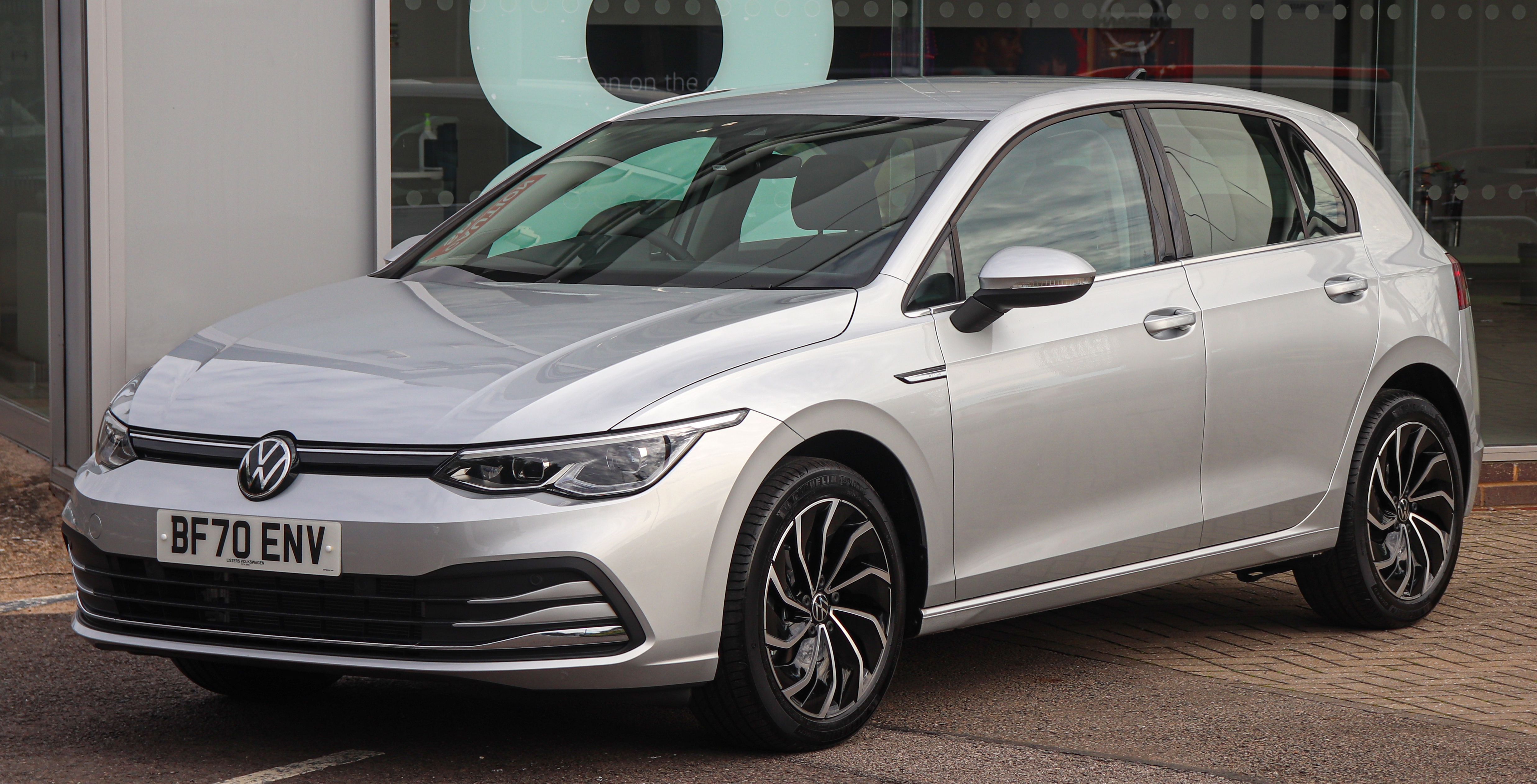
Volkswagen Golf
"Right, next up is segment four and we've got the squeeze. The VW Golf EV and the road charge."
The Volkswagen Golf is a very common car, and an electric “Golf EV” would be the electric version of that everyday model. The episode is saying Volkswagen isn’t bringing it out on the timeline people expected.
The Volkswagen Golf is a mainstream, mass-market hatchback, and the “Golf EV” would be the electric version of that familiar shape and name. Here, the hosts discuss Volkswagen’s decision to delay or cancel an electric Golf launch, which they frame as a major signal for EV adoption in the mass market.
road charge
"The VW Golf EV and the road charge. I think this is quite an interesting story. It's the Golf EV that won't happen and the road charge that will happen."
A “road charge” is a government fee for driving on public roads. It can matter more as cars switch from petrol/diesel to electric, because fuel taxes may no longer apply the same way.
“Road charge” refers to a policy that charges drivers for using roads, often to replace or supplement fuel taxes as vehicles electrify. The hosts pair it with the Golf EV decision to argue both reflect pressure building in the EV market.

Volkswagen Id3
"Volkswagen confirmed this week that there will be no electric Golf in 2028. The ID3 NEO is coming."
The ID.3 is Volkswagen’s electric hatchback. “ID3 NEO” here means a newer version that Volkswagen is planning to bring out instead of an electric Golf.
The ID.3 is Volkswagen’s electric hatchback, and “ID3 NEO” refers to an updated/next version the hosts say is coming. They contrast it with the delayed electric Golf, implying Volkswagen is prioritizing the ID.3 line instead of using the Golf badge for an EV sooner.
cannibalise
"Or that the ID3 NEO is close enough that they don't want to cannibalise it."
“Cannibalise” here means one car model might steal buyers from another model in the same company’s lineup. The idea is that selling an EV Golf could reduce sales of the ID.3.
In this context, “cannibalise” means one product line taking sales away from another within the same brand. The hosts suggest Volkswagen may be avoiding an electric Golf because it could steal demand from the ID.3.
EVD
"Story two that links to this, we think, is the EVED that's coming... This is the mileage-based road charge for electric vehicles, announced in the autumn budget and arriving April 2028."
EVD is a new kind of road charge that’s based on how many miles you drive. Instead of being built into fuel prices, it would be charged per mile for EVs.
EVD here refers to a mileage-based road charge for electric vehicles. It’s designed to replace some of the fuel-duty revenue that declines as EVs take over, and it’s calculated per mile driven rather than per gallon/litre of fuel.
fuel duty
"the average petrol car driver is currently paying somewhere between £900 and £1200 a year in fuel duty alone... as the fleet continues to electrify and the government needs to replace the fuel duty revenue it's losing."
Fuel duty is the tax included in the price of petrol and diesel. If more people drive EVs, the government collects less of this tax, so it looks for other ways to fund roads.
Fuel duty is a tax on petrol and diesel in the UK that’s collected through the fuel price at the pump. Because EVs don’t buy petrol or diesel, fuel-duty revenue falls as EV adoption rises, which is why the segment discusses replacing it with an EV mileage charge.
OBR forecast
"The OBR estimate, the EVD, will cost the average EV driver about a fifth of that... The OBR forecast that the EVED will result in nearly 440,000 fuel EVs sold by 2031."
The OBR is a UK government watchdog that makes forecasts about money and the economy. In this segment, they’re used as the source for an estimate of future EV sales.
The OBR (Office for Budget Responsibility) produces official forecasts for the UK economy and public finances. Here, the hosts cite an OBR forecast for how many EVs might be sold by 2031 under the policy changes.
fuel EVs
"The OBR forecast that the EVED will result in nearly 440,000 fuel EVs sold by 2031. Some of that will be offset by other measures..."
The phrase “fuel EVs” doesn’t sound like standard EV wording. Based on the context, they’re talking about how many EVs (electric vehicles) could be sold in the future.
“Fuel EVs” is likely a transcription/wording issue in this segment, but it appears in the context of “fuel EVs sold by 2031,” which doesn’t match common EV terminology. The surrounding discussion is about EV adoption and how policy affects sales volumes.
public charging
"Keep an eye on the rates and see what they're doing for public charging and so on."
Public charging is charging your EV at stations that aren’t in your driveway—like at shops or along roads. If you can’t charge at home, these stations matter a lot.
Public charging refers to charging infrastructure available to anyone outside a private home or workplace. For EV owners without home charging, public charging availability and speed largely determine how practical daily driving is.
B&Q
"Okay. Let's go to the B&Q story. So B&Q gets £11 million of EV chargers."
B&Q is a UK store. In this story, they’re putting EV charging stations in their parking lots so drivers can charge while they shop.
B&Q is a UK retail brand, and in this segment it’s specifically tied to installing EV chargers across its car parks. The point is how retail locations can function as practical charging stops because shoppers typically stay parked long enough to add meaningful range.
EV charge points
"Raw charging and B&Q announced an £11 million roll out of EV charge points across B&Q car parks nationwide."
EV charge points are the individual charging stations you plug into at a site. The number and placement of charge points affects queueing, availability, and how reliably drivers can top up when they’re parked for shopping or errands.
Raw charging
"Raw charging and B&Q announced an £11 million roll out of EV charge points across B&Q car parks nationwide."
Raw charging is the company building and running some of the EV chargers. They’re expanding chargers into places like retail parks, not just on highways.
Raw charging is the charging-operator company mentioned as rolling out EV charge points at B&Q retail locations. The segment uses this as an example of how operators are expanding charging beyond highways into everyday places.
dwell time location
"Because B&Q is not a destination in the same way as a motorway service station. It's a dwell time location. You go, you spend 45 minutes to an hour, you come out."
It means a charging spot where you’re parked for a while, like while you shop. Because you stay there, the car has time to add enough battery range to matter.
A “dwell time location” is a place where you naturally stay parked for a while—like a retail park—so the car can charge while you do something else. The key idea is that the time you’re stopped (dwell time) lines up with the time needed to add useful range.
charging network
"That is exactly the category of charging that makes electric car ownership work for people without home charging. The retail park is the gap in the charging network that nobody really talks about."
A charging network is the set of charging places around an area. If there are more chargers where you already stop (shops, gyms), it’s easier to plan trips and less stressful.
An EV charging network is the overall system of charging sites and operators that collectively determine how easy it is to find chargers when you need them. The episode frames “retail park” charging as a missing link that reduces stress compared with relying only on motorway chargers.
PowerPoint charger
"I went and filmed a charger down in Devon that was sitting, it was an old PowerPoint charger, sitting in a Sainsbury's"
This sounds like an older, simpler kind of charging setup. The host is basically saying it didn’t look like one of the newer, high-speed chargers.
“PowerPoint charger” appears to refer to a basic, older-style charging setup (likely a low-power outlet-based arrangement) rather than a modern high-power EV fast charger. The speaker’s emphasis is that the station looked outdated compared with newer installations.
Tesco
"I went and filmed a charger down in Devon that was sitting, it was an old PowerPoint charger, sitting in a Sainsbury's or no in a Tesco car park actually I think at the time in North Devon"
Tesco is a supermarket brand mentioned as the place where the charger was located. It supports the idea that charging is showing up where people already park to shop.
Tesco is mentioned as the retail location where a filmed charger was installed. The relevance here is the broader theme: EV charging is increasingly being placed in everyday retail parking lots, not only along motorways.
Sainsbury's
"I went and filmed a charger down in Devon that was sitting, it was an old PowerPoint charger, sitting in a Sainsbury's or no in a Tesco car park actually"
Sainsbury's is a supermarket brand mentioned in the story about where a charger was found. The point is that chargers are often in places like grocery store parking lots.
Sainsbury's is mentioned as another UK supermarket where the speaker says the charger was located (or could have been). It reinforces the episode’s focus on retail parking as a practical charging environment.
kilowatt charging
"been used in years. So I did a film. It's got seven kilowatt charging on it and everyone is commenting"
It’s basically how fast the charger can refill your EV’s battery. The higher the number (kW), the faster it can charge—assuming the car can accept that speed too.
“Kilowatt charging” refers to the charging power level of an EV charger, measured in kilowatts (kW). Higher kW generally means faster charging, but the vehicle and charger must both support the same charging capability.
off-street parking
"in North Devon or you have enough space for off-street parking so you're probably going to charge at home"
It means you can park at home somewhere you control. That matters for EVs because it makes it easier to charge at home instead of relying on public stations.
Off-street parking refers to having a driveway/parking spot where you can install or use home charging. The episode connects it to EV charging convenience because home charging reduces reliance on public chargers.
PowerPoint charging
"and why did they take away all the free PowerPoint charging when they put it in originally?"
This sounds like charging from a normal outlet at a place you can plug into. It’s usually slower than the fast public chargers.
“PowerPoint charging” appears to refer to a standard wall outlet setup used for EV charging, where you plug in a cable at a property rather than using a dedicated public charging station. In practice, this usually implies slower charging than DC fast chargers.
tethered
"It doesn't have a case, it's not tethered so you have to get the cable out of your car, plug it into the PowerPoint charger"
“Tethered” means the charger has the cable attached to it. You just plug the car in, instead of taking a cable out of your own car.
A tethered charger has the charging cable permanently attached to the station. That affects usability because you don’t need to carry your own cable, but you also have to manage the cable length and connection process.
destination charging
"and I'm looking forward to finding out more about what raw charging and doing with B&Q because that's a massive investment are going to be interesting and I hope are going to be more based on destination charging and dwell time at charge points because that's the key thing around using these electric cars."
This is charging while you’re parked somewhere for a while, like shopping or at work. Since you’re not in a hurry, you can charge more easily without needing super-fast chargers.
Destination charging means charging at places you’re likely to stay for a while—like supermarkets, hotels, or workplaces—rather than quick top-ups on the highway. It pairs well with “dwell time,” because the longer you’re parked, the more energy you can add at a practical pace.
DC in there
"so getting a quick squirt of DC in there and adding 100 miles range sorts you out for the week"
They mean a short fast-charge stop to add enough range for your week. It’s like topping up quickly so you don’t have to charge every day.
When the speaker says “a quick squirt of DC,” they mean a short session of DC fast charging to add meaningful battery range quickly. The key idea is that even brief fast-charging stops can cover day-to-day needs if planned around where you can charge.
lease returns wave hitting the market simultaneously
"The main pressure was a wave of 2020 to 2022 lease returns hitting the market simultaneously that wave is moving through the sweet spot right now"
A lease returns wave is when many EVs from earlier lease terms come back to dealers at the same time. When that happens, supply can temporarily increase and push used prices down until the market works through that inventory.
battery certificate check
"our lead story today was about battery health being at 95% so get a battery certificate check the car should be fine."
A battery certificate check is a verification process that documents the EV battery’s condition—typically including measured state-of-health figures. It’s used to confirm whether the battery degradation is within expected limits before buying a used EV.
EVED
"Question two does the EVED mean buying an EV is now a worst financial decision. The running cost numbers still work"
EVED appears to be a shorthand used in the episode for an EV-related financial metric or decision framework—here, framed as whether buying an EV is a “worst financial decision.” Because the transcript doesn’t expand the acronym in this slice, listeners may need the show to define what EVED stands for and how it’s calculated.
rapid charging
"it gets more complicated is if you're doing high mileage and mostly rapid charging publicly. Home charging means that remains the financial engine"
Rapid charging refers to faster public charging (typically higher power DC charging) compared with slower home charging. It can affect both costs and battery wear patterns, which is why the episode distinguishes it from charging overnight at home.
Request an Explanation
Heard something you'd like explained? We'll add it to this episode.
Sign in to request explanations for terms you heard.
Want to learn more?
Browse our glossary for plain-English explanations of automotive terms, jargon, and concepts.
Help improve this episode
See something that's not quite right? Our annotations are AI-generated and can sometimes miss the mark. Click the flag icon on any annotation to suggest a correction.