
Usual spiel - 16 June 2026
About this episode
Motor Finance Redress Payment news leads off with the headline that it’s “Delayed Until 2027,” tied to FCA appeals. The discussion then shifts to EV trade and policy: “rule of origin” battery thresholds determine whether EVs face a “10% tariff,” while UK zero-emission vehicle mandate targets are said to be in flux. Charging costs get attention too—standing charges and VAT scope. The show also covers Aion’s UK EV launch, a new car-data privacy service, and a run of fresh vehicle stories from the Audi Q7 to BYD’s Dolphin G DM-i.
As suspected, following appeals against the Financial Conduct Authority’s (FCA) ruling and redress scheme, the FCA has announced that payouts will be delayed until 2027, if it goes ahead at all. The appeals have argued for the scheme to be quashed due to the claim that the rules governing it are illegal. For more in this, click the link here for a MotorTrader article.
FOLLOW UP: INDUSTRY CALLS ON THE EU AND UK TO REACH NEW BREXIT DEALIndustry bodies for both the UK and European car manufacturers have called on both governments to reach a new ‘Rules of Origin’ deal that will allow for tariff free importing and exporting of cars and parts made in either area. This runs out at the end of this year. If you want to find out more, click this electrive article link here.
REPORTS THAT GOVERNMENT TO REDUCE MANDATE LEVELSOver the weekend news broke on the rumour that the Government is set to reduce the required zero emission vehicle mandate level to 50% for 2030, instead of the 80% it is currently at. This is just a couple of weeks after the latest Carbon Budget claimed it would be at 95% and recently that they would not begin a review into levels until next year. To learn more, click this Autocar article link here.
GOVERNMENT BEGINS REVIEW OF PUBLIC CHARGING COSTSAfter promising to do so, in the 2025 Budget, the Government has finally commenced the review into public EV charging costs. All are aware of the disparity between home and public charging prices and with more buying EVs who have no access to home charging the penalties can make the financial case for sticking with ICE. The review is looking at why the costs are what they are, how they might move between now and 2030 and what can be done to reduce them. The report into all this is expected in the autumn of this year. Click this EV Powered article link here to read more.
AION LATEST CHINESE BRAND TO OPEN SHOWROOMS IN THE UKAion has opened a number of UK showrooms, in a first for the Chinese GAC Group. This brand is positioned as ‘upper-mainstream’ by GAC and will be selling the Aion V, an electric SUV, initially. This will be followed by the Aion UT hatchback, later in the year. To see where they are now based, click this EV Powered article link here.
NEW DATA PRIVACY SERVICE LAUNCHEDEngenius has launched their Engineius DataClear service, with the help of Privacy4Cars. This will delete in-car personal data from the vehicle, with a report to providing a paper trail to confirm it has taken place. Not only does this help customers but also complies with GDPR requirements. For more on this, click this MotorTrader article link here.
If you like what we do, on this show, and think it is worth a £1.00, please consider supporting us via Patreon. Here is the link to that CLICK HERE TO SUPPORT THE PODCASTNEW NEW CAR NEWS -Audi Q7Audi has revealed the third generation of their large SUV, the Q7. This will come with either five, six or seven seats and has a fresh new look both outside and in. There will be only one engine available, a new 3.0 litre V6 diesel, but in two flavours. Full details on the performance and power capabilities is yet to be confirmed. The interior is brought in line with other recently released models. Prices and full specifications are expected in the next month. Click this Autocar article link for more.
Boreham Ford Escort RSBoreham Motorworks has revealed what they are calling a ‘continumod’ in the form of a Ford Escort RS. Costing from £345,000 (in the UK) this is a completely new car that takes inspiration from the Mk1 Escort. Their Ten-K engine is a 2.2 litre petrol, which produces 326bhp and 155lb ft of the torques. There will also be the option to have a re-engineered Twin Cam that the original used in period. Only 150 will be built. Click this Autocar article link for more.
BYD Dolphin G DM-iBYD has revealed the first plug-in hybrid supermini, with their Dophin G DM-i. With a maximum range of 649 miles and an electric only range of an impressive 65 miles, this car puts to shame many which cost more and are bigger. It will come with a 1.5 litre petrol engine and a 120kW electric motor. Prices are yet to be revealed and deliveries expected to start in the autumn. Click this EV Powered article link for more.
LUNCHTIME READ: BUSSO V6We are recommending a Hagerty article for your reading pleasure this week. Nathan Chadwick writes all about the fabulous Alfa Romeo Busso V6. You’ll find out about the history of this evocative engine. Click this link to read all about it.
LIST OF THE WEEK: 2001 STARS NOW ELIGIBLE FOR THE FOTUAntony Ingram highlights just some of the 2001 cars that are now eligible to be entered into the Festival of the Unexceptional. Do you agree with Alan’s choice? Click the link here to check out your options.
AND FINALLY: SWEDISH HITMAN KILLED IN LIMERICK ROAD INCIDENTA Swedish contract killer was killed in a road collision after his driver accomplice was attempting to turn the car around after going the wrong way. This sounds like the plot from a low budget thriller, but is what happened last week. Click this Irish Times article link to read more.
EV tariffs
"The next piece of follow up, though, is about the UK, EU, EV tariffs... calling for suspension of the so-called Brexit tariffs on electric vehicles..."
“EV tariffs” are import duties specifically applied to electric vehicles (and sometimes their components) when they cross borders. In this segment, the discussion is about whether the UK and EU should pause these duties so EVs can be imported with less cost during the transition period.
Brexit tariffs
"And they are calling for suspension of the so-called Brexit tariffs on electric vehicles, which is due to take effect on the 1st of January, 2027... These were all of the various tariffs, not just automotive, which were due to take effect then..."
“Brexit tariffs” are border taxes that came into play because the UK left the EU. The discussion here is about whether those planned EV-related taxes should be paused so trade stays cheaper and more predictable.
“Brexit tariffs” refers to import duties that were introduced or scheduled as part of the UK’s post-Brexit trade arrangements with the EU. The segment explains that these tariffs were repeatedly delayed, and that the current debate is about whether they should be suspended for EVs.
rule of origin
"Most of this comes down to rule of origin, specifically around batteries and that kind of thing, particularly because the 2020 Brexit agreement stipulated that 55% of the value added in car production must be generated in Europe..."
A “rule of origin” is a trade rule that says where something is considered to be made. For EVs, it often comes down to where the battery and related value were produced, which then affects how much tax/import duty gets charged.
In trade policy, a “rule of origin” is the set of requirements that determines where a product is considered to have been made. For cars and EVs, it’s used to decide whether the vehicle (or its key components like batteries) qualifies for lower or zero import tariffs based on where the value was created.
standing charges
"because if you get a jump in standing charges for these rapid charges of 462% since 2021, and yet we as the consumer only get a charging cost of 11%, okay, that was just in 12 months"
Standing charges are the “you have access to this service” fees that you pay even if you don’t use much electricity. With EV charging, that can make short top-ups cost more than you’d expect.
Standing charges are the fixed fees you pay to have access to a utility service, regardless of how much electricity you actually use. For public EV charging, they can significantly raise the total cost—especially if you only charge briefly.
rapid charges
"because if you get a jump in standing charges for these rapid charges of 462% since 2021, and yet we as the consumer only get a charging cost of 11%, okay, that was just in 12 months"
“Rapid charges” means faster EV charging at public stations. Because it’s quicker, it often uses more expensive equipment and can cost more to run.
“Rapid charges” refers to faster public EV charging compared with slower AC charging. In practice, it usually means higher-power DC fast charging, which can involve different pricing structures and higher operating costs for the charge-point operator.
charging infrastructure costs
"because every other survey that asks people, the first hurdle is the upfront costs of the electric car, then it is the charging infrastructure costs."
Charging infrastructure costs are the costs of running public charging stations. Those costs can end up affecting how much it costs you to charge on the road.
Charging infrastructure costs are the expenses involved in building, operating, and maintaining public charging networks. These costs can include site costs, equipment, energy procurement, and ongoing charge-point operations—often influencing the price drivers pay.
VAT
"it is disappointing that VAT has been left outside the terms of reference, given the clear unfairness between drivers who can charge at home and those who rely on public network."
VAT (Value Added Tax) is a consumption tax added to goods and services, including many costs related to EV charging. If VAT is excluded from a review’s scope, the report may miss a major component of what drivers actually pay at the pump.
terms of reference
"it is disappointing that VAT has been left outside the terms of reference, given the clear unfairness between drivers who can charge at home and those who rely on public network."
“Terms of reference” are the official boundaries and rules that define what a government review or investigation will cover. If VAT is left outside the terms of reference, the review may be unable to address that part of the pricing drivers see.
pricing transparency
"and we need to see real structural reform that brings down charge point operating costs that reflects a broader set of issues around pricing transparency, reliability and access to charges,"
Pricing transparency means charging stations clearly explain how the price is calculated. If it’s confusing, you can’t easily tell what you’ll pay before you start charging.
Pricing transparency means clearly showing how EV charging is priced—such as what portion comes from energy, time, and any fixed fees. Poor transparency makes it harder for drivers to predict total cost and compare providers.
charge point operating costs
"and we need to see real structural reform that brings down charge point operating costs that reflects a broader set of issues around pricing transparency, reliability and access to charges,"
Charge point operating costs are the ongoing expenses to keep public chargers running and available. They can include maintenance, communications/monitoring, site leasing, and administrative costs—factors that can drive higher per-kWh or per-minute pricing.

Aion V
"And they are bringing their Aion V SUV. I don't know if that's V or five. I think it's V. That's an electric SUV."
Aion V is an all-electric SUV. The hosts are talking about how far it can go and how quickly it can charge, and how it’s meant to compete with other popular EVs.
Aion V is an electric SUV from the Aion brand, part of the GAC group. The key point is that it’s positioned as a mainstream EV, and the segment discussion focuses on its range and charging performance rather than just styling.
GAC group
"And this is part of the GAC group from China, which is the Chinese fourth largest car maker."
GAC group is the parent company behind Aion. That’s relevant because it can affect how big and how fast the brand can grow and support cars in new countries.
The GAC group is the Chinese corporate group behind the Aion brand. In practice, that matters because it can influence engineering resources, manufacturing scale, and how quickly the brand can expand into markets like the UK.

Renault Scenic
"The vehicles that this is going up against and aiming for is the likes of the Skoda LROC, the Geely EX5 and the Renault Scenic."
The Renault Scenic is another car the hosts say Aion V is aiming to compete with. It’s included to show the kind of buyers and use-cases Aion V is targeting.
The Renault Scenic is mentioned as part of the Aion V’s competitive set. The hosts are using it to anchor the discussion in mainstream family-EV alternatives rather than niche performance cars.

Geely EX5
"The vehicles that this is going up against and aiming for is the likes of the Skoda LROC, the Geely EX5 and the Renault Scenic."
The Geely EX5 is another electric car the hosts say the Aion V is competing with. It helps you understand who the likely rivals are.
The Geely EX5 is cited as one of the Aion V’s competitive targets. The point of naming it is to show the Aion V is being positioned against other mainstream EV crossovers.

Galaxy Geely Ex5
"...nd aiming for is the likes of the Skoda LROC, the Geely EX5 and the Renault Scenic. The price is from £36,450..."
The Galaxy EX5 is a new electric crossover-style vehicle. It’s being talked about because it’s expected to start at a specific price point, which makes it relevant for people comparing options. The main takeaway is that it’s an EV aimed at the mainstream crossover market.
The Galaxy EX5 is an upcoming vehicle in the EV crossover space, mentioned alongside other models as part of a pricing discussion. It’s significant because it’s positioned as a value-focused option (with a stated starting price) aimed at buyers shopping in the same general segment. In a news show, it’s the kind of car that comes up when hosts compare what new EVs cost and how they’re meant to compete on features and affordability.
75.3 kilowatt hour battery
"And there is a 75, this isn't new, you can't use by the way, 75.3 kilowatt hour battery up to 317 miles on a single charge can do some pretty impressive rapid stuff"
That 75.3 kilowatt-hour number is the size of the car’s battery. Bigger batteries usually mean you can drive farther before needing to charge again.
A 75.3 kWh battery refers to the size of the car’s high-voltage battery pack, measured in kilowatt-hours. Larger capacity generally supports more driving range, though real-world results also depend on efficiency and driving conditions.
10 to 80% in 24 minutes
"can do some pretty impressive rapid stuff getting up from 10 to 80% in 24 minutes."
This is how quickly the car can add charge when you start low and charge up to a fairly high level. It’s useful because charging is usually fastest in the middle, not at the very end.
“10 to 80% in 24 minutes” describes fast-charging performance under a specific charging scenario. It’s a practical metric because many EVs charge quickly at lower states of charge, then slow down as the battery fills.
Chang'en
"and there was a Chang'en and I drove past and I go, [1110.7s] what and who is that? And it turns out that that is a known brand that has been here for a little"
Chang'en is a car brand (from China) that’s starting to show up in the UK. The hosts are basically saying a lot of people haven’t heard of it yet, even though it’s been around for a while.
Chang'en is a Chinese vehicle brand that’s showing up in the UK market via dealerships. The hosts mention it because it’s unfamiliar to many shoppers, which is common when newer brands expand into new regions.
BYD
"he explains why the BYD model range has such a weird set of names in it. It's worth watching or"
BYD is a big car company from China that makes lots of electric cars. The hosts are talking about how BYD’s model names can be confusing because they don’t follow the usual pattern.
BYD is a major Chinese automaker known for electric vehicles and plug-in hybrids. The hosts specifically reference how BYD’s model lineup uses unusual naming, which can make it harder for shoppers to understand what each variant is.
Ingenious
"A company called Ingenious has launched a data clear data privacy service. Ingenious has a network of 600 drivers transport"
Ingenious is a company that helps move cars around the country using drivers and transport agents. Here, they’re involved in a service that deals with deleting personal data inside cars.
Ingenious is described as a company that runs a network of transport drivers/agents to move vehicles around the country. In this segment, it’s positioned as the logistics partner behind a data-privacy service for vehicles.
data privacy service
"A company called Ingenious has launched a data clear data privacy service. Ingenious has a network of 600 drivers transport"
A data privacy service is a service meant to protect personal information. In this case, it’s about clearing personal data from cars so dealerships can pass the vehicle on without leaving your information behind.
A data privacy service in the automotive context is a third-party offering that helps manage what personal information is stored, accessed, or removed from connected vehicles. Here, the hosts describe it as deleting personal data inside cars for dealership and motor-trader customers.
Privacy for Cars
"However, they have teamed up with a company called Privacy for Cars. [1222.0s] And the idea is they provide a service that will delete in-vehicle personal data for its"
Privacy for Cars is a company that helps protect your personal information stored in a car. In this segment, they’re described as deleting personal data so dealerships can handle vehicles more safely.
Privacy for Cars is a company that partners with vehicle logistics networks to provide a service focused on in-vehicle personal data. The hosts say the service deletes personal data for customers such as dealerships and motor traders.
in-vehicle personal data
"And the idea is they provide a service that will delete in-vehicle personal data for its customers. And its customers aren't UNI, customers are dealerships, motor traders,"
In-vehicle personal data is the personal stuff a car can store—like your user settings or account-linked information. The point of the service they mention is to wipe that information so the next owner isn’t stuck with your data.
In-vehicle personal data refers to information stored by a car’s infotainment and connected systems, such as user profiles, contacts, location history, or other account-linked details. The segment frames a privacy service as deleting that data before vehicles are handed to new customers.
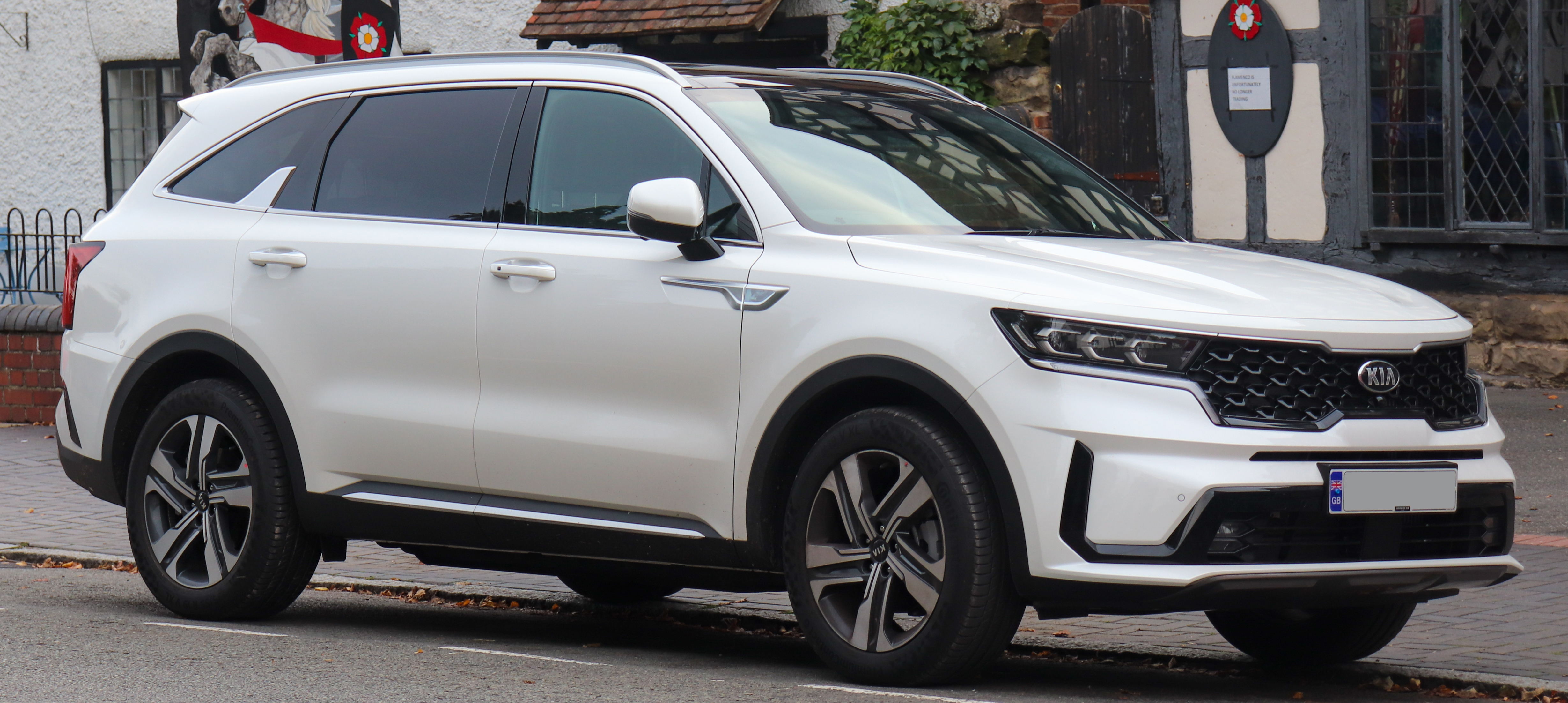
Kia Sorento
"...oing to bulls this up. You can talk about the Kea Sorento Stroke Tellerite. Oh sorry, I mean the Audi Q7. N..."
The Kia Sorento is a family SUV designed to carry passengers and luggage comfortably. It’s usually chosen for its practicality and the amount of features you get. It’s a common option when people are comparing SUVs in the same general size class.
The Kia Sorento is a family-oriented SUV that’s typically positioned as a practical, value-focused alternative in the mid-size SUV category. It’s often discussed because it offers a lot of space and features for the money, and it’s a common pick for buyers who want versatility without going fully into ultra-luxury pricing. In a podcast, it may be referenced when the conversation turns to which SUVs make sense for different needs and budgets.
chat GPT
"It's equipped with an inbuilt self-learning voice assistant [1550.2s] that can control key functions and uses chat GPT to answer questions on the move. [1555.0s] I'm glad you mentioned that. I would love to hear our regional accent correspondent"
ChatGPT is an AI that can answer questions in a chat-like way. In this segment, they’re talking about putting that kind of AI into a car’s voice system, so it can respond while you’re driving—and what happens if it gives bad info.
ChatGPT is a generative AI system that can produce conversational answers. Here it’s discussed as being embedded into car voice assistants so the vehicle can respond to questions “on the move,” raising questions about accuracy and legal responsibility when the AI is wrong.
inbuilt self-learning voice assistant
"It's equipped with an inbuilt self-learning voice assistant [1550.2s] that can control key functions and uses chat GPT to answer questions on the move. [1555.0s] I'm glad you mentioned that. I would love to hear our regional accent correspondent"
This is a voice assistant built into the car. It can learn and respond to you, and in this discussion they’re focusing on whether it can be trusted to give correct information.
An “inbuilt self-learning voice assistant” is a voice-control system integrated into the car that can adapt its behavior over time. In this segment, it’s described as controlling functions and answering questions, which is why the hosts pivot to accuracy and liability concerns.

Volvo XC90
"And particularly for Volvo, because this Q7 is going to go up against the Volvo XC90, Volvo is all in with Google. [1612.5s] Volvo is crawling with Google. And here's the other thing. The latest boast from Volvo is that [1617.7s] the Google AI will decide what the road signs are and will help the car act accordingly."
The Volvo XC90 is Volvo’s large SUV with room for a family. They bring it up here because it’s being pitched as a rival to the Audi Q7, with Volvo using Google AI features in the car.
The Volvo XC90 is Volvo’s flagship three-row SUV, typically positioned as a premium family hauler with a strong focus on safety and driver-assistance tech. In this discussion, it’s directly compared to the Audi Q7 as a competitor that’s leaning heavily into Google-based AI features.
level two system
"Okay. What if you get that wrong? Because at the minute, me as the driver gets held responsible [1630.8s] because it's only a level two system. Can we come at this from another angle, please?"
“Level two” means the car can help drive, but it’s not fully in charge. You still have to watch the road and be ready to take over, and that’s why responsibility can fall on the driver if something goes wrong.
A “level two” system refers to SAE automation levels where the car can assist with driving tasks (like steering and speed control) but the human driver must remain responsible and attentive. The key point here is liability: if the AI makes a mistake, the driver may still be held responsible because it isn’t full automation.

Audi Q7
"Anyway, this Q7 is the large three row, typically three row, but it can come with a 56 and seven seat setup. Depending on your choice, it is going to start from around 80,000 pounds. It is going to have a new V6 engine. It's a three liter diesel V6... And it's going to be all wheel drive as well."
The Audi Q7 is a big Audi SUV with three rows of seats. It can be set up for up to seven passengers, and this version is described as having a V6 diesel engine and all-wheel drive.
The Audi Q7 is a large, three-row SUV from Audi, built to carry up to seven people depending on configuration. In this segment, they’re discussing a new Q7 variant with a three-liter V6 diesel and all-wheel drive, aimed at buyers who want a big family hauler.
all wheel drive
"It's going to have two flavours of it. And it's going to be all wheel drive as well. If you need mohoussive SUV with a potential to shift seven people around..."
All-wheel drive means the car can send power to all four wheels. That helps it grip better on wet, snowy, or slippery roads.
All-wheel drive (AWD) sends power to both the front and rear axles, improving traction when roads are slippery or when accelerating out of corners. It’s especially useful for large SUVs that may be used year-round and in varied weather.

Cadillac Escalade
"...an SUV by European standards. I overtook Cadillac Escalade long wheelbase. Did you waive at each other? Well..."
The Cadillac Escalade is a large luxury SUV. It’s designed to be comfortable and spacious, with lots of features aimed at making the ride feel upscale. People mention it a lot because it’s a very noticeable, big vehicle.
The Cadillac Escalade is a large, full-size luxury SUV known for its big presence, roomy interior, and high-end comfort features. It often comes up in news and conversation because it’s a flagship model that represents Cadillac’s luxury focus and is a common choice for people who want a statement vehicle. In a podcast, it’s also the kind of car that stands out when discussing size, style, and real-world driving impressions.
retro mod
"Borum have revealed their new Ford Escort RS and it's not a retro mod. It's a continuation type thing because it's a whole new body shell and a whole new engine..."
A “retro mod” is when someone takes a classic-looking idea and builds it using modern parts. It’s meant to look old-school, but drive like a newer car.
A “retro mod” is a modern car build that’s styled to look like a classic, often combining old-school bodywork cues with newer mechanicals. In the segment, the host contrasts it with a “continuation” approach for the Ford Escort RS.

Ford Escort RS
"Borum have revealed their new Ford Escort RS and it's not a retro mod. It's a continuation type thing because it's a whole new body shell and a whole new engine and all of that kind of stuff, but it will cost you 300,000 pounds plus tax..."
This is a new performance-style Ford Escort RS build. The hosts say it’s not just a classic-looking makeover—it’s described as using new parts and a new engine, and it’s priced extremely high.
The Ford Escort RS refers to a performance-focused Escort variant, and here it’s being discussed as a new “continuation” build rather than a simple retro-styled modification. The segment claims it uses a whole new body shell and a whole new engine, with a very high starting price.
continuation
"Borum have revealed their new Ford Escort RS and it's not a retro mod. It's a continuation type thing because it's a whole new body shell and a whole new engine..."
Here, “continuation” means making a brand-new car that follows the original idea, instead of restoring an old one. The hosts say it uses new parts like a new body and new engine.
In this context, “continuation” means building a car as a new production run that follows the original design/spec, rather than restoring an existing vintage car or doing a retro-styled restomod. The host emphasizes it’s a whole new body shell and engine, which makes it closer to a modern reproduction than a refurbishment.
10,000 RPM red line
"It's got a 2.2 liter engine with a 10,000 RPM red line, which weighs just 85 kilos, sends 326 brake horsepower and 155 pound feet of torque"
Red line is the highest safe engine speed. If the tachometer gets near that number, you should shift or ease off so you don’t risk damaging the engine.
A car’s red line is the maximum safe engine speed (RPM) where the engine is meant to stop being revved. “10,000 RPM red line” means this engine is designed to spin very fast, and drivers are expected to shift or back off before exceeding that limit.
brake horsepower
"It's got a 2.2 liter engine with a 10,000 RPM red line, which weighs just 85 kilos, sends 326 brake horsepower and 155 pound feet of torque"
Brake horsepower is a way of measuring how much power the engine makes. It’s usually measured on a test stand, not just estimated from the car’s feel.
Brake horsepower (bhp) is a measure of engine power taken at the engine output, typically on a dynamometer. It’s a standardized way to compare power across cars, even though the exact test method can vary by region and standard.
torque
"sends 326 brake horsepower and 155 pound feet of torque through a five speed dog leg manual gearbox to the rear axle."
Torque is the engine’s twisting force. More torque usually means the car feels stronger when you start moving or when you press the gas at lower speeds.
Torque is the twisting force an engine produces, measured here as “155 pound feet.” It strongly influences how quickly a car accelerates in lower gears and how responsive it feels when you apply throttle.
five speed dog leg manual gearbox
"sends 326 brake horsepower and 155 pound feet of torque through a five speed dog leg manual gearbox to the rear axle."
A dog-leg gearbox is a manual transmission shift pattern where the gears are arranged differently than the common layout. Drivers often like it because the shifts can feel more sporty and precise.
A “dog-leg” manual gearbox is a layout where first gear is in an “up-and-left” position, and second gear is typically down from it, rather than being in the usual straight H-pattern. It’s often used in performance cars because it can make shifting between gears feel quicker and more direct.
rear axle
"through a five speed dog leg manual gearbox to the rear axle. The car itself weighs just 895 kilos"
The rear axle is what sends power to the rear wheels. If power goes to the rear axle, the car is driving the back wheels, which changes how it grips and handles.
The rear axle is the assembly that connects the drivetrain to the rear wheels. Saying power goes “to the rear axle” indicates a rear-wheel-drive layout, which affects traction and how the car handles under acceleration.
Resto Mod thingy
"You know, we've gone something different and it's a bit like the Lotus Esprit Resto Mod thingy. They picked a different car. They picked a different brand and I applaud that."
A restomod is an older car that’s been upgraded with newer parts. The goal is to keep the classic look while making it drive and perform more like a modern car.
A restomod is a modified classic car that keeps the original character but updates it with modern engineering—often including better brakes, suspension, and drivetrains. The host is using “Resto Mod thingy” to describe the idea of taking a known platform/brand and building a modernized version.

Lotus Esprit
"I've always loved the Lotus Esprit. So I get the Lotus Esprit one, but even the best looking four-desk"
The Lotus Esprit is a classic British sports car. The host is saying they love the original, and they’re comparing this new idea to the kind of modern upgrades people do to classics.
The Lotus Esprit is a British sports car famous for its distinctive styling and long-running enthusiast appeal. Here, the host says they’ve “always loved the Lotus Esprit,” using it as the reference point for a restomod-style approach—taking a classic and building a modernized version.

BYD Dolphin G DM-I
"Yes. And this is the BYD Dolphin G DM-I, which is the first super mini to come out as a plug-in hybrid. It will have a maximum range of 646 miles and it will do just on electric alone, 65 miles in a super mini."
The BYD Dolphin G DM-i is a small BYD plug-in hybrid. It can drive on electricity for a long distance, and when the battery needs charging, a small petrol engine helps generate electricity instead of just driving like a normal gas car.
The BYD Dolphin G DM-i is a plug-in hybrid “super mini” from BYD, notable for how much of its total claimed range is intended to be driven electrically. The key tech angle is its DM-i system: a small petrol engine plus an electric motor, where the petrol engine often works mainly as a generator to keep the batteries charged.
plug-in hybrid
"Yes. And this is the BYD Dolphin G DM-I, which is the first super mini to come out as a plug-in hybrid. It will have a maximum range of 646 miles..."
A plug-in hybrid is a hybrid car with a battery you can charge by plugging it in. You can drive it on electricity for a while, and then it uses its gas engine and electric system together when the battery runs low.
A plug-in hybrid (PHEV) is a hybrid car that has a battery you can charge from an external power source (like a home charger). It can run on electricity for a limited distance, then switches to hybrid operation when the battery is depleted.
electric alone
"It will have a maximum range of 646 miles and it will do just on electric alone, 65 miles in a super mini."
“Electric alone” means the car is moving using only the electric motor. The battery is doing the work, not the petrol engine.
“Electric alone” refers to driving using only the electric motor, with the battery providing the energy. In a plug-in hybrid, this is the mode that delivers the highest efficiency and typically the quietest driving.
kilowatt electric motor
"Because it's going to have a 1.5 liter petrol engine mated up to a 120 kilowatt electric motor."
Kilowatts are a way of measuring how strong the electric motor is. A higher number generally means the motor can provide more power when you need it.
A kilowatt (kW) is a unit of power used to rate the electric motor. Saying the car uses a “120 kilowatt electric motor” tells you the motor’s output capability, which influences acceleration and how strongly it can assist the drivetrain.
blade batteries
"They're going to use their blade batteries. And the engine is primarily running as a generator to charge up the batteries."
BYD’s “blade batteries” are a battery design intended to improve safety and structural strength compared with more conventional pack layouts. The idea is that the cells are arranged in a way that helps resist damage and supports the pack’s rigidity.
generator
"And the engine is primarily running as a generator to charge up the batteries. So"
Here, the gas engine mostly acts like a power generator. Instead of only turning the wheels, it makes electricity to recharge the battery and keep the electric system going.
In this BYD’s hybrid setup, the petrol engine is described as primarily running as a generator—meaning it spins to produce electricity rather than directly driving the wheels. That electricity then charges the battery and/or powers the electric motor.
range extender
"it's like a range extender type thing set up. The way that this car is set up is it's EV first."
A range extender is a backup power source in an EV. When the battery gets low, it kicks in to help generate electricity so you can keep driving.
A range extender is a small onboard engine/generator used to recharge the battery in a plug-in or EV-first hybrid setup. It doesn’t directly drive the wheels most of the time; instead, it helps extend how far the car can go when the battery is low.
0-62
"The 0-62 is apparently going to take 8.3 seconds, which is fine, perfectly fine."
“0-62” means how fast a car accelerates from a standstill to 62 mph. It’s a quick way to compare acceleration between cars.
“0-62” is shorthand for acceleration from 0 to 62 mph (100 km/h). It’s a common performance metric used to compare how quickly different cars reach everyday highway speed.
Android Auto
"big screens, stuff like that, Android Auto, Apple CarPlay, review camera, adaptive cruise control."
Android Auto lets you connect your Android phone to the car and use certain apps on the car’s screen. It’s meant to be more convenient and safer than using your phone directly.
Android Auto is a smartphone-to-car interface that mirrors compatible apps and navigation onto the car’s infotainment screen. It’s designed to make phone features safer and easier to use while driving.
Apple CarPlay
"Android Auto, Apple CarPlay, review camera, adaptive cruise control."
Apple CarPlay connects your iPhone to the car so you can use certain apps on the car’s screen. It helps you use navigation and music without touching your phone as much.
Apple CarPlay is a smartphone-to-car interface for iPhones that brings compatible navigation, music, messages, and calls to the car’s display. It uses the phone’s apps while keeping the driver focused on the road.
adaptive cruise control
"review camera, adaptive cruise control. Well, that's one of the things that"
Adaptive cruise control is like cruise control, but it also reacts to the car in front. If traffic slows, it slows down too, and then resumes when the road opens up.
Adaptive cruise control automatically adjusts the car’s speed to maintain a set following distance from the vehicle ahead. Unlike basic cruise control, it can slow down and speed back up as traffic changes.
parking sensors front and rear
"Parking sensors front and rear, LED lights, heated seats, steering wheel, wireless charging, blah, blah, blah."
Parking sensors are little detectors that help you judge how close you are to objects while parking. Front and rear sensors cover both directions so you don’t miss obstacles.
Front and rear parking sensors use ultrasonic radar to detect nearby objects and warn the driver with beeps or a display. Having both ends helps when parking in tight spaces or when approaching obstacles from either direction.
heated seats
"LED lights, heated seats, steering wheel, wireless charging, blah, blah, blah."
Heated seats warm you up using built-in heaters in the seat. They’re handy when it’s cold outside.
Heated seats use electric heating elements in the seat cushions and backrests to warm the cabin quickly. They’re a common comfort feature on higher trims and are especially useful in cold weather.
wireless charging
"wireless charging, blah, blah, blah. The sort of stuff that you are expecting at the top of the range."
Wireless charging lets you charge your phone on a pad in the car without plugging in a cable. You just set the phone down to charge.
Wireless charging in cars typically refers to an inductive charging pad that powers a compatible phone without plugging in a cable. It’s usually slower than wired charging but more convenient for daily use.

Audi SQ7
"This floats my boat so much more than a bit of Audi SQ7. Yeah, it really does. Yeah, clever little thing."
The Audi SQ7 is a sporty, higher-performance version of the Audi Q7 SUV. Here it’s mentioned as a comparison to what the hosts think about the EV-first car.
The Audi SQ7 is a performance-focused version of the Q7 SUV, known for its punchy power and family-size practicality. In this segment it’s used as a comparison point to highlight how the speaker feels about the EV-first setup they’re discussing.

Alfa Romeo Busso V6
"And this week, it's from Nathan Chadwick. And it is all about the Alfa Romeo Busso V6. That is the V6 engine, which has graced many Alpha, starting with the Alpha 6, which was designed by a chap called Giuseppe Busso."
The “Busso V6” is a well-known Alfa Romeo V6 engine design. People love it mainly because it sounds special and has a distinctive character.
The “Busso V6” refers to the famous V6 engine designed by Alfa Romeo engineer Giuseppe Busso. It’s celebrated for its distinctive sound and character, including features like a tuned exhaust note and an unusual firing order.
Giuseppe Busso
"starting with the Alpha 6, which was designed by a chap called Giuseppe Busso."
Giuseppe Busso was an engineer at Alfa Romeo. He helped design the V6 engine that enthusiasts talk about for its special sound.
Giuseppe Busso was an Alfa Romeo engineer credited with designing the V6 engine family that became known for its distinctive sound. In this segment, he’s tied directly to the “Busso V6” story and its design choices.
unusual firing order
"It has an unusual firing order. Again, for that sound, 60 degree V6 or aluminum combat."
The firing order is the pattern of which cylinder lights off when. Changing it can change how the engine feels and sounds while it runs.
An engine’s firing order is the sequence in which its cylinders ignite. An “unusual firing order” can be used to shape the engine’s vibration and exhaust sound characteristics—here, specifically to enhance the Busso V6’s audio personality.
60 degree V6
"Again, for that sound, 60 degree V6 or aluminum combat."
A “60 degree V6” means the cylinders are arranged in two groups with a 60-degree angle between them. That layout influences how the engine runs and feels.
A “60 degree V6” describes the angle between the two banks of cylinders in a V6 engine. That geometry affects engine balance, packaging, and how the engine’s sound and vibration behave.
Festival of the Unexceptional
"plucked but a mere few from the 2001 era in which you could rock up and submit your vehicle to be [2269.2s] entered into the festival of the Unexceptional. There's not enough here for me to choose, so I [2273.4s] am going to ask Alan."
This is a themed car event where the fun is bringing cars that aren’t the most famous or flashy. The hosts are basically asking: what car would make people say “ooh” even if it’s not a big-name classic?
“Festival of the Unexceptional” is a themed car event concept where the appeal is showing up with overlooked or ordinary-ish cars rather than the usual headline-grabbers. In this segment, it’s used as the selection criteria for what kind of car would make people react.

Fiat Stilo
"Yeah. There's a significant difference here. I think the one that bridges the gap is the Fiat [2304.0s] Stilo. Okay. I've always thought that's a handsome design. [2307.2s] Yeah. And that's one of the reasons I'm choosing it."
The Fiat Stilo is a small Fiat hatchback from the early 2000s. The hosts are saying it’s a cool, good-looking choice for a “not-famous-but-interesting” car event, and that it isn’t as unreliable as some people say.
The Fiat Stilo is a compact hatchback from Fiat that’s remembered for its distinctive, slightly quirky styling from the early 2000s. In this segment, the hosts pick it as a “Festival of the Unexceptional” entry because it’s good-looking and not as unreliable as people claim.
County Limerick
"It's definitely an end finally. And I saw the story and thought, [2364.9s] I don't know if it motoring or not, but it's definitely an end finally. [2367.6s] In a vehicular incident that took place in County Limerick last Monday,"
County Limerick is in Ireland. The hosts are saying the incident happened there, so it’s the location context for the story.
County Limerick is a county in Ireland, and it’s referenced here as the location of a “vehicular incident.” While not a car-specific technical detail, it frames the news story’s geography for listeners.
Request an Explanation
Heard something you'd like explained? We'll add it to this episode.
Sign in to request explanations for terms you heard.
Want to learn more?
Browse our glossary for plain-English explanations of automotive terms, jargon, and concepts.
Help improve this episode
See something that's not quite right? Our annotations are AI-generated and can sometimes miss the mark. Click the flag icon on any annotation to suggest a correction.