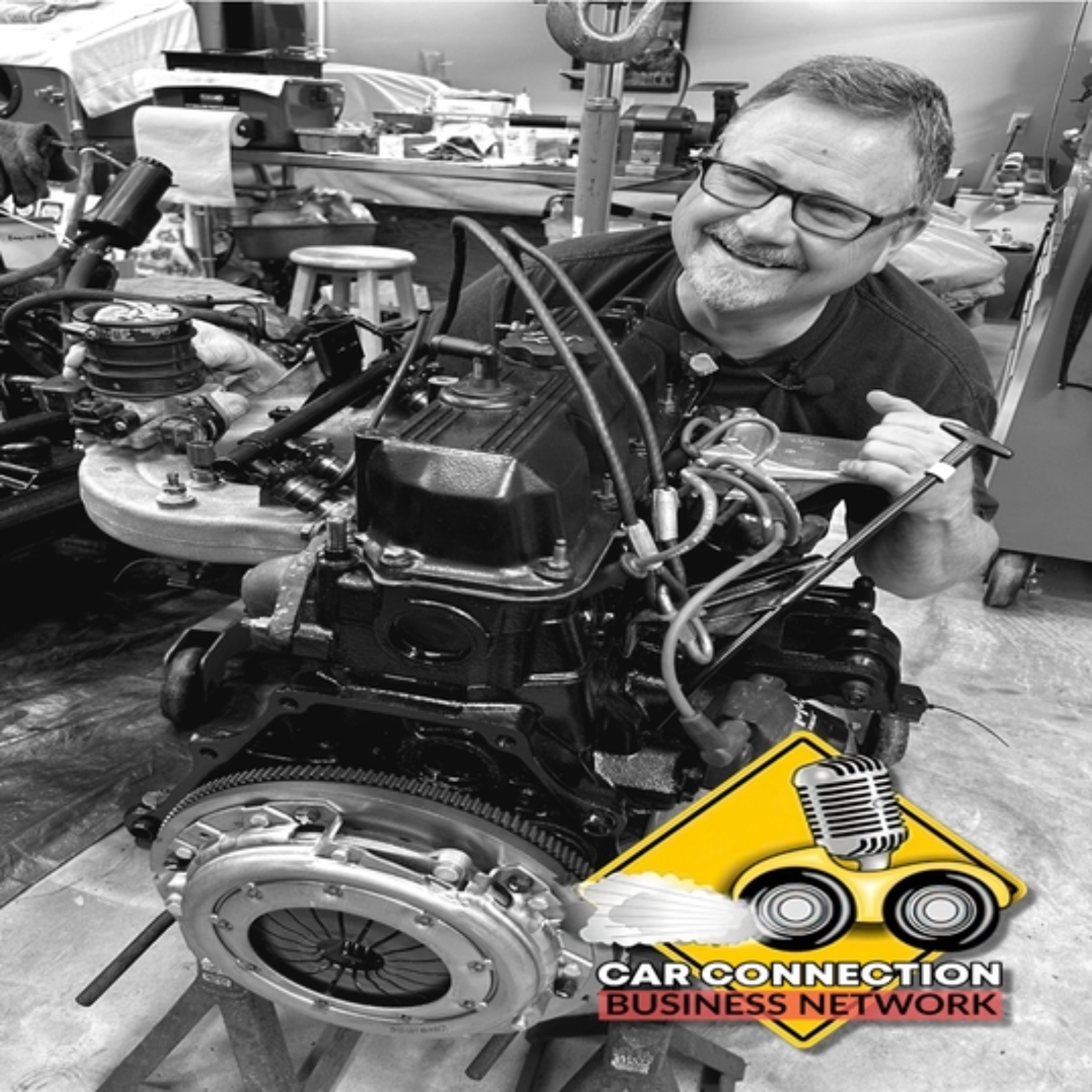
Vehicle Shopping? Ask Yourself These 5 Questions Before You Buy!
About this episode
Vehicle shopping gets boiled down to a practical five-question approach: set a real budget, decide what you’re actually looking for, and road test before you commit. The hosts stress avoiding emotional buying and sticking to a maintenance plan—especially with pre-owned cars, where mileage matters less than upkeep. Along the way, they share budgeting stories (including an FJ Cruiser search) and advice on avoiding recurring “pattern failures,” plus reminders to plan for parts delays and schedule inspections early.
Shopping for a vehicle can be exciting, but excitement can also lead to expensive mistakes.
In today's podcast, we walk through a simple 5 - step process to help you buy with confidence instead of emotion. we discuss your "why", setting a realistic budget, deciding between new and pre-owned, choosing the right year, make and model, and most importantly-taking the time to road test several options before making a decision.
The wrong vehicle can lead to regret long after the honeymoon period is over. Slow the process down, ask the right questions, and make a decision based on facts, comfort, practicality and budget.
A vehicle should fit your lifestyle -not just your emotions.
" The right vehicle isn't always the one that makes your heart beat faster in the showroom-it's the one that still makes sense six months after you bring it home."
#VehicleShopping #CarBuyingTips #SmartCarOwnership
Donate to our channel: safely ☕️🍩 visit our page at buymeacoffee.com/motormouthnile with Much Love & Appreciation❤️Thank You👍 Skippy & Motormouth
Merch Available online at ccbusnet.com all proceeds to Total Freedom Addiction Campuses Canada & USA changing lives one at time. Join our crew helping them to get there🚗 together we too can help change a life❤️ Love you Friends! Skippy & Motormouth🙌
Need a vehicle Maintenance PLAN, we gottem ready for you👍 simply check out the profile page we put together at ccbusnet.com fill out the order form & Motormouth ships directly to you🙌 Remember Mileage does NOT Matter Maintenance does ✅ discount for Subscribers to our YouTube Channel while quantities last👌
E - Mail Anytime to [email protected] or motormouth.jenkins @gmail.com
HELP NEEDED: we need a boost to keep our engine running smoothly and reach our very first 1000 subscribers, 👌 simply, Like, Share, Subscribe, Comment,👇 Ring the Notification bell so you don't miss any rescues or automotive tips, follow us on Facebook & Instagram, stevensvilleontheweb.ca select bus tab, Thank You So So Much Friends💕 Skippy👍
More Episodes and....project Details & links are available at Car Connection Business Network .com (ccbusnet.com) you'll find everything on our home page if you'd like to follow the build & repair work we do & connect with out program partners, Thank You for supporting them also with your business, we need them and YOU TOO❤️❤️ Nile Motormouth Jenkins.
Happy Healthy Motoring Friends, Peace Patience Kindness Always👍
We'll See You All in The Next One🚀
machined
"what needs to be machined and why"
“Machined” means a part is cut or shaped with machines to get it to the exact size needed. Mechanics use this when a part must be corrected so it fits and works right.
“Machined” means shaping a part using machine tools (like milling or turning) to achieve exact dimensions. In engine building, whether something needs to be machined—and why—directly affects fitment, sealing, and overall performance.
thousandths of an inch
"machined and why and how many thousandths of an inch you have to go through the details"
That phrase means measuring extremely precisely—like 1/1000 of an inch. In engine work, tiny measurement differences can decide whether parts fit and run properly.
“Thousandths of an inch” is a precision measurement (0.001 inch) used in machining and engine building. When hosts say you must measure in thousandths of an inch, they’re emphasizing tight tolerances—small clearance differences that can determine whether parts fit and function correctly.
vehicle ownership is all about details
"and that's goes for the same when we're building engines we have to measure everything we have to determine what's usable what is not what needs to be machined and why and how many thousandths of an inch you have to go through the details and vehicle ownership is all about details"
They’re saying car ownership isn’t just about big things—it’s about the small details. Getting the right parts and planning repairs ahead of time can make or break the timeline.
This is a philosophy of ownership: small, specific factors (measurements, correct parts, and proper inspection timing) matter more than broad generalities. The hosts connect it to engine-building precision and to the practical reality that repairs depend on parts availability and scheduling.
pre-vacation travel time
"if you need to get your vehicle into the shop and get an inspected pre-vacation travel time you might want to get on that sooner than later"
They’re talking about planning your car service before you leave for vacation. The idea is to get it checked early so you don’t run into delays when parts or repairs take time.
The hosts are framing a real-world scheduling concept: getting a vehicle into the shop early enough to complete an inspection and any needed work before a trip. It’s essentially about planning service lead time so you’re not stuck waiting on parts or shop capacity.

2009 Hyundai Accent
"you'll see the video the 2009 Hyundai Accent ordered the parts it was spec"
This is a 2009 Hyundai Accent, a small everyday car. The point here is that even for a common car, repairs can get delayed if the right parts aren’t available yet.
The Hyundai Accent is a compact car known for being a practical, budget-friendly daily driver. In this segment, the hosts use a 2009 Hyundai Accent as a real example of how ordering the correct parts and waiting on availability can affect when a repair can be completed.
Paul the parts guy
"and just like I had a conversation with Paul the parts guy at the local one of the oldest Toyota [1625.9s] dealers in Canada and I said to Paul is it true I said I just doing some research $64,000 for a"
Paul is the parts person the host talked to at a Toyota dealer. He helped correct the host’s price estimate for a Toyota Tundra based on the specific trim you want.
Paul is mentioned as a local parts specialist at a Toyota dealer, used to ground the host’s example about realistic pricing for a Toyota Tundra. The segment treats him as a practical source for how far off an estimate can be depending on trim.
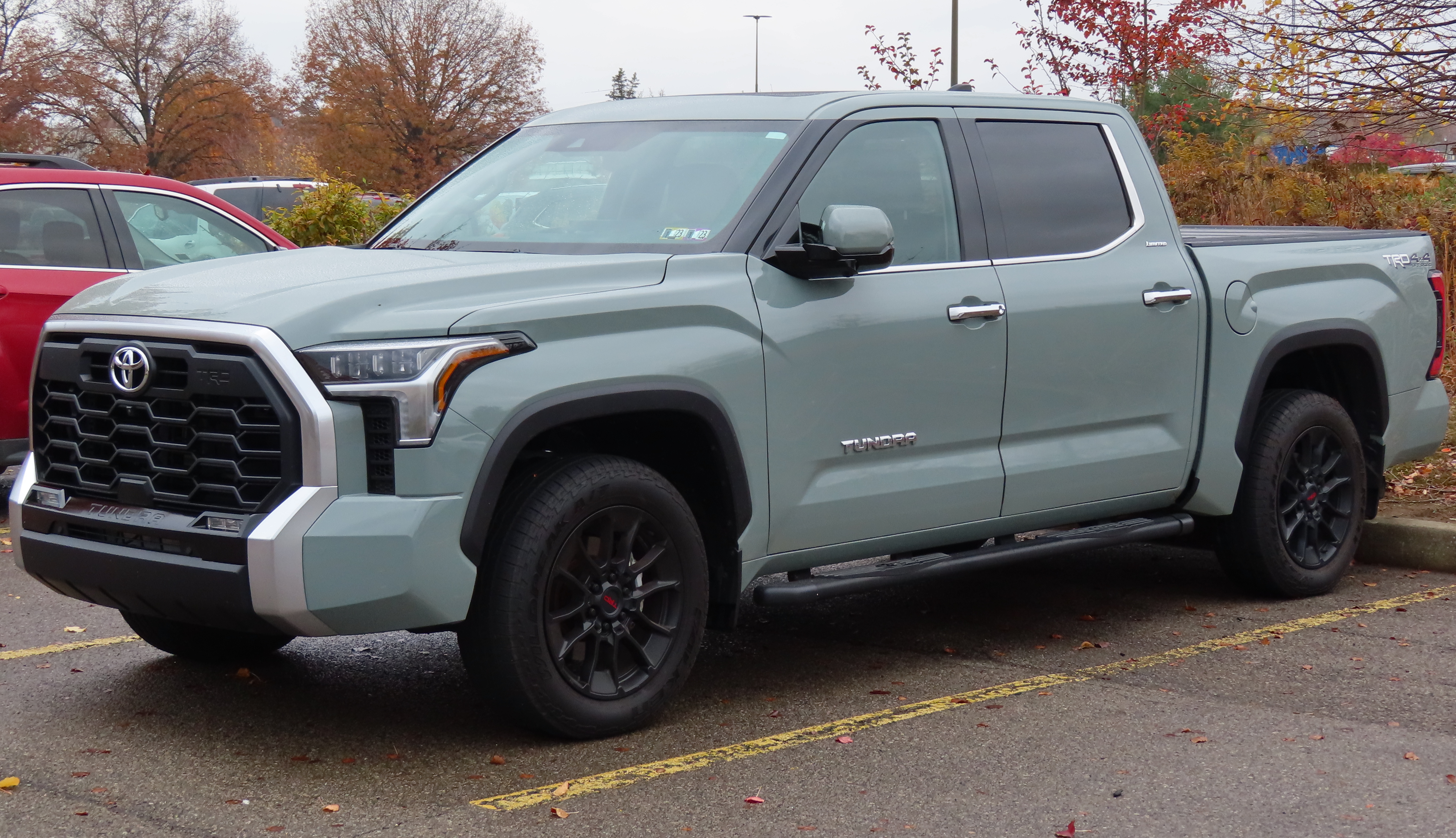
Toyota Tundra
"I said to Paul is it true I said I just doing some research $64,000 for a [1634.6s] Toyota tundra he goes no that's no that's too low I go okay enlighten me how far off"
The Toyota Tundra is a large pickup truck from Toyota. The host is using it to talk about how much truck you can realistically afford and how trim levels change the price.
The Toyota Tundra is Toyota’s full-size pickup truck, known for being a mainstream, work-capable alternative to other large trucks. Here it’s used in a real shopping example with pricing expectations and trim/package differences.
trim package
"I go okay enlighten me how far off 78 74 to 78 [1647.0s] based on what trim package you want and I said wow that's all I could say I'm thinking wow"
A trim package is the “version” of a car or truck you’re buying, based on what features it includes. Different trims can cost a lot more or less even if it’s the same model name.
A trim package is a specific equipment level for a vehicle—often bundling options like wheels, interior features, and powertrain choices. The host uses it to explain why the same model can have a wide price range.
you pull it yard
"I said I'll go to the you pull it yard and scan the rows and say can [1679.4s] I buy that as is whereas and take it back to the shop like we did with the 97 Jeep TJ Wrangler"
A “you pull it” yard is a junkyard where you go pick parts off cars yourself. The host is saying you can buy something cheaply, then have a shop help finish the work.
A “you pull it” yard is a self-service salvage yard where you remove parts yourself from donor vehicles. The host describes scanning rows and buying a vehicle “as is,” then taking it to a shop for work—an approach common in budget builds and parts-car projects.

Jeep Wrangler
"I buy that as is whereas and take it back to the shop like we did with the 97 Jeep TJ Wrangler [1686.5s] and I had somebody here yesterday said is that the Jeep I saw months ago all torn apart in a"
The Jeep Wrangler TJ is an older Wrangler generation that’s popular with off-road fans. The host is using it as an example of buying something rough and then fixing it up into a working vehicle.
The Jeep Wrangler TJ is the second-generation Wrangler (TJ generation) known for its simple, off-road-friendly design and huge aftermarket support. In this segment, it’s referenced as a prior project where a non-running vehicle was turned into a usable one.
run and drive
"I go yeah he goes that looks pretty cool now is it run and drive I go oh yeah I said [1699.5s] we're just waiting for some cash to come in to do two things that I can't do myself"
“Run and drive” means the car starts and you can drive it under its own power. It’s the difference between a broken project and something you can actually use right away.
“Run and drive” means the vehicle can start, move under its own power, and be driven safely enough to test or transport. The host uses it to distinguish between a torn-apart project car and one that’s actually drivable.
custom exhausts
"we're just waiting for some cash to come in to do two things that I can't do myself and that is [1706.9s] I want to custom exhausts kept nice and simple and we need to replace a bracket on the front"
A custom exhaust is an aftermarket exhaust setup that’s made to change how the vehicle sounds (and sometimes how it breathes). The host is saying they wanted to upgrade it but needed help they couldn’t do themselves.
A custom exhaust is an aftermarket exhaust system built or modified to change sound, flow, and sometimes performance characteristics. The host mentions it as one of the upgrades they planned to have done by someone else.
bracket on the front axle housing
"and we need to replace a bracket on the front [1713.7s] axle housing I cannot get it straight enough to get it aligned so I found the bracket so anyways"
The front axle housing is part of the front suspension/axle structure. If a bracket on it is bent or wrong, it can throw off alignment, so the car won’t track straight until it’s replaced.
The front axle housing is the structural component that supports the front axle assembly in a solid-axle vehicle. Replacing a bracket there can affect alignment and steering geometry, which is why the host says they couldn’t get it straight enough to align until the correct part was found.
Tony Miele
"so the one the why to the budget and I'm going to tell you what Tony Miele told me when I was [1744.9s] hunting for a Toyota FJ cruiser he said here's your budget don't call me and ask me for $1 more"
Tony Miele is the person the host says told them a budgeting tip while shopping for a Toyota FJ Cruiser. The takeaway is to set a firm budget and not negotiate for tiny extra amounts.
Tony Miele is referenced as the person who gave the host a budgeting rule while shopping for a Toyota FJ Cruiser. In this segment, he functions as a real-world advisor/insider rather than a technical authority.

Toyota FJ cruiser
"so the one the why to the budget and I'm going to tell you what Tony Miele told me when I was [1751.4s] hunting for a Toyota FJ cruiser he said here's your budget don't call me and ask me for $1 more"
The Toyota FJ Cruiser is a Toyota SUV with a classic, off-road inspired design. The point here is budgeting—figure out what you can spend and stick to it when you’re shopping.
The Toyota FJ Cruiser is a retro-styled Toyota SUV built around a rugged, off-road-oriented look and capability. The host uses it to illustrate a shopping rule: set a hard budget and don’t keep asking for “one more dollar” to make the deal work.

Lucid Air
"...producer on ESPN that found it while I was on the air he goes I found your truck it's out in Kingston a..."
The Lucid Air is an all-electric car, meaning it runs on electricity instead of gasoline. It’s designed to be comfortable and feature-rich, and it’s built for longer drives on a single charge. The podcast mention suggests it was identified or referenced as a specific car connected to the story being told.
The Lucid Air is an electric luxury sedan known for its long-range capability and high-tech features. It’s the kind of car that gets discussed because it represents a modern approach to EV performance and comfort, often showing up in mainstream media and tech-focused conversations. In your podcast context, it’s mentioned as something a producer found or located, indicating it came up as a specific subject or item in the episode.

98 Honda CRV
"months went by and I got good money for my 98 Honda CRV... and it had 229,000 miles on it and it's still going"
The Honda CR-V is a common SUV model. The host is saying their 1998 CR-V had 229,000 miles and they sold it for about $5,000 to help buy something else.
The Honda CR-V is a compact SUV that became popular for being practical and easy to live with. Here, the host mentions a 1998 Honda CR-V with 229,000 miles that they sold for just under $5,000, illustrating how trade-in value can fund a different purchase.
pre-owned
"down the road for 14 5 yeah that was December 27th 2013 so number three new or pre-owned... your budget's going to depict whether you can go new or pre-owned..."
“Pre-owned” means buying a used vehicle rather than a new one. The host frames it as a budget strategy: with a limited amount like $14,500, most buyers will likely need to go pre-owned to find something that fits.
multiple pattern failures
"I would recommend in in knowing what's going on in the markets right now with vehicles that have multiple pattern failures you don't want to get one of those because that's going to stress you right out..."
This means the car tends to have the same problems again and again. The host is warning that if you buy one of those, you may end up paying for repairs repeatedly.
“Multiple pattern failures” refers to a situation where the same kinds of problems keep recurring across a model or model-year. The host’s point is that repeatedly failing components can create ongoing stress and unexpected repair costs.
Request an Explanation
Heard something you'd like explained? We'll add it to this episode.
Sign in to request explanations for terms you heard.
Want to learn more?
Browse our glossary for plain-English explanations of automotive terms, jargon, and concepts.
Help improve this episode
See something that's not quite right? Our annotations are AI-generated and can sometimes miss the mark. Click the flag icon on any annotation to suggest a correction.